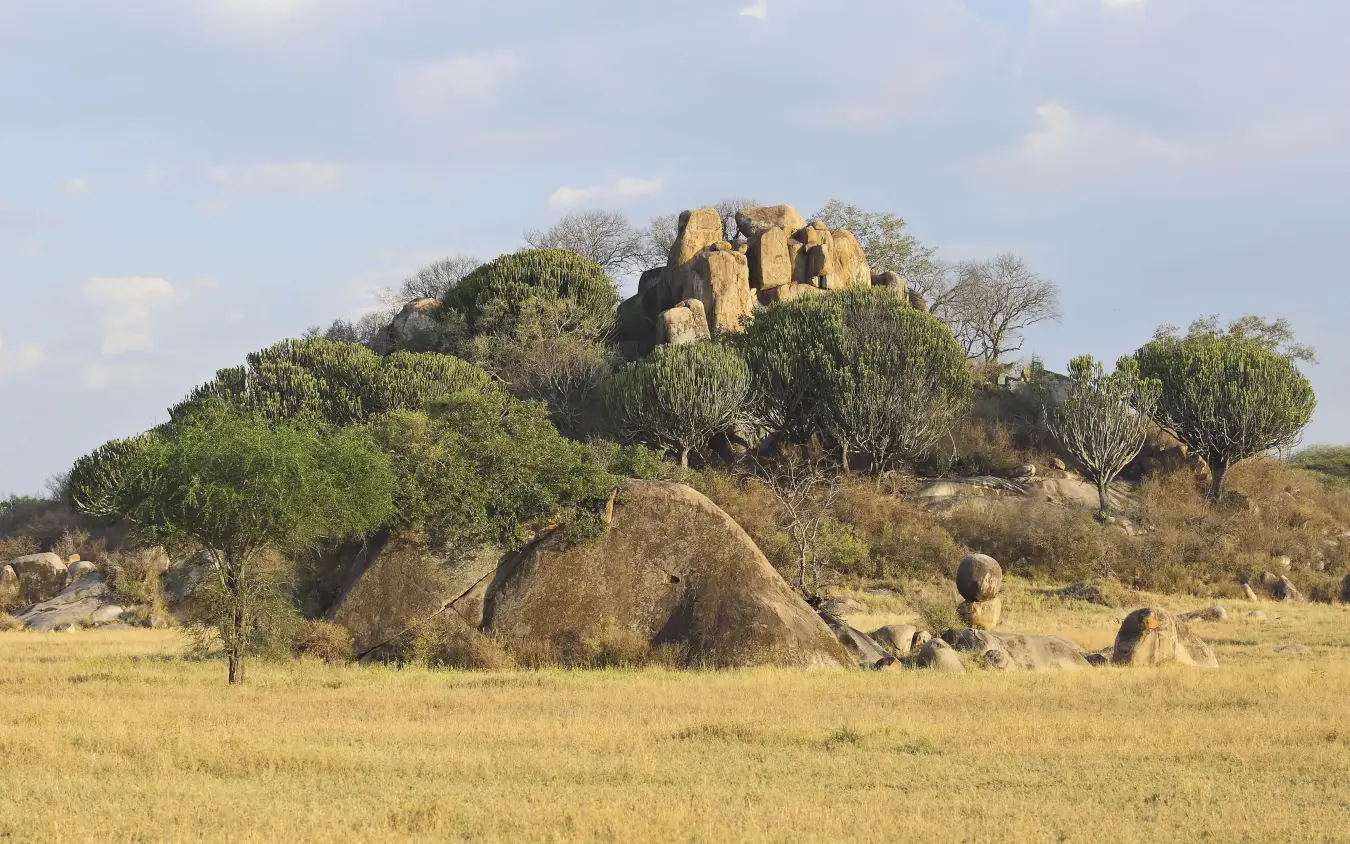
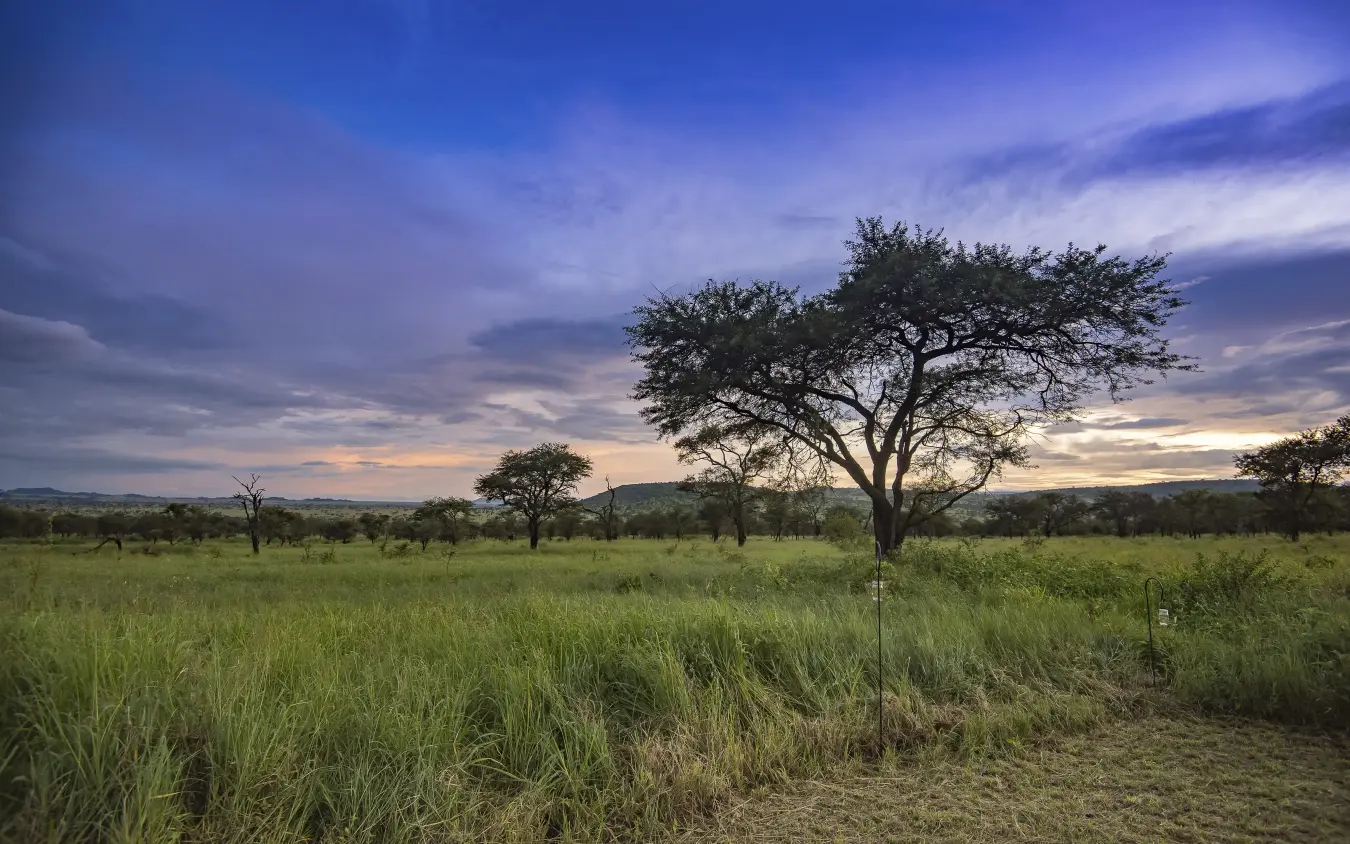
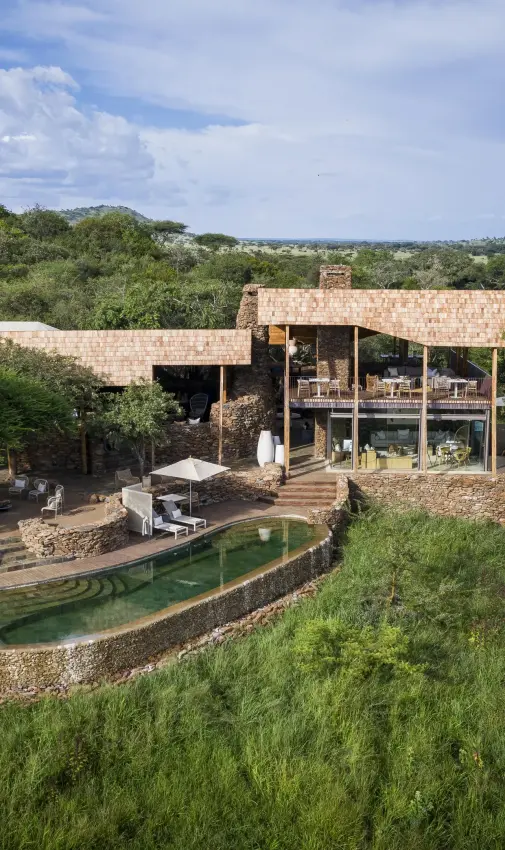
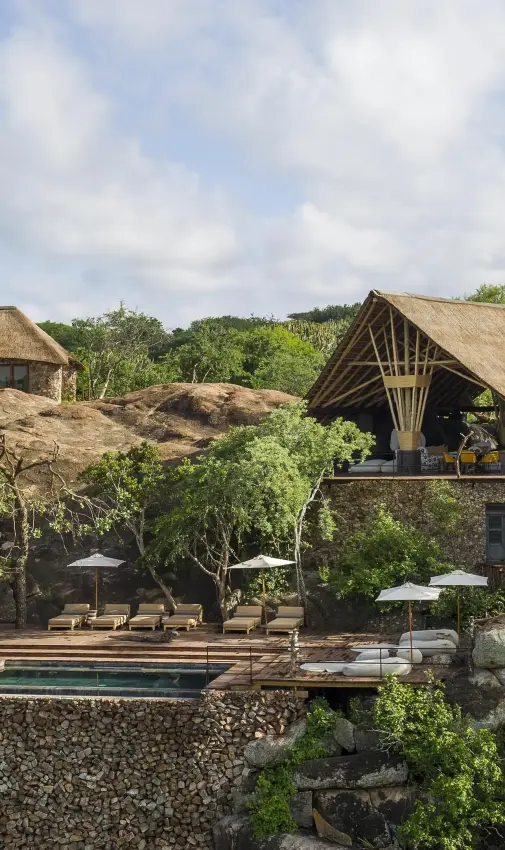
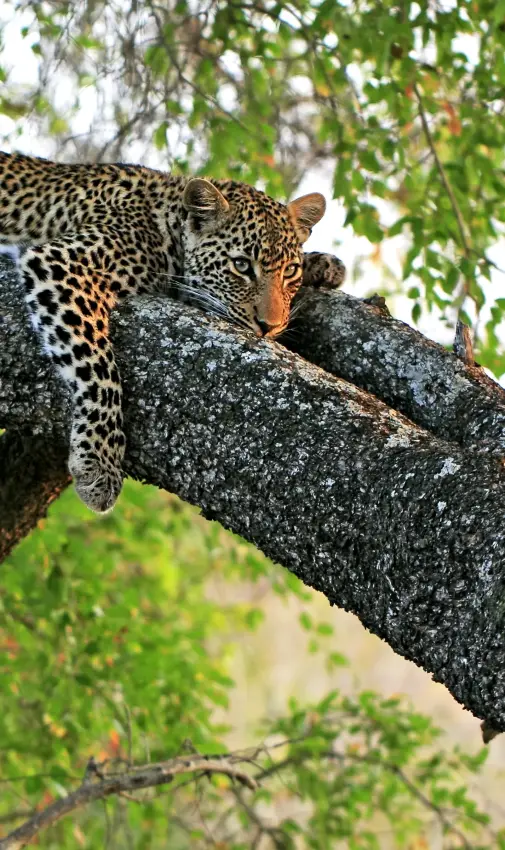
The Moru Kopjes are a system of ancient granite outcrops rising from the central Serengeti grassland, worn smooth over millennia and split by fig trees and rock hyrax colonies. Big cats favour them for the shade and the vantage they give over the plains, which makes this pocket of the park rewarding for predators across the whole year. The black rhino that shelter here are among the harder animals to find anywhere in the Serengeti, and Moru remains one of the few places they can still be tracked, with patience, by those willing to look for them.
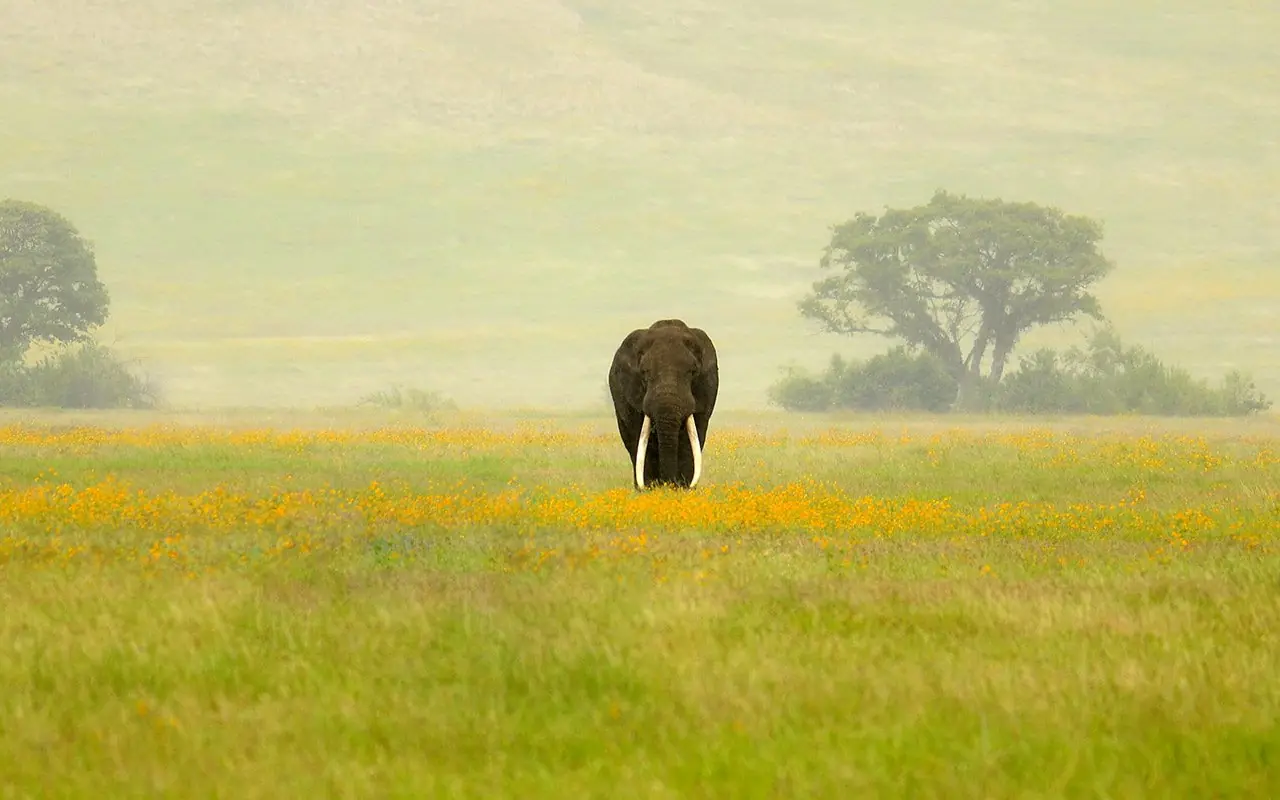
Dunia’s position between three habitats explains why it works so well as a single base. To the north, the Seronera valley holds one of the densest concentrations of resident game in the park. To the south, the Ndutu plains draw the migration herds for the calving season between January and March. The camp sits close enough to reach either, while staying clear of the vehicle traffic that gathers around the central hub. From one place, a guest has the best of the park’s year on either side.
worn smooth over millennia and split by fig trees and rock hyrax colonies
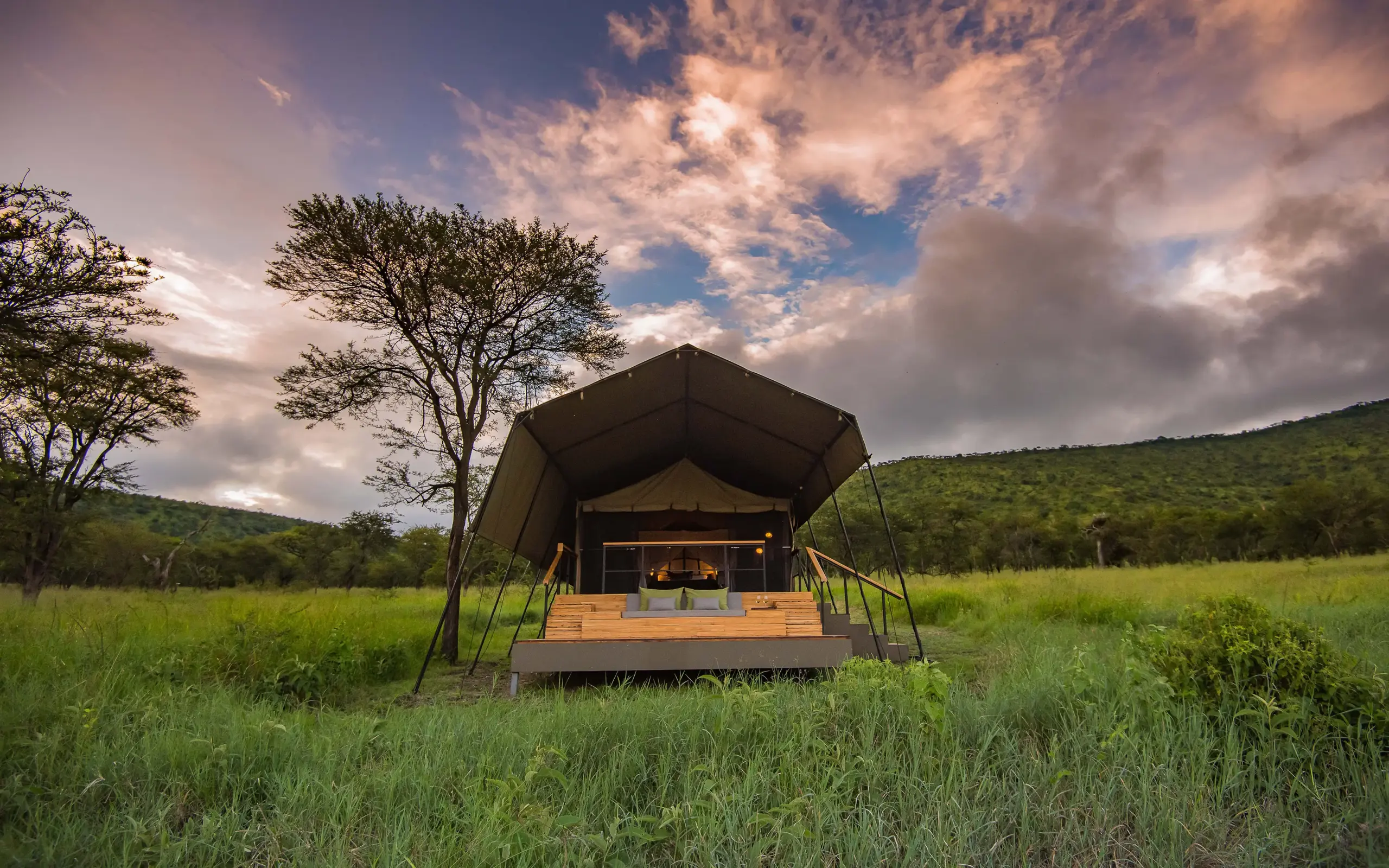
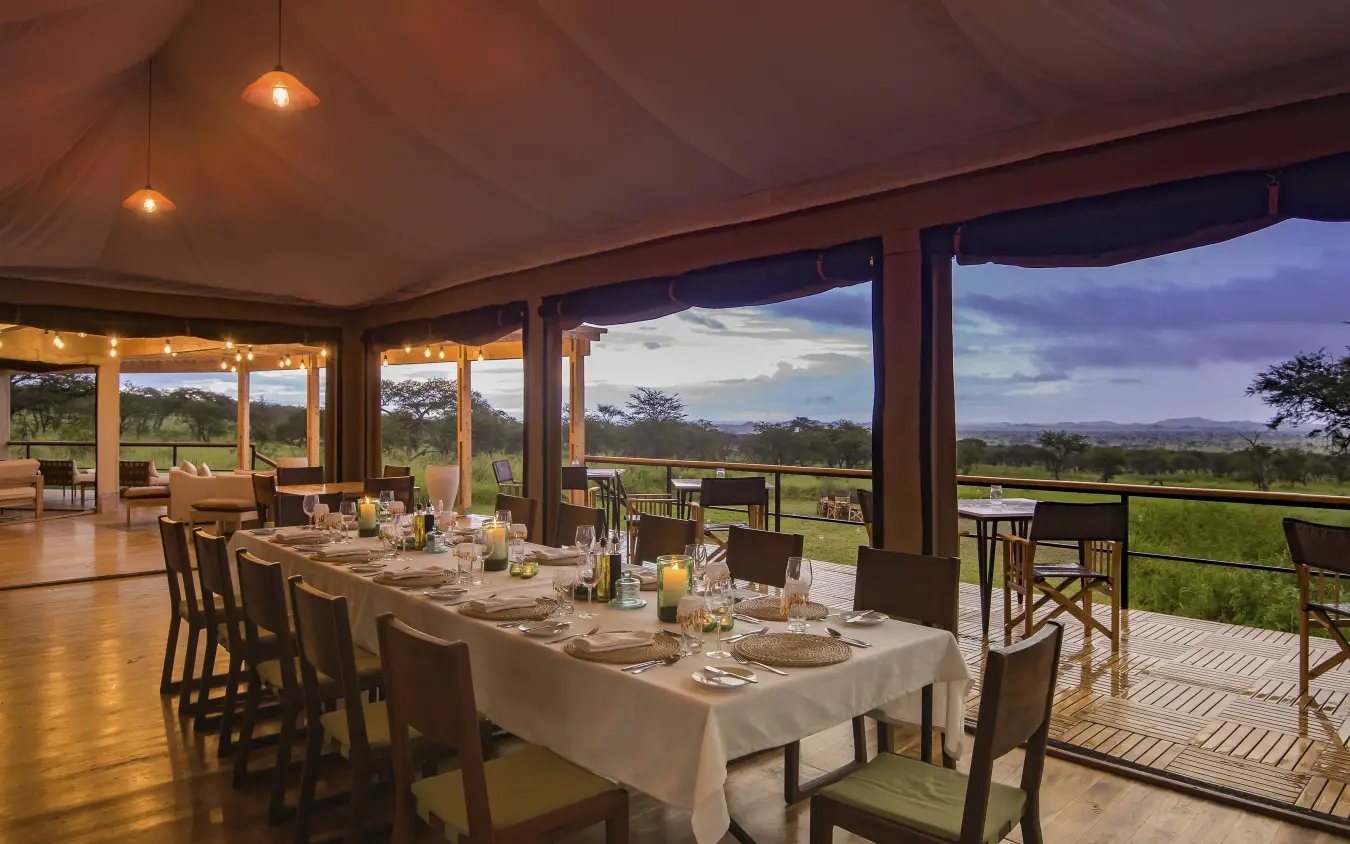
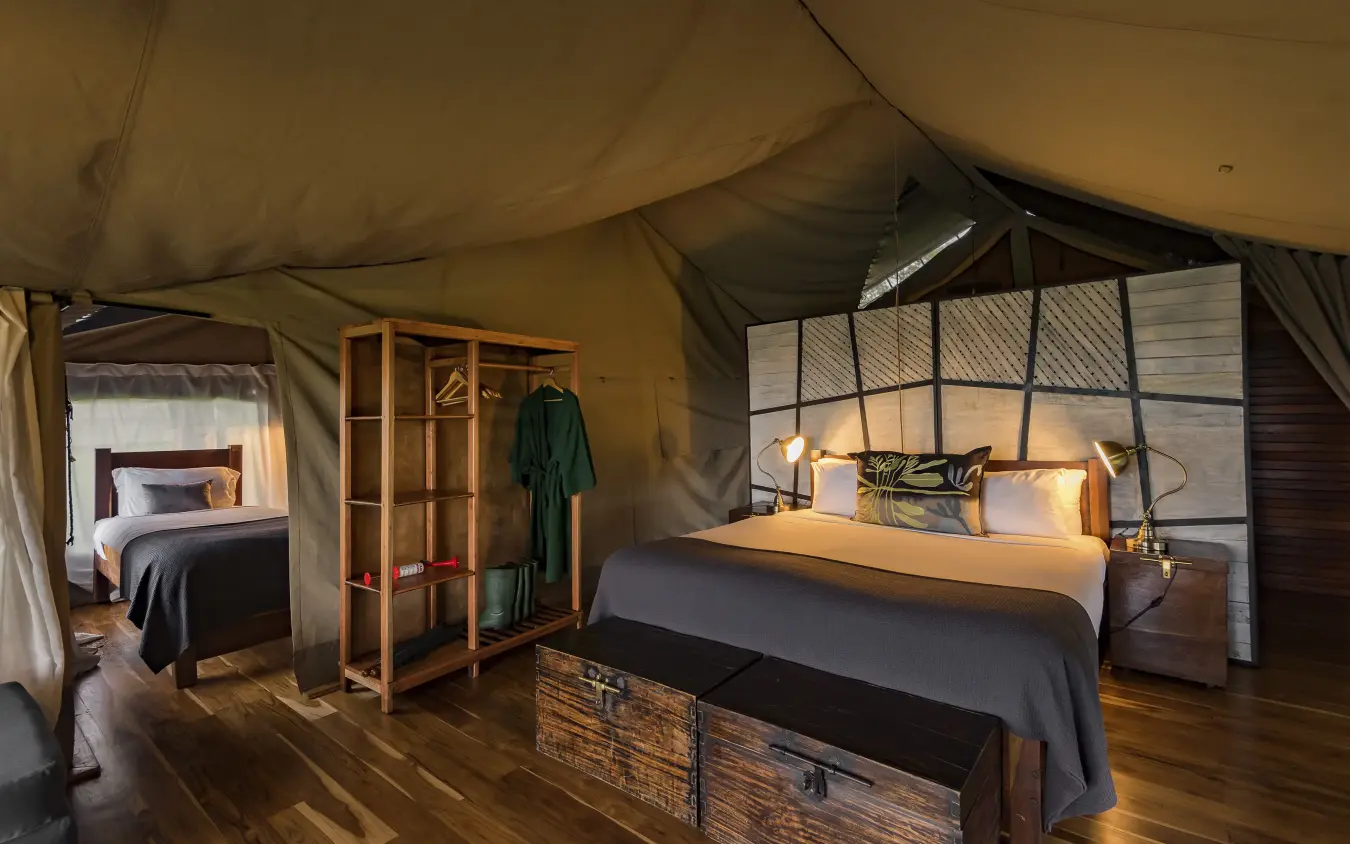
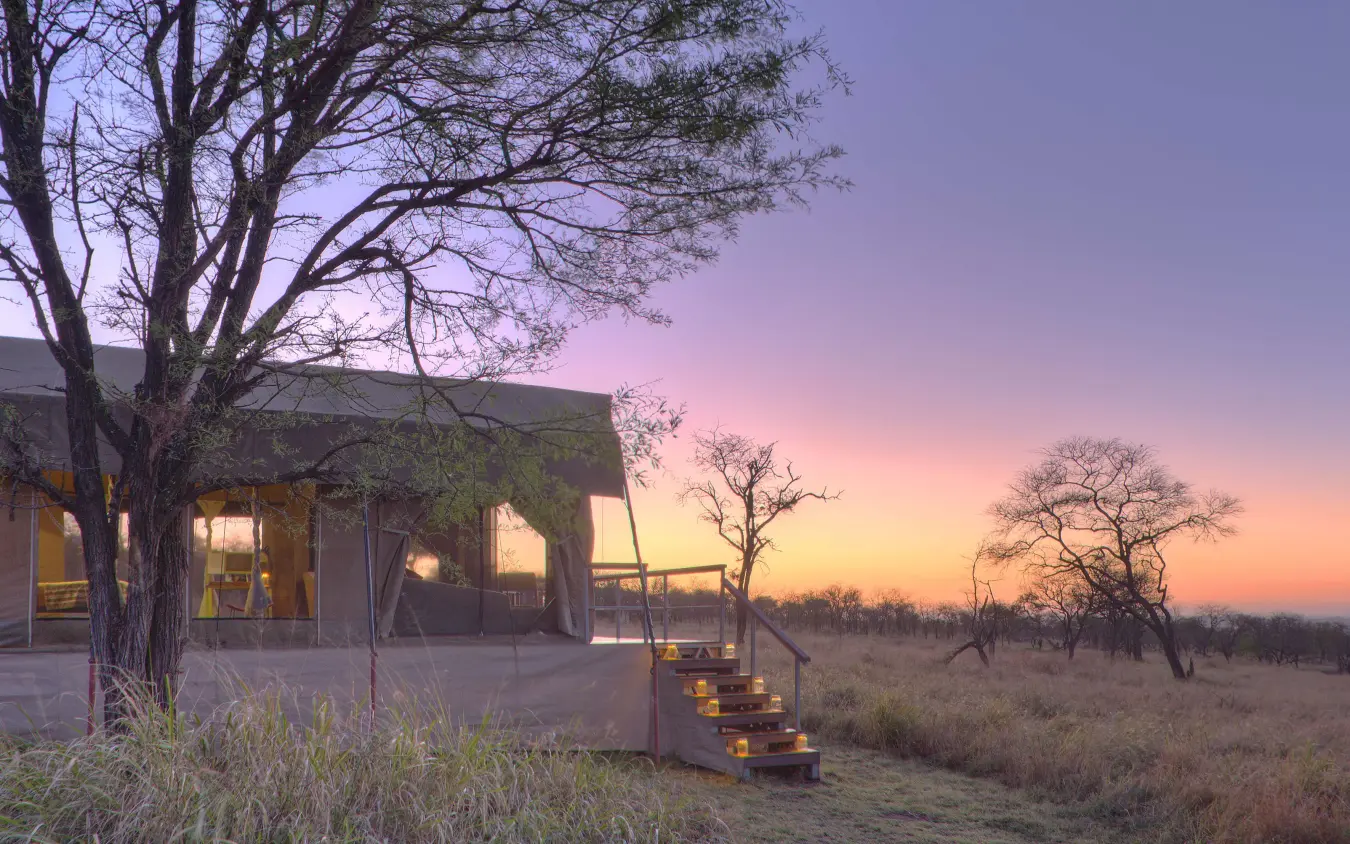
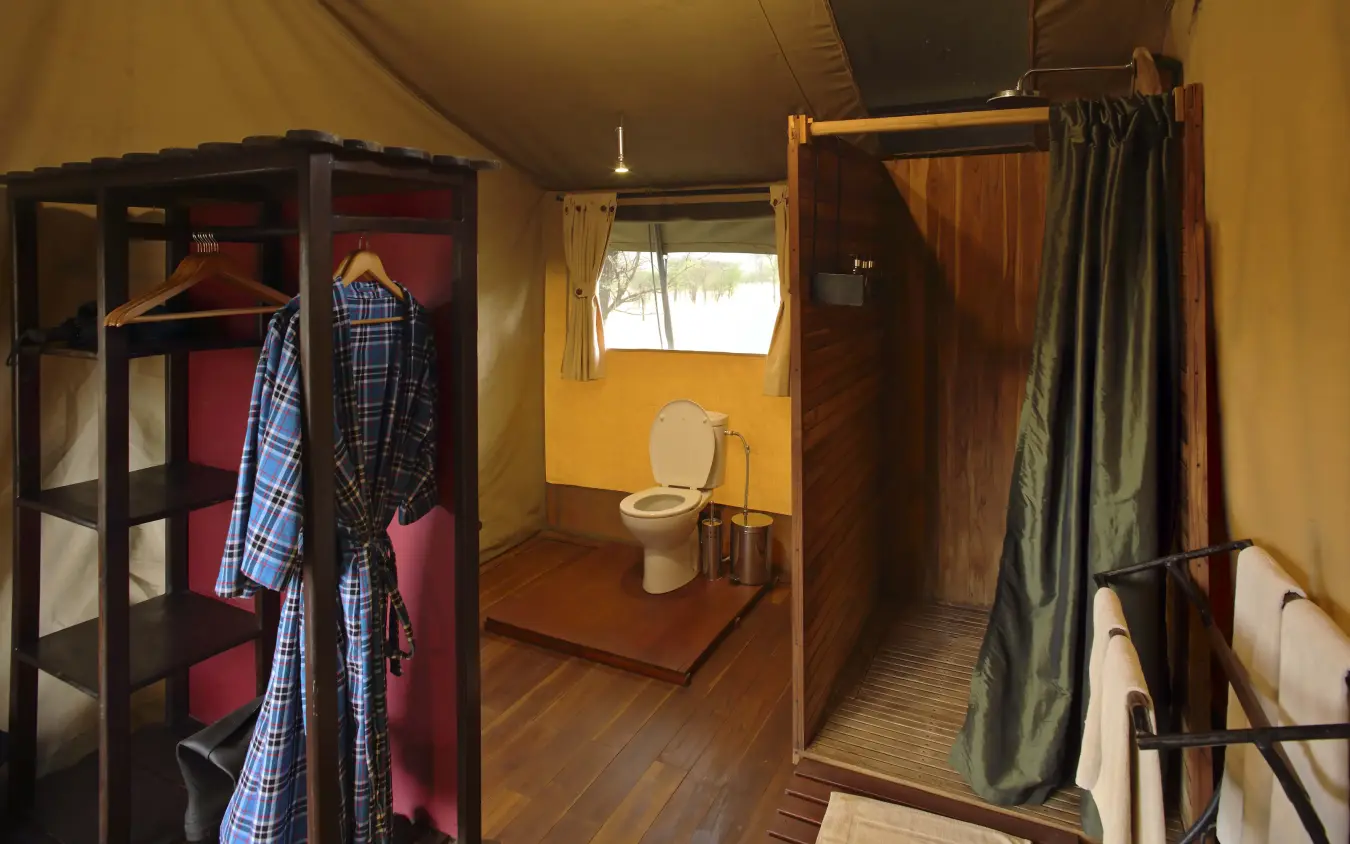
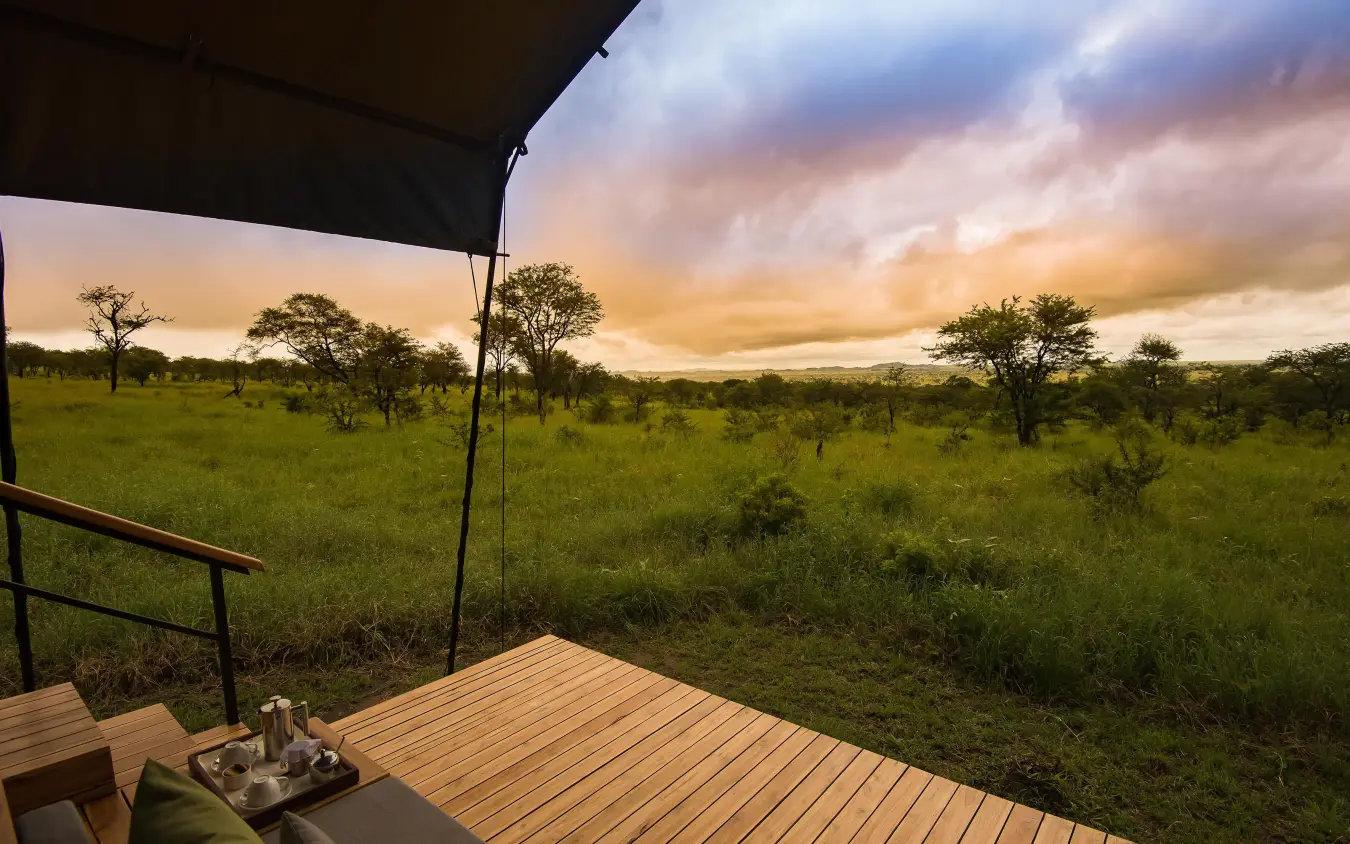
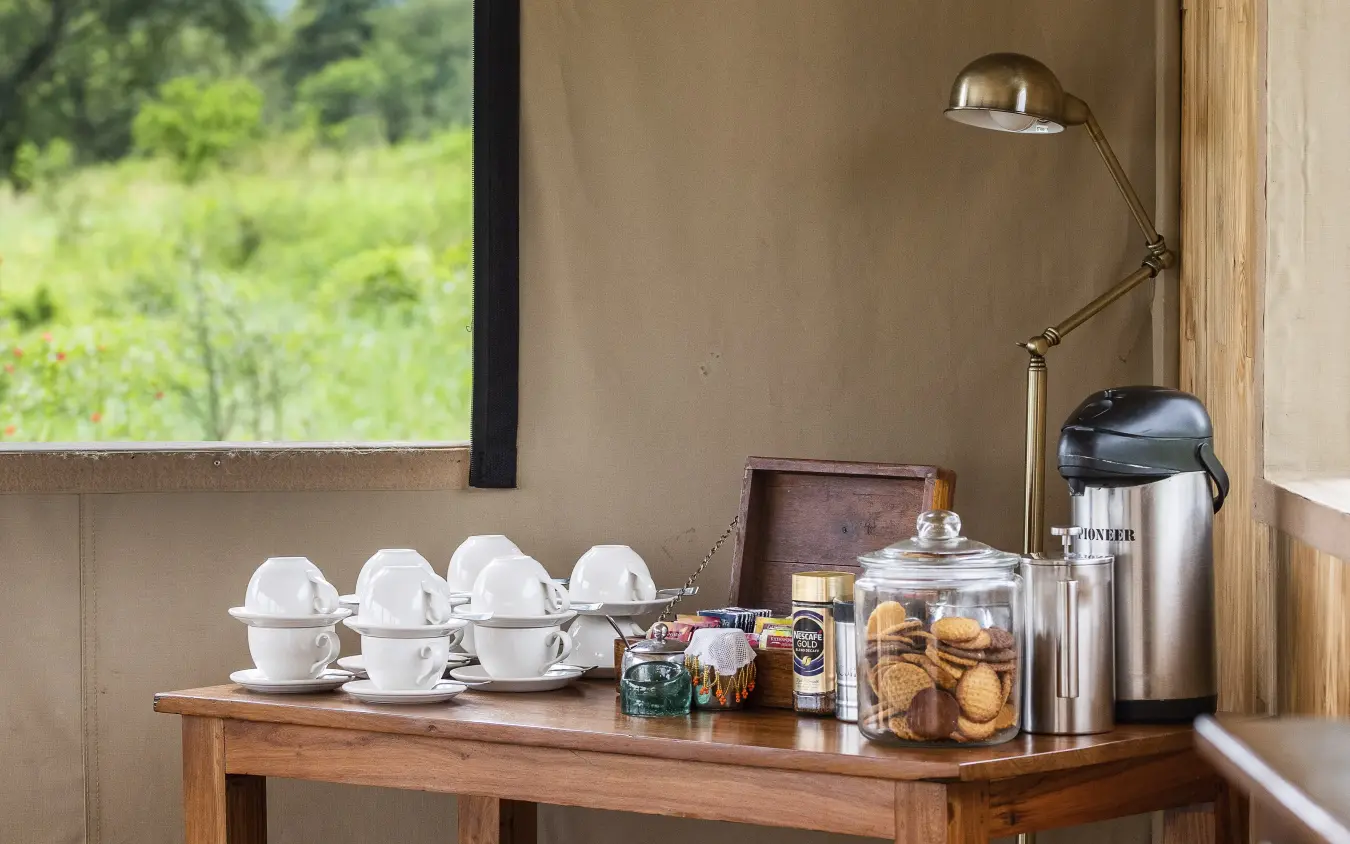
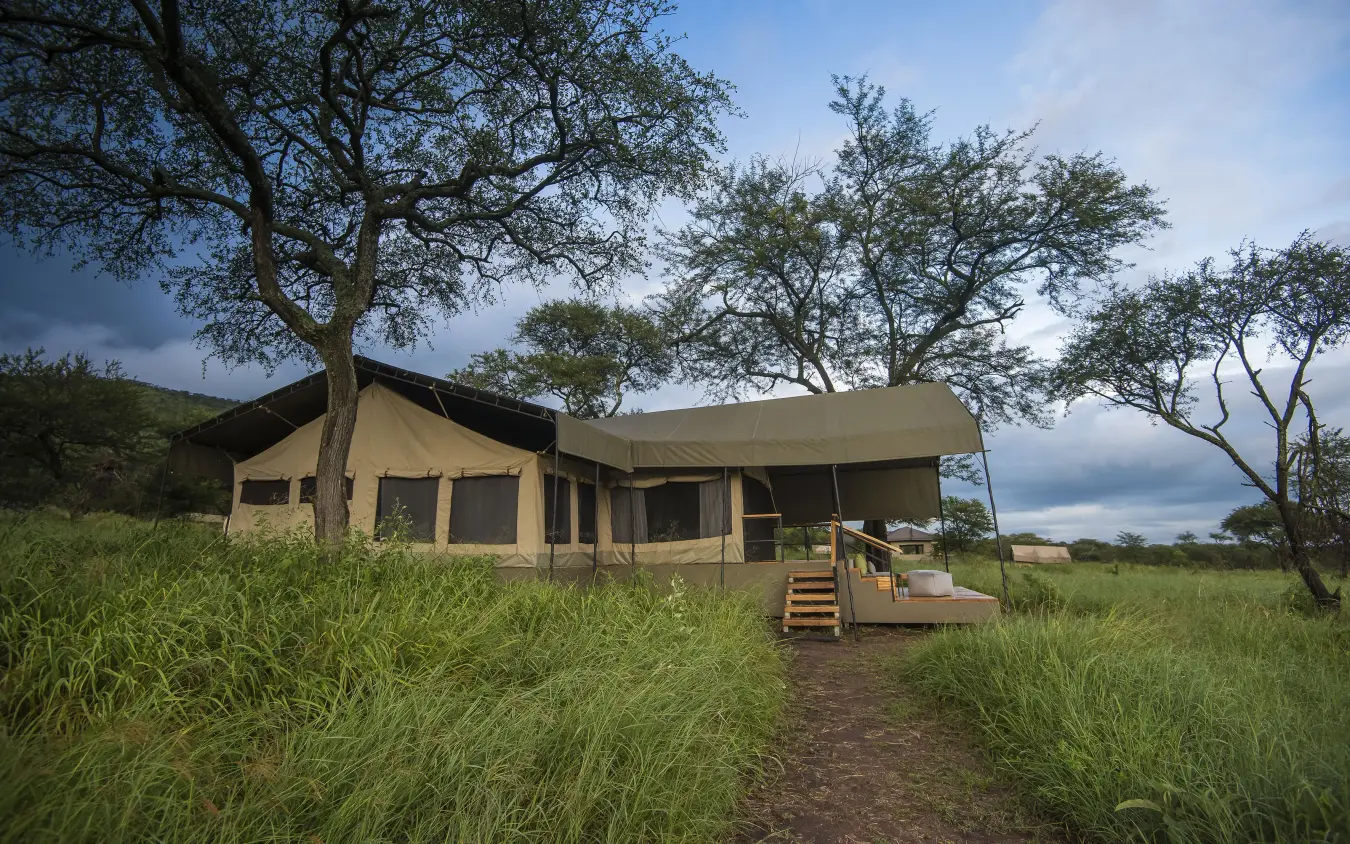
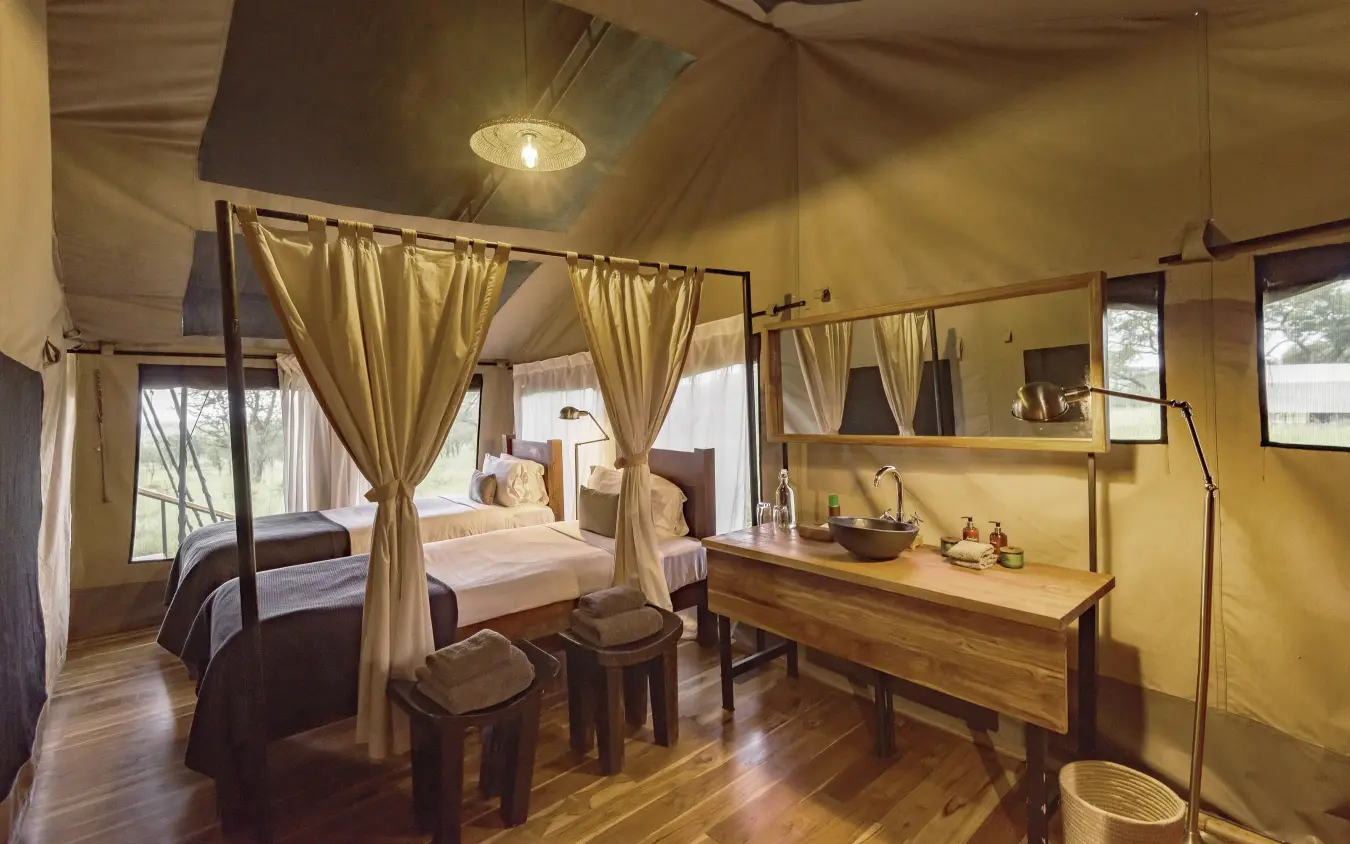
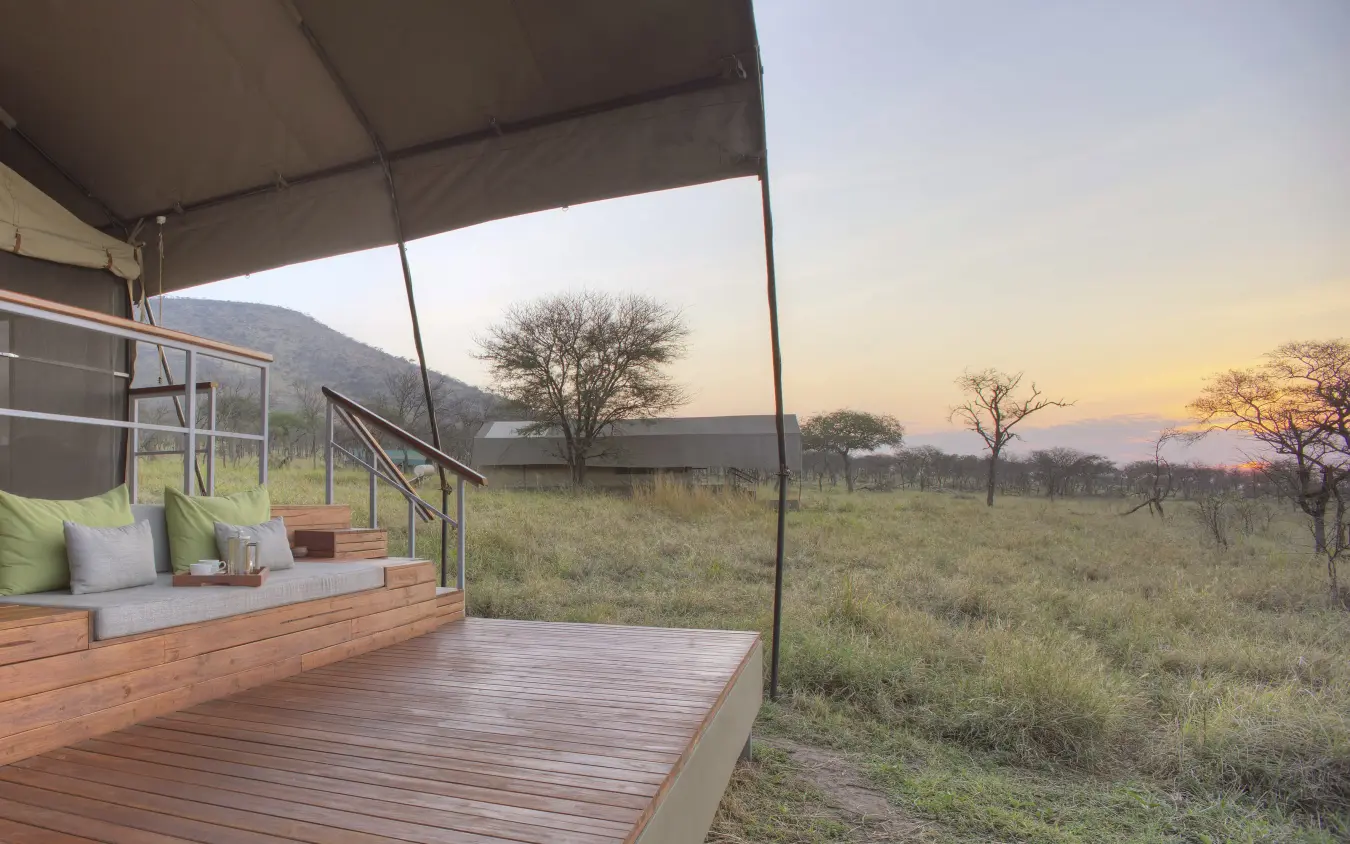
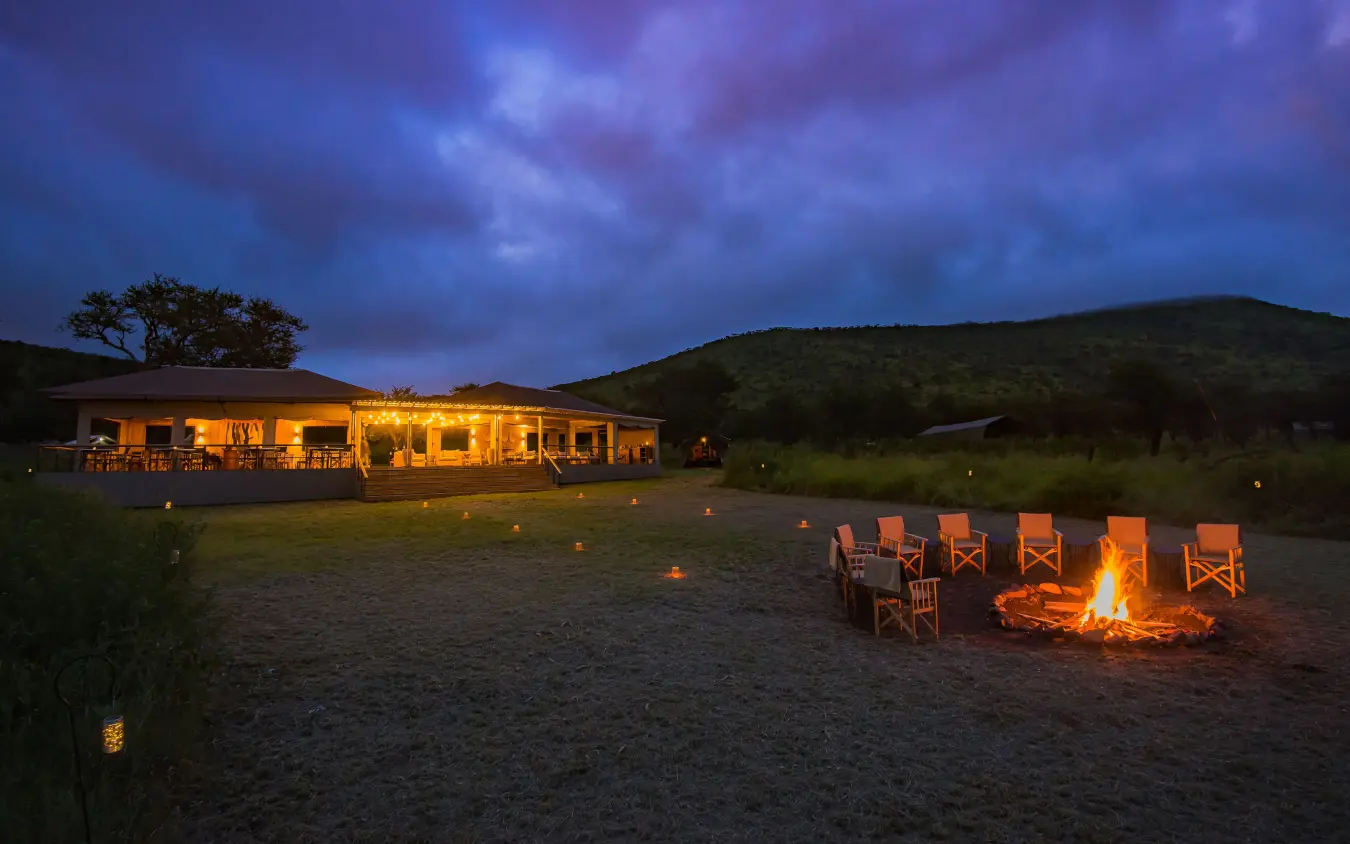
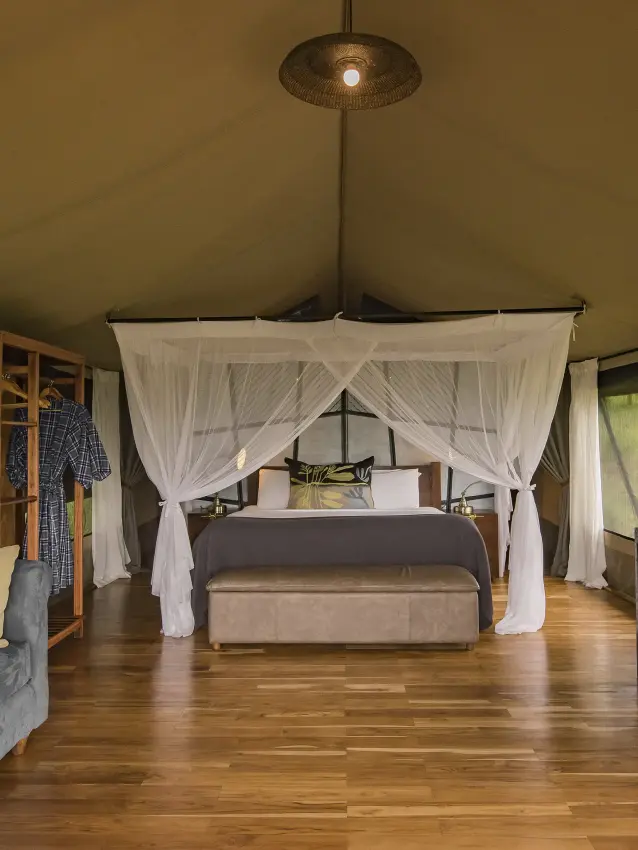
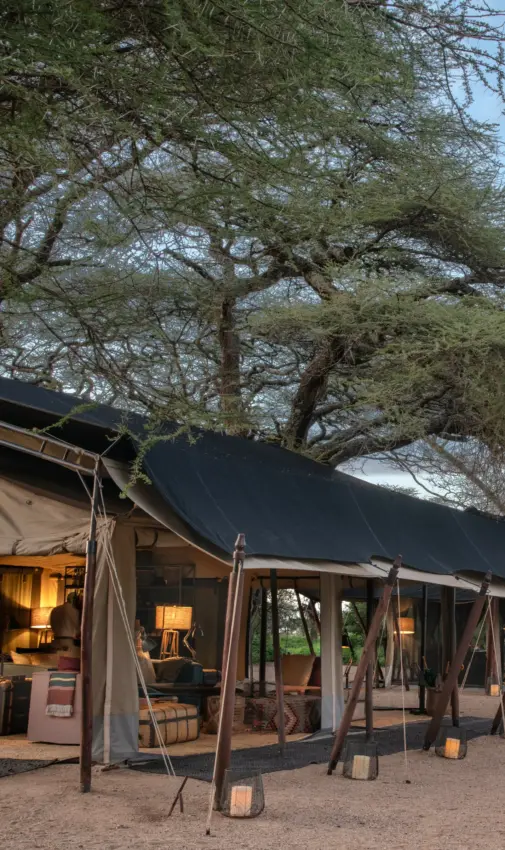
Eight tents stand on raised wooden platforms, each with a private veranda facing the plains and furnished for comfort rather than polish. One is a family tent with separate bedrooms, which makes the camp workable for those travelling with children aged five and over. Meals are served in the central mess tent or outdoors on the grass, and sundowners are taken by the fire as the light drops over the Serengeti. Wi-Fi reaches the tents, though the plains in front tend to hold the attention instead.
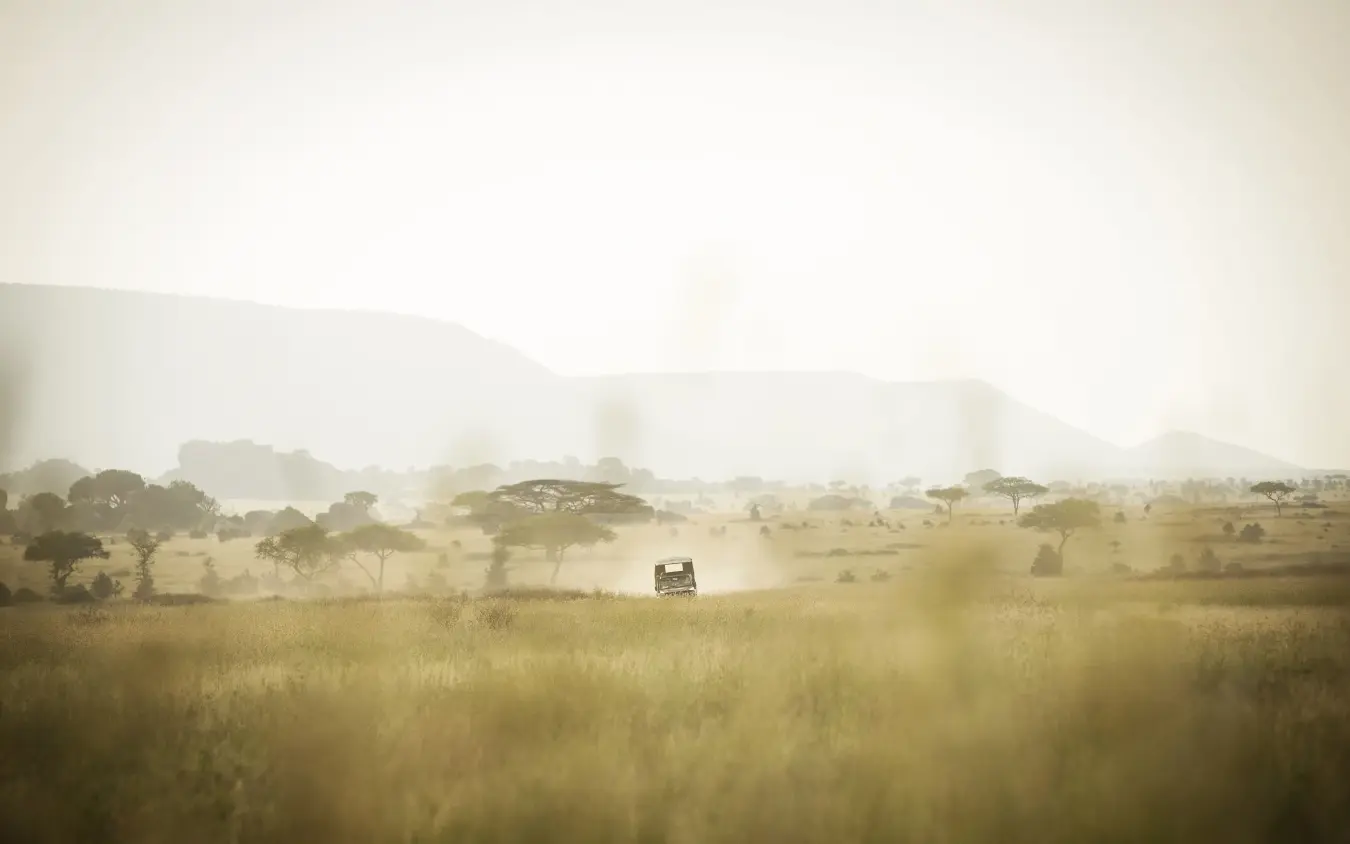
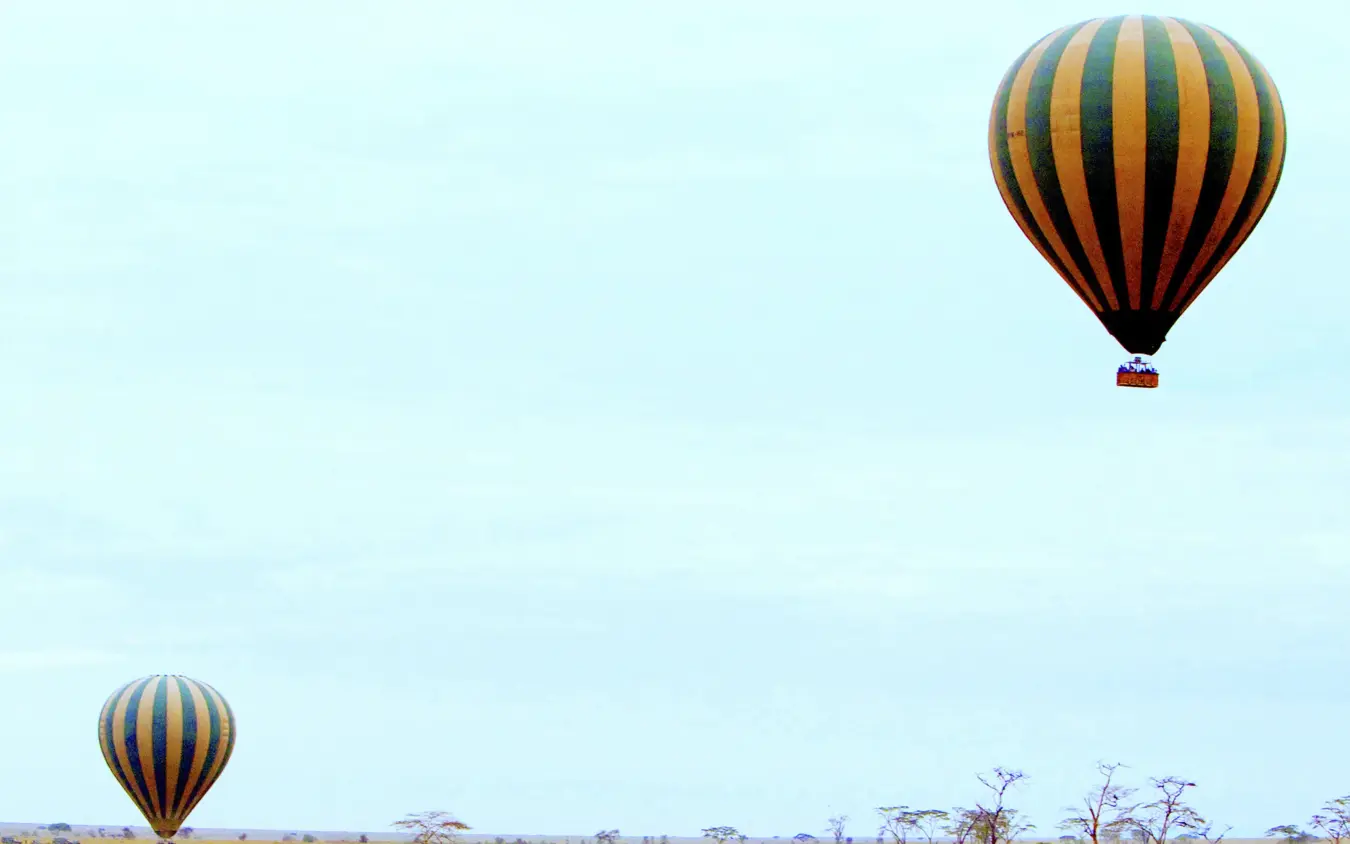
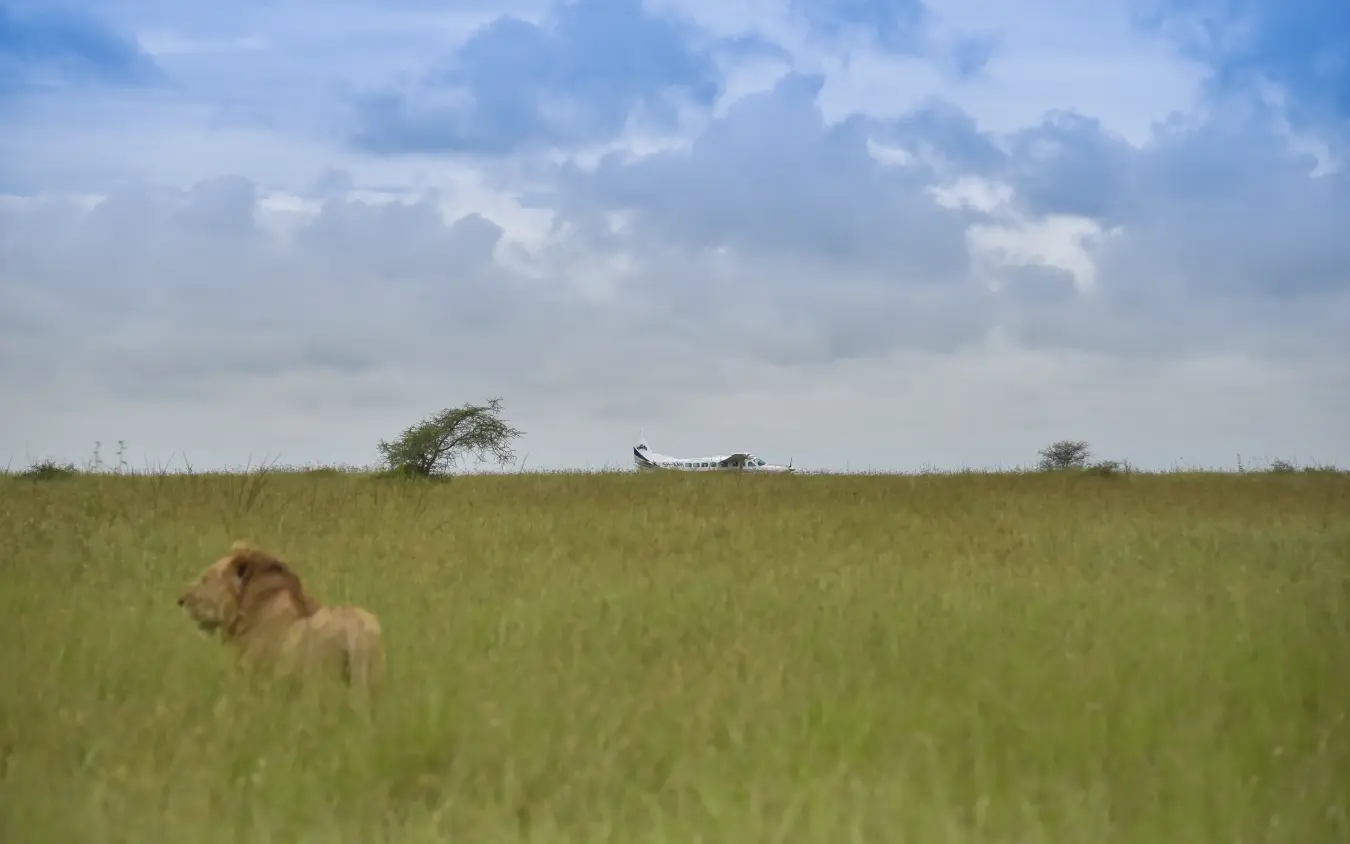
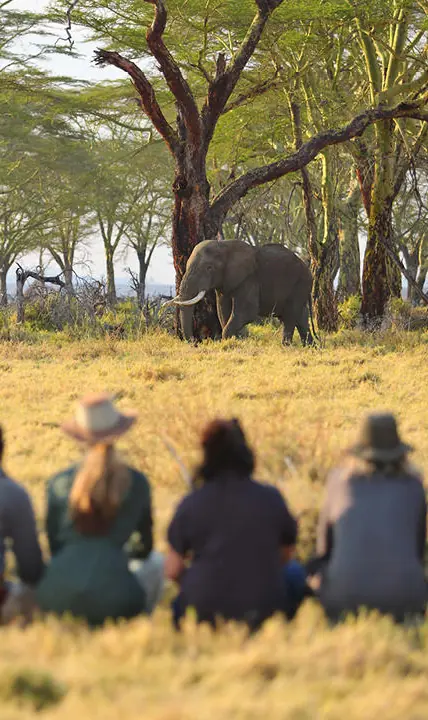
Game drives run early morning and late afternoon in open vehicles, guided by the same women who run the rest of the camp. Dunia lies inside Serengeti National Park rather than a private conservancy, so the drives follow park rules. What they cover instead is generous, taking in the Moru Kopjes, Seronera and the migration in season, and for those who want the plains from above, hot-air balloon flights can be arranged.