
Chimpanzees above Lake Tanganyika
On the eastern shore of Lake Tanganyika, in the far west of Tanzania, the Mahale Mountains rise straight from white-sand beaches into jagged, forest-covered peaks above 2,000 metres. The slopes climb directly from the water’s edge, and it is this meeting of beach and forest that makes Mahale one of the finest places on earth to track wild chimpanzees.
On the eastern shore of Lake Tanganyika, in the far west of Tanzania
The setting is genuinely unusual: tropical beach below, jungle above, and a lake clear enough to swim and snorkel in once the day’s trekking is done. Lake Tanganyika is the second deepest lake on earth, and its clear water holds approximately 350 to 362 species of fish. Reaching Mahale takes light aircraft and then a boat, which keeps the visitor numbers low and the long shoreline quiet.

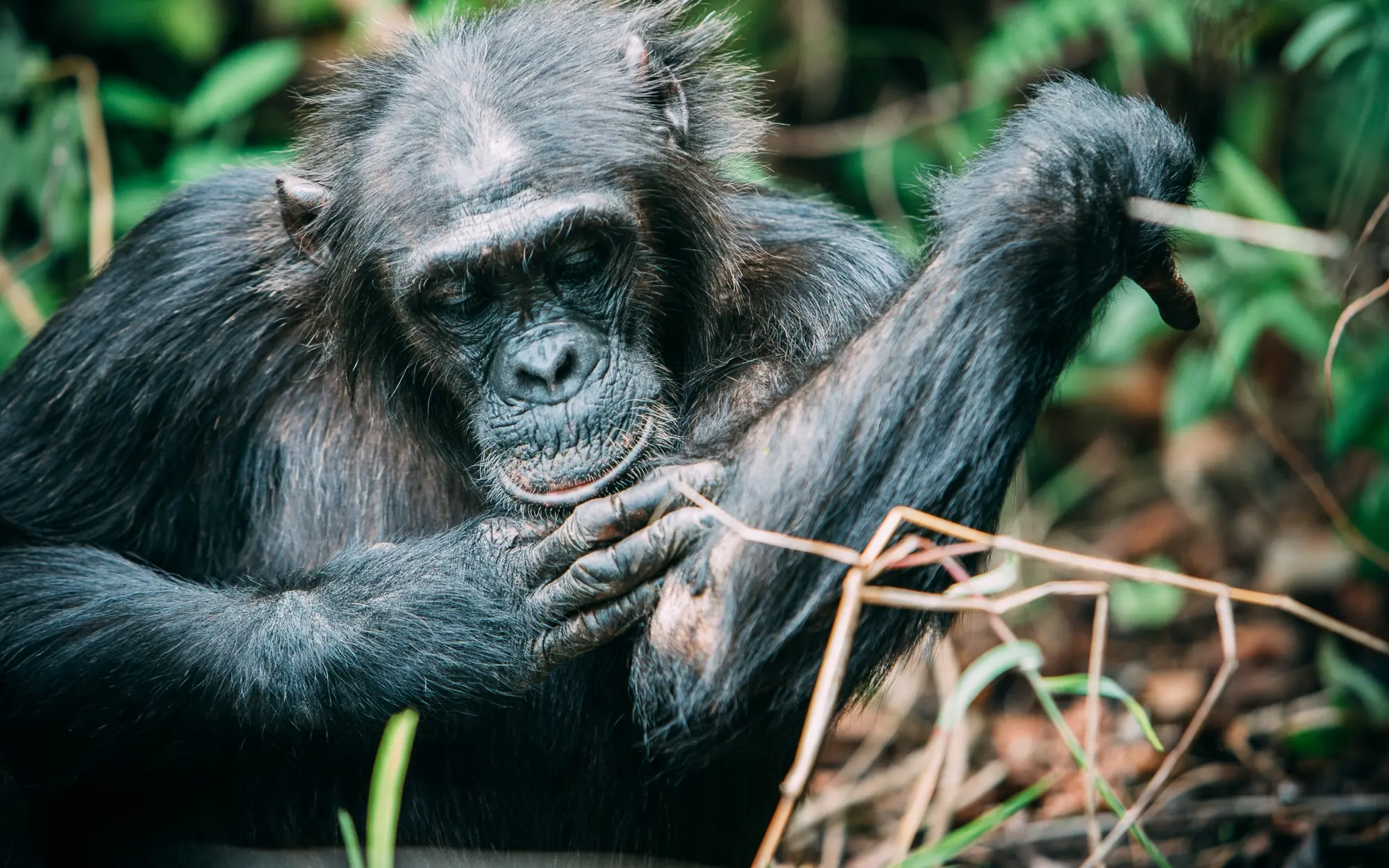
The chimpanzees here have been studied continuously for over 50 years, since Japanese primatologists began their research in 1965. The park was gazetted in 1985 to protect a substantial population of Pan troglodytes, and its communities have grown used to human observers across the decades. The result is close, calm encounters on the forest floor.
The chimpanzees here have been studied continuously for over 50 years
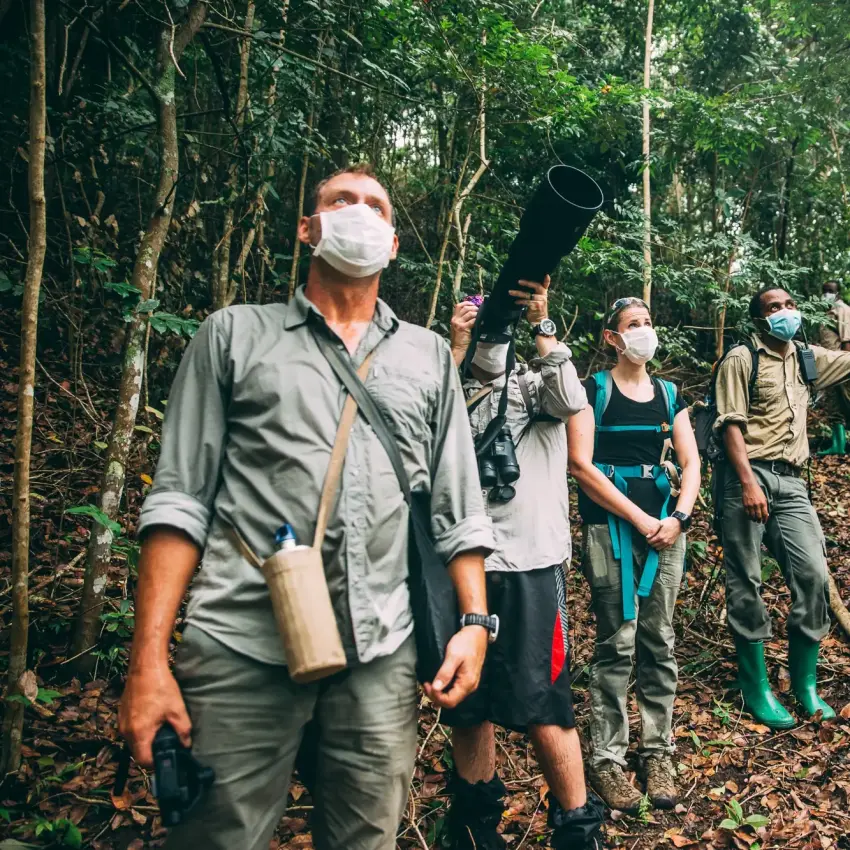
Trekking ranges from gentle walks to genuinely steep climbs, depending on where a community has settled to feed that day. Guides and trackers locate the chimps each morning, often on fruiting slopes or at termiting sites, then lead small groups under strict rules on size, time and distance. The terrain is part of the experience, and no two mornings are quite the same.
Mahale sits on Lake Tanganyika, part of the Albertine Rift section of the Great Rift system. The relief is dramatic. The lake surface sits around 773 metres while the peaks climb past 2,000, so the land rises well over a kilometre from beach to crest. Three principal vegetation types layer up the slopes: miombo woodland and lowland forest on the foothills, montane forest and patches of alpine bamboo higher up. The chimpanzees move with this gradient, following fruiting trees up and down the mountains as they come into season.
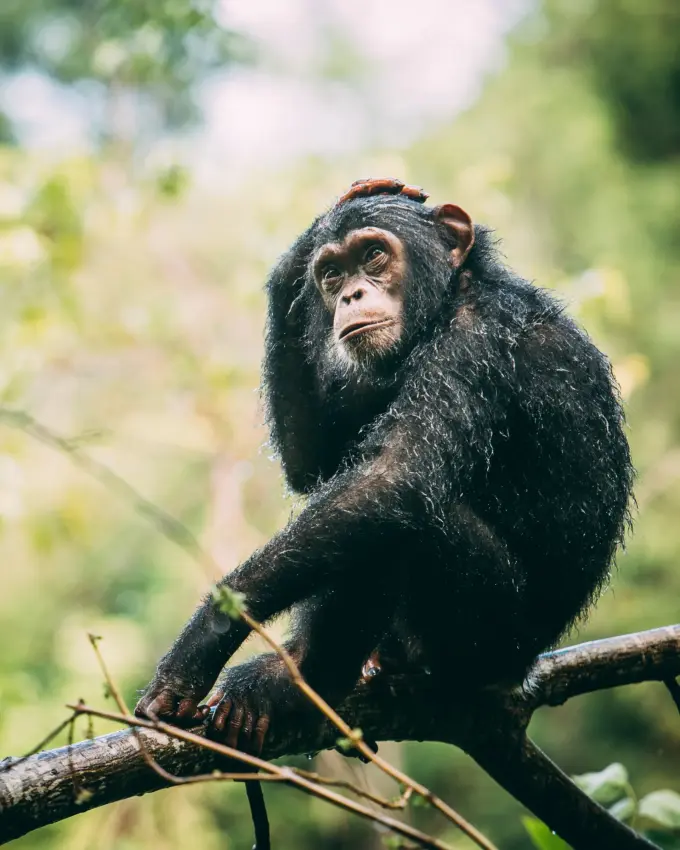
The forest supports at least 70 to 82 mammal species, and the primates are the standout. Alongside the chimpanzees live red colobus, red-tailed monkeys and other forest guenons. The birdlife is rich enough to earn Mahale Important Bird Area status, recognised by BirdLife International, with forest, woodland and lakeshore each holding species of their own. It is a layered place, where what you find depends entirely on how high up the mountain you have climbed.
Alongside the chimpanzees live red colobus, red-tailed monkeys and other forest guenons
Because the terrain is forest and lakeshore rather than open savannah, the rhythm of a day differs from a northern Tanzania safari. Vehicle-based game viewing is not the point here. Mornings are for trekking, afternoons for the lake: boat trips along the coast, swimming, snorkelling and quiet hours on deserted sand. Fishing villages sit on the shoreline outside the park boundary, and boat journeys often pass them, a working lake of traditional craft and nets going about its day.
Mahale is the wild, romantic counterpoint to the northern plains, often paired with the Serengeti or with neighbouring Katavi, whose remote savannah balances Mahale’s focus on primates and forest. The pairing works logistically too, since flights from Dar es Salaam and Arusha frequently route through Katavi on the way west. Few places combine forested mountains, a freshwater lake and habituated wild chimpanzees the way Mahale does, which is exactly why it has become such a sought-after addition to a Tanzanian journey.
The best time to visit Mahale Mountains
Jan
Feb
Mar
Apr
May
Jun
Jul
Aug
Sep
Oct
Nov
Dec
Recommended
Transitional
Challenging conditions
For chimpanzee trekking, come between July and October, when the dry season draws the Mahale chimps down to the lower slopes near the lakeshore camps for shorter, drier and frequent sightings, with August and September the standout. The green season from November to May is lush and good for birding, but the chimps climb higher, trails grow muddy, and the March to May rains close most camps.
accommodation in mahale mountains
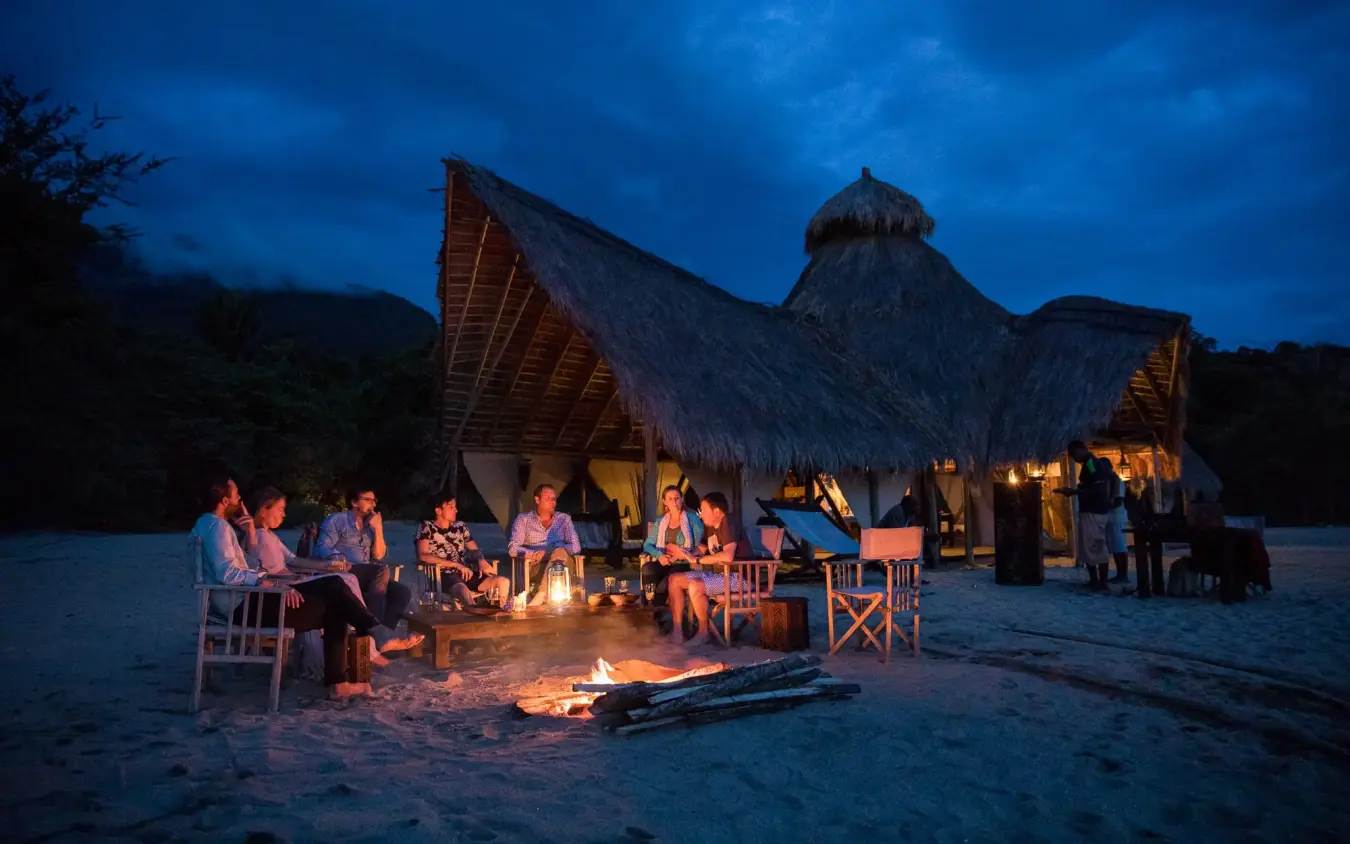
A handful of small, secluded camps and lodges sit along the lakeshore, tented or thatched, with central mess areas, decks and a few guest rooms or cottages each. The settings combine white sand, clear freshwater and a forest backdrop, with the sun setting over the lake. Density is deliberately low, and most camps are reached only by boat. Styles range from solid lodge rooms and bandas to tented suites raised on platforms, all semi-permanent rather than mobile.


activities
Activities
Guided chimp tracking on forested park slopes is the signature activity, with treks ranging from easy to genuinely steep. Forest hikes, birding and primate viewing fill the trails. On the lake, boat excursions, swimming and snorkelling are highlights, along with time on the beaches. Vehicle-based game drives are not part of the experience here.

conservation
Conservation Projects
Mahale Mountains National Park is managed by TANAPA, and its creation was tied directly to protecting chimpanzees. Japanese primatologists have maintained a research programme here for over 50 years. The park forms the core of the Greater Mahale Ecosystem, roughly 18,200 km², a planning unit for the wider Albertine Rift biodiversity hotspot.

getting around
Connectivity and Logistics
Mahale is reached only by air and water, with no road safari access. Light aircraft fly from Dar es Salaam or Arusha, often via Katavi, to airstrips serving the park. Lodge-organised motorboat transfers then run along Lake Tanganyika to the lakeshore camps. The MV Liemba ferry from Kigoma offers a slower alternative for the unhurried.
other areas in tanzania
Katavi pairs naturally with Mahale: a remote western savannah of dry-season hippo and crocodile concentrations, usually on the same flight route. The Serengeti adds open plains, big predators and the wildebeest migration for contrast. Gombe Stream, further north on Lake Tanganyika, offers a smaller, research-led chimpanzee experience. Ruaha and Nyerere, in the south, bring woodland-savannah, strong predator dynamics and river systems to a broader Tanzania itinerary.





frequently asked questions
By charter flight and then by boat, and there are no roads at all.
Scheduled charters fly from Arusha or Dar es Salaam, often with a stop, and land at the airstrip near the park. From there it is a boat transfer of thirty to ninety minutes along the shore of Lake Tanganyika to the camps.
It is one of the longer journeys we book, and it is part of the experience.
Soft bags only, and we book the flights and the boat together so nothing is left to chance.
Steep, forested and among the best in Africa.
The community here has been studied for decades and is thoroughly habituated, so once the trackers find them you sit close while they feed, groom and argue. Getting there means climbing through forest, sometimes for a couple of hours.
The minimum age is twelve.
An hour is the standard time with them, and most people find it the best hour of the trip.
Yes. Both TravelHealthPro, the UK's official travel health service, and the CDC treat mainland Tanzania as a malaria area and recommend antimalarial cover.
The park is low, warm and forested on the lake shore, so the risk here is real rather than marginal.
We do not make medical recommendations. That is a conversation between you and your own doctor or a travel clinic.
On the practical side, cover up at dusk and carry repellent.
Yes, and it is one of the reasons to stay longer than the trekking demands.
The water off the camps is clear, warm and deep, with endemic cichlids in the shallows that make snorkelling worthwhile. Kayaking and boat trips along the shore fill the afternoons.
The camps supervise where and when, since this is a wild shoreline.
A morning with the chimpanzees and an afternoon in the lake is a strange and very good combination.
Reasonably, and it is the climbing rather than the distance.
The mountains rise straight out of the lake, so the trek starts uphill and stays there, on forest paths that are often slippery. A trek can be forty minutes or four hours depending on where the chimpanzees are.
There is no vehicle option and no shortcut.
Tell us honestly what your party can manage and we will say whether Mahale is right or whether Rubondo is the gentler answer.
Four, and three at the absolute minimum.
The journey in is long, the chimpanzees are not found every single day, and the lake deserves an afternoon of its own. Four nights gives you two or three chances and time to enjoy where you are.
It pairs naturally with Katavi, which is a short flight away and a complete contrast.
Tell us how long the trip is and we will say whether the west of Tanzania fits.
rated five stars by our clients

our approach
remote, exclusive
& personal
Every journey starts with a conversation. We take the time to understand your vision before we start planning.
Whether by phone or in person, we work with you directly to shape something that is considered, personal, and expertly delivered.
Every journey starts with a conversation. We favour a direct, personal approach: understanding your vision before anything else.
Whether by phone or in person, we work with you directly to shape a journey that is both thoughtfully considered and expertly delivered.
Get in touch to start planning yours.