Timing your trip
best time to visit mahale mountains
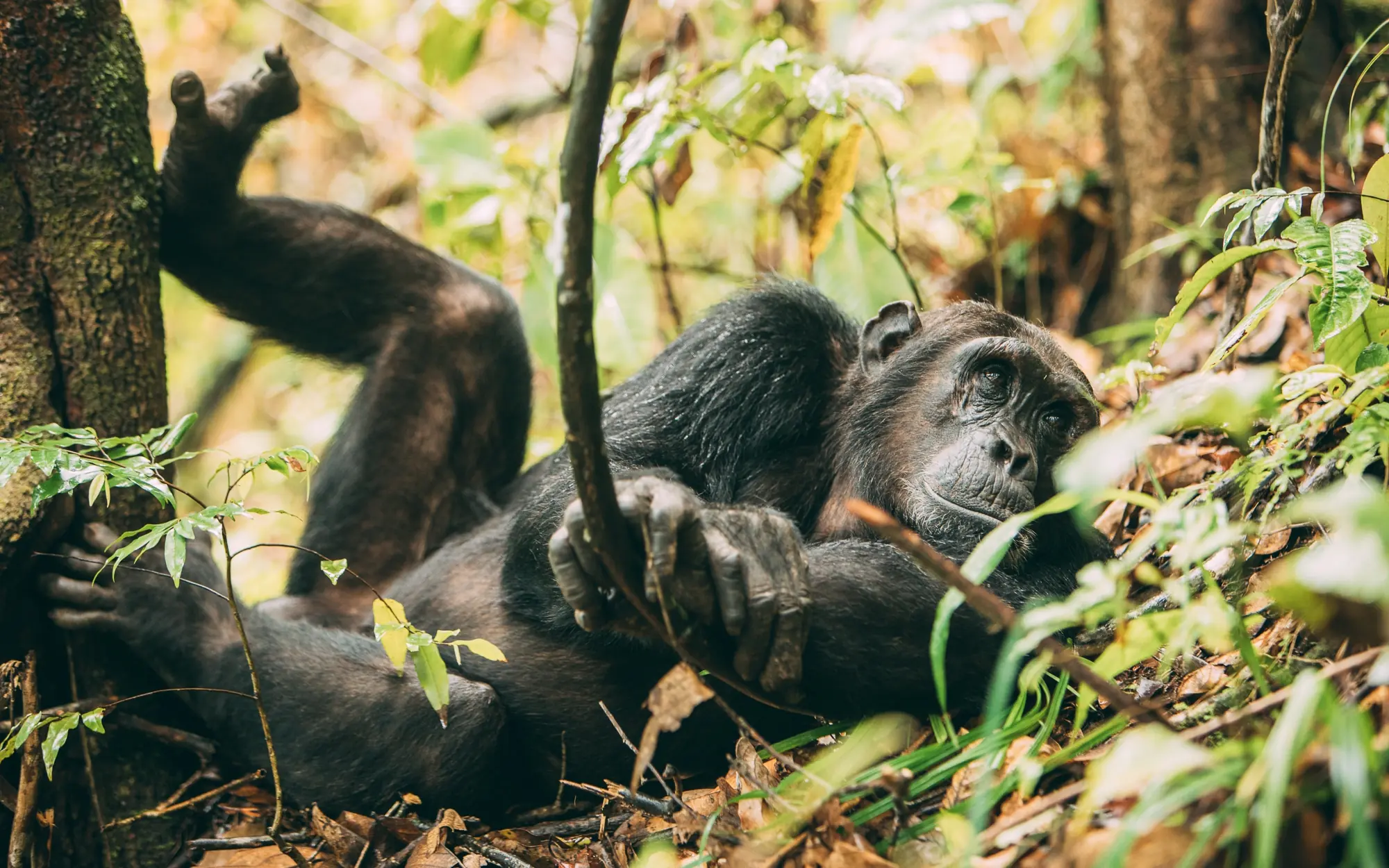
Mahale is chimpanzee country on the forested shore of Lake Tanganyika. The trekking is best in the long dry season, when the chimps move down to the lower slopes near the lakeshore camps.
seasonal guide to mahale mountains
For chimpanzee trekking, come between July and October, when the dry season draws the Mahale chimps down to the lower slopes near the lakeshore camps for shorter, drier and frequent sightings, with August and September the standout. The green season from November to May is lush and good for birding, but the chimps climb higher, trails grow muddy, and the March to May rains close most camps.
month by month details
January falls in the wet season, with warm, humid days and the chimps generally high in the forest. Tracking is still possible, but groups feed at upper elevations, so treks tend to be longer and steeper, and trails can be slippery underfoot.
The forest is green and the air often clear after a shower, with strong birding and few other visitors. Lake Tanganyika is good for swimming and boating between rains, though weather is more changeable than in the dry months. The lakeshore camps are open, and this is a quiet time to have the park largely to yourself.
February is warm and humid, often a touch drier than January, with the chimps still favouring higher ground. Sightings remain reliable over two or three trekking days, but expect demanding walks on muddy paths through dense vegetation.
The reward is a lush, quiet forest with excellent birding and clear light for photography. The lake is generally calm enough for swimming and kayaking between showers. Camps remain open, and visitor numbers stay low.
March marks the onset of the long rains, and Greystoke Mahale and most other camps close from mid-month. Rainfall builds and can be heavy and persistent, leaving trails muddy and overgrown and pushing the chimps higher into the forest.
Tracking becomes hard work for limited reward, and access is restricted once the camps shut for the season. Skies are dramatic and the scenery green, but this is not a month for chimp-focused travel.
April is the wettest month, and the main lakeshore camps are closed. Storms are frequent, trails are deep in mud, and the chimps stay high on the slopes, so trekking is long, steep and uncomfortable when it is possible at all.
Lake Tanganyika can be rough, and boat movement is unreliable in poor weather. With Greystoke Mahale and its neighbours shut for the season, this is a month to avoid.
May sits at the tail of the long rains, and the main camps stay closed through the month. Conditions slowly improve as the rain eases, but trails remain muddy and vegetation dense, and the chimps stay higher up for much of the period.
The hills turn bright green and the air begins to clear, yet access is the limiting factor: Greystoke Mahale and most neighbours do not reopen until early June, so reliable trekking has to wait. Until then, this is a month for the rains, not for chimps.
June opens the long dry season, with rain becoming minimal and the camps reopening and fully operational again. Trails are drying out and humidity is low, but the chimps often remain relatively high in the forest, feeding on the last of the fruit, so treks can still be moderately long.
Lake Tanganyika is at its best for swimming, kayaking and time on the beach, with sunny days and cool, clear nights. Visitor numbers start to rise but the park is never busy, making this a comfortable lead-in to the prime months.
July is firmly dry, and the chimps begin moving down to the lower slopes near the lakeshore camps. Trails are dry and navigable, vegetation is thinning, and as the month goes on the chimps become easier to locate, with reliable sightings over a couple of trekking days.
Days are warm and comfortable rather than hot, nights are cool, and the lake is calm and clear for swimming and boating. This is the start of the prime trekking season, with steady but uncrowded visitor numbers.
August is one of the two standout months, with the chimps concentrated on the lower slopes close to the lakeshore lodges. Sightings are frequent and often prolonged, and the thinned understory and dry trails make for easier walking and clearer viewing and photography.
It is one of the warmer dry-season months, though humidity stays low so the heat is manageable. Lake Tanganyika is ideal for swimming and boating, with warm water and bright, settled days. Camps are at their busiest, which here still means quiet.
September is the other peak month, with the chimps still on the lower slopes and treks short and rewarding. The open understory and dry trails make moving through the forest straightforward, and extended observations of the habituated group are common.
Days are pleasant and nights a touch cooler than August, with excellent visibility on the lake for long days on the water. This is the finest balance of prime trekking and easy lake time, and the park remains uncrowded.
October closes the dry season and stays prime for trekking, with the chimps typically still low and reachable. Vegetation remains thin and trails dry for most of the month, so sightings continue to be frequent, though humidity creeps up and the first short-rain showers can arrive late.
Lake Tanganyika stays warm and generally calm, with the occasional storm cloud appearing towards month-end. Camps are open throughout, and this is the last of the reliably easy-walking months before the rains return.
November brings the short rains, with rising humidity and the chimps beginning to move back up the slopes. Early in the month trekking can still be good, but trails turn slippery and walks lengthen as the groups climb, so sightings take more effort than in the dry season.
Storms tend to be short and dramatic, leaving many good hours for the lake between showers, and the forest greens up quickly. Camps are open and visitor numbers low, suiting travellers who will trade easier walking for a quieter park.
December continues the short rains, with brief, heavy storms and the chimps often found higher up on more demanding trails. Tracking remains possible throughout, but expect longer, steeper walks and slippery ground, with sightings rewarding the effort over a few days.
The forest is lush, birdlife and butterflies are abundant, and the air is clear for photography after rain. The lake alternates sun and storm, with moody skies and rich colour. Camps stay open and the park is quiet.
Plan your perfect tanzania safari
Tell us a little about what you have in mind and one of our specialists will be in touch.
frequently asked questions
July to October, the dry season.
The chimpanzees tend to stay lower on the slopes then, which makes the trek shorter, and the forest paths are far easier underfoot. The lake is calm and clear for swimming, and the weather is settled.
October is the hottest of them.
This is the window we book for nearly every client, and the camps fill accordingly.
The park is, but most of the camps are not.
The camps here generally close through the heaviest rains, roughly from March until May or June, because the boat transfers and the forest become difficult.
The shoulder months either side are workable and much quieter.
We will tell you exactly which camps are open for your dates rather than letting you find out when a booking is refused.
Yes, and the wet season is the harder one.
In the rains the chimpanzees range higher up the mountain following fruit, so the trek can be long and steep and the forest is slippery. In the dry months they come down towards the lake and the trek is shorter.
They are wild and they move, so no month guarantees them.
That difference is the main reason we book July to October rather than the green season.
Hot and humid on the lake shore, and cooler as you climb.
The dry season is warm with clear skies and calm water. The wet season brings heavy afternoon storms, dramatic skies and a forest that drips all day.
Nights are warm all year.
Pack light breathable clothes, boots with grip for the forest, a waterproof whatever the month, and swimming things.
The dry months, July to October, when the water is clearest and calmest.
Storms stir the lake in the wet season and the visibility drops. In the dry months the cichlids in the shallows are easy to see and the boat trips along the shore are comfortable.
The water is warm year round.
It is a genuine second reason to come, not an afterthought, so we build afternoons for it.
July to October, when both are at their peak.
Katavi's dry season brings the hippo and buffalo concentrations at exactly the time Mahale's chimpanzees are lowest on the slopes, and the flight between them is short.
In the rains both are difficult and most camps close.
It is the classic western Tanzania pairing, and we would allow at least six nights for the two together.
rated five stars by our clients

our approach
remote, exclusive
& personal
Every journey starts with a conversation. We take the time to understand your vision before we start planning.
Whether by phone or in person, we work with you directly to shape something that is considered, personal, and expertly delivered.
Every journey starts with a conversation. We favour a direct, personal approach: understanding your vision before anything else.
Whether by phone or in person, we work with you directly to shape a journey that is both thoughtfully considered and expertly delivered.
Get in touch to start planning yours.