
Six guests, 3,865 square kilometres
Borassus fan palms line a broad, slow-moving river in Tabora Region, western Tanzania, and behind the floodplain the miombo woodland runs inland. Ugalla River National Park covers 3,865 square kilometres, gazetted in 2019 from the former game reserve. One small seasonal camp operates here, on foot, with no lodges and barely a track for a vehicle.
Borassus fan palms line a broad, slow-moving river in Tabora Region
The Ugalla forms the park’s southern boundary before draining west into the Malagarasi-Moyowosi wetlands and eventually Lake Tanganyika. Rainfall runs 600 to 750 millimetres a year, and by August the channel has shrunk to sand, seepages and isolated oxbows. The river is the only reliable water for hundreds of square kilometres. Wildlife draws in accordingly, onto whatever pools survive the dry months.
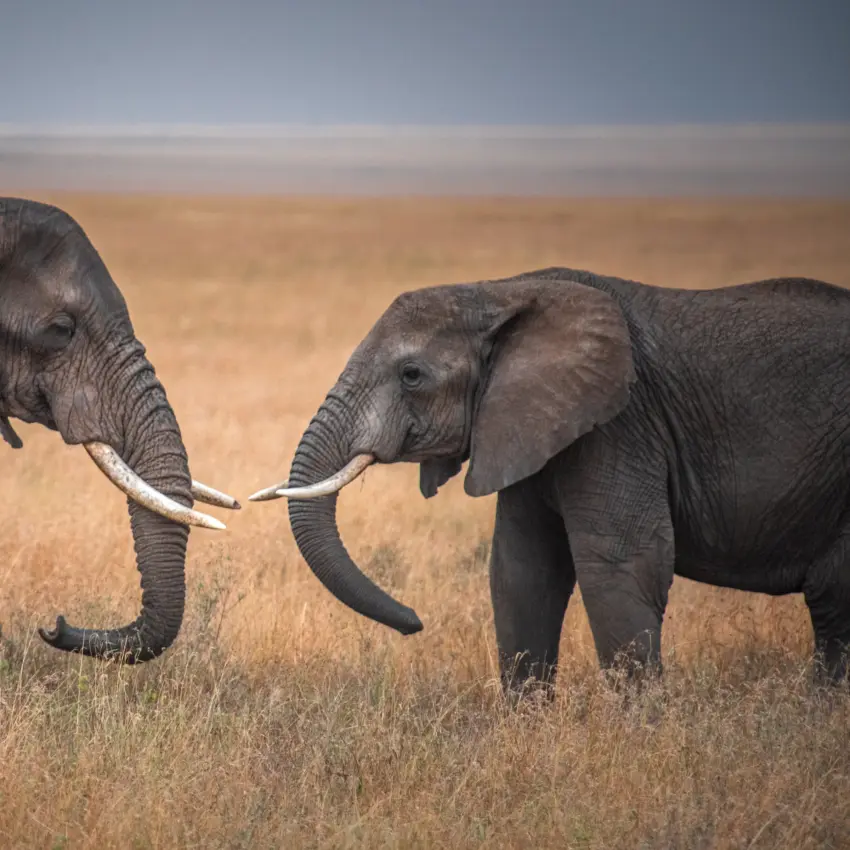

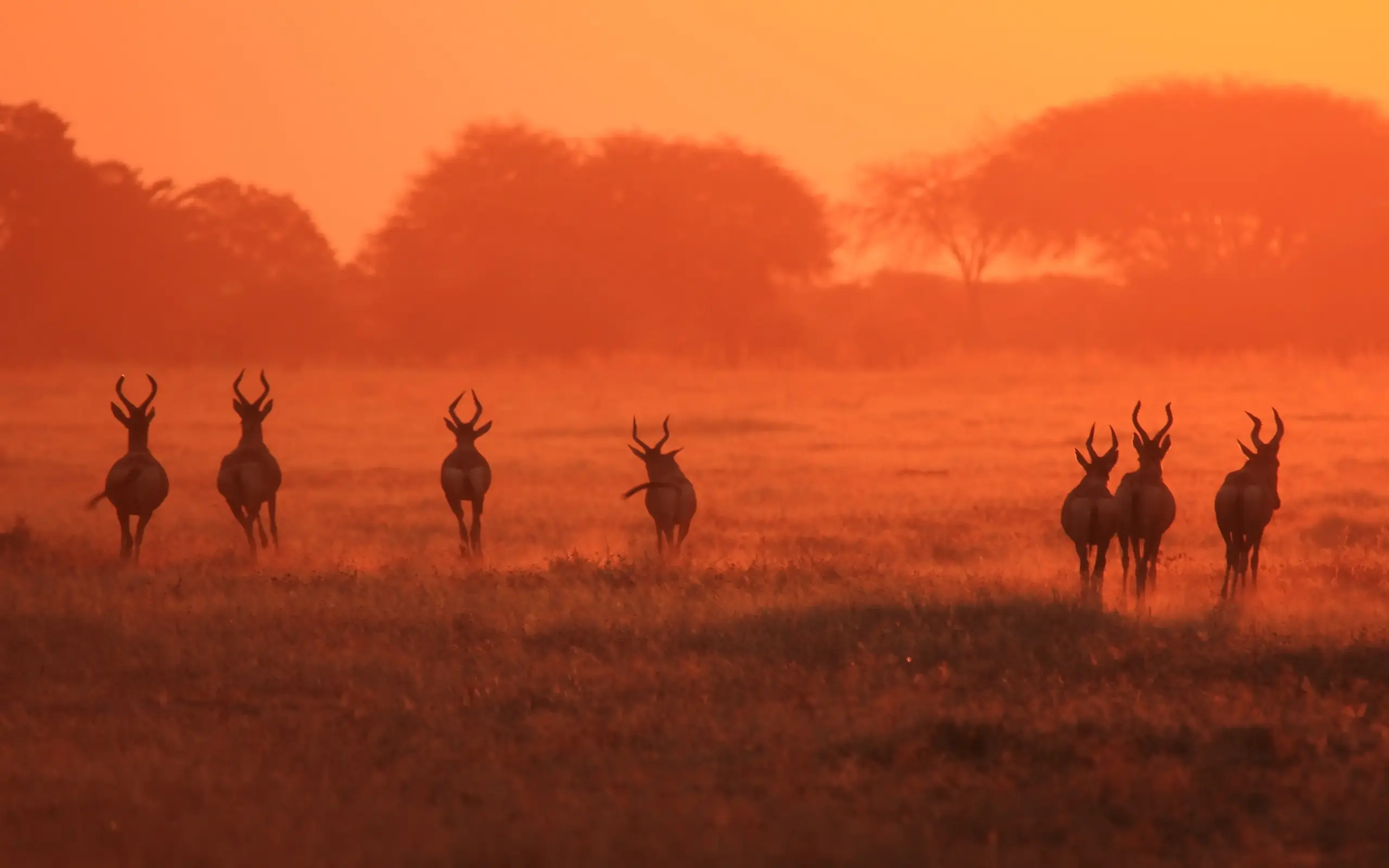
Sable antelope move through the miombo in breeding herds, and with them roan, Lichtenstein’s hartebeest, eland, topi, greater kudu and Defassa waterbuck. Elephants feed in grass tall enough to hide them, and buffalo work the floodplain edge. Lions, leopards, spotted hyenas and wild dogs hunt this country, and animals unused to vehicles or people on foot stay wary and keep their distance.
Pel’s fishing owls hunt the fan palms lining the river.
Hippos crowd the deeper bends, and Ugalla’s crocodiles have a long-standing reputation among field naturalists for their size. Pel’s fishing owls hunt the fan palms lining the river. Shoebills, wattled cranes, African finfoot, pygmy geese and southern ground hornbills work the floodplain and marsh margins, and Cape clawless otters fish the perennial pools between them.
Parliament created Ugalla River National Park in 2019, joining the northern section of the 1965 Ugalla River Game Reserve with the North Ugalla Forest Reserve. For decades the land was used exclusively for big-game hunting. Hunting ended with gazettement and the wildlife has been returning since, though no census exists yet to measure it. TANAPA manages the park, one of Tanzania’s newest national parks, closing a corridor of protected woodland between Katavi and the Malagarasi basin. Fish poaching along the river remains an active enforcement concern.
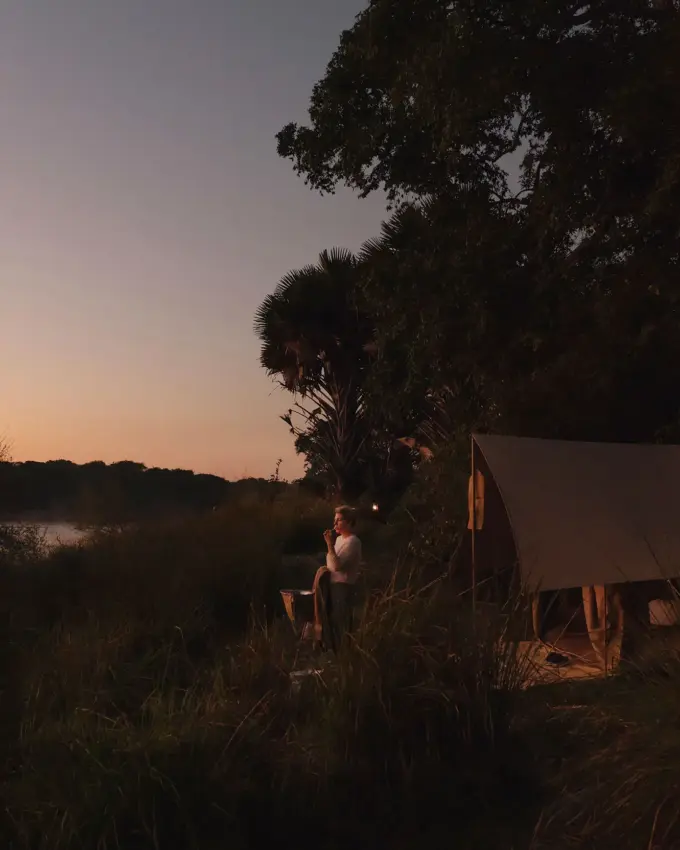
One camp operates inside the park, a mobile expedition of canvas tents, pitched for the dry season and moved as the walking requires. Departures are led by specialist walking-safari guides. Walks begin at dawn, paced to the group, and stays typically run three nights. Water comes from buckets and light from gas lamps, dinner is cooked on an open fire, and a satellite phone and support vehicle wait in reserve. Guests who prefer it sleep out under the stars.
Tsetse flies are part of why cattle never took hold in these woodlands.
Ugalla lies in the ancestral country of the Nyamwezi, and three sacred sites fall inside the park boundary, among them the ritual ground at Mfinula. The woodlands around it carry a long tradition of honey gathering, with bark hives set in the miombo and harvested seasonally, a practice bound up with the regional economy around Tabora. Tabora itself was a caravan crossroads on the nineteenth-century ivory routes to Lake Tanganyika, and both Livingstone and Stanley spent time there in the early 1870s.
The camp works a window set entirely by water. From January the black cotton soils stop vehicles, the airstrips soften, and game scatters through hundreds of kilometres of trackless miombo. By the second half of July the ground has hardened, the grass has dropped, and the animals have drawn in toward the river. Tsetse flies are part of why cattle never took hold in these woodlands. Access is by light aircraft only, and there is no practical road approach for visitors.

The best time to visit Ugalla River National Park
Jan
Feb
Mar
Apr
May
Jun
Jul
Aug
Sep
Oct
Nov
Dec
Recommended
Transitional
Challenging conditions
Come between mid-July and mid-October, the only operating window, when walking terrain is firm and game concentrates around the river. August to October is the core: dry, hot, and reliably good on foot. Outside these months the camp relocates and the park is effectively closed to visitors.
accommodation in ugalla river national park
A single seasonal walking camp is all Ugalla has: A-frame canvas tents with cot beds, mosquito nets and rugs laid over the sand. Gas lamps do the lighting. Two short-drop toilets and two bucket showers stand behind canvas screens, and the mess is a fly-sheet with a table and chairs. The camp shifts as the walking requires and folds away at the end of the dry season. There is no pool and no WiFi, and mobile signal is limited by design.


activities
Dawn walks along the river
Walking is the heart of it, on foot from camp with a specialist guide and an armed ranger, along riverbanks, oxbow bends and the miombo edge. A support vehicle allows some driven exploration west through the floodplains and palm forest. Birding concentrates on the marsh margins and oxbows. Evenings close around a fire and a long dinner.

conservation
Chimp research and aerial censuses
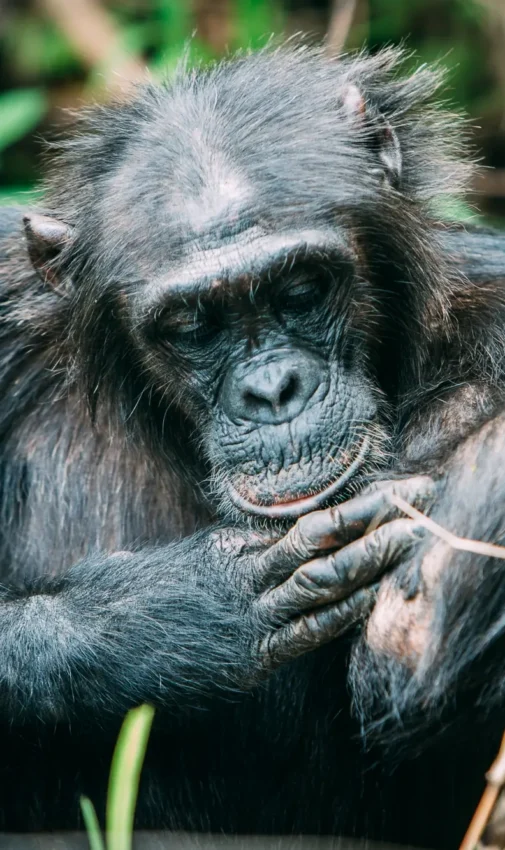
The Greater Mahale Ecosystem Research and Conservation programme monitors savannah-dwelling chimpanzees across the wider Masito-Ugalla ecosystem. TAWIRI runs periodic aerial wildlife censuses in the west. The Jane Goodall Institute's TACARE programme supports community forestry and beekeeping.

getting around
Charter flights to Muhuba airstrip
Access is by light aircraft charter, typically from Arusha with a refuelling stop at Tabora, or from Ruaha, landing at Muhuba airstrip inside the park. The route falls on a charter loop shared with Katavi and Mahale Mountains, making either park a straightforward addition. Helicopter transfers are possible with TANAPA clearance.
other areas in tanzania
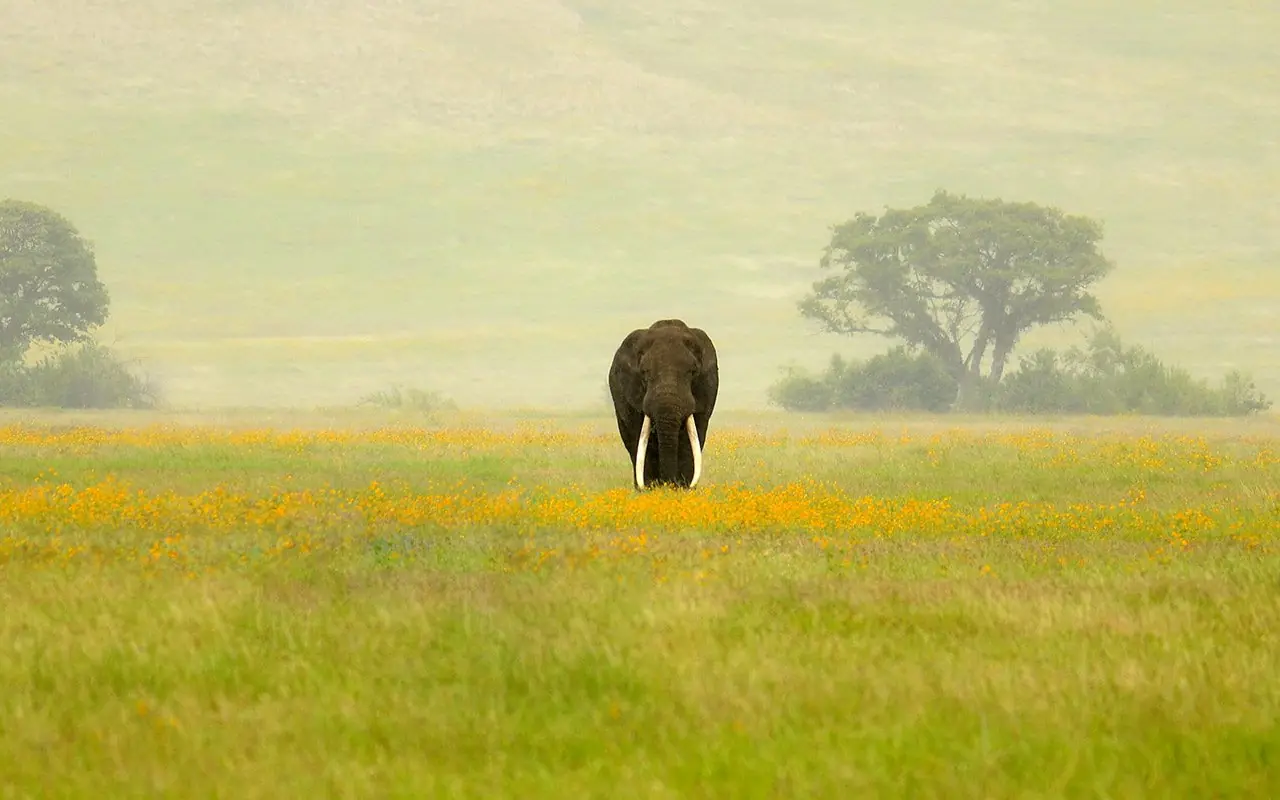
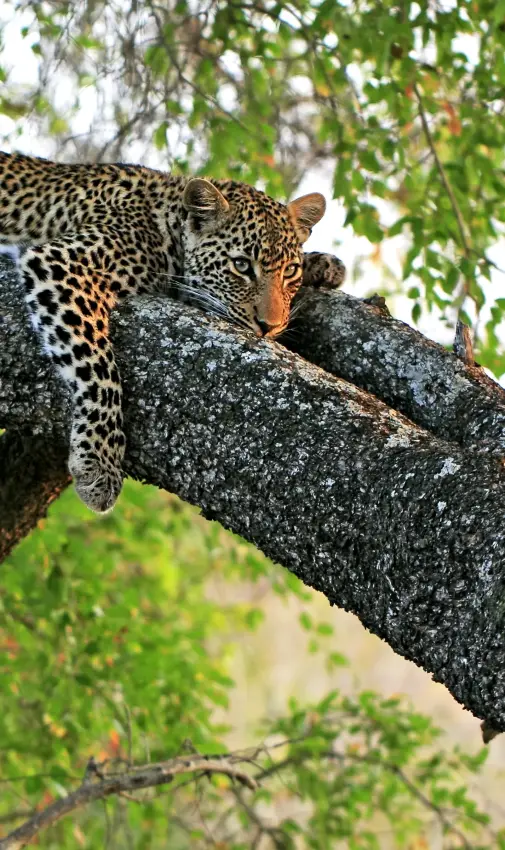
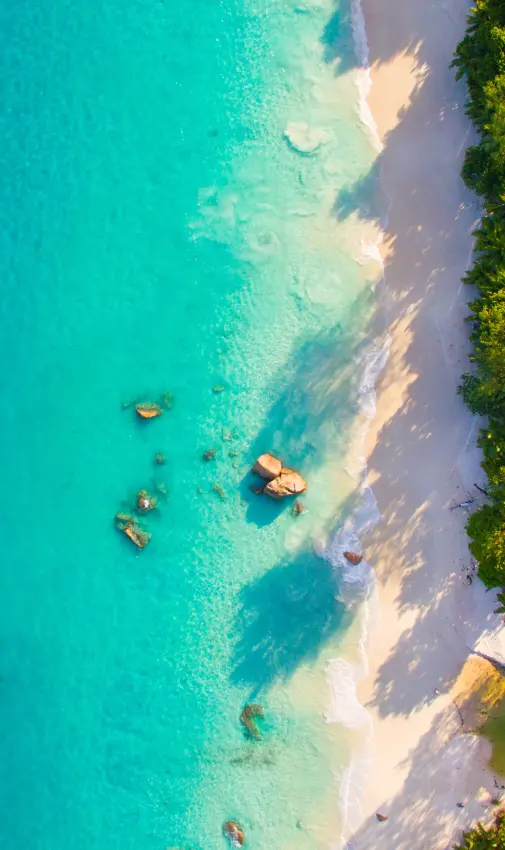
Katavi, a short charter flight away, delivers the big-herd drama of the Katuma River in late dry season, with hippo pods packed into shrinking pools. Ruaha pairs baobab country and large lion prides with Ugalla's palm and miombo walking. Mahale Mountains, on the shore of Lake Tanganyika, adds chimpanzee trekking and swimming in clear water. Nyerere offers boating on the Rufiji River, and the Serengeti waits at the far end of the same flying itinerary.





frequently asked questions
By charter flight to the airstrip, and there is no other sensible way.
The park sits in remote western Tanzania, and the flights come from Arusha or Dar es Salaam, usually with a stop. The camp meets the aircraft.
It pairs with Katavi and Mahale, which are the nearest places of any note and still a flight away.
Soft bags only, and we book the whole chain of flights together.
Miombo woodland and a river, with almost no one in it.
Ugalla was a hunting area for decades and became a national park only recently, so the wildlife is wary and the infrastructure is minimal. The river holds hippo and crocodile, and the woodland carries sable, roan, eland and buffalo.
There is one small camp.
It is for someone who wants genuine wilderness and does not need a sighting every hour, and we will say so before booking it.
Yes. Both TravelHealthPro, the UK's official travel health service, and the CDC treat mainland Tanzania as a malaria area and recommend antimalarial cover.
The park is low, warm and built around a river, so the risk here is real rather than marginal.
We do not make medical recommendations. That is a conversation between you and your own doctor or a travel clinic.
On the practical side, cover up at dusk and carry repellent.
Walk, mostly, which is how this country should be seen.
- Walking safaris with an armed guide, for a morning or a whole day
- Fly camping along the river, in simple tents
- Boat trips and canoeing when the water allows
- Fishing on the river
Game drives run, and the woodland is thick enough that walking is often better.
Walking carries minimum ages, so tell us who is coming before we book it.
No, and we would say so rather than sell it.
The journey is long, the camp is simple, the game is thinly spread and wary, and the season is short. What it offers is wilderness with nobody in it.
A first-time visitor is far better served by the northern circuit or the southern parks.
Tell us what you have seen before and we will place Ugalla honestly, or not at all.
Three, given the flying.
Three nights makes the journey worth it and allows a night of fly camping along the river. Two is not enough to justify the charter.
It pairs with Katavi and Mahale, and the three together make a proper western Tanzania trip of ten days or so.
Tell us how long you have and we will say whether the west fits.
rated five stars by our clients

our approach
remote, exclusive
& personal
Every journey starts with a conversation. We take the time to understand your vision before we start planning.
Whether by phone or in person, we work with you directly to shape something that is considered, personal, and expertly delivered.
Every journey starts with a conversation. We favour a direct, personal approach: understanding your vision before anything else.
Whether by phone or in person, we work with you directly to shape a journey that is both thoughtfully considered and expertly delivered.
Get in touch to start planning yours.