Where three in four flamingos hatch
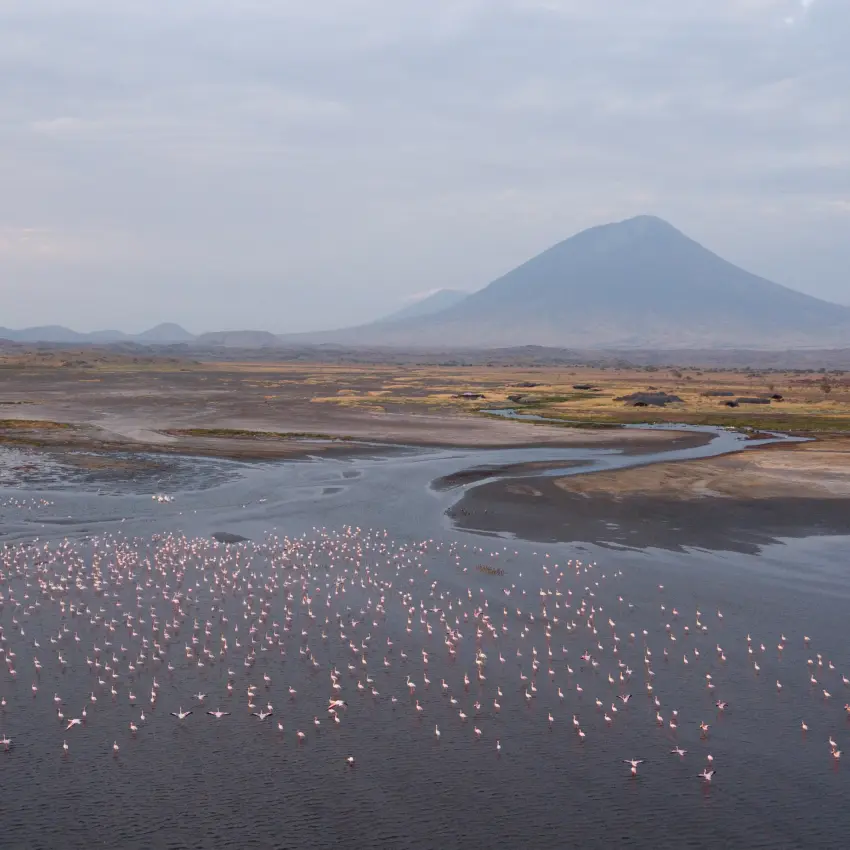
Ol Doinyo Lengai rises to the south, and beneath it Lake Natron spreads across the floor of the Gregory Rift, its shallow waters stained red where salt-loving microorganisms bloom. This is a hyper-alkaline soda lake, its edge pools among the most caustic waters found anywhere, ringed by salt crusts, volcanic cones and Rift escarpments. The Maasai call the volcano the Mountain of God.
The Maasai call the volcano the Mountain of God
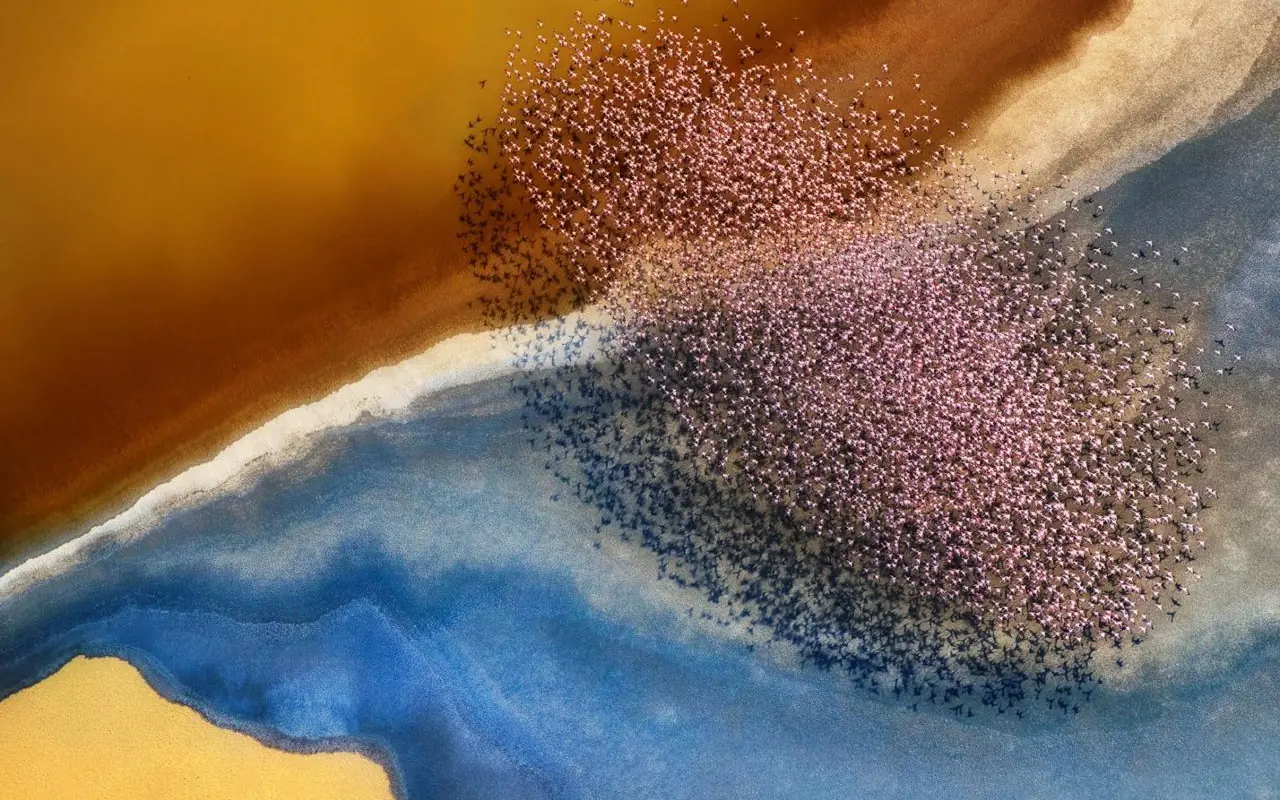
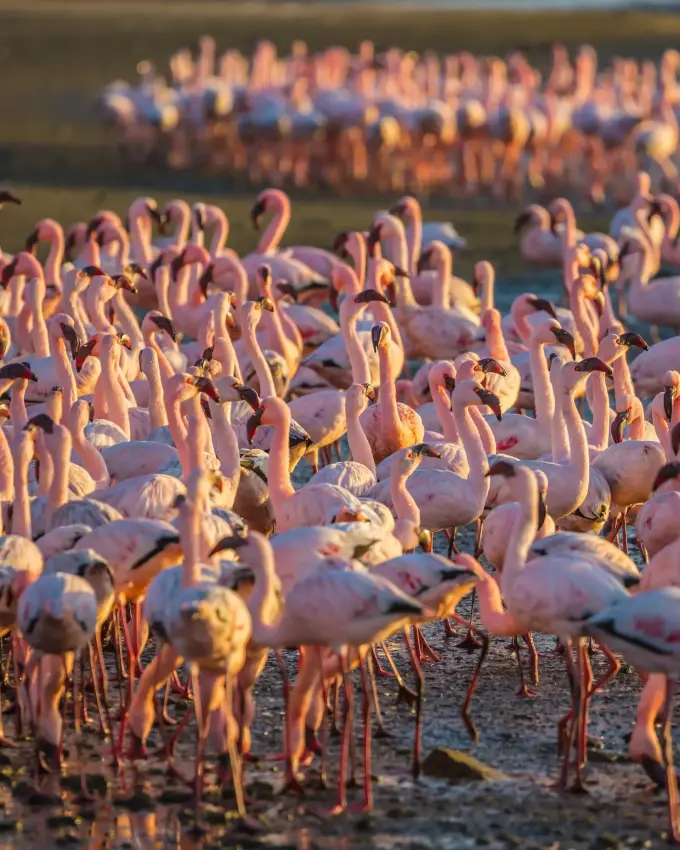
The lake matters most for its birds. Around three-quarters of the world’s lesser flamingos are hatched here, on salt-crystal islands that the caustic water shields from most predators. They feed on the cyanobacteria and algae that flourish in the alkalinity, the same microbial life that turns the shallows pink and red. Greater flamingos breed on the mudflats too, in far smaller numbers.
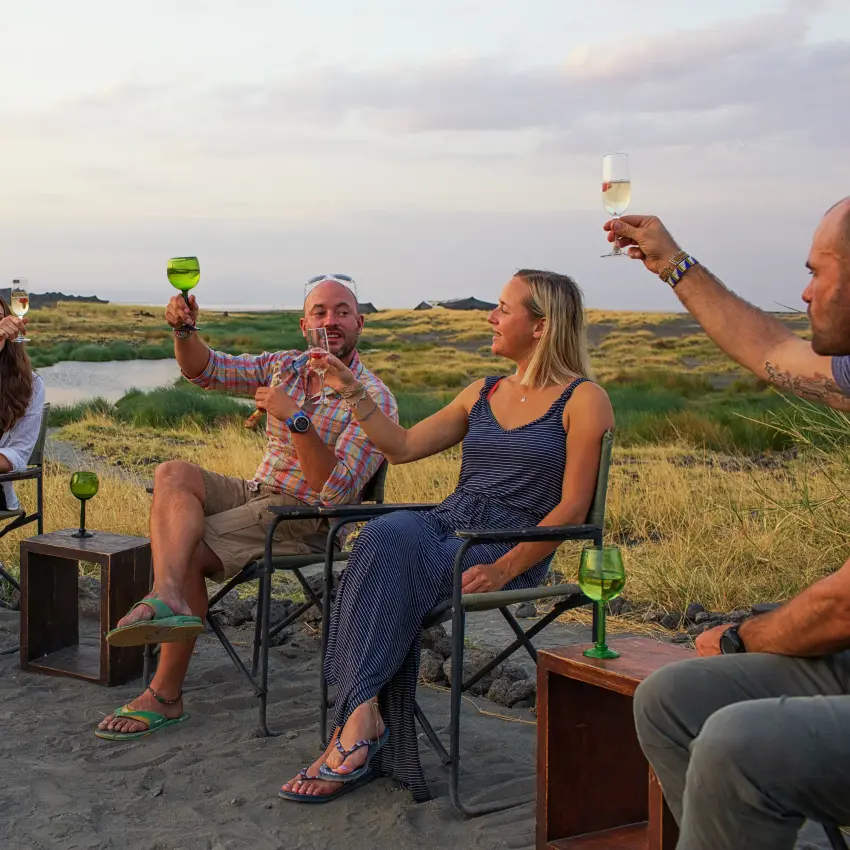
Little grows around the main lake beyond microbial mats, salt-loving plants and drought-tolerant acacia scrub. The exception is the Ngare Sero gorge, a freshwater oasis of palms, reeds and clear plunge pools fed by springs and the river that carved it. Beyond the water, the surrounding plains are Maasai rangeland, grazed by cattle and goats, the wildlife thinner here than on the Serengeti further south.
The exception is the Ngare Sero gorge, a freshwater oasis
Natron is an endorheic basin: water flows in, and nothing flows out. The Southern Ewaso Ng’iro River, rising in central Kenya, is the principal inflow, joined by the Engaresero River and by mineral-rich hot springs along the margins. Evaporation does the rest, concentrating the sodium carbonate washed down from volcanic soils until the water turns corrosive to the skin of most animals.
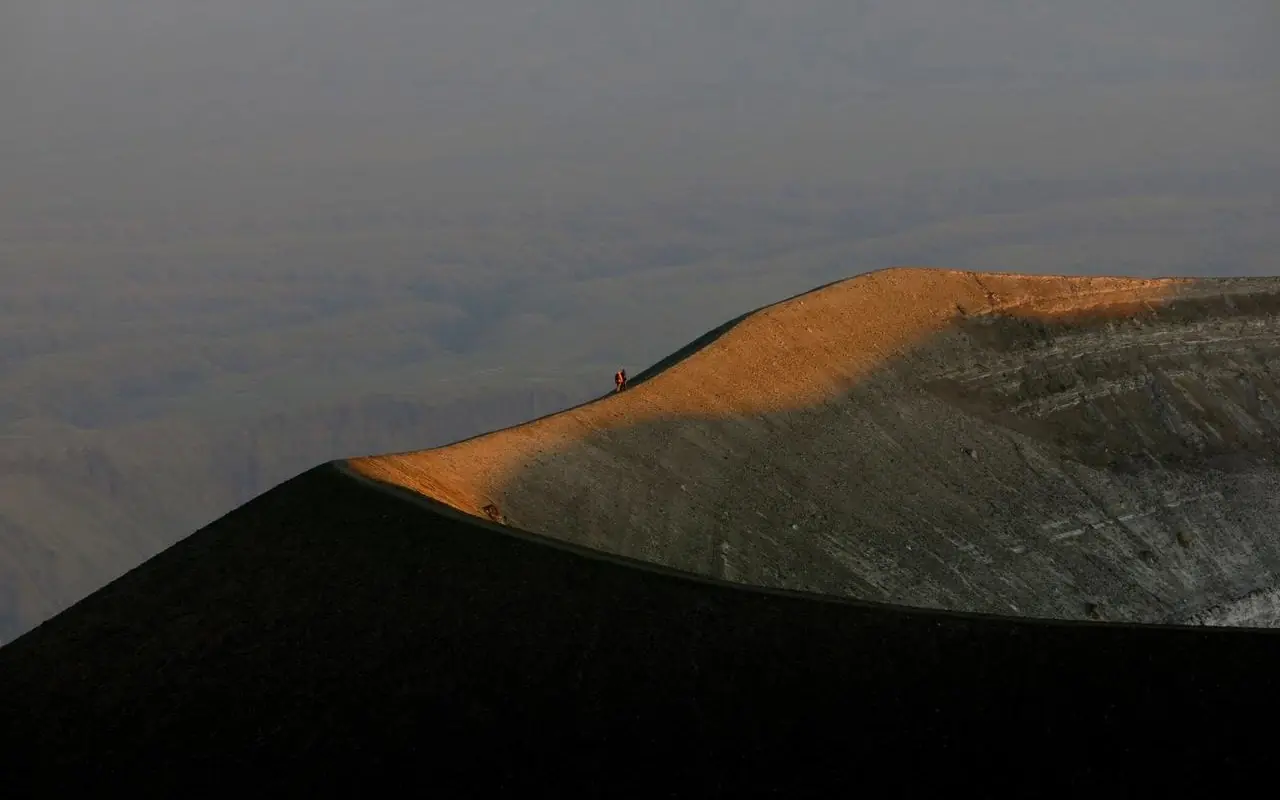
Natron rewards the fit and the curious rather than those seeking the polish of the main parks. The signature climb is Ol Doinyo Lengai, a demanding overnight ascent tackled at night to escape the daytime heat, reaching the summit for sunrise over the Rift. The footing is loose volcanic ash and gravel, the gradient steep, and the round trip can run eight to twelve hours. It is the only volcano known to erupt natrocarbonatite lava, unusually fluid and cool, black or silver-grey when fresh and weathering to white over time.
Gentler days centre on the Ngare Sero gorge, where a guided walk follows the river upstream, often wading through the current, to a series of waterfalls and pools cool enough to swim in. Along the lake shore, other walks bring you close to the flamingo shallows and the strange soda formations, timed for the soft light of early morning or late afternoon and kept clear of the active breeding colonies. Every outing runs with local Maasai guides, a requirement of the community-managed area rather than a formality.
Natron rewards the fit and the curious rather than those seeking the polish of the main parks
Conditions here are worth stating plainly. Natron is hot, remote and comparatively basic next to the Serengeti circuit to the south: long rough transfers, little shade outside the gorge and the camps, limited power and connectivity, and daytime temperatures that push past 40°C in January and February. The trade-off is solitude. Visitor numbers stay very low, the landscapes are vast, and the flamingo shores are quiet. For travellers drawn to geology, birdlife and Maasai country as much as to game densities, that exchange holds up.
The lake basin was listed as a Ramsar wetland in 2001, and the area is run as a community-managed zone on Maasai land near Engaresero village. Close to the village lies a site of ancient hominid footprints, pressed into hardened volcanic ash, a direct record of people who walked this ground long before the Maasai arrived with their cattle. Culture, geology and wildlife are not separate stories here. They read as one, written across the rift floor.
The best time to visit Lake Natron
Jan
Feb
Mar
Apr
May
Jun
Jul
Aug
Sep
Oct
Nov
Dec
Recommended
Transitional
Challenging conditions
Come in the cooler dry months for clear views of Ol Doinyo Lengai and comfortable walking, and to pair Natron with the northern Serengeti's mid-year river crossings. Jan and Feb bring extreme heat above 40C, viable only around dawn and dusk. Rainy spells can muddy roads and limit lake-edge access.
accommodation in lake natron
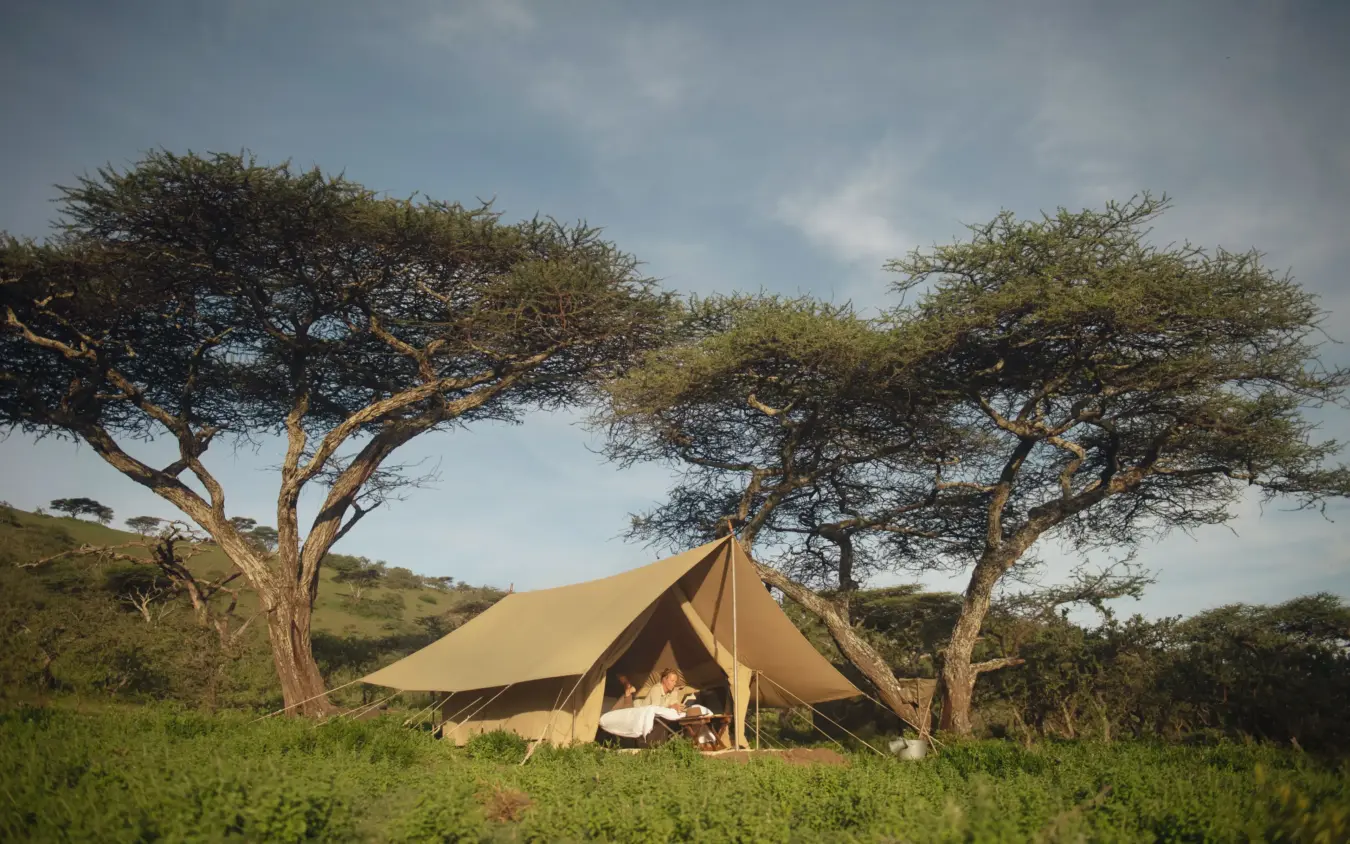
Accommodation clusters around Engaresero village and the Ngare Sero gorge, modest by comparison with the main safari parks. The realistic choices are small tented camps and intimate eco-lodges, built in local materials and staffed largely by Maasai communities. Expect en-suite tents or rooms with lake and volcano views, fire pits and open-air dining rather than extensive facilities. Private mobile camps can be arranged for specialist expeditions, subject to area permissions, adding privacy and tailored guiding.


activities
Volcano climbs and flamingo shores
The overnight Ol Doinyo Lengai ascent suits fit, determined walkers, summiting for sunrise. Guided walks reach the Ngare Sero waterfalls and swimming pools, and follow the lake shore for flamingo viewing and soda formations. Maasai village visits and the Engaresero hominid footprint site round out the days, all led by local Maasai guides.

conservation
Flamingo breeding and community stewardship
Listed as a Ramsar wetland in 2001, the basin is watched closely by BirdLife International and the Lake Natron Consultative Group, formed partly to resist proposed soda-ash mining on the shore. African People & Wildlife runs rangeland stewardship work in the surrounding landscape, while community initiatives around Engaresero place day-to-day stewardship in Maasai hands.
 03
03
getting around
Charter flights and helicopter access
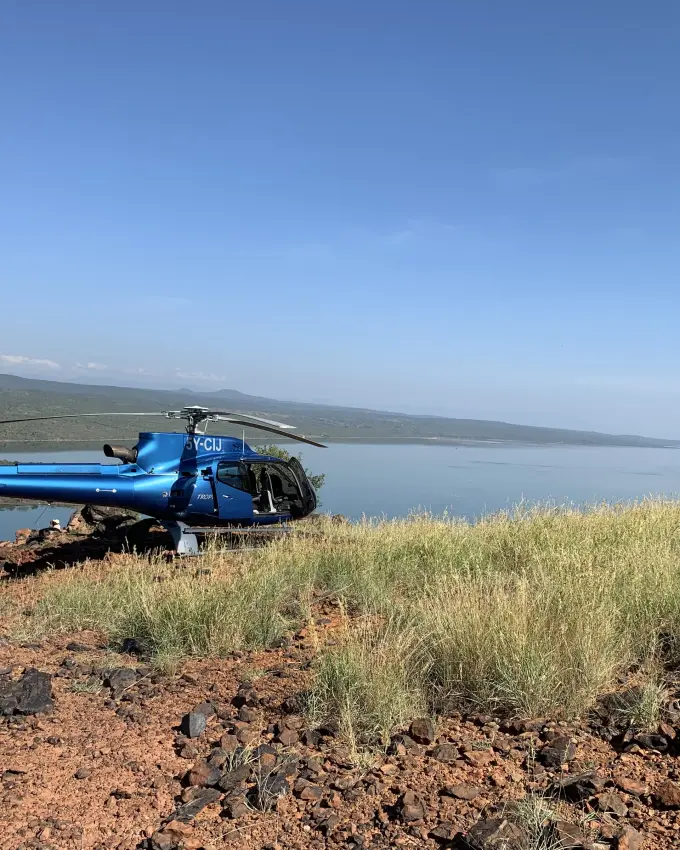
Access is by light-aircraft charter to the Lake Natron airstrip from Arusha or the northern Serengeti, or by road, with helicopter charters available for low-level flights over the lake, the flamingo colonies and Ol Doinyo Lengai. Road transfers from Arusha via Mto wa Mbu and Engaruka, or from the Serengeti via Klein's Gate, are long and require 4x4 vehicles.
other areas in tanzania
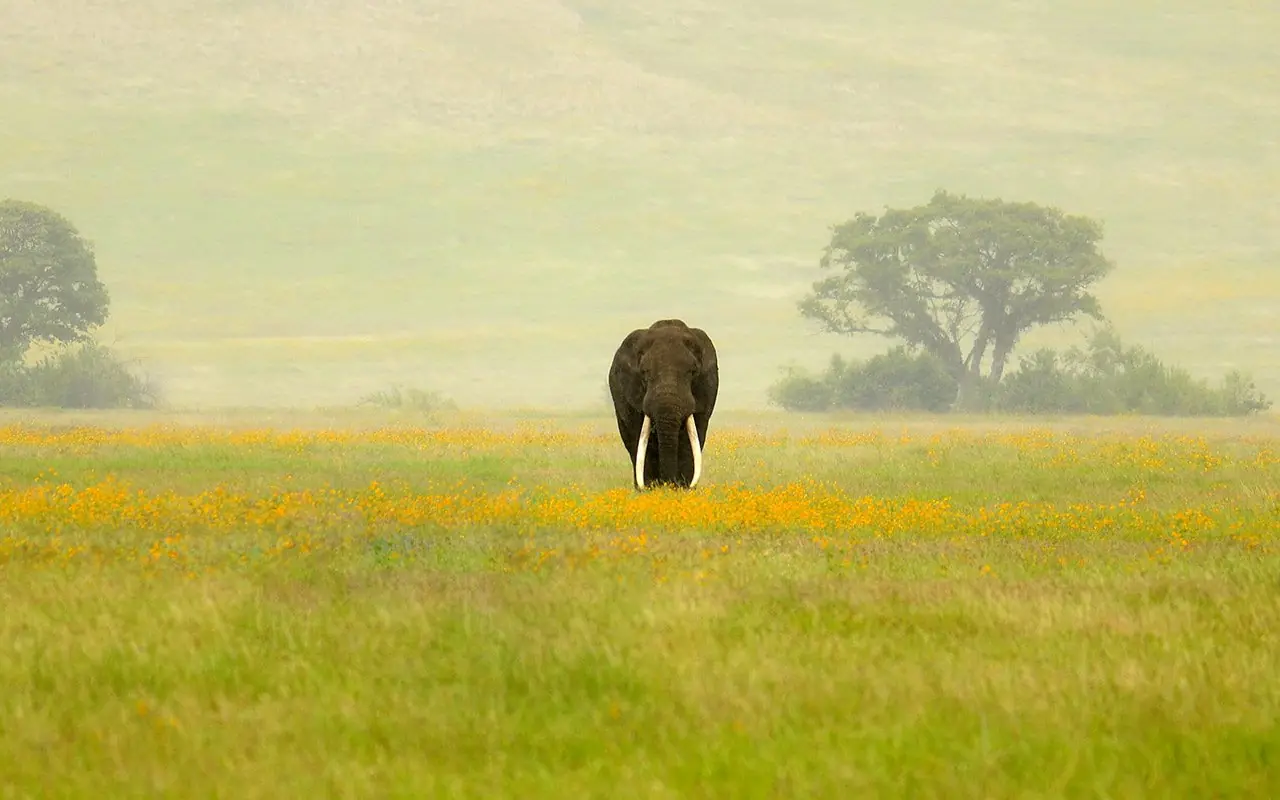
Lake Natron works best as an elemental extension to Tanzania's wildlife-rich north. Northern Serengeti, reached via Klein's Gate, adds high-density plains game and Mara River crossings mid-year. The Ngorongoro Conservation Area lies to the southwest, its crater a compact stage for dense game viewing. Lake Manyara and Tarangire offer groundwater forest, birdlife and elephant herds among baobabs, balancing Natron's stark openness with classic safari comfort.





frequently asked questions
By road from Arusha, or by light aircraft to the airstrip at Engaresero.
The drive is five to six hours, rough in places and spectacular throughout, dropping off the escarpment into the Rift. Many clients take it as a day in its own right, stopping on the way.
A charter flight turns it into under an hour, which is the sensible choice if your days are short.
It also connects overland to the northern Serengeti, which is one of the better routes in Tanzania.
Walking, climbing and the strangest landscape in East Africa.
- The climb up Ol Doinyo Lengai, the active volcano, overnight
- Walks to the waterfalls in the Engare Sero gorge
- Flamingos on the soda flats, in their millions in a good year
- Time with the Maasai community at Engaresero, on their terms
The ancient human footprints preserved in the ash nearby are worth the short trip.
This is not a game-viewing destination, and anyone expecting big herds will be disappointed.
Hard. It is the most demanding thing we book in northern Tanzania.
The climb starts around midnight to avoid the heat, takes five to seven hours up on steep loose ash and scree, and three to five hours back down. You are on the summit at sunrise.
It needs genuine hill fitness, proper boots and a head torch, and it is not for children.
If you are not sure, say so and we will plan the waterfalls and the flamingos instead, which is no lesser day.
Yes. It sits low in the Rift Valley, and both TravelHealthPro, the UK's official travel health service, and the CDC treat mainland Tanzania as a malaria area where antimalarial cover is recommended.
The lake itself is hot, dry and caustic, which suppresses mosquitoes locally, but the surrounding country is not free of them.
We do not make medical recommendations. That is a conversation between you and your own doctor or a travel clinic.
On the practical side, cover up at dusk and carry repellent.
Because almost nothing else can survive the water.
Lake Natron is intensely alkaline and caustic, which keeps predators off the salt islands where the birds nest. It is the only regular breeding site in East Africa for lesser flamingos, and a large share of the world's population is raised here.
Numbers swing hugely with the water level, so a spectacular year follows the right rains.
We will tell you honestly what the lake is doing before you commit nights to it.
Two, and that is usually enough.
Two nights give you the waterfall walk, the flats at dawn and the community visit, or the volcano if you are climbing. One night means arriving hot and leaving early.
It works as a break between the crater highlands and the northern Serengeti, or as an add-on from Arusha.
The camps here are simple by design, and the heat is real, so more than three nights is rarely the right call.
rated five stars by our clients

our approach
remote, exclusive
& personal
Every journey starts with a conversation. We take the time to understand your vision before we start planning.
Whether by phone or in person, we work with you directly to shape something that is considered, personal, and expertly delivered.
Every journey starts with a conversation. We favour a direct, personal approach: understanding your vision before anything else.
Whether by phone or in person, we work with you directly to shape a journey that is both thoughtfully considered and expertly delivered.
Get in touch to start planning yours.