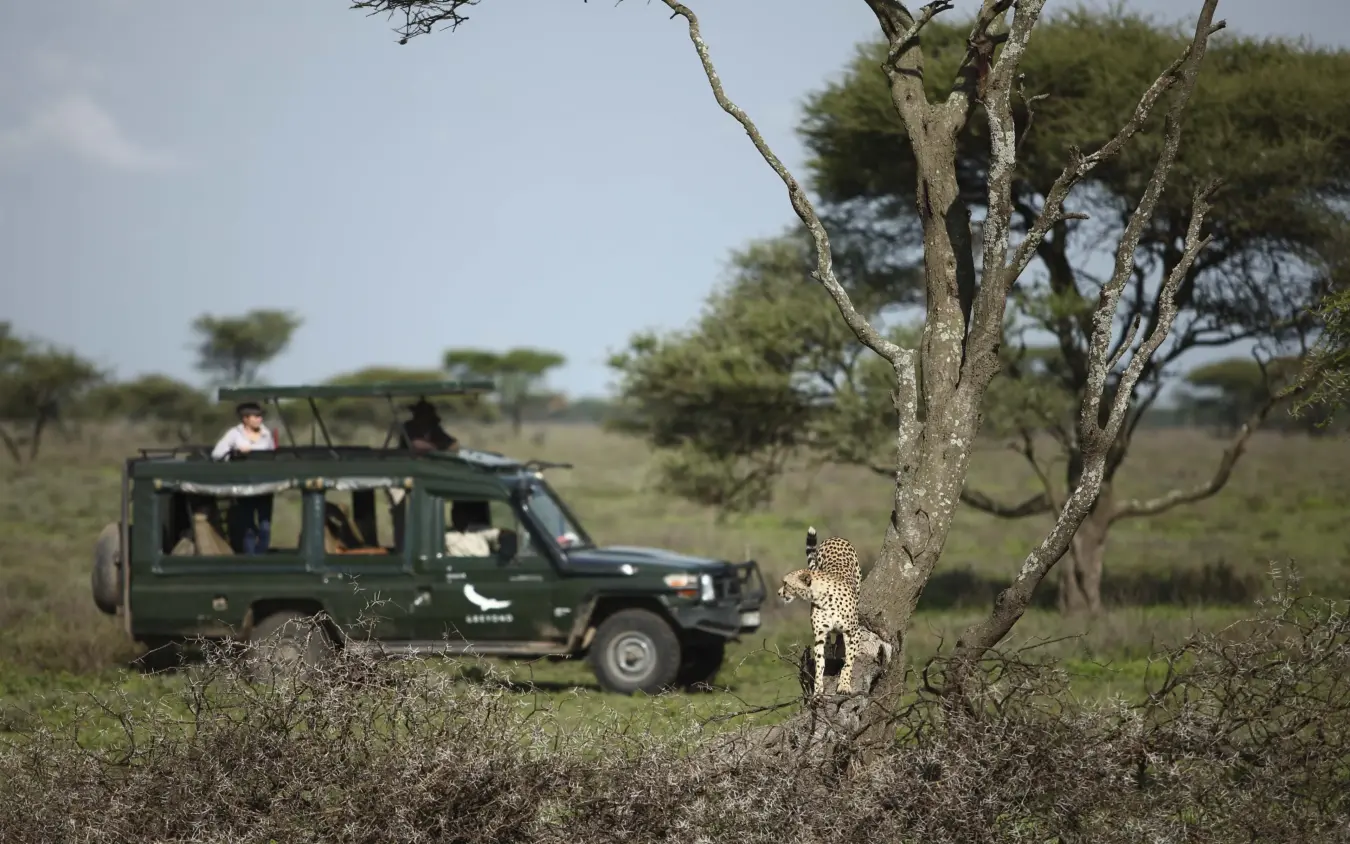
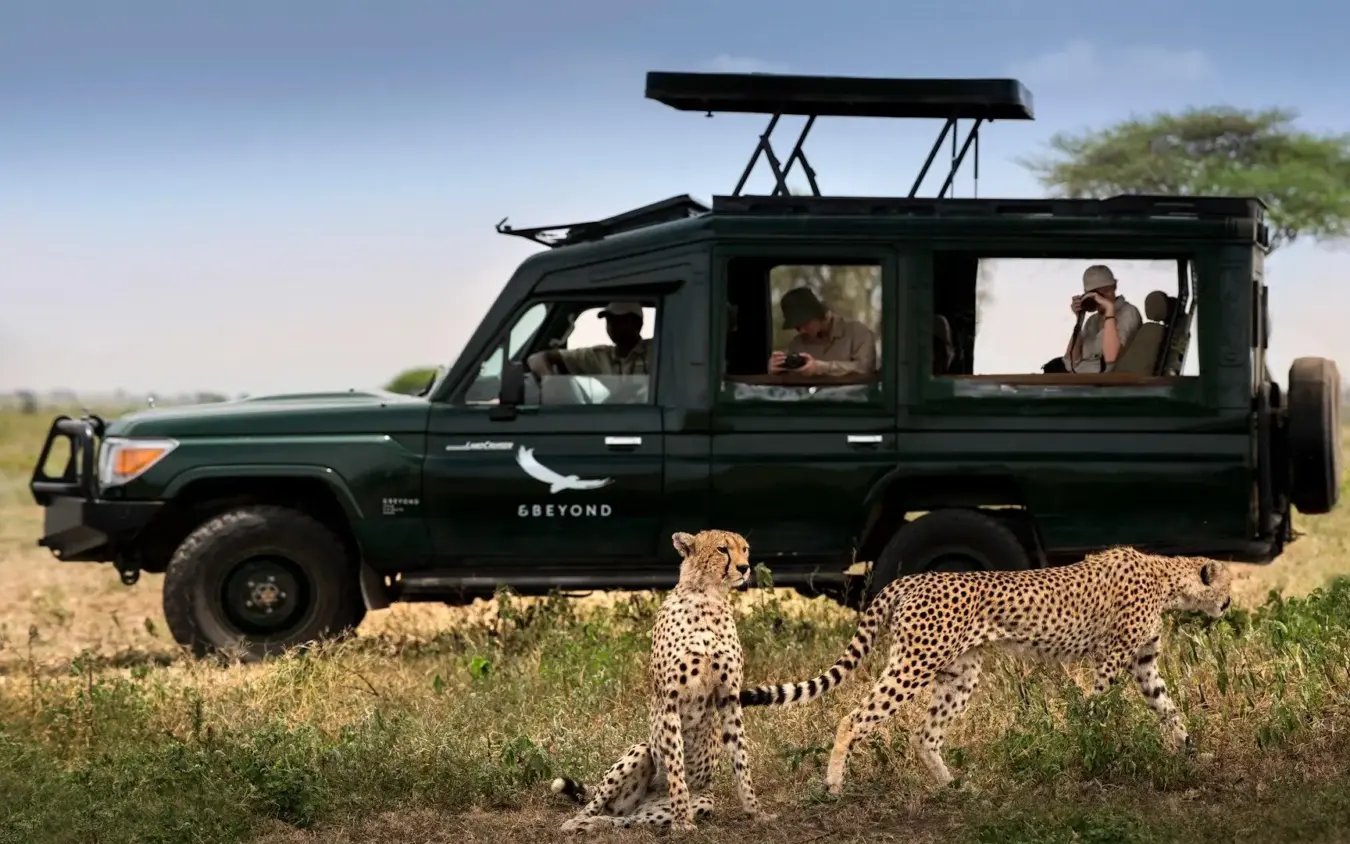
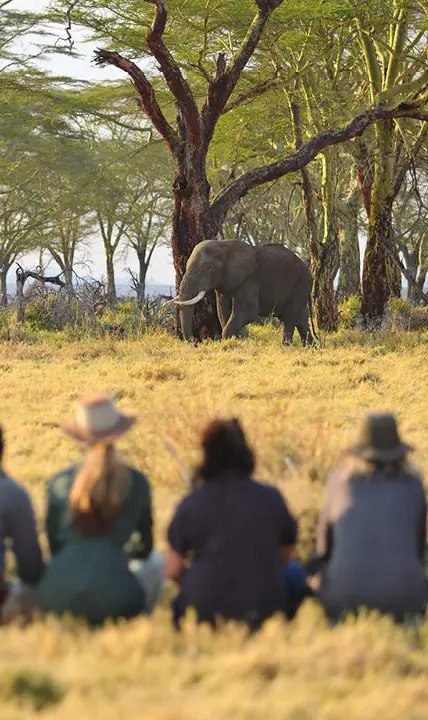
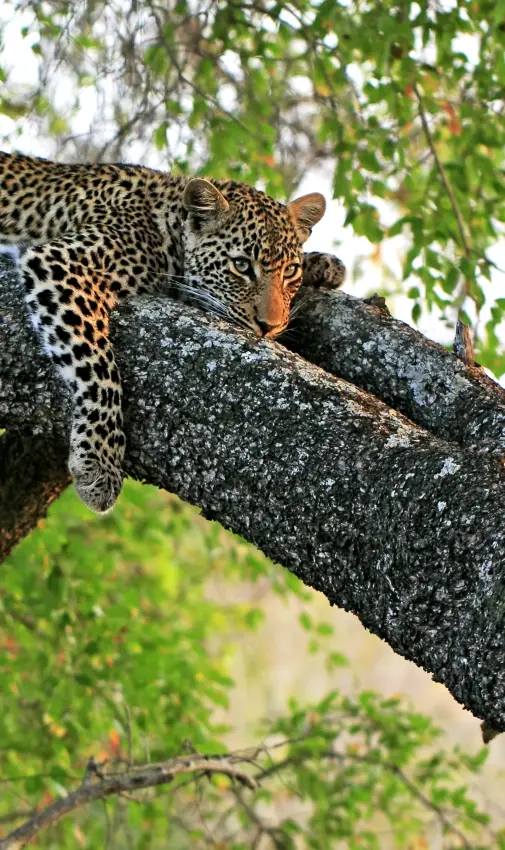
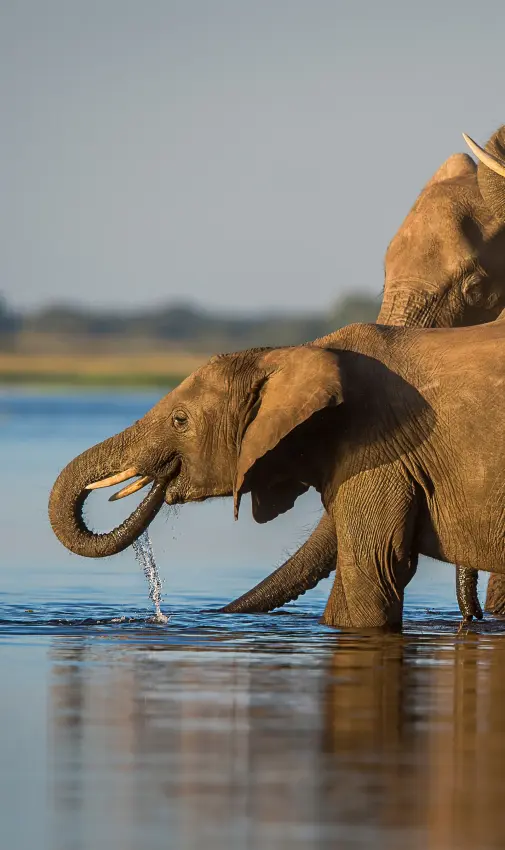
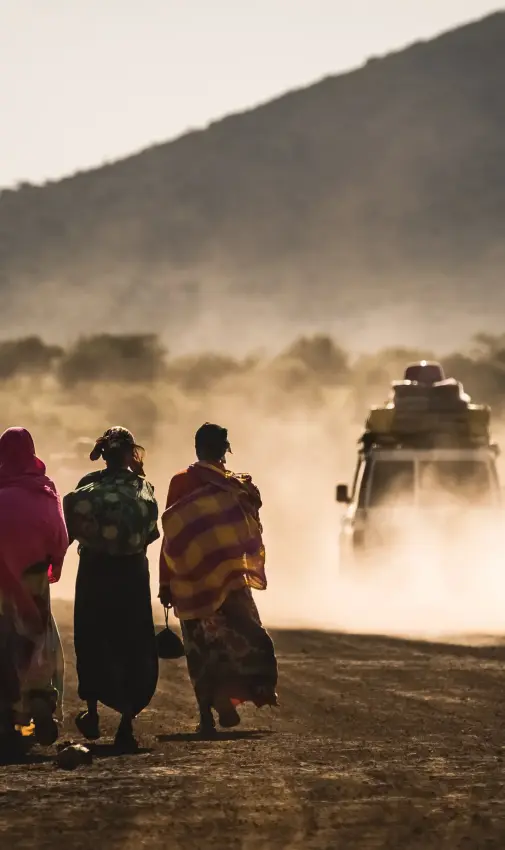
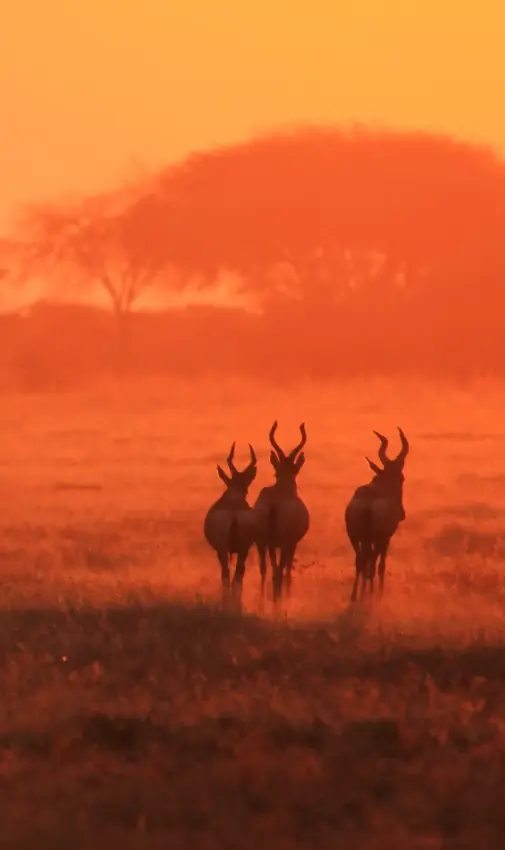
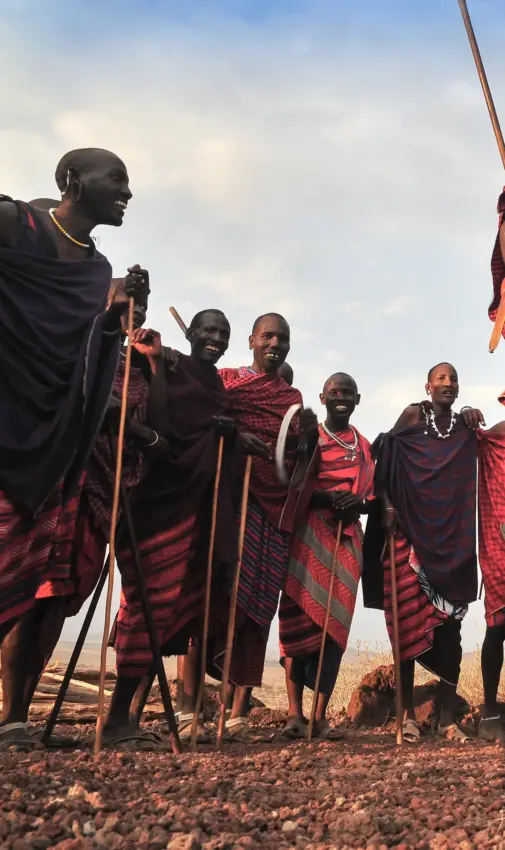
Each camp runs its own semi-open safari vehicles and guides, the vehicles fitted with sockets for charging cameras. Days take one of two shapes: an early drive and a late-afternoon one with the midday hours back in camp, or a full day out with a picnic lunch, reaching herds too far for a morning loop. Lions and leopards turn up often, leopards above all around Seronera. Rhinos keep to the north, while cheetahs hunt the southern plains, and near the Grumeti River the topi make a migration of their own.
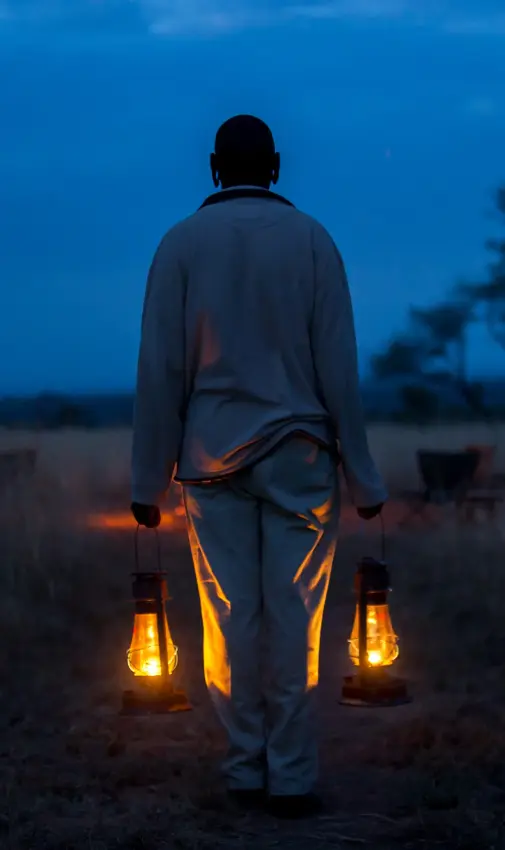
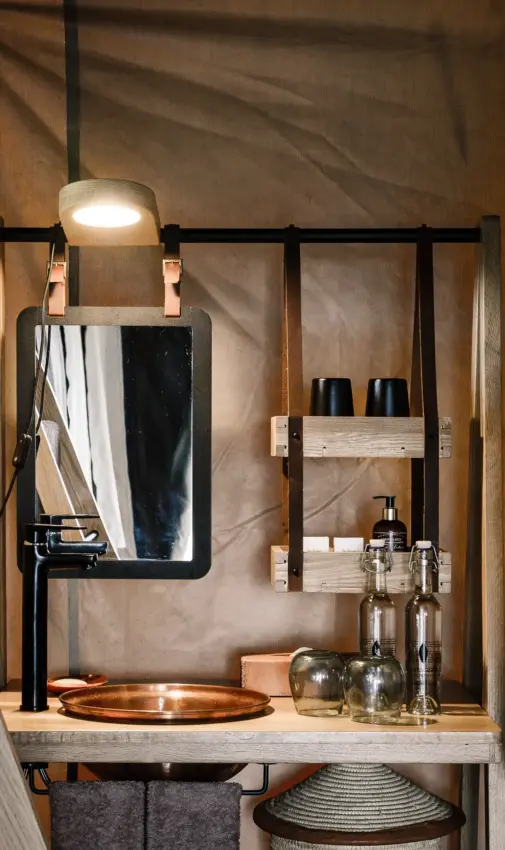
When a guest asks for a shower, staff heat the water and fill the his-and-her buckets in the open-air bathroom, and each tent has its own flushing WC. The canvas lets it all through, from lions calling far off to herds shifting at first light. The camp is unfenced, so after dark an escort with a torch walks each guest between tent, fire and dining table.
The canvas lets it all through, from lions calling far off to herds shifting at first light.
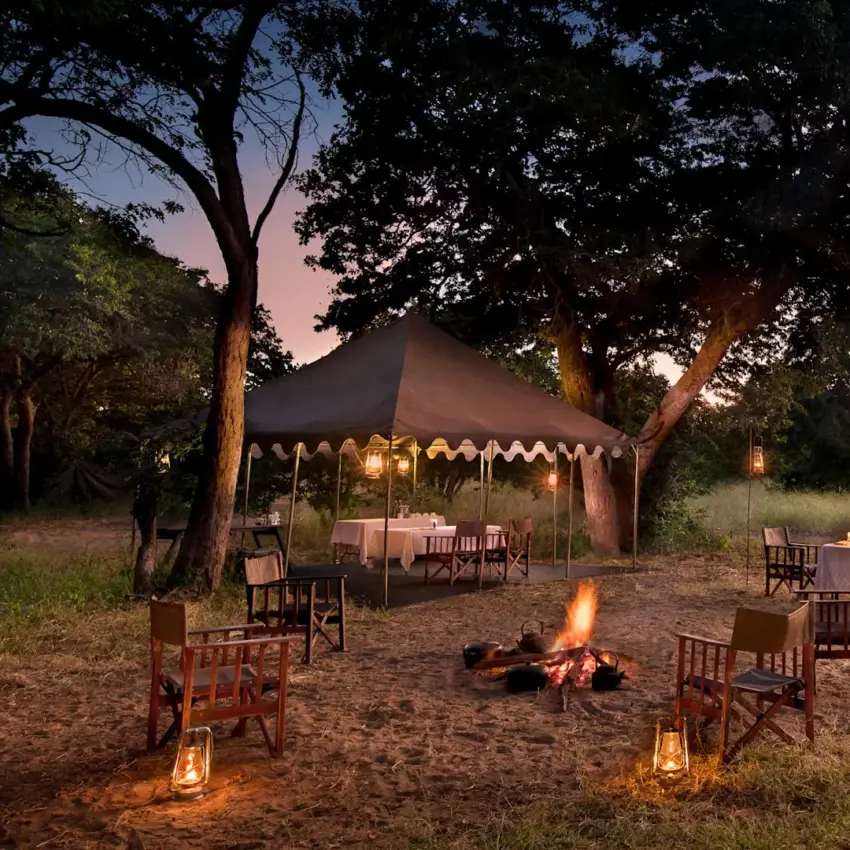
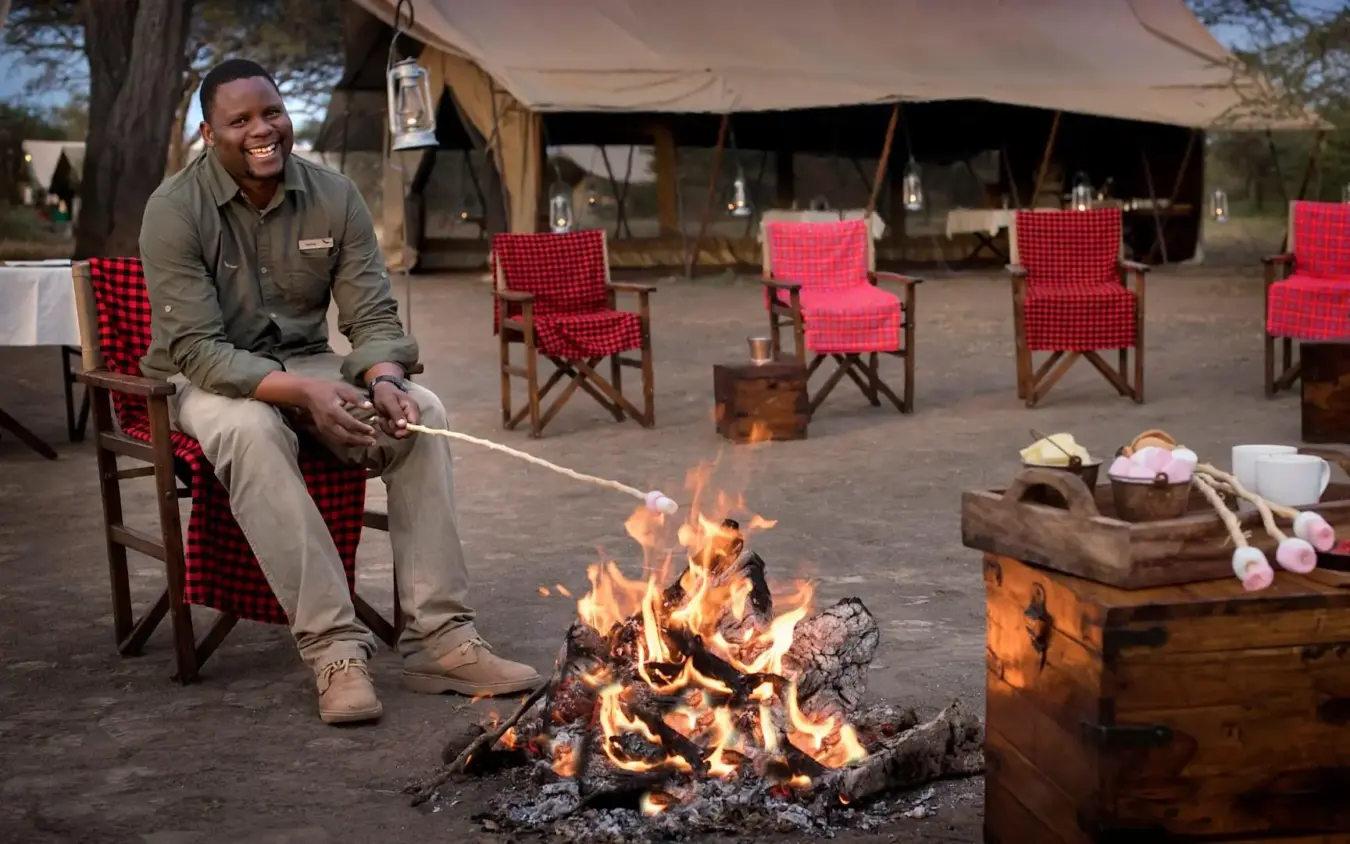
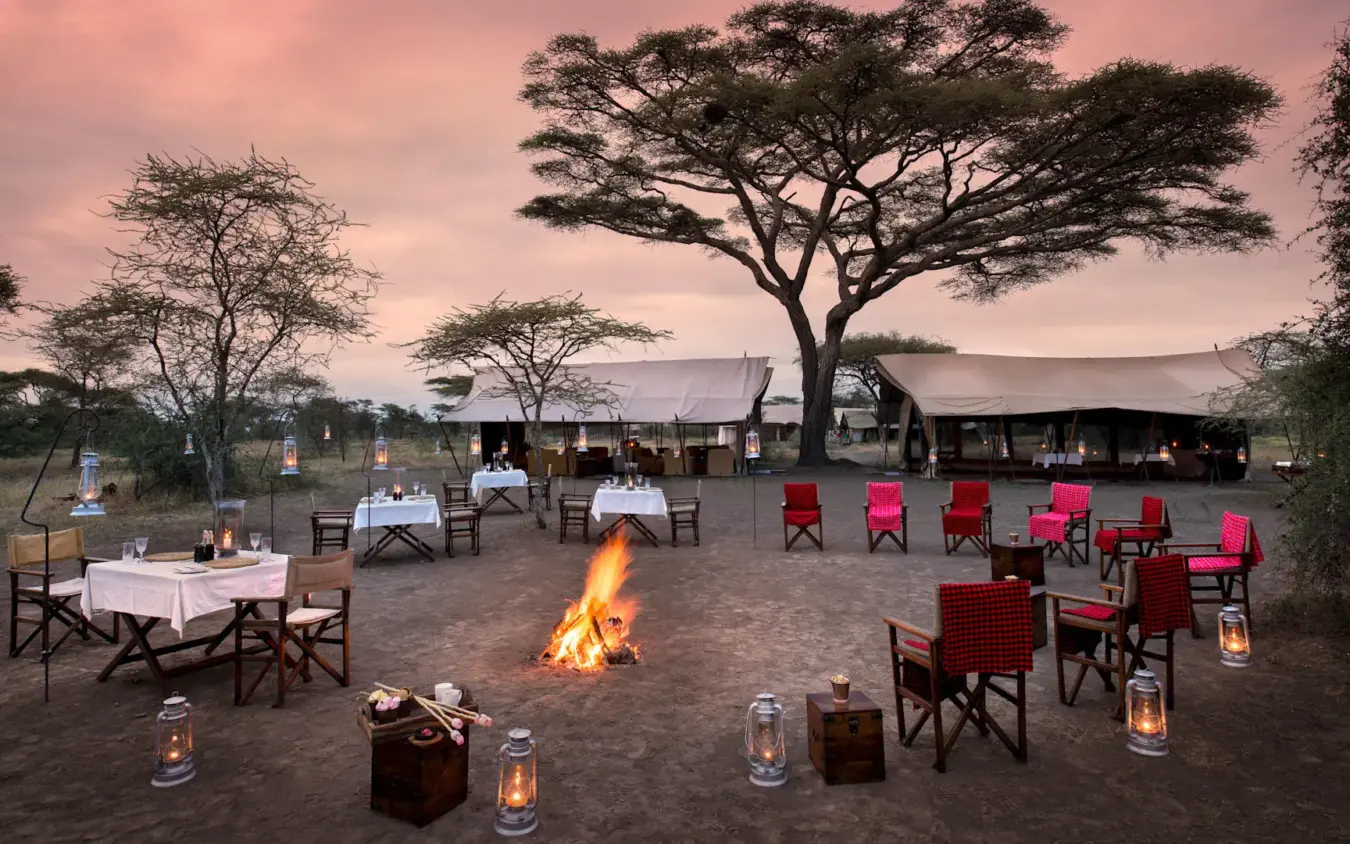
Children aged six and over are welcome, with never more than four in camp at once. Each camp keeps one family tent, two tents linked by an enclosed canvas walkway, so parents and children sleep apart without stepping outside. A family can take a private vehicle and set its own timings, out at dawn or back for a midday rest, and babysitting can be arranged. Meals are taken in the dining tent or out in the open, wherever the butler picks: under a tree, beside the fire at night, or at a private table outside the tent.
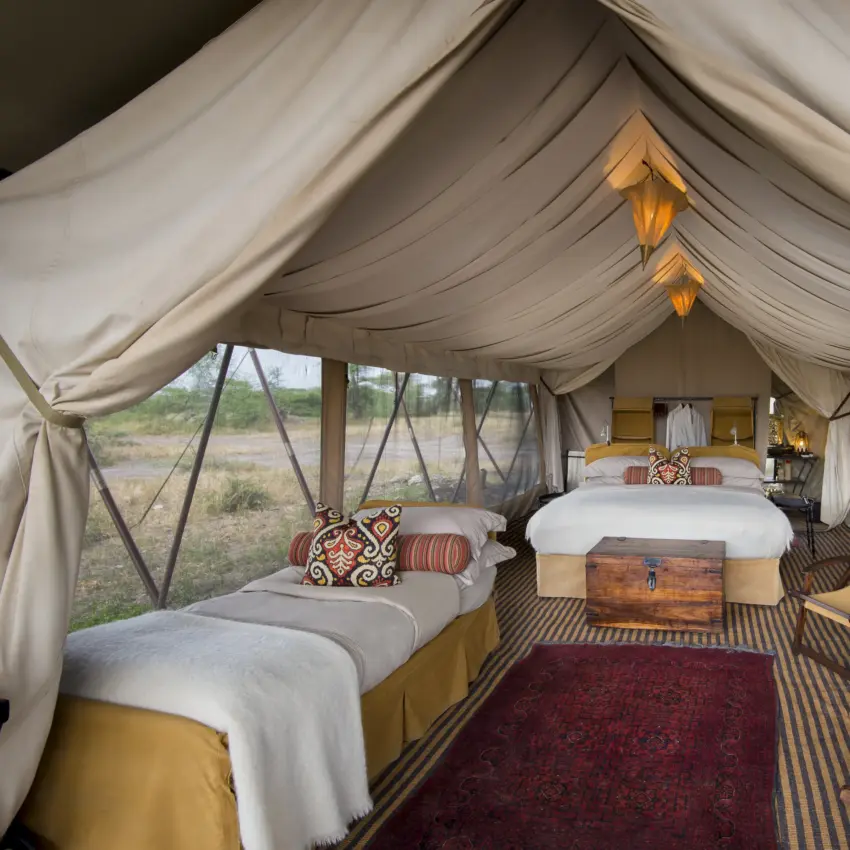
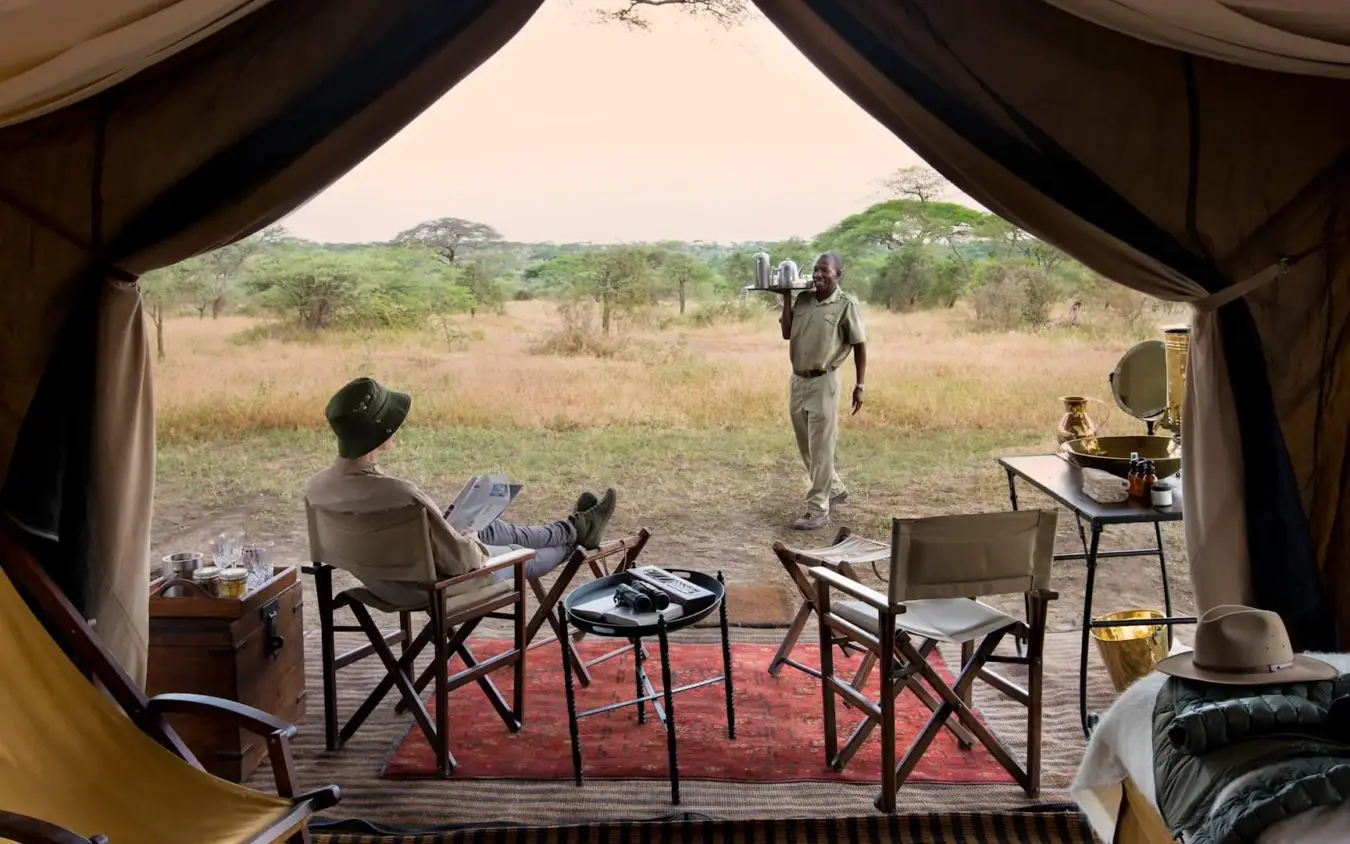
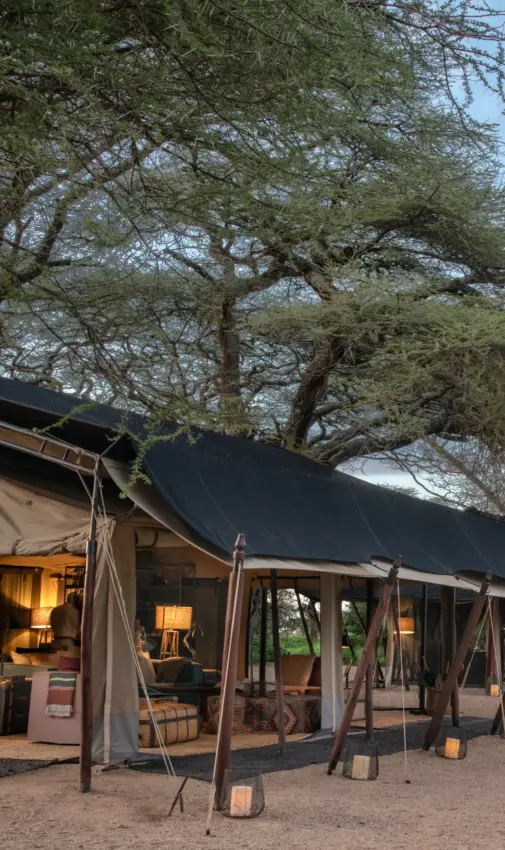
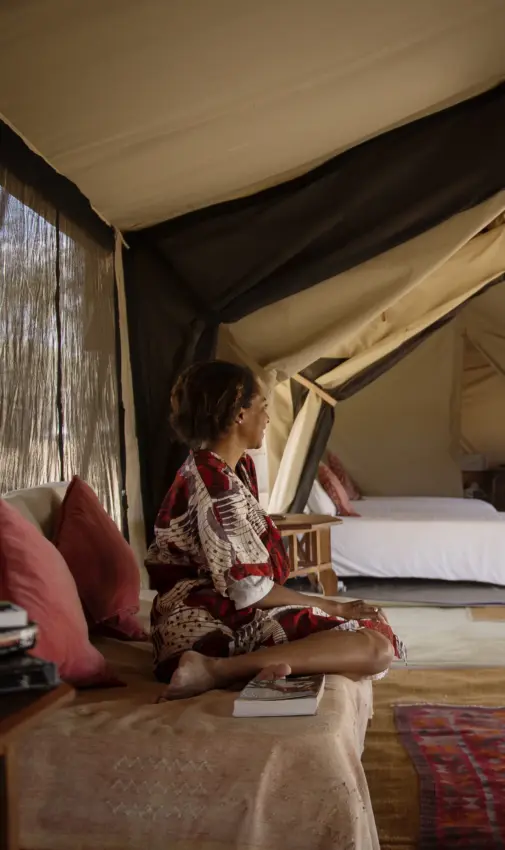
Guests fly in by light aircraft to whichever airstrip serves the current site, whether Ndutu, Seronera, Grumeti or Kogatende, then finish by road. Whatever the site, chandeliers hang under the canvas beside polished brass samovars and custom-made rugs. The sitting tent looks out across the plains, a place to read between drives. None of it is permanent. When the herds move on, the tents are struck and everything down to the crystal is packed away, leaving no concrete, foundations or lasting mark behind.