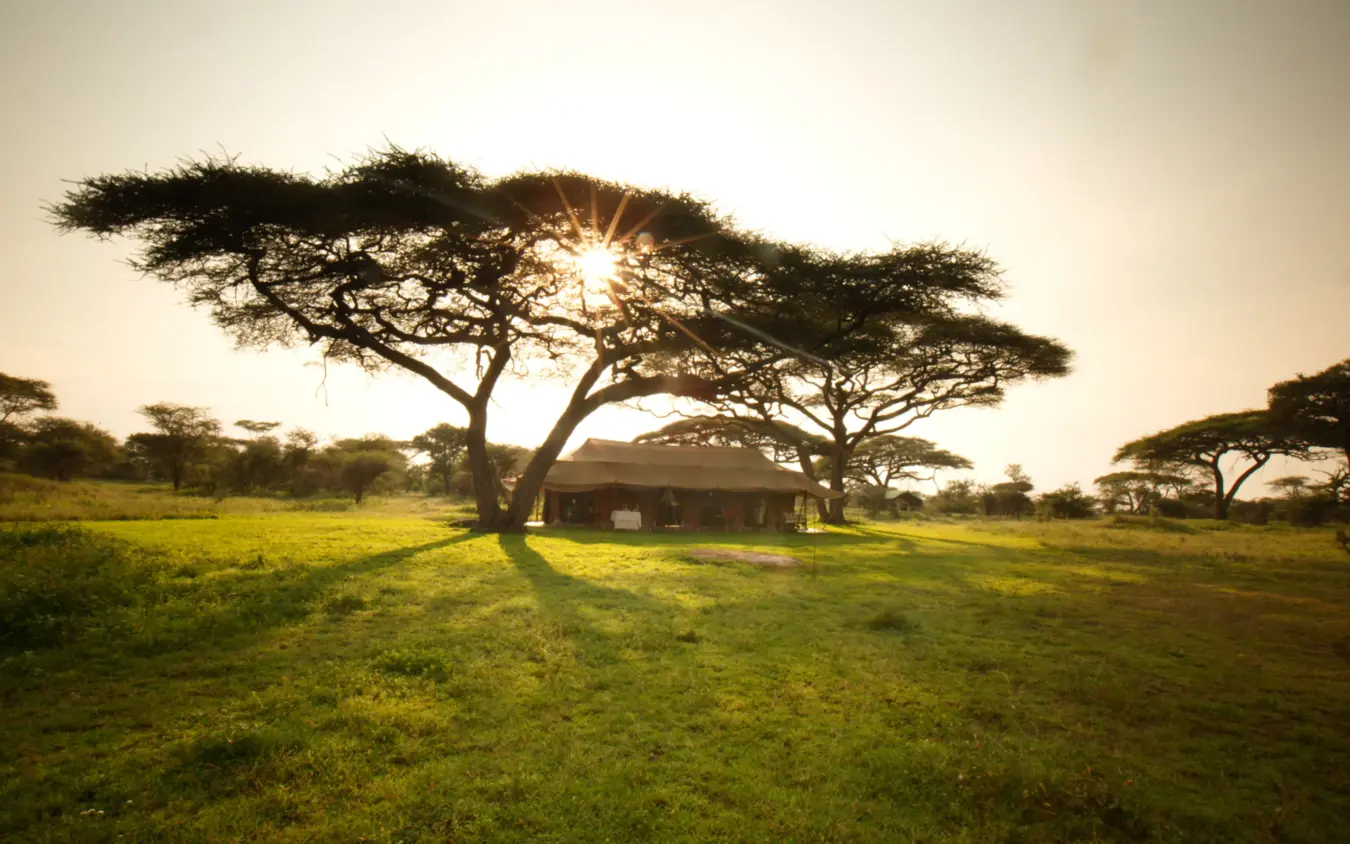
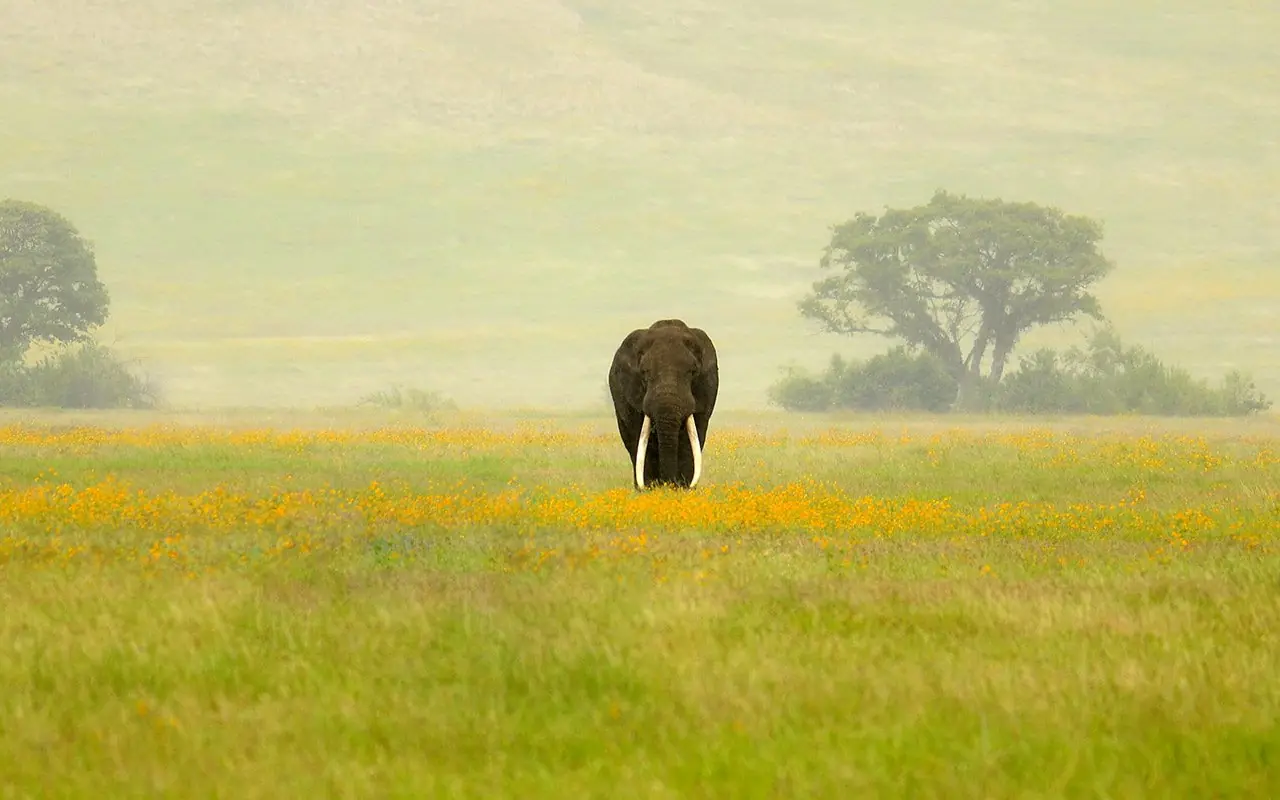
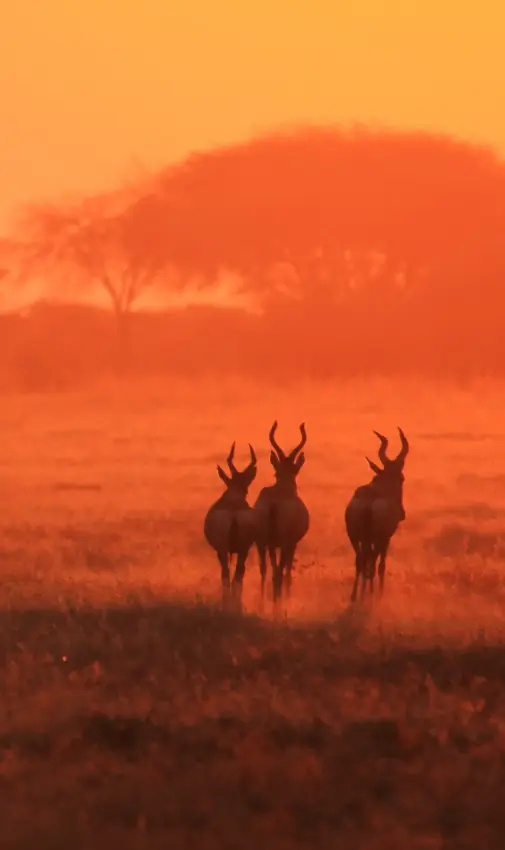
Ash blown from the Ngorongoro highlands has left the soils here loaded with calcium and phosphorus, and the short grasses that grow on them carry exactly what a lactating wildebeest cow needs. The herds arrive with the short rains and stay for as long as the grass holds. The camp keeps to the edge of that open country, close enough to reach the calving grounds early and far enough into the acacias for shade, which matters by ten in the morning. Ndutu lies within reach of the camp for a full day out.
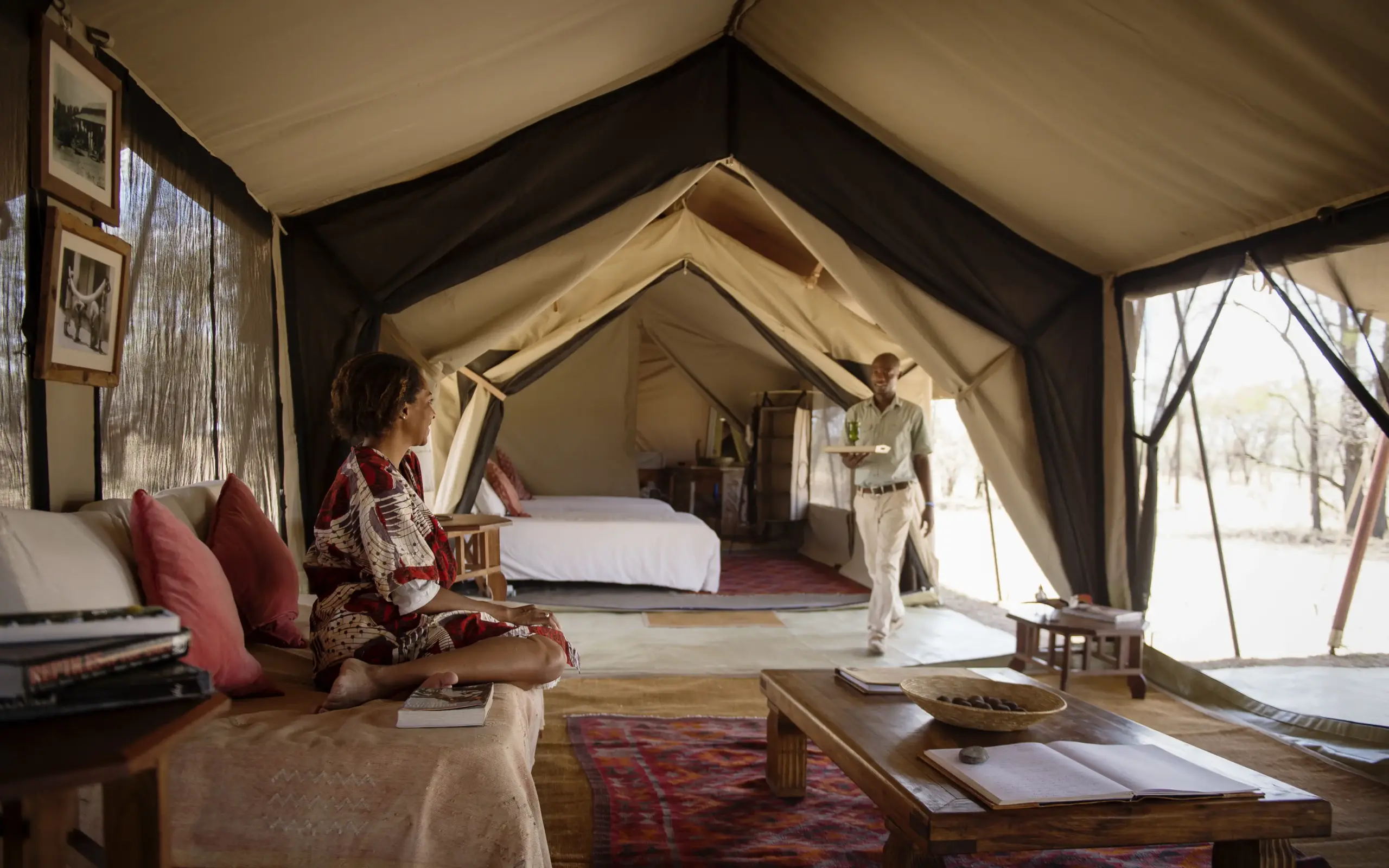
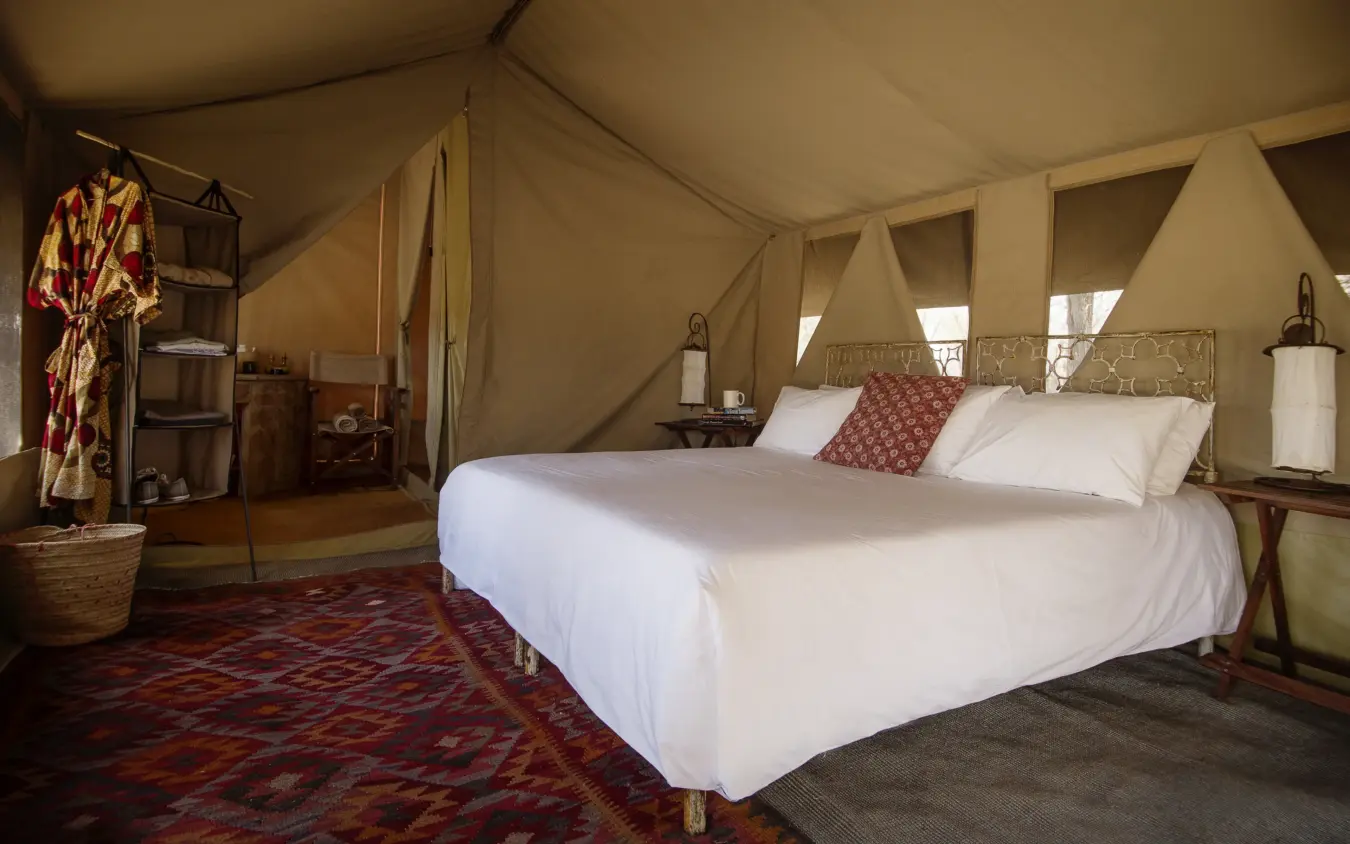
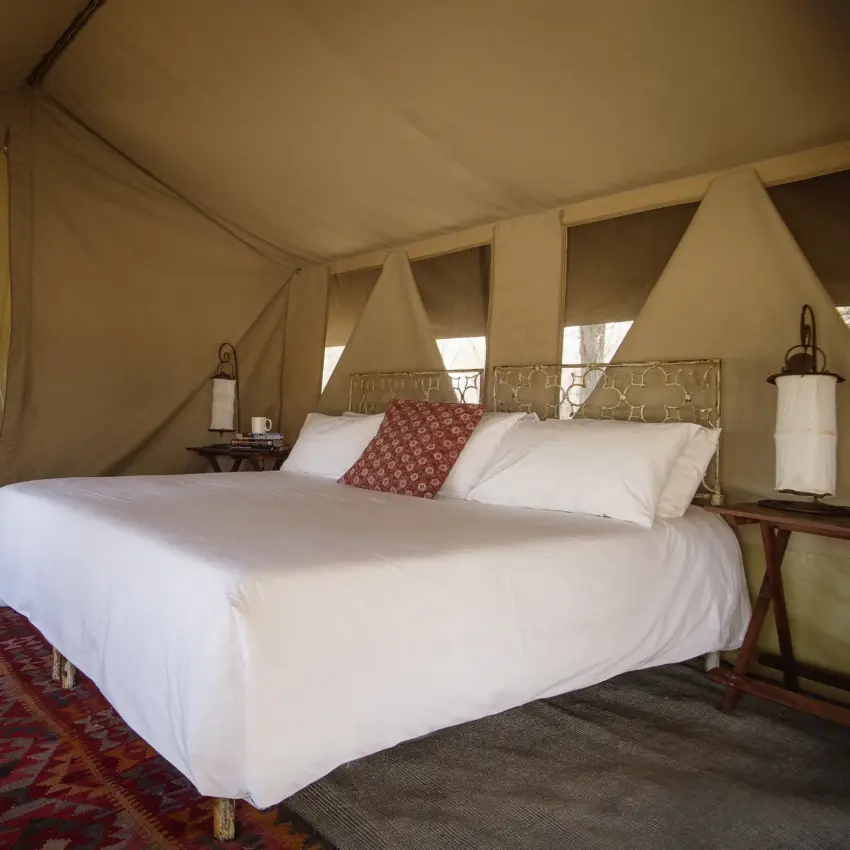
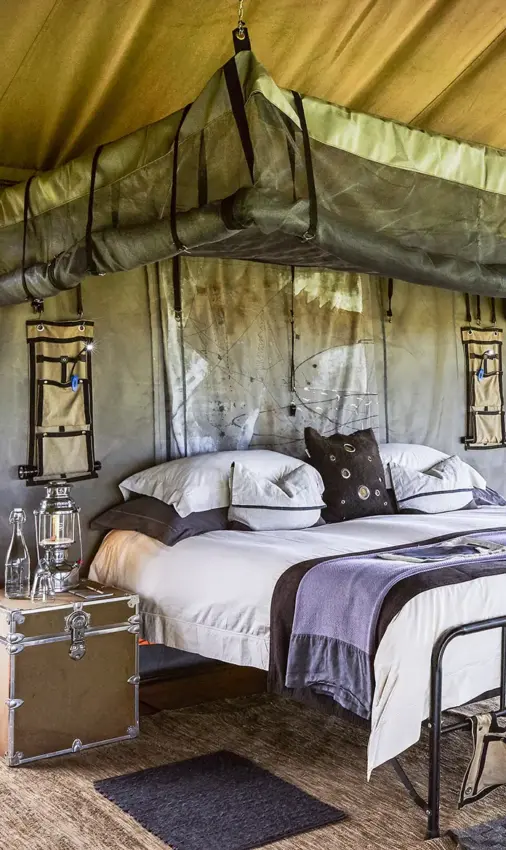
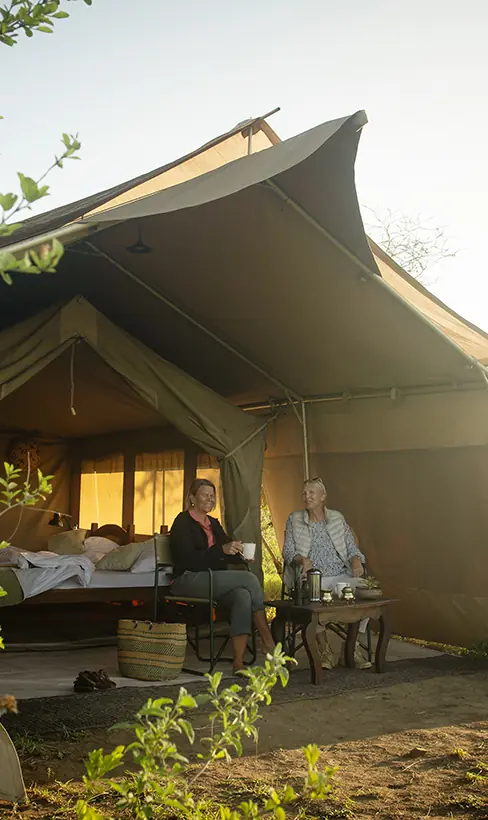
A mobile camp is struck and rebuilt each season, and its exact pitch shifts within the area according to where the animals are and how the ground is holding after rain. There are no foundations, no pool, no air conditioning and no glass. Power comes from a generator, water from a well and tower, and when the camp leaves in May the site goes back to bush. The trade is straightforward: less polish than a permanent lodge, a great deal more proximity to what people come for. Six units in total keeps the mess tent conversation to one table.
The herds arrive with the short rains and stay for as long as the grass holds.
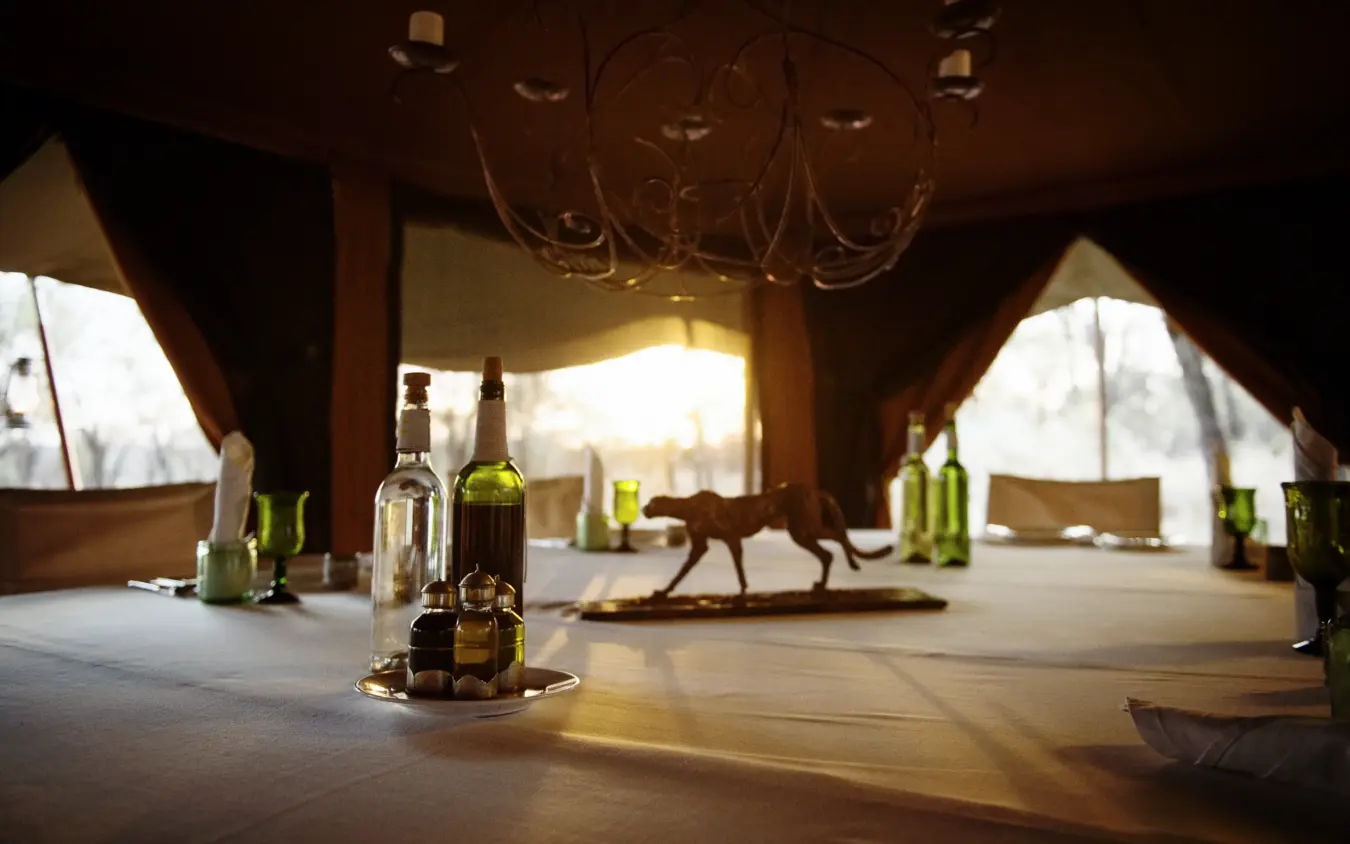
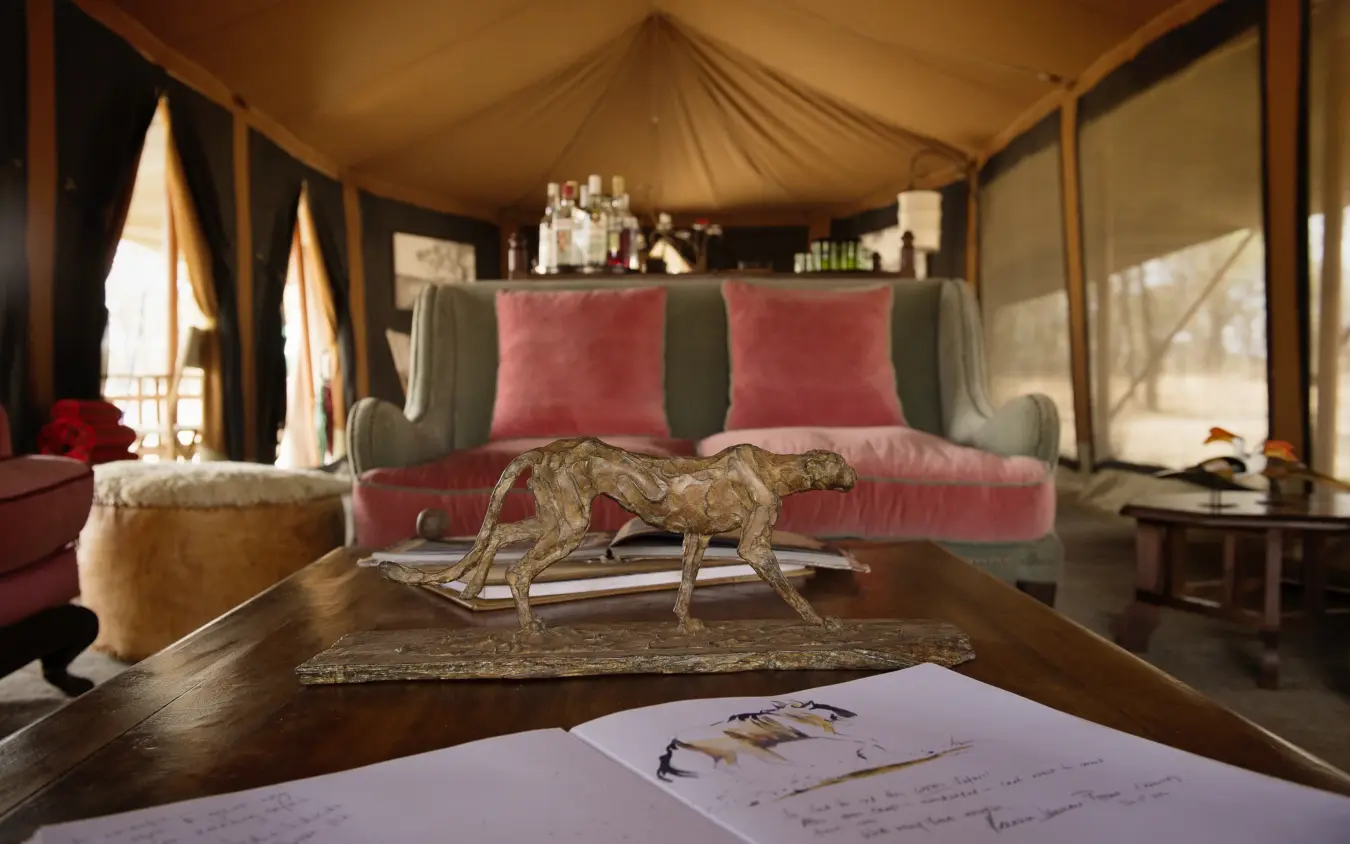
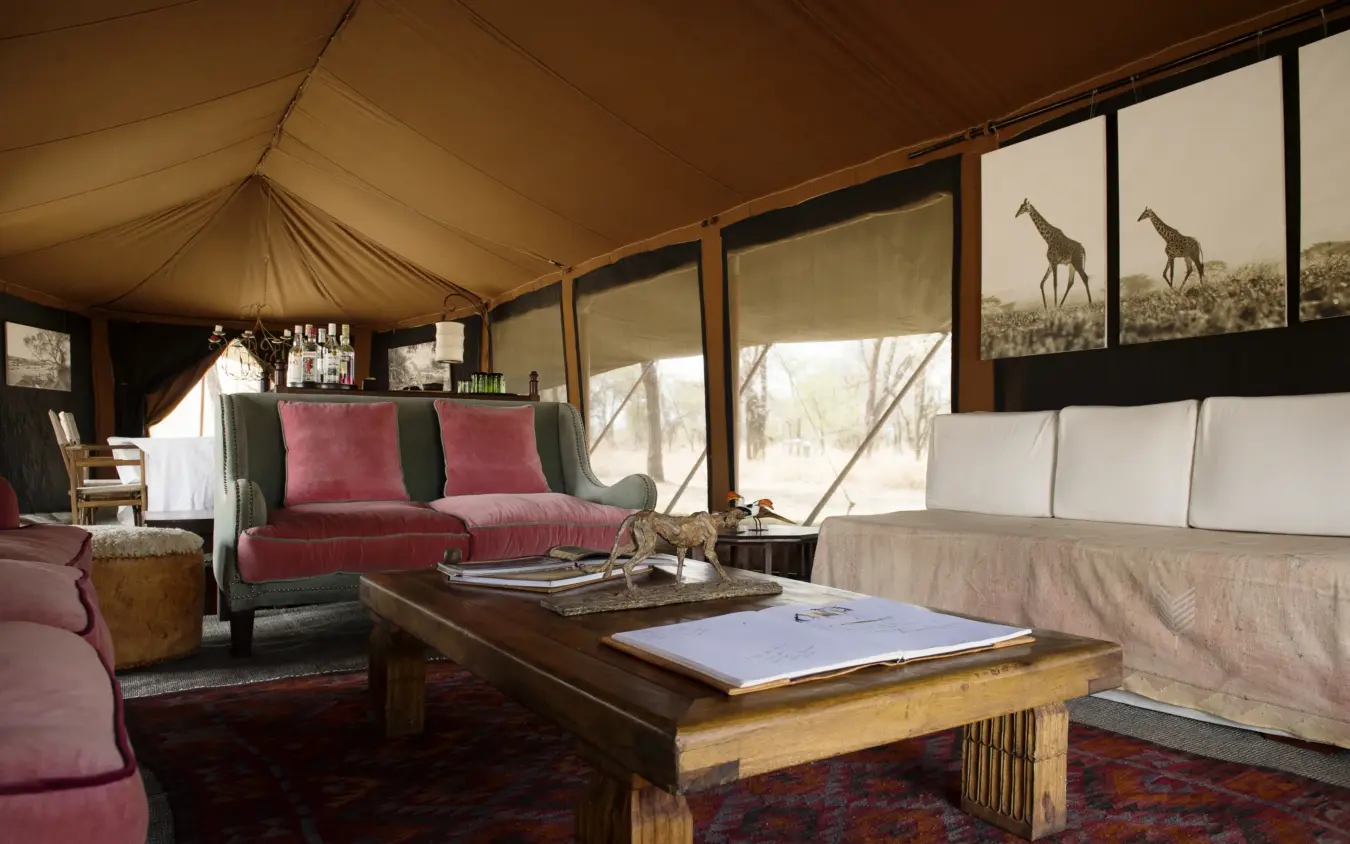
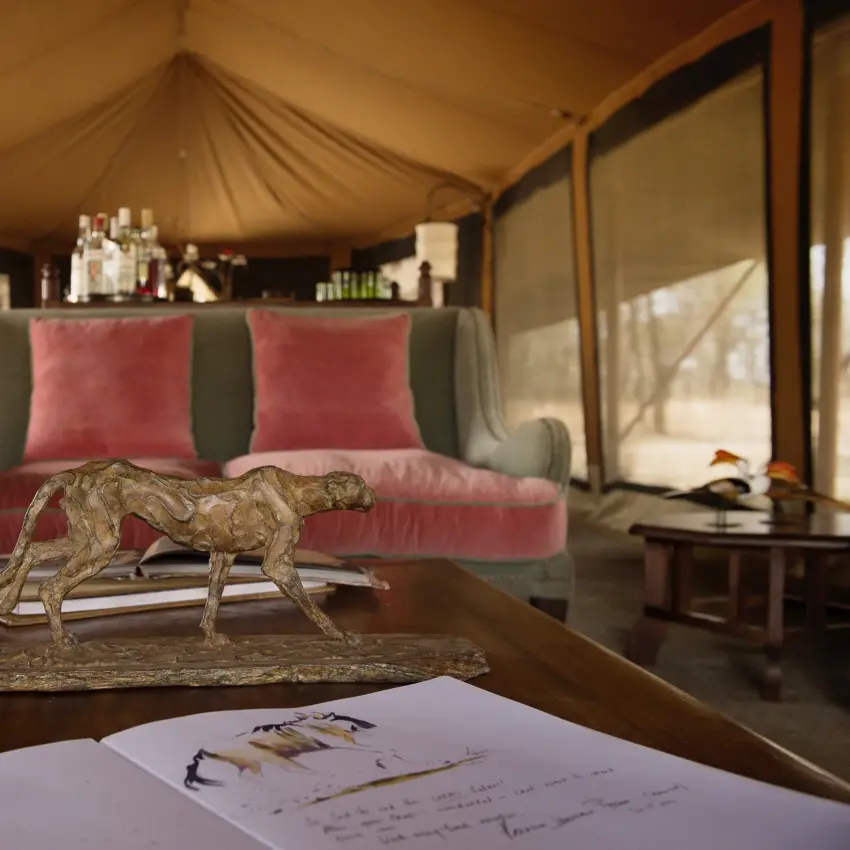
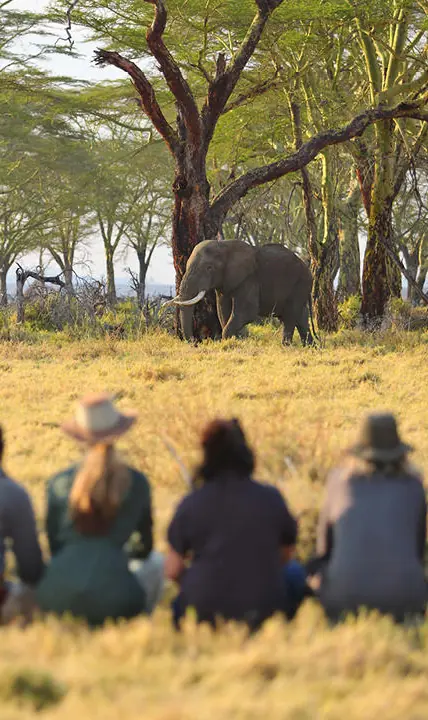
Days here follow no fixed camp timetable: a vehicle, a guide and a spotter belong to each group for the length of a stay, which allows dawn starts, full days out with a picnic, or an afternoon parked beside one cheetah and her cubs. Walking safaris are possible here, with an armed ranger, in one of the few parts of Serengeti National Park where the practice is permitted. Meals are eaten together at a long table in the mess tent, family style off large platters, with drinks by the fire beforehand and giraffe photographs on the canvas walls.
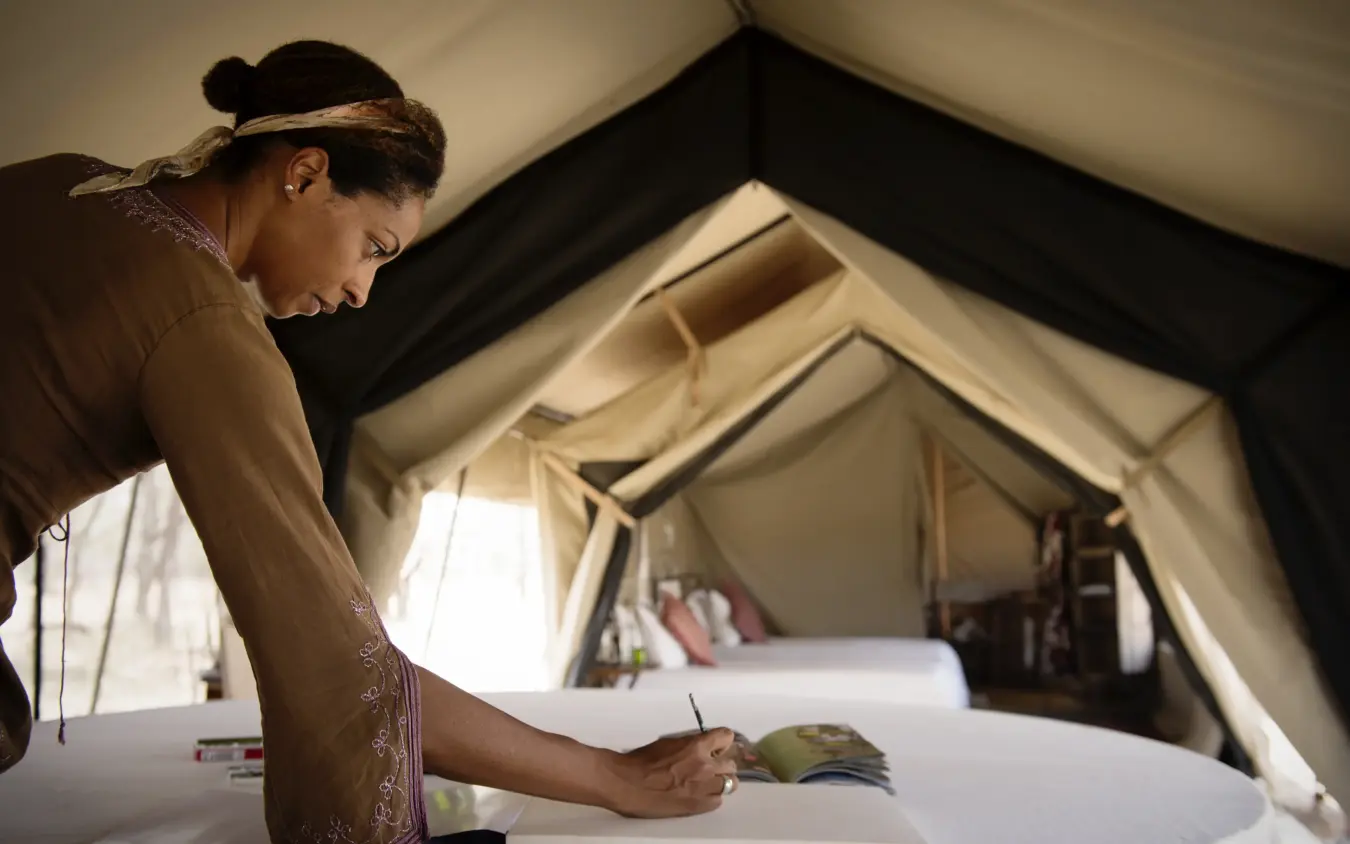
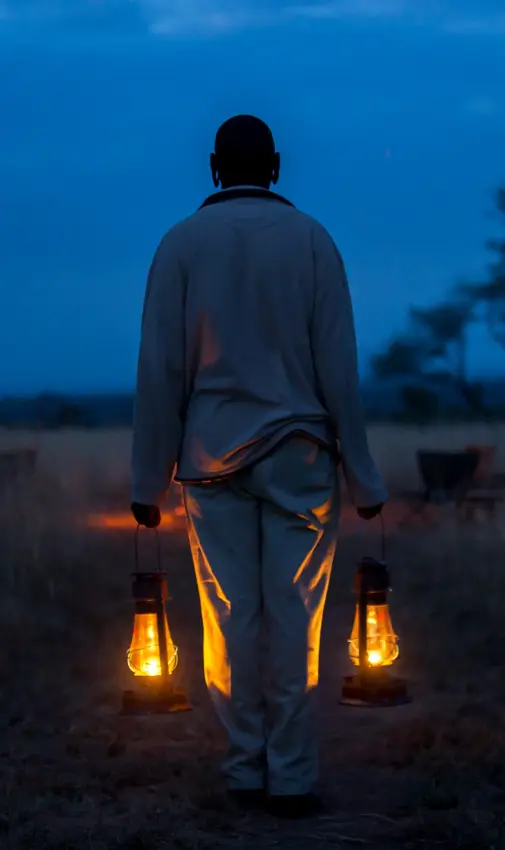
The southern camp returns to Kusini in December. Children are welcome, with a minimum age of twelve for walking safaris. The two suites, each pairing two bedrooms around a shared canvas sitting room, suit families and friends travelling together. Evenings are spent by the fire, with the herds audible in the dark beyond the tents.