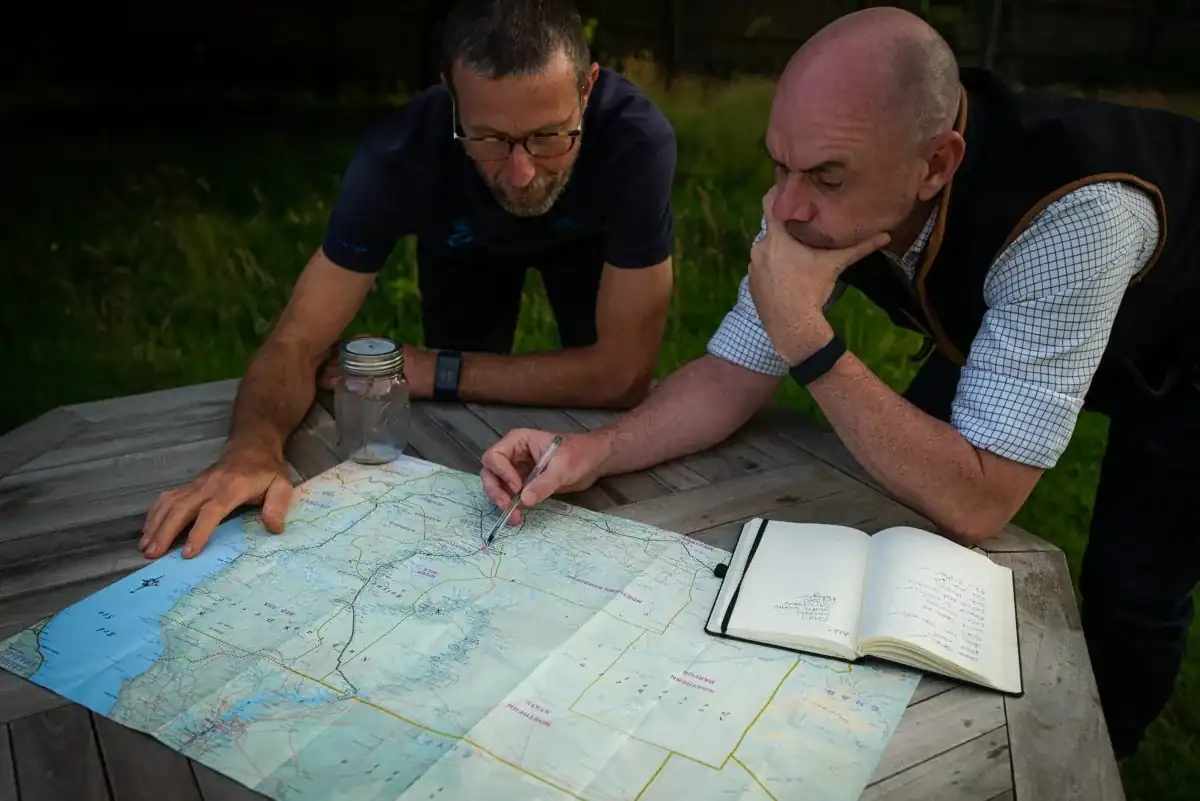
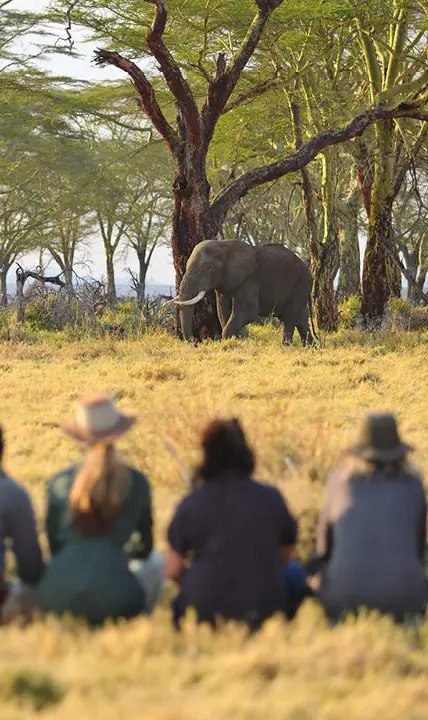
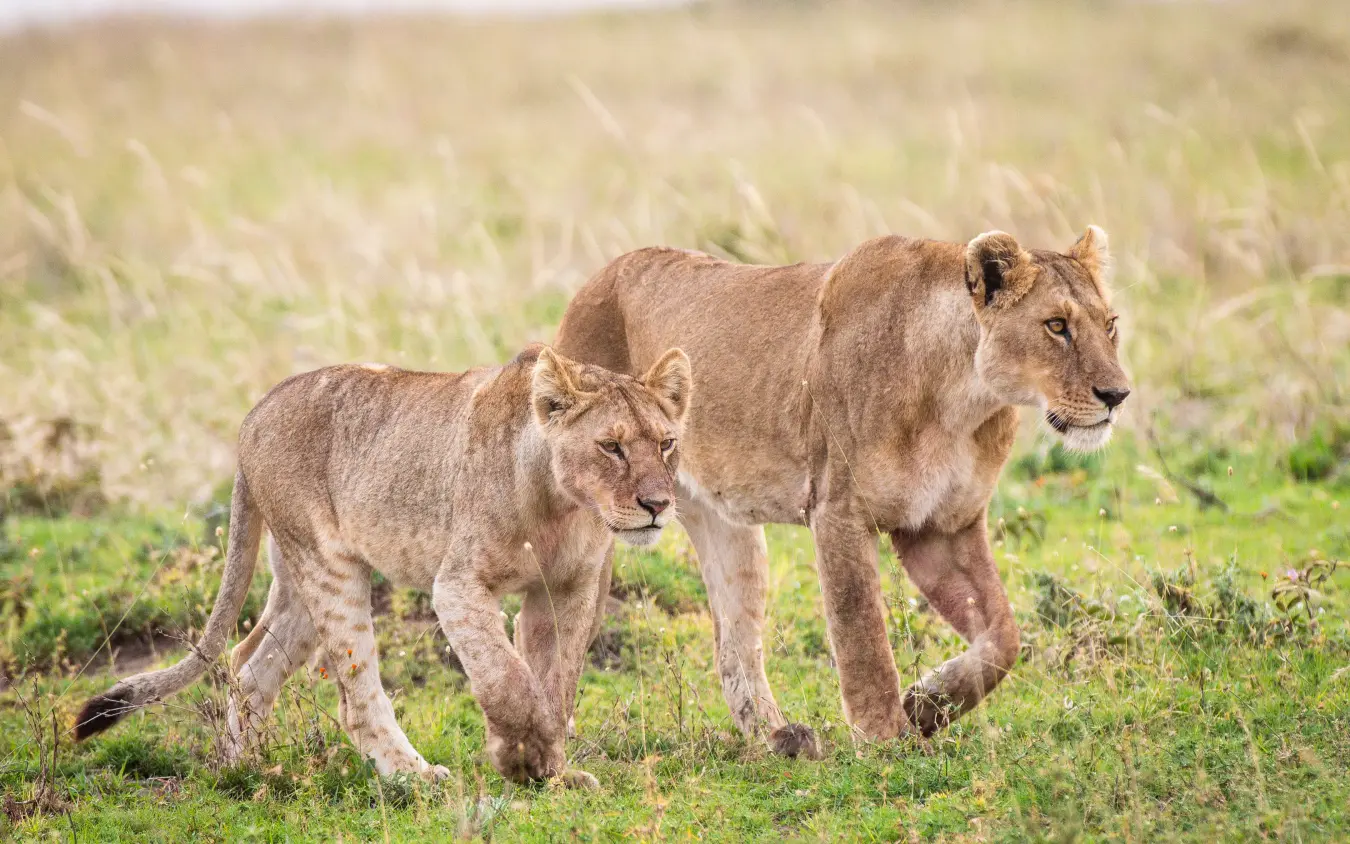
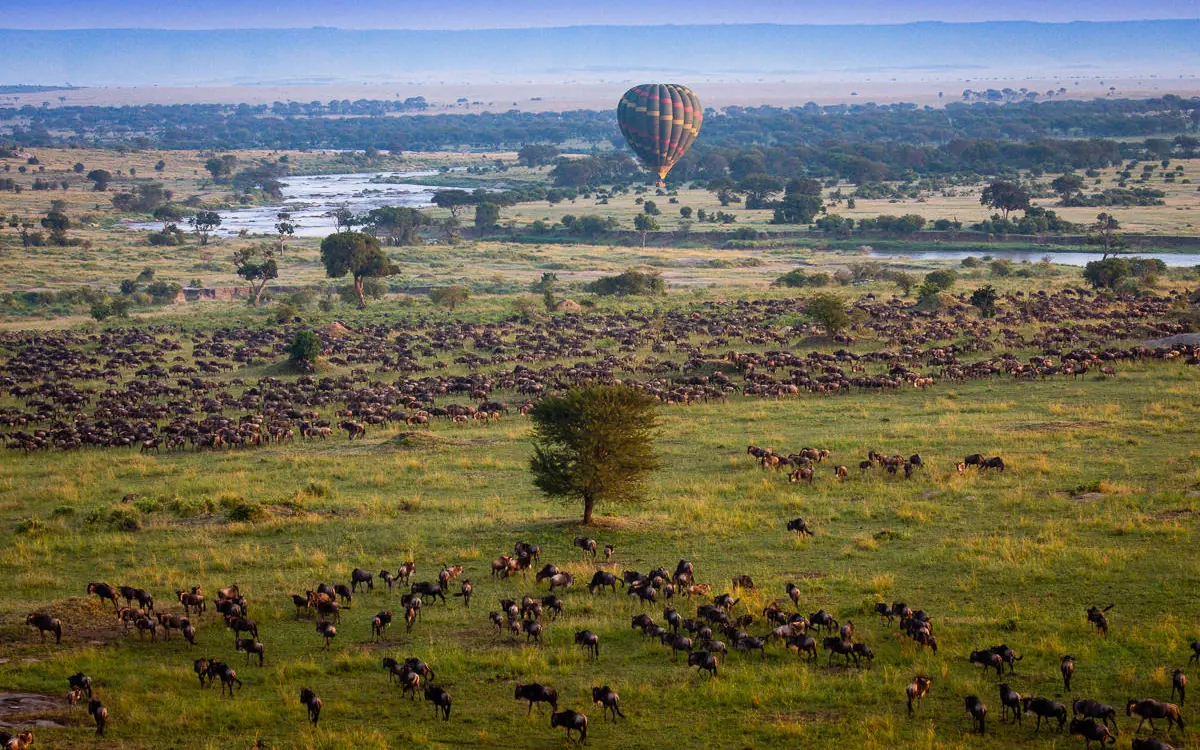
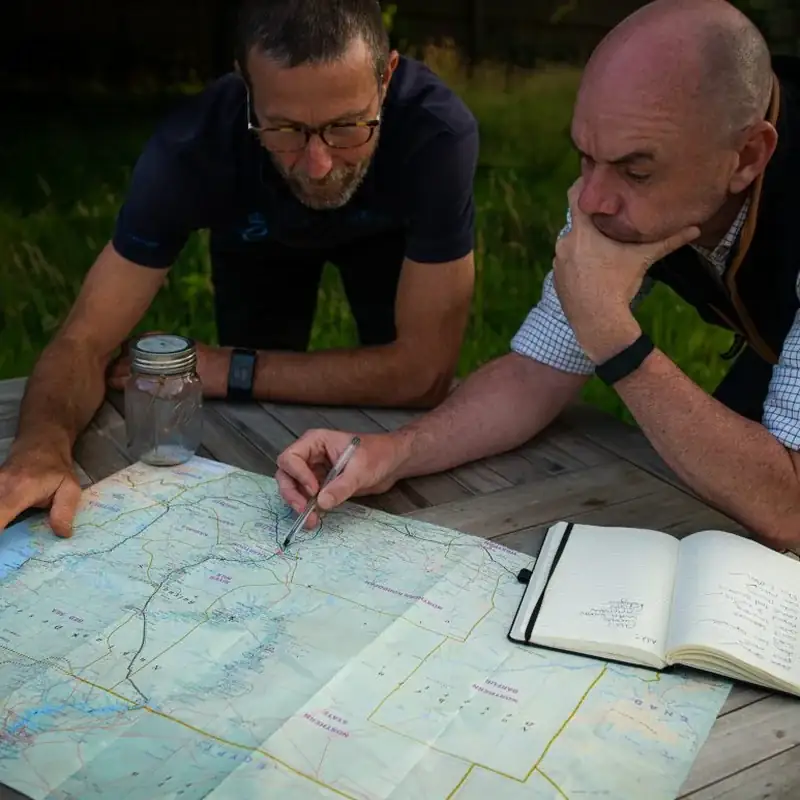
Guide development answers to Ethan Kinsey, a field guide by background. He teaches interpretation rather than a species checklist, and the guides here come up through that mentorship. Game drives go out morning and afternoon in open-sided 4WDs, shared as standard. A private guide and vehicle can be arranged in advance, and is worth having through the crossing months, when timing at the river decides everything. Full days out with a packed lunch run when numbers allow, and balloons lift off before dawn over the herds, booked ahead.
Guided walks leave camp with an armed guide. The licensed walking safaris belong to the northern site under park rules and carry a minimum age of twelve. Children are welcome all the same, with board games and short walks around camp led by staff. Serengeti National Park does not permit night drives, and evenings end outdoors under the Milky Way. Wildebeest grunt through the night in season, and lions call across the river. After dark, askaris walk guests to and from their tents.
Wildebeest grunt through the night in season, and lions call across the river.
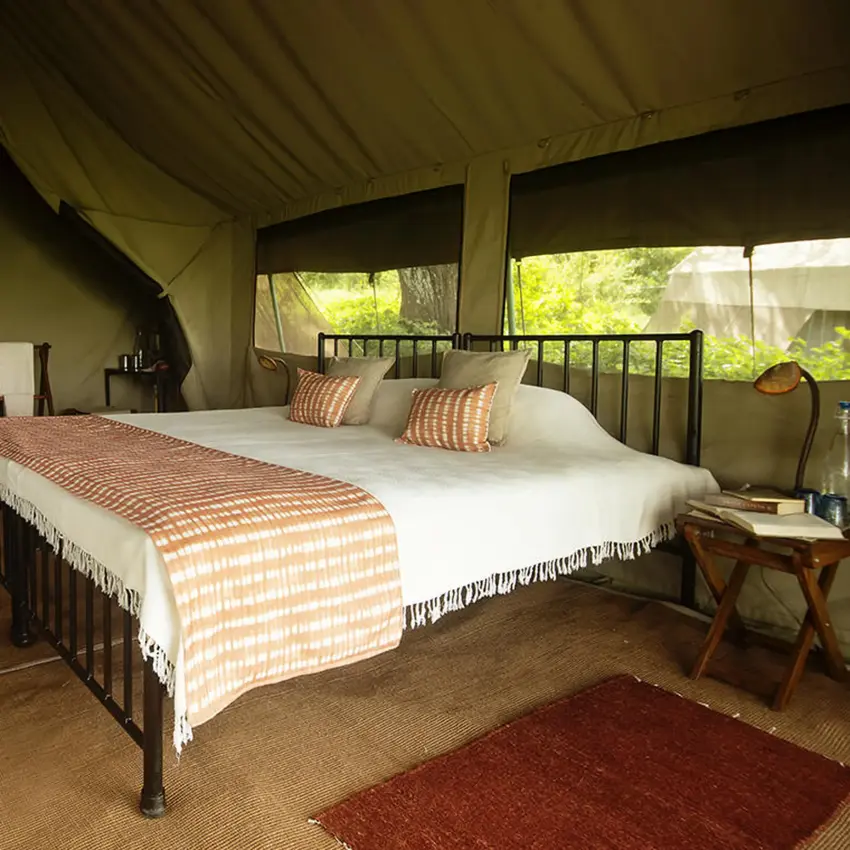
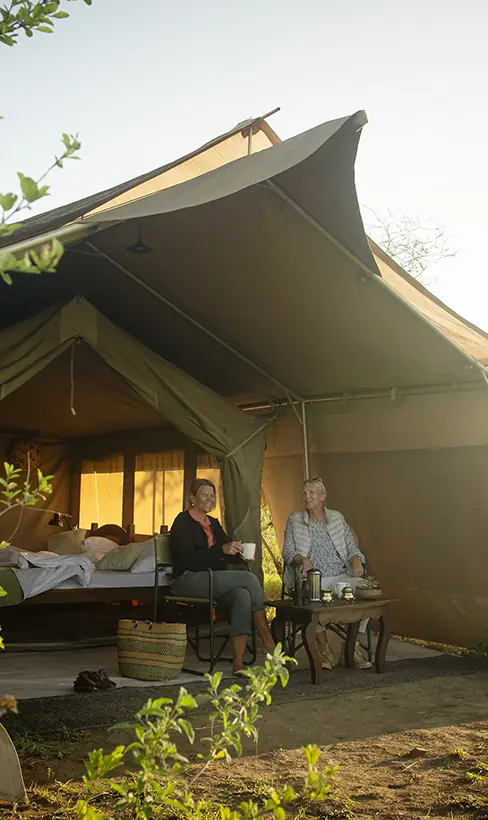
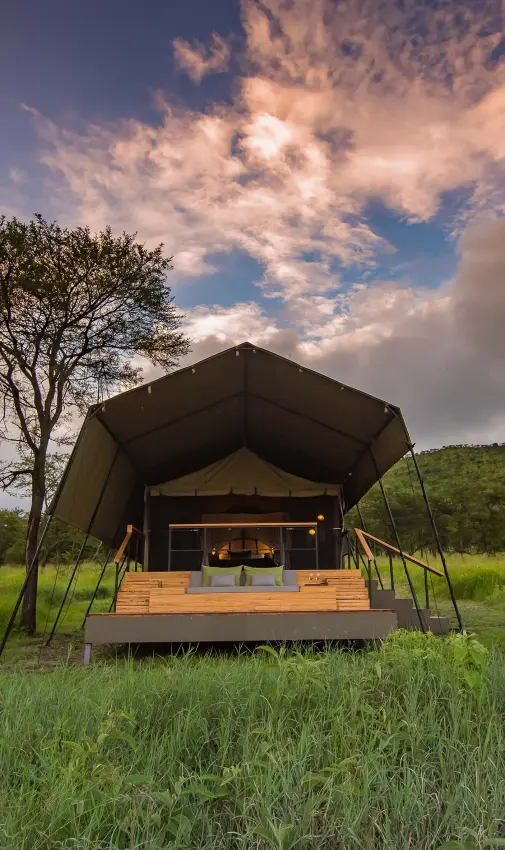
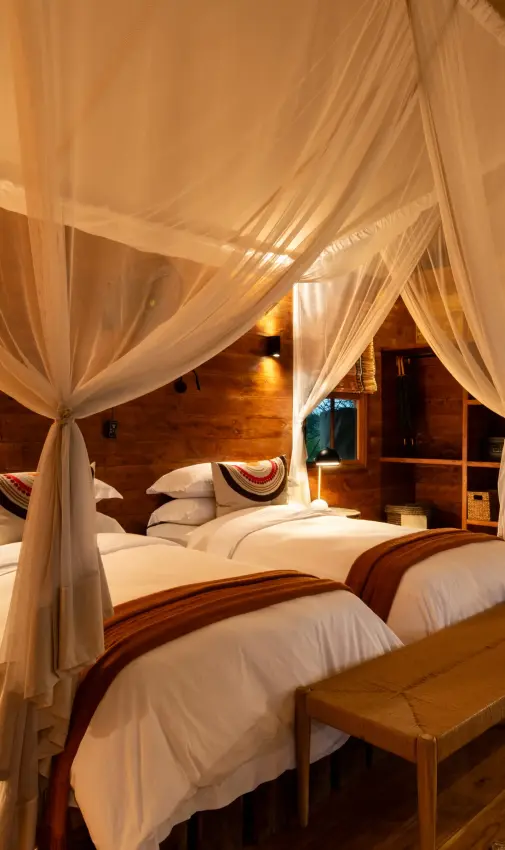
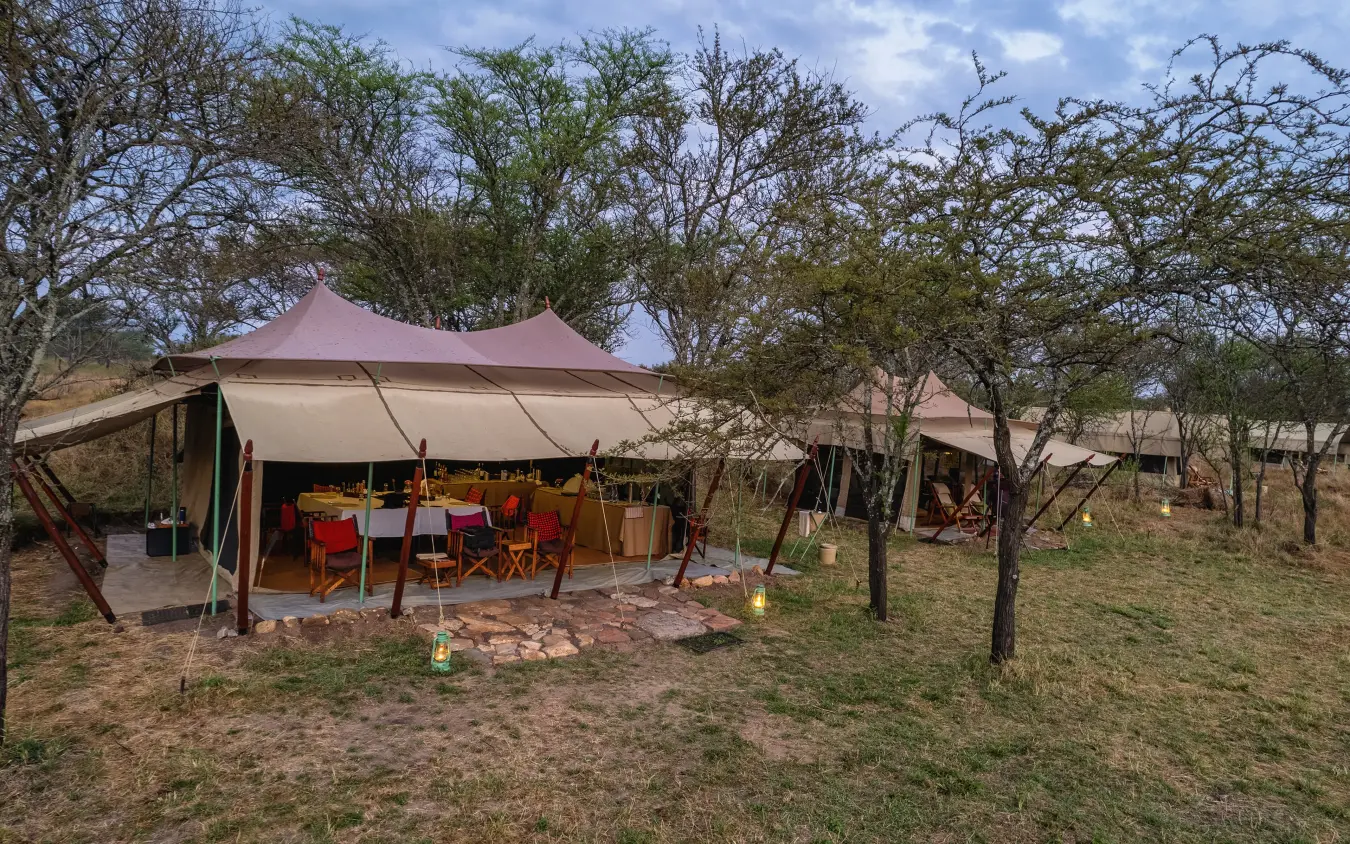
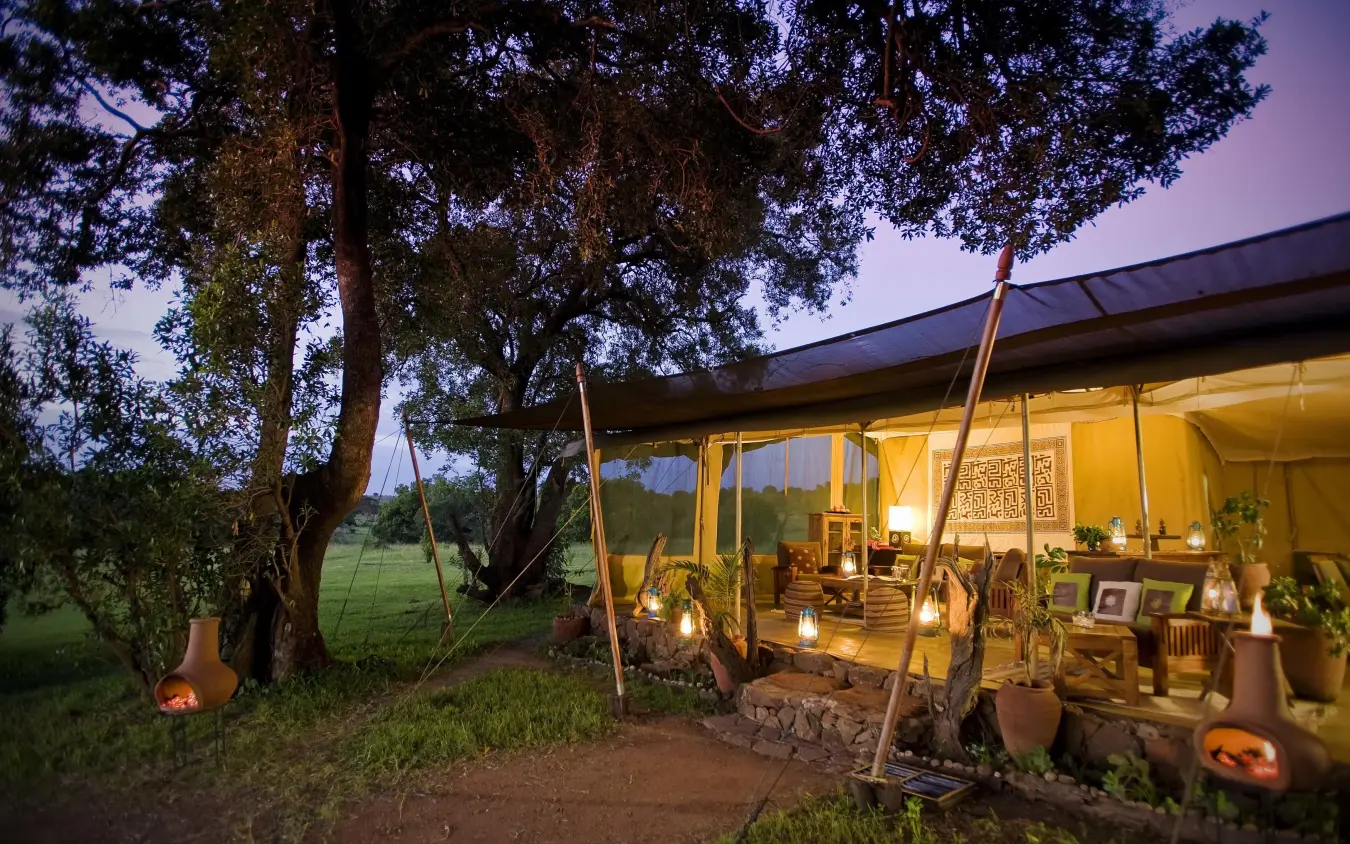
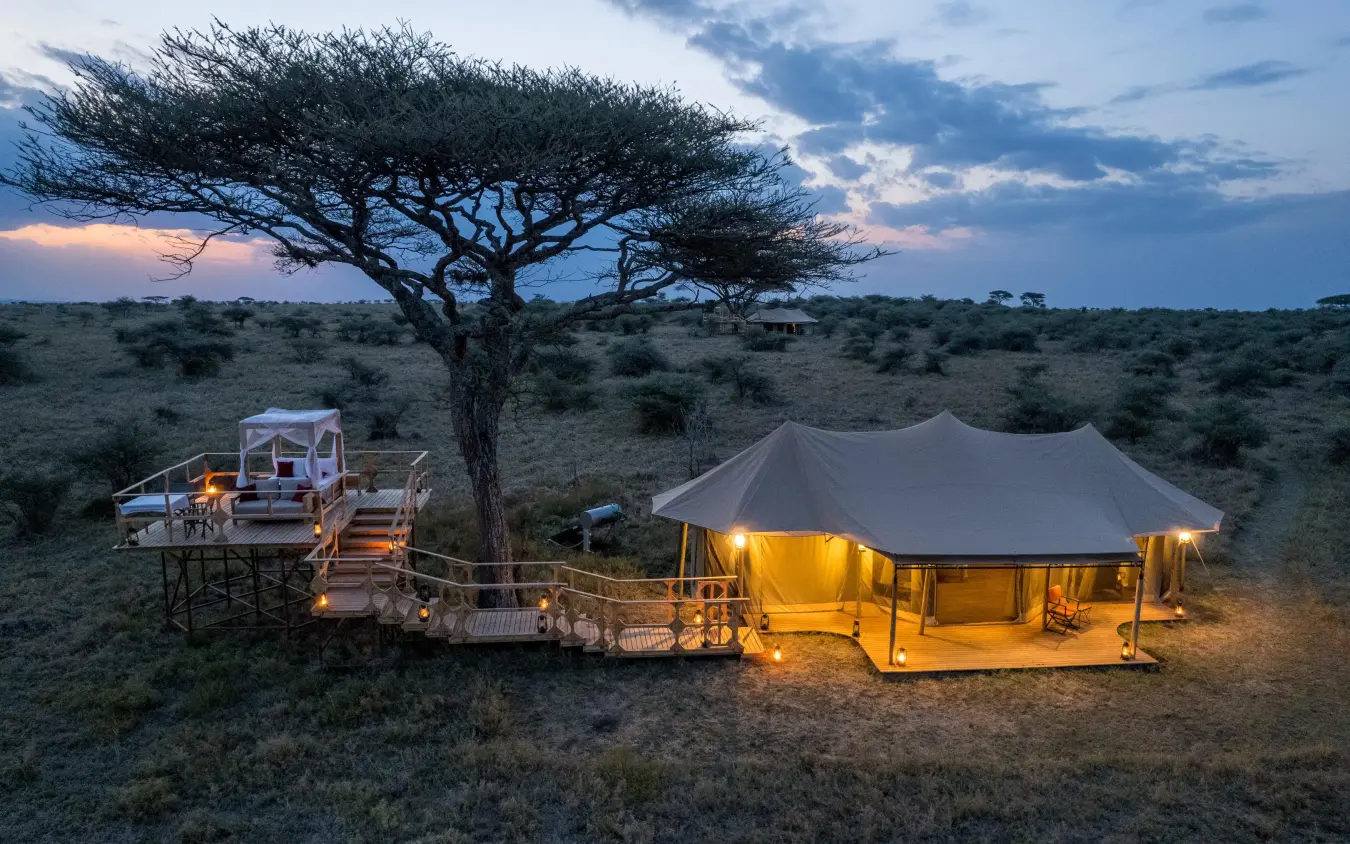
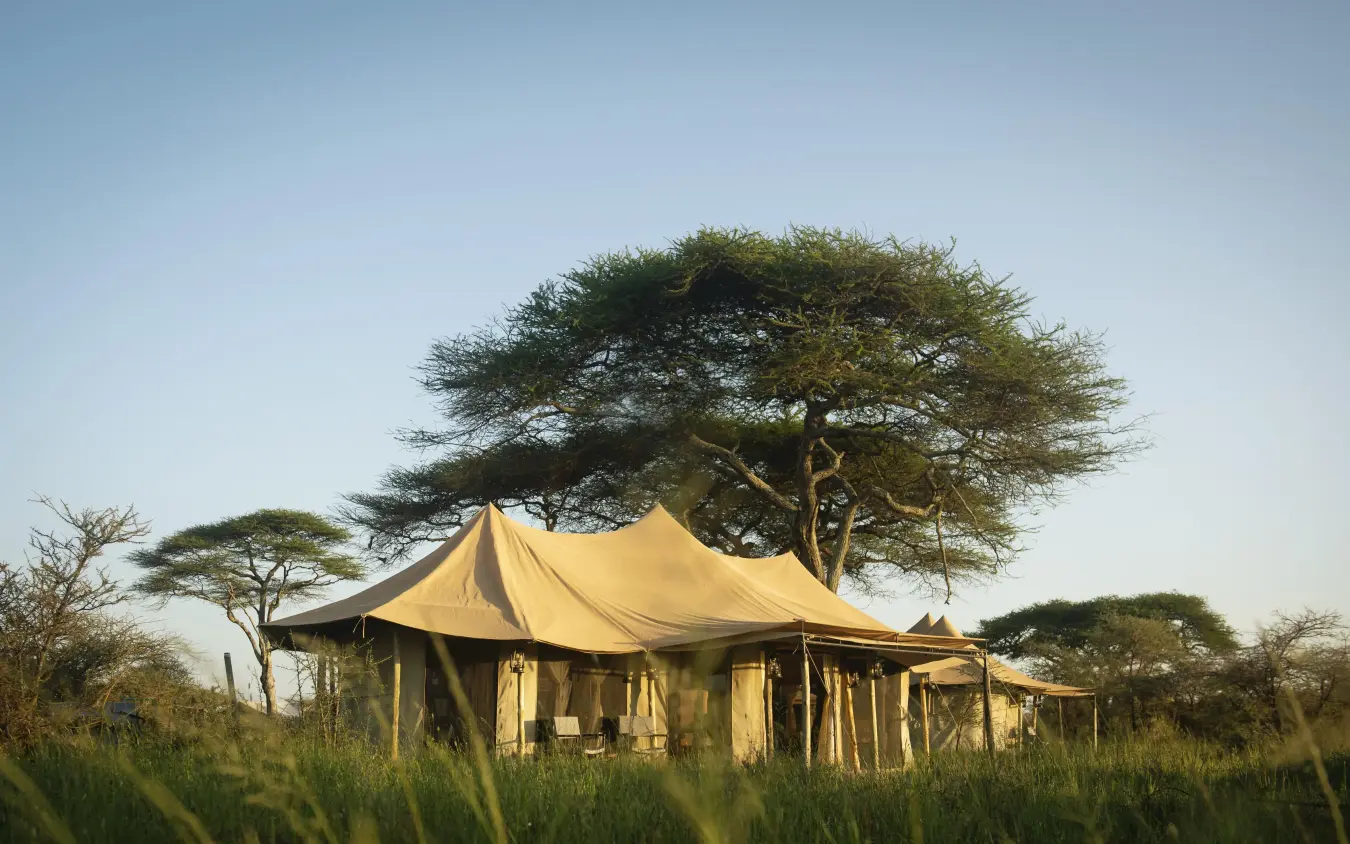
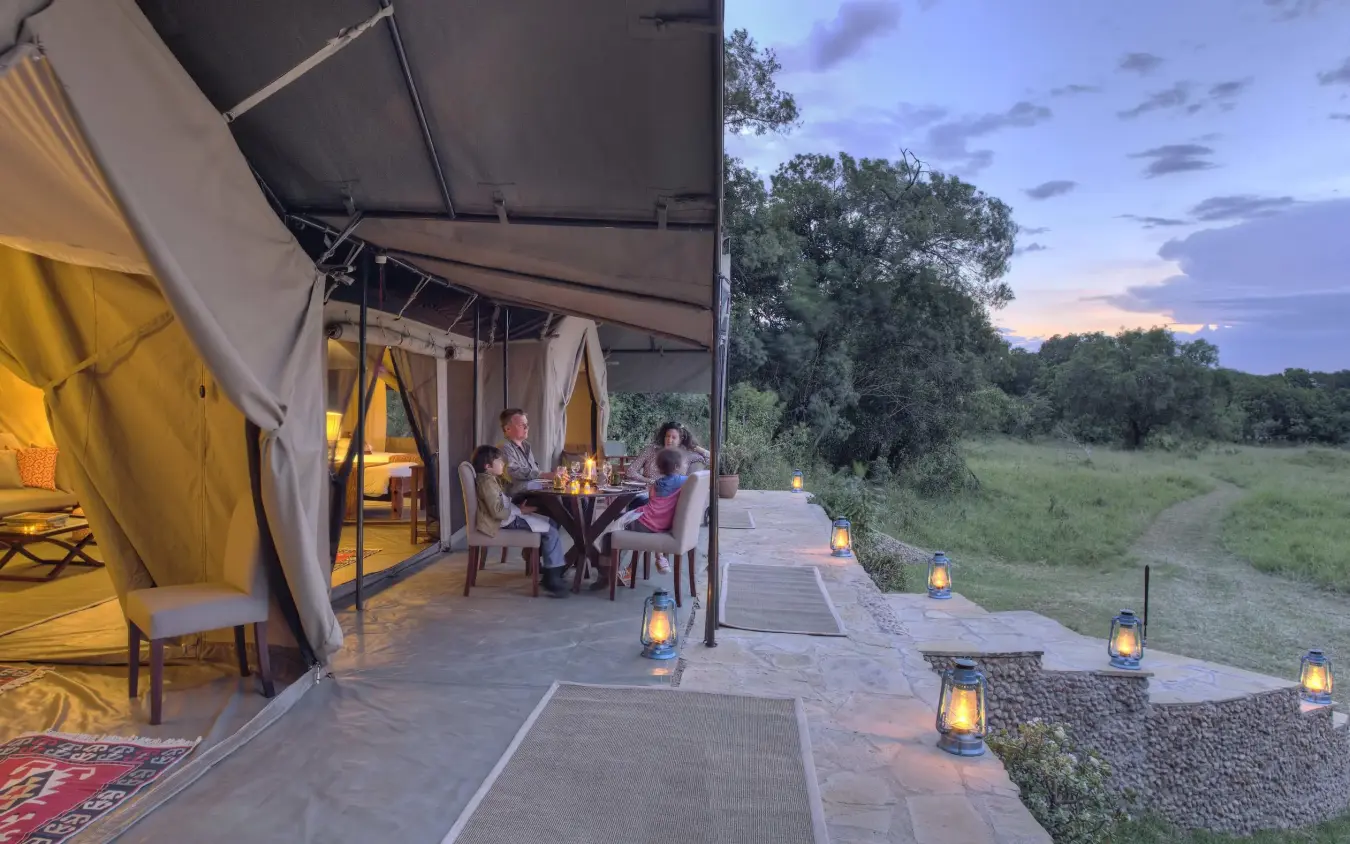
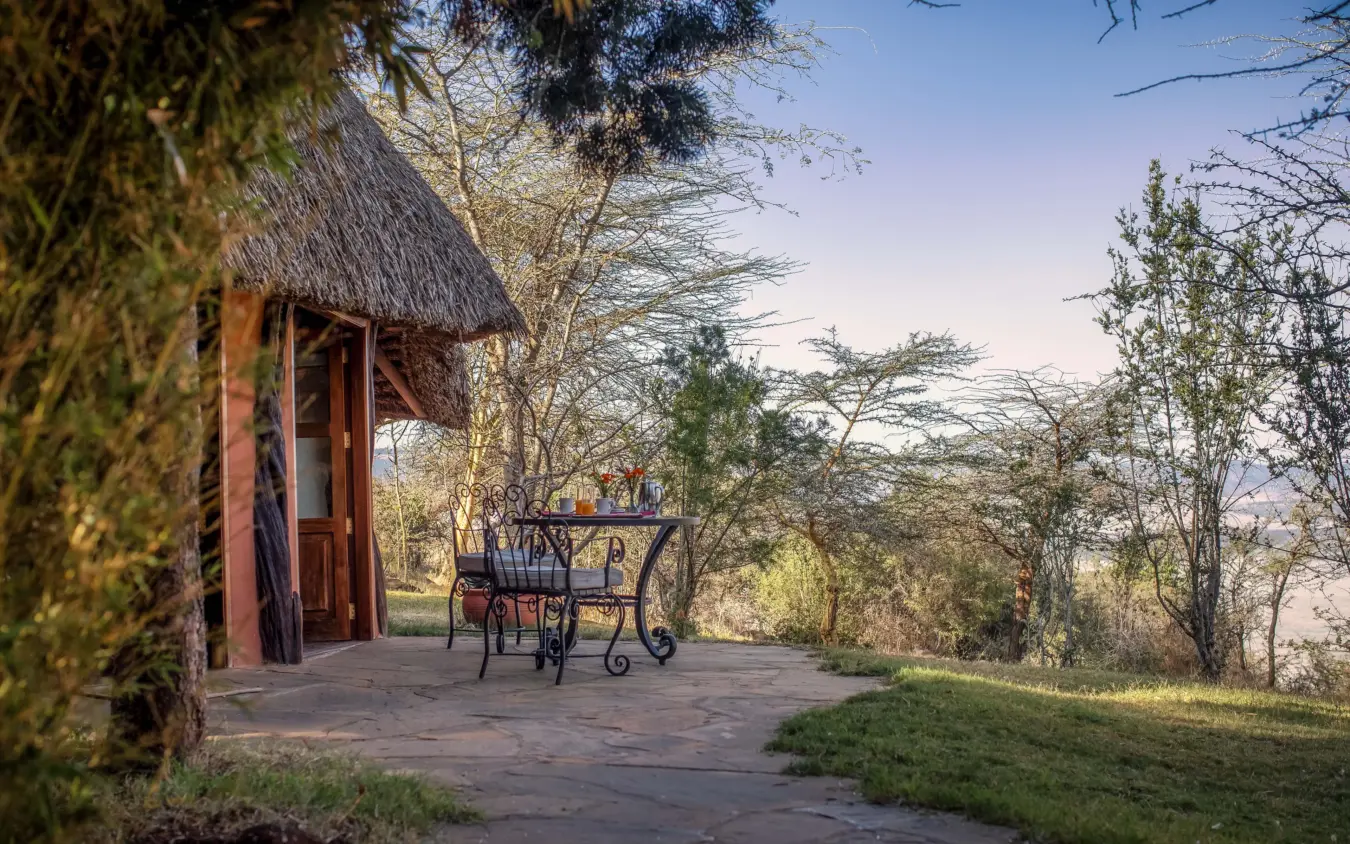
Seven of the eight tents are doubles or twins with verandas, plain and warm inside. The beds are made up in terracotta tie-dye and woven blankets, with reading lights. Luggage goes on leather-strapped racks, and a hanging rail does the job of a wardrobe. The eighth is a family unit of two full tents joined by an enclosed corridor. It sleeps up to five, and children and parents can cross between the two at night without stepping outside. Bathrooms are en-suite, with dry compost loos and bucket showers filled with hot water on request. Solar power runs to every tent.
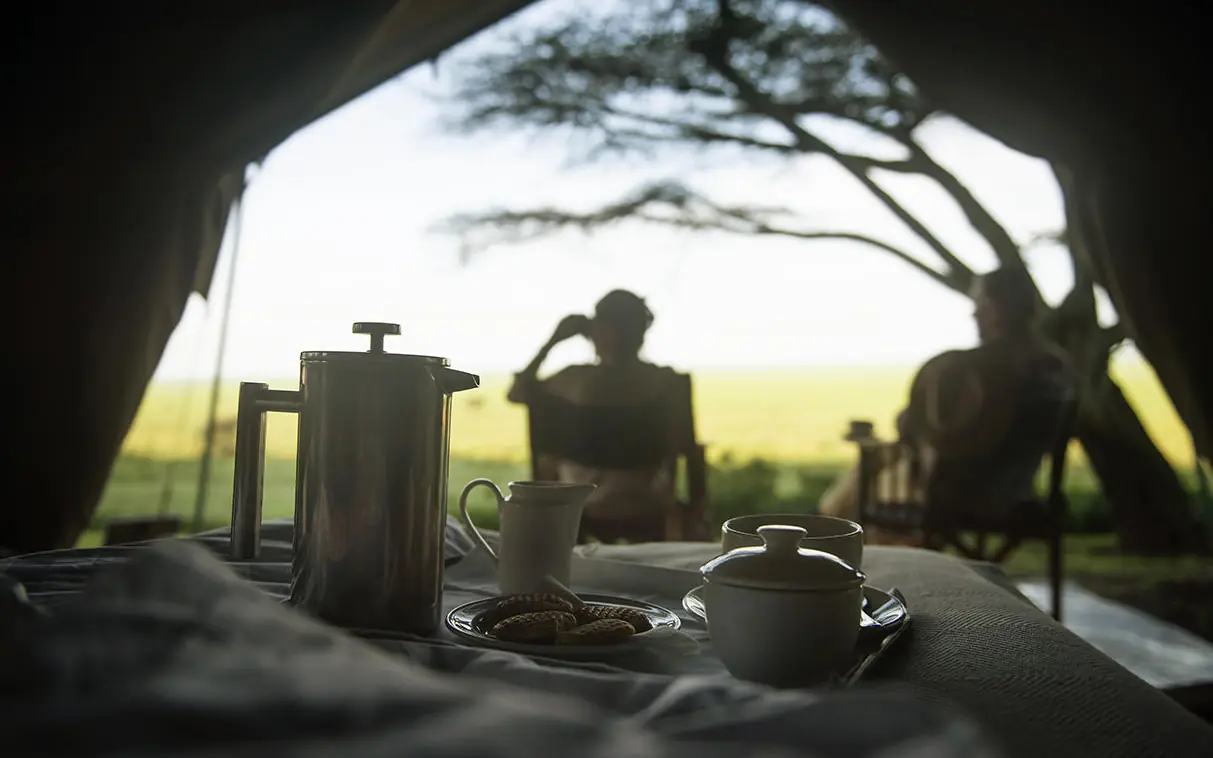
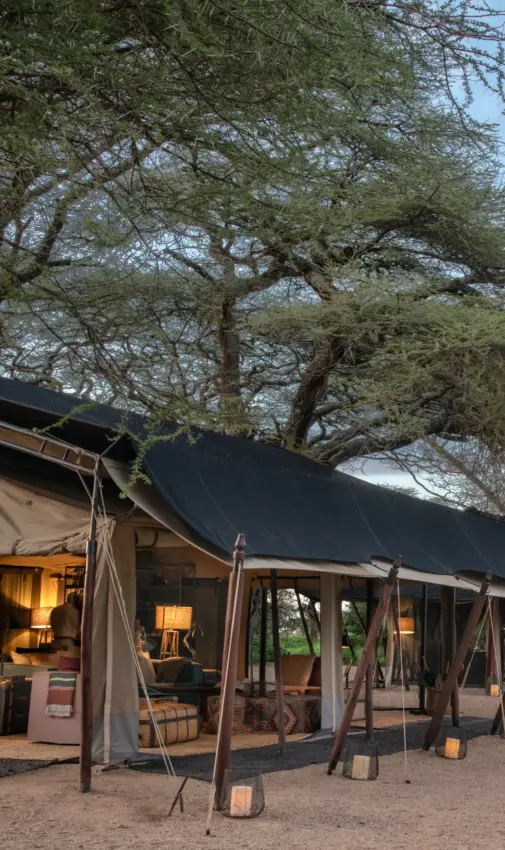
Reaching the northern site means a light aircraft into Kogatende and about an hour on the road, ending at a camp where a buffet table holds tea, coffee and drinks through the day. It stays until October. Between December and April the same tents go up behind Naabi Hill in the southern Serengeti, out on the short-grass plains for the calving season, and that position has its own page as Esirai Camp South. The camp goes where the wildebeest are, calving in the south and crossing in the north. Between the two seasons, through the shoulder rains, there is no camp at all.