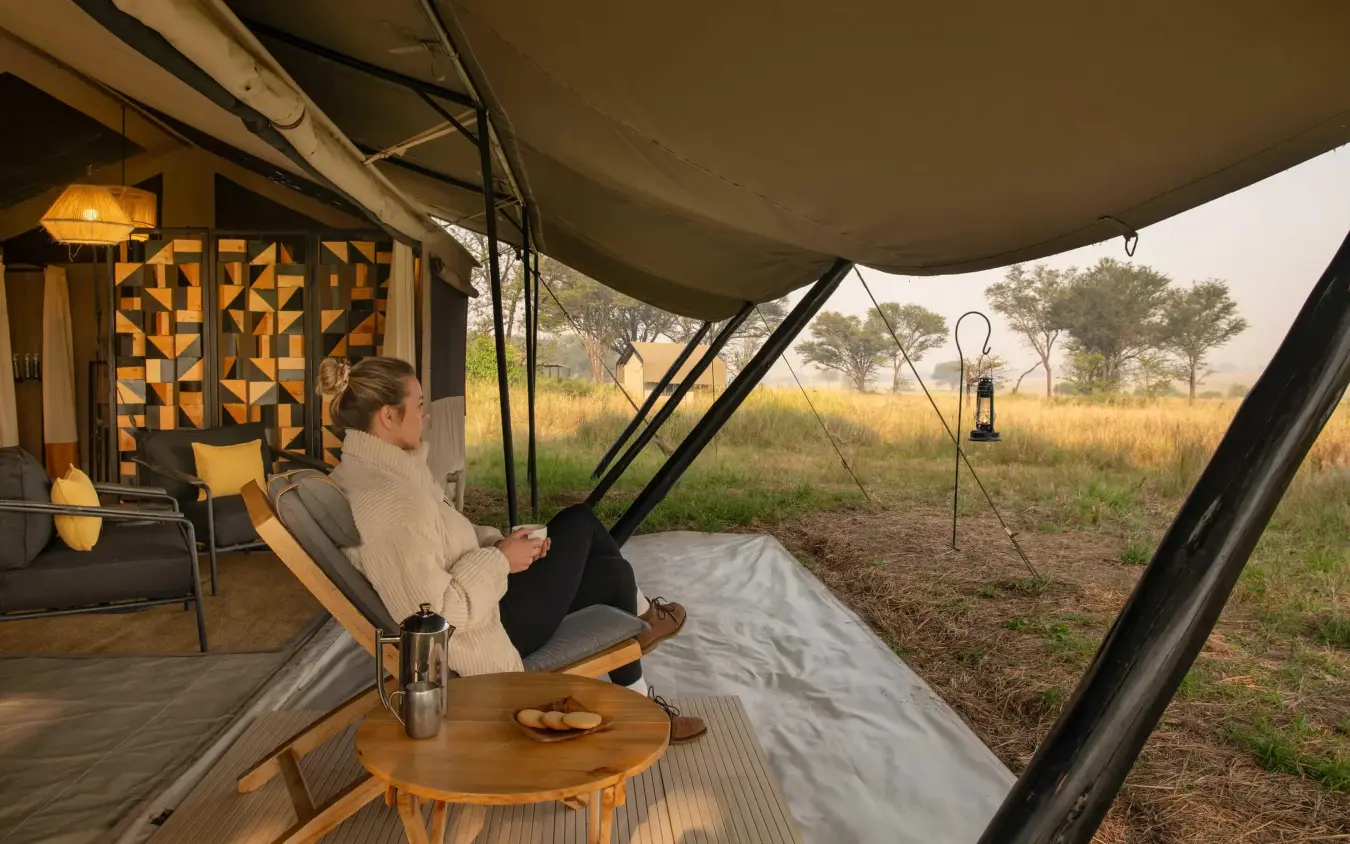
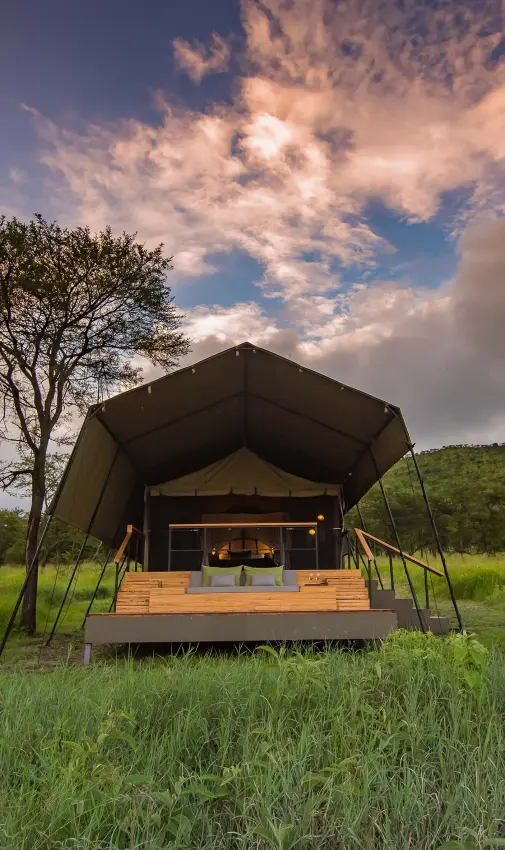
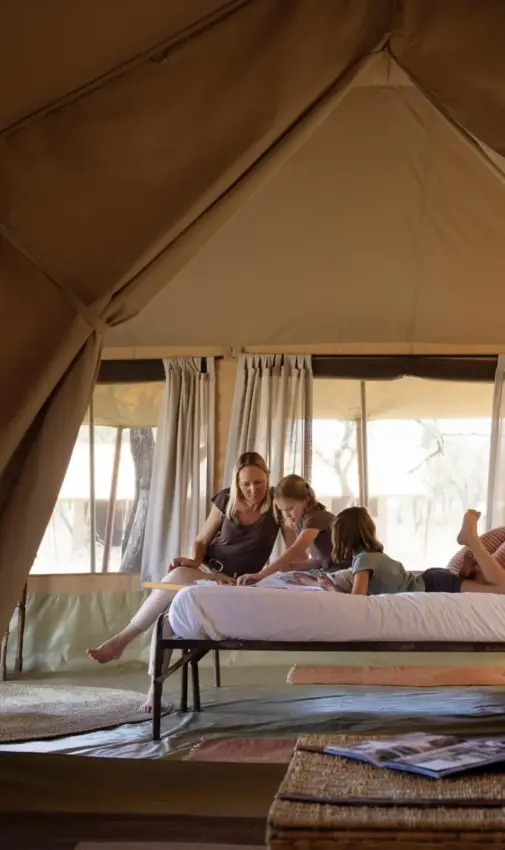
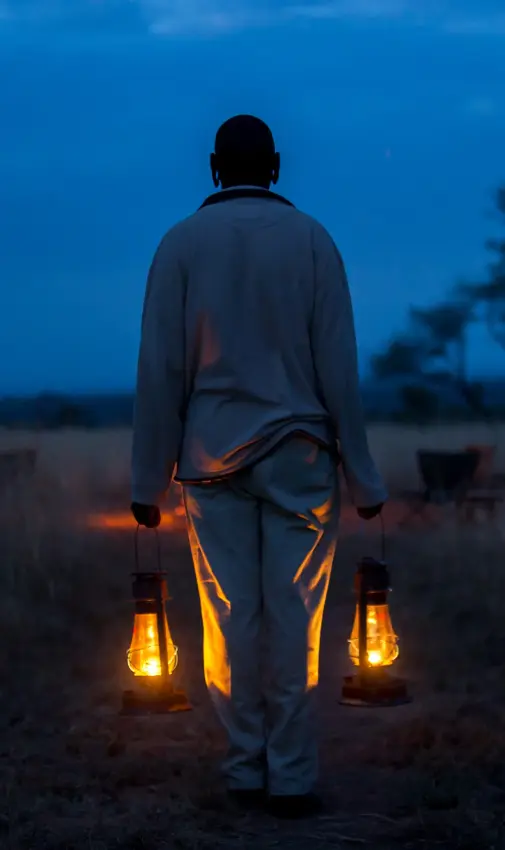
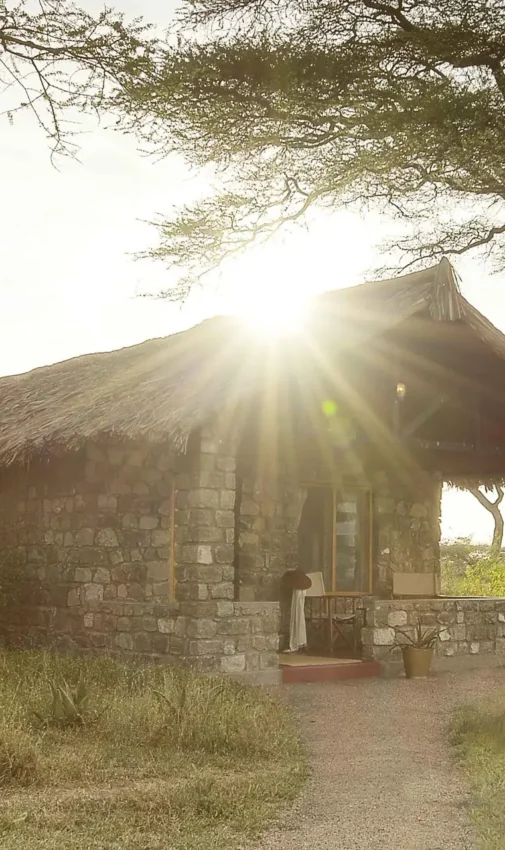
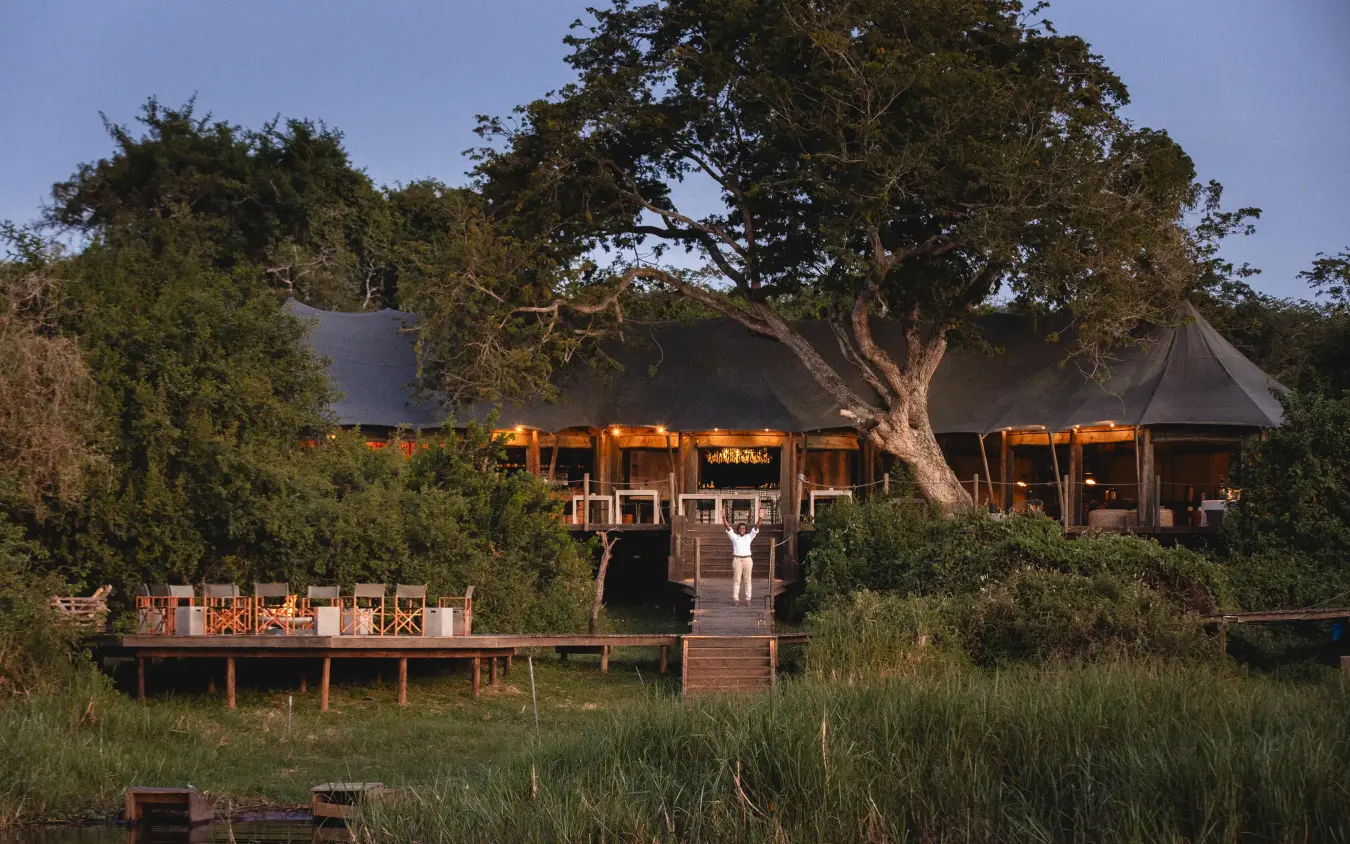
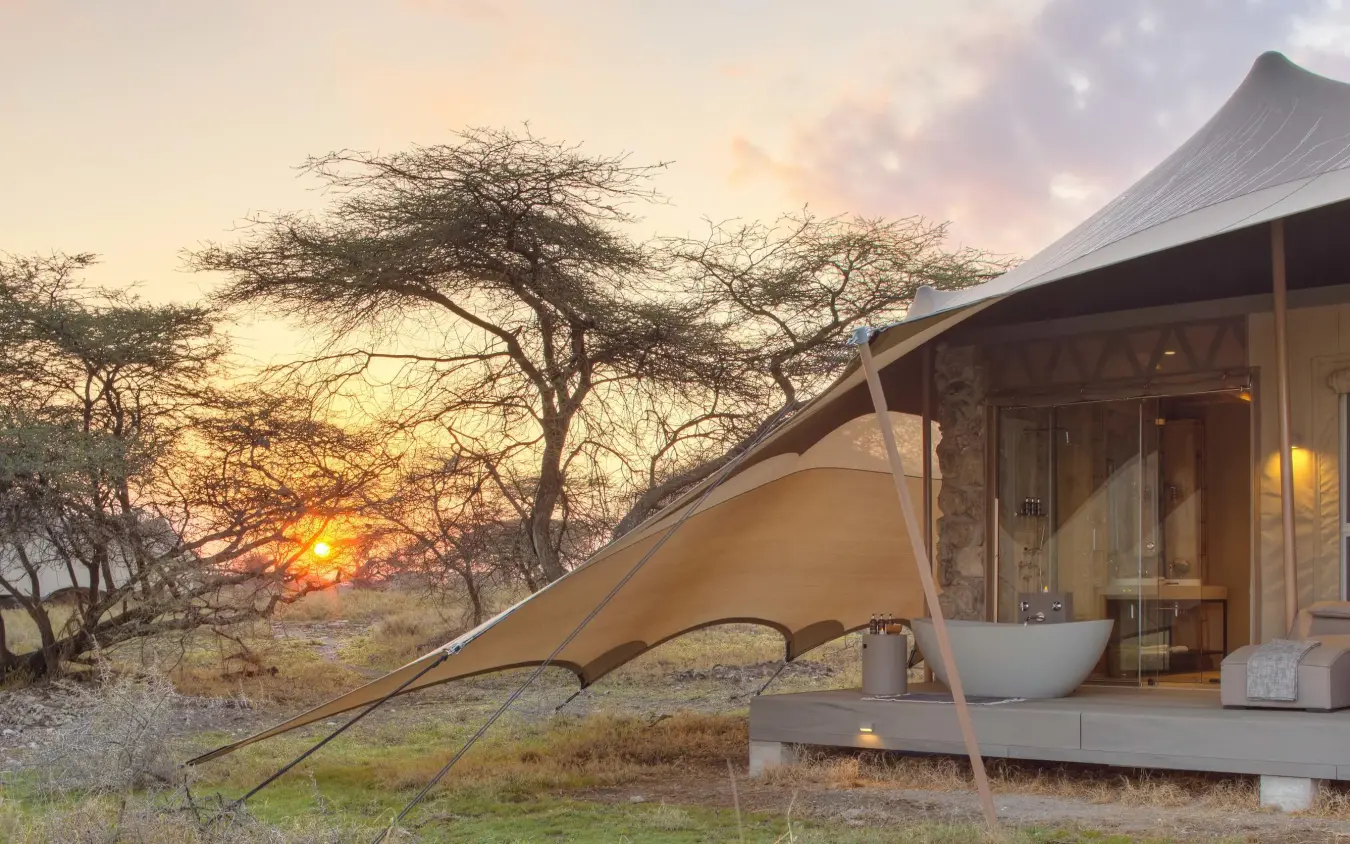
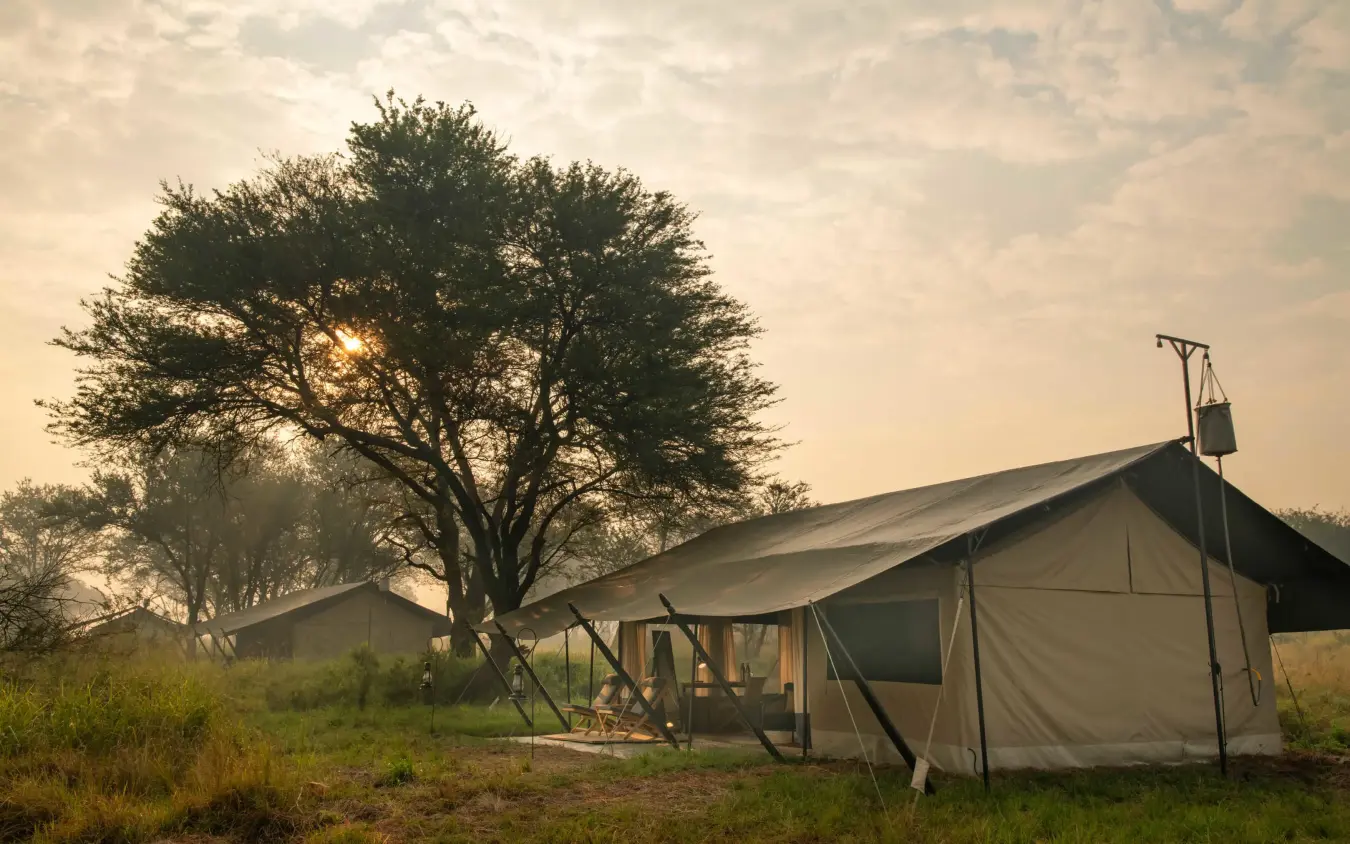
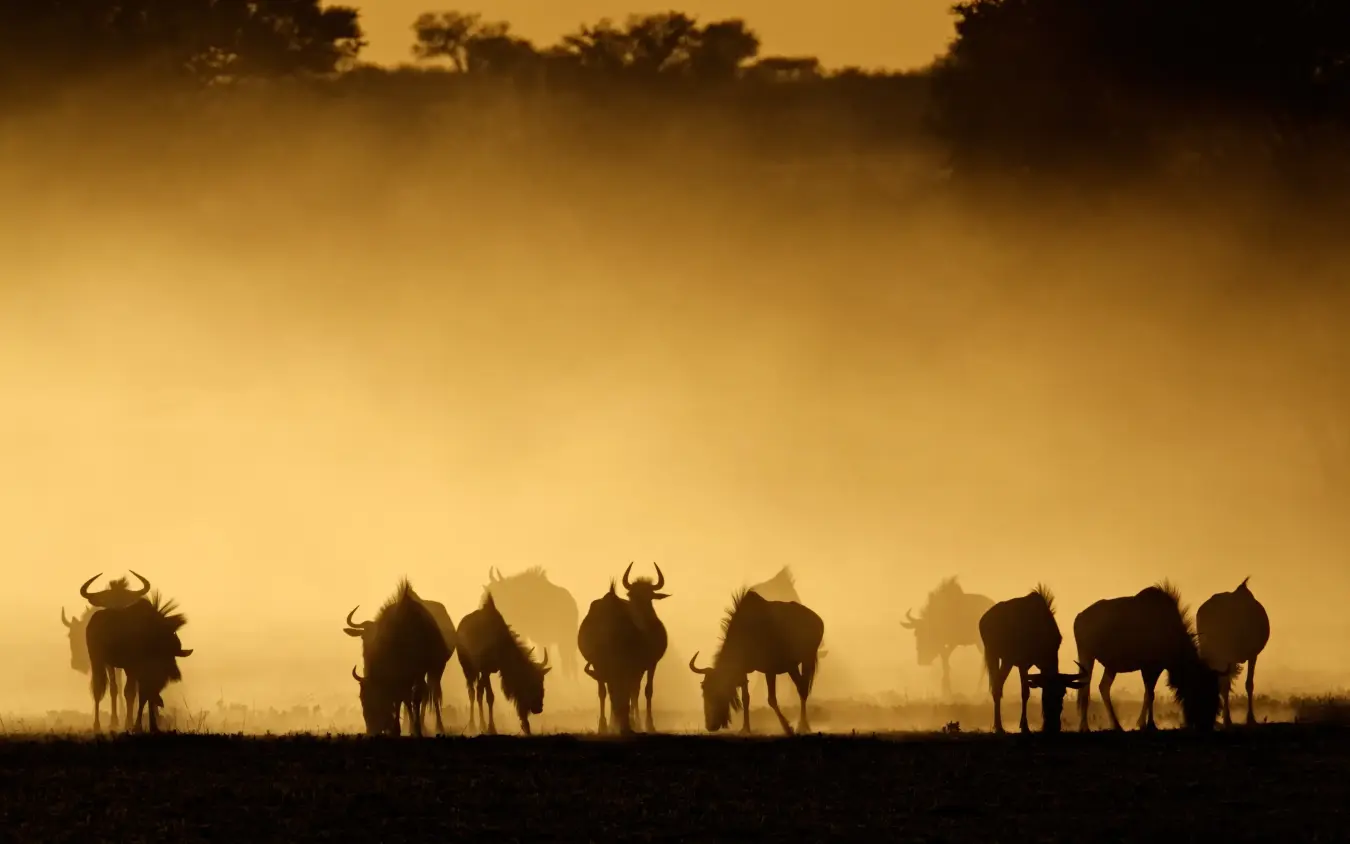
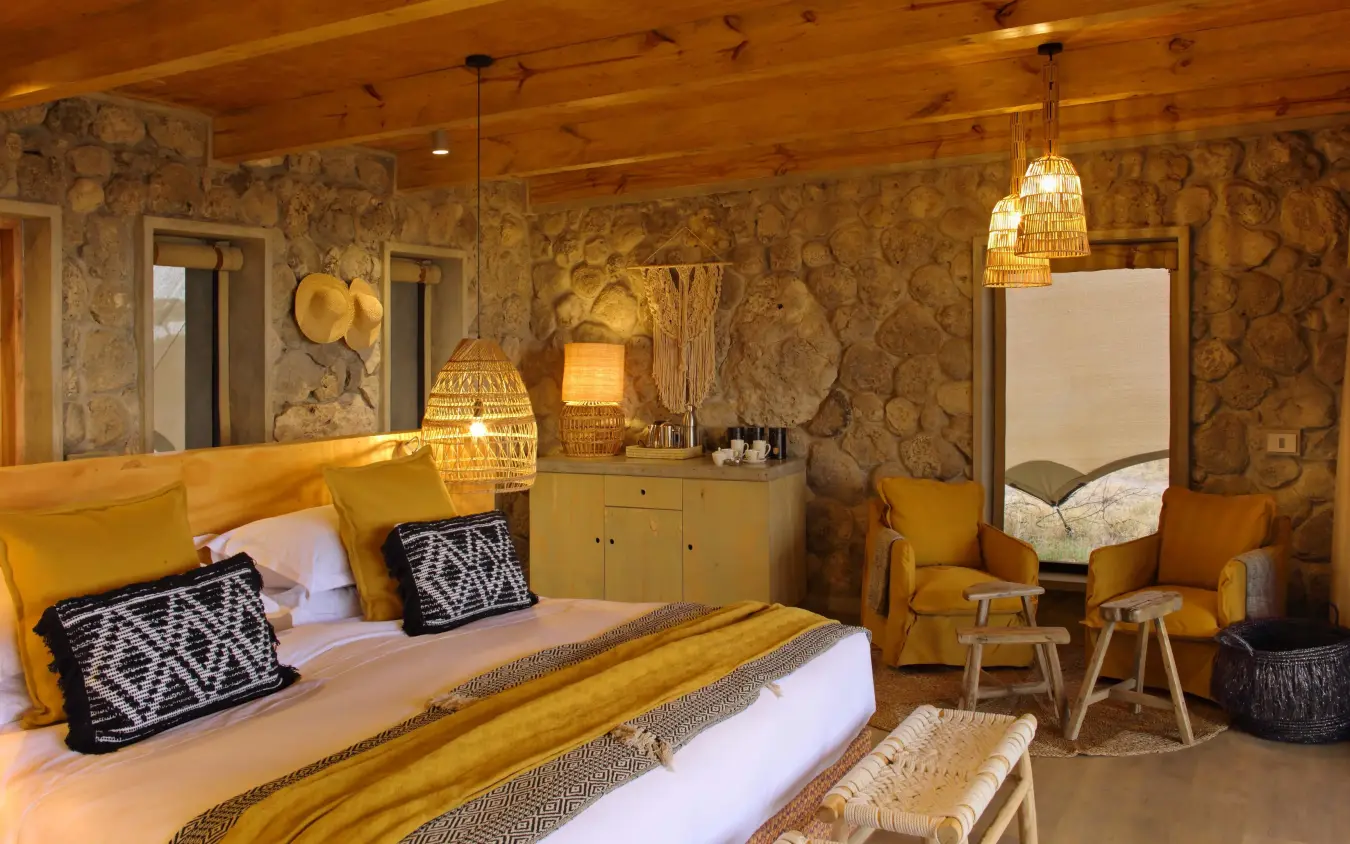
Ubuntu Migration Camp trades some polish for canvas, firelight and a place inside the migration at both ends of its year. When the herds move on, the canvas and sisal matting come down along with the mess and lounge tents at the centre of camp, and the site is left without a permanent mark. Power comes from the sun. The tents are spaced well apart, with lantern-lit paths linking them to the mess after dark. The comfort is of a practical kind, a good bed and a flushing toilet, with hot water when it is wanted.
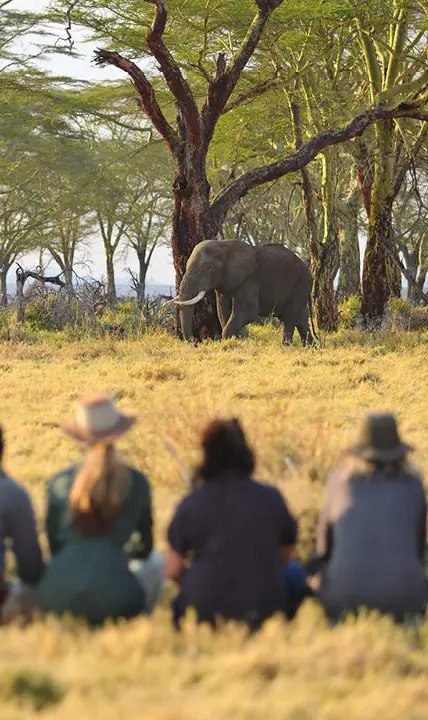
Mornings in Kusini begin before dawn, with tea or coffee brought to the tent and cold air on the veranda. Breakfasts are packed for long days out, and full-day drives come into their own when the calving is at its height on the plains. This sector lies inside the national park, where vehicles keep to designated tracks, so sightings are worked from the road, with patience. Walking is possible in the hills behind camp, following tracks and small signs on foot, a slower way to read the ground than any game drive allows.
The same lanterns line the paths, and a fire is lit each evening as the vehicles return.
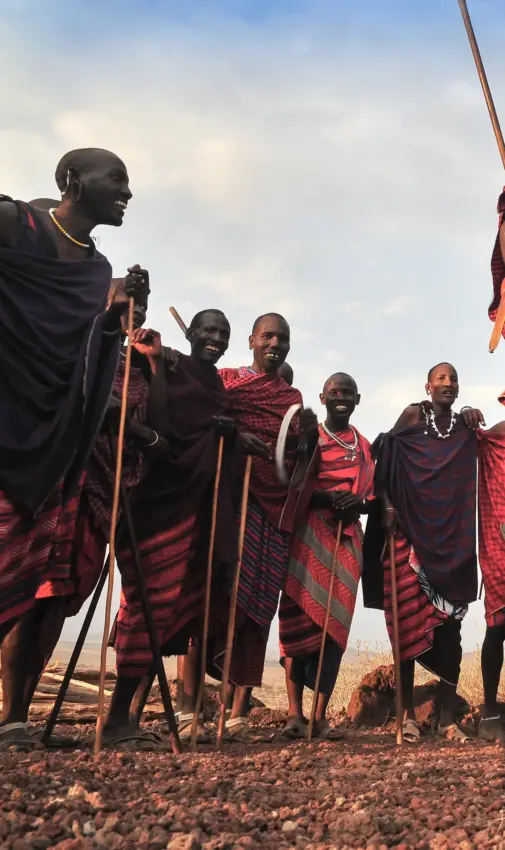
When the camp shifts north for the dry months, life under canvas carries on as it did in the south. The same tents go up around the same canvas mess. The same lanterns line the paths, and a fire is lit each evening as the vehicles return. The kitchen buys its fresh produce from local communities here, and guests can visit a nearby Kuria village to see something of daily life there. Hot-air ballooning over the northern plains can be arranged for anyone who wants the herds from above.
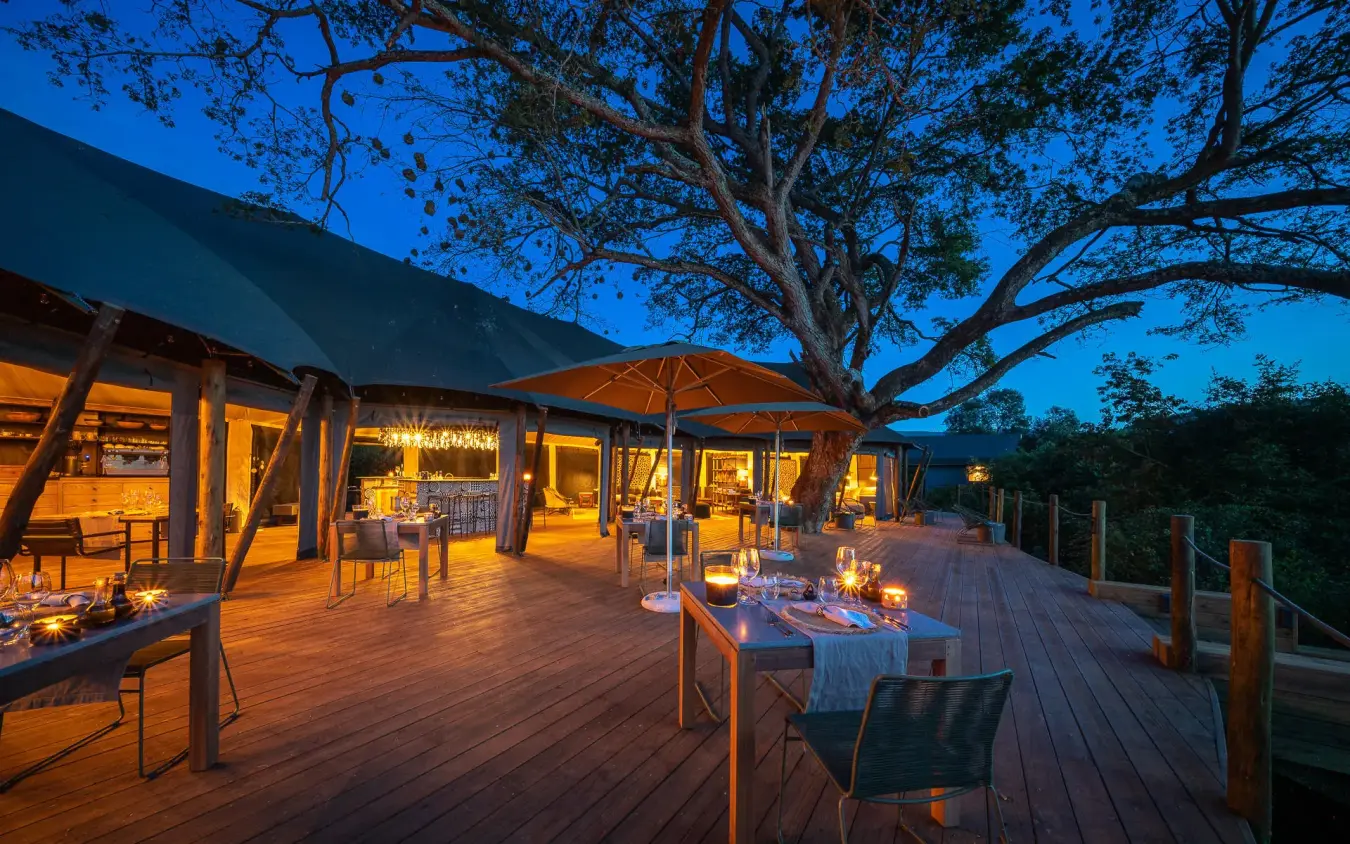
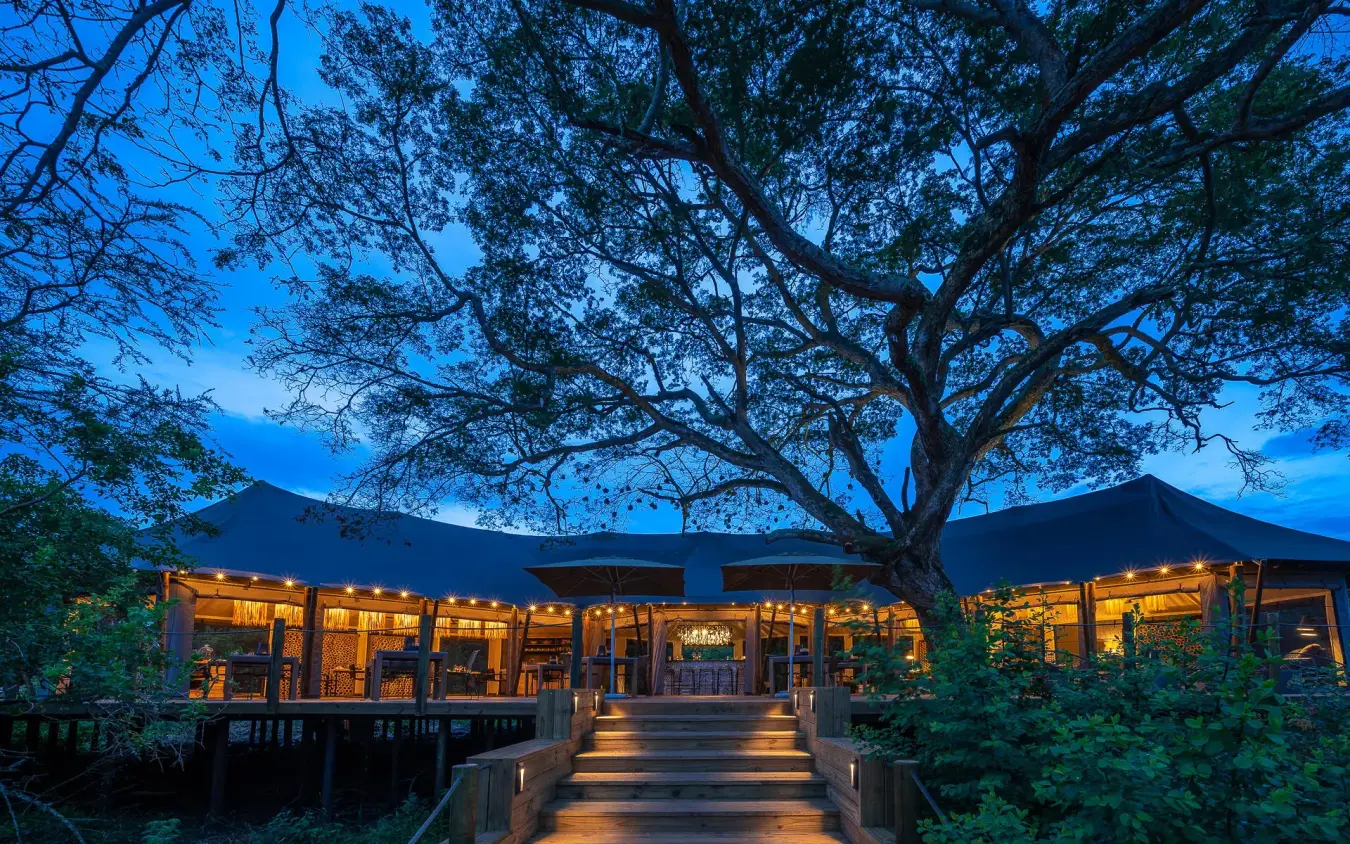
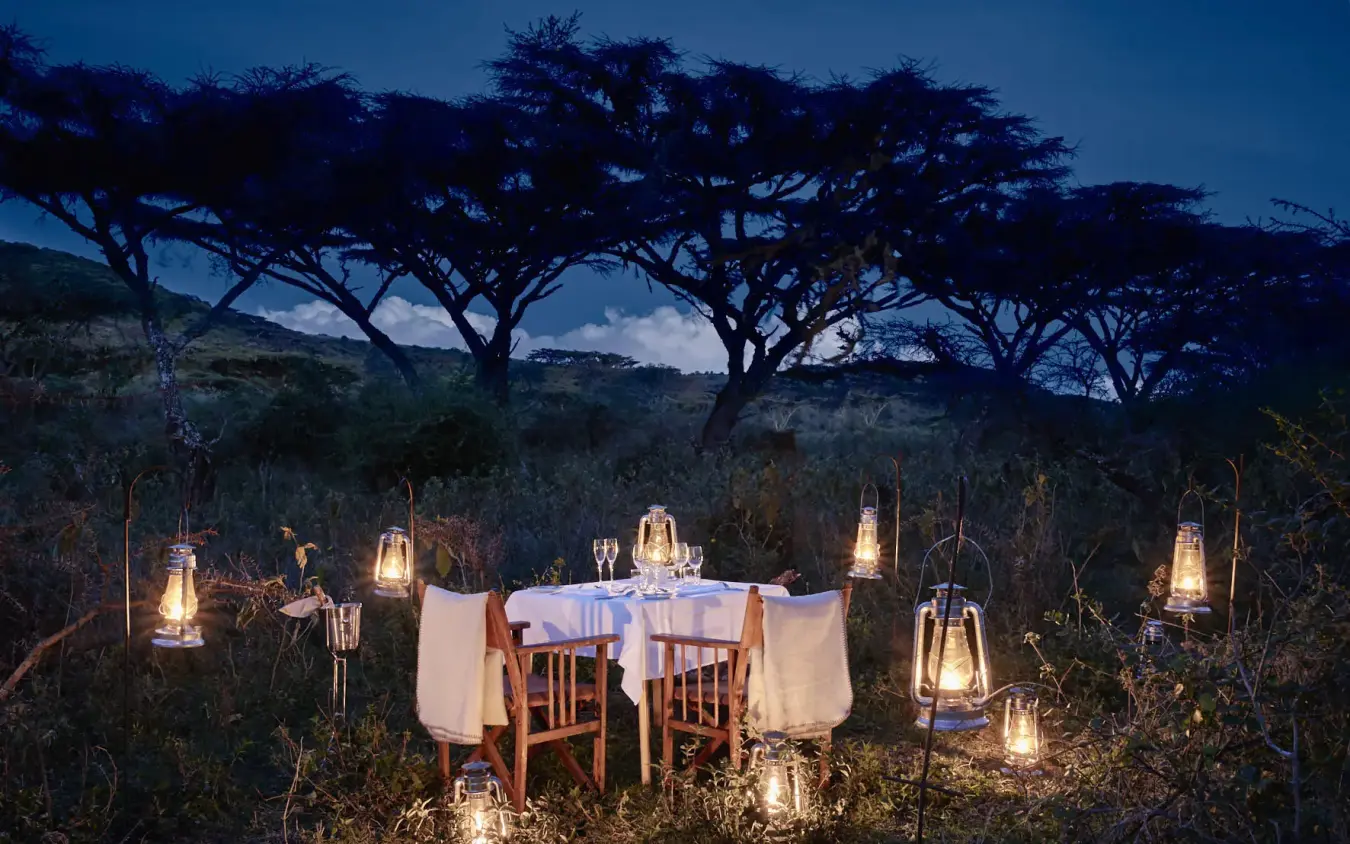
Dinner is three courses in the mess tent or, when the weather holds, at tables laid under the stars beside the campfire. Stories from the day’s drives go round the fire, competing with whatever is calling out on the plains. A contribution from every night at Ubuntu goes to Honeyguide, the Serengeti Cheetah Project and the KURU tracker-dog unit. Honeyguide’s second dog team seized more than 150 snares in one three-month spell, and support also reaches the Frankfurt Zoological Society’s livestock patrol on the eastern Serengeti boundary.