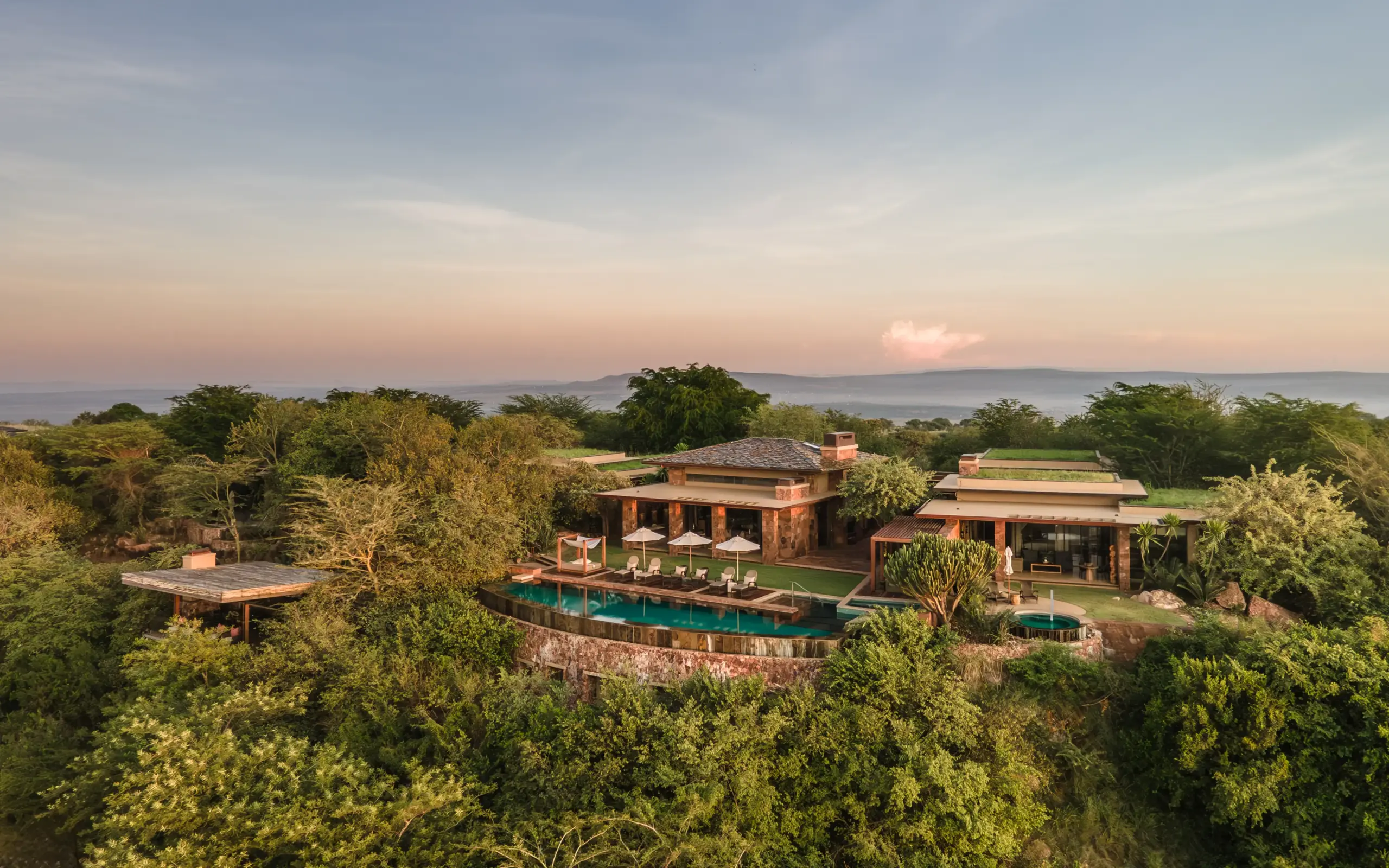
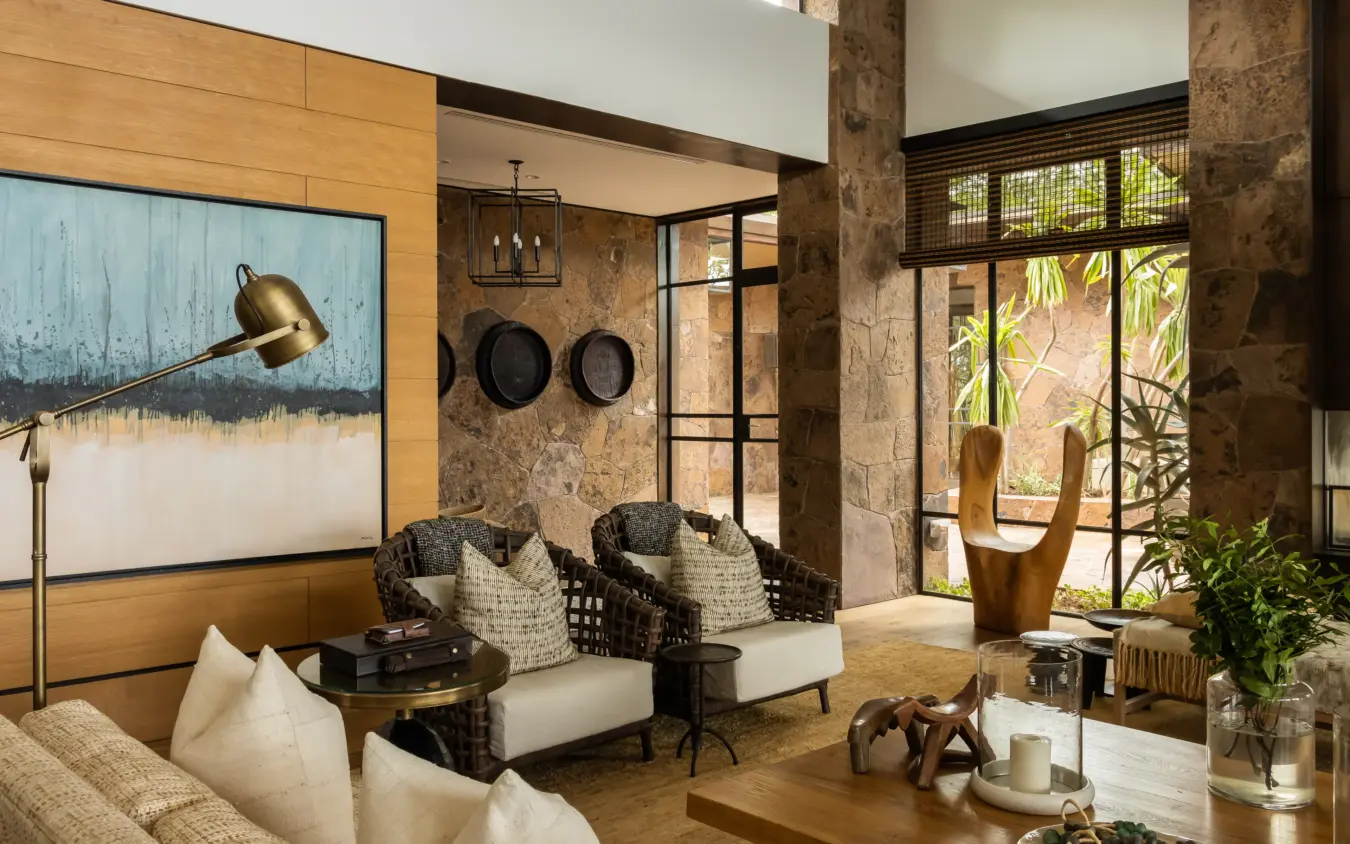
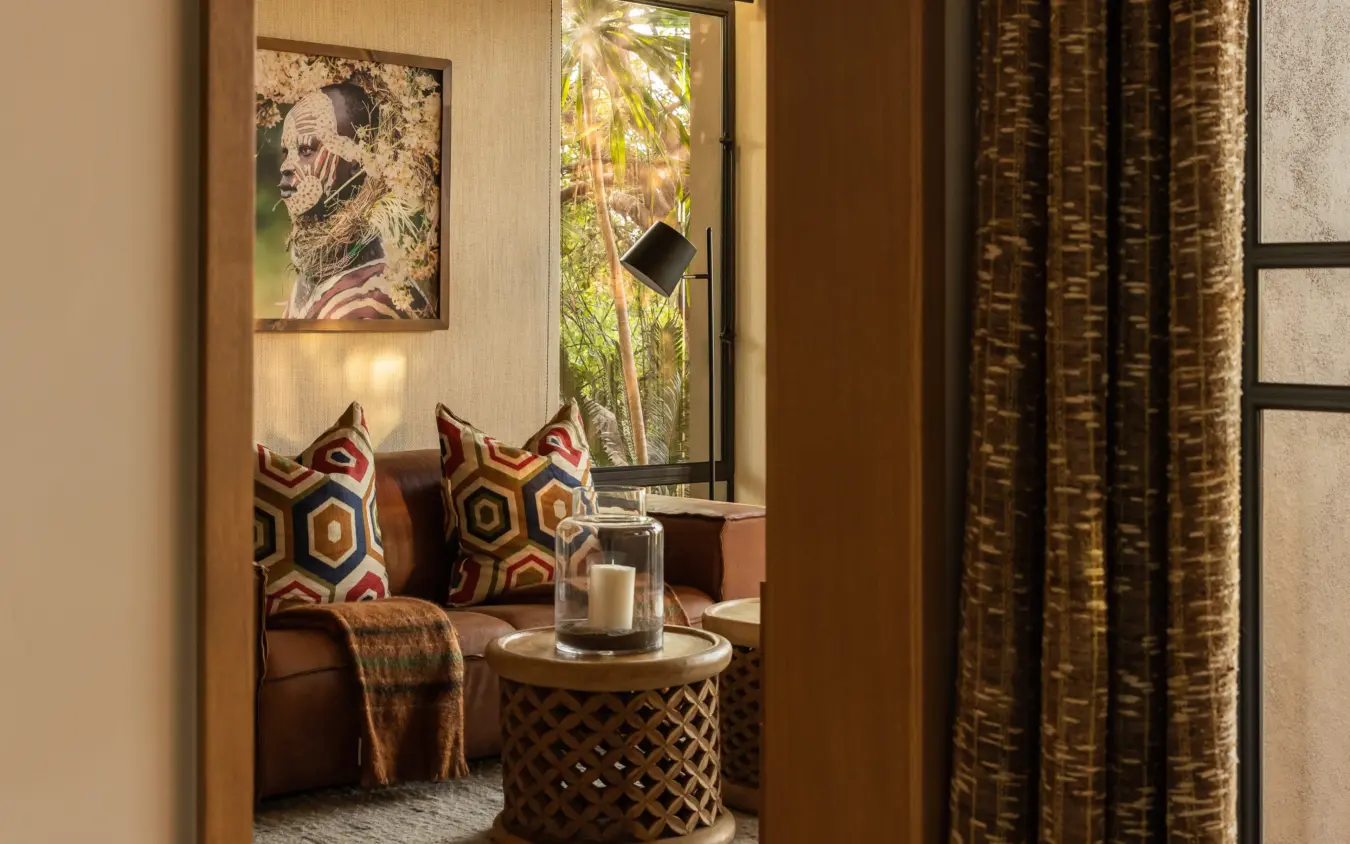
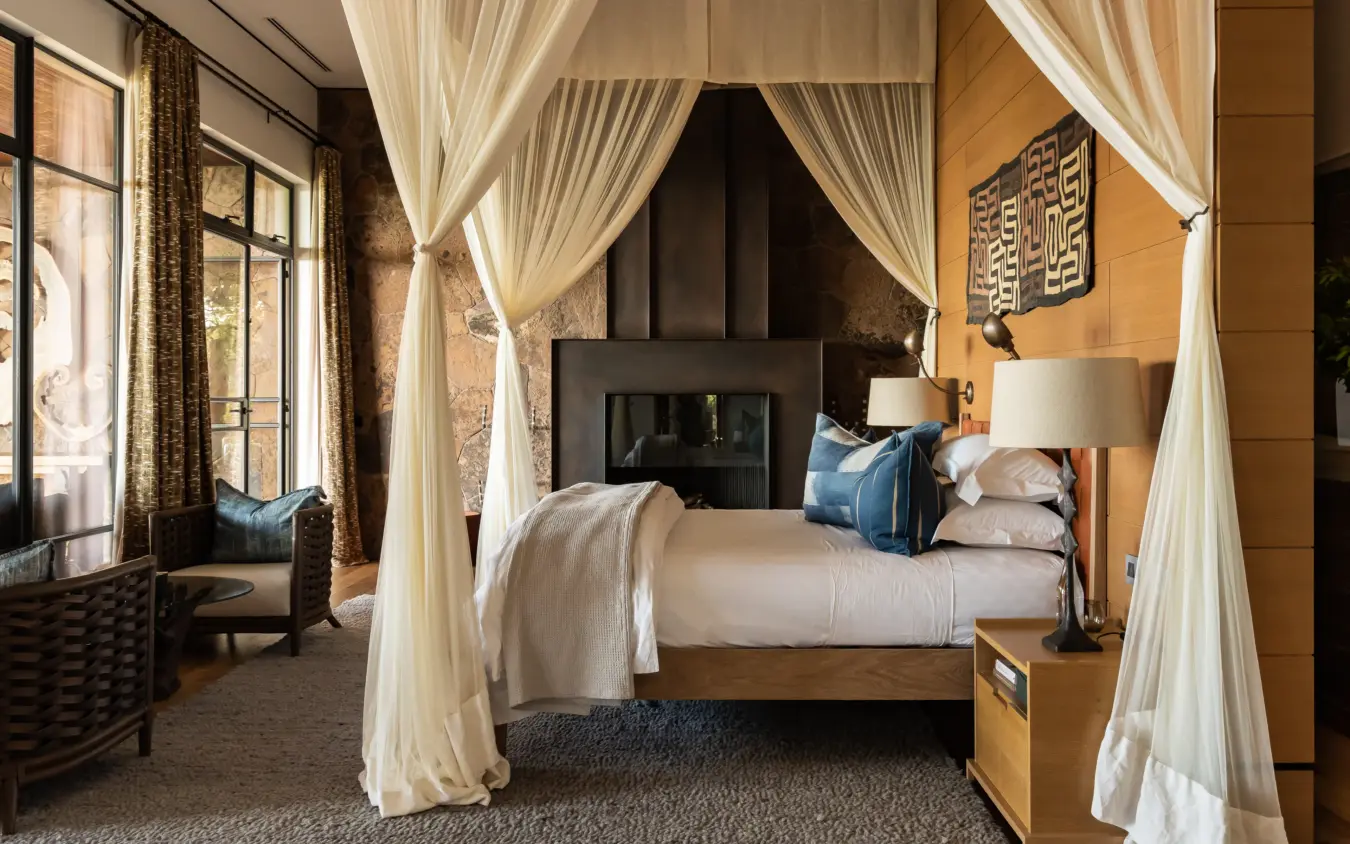
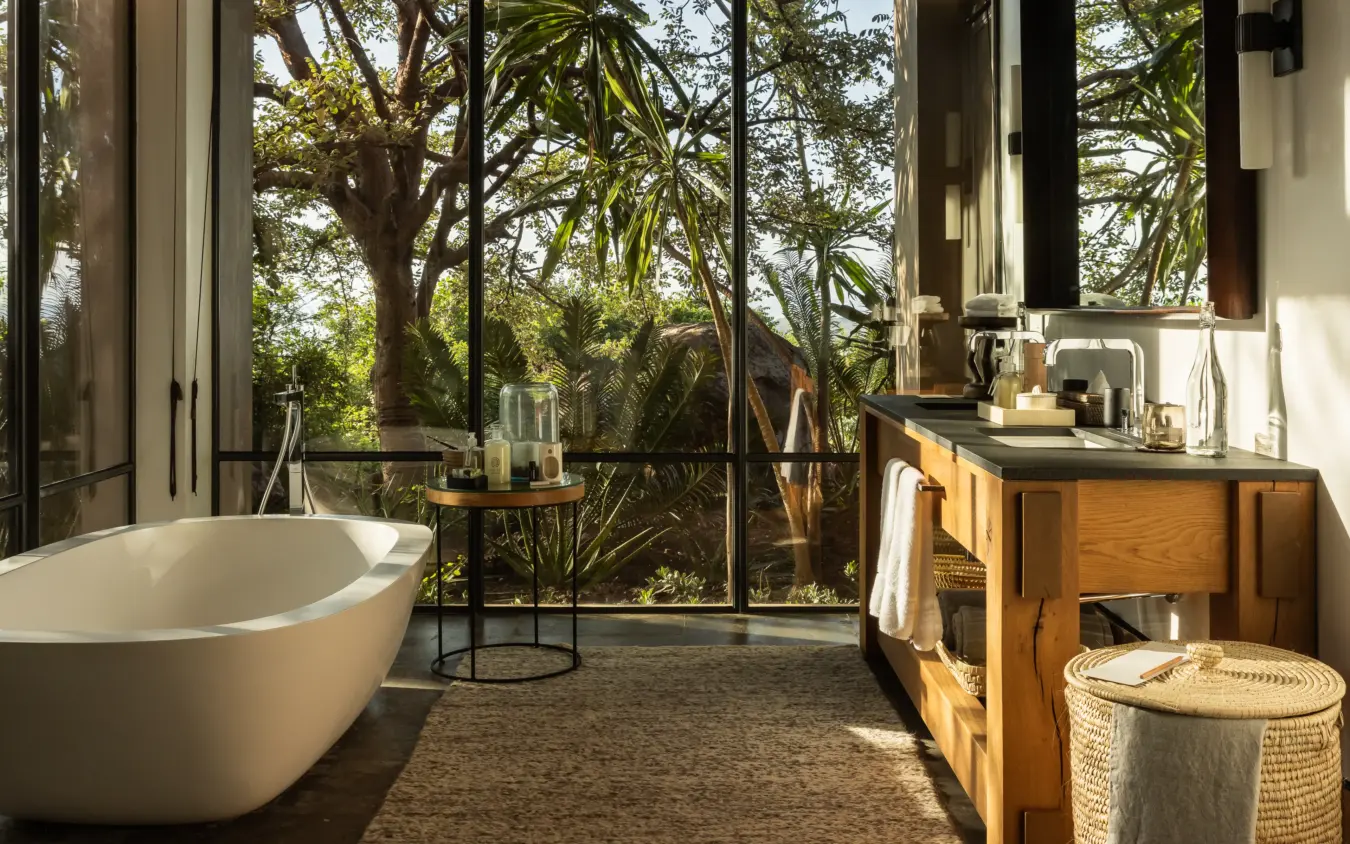
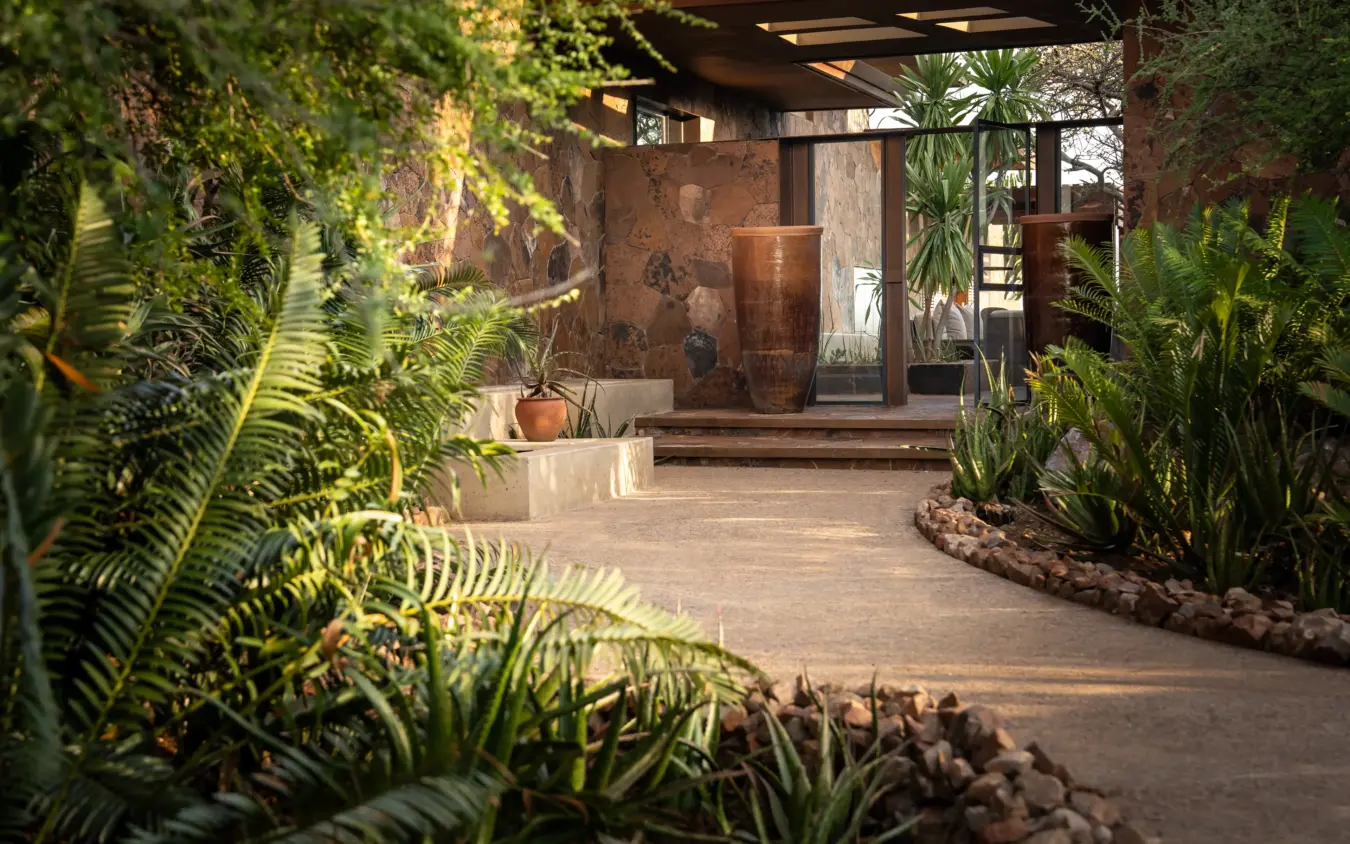
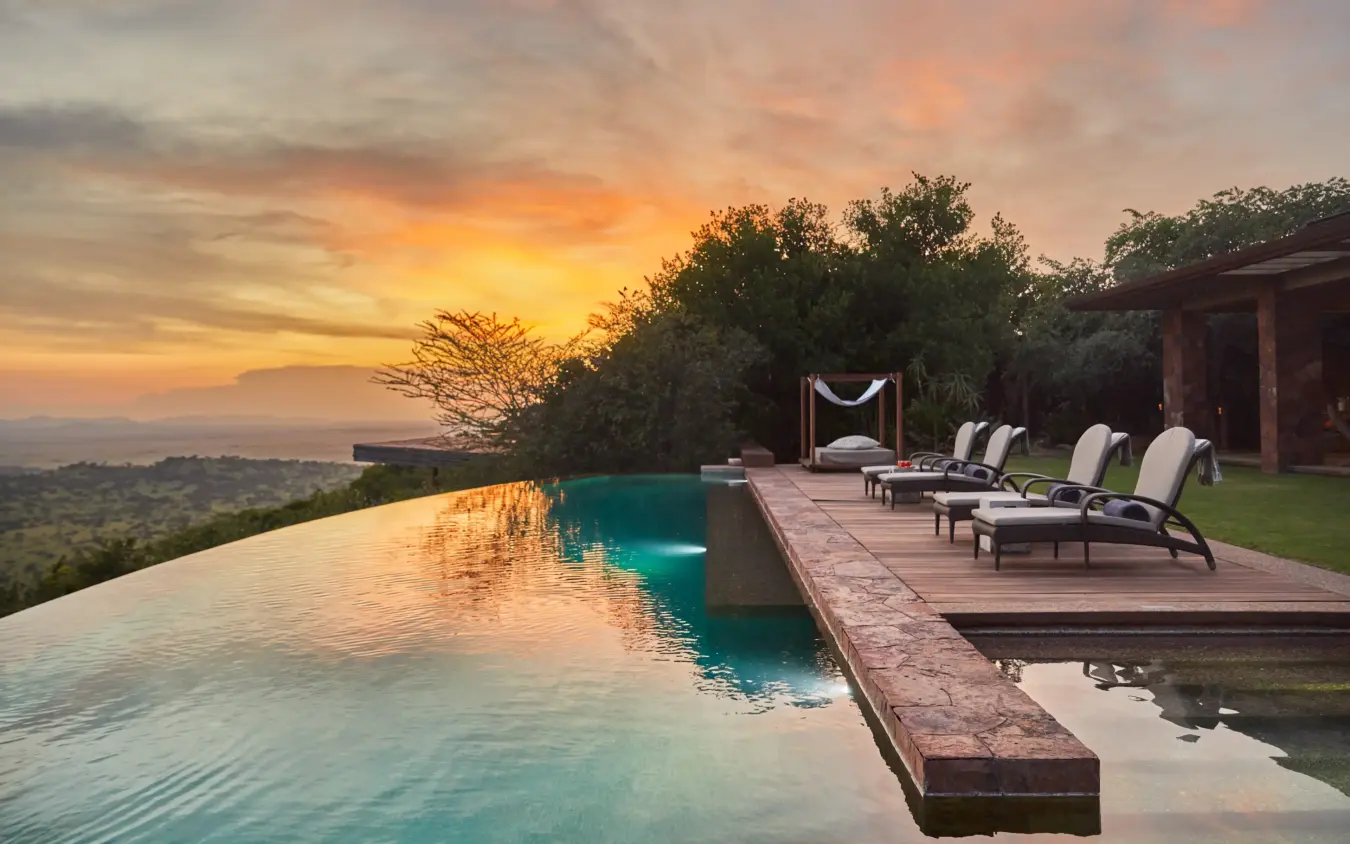
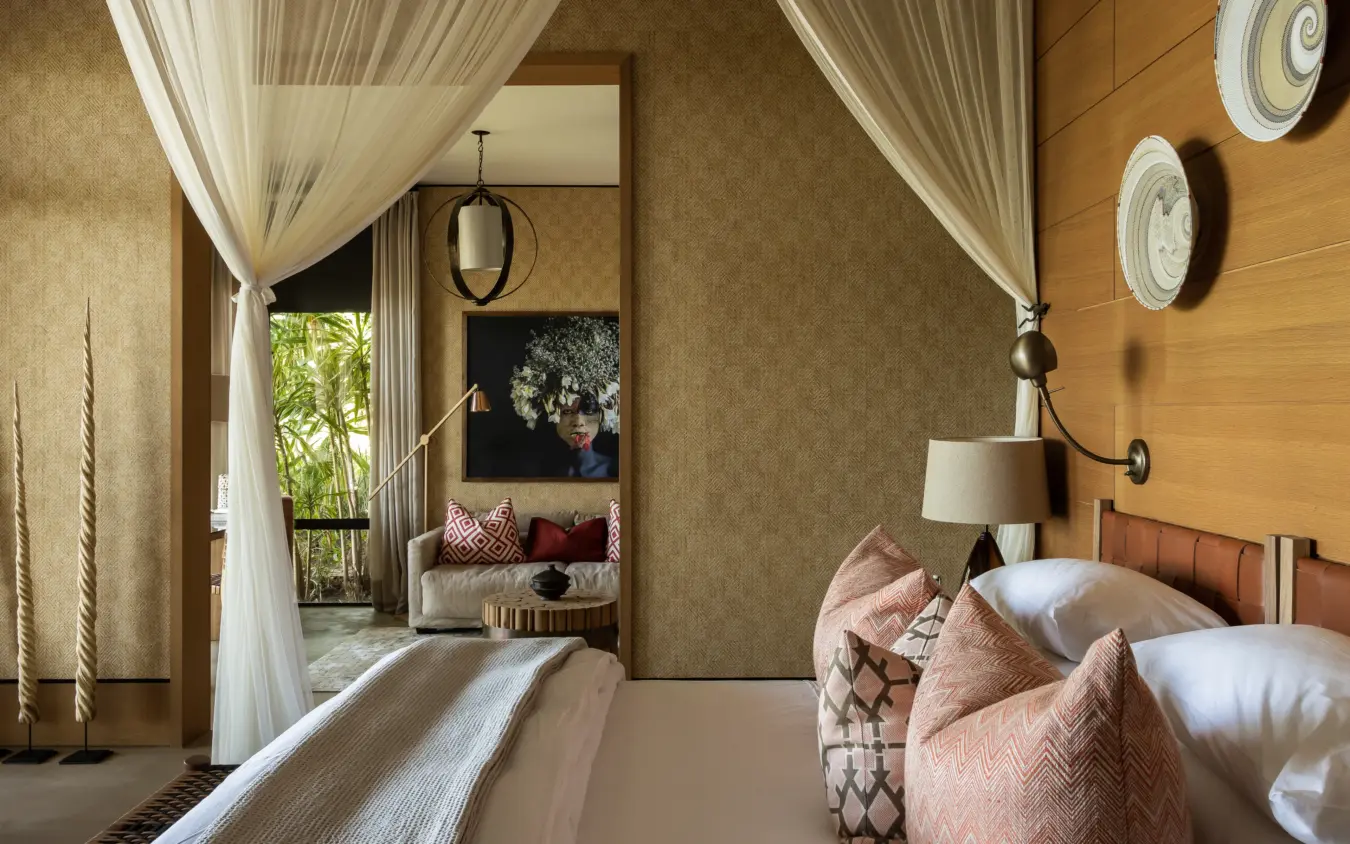
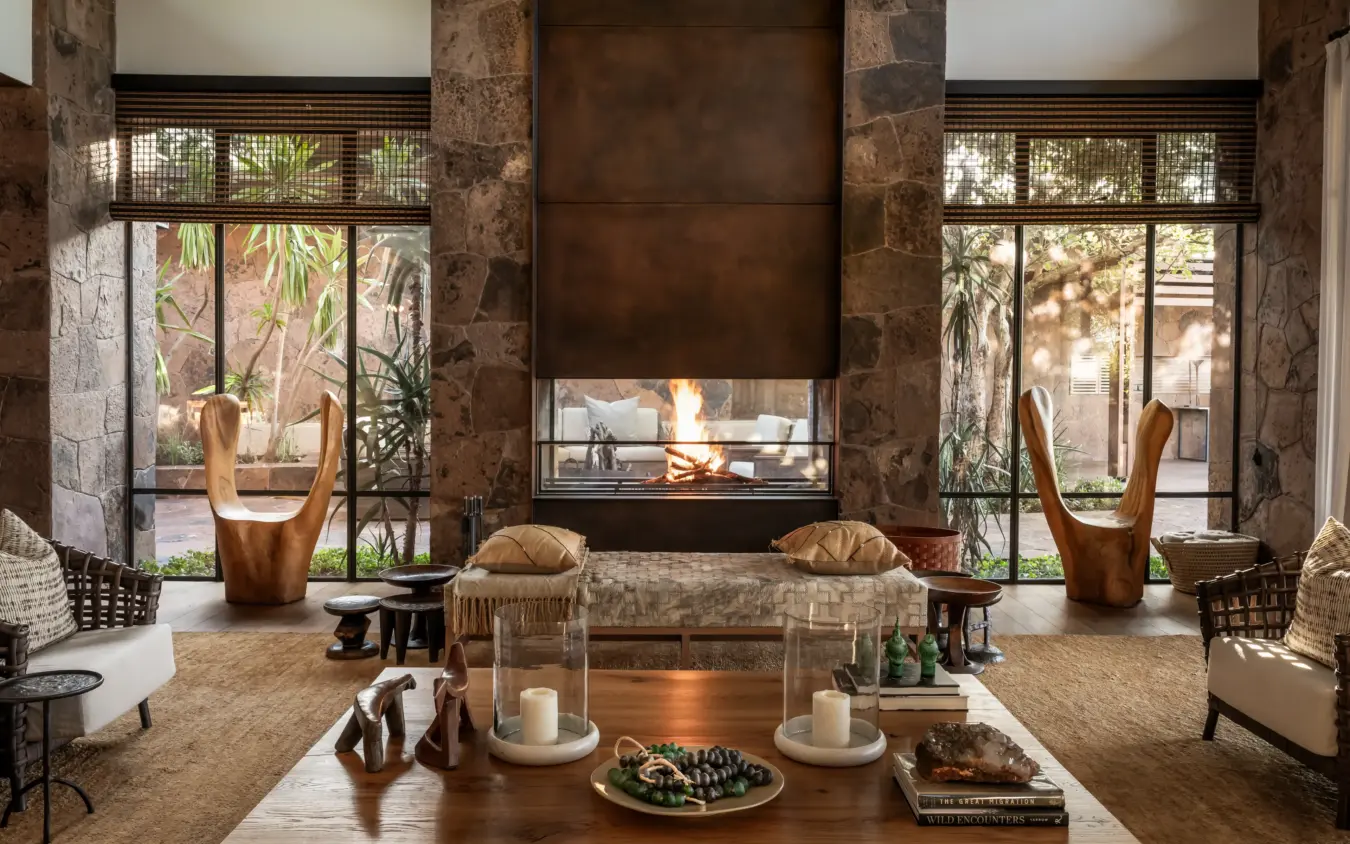
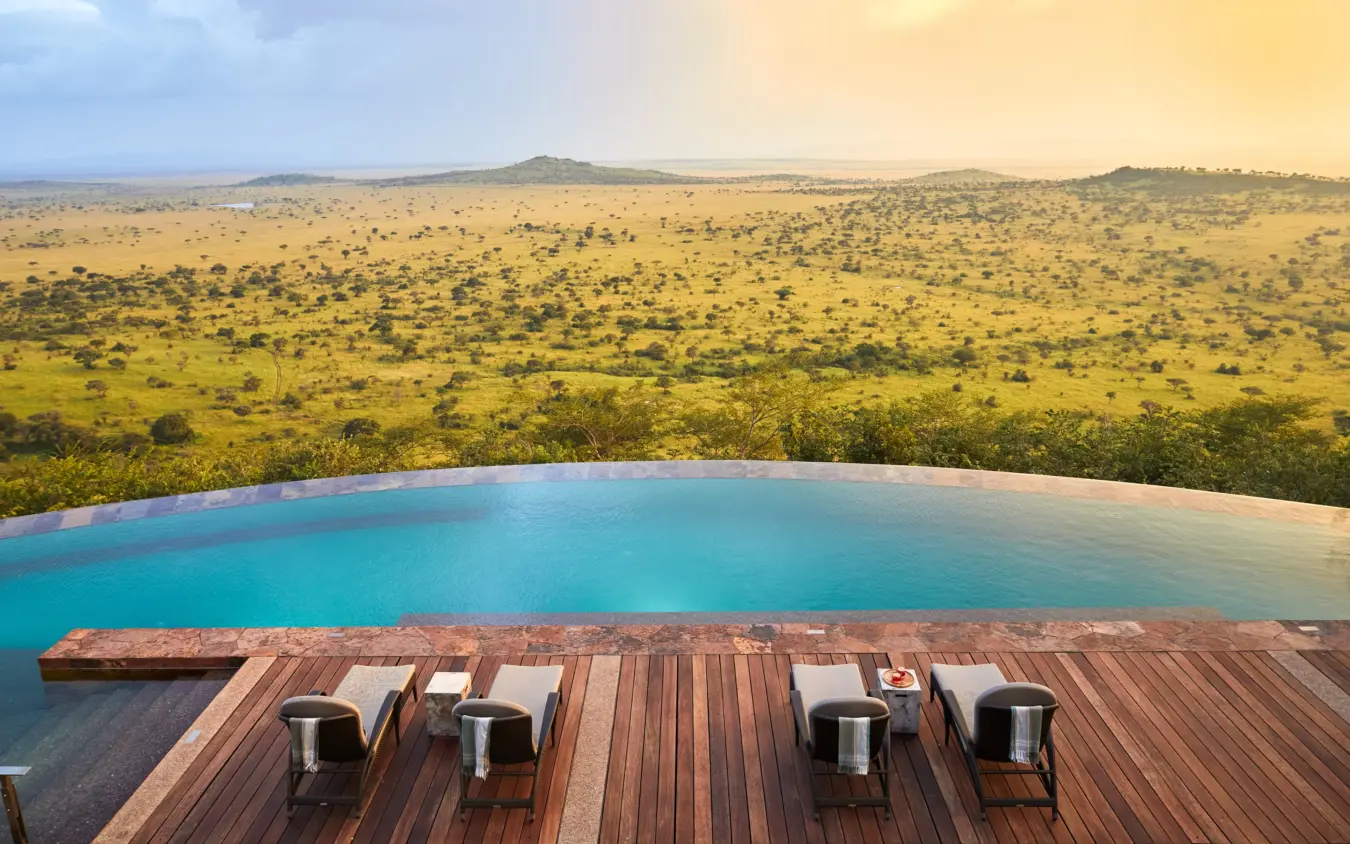
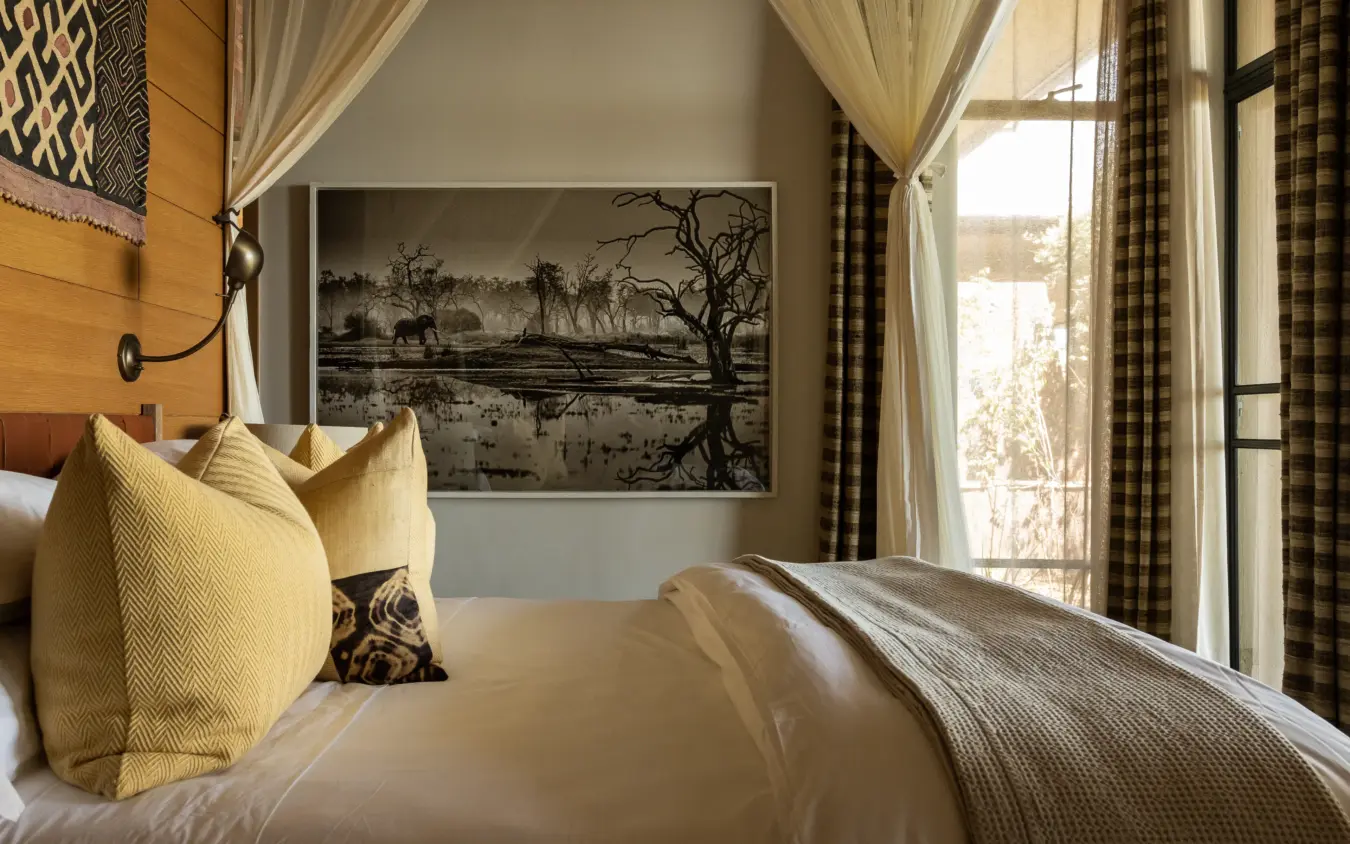
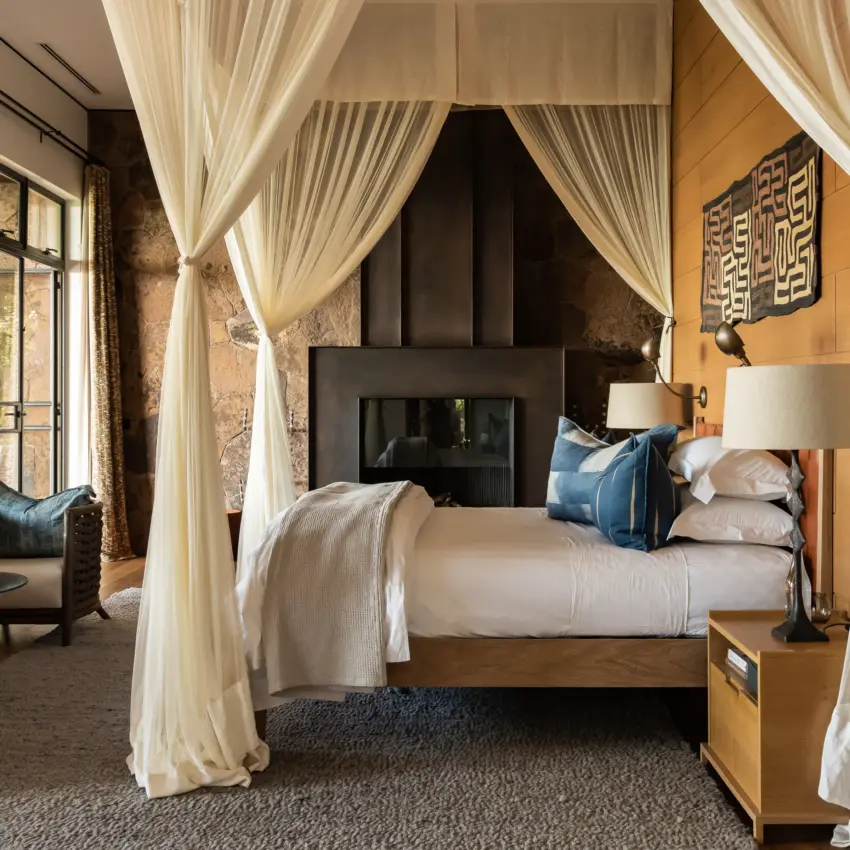
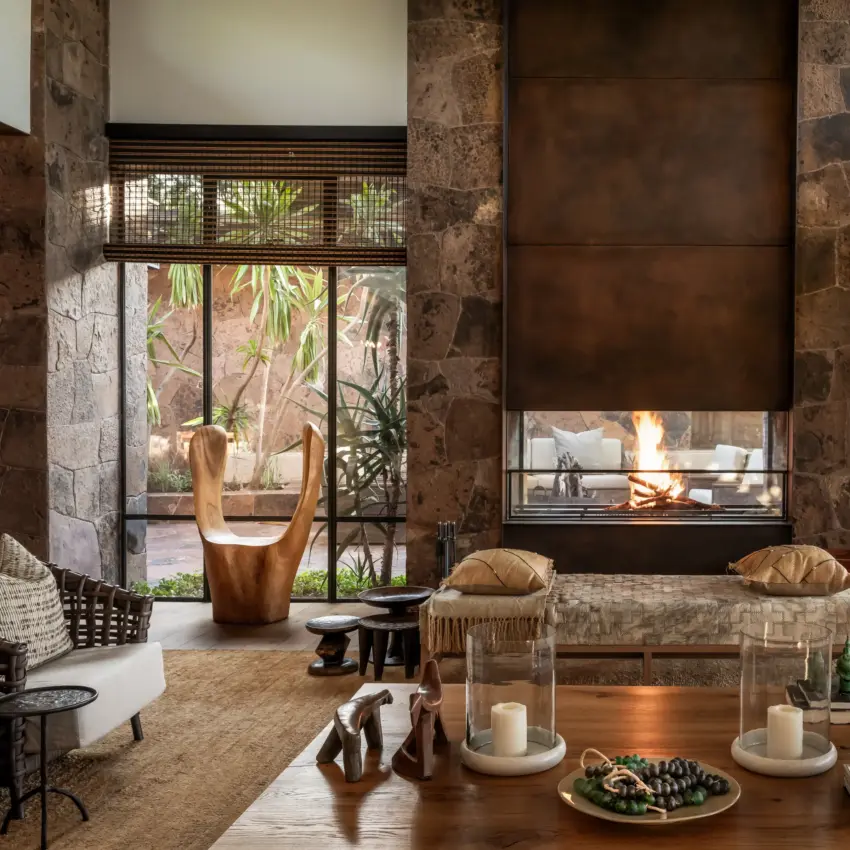
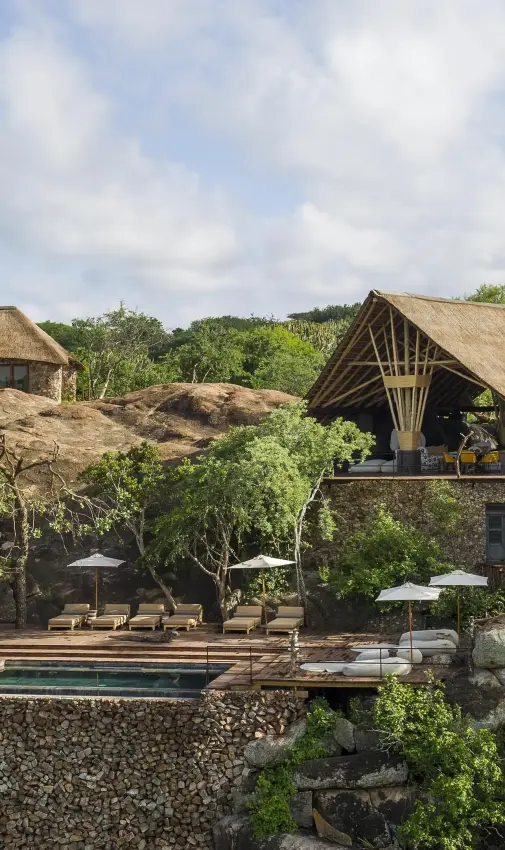
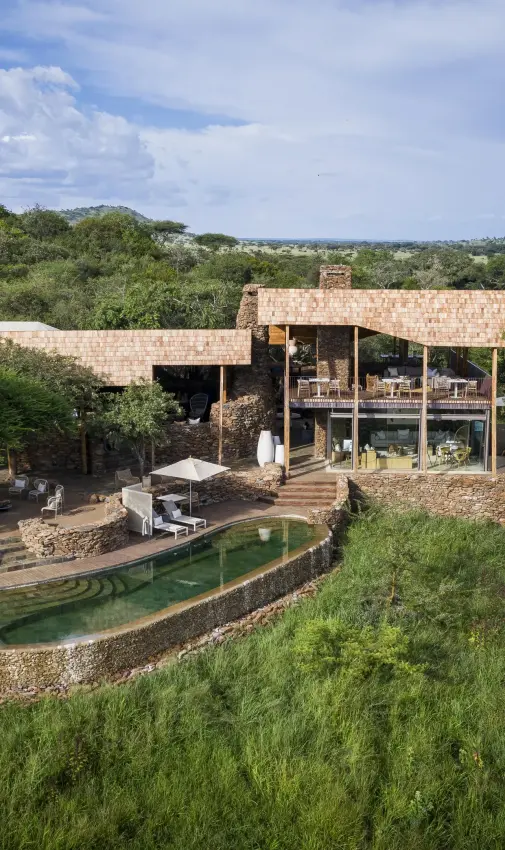
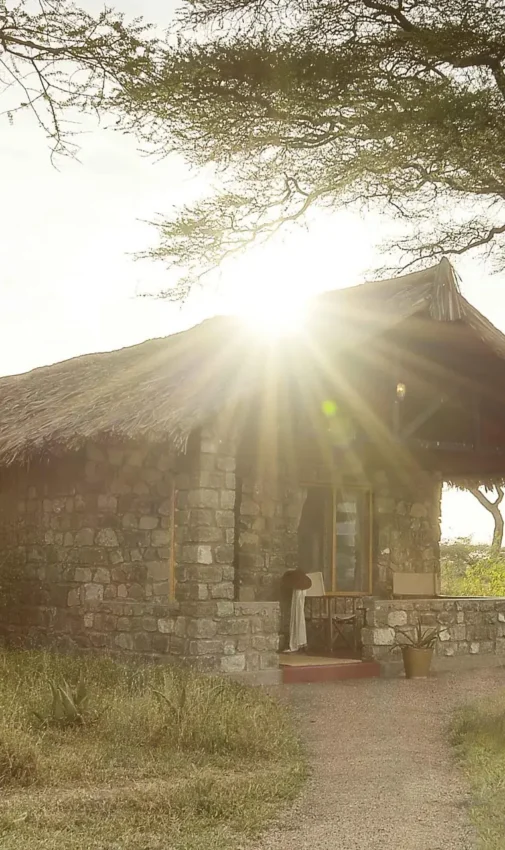
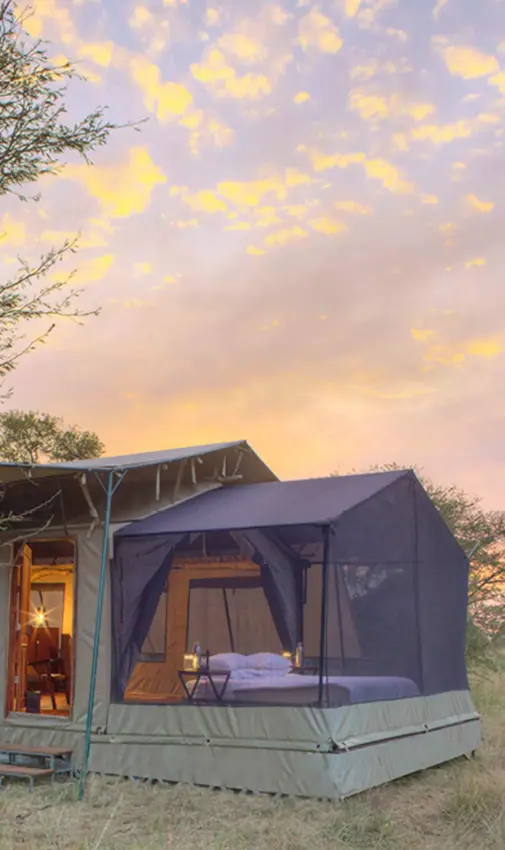
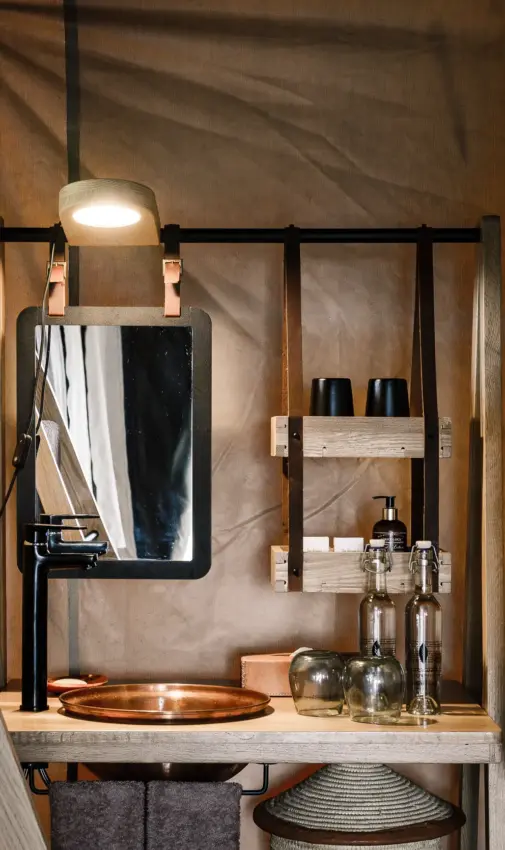
Singita’s first lodge opened in South Africa in 1993, on land Luke Bailes’s grandfather had bought in 1925, and Bailes remains the company’s Founder and Executive Chairman. Kilima came decades later, built on Sasakwa Hill and designed as a house rather than a lodge. The interiors draw on contemporary African design and craftsmanship, in warm earth tones and patterned textiles, natural textures and daylight let in from every side. Living areas run out onto terraces above the plains, and eclectic, carefully chosen pieces are layered through the main rooms.
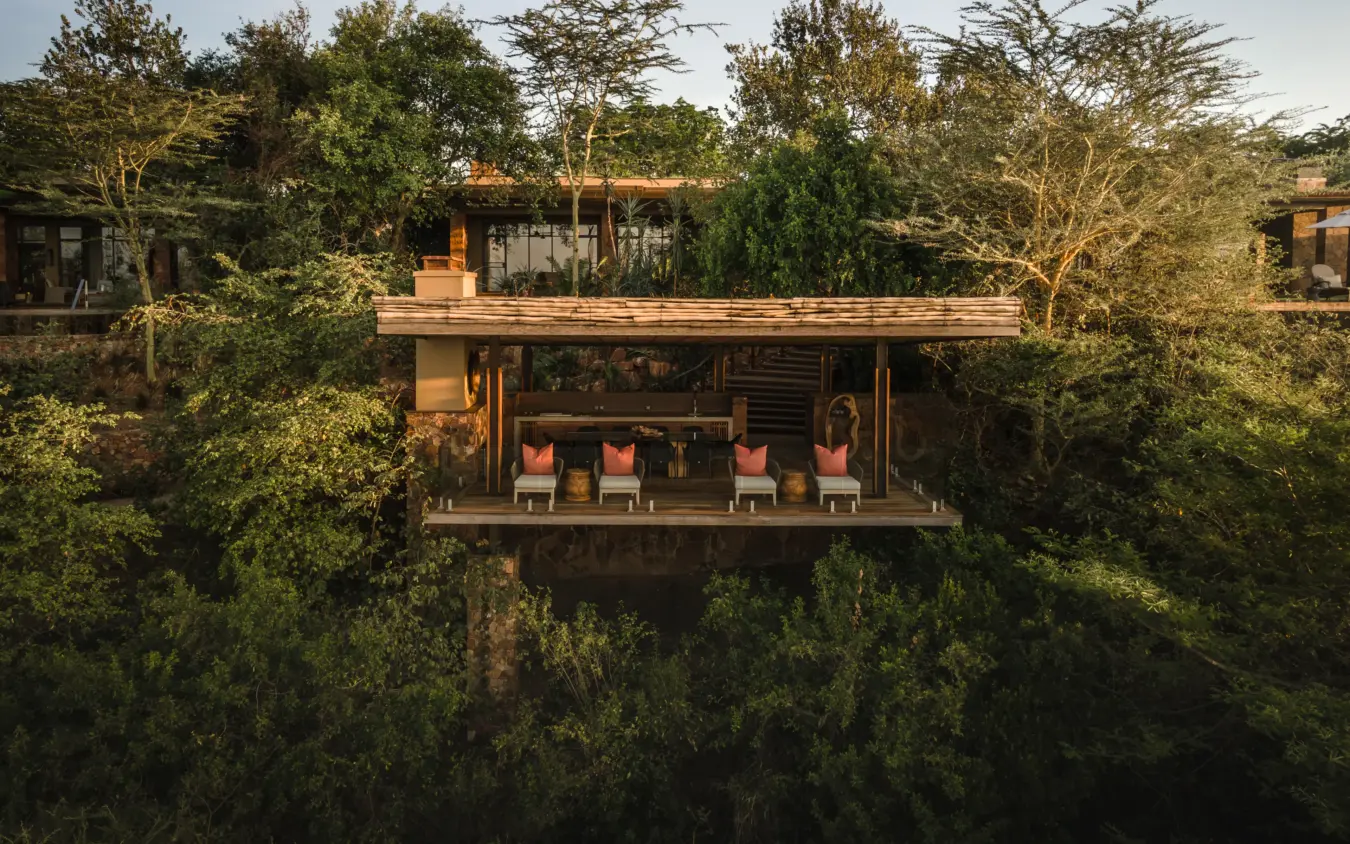
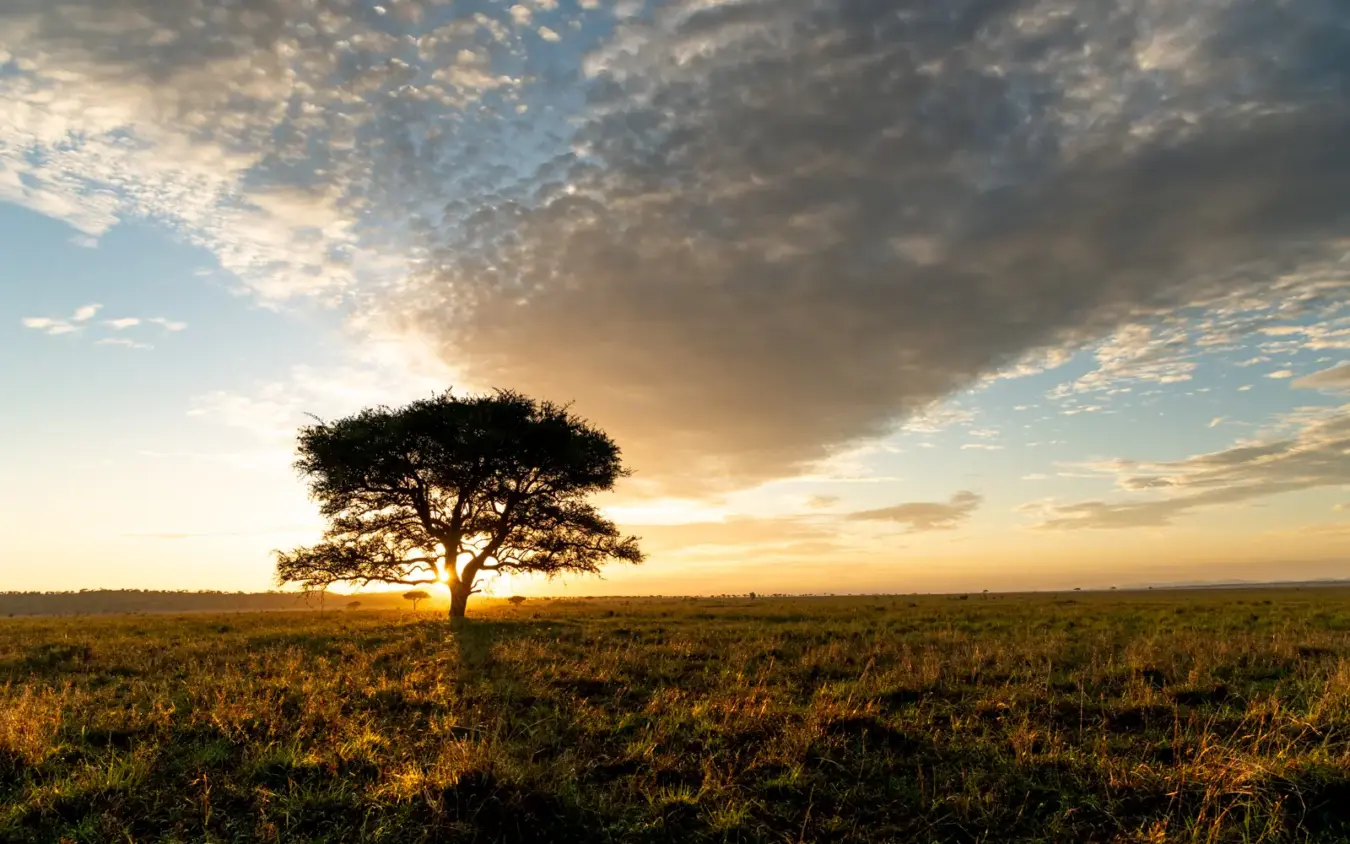
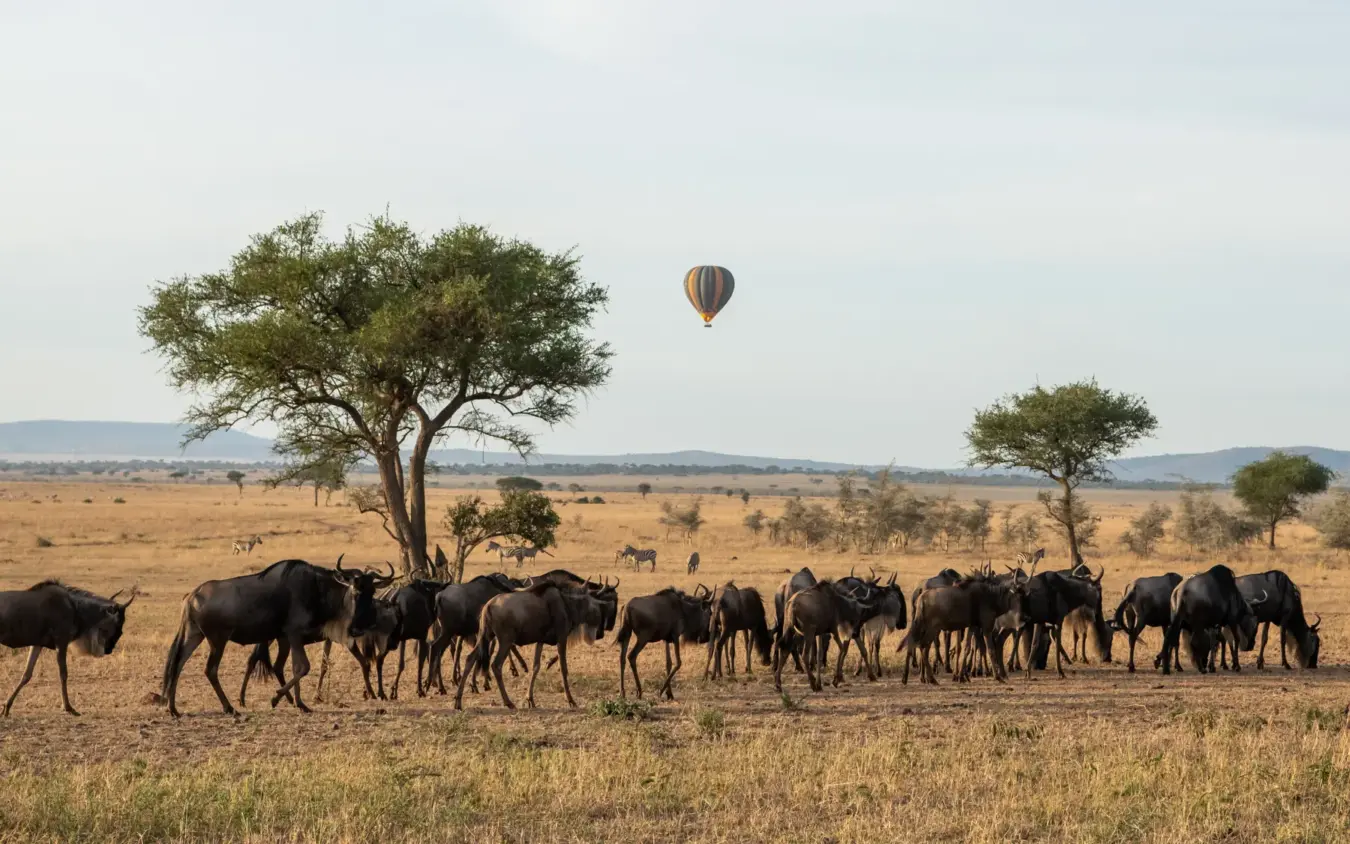
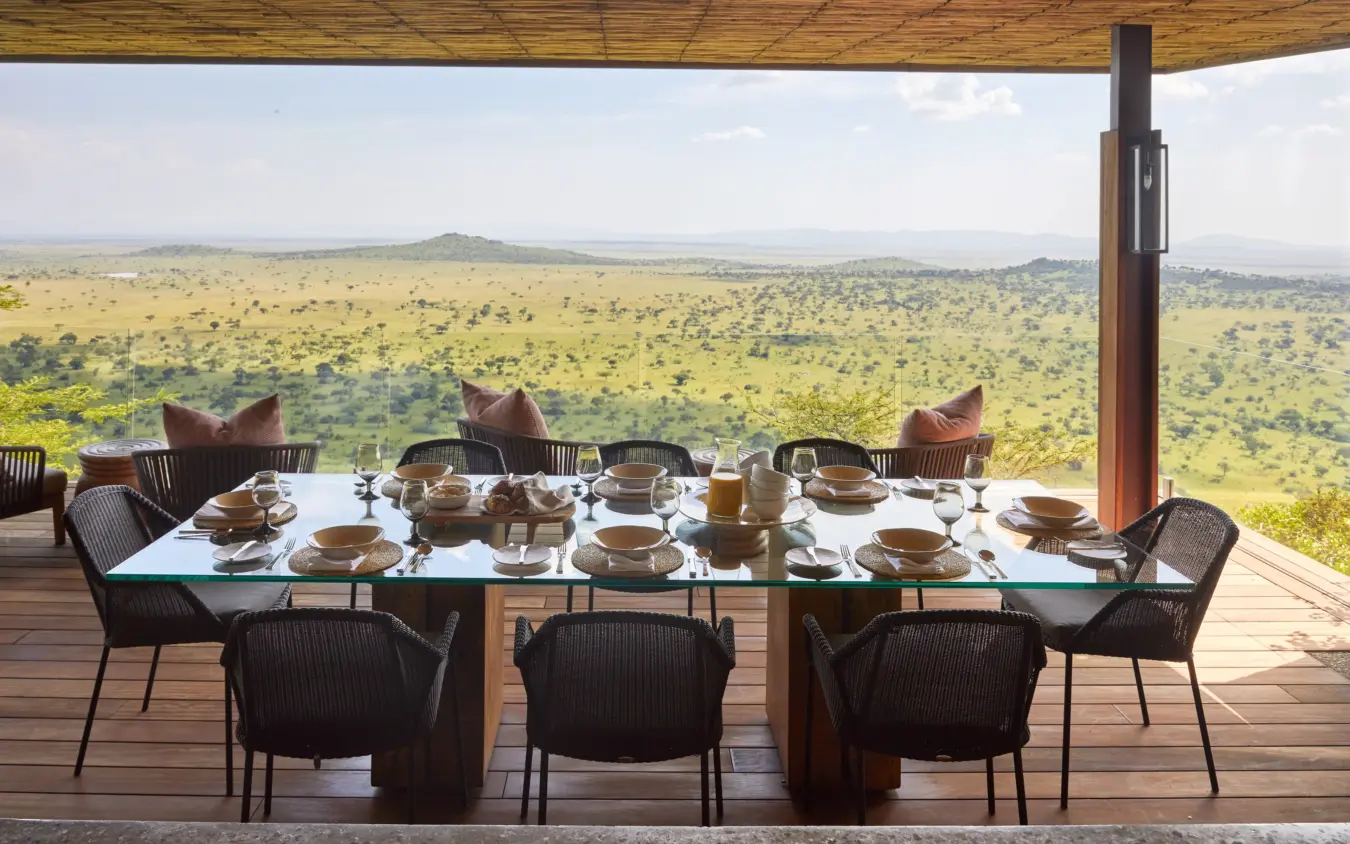
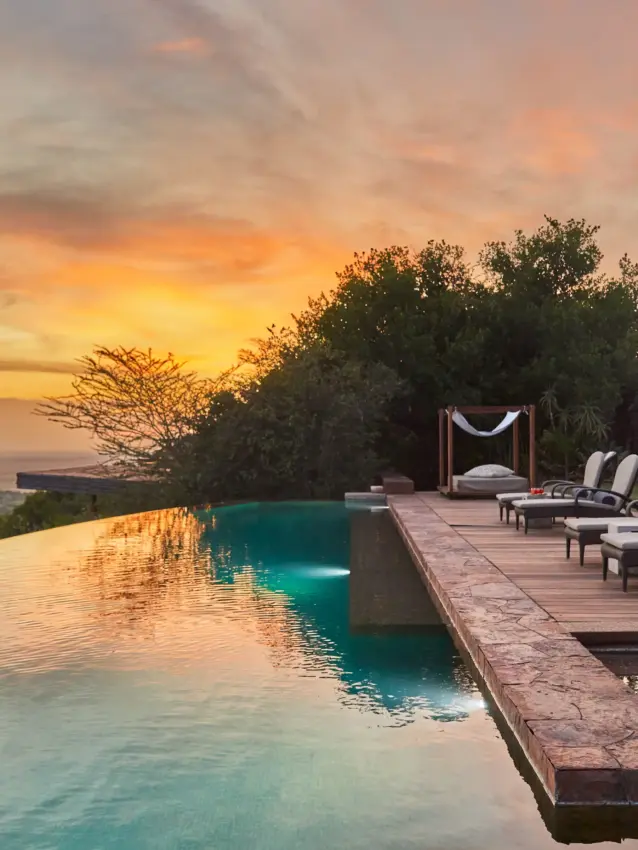
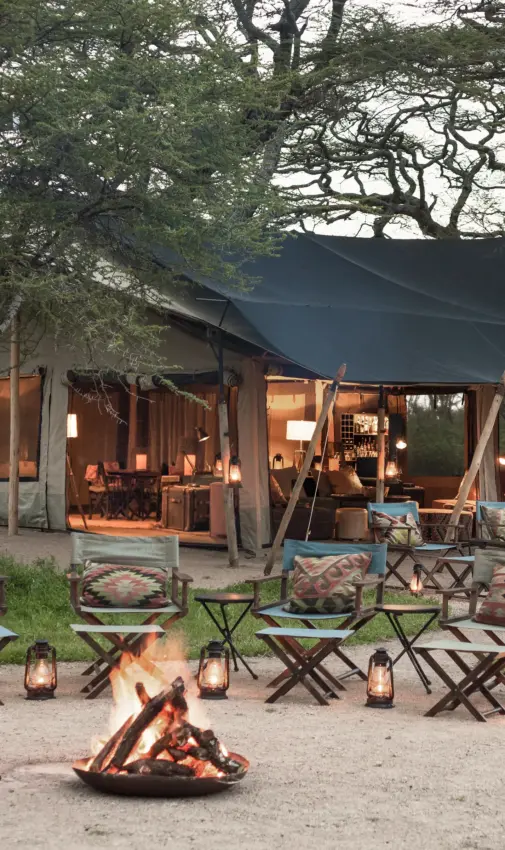
The house takes one group at a time, up to ten people, which suits a family spanning three generations as easily as a group of friends travelling together. Breakfast can wait. Lunch can be laid outside while wildebeest cross the plain below, and the bar-delis stay stocked through the day for guests who would rather eat between meals than at them. Sunrise and sunset over the Serengeti plains are the only real markers of time. After dark the fire pits are lit, and dinner moves indoors to the fireplaces or stays out under the sky.
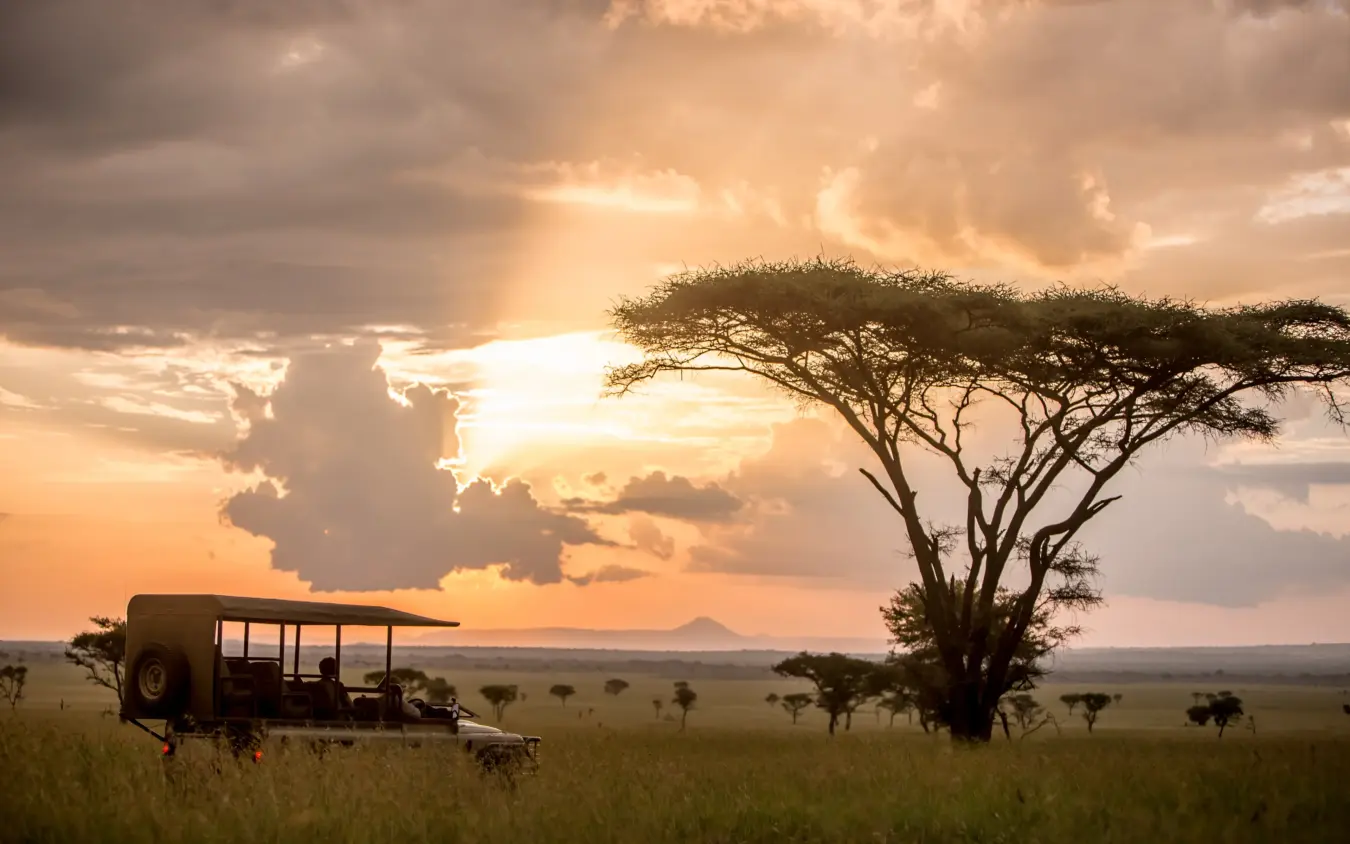
Sunrise and sunset over the Serengeti plains are the only real markers of time.
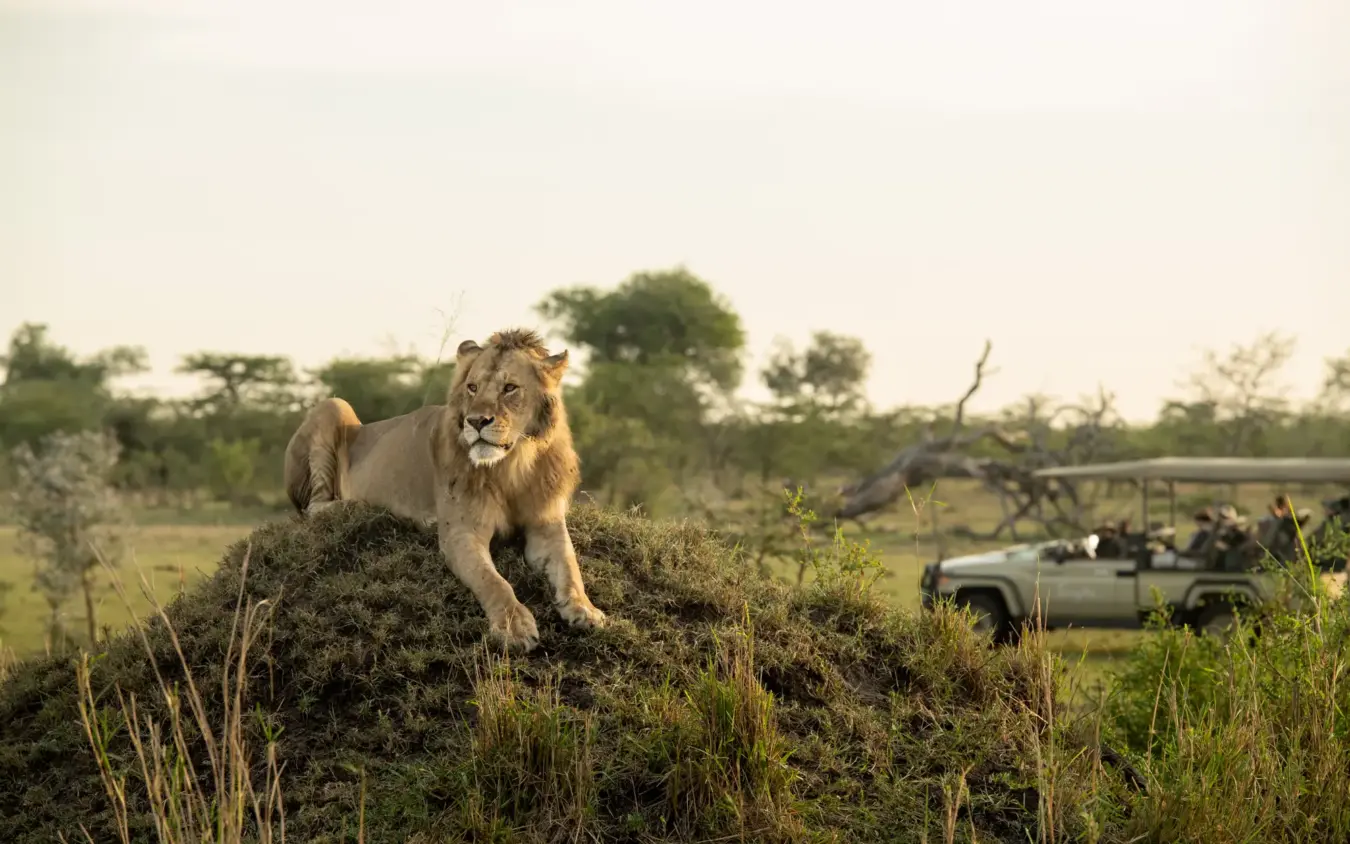
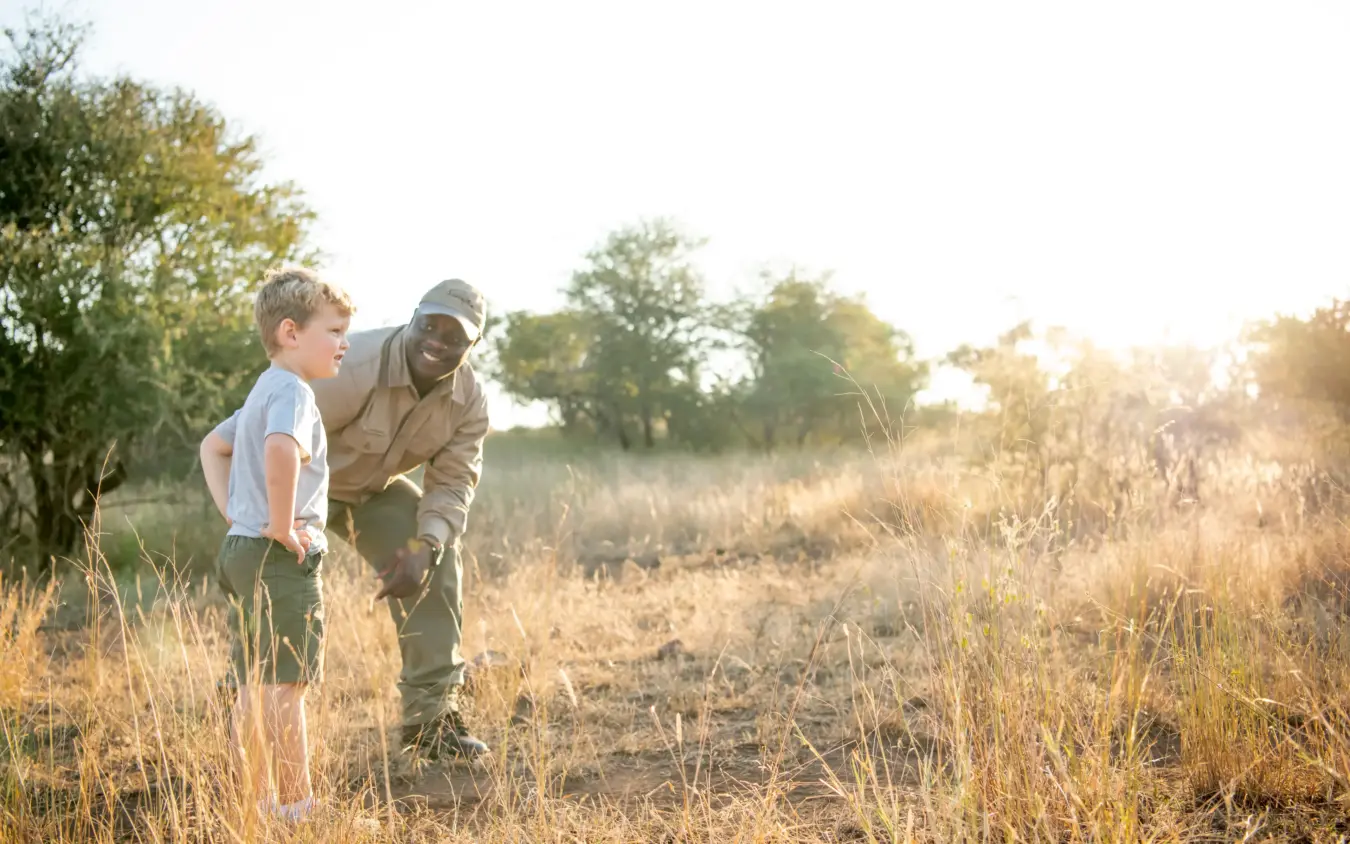
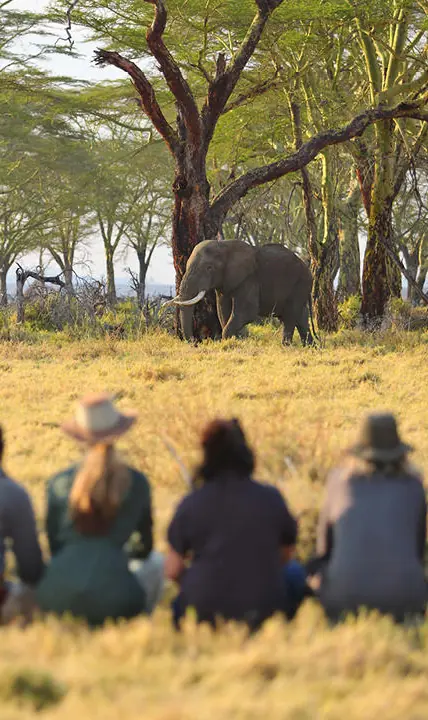
Grumeti’s status as a private concession allows what the national park cannot: off-road driving in pursuit of a sighting, and walking safaris on ground where the Serengeti keeps its visitors to designated roads and does not permit them on foot at all. Walks are for guests aged sixteen and over, at the field guide’s discretion. Hot air balloon flights run over the plains, birding fills the slower hours, and the wine cellar is open for tastings. Flights land at the Sasakwa airstrip, around ten minutes from the house and roughly an hour from Arusha.
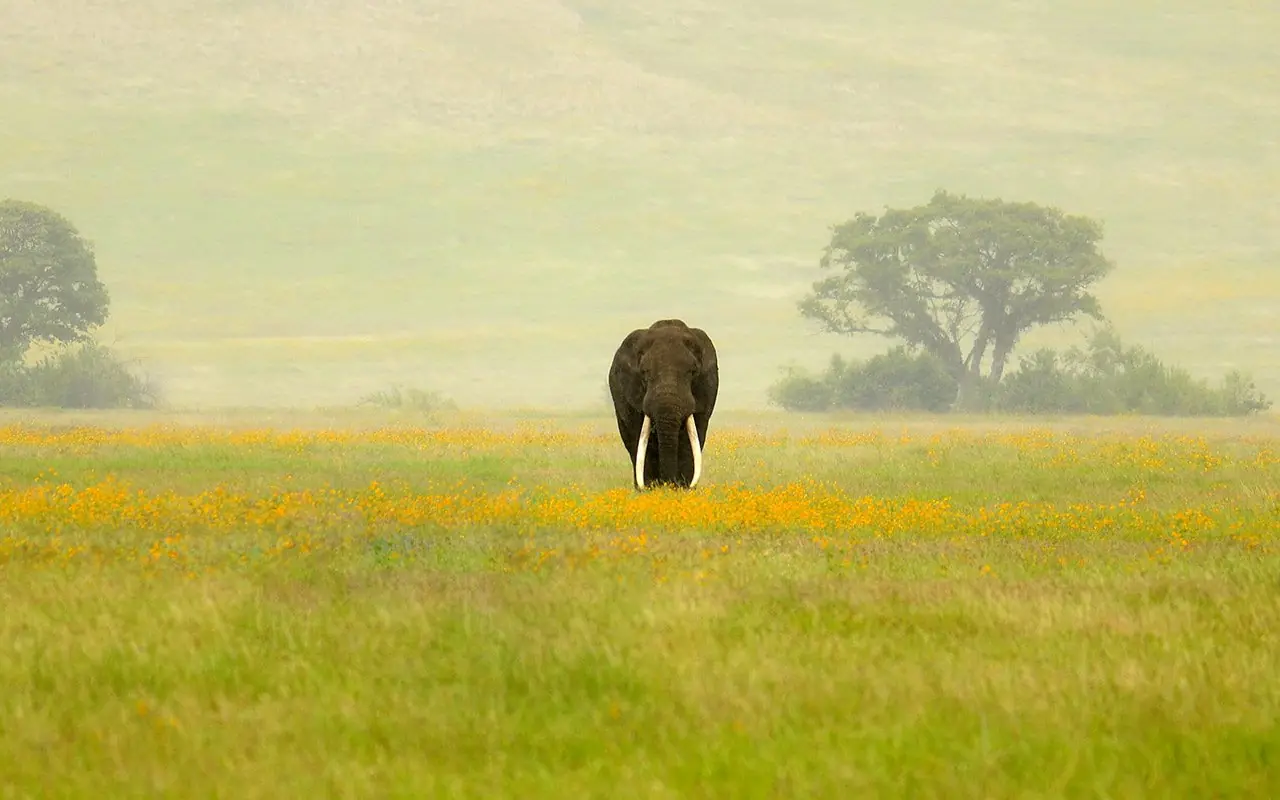
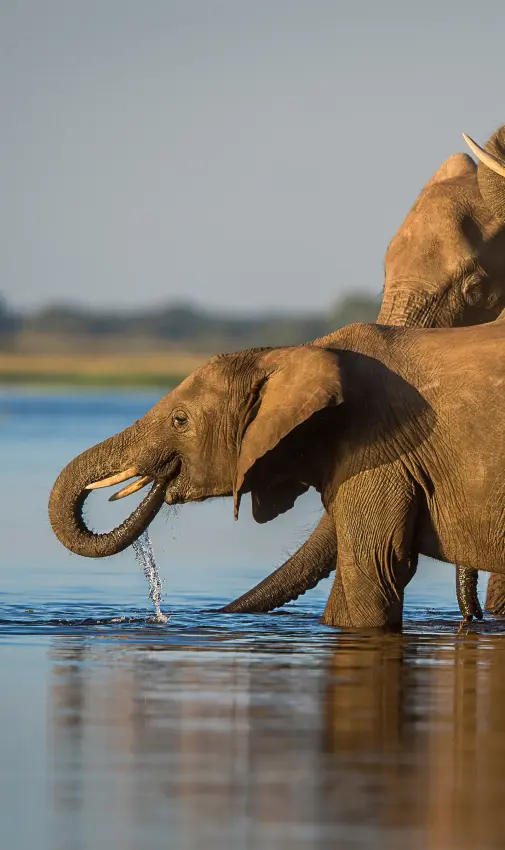
The Grumeti Fund has managed conservation across the reserve since 2003, working against illegal hunting, wildfires and invasive vegetation year after year. Buffalo, wildebeest and elephant numbers have climbed back in that time. In 2019 the Fund brought nine critically endangered Eastern black rhino into the reserve, the largest single relocation and reintroduction of the species undertaken there. Guests can visit the anti-poaching observation post, and community visits in the concession are arranged around the Fund’s development work in the area.