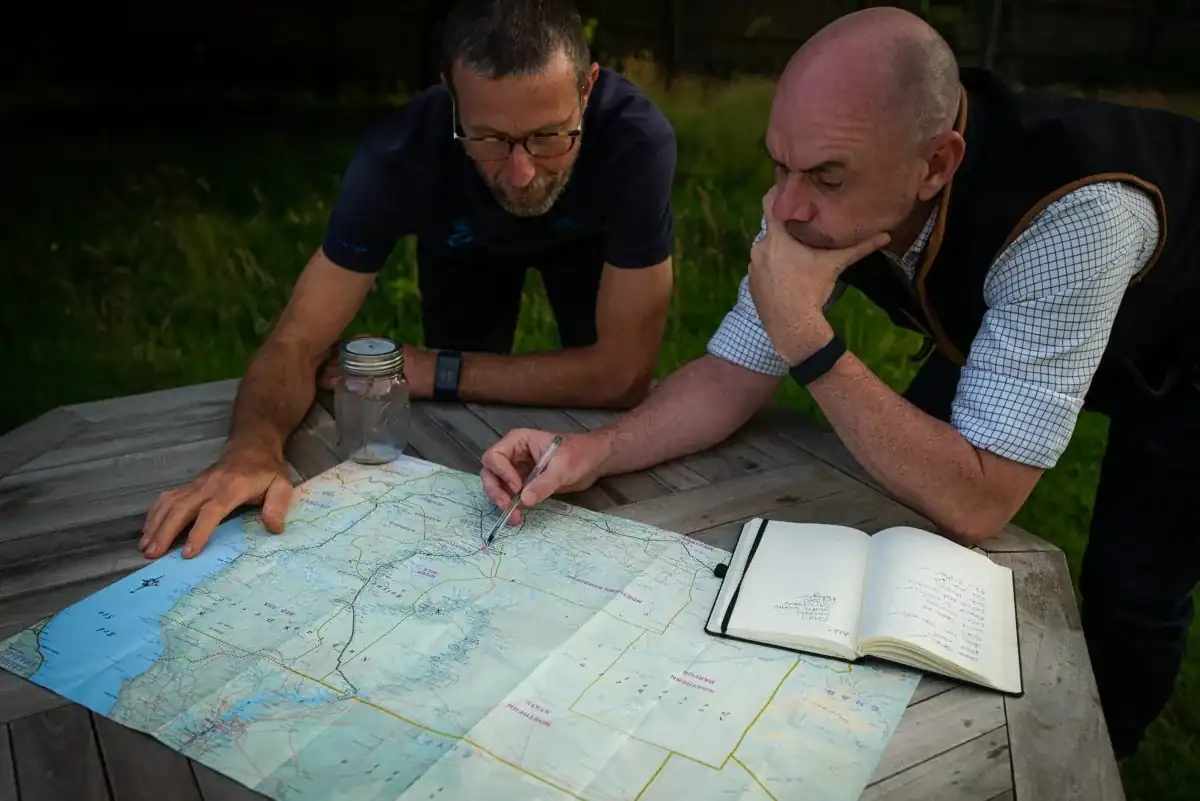
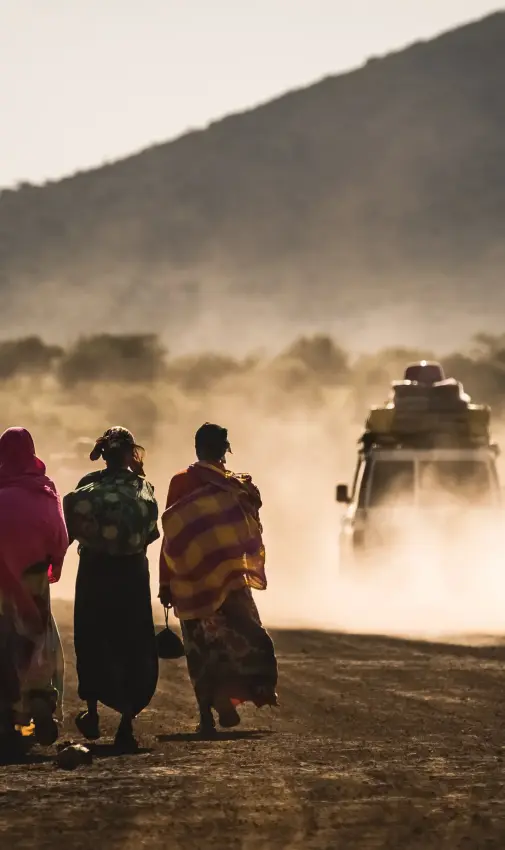
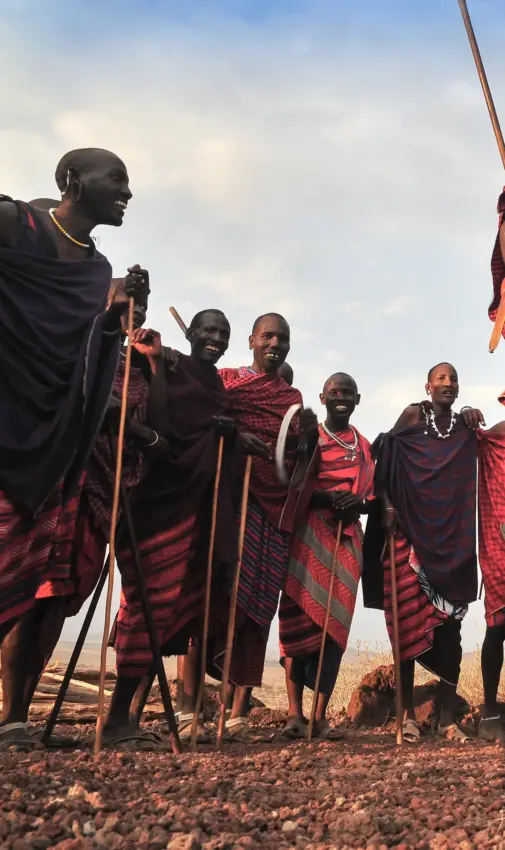
About a third of the team at Serengeti Bushtops are Kuria, recruited from the communities just beyond the park’s northern boundary. Most ride as spotters on every game drive, watching the kopjes and ridgelines while the ranger drives and explains what has been found. Others keep security around camp by day and night. A regular wage from the camp gives these young men a living that does not depend on poaching. Three have since risen to become rangers, and now drive the vehicles they once spotted from.
Families take two full-size tents joined by a wooden bridge, each with its own deck and bathroom, so children have a room of their own one bridge away from their parents. The Bushcraft Challenge began with them in mind, as a children’s programme, and is now open to every age. Guests learn to make fire, then to read tracks and cast them in plaster. Later come identifying bones and archery, followed by beadwork and baking Swahili treats. A certificate waits at the end, for the grown-ups as much as the children.
A regular wage from the camp gives these young men a living that does not depend on poaching.
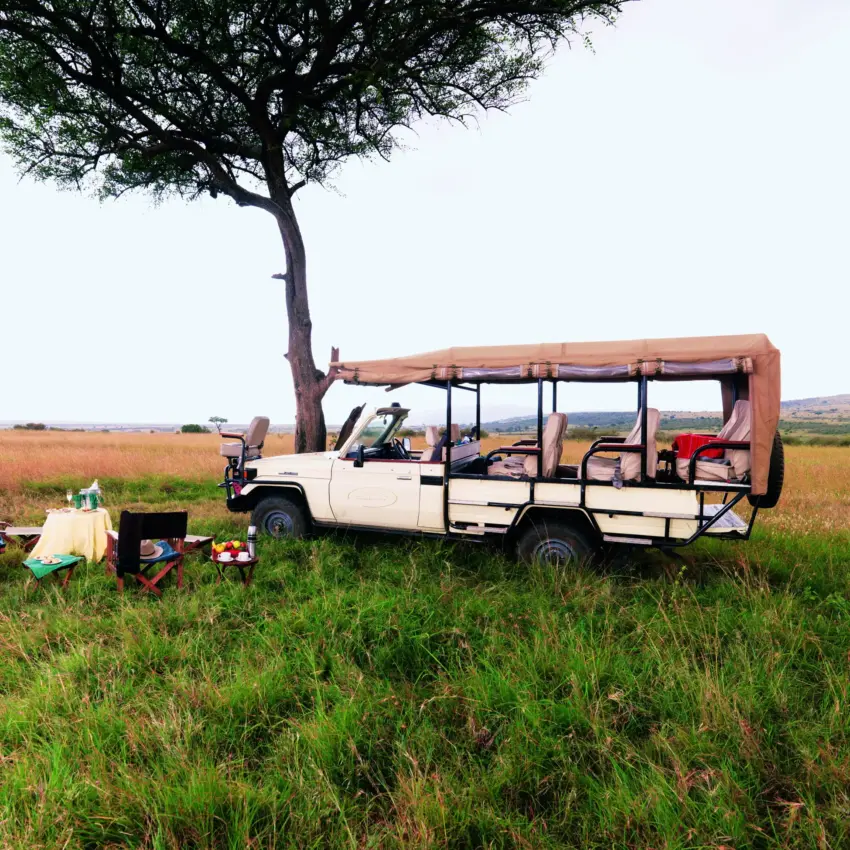
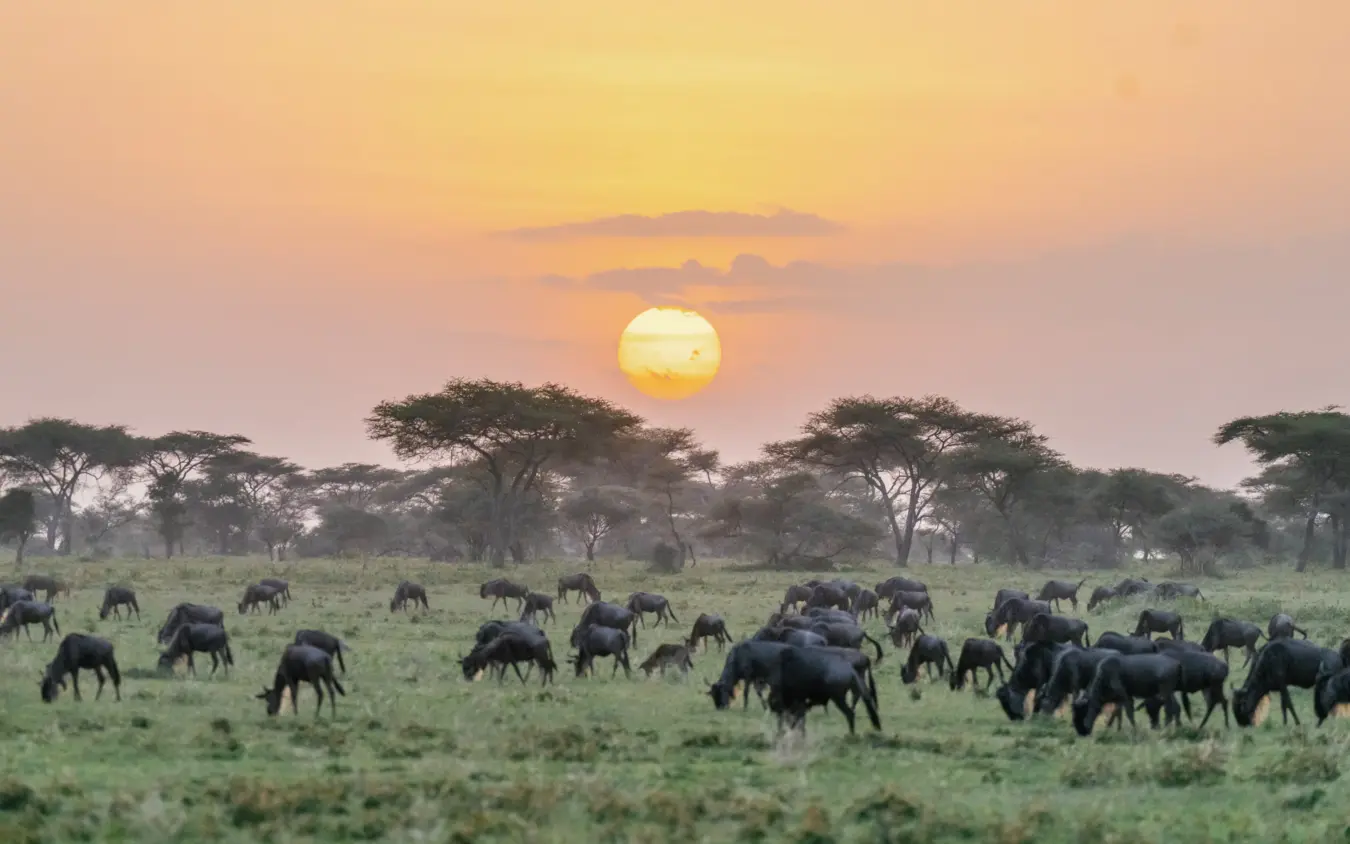
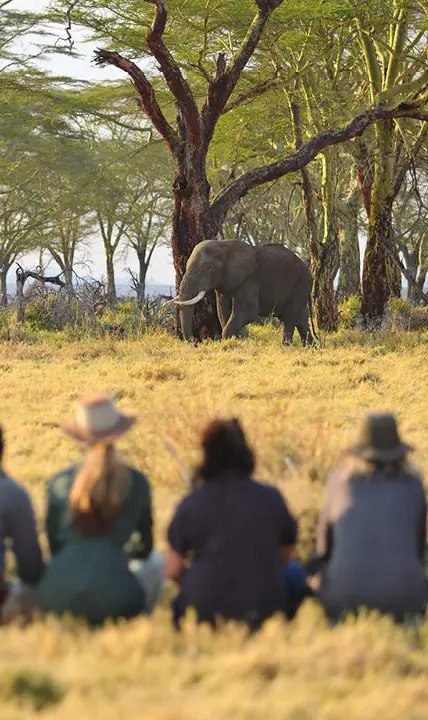
Full-day drives carry a picnic, so a vehicle can stay at the Mara River crossing points without a midday return to camp. The herds are usually at the river between July and October, though no two years keep quite the same timetable. Bush breakfasts can be set up on the way out, and balloon flights lift off at dawn with an outside operator, coming down to a champagne breakfast. Walking safaris along the Mara River go out with an armed park ranger, and The Beest, a six-wheeled safari vehicle, can be reserved.
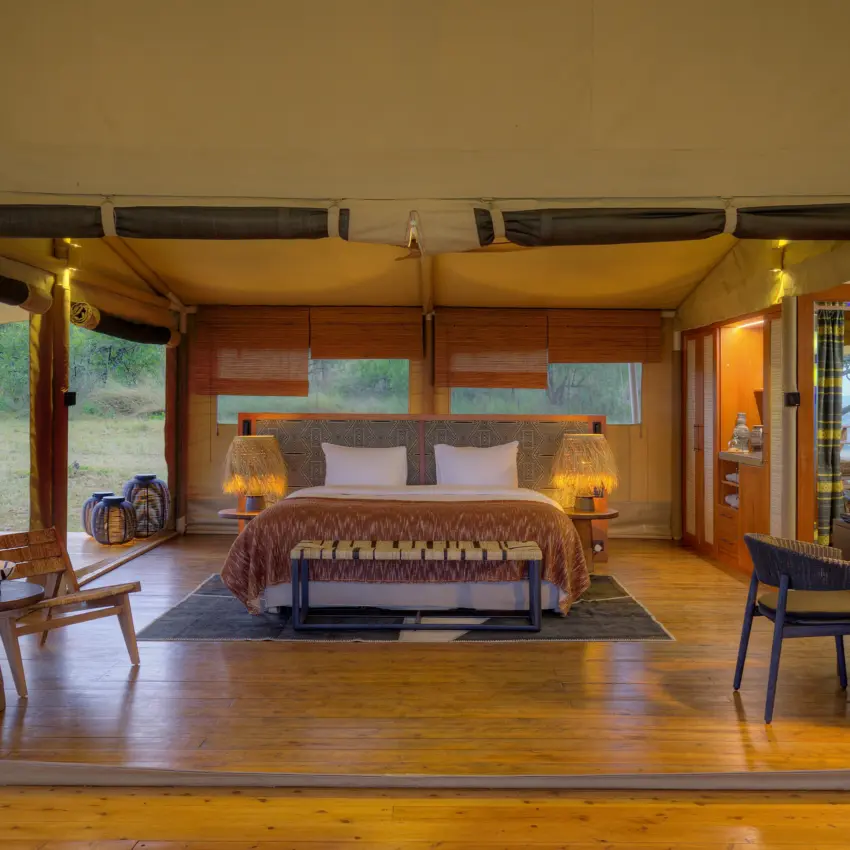
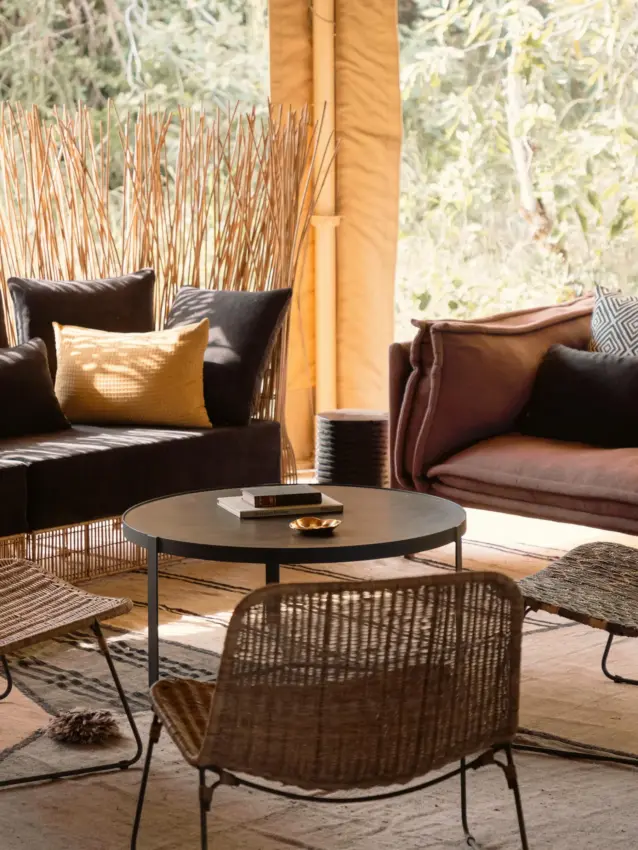
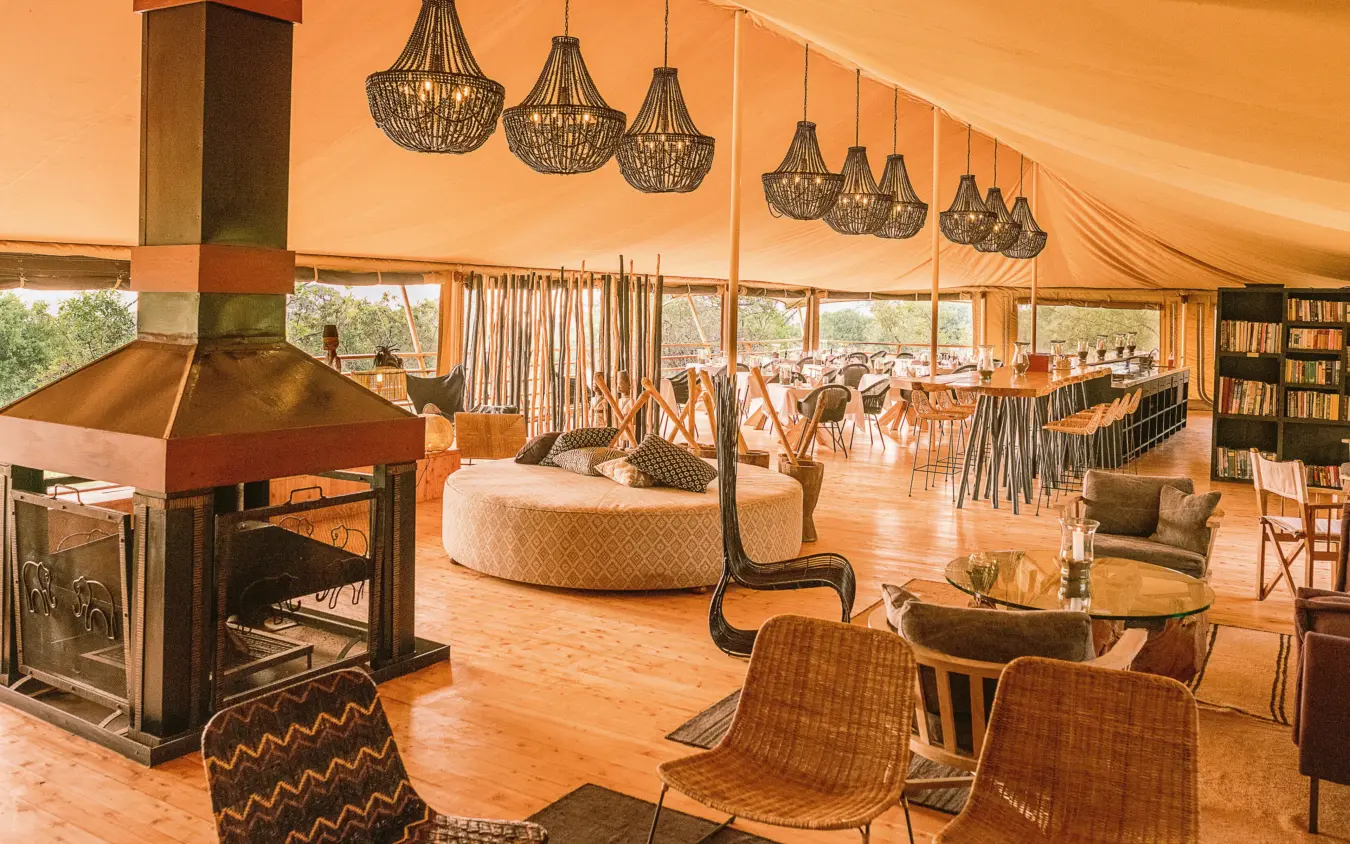
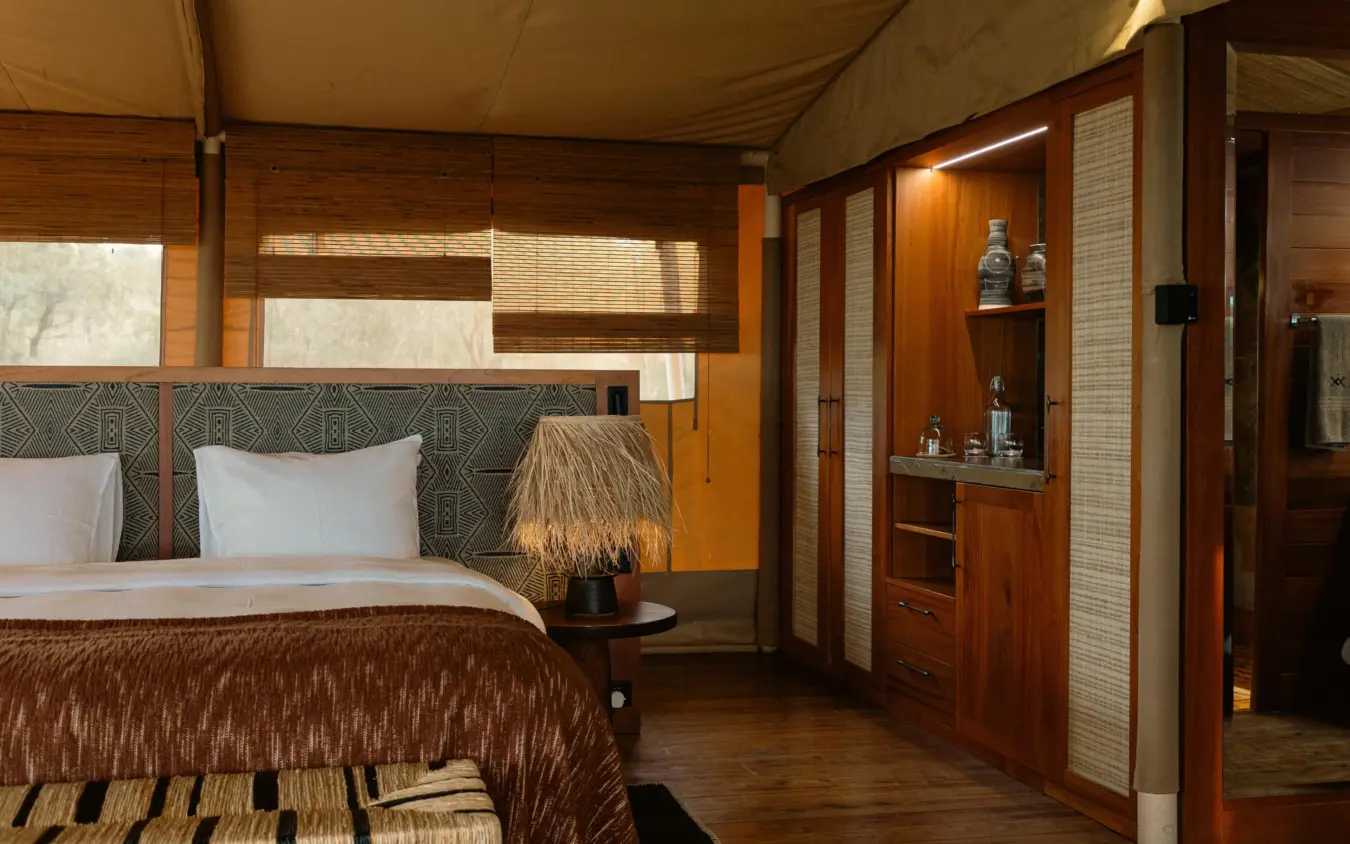
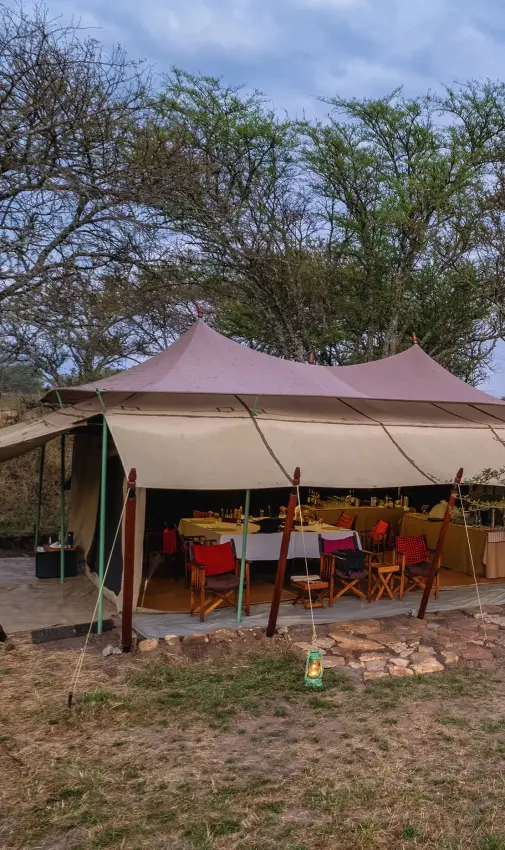
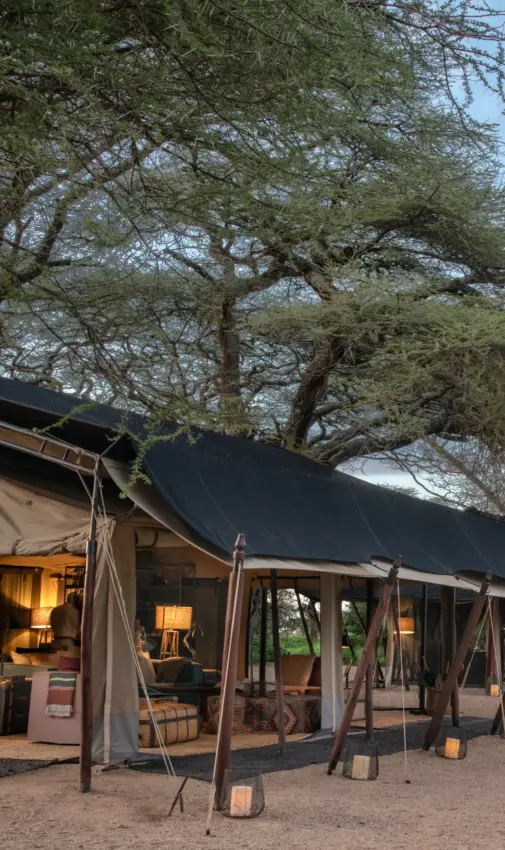
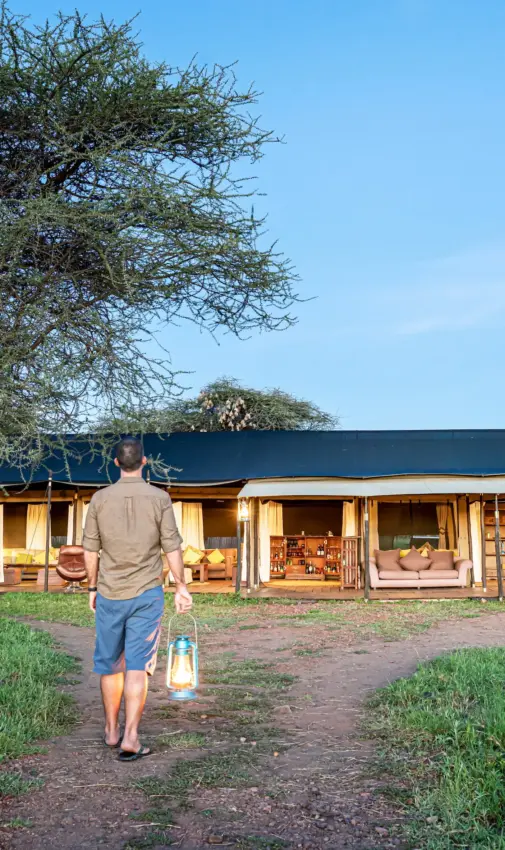
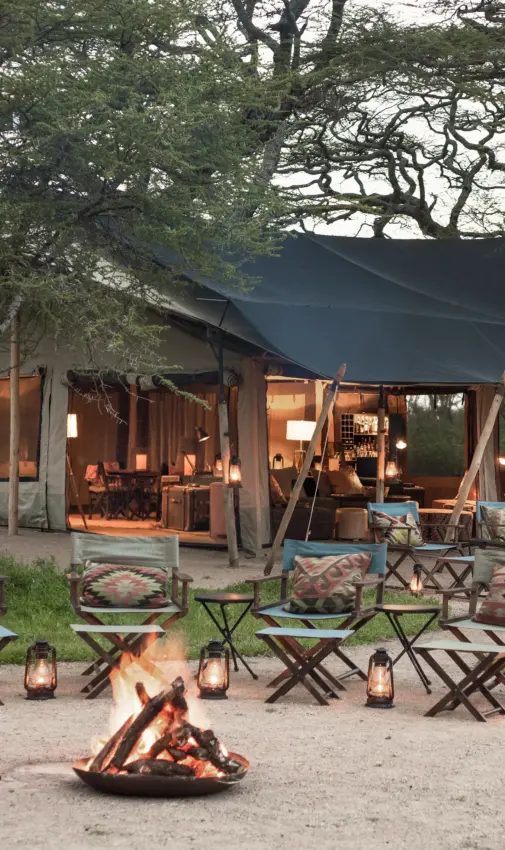
Guests fly into Kogatende airstrip, about 17 km north of camp, and finish by road through the park, so the transfer doubles as the first drive. The tent waiting at the end of it is canvas over a timber platform, floored and finished in wood. Inside, a writing desk holds guidebooks. A safe and a large wooden wardrobe cover the rest, along with a hairdryer. Wi-Fi is included.