Camp

Mara Mobile Tented Camp

Twelve canvas tents pitched on the Tanzanian bank of the Mara River, moved each season to follow the crossings.

Country: Tanzania
Location: Serengeti National Park
Number of rooms: 12

Twelve tents, Tanzanian Mara bank

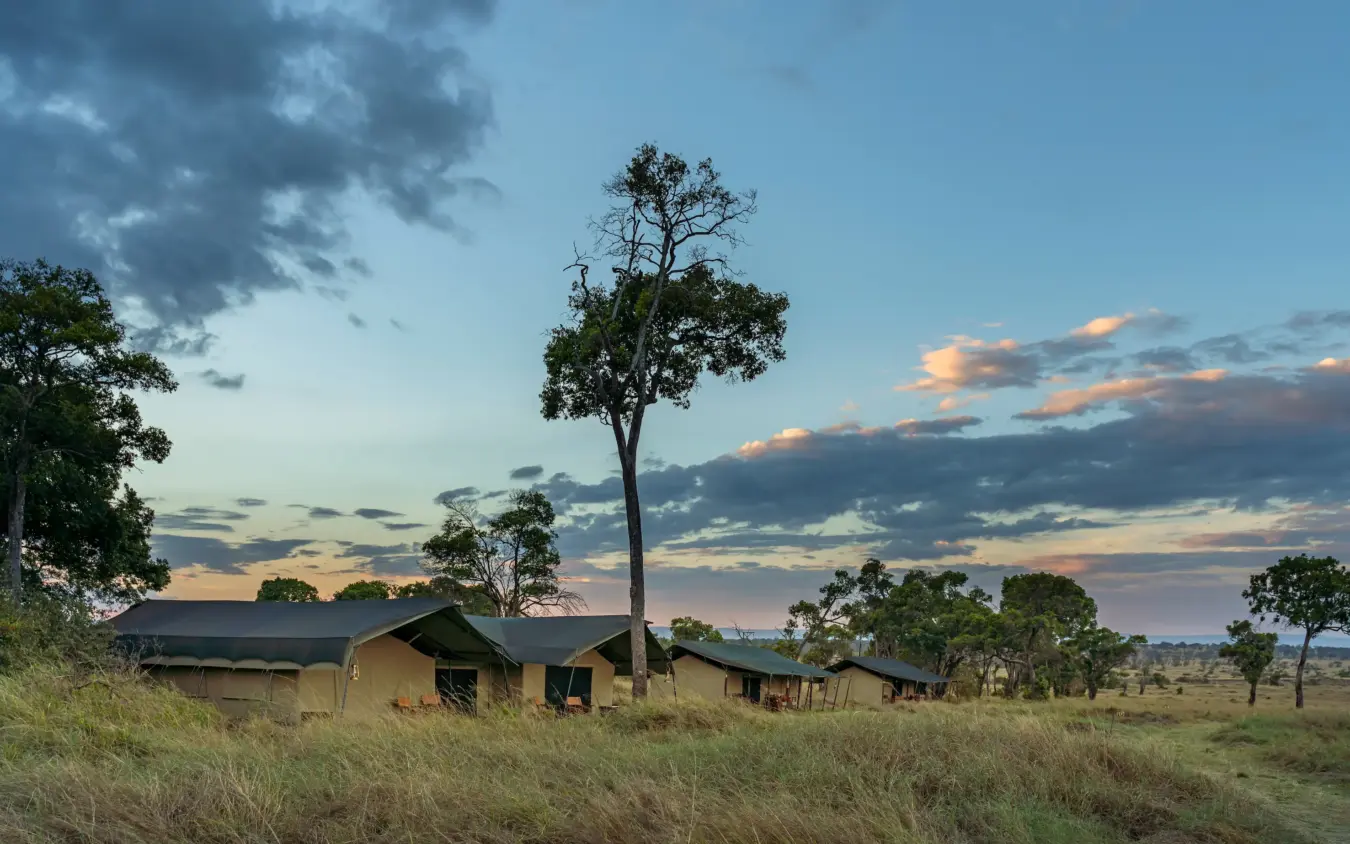
From June to October the camp stands under Euclea trees in the far northern Serengeti, a short drive from the crossing points. Twelve canvas tents, no foundations. When the wildebeest move on toward Kenya, it all comes down, canvas, decking and kitchen, and nothing is left but flattened grass. The site shifts year to year, close to the river in some seasons, further back in others.

Thousands follow into water patrolled by crocodiles.

The river here is the Tanzanian Mara, not the Maasai Mara over the border in Kenya. Wildebeest gather on the steep banks for hours, sometimes days, before one animal jumps. Thousands follow into water patrolled by crocodiles. No guide can predict the day or the point on the river, and the camp is pitched back from the water deliberately, so as not to disturb a herd deciding whether to cross.

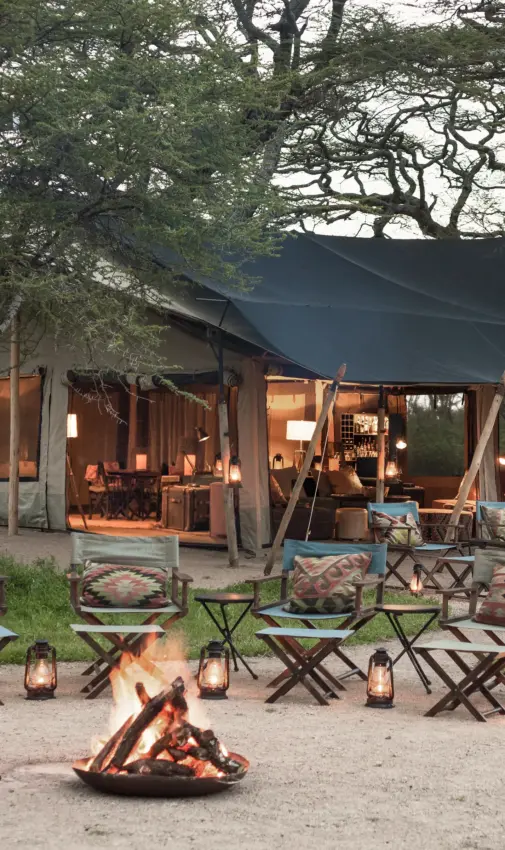
Twelve tents mean the camp can take ground no permanent lodge could hold, pitched wherever the herds are concentrated that season and moved when the animals move. There is no pool and no masonry. Walls are canvas and mesh. The mess tent, the bar and the campfire are the only communal spaces, and the numbers around them are capped by the twelve tents feeding them.

Hyena calls and lion carry a long way across open ground after dark.

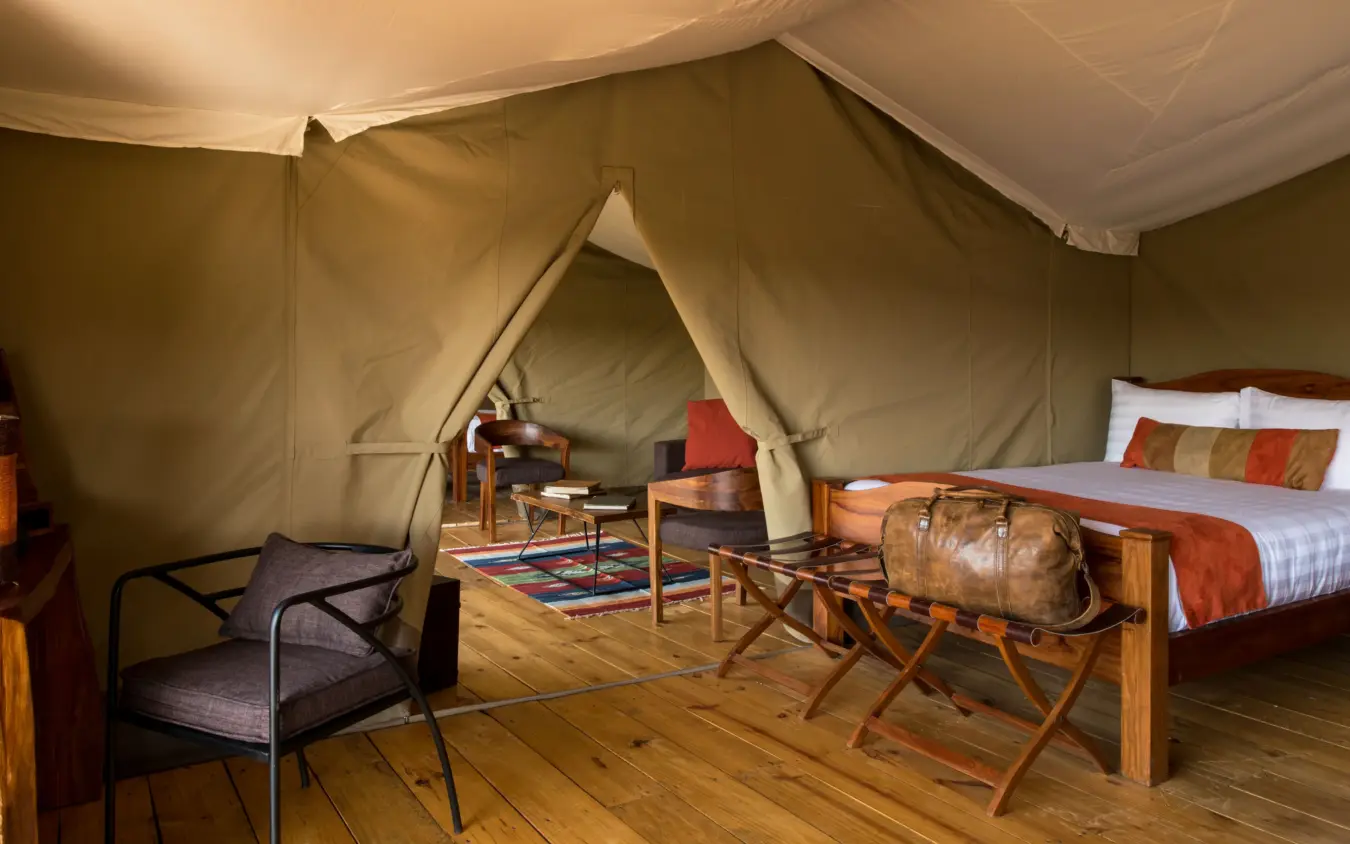
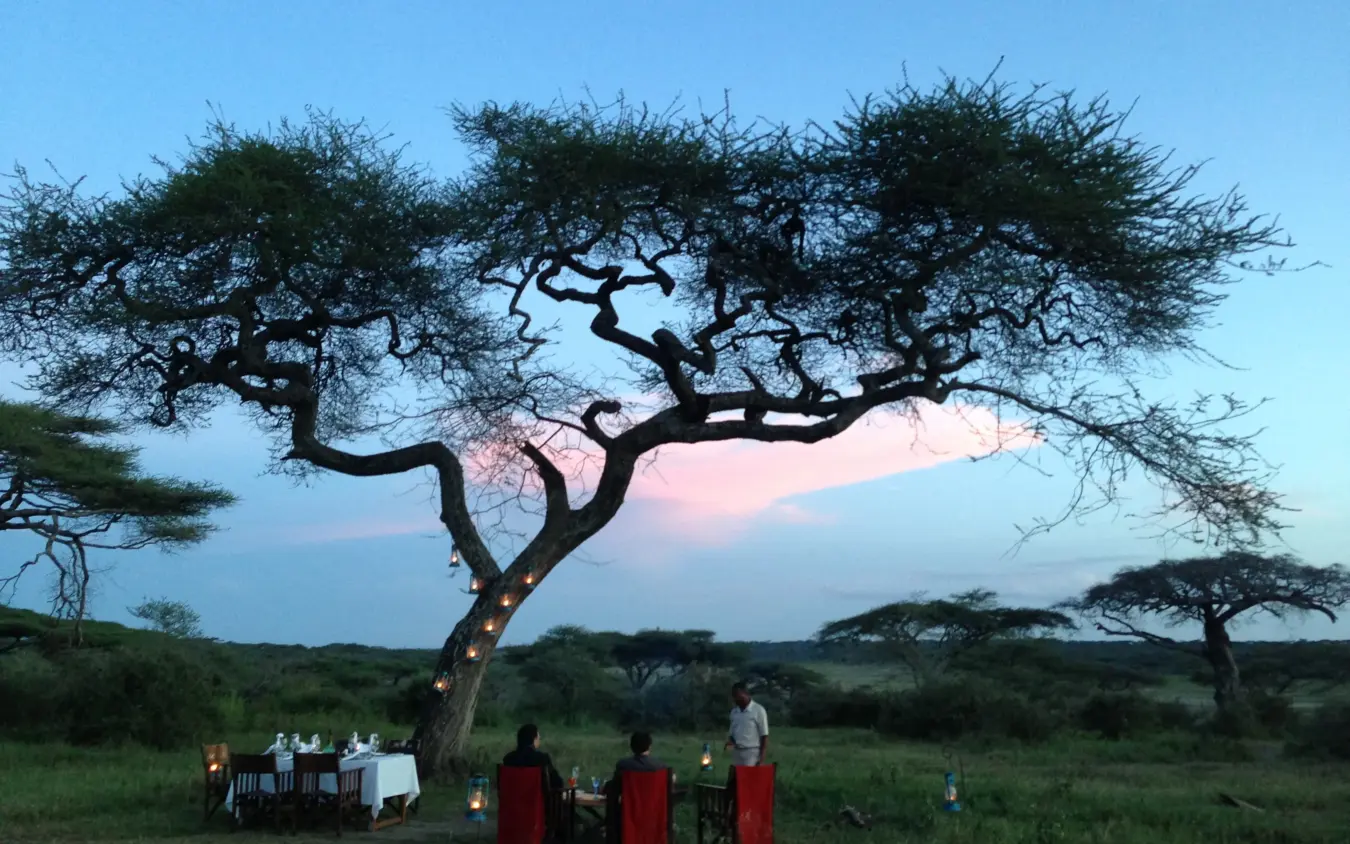
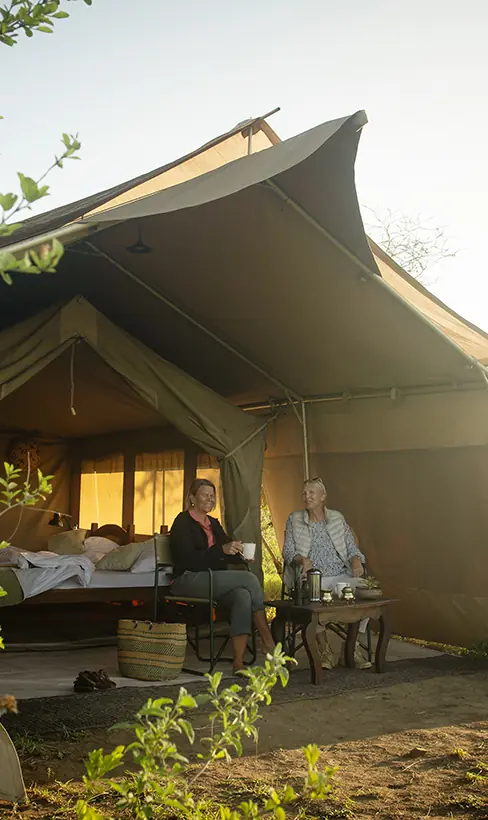
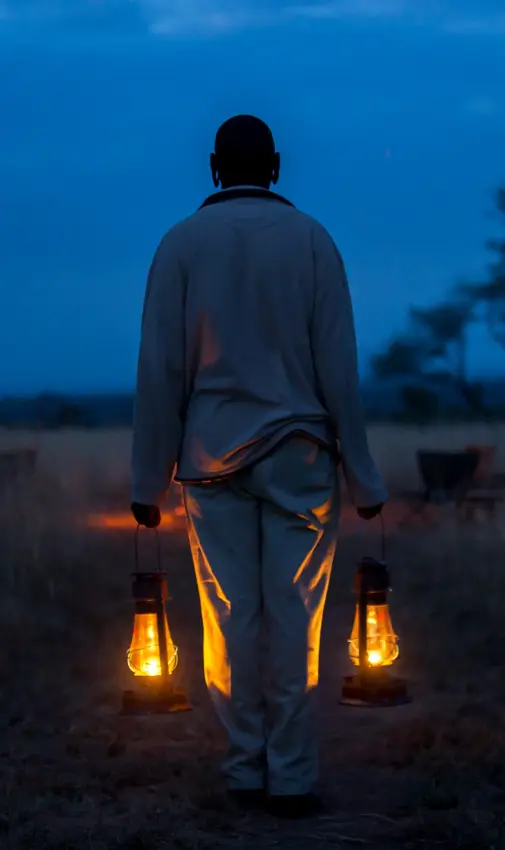
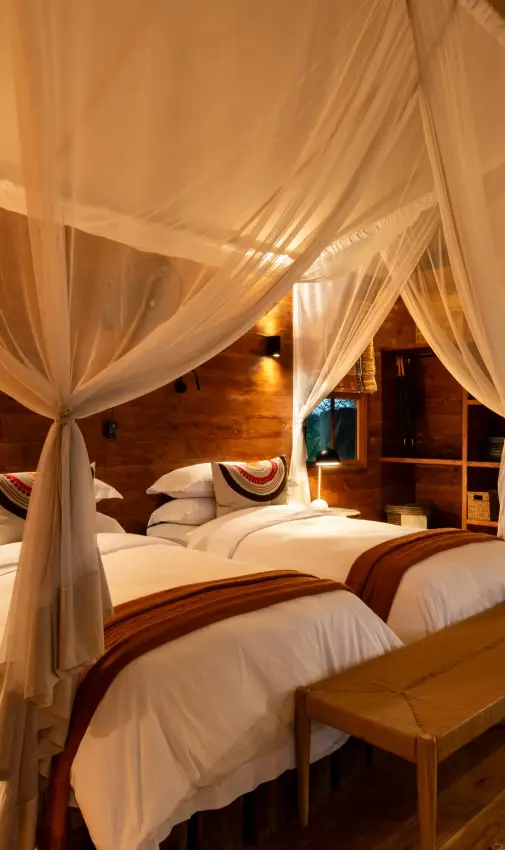
Each tent stands on a wooden deck with a small terrace, two queen beds and an en-suite bathroom. The lounge tent is furnished with leather sofas and rugs, chandeliers above and a bar at one end, and lanterns are lit for the walk back after dinner. Hyena calls and lion carry a long way across open ground after dark. Dust from the afternoon drive comes off under a hot bucket shower, filled by hand.

01

accommodation

Twelve Canvas Tents on Wooden Decking

Twelve canvas tents on wooden decking, each with a small terrace, two queen beds and an en-suite bathroom. Two of the twelve tents are two-bedroom family units sharing a lounge. Charging points are in the tents, and power is solar, with a generator in reserve.

02

activities

Game Drives at Mara River Crossing Points

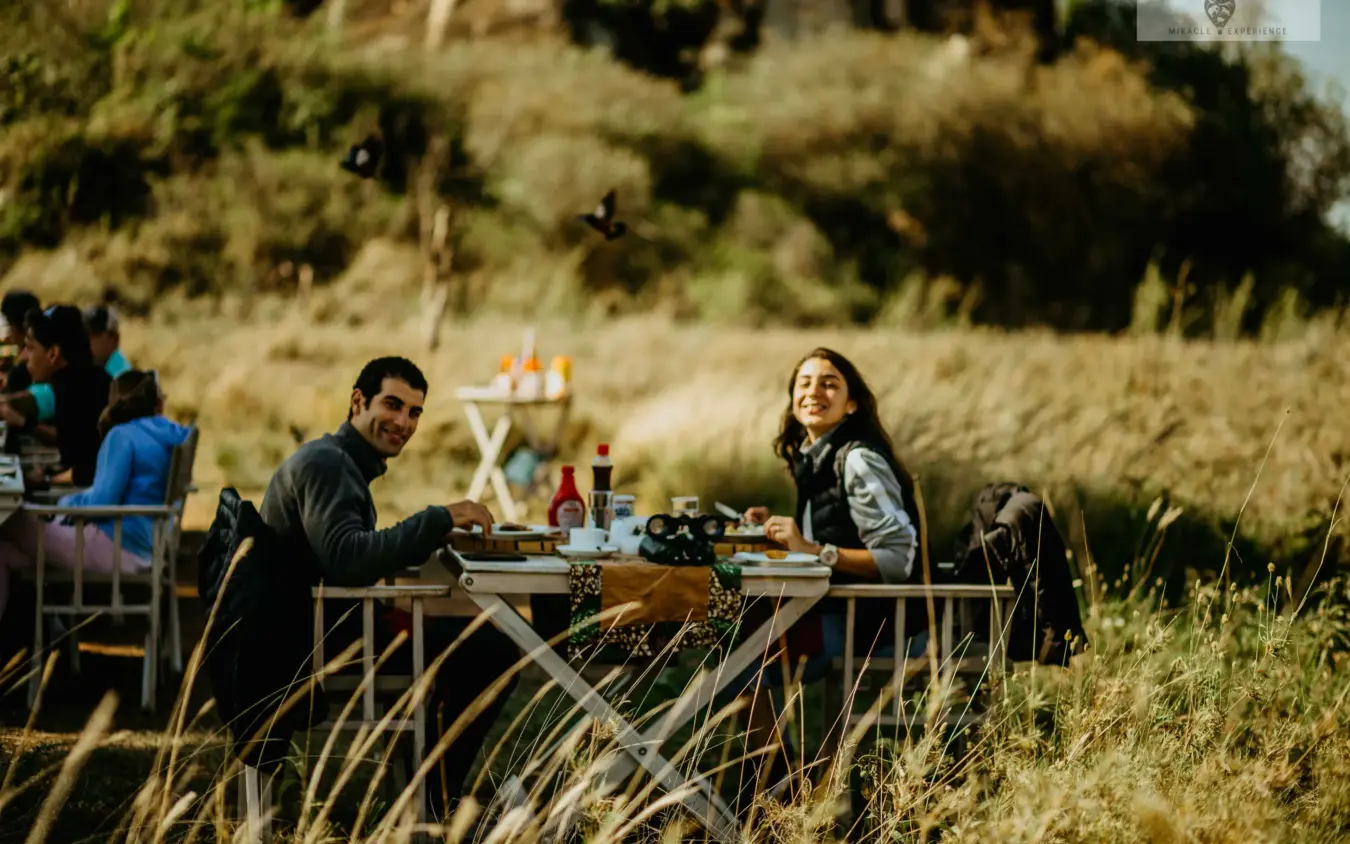
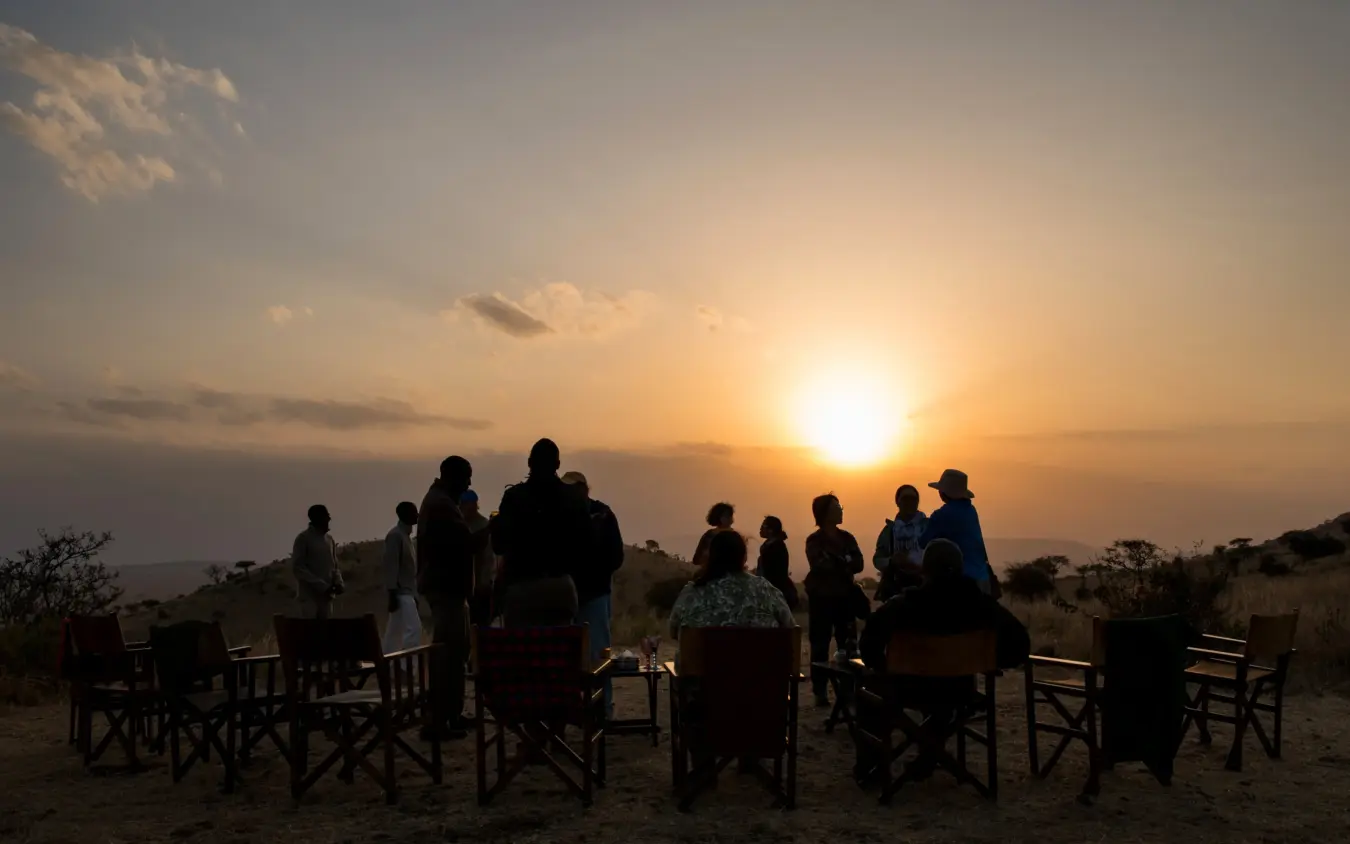
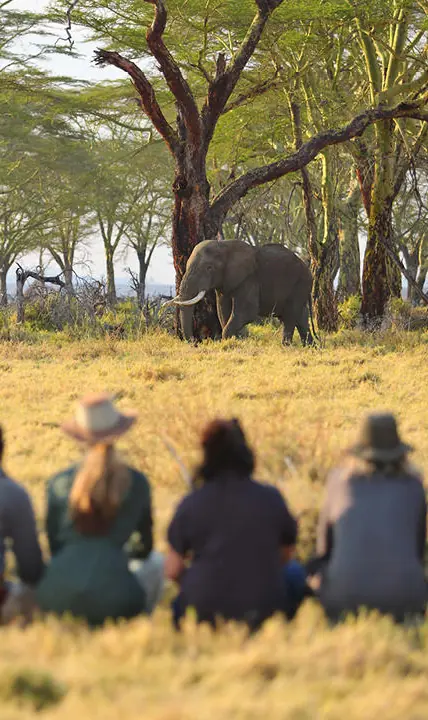
Morning, afternoon and full-day game drives in open 4x4s, focused on the Mara River crossing points from June to October. Guided walks run in designated wilderness zones with a ranger. Bush breakfasts, picnic lunches and sundowners accompany the longer days out, and balloon flights operate from the nearby Kogatende airstrip.
03

conservation

Serengeti De-snaring Programme Removes 100,000 Snares

Lemala supports the Serengeti De-snaring Programme, which has removed more than 100,000 wire snares from the park since 2017 and released over 600 animals alive. Maasai askaris trained by Chief Lebolo work at the camp, and a women's group in Mto wa Mbu produces the biodegradable lunch boxes used on full-day drives.

ready to get started?

Get in touch and let’s start the conversation. An initial consultation helps us understand what you’re looking for, whether that’s specific experiences, luxury touches, or marking a special occasion, and from there we’ll guide you through what’s possible so you can decide if we’re the right fit.

Alternative accommodation in serengeti national park

Guests viewing elephant from savanna during guided safari walk, Namiri Plains, Serengeti National Park, Tanzania 01

Namiri Plains

Serengeti National Park

Couple dining under ancient tree with hanging lanterns at dusk, Nyasi Tented Camp, Serengeti National Park, Tanzania 02

Nyasi Tented Camp

Serengeti National Park

Safari lodge buildings with thatched roofs nestled among trees, Mwiba Lodge, Serengeti National Park, Tanzania 03

Mwiba Lodge

Serengeti National Park

Canvas safari tent illuminated at dusk among acacia trees, Serian Serengeti Lamai, Serengeti National Park, Tanzania 04

Serian Serengeti Lamai

Serengeti National Park

Modern lodge building with pool surrounded by savanna vegetation, Singita Faru Faru Lodge, Serengeti National Park, Tanzania 05

Singita Faru Faru Lodge

Serengeti National Park

Guest relaxing in infinity pool overlooking savanna landscape, Singita Sasakwa Lodge, Serengeti National Park, Tanzania 06

Singita Sasakwa Lodge

Serengeti National Park

Illuminated safari camp tents on wooden deck at dusk, Olmara Serengeti, Serengeti National Park, Tanzania 07

Olmara Serengeti

Serengeti National Park

08

Singita Explore

Serengeti National Park

09

Serian Kidimbwi

Serengeti National Park

Safari lodge tents beneath acacia trees at golden hour, Namiri Plains, Serengeti National Park, Tanzania 10

The Retreats at Namiri Plains

Serengeti National Park

11

Mila Tented Camp

Serengeti National Park

Safari camp with canvas tent beneath acacia trees 12

Serengeti Green Camp

Serengeti National Park

Canvas safari tent with wooden deck in grassland, Dunia Camp, Serengeti National Park, Tanzania 13

Dunia Camp

Serengeti National Park

Canvas safari tent with acacia tree at golden hour, Ubuntu Migration Camp, Serengeti National Park, Tanzania 14

Ubuntu Migration Camp

Serengeti National Park

15

Ndutu Mobile Tented Camp

Serengeti National Park

16

Singita Serengeti House

Serengeti National Park

17

Mwiba Plains

Serengeti National Park

18

Songa Camp

Serengeti National Park

19

Nanyukie Lodge

Serengeti National Park

Canvas tent accommodation with guests relaxing on deck at dusk 20

Pembazoni Camp

Serengeti National Park

frequently asked questions

No, and it is worth being clear because the name confuses people. The Maasai Mara is the Kenyan reserve on the far side of the border; this camp is on the Tanzanian stretch of the same river, in the far north of Serengeti National Park, between twenty-five and forty minutes' drive from Kogatende airstrip depending on where it is pitched that year. The herds cross the Mara on both sides of the border, and the crossings the camp is pitched for are the Tanzanian ones.

You cannot drive from one to the other through the parks. The Bologonja crossing between the Serengeti and the Mara has been closed since 1977 and the Sand River gate on the Kenyan side is shut to visitors for the same reason, so the only road border is at Isebania, well to the west and outside both parks. If you want both sides of the river in one trip, we plan it as two separate legs with the border formalities in between, and we would say you rarely need both: the same herds cross the same river.

The camp is pitched from June to October for exactly this window. The first herds usually reach the river in July, the bulk of them are on the northern plains through August and September, when crossings are at their most frequent, and animals are still moving back and forth across the water in October and into November as the rains draw them south again. Two of the river's largest crossing points are a short drive from the camp, and in some seasons a crossing has been watched from the camp itself.

Nobody can promise you a crossing on a given day, and we would rather say so now. The timing turns on the rains, the grazing and the state of the river, and the odds of standing at the right point at the right hour on a short stay are genuinely slim. So we book the longest stay you can manage in August or September, put you on the river early, and treat a crossing as the prize on top of a north that holds lion, elephant and resident game whether or not the herds are moving.

By light aircraft to Kogatende, the airstrip for the northern Serengeti and the Mara River, then a game drive of twenty-five to forty minutes to wherever the camp is standing that season. The scheduled flight from Arusha leaves mid-morning, calls at other strips on the way and takes getting on for three hours door to door; a direct flight is nearer an hour and a half. We can put you on a private charter instead, a Cessna Caravan or a Pilatus PC-12, which flies direct, leaves at the time you choose and can collect you at Kilimanjaro so you are not routed back through Arusha.

Scheduled or private, the aircraft take fifteen kilograms a person in a soft duffel, and that figure includes hand luggage and camera gear. It is one of the longer sectors on the northern circuit, so we avoid pairing it with an international arrival on the same day.

Yes. TravelHealthPro, the UK's official travel health service, rates every part of Tanzania below 1,800 metres as high risk for malaria and lists antimalarial tablets among its recommendations for it, treating only ground above 1,800 metres as free of risk, and the American CDC draws its line at the same height. That rating holds all year, with no seasonal easing for the dry months. Kogatende and the Mara River valley sit at roughly 1,400 metres, well below the line, and the crossing season is spent beside the water.

We are travel planners, not medical professionals, and we do not recommend medication in our own voice. Which tablets, if any, are right for you and for any children with you is a decision for you and your own doctor or a travel clinic, made with your dates to hand. The practical, non-medical part is straightforward in a canvas camp: cover arms and legs from late afternoon, use repellent for the walk to the campfire, and keep the tent's mesh zipped.

Dry, bright and colder at night than people expect. June to October is the Serengeti's dry season: afternoons around twenty-six degrees, nights around fourteen, and the occasional cold front between June and September that drops the dawn temperature close to freezing on the open plains. Rain is rare, and the price of the clear skies is dust on every drive.

Pack in layers: a proper fleece or down jacket, a hat and gloves for the dawn run to the river, then shirtsleeves by mid-morning; a neutral-coloured sunhat and high-factor sun cream for the long hours parked at a crossing point; a scarf or buff against the dust; and binoculars, because a crossing often begins on the far bank. The camp does laundry, so three changes of clothes are plenty, and all of it goes into a soft bag of fifteen kilograms for the aircraft.

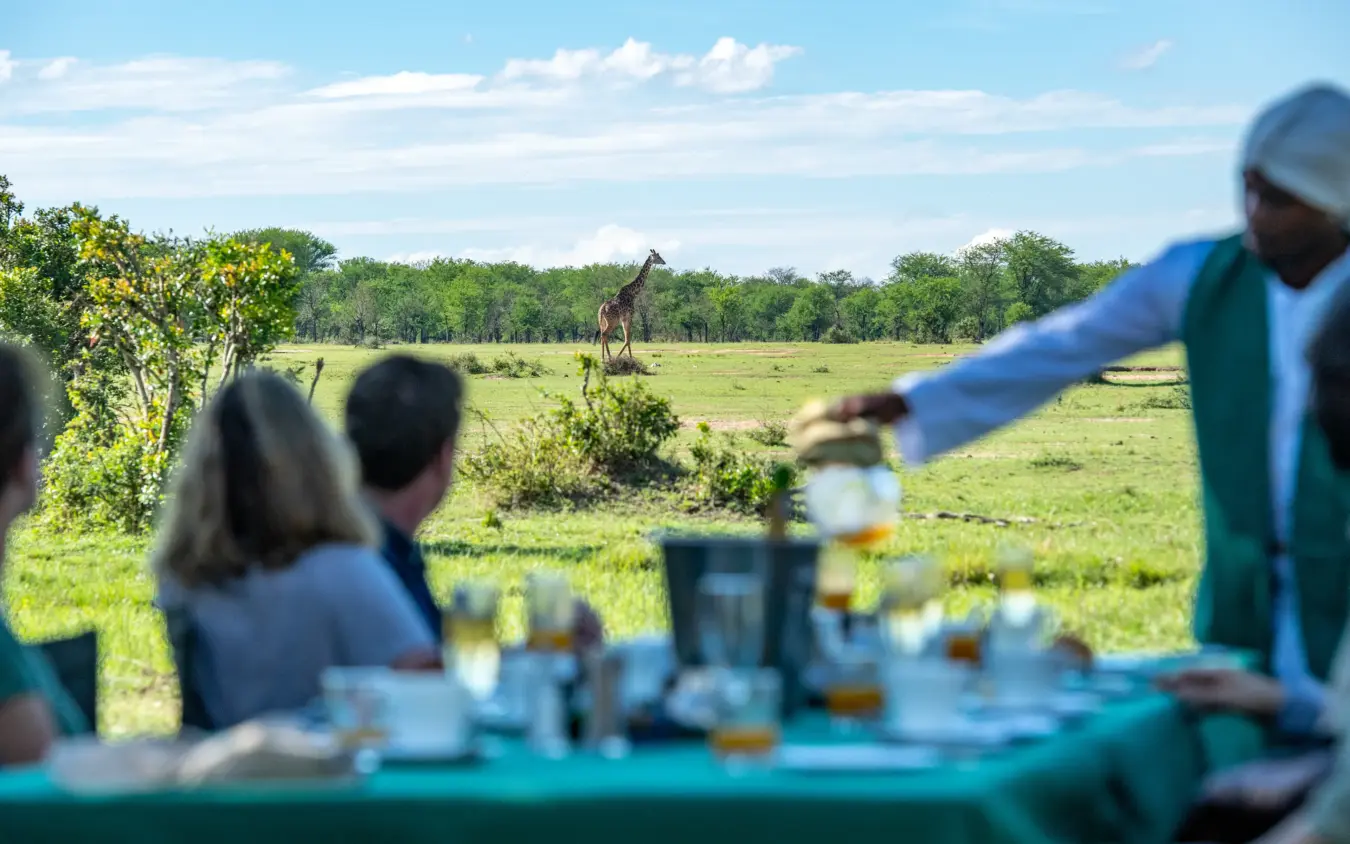
The stay covers the tent, all meals, house drinks, laundry and wifi, with game drives, guided walks in the designated zones, picnics and bush dining part of the camp's daily programme; the balloon flight from Kogatende is the one activity arranged and charged on top. Wifi is included, which is rarer than it sounds under canvas, and the solar supply with its standby generator keeps it running round the clock.

It is still a mobile camp in a national park, so we would not build a working day around the connection, and if you need to be reliably reachable, tell us and we will check what the signal is doing at that season's site before you commit.

rated five stars by our clients

other areas in tanzania

African wild dog standing alert in grassland 01

Ruaha National Park

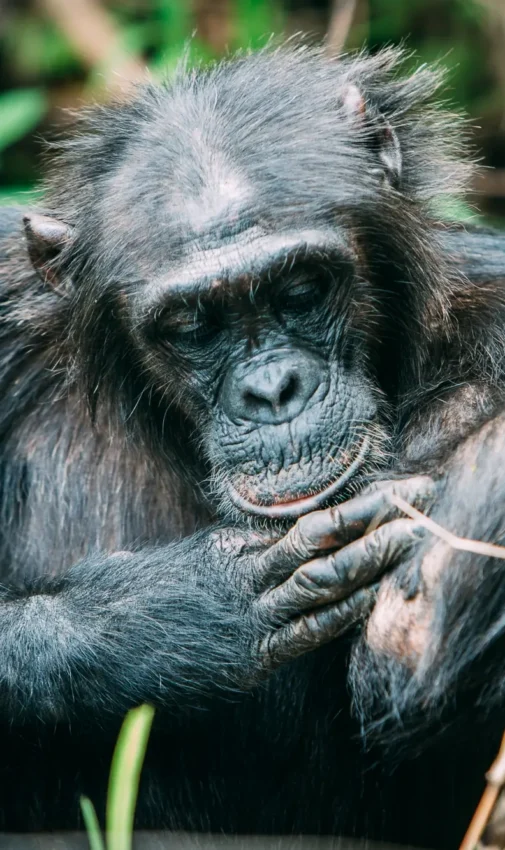
Chimpanzee holding branch while foraging in forest, Mahale Mountains, Tanzania 02

Mahale Mountains

Guests relax in chairs by river with child wading, Lake Manyara, Tanzania 03

Lake Manyara

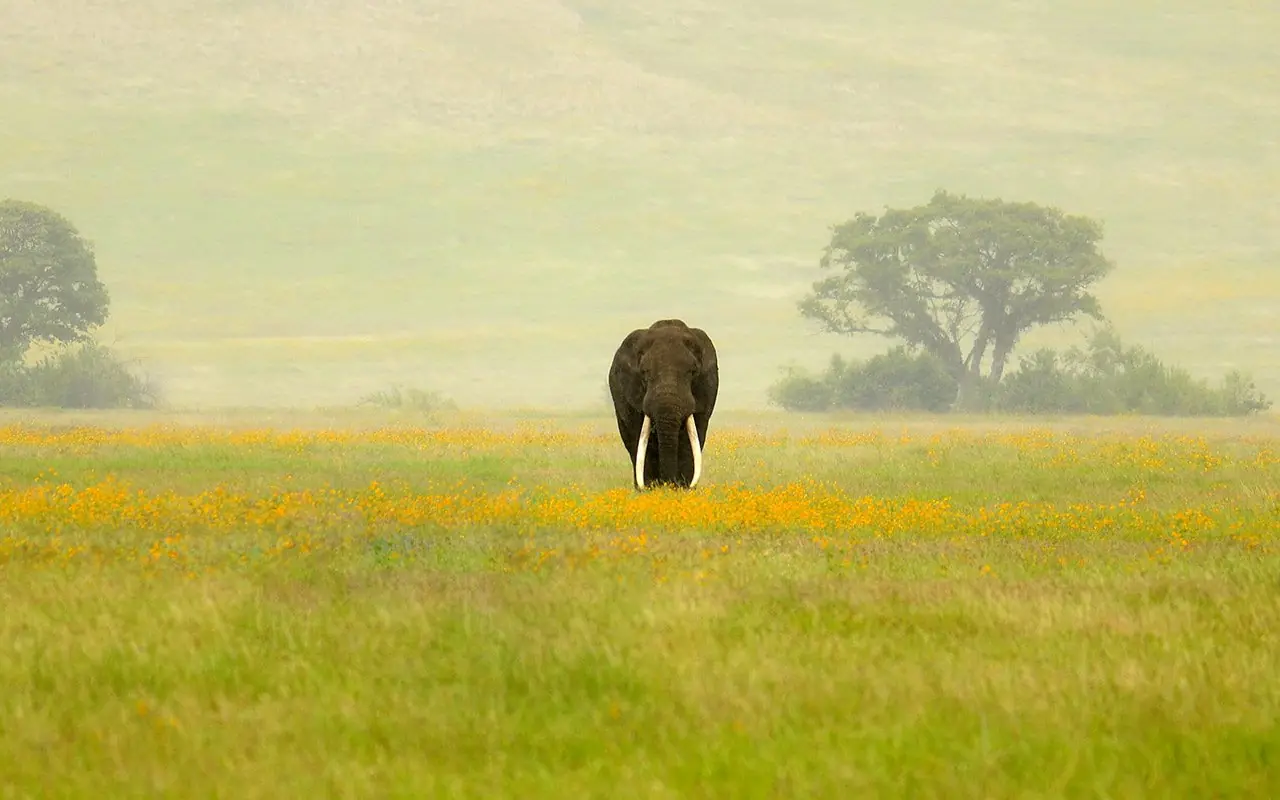
Elephant walking alone across golden savanna grassland 04

Ngorongoro Crater

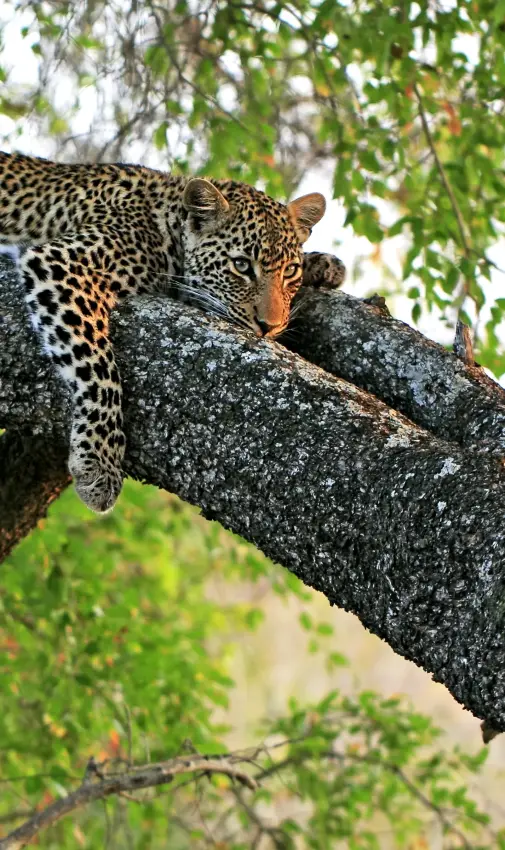
Leopard resting on tree branch surrounded by green foliage 05

Tarangire National Park

Hippopotamuses in water with heads above surface 06

Katavi National Park

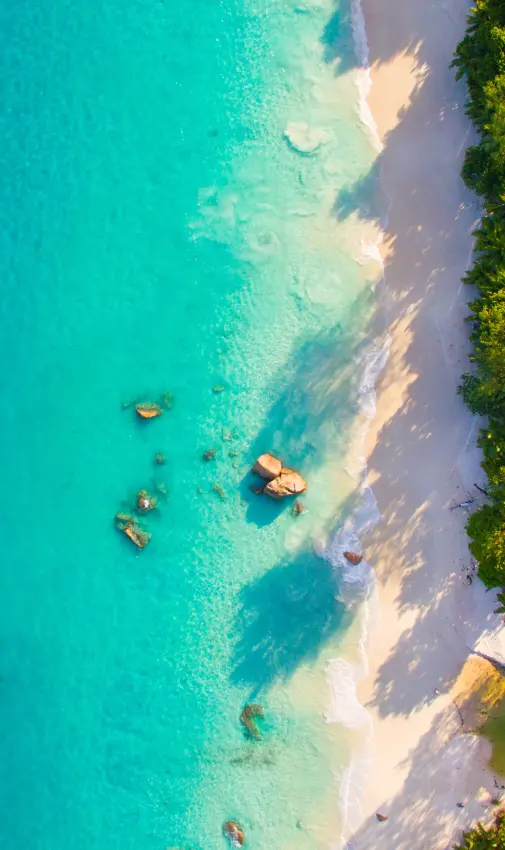
Turquoise water beach with boats and tropical vegetation 07

Zanzibar & Pemba

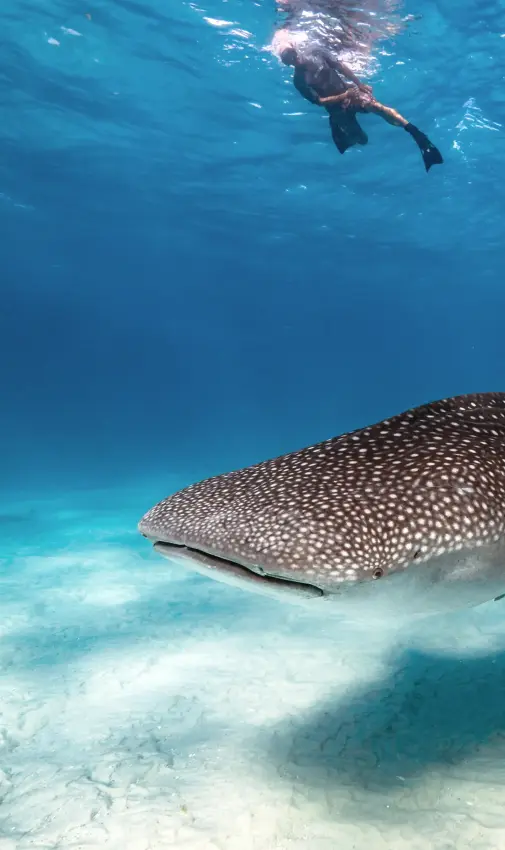
Snorkeler swimming alongside whale shark in shallow turquoise water, Mafia Archipelago, Tanzania 08

Mafia Archipelago

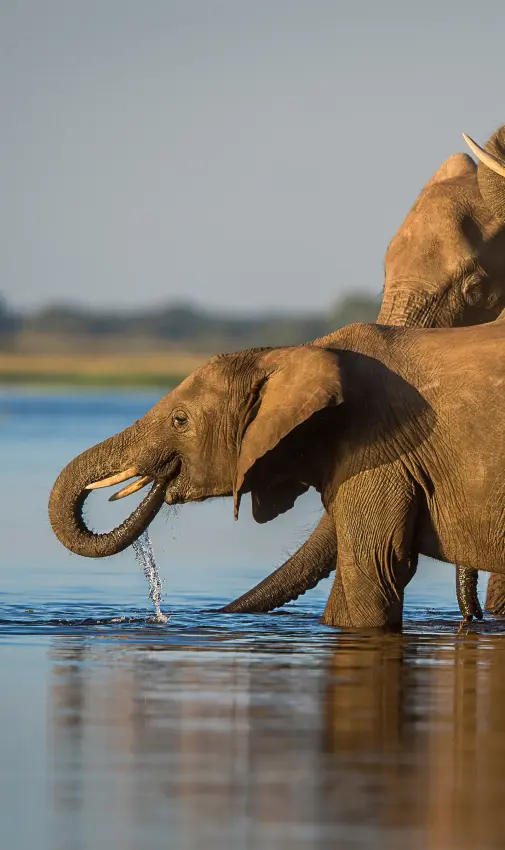
elephants drinking water at riverbank during daytime 09

Nyerere National Park

Chimpanzee among vegetation looking toward camera, Rubondo Island, Tanzania 10

Rubondo Island

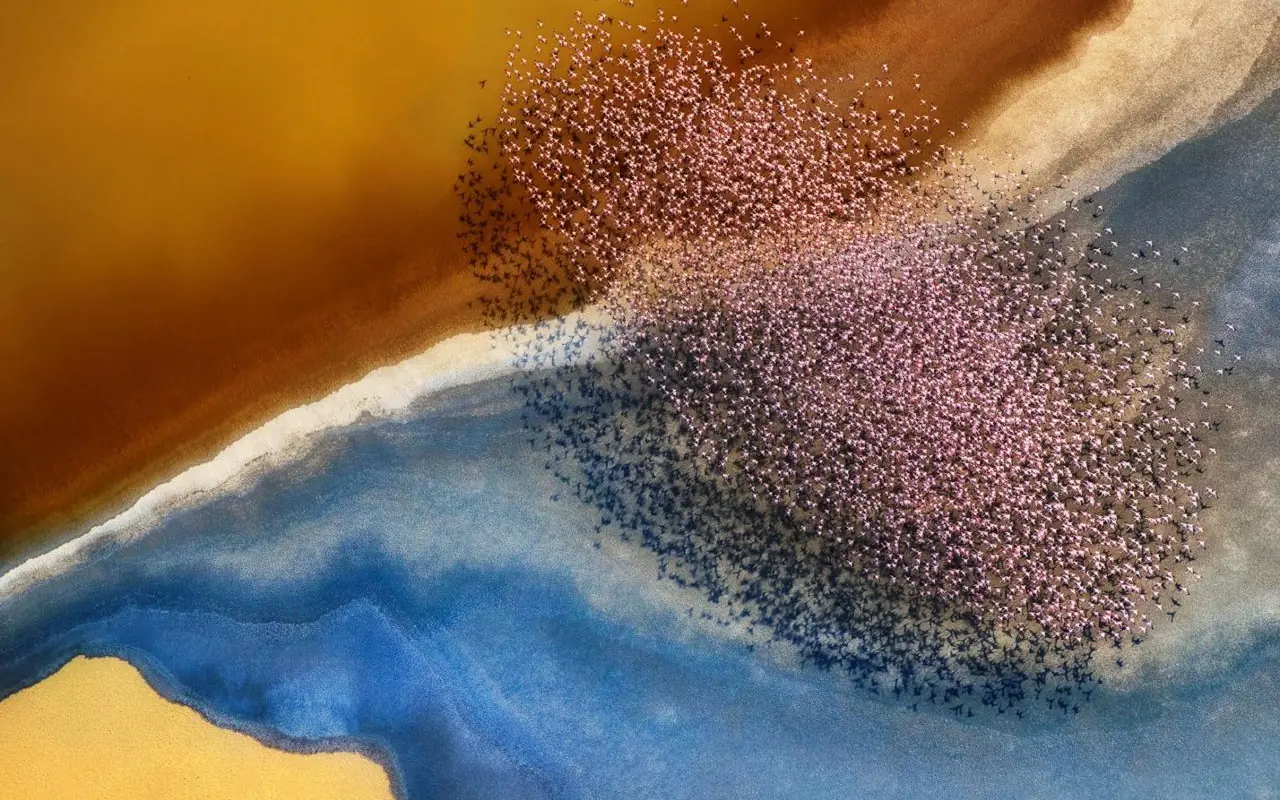
Aerial view of colorful salt lakes and mineral deposits 11

Lake Natron

Local people walking on dusty road with vehicle approaching 12

Arusha

13

Ugalla River National Park

Planning a journey together

our approach

remote, exclusive
& personal

Every journey starts with a conversation. We take the time to understand your vision before we start planning.

Whether by phone or in person, we work with you directly to shape something that is considered, personal, and expertly delivered.

get in touch
destinations ideas & inspiration our process about us contact us