Camp

Serengeti Safari Camp

Six canvas tents that move four or five times a year with the wildebeest, every booking with its own guide and vehicle.

Country: Tanzania
Location: Serengeti National Park
Number of rooms: 6

Six tents that follow the wildebeest

Six tents are struck, loaded onto lorries and rebuilt four or five times a year, so that the camp stays with the wildebeest as they move through Serengeti National Park. Guests sleep inside the migration instead of driving out each morning to find it. Wildebeest graze between the tents through the night. Nothing permanent is left behind at any site.

Wildebeest graze between the tents through the night.

Two identical six-tent camps leapfrog each other through the year. While one is open, its twin is already down, loaded and driven ahead to be pitched at the next site: the southern plains near Ndutu from December to April, Moru in May, the Grumeti in June and July, then Kogatende in the north from July to October. Flights land at whichever airstrip is closest to camp that season.

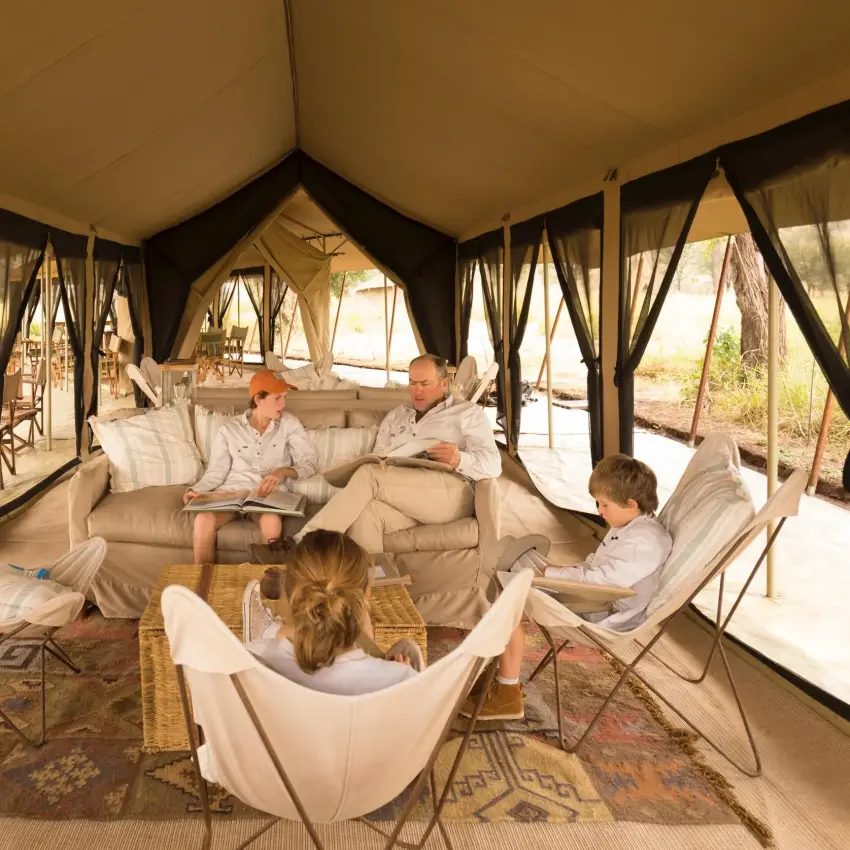
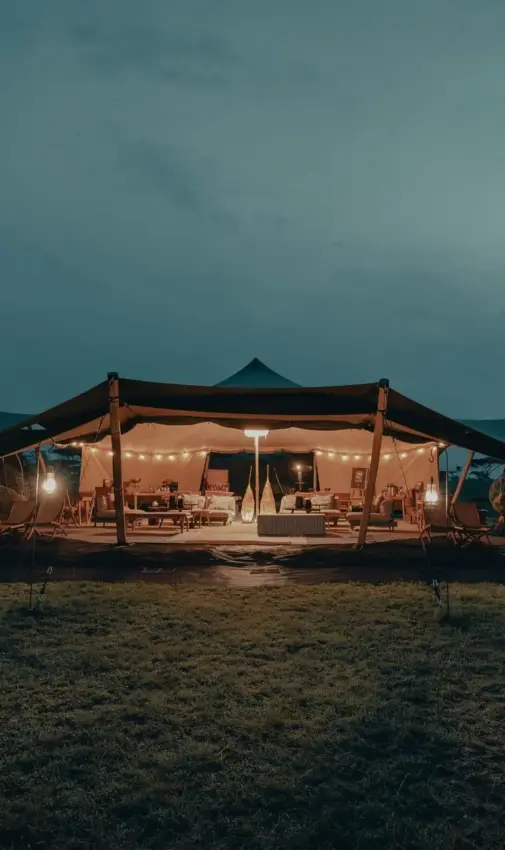
Guests relaxing in open-sided canvas tent lounge area, Serengeti Safari Camp, Serengeti National Park, Tanzania
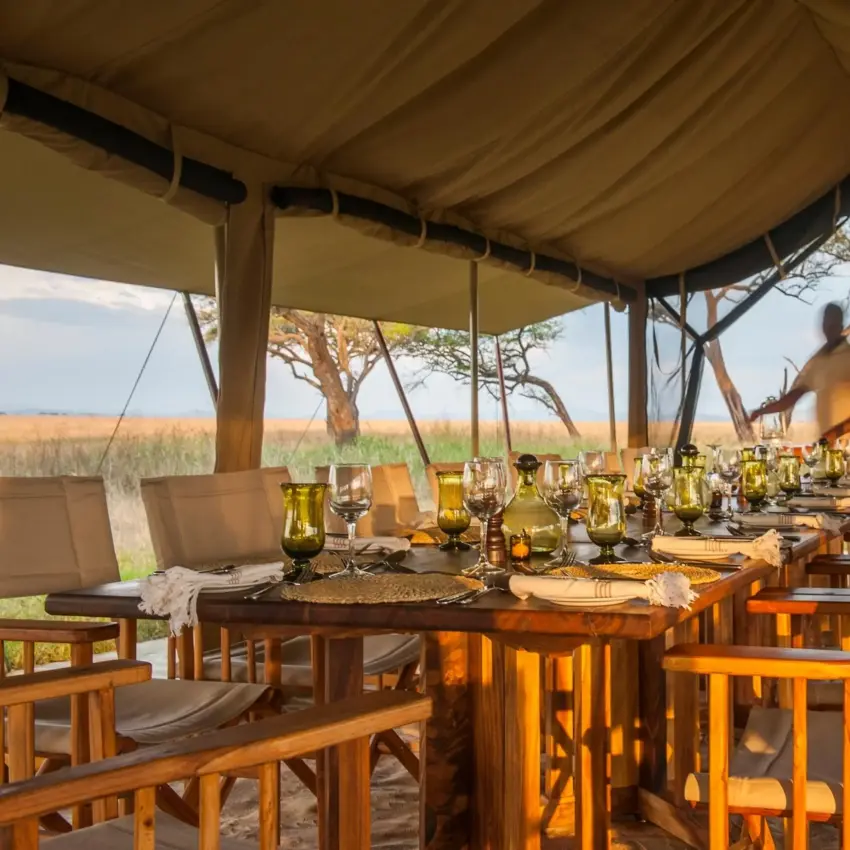
Open-air dining tent with set tables and savanna views, Serengeti Safari Camp, Serengeti National Park, Tanzania

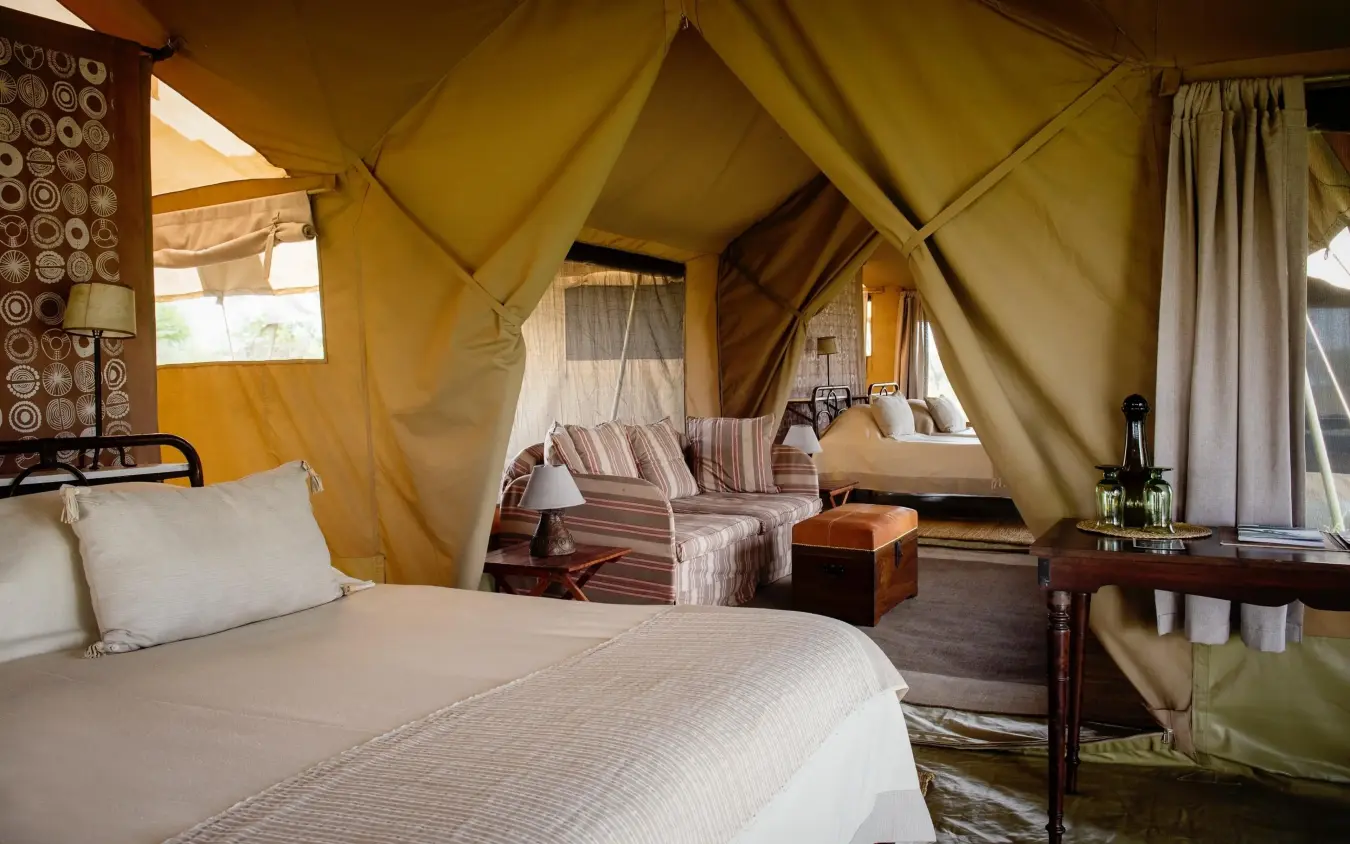
The tents are traditional walk-in canvas, pitched on the ground and not on platforms, with proper beds, bedside tables and a veranda of safari chairs facing the plains. The bathroom sits at the rear, with an eco-flush loo and a wash basin filled from a hot jug each morning. The bucket shower is hoisted and filled when it is wanted.

The ground between the tents is rough, pitched and not landscaped

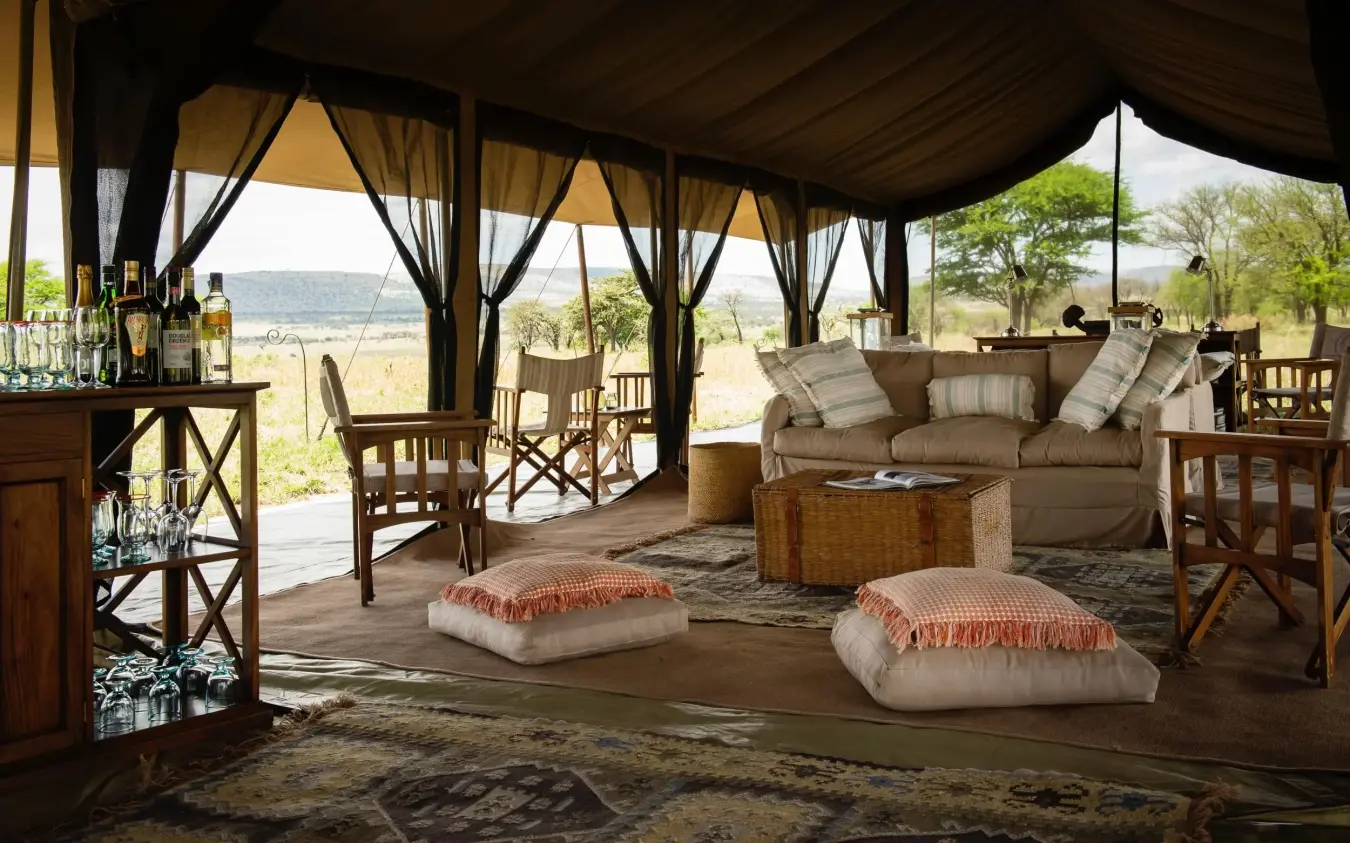
Every booking comes with its own vehicle and guide, and that sets the hours. Some days go long, tracking herds toward the Mara River. Others begin late, with a long breakfast laid out under a tree. Drinks are taken around the fire, dinner in the open-sided mess tent or outside under lanterns. Lighting runs on solar power and wifi in the tents is limited. The ground between the tents is rough, pitched and not landscaped.

Safari tent bedroom with white bedding and wooden furnishings, Serengeti Safari Camp, Serengeti National Park, Tanzania 01

accommodation

Six Tents With Private Verandas

Six tents: five walk-in doubles or twins, and a family tent of two en-suite bedrooms joined by a small sitting area. Each has proper beds, bedside tables and luggage space, solar lighting and charging points, and a private veranda with chairs. The bathroom at the rear holds an eco-flush loo, a basin and a bucket shower. Wifi is limited.

Safari vehicle parked in golden grassland at sunset, Serengeti Safari Camp, Serengeti National Park, Tanzania 02

activities

Private Vehicle Game Drives At Mara River

Game drives run in a private vehicle with a private guide, half days or full days with a picnic, timed around the herds. In the northern season, mornings are often spent at the Mara River waiting on a crossing. Walking safaris have been offered on occasion within park rules. Night drives and off-road driving are not permitted inside Serengeti National Park.

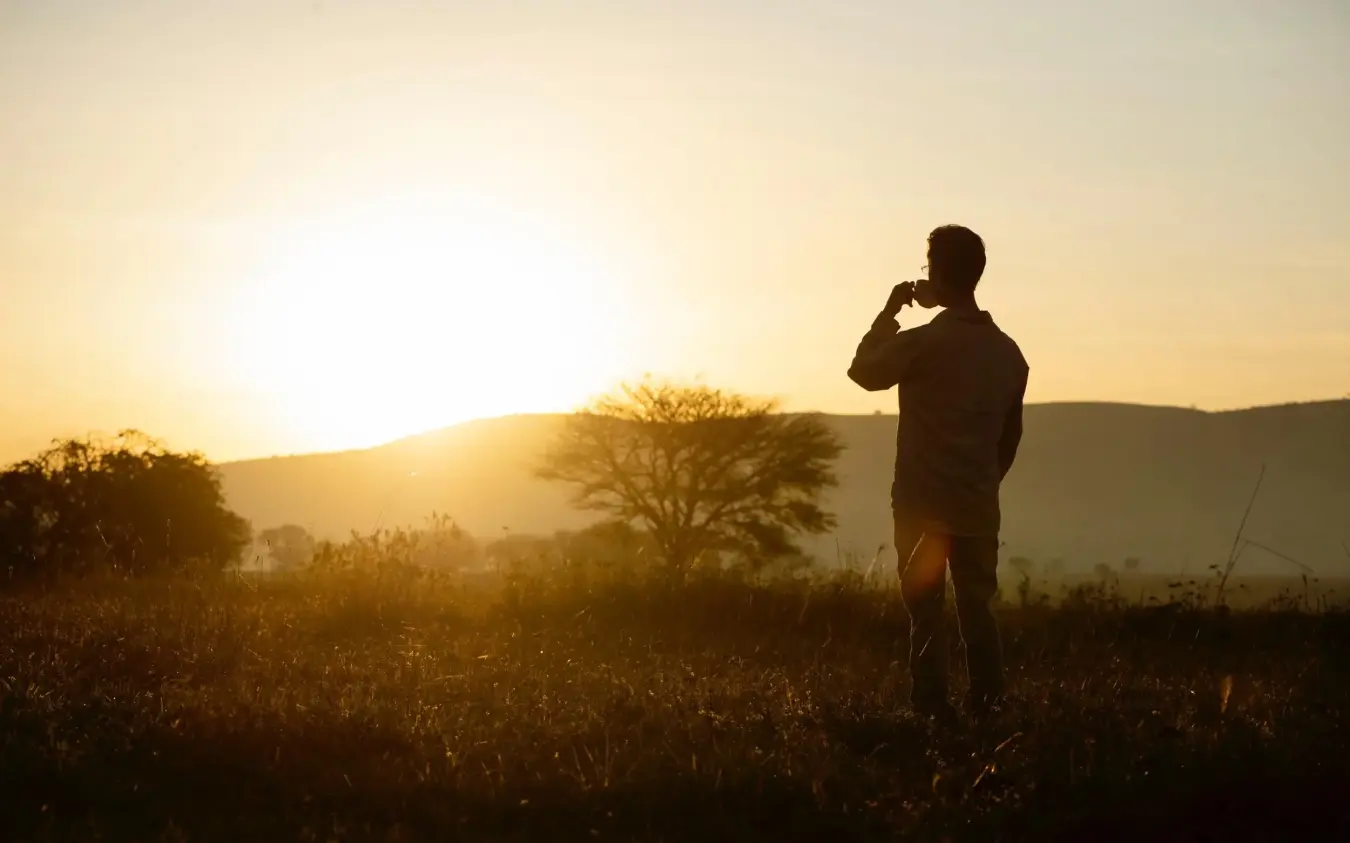
Guide pointing out wildlife to visitor on savanna, Serengeti Safari Camp, Serengeti National Park, Tanzania 03

conservation

Frankfurt Zoological Society De-Snaring Programme

Ranger teams funded through the Frankfurt Zoological Society de-snaring programme locate poaching camps and remove wire snares from the Serengeti ecosystem, and the Honeyguide Foundation supports anti-poaching patrols and predator conservation. The Hope Centre gives girls fleeing FGM and early marriage a safe house and continued schooling.

ready to get started?

Get in touch and let’s start the conversation. An initial consultation helps us understand what you’re looking for, whether that’s specific experiences, luxury touches, or marking a special occasion, and from there we’ll guide you through what’s possible so you can decide if we’re the right fit.

Alternative accommodation in serengeti national park

The Serengeti carries the full range of safari accommodation. Mobile camps relocate through the year to follow the herds, offering canvas suites with en-suite facilities close to the migration front. Semi-permanent and seasonal tented camps range from understated to highly luxurious. Permanent lodges, concentrated in central Seronera, provide solid-walled rooms, swimming pools and year-round access. Exclusive-use houses and private villas in the adjoining concessions suit families and groups seeking privacy.

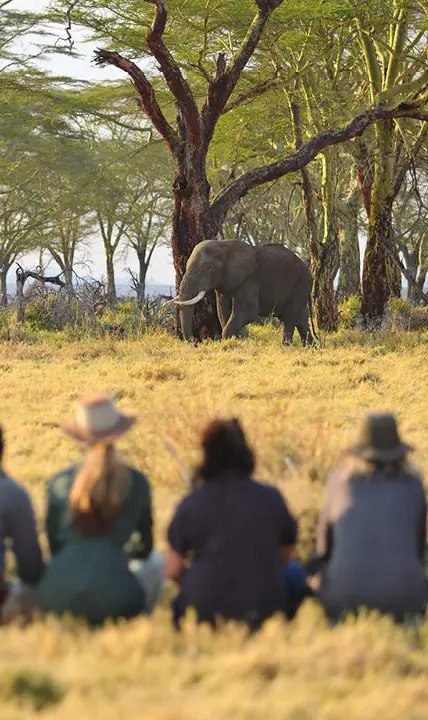
Guests viewing elephant from savanna during guided safari walk, Namiri Plains, Serengeti National Park, Tanzania 01

Namiri Plains

Serengeti National Park

Couple dining under ancient tree with hanging lanterns at dusk, Nyasi Tented Camp, Serengeti National Park, Tanzania 02

Nyasi Tented Camp

Serengeti National Park

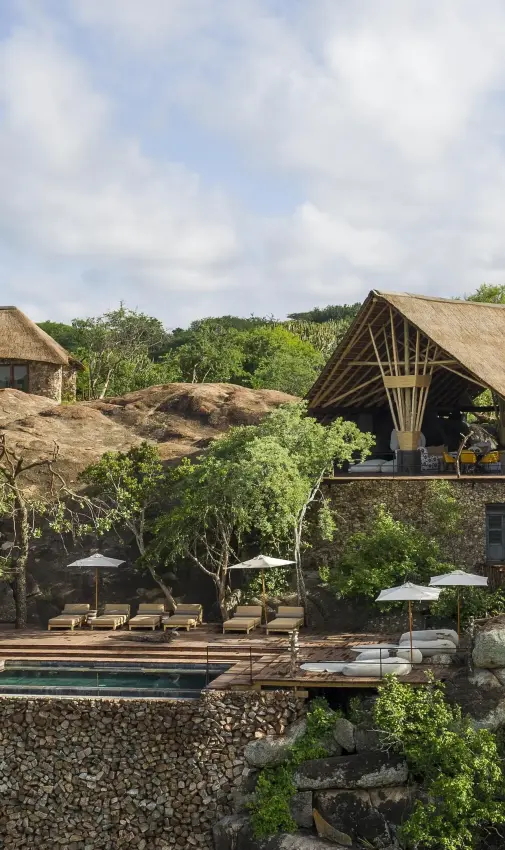
Safari lodge buildings with thatched roofs nestled among trees, Mwiba Lodge, Serengeti National Park, Tanzania 03

Mwiba Lodge

Serengeti National Park

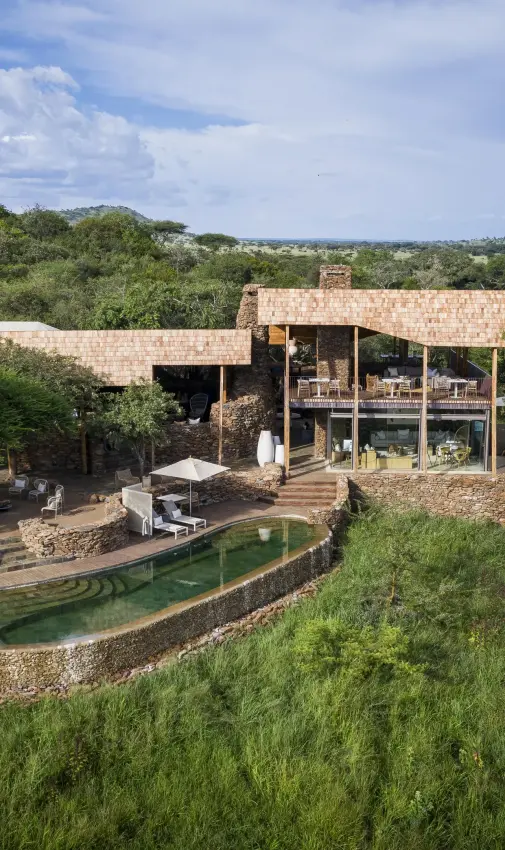
Modern lodge building with pool surrounded by savanna vegetation, Singita Faru Faru Lodge, Serengeti National Park, Tanzania 04

Singita Faru Faru Lodge

Serengeti National Park

Guest relaxing in infinity pool overlooking savanna landscape, Singita Sasakwa Lodge, Serengeti National Park, Tanzania 05

Singita Sasakwa Lodge

Serengeti National Park

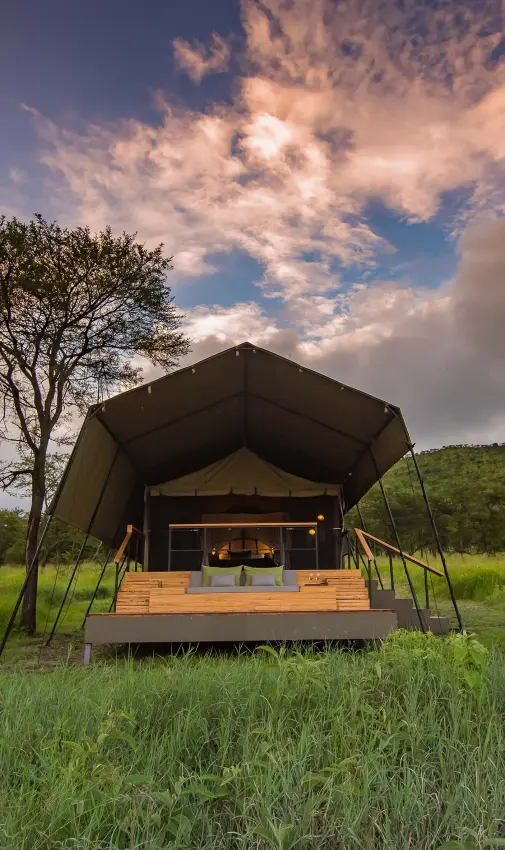
Illuminated safari tent at dusk with bare trees and grassland, Serian Serengeti Lamai, Serengeti National Park, Tanzania 06

Serian Serengeti Lamai

Serengeti National Park

Illuminated safari camp tents on wooden deck at dusk, Olmara Serengeti, Serengeti National Park, Tanzania 07

Olmara Serengeti

Serengeti National Park

Luxury safari camp with canvas structures nestled in woodland savanna landscape, Nanyukie Lodge, Serengeti National Park, Tanzania 08

Nanyukie Lodge

Serengeti National Park

Canvas chairs arranged around campfire at sunset, Mila Tented Camp, Serengeti National Park, Tanzania 09

Mila Tented Camp

Serengeti National Park

Modern wooden lodge with deck overlooking grassland at dusk, Grumeti Serengeti River Lodge, Serengeti National Park, Tanzania 10

Grumeti Serengeti River Lodge

Serengeti National Park

Outdoor seating area with cushions overlooking vast savanna landscape at dusk, Laba Grumeti Art Lodge, Serengeti National Park, Tanzania 11

Laba Grumeti Art Lodge

Serengeti National Park

Canvas safari tent with wooden deck in grassland, Dunia Camp, Serengeti National Park, Tanzania 12

Dunia Camp

Serengeti National Park

Usawa Serengeti, Serengeti National Park, Tanzania 13

Usawa Serengeti

Serengeti National Park

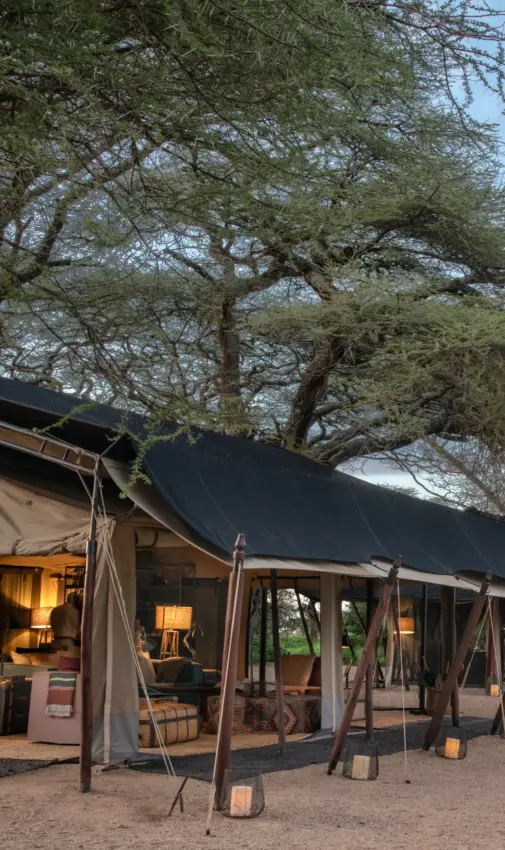
Luxury safari camp tent with acacia trees and lanterns at dusk, Mwiba Plains, Serengeti National Park, Tanzania 14

Mwiba Plains

Serengeti National Park

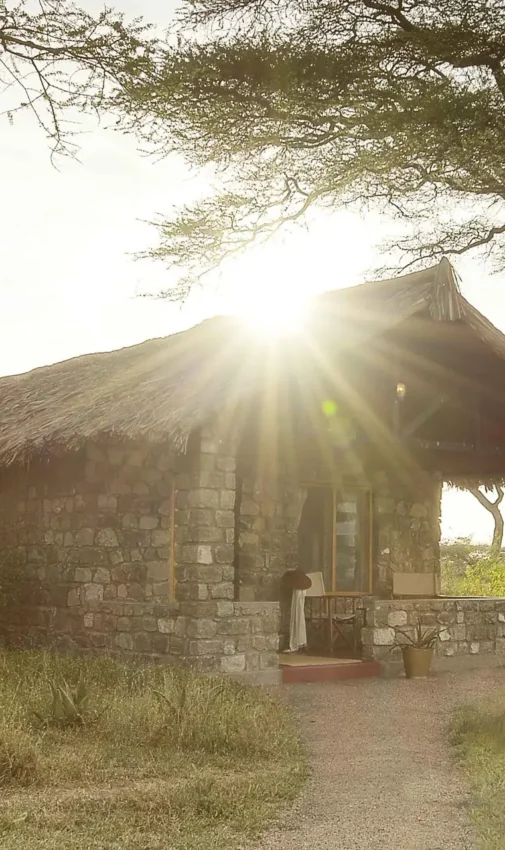
Stone bungalow with thatched roof at sunrise, Ndutu Safari Lodge, Serengeti National Park, Tanzania 15

Ndutu Safari Lodge

Serengeti National Park

Waterhole with viewing deck and safari lodge seating area under pergola, Singita Serengeti House, Serengeti National Park, Tanzania 16

Singita Serengeti House

Serengeti National Park

Man relaxing in canvas shelter under trees with vegetation in foreground, Esirai Camp South, Serengeti National Park, Tanzania 17

Esirai Camp South

Serengeti National Park

Safari lodge tents beneath acacia trees at golden hour, Namiri Plains, Serengeti National Park, Tanzania 18

The Retreats at Namiri Plains

Serengeti National Park

Canvas safari camp with dining area under acacia trees in grassland, Laba Migration Camp, Serengeti National Park, Tanzania 19

Laba Migration Camp

Serengeti National Park

Luxury safari tent illuminated at night beneath starry sky, Ndutu Mobile Tented Camp, Serengeti National Park, Tanzania 20

Ndutu Mobile Tented Camp

Serengeti National Park

frequently asked questions

It depends where the camp is standing, and we book the flights only after checking that for your dates.

The camp's fact sheet gives the drive from each: Ndutu, fifteen minutes, or the Southern Serengeti strip, twenty-five, in the calving months from December to April; Grumeti, forty minutes, when the camp is in the Western Corridor in June and July; and Kogatende, forty-five minutes or more, from July to October in the north. Seronera is the nearest strip for the Moru weeks in May.

Coastal Aviation's timetable, valid to the end of May 2027, serves every one of them daily from Arusha with a stop at Lake Manyara, leaving at a quarter to eight, a quarter to eleven and three o'clock; the first rotation lands at Ndutu at ten to nine, at Grumeti at ten past nine and at Kogatende at five past ten.

We can also arrange a private charter, typically a Cessna Caravan or a Pilatus PC-12, from Arusha or Kilimanjaro straight to the nearest strip, and in the north the camp's camps can be reached by vehicle from one another. Soft bags only, fifteen kilograms a person including hand luggage; laundry is included, so it is enough.

Both official sources say the area calls for them. TravelHealthPro, the UK's official travel health service, classes all of Tanzania below 1,800 metres as high risk for malaria and lists antimalarial tablets and bite avoidance among its recommendations; the CDC draws its line at the same 1,800 metres, or 5,900 feet, and recommends prescription medicine to prevent malaria for such areas.

Every site the camp uses lies under that line, from the southern plains at roughly 1,600 to 1,700 metres down to the Grumeti at about 1,200 and Kogatende at around 1,450, so the answer does not change with the season.

We do not make medical recommendations. We are travel planners, not doctors. Which tablets are right for you, whether they suit your own health or anyone else's in the party, and what is appropriate for a child, is a conversation between you and your doctor or a travel clinic.

The practical side we can speak to is not medical: cover arms and legs from late afternoon and keep repellent to hand.

From eight, the camp's minimum, and it works well for them, because every booking has its own vehicle and guide, so a family sets its own hours: a late start after a night of wildebeest grunting past the canvas, a long bush breakfast, an early return.

The family tent is two full en-suite tents joined by a small sitting area, so parents and children sleep apart but under one roof, and the other five tents take an extra bed for a child.

The walking safaris the camp runs from its southern position near Kusini are for twelve and over, with an armed scout and an armed ranger; younger children stay on the drives. The camp is unfenced, animals walk through it, and askaris escort everyone to and from the tents after dark.

Tell us the ages when we plan and we will time the season to them: the calving in February holds a child's attention better than a river crossing that may not happen for days.

The camp moves it four or five times a year to stay with the herds: on the southern plains around Ndutu and Kusini from December to April, when the wildebeest calve on the short grass and February is the peak.

At Moru in the centre in May, as the herds move north-west through the rut. On the Grumeti in the Western Corridor in June and July, where crocodiles wait at the river.

And near Kogatende in the north from July to October, within reach of the Mara River, where crossings run through those months and peak in August and September. November is the turn south, and the camp heads back with the herds.

Two identical camps leapfrog so that one is always open while the other moves, which keeps the moves from touching your stay, but dates that straddle a move are worth a word with us before we hold anything, because the flight may change airstrip. Crossings are never promised: the herds cross when they cross, and some days at Kogatende are spent waiting on a bank.

It follows the camp. In the south from December to March the camp gives 16 to 28 degrees, with short showers greening the plains and the odd afternoon storm. The long rains fall in April and May, when the ground is at its softest.

From July to September in the north it is dry and clear with the coldest dawns of the year, 13 degrees or so and an occasional cold front colder still, with dust building through August and September. October is hotter, and the first rain can arrive with November.

Pack layers whatever the month:

  • A fleece and a windproof for open-vehicle mornings
  • Light neutral clothing and a wide hat for midday, and strong sun cream
  • A light waterproof from November to May
  • Closed shoes for uneven ground, because the camp is pitched on the ground it finds and not landscaped
  • A torch for the path to the tent, and binoculars

Laundry is included, so fifteen kilograms in a soft bag goes further than it sounds.

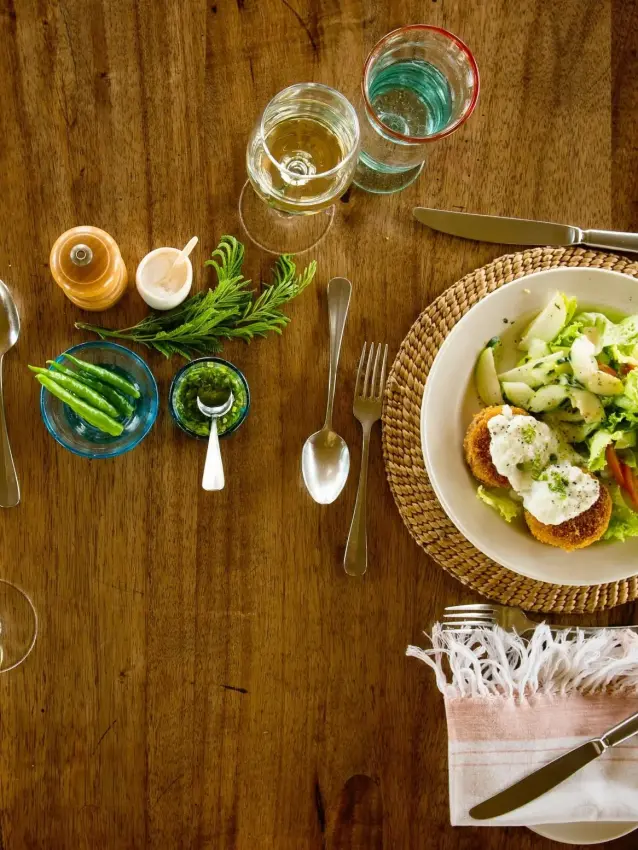
Fully inclusive of meals and drinks, with laundry, the private vehicle and guide for every booking, morning and afternoon drives, bush breakfasts and sundowners; one inspection report puts champagne and premium imported wines outside the drinks list. We include medical evacuation cover as standard.

The park's entry fee is charged per person for each day inside, and when the camp stands inside the Ngorongoro Conservation Area in the southern season that authority's fee applies instead. Balloon flights over the herds are extra and booked ahead.

Wifi is in the tents rather than the mess, on limited bandwidth, and there is no mobile signal anywhere the camp goes, so treat it as enough for a message and not a call. Solar lighting runs through the night and there is a charging station for cameras and phones.

rated five stars by our clients

other areas in tanzania

The Serengeti combines naturally with the Ngorongoro Conservation Area to the southeast, where the crater holds lion, black rhino and elephant in a contained caldera. Tarangire National Park, known for large elephant herds and baobab country, and Lake Manyara, with its alkaline lake, flamingos and groundwater forest, complete the northern Tanzania parks. Many trips finish on the coast in the Zanzibar archipelago, with its reefs, white-sand beaches and the Swahili heritage of Stone Town.

African wild dog standing alert in grassland 01

Ruaha National Park

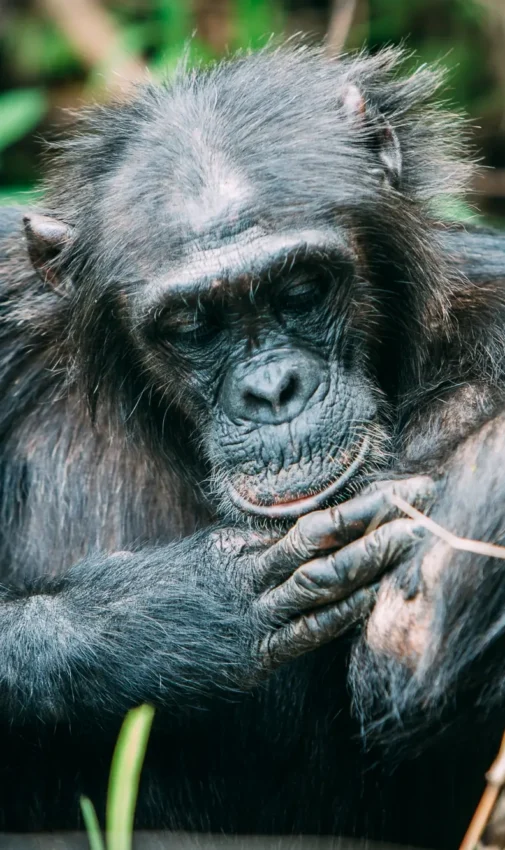
Chimpanzee holding branch while foraging in forest, Mahale Mountains, Tanzania 02

Mahale Mountains

Guests relax in chairs by river with child wading, Lake Manyara, Tanzania 03

Lake Manyara

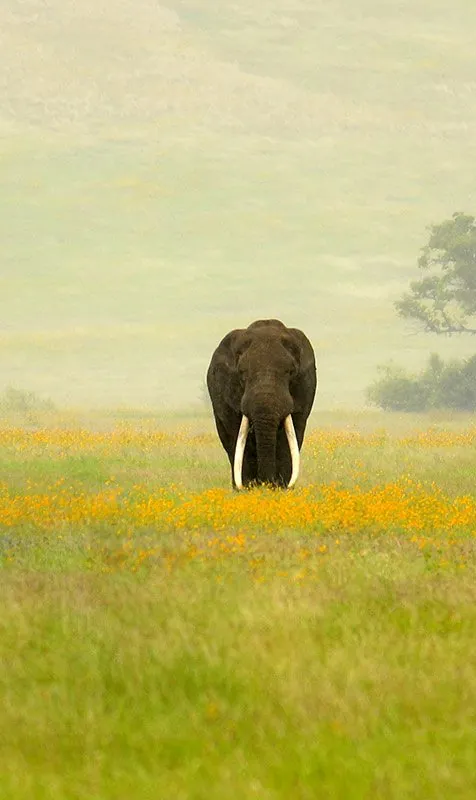
Elephant walking alone across golden savanna grassland 04

Ngorongoro Crater

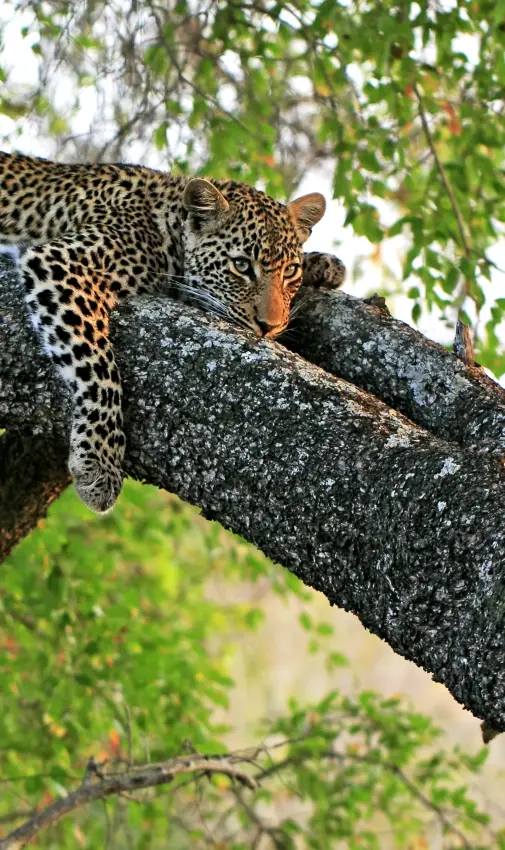
Leopard resting on tree branch surrounded by green foliage 05

Tarangire National Park

Hippopotamuses in water with heads above surface 06

Katavi National Park

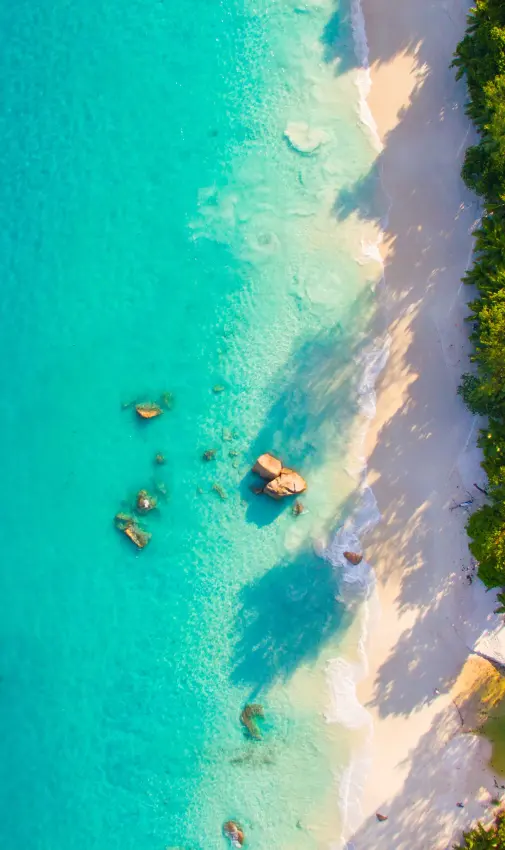
Turquoise water beach with boats and tropical vegetation 07

Zanzibar & Pemba

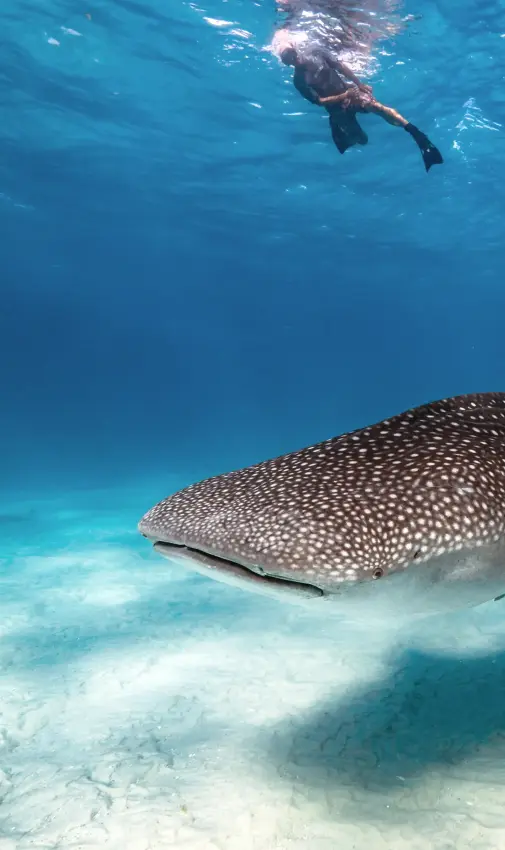
Snorkeler swimming alongside whale shark in shallow turquoise water, Mafia Archipelago, Tanzania 08

Mafia Archipelago

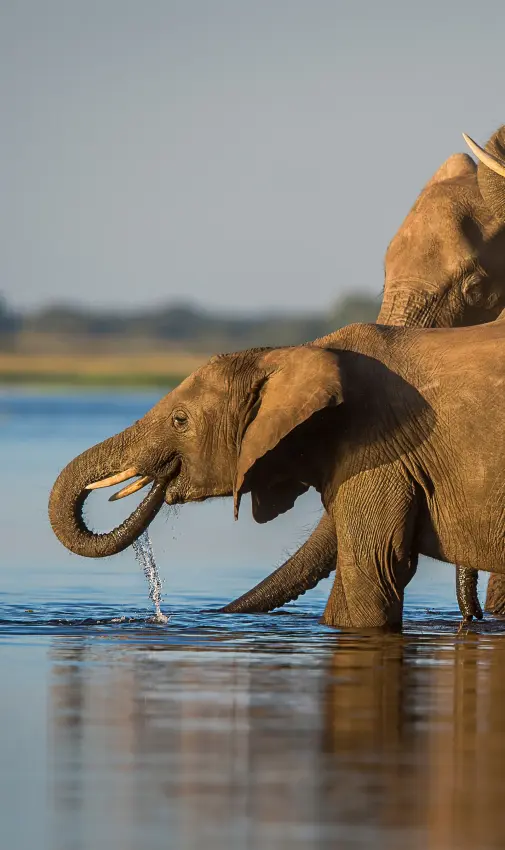
elephants drinking water at riverbank during daytime 09

Nyerere National Park

Chimpanzee among vegetation looking toward camera, Rubondo Island, Tanzania 10

Rubondo Island

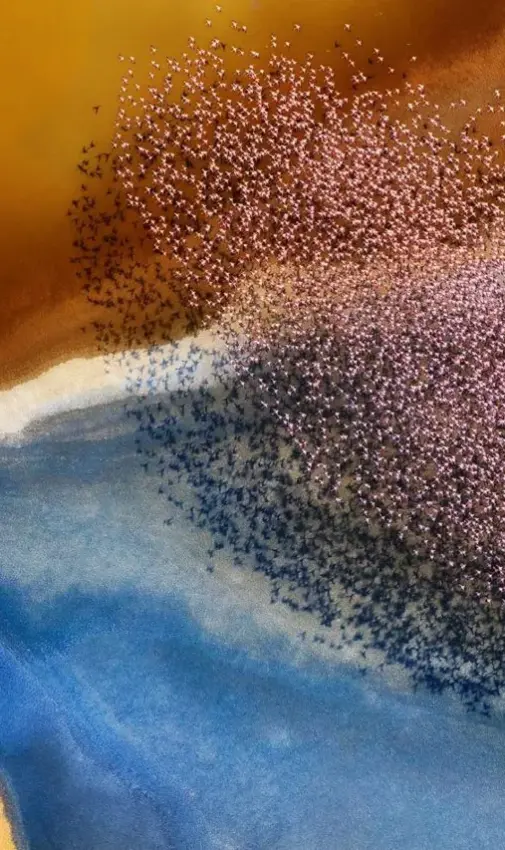
Aerial view of colorful salt lakes and mineral deposits 11

Lake Natron

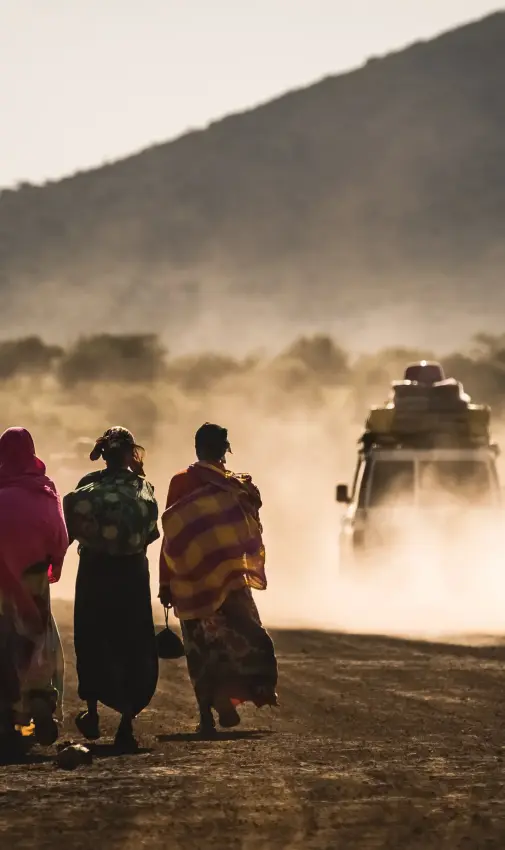
Local people walking on dusty road with vehicle approaching 12

Arusha

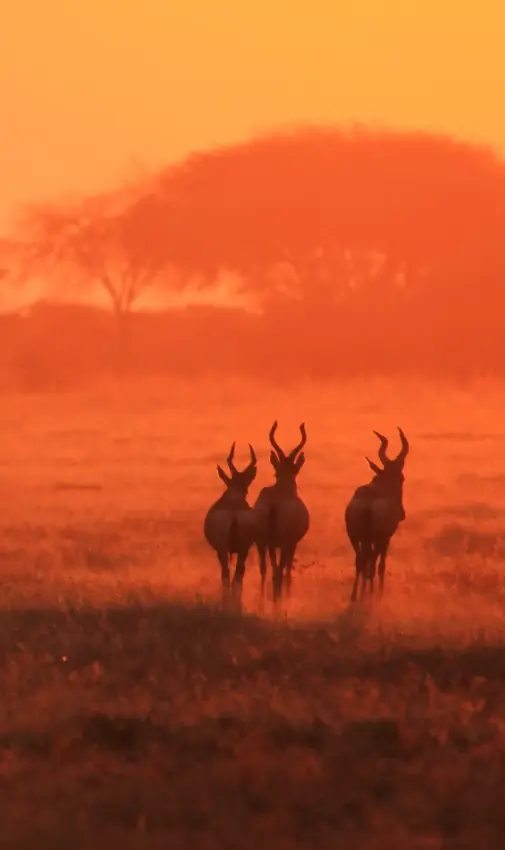
Herd of antelope silhouetted against orange sunrise 13

Ugalla River National Park

West Kilimanjaro, Tanzania 14

West Kilimanjaro

Planning a journey together

our approach

remote, exclusive
& personal

Every journey starts with a conversation. We take the time to understand your vision before we start planning.

Whether by phone or in person, we work with you directly to shape something that is considered, personal, and expertly delivered.

get in touch
destinations ideas & inspiration our process about us contact us