Camp

Ndutu Mobile Tented Camp

Nine tents on a permanent marsh in Tanzania’s Ndutu region, pitched only for the December to March wildebeest calving season.
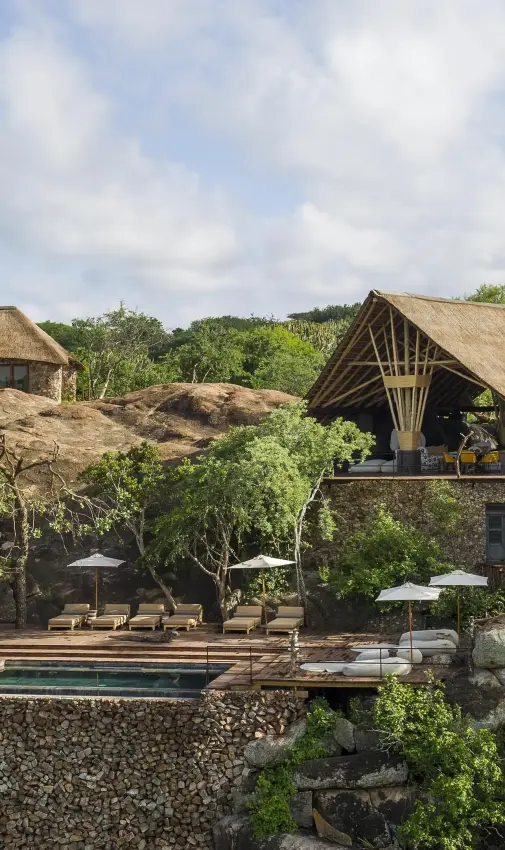
Country: Tanzania
Location: Pitched at Ndutu, December to March
Number of rooms: 9

The marsh where the wildebeest calve

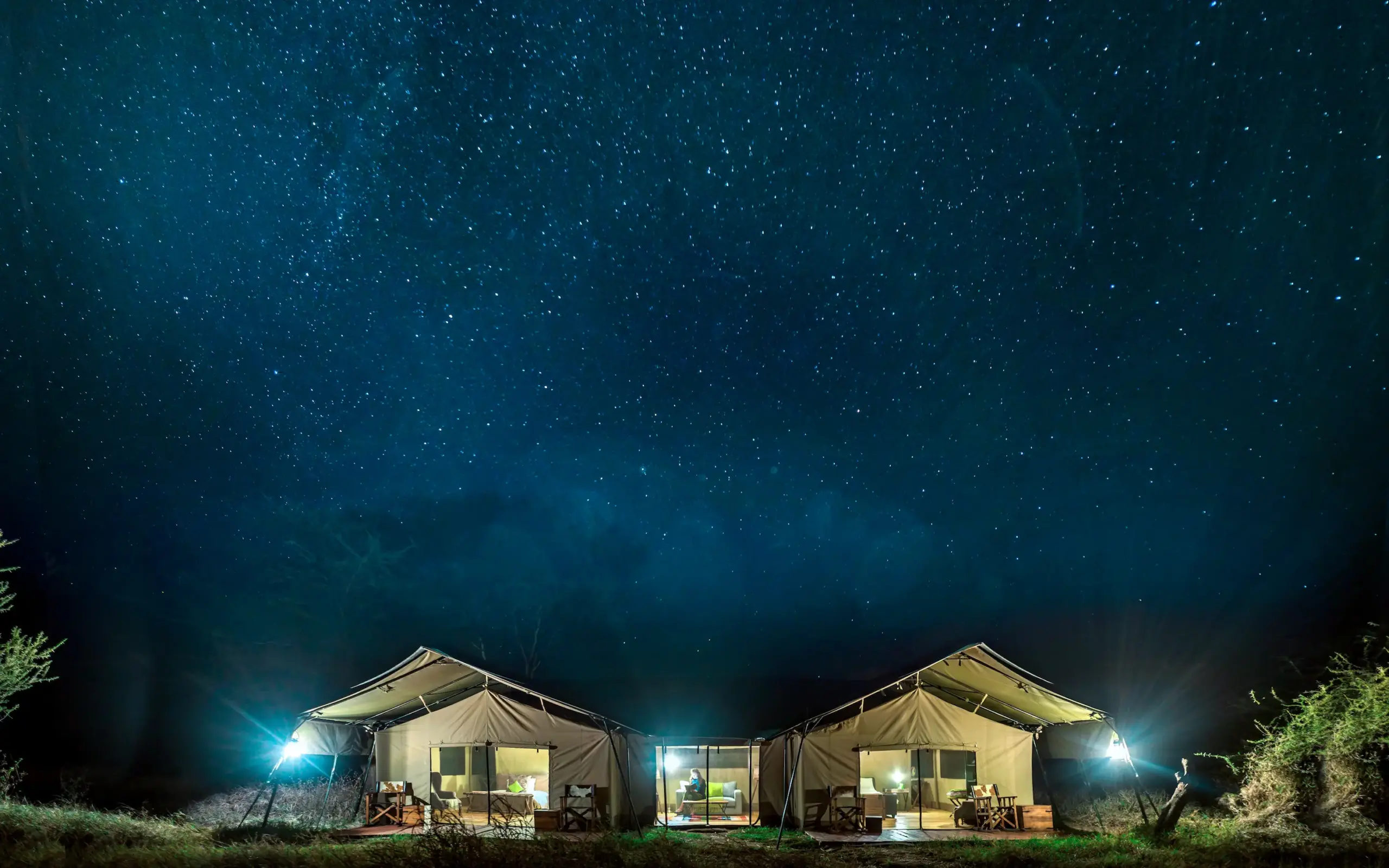
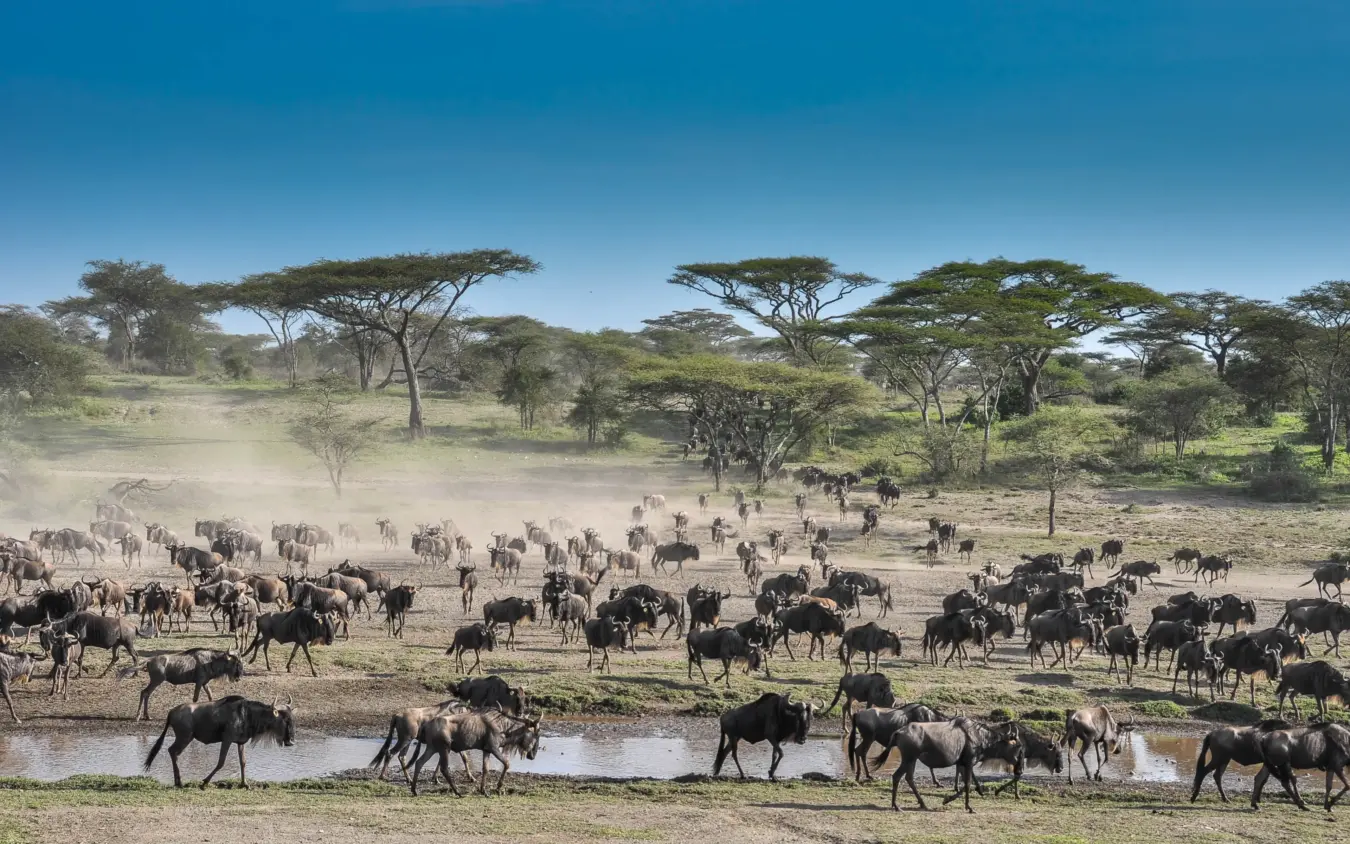
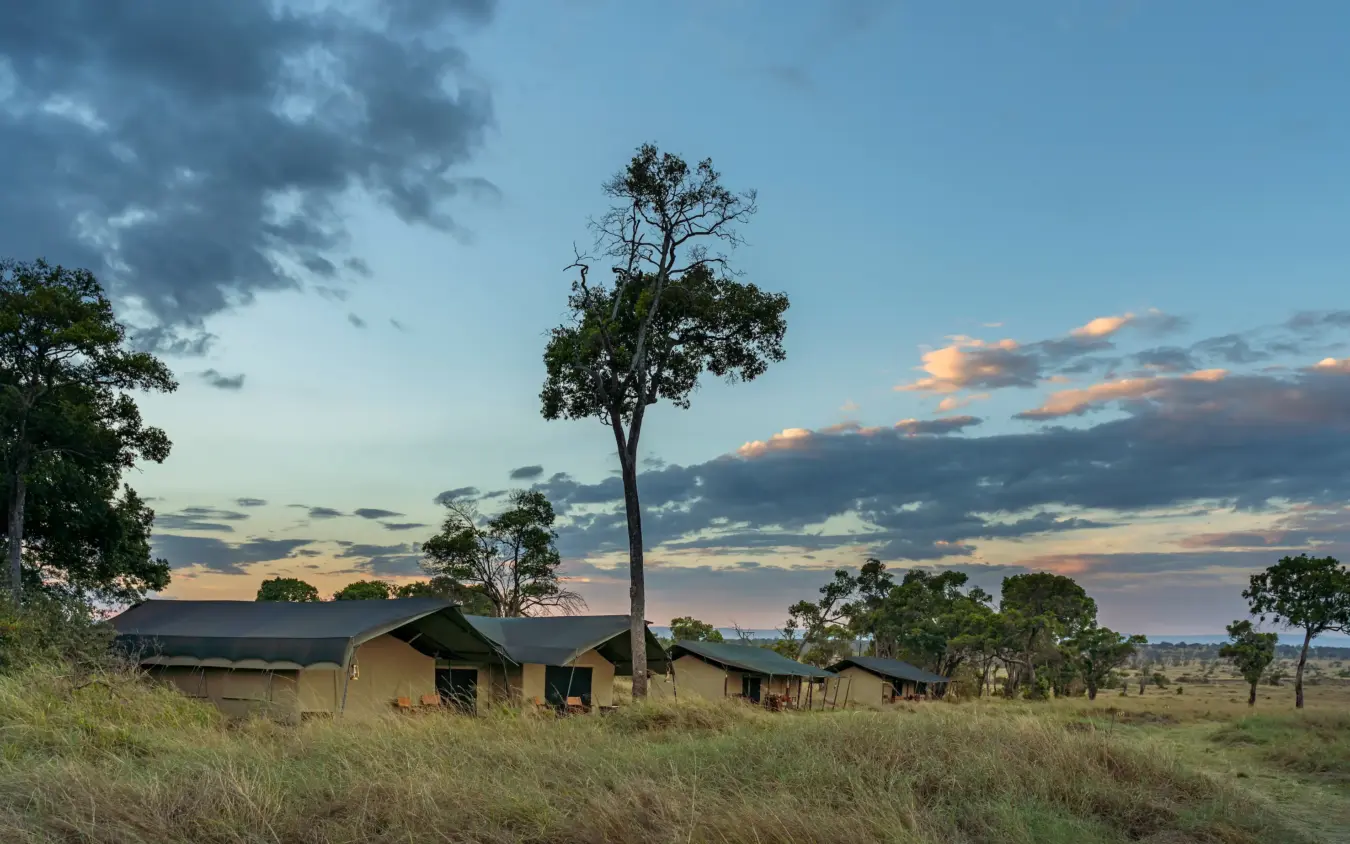
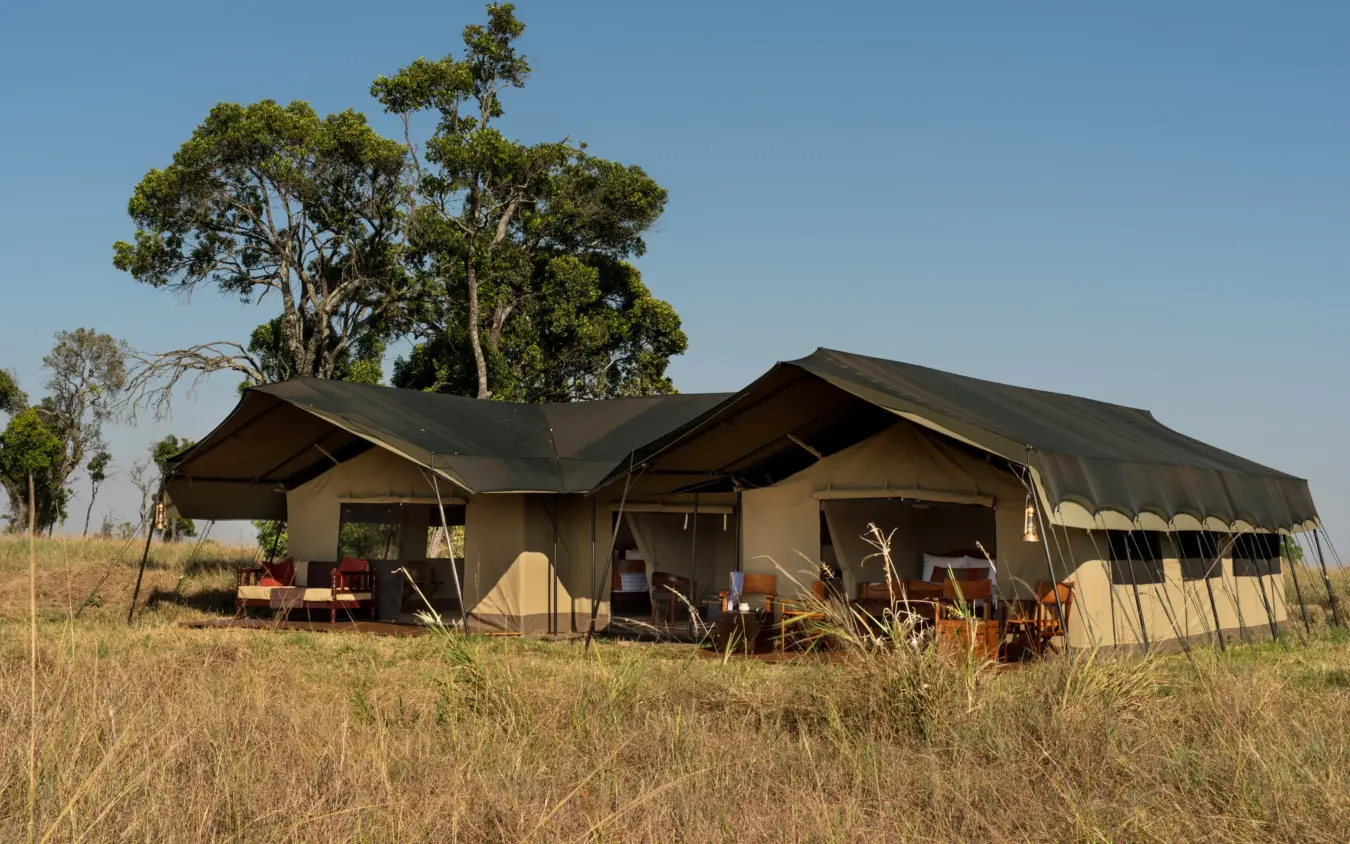
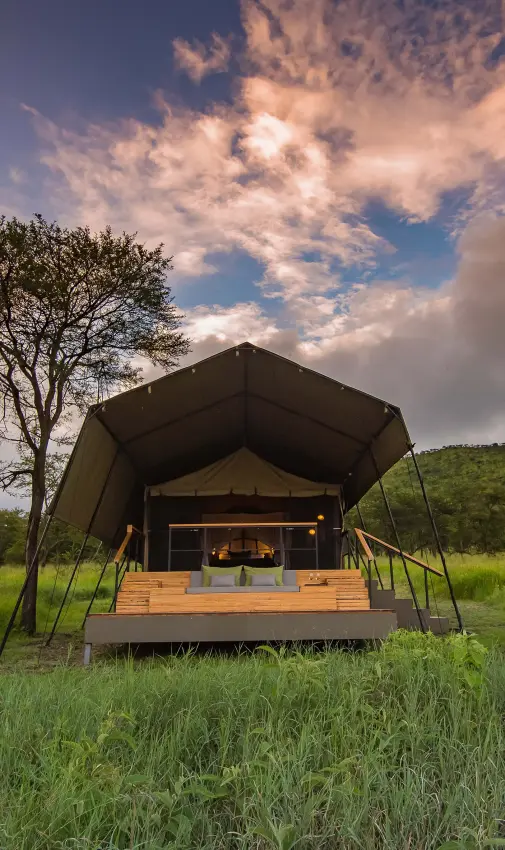
Nine tents face a permanent marsh in the Ndutu region of the Ngorongoro Conservation Area, on the southern boundary of Serengeti National Park. The camp is here only for the southern season, roughly December to March, and then it comes down and moves north with the herds. The choice of ground is deliberate: the short-grass plains around this marsh are where the wildebeest come to calve.

By February hundreds of thousands of calves are born in a few weeks.

Herds build from December, spreading across volcanic soils that carry the calcium and phosphorus a nursing female needs. By February hundreds of thousands of calves are born in a few weeks. Predators concentrate accordingly, lions and cheetahs working the open ground behind the herds, spotted hyenas circling the marsh through the night. From the tents the plains run unbroken in every direction.

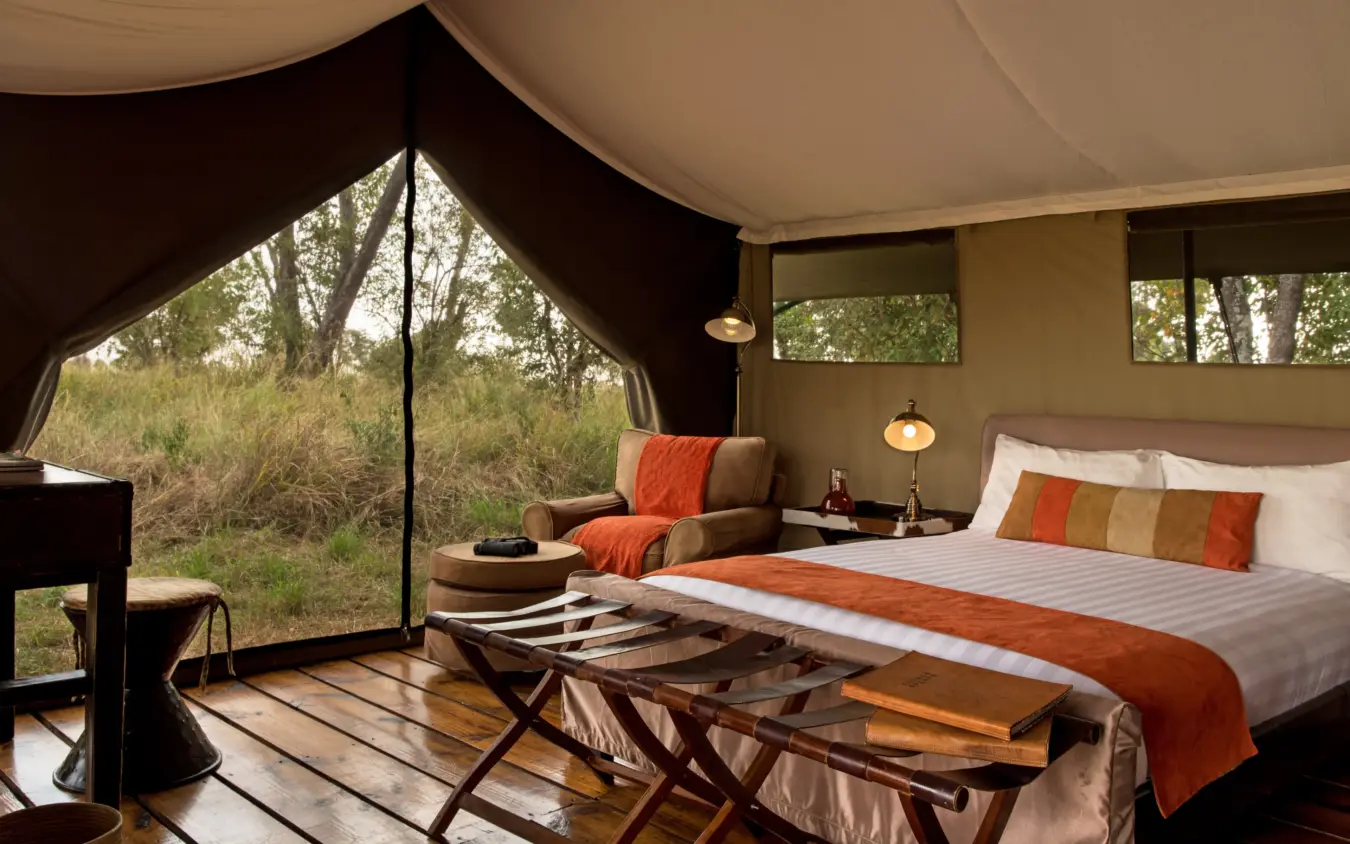
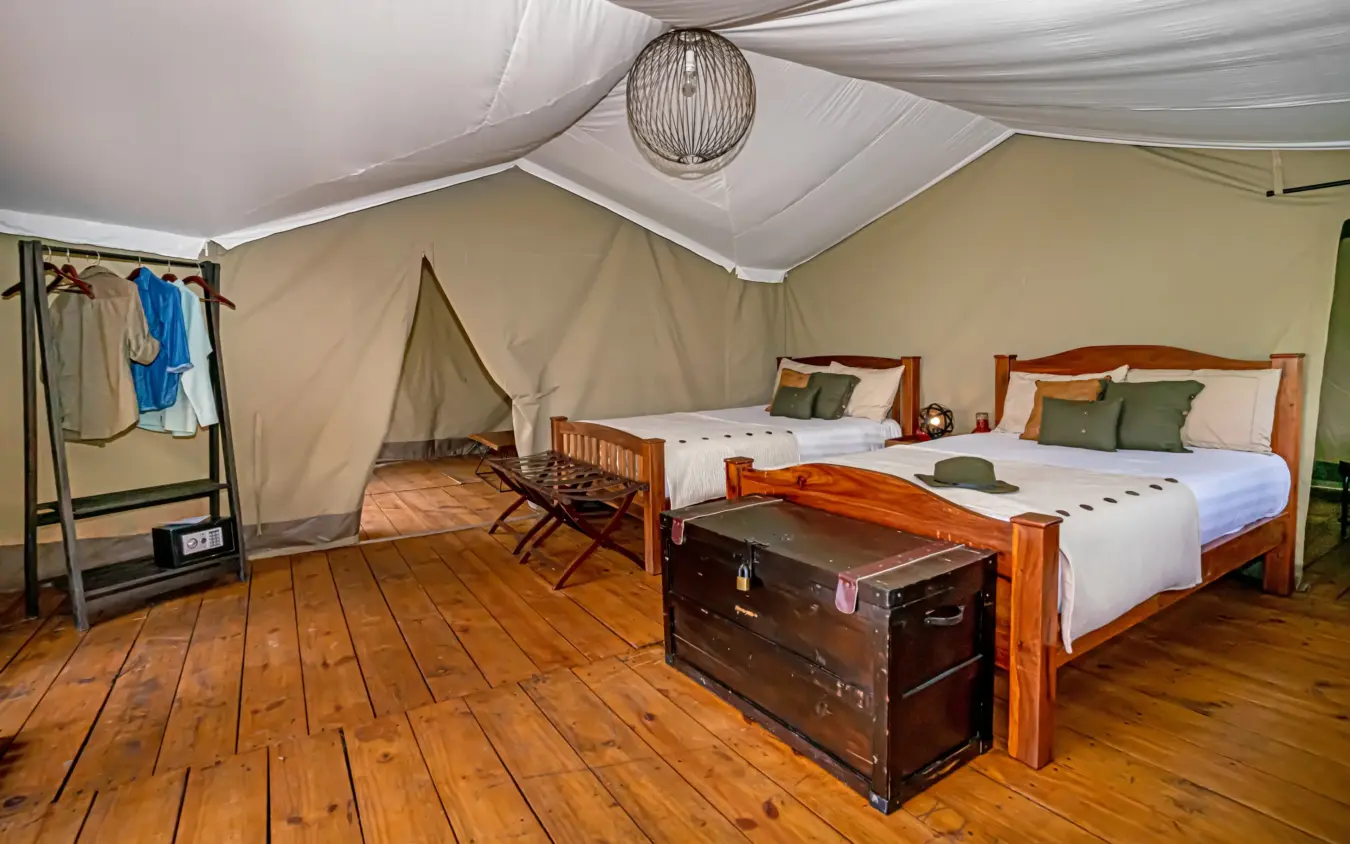
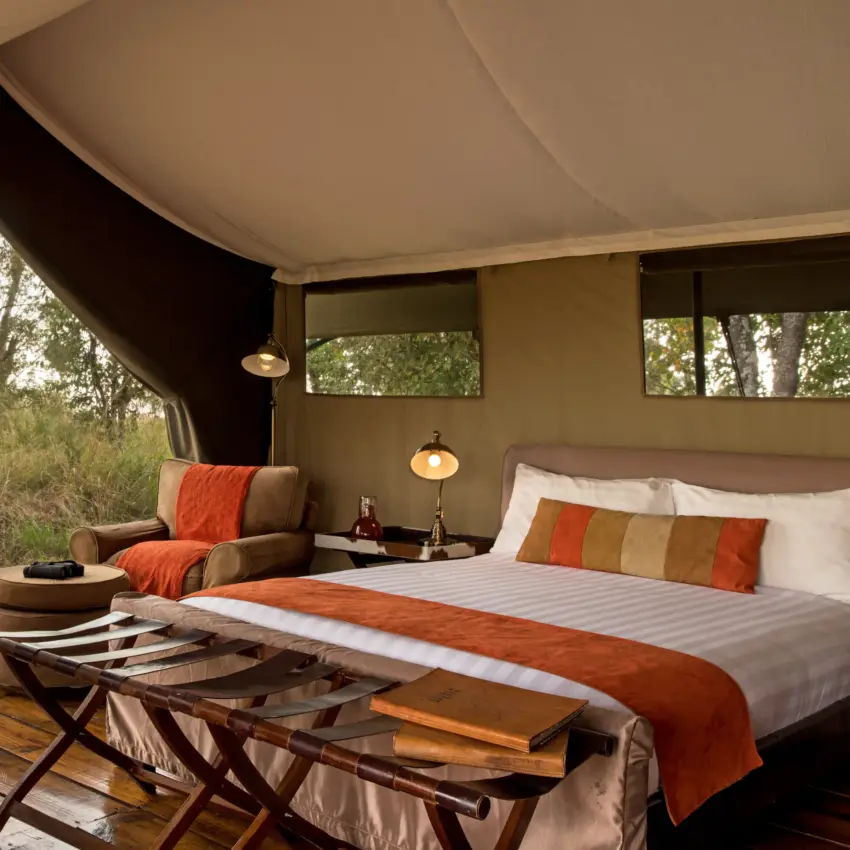
Luxury safari tent bedroom with canvas walls and savanna views, Ndutu Mobile Tented Camp, Serengeti National Park, Tanzania
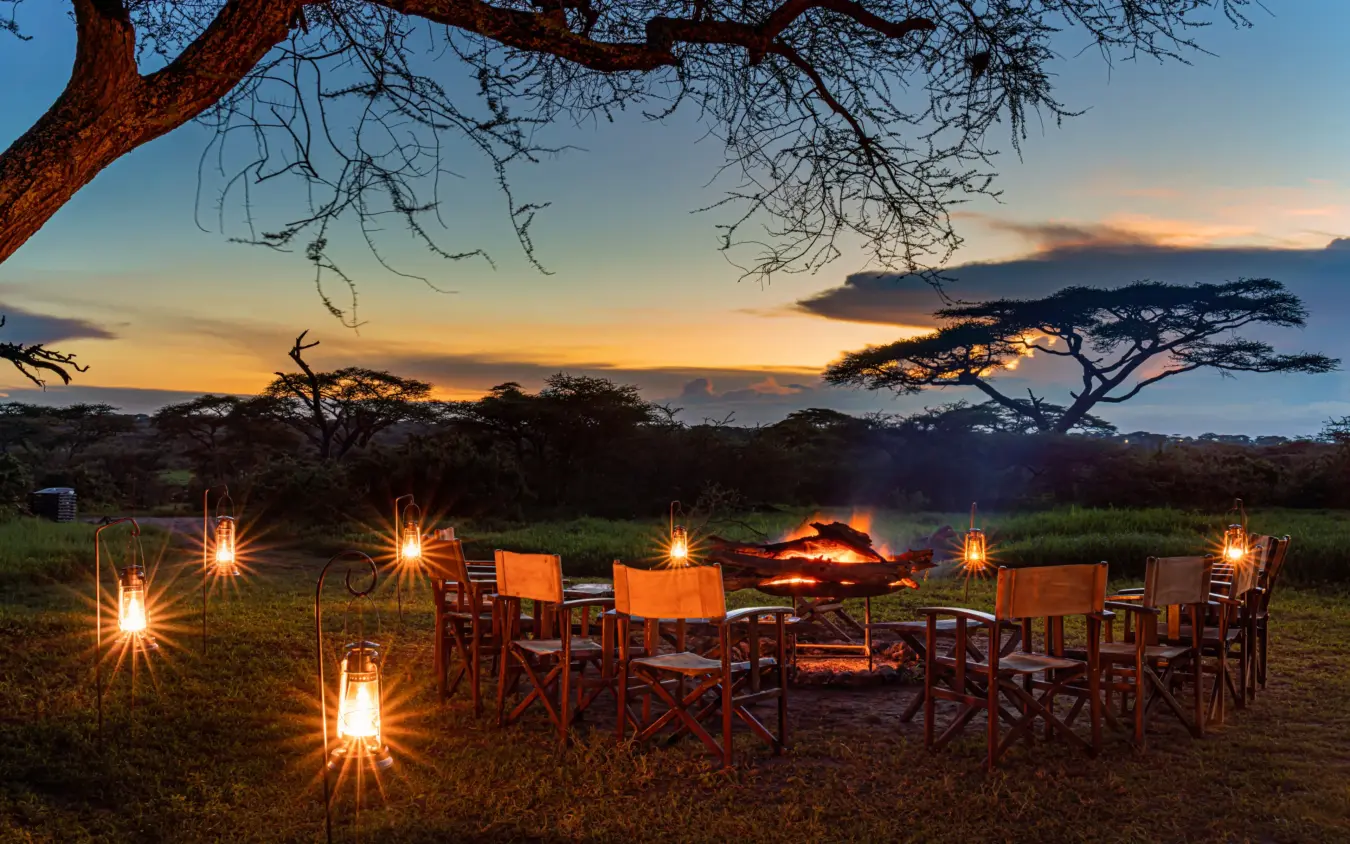
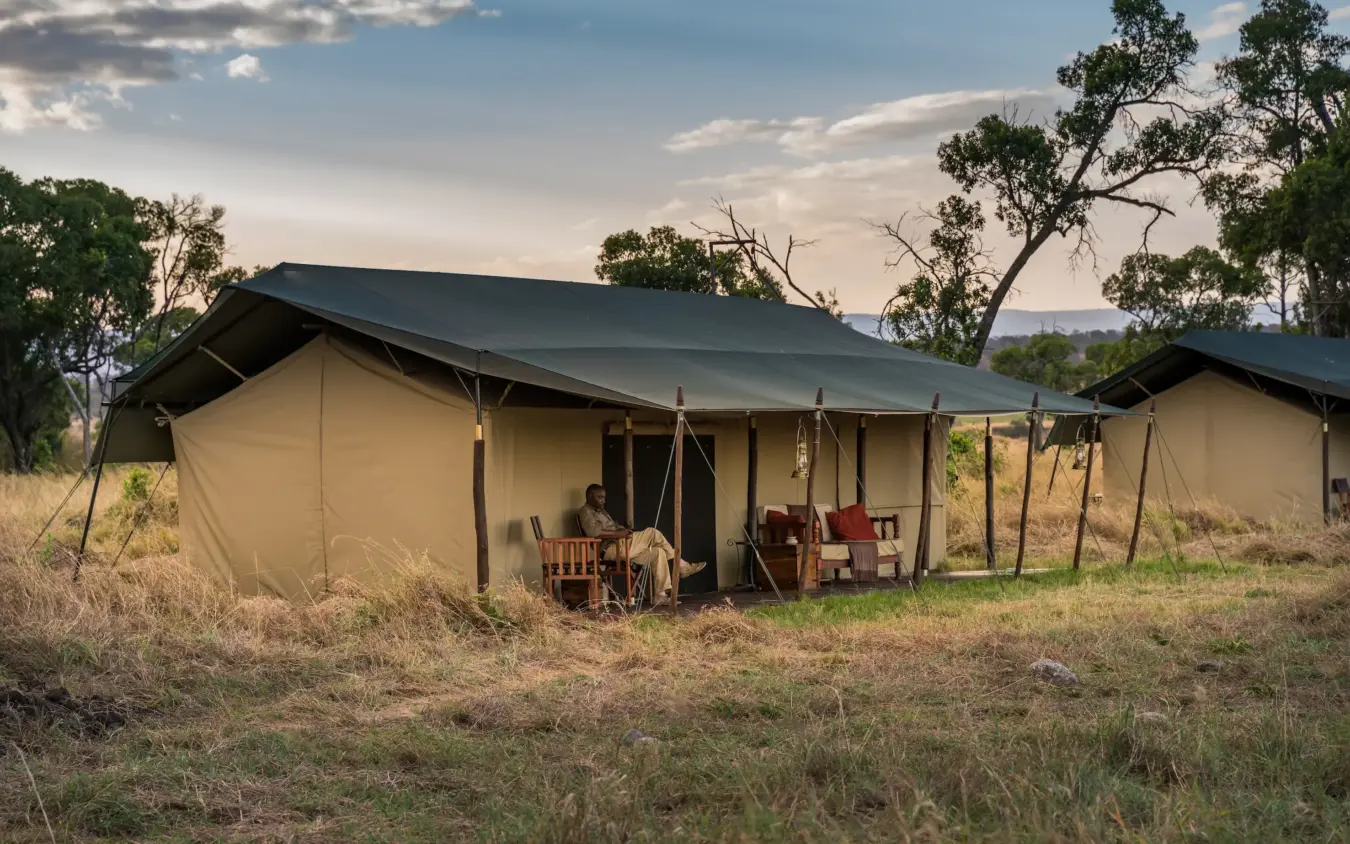
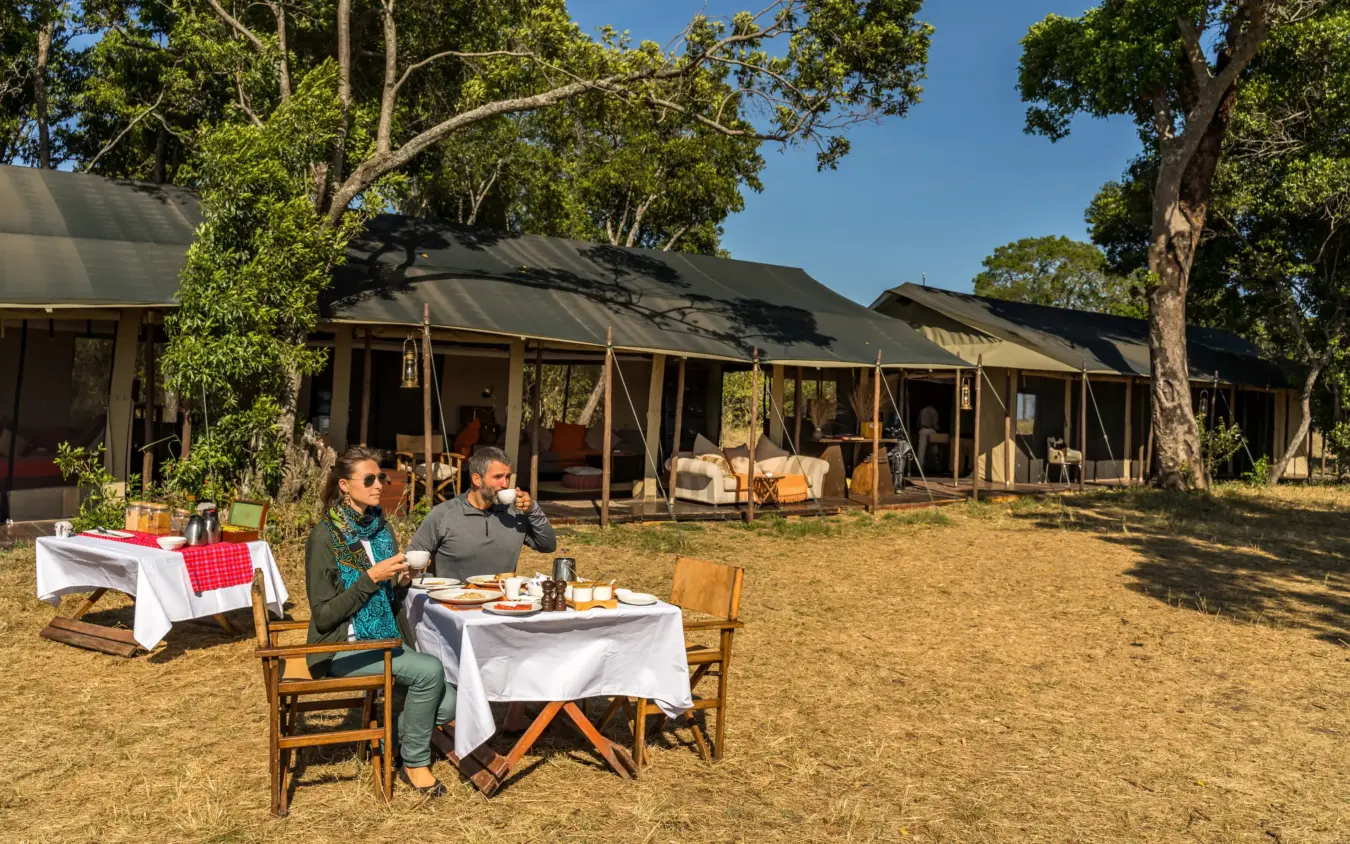
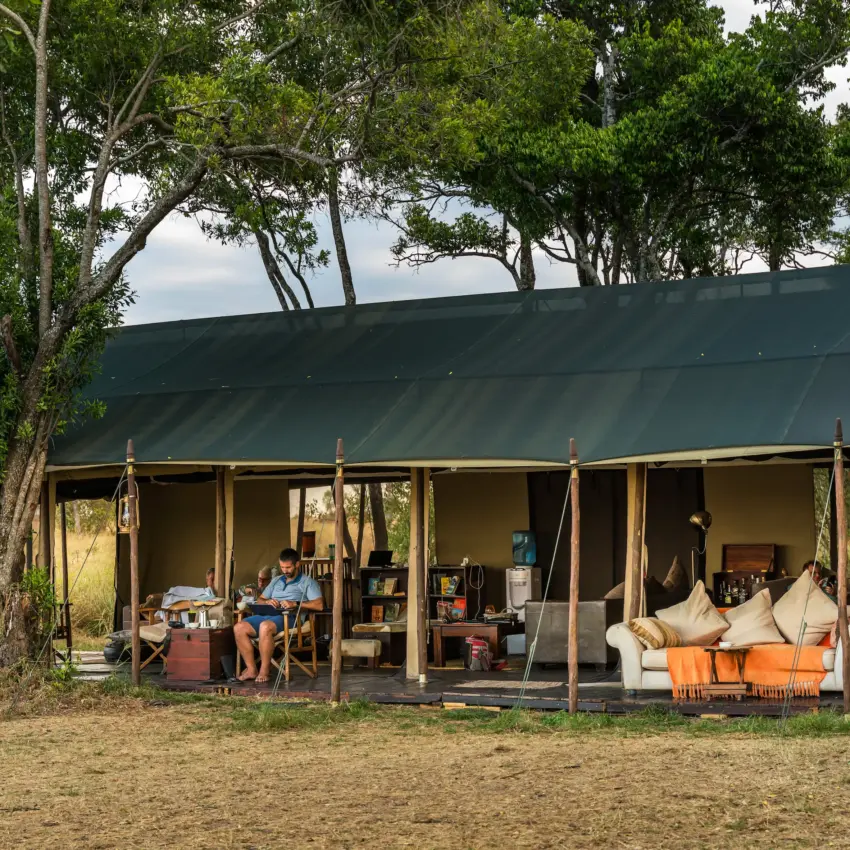
Luxury safari tent with guest relaxing under acacia trees at camp, Ndutu Mobile Tented Camp, Serengeti National Park, Tanzania

Ndutu falls inside the Ngorongoro Conservation Area, not the national park proper, and the two are governed differently. A cheetah working a termite mound can be followed across open ground. So can a lioness stalking a herd, and walking safaris with a ranger are permitted here. Inside Serengeti National Park, off-road driving is not allowed and vehicles keep to the road network.

A cheetah working a termite mound can be followed across open ground.

The same camp, the same tents and largely the same team relocate north to the Mara River in July, reassembling as the Mara counterpart for the crossing season. A traveller can follow the herds from calving to crossing under the same canvas, in the same beds. Nothing permanent is built at either site: the camp is dismantled at the end of each season and the ground left as it was found.

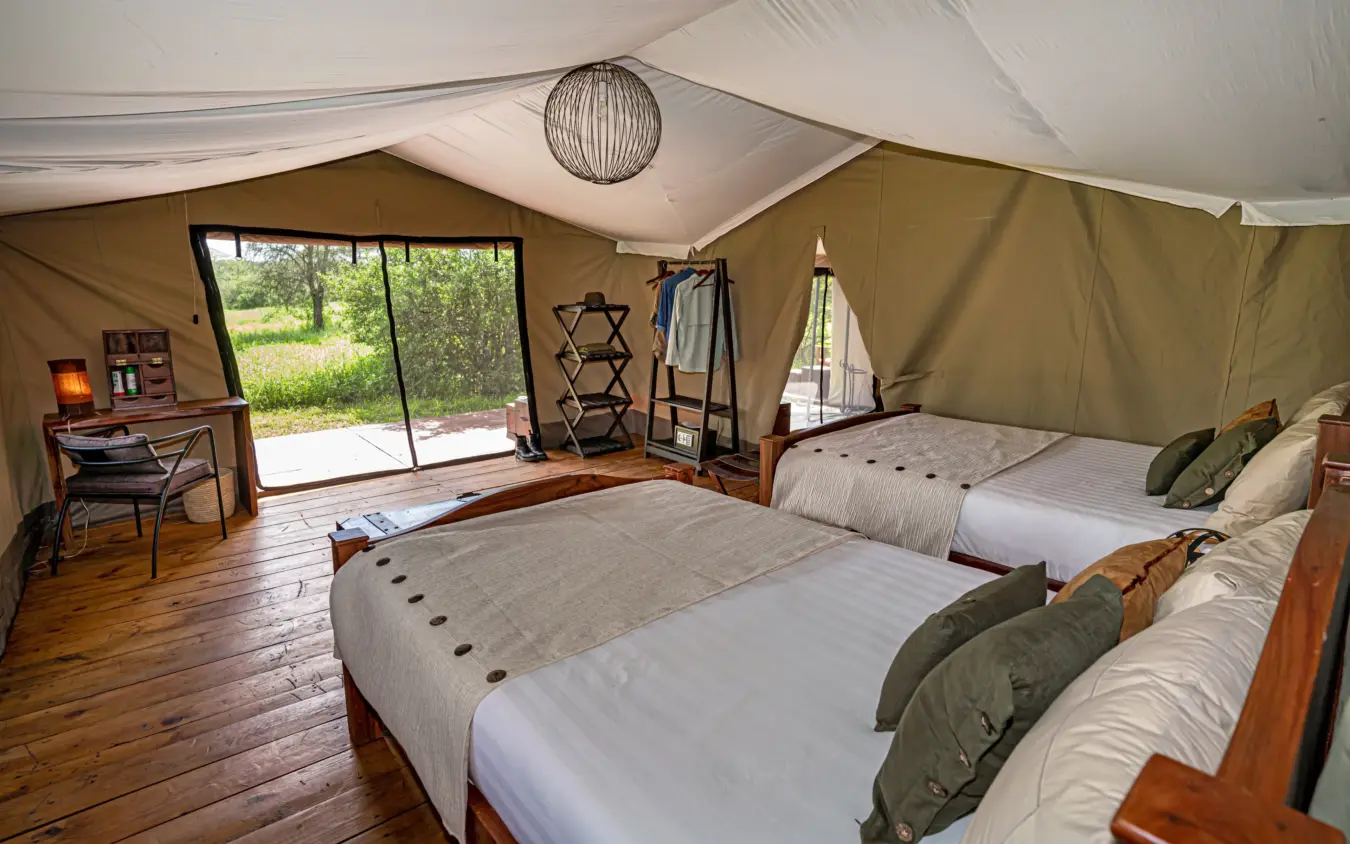
Luxury safari tent interior with twin beds and canvas ceiling, Ndutu Mobile Tented Camp, Serengeti National Park, Tanzania 01

accommodation

Nine Canvas Tents on Hardwood Floors

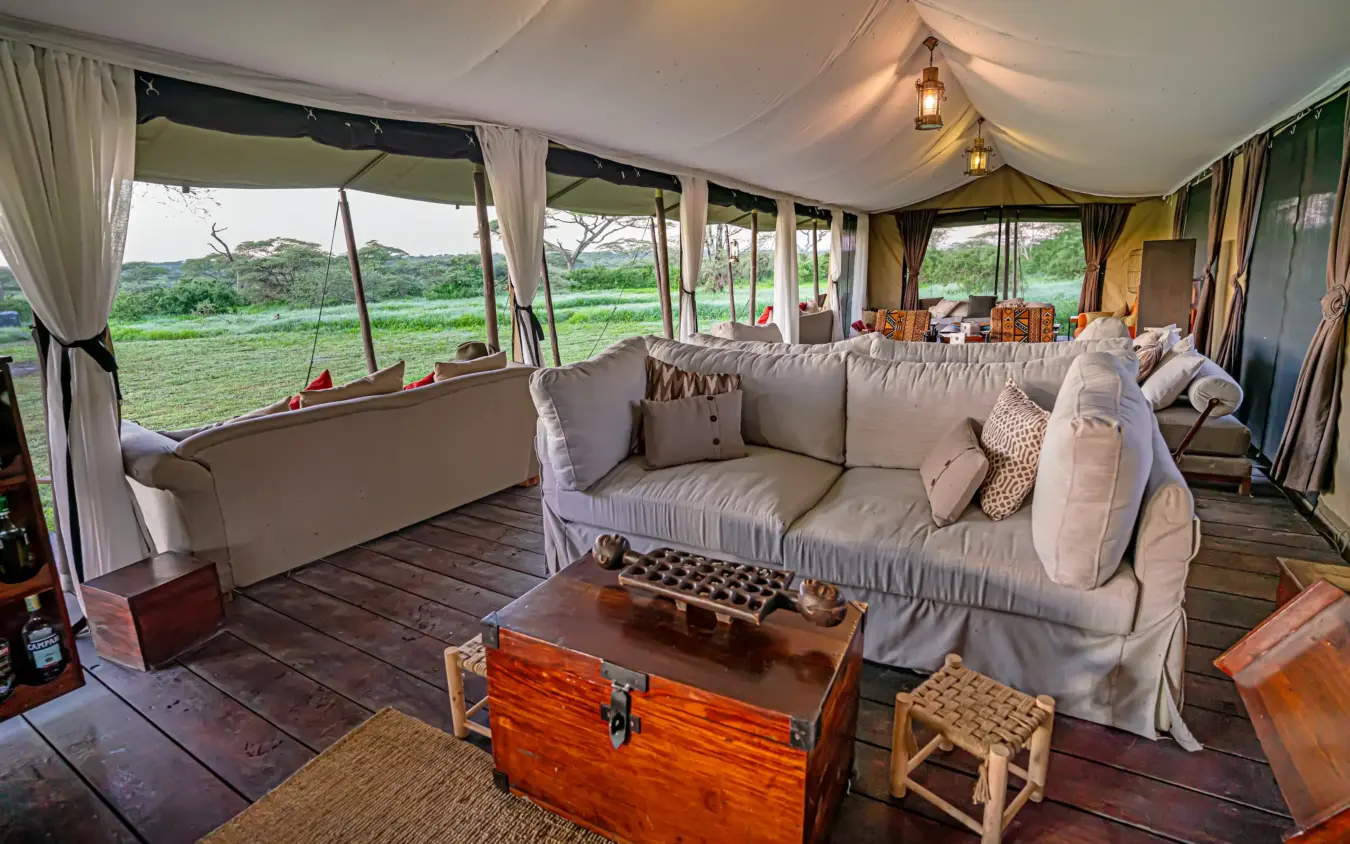
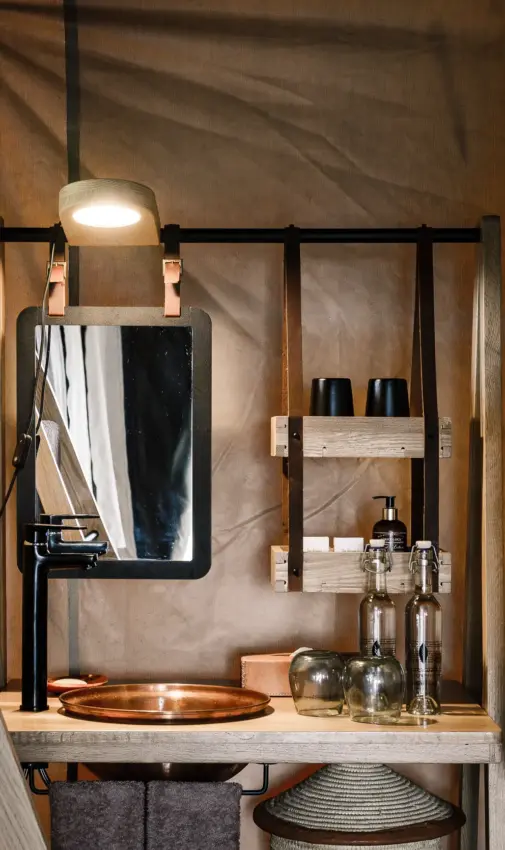
Ndutu Mobile Tented Camp has nine canvas tents on hardwood floors, each with two queen beds, mesh windows, leather chairs and a private verandah facing the marsh. At the rear is a dressing area with a flush toilet, a brass basin and a hot bucket shower filled on request. Two-bedroom tents suit families travelling together.

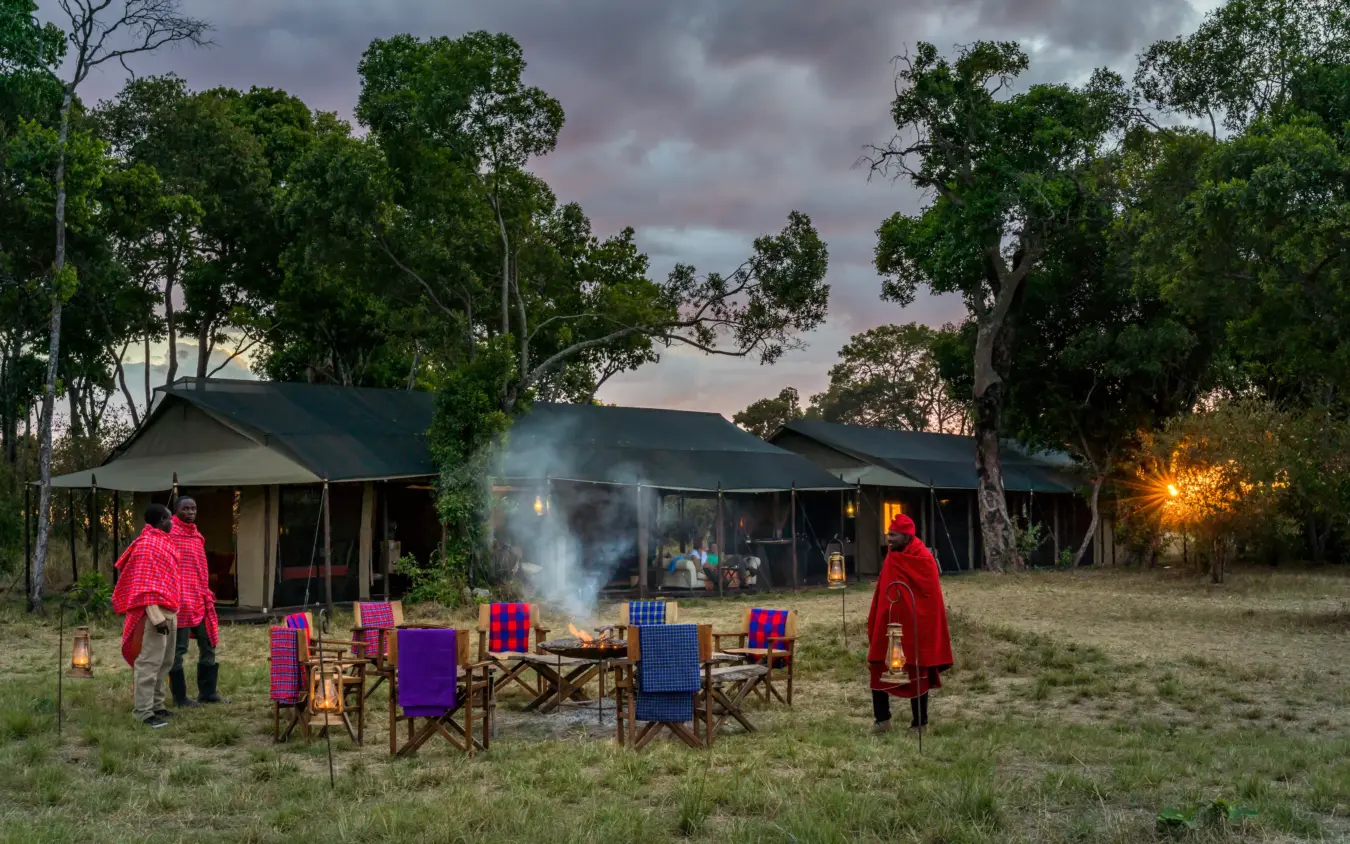
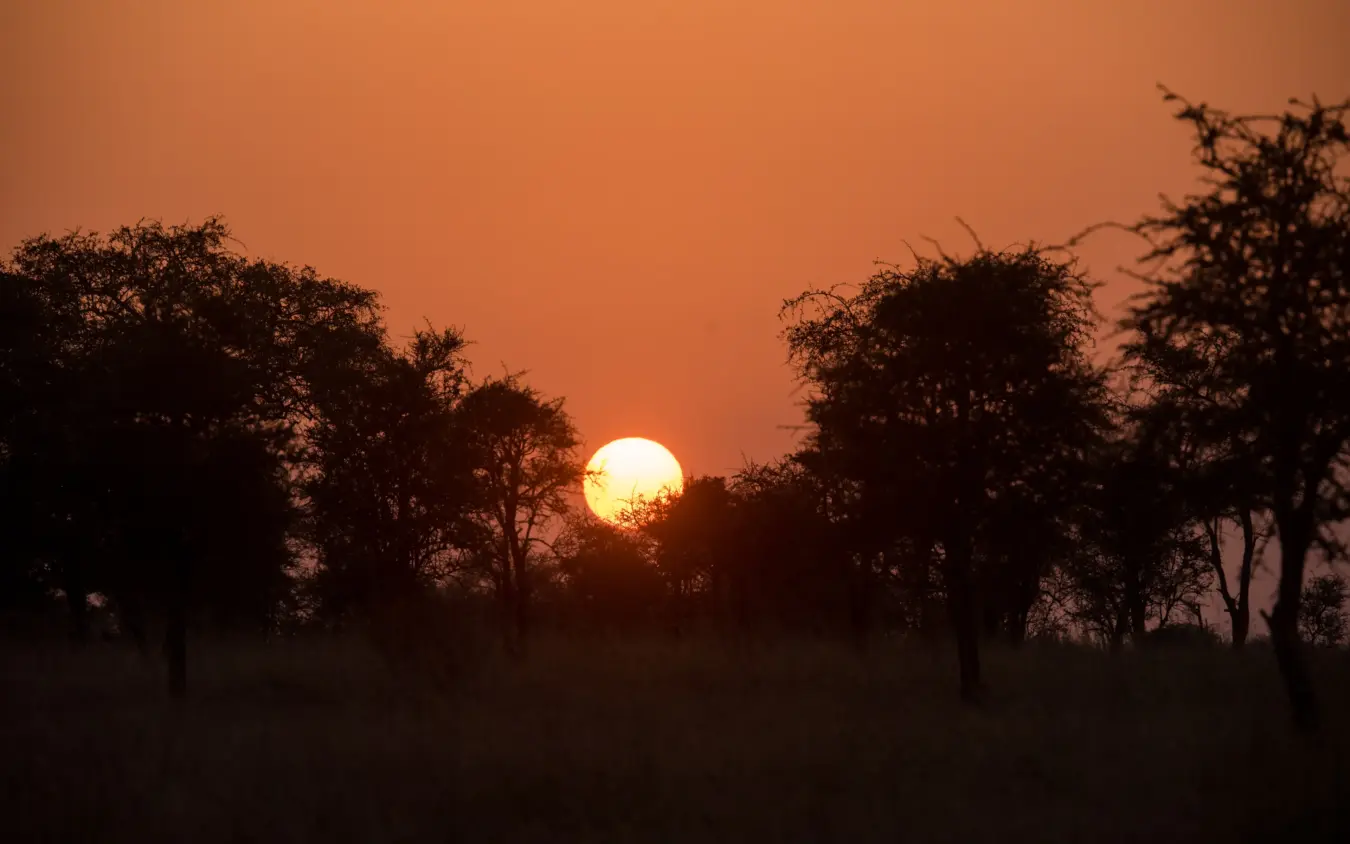
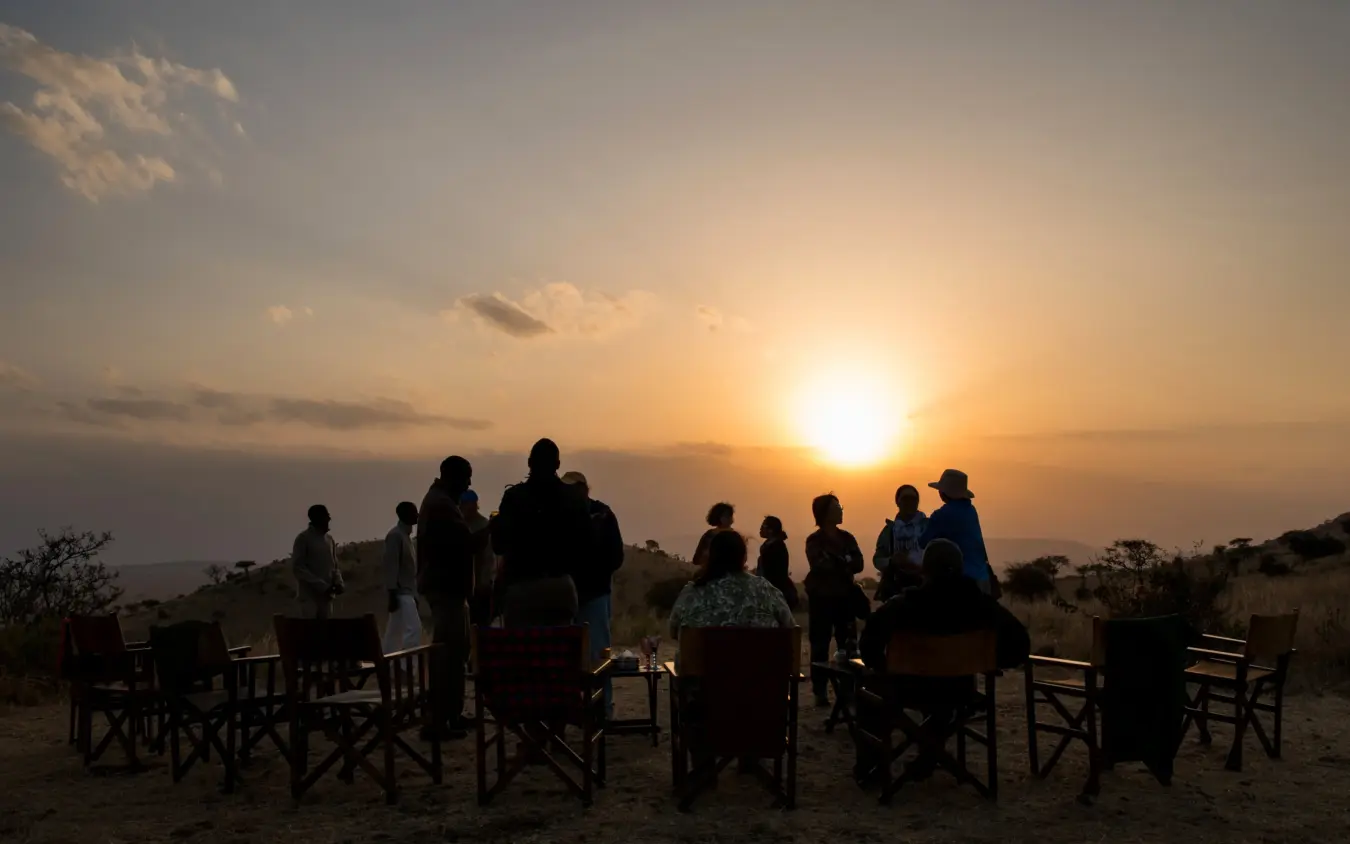
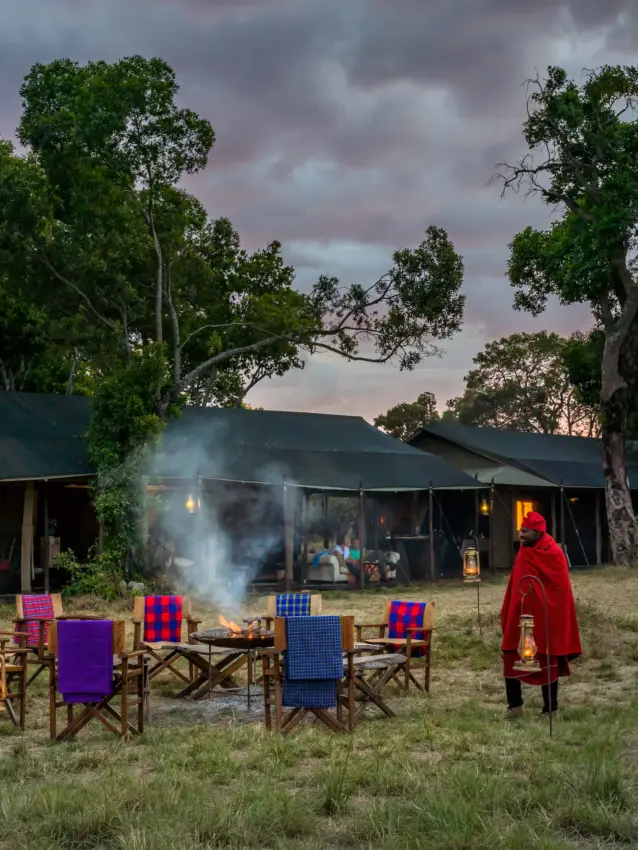
Maasai guides in red clothing at safari camp under acacia tree at sunset, Ndutu Mobile Tented Camp, Serengeti National Park, Tanzania 02

activities

Off-Road Tracking Within Ngorongoro Conservation

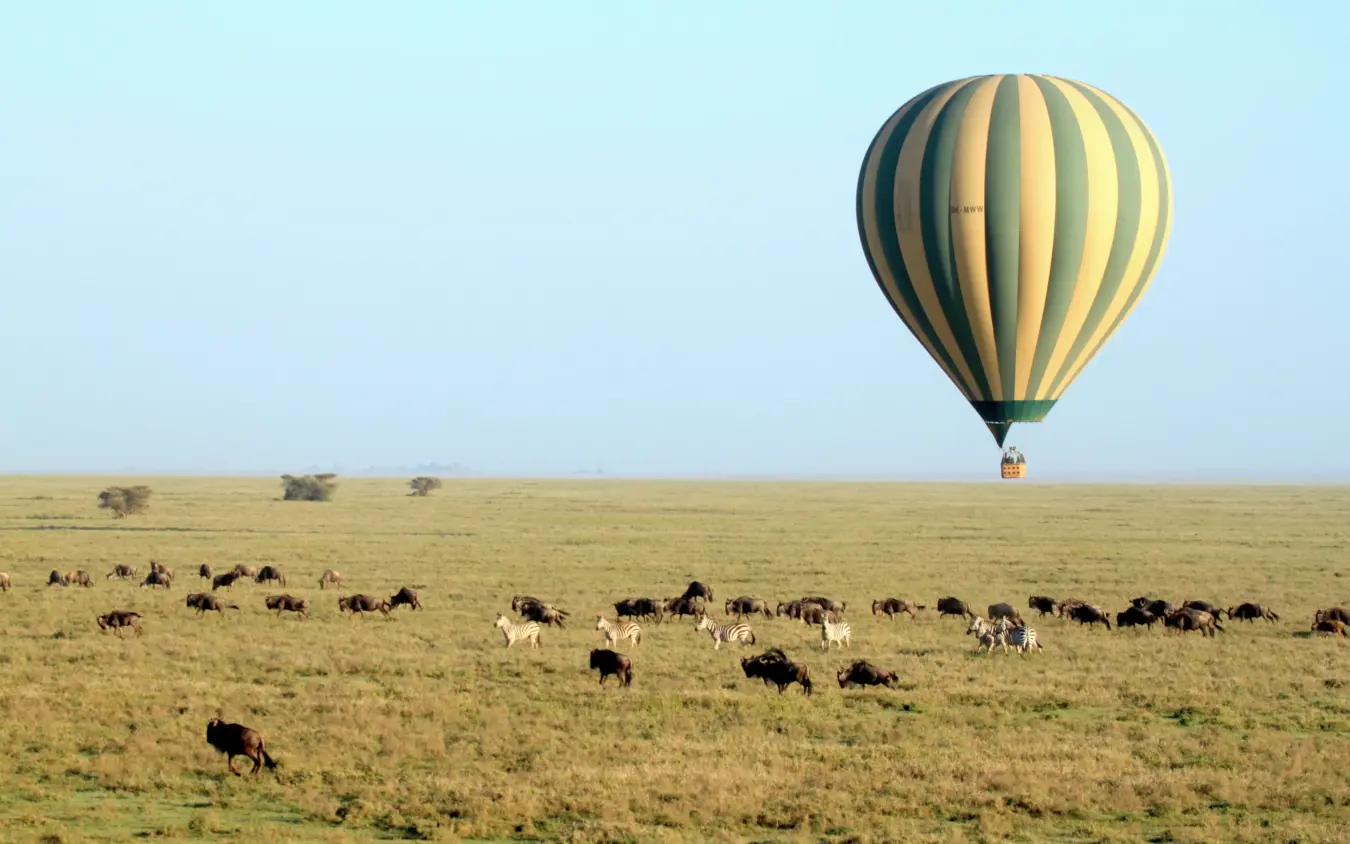
Morning, afternoon and full-day game drives run with off-road tracking permitted within the Ngorongoro Conservation Area, allowing guides to follow calving herds and hunting cats across open ground. Guided walks along the marsh and acacia woodland go out with a ranger, and balloon flights launch nearby at dawn.

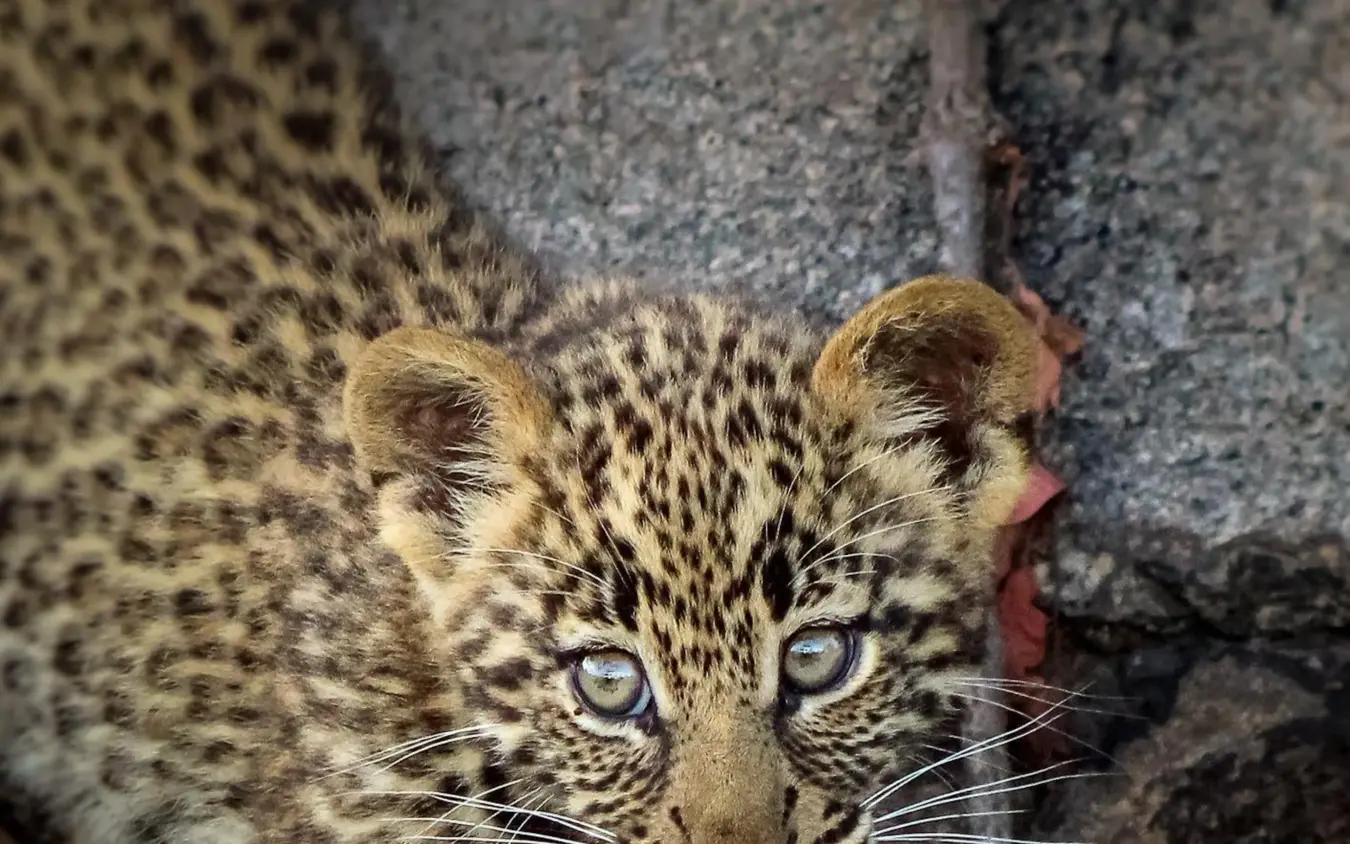
Young leopard cub with spotted coat gazing at camera against grey rock, Ndutu Mobile Tented Camp, Serengeti National Park, Tanzania 03

conservation

Serengeti De-Snaring Programme Removes 100,000 Snares

The camp supports the Serengeti De-snaring Programme, which has removed more than 100,000 wire snares from Serengeti National Park since 2017 and released over 600 animals alive. Community initiatives across the Lemala portfolio in northern Tanzania include reusable sanitary pads for schoolgirls and a women's group at Mto wa Mbu producing biodegradable lunch boxes used across the camps. As a mobile operation, the Ndutu site itself is dismantled and returned to open plain at the end of each season.

ready to get started?

Get in touch and let’s start the conversation. An initial consultation helps us understand what you’re looking for, whether that’s specific experiences, luxury touches, or marking a special occasion, and from there we’ll guide you through what’s possible so you can decide if we’re the right fit.

Alternative accommodation in serengeti national park

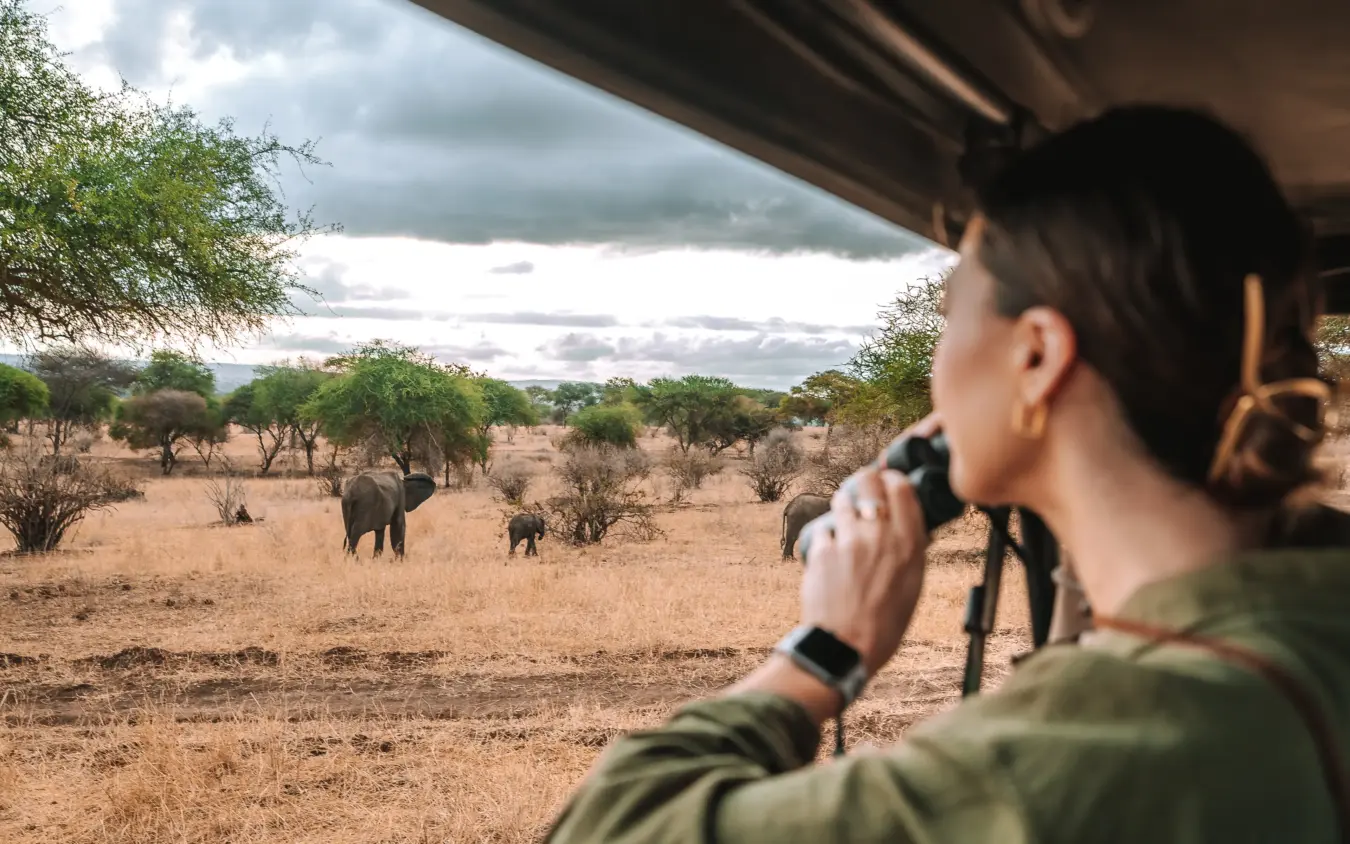
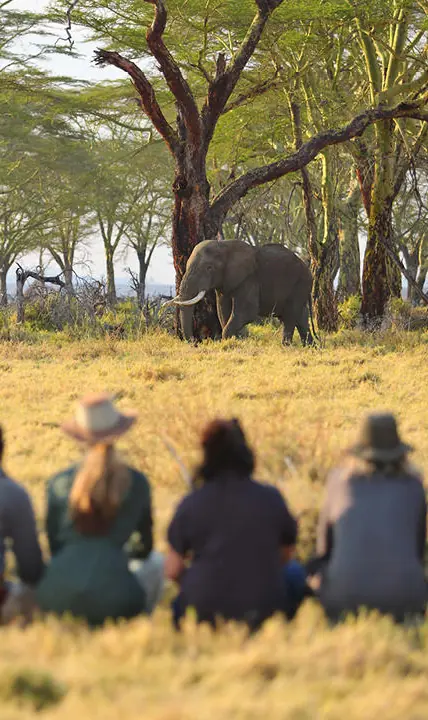
Guests viewing elephant from savanna during guided safari walk, Namiri Plains, Serengeti National Park, Tanzania 01

Namiri Plains

Serengeti National Park

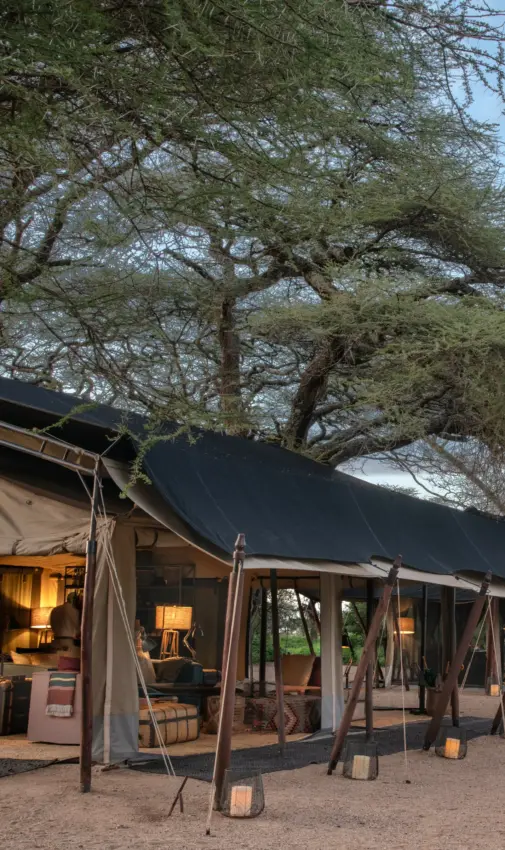
Canvas safari tent illuminated at dusk among acacia trees, Serian Serengeti Lamai, Serengeti National Park, Tanzania 02

Serian Serengeti Lamai

Serengeti National Park

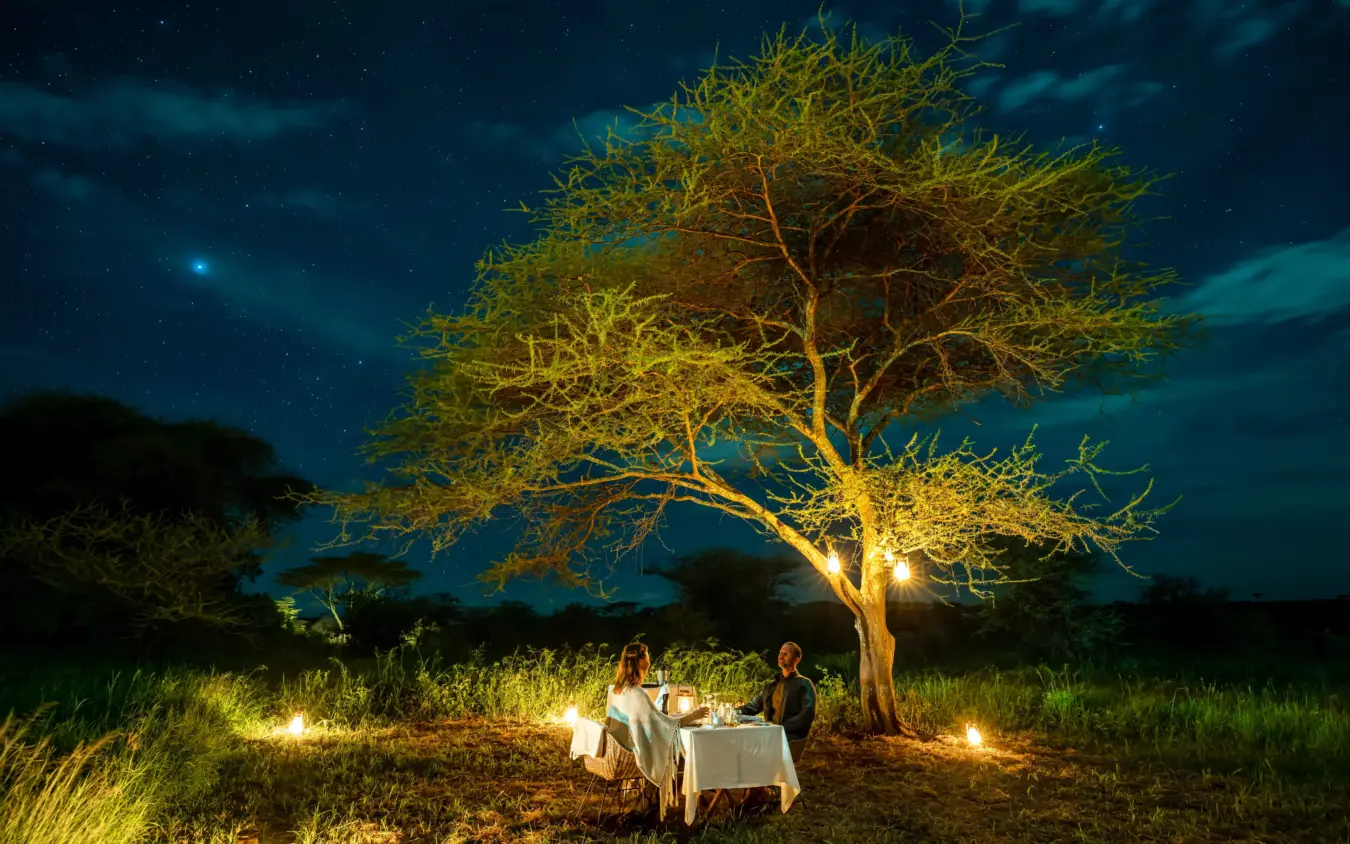
Couple dining under ancient tree with hanging lanterns at dusk, Nyasi Tented Camp, Serengeti National Park, Tanzania 03

Nyasi Tented Camp

Serengeti National Park

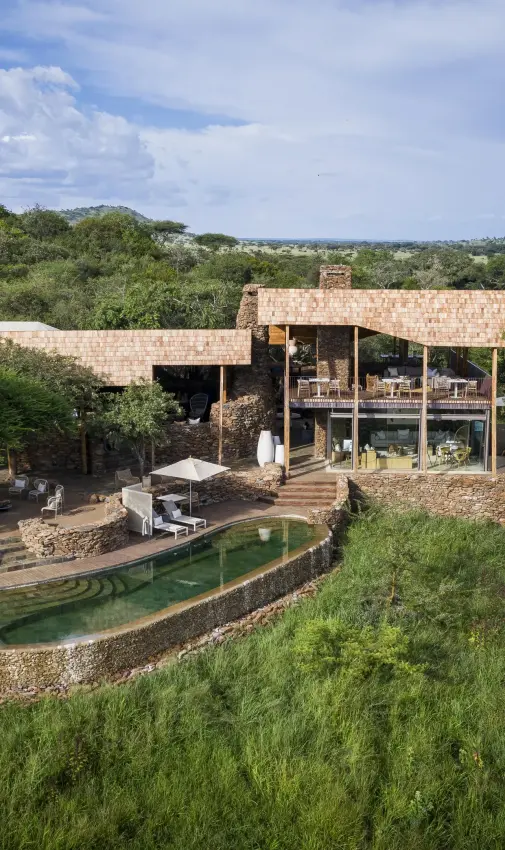
Modern lodge building with pool surrounded by savanna vegetation, Singita Faru Faru Lodge, Serengeti National Park, Tanzania 04

Singita Faru Faru Lodge

Serengeti National Park

Safari lodge buildings with thatched roofs nestled among trees, Mwiba Lodge, Serengeti National Park, Tanzania 05

Mwiba Lodge

Serengeti National Park

Illuminated safari camp tents on wooden deck at dusk, Olmara Serengeti, Serengeti National Park, Tanzania 06

Olmara Serengeti

Serengeti National Park

Guest relaxing in infinity pool overlooking savanna landscape, Singita Sasakwa Lodge, Serengeti National Park, Tanzania 07

Singita Sasakwa Lodge

Serengeti National Park

08

Serian Kidimbwi

Serengeti National Park

Person holding lanterns standing in savanna grassland at dusk, Serengeti North Wilderness Camp, Serengeti National Park, Tanzania 09

Serengeti North Wilderness Camp

Serengeti National Park

10

Mwiba Plains

Serengeti National Park

Canvas safari tent with acacia tree at golden hour, Ubuntu Migration Camp, Serengeti National Park, Tanzania 11

Ubuntu Migration Camp

Serengeti National Park

Canvas safari tent with wooden deck in grassland, Dunia Camp, Serengeti National Park, Tanzania 12

Dunia Camp

Serengeti National Park

13

Singita Explore

Serengeti National Park

Safari camp with canvas tent beneath acacia trees 14

Serengeti Green Camp

Serengeti National Park

15

Grumeti Serengeti River Lodge

Serengeti National Park

16

Singita Kilima

Serengeti National Park

Luxury bedroom with four-poster canopy beds and wooden architecture, The Retreats at Sayari Camp, Serengeti National Park, Tanzania 17

The Retreats at Sayari Camp

Serengeti National Park

18

Adventure Flycamping

Serengeti National Park

19

Kuria Hills Lodge

Serengeti National Park

20

Esirai Camp South

Serengeti National Park

frequently asked questions

It matters, because the camp's season, December to March, spans three different trips. December is the arrival: the short rains have greened the plains and the herds pour in to graze, with the first calves still weeks away. Late January to the middle of March is the calving proper, when more than eight in ten of the pregnant females drop their calves within a few weeks of each other, and the peak is February, when around half a million calves are born inside a two to three week window. March is the tail of it, with heavy thunderstorms most afternoons and the herds beginning to drift as the long rains take hold.

If you want the births themselves, and the predators that follow them, February is the month, and it is also, oddly, the driest month of the rainy season, so the storms are more theatre than obstacle. If you would rather watch the herds arrive across green plains than see the births, December and early January are the choice. Tell us which you are after and we will place the dates accordingly.

Fly to Ndutu airstrip, about twenty minutes from the camp. Scheduled flights from Arusha run several times a day in season and take a little over an hour direct, or up to an hour and forty minutes when the aircraft calls at another strip first, and there are afternoon departures back as well as morning ones, which makes the connection to an evening international flight easier than it is from the north. We can also arrange a private charter, a Cessna Caravan or a Pilatus PC-12, from Arusha or Kilimanjaro at your own time, and the same aircraft can take you on to the central Serengeti or the Mara River afterwards without going back to town.

Whichever you choose, luggage is fifteen kilograms a person in a soft duffel, hand luggage and cameras included, so a long lens needs planning and a hard case stays at home.

Yes, and it is a road day worth doing. The crater rim to Ndutu is about eighty kilometres on gravel and takes two to two and a half hours, all of it inside the Ngorongoro Conservation Area, so a morning in the crater followed by a game drive across the plains to camp is a natural sequence and saves a flight. From Arusha the whole journey by road is around 225 kilometres and five to six hours, which is why we break it with a night at the crater rather than attempt it in one go.

Because the camp sits in the Conservation Area rather than the national park, the vehicle that brings you can leave the track once the herds are in sight, so the transfer becomes the first game drive of the stay. Tell us whether you would rather drive or fly and we will price both.

Yes, although it is high ground. Both TravelHealthPro, the UK's official travel health service, and the American CDC treat every part of Tanzania below 1,800 metres as malaria country, and the UK service rates it high risk all year with antimalarial tablets among its recommendations; only land above 1,800 metres is classed as free of risk. Lake Ndutu and the plains around the camp's marsh lie at about 1,600 metres, which is below the line, and the calving season falls in the rains rather than the dry months.

We arrange travel; we are not doctors, and we never advise on medication ourselves. The right course for you, and for children, is a conversation with your own doctor or a travel clinic, with the dates in front of you. On the practical side, which is ours: long sleeves and trousers from late afternoon, repellent on the veranda, and a word to the camp staff if you find a mosquito inside the mesh.

Warm, green and stormy in bursts. Afternoons run to about twenty-seven degrees and nights to about fifteen, with a short, unpredictable spell of rain somewhere in November or December that greens the plains, then heavy afternoon thunderstorms through the calving months that rarely last the day. February is the driest month of the rainy season; March is the wettest of the three, as the long rains arrive.

Pack a light waterproof and a fleece for the evenings, when the cold settles quickly after a storm, light long-sleeved clothing in neutral colours for the days, closed shoes that can take mud for the marsh walks, high-factor sun cream and a hat for the open plains, and a dust-proof bag for the camera in the dry spells between storms. Fifteen kilograms in a soft bag is the limit for the flights, and the camp does laundry, so travel light.

Yes. The camp welcomes children under twelve and runs a programme for them: tracking and spoor work with the guides, animal and bird identification, blunt spear throwing and bow-and-arrow making taught by a Maasai warrior, a walk with the Maasai to hear how they live in the bush, cooking with the chefs and marshmallows at the fire before bed. Two of the tents have two bedrooms for a family under one roof, a standard tent can take an extra bed for a young child, and triples are available on request.

The calving is the easiest stage of the migration for children: it happens in daylight on open ground within reach of the camp, with far less of the waiting that a river crossing demands. Tell us their ages when you enquire, because the walks along the marsh go out with a ranger and have a minimum age that we confirm for your dates, and we will build the days around what they can actually do.

rated five stars by our clients

other areas in tanzania

African wild dog standing alert in grassland 01

Ruaha National Park

Chimpanzee holding branch while foraging in forest, Mahale Mountains, Tanzania 02

Mahale Mountains

Guests relax in chairs by river with child wading, Lake Manyara, Tanzania 03

Lake Manyara

Elephant walking alone across golden savanna grassland 04

Ngorongoro Crater

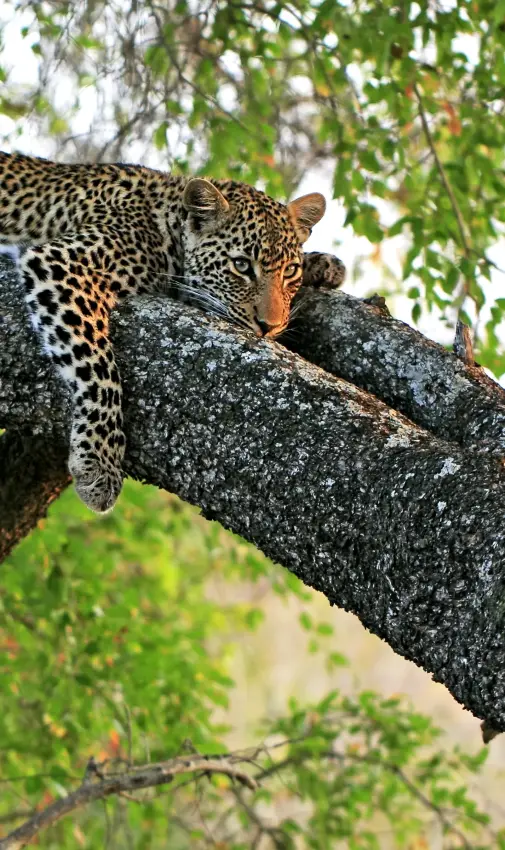
Leopard resting on tree branch surrounded by green foliage 05

Tarangire National Park

Hippopotamuses in water with heads above surface 06

Katavi National Park

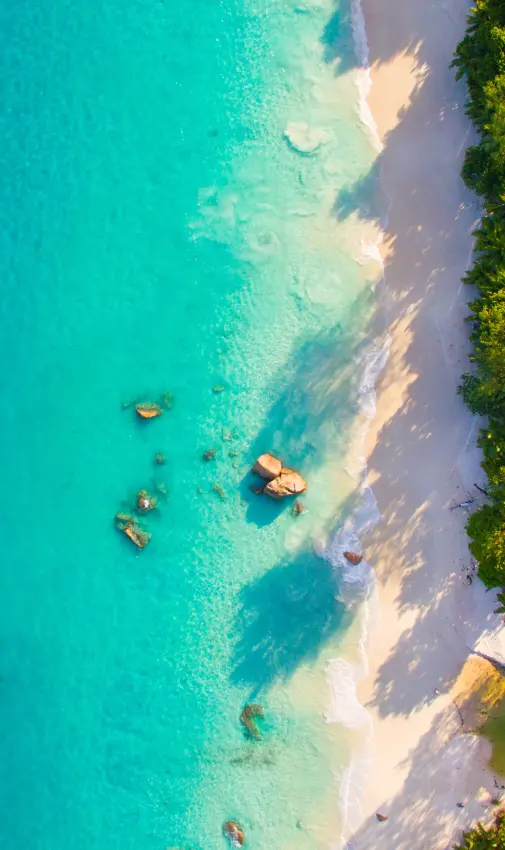
Turquoise water beach with boats and tropical vegetation 07

Zanzibar & Pemba

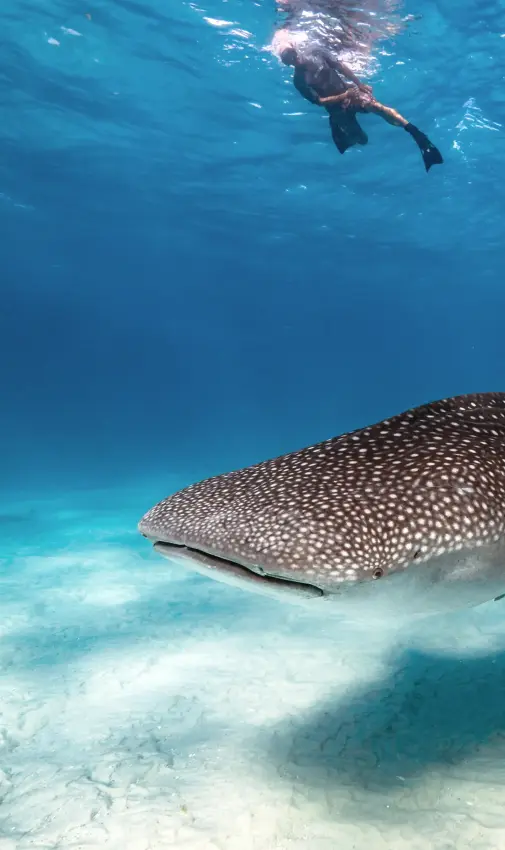
Snorkeler swimming alongside whale shark in shallow turquoise water, Mafia Archipelago, Tanzania 08

Mafia Archipelago

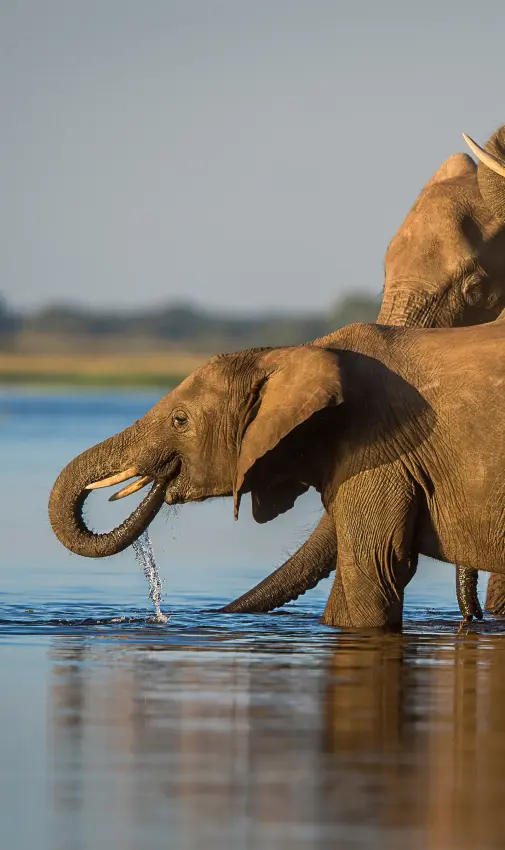
elephants drinking water at riverbank during daytime 09

Nyerere National Park

Chimpanzee among vegetation looking toward camera, Rubondo Island, Tanzania 10

Rubondo Island

Aerial view of colorful salt lakes and mineral deposits 11

Lake Natron

Local people walking on dusty road with vehicle approaching 12

Arusha

13

Ugalla River National Park

Planning a journey together

our approach

remote, exclusive
& personal

Every journey starts with a conversation. We take the time to understand your vision before we start planning.

Whether by phone or in person, we work with you directly to shape something that is considered, personal, and expertly delivered.

get in touch
destinations ideas & inspiration our process about us contact us