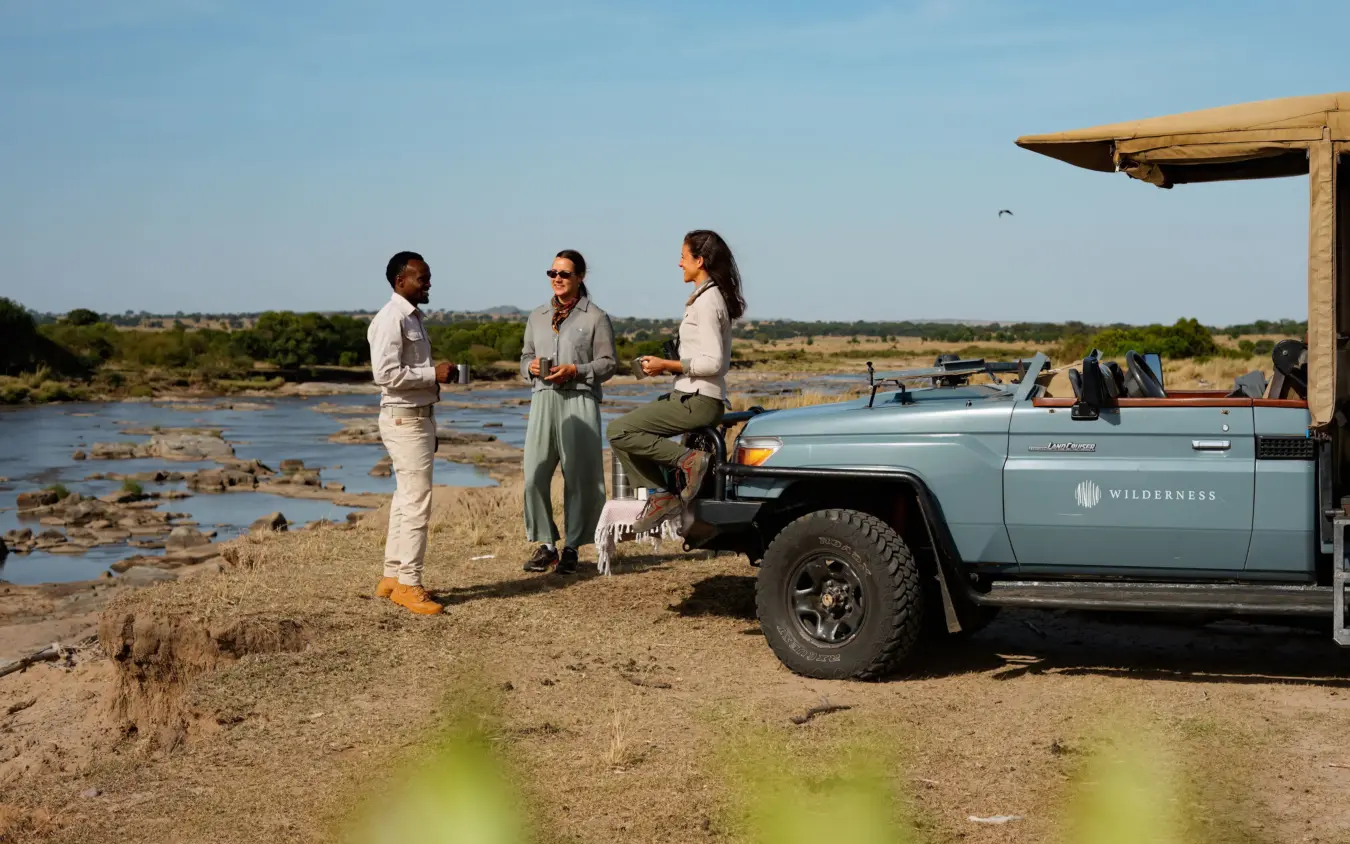
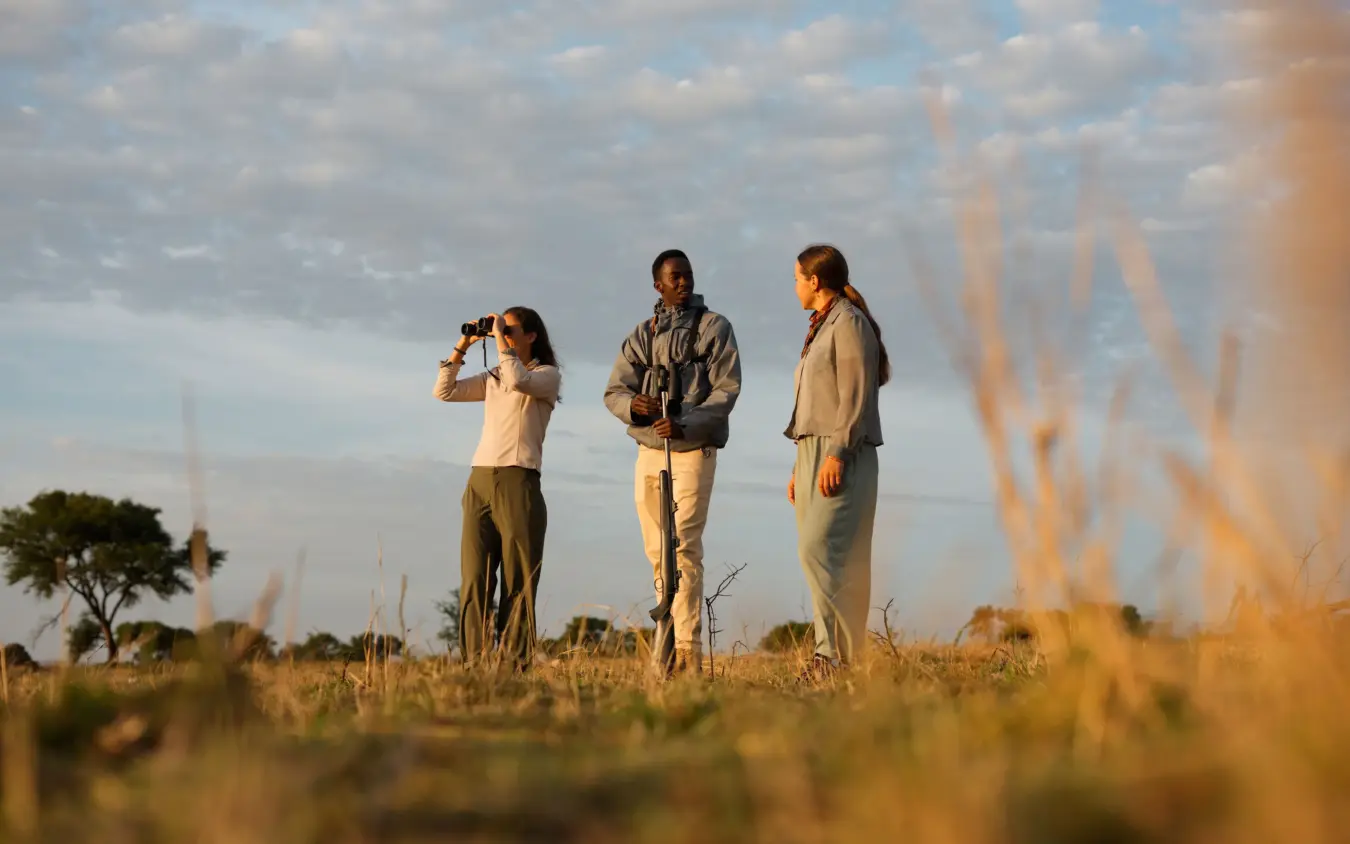
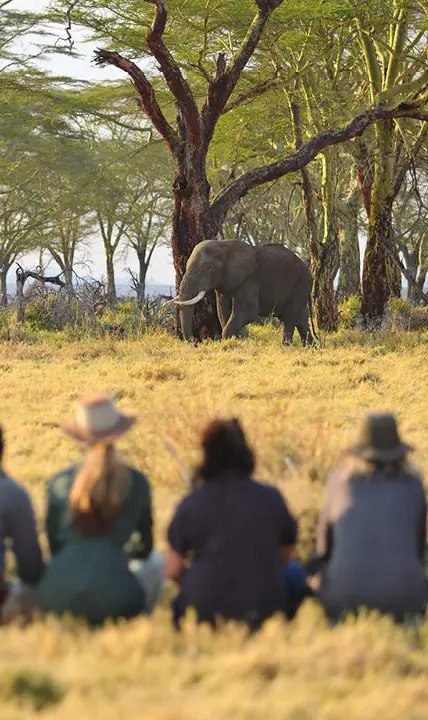
Each site is chosen away from the busiest parts of the park, yet close enough that the main concentrations of game are a drive rather than an expedition. A guide and an armed park ranger lead small groups out from the tents into the surrounding walking zone, moving slowly enough to read tracks and dung and to put names to the grasses and trees. They stop for birds. Every walk begins and ends at camp and stays within the designated zone, while the wider park, the river crossings included, is left to the vehicles.
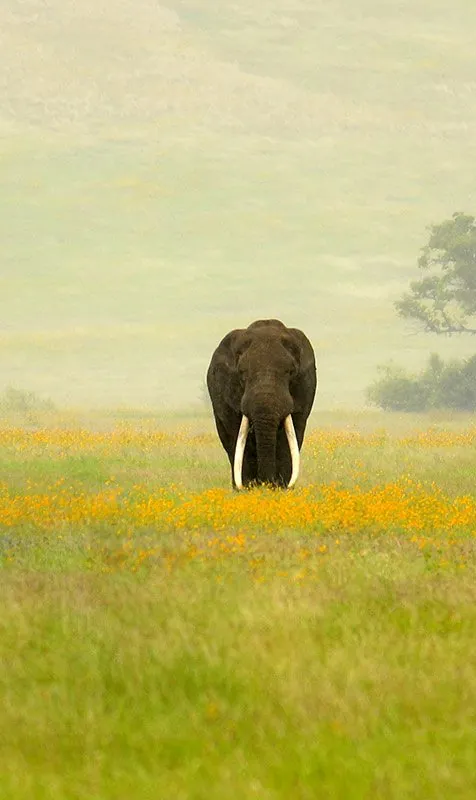
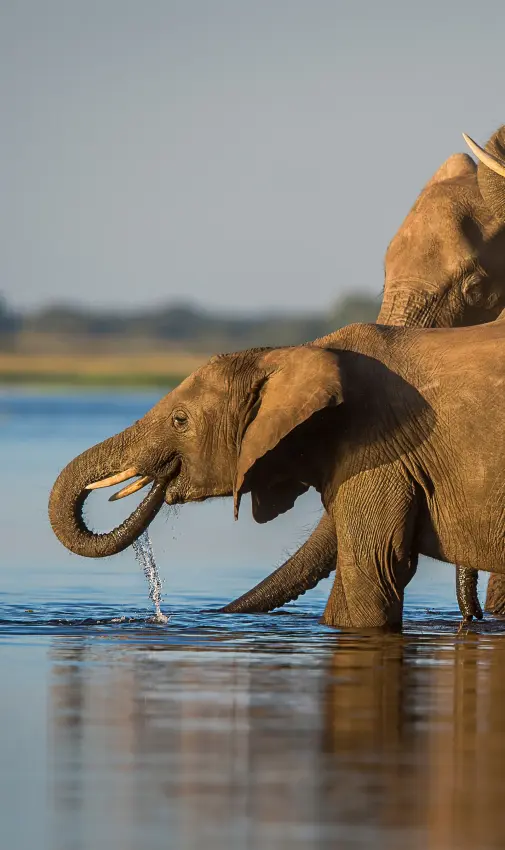
Two watercourses run close to the Northern Hills site, and the resident lion pride there is seen regularly. Lamai is more open, a grassland broken by Balanites trees, where the prides keep to the cover of the escarpment streams. Grumeti changes the scenery again, to woodland, the Simiti Hills and the Ndabaka Plains. Large lion prides and elephants share it with wildebeest that stay all year. On the Southern Plains, calving fills the short grass and predators hunt in full view, with the Ndutu woodlands and Hidden Valley within reach.
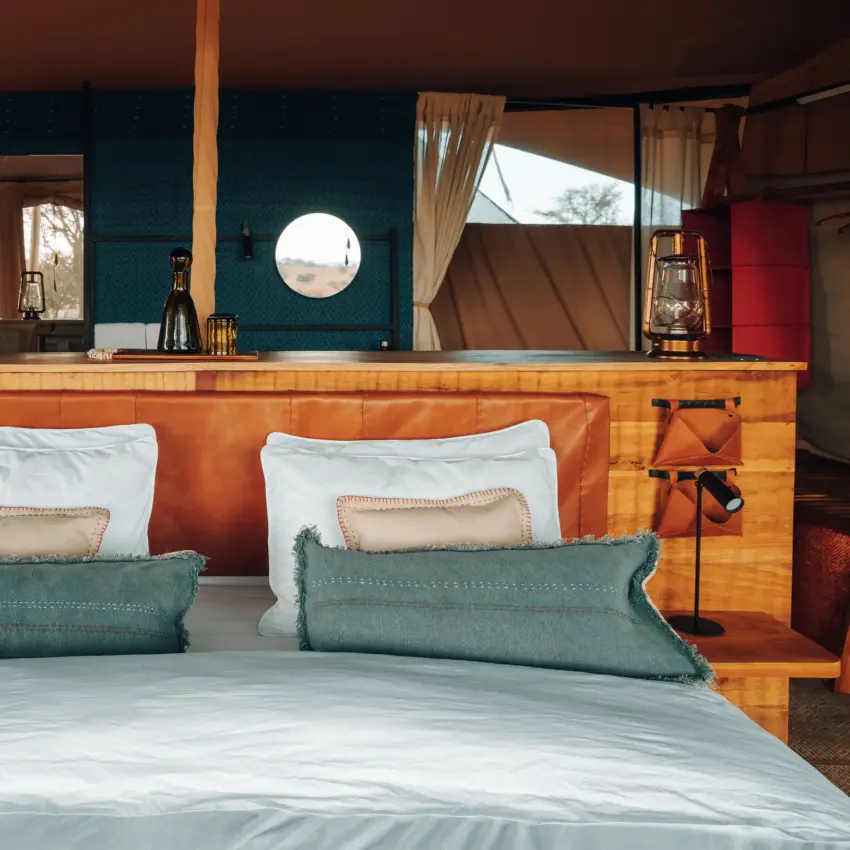
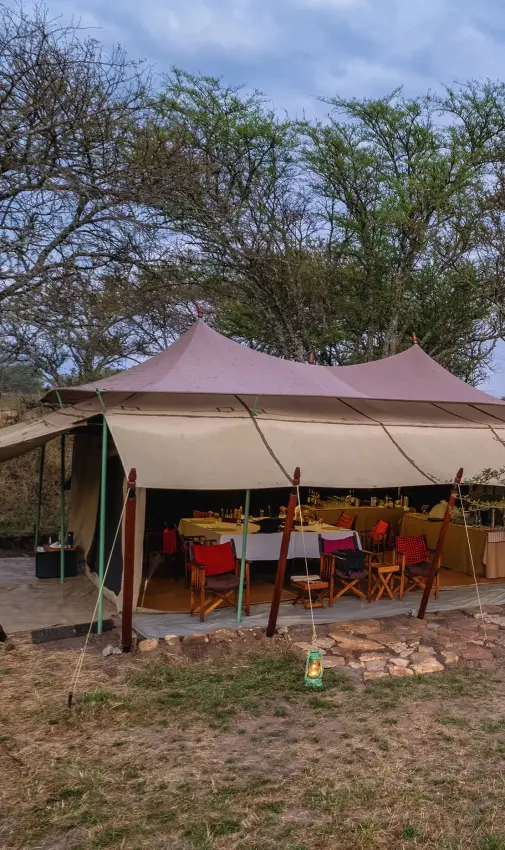
Later the canvas lets in the night, hyenas calling and grazers snorting just beyond the tents.
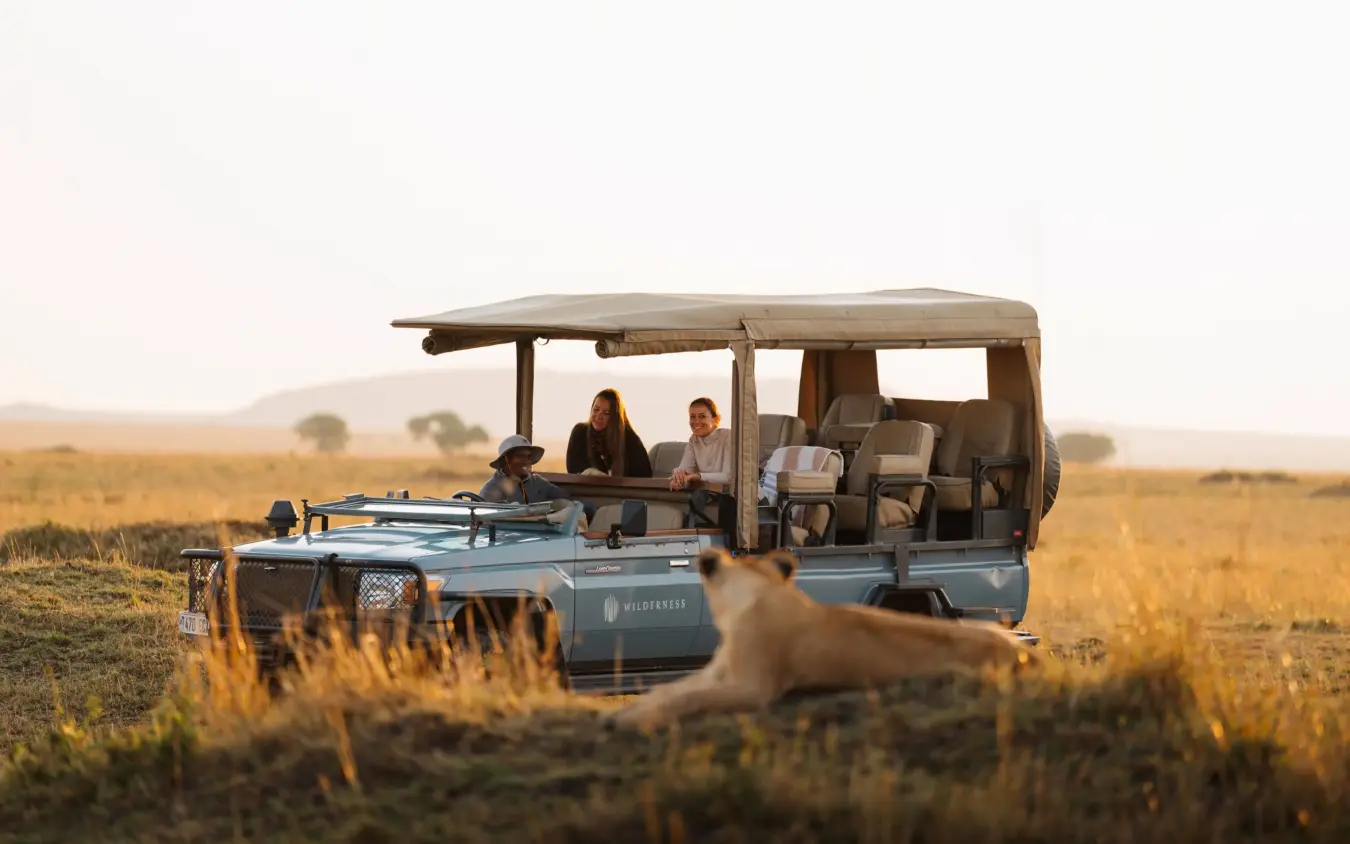
Morning and afternoon drives cover the country around camp, and full days push further with a picnic, stopping wherever the game has gathered. Birders go looking for the grey-breasted spurfowl and the rufous-tailed weaver, two of the region’s endemics. When season and weather allow, a dawn balloon flight can be added, coming down to a bush breakfast. After dark there is stargazing. Later the canvas lets in the night, hyenas calling and grazers snorting just beyond the tents. You can hear them tearing at the grass, and some mornings wildebeest file past at first light.
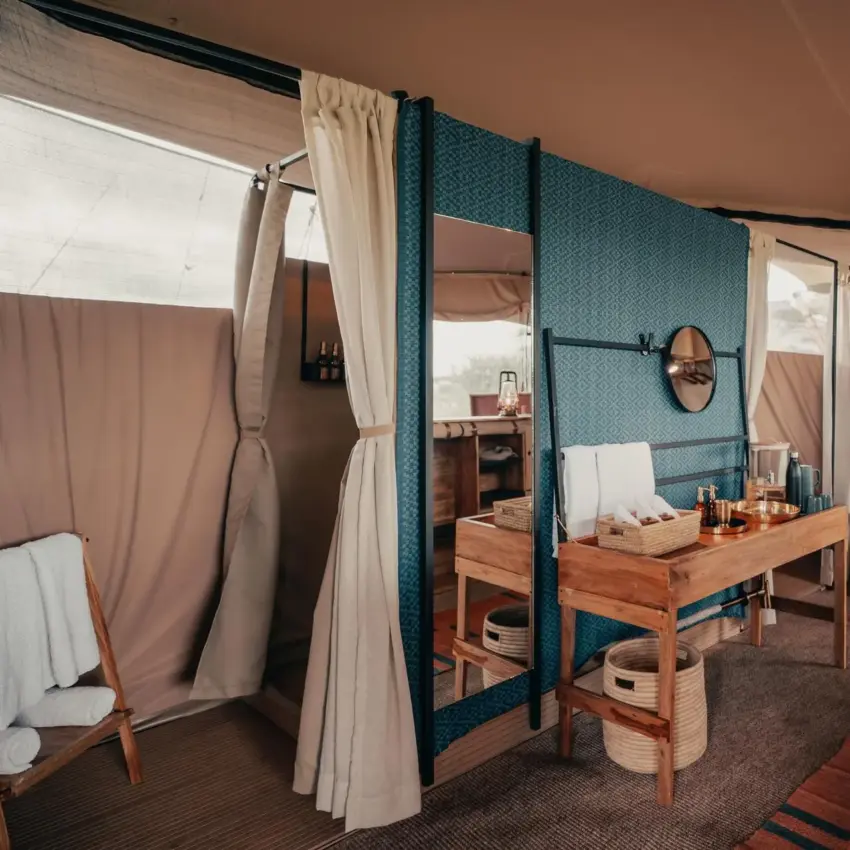
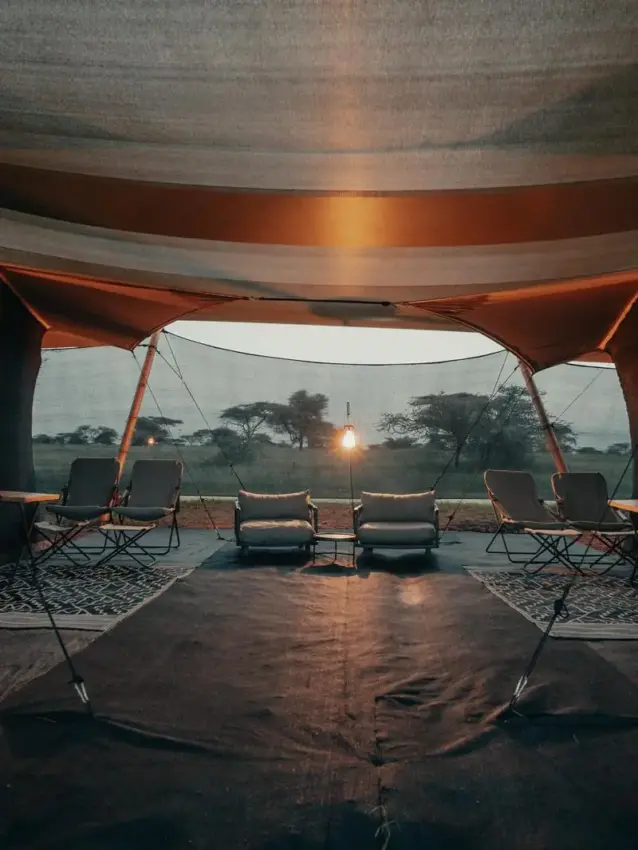
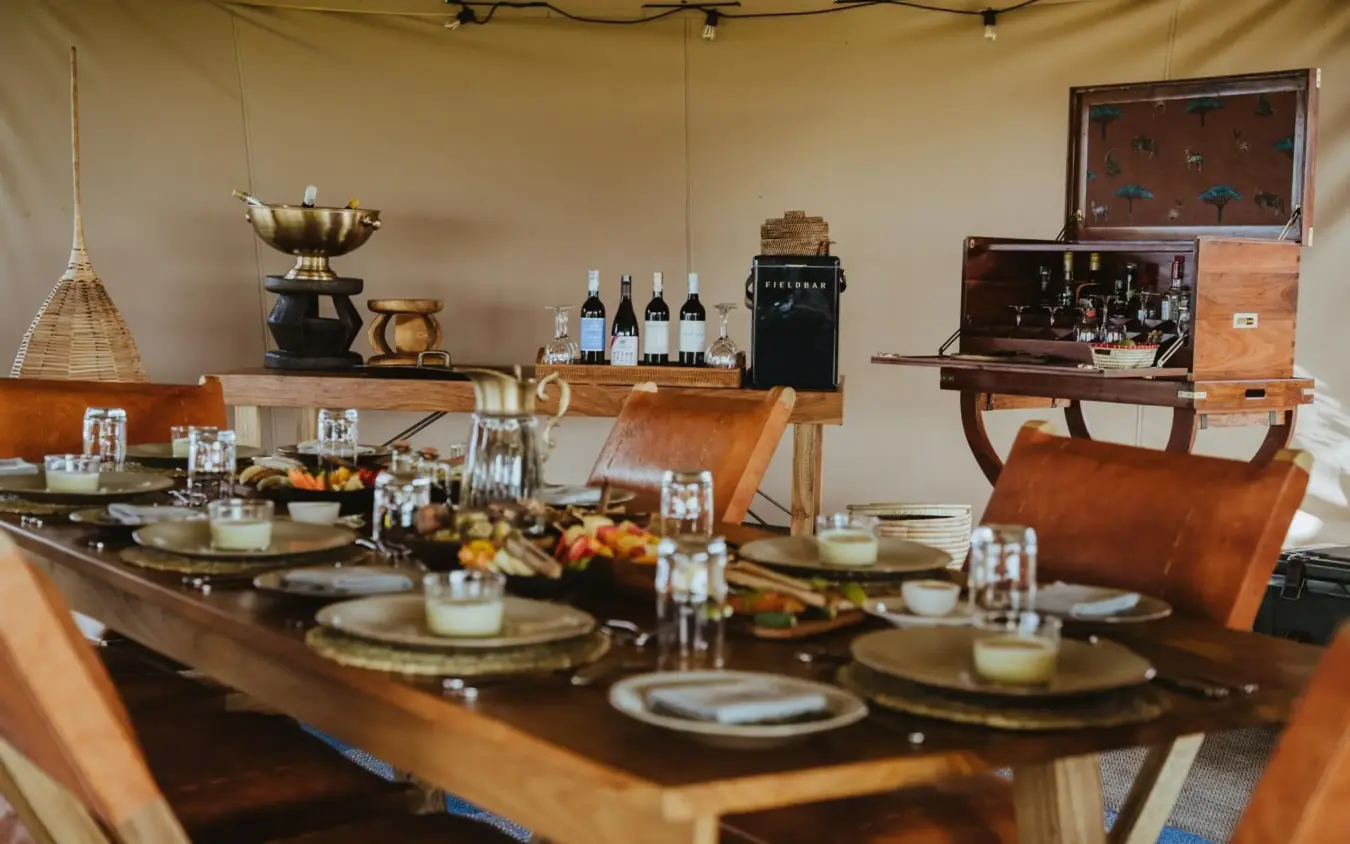
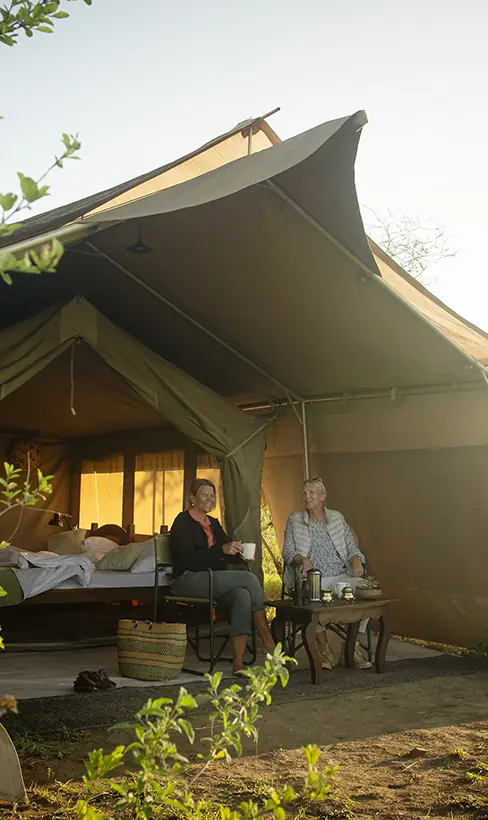
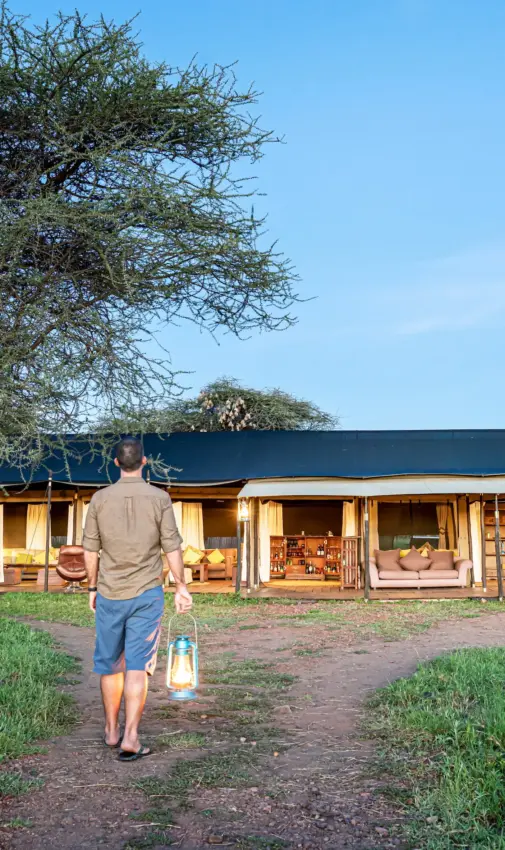
Because the canvas moves and the guests do not, each stay begins at whichever camp is operating on their dates. Light aircraft land at Kogatende, Seronera or Serengeti South, depending on where the tents stand that month, and transfer times shift with them. Children from six are welcome, with under-16s sharing a tent with an adult. Younger children can come when a whole camp is booked for sole use, which gives friends or several generations travelling together all six tents and the central dining tent to themselves.