







rwanda & tanzania
gorillas and the mara
Ten nights linking Rwanda's Virunga gorillas with the far northern Serengeti and the Mara River, via Kigali.
- Private Safari
- From $13,235 pp
- 2 guests
- 10 nights
Twenty-one nights link six regions across Tanzania and Kenya. You begin in montane forest on Mount Meru, then cross to the eastern Serengeti plains at Soit le Motonyi, big-cat country kept quiet for years. Kogatende follows, within reach of the Mara River, then the Mara North Conservancy in Kenya. The route closes in the Laikipia Highlands, above the Ewaso Ng’iro and on a Lewa hilltop facing Mount Kenya.
You travel by light aircraft and road, with private guiding where we recommend it. Days run from forest walks with armed rangers to game drives, horseback and camel rides, and time at waterholes below the lodges. The camps and lodges are small, chosen for their ground and their guiding.
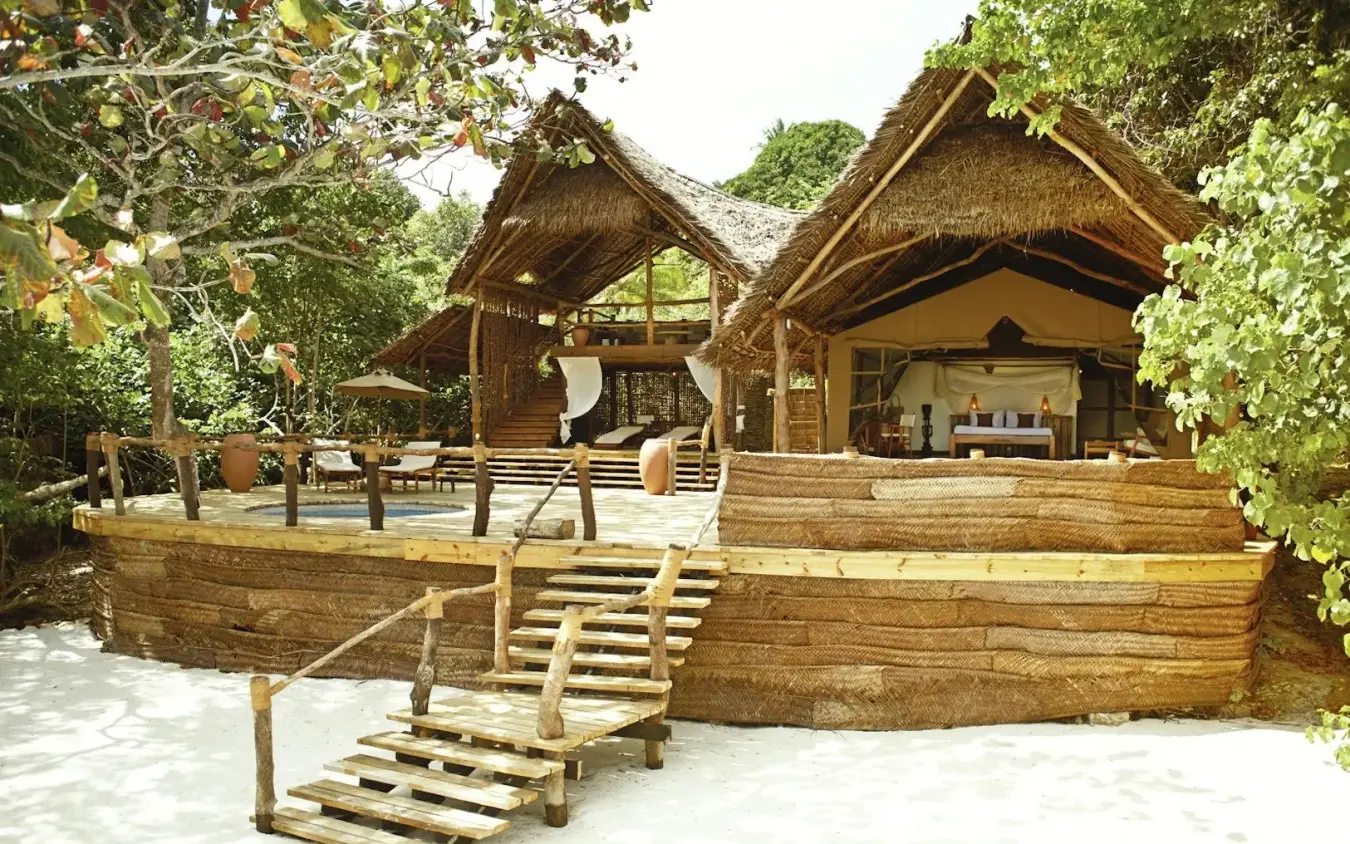
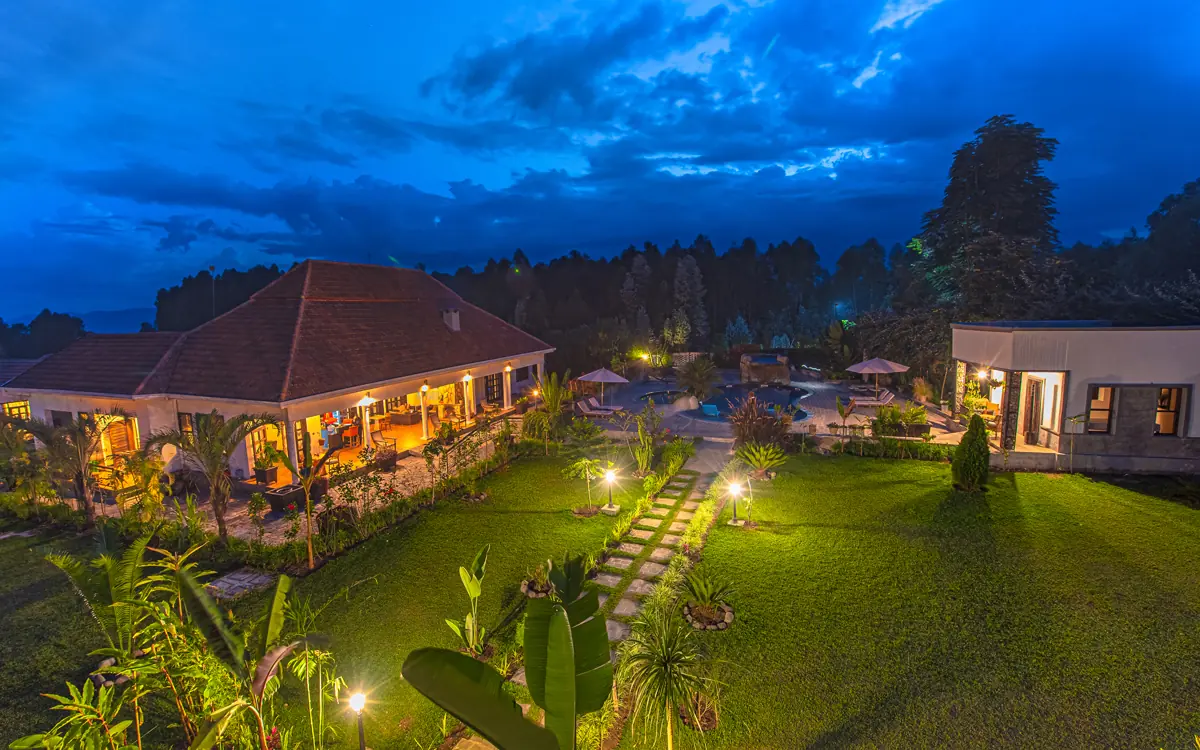
An hour's drive from Kilimanjaro International Airport, the first days go on foot in montane forest on Mount Meru's lower slopes, inside Arusha National Park. Walks set out each morning with an armed ranger, an hour among the fig trees or a climb to the viewpoints on the rim of Ngurdoto Crater, where buffaloes and elephants graze a floor that has been closed to all visitors since 1967. Colobus monkeys call at first light and Sykes' monkeys work the branches below. Koroi Forest Camp opened in July 2025, nine rooms on raised platforms above a glade where giraffes move through the trees.
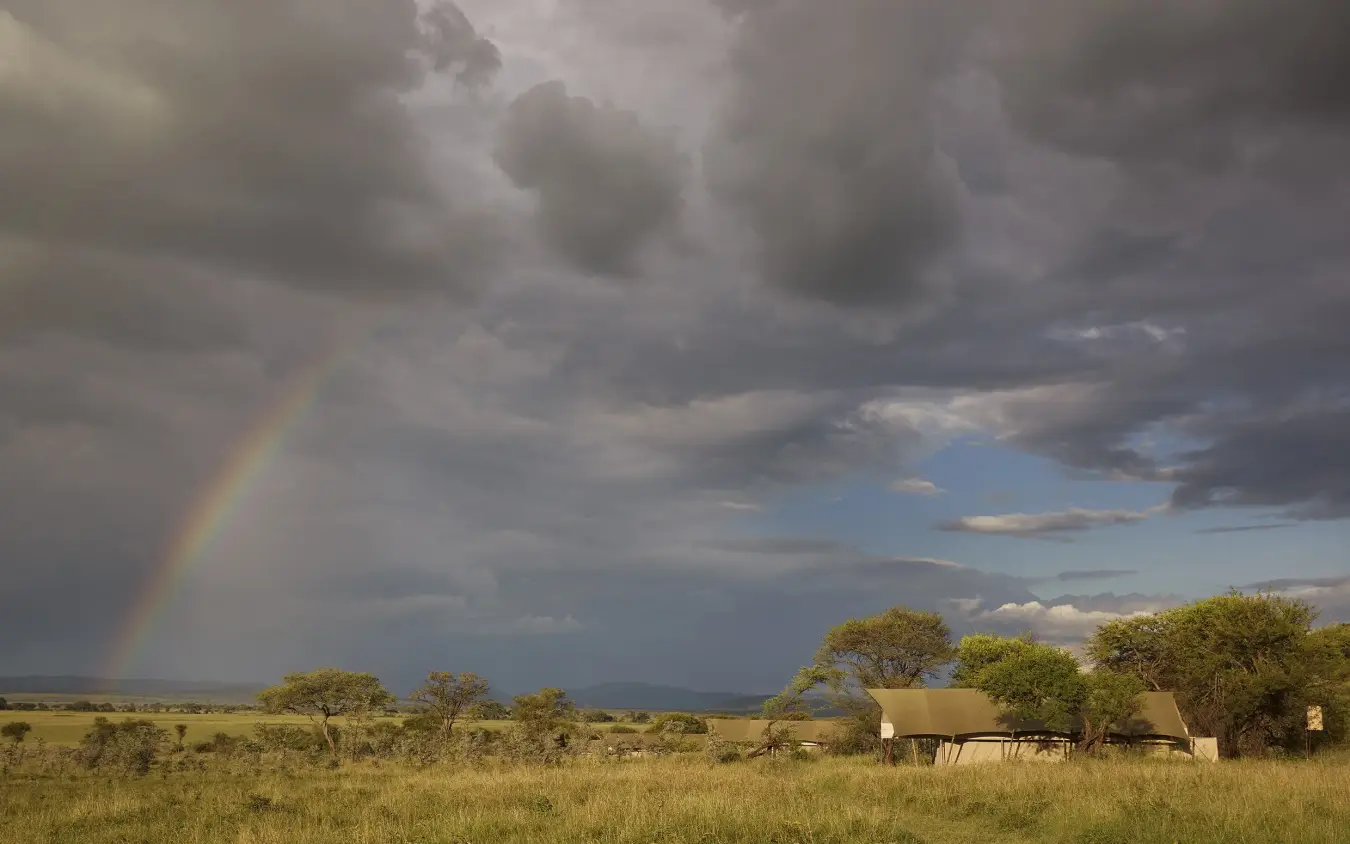
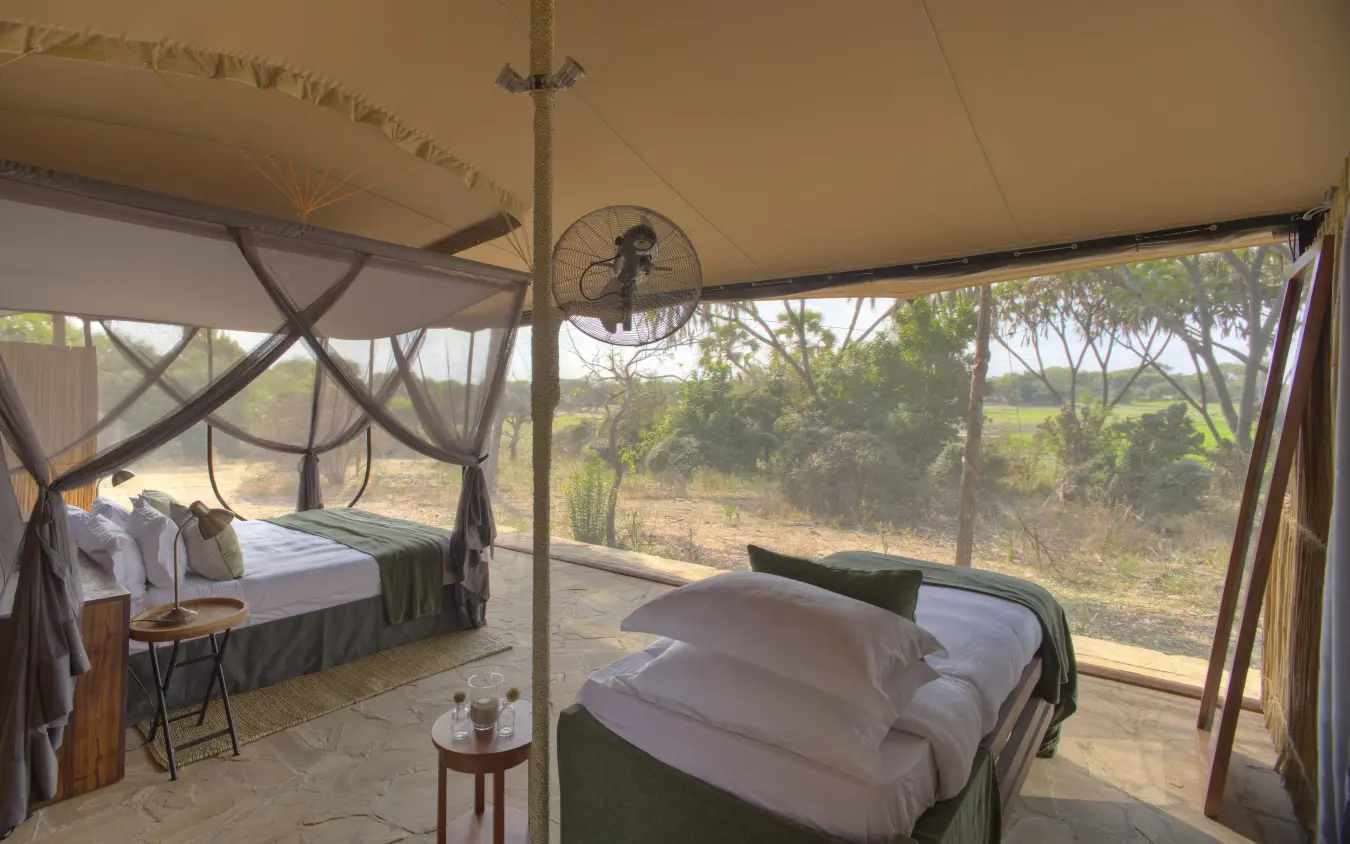
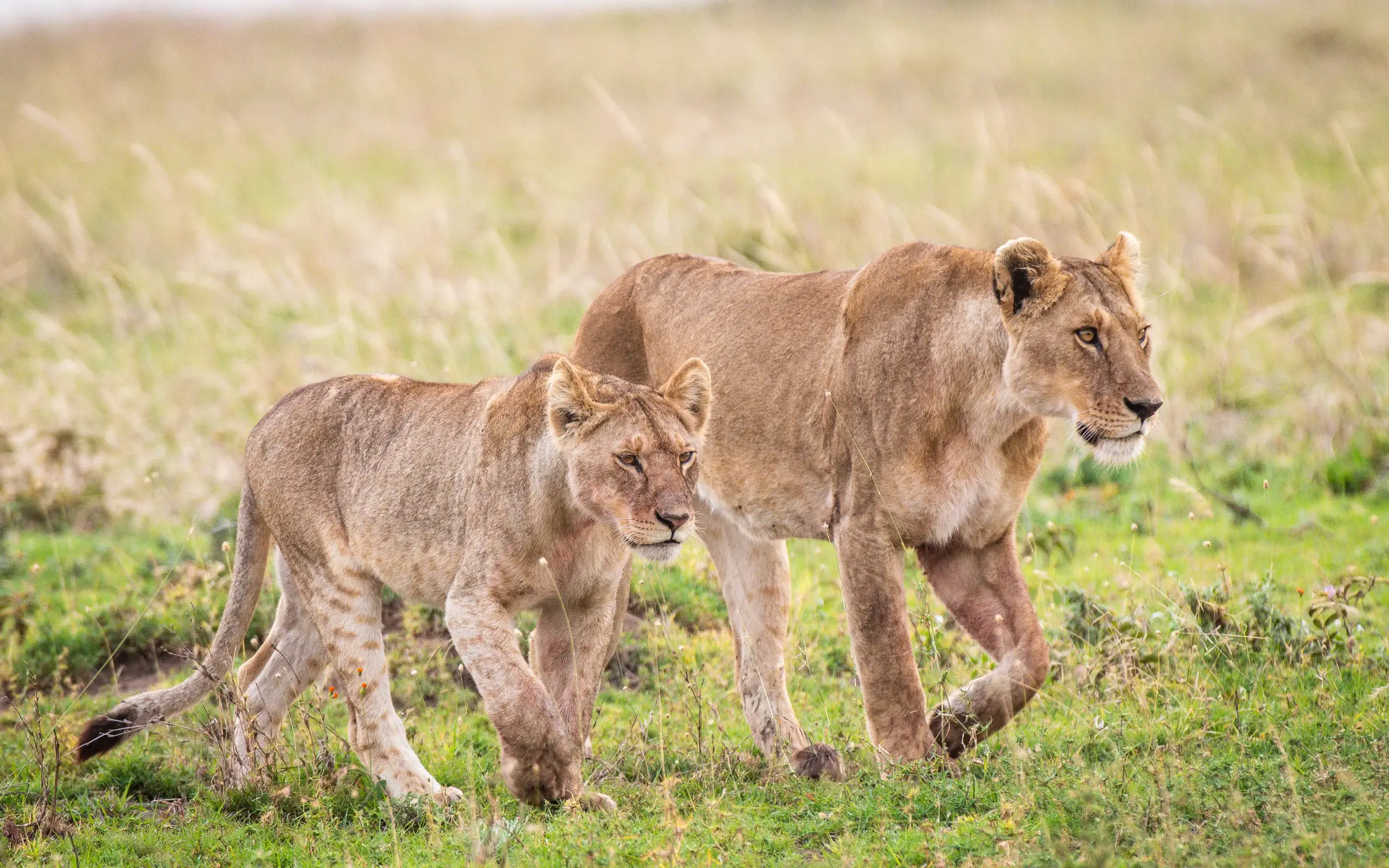
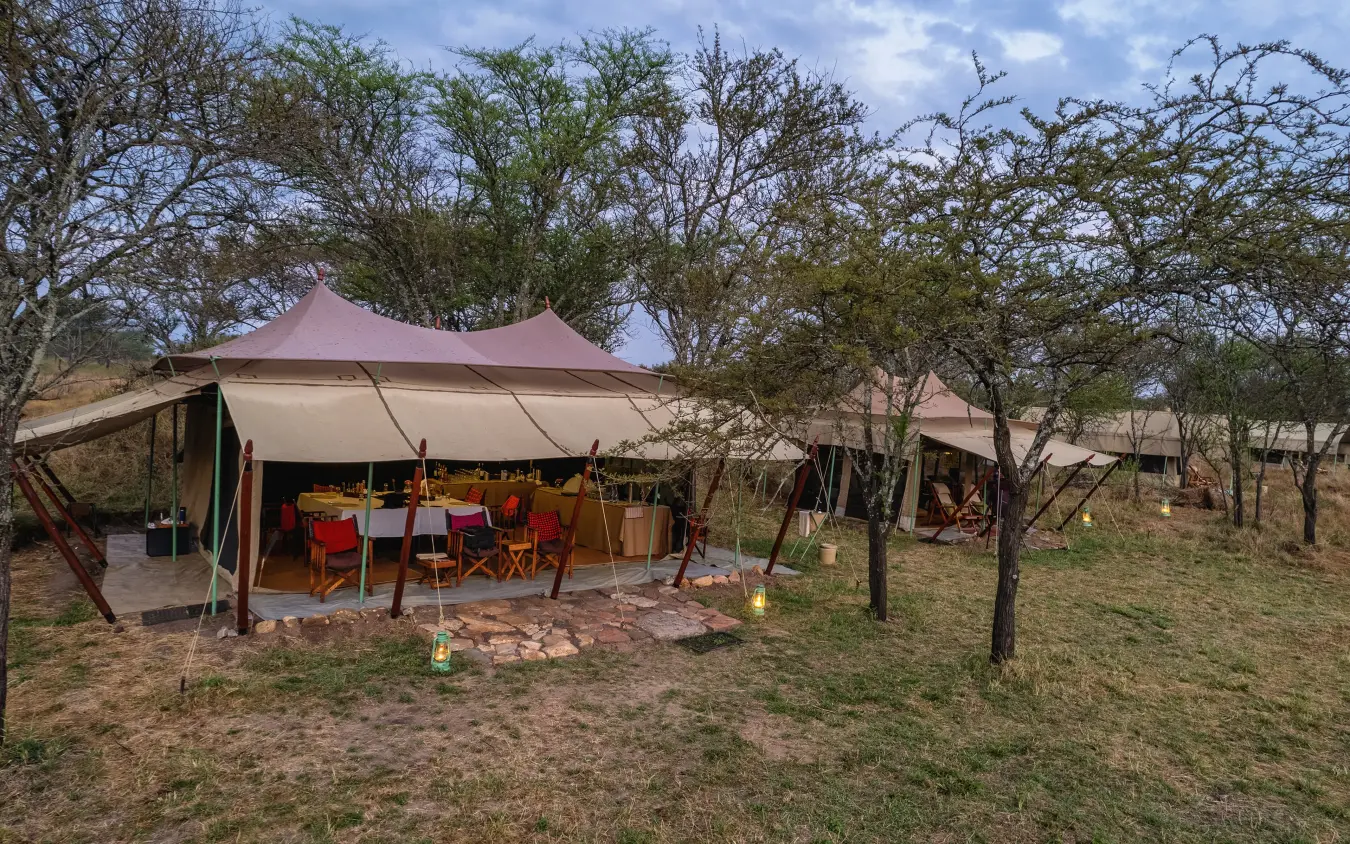
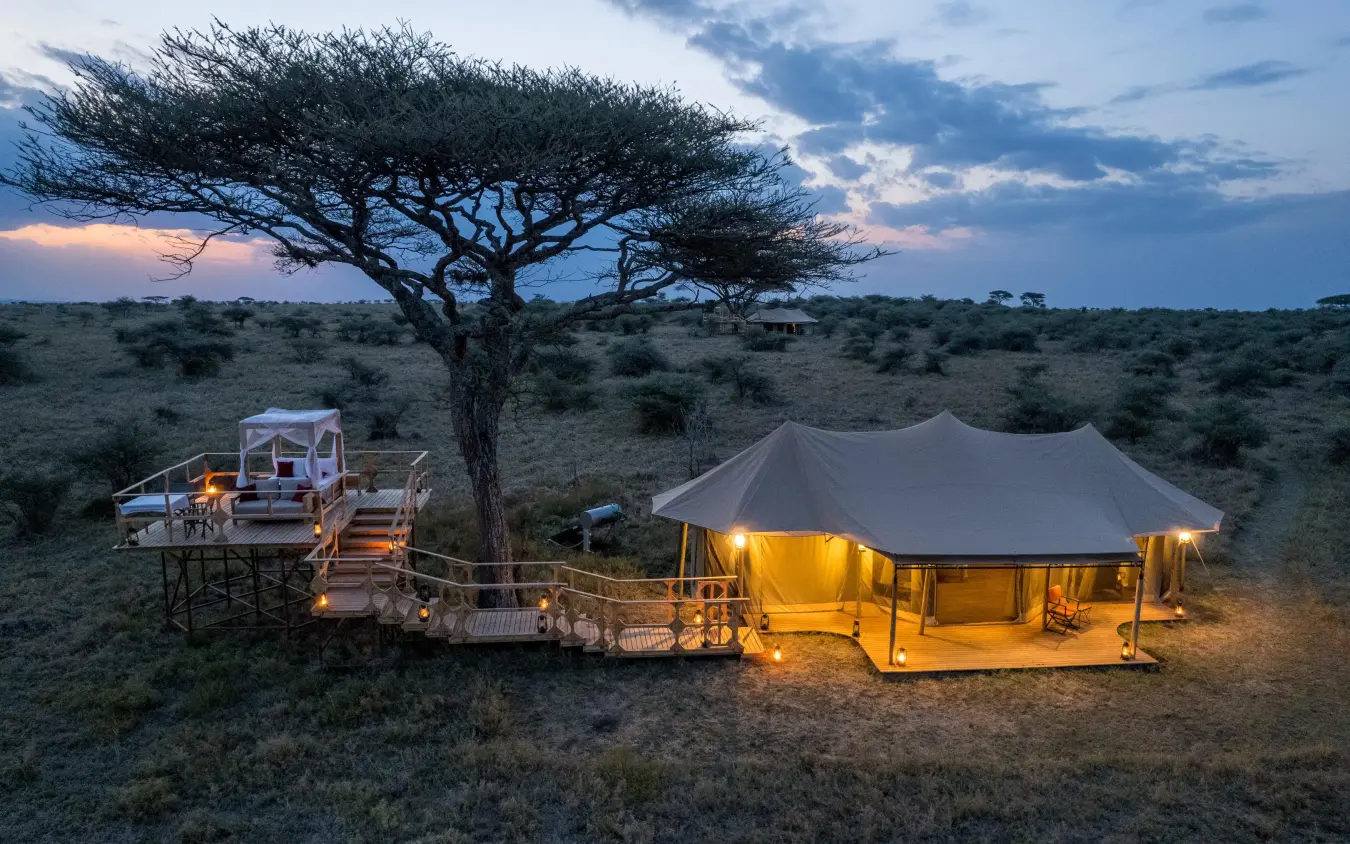
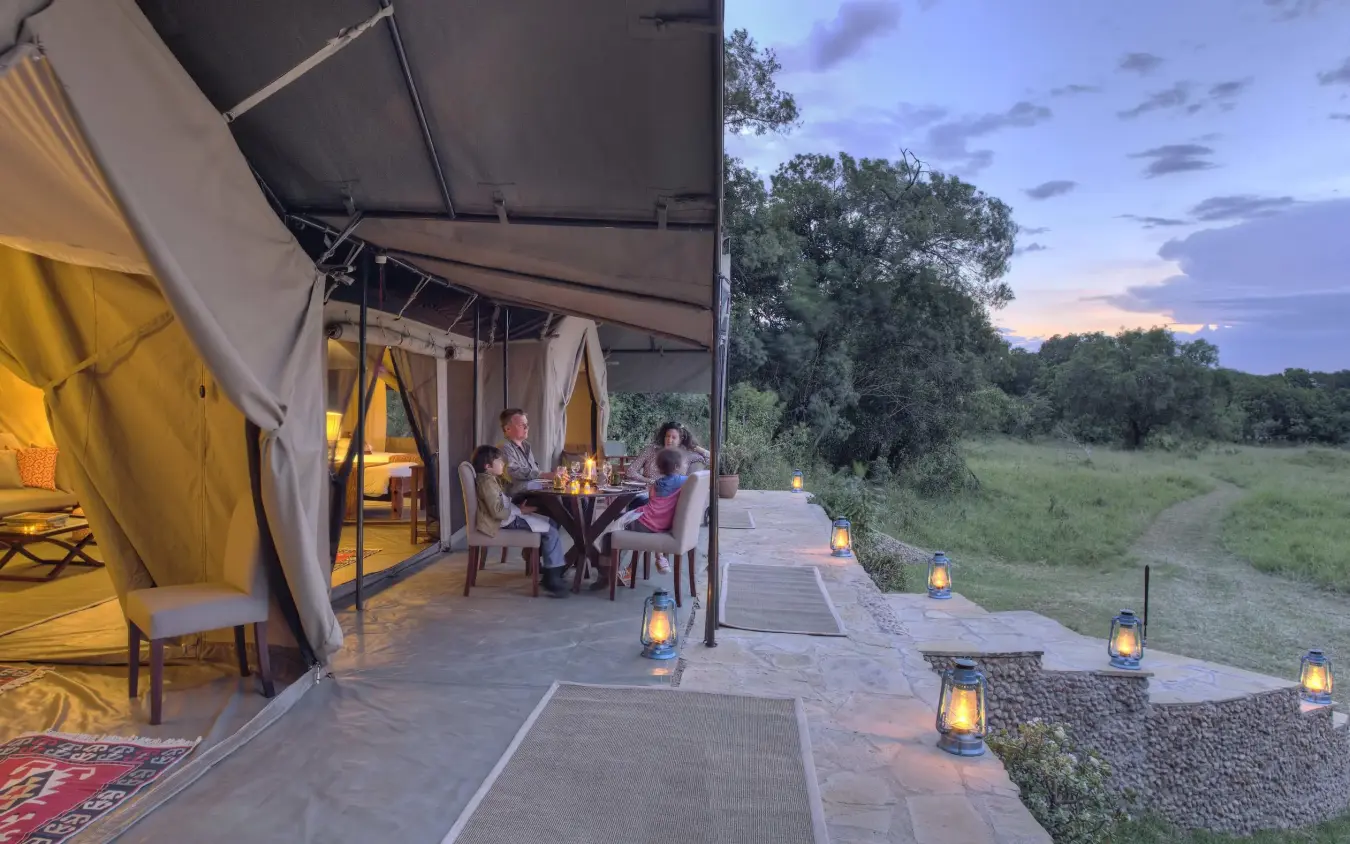
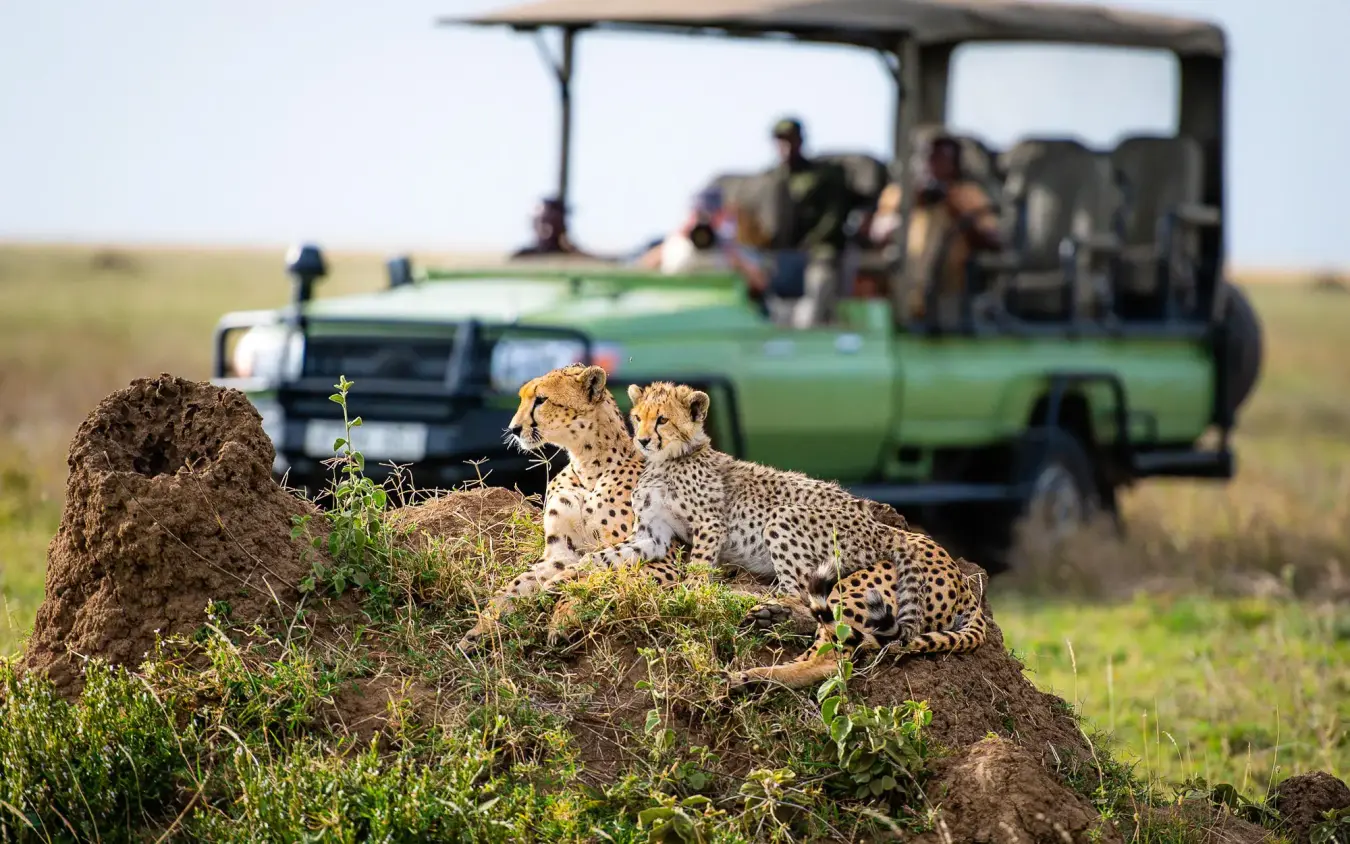
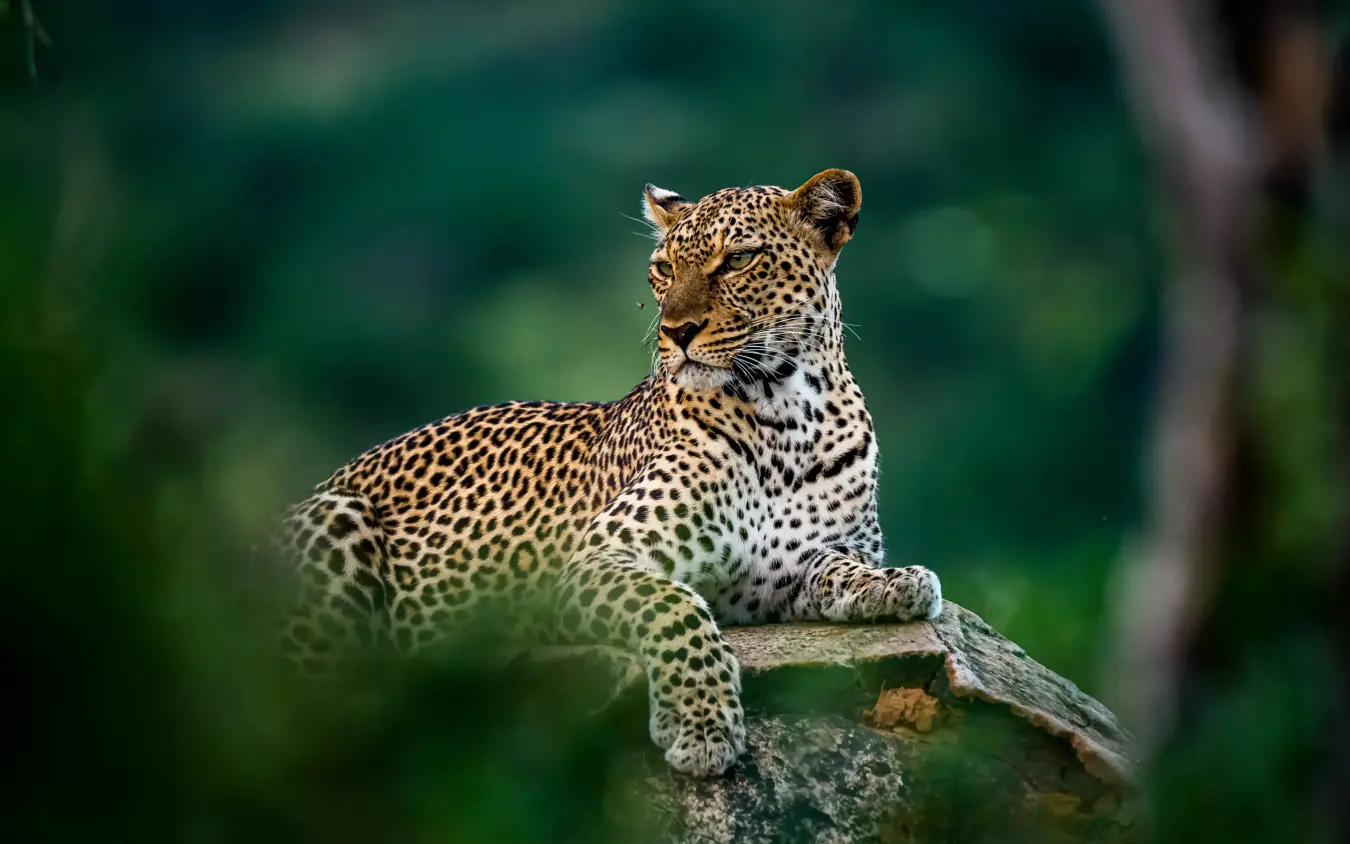
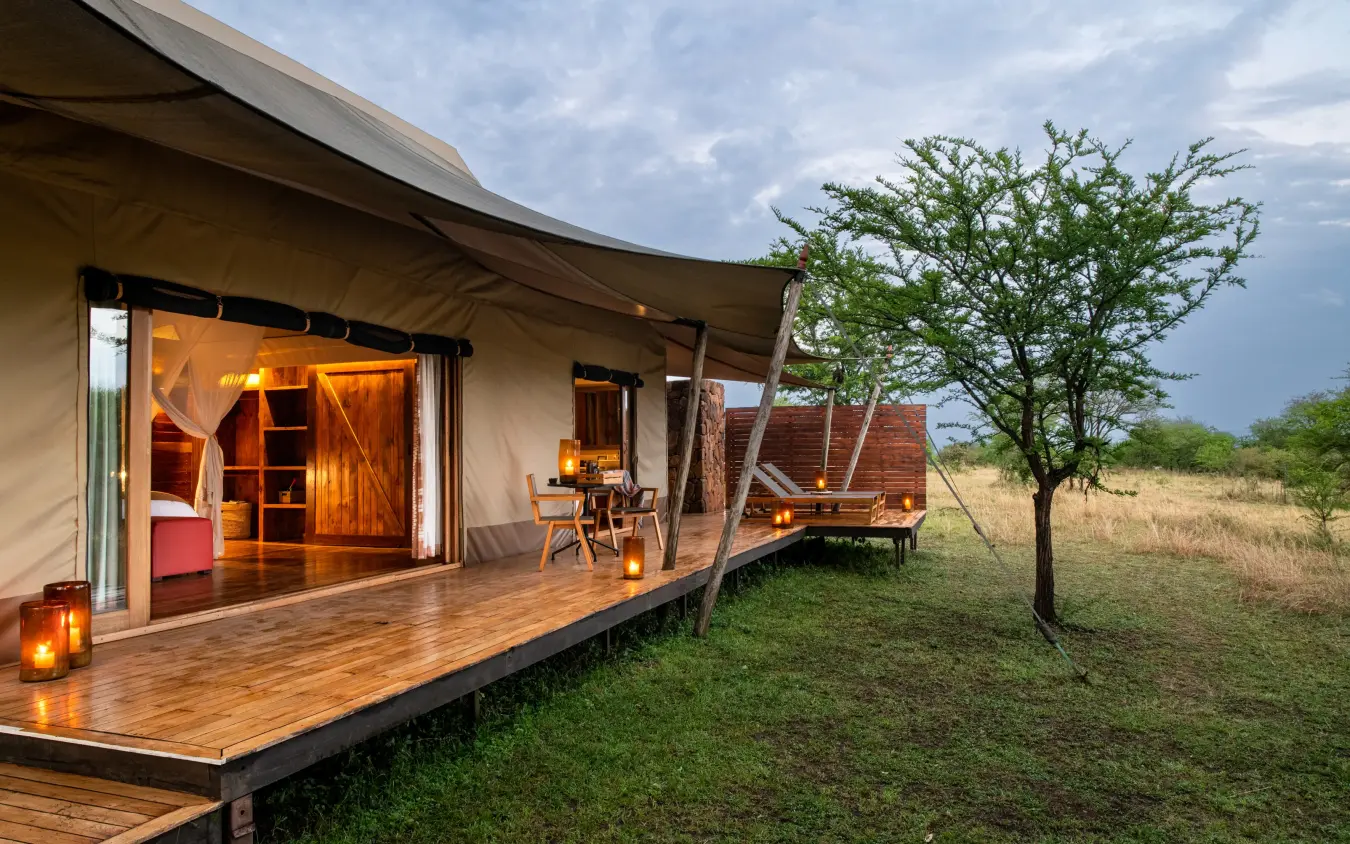
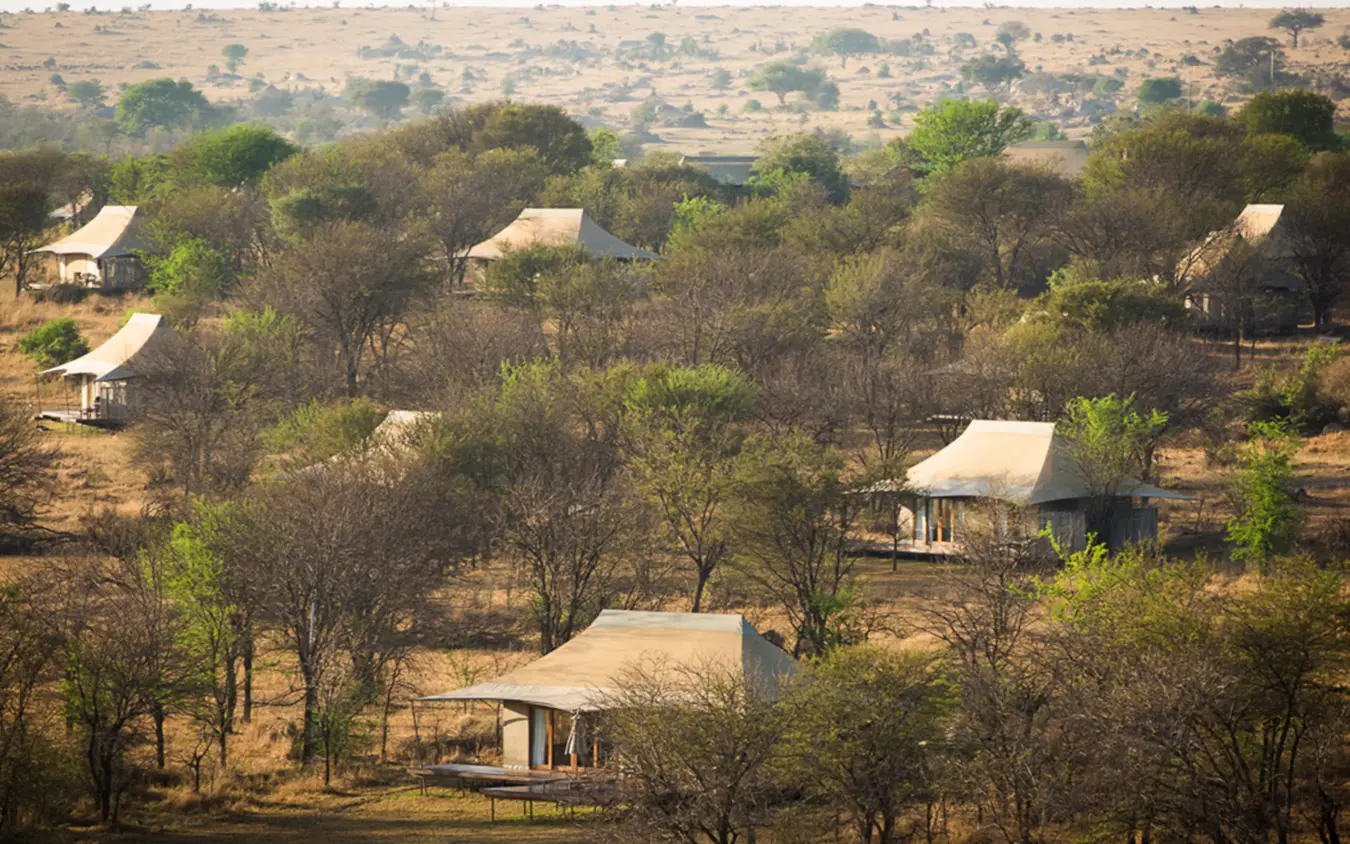
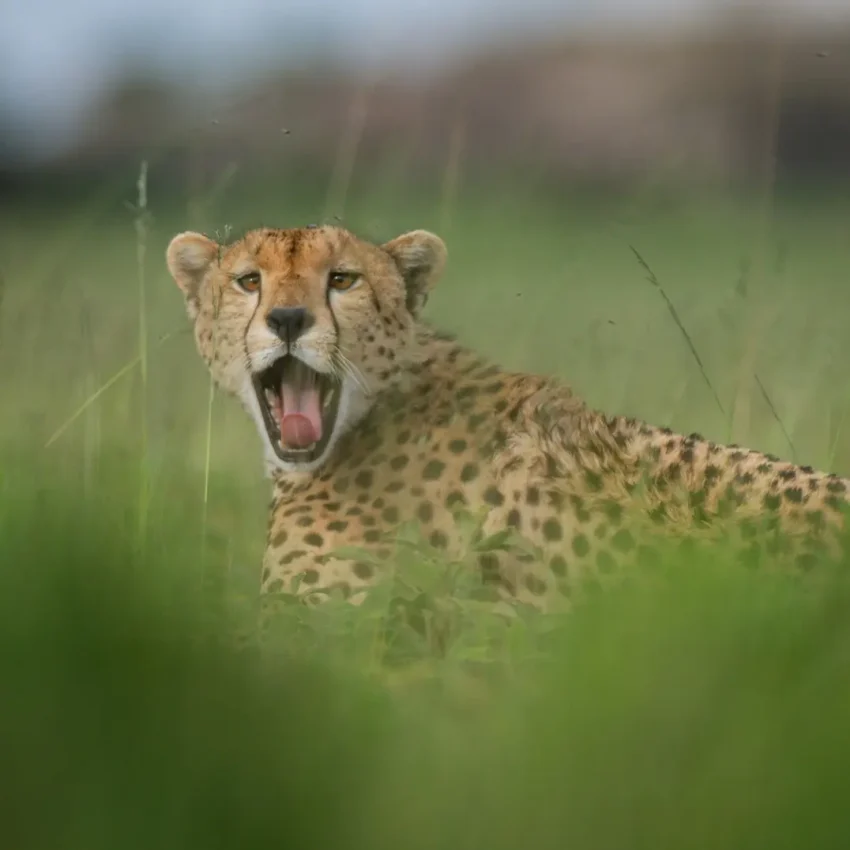
Out on the remote Soit le Motonyi plains, the days go to unhurried big-cat viewing. Short grass holds dense herds of gazelle and small antelope, and where the prey concentrates lion, cheetah, leopard and serval follow. Closed to visitors for more than a decade to protect its cheetahs, this ground keeps vehicle numbers low and sightings long, with career Tanzanian guides who read cat behaviour by instinct. Olmara Serengeti runs to eight tents in an acacia grove; three carry stargazing platforms where a bed can be made up under open sky.
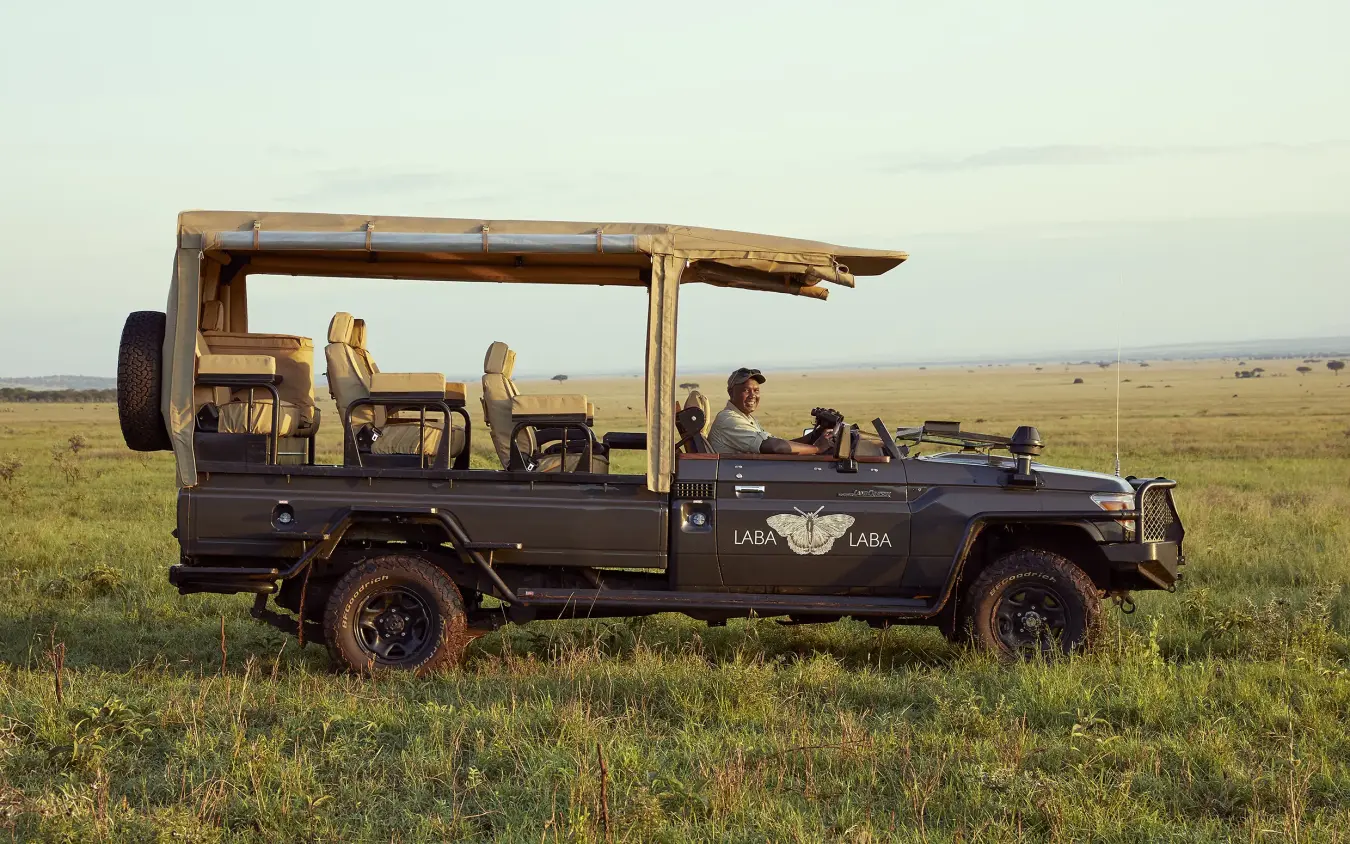
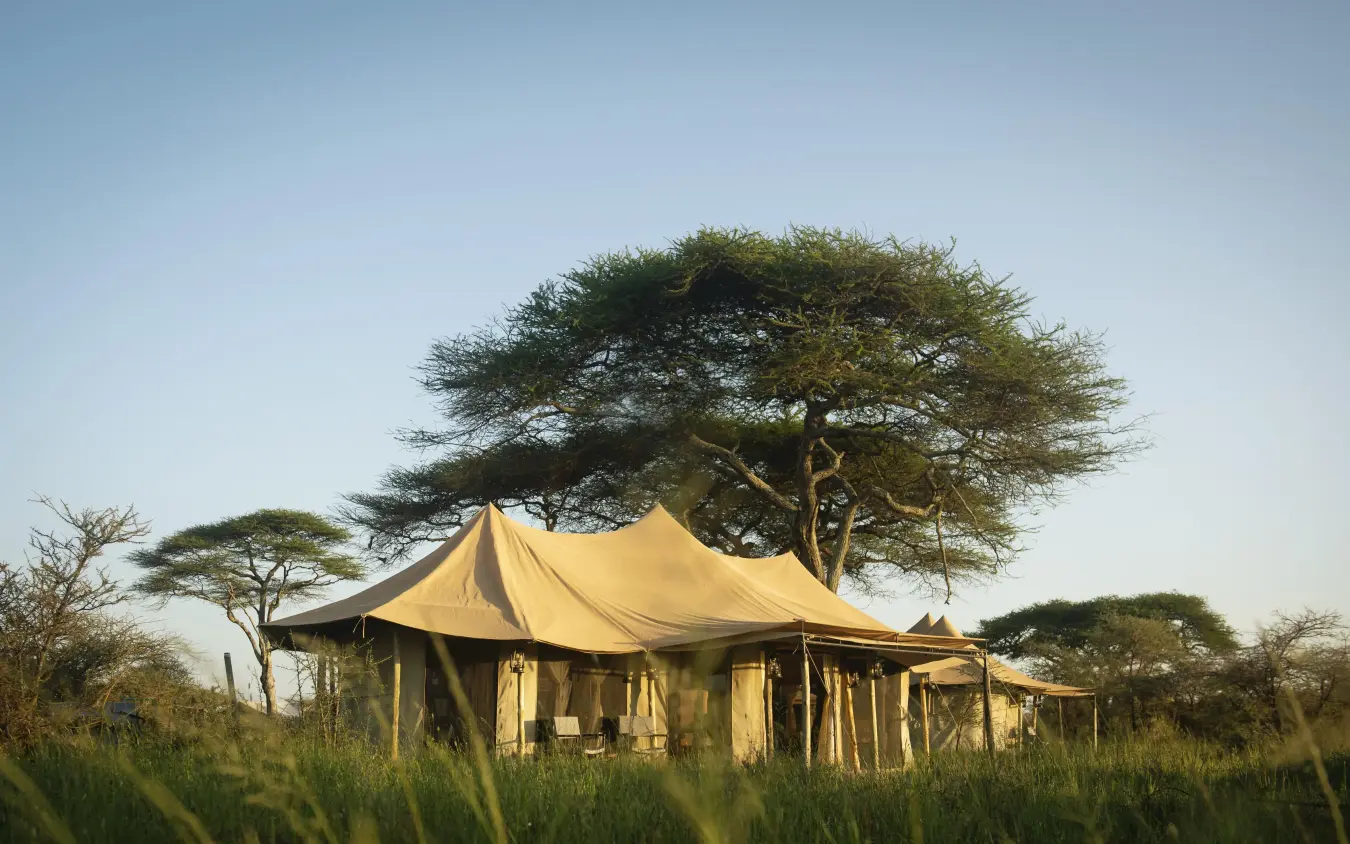
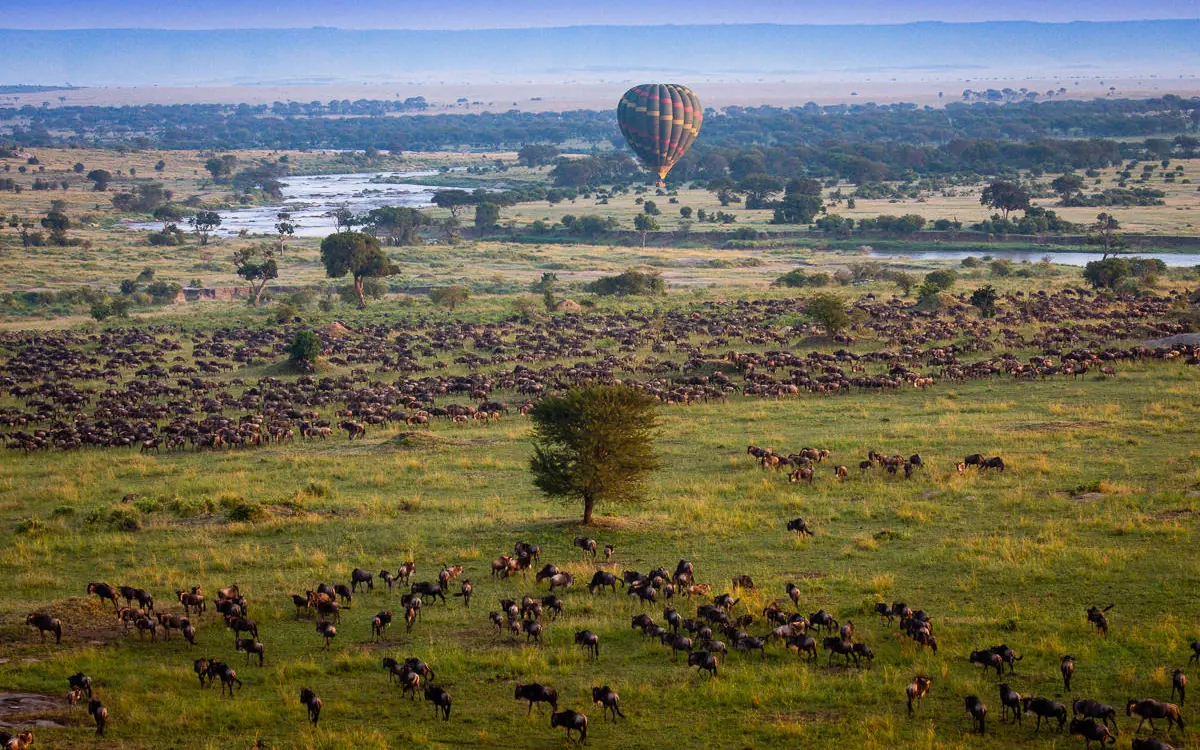
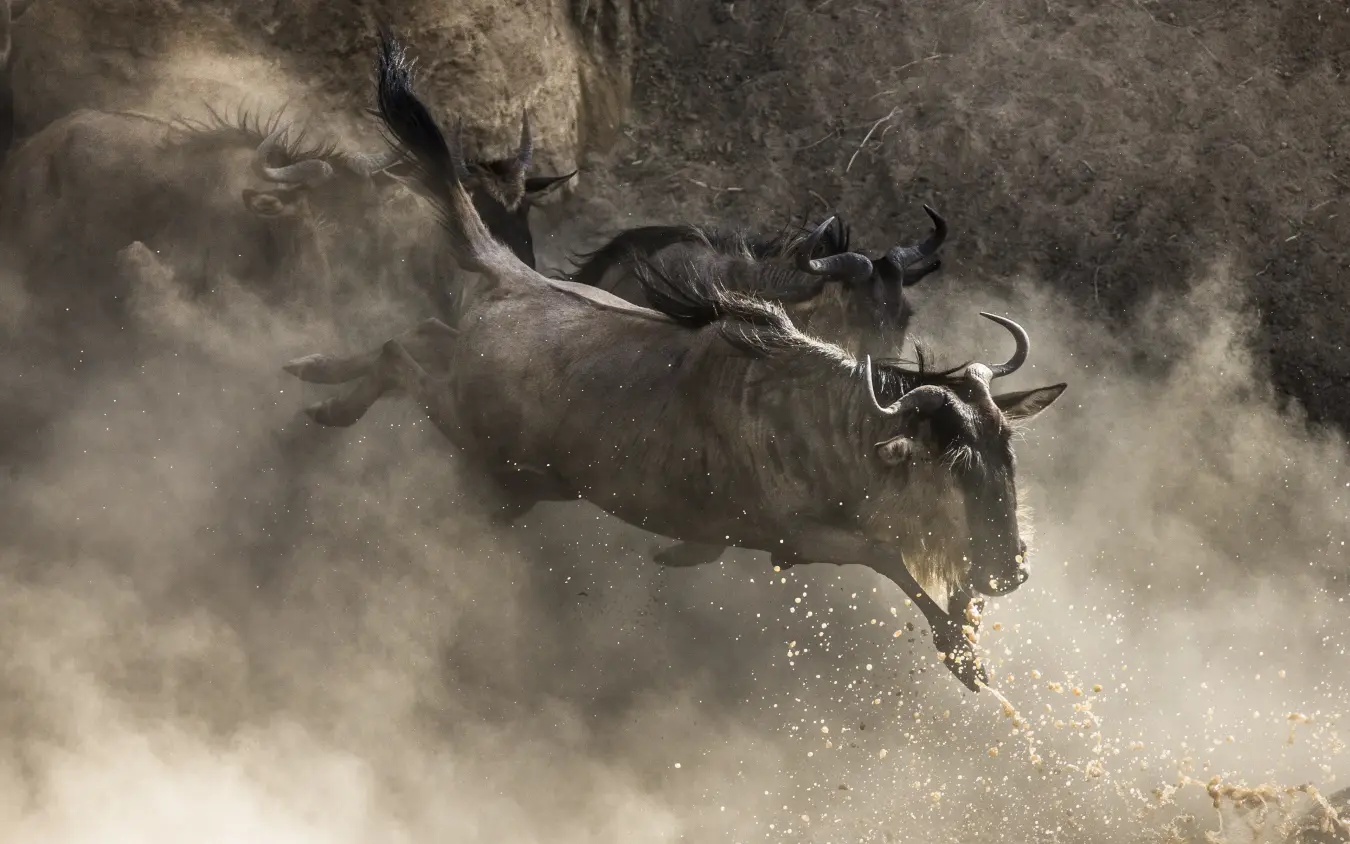
From June the camp stands at Kogatende, close enough to the Mara River that a crossing can be reached in a morning rather than after hours of driving. The northern Serengeti fills as the migration moves through, and a private guide and vehicle take the drive where the morning leads. Esirai Camp is a mobile camp of eight tents that moves north and south with the seasons on a single truck. Founded by Ethan Kinsey and the naturalist Hagai Zvulun, it favours close guiding and ecological storytelling, with a library tent beside the mess.
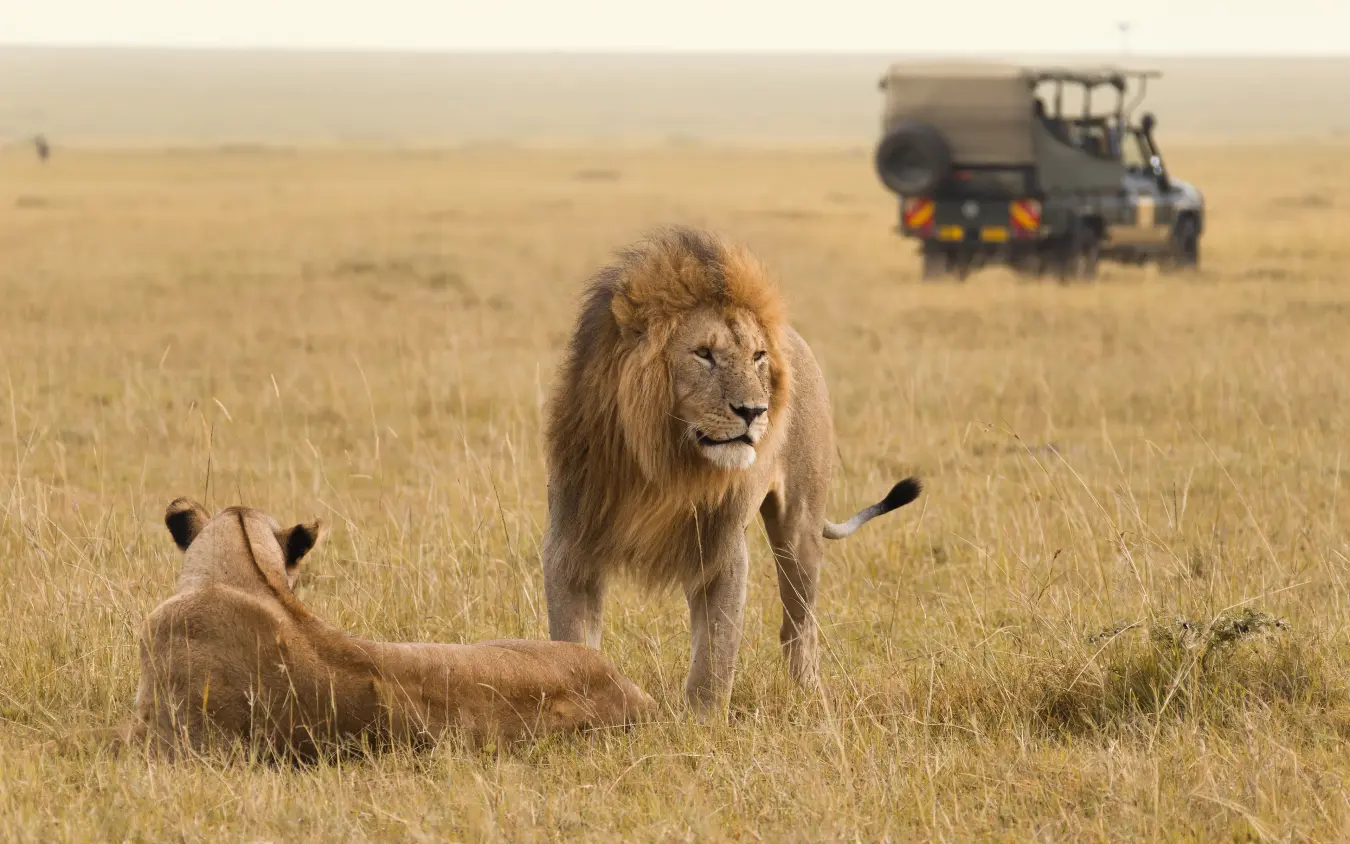
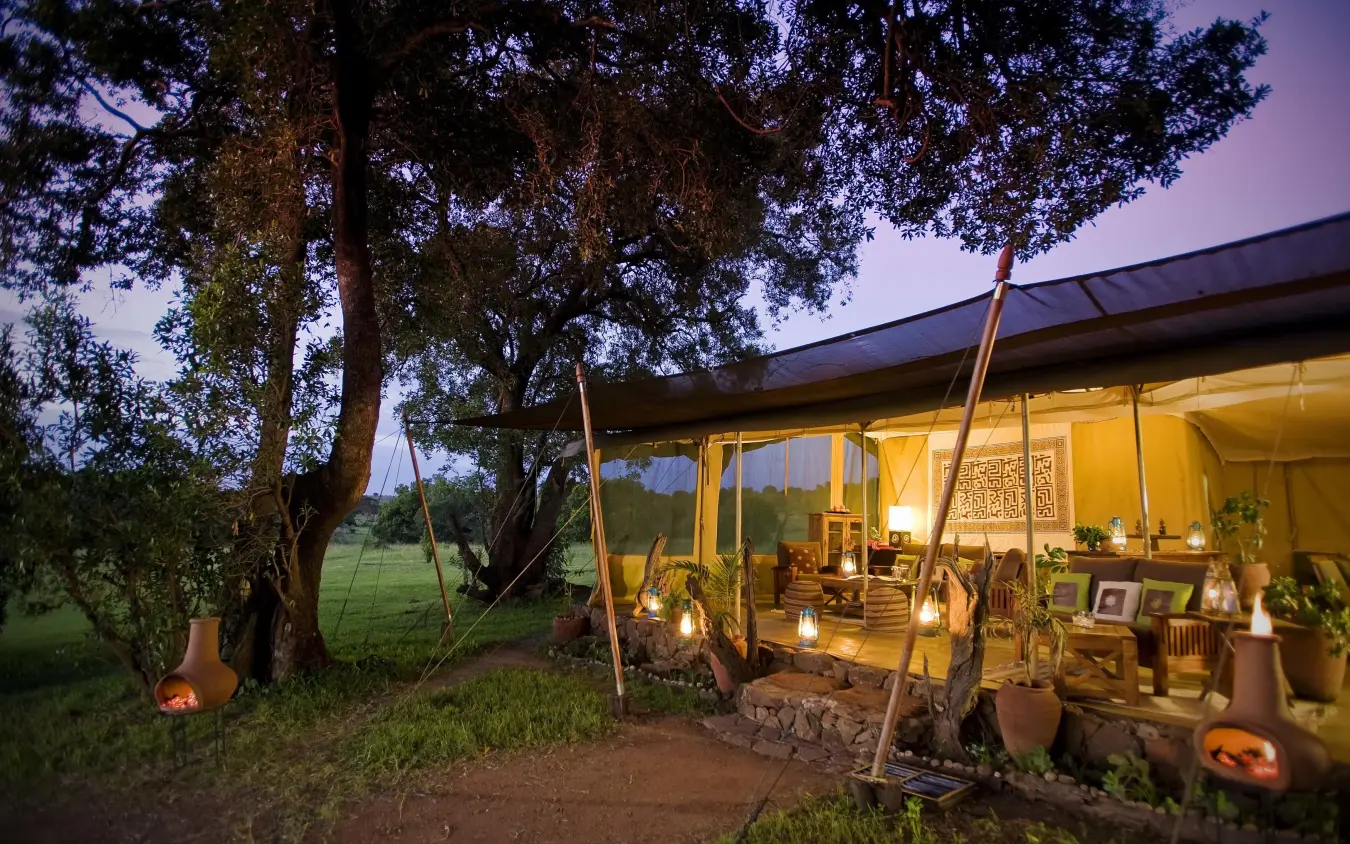
On the northern plains of Kenya's Maasai Mara, the Mara North Conservancy carries strong predator numbers the year round, and off-road driving reaches a sighting others cannot. No more than five vehicles may gather at any one sighting, so a hunt can unfold with the land to yourself. Roughly July to October the migration pours across the plains around camp. Guided bush walks go out with an armed ranger, and balloon flights lift at sunrise. Kicheche Mara North sits in Acacia Valley, tucked into a grove of wild olive and croton above a seasonal stream.
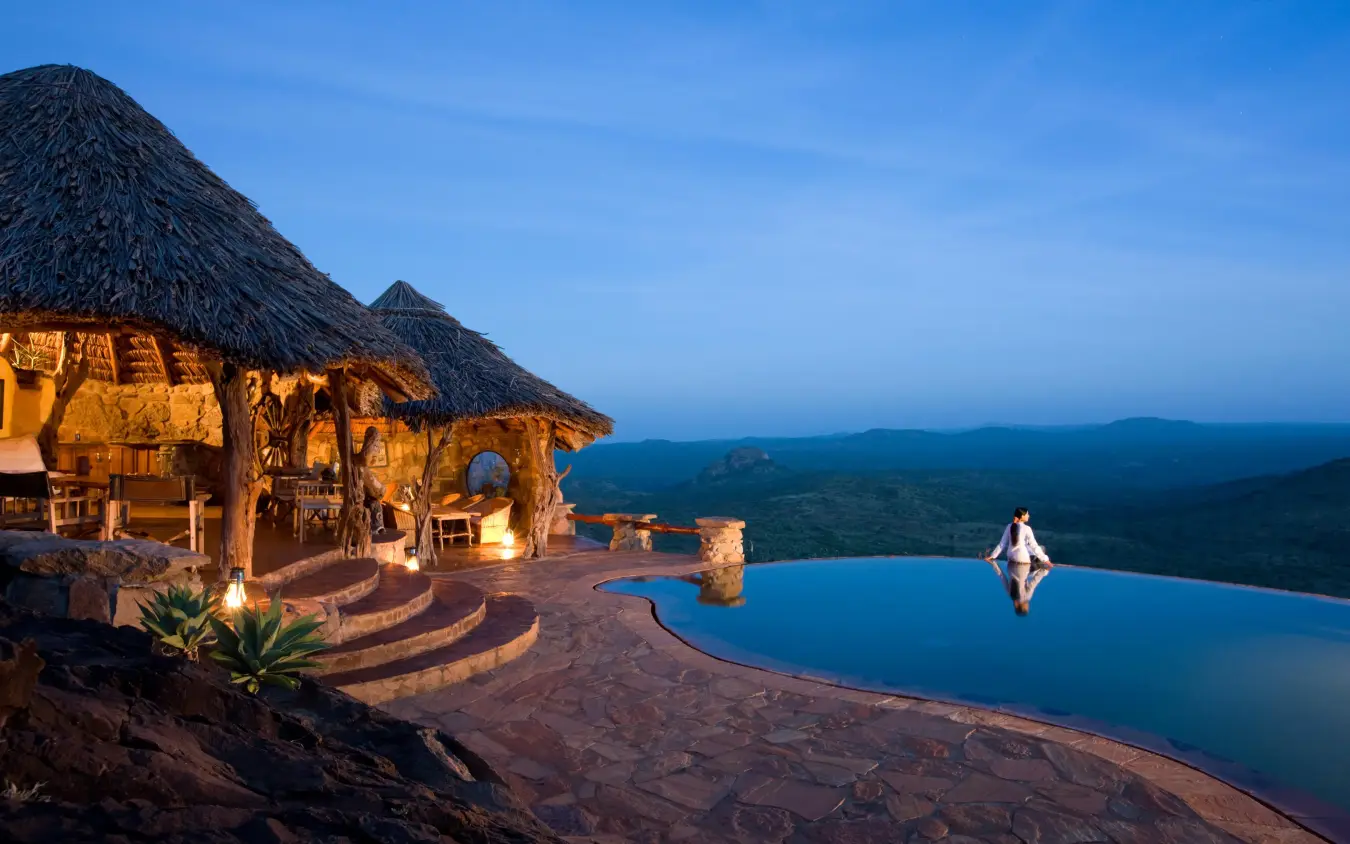
On an escarpment above the Ewaso Ng'iro, the days run on horseback, on camels and on foot with Samburu guides who grew up on this land. A waterhole and salt lick sit beneath the cliff, where elephant, reticulated giraffe, eland and buffalo come in view of the pool, and leopards visit after dark. On private land, night drives and off-road tracking are permitted, and doors-off helicopter flights reach the Suguta Valley and Lake Turkana within a morning. Ol Malo Lodge was built by hand and is run by a second generation of the Francombe family.
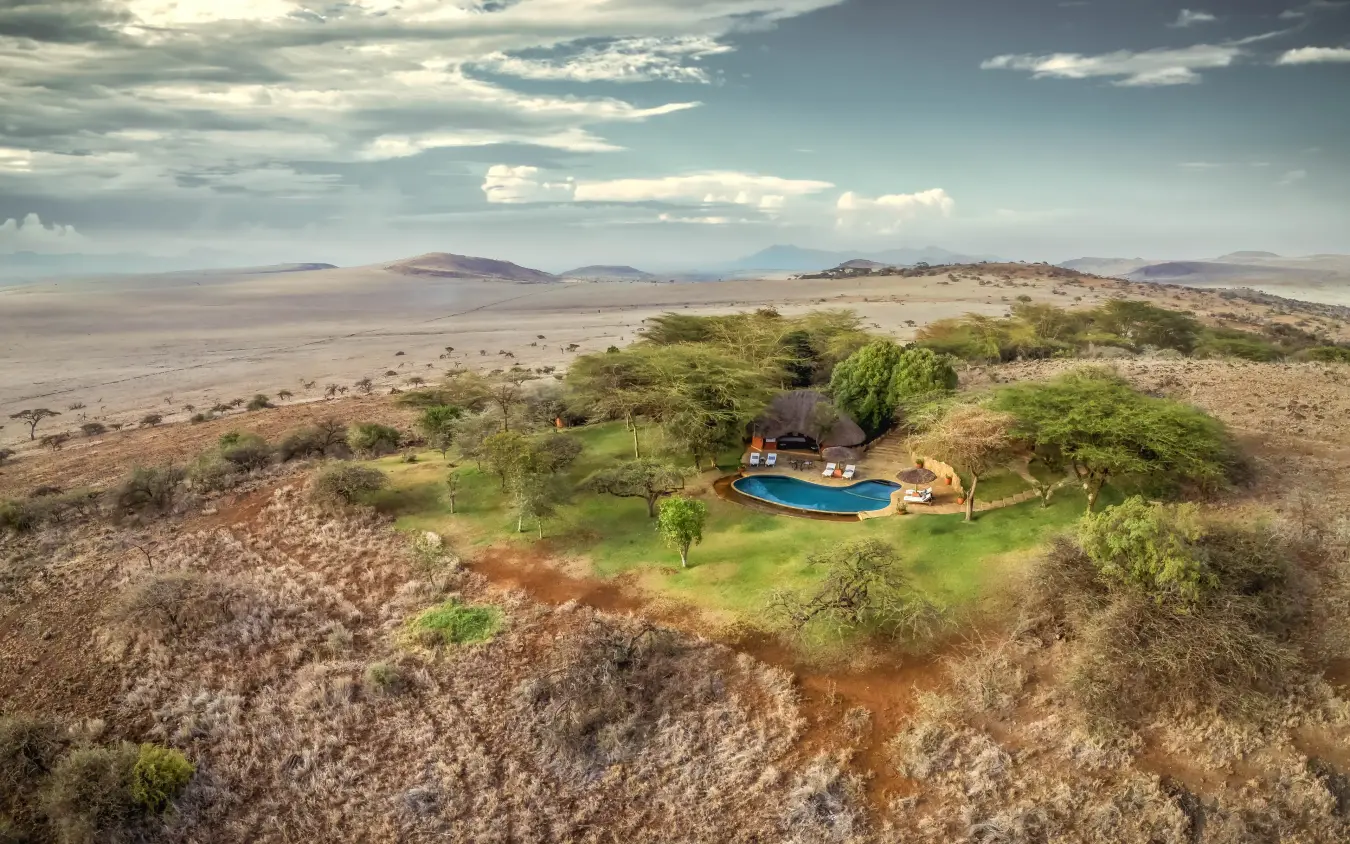
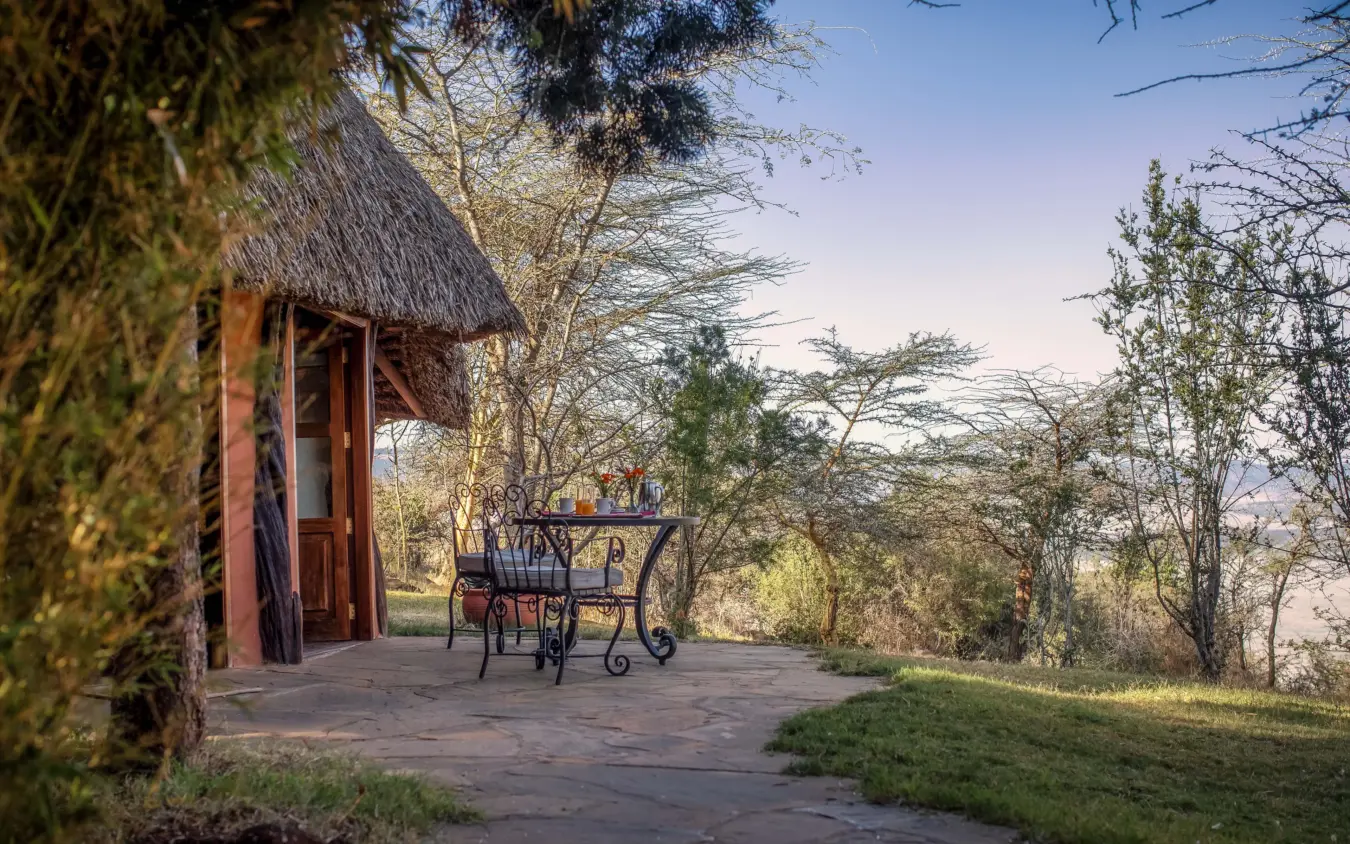
On a hilltop in the Lewa Wildlife Conservancy, Mount Kenya to the south, the last days go to rhino country. Black and white rhino are both resident here, and Grevy's zebra, reticulated giraffe, gerenuk and Beisa oryx graze among the plains game, with cheetah and wild dog moving through the same country. Lewa is private land, so guides leave the track for a sighting and drive after dark, and walking safaris go out with armed rangers. Kifaru House has five thatched cottages set wide apart, with breakfast on a terrace above a waterhole that elephants wade into.
Five moves across three weeks, which is less than the length suggests.
The nights run two, four, four, three, four and four, so at every stop but the first you unpack properly rather than living out of a bag. The opening leg is the hour by road from Kilimanjaro airport.
The rest go by light aircraft, and only one of them takes a day: the move from the northern Serengeti into Kenya, where passports have to be cleared on the Kenyan side rather than inside either park, so the flight either calls there on the way or the route goes around through Nairobi.
The last two hops stay inside Kenya, Mara North up to the Laikipia escarpment and then across to Lewa. Dates decide which border routing applies, because the cross-border flight is not offered all year round.
Yes, and the month decides where the cut falls.
The Kogatende nights exist for the Mara River, and the camp only stands up there from June, so outside those months they are the first to go and the route becomes a straight run of big cats, ranch and rhino.
Inside the crossing months the opposite holds: Kogatende and Mara North both sit in the migration, so one can go and the other take its nights. The two nights on Mount Meru are the easy trim if you land early enough to fly on the same day.
What we would keep is the pair at the end. The escarpment ranch is horses, camels and Samburu guiding, and Lewa is rhino and dry-country species, so losing either turns three distinct kinds of country into two.
Typically an Airbus H125, the type Tropic Air flies across northern Kenya.
Typically, because no one can promise a particular airframe on the day, and the company also has one larger Airbus H130.
The H125 suits this morning for two reasons. It works in heat and height, with an operational capability up to 23,000 feet, and the flight leaves a Laikipia escarpment and drops into desert within a morning.
And doors off is the reason to go rather than a flourish. The flying is low level, doors often wide open, seats forward and headsets on, so nothing sits between a lens and the floor of the Suguta Valley or the shore of Lake Turkana.
Numbers are the one constraint. Five passengers and a pilot is the H125's limit, so a party of six needs the larger machine or a second flight.
Because it is an hour from the airport and nothing like the rest of the trip.
Arusha National Park covers 552 square kilometres on the flanks of Mount Meru, Tanzania's second-highest peak at 4,566 metres, and its days are walked rather than driven: the park authority arranges hiking at its gates and requires an armed ranger escort on the mountain itself.
What that buys is montane forest instead of plains, fig and cedar, colobus calling at first light and Sykes' monkeys working the branches below, ground you cross at walking pace with a ranger rather than from a seat in a vehicle. Two nights also absorb the flight in, so the Serengeti plains begin with you rested.
Canoeing on Small Momella Lake can be added if you want it, with buffalo, giraffe and waterbuck often at the water; the park takes it by prior arrangement, so tell us in advance.
A different cast of animals.
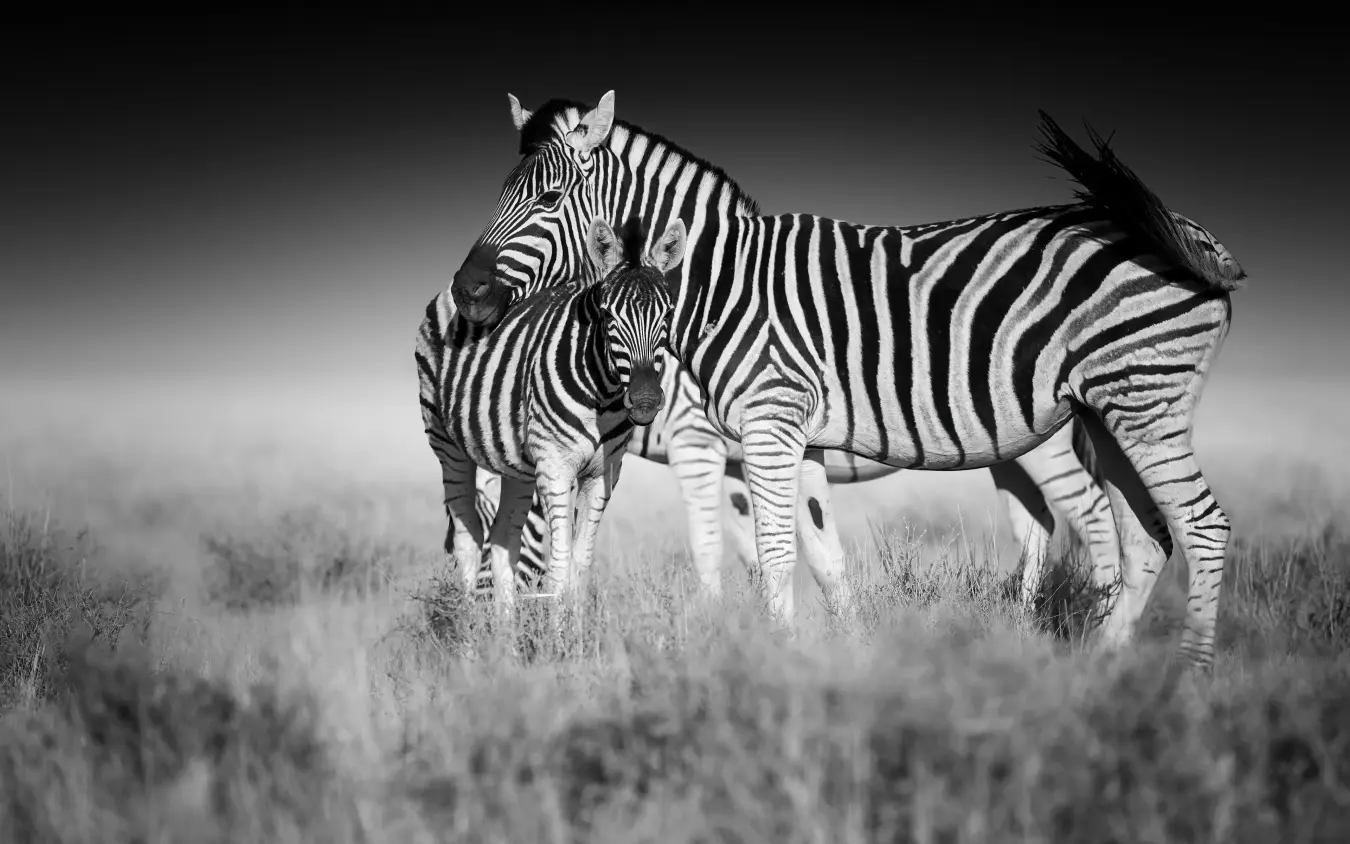
North of Mount Kenya the country is drier, and the commoner plains species give way to their arid-country relatives: Grevy's zebra, reticulated giraffe, gerenuk, Beisa oryx and the Somali race of ostrich.
Grevy's is the one worth knowing about. It is the rarest zebra there is, with roughly three thousand left in the wild, and 264 counted across this landscape, so a meaningful share of what remains lives on the ground you are driving over.
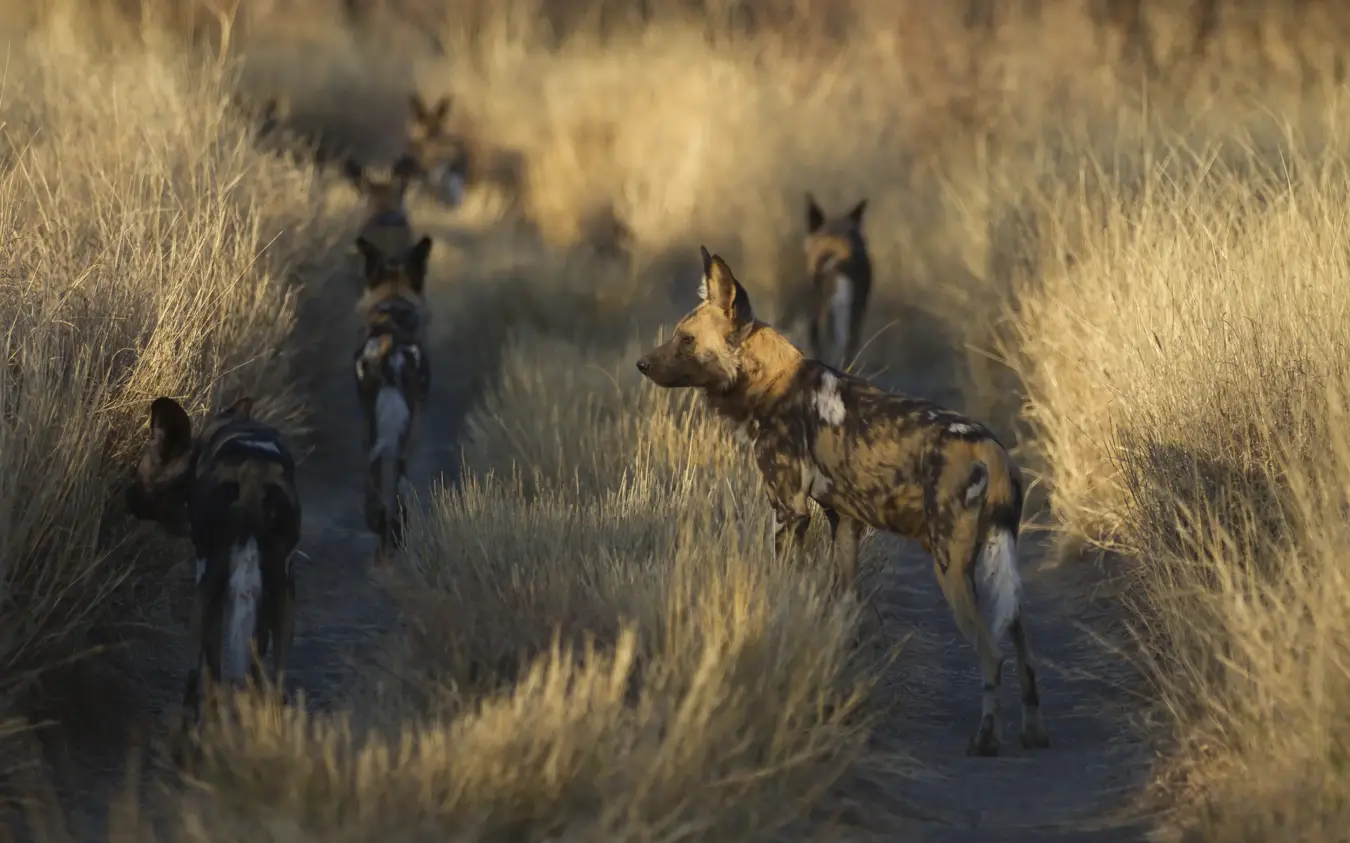
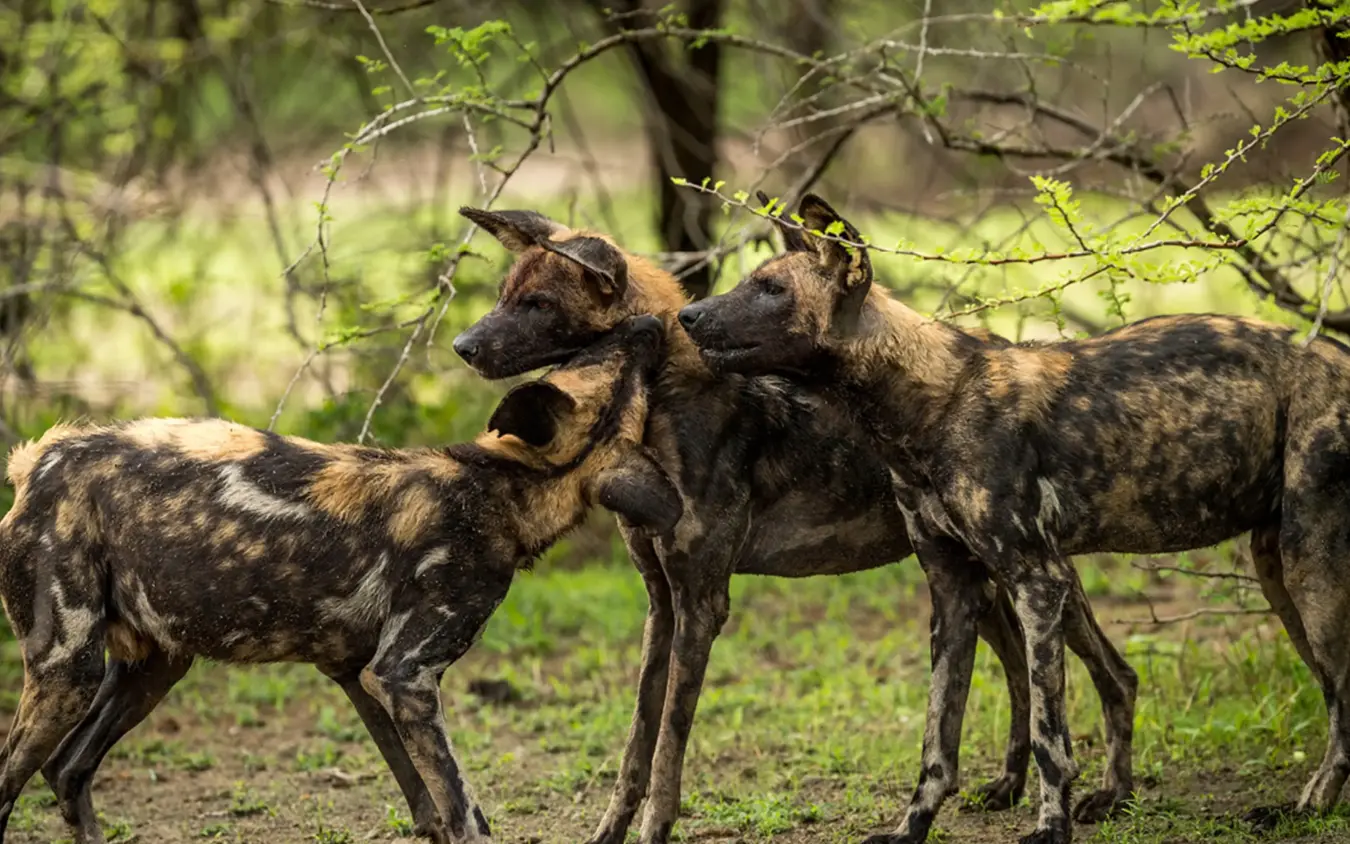
Wild dog move through too, although they range over enormous distances and a sighting is luck rather than planning: Laikipia has nine packs and 80 to 90 animals. Black and white rhino are both resident, and four nights gives several mornings to look for them.
June opens it and October closes it, with July, August and September the strongest stretch inside that.
The camp at Kogatende only stands up there from June, and the crossings on the Mara River run from about late July into October, so the second half of the year is when this itinerary is itself.
Our own month-by-month advice for all seven places on this route settles on the same three: July through September. October matches that in the Serengeti and the Mara and eases off in Laikipia, where November is the low point of the year.
January and February make a real alternative if the northern Serengeti nights move south to the calving instead, since our advice rates both months highly for the Mara, for Laikipia and for the north of Kenya.
The long rains in April and May put every stop on it at its lowest.
Ed Charles, BBC Producer
Fitzroy are true specialists in accessing the wilderness. They know where to go and importantly, when to go there. Highly recommended.
rwanda & tanzania
Ten nights linking Rwanda's Virunga gorillas with the far northern Serengeti and the Mara River, via Kigali.

tanzania
Eleven nights linking the Ngorongoro rim, the herds of the Serengeti and chimpanzee tracking at Mahale.
tanzania
Ten nights in Tanzania, from boat and walking safaris on the Rufiji lakes to the reefs and forest of Pemba Island.
rated five stars by our clients

our approach
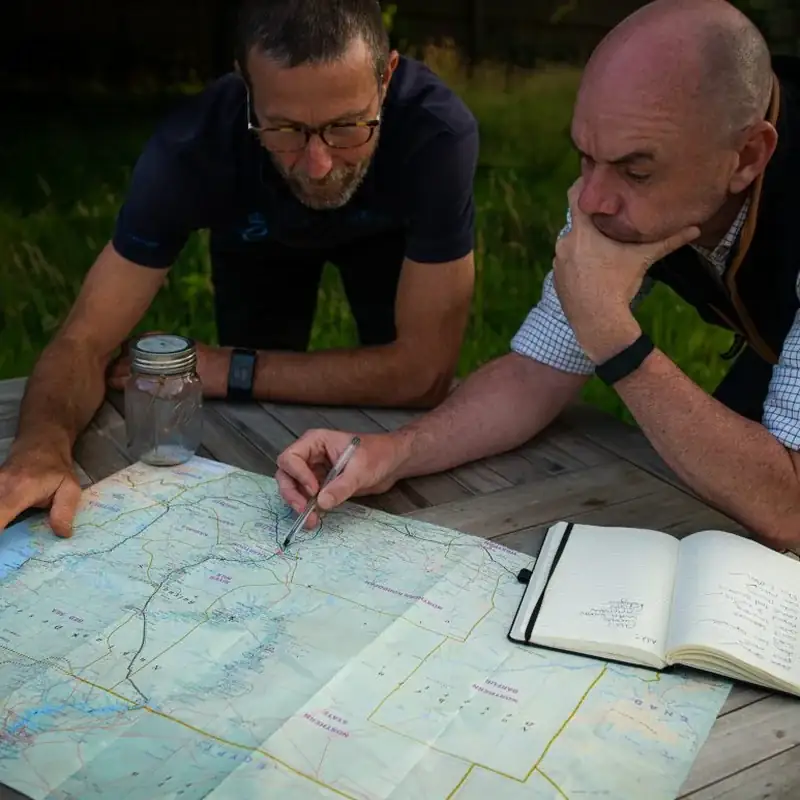
Every journey starts with a conversation. We take the time to understand your vision before we start planning.
Whether by phone or in person, we work with you directly to shape something that is considered, personal, and expertly delivered.
Every journey starts with a conversation. We favour a direct, personal approach: understanding your vision before anything else.
Whether by phone or in person, we work with you directly to shape a journey that is both thoughtfully considered and expertly delivered.
Get in touch to start planning yours.