











kenya & tanzania
big cats at naboisho, then zanzibar
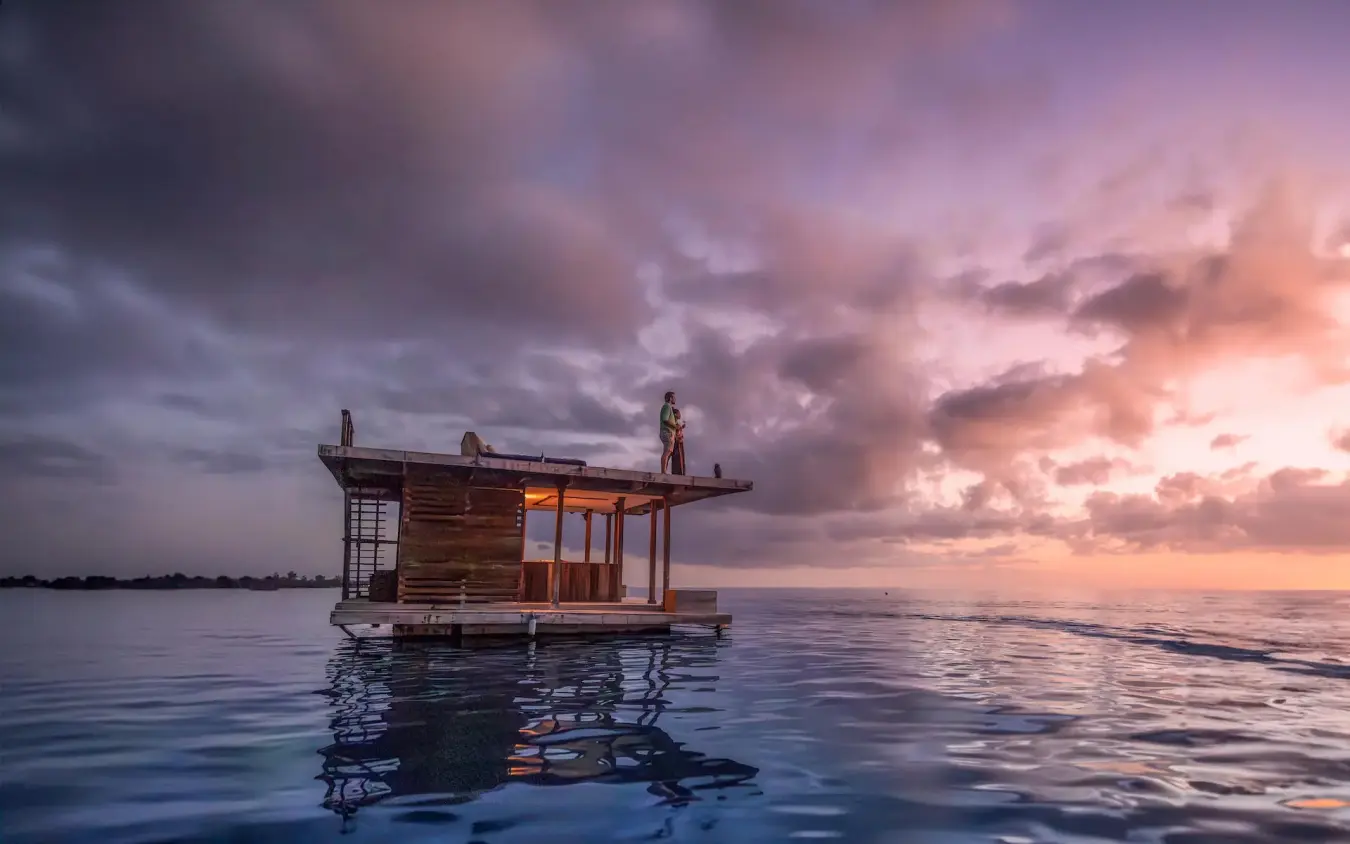
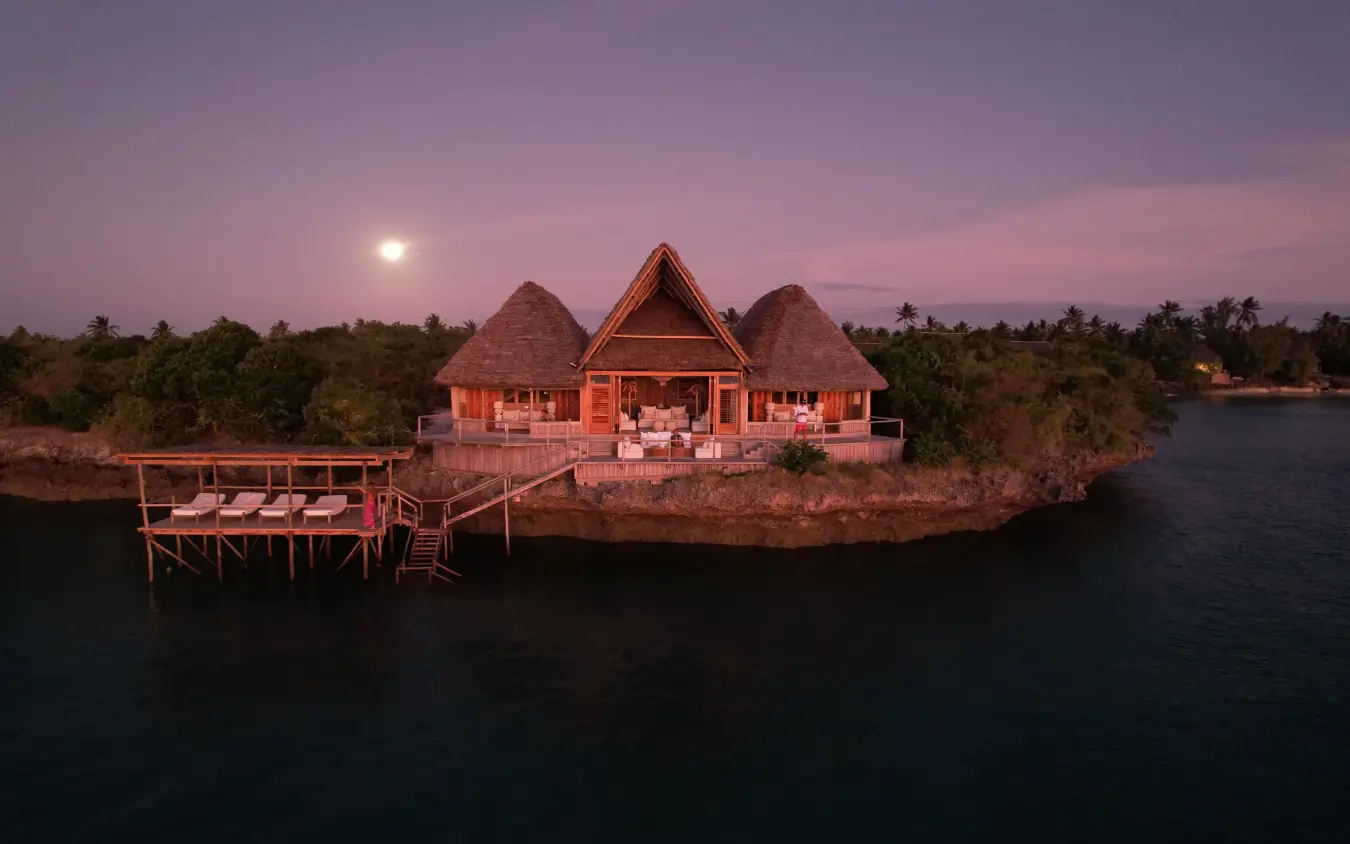
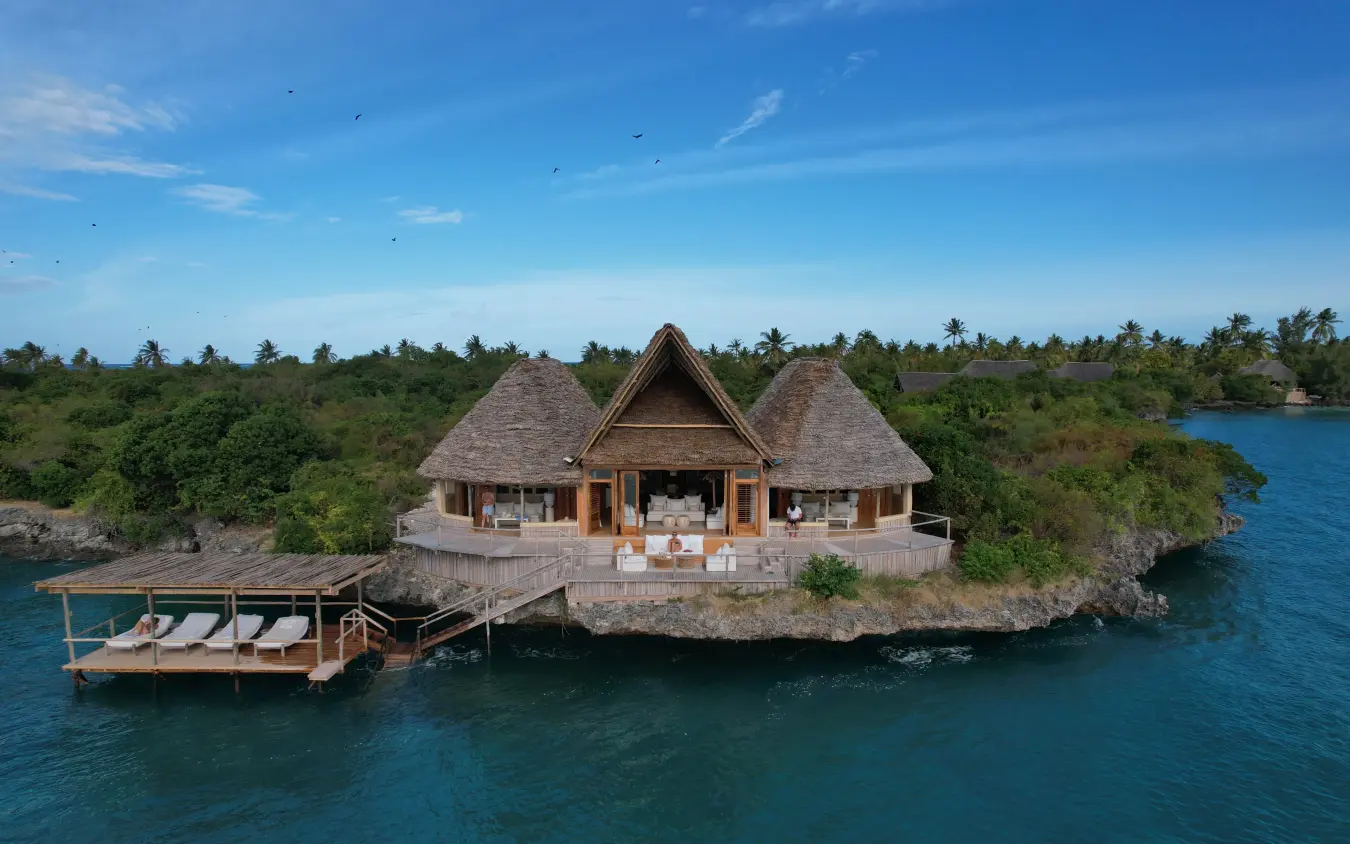
Twelve nights linking game drives in Kenya's Mara Naboisho Conservancy with a swimmable lagoon on Zanzibar's coast.
- Private Safari
- From $11,125 pp
- 2 guests
- 12 nights

Sixteen nights run from northern Tanzania into Kenya’s highlands. A first night below Mount Meru at Arusha leads to the rim of the Ngorongoro Crater, then a ridge in the western Serengeti corridor. Crossing into Kenya, the trip takes in the Maasai Mara’s Olare Motorogi Conservancy, the Laikipia escarpment above the Ewaso Ng’iro, and finally the Borana Conservancy under Mount Kenya.
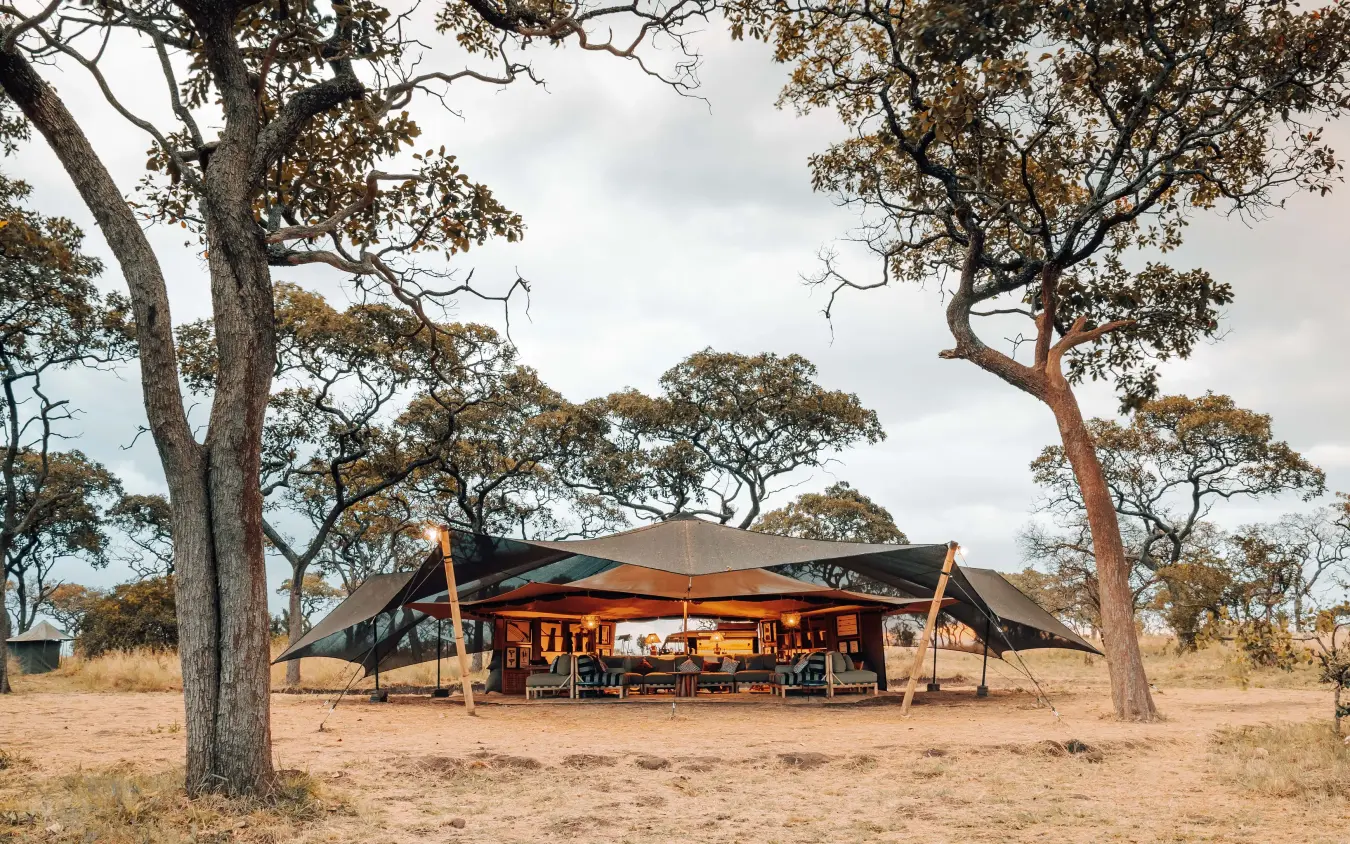
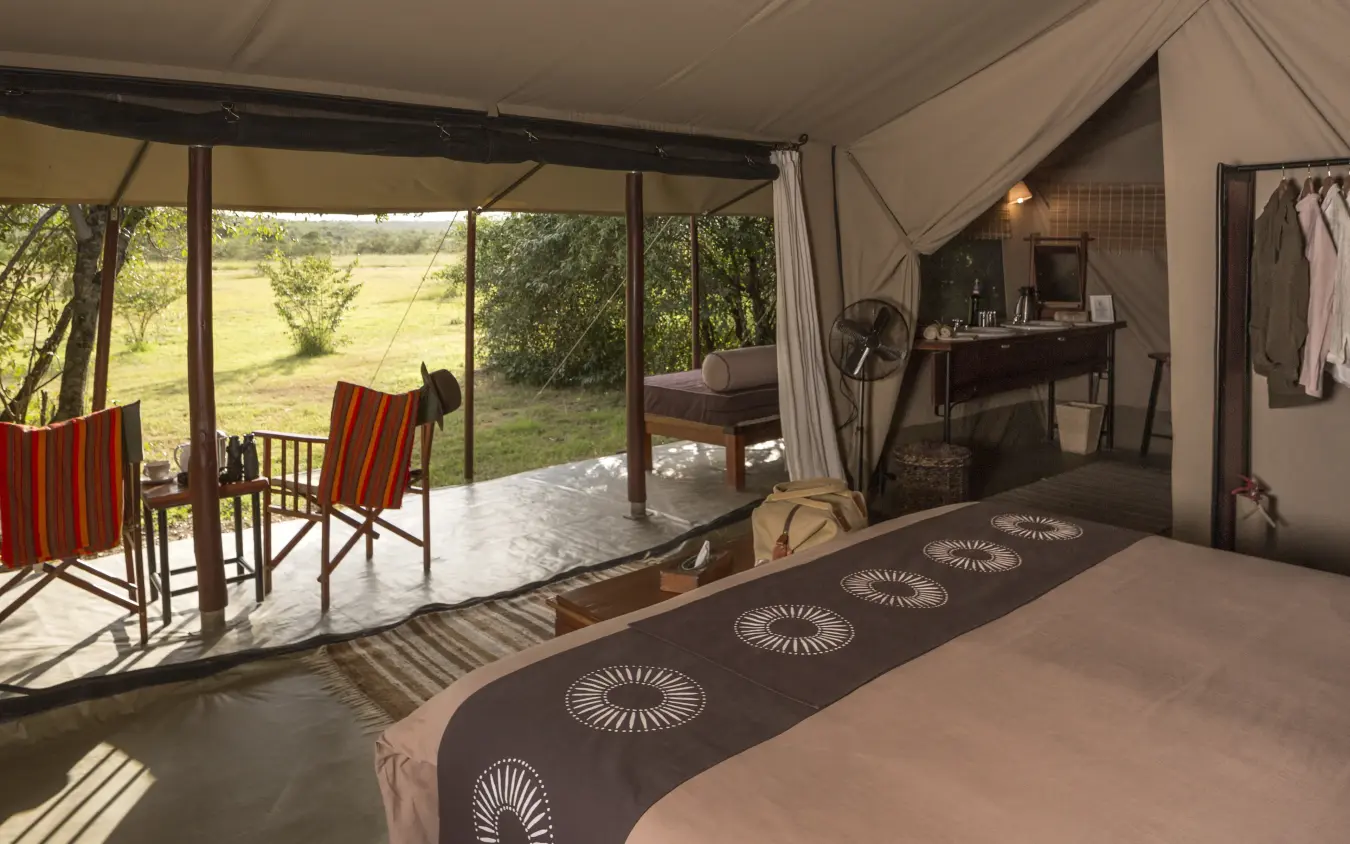
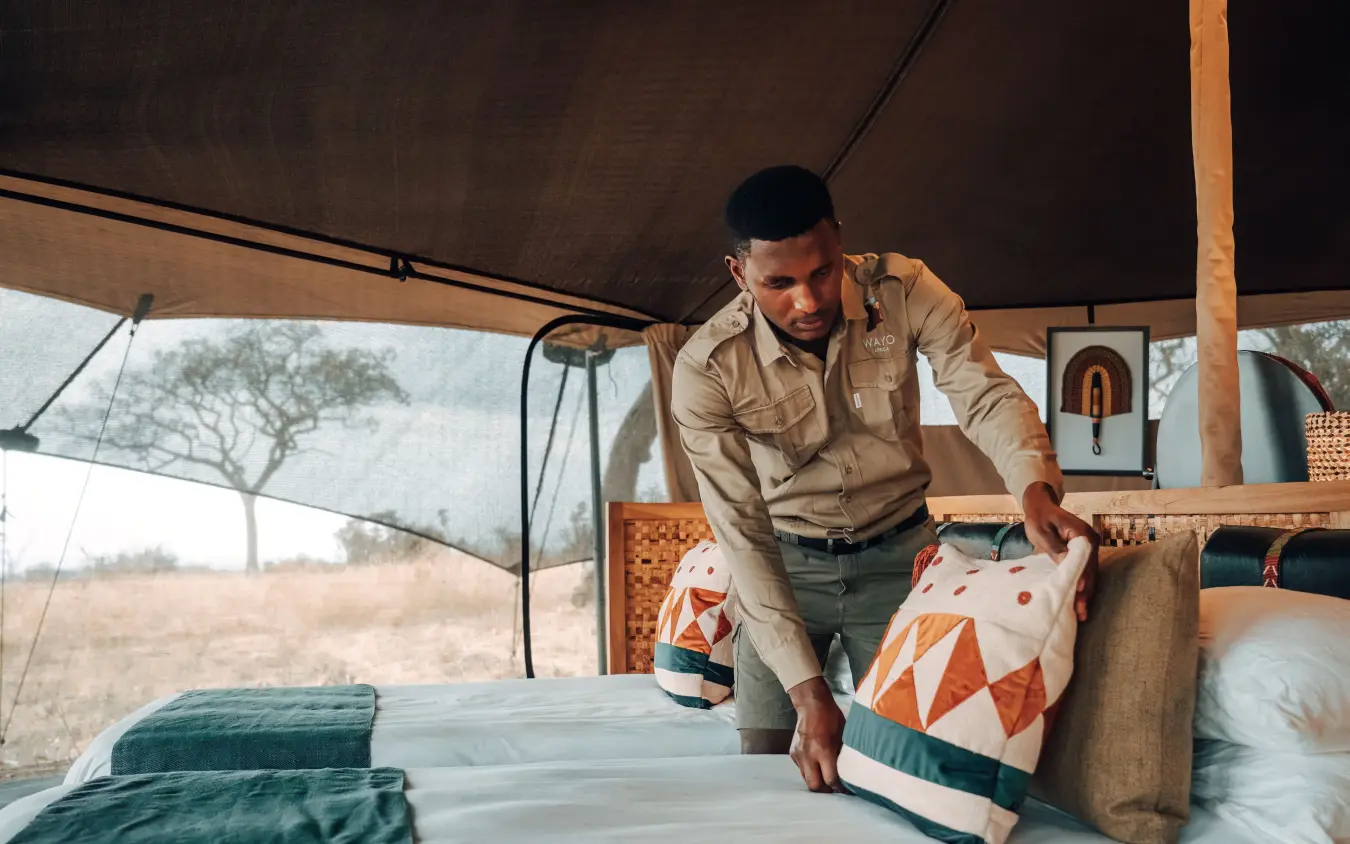
The days move from forest walks and crater descents to off-road tracking, night drives, horseback and camels, ground the national parks do not allow. Each stay is a small, design-led camp or family ranch, from ten and twelve tented suites to eight cottages of stone and cedar, chosen for its position rather than its size.
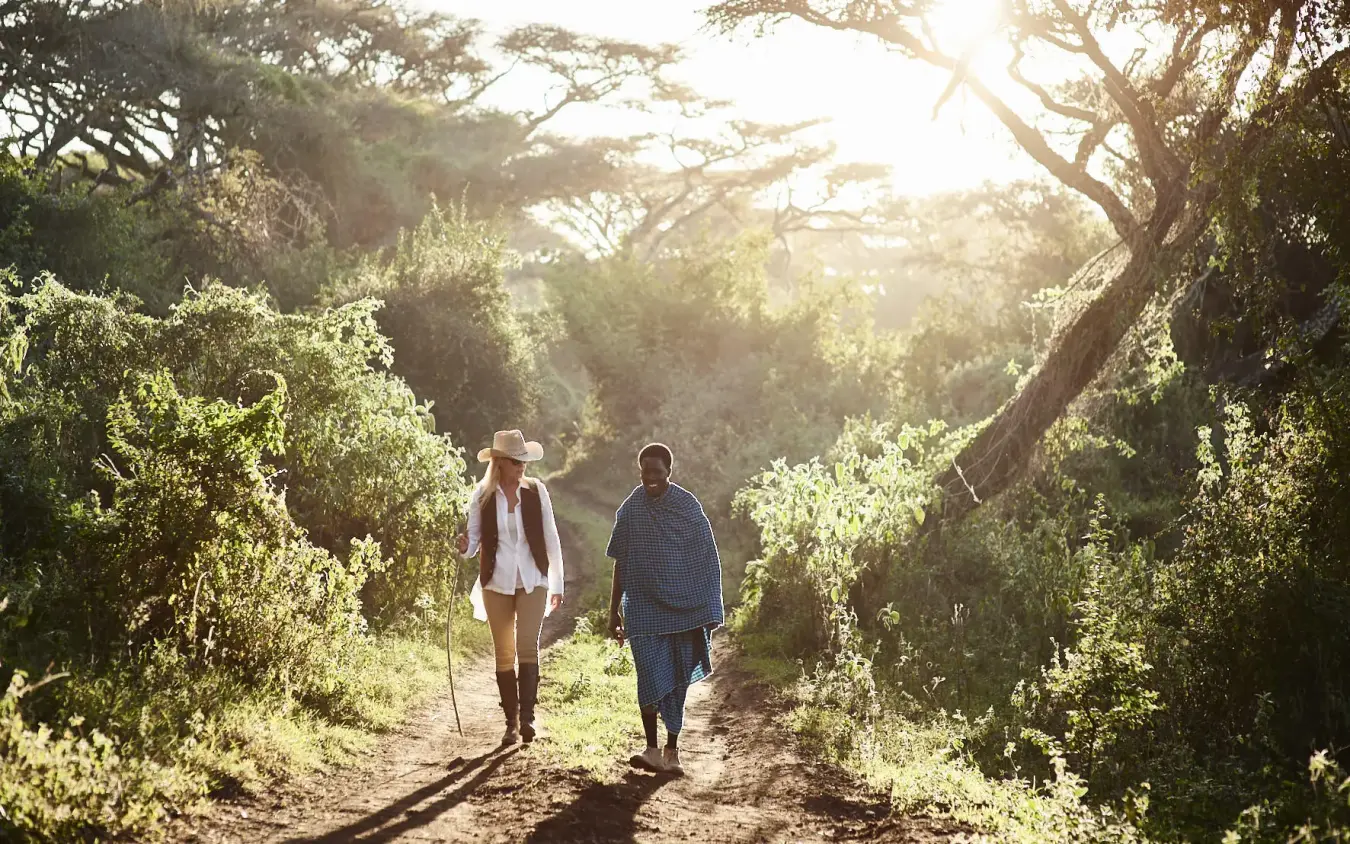
You land at Kilimanjaro International, an hour's drive away, and spend the first night in montane forest on Mount Meru's lower slopes, inside Arusha National Park. Here the days are walked rather than driven, with an armed ranger and colobus monkeys calling from the fig and cedar crowns at first light. Opened in July 2025, Koroi has nine rooms, eight tented chalets on raised timber platforms and a single treehouse suite, all facing a seasonally flooded glade where giraffes move through the trees below.
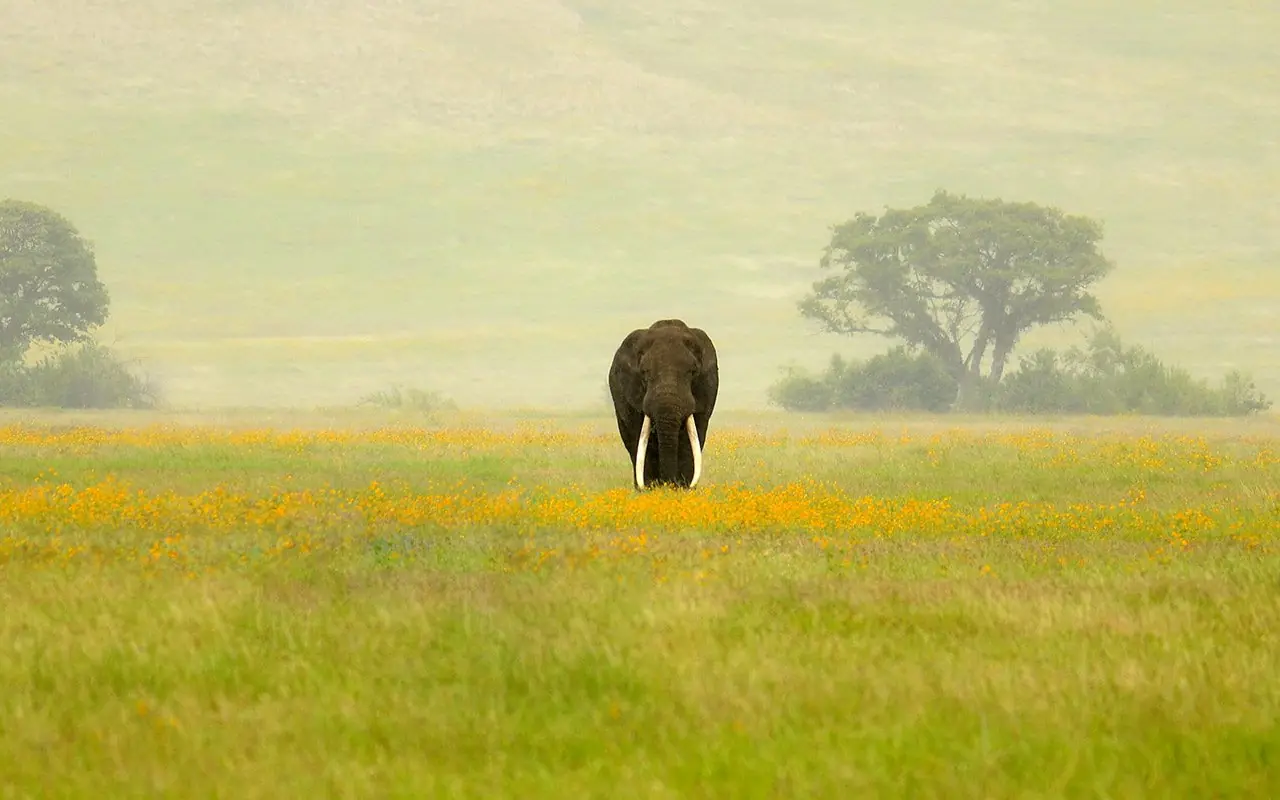
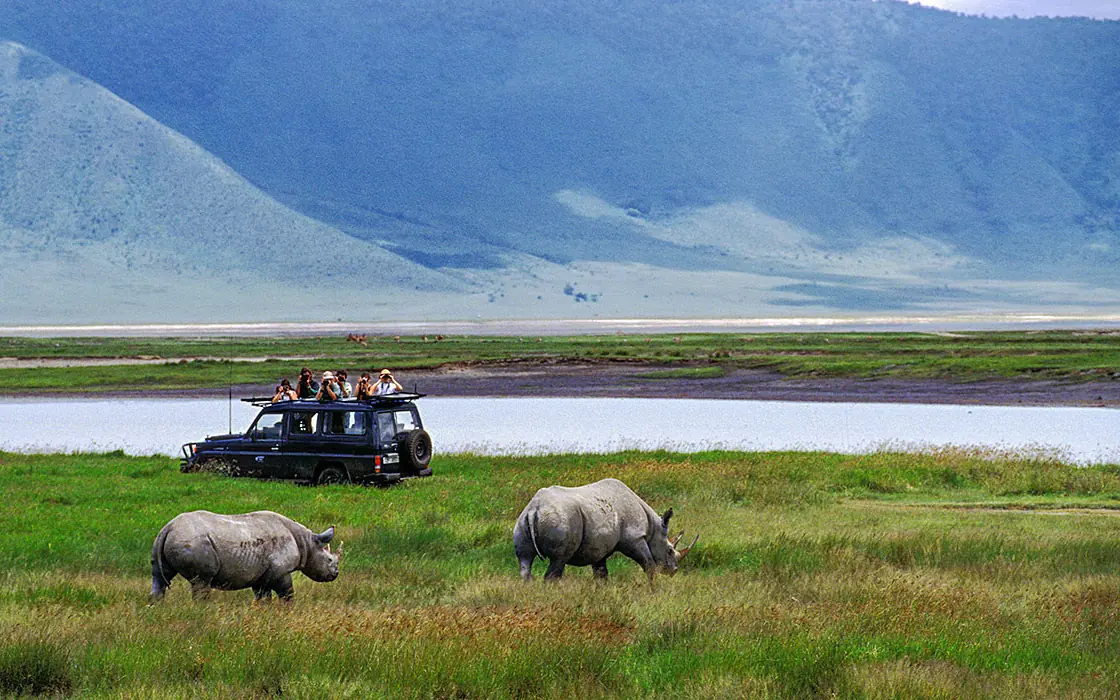
From the forest below Meru you continue to the wooded rim of the Ngorongoro Crater. A stay is built around one early descent onto the floor, among the first vehicles down, with a picnic breakfast and lunch carried for the day; the crater is one of the more reliable places in Tanzania to see black rhino, and the Big Five can turn up in a single morning. Ten tented suites stand in acacia forest close to the descent road, at roughly 2,300 metres, where evenings turn cold and a hot-water bottle answers the altitude.
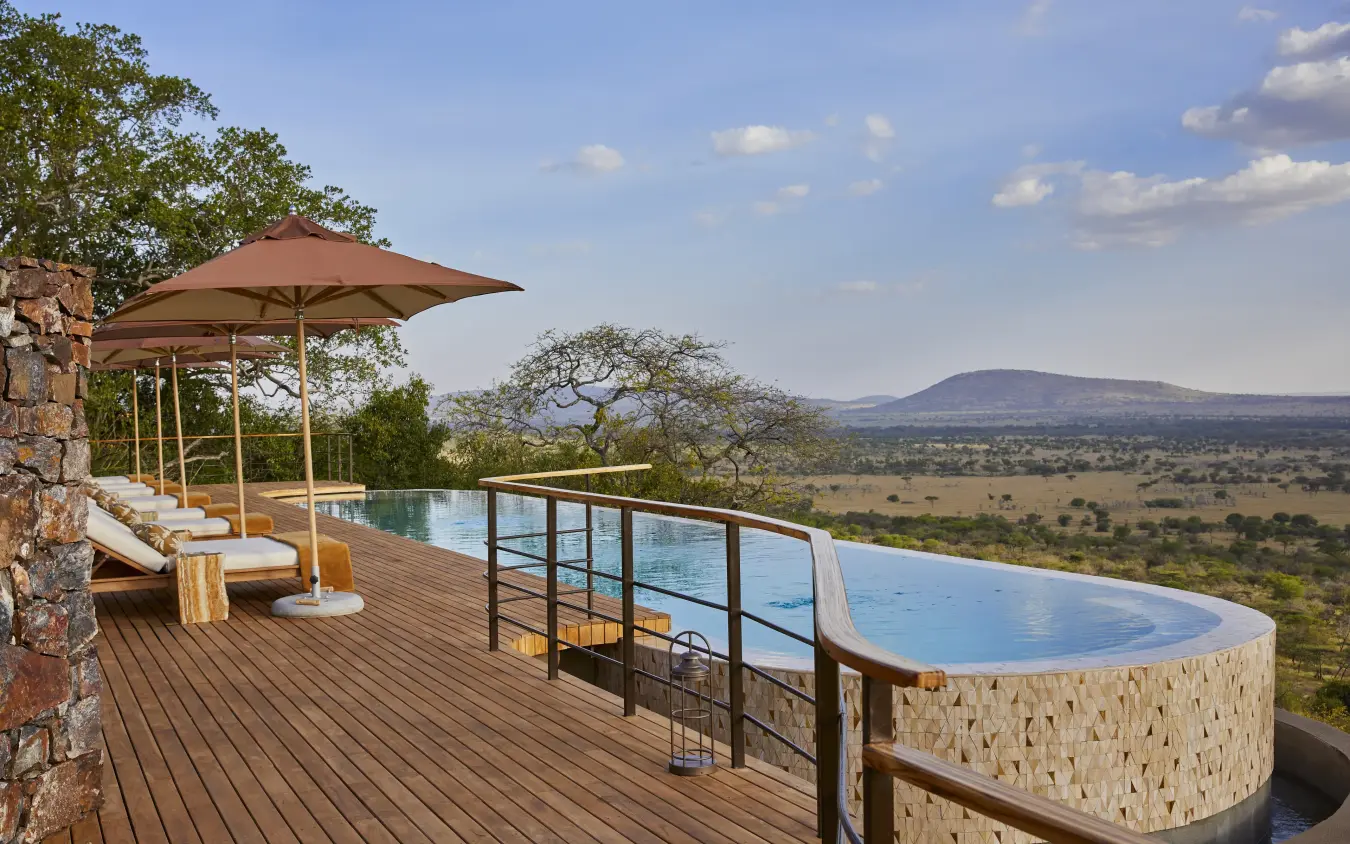
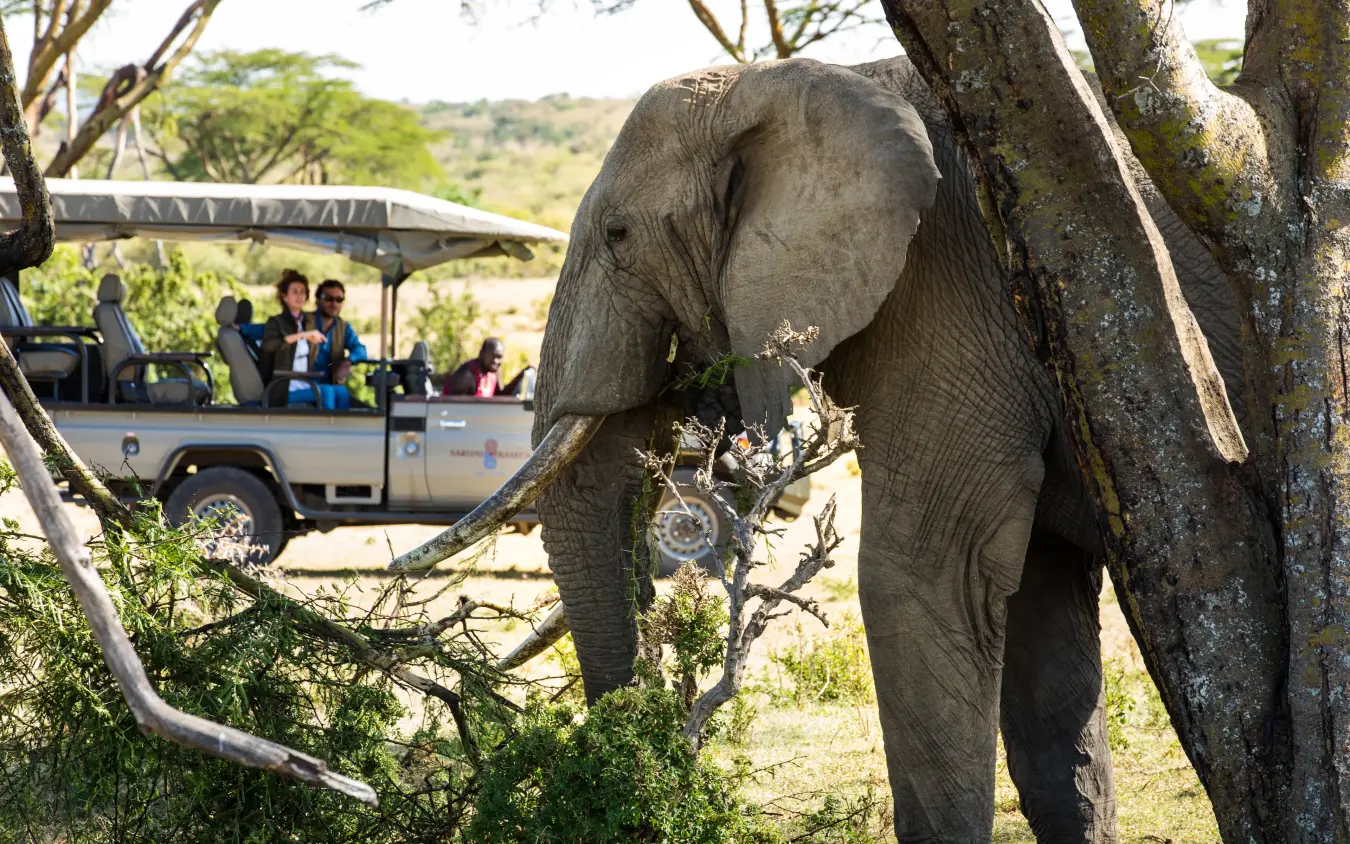
Next comes a high, isolated ridge in the western corridor of the Serengeti, where the Great Migration passes through and the Grumeti country holds resident lions, leopards and hyenas. Below the ridge a waterhole draws elephants, buffalo and antelope into view, and custom Land Rovers switch between fuel and electric power so a morning drive can approach a herd in near silence. Twelve tented suites double as a gallery, with forty-six museum-grade works woven through the lodge, which opened in July 2025.
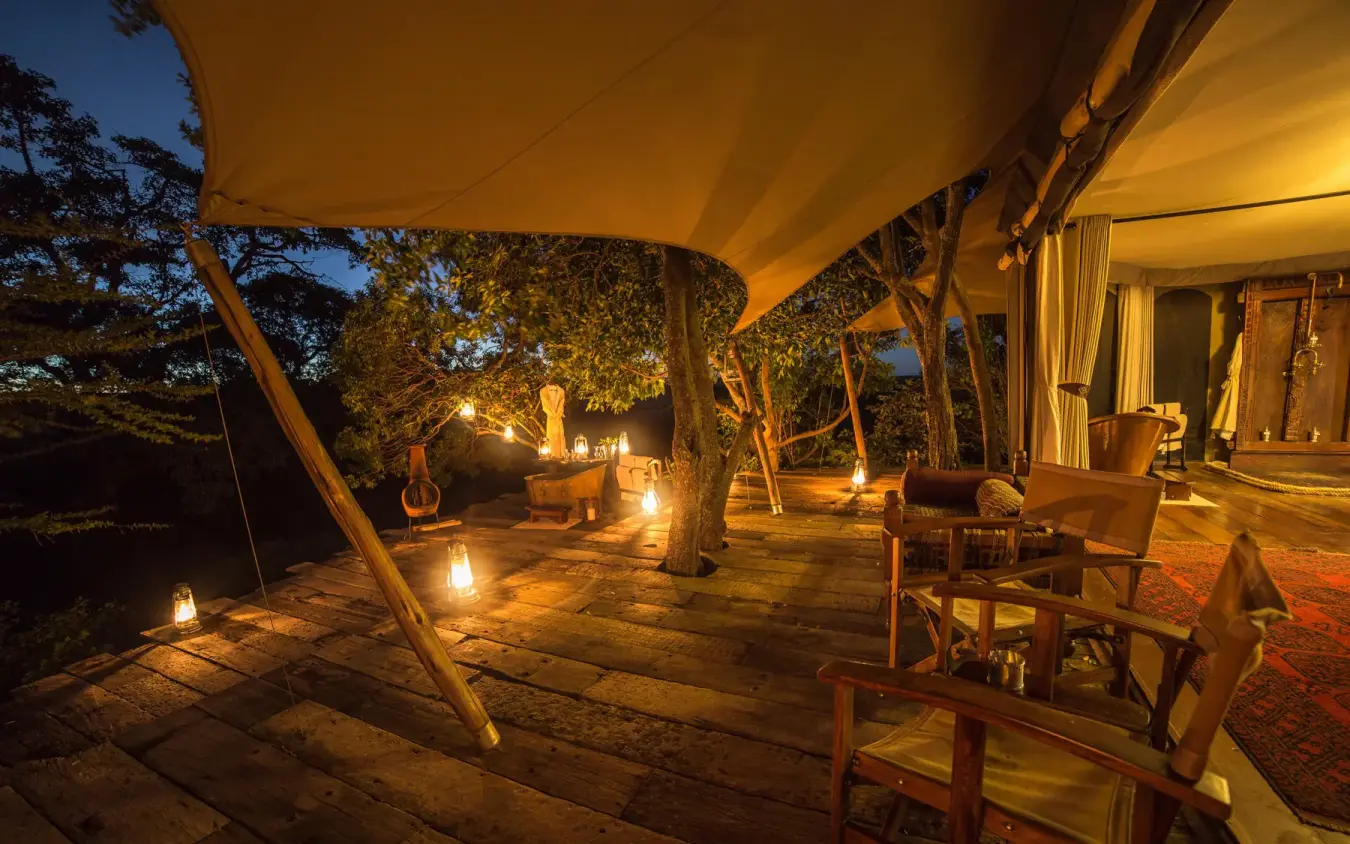
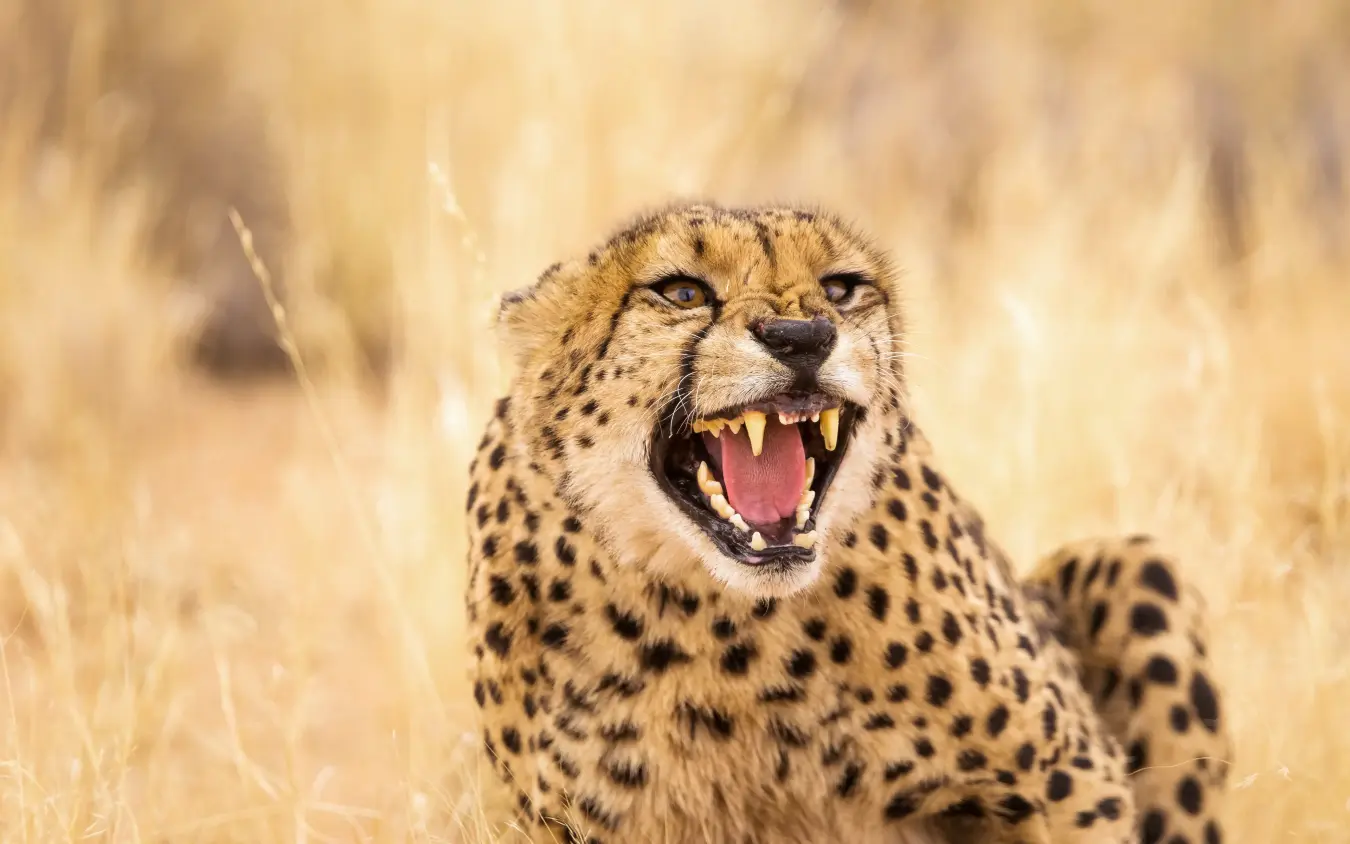
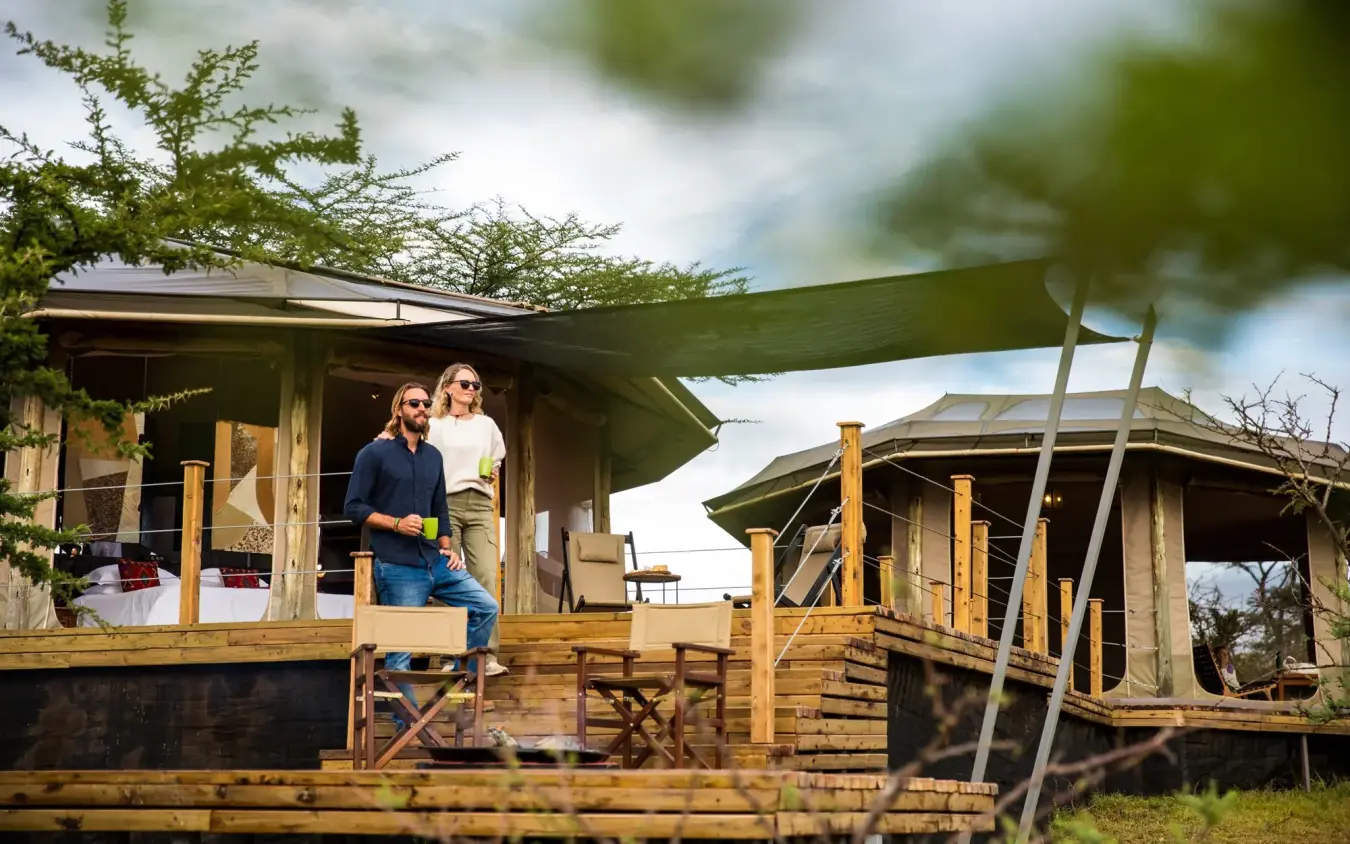
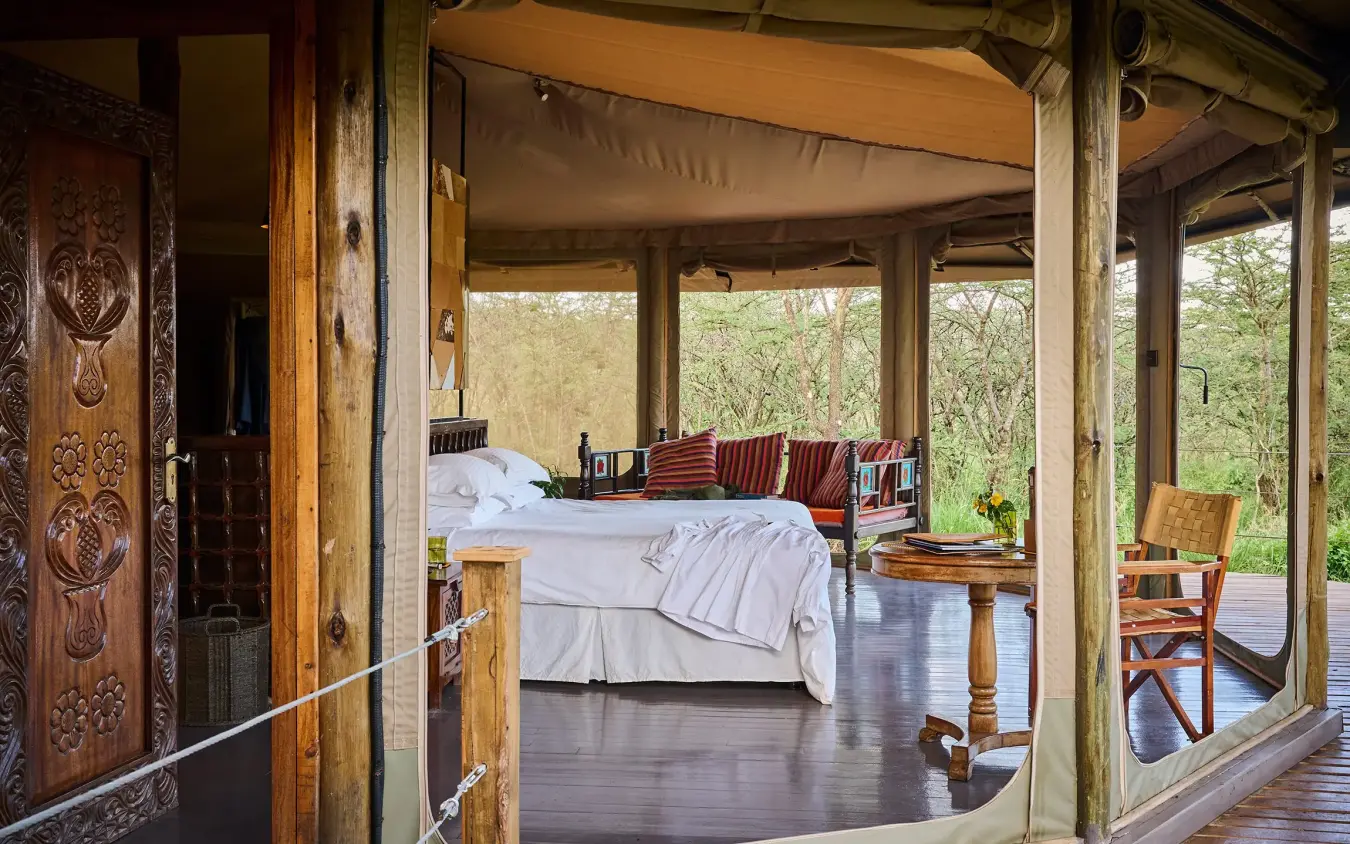
Crossing into Kenya, you reach the private Olare Motorogi Conservancy on the northern edge of the Maasai Mara, where guests track off-road, drive after dark and walk the plains on foot. Traversing rights reach into Mara North and the reserve itself, where the migration's river crossings run roughly July to October; leopards and lions work the riverine forest close to camp. Seven octagonal tents sit on decks of recycled railway sleepers, reached across a rope suspension bridge, each carrying a Canon camera set and Swarovski binoculars.
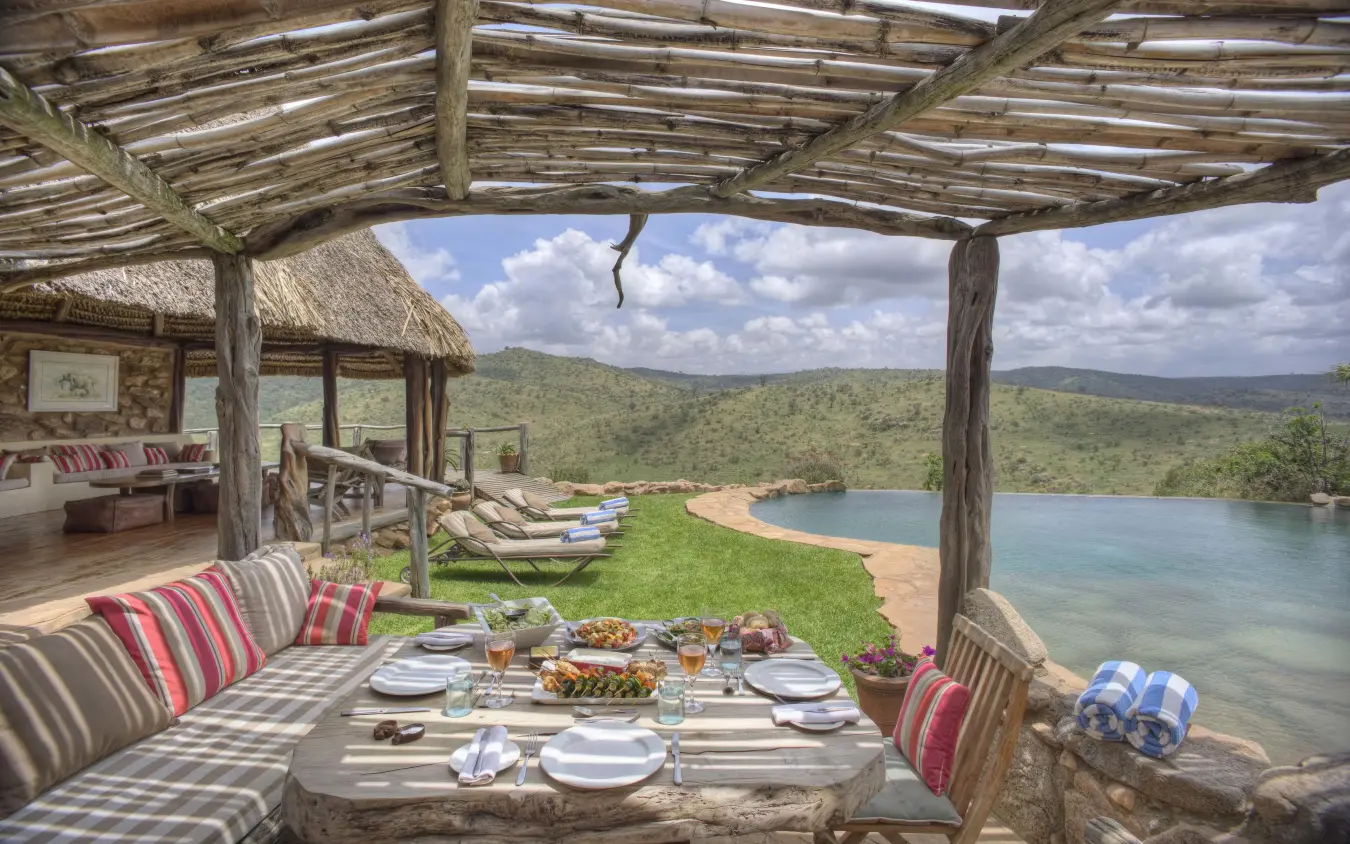
From the Mara you move to a family ranch on a Laikipia escarpment above the Ewaso Ng'iro, where days run on horseback, on camels and on foot with Samburu guides. A waterhole and salt lick sit beneath the cliff, drawing elephant, reticulated giraffe, eland and buffalo, while leopards visit after dark and guests can sleep in the stone hide beside it. Because Ol Malo is private land, night drives and off-road tracking are permitted, and the cottages here were hand-built by the Francombe family, now run by a second generation.
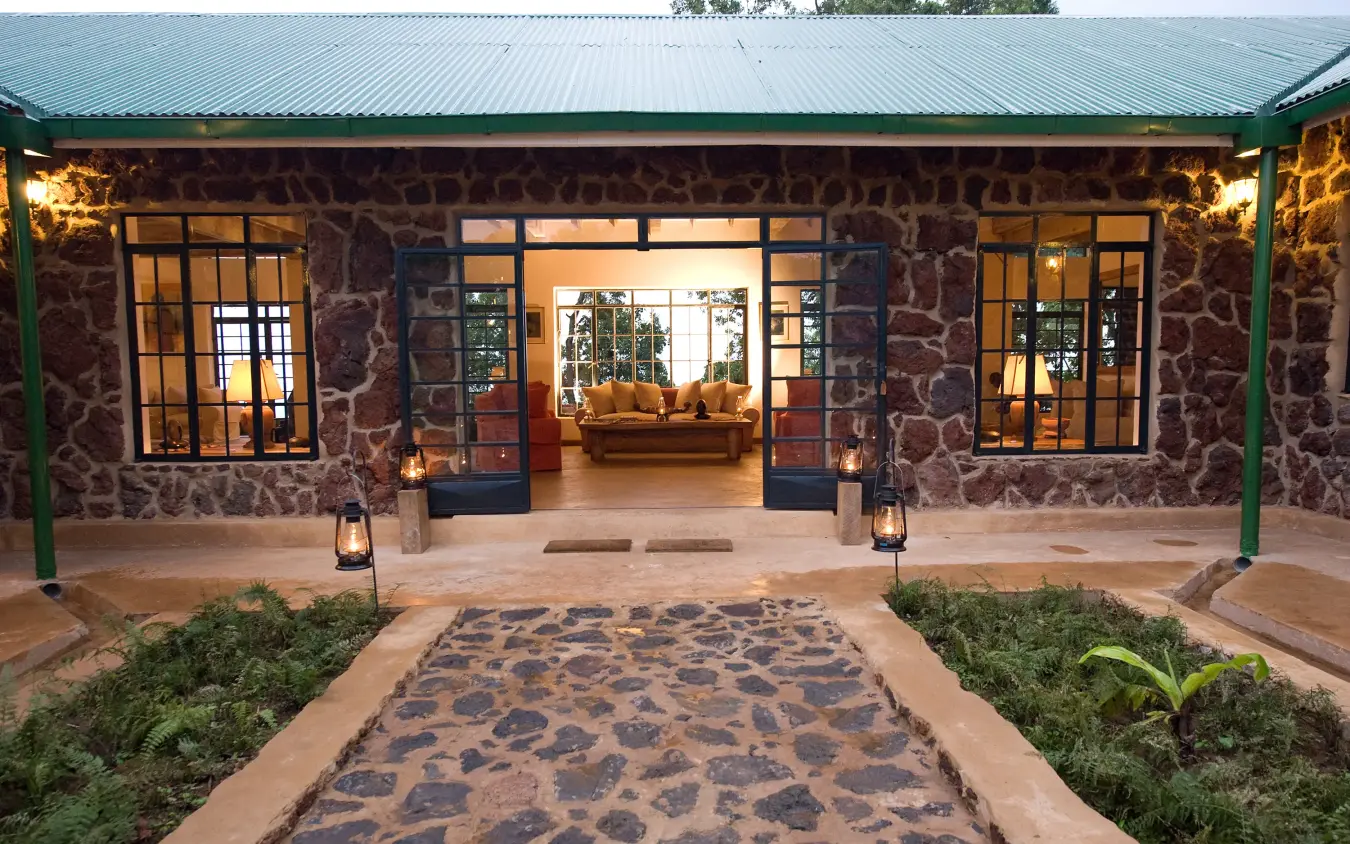
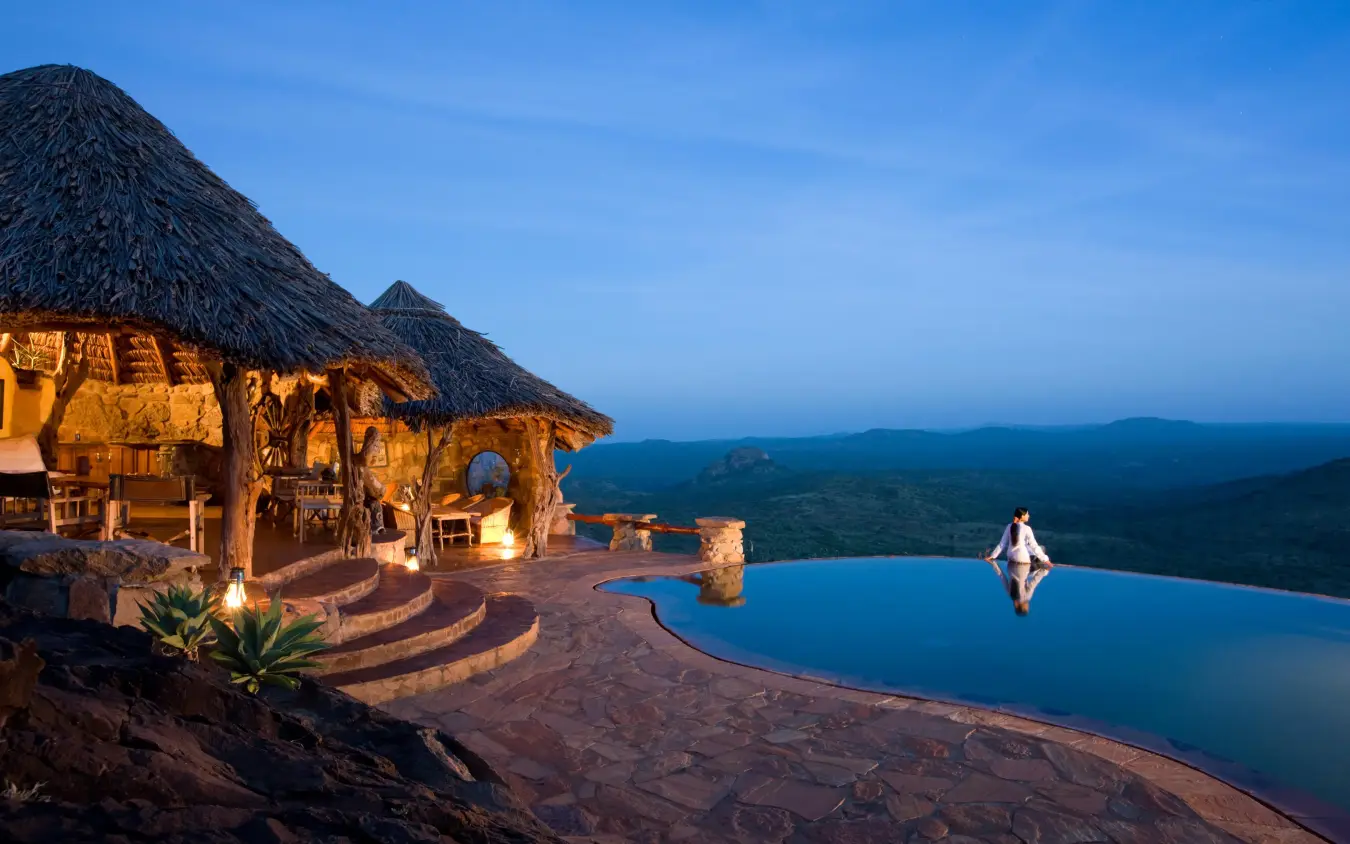
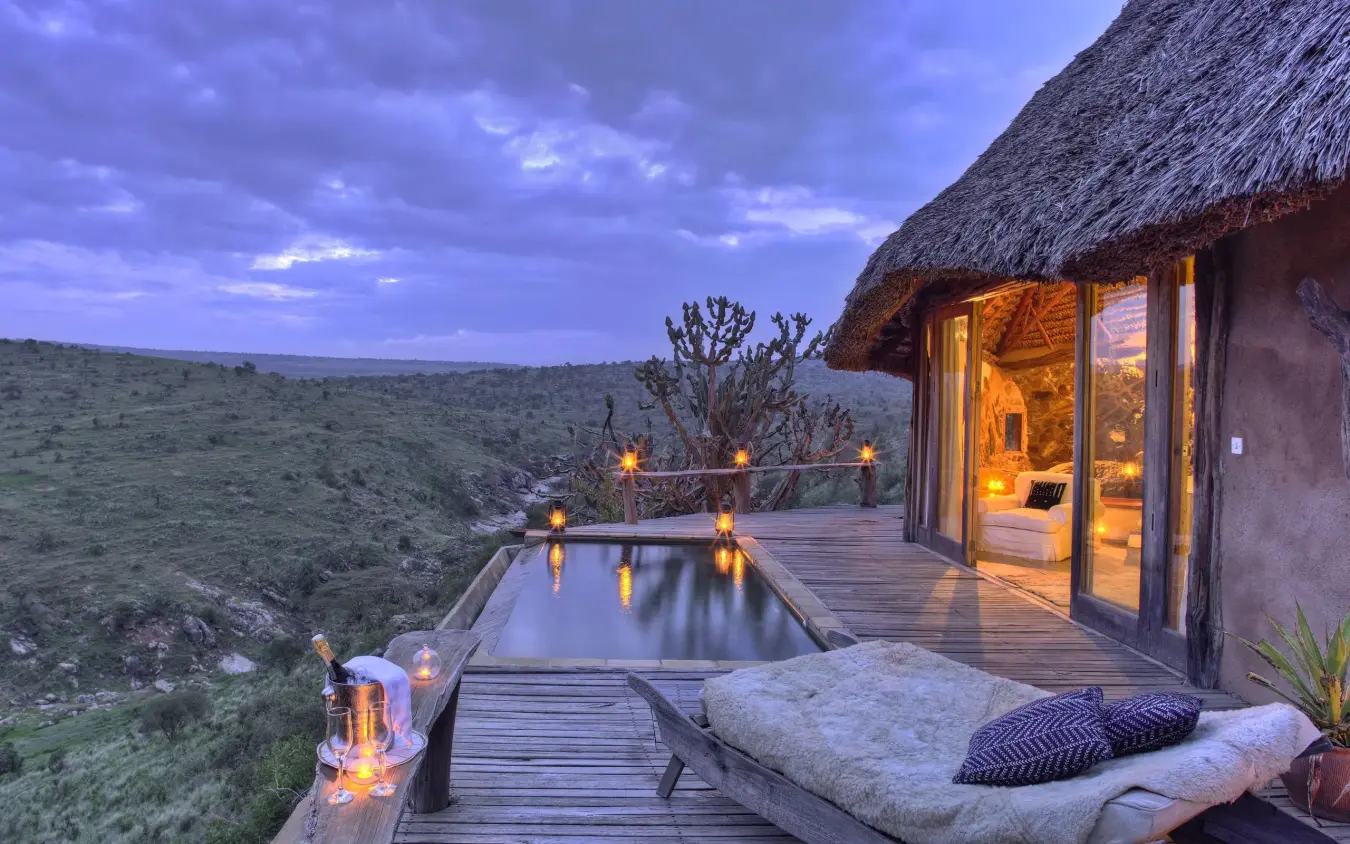
The final four nights are spent on the Borana Conservancy, a private rhino sanctuary in the Laikipia Highlands where rangers monitor the animals daily and guests can join them on foot. Since the boundary with Lewa came down, the two form a single landscape of more than 92,000 acres, home to over 200 black and white rhino. Days also fill with horse riding among zebra and giraffe, night drives, biking and helicopter excursions to the Ngare Ndare Forest. Eight cottages of local stone and cedar terrace into a hillside above the Samangua Valley, with Mount Kenya rising to the south.
One full day below the rim, and the packed picnic makes it work.
Vehicles may move inside the conservation area from 06:00 to 18:00 and the descent gate closes at 16:00, so leaving a rim camp at first light buys the most hours down there, and carrying breakfast and lunch means you stay rather than climbing out to eat.
Getting out of the vehicle is not allowed away from the marked picnic areas, which is the Authority's rule. The floor is open country holding lion, elephant and buffalo and one of Tanzania's more dependable populations of black rhino, so the Big Five can turn up in a morning, though a rhino is usually a distant shape and nothing is promised.
Expect company: our own advice calls July and August the most reliable months and the busiest, with June, September and October giving the same conditions and more room.
Typically the Airbus H125.
Tropic Air flies five of them and one larger Airbus H130 with six seats, out of Nanyuki, and nobody can commit to one airframe on the day, so typically is as firm as it gets.
Three things suit it here. It takes five passengers and a pilot, all facing forward on headsets, which covers a family.
Its flying is low level, doors often wide open, which is what lets the Ngare Ndare Forest, 13,000 acres of indigenous woodland along Borana's southern boundary, show from the air as what it is: the corridor elephants have used for centuries between these conservancies and Mount Kenya.
And it is made for thin, warm air, certified by Airbus to hover out of ground effect at 12,600 feet at maximum weight. It lifts off the lodge's own helipad, so no airstrip is involved.
It means one conservancy where there were two.
The two were joined in 2013, and the landscape now runs to 93,000 acres holding 273 black and white rhino at the March 2025 count, 130 black and 143 white, about 14 per cent of every rhino in Kenya.
Over four nights that tells in two ways. The rhino range across the whole of it and are accounted for daily by the teams who monitor them, so they are found rather than searched for, though no wild animal is ever a certainty.
And the same unbroken ground carries 264 Grevy's zebra by Lewa's count, out of roughly three thousand left anywhere, along with the forest corridor that lets elephants walk south to Mount Kenya.
Yes. Both a hide and a treehouse are overnight options open to guests.
The hide is a small shelter with two bunks beside the waterhole and salt lick under the cliff, where elephant, reticulated giraffe, eland and buffalo come down to drink and leopard pass after dark. Temper the expectation: a night in a hide is a night of waiting, and some of them stay quiet.
The rest of the three nights runs on horseback, on camels and on foot with Samburu guides, and because this is a working family ranch rather than a park, drives can go off the track and carry on after dark.
Say in advance who wants a horse and who would rather take a bike, and the three days shape themselves around it.
Not in both places at once, which is worth knowing before the dates are fixed.
The herds work through the Serengeti's western corridor around June, then push north, reaching the far north and the Maasai Mara from about July, where the river crossings run into October. So a trip built around the crossings arrives at Grumeti after the wildebeest have passed through, and a June trip catches the corridor but reaches the Mara early.
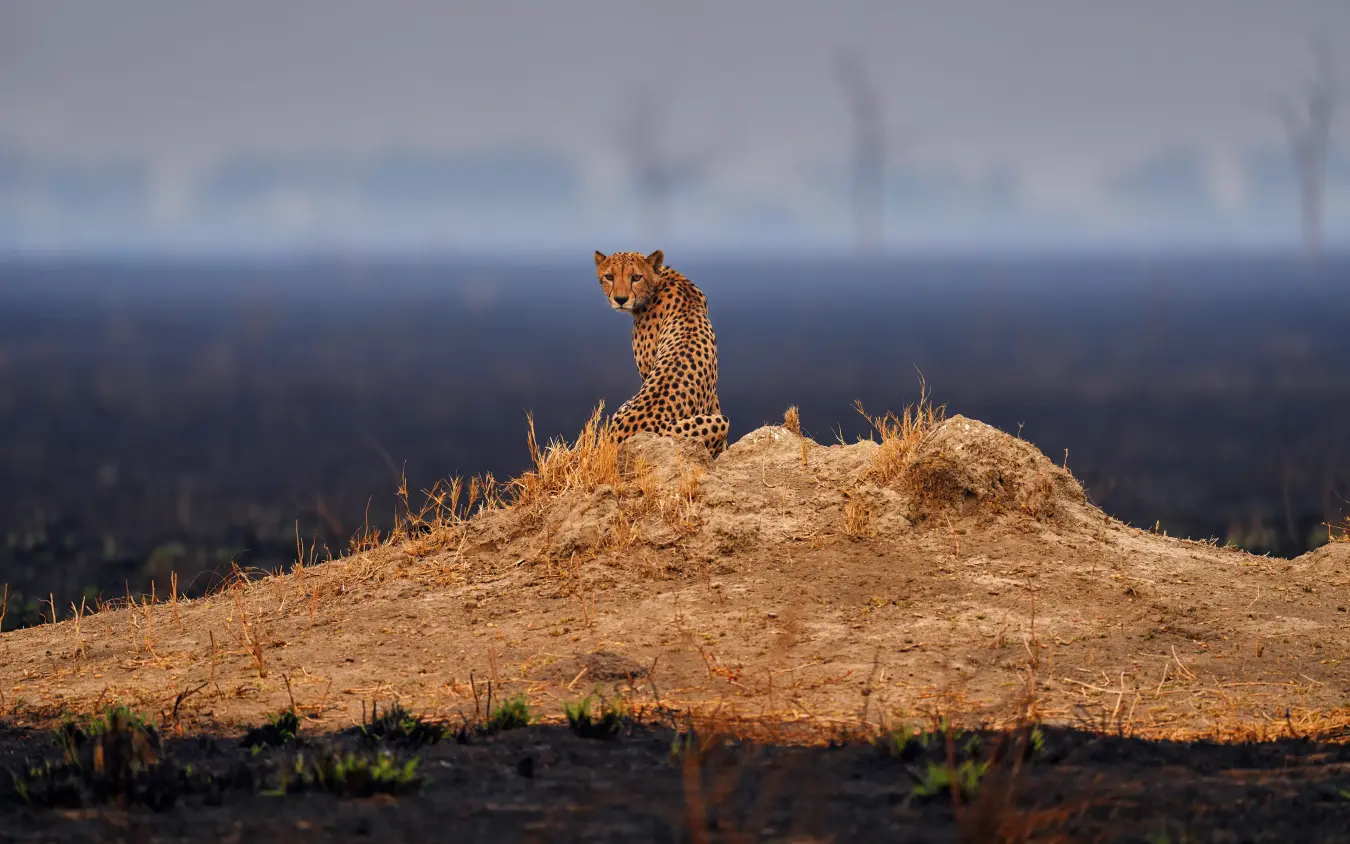
Neither stop goes quiet in between: the Grumeti country holds resident lion, leopard and hyena, and Olare Motorogi carries big cats the year round, with traversing rights that reach into Mara North and the reserve.
Timing follows the rain rather than the calendar, so read every month here as the usual pattern rather than a timetable.
Take July, August or September.
Those three carry our highest rating at every stop here, and they are the crossing months in the Mara as well.
October holds up almost as well in Tanzania and the Mara and slips a little in Laikipia.
February is the other one worth weighing, clear on the crater rim and strong for the Mara's resident cats, with the calving down on the southern Serengeti plains, which is not where these Serengeti nights sit.
November is the month to avoid in Laikipia, where the short rains bite hardest of anywhere on this itinerary, while the long rains of April and May leave the whole route at its weakest, from Arusha through to Borana.
The quieter months still buy green country, migrant birds, newborn animals and far fewer vehicles.
Ed Charles, BBC Producer
Fitzroy are true specialists in accessing the wilderness. They know where to go and importantly, when to go there. Highly recommended.
kenya & tanzania
Twelve nights linking game drives in Kenya's Mara Naboisho Conservancy with a swimmable lagoon on Zanzibar's coast.

tanzania & uganda
Ten nights from Bwindi's Nkuringo gorillas through Entebbe to six nights of reef and forest on northern Pemba Island.

kenya & tanzania
Fourteen nights from Nairobi through the Mara and the Serengeti to a private coral island off Tanzania's coast.
rated five stars by our clients

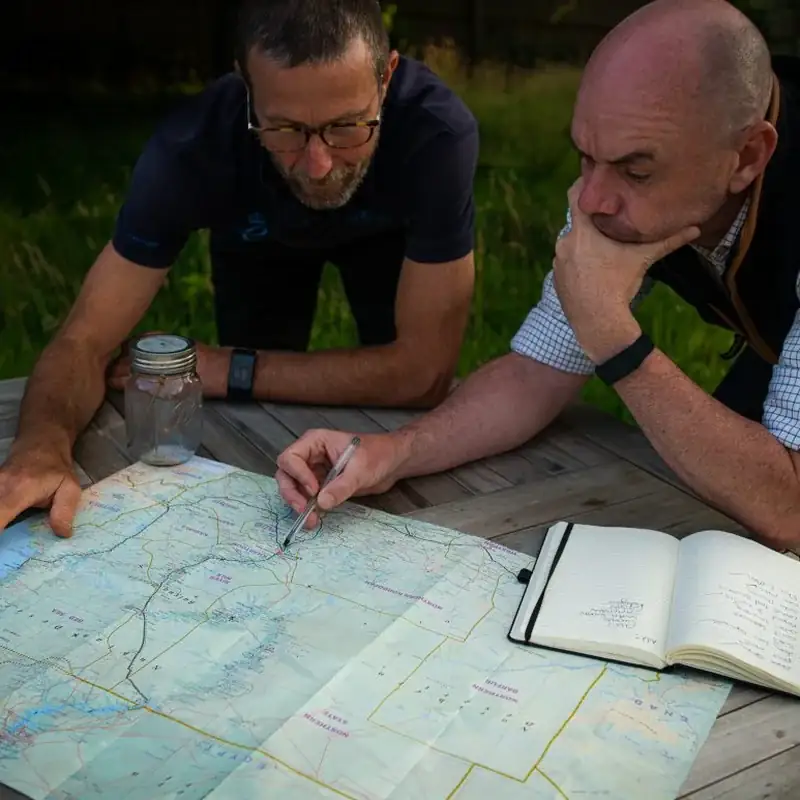
our approach
Every journey starts with a conversation. We take the time to understand your vision before we start planning.
Whether by phone or in person, we work with you directly to shape something that is considered, personal, and expertly delivered.
Every journey starts with a conversation. We favour a direct, personal approach: understanding your vision before anything else.
Whether by phone or in person, we work with you directly to shape a journey that is both thoughtfully considered and expertly delivered.
Get in touch to start planning yours.