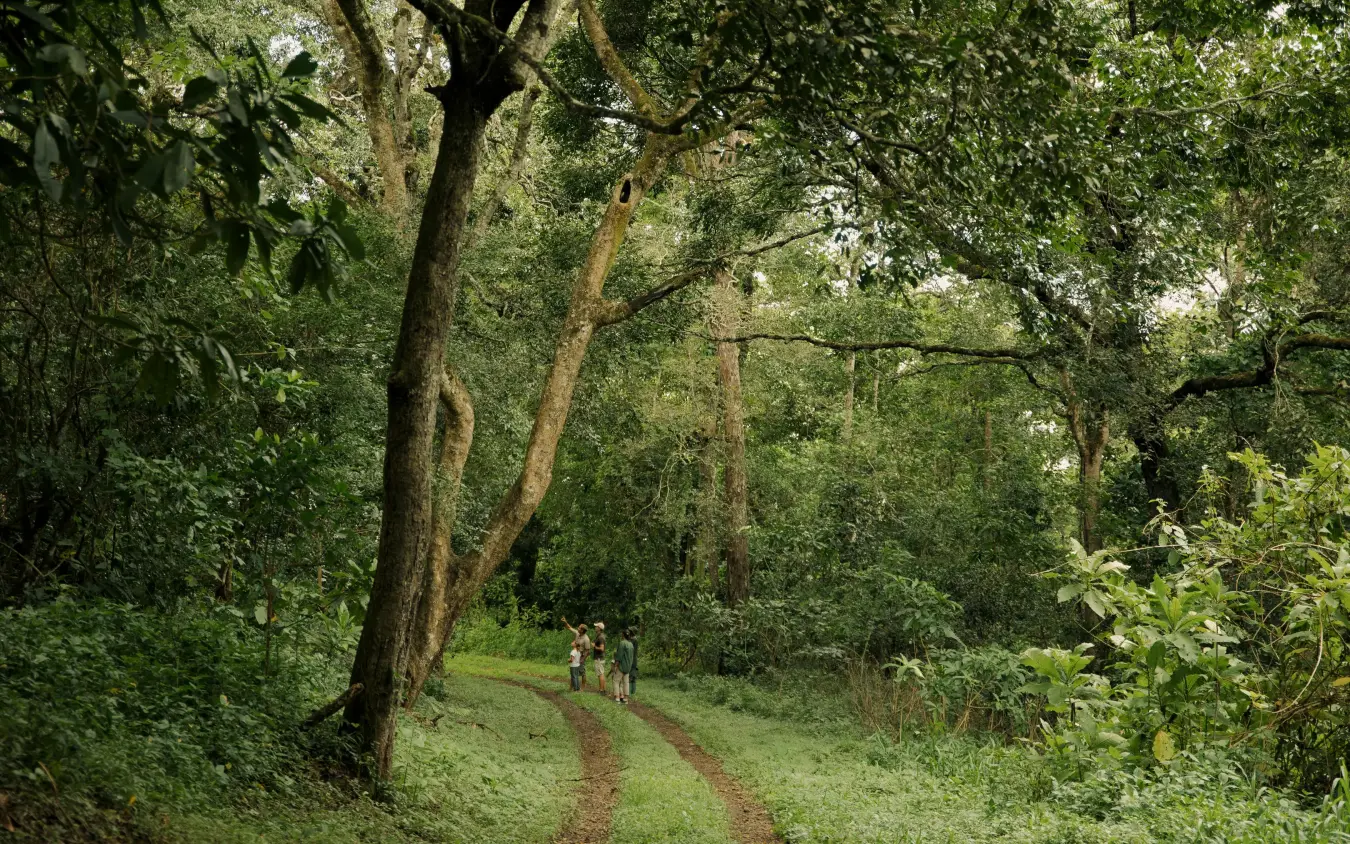
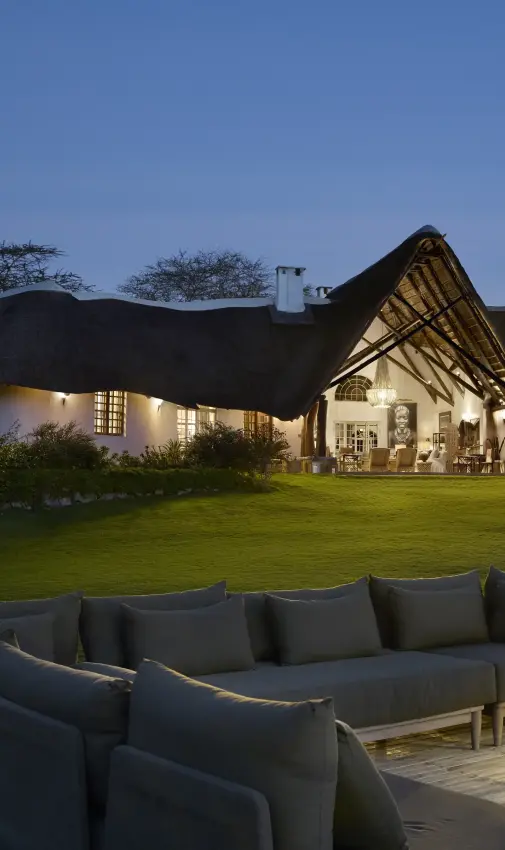
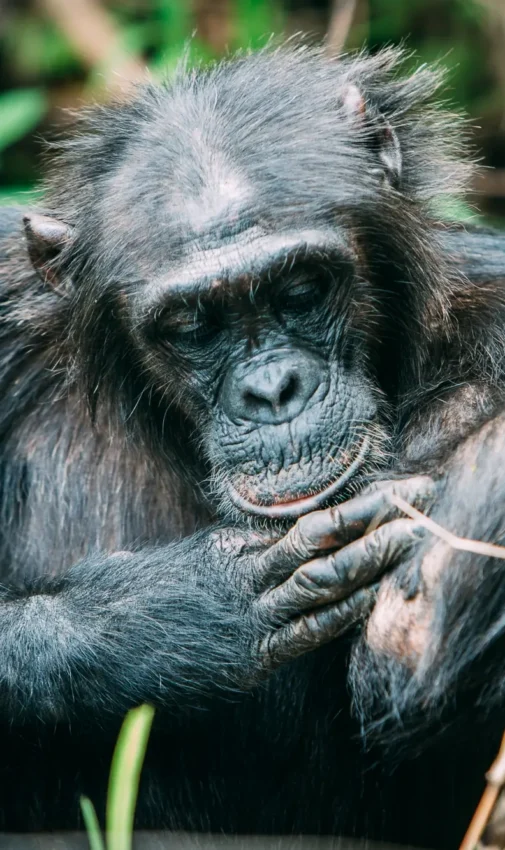
The black-and-white colobus monkey, the species that gives the camp its name, remains its most visible resident. Sykes’ monkeys work the canopy below them. The air at this altitude runs cool and damp, with mist sitting in the trees until mid-morning, and the montane forest is dense with mosses, ferns, orchids and strangler figs. Bushbuck and Harvey’s red duiker cross the glade in front of the chalets, and there is no open savanna within sight of camp, only trees in every direction.
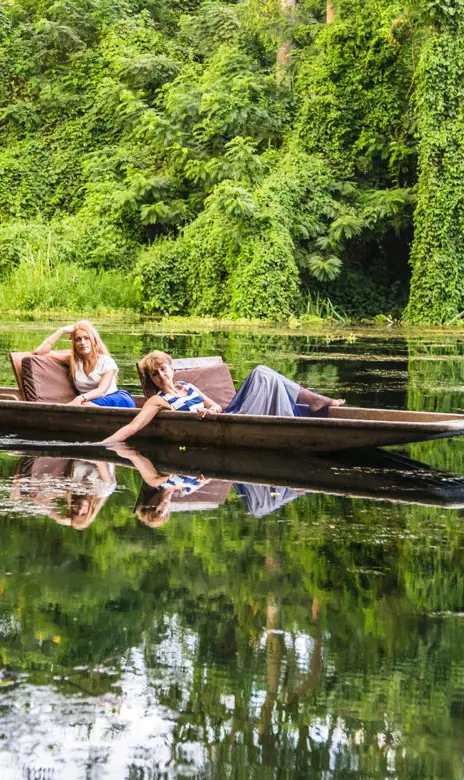
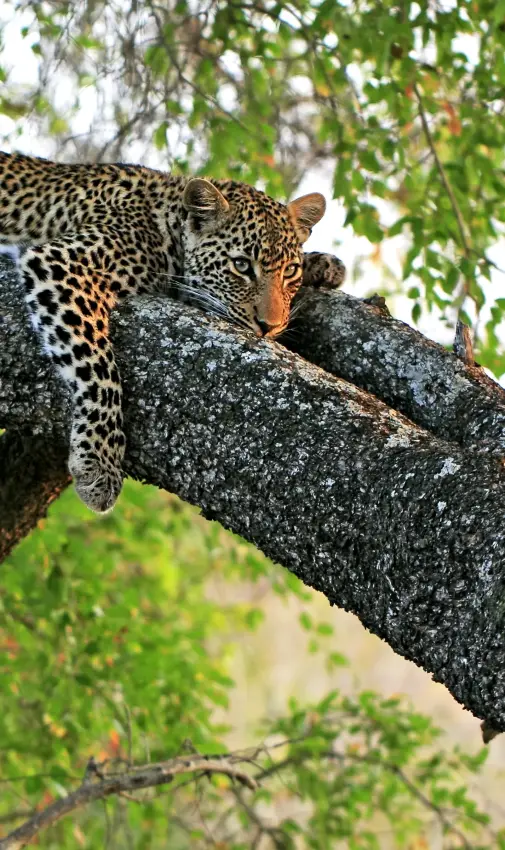
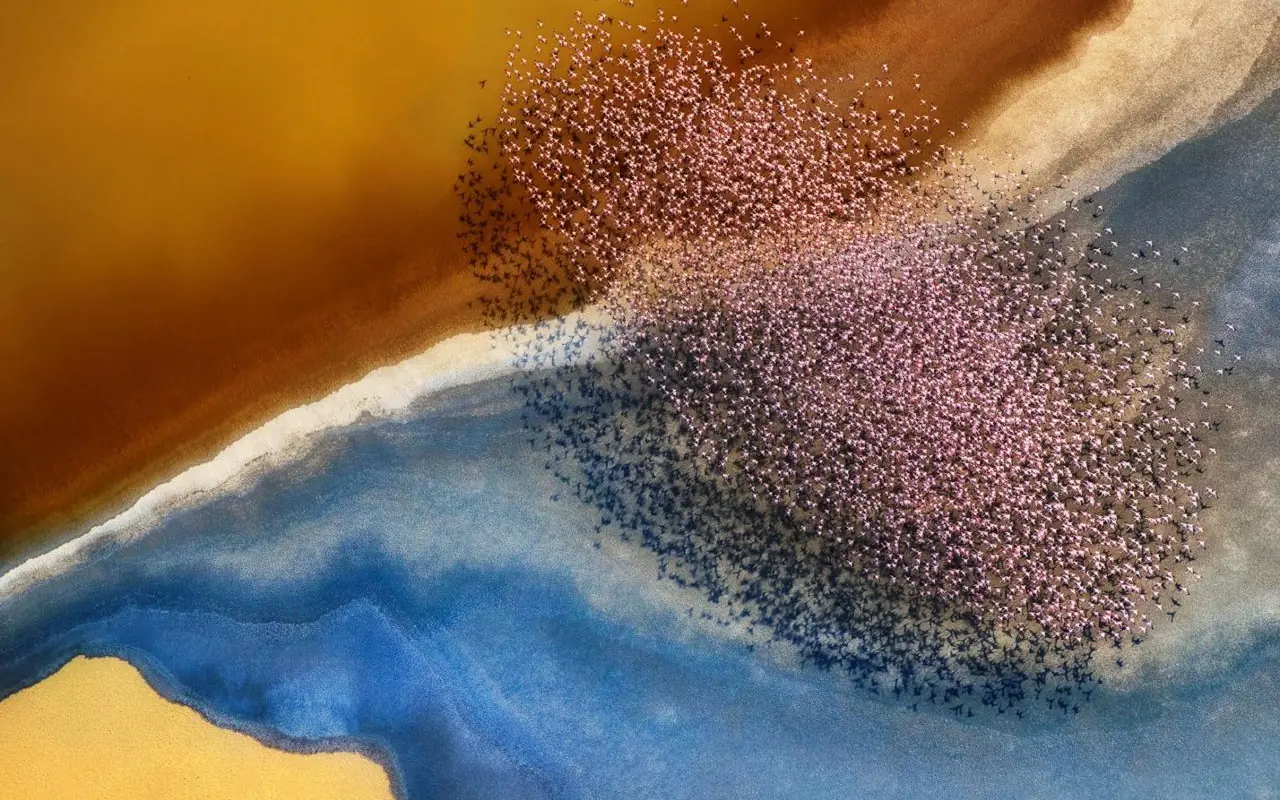
Game drives cover ground the walks cannot: the Momella Lakes, the open glades lower on the mountain, zebra and buffalo along the park’s grassland edges. After dark the drives run with spotlights inside the national park, turning up African civets, bush pigs and bushy-tailed mongooses along the forest edge. The cough of a leopard carries in from the trees, more often heard than seen. Canoes go out on the alkaline Momella crater lakes, drifting close to flamingos, a gentler outing that suits families.
The cough of a leopard carries in from the trees, more often heard than seen.
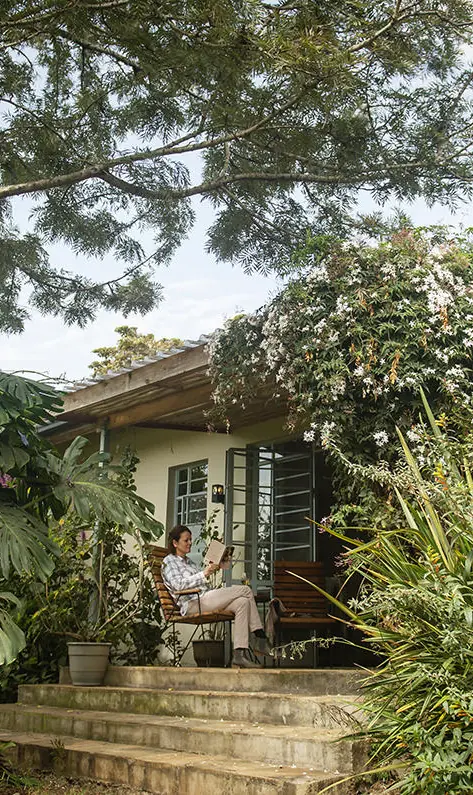
Walks follow the conditions of the day rather than a fixed route, with the guiding weighted toward tracking, botany and birds. Back in the chalets hang illustrations of the park’s fungi, insects and plants, commissioned from the artist Sarah Markes. Children are welcome, and interleading chalets and triple-bed configurations can be arranged for families, though guided walks inside the national park carry a minimum age, so younger families tend toward the game drives, the canoes and time spent watching the glade from camp. Visits to nearby Maasai communities fill an afternoon.
Access runs through the Ngongongare or Momella gates and then along a forest track off the main park road. Kilimanjaro International Airport is roughly an hour away by road, Arusha Airport about ninety minutes. Most guests take Koroi at one end of a longer Tanzania trip, a first night in the trees within an hour of landing, or a last night held back before a morning flight. Coffee on the deck at dawn, mist lifting off Meru’s ridges, hornbills crossing overhead: a quiet start to a safari, and a quieter finish.