










tanzania & kenya
the serengeti herds and lewa’s rhino
A 21-night route from a Serengeti kopje to a Mara riverbank and the private conservancies of Laikipia and Lewa.
- Private Safari
- From $42,760 pp
- 2 guests
- 21 nights
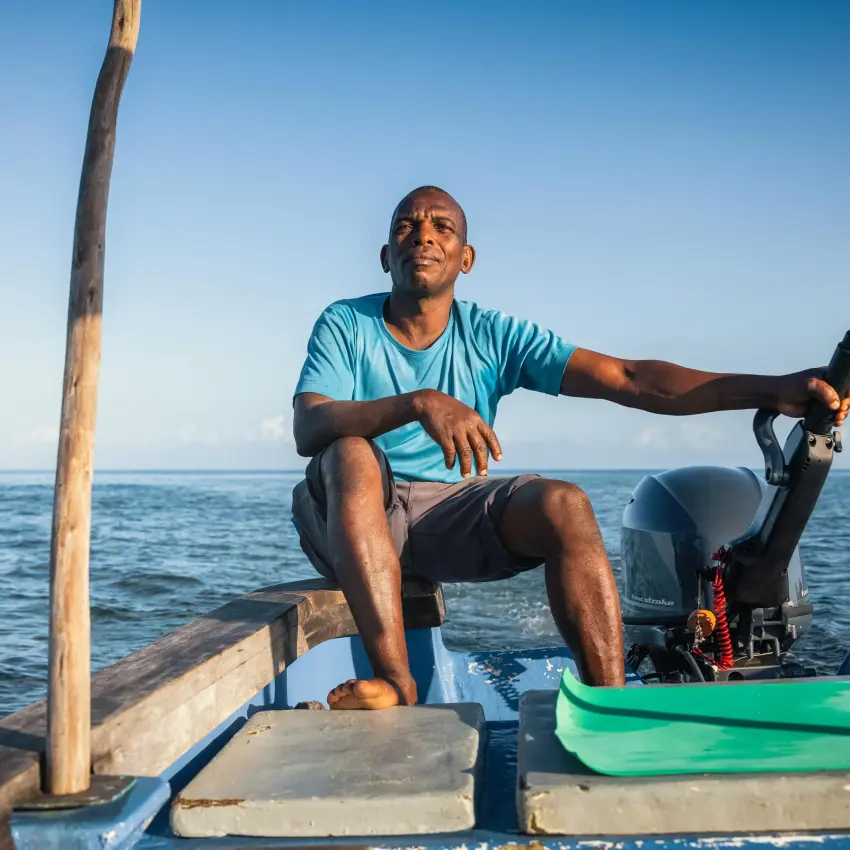
Seventeen nights across Uganda and Tanzania, opening on a Lake Victoria peninsula near Entebbe, then to the forest edge at Buhoma in the Bwindi Impenetrable Forest for mountain gorilla trekking. From there the route crosses to the far northern Serengeti at Kogatende, closest to the Mara River, before the outer slopes of the Ngorongoro Crater, and closes with eight nights on the northern tip of Pemba Island.
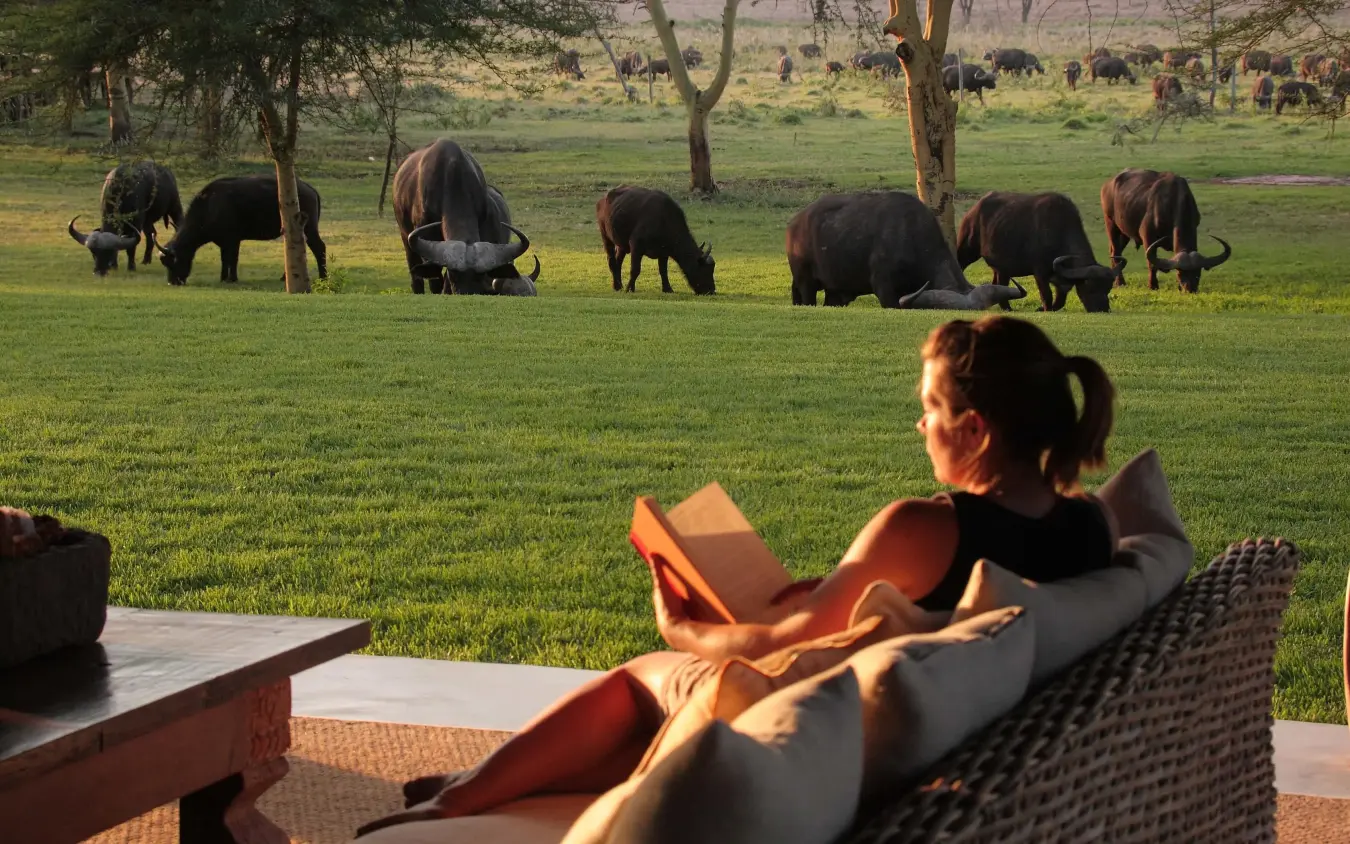
You travel by a mix of light aircraft and road, with guided treks, game drives, crater days and reef diving setting the pace of each region. The stays run from cabins on stilts and a forest-edge lodge to a tented camp, a century-old coffee farm and a beach resort with rooms low under thatch, each chosen for its ground and its access rather than its size.
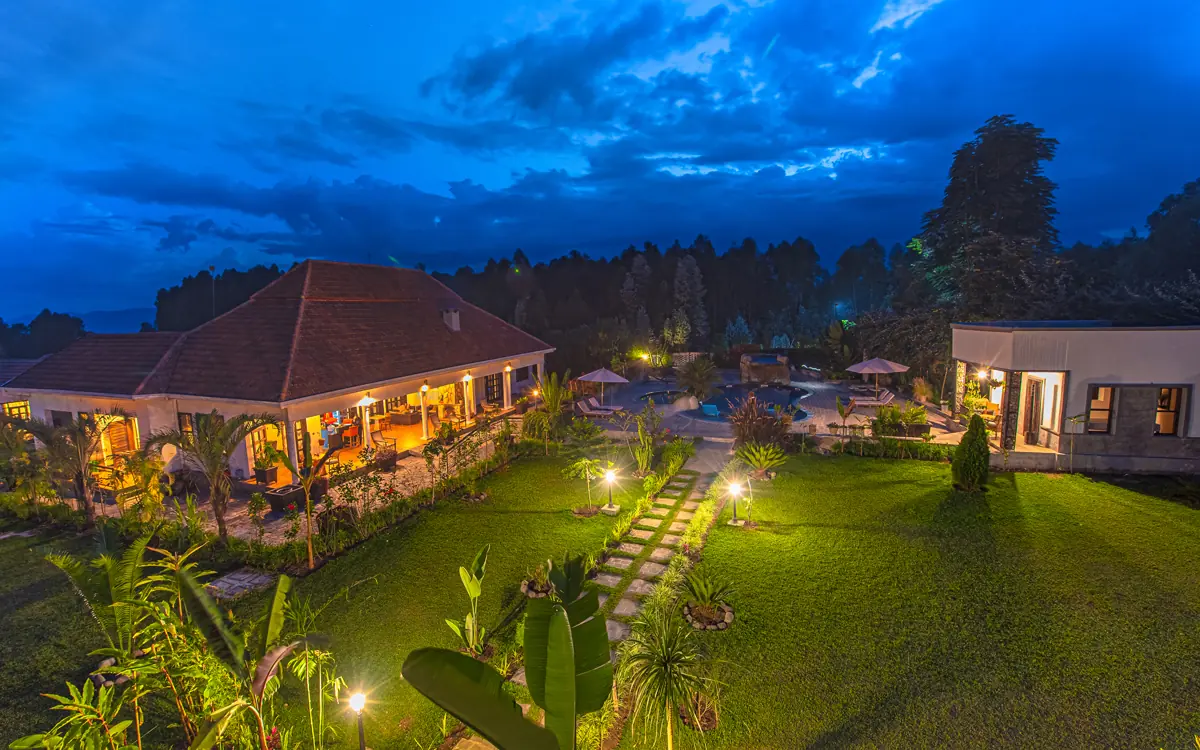
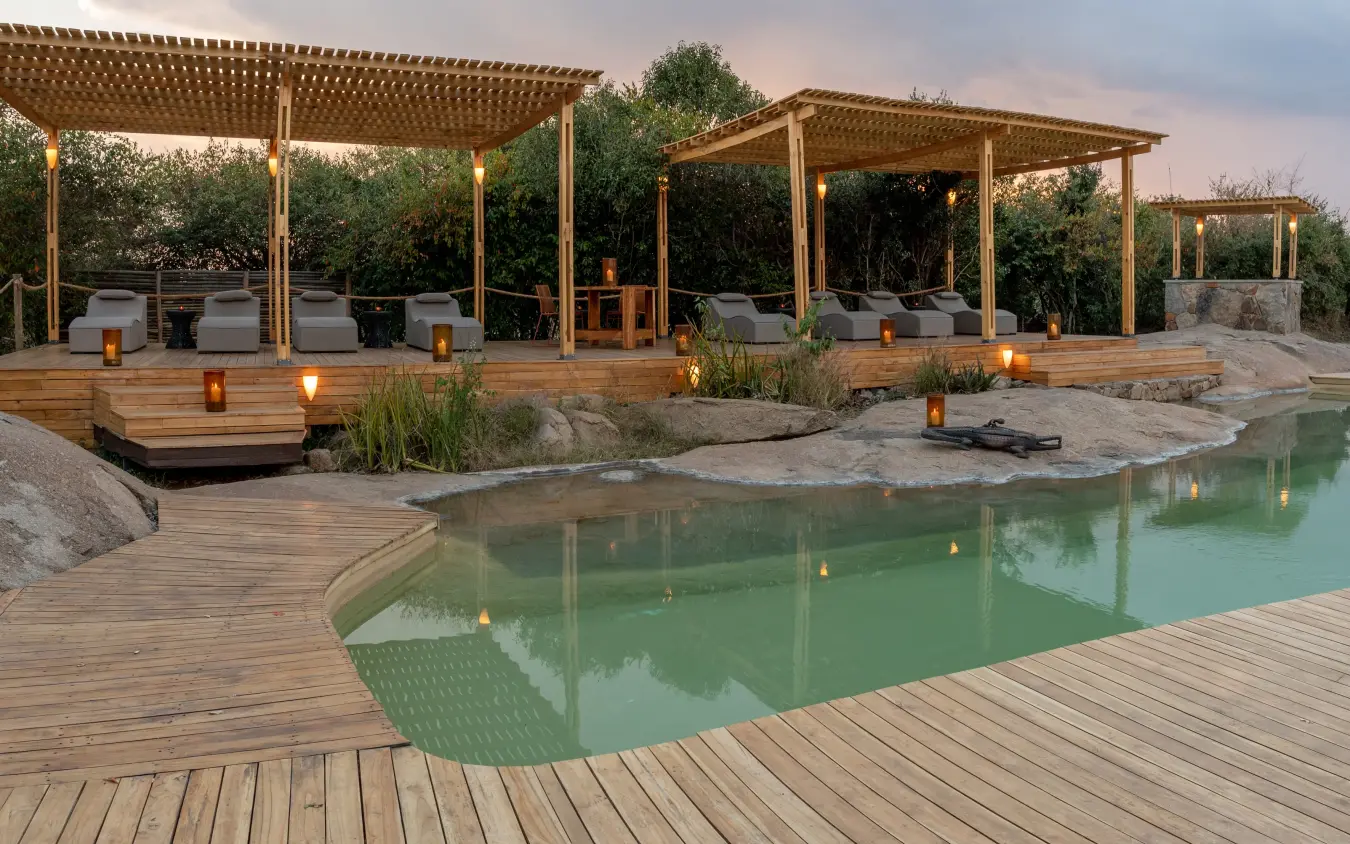
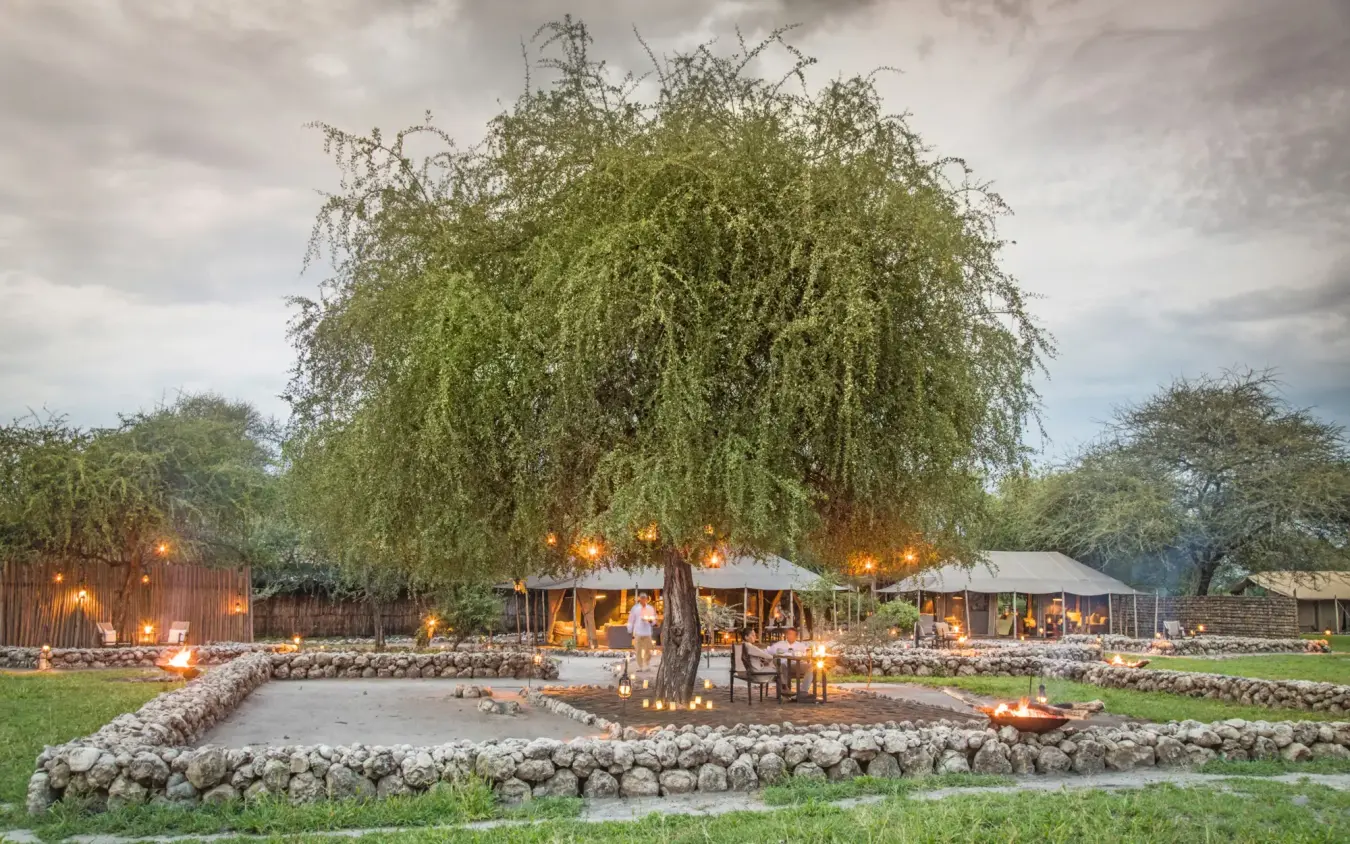
You land at Entebbe and transfer roughly 30 minutes to a forest peninsula reaching into Lake Victoria, the setting for your first night before flying on. Mornings bring birdsong and red-tailed monkeys through the canopy, with African fish eagles and kingfishers working the shoreline, and a path drops to a cliff-edge terrace set for sundowners as the lake shifts colour at dusk. Set inside dense tropical forest, Entebbe Forest Lodge raises eight cabins on stilts among the trees, with a main building looking out across terraces, a curving pool and lawns to the water.
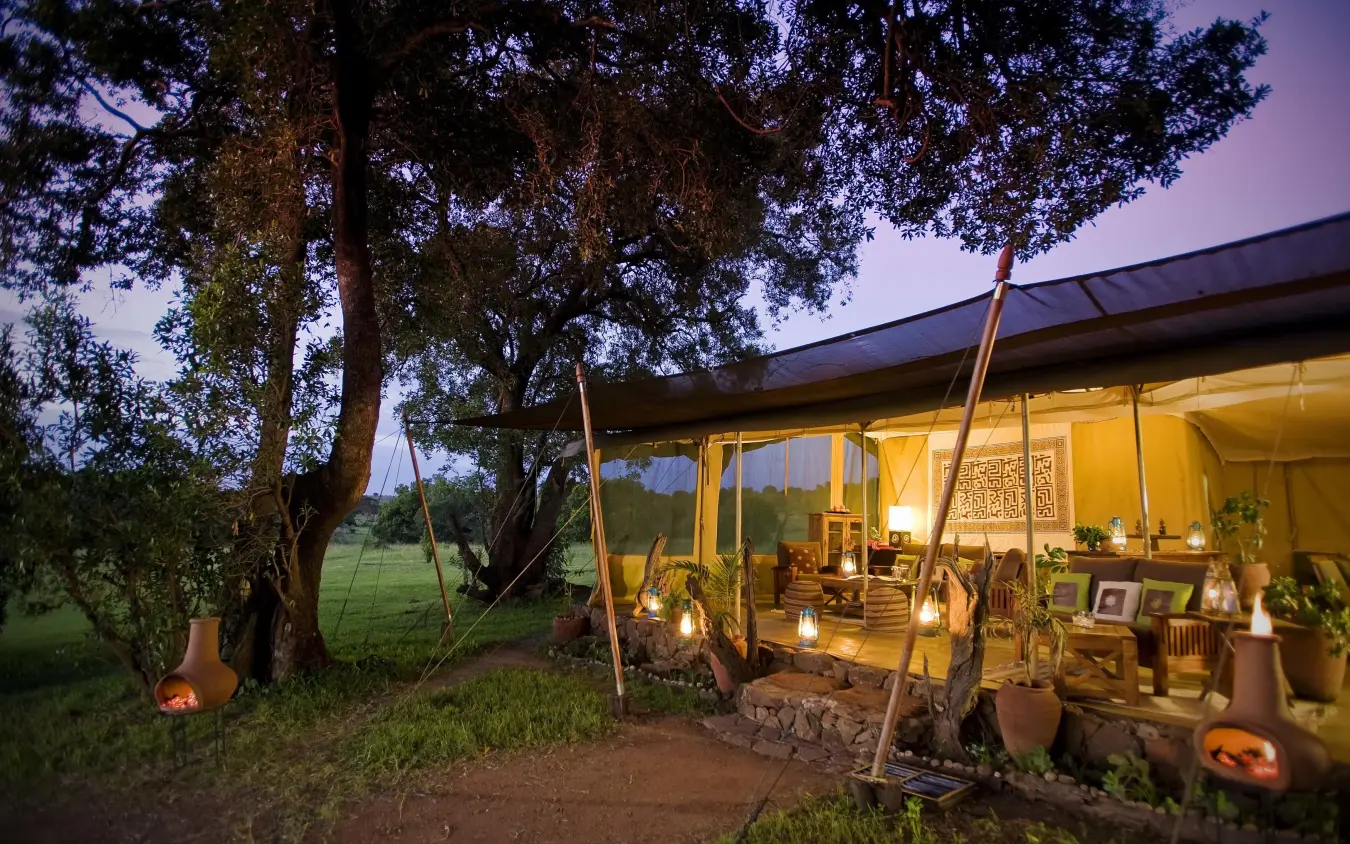
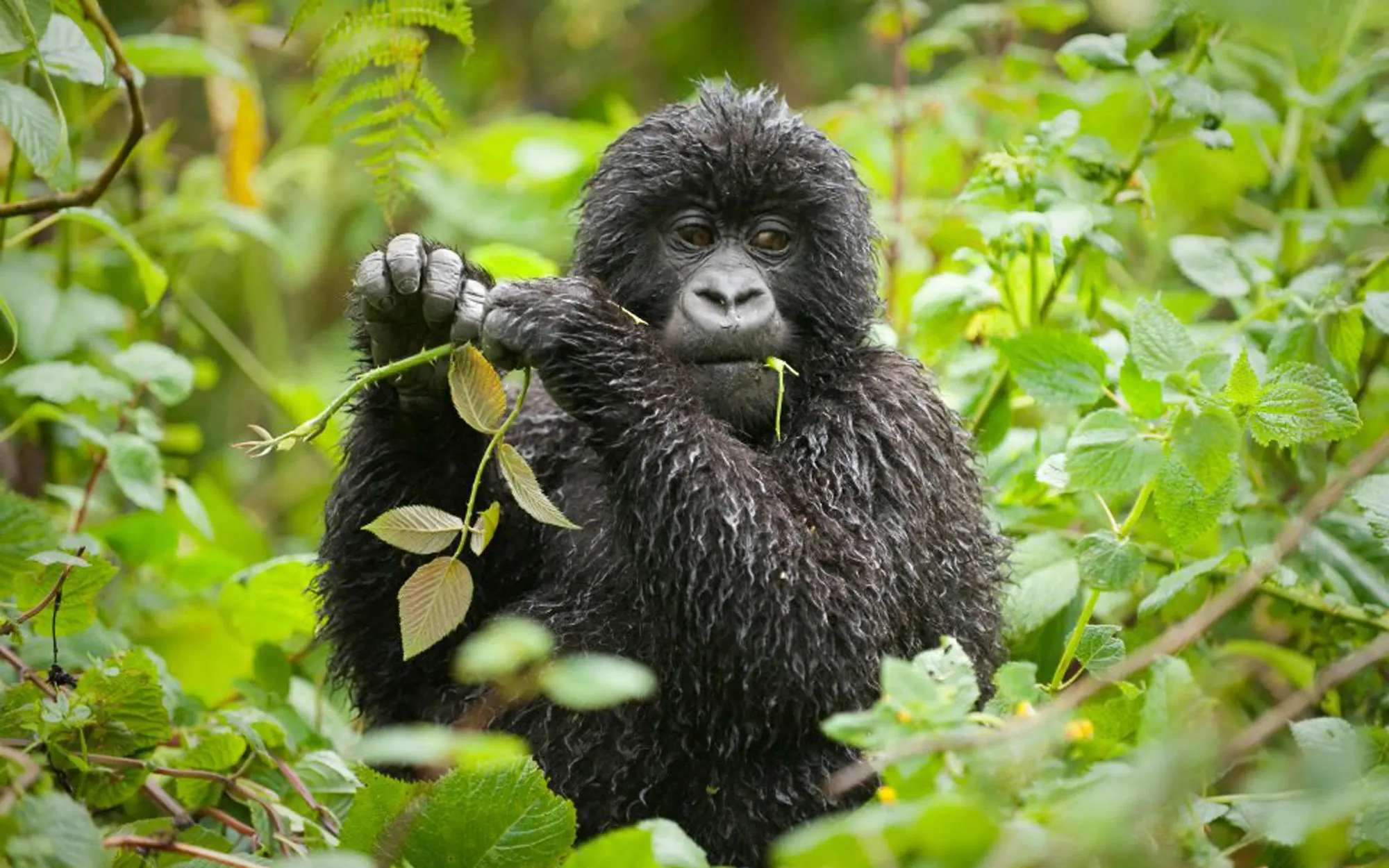
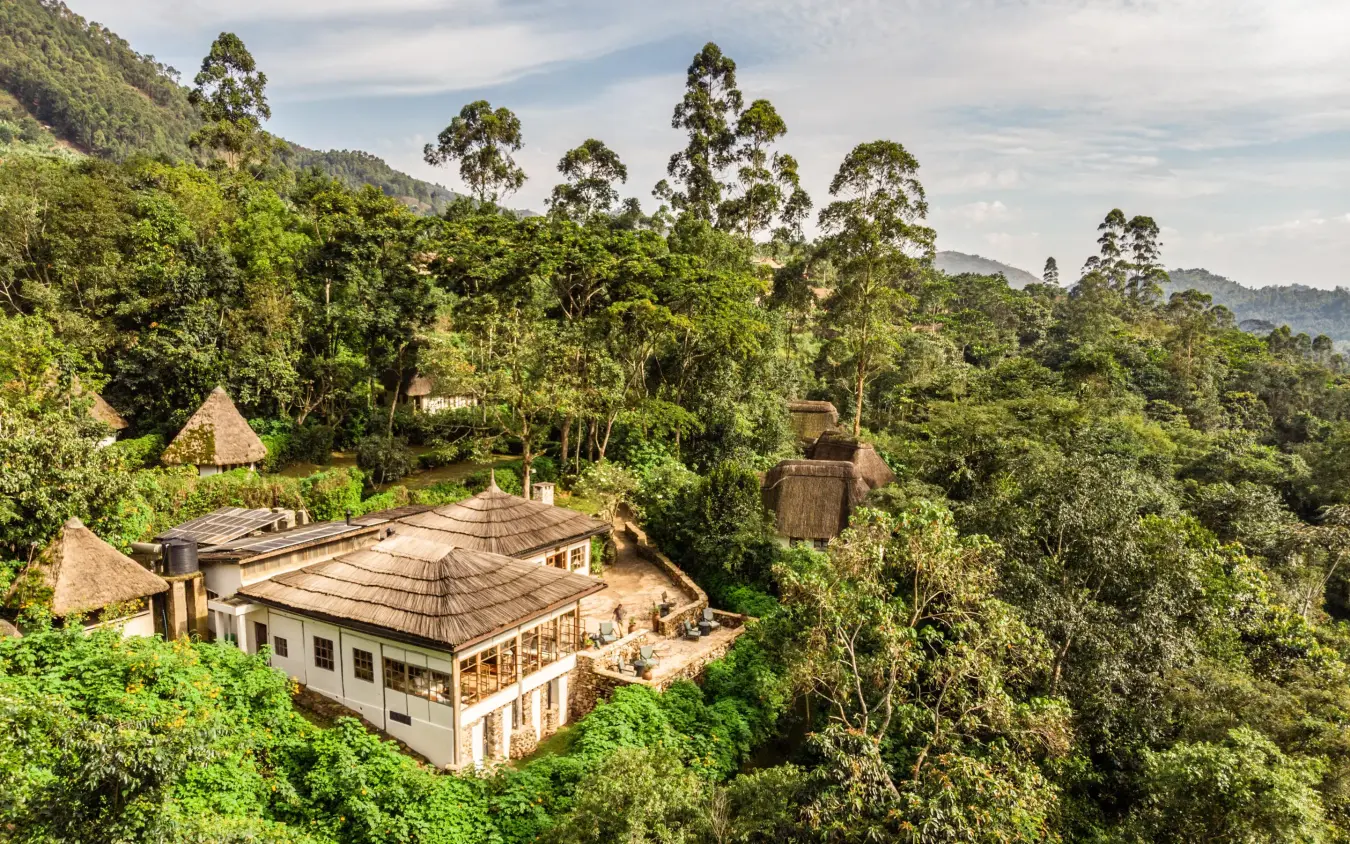
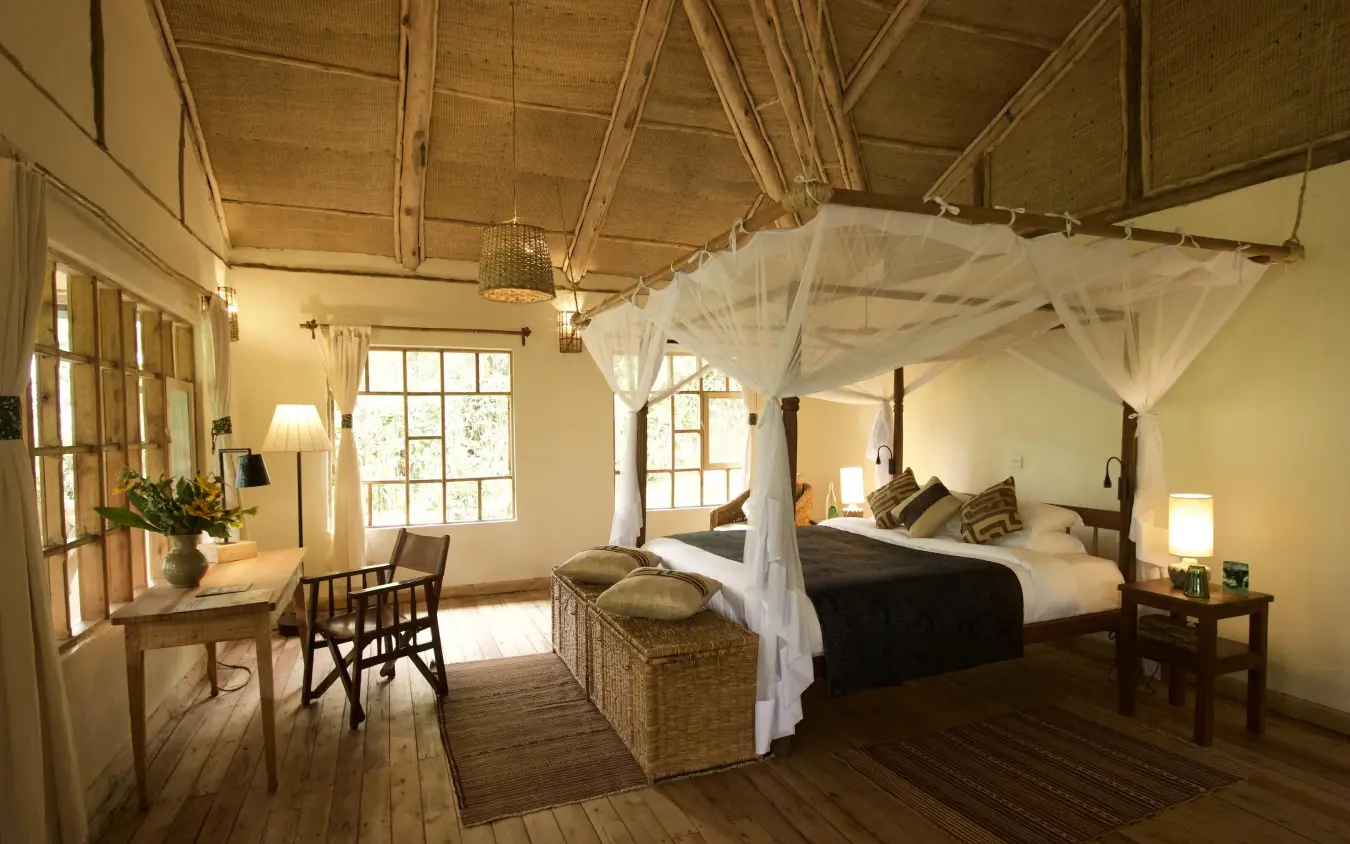
These are your days for mountain gorilla trekking in the Bwindi Impenetrable Forest, a UNESCO World Heritage Site in southwest Uganda. Treks depart into the Buhoma or Ruhija sectors under Uganda Wildlife Authority permit rules, with a maximum of eight visitors per habituated group each day and one hour spent with the gorillas once they are found. Every banda balcony at Bwindi Lodge looks directly onto the forest across a stream, and the grounds are a favourite haunt of the Rushegura group; below, the Munyaga pools into a natural swimming hole.
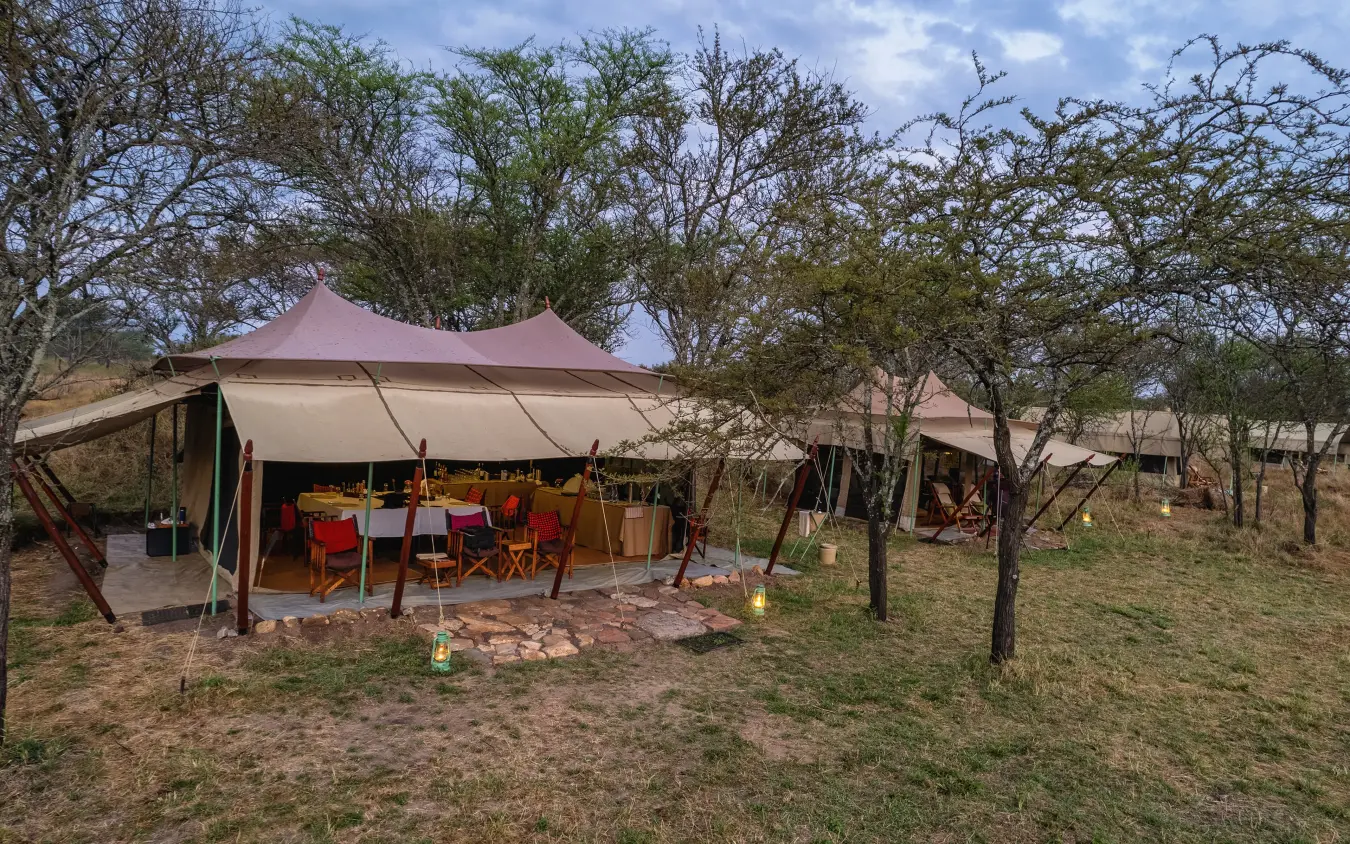
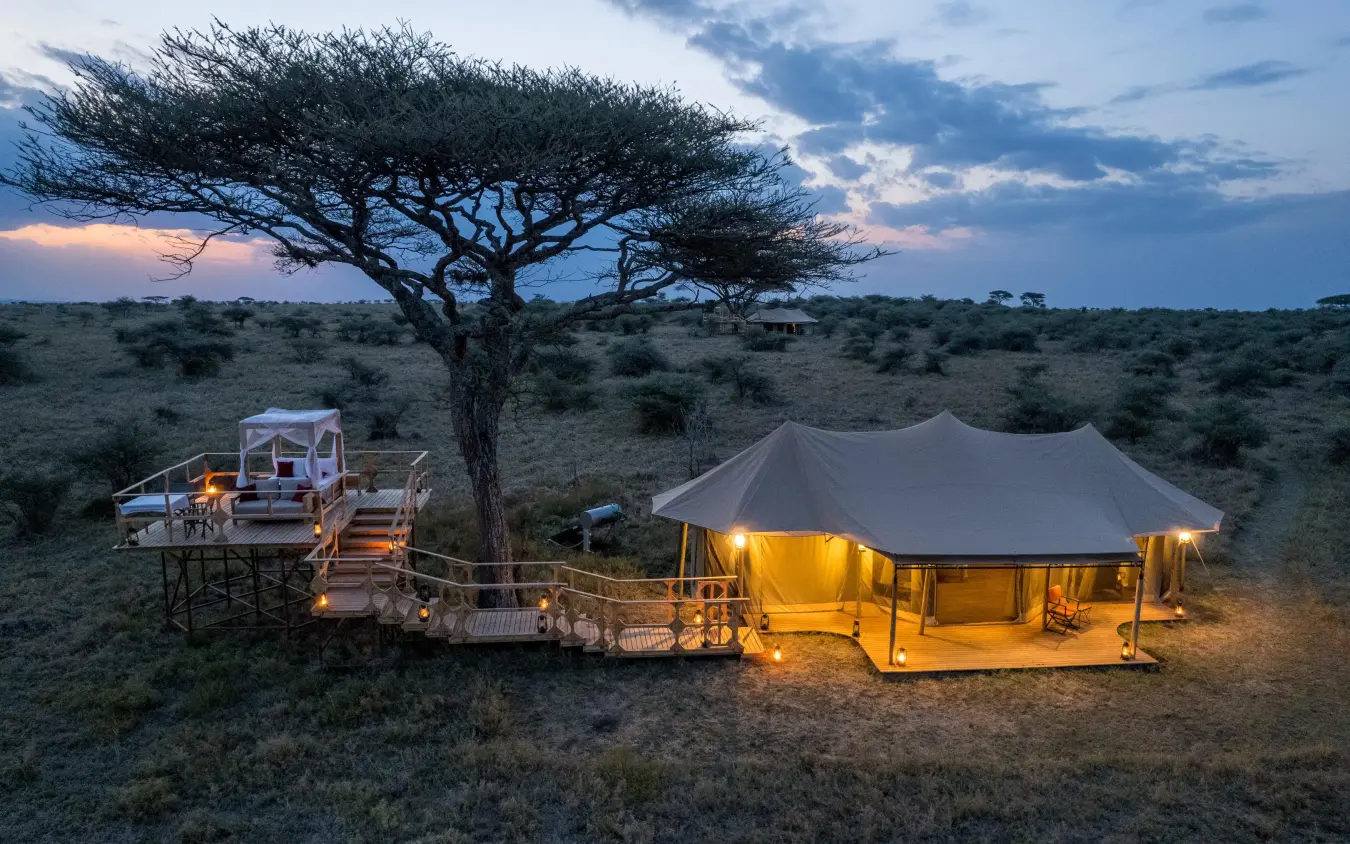
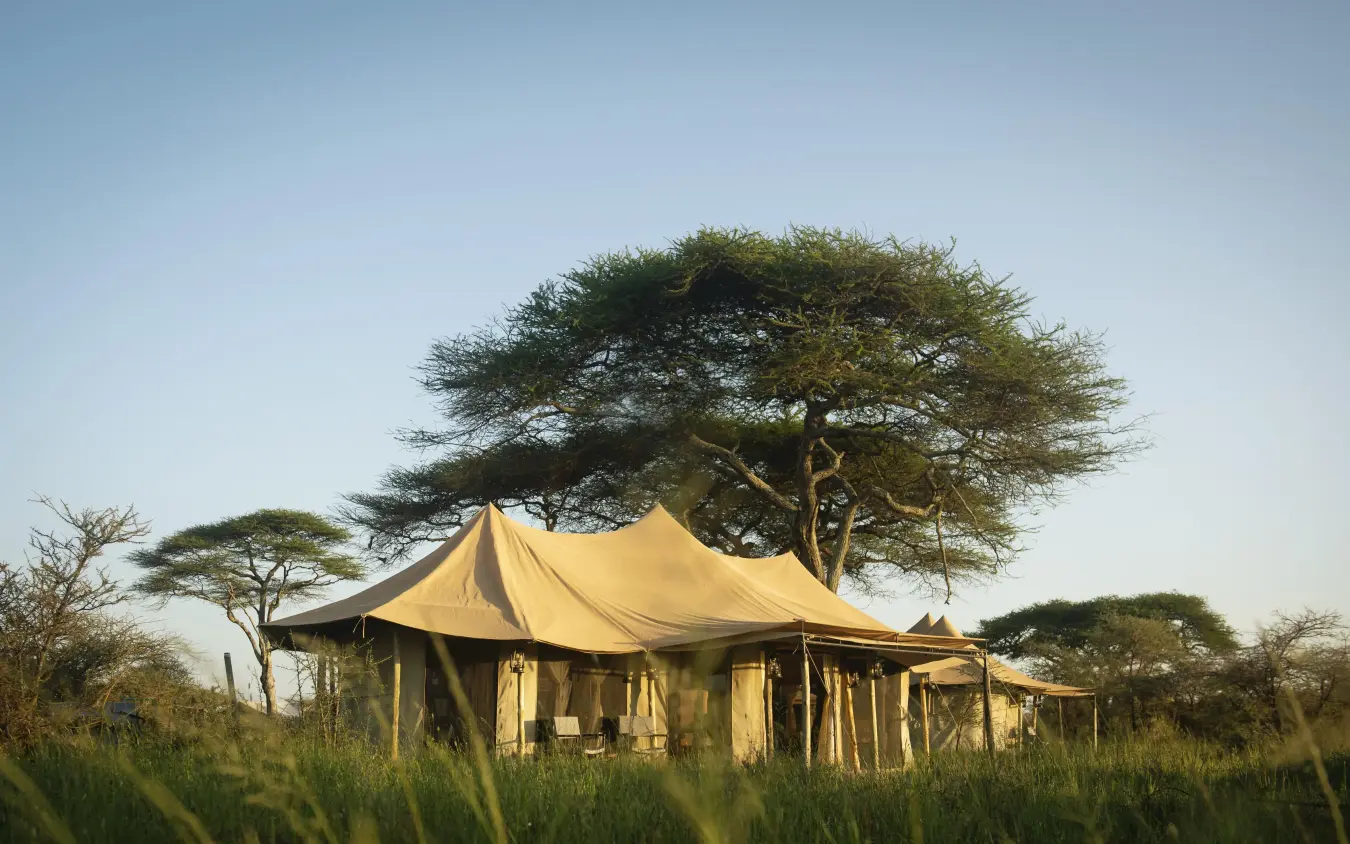
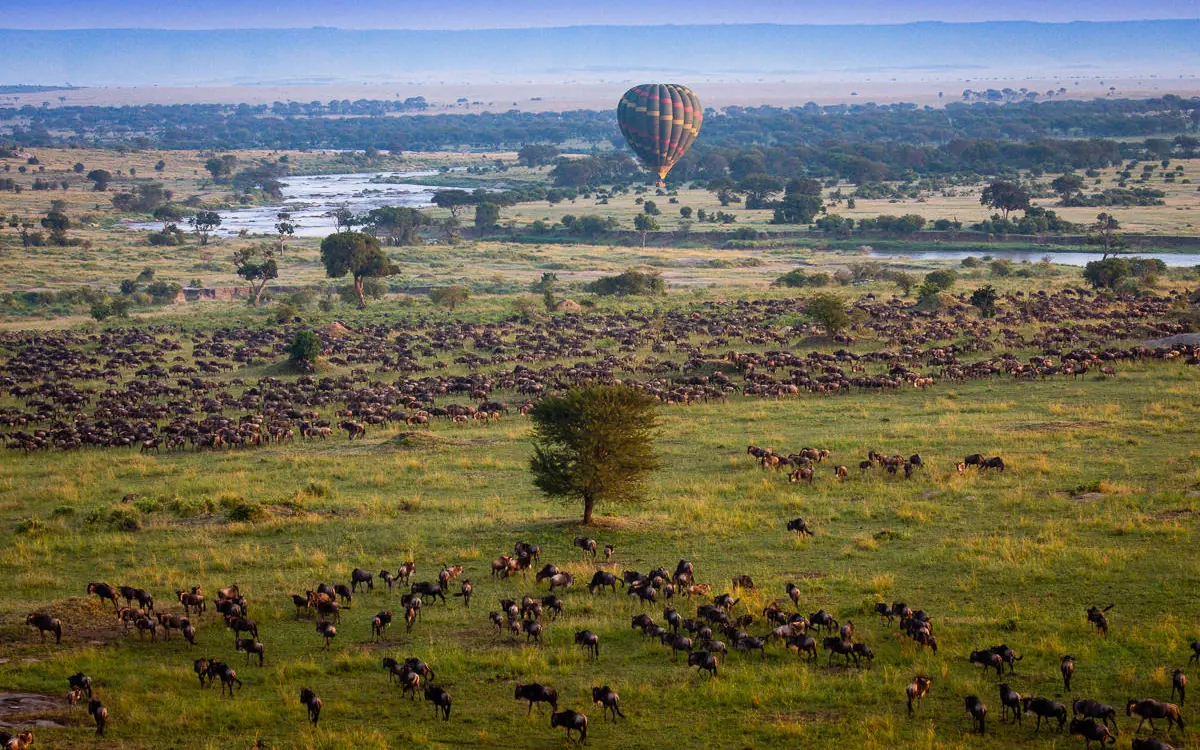
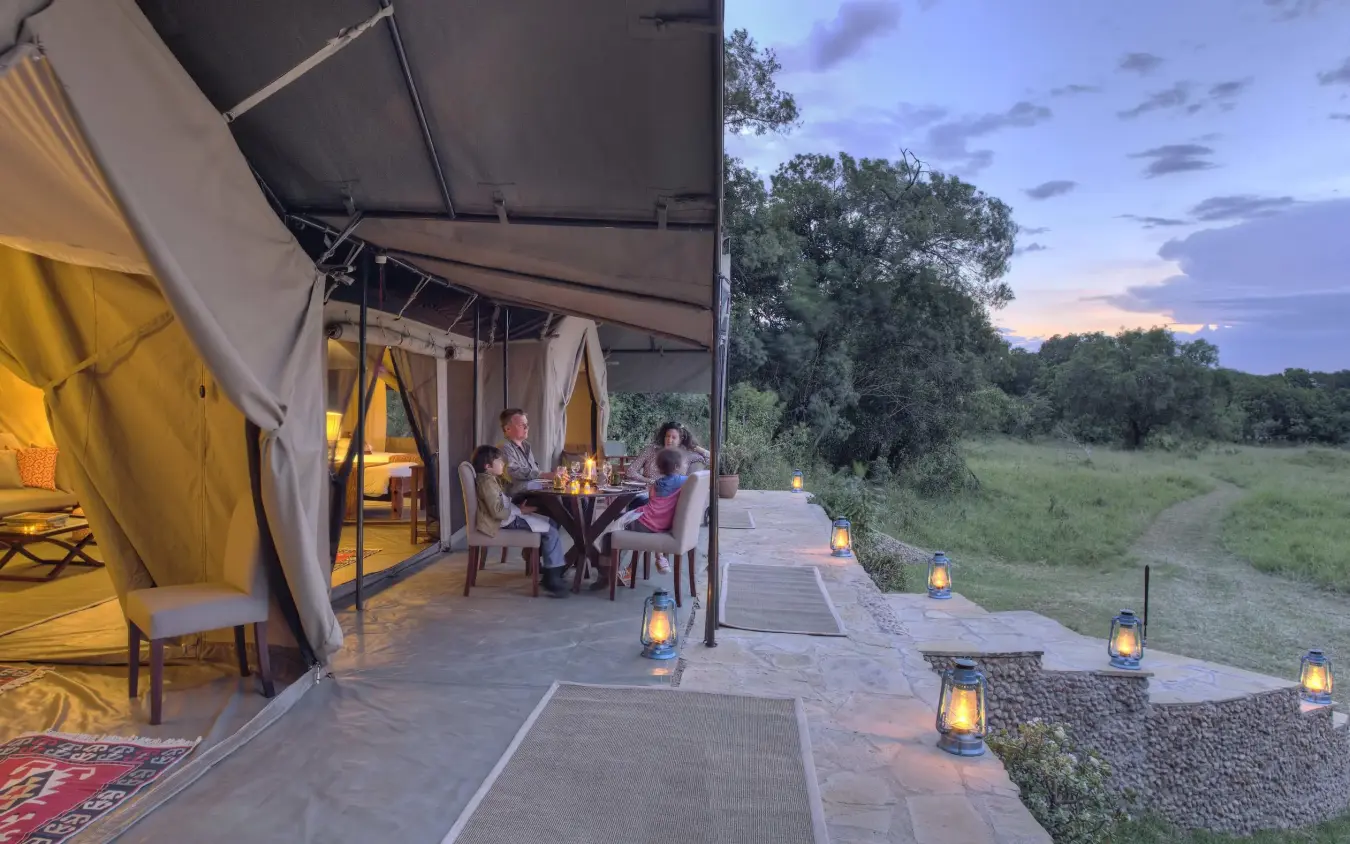
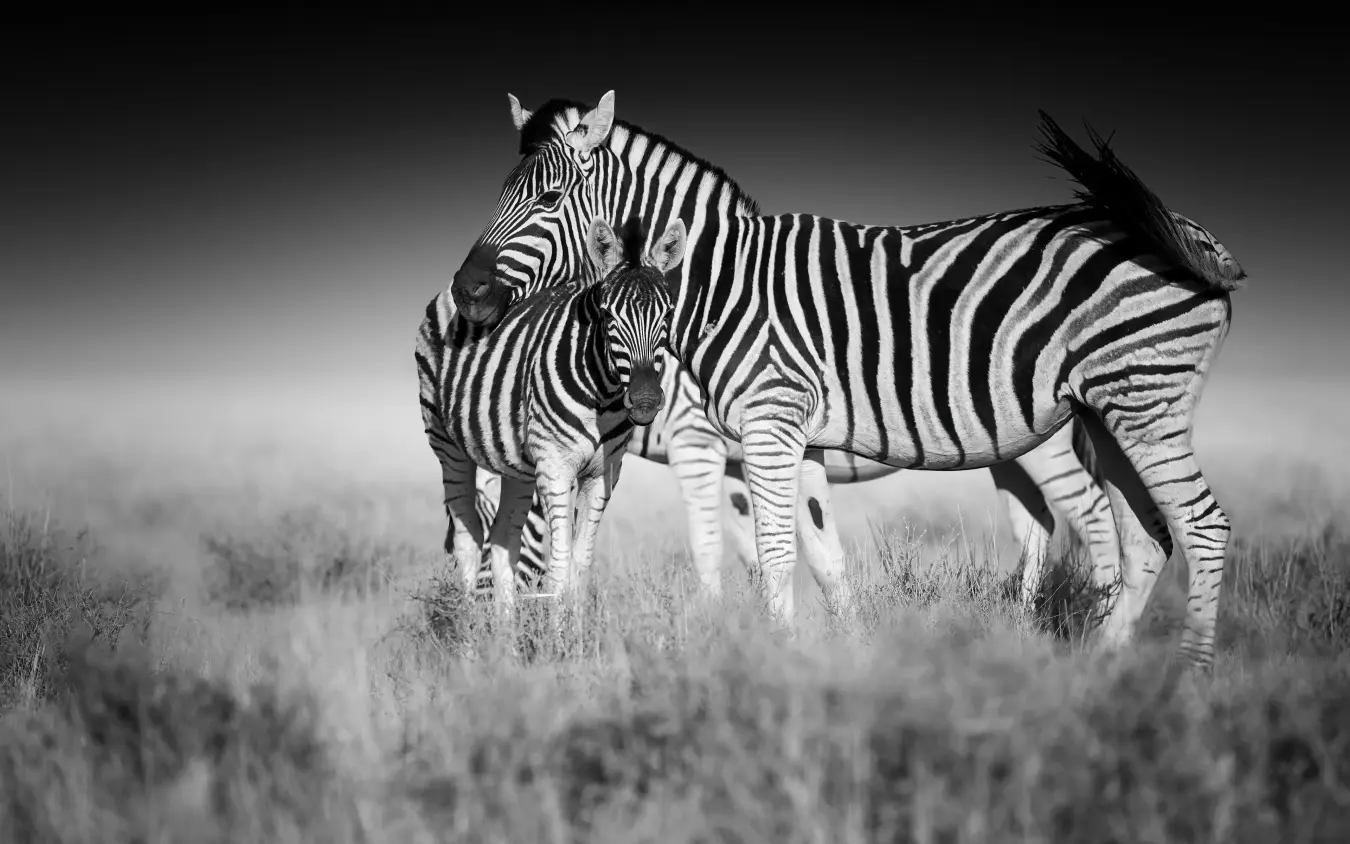
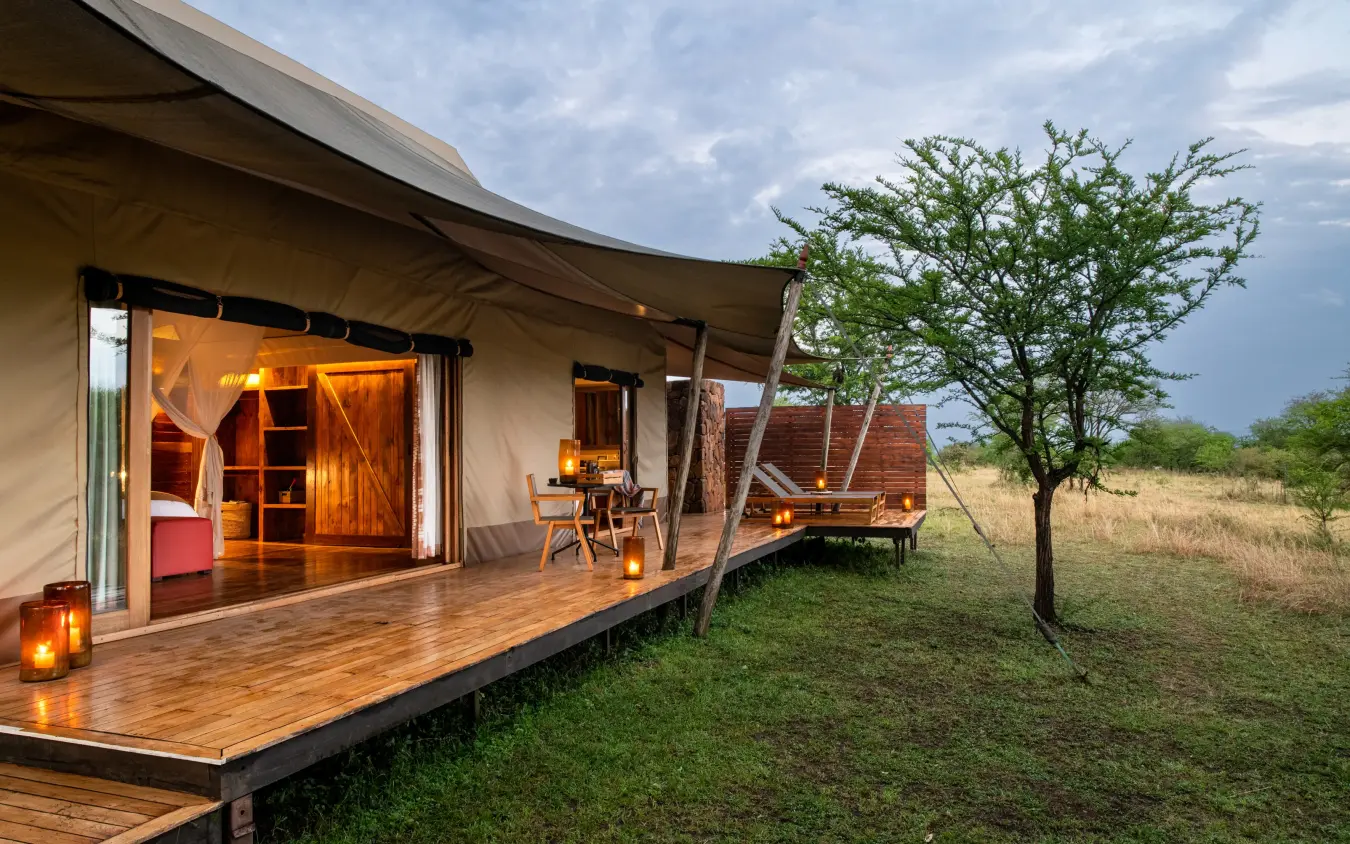
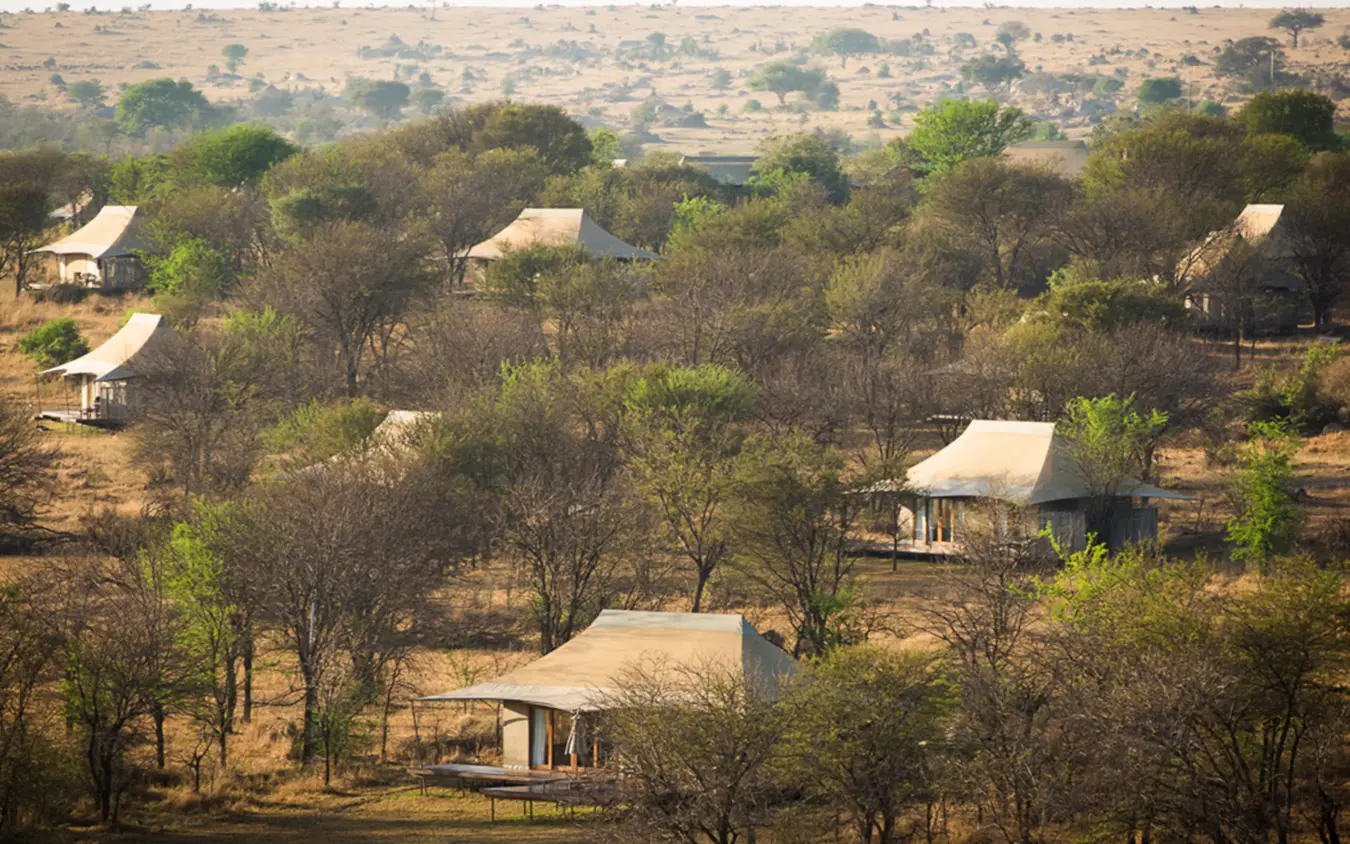
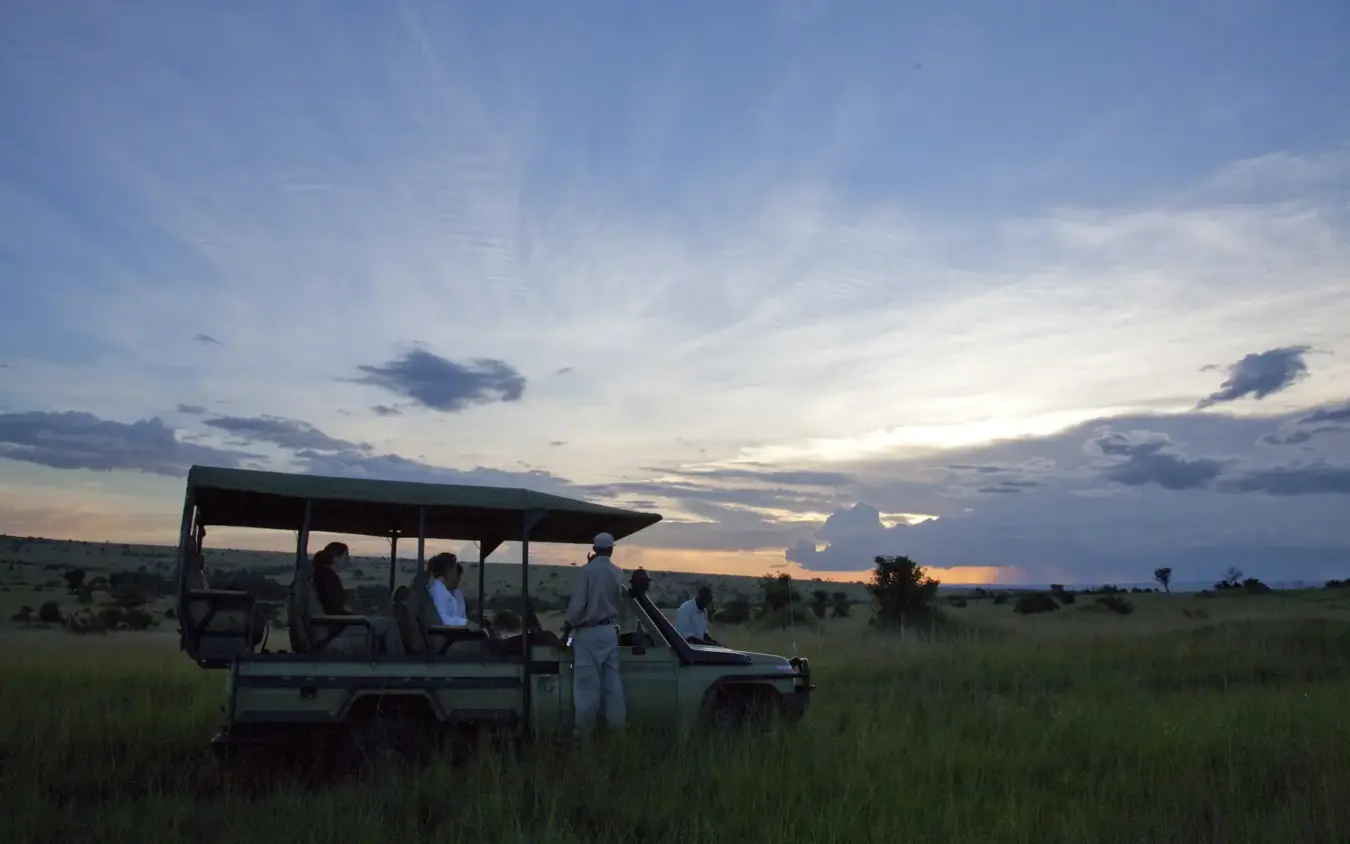
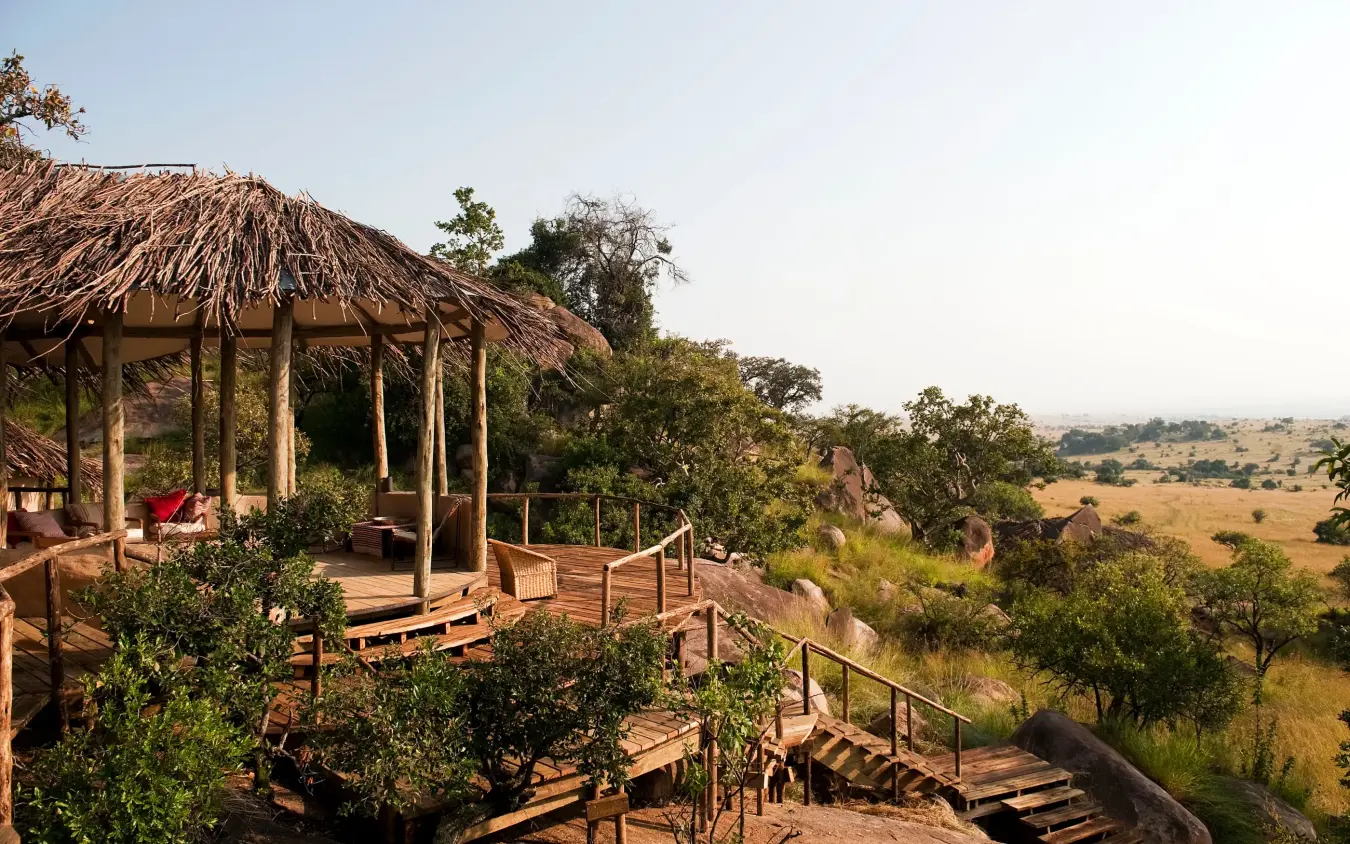
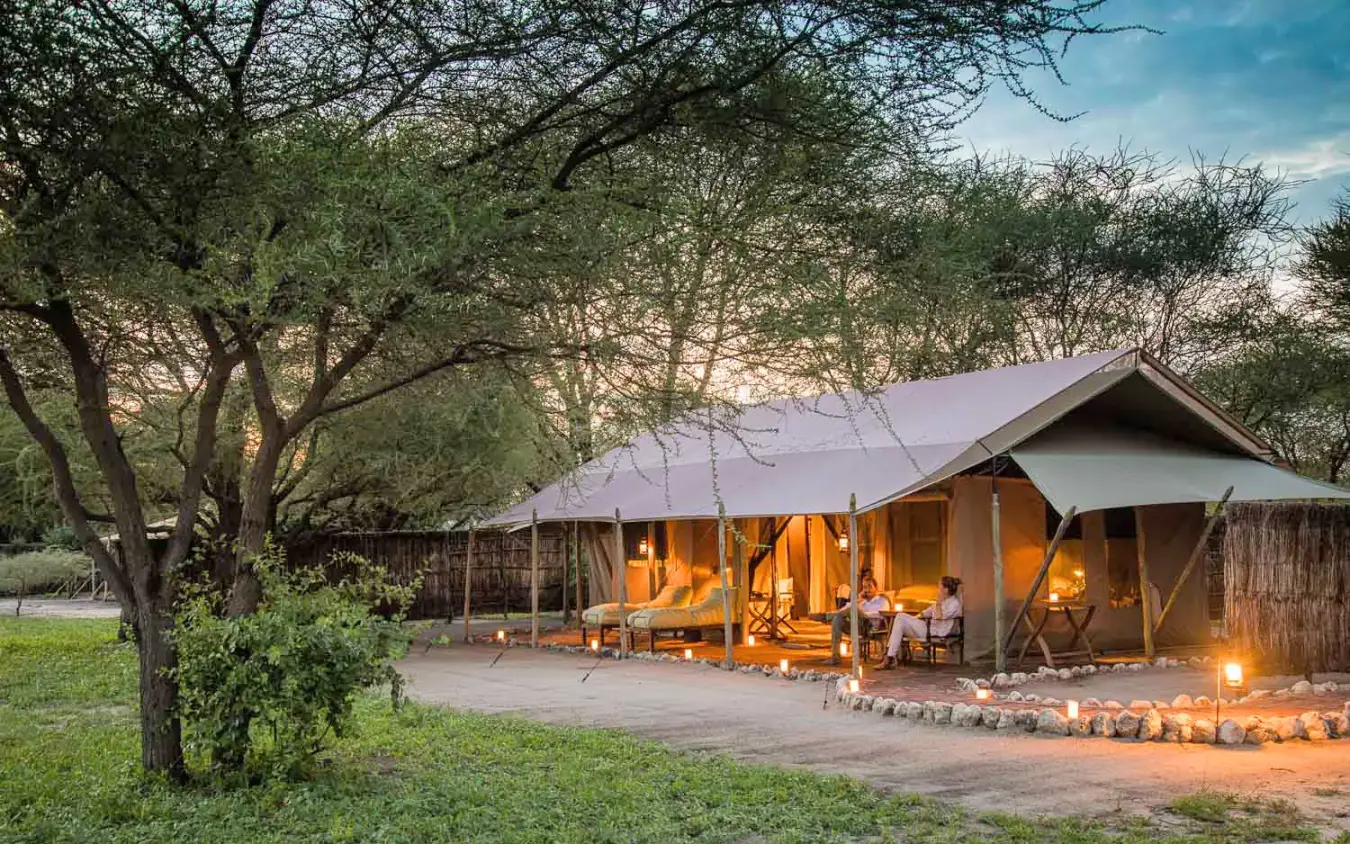
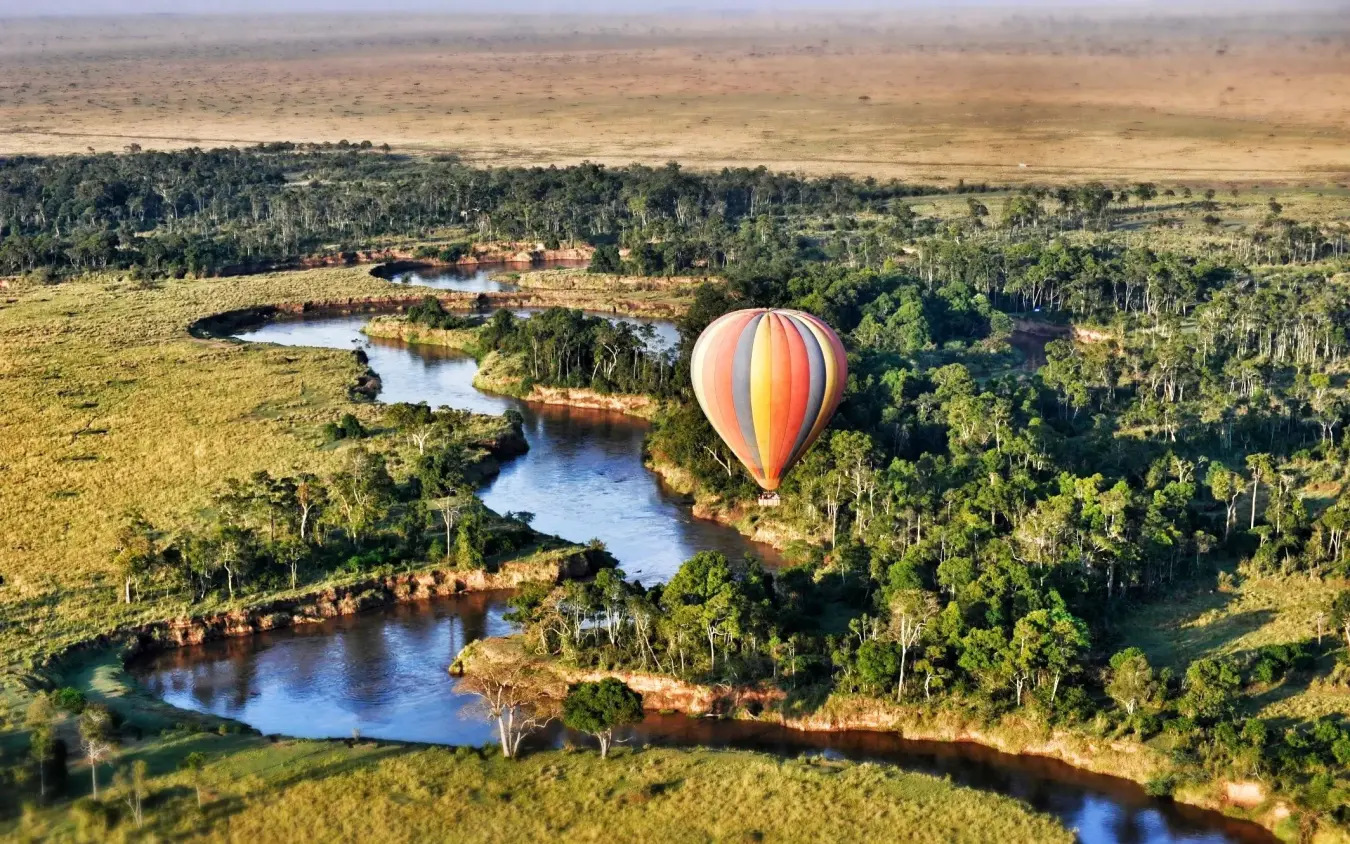
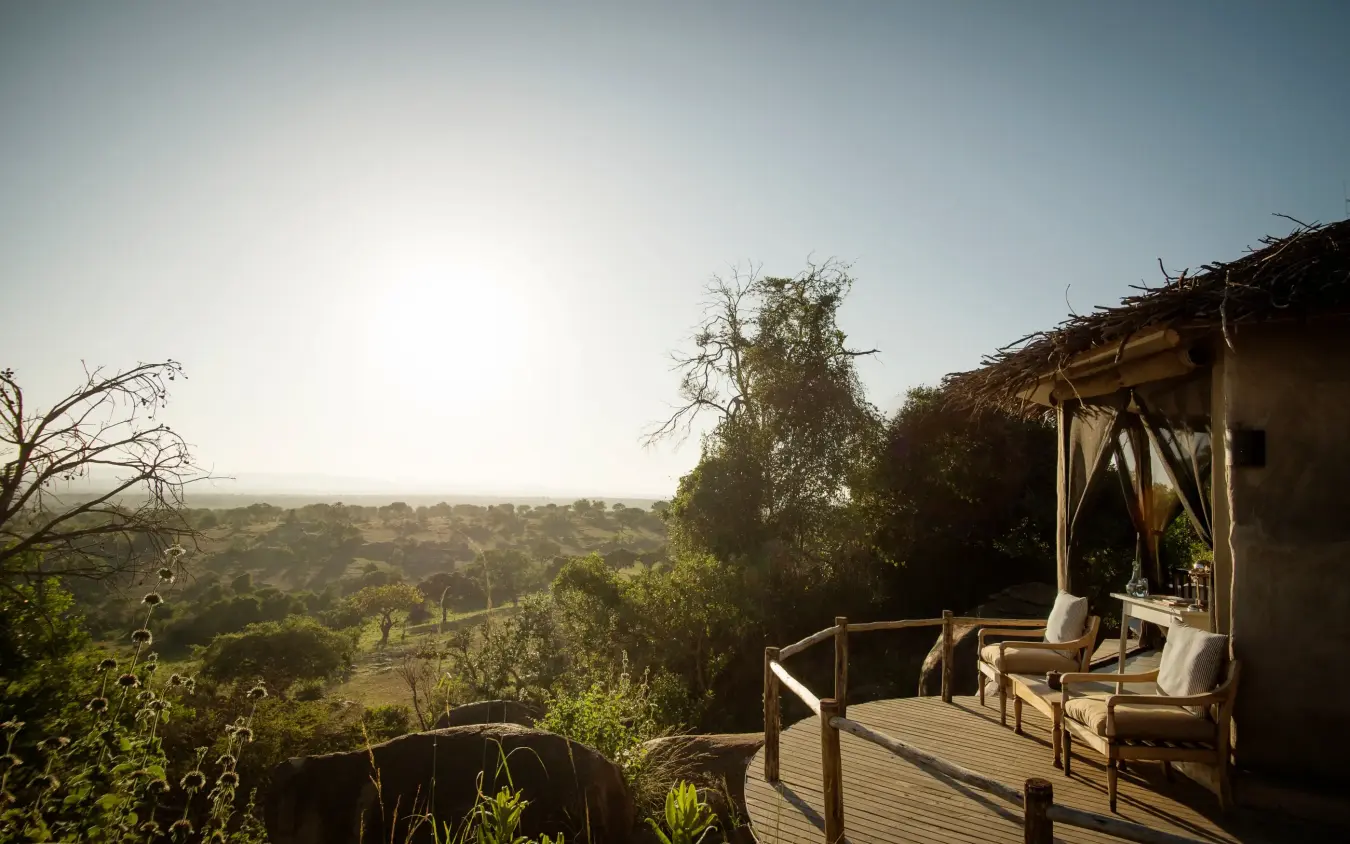
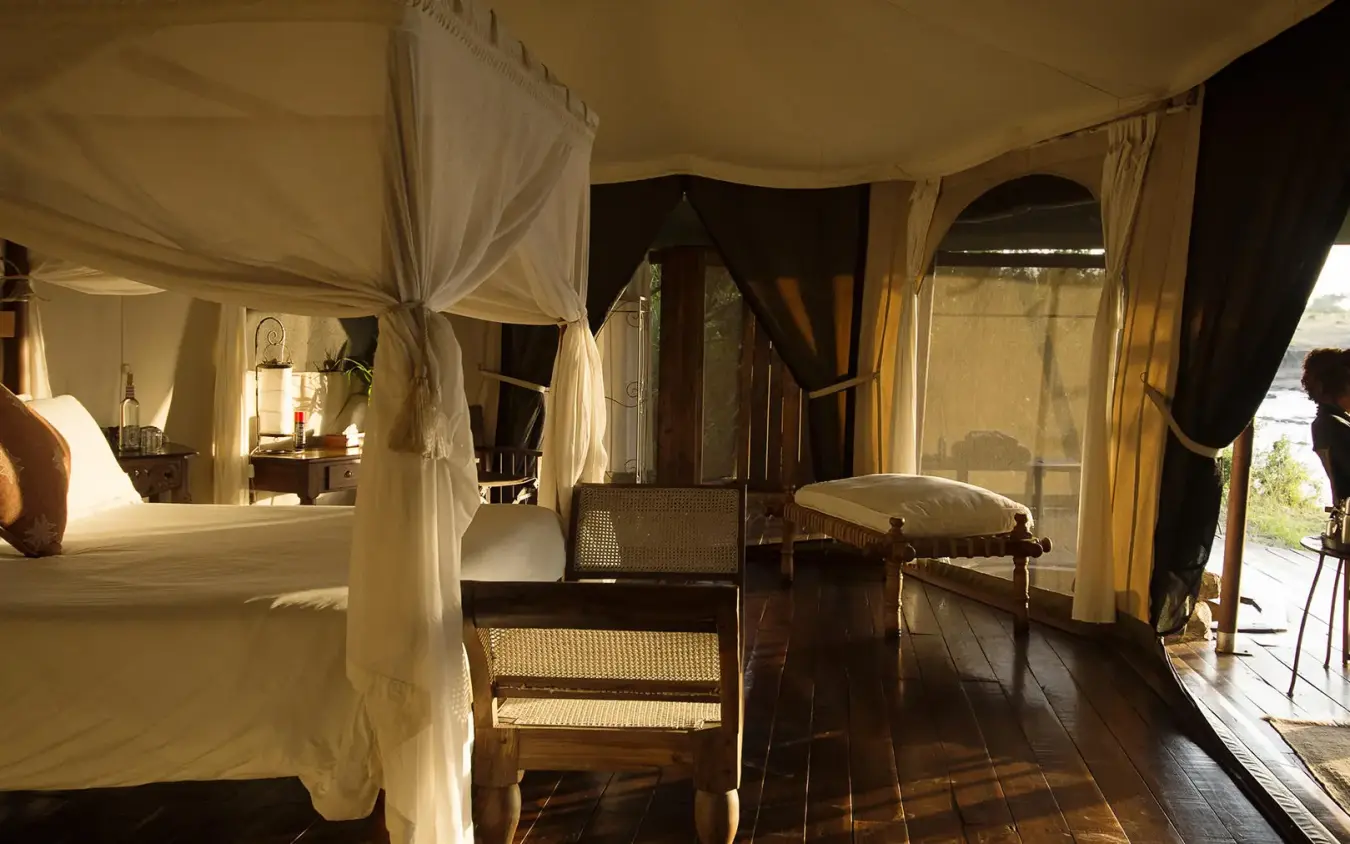
You are in the Kogatende region of the far northern Serengeti, closest to the Mara River crossings. From July to October, hundreds of thousands of wildebeest and zebra gather on these plains before committing to the water, and the short drive from camp means guides can reach several crossing points in a morning and shift between bends as the herds move. From November to March resident lion, leopard, cheetah, elephant and a small population of black rhino remain across the plains. Sayari Camp holds fifteen tented suites on raised mahogany platforms, split across two wings, with a rim-flow pool looking toward the Maasai Mara.
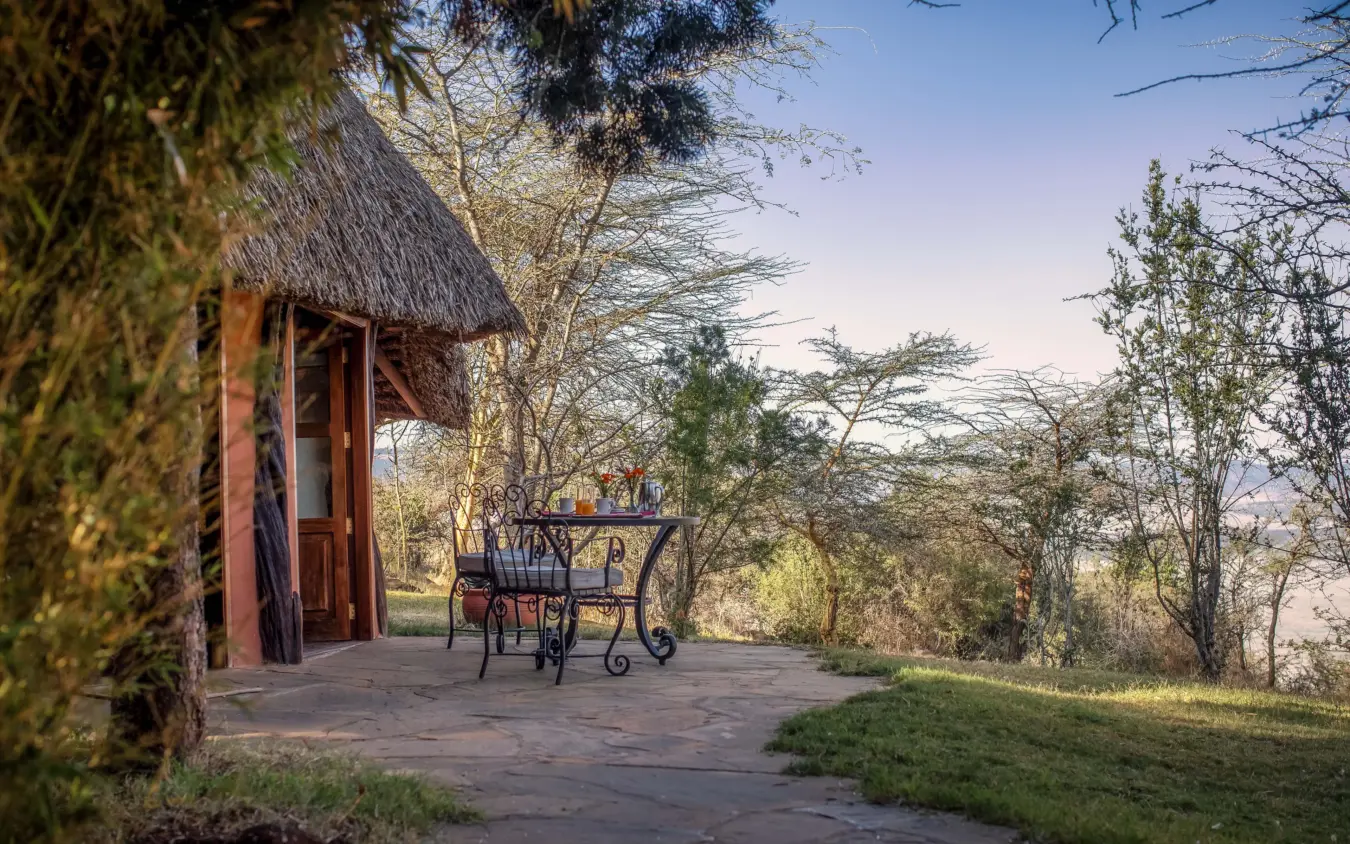
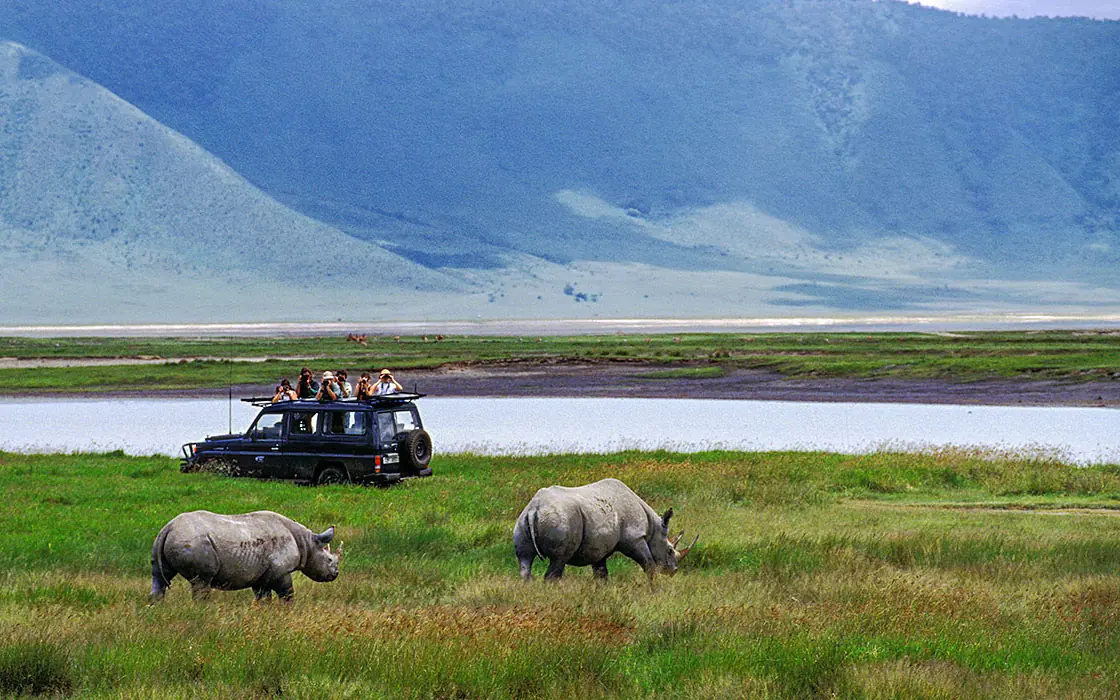
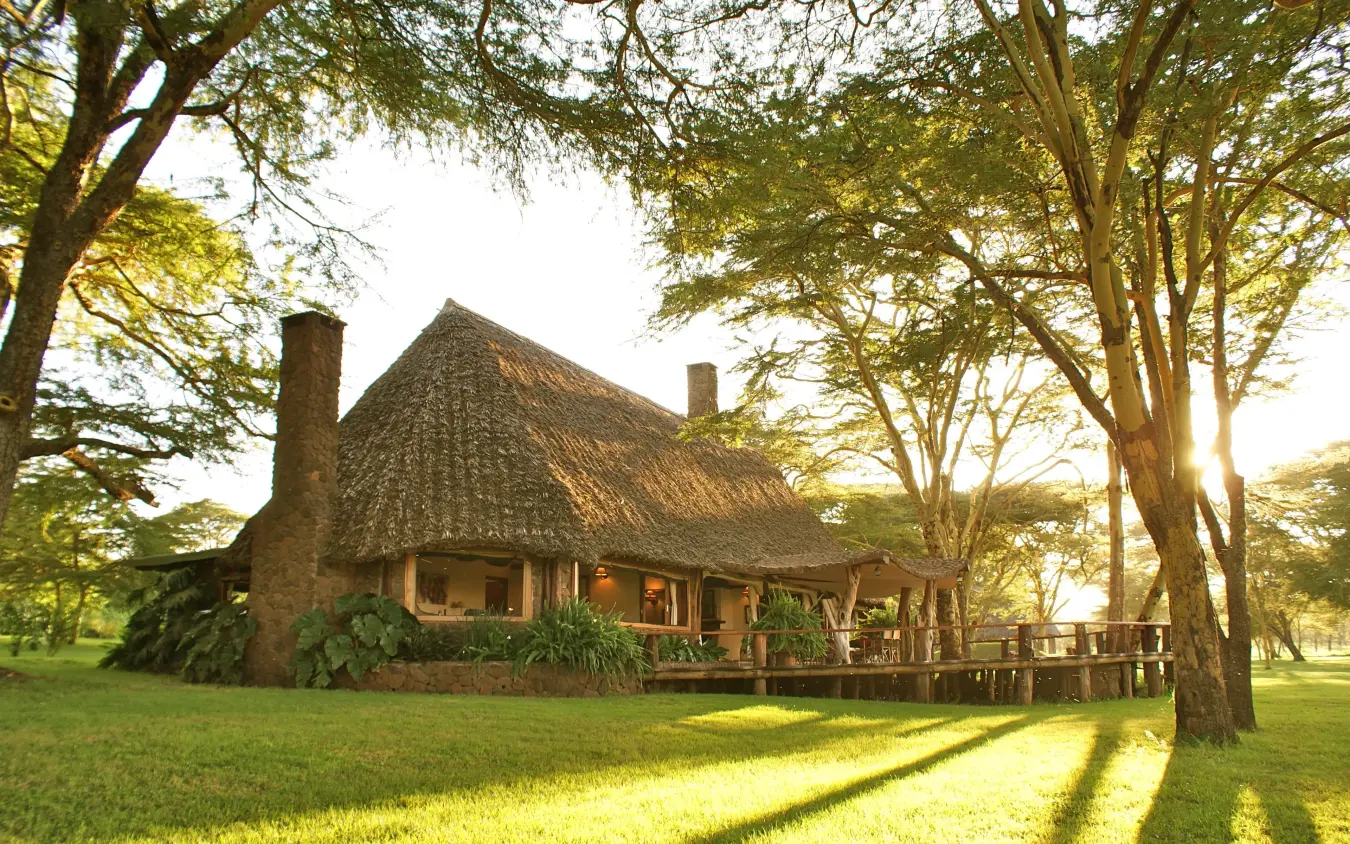
Two nights on the outer eastern slopes of the Ngorongoro Crater near Karatu, at roughly 1,800 metres, with a full day down in the crater for which the kitchen packs a picnic lunch. Back at Gibb's Farm the rhythm is that of a working coffee farm: organic Arabica in the fields, gardens heavy with vegetables and herbs, and the harvest, roasting and milking each unfolding in its own time. A century-old plantation with guest cottages added in 1972, it is recognised by Quiet Parks International as a Quiet Stay.
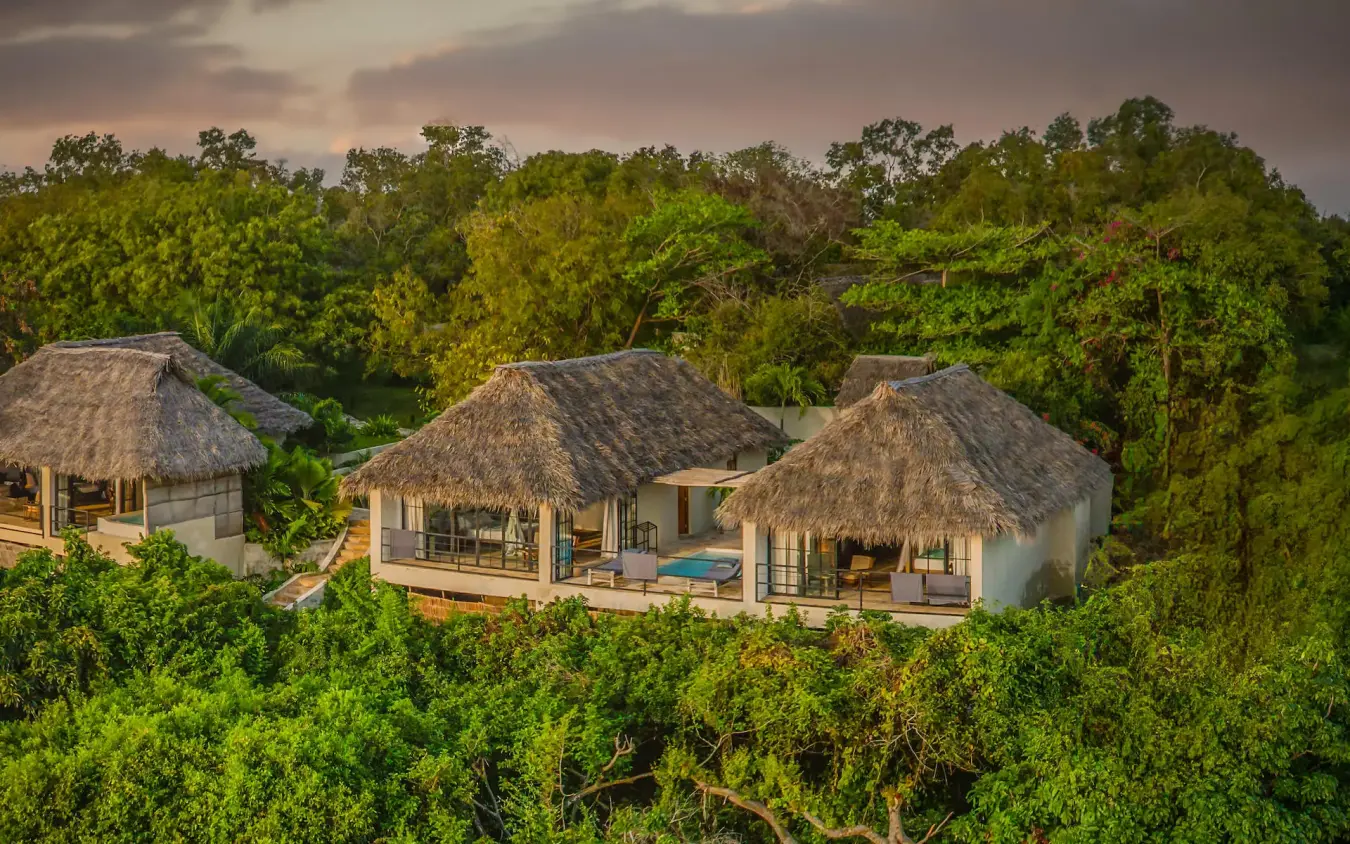
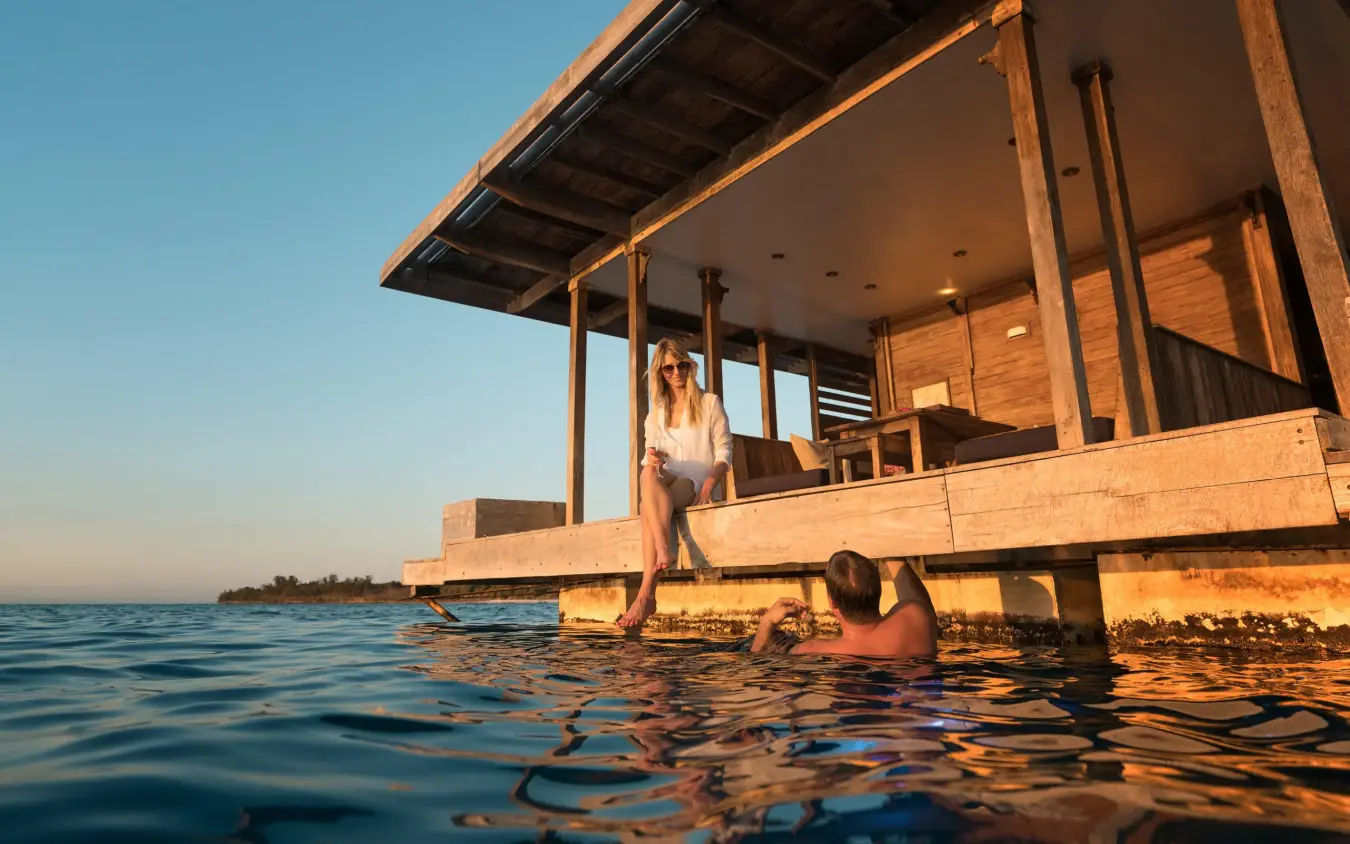
Eight nights close the trip on the northern tip of Pemba Island, reached by flight and a road transfer through clove plantations and villages. The reef falls sheer into the Pemba Channel and the diving starts almost at the door, with wall and drift dives running past turtles, eagle rays, reef sharks and schooling barracuda; the resort's PADI centre works both easy house-reef sites and deeper, current-driven ones. Guided walks lead into the Ngezi Forest Reserve, a stronghold of the endemic Pemba flying fox. The Manta Resort keeps to one forest-backed beach, rooms low under makuti thatch, and its best-known room floats offshore, a glass-walled bedroom four metres down.
It is the big travelling day of the trip and it is built around flight days rather than distance.
The road out of the forest to the Kihihi airstrip runs to ninety minutes or two hours, and the scheduled light aircraft on to Entebbe takes a little over an hour direct, longer when it calls elsewhere on the way.
The crossing into Tanzania sets the date. Uganda's national carrier flies to Kilimanjaro three days a week, in about an hour and a quarter, and to Zanzibar every day.
The whole chain will not fit into one go, because the Entebbe departure lands in Tanzania after the last scheduled bush flight into Kogatende has left, so we build a night into the middle rather than run it fine. The camp is then a 20 minute drive from the airstrip.
A private charter flies the same sector on your own timing, usually a Cessna Caravan, and we price it beside the scheduled seats so you can see the difference.
In the crossing months the position is about as good as it gets, and still nobody can promise one.
From roughly July to October the wildebeest are massed in the far north, with the crossings at their heaviest in August and September, and the camp is the closest permanent one to the Mara River, 20 minutes from the airstrip that serves it.
Three or four nights is the stay we advise for a fair chance, and this route gives three. What no one arranges is the animal. A herd can stand on the bank all day and then walk away, or go in at a bend nobody is watching.
Outside those months the river is quiet and the northern plains hold resident lion, leopard, cheetah and elephant, along with a few black rhino that very few visitors ever see.
Very likely, though the Wildlife Authority promises nothing and neither do we.
Rangers know roughly where to head before you leave, because trackers pick each family up at first light from the nests it left at dawn. We put success here at better than 95 per cent.
Eight visitors go to a family each day, one hour is allowed once the gorillas are found, and the minimum age is 15.
The walking is the unknown. Bwindi lies between about 1,160 and 2,600 metres, the forest is steep and often slippery, and a trek can be over inside two hours or keep you out until late afternoon.
Walking sticks are handed out and porters can be hired from the villages. Treks here can start on the lodge's own private path into the forest.
Two visas, and one insurance policy people miss.
Uganda's visa is applied for online before travel, and the joint East Africa Tourist Visa, which allows multiple entries into Kenya, Rwanda and Uganda, also covers the Ugandan half if you are adding one of the others.
Tanzania sits outside that scheme. The official advice to British passport holders is to hold a Tanzanian e-visa obtained online before leaving, with a single-entry visa also available at the main entry points.
Pemba is the one that catches people out. Every foreign visitor to the Zanzibar islands, Pemba included, must hold inbound travel insurance bought from the Zanzibar Insurance Corporation; no other policy is accepted, and the Foreign Office warns you may be refused entry without it.
Requirements turn on your passport, so we send the current ones when you book.
July to October, and this route makes the case unusually simple.
July, August and September carry our recommended rating at every stop: the crossings peak in August and September, the forest floor in Bwindi is at its firmest, and Pemba is in the calm, clear stretch of the cool monsoon, with the channel walls at their best in the same months. October holds up nearly as well.
February is the other month worth putting forward, strong in Bwindi, on the crater and in the sea, although the herds are then far to the south.
April and May are the ones to plan around, when the long rains fall on both countries, the diving is roughest and the Serengeti camp is closed. March and November are muddy in the forest.
The quieter months do bring easier permits, greener forest and softer light on dark fur.
No certificate is needed to start, and eight nights is only long if you stay out of the water.
The dive centre is a five star PADI operation running everything from a supervised first dive to rescue level, and the house reef opens on sand at five metres, shallow enough for beginners and for anyone who would rather snorkel.
What brings experienced divers is the channel, where the reef falls away in near-vertical walls; sites are graded by depth and current, some of them marked for advanced or deep-qualified divers only. Turtles, rays, Napoleon wrasse and schooling barracuda are regularly seen, and nothing in the sea is ever promised.
Send us your qualification and the date of your last dive when you enquire, so the centre can plan around it. The resort takes children from seven.
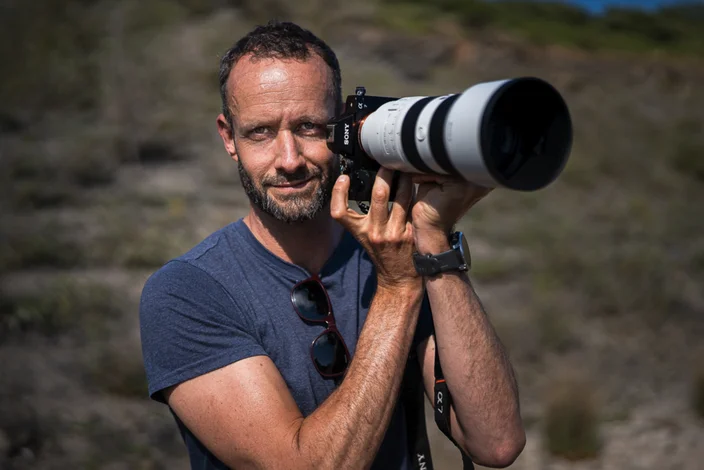
Ed Charles, BBC Producer
Fitzroy are true specialists in accessing the wilderness. They know where to go and importantly, when to go there. Highly recommended.
tanzania & kenya
A 21-night route from a Serengeti kopje to a Mara riverbank and the private conservancies of Laikipia and Lewa.
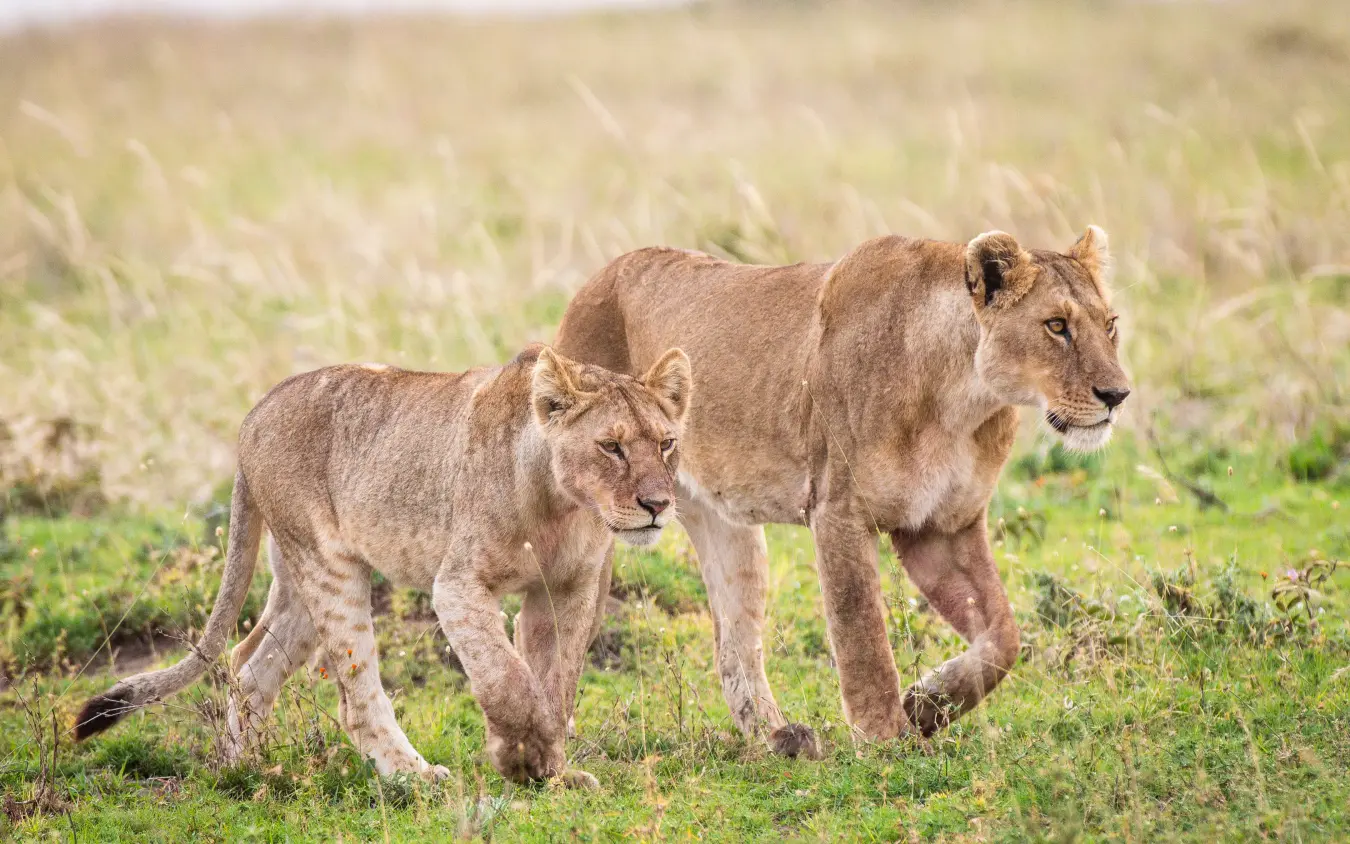
tanzania & kenya
Twenty-one nights from Mount Meru's forest across the Serengeti and Mara to the Laikipia Highlands of northern Kenya.
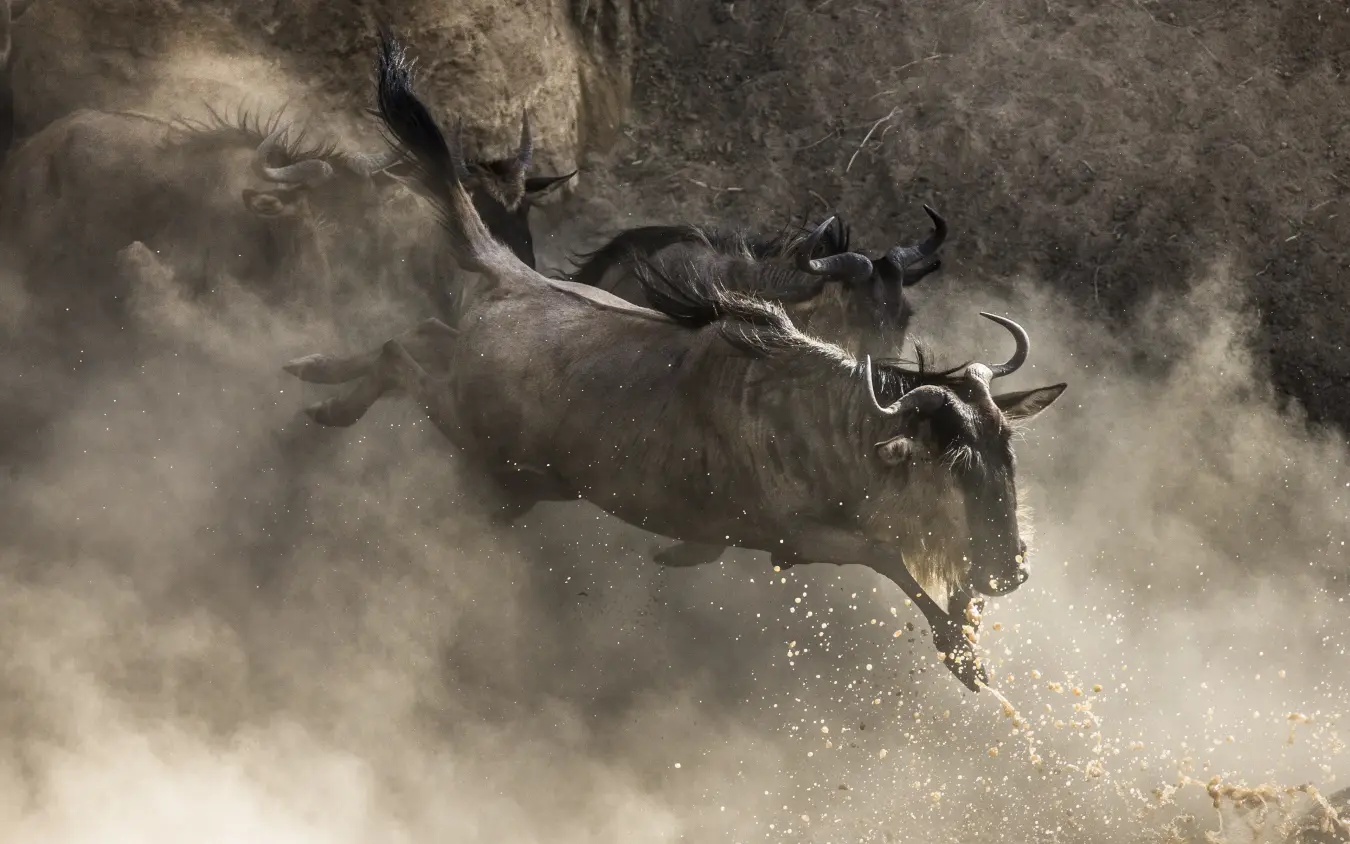
rwanda & tanzania
Ten nights linking Rwanda's Virunga gorillas with the far northern Serengeti and the Mara River, via Kigali.
rated five stars by our clients

our approach
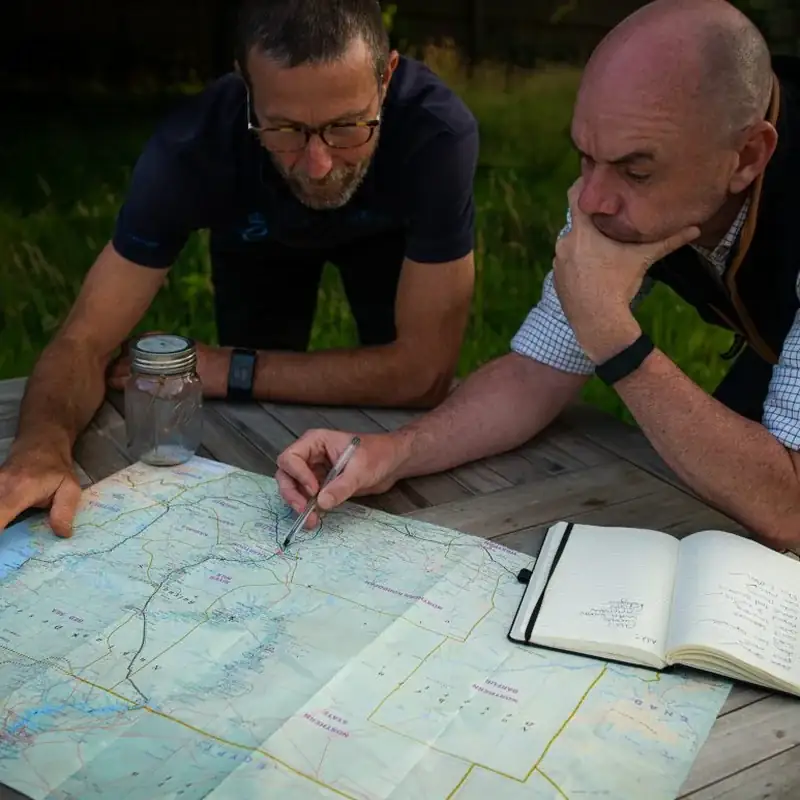
Every journey starts with a conversation. We take the time to understand your vision before we start planning.
Whether by phone or in person, we work with you directly to shape something that is considered, personal, and expertly delivered.
Every journey starts with a conversation. We favour a direct, personal approach: understanding your vision before anything else.
Whether by phone or in person, we work with you directly to shape a journey that is both thoughtfully considered and expertly delivered.
Get in touch to start planning yours.