








tanzania
lake manyara to the lamai wedge
Ten nights through northern Tanzania, from Lake Manyara's gorge to the eastern plains and the Mara River in the Lamai Wedge.
- Private Safari
- From $12,865 pp
- 2 guests
- 10 nights
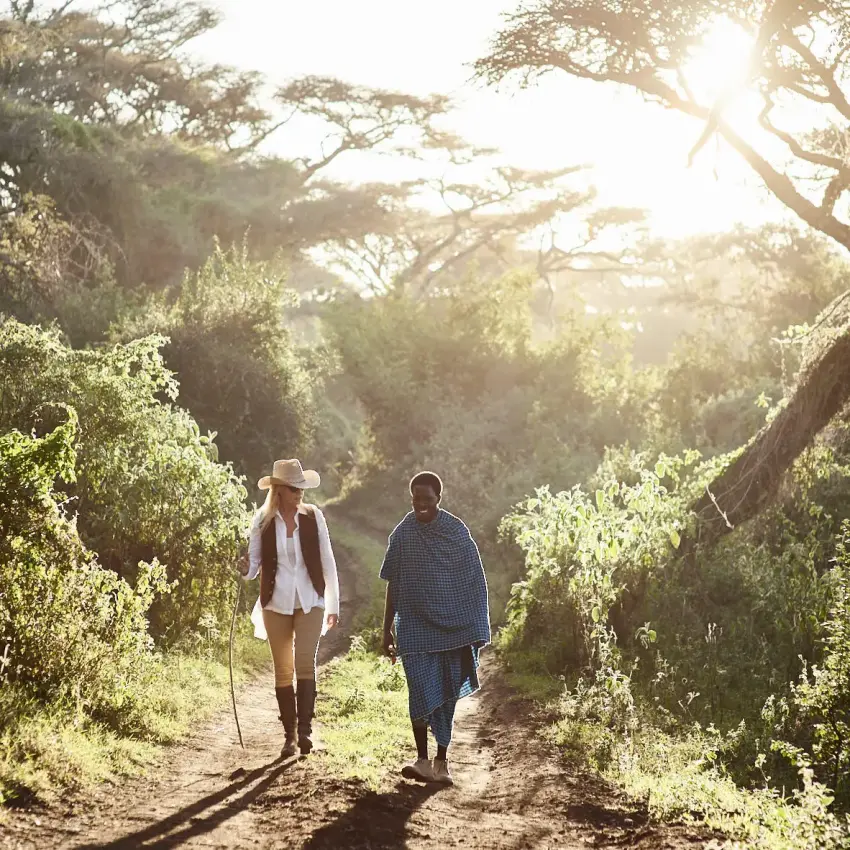
Nineteen nights link the northern Tanzanian parks on foot, then finish on the coast. You begin at Arusha below Mount Meru, then reach Lake Manyara’s forest, floodplain and soda lake. Walking days cross the Great Rift Valley to Lake Natron under the volcano Ol Doinyo Lengai, before the Ngorongoro Crater, the Serengeti plains and five nights on Zanzibar.
Much of the trip is spent walking, with armed guides leading outings and mobile camps set close to the herds. Game drives run alongside, with night drives, canoeing and gorge climbs where the terrain allows. The camps are comfortable rather than showy, from tented suites on the crater rim to coral-walled villas on the beach at Dongwe.
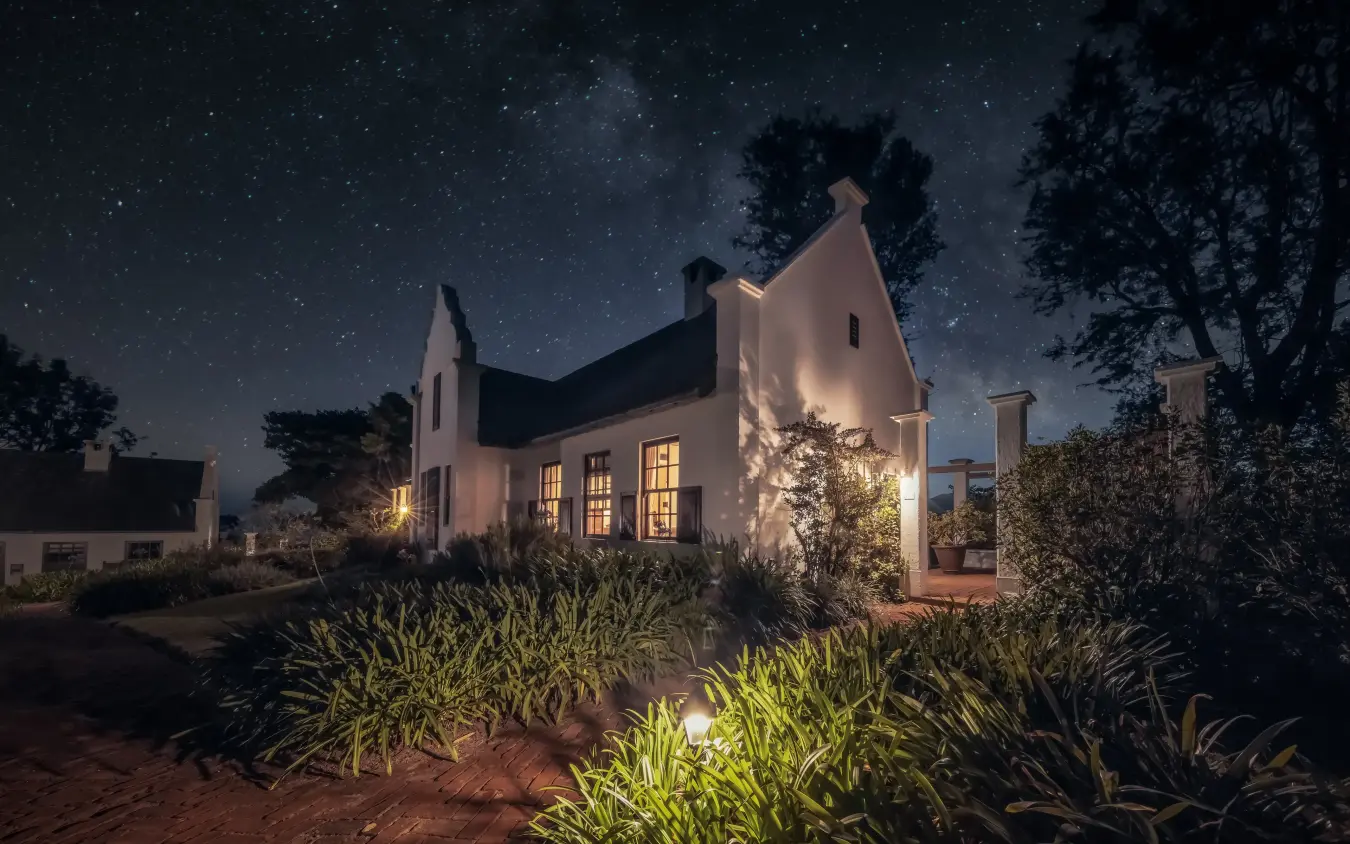
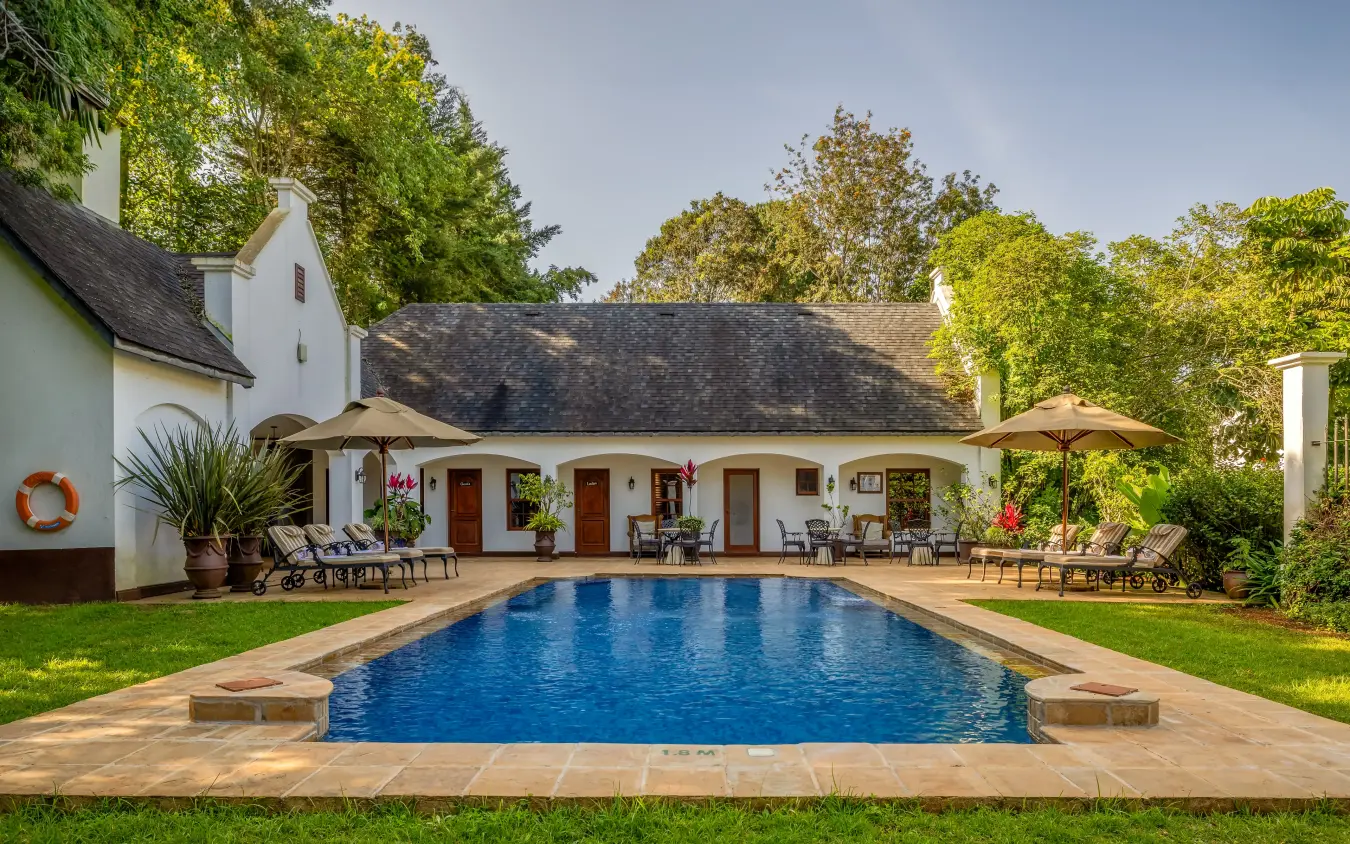
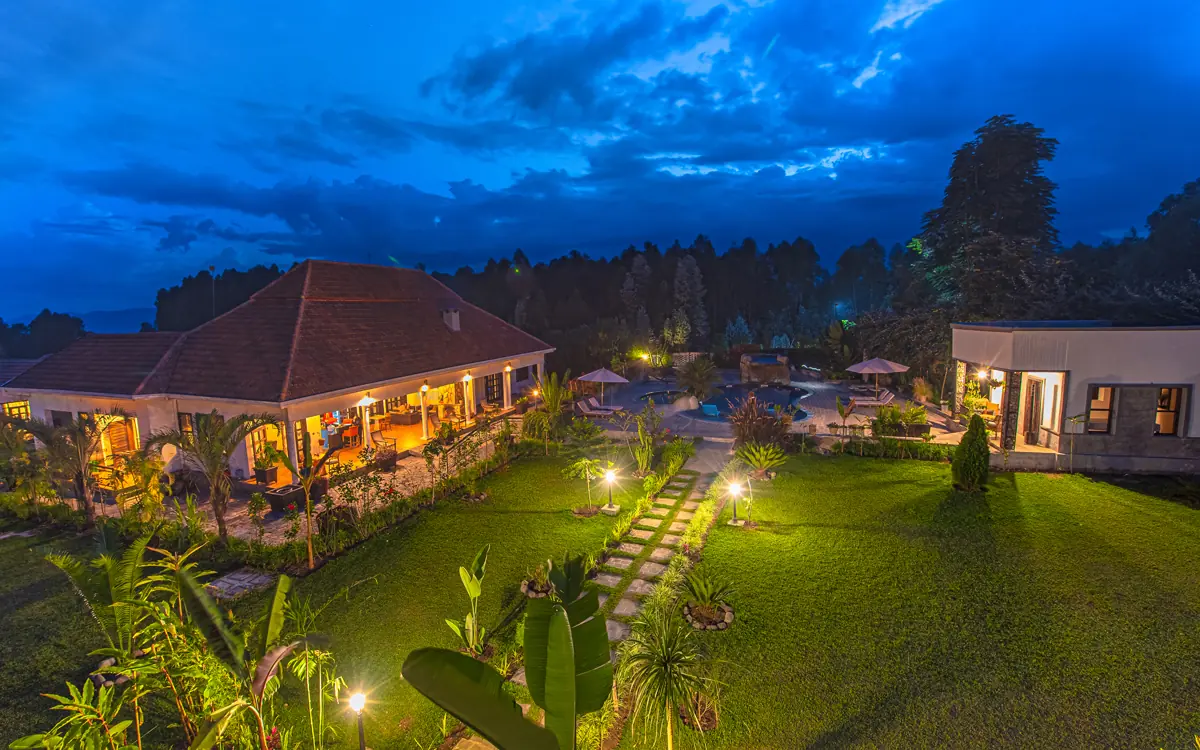
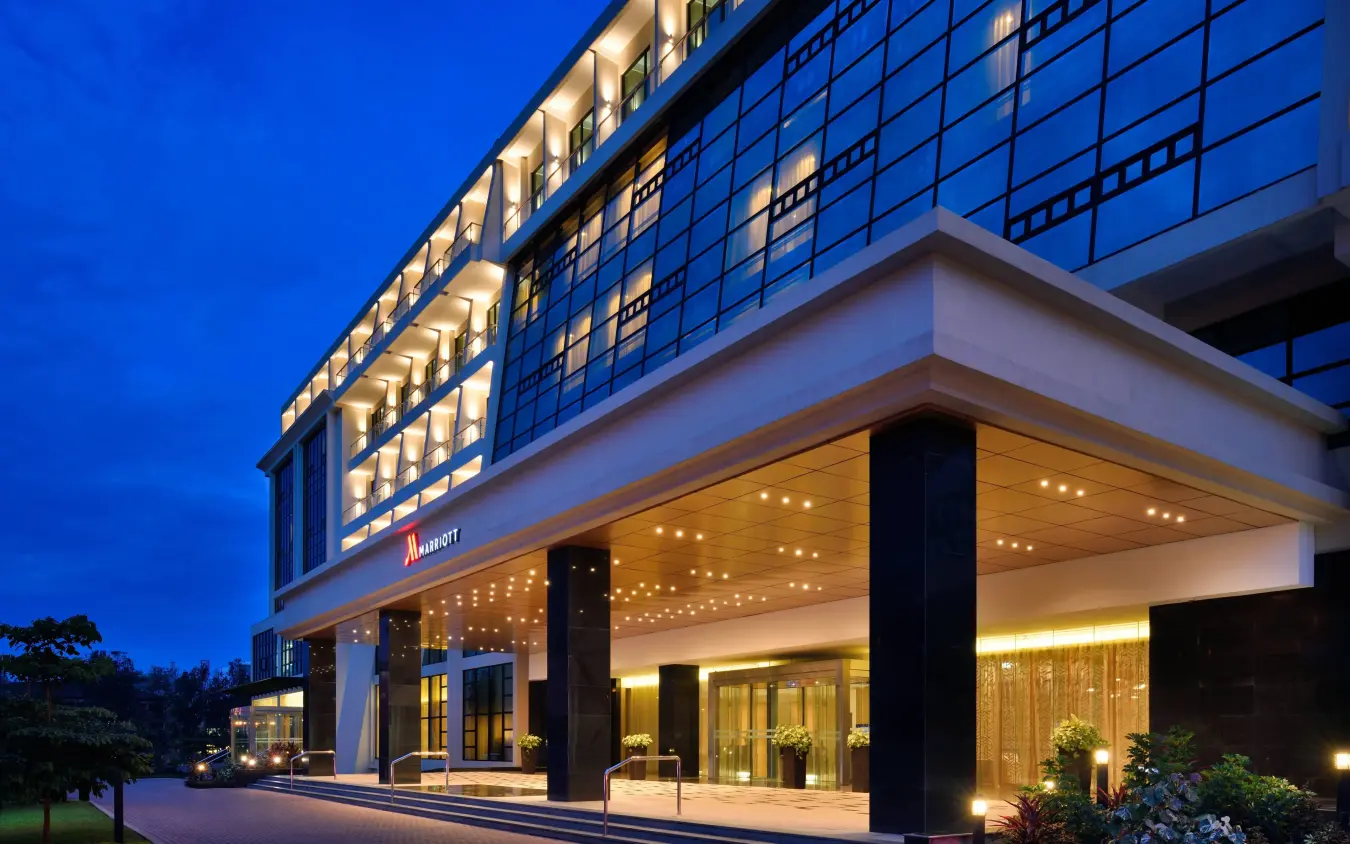
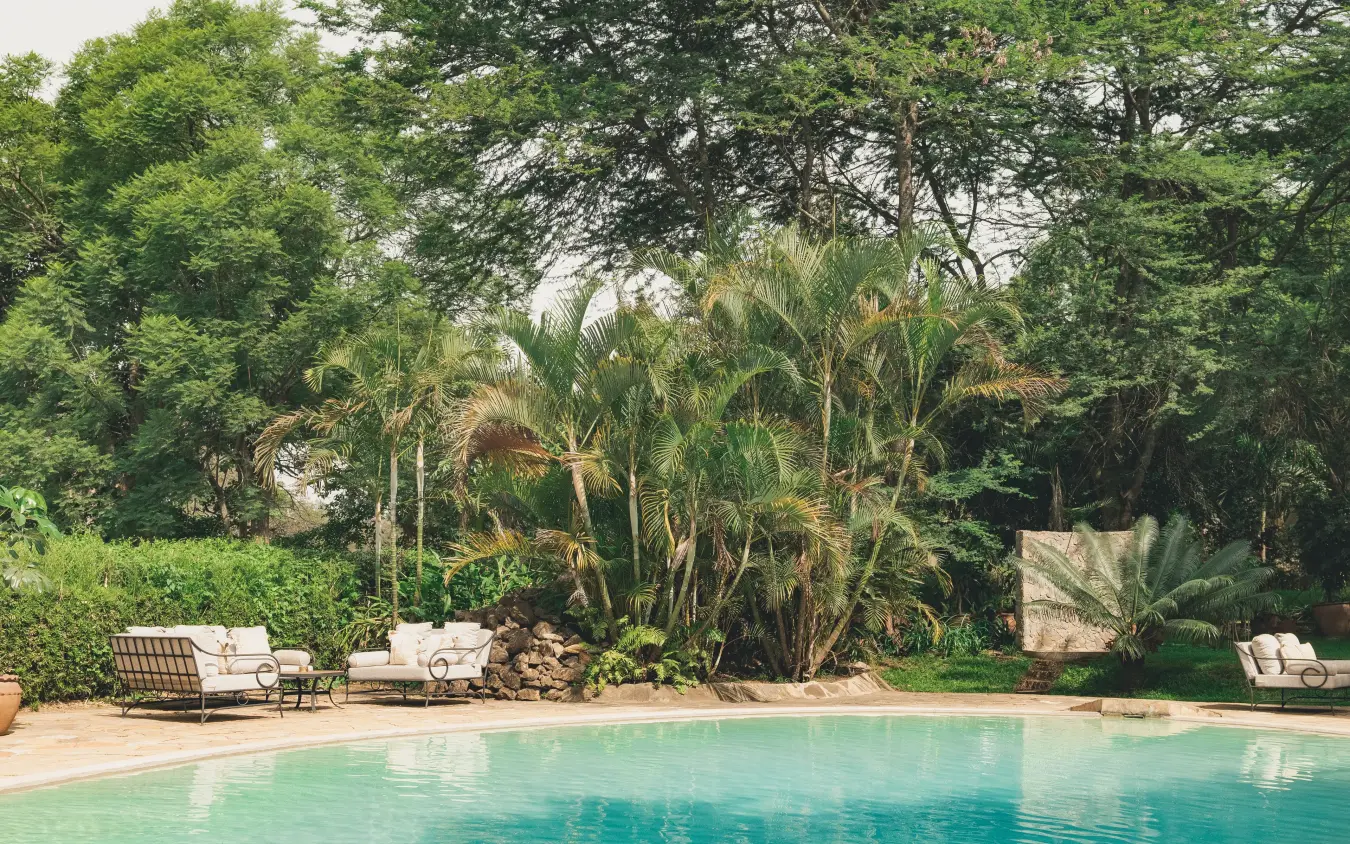
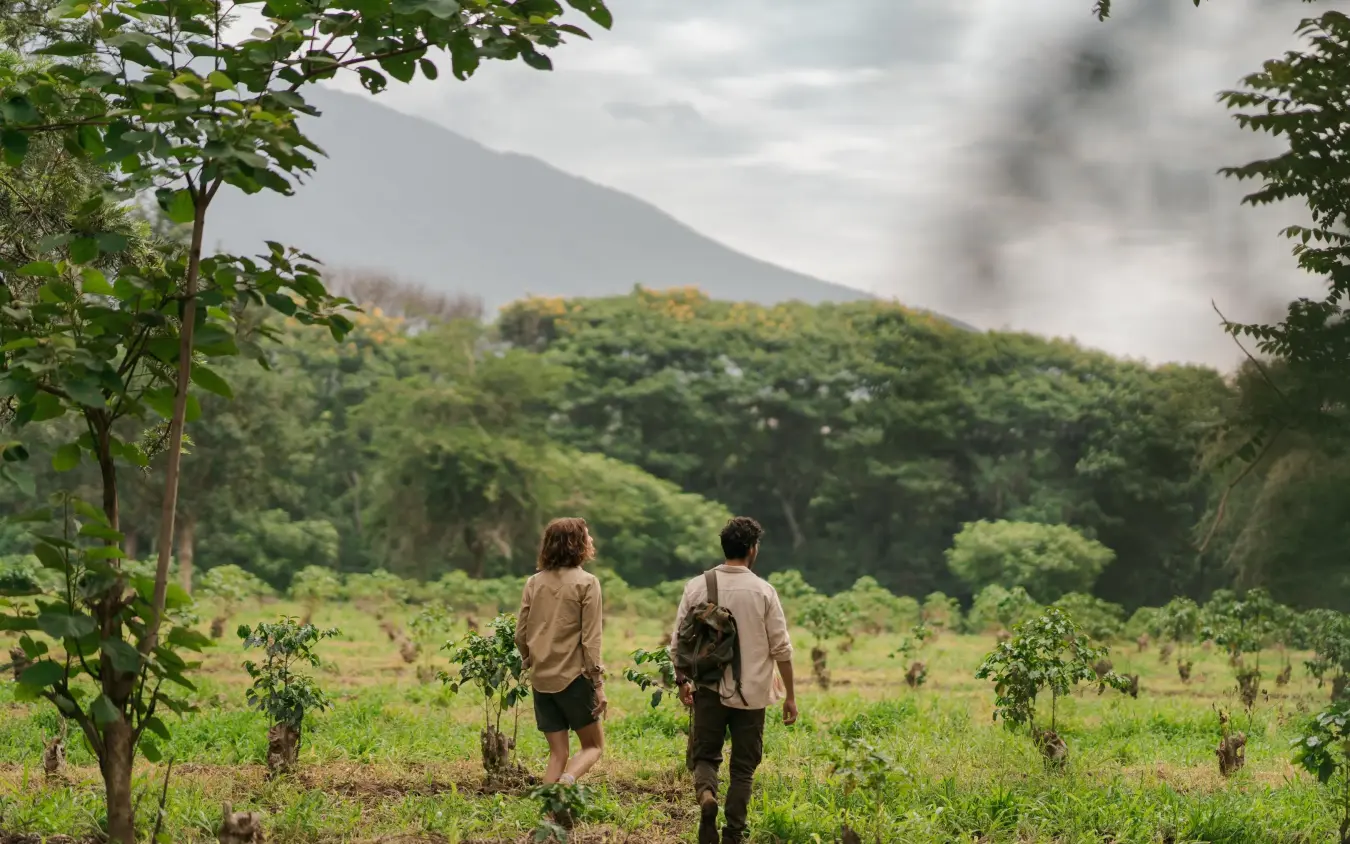
You land at Kilimanjaro International after dark and wake below Mount Meru, at 1,400 metres on the mountain's southern slopes, where northern circuit safaris begin. A single night here settles you before the drives to the parks, and you can walk the estate, watch the beans pulped and dried, then taste the roast. Set on the century-old Selian Coffee Estate, the lodge has twelve garden cottages among tropical gardens and coffee rows, each with an open fireplace below and a king bedroom above. Dik-dik wander the grounds and the airport is fifteen minutes away.
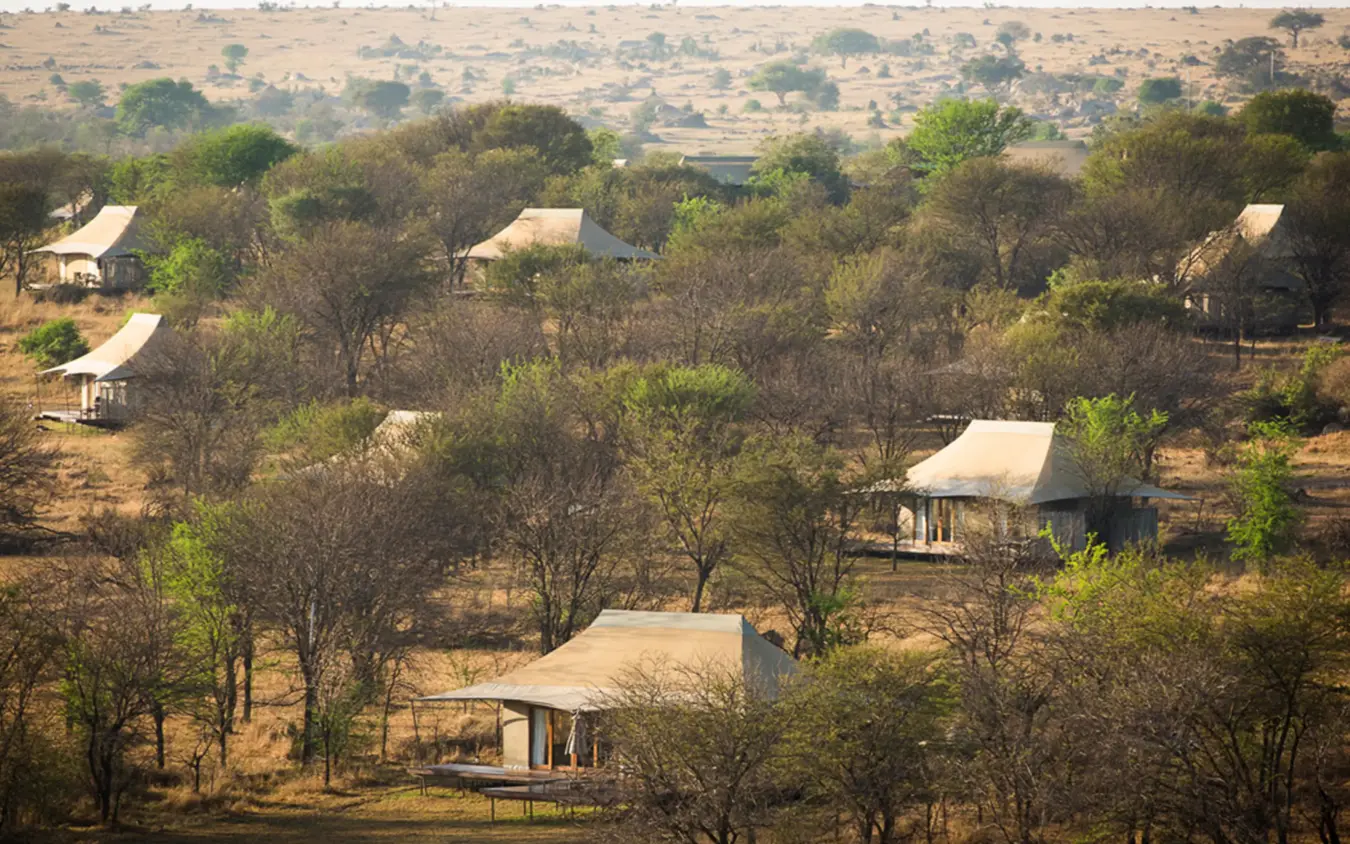
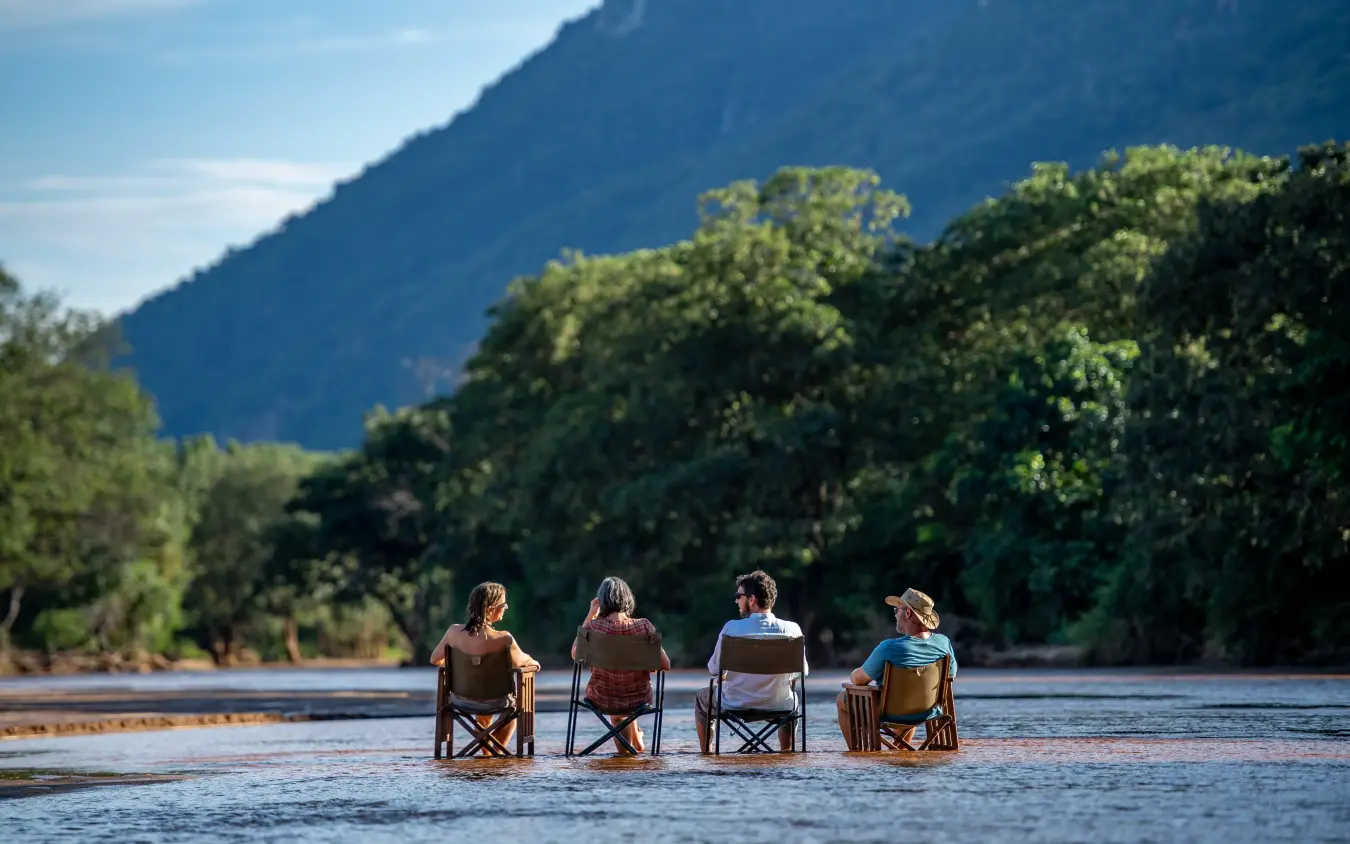
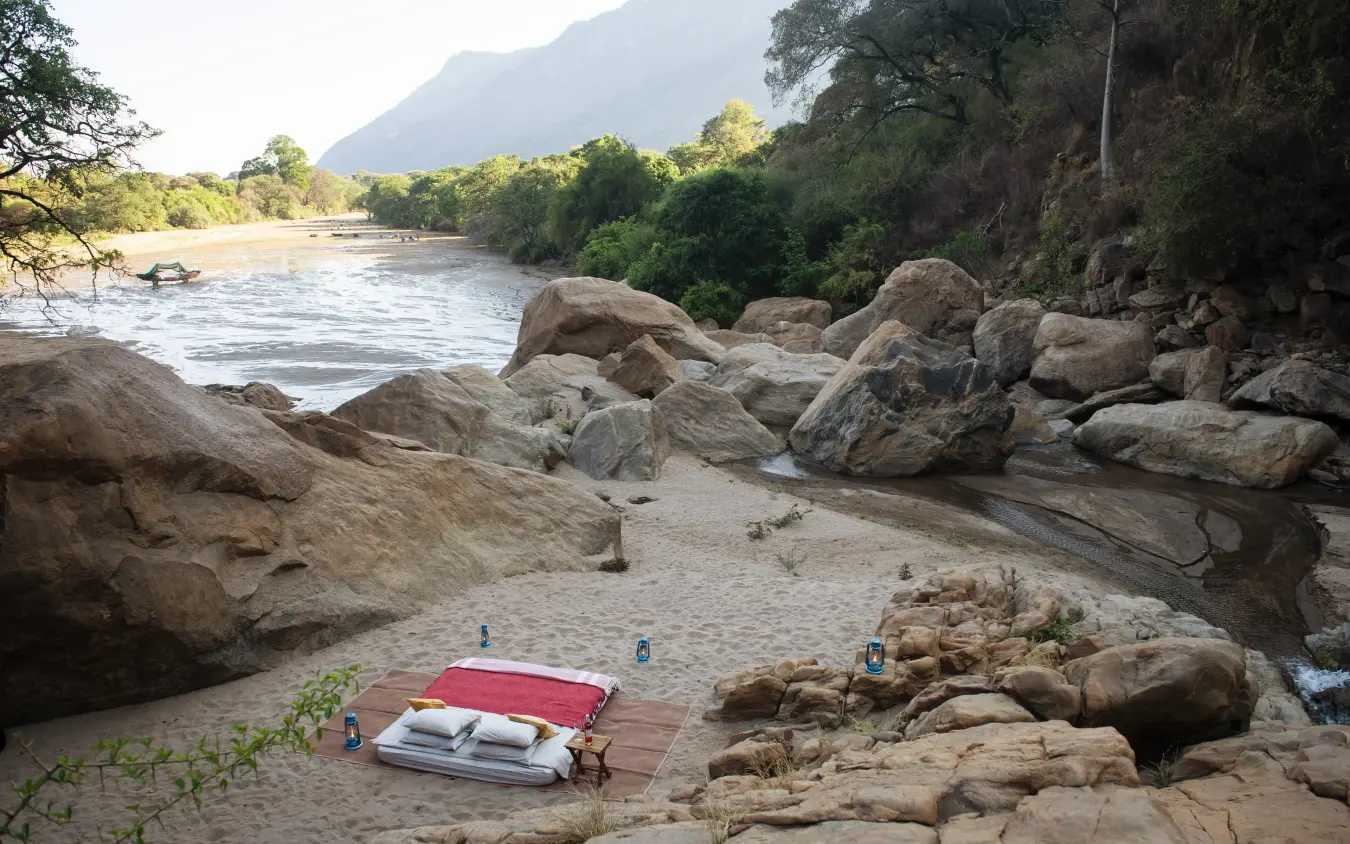
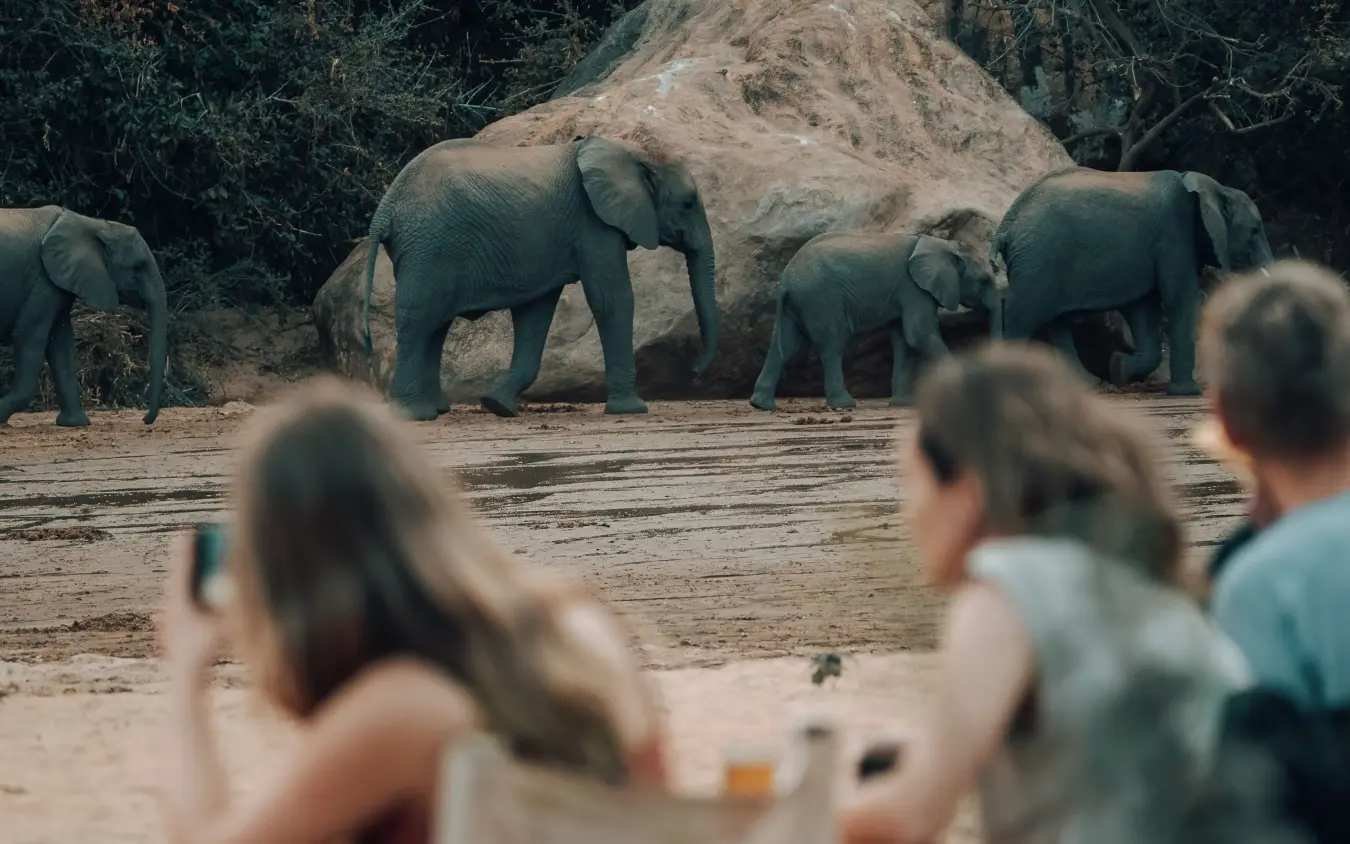
In the quiet southern half of the park, days run to morning and afternoon game drives, night drives and walks that range from shore tracking to routes climbing the escarpment. Elephants and buffalo come down to the Endabash River to drink in the dry months, the treetop walkway carries you eighteen metres above the forest floor, and you can canoe on the lake when levels allow. Standing on the riverbank beneath the Endabash Waterfall, the camp has eight tents on raised wooden decks along the riverbed, each opening to the gorge through gauze walls.
The two days between Lake Manyara and Lake Natron are spent walking, covering the ground through the Great Rift Valley on foot rather than by vehicle. You move at a walking pace and camp where the day ends. This is a lightweight mobile camp rather than a permanent property, set up along the route and taken down again, so the accommodation is simple and moves with you.
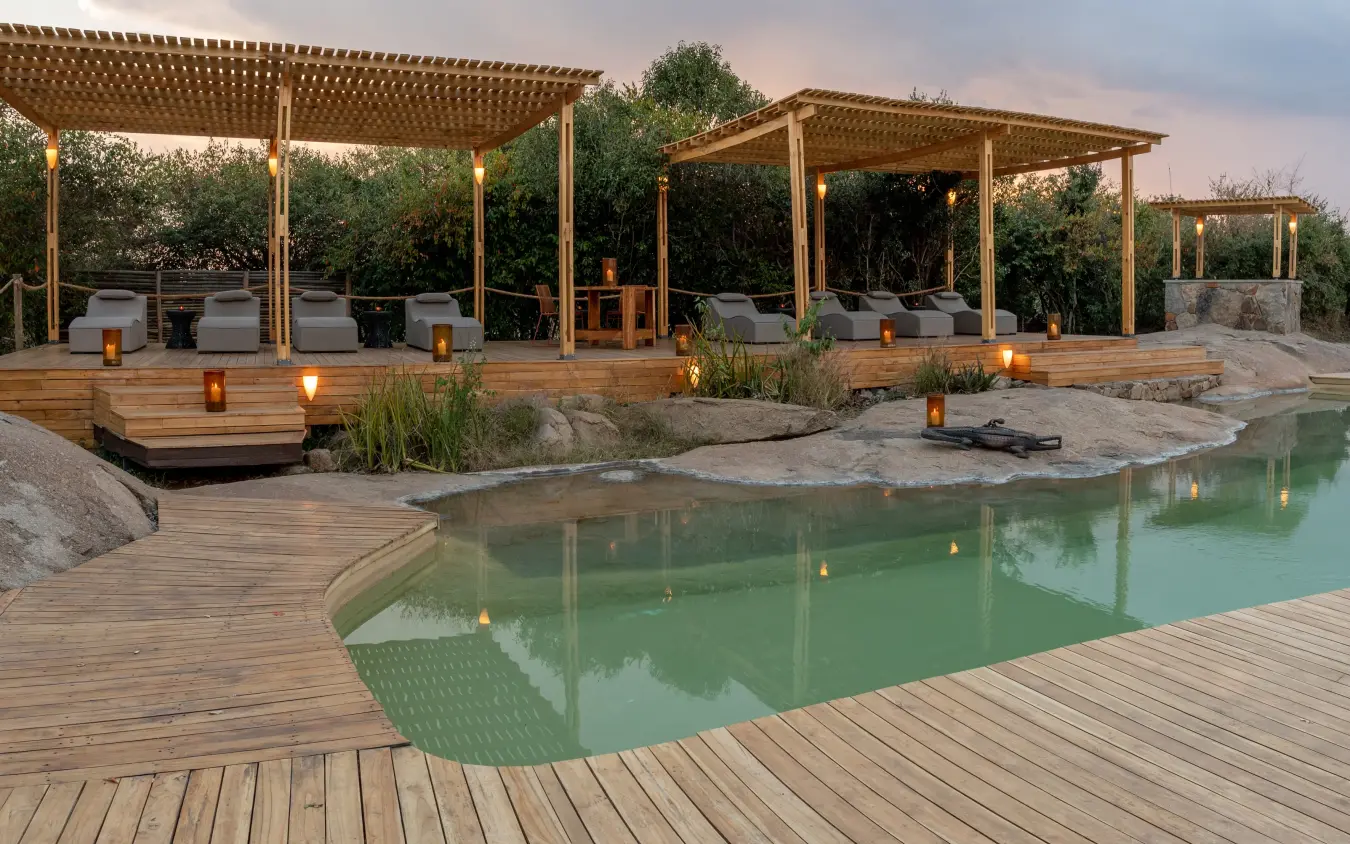
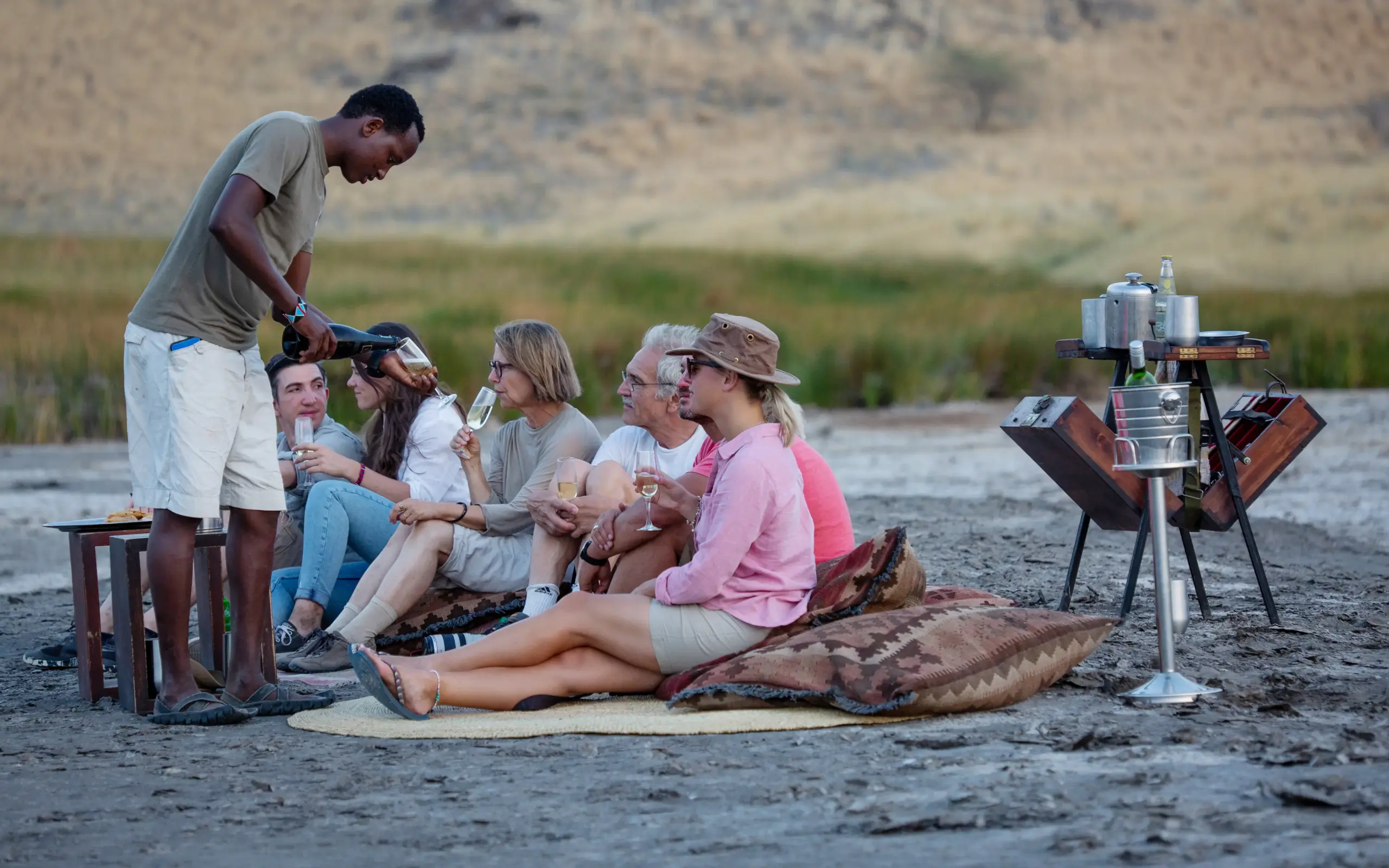
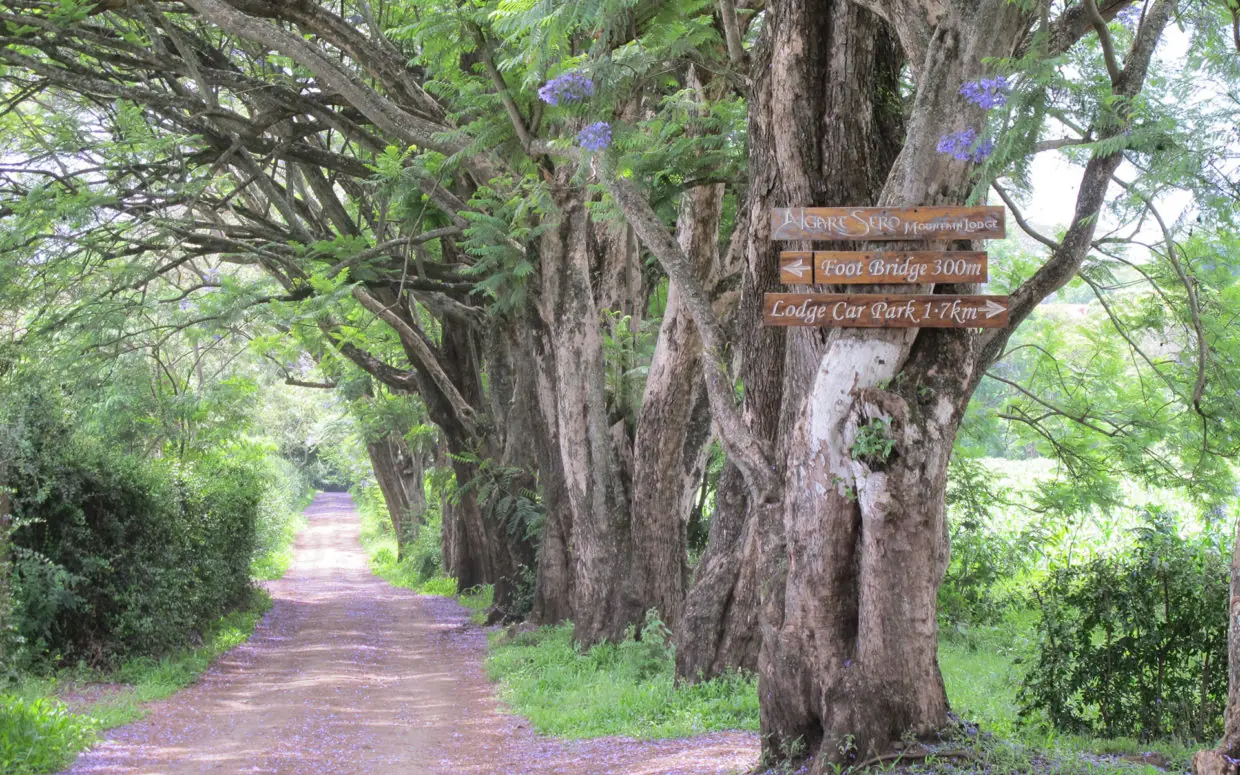
There are no game drives here; you walk, climb and wade through a landscape of red and orange soda water crusted with white salt. Ol Doinyo Lengai, the volcano the Maasai call the Mountain of God, is climbed at night to reach the summit for sunrise, one of the hardest one-day hikes in East Africa. Closer to camp you wade up the Ngare Sero gorge to waterfalls where you can swim, and at dawn walk the flats where lesser flamingos feed. On a private Maasai concession, the camp has nine tented suites on elevated decking, with a spring-fed pool at its centre against the constant heat.
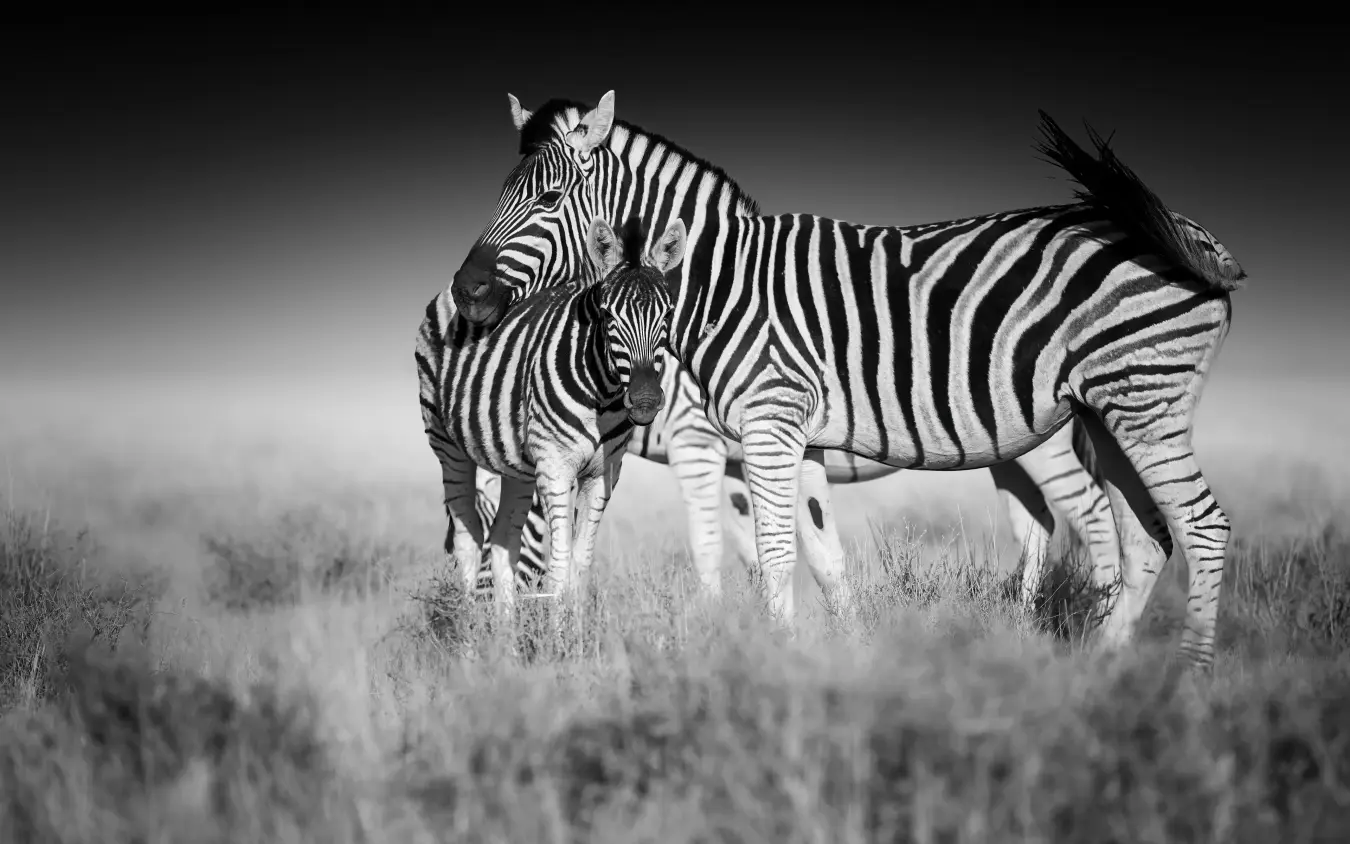
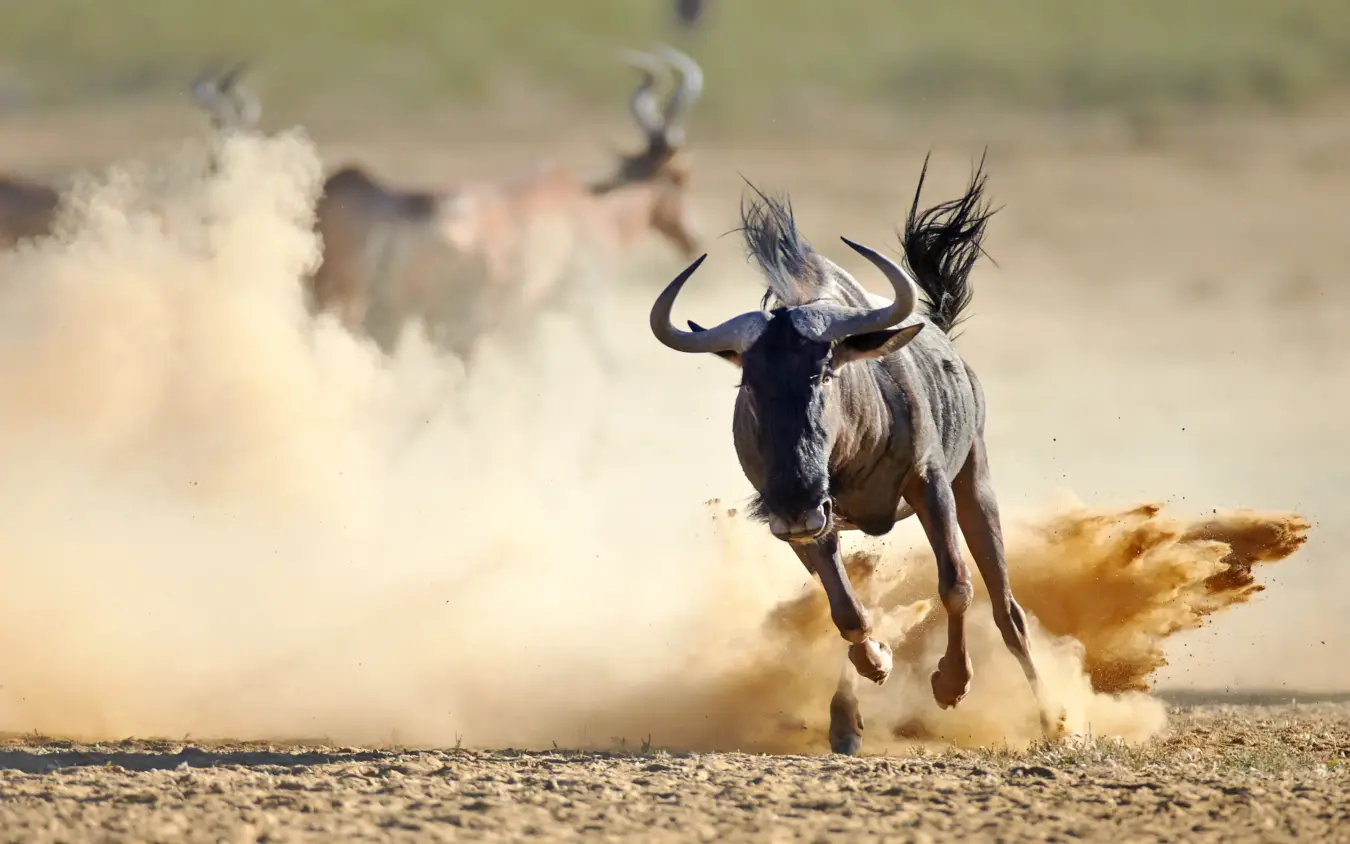
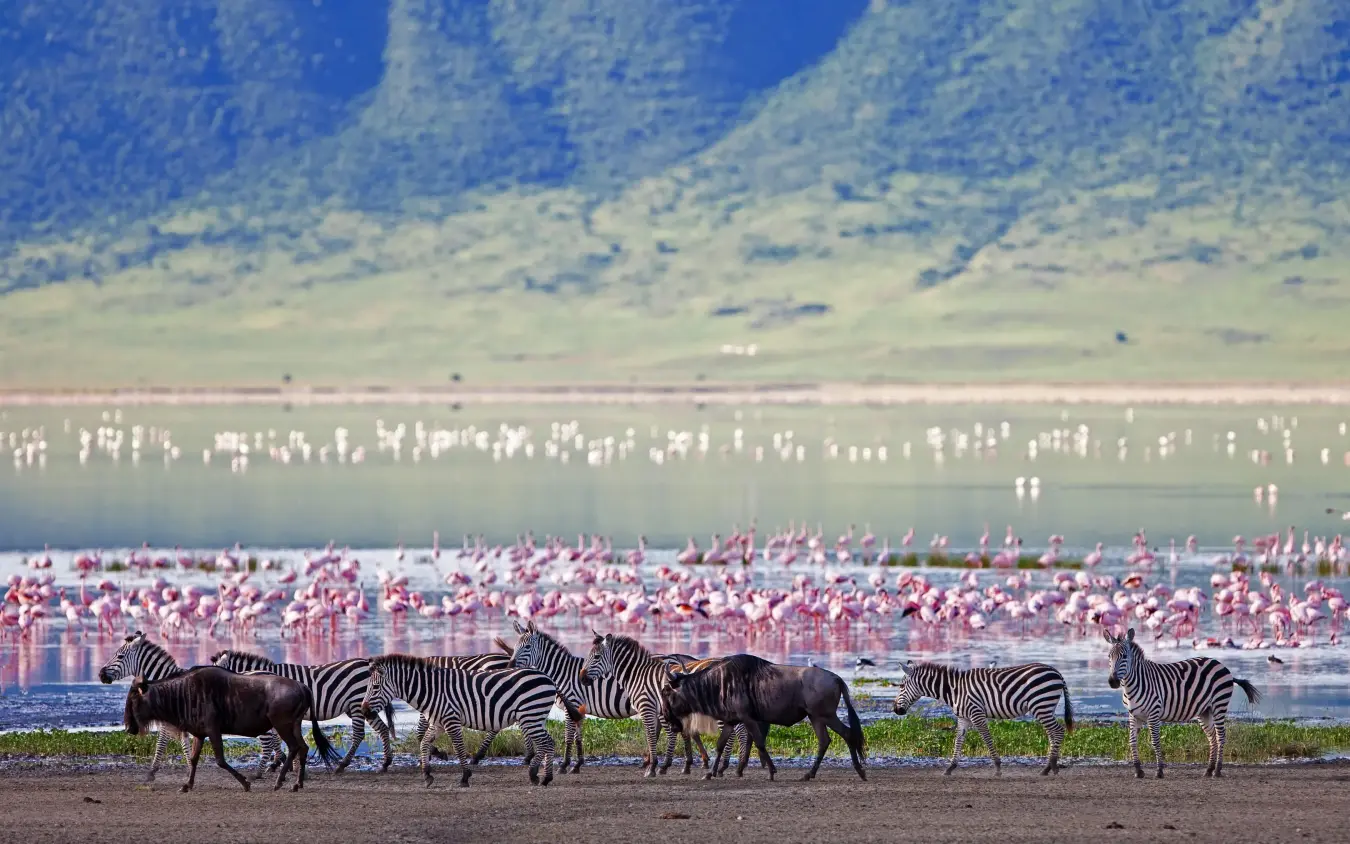
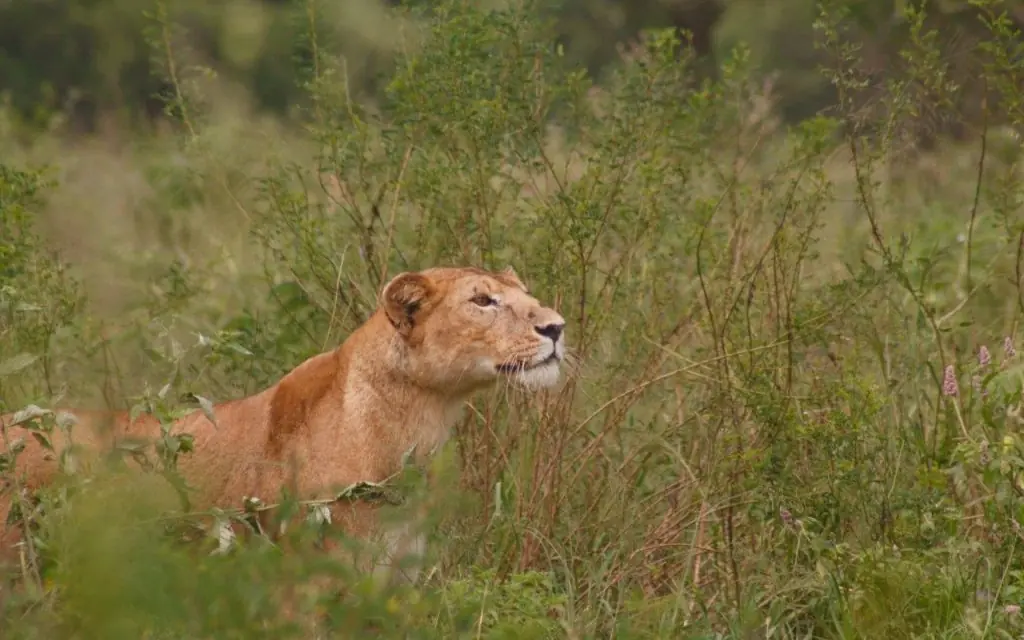
The day is built around one early descent onto the crater floor, so you are among the first vehicles down in soft first light, while lions still move and rhino feed in the open. Below the rim some 25,000 large animals live on water that never quite runs dry; wildebeest, zebra, buffalo and eland graze while lions, hyenas and cheetahs work the herds, and this is one of the more reliable places in Tanzania to see black rhino. On the wooded rim at around 2,300 metres, the camp has ten tented suites, and evenings turn cold enough that a hot-water bottle comes with the bed.
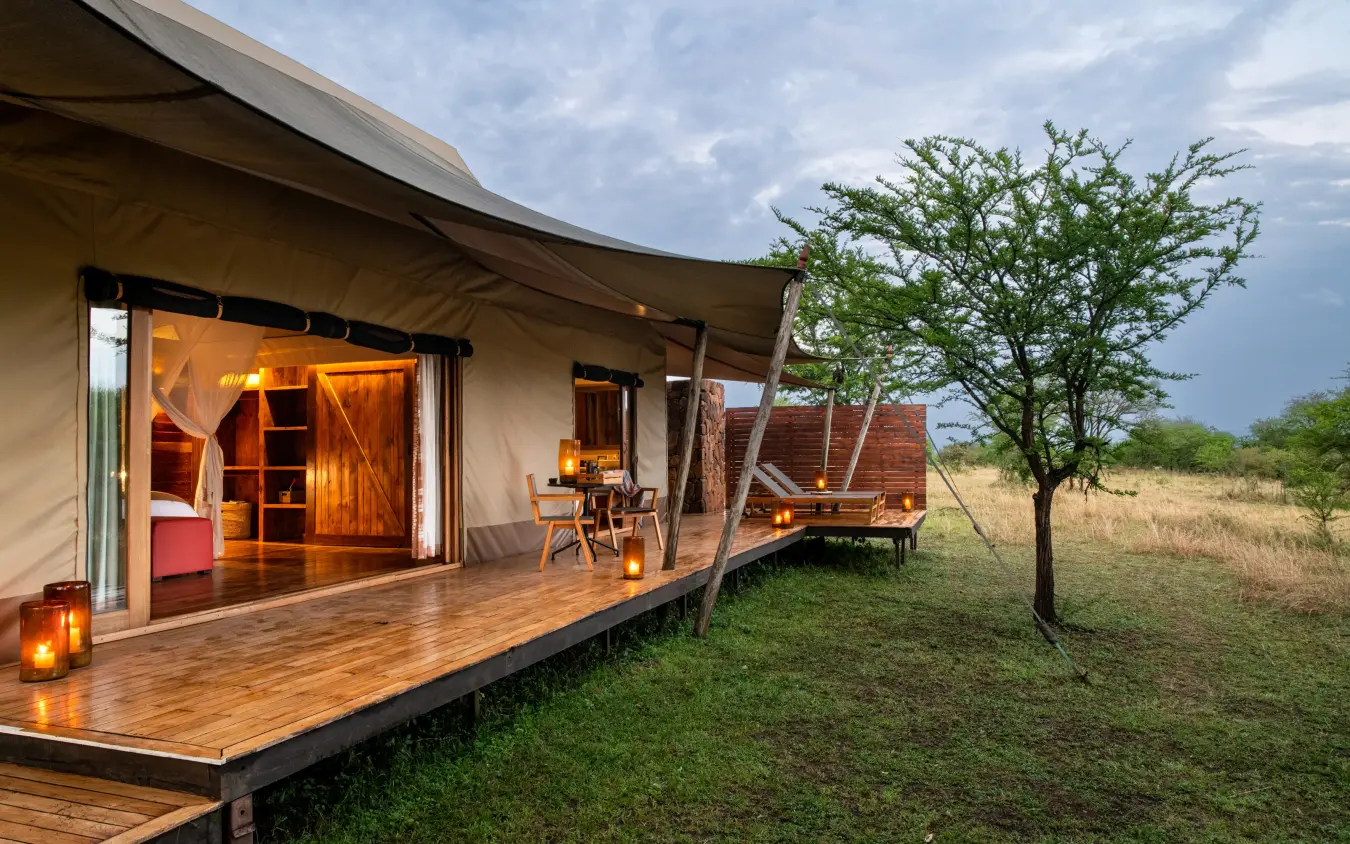
A day on foot near Seronera on the edge of a Wilderness Zone that stays closed to general game-viewing vehicles, where armed, trained guides lead half-day and full-day walks straight from camp, reading tracks at ground level. The central Serengeti holds a dense population of predators; lions rest on the nearby kopjes, elephants move through the surrounding country, and the gorge beside camp draws resident game. The camp is comfortable and capably run, with canvas tents on proper wooden beds under duvets, en-suite bucket showers and solar power throughout.
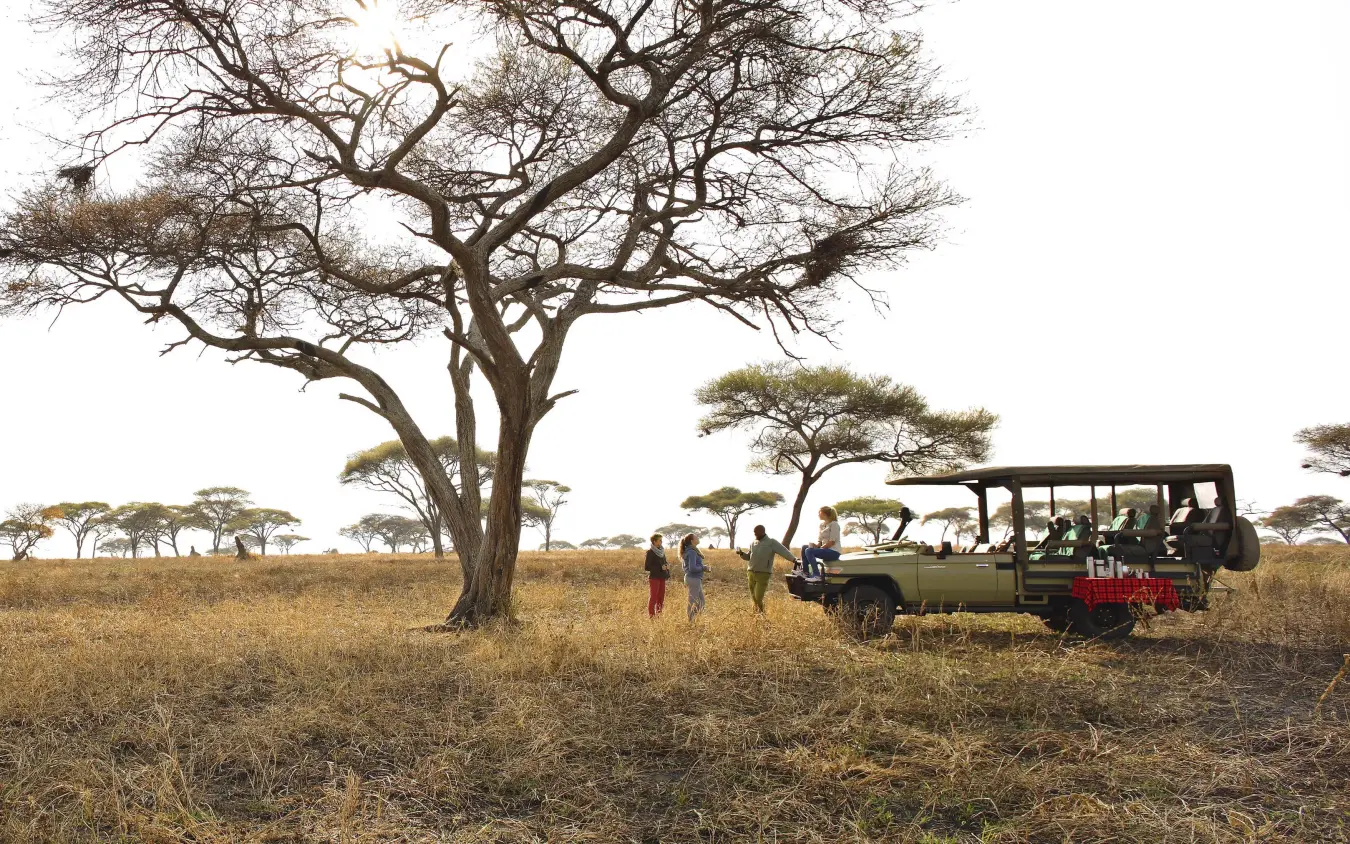
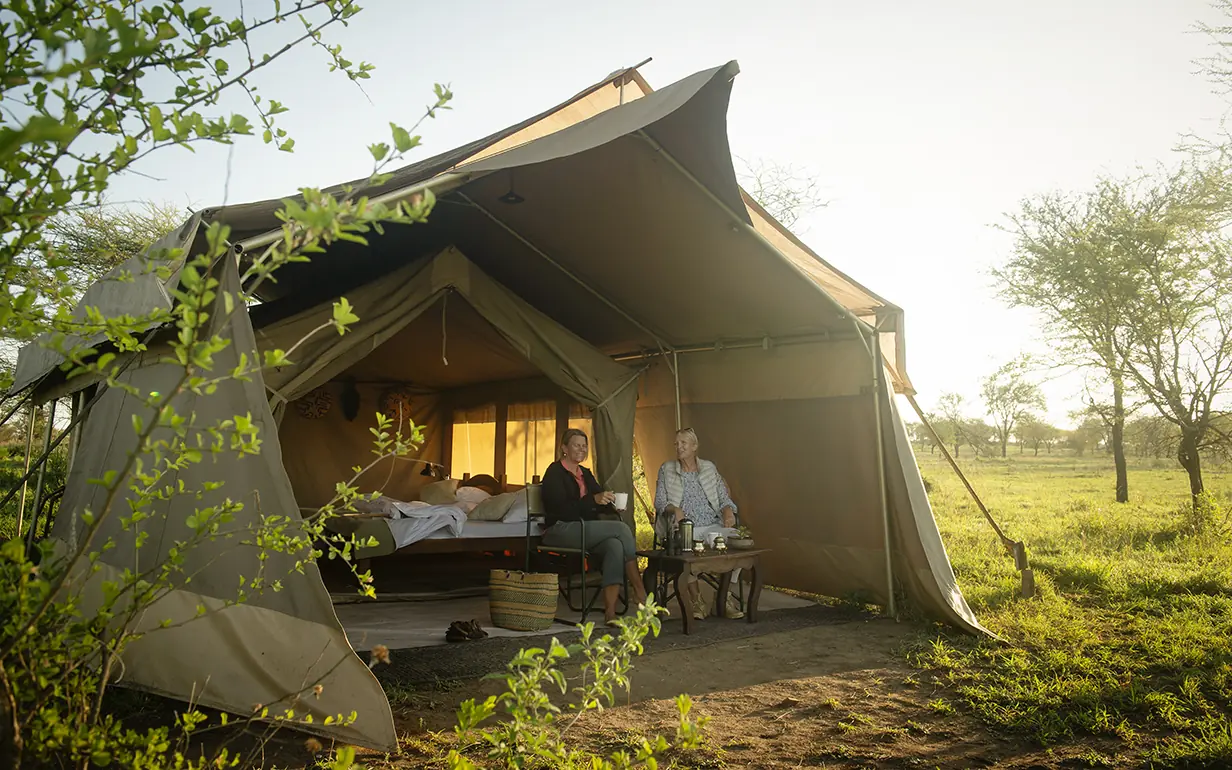
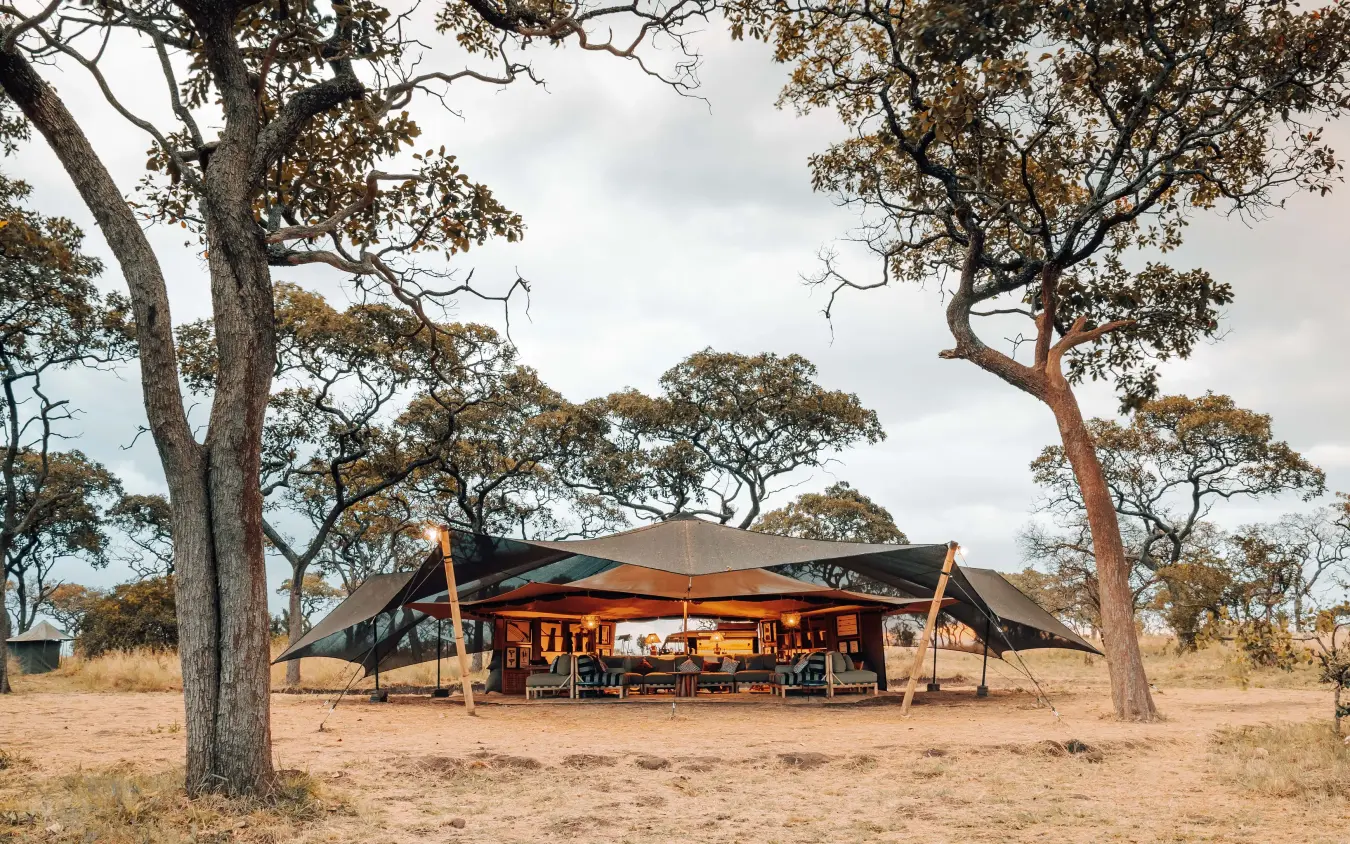
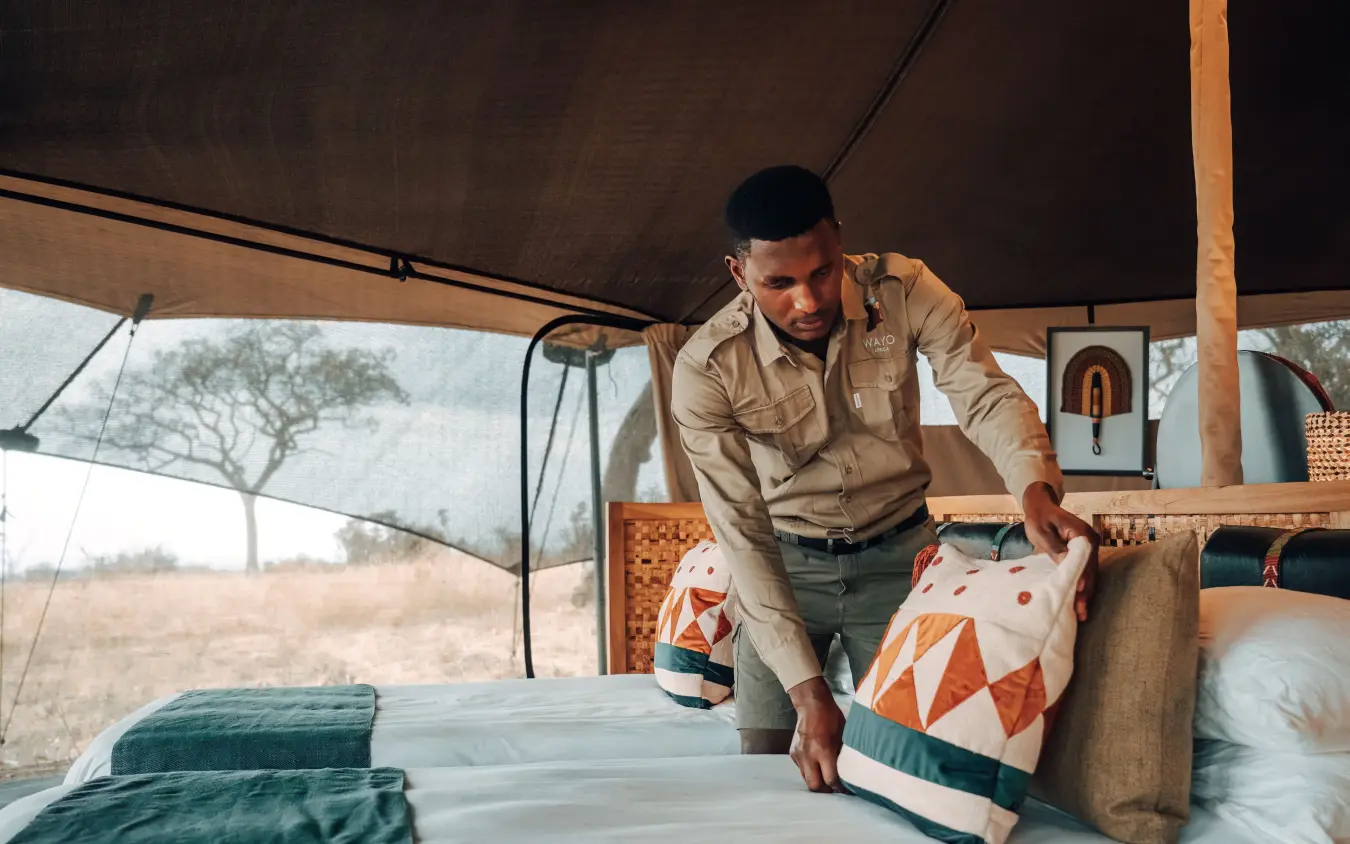
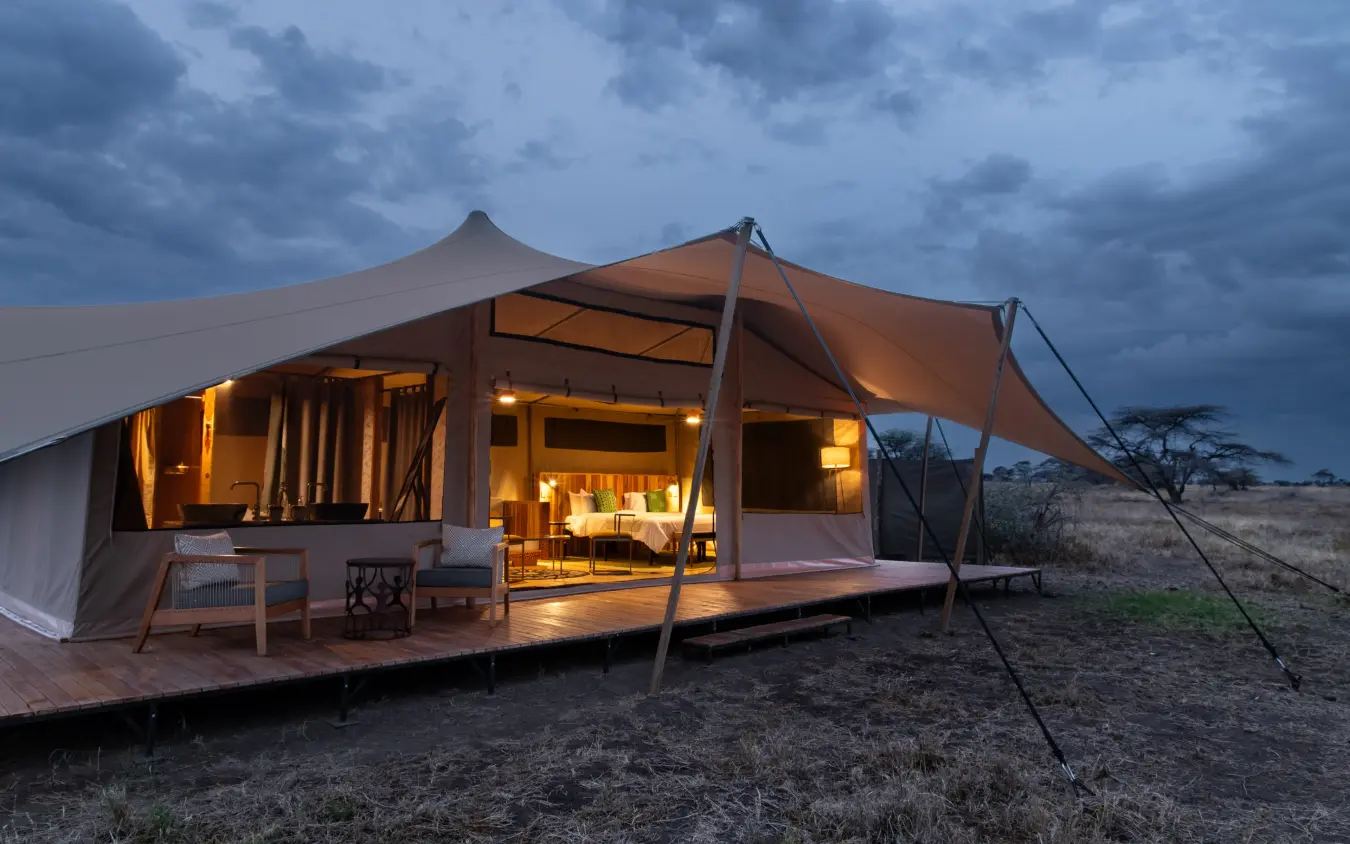
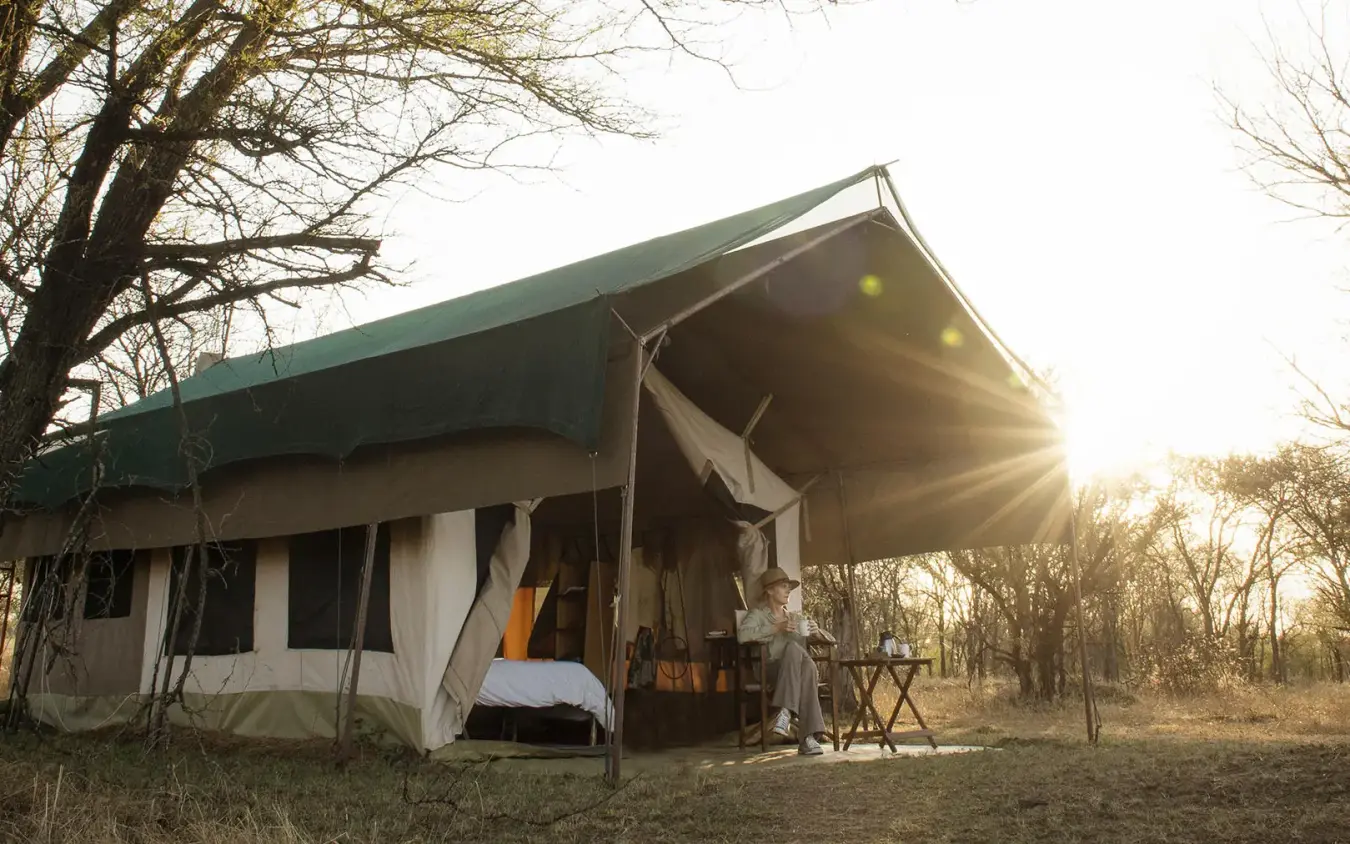
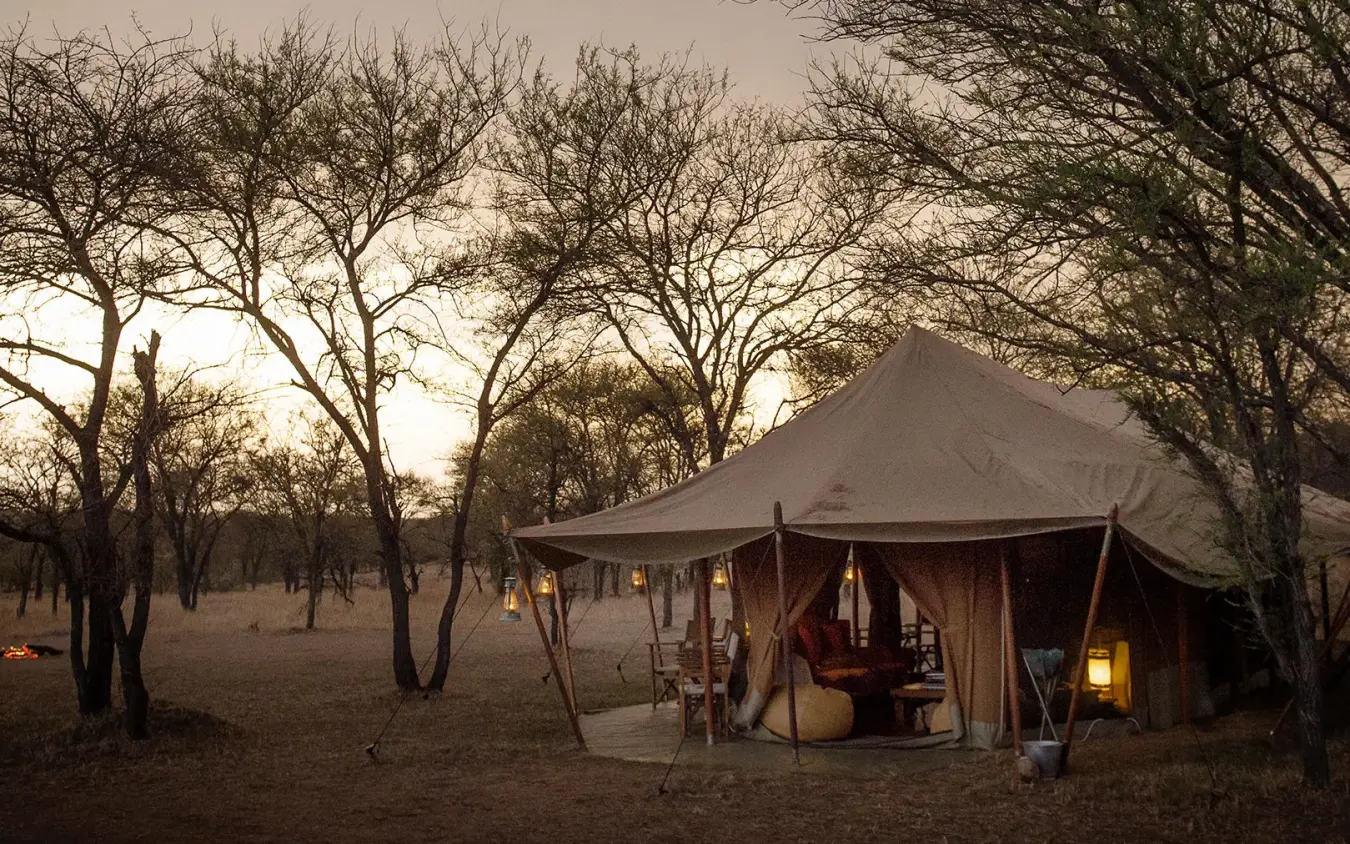
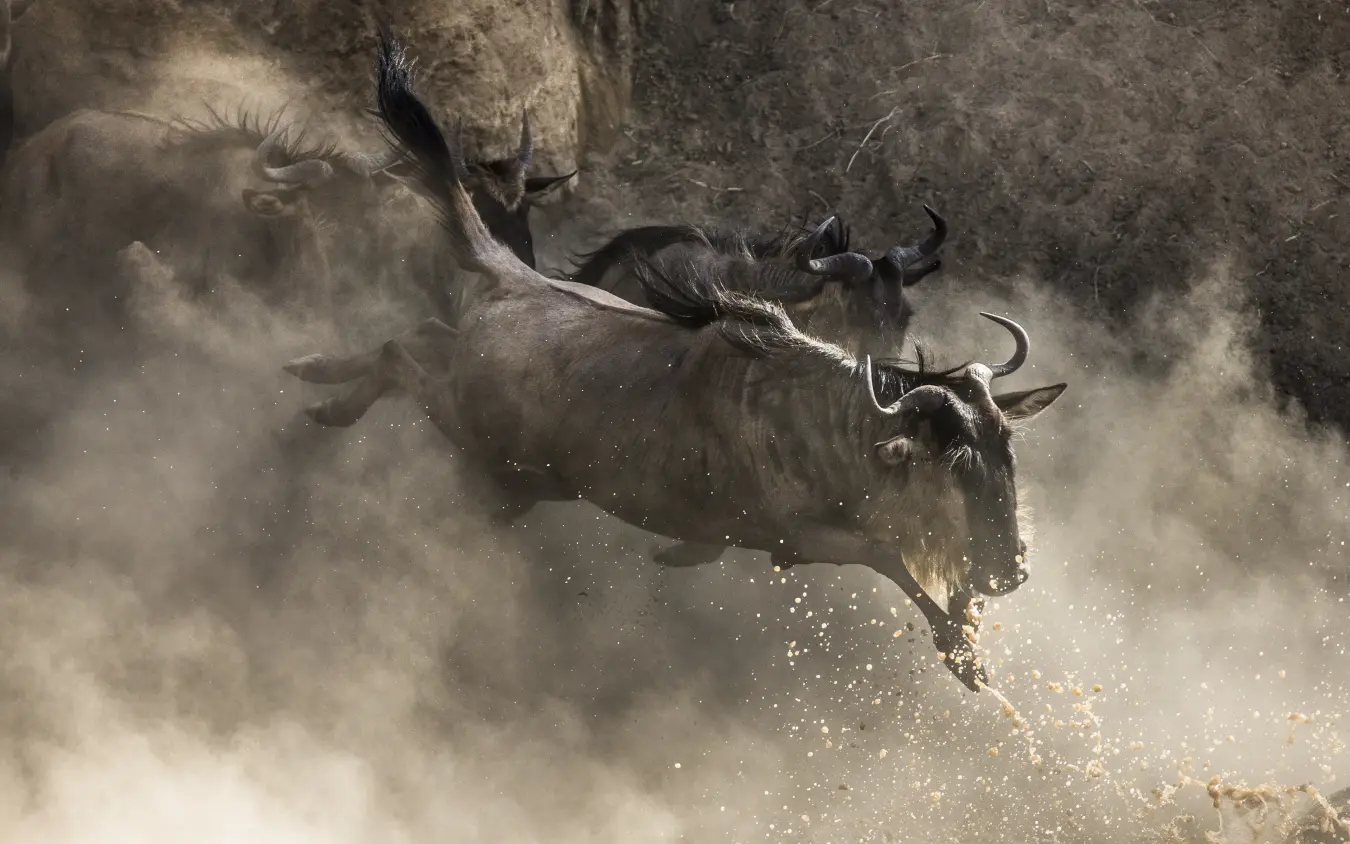
Four days with a mobile camp positioned within a few hours of the wildebeest, on the southern short-grass plains at Kusini from December to April, or north at Nyamalumbwa within range of the Mara River crossings from June to October. Walking is the reason the camp exists; armed guides accompanied by a park ranger lead outings from a couple of hours to a full day, with morning and afternoon game drives as standard. Ten canvas tents stand across the grass, each opening onto the plains from the bed, their interiors drawn from Tanzanian craft.
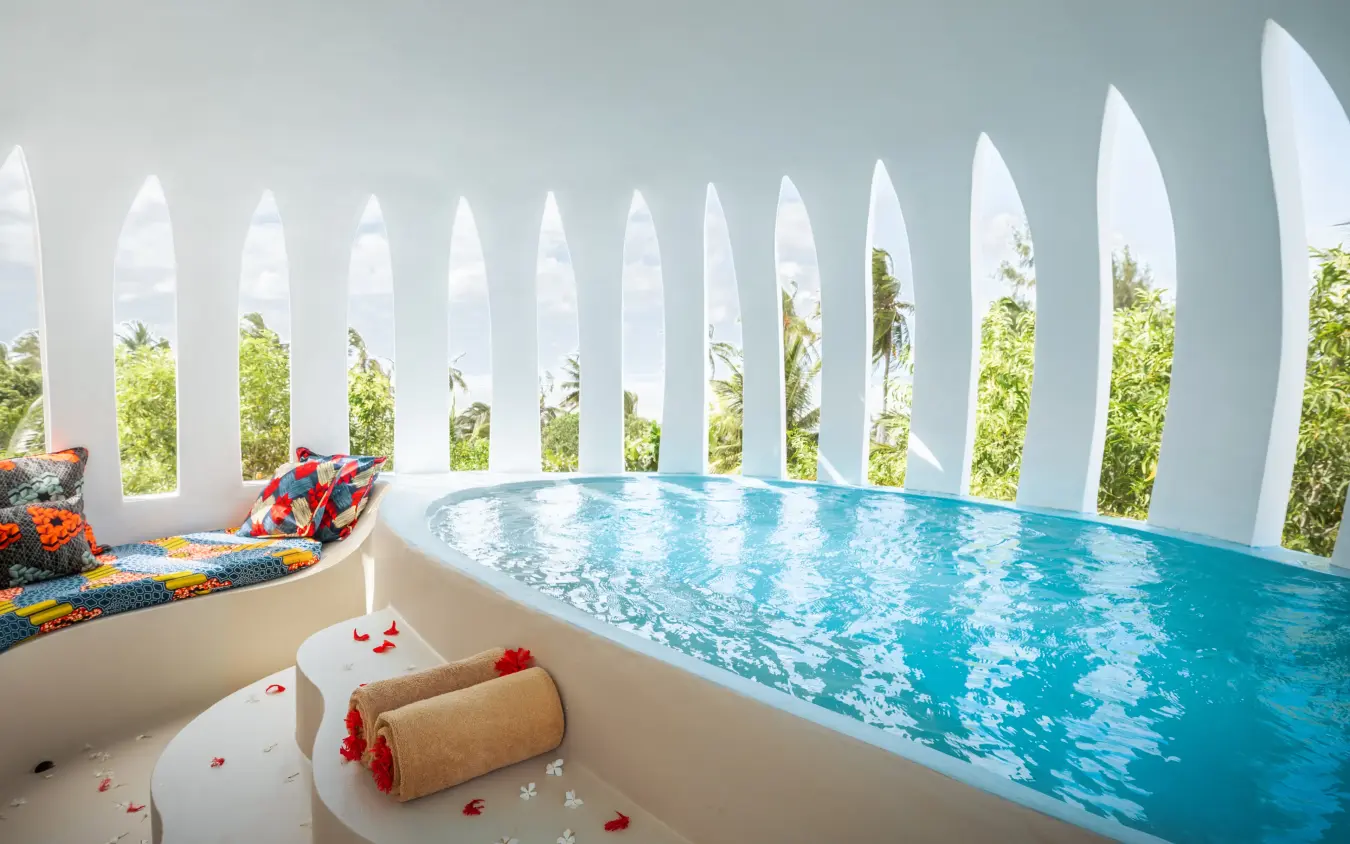
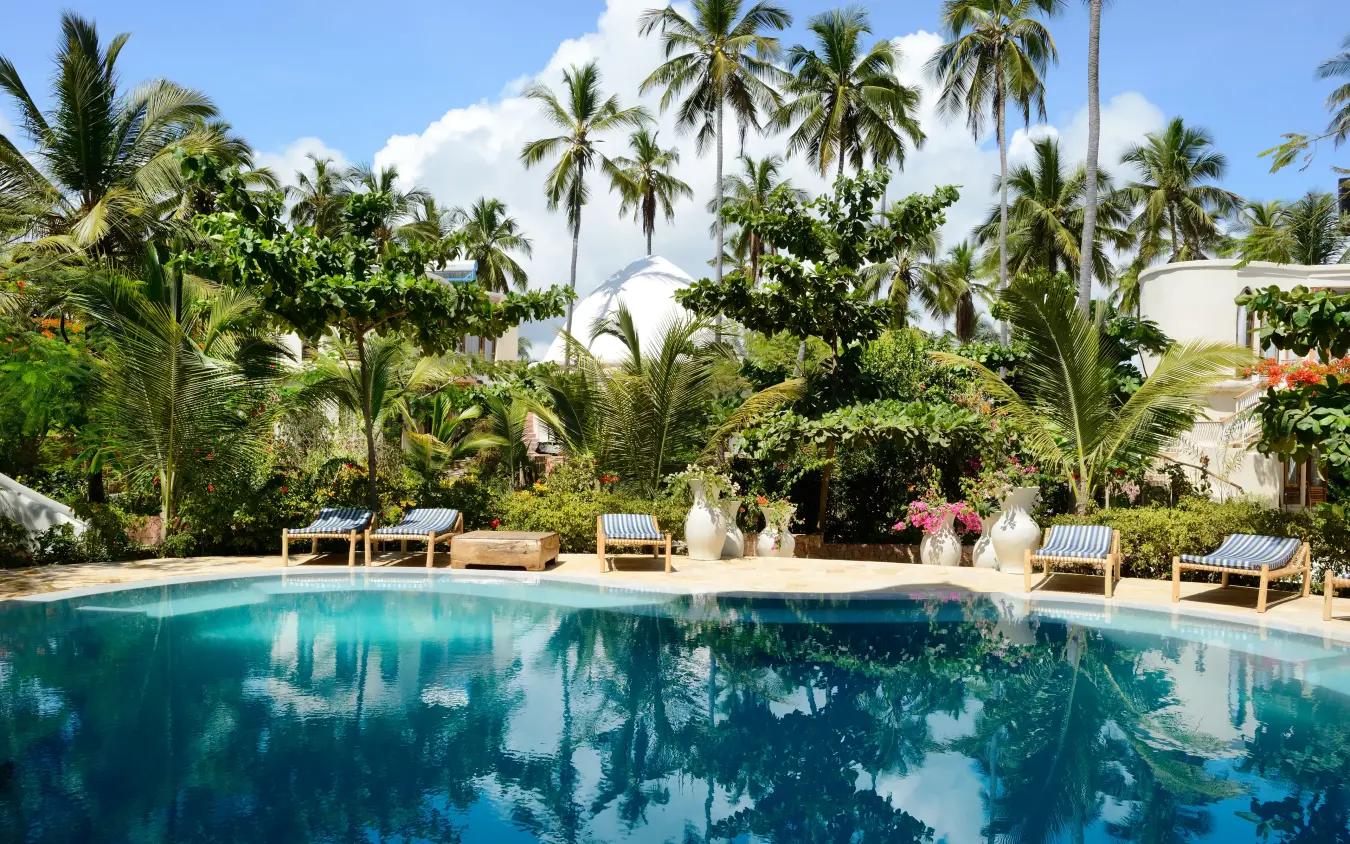
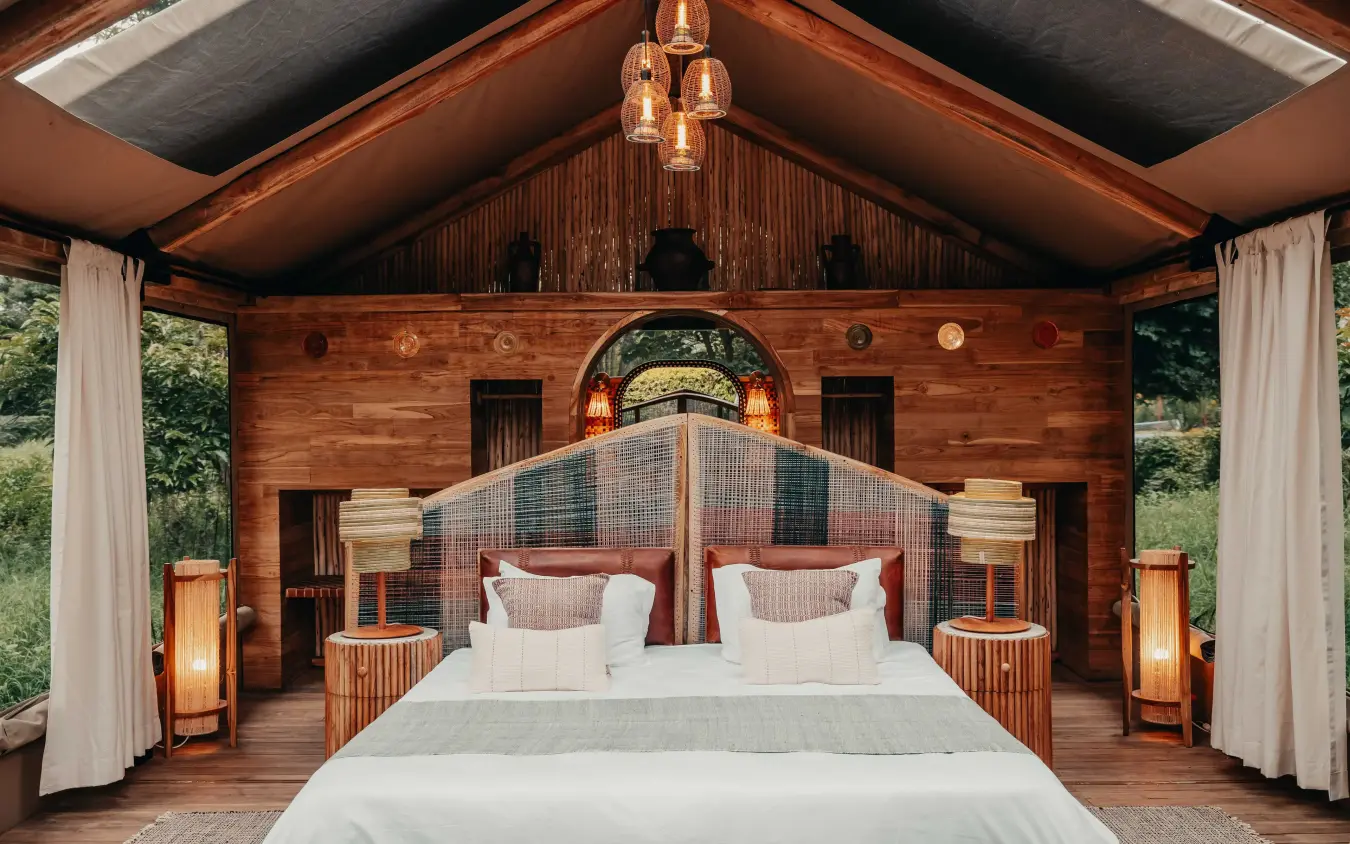
Five nights on a palm-fringed beach at Dongwe, on the Michamvi Peninsula on Unguja's southeast coast, the beach running for miles as the tide pulls the water out and back across the day. There are no set meal times and no main dining room; a resident team of international and local chefs cooks to your preferences and meals appear in the villa, on the beach, in the garden or beside the central pool. Each of the nine coral-walled villas, built from reclaimed dhow timber, has its own plunge pool and a dedicated butler, and much of what reaches the plate grows in the organic shamba nearby.
It is a long trip that moves often, so it repays being cut to fit rather than taken whole.
Eight stays across nineteen nights averages a little over two nights each, and three of those stops are single nights: the arrival below Meru, the crater rim and the walking night in the central Serengeti.
The block that cannot be trimmed is the Rift. The two days on foot between Lake Manyara and Lake Natron only work as a pair, and Natron needs the two nights after them if the volcano is on your list.
Everything else can move:
Tell us which half matters more and we will rebuild around it.
Most days offer some and two demand it.
Walking is built into Lake Manyara, the two Rift days, Lake Natron, the central Serengeti and the plains camp, with game drives running alongside almost all of it, so on any given morning you can take as much or as little as suits.
The exceptions are the crossing to Natron, which we grade as strenuous and put at about a day and a half of steady descent, and the night ascent of Ol Doinyo Lengai.
For everything else the standard is ordinary hill fitness: several hours over uneven ground at a guide's pace, stopping often, which is the opposite of an endurance expedition. Tanzania's park authority sets twelve as the youngest age for a walking safari and treats anything beyond four hours as a long walk.
No, and plenty of people do not.
The climb leaves camp in the middle of the night, timed so that you are on top for first light and off the mountain before the sun is high. The whole thing takes twelve to fourteen hours and is one of the hardest single day ascents in East Africa.
It is more than 1,600 metres of ascent in about five kilometres on loose volcanic ash, far steeper than anything else here. It suits someone who walks uphill regularly and does not mind losing a night's sleep, and the descent is long and hard on the knees.
Nobody goes up without a local guide, and if you are unsure whether it is for you, ask your own doctor before you book. Skip it and the Natron days still hold the dawn flamingo walk and the Ngare Sero gorge.
One morning on the floor, and for most people that is enough.
The stay is built around a single descent by registered 4x4, and a camp on the rim near the descent road means you can be down in first light rather than behind the vehicles climbing up from Karatu.
Driving inside the conservation area is allowed between six in the morning and six at night, with the descent gate itself closing at four, so starting early is worth more than staying late.
The floor is enclosed and open at the same time, which is why the game is so visible, and it is one of the better places in Tanzania to look for black rhino, though how easily they are found varies.
At around 2,300 metres the rim is cold at dawn all year, so keep a warm layer to hand.
July to October, and on a trip this long the calendar is doing several jobs at once.
Those months are dry in Lake Manyara, the Serengeti and the crater and settled on the Zanzibar coast, and June to September is the cool window at Lake Natron for two days on foot. They are also when the northern herds reach the Mara River, from about July.
January and February would suit the calving on the southern plains and the coast, but Natron runs above 40 degrees then and we rate it the weakest part of the year for walking there, which is the section of this trip that cannot move.
March to May is the long rains: heavy tracks, some camps shut and the wettest weeks on the coast.
If the walking is the point of the trip, come between June and September.
The Serengeti at ground level, in a corner where ordinary game-viewing vehicles do not go.
The camp sits on the edge of one of the park's wilderness zones, which stay closed to general traffic, and camps on the boundary can walk into them. In practice that means a different sort of morning: tracks, dung, bones, grasses and insects, the things a vehicle drives past, with the big animals watched from a distance rather than approached.
The park authority licenses the walking, a ranger goes out alongside the camp's own rifle-trained guides, twelve is the youngest anyone may walk, and four hours is where a short walk becomes a long one.
One night is a taste rather than a walking safari. If it is the part you want most, say so and we will add nights here and take them from the beach.
Ed Charles, BBC Producer
Fitzroy are true specialists in accessing the wilderness. They know where to go and importantly, when to go there. Highly recommended.
tanzania
Ten nights through northern Tanzania, from Lake Manyara's gorge to the eastern plains and the Mara River in the Lamai Wedge.

tanzania
Ten nights through Arusha, the Ngorongoro highlands and Tarangire's Silale Swamp, closing on Zanzibar's south-east coast.
rwanda & tanzania
Ten nights linking Rwanda's Virunga gorillas with the far northern Serengeti and the Mara River, via Kigali.
rated five stars by our clients

our approach
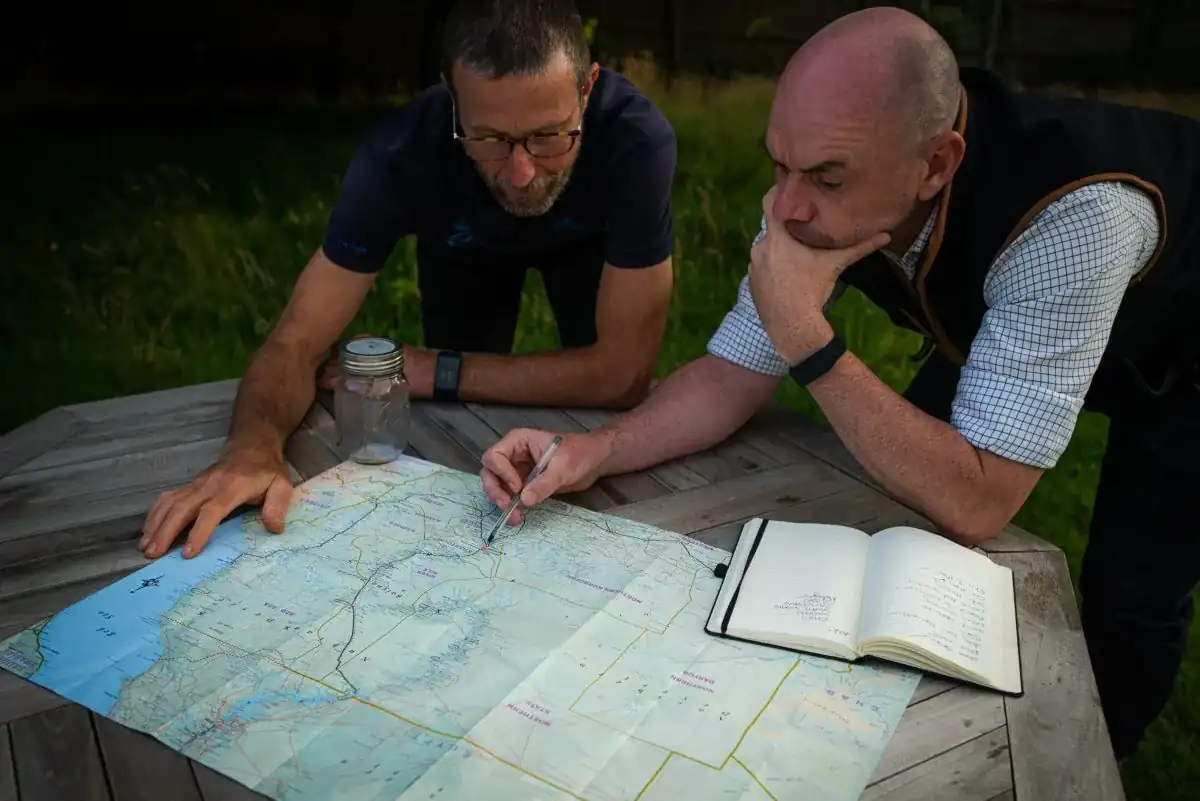
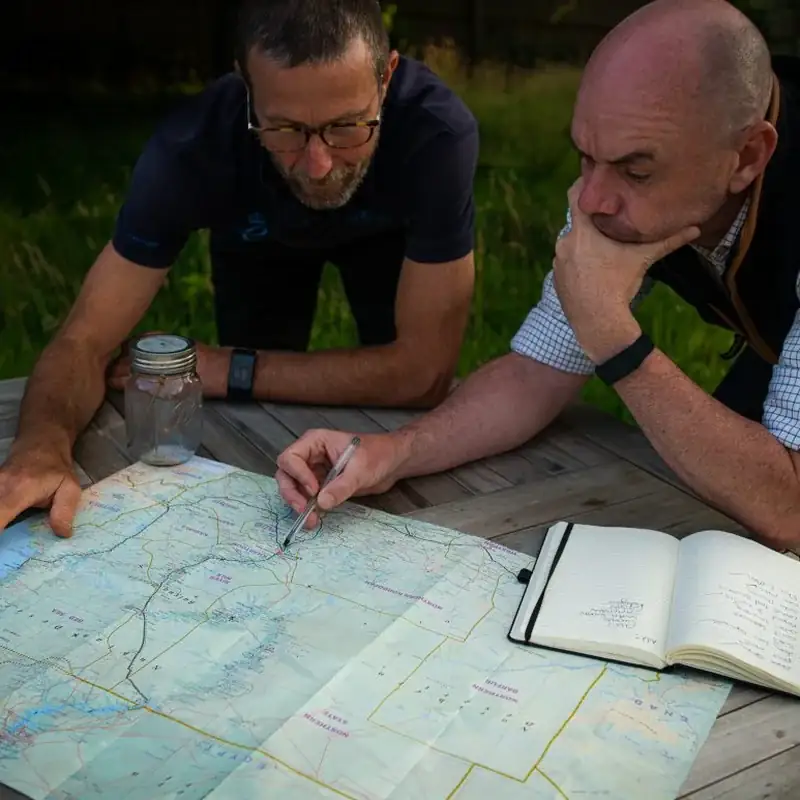
Every journey starts with a conversation. We take the time to understand your vision before we start planning.
Whether by phone or in person, we work with you directly to shape something that is considered, personal, and expertly delivered.
Every journey starts with a conversation. We favour a direct, personal approach: understanding your vision before anything else.
Whether by phone or in person, we work with you directly to shape a journey that is both thoughtfully considered and expertly delivered.
Get in touch to start planning yours.