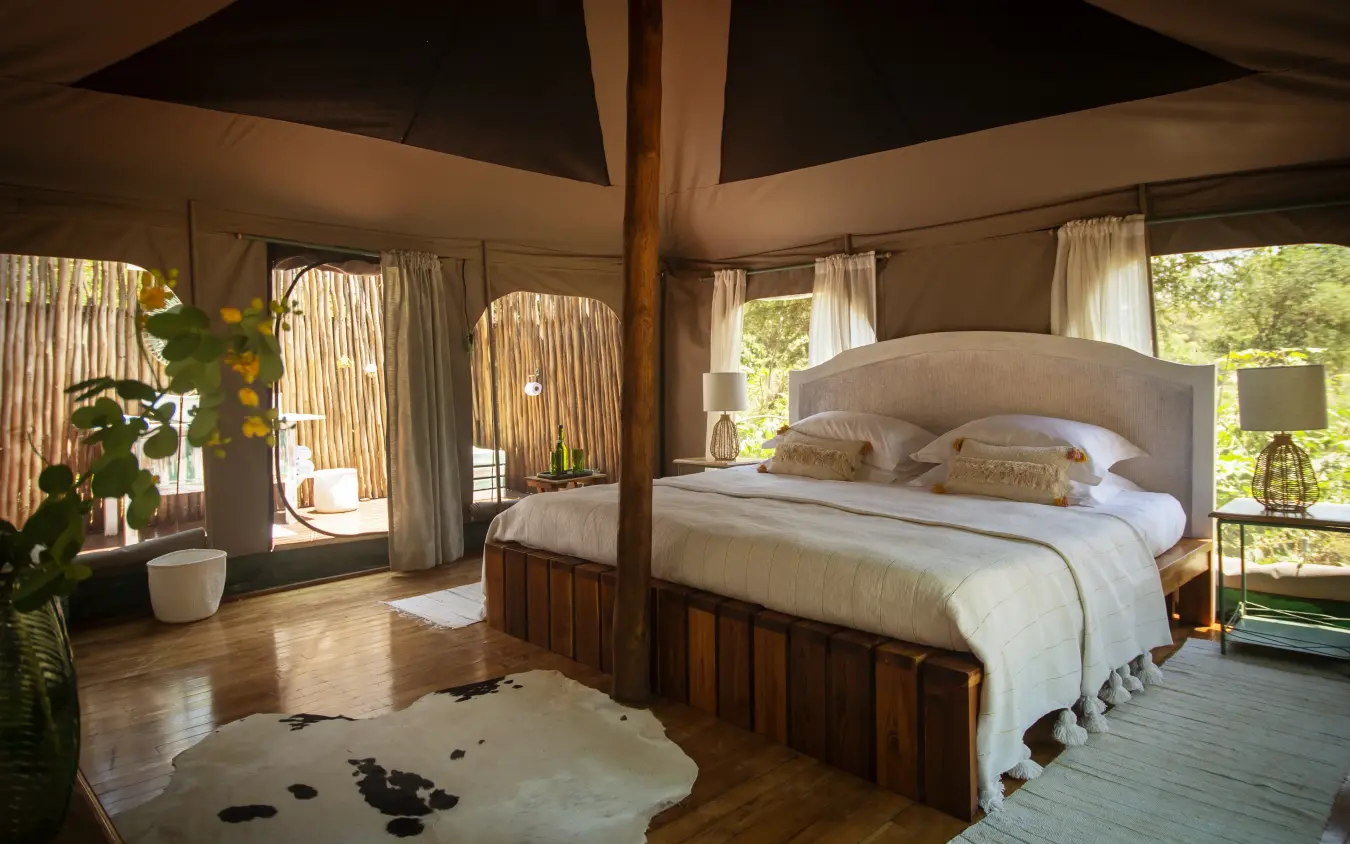
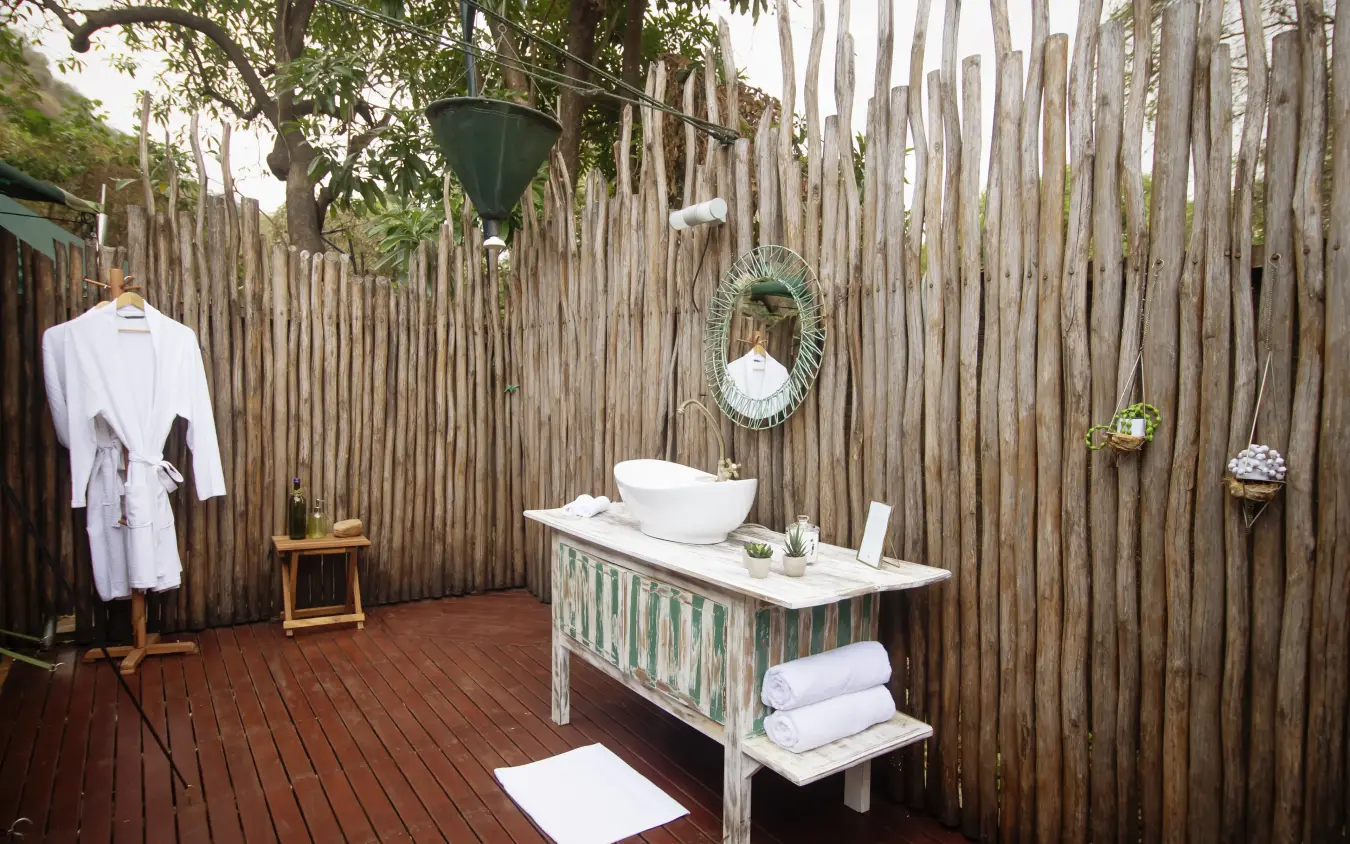
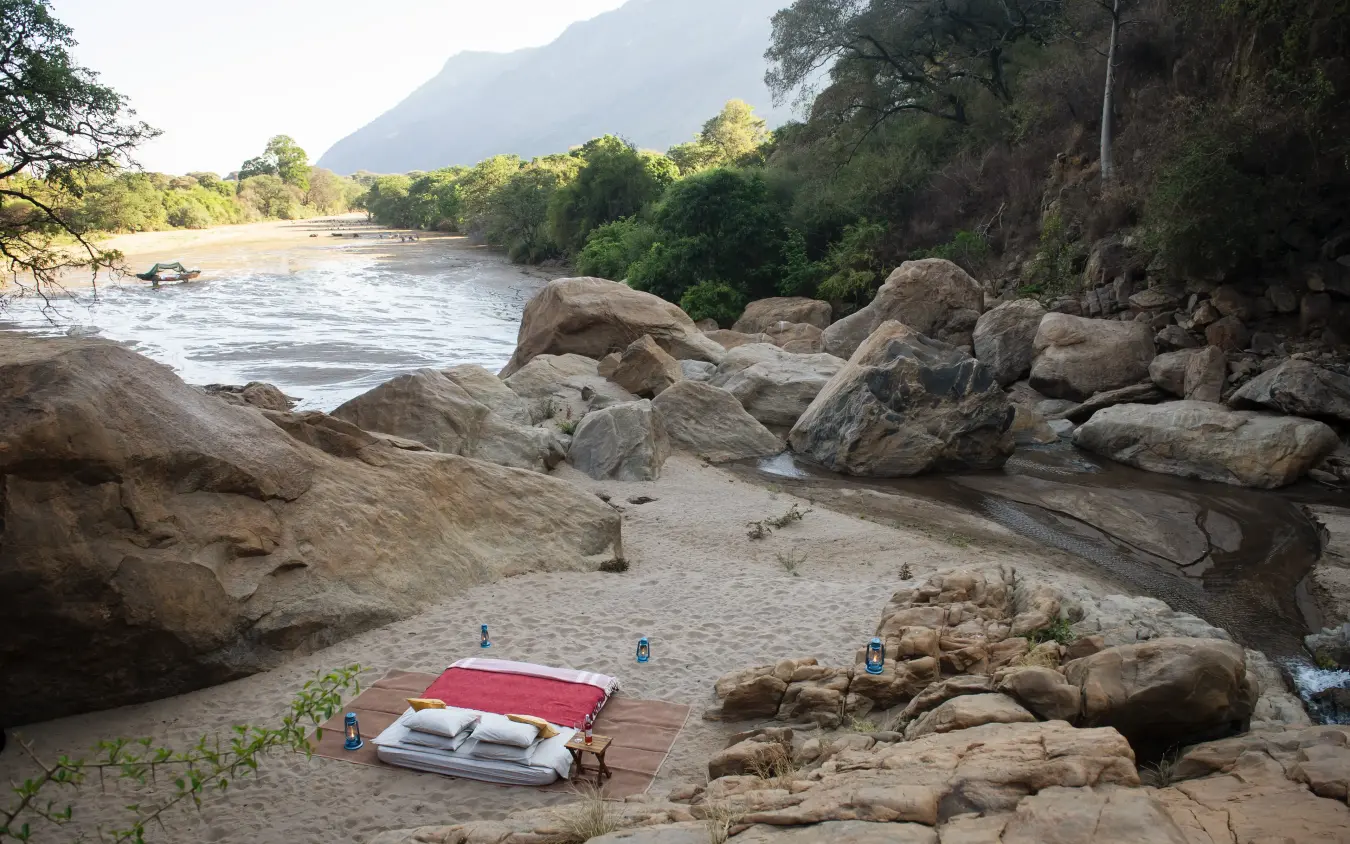
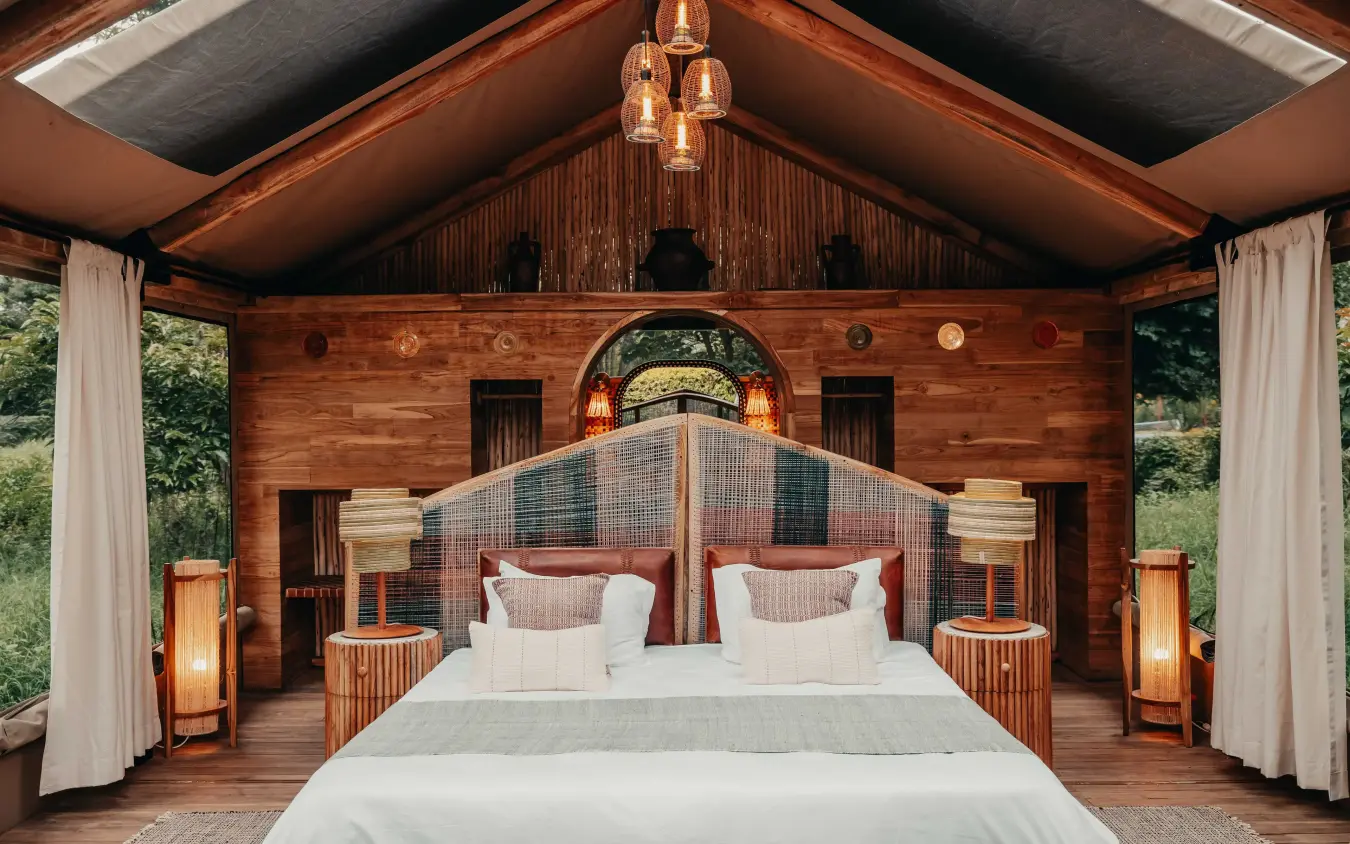
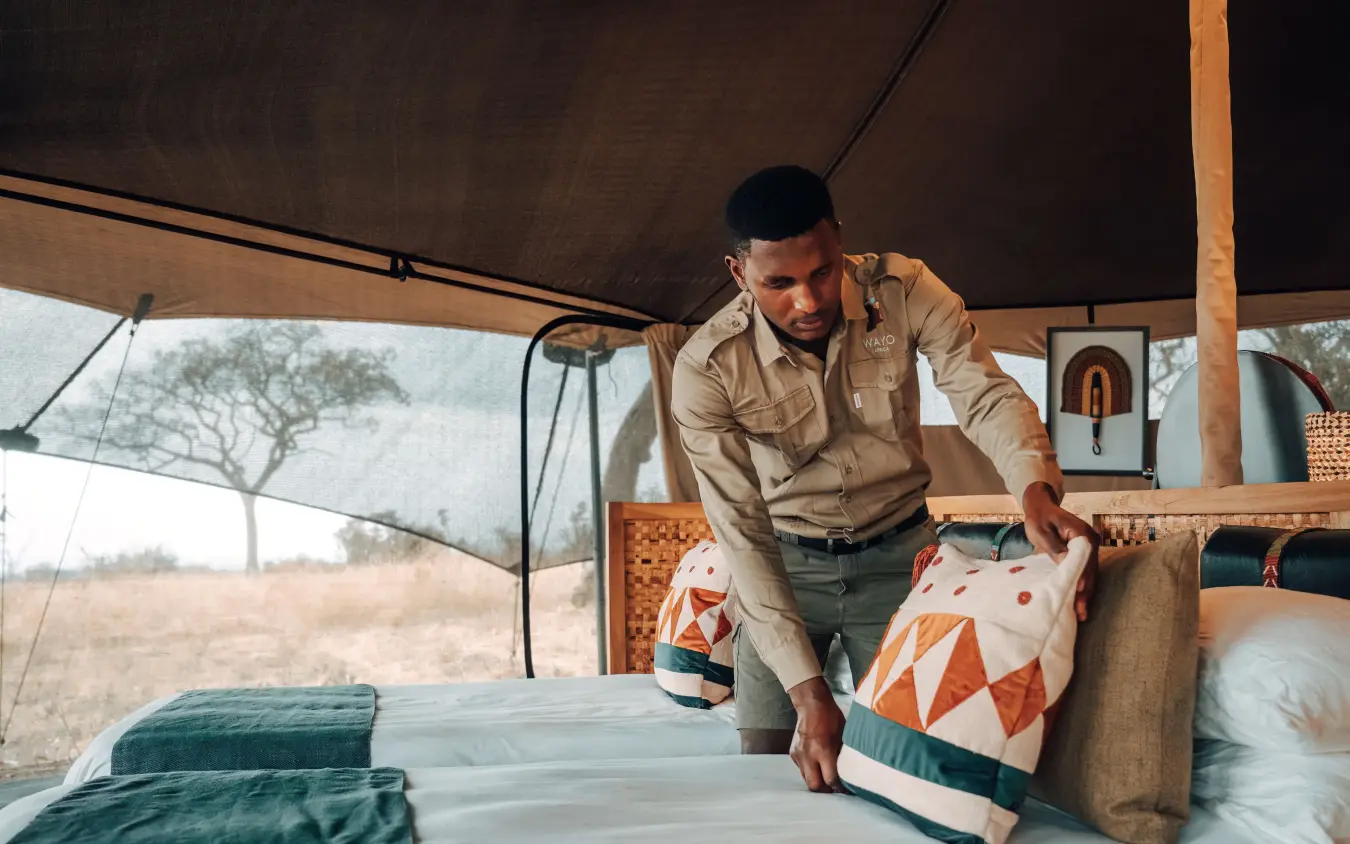
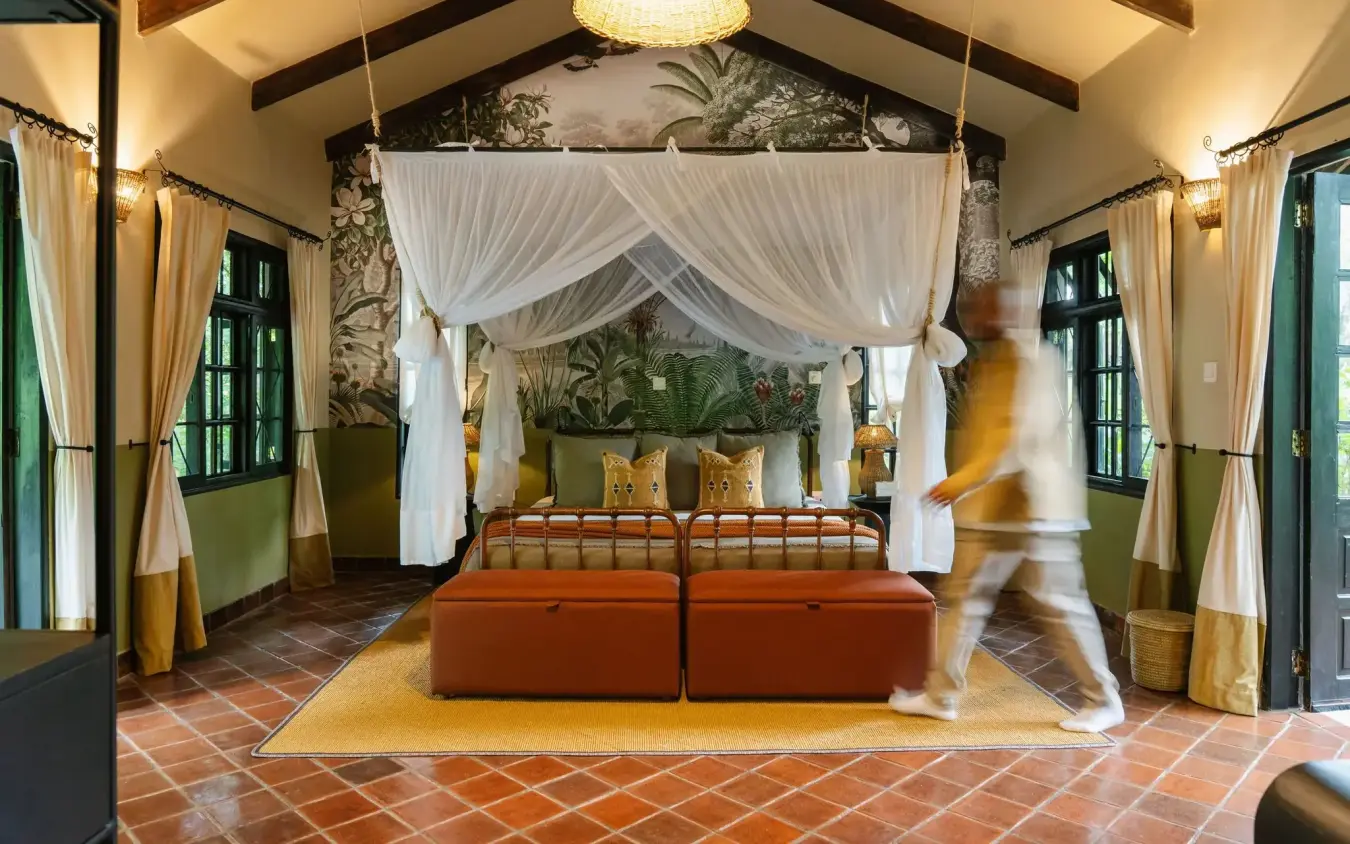
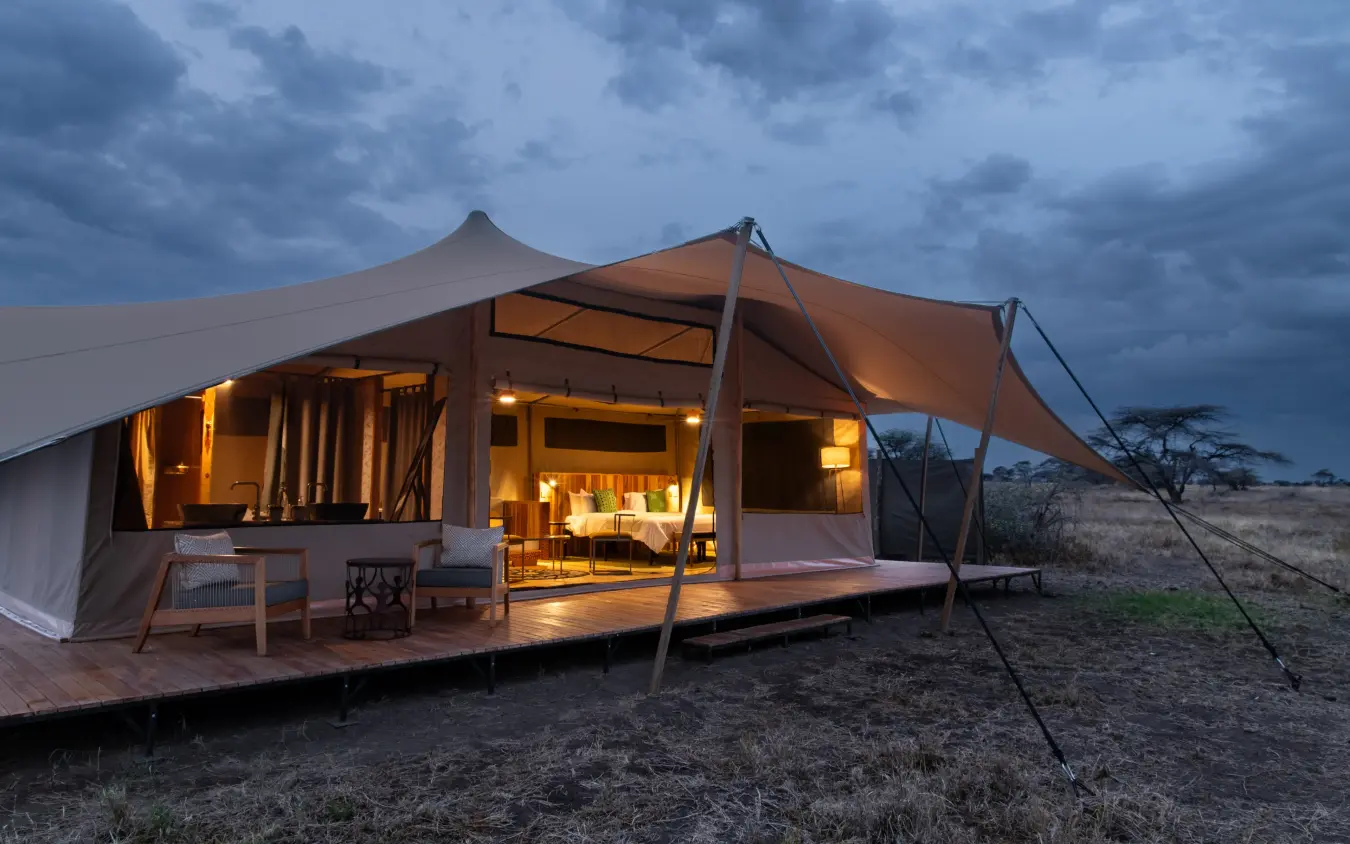
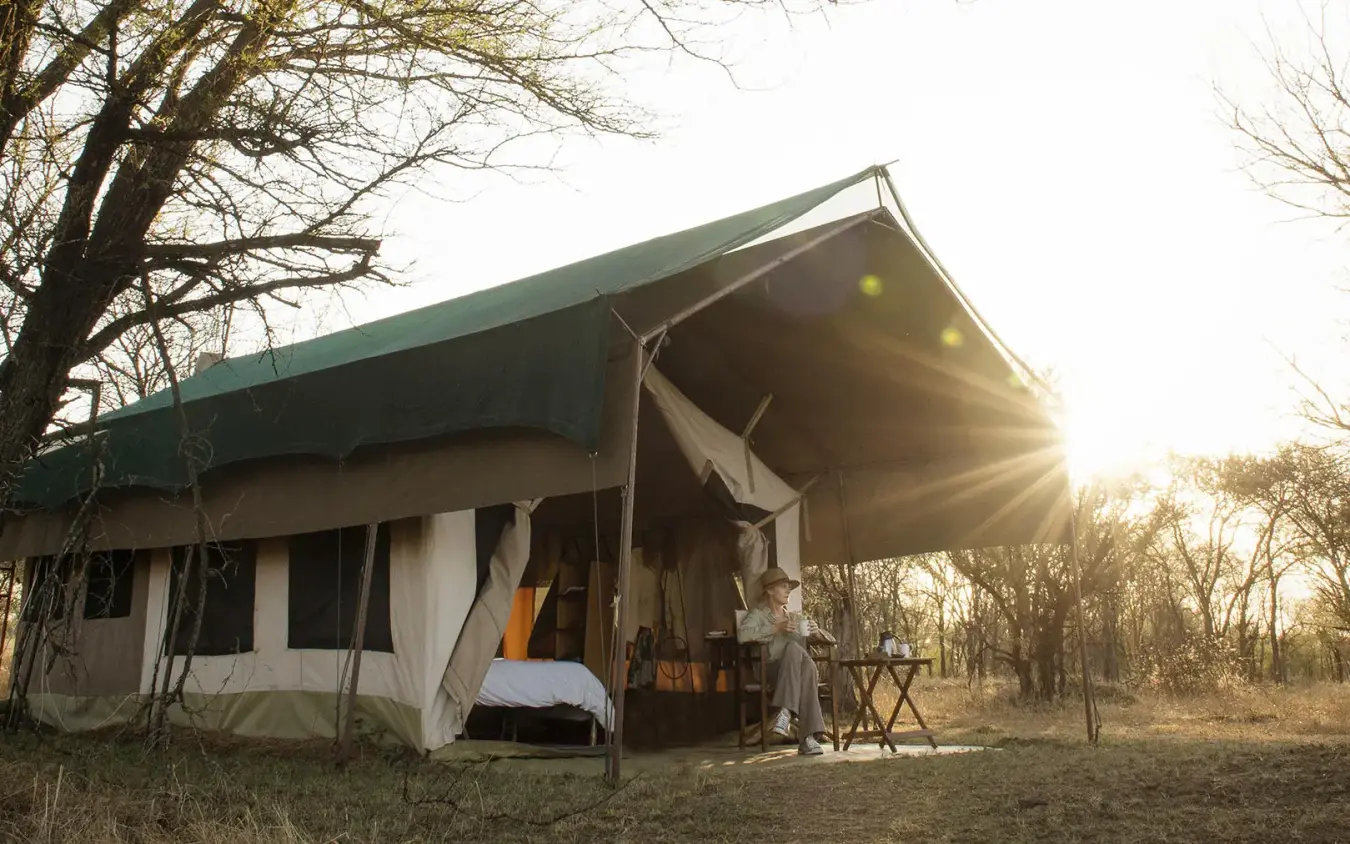
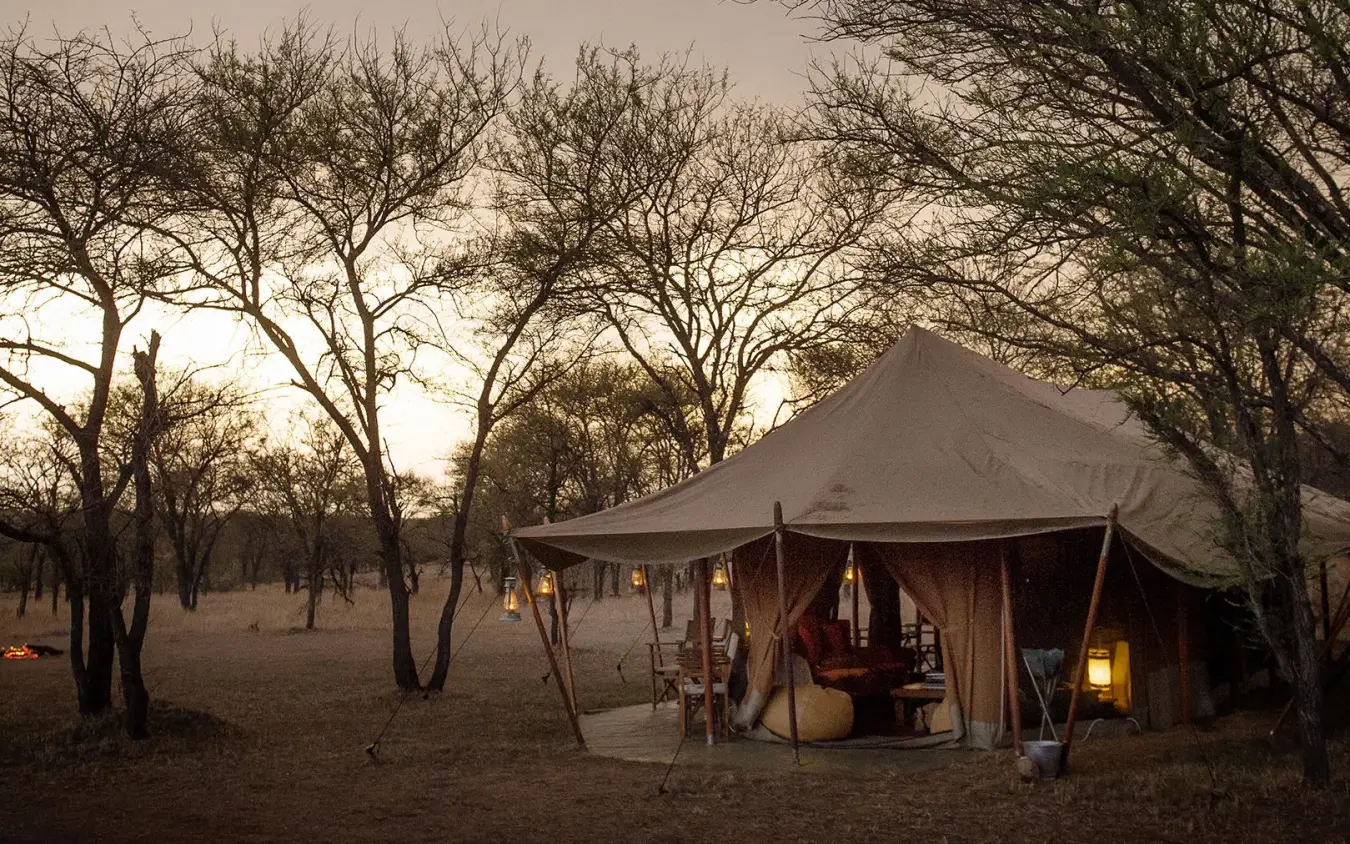
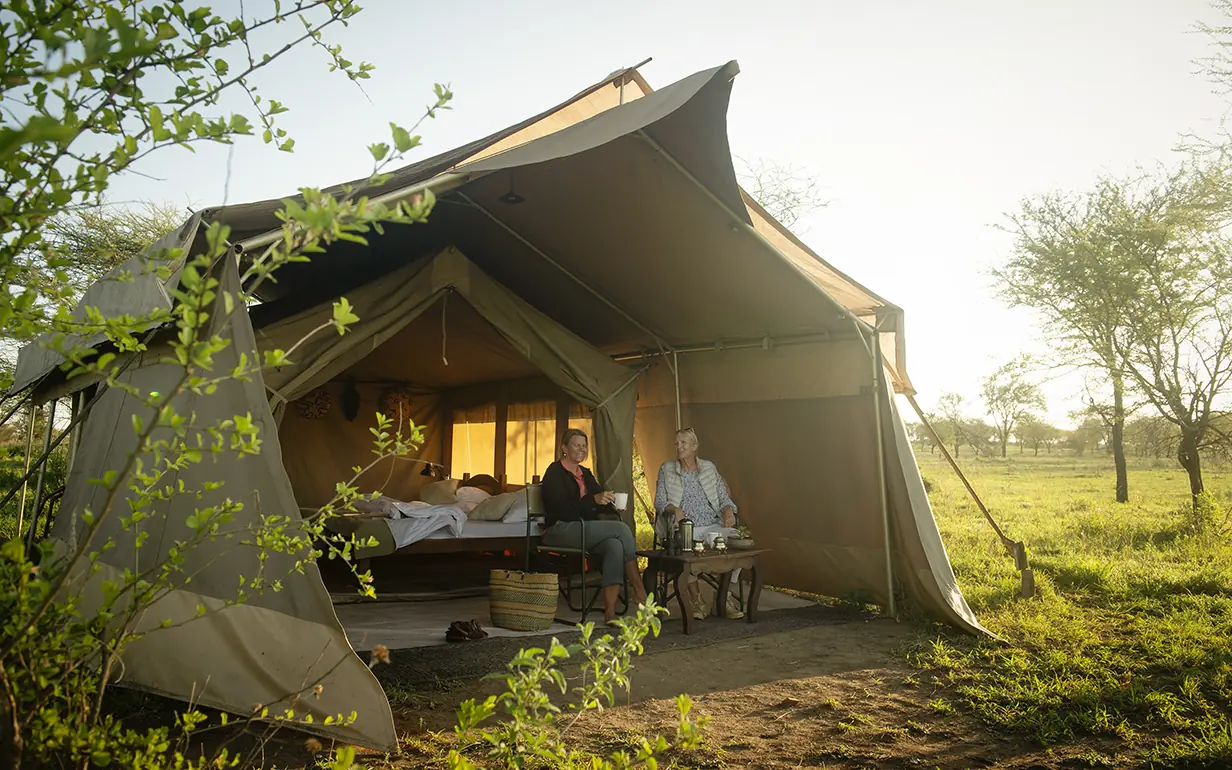
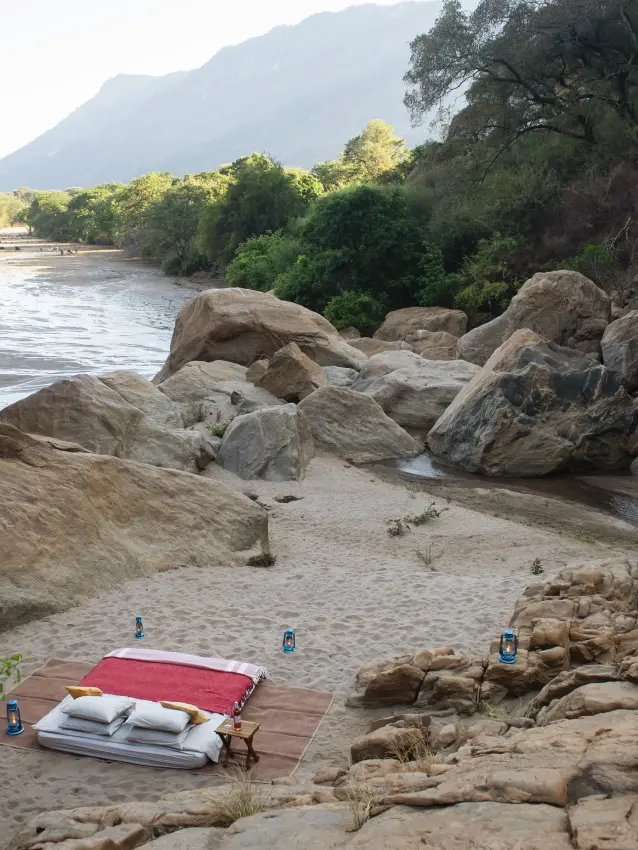
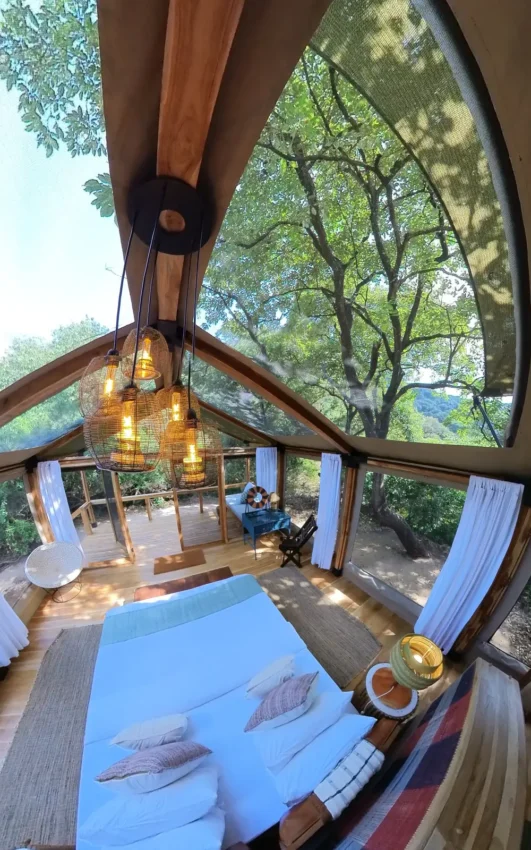
Eight tents stand on raised wooden decks along the edge of the riverbed, each set back into the forest for privacy. The escarpment rises directly behind them, forested and steep. Walls and ceilings are gauze, so the gorge stays in view from inside, and gauze is all that separates the bed from the sound of the waterfall. Overhead, a retractable weatherproof cover draws back for stargazing from bed. The furnishing is plain, with double or twin beds, an en-suite bathroom with a flush toilet and a hot bucket shower, and a private veranda.
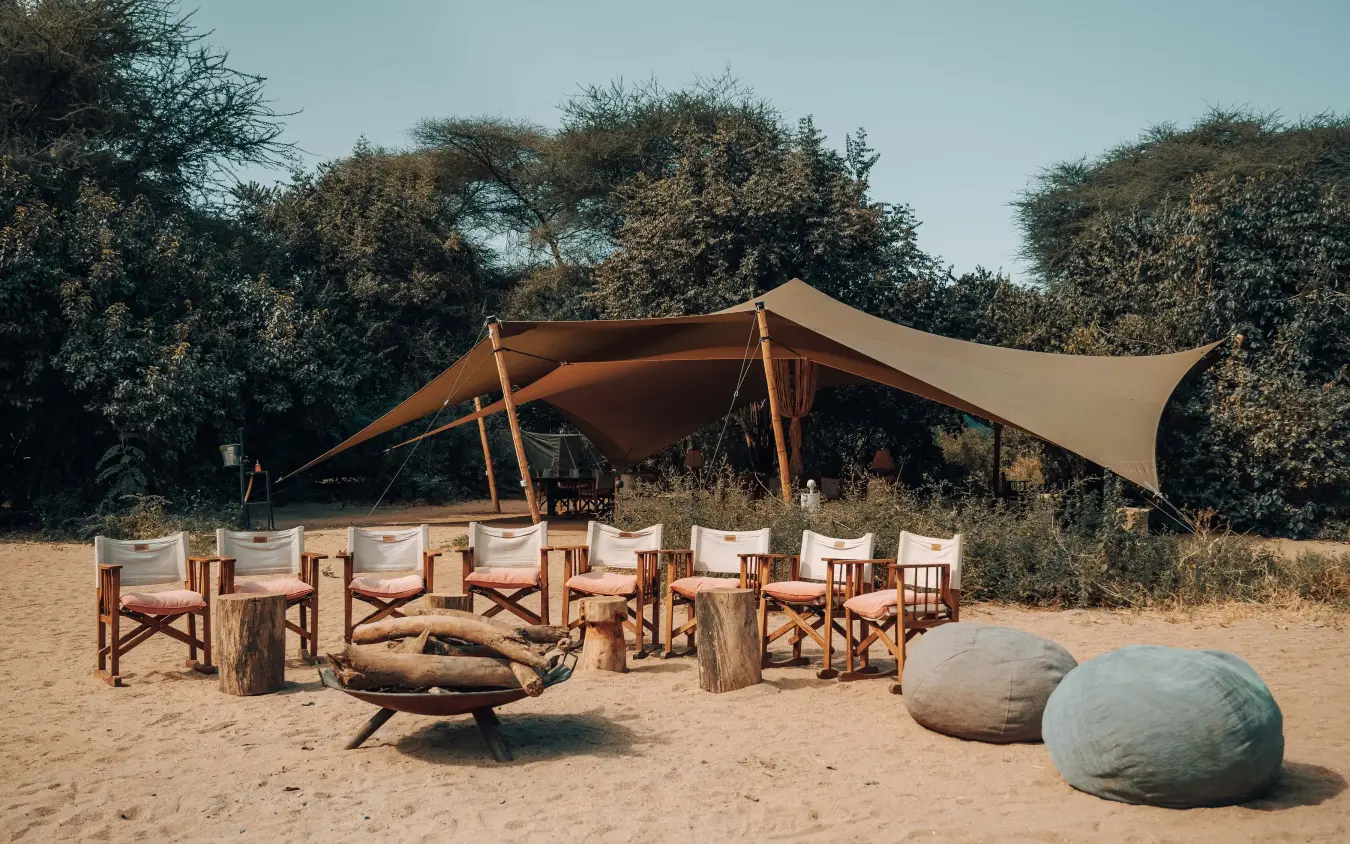
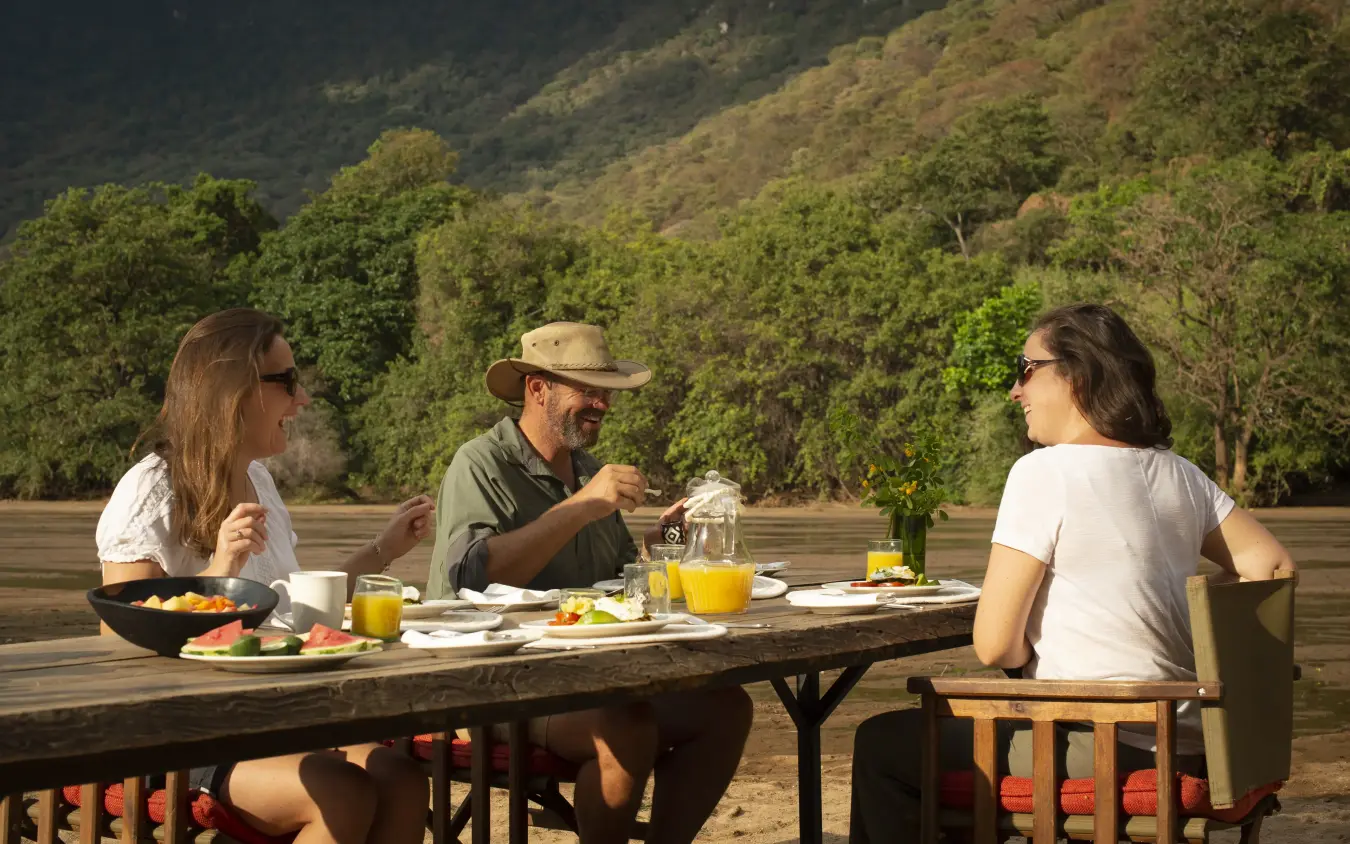
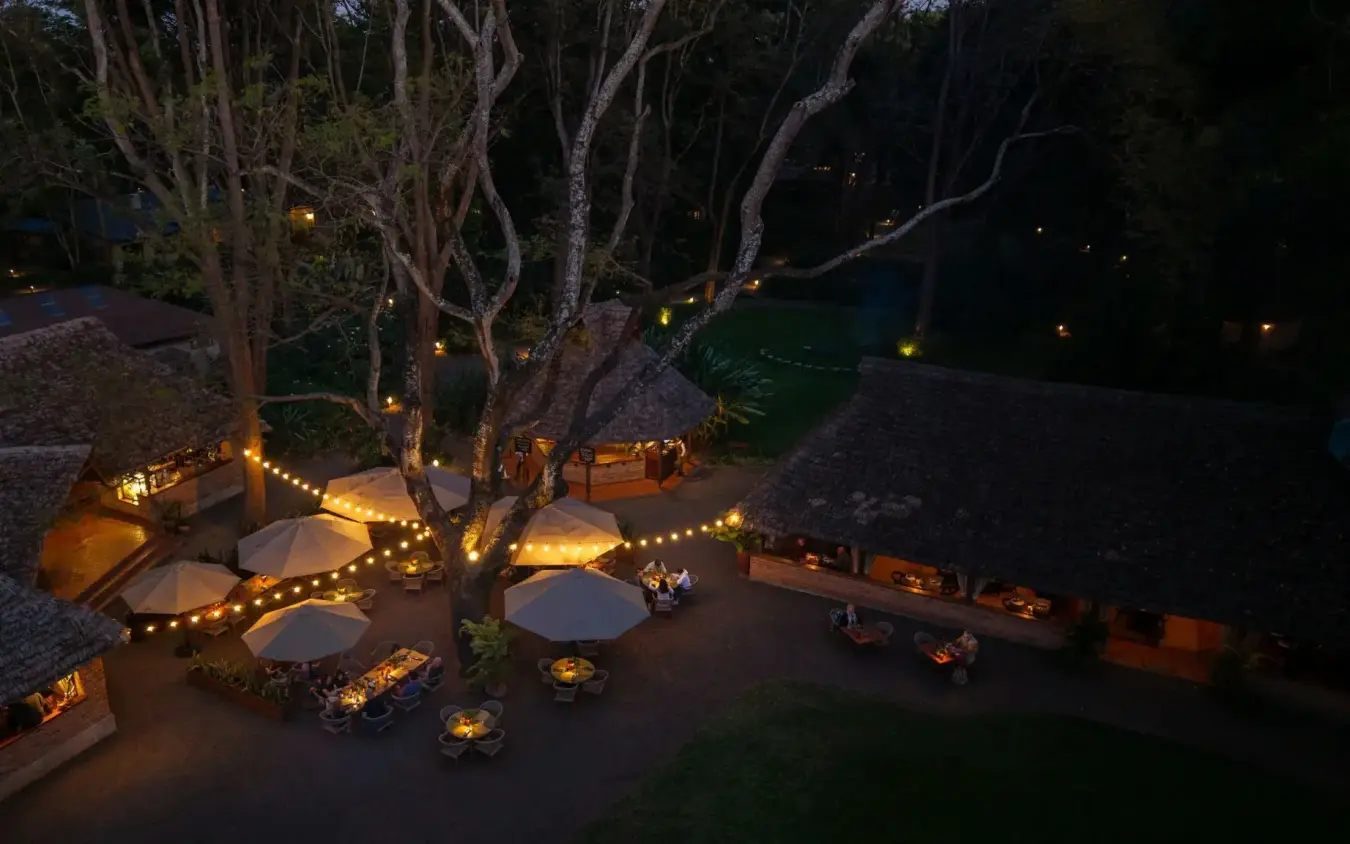
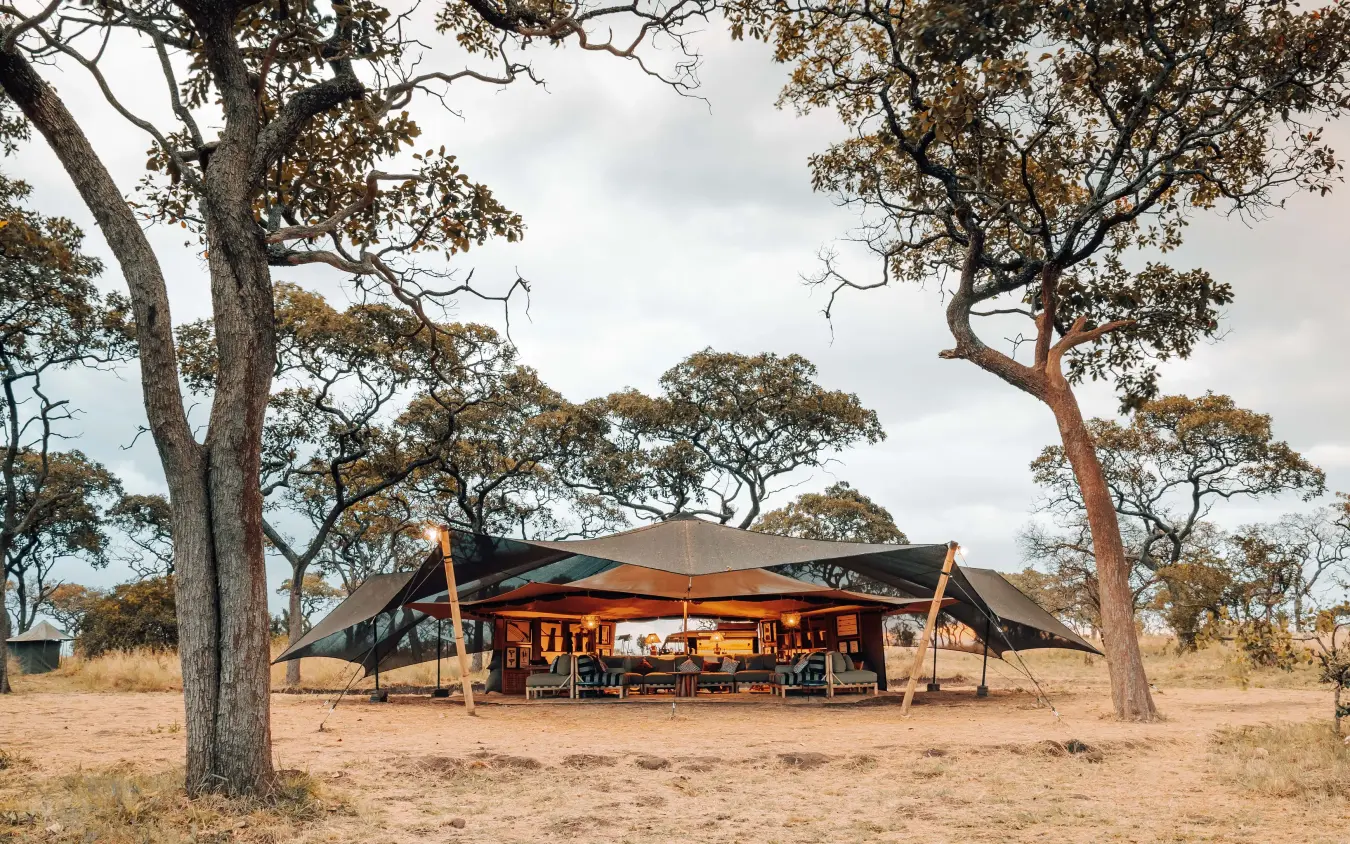
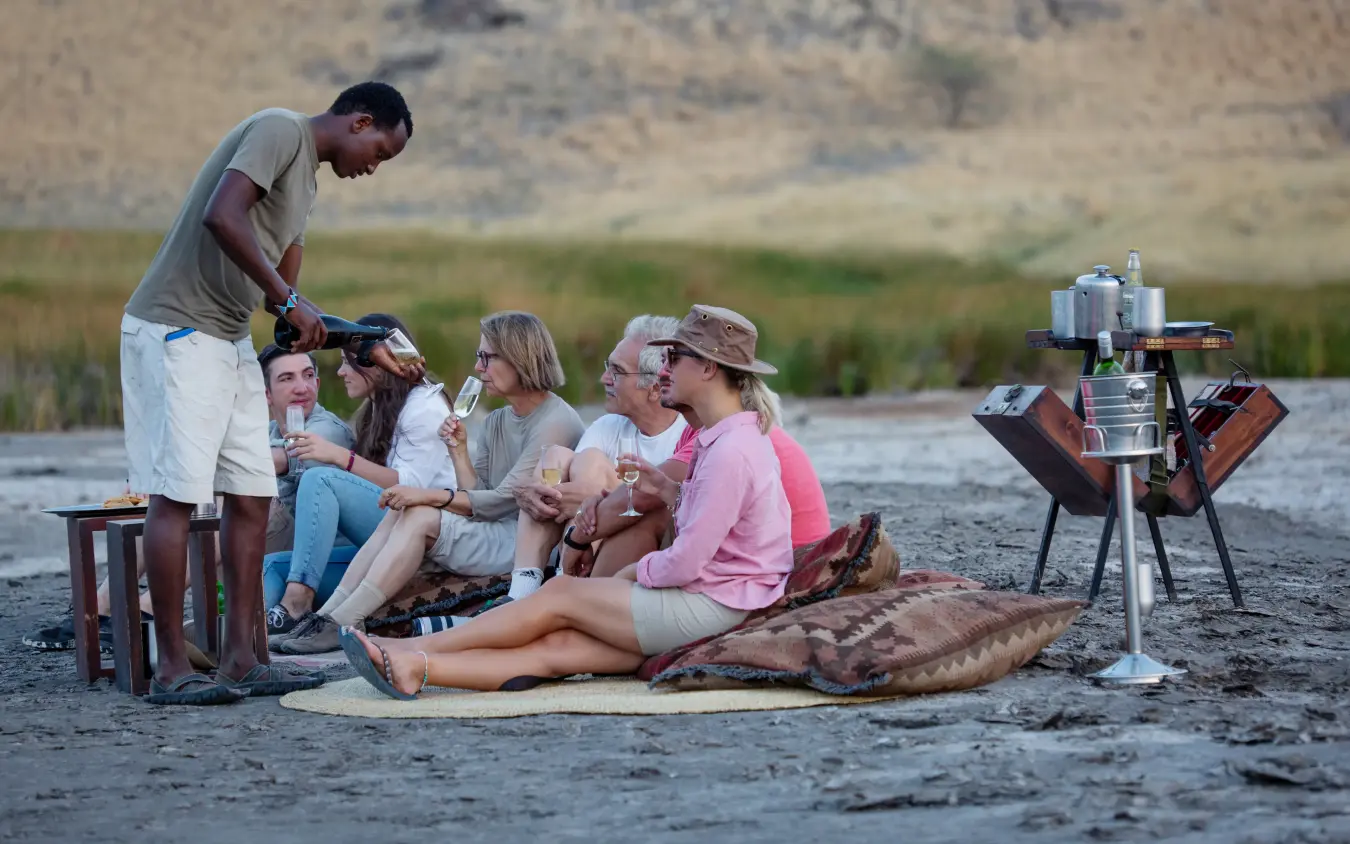
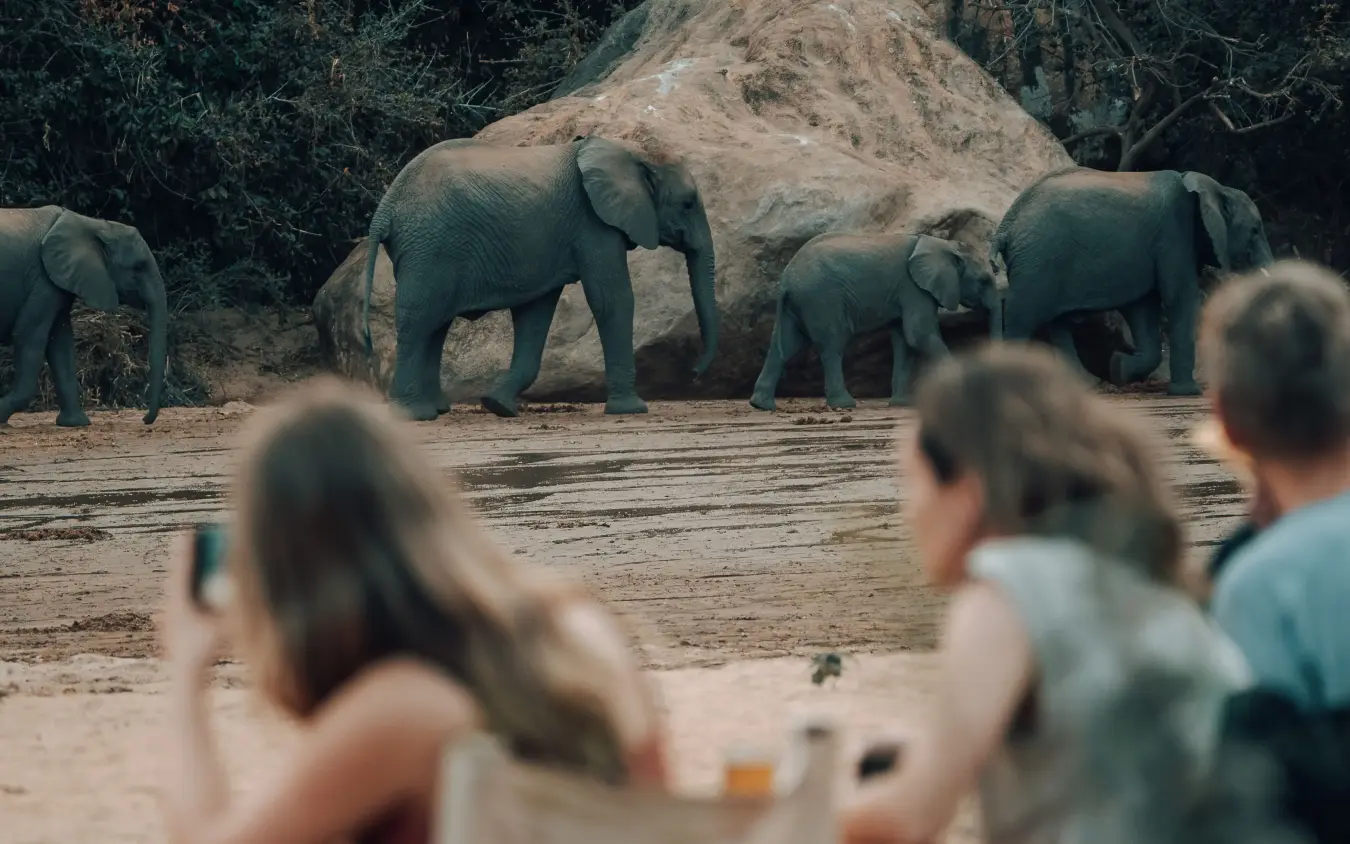
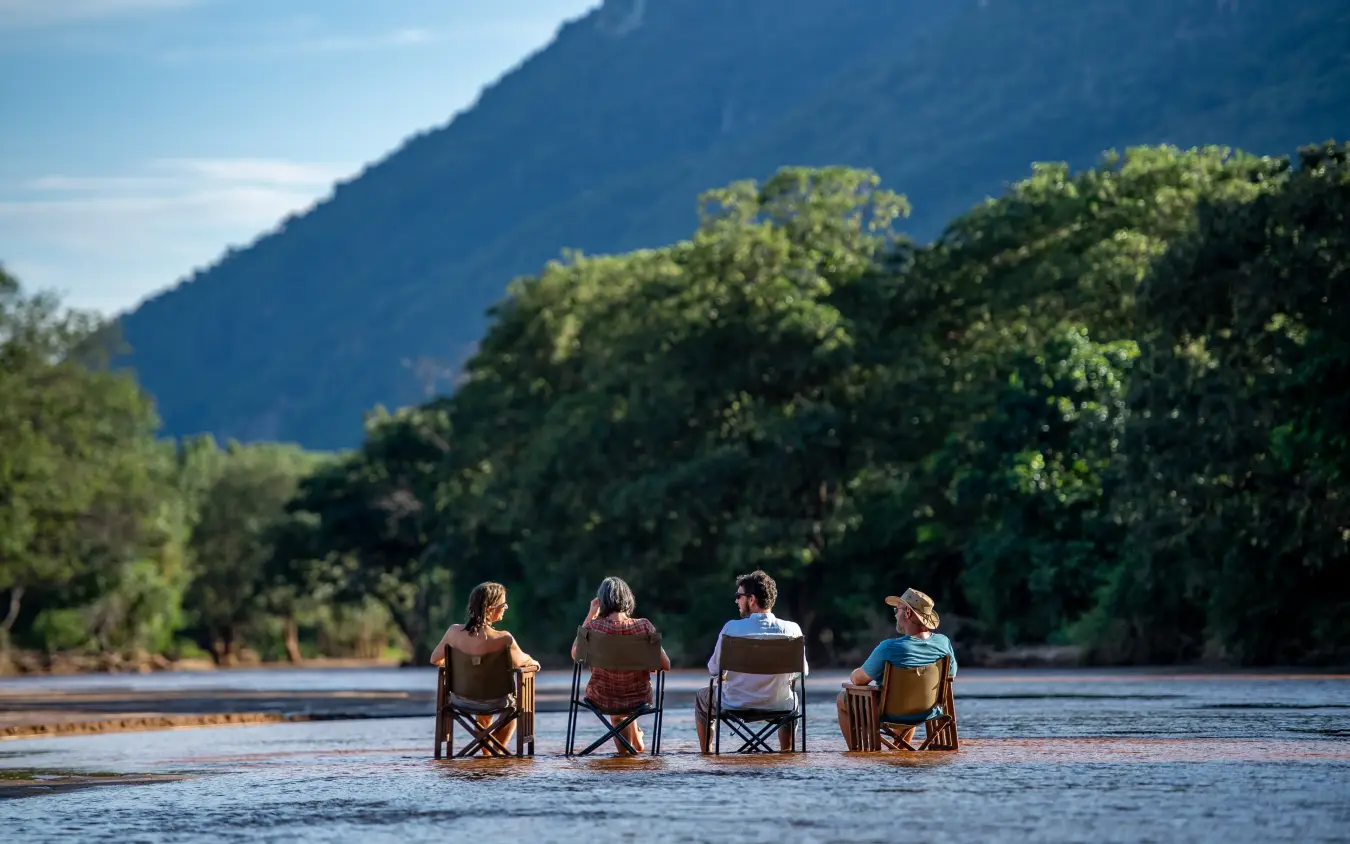
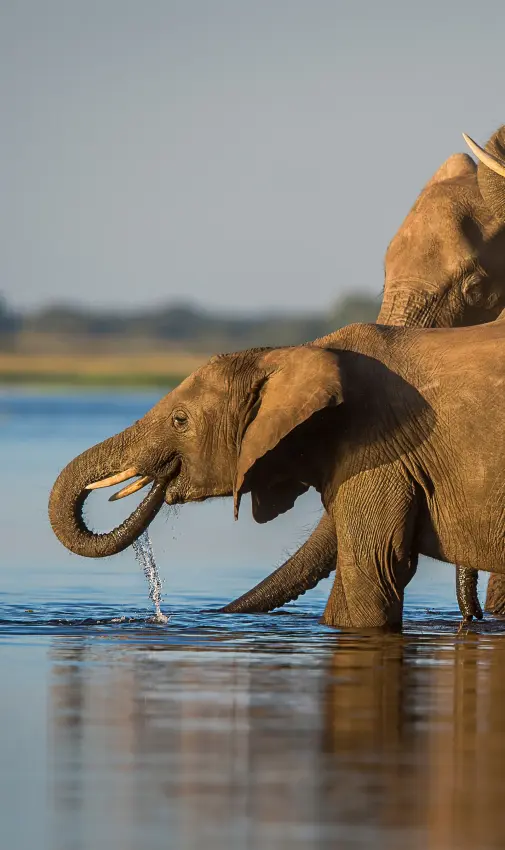
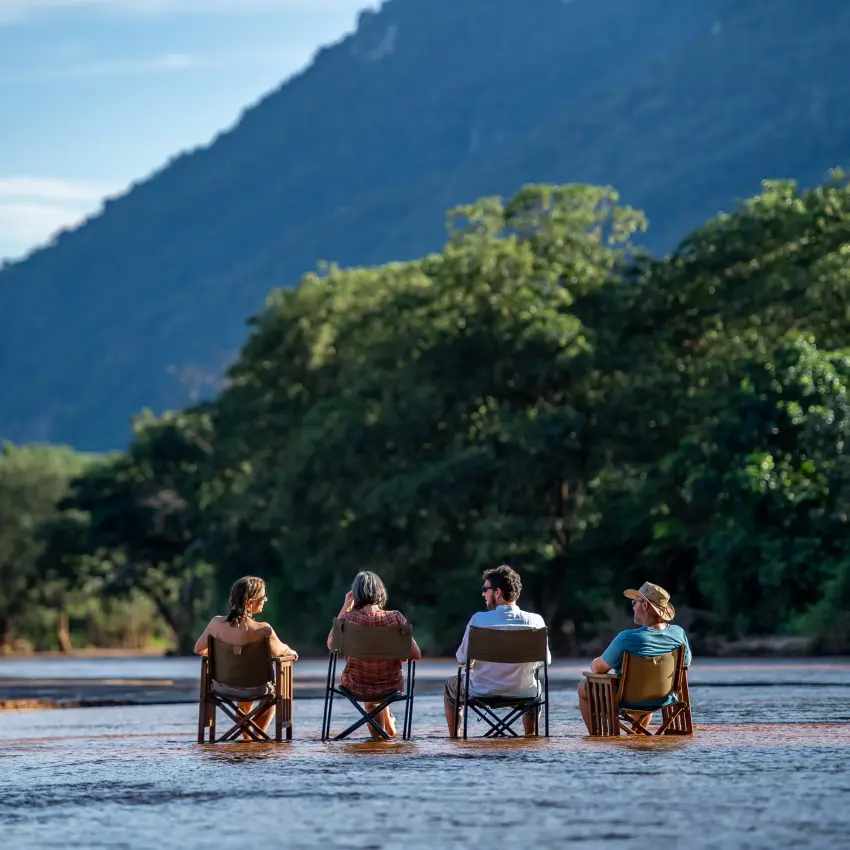
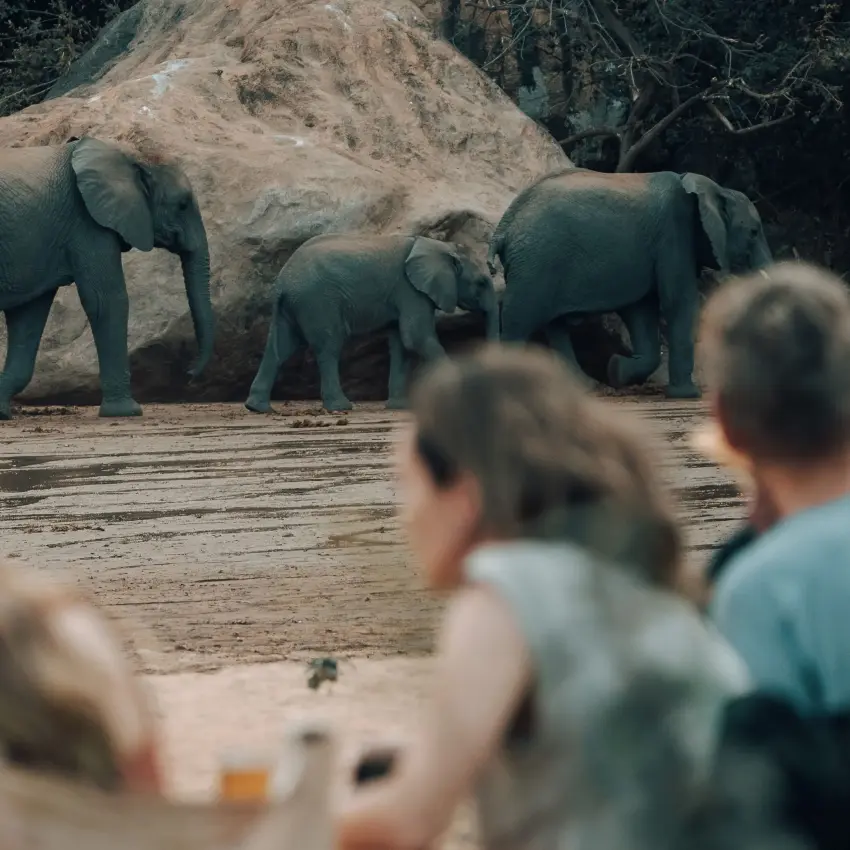
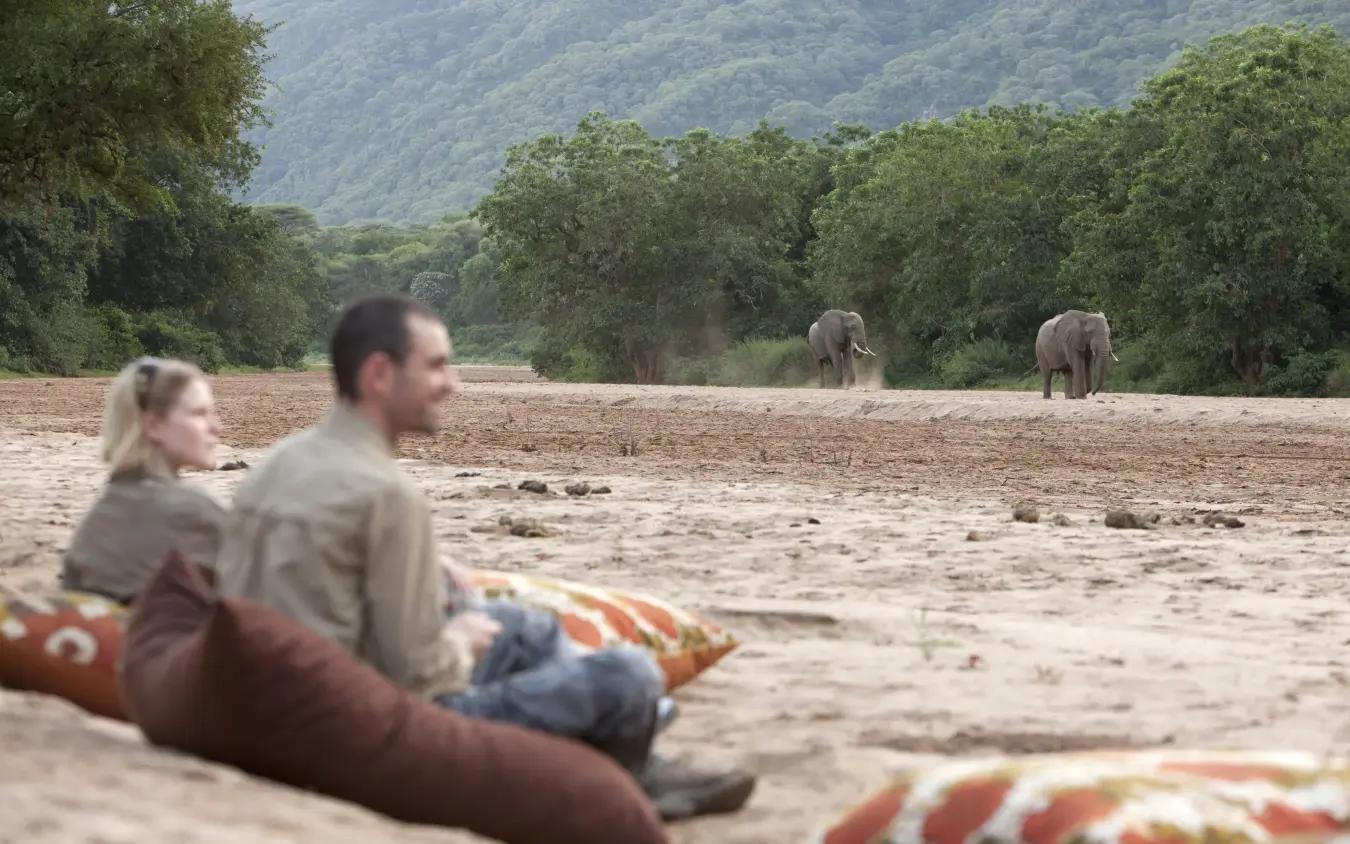
Bread is baked fresh each day, and the three-course meals around it are hearty, cooked by a dedicated chef from produce bought at nearby farms and markets. They are taken communally in the mess tent, which doubles as the camp’s bar, or set out along the riverbed and among the rocks. As the light goes, drinks move to the firepit. Guests sit with their feet in the river sand as the escarpment darkens behind. Dinner is often eaten under the stars, with the chance of an elephant picking its way down to the water in the dark.
Guests sit with their feet in the river sand as the escarpment darkens behind.
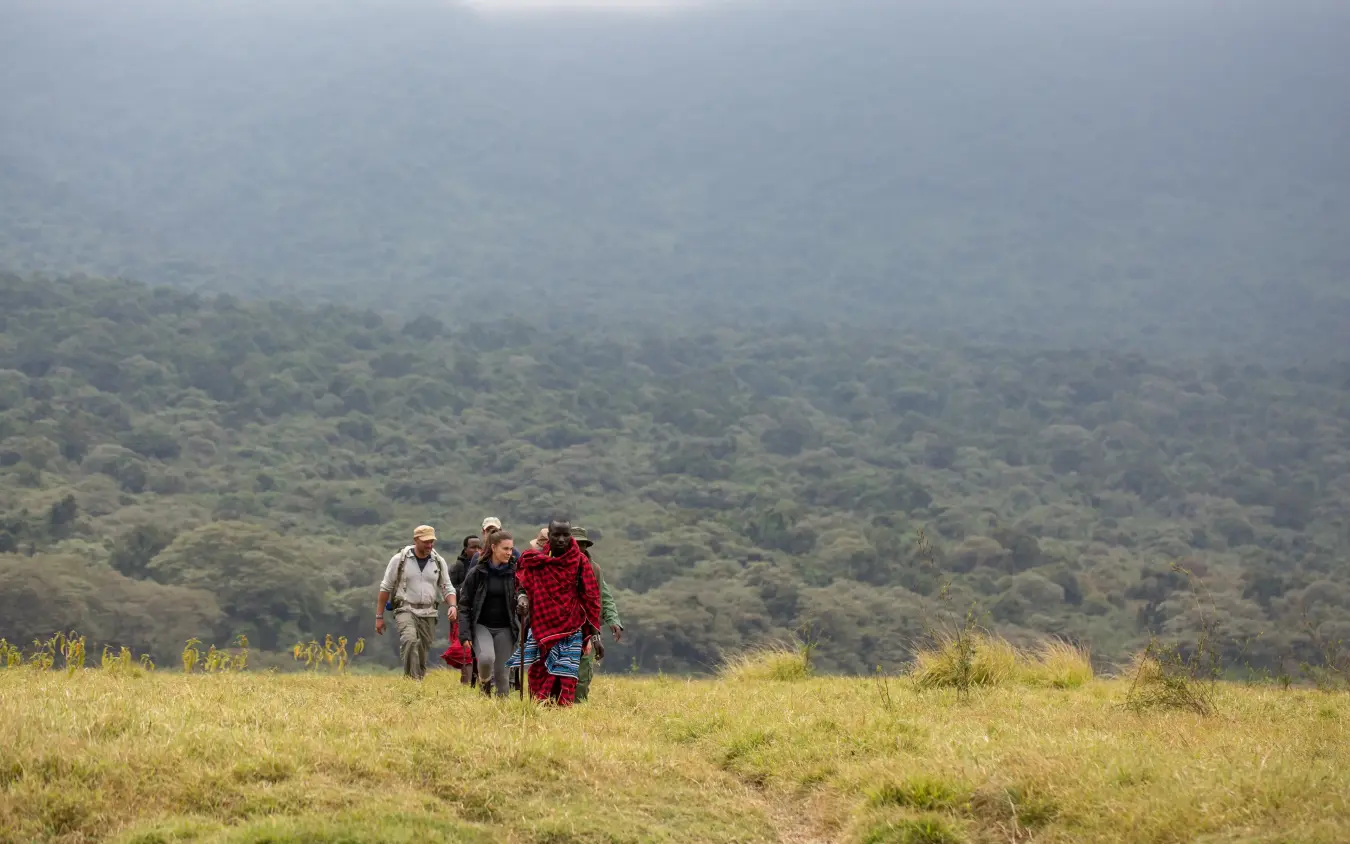
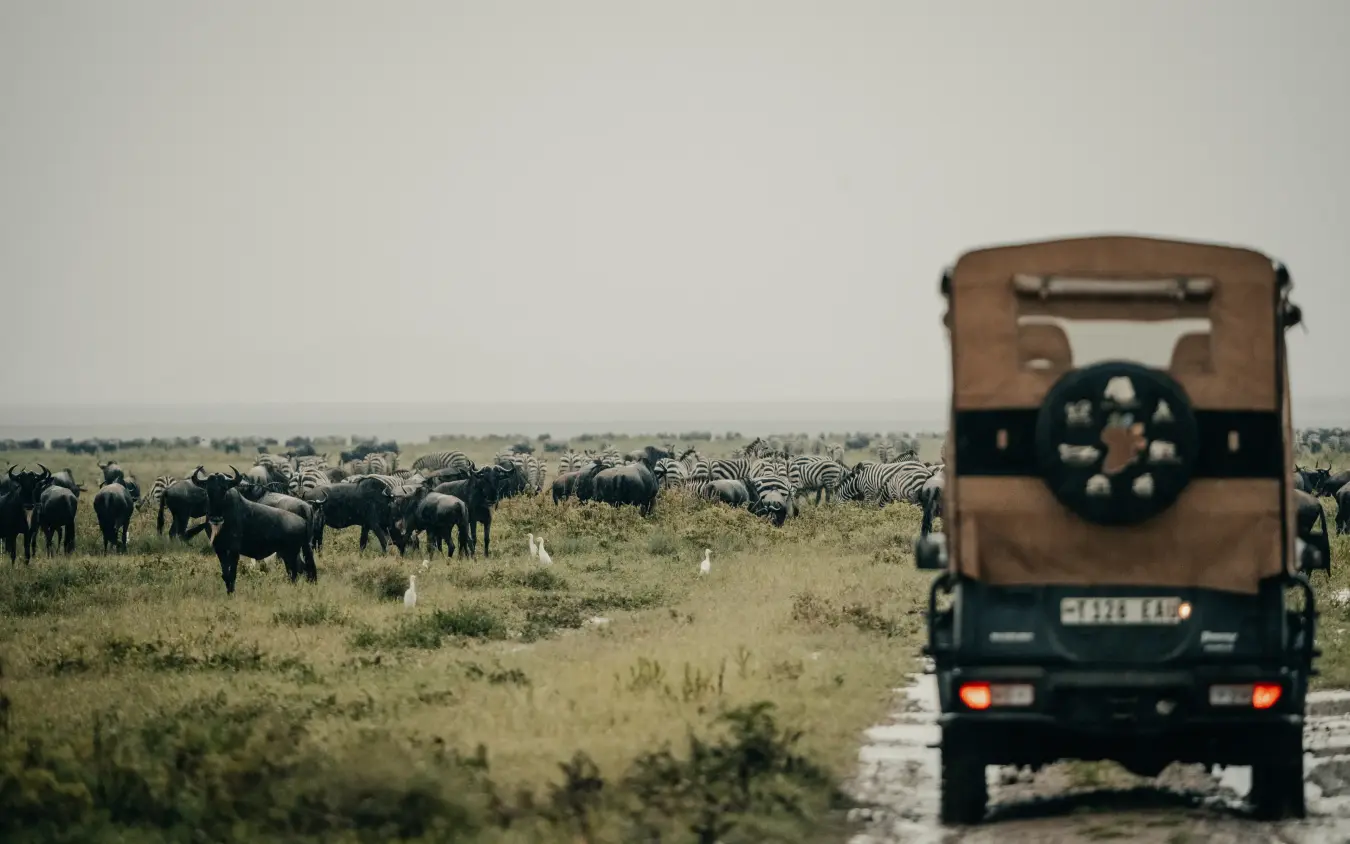
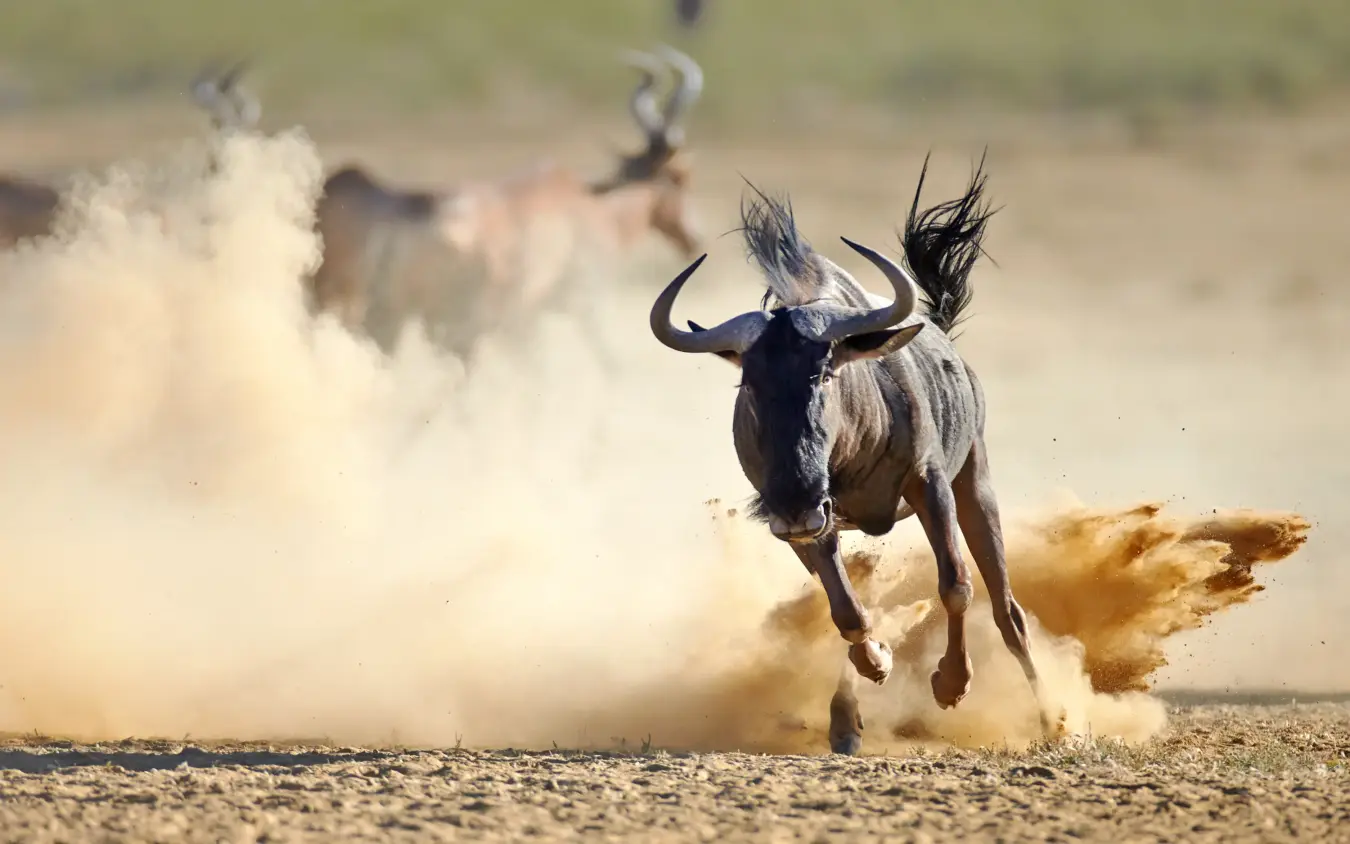
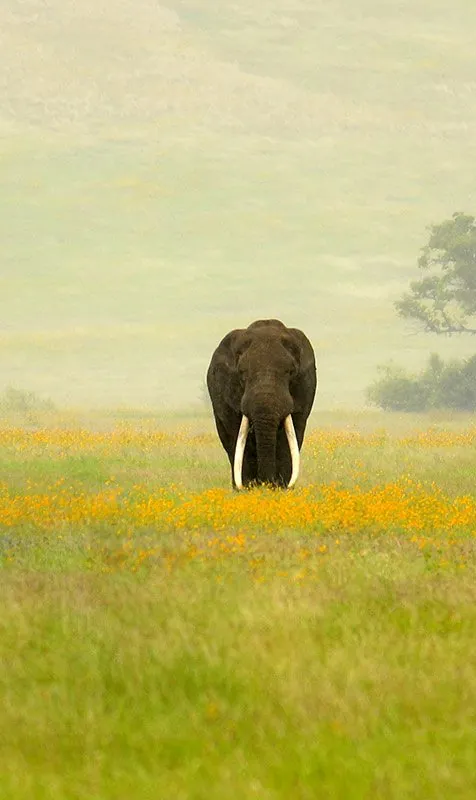
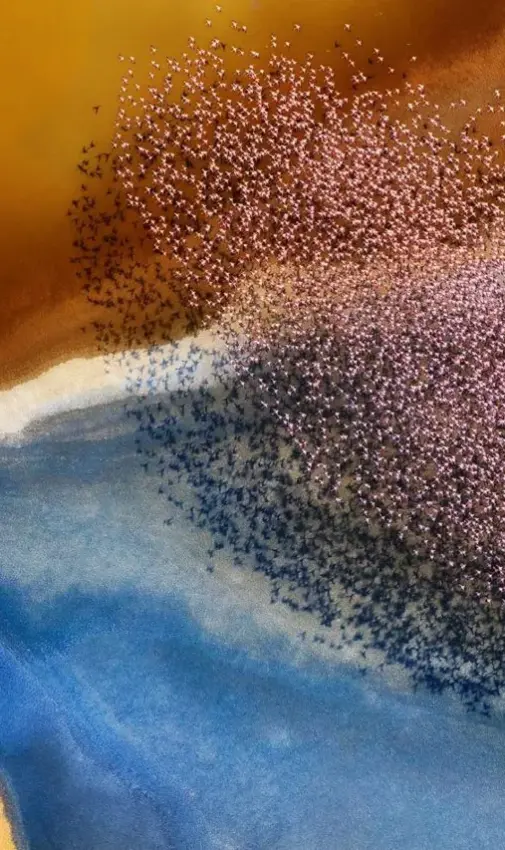
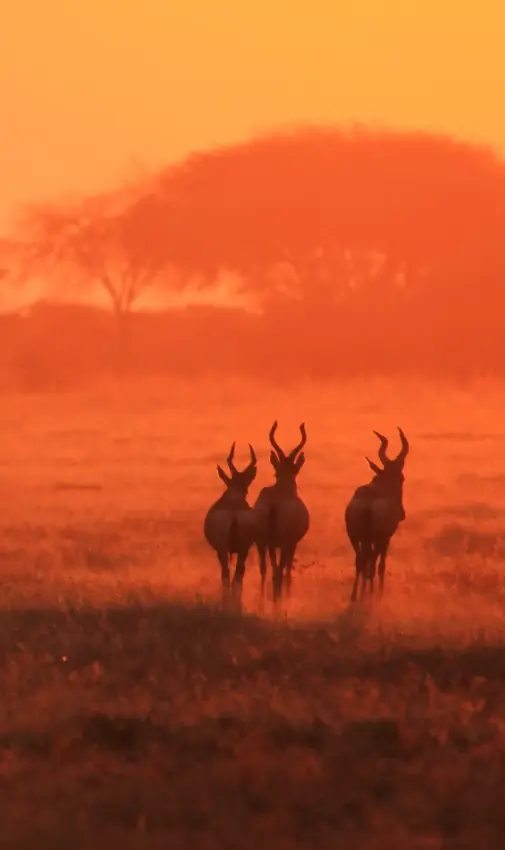
Beyond camp, the park holds tree-climbing lions and large populations of elephants and baboons. There are hippos and giraffes, and flamingos on the soda lake below the escarpment. The camp’s vehicles start from the south, far from the busier plains at the top of the park, and are among the animals early, well before traffic arrives from the northern gate. Birdwatching is richest around the lake and along the river, and from a canoe the birds and grazing animals of the shoreline are seen from the water itself.
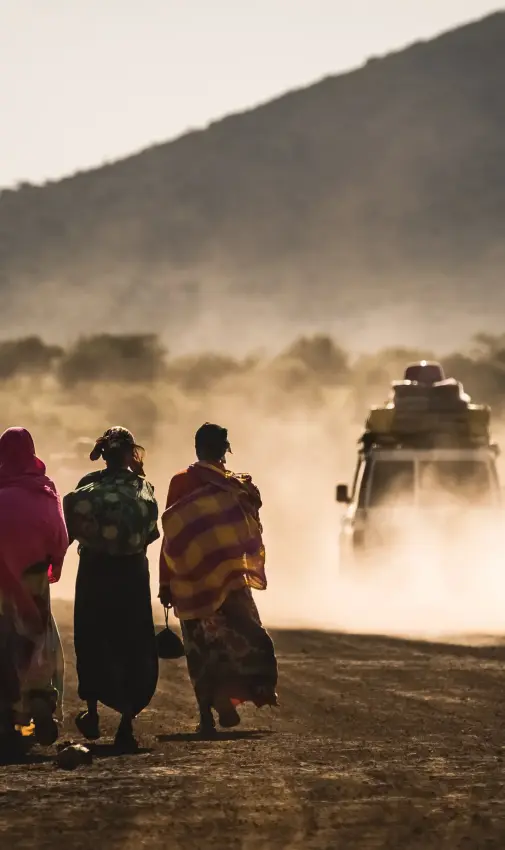
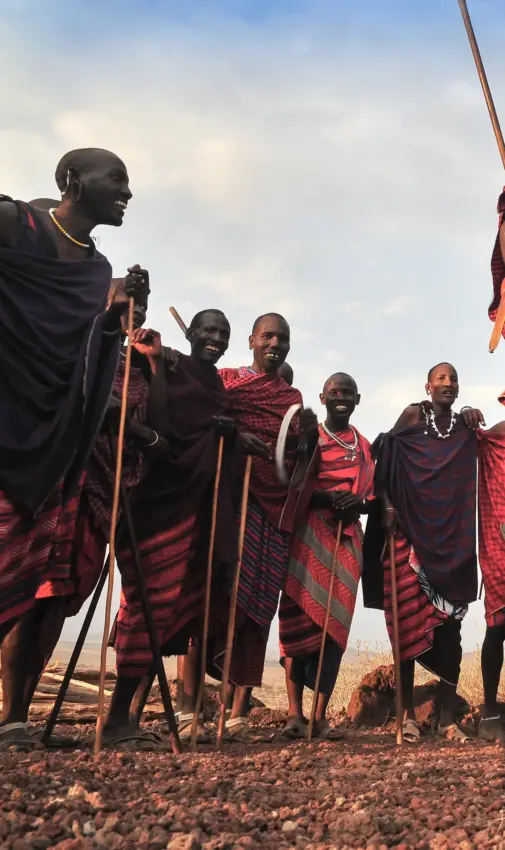
The people behind the camp partner with Children in the Wilderness, running eco-clubs in schools and conservation education in the villages along the park boundaries. Their support extends to sustainable farming and vocational training, and the staff are drawn from local communities. The kitchen buys from nearby farms, power is solar and rainwater is collected, and the whole operation runs plastic-free. It is a light way to live beside a gorge that elephants and buffalo use as their road between the escarpment and the lake.


 01