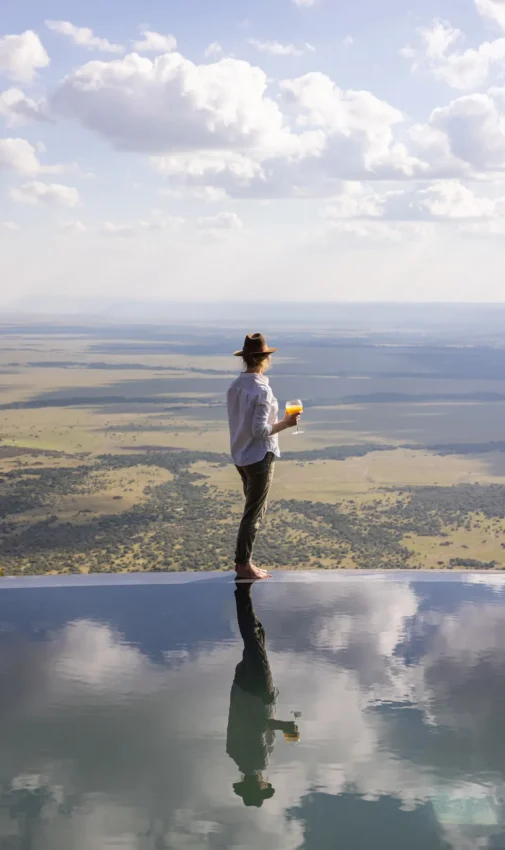
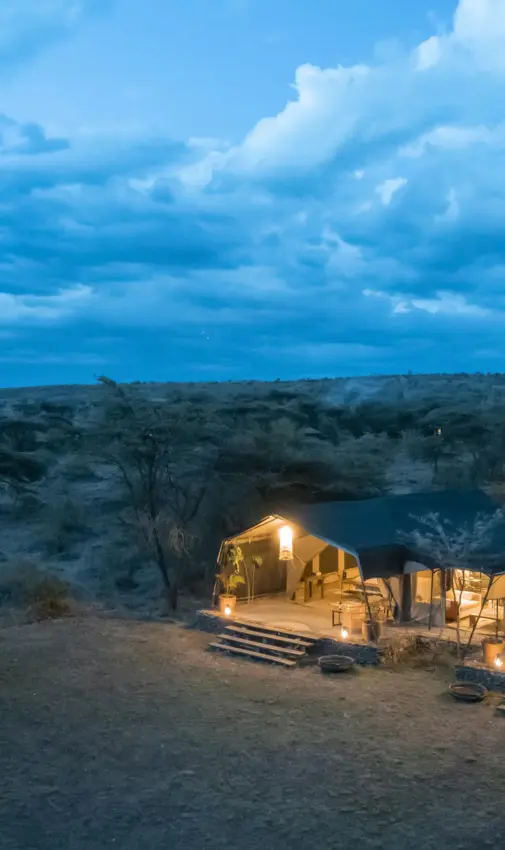
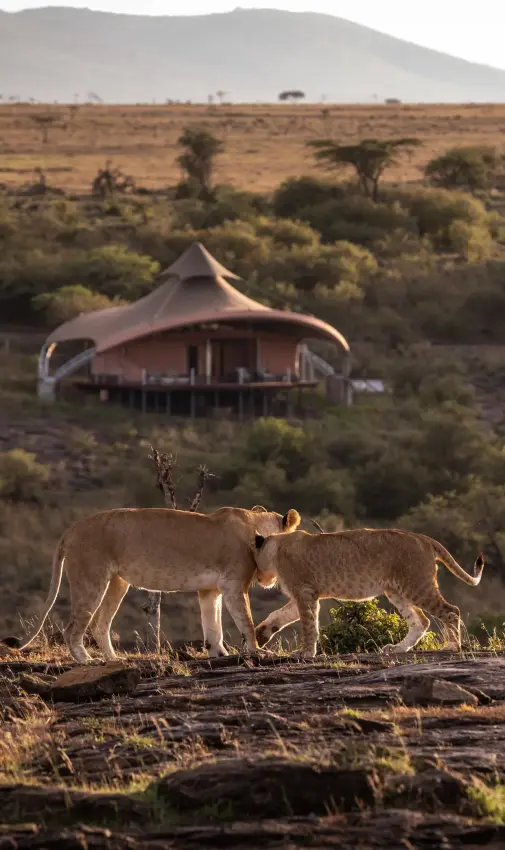
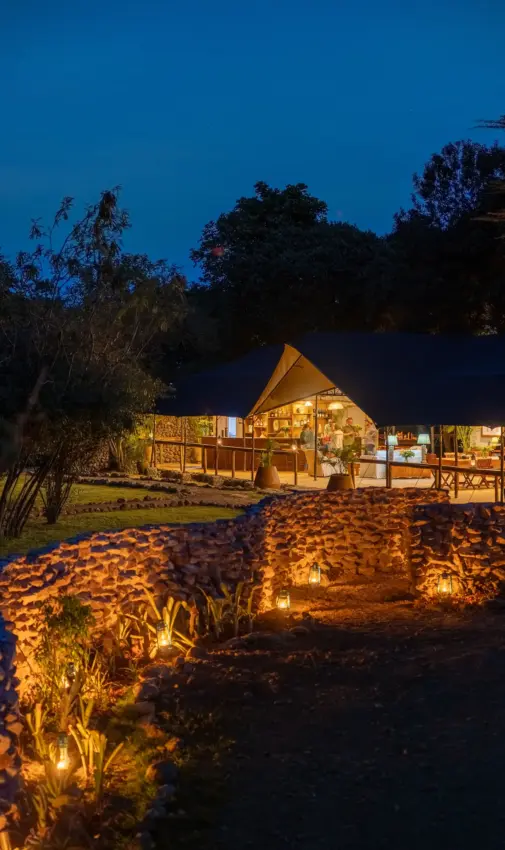
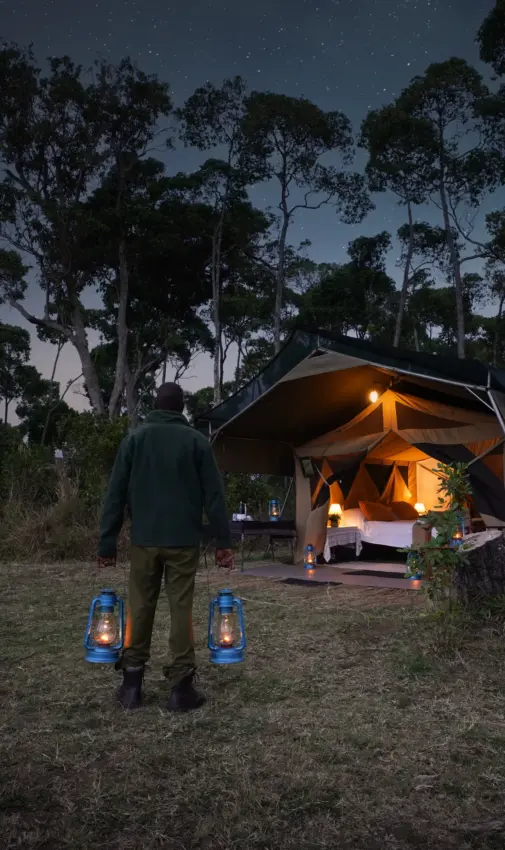
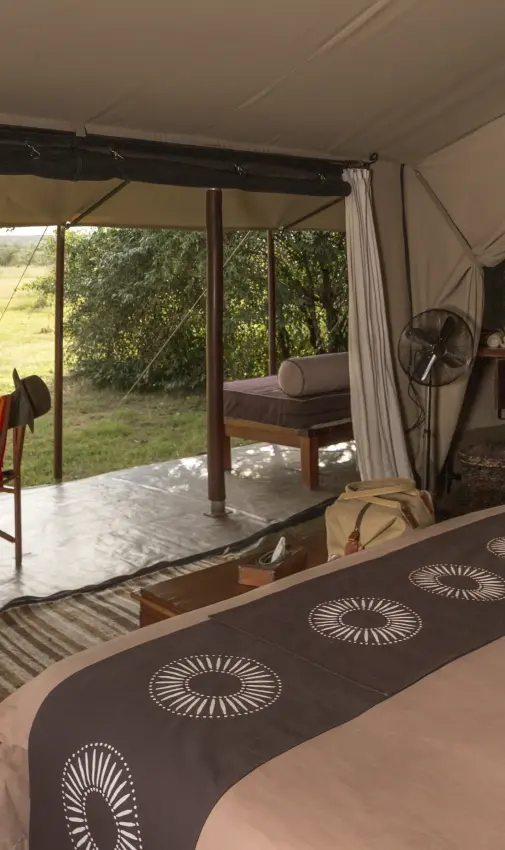
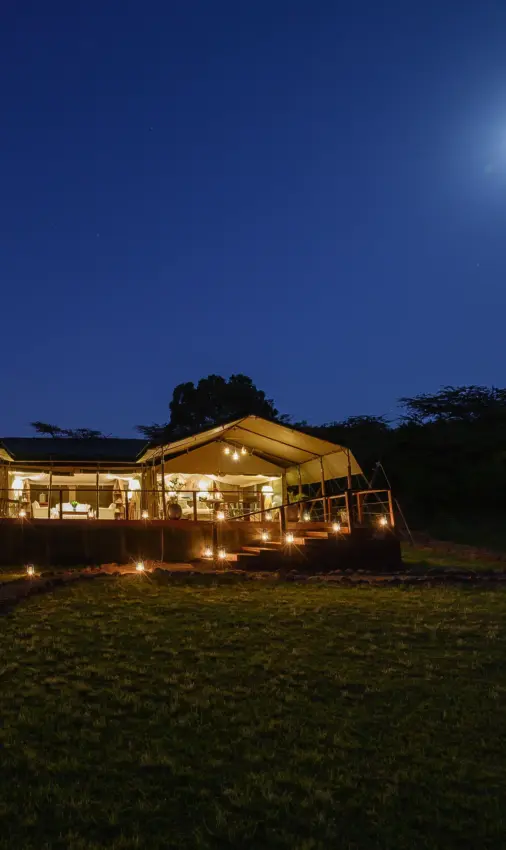
The seven tents on the bank today were built around trees already growing there. Each has a glass front that gives onto a broad timber deck and a plunge pool above the river. Sleeping, bathing and lounge areas are set apart. Antique stools and furniture share space with Maasai beadwork, and recycled bottle glass and salvaged materials have been put to new use.
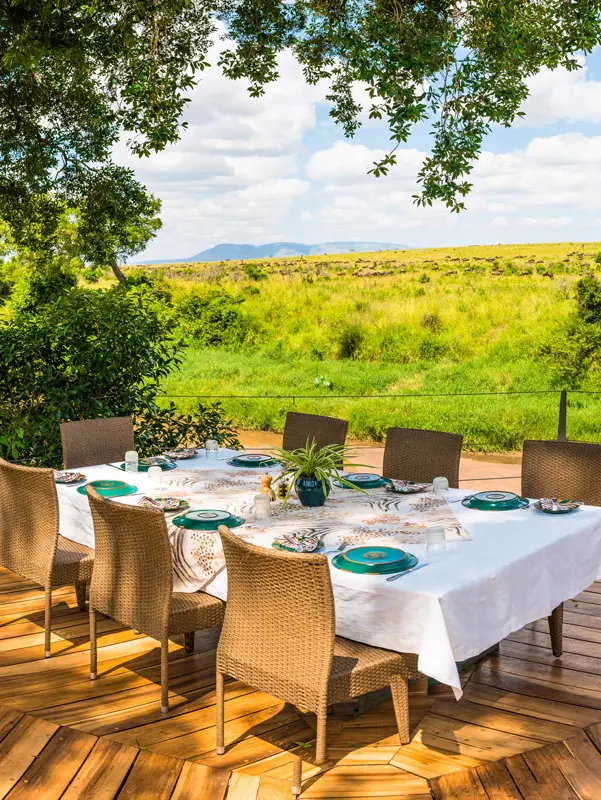
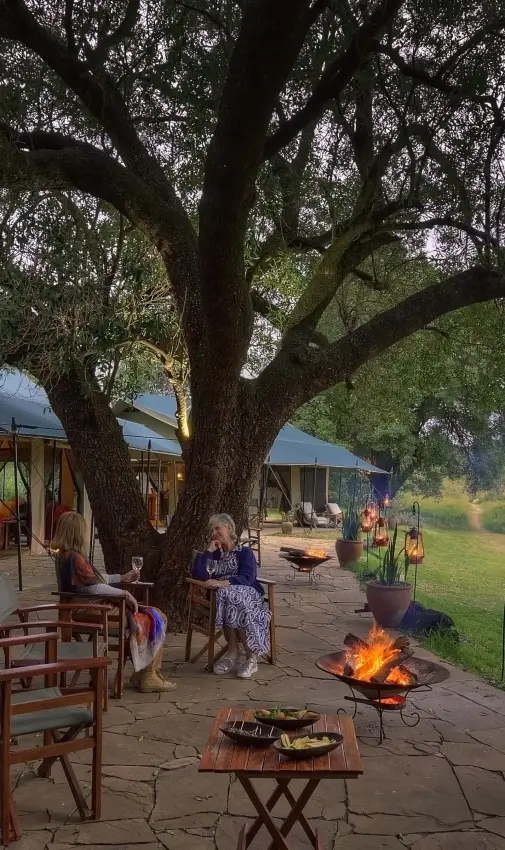
Afternoon drives often end out in the bush, at a vintage mobile bar, parked up for sundowners. Back in camp, drinks gather round the fire pit before dinner, which is served in the mess tent at a table cut from a single slab of fallen African rosewood. Much of the produce comes from the kitchen garden. Some evenings the tables move down into the dry riverbed by candlelight. By day, breakfast and lunch are laid on the lawn or the river deck, wherever the light falls best.
Patrols lifted hundreds of wire snares from the bush around the old bushmeat clearing.
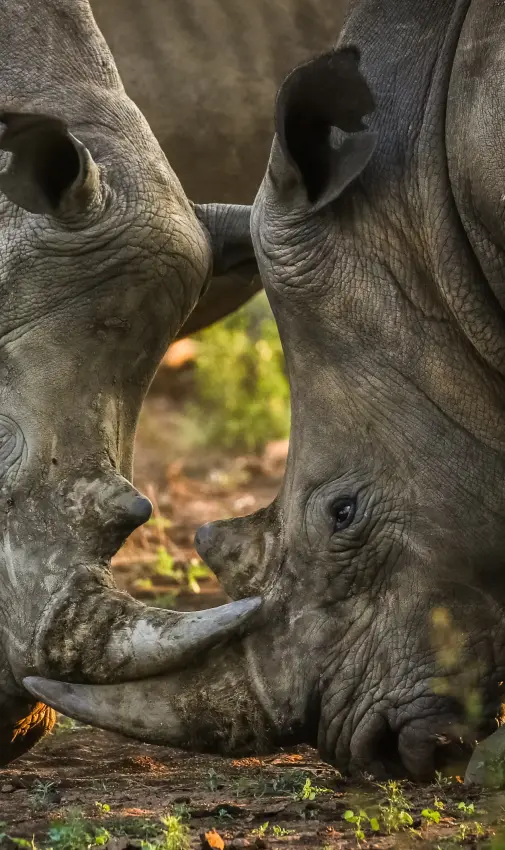
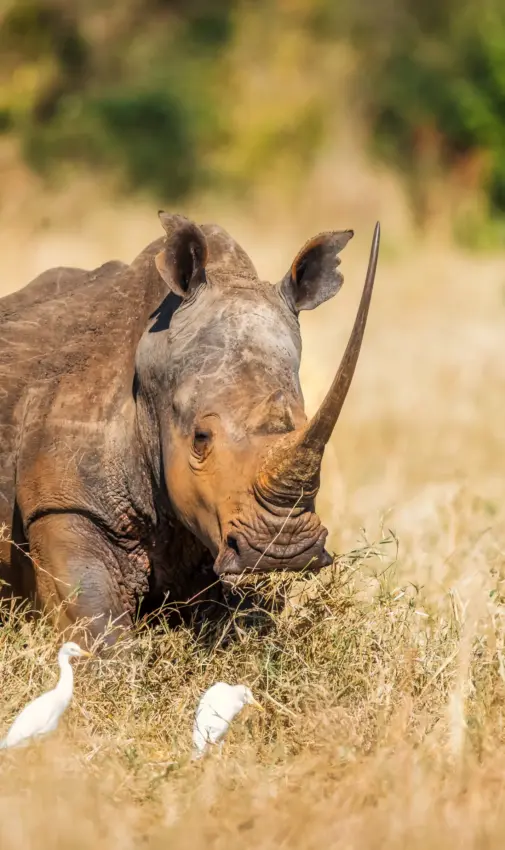
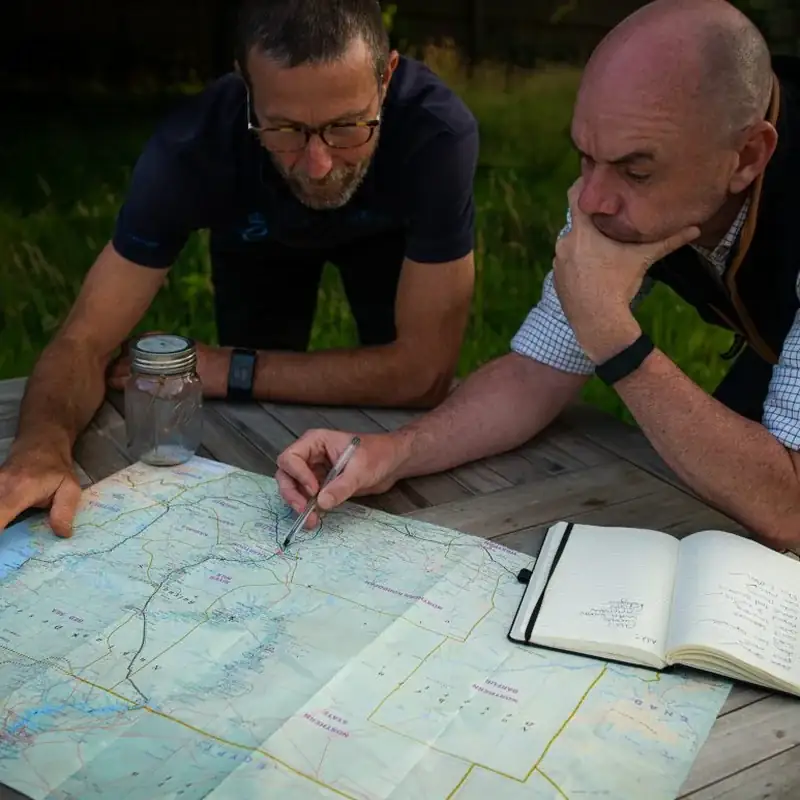
Anti-poaching was part of the camp from its first months. Patrols lifted hundreds of wire snares from the bush around the old bushmeat clearing. That work continues through the Mara Rhino Rangers, to whom every guest night contributes, and a vehicle and driver are kept ready for their use. The camp and its conservation trust have funded two operations to ear-notch and GPS-tag black rhinos, so that each can be individually identified. Camera traps feed EarthRanger and Kenya’s national rhino database.
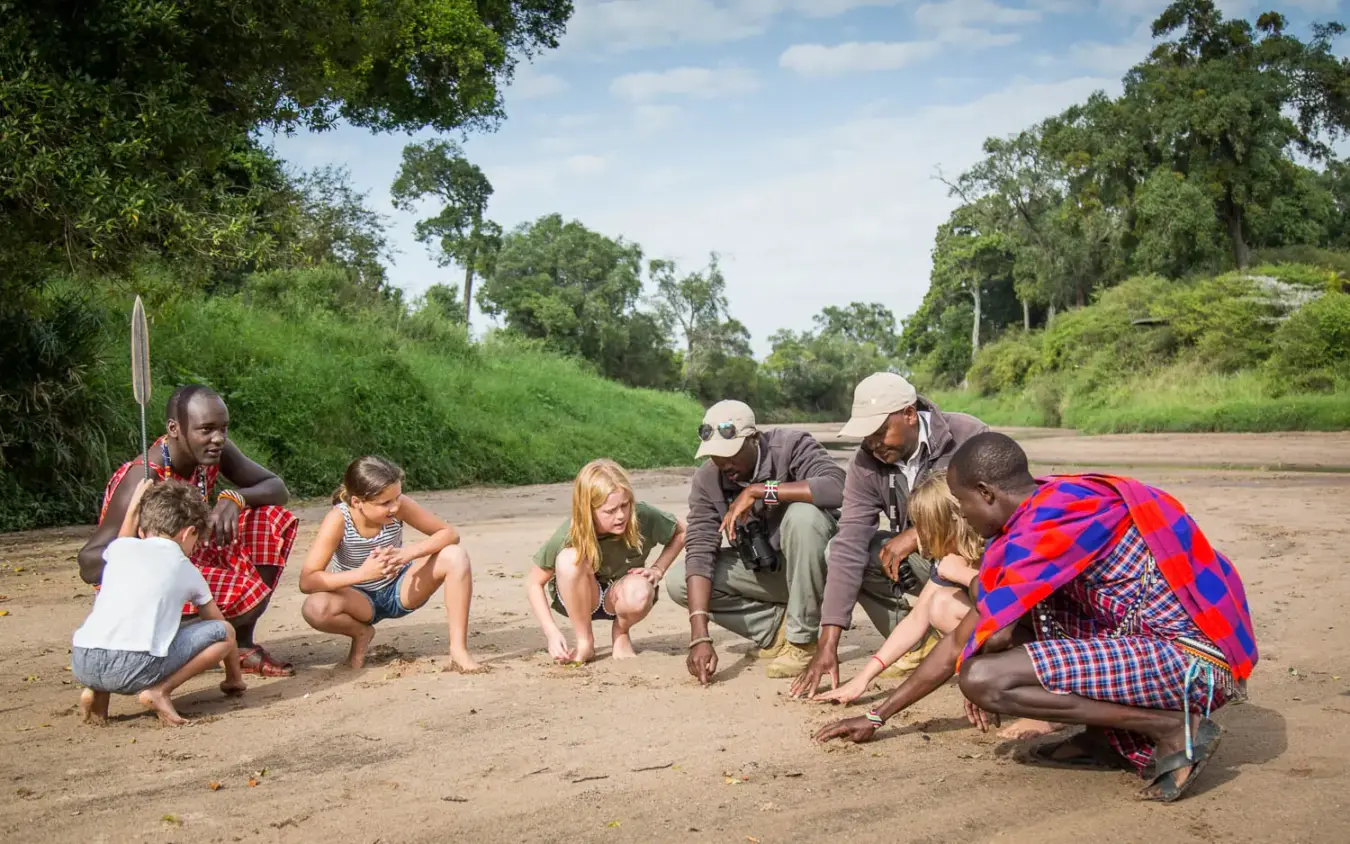
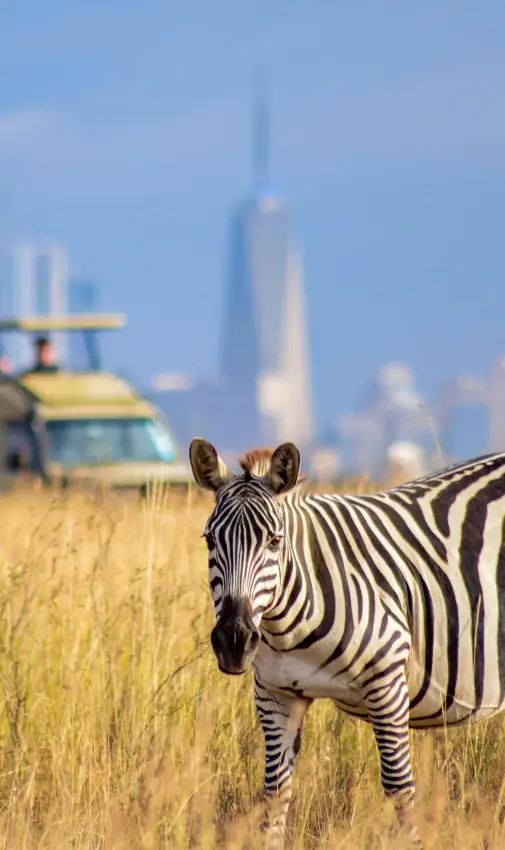
Inside the national reserve, game drives keep to park rules, and walking is limited to short guided outings around camp to look at birds and plants and read the tracks. Full days with a picnic lunch reach the wider reserve, and a dawn balloon flight can be booked in advance. Between drives there are two spa treatment rooms and a bush gym. One footbridge crosses a small stream within camp.