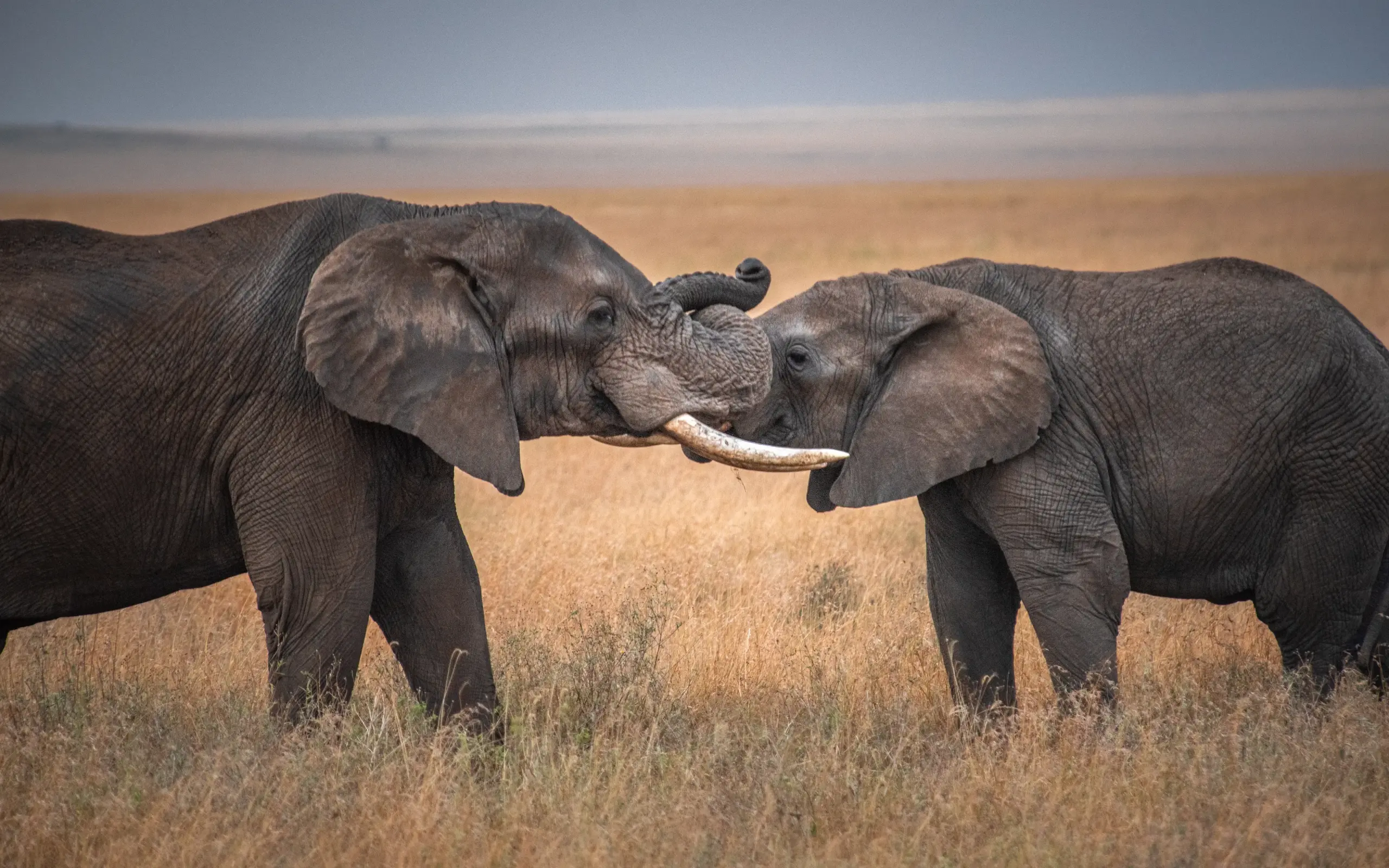

Elephants dusted red by the soil
Tsavo East and Tsavo West lie either side of the old Uganda Railway line, between Nairobi and the coast. The elephants here wear the colour of the ground they cross. Laterite dust turns their hide rust-red, and it works as both sunscreen and insect repellent. Together the two parks protect close to 22,000 square kilometres, one of the largest connected protected areas in Kenya.
The elephants here wear the colour of the ground they cross.
The grey shows through only after rain has washed the dust away. The Galana River forms where the Tsavo meets the Athi, then runs east past doum palms and eroded rock. Through the long dry months it draws the herds down to its banks, and the sight of them arriving at the water, red-flanked and unhurried, is the park’s defining spectacle.


Across the highway, Tsavo West climbs into hills and old volcanic ground. Rain falling on the porous Chyulu Hills sinks in rather than running off, and Mzima’s water spends about twenty-five years filtering through rock before it reaches daylight. Raphia palms fringe the pools, and a sunken viewing tank puts you level with the hippos and crocodiles below the waterline.
The Shetani lava flows spread black and folded across the ground.
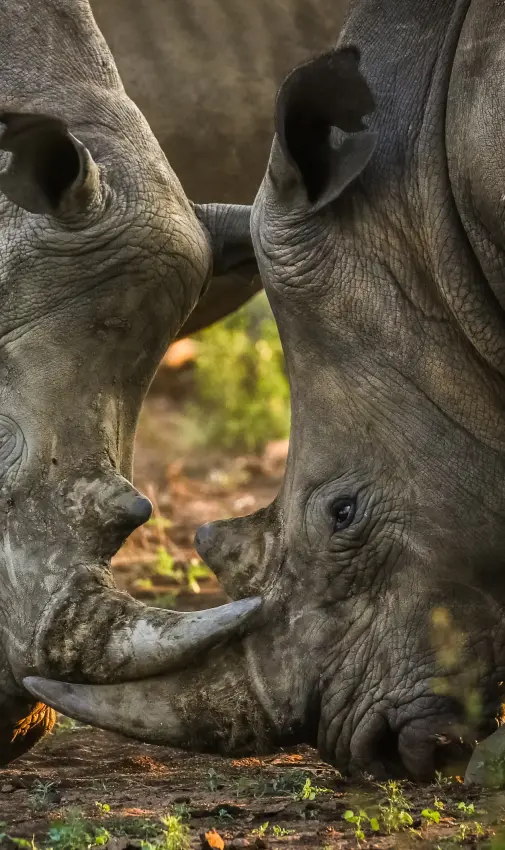
South of the springs, the earth broke open roughly two centuries ago. The Shetani lava flows spread black and folded across the ground. Kamba communities named them for the devil, unsettled by the shaking earth. The Ngulia Hills rise to 1,800 metres nearby, and a fenced sanctuary in their folds holds black rhino whose numbers have grown steadily under close protection.
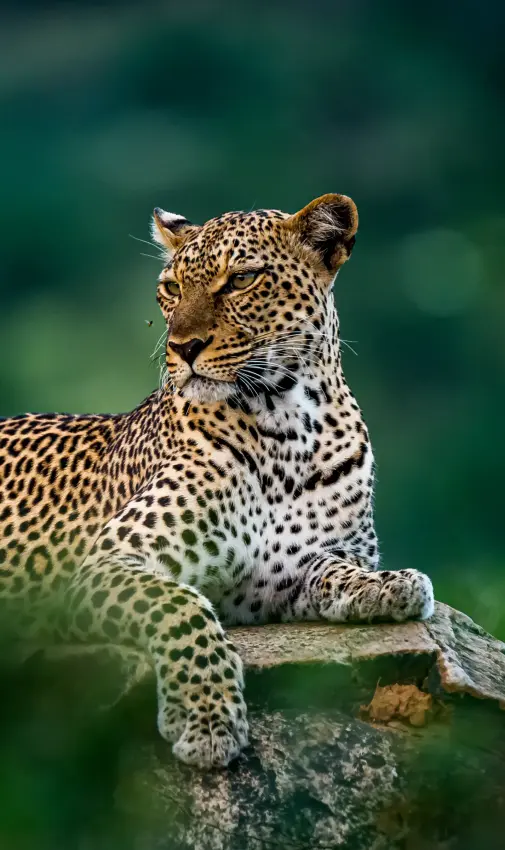
Elephant numbers across the greater Tsavo ecosystem run to roughly 15,000 to 17,000. The big tuskers move among them, old bulls whose ivory reaches the ground. Tsavo Trust follows them from the air and on foot, and in 2024 recorded ten active super tuskers alongside thirty-two emerging ones. Lions here often carry little or no mane, an adaptation to the heat and thorn scrub rather than a separate subspecies. Lesser kudu, gerenuk and fringe-eared oryx work the dry bush, and more than 500 bird species have been recorded on the eastern side alone.
Long before the parks were gazetted in 1948, this was travelled country. Caravan routes carried ivory from the interior to the Swahili coast, and the same paths moved a darker trade in people. The Waata, hunter-gatherers with deep knowledge of the bush, lived here until gazettement outlawed their way of life. The Taita farm the terraced slopes to the south, the Akamba gave the region its name, and Maasai families graze cattle along the western and northern edges. In late 1898, work on the railway bridge over the Tsavo River stopped while two lions hunted the camps after dark.
Heavy rain falls from March to May, when some tracks become difficult for vehicles
Both national parks are managed by Kenya Wildlife Service, and the rules hold firm: daytime game drives on designated tracks, no off-road driving, no night drives, and walking only in the company of an armed ranger. On the western boundary the terms change. The LUMO Community Wildlife Conservancy, formed from the Oza, Lualenyi and Mramba community ranches, and the neighbouring Taita Hills Wildlife Sanctuary allow night drives with a spotlight, off-road tracking, guided walks and breakfast in the bush, which is why most itineraries pair time in the parks with days in the conservancies.
The Sheldrick Wildlife Trust, founded in memory of David Sheldrick, Tsavo East’s founding warden, runs rewilding units at Ithumba in the north of the park and at Umani Springs in the Kibwezi Forest, where orphaned elephants are gradually walked back into wild herds. Scheduled flights from Nairobi’s Wilson Airport reach Tsavo West’s airstrips in around fifty minutes, private charters serve strips across both parks and the conservancies, and the coast lies close enough for a short transfer, so a run of days in the bush followed by the Indian Ocean takes little arranging.

The best time to visit Tsavo
Jan
Feb
Mar
Apr
May
Jun
Jul
Aug
Sep
Oct
Nov
Dec
Recommended
Transitional
Challenging conditions
Come June to October or January to February for the finest game viewing, when thinning vegetation and shrinking water sources pull wildlife into massive concentrations. June to September brings the most comfortable temperatures. November to April rewards birders; March to May is quiet but roads can turn.
accommodation in tsavo
Canvas accounts for much of it, several camps set along the Galana River or around private waterholes in the eastern park, with verandas and open-sided mess areas built for the heat of the day. In the western park, stone lodges look out from dining terraces above volcanic waterholes, and tented camps near Mzima Springs add plunge pools and decks raised over spring-fed water. South in the conservancies, ridge-top lodges take the long views toward Kilimanjaro, alongside exclusive-use houses tied to elephant rewilding work.


activities
Game drives, lava fields, springs
Daytime drives in both national parks follow set tracks past the Galana River and Mudanda Rock in the east, and the Shetani lava flows and Mzima Springs in the west. Walking in the parks requires an armed ranger. In the LUMO and Taita Hills conservancies, night drives, off-road tracking and guided walking safaris are all permitted.

conservation
Tuskers, rhinos and orphans
Tsavo Trust's Big Tusker Project keeps aerial and ground teams monitoring the ecosystem's largest bulls, and manages community conservancy land at Kamungi and Shirango. The Sheldrick Wildlife Trust rewilds orphaned elephants at Ithumba and Umani Springs. Black rhinos are held under close protection in the fenced Ngulia sanctuary in Tsavo West.

getting around
Fifty minutes from Wilson Airport
Scheduled flights from Nairobi's Wilson Airport reach Kilaguni and Finch Hattons airstrips in Tsavo West in around fifty minutes, with onward connections to Amboseli, Samburu and the Maasai Mara. Private charters serve Voi, Satao, Sala and Ithumba in Tsavo East, and Taita Hills for the conservancies. The Madaraka Express train stops at Mtito Andei and Voi.
other areas in kenya
The Chyulu Hills adjoin Tsavo West, volcanic highlands of cloud forest and lava tube caves where riding and mountain biking are possible, neither of them permitted in the parks below. Amboseli, linked by an elephant corridor, offers open pans and marshland beneath Kilimanjaro, while the Maasai Mara adds grassland and dense predator sightings. Laikipia's private conservancies bring a different guiding style, and Diani, Watamu and Malindi close a trip on the Indian Ocean coast.
 01
01
 02
02
 03
03
 04
04
 05
05
 06
06
 07
07
 08
08
 09
09
 10
10
frequently asked questions
By light aircraft to the airstrips inside the parks, or by road from Nairobi or Mombasa.
Scheduled flights serve Tsavo West and Tsavo East, and the lodges meet the aircraft. The road is the other option, since the main highway between Nairobi and the coast runs between the two parks, which makes Tsavo the natural stop on a bush and beach trip.
The train between Nairobi and Mombasa also crosses the park.
We book whichever suits the route and say plainly which is worth the time.
For a family or a group, a private charter out of Nairobi is often the better answer, usually a Cessna Caravan, and we can arrange either.
East is open and dry, West is green and volcanic, and they feel like different countries.
Tsavo East is vast, flat and red, with the Galana River, the Yatta plateau and long horizons. It is the place for elephant in numbers and for space.
Tsavo West is hilly, lava-strewn and greener, with Mzima Springs, the Chyulu hills on its edge and better cover, which means harder game viewing and better scenery.
Most routes take one or the other; a longer stay takes both.
The soil, not the animals.
Tsavo's earth is a deep red laterite, and elephant dust themselves with it to keep cool and to deter insects, so they take on the colour of the ground they walk on. After rain they wash back to grey.
It is one of the most photographed sights in Kenya and it costs nothing to see.
The herds here are among the largest in the country, which is the real reason to come.
Yes. Tsavo sits at low altitude between Nairobi and the coast, and both TravelHealthPro, the UK's official travel health service, and the CDC treat it as a malaria area where antimalarial tablets are normally advised.
We do not make medical recommendations. Which tablets suit you, and what is right for a child, are questions for your own doctor or a travel clinic.
On the practical part, cover up at dusk and carry repellent, particularly in the hour before dinner.
More than game drives, particularly on the western side.
- Mzima Springs, where an underwater hide looks into the pool at hippo and fish
- The Shetani lava flow, walked on foot with a guide
- Lugard Falls on the Galana, in Tsavo East
- Walking and night drives on the private conservancies bordering the parks
The Chyulu hills next door add riding, walking and lava caves.
We often pair a national park stay with a conservancy so the days are not all spent in a vehicle.
Two or three, and it depends what it sits next to.
Two nights works as a stop between Nairobi and the coast, which is how most clients use it. Three lets you take both halves of the park or add a conservancy day.
It pairs naturally with Amboseli, the Chyulu hills and then Diani or Kilifi.
Tell us the whole route and we will say how many nights Tsavo has earned.
rated five stars by our clients

our approach
remote, exclusive
& personal
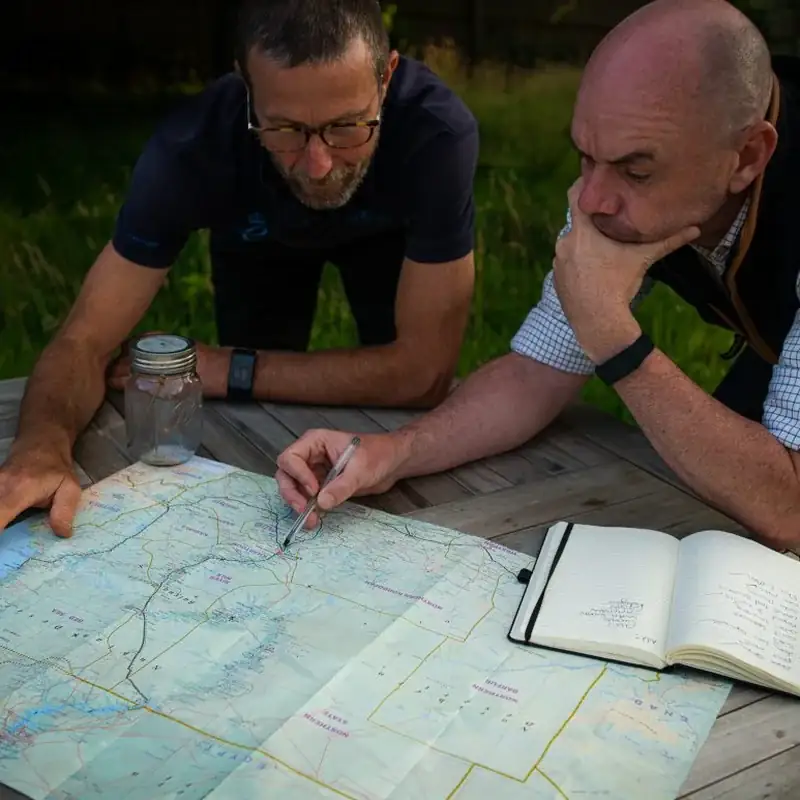
Every journey starts with a conversation. We take the time to understand your vision before we start planning.
Whether by phone or in person, we work with you directly to shape something that is considered, personal, and expertly delivered.
Every journey starts with a conversation. We favour a direct, personal approach: understanding your vision before anything else.
Whether by phone or in person, we work with you directly to shape a journey that is both thoughtfully considered and expertly delivered.
Get in touch to start planning yours.