Lodge

Umani Springs

Umani Springs is a Sheldrick Wildlife Trust lodge in Kenya’s Chyulu Hills for disabled orphan elephants.

Country: Kenya
Location: Amboseli and Chyulu Hills
Number of rooms: 3

A forest built for the halt and lame

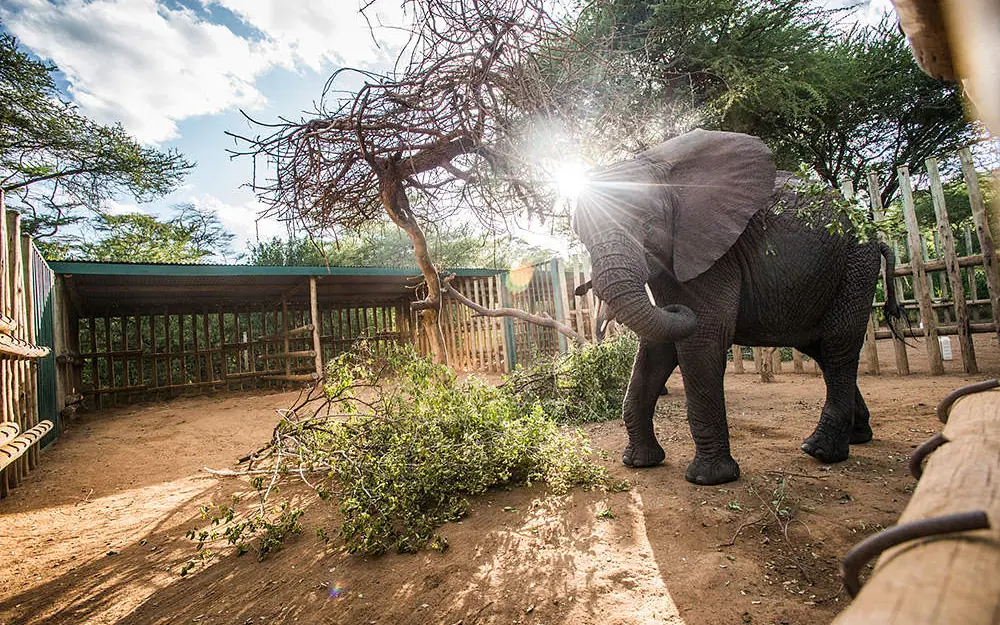
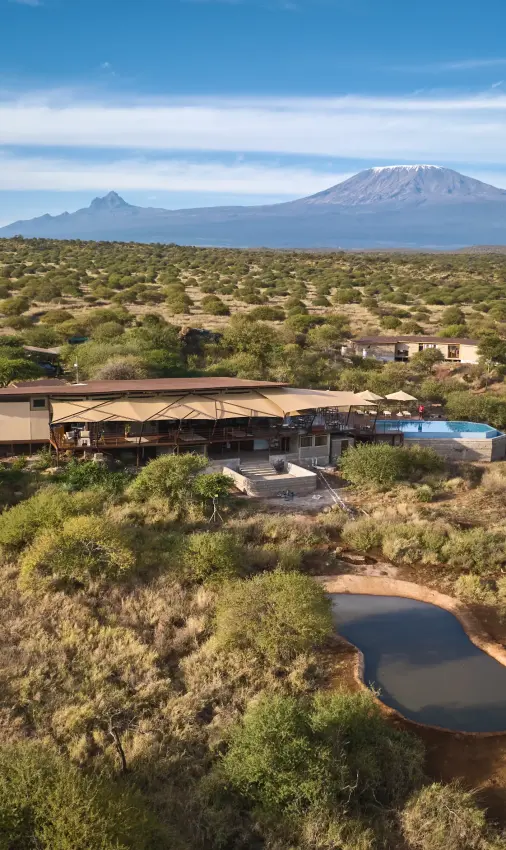
Umani Springs sits inside the Kibwezi Forest, an ancient groundwater forest fed by springs that rise through the volcanic Chyulu rock, on the corridor that links the Amboseli and Tsavo ecosystems. The Sheldrick Wildlife Trust built this reintegration station for a particular kind of orphan: elephants too physically compromised to survive the long dry-season marches of its Tsavo units.

Here the ground is flat, the water permanent and the browse year-round

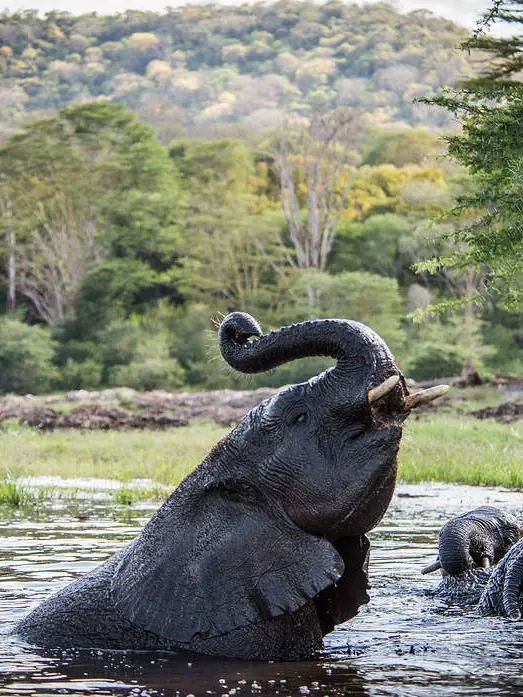
Here the ground is flat, the water permanent and the browse year-round, so an elephant recovering from injury or trauma never has to walk far to feed and drink. Guests fall in with the herd through the day. There is the sunrise wake at the stockades, the midday milk feed and mud bath, and the slow single-file walk home as the evening light drops through the canopy.

Caretaker feeding elephant with bottle at sunrise, Umani Springs, Amboseli and Chyulu Hills, Kenya
Spacious bedroom with twin canopy beds and forest views, Umani Springs, Amboseli and Chyulu Hills, Kenya

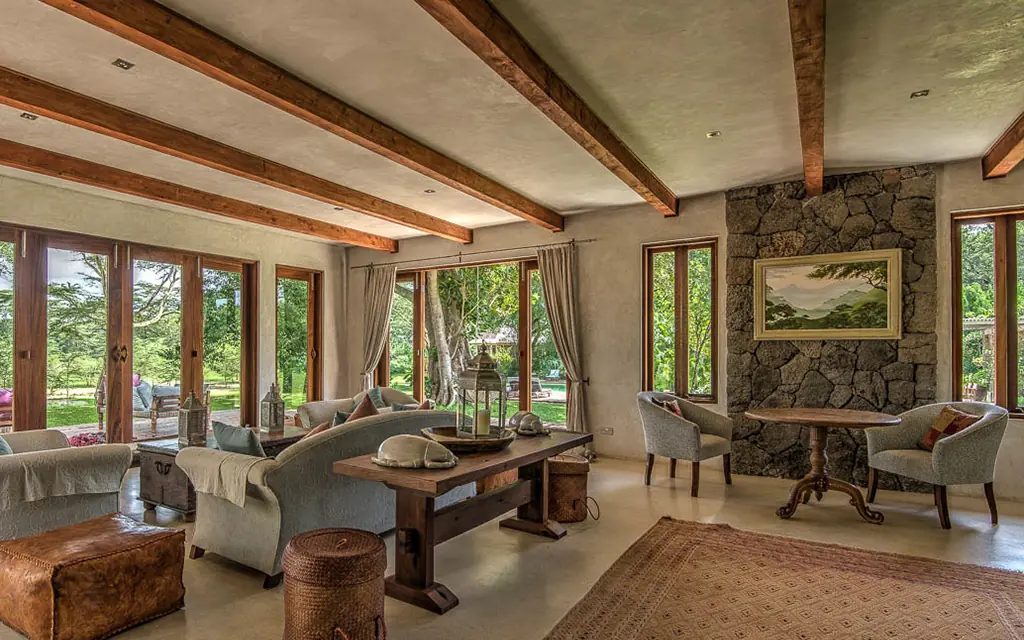
Staying here means becoming an active foster parent of one of the Trust’s orphaned elephants, so every visit is tied directly to the work happening in the forest. Three raised cottages sleep ten guests, taken by a single party. For the length of the stay the forest and the elephant visits belong entirely to your group, with no other travellers to share them.

Three raised cottages sleep ten guests, taken by a single party

Bushbuck graze the lawns while Sykes’ and vervet monkeys move through the branches overhead. The springs draw leopard, buffalo, eland and wild elephants down to the water in the evenings, and the forest holds a great many birds among its canopy.

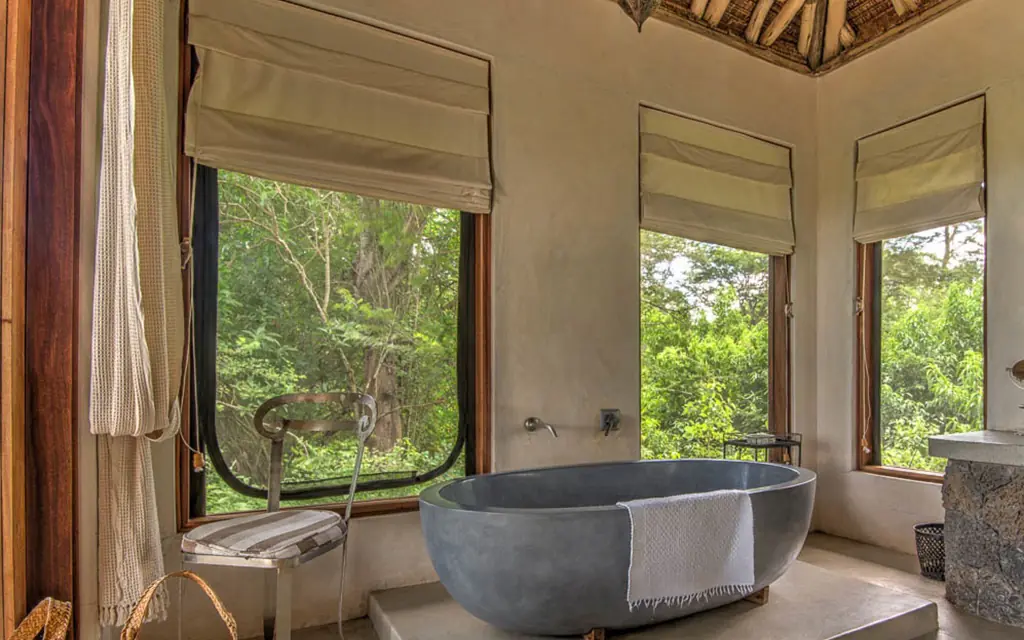
Modern stone bathtub with forest views through large windows, Umani Springs, Amboseli and Chyulu Hills, Kenya 01

accommodation

Three Cottages Sleeping Ten Guests

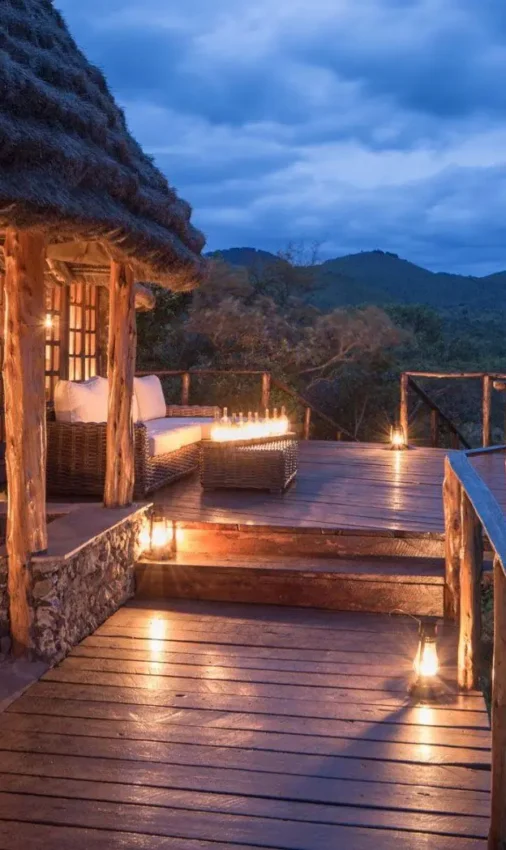
Three cottages lightly raised above the forest floor, sleeping ten guests on an exclusive-use basis for a single party. Each has a private bathroom and a stone outdoor shower open to the forest. Wide verandas look out over the canopy and the passing wildlife of the Kibwezi Forest.

Caretaker feeding elephant with bottle at sunrise, Umani Springs, Amboseli and Chyulu Hills, Kenya 02

activities

Elephant Visits and Chyulu Hills Exploration

Sunrise, midday and evening visits to the Sheldrick orphan elephants at the reintegration unit. Guided forest walks with naturalist trackers, birding among many species, and trips to the Chyulu Hills for the Shetani lava flow and Kisula Caves. Game drives run in nearby Tsavo West and Tsavo East, and in the forest.

Guide walking with elephant herd through tree-lined forest path, Umani Springs, Amboseli and Chyulu Hills, Kenya 03

conservation

Kibwezi Forest De-Snaring and Reintegration

Umani Springs funds the Sheldrick Wildlife Trust's work in the Kibwezi Forest: a de-snaring unit that removes wire snares, a perimeter fenceline reducing crop-raiding, and the orphan reintegration programme. The lodge is largely staffed by the local community, with profits offsetting concession fees.

ready to get started?

Get in touch and let’s start the conversation. An initial consultation helps us understand what you’re looking for, whether that’s specific experiences, luxury touches, or marking a special occasion, and from there we’ll guide you through what’s possible so you can decide if we’re the right fit.

frequently asked questions

It is one of the easier lodges in Kenya to reach. By road it is three to four hours from Nairobi, leaving the Mombasa highway near Kibwezi town, and the standard gauge railway runs from Nairobi to Kibwezi station in about two hours, with a short drive on to the lodge from there.

We can also arrange a private charter, typically a Cessna Caravan or Pilatus PC-12, from Nairobi's Wilson airport to the Kithyasu airstrip inside Chyulu Hills National Park, forty-five minutes in the air and then twelve kilometres by road. Soft bags are the rule on the light aircraft.

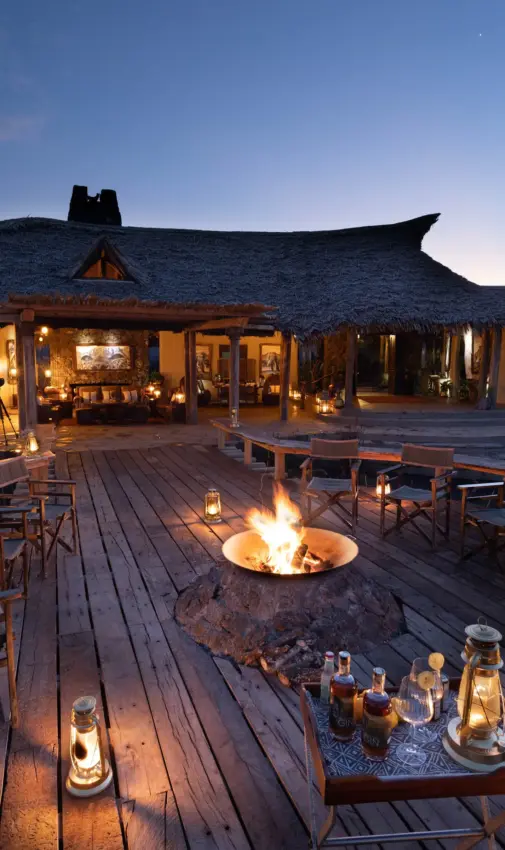
You bring the ingredients and the lodge does everything else. Guests shop for their own groceries and drinks for the stay, hand them over on arrival, and the resident chef and kitchen team then plan, cook and serve every meal around your preferences, in the open-sided mess, on the lawns or beside the spring-fed pool.
The lodge is run by the Sheldrick Wildlife Trust on a not-for-profit basis, so what you pay goes back into the forest and the orphan programme. Tell us your party's tastes and any dietary needs and we will help plan the shopping before you leave Nairobi.
Yes, treat it as one. The forest is low-lying, warm and permanently watered, comfortable country for mosquitoes, and it sits far below the 2,500-metre altitude at which the CDC and the UK's official travel health advice consider malaria risk to ease across Kenya, so antimalarial tablets are usually advised.

Check the current guidance with a travel clinic or your doctor before travelling, and take particular care against bites in the evenings.

Warmer and greener than the safari plains. The groundwater forest stays lush the whole year, with warm, humid days and shaded, easy walking underfoot, and the heaviest showers fall around November and from March to May.

Pack light clothing in neutral colours, comfortable closed shoes for the forest trails, a strong insect repellent, swimwear for the spring-fed pool, and a light layer for the evenings. Binoculars matter more here than most places, because so much of the forest's life is up in the canopy.

The orphan elephants' day runs to the same rhythm in every season, so there is no wrong month for the thing you are coming for. The choice turns on what you want around it.

The drier windows, June to October and January to February, are best for adding day trips into the Chyulu Hills and the Tsavo parks, while the months after the rains are the forest's own high season, with the birding at its richest and the springs running strong.

Best with older children. Watching the orphan herd at close range lands more deeply with a child than almost any game drive, and having the whole lodge to your own party means meals and days flex around a family without anyone else to consider.

The cottages stand on raised decks above an unfenced forest where wild elephants come to the springs, so we would not take children under about five here. Tell us the ages and we will advise honestly on the fit.

rated five stars by our clients

other areas in kenya

Wooden fishing boat beached on white sand tropical shore 01

Diani Beach

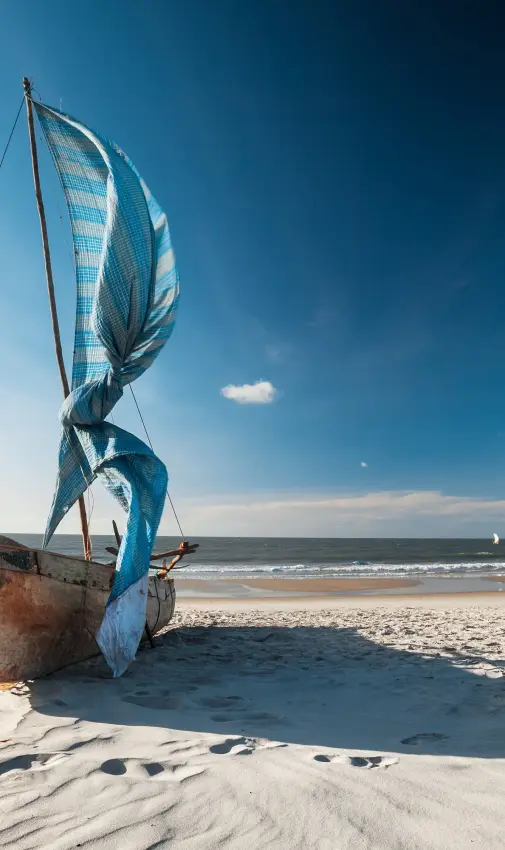
Traditional fishing boat with blue sail on sandy beach 02

Kilifi

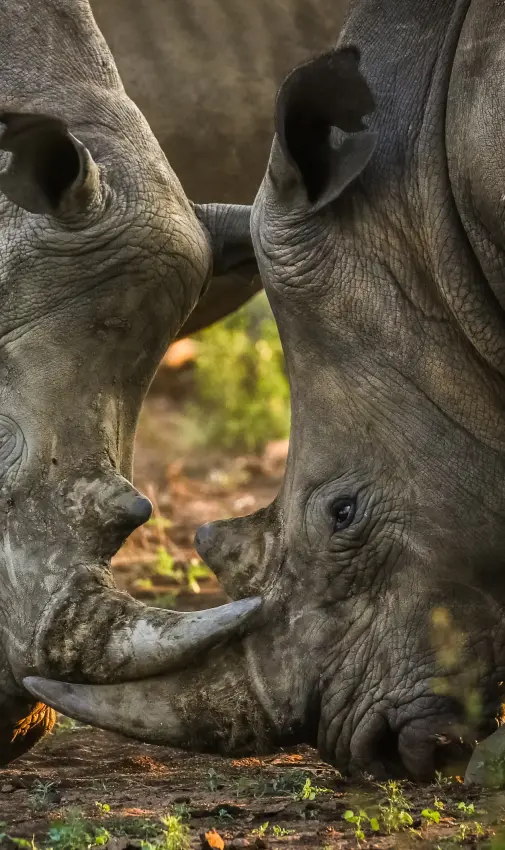
Two rhinos touching horns in natural habitat 03

Laikipia Highlands

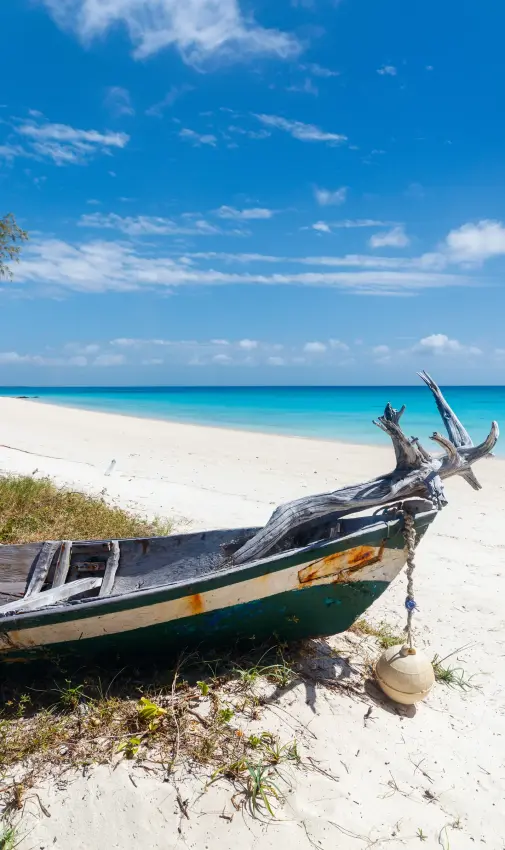
Wooden fishing boat beached on white sand tropical shore 04

Lamu Archipelago

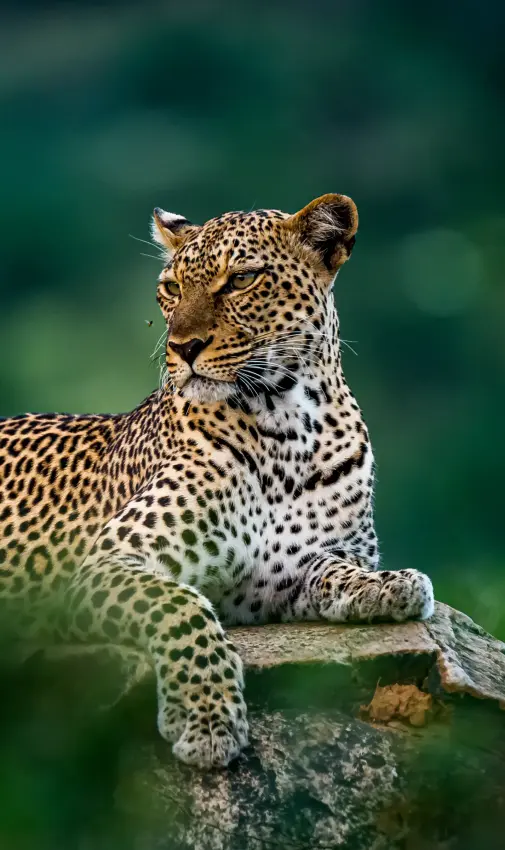
Leopard resting on fallen log in natural setting 05

Maasai Mara

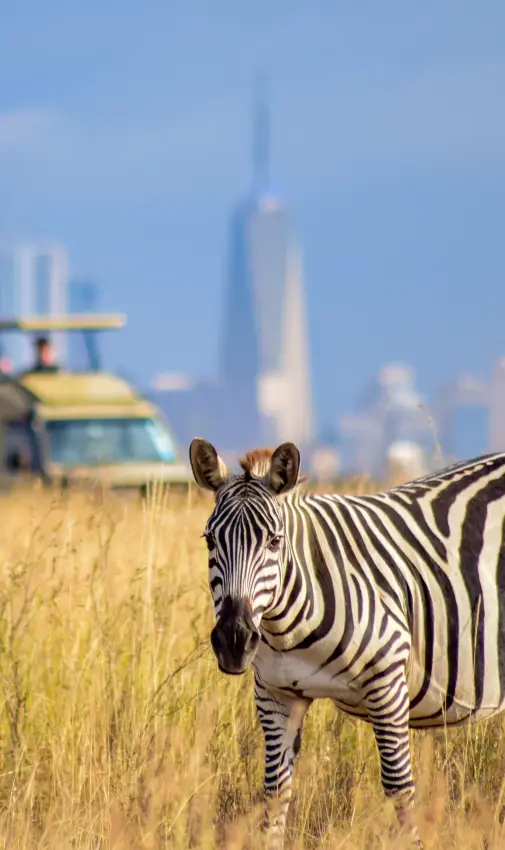
Zebras in savanna grassland with safari vehicle and city skyline 06

Nairobi

Local guides with poles crossing shallow forest river, Northern Kenya, Kenya 07

Northern Kenya

Flock of flamingos wading in shallow pink-tinted water, Rift Valley Lakes, Kenya 08

Rift Valley Lakes

Man in traditional red garment driving open safari vehicle, Samburu Reserve, Kenya 09

Samburu Reserve

African elephants with calf walking through grassland at sunset 10

Tsavo

Planning a journey together

our approach

remote, exclusive
& personal

Every journey starts with a conversation. We take the time to understand your vision before we start planning.

Whether by phone or in person, we work with you directly to shape something that is considered, personal, and expertly delivered.

get in touch
destinations ideas & inspiration our process about us contact us