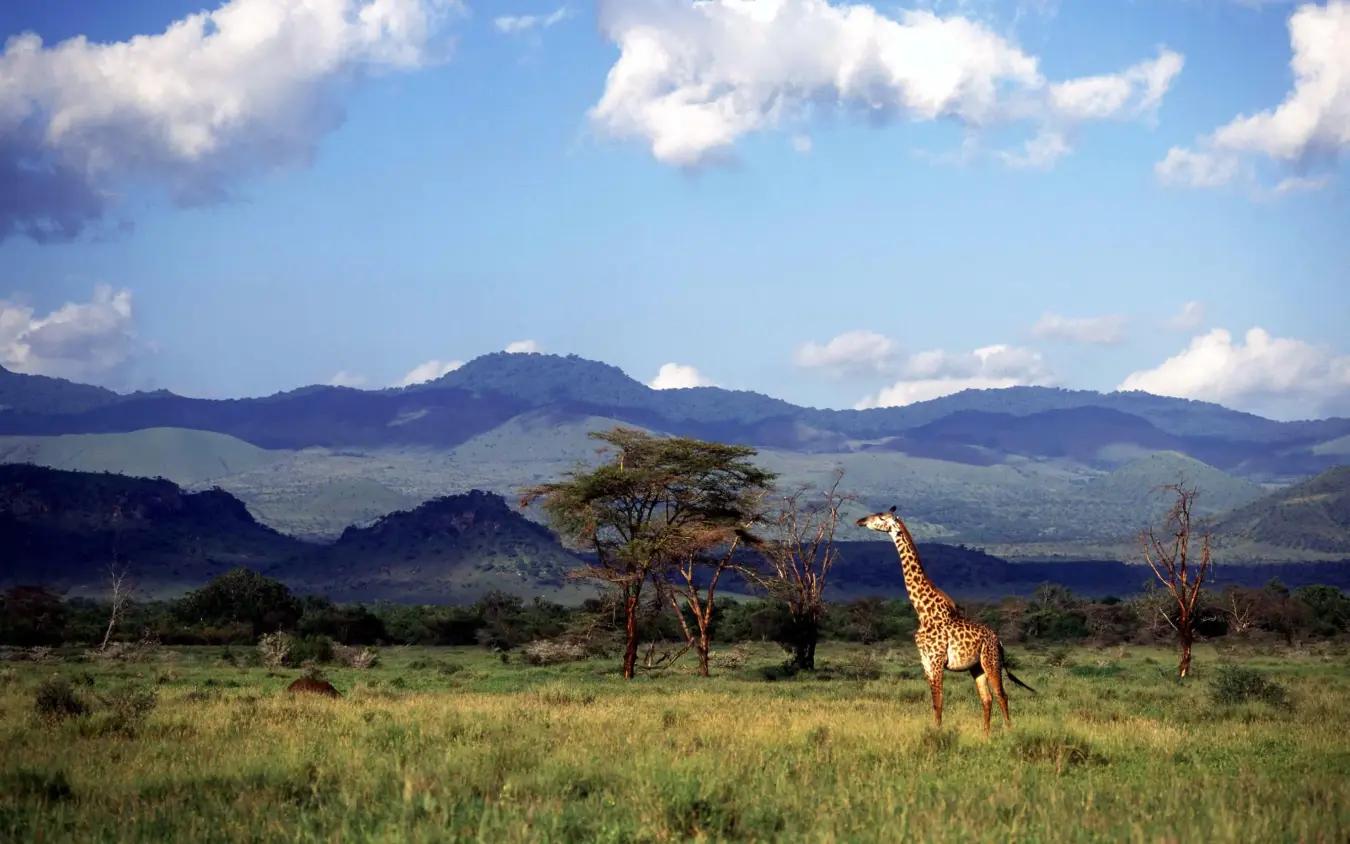
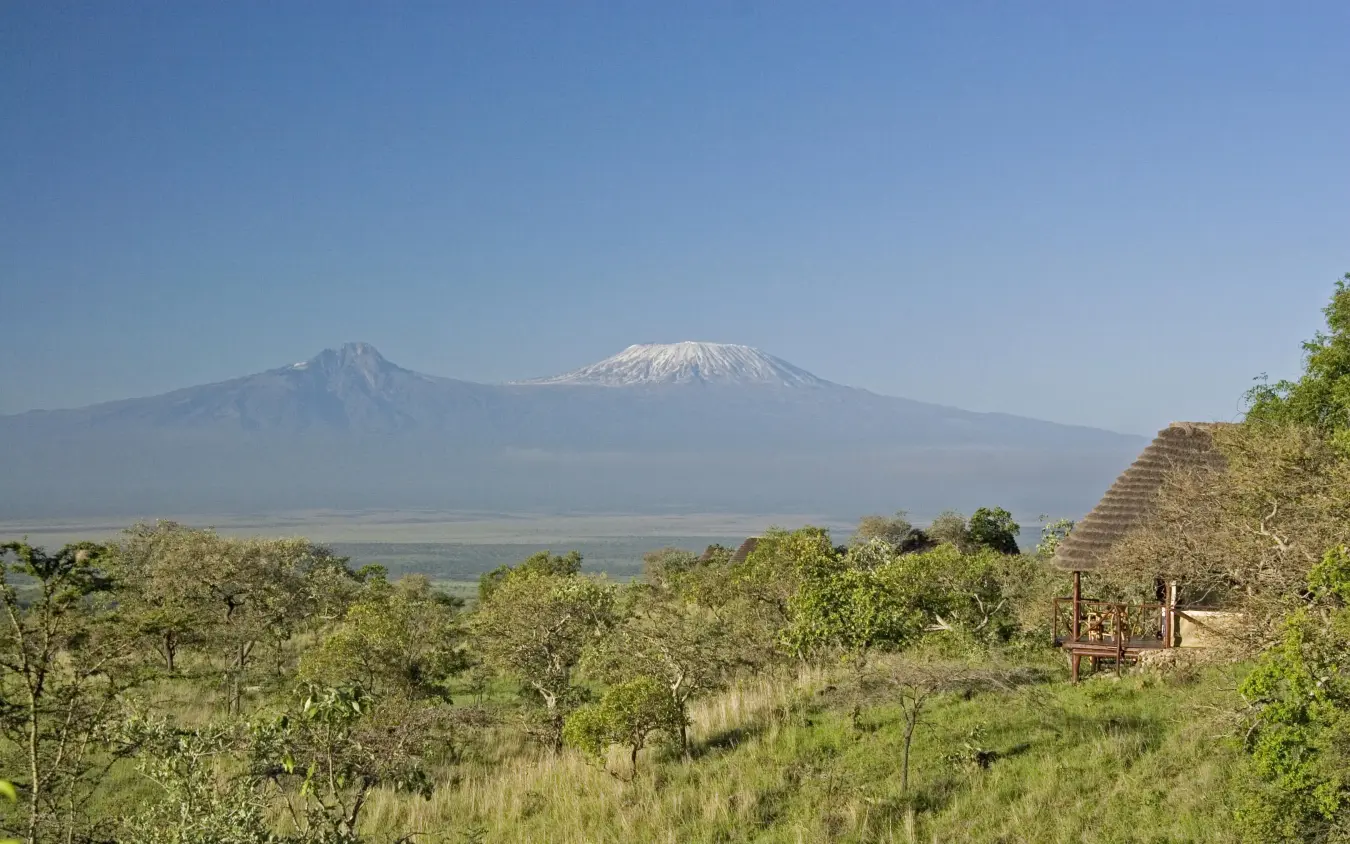
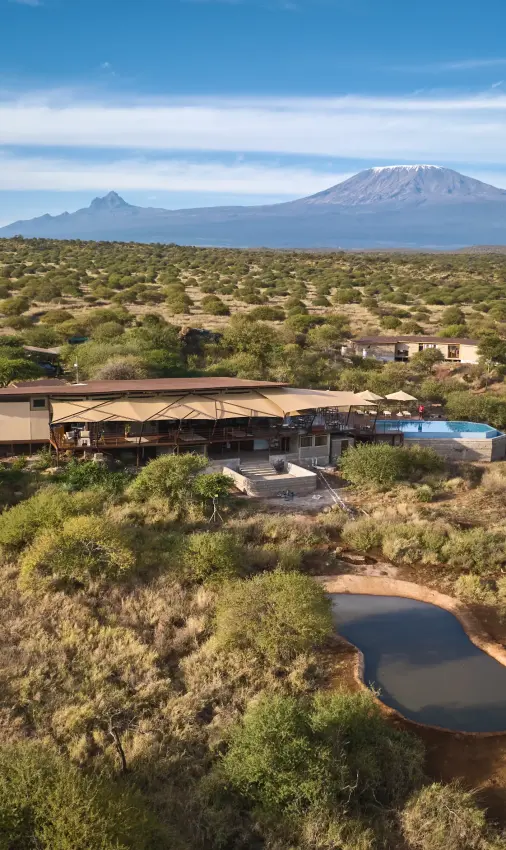
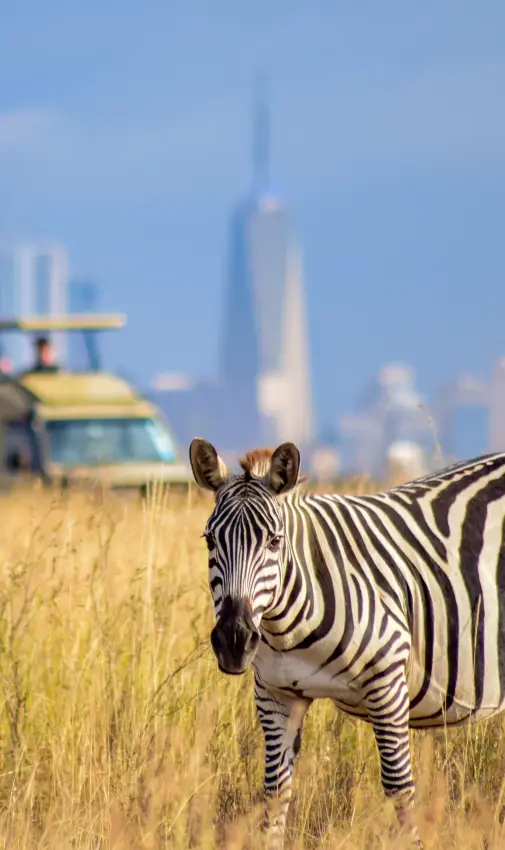
The savannah plains around the camp sit at roughly 920 metres, while the volcanic Chyulu Hills rise to some 2,100 metres into a misty montane cloud forest, the green hills Hemingway once wrote about. That gradient gathers acacia woodland, lava flows, river woodland and forest into a single day’s range, so a morning tracking on the plains can end with a hike into cool, dripping forest where giant forest hogs move through the trees and rare orchids grow in the damp.
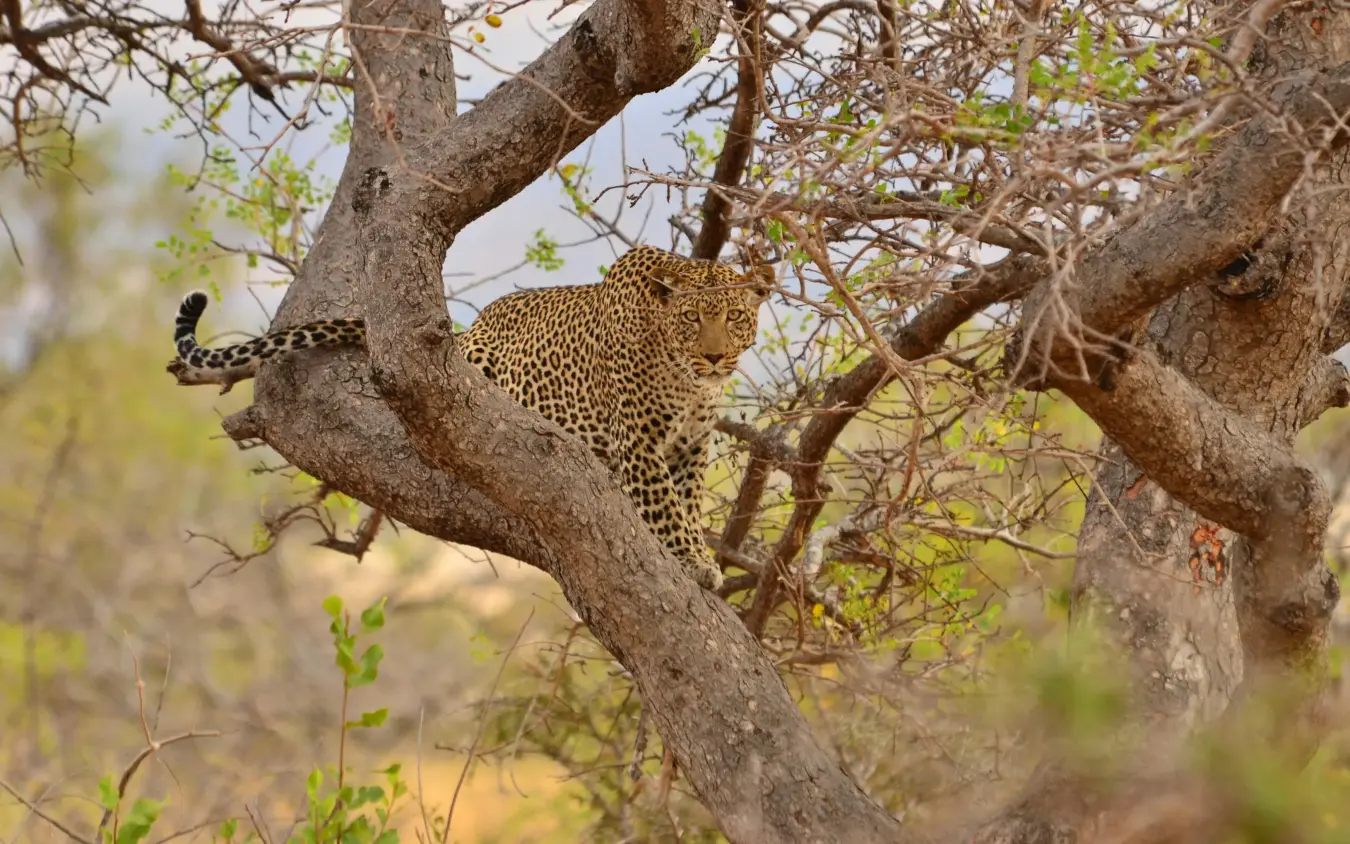
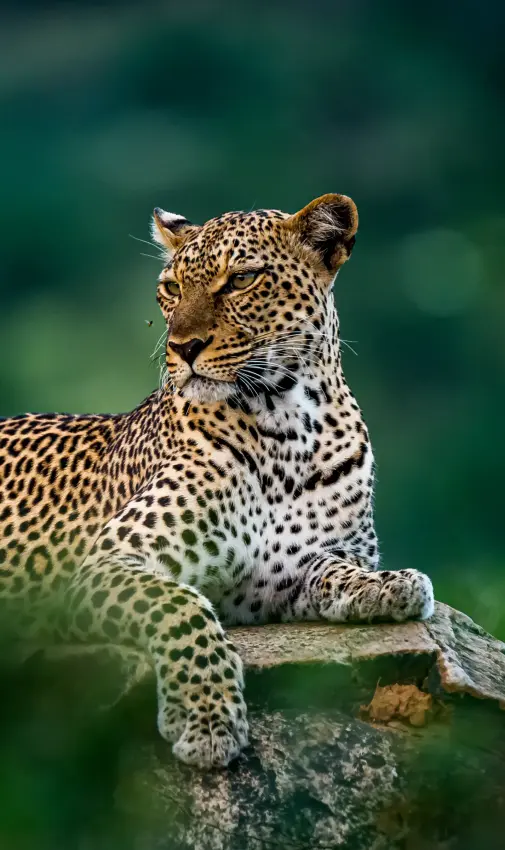
Beyond the waterhole’s regulars, the reserve holds cheetahs, spotted hyenas, servals, caracals and lesser kudu. Predator-protection work close to home has allowed lion and leopard numbers to recover steadily over the past two decades, a quiet reversal in a corner of Kenya where those cats might easily have been lost for good.
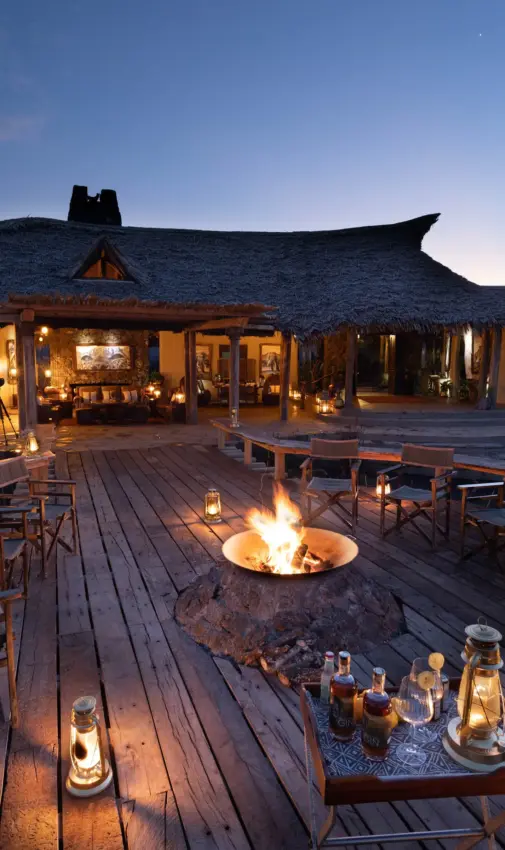
Evenings gather around a stone fire pit lit by candles and paraffin lamps
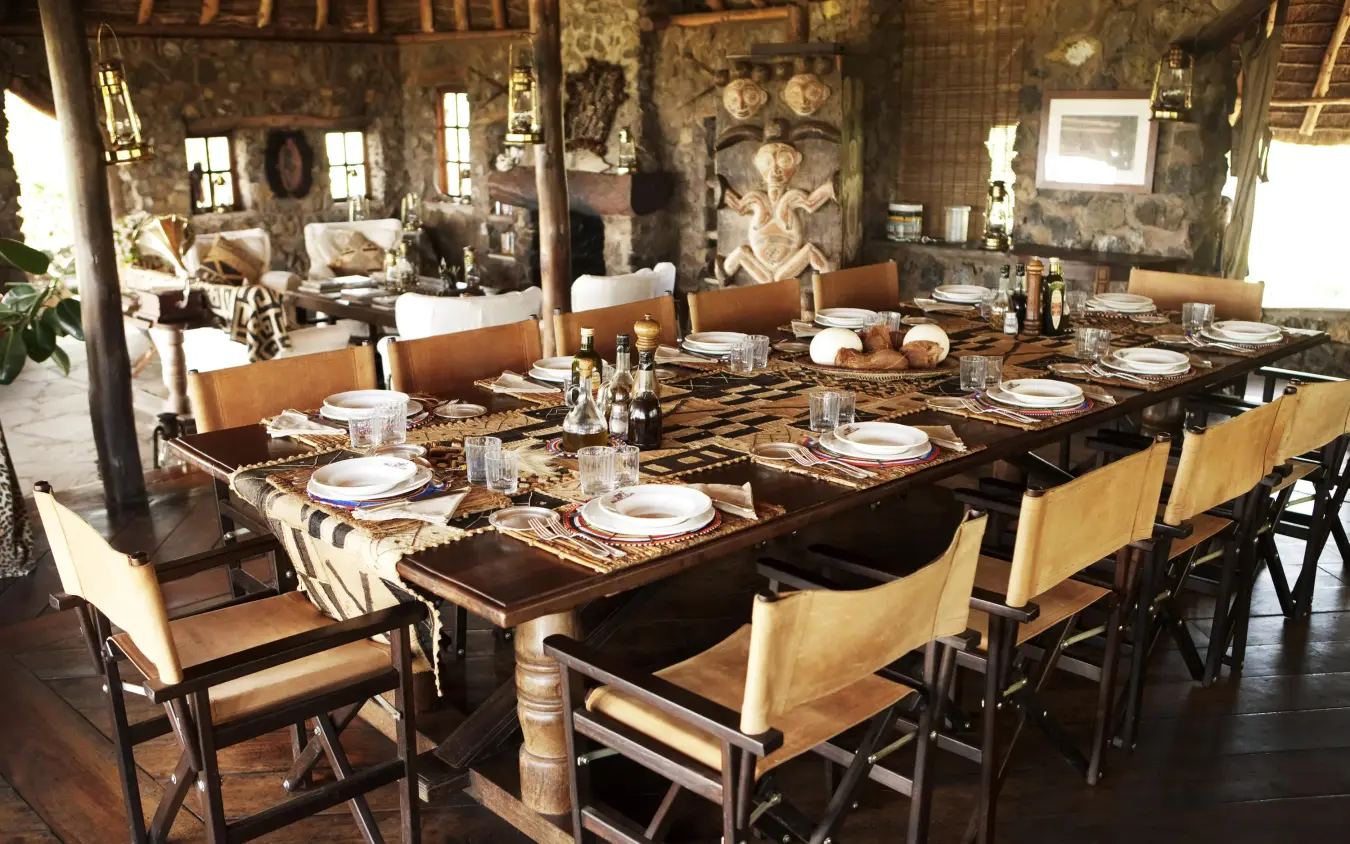
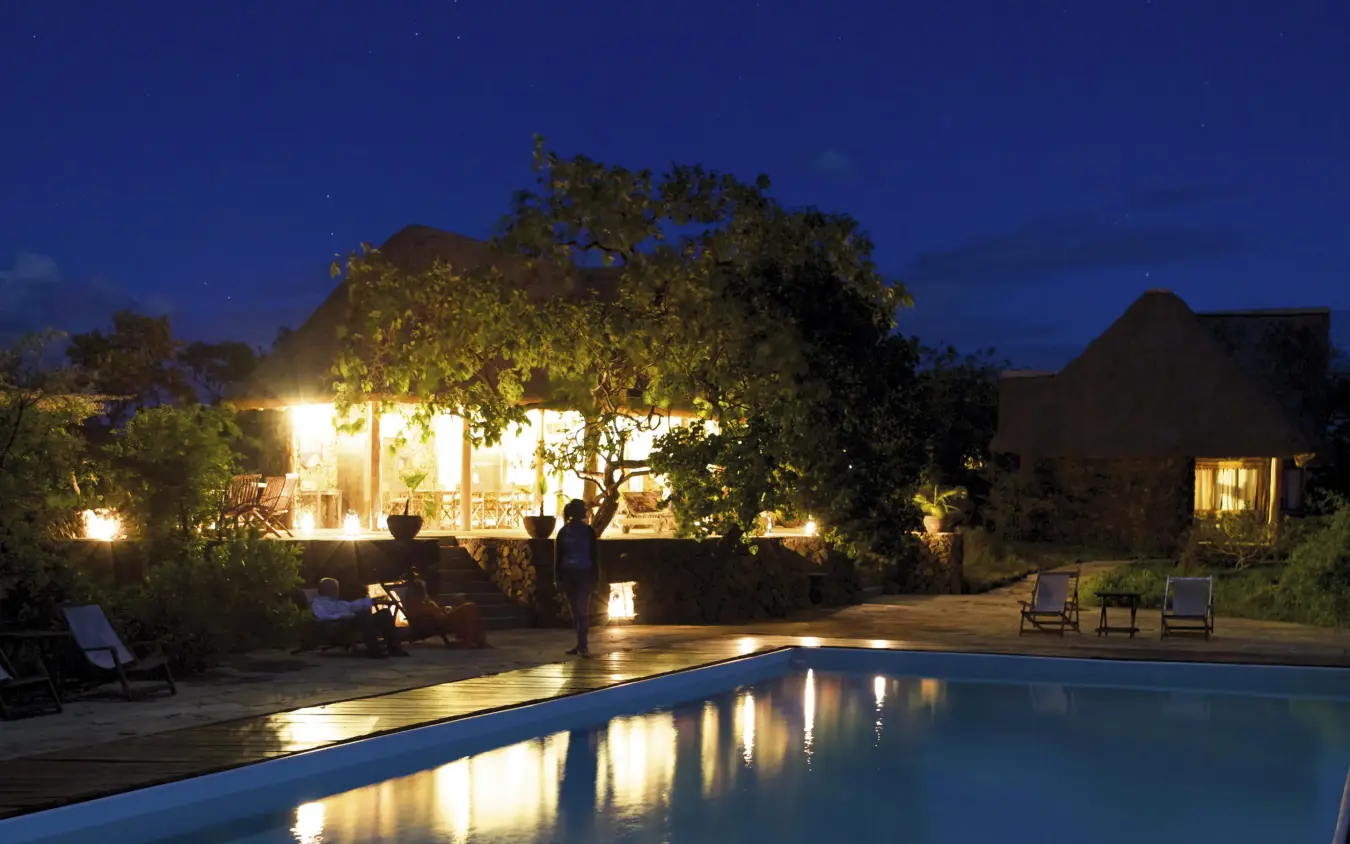
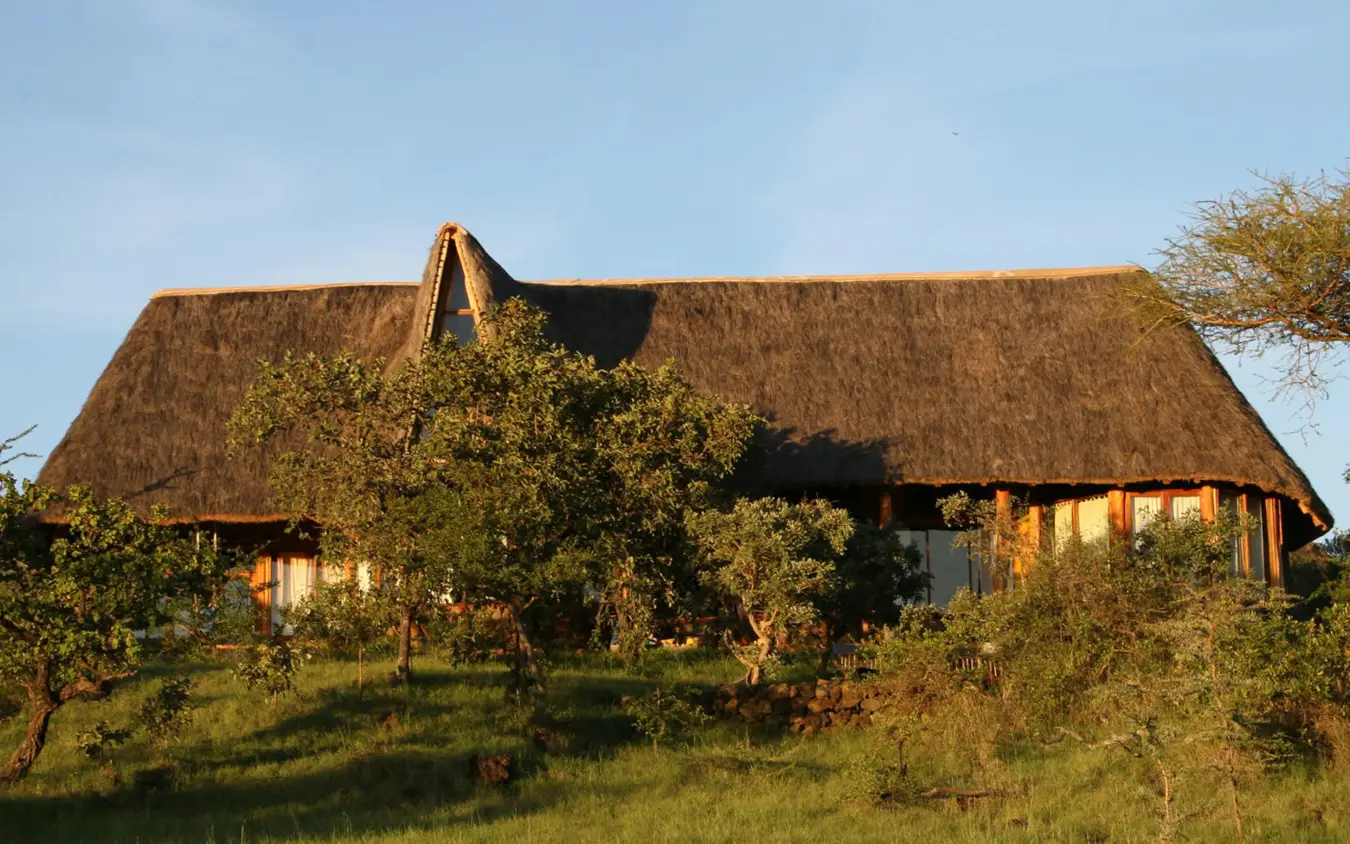
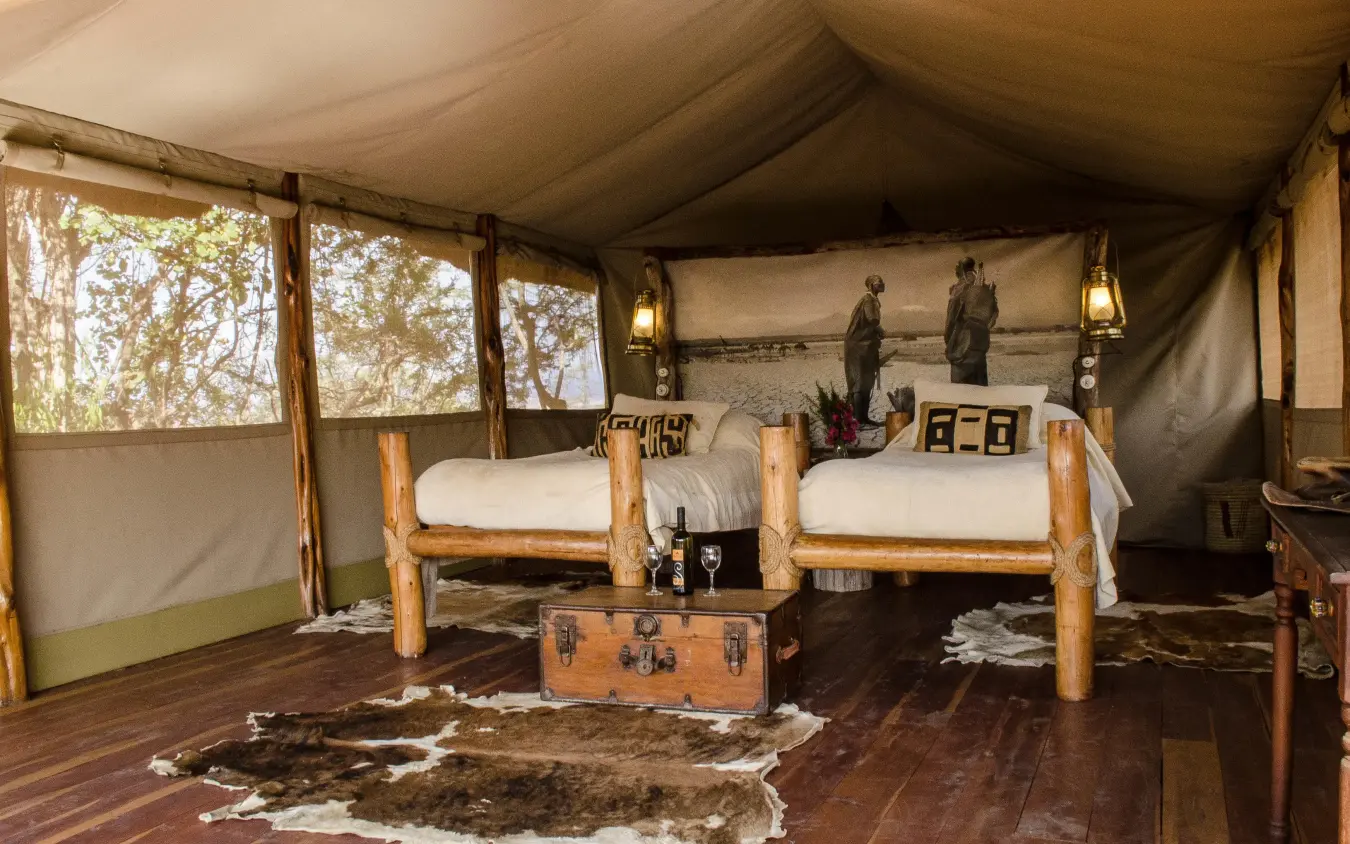
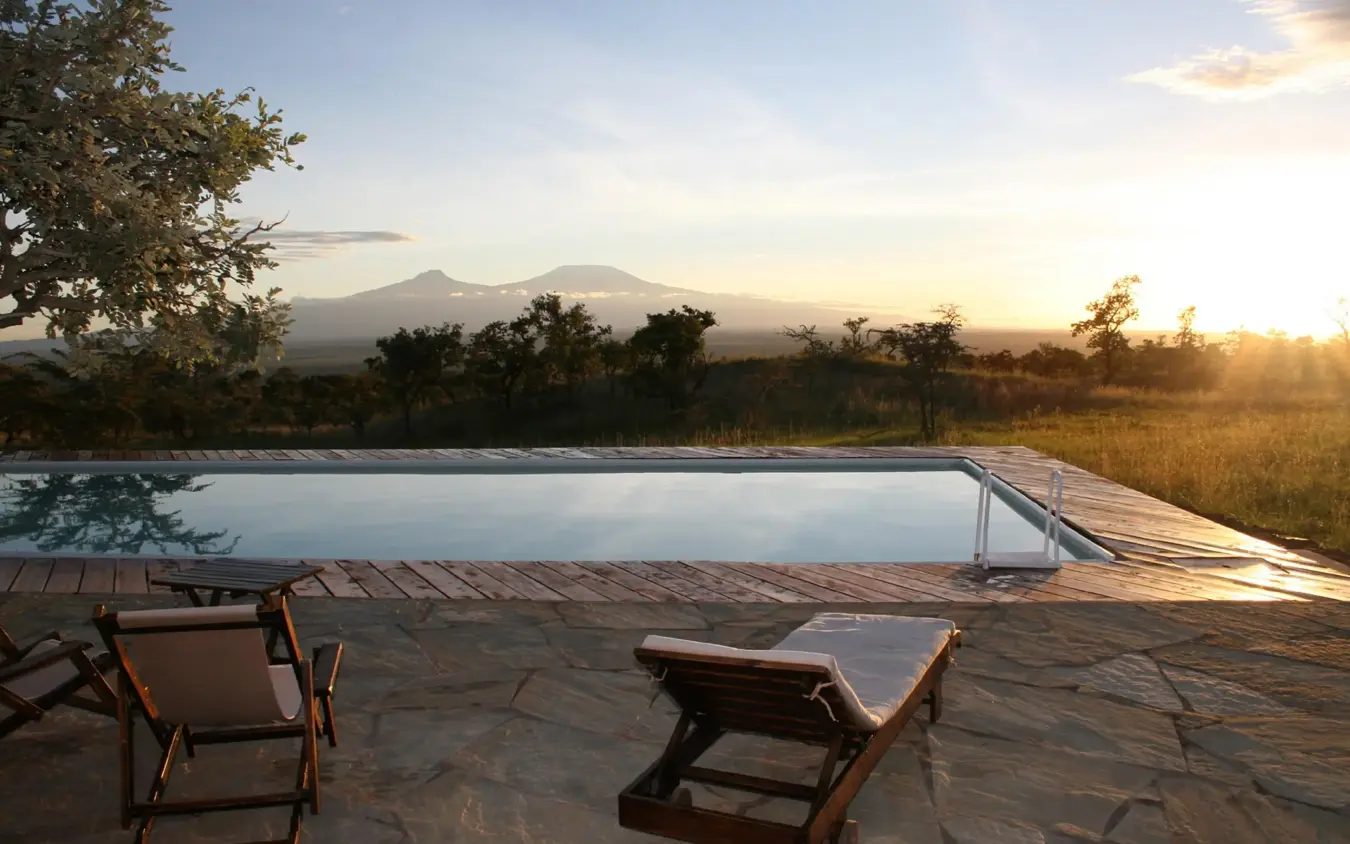
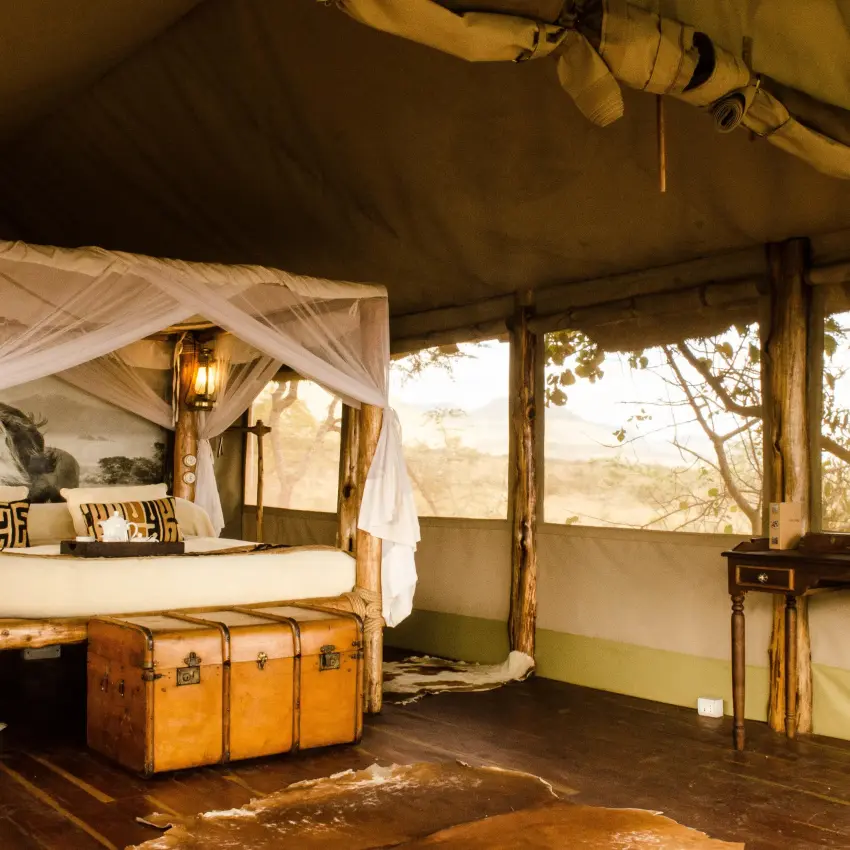
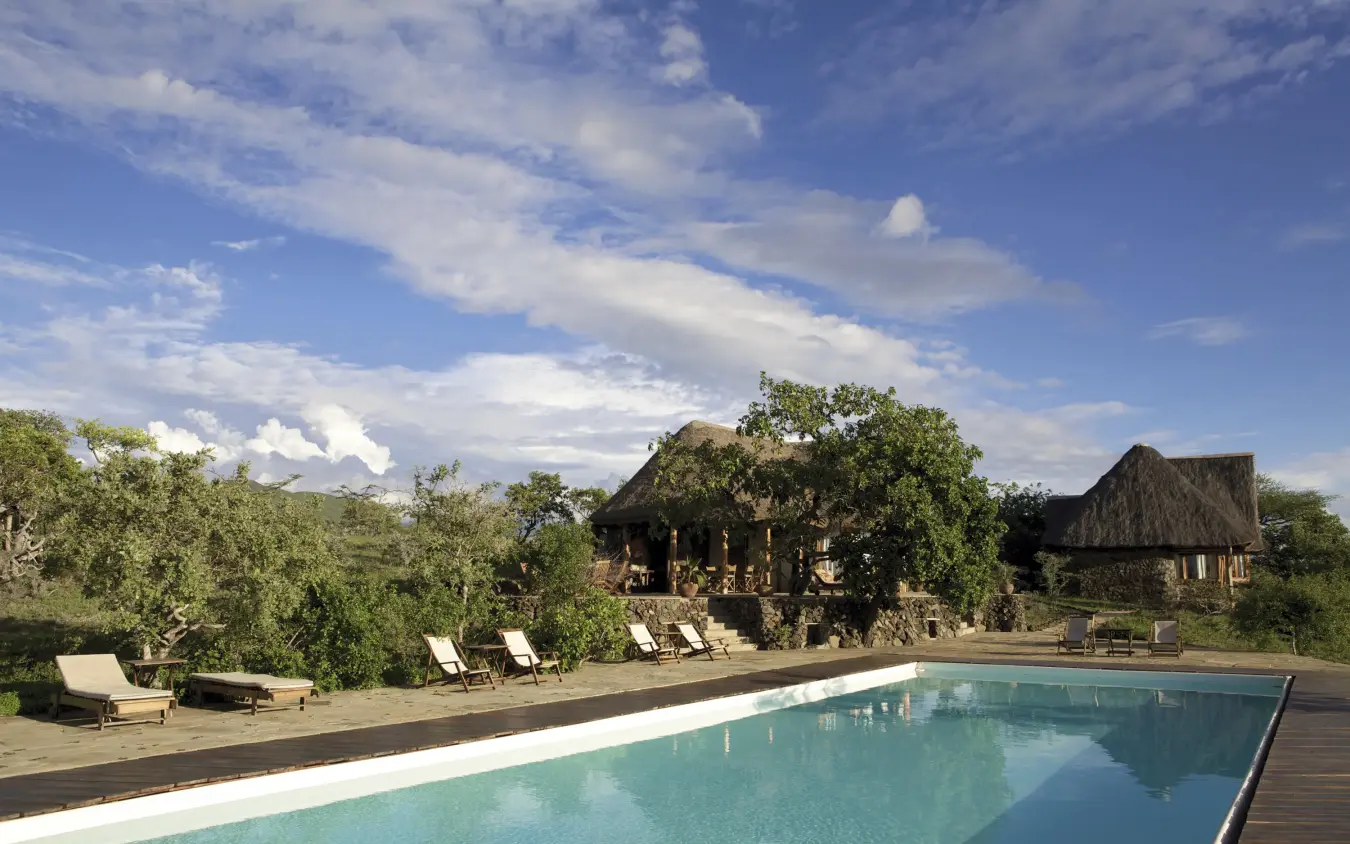
Tembo House, the open-sided main lodge, is built of dark volcanic lava rock under a thatched roof, shaped to draw the cool breeze off the hills. The guest tents stand on wooden platforms with hardwood floors, hand-carved beds and canvas roofs, dressed with fine linens, brass lamps and Maasai beadwork. Evenings gather around a stone fire pit lit by candles and paraffin lamps, beneath a sky undimmed by any other light.
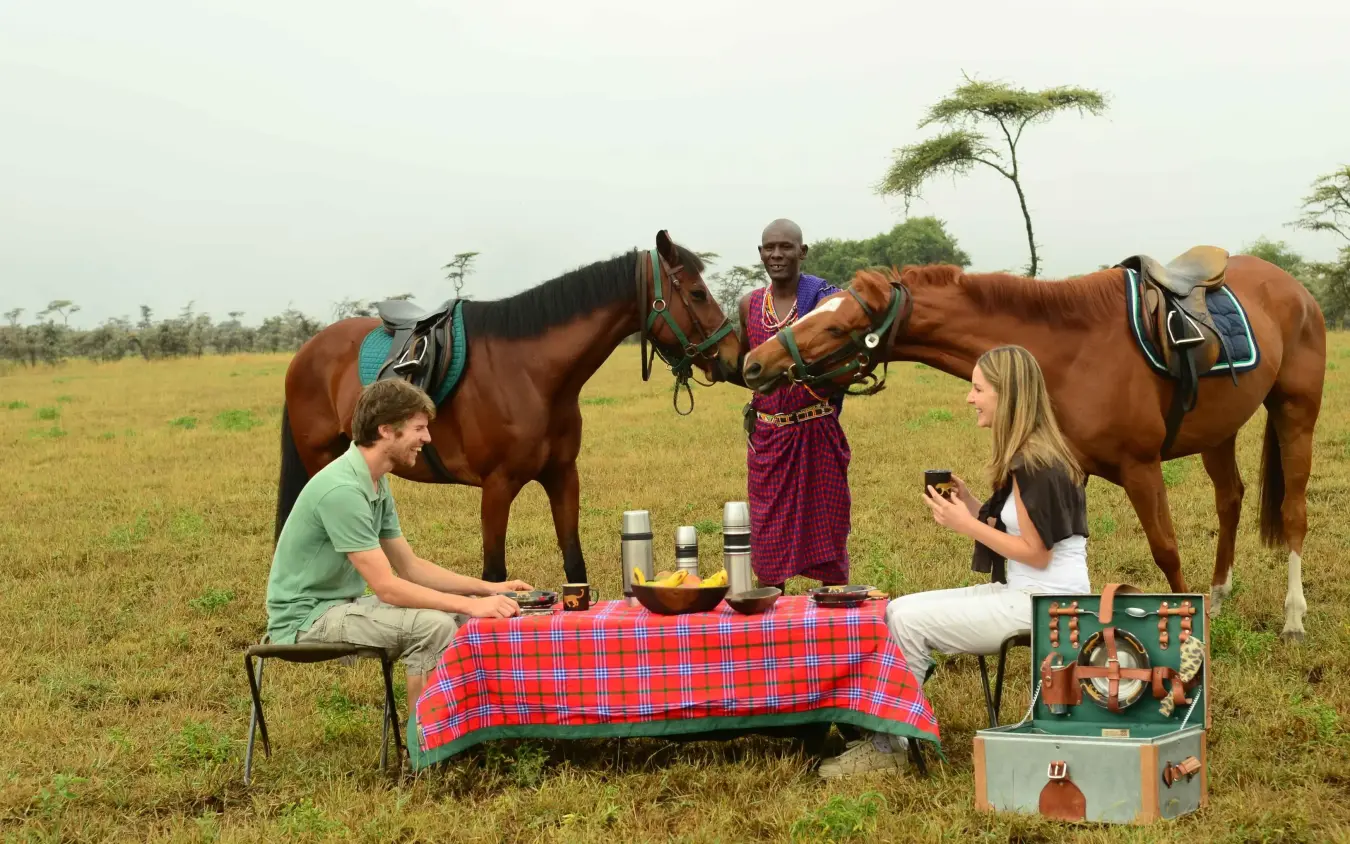
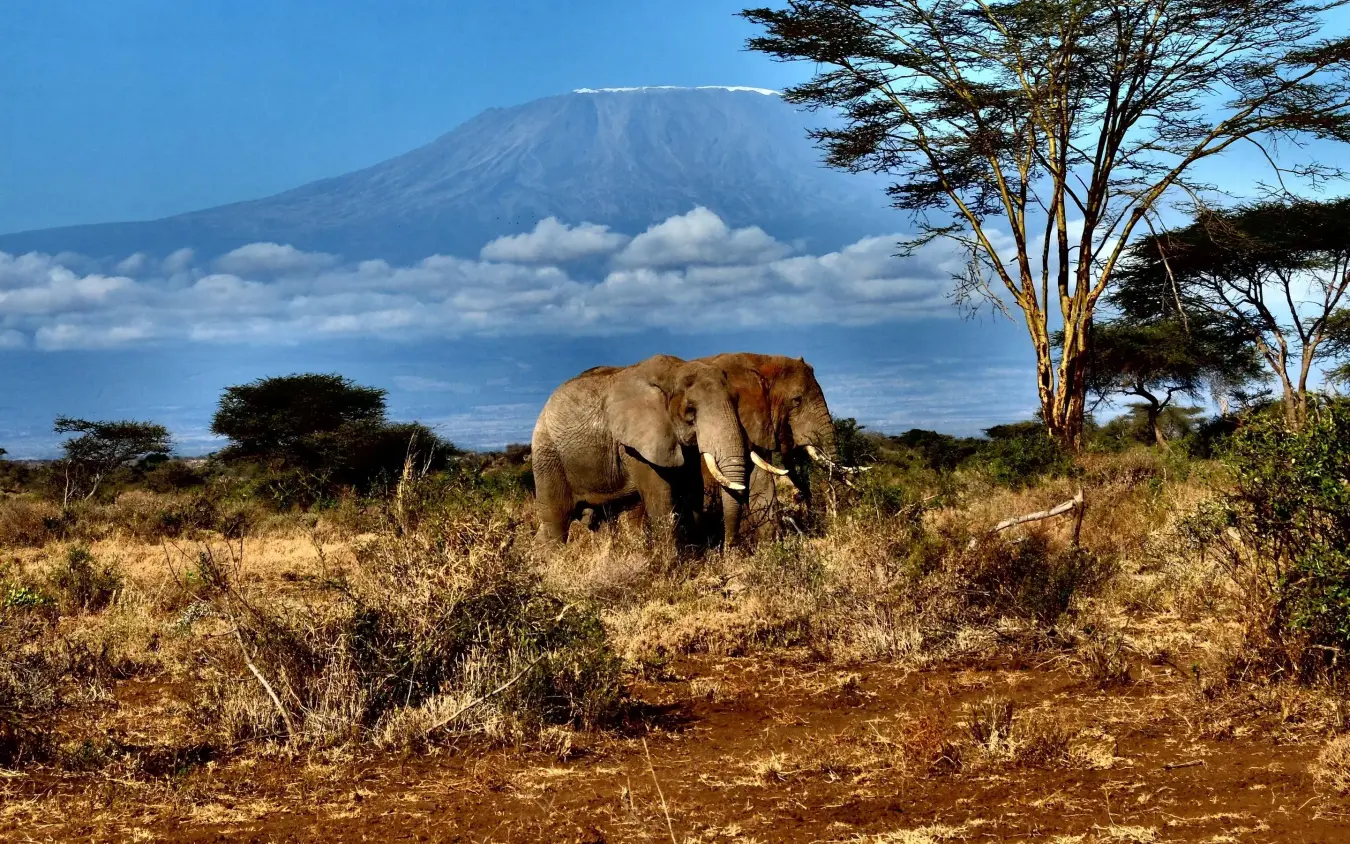
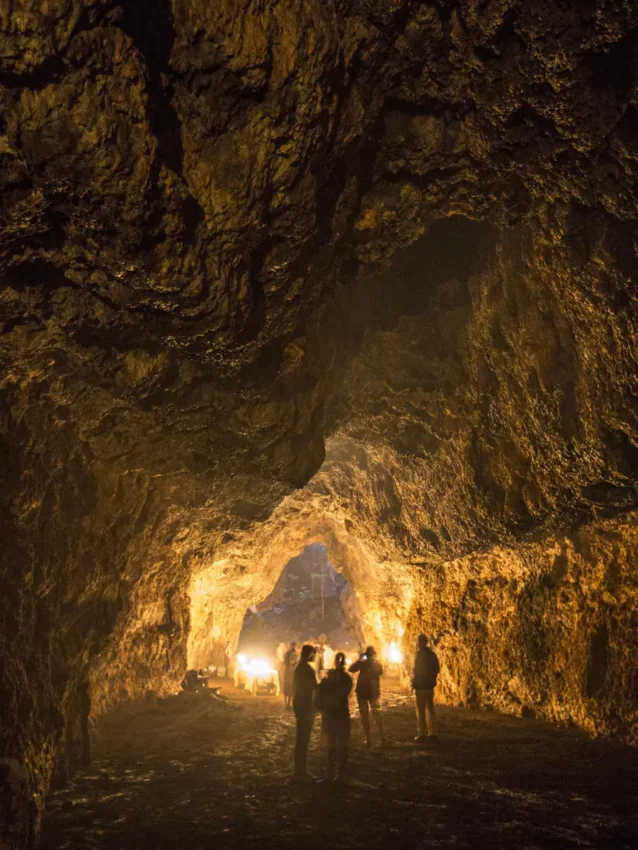
Horseback safaris cross the plains alongside giraffes and zebras, while scenic flights lift over the Chyulu Hills and Kilimanjaro in the camp’s Cessna. The lava tubes can be explored by day or laid for dinner by night. Visits to Maasai homesteads, beadwork sessions and the Trust’s field projects run alongside the guiding, and full-day excursions into Amboseli and Tsavo West are there for guests who want to see the great parks themselves.