

Elsa's country of doum-palm rivers
Rivers running off the Nyambeni range cut green corridors through Meru National Park, east of Mount Kenya. Doum palms crowd their banks. Between them spread 870 square kilometres of grassland and swamp, where the grass stands tall after rain and the plains turn drier toward the east. Few other vehicles share the tracks along these rivers, and the quiet is part of the pleasure.
Hippos keep to the Ura River while elephant herds work the swamps.
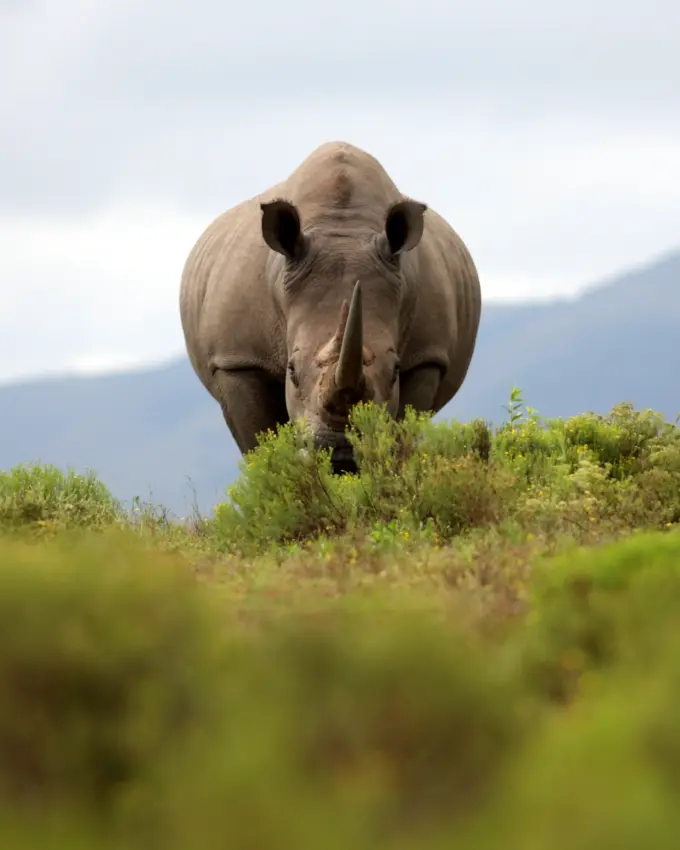
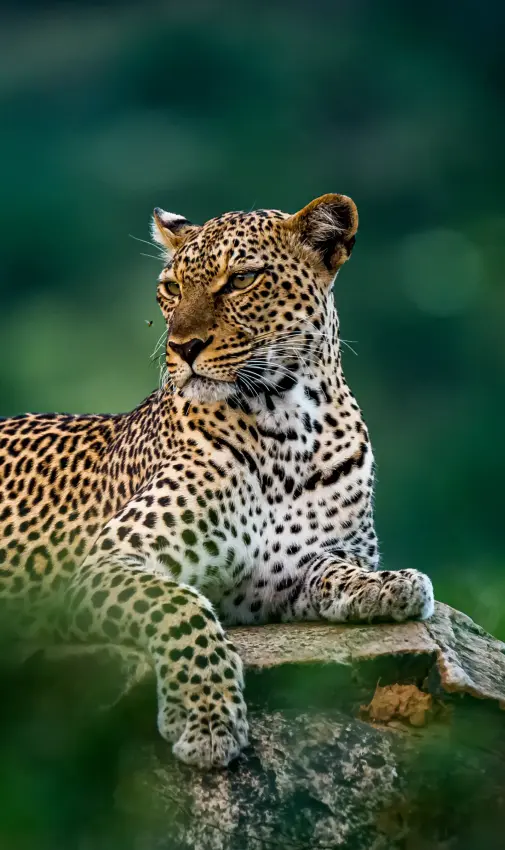
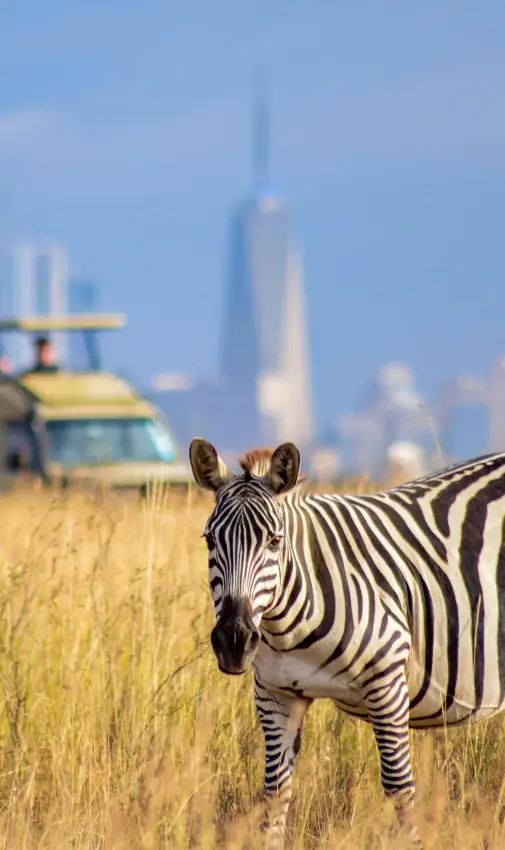
Animals of Kenya’s arid north feed here, a short drive from the wet country. Grevy’s zebra and reticulated giraffe browse the drier plains alongside beisa oryx and gerenuk. Hippos keep to the Ura River while elephant herds work the swamps. Lion, leopard and cheetah hunt the long grass, and black and white rhinos live under guard in a sanctuary of their own.
George and Joy Adamson raised Elsa the lioness from a cub. Here, among the doum palms, they let her go back to the wild. Joy told the story in Born Free, then in Living Free and Forever Free, and the books made Elsa famous before the 1966 film carried her further still. She is buried within the park, and her grave can still be visited today.
Here, among the doum palms, they let her go back to the wild.
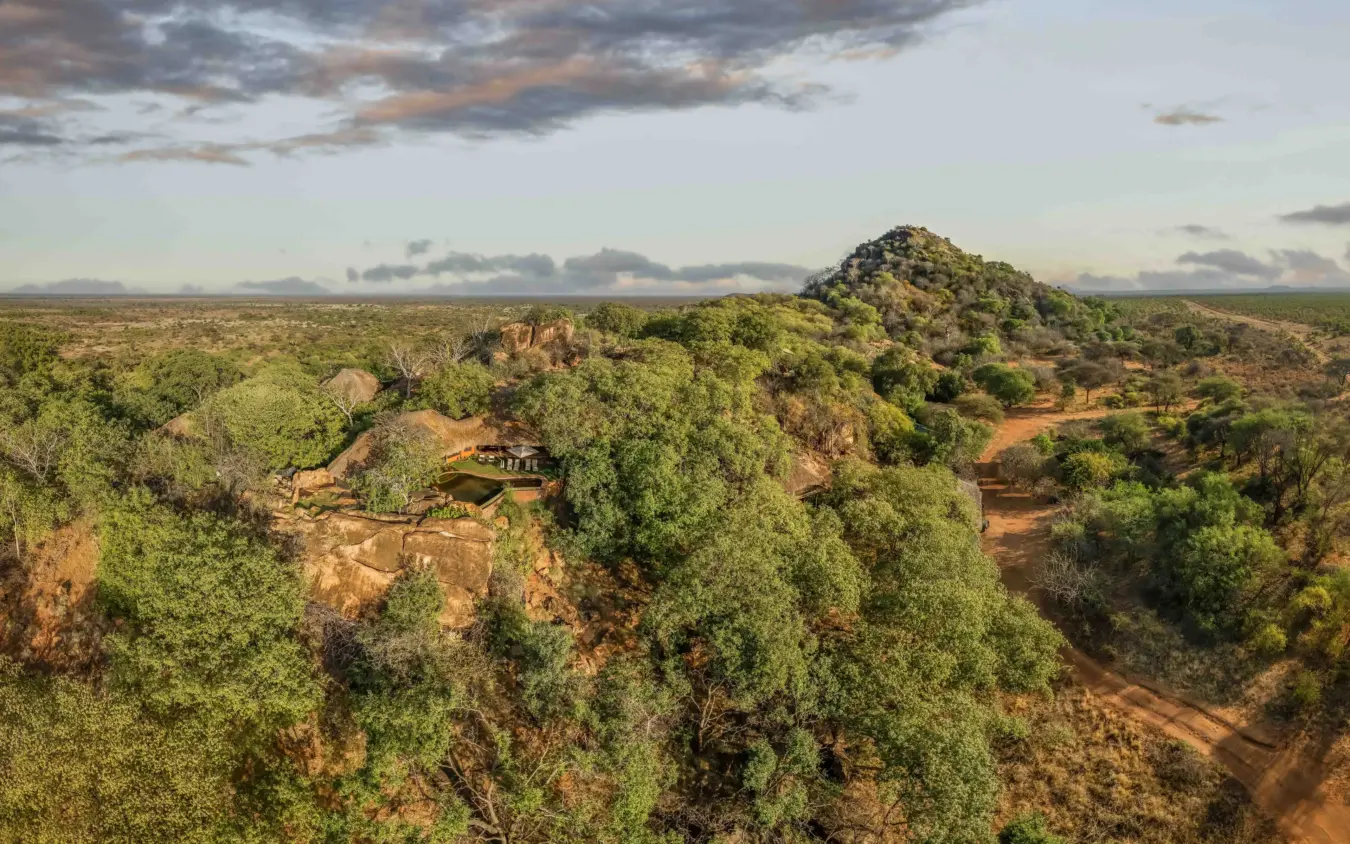
Joy’s camp stood near Mughwango Hill, a granite kopje, and today Elsa’s Kopje lodge is built into its boulders. George’s story ran on across the Tana River in Kora National Park, where he kept working with lions until poachers killed him in 1989. He is buried there beside his brother Terence, across the water from the lioness who started it all.
The west of the park catches more rain, and there the grass grows tall around seasonal swamps. Eastward the country turns semi-arid, opening toward the foot of the Nyambeni Mountains, and that drier ground suits oryx and gerenuk, and the Somali ostrich too. Thirteen perennial rivers run through it all, and when a severe drought came, they meant the wildlife stayed. Buffalo and zebra gather in large herds around the swamps, with impala close by. In the long grass, cheetah stay hidden for much of the year, though sightings come more easily once it thins in the dry months.
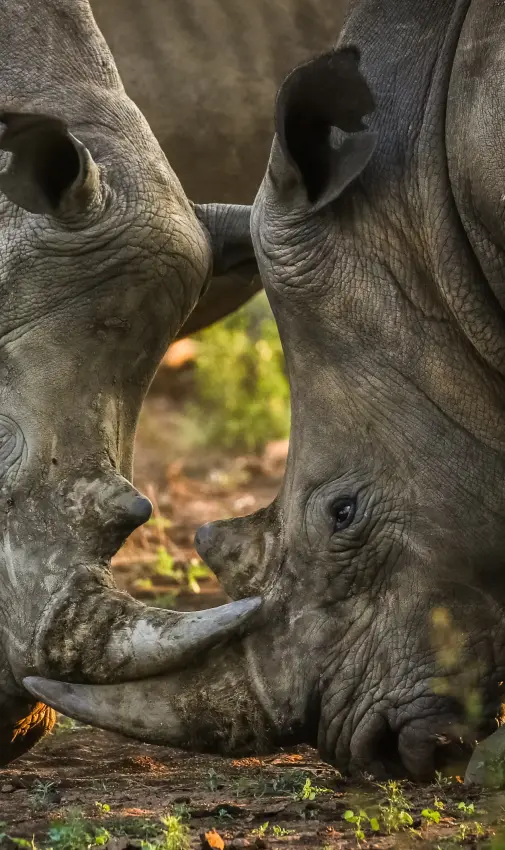
The rivers could not protect the park in the 1980s. Armed poaching, linked to instability across the Somali border, stripped Meru of nearly all its rhinos and most of its elephants. Recovery began in the early 2000s under the Kenya Wildlife Service, working with the International Fund for Animal Welfare and the French Development Agency. Roads were rebuilt and rangers posted, and animals were translocated back. In 2002 a sanctuary was established for rhinos, and today it holds both black and white. Elephant numbers have recovered substantially.
Pel’s fishing owl haunts the riverine forest, and African finfoot work the shaded water.
More than 400 bird species have been recorded across the park. Pel’s fishing owl haunts the riverine forest, and African finfoot work the shaded water. Toward the east, dry-country birds turn up too, Somali bee-eater and golden palm weaver among them. On the ground, the rules are those of a national park: game drives run by day on designated tracks, and walks go out with an armed ranger. Rhinos in the sanctuary take patience to find, but with so few other vehicles about, a guide can wait at a sighting for as long as it holds.
Meru town lies on the lower slopes of Mount Kenya. It is the county centre, and the park takes its name from it. Between the two, the farms of the Meru and Tharaka peoples climb toward the park’s edge. Across the Tana lies Kora National Park, where George Adamson carried on his work with lions. Together with Meru, Bisanadi and Mwingi National Reserves it forms the wider Meru Conservation Area, and elephants and lions range well beyond the park itself. On clear mornings, Mount Kenya fills the western horizon.
The best time to visit Meru National Park
Jan
Feb
Mar
Apr
May
Jun
Jul
Aug
Sep
Oct
Nov
Dec
Recommended
Transitional
Challenging conditions
Come July to October or January to February for the most reliable game, when the grass thins and animals gather along the permanent rivers and swamps. June opens the long dry spell. The long rains of March to May push the grass high, soften the tracks and close some camps, while November and December turn the park green and quiet for birding.
accommodation in meru national park
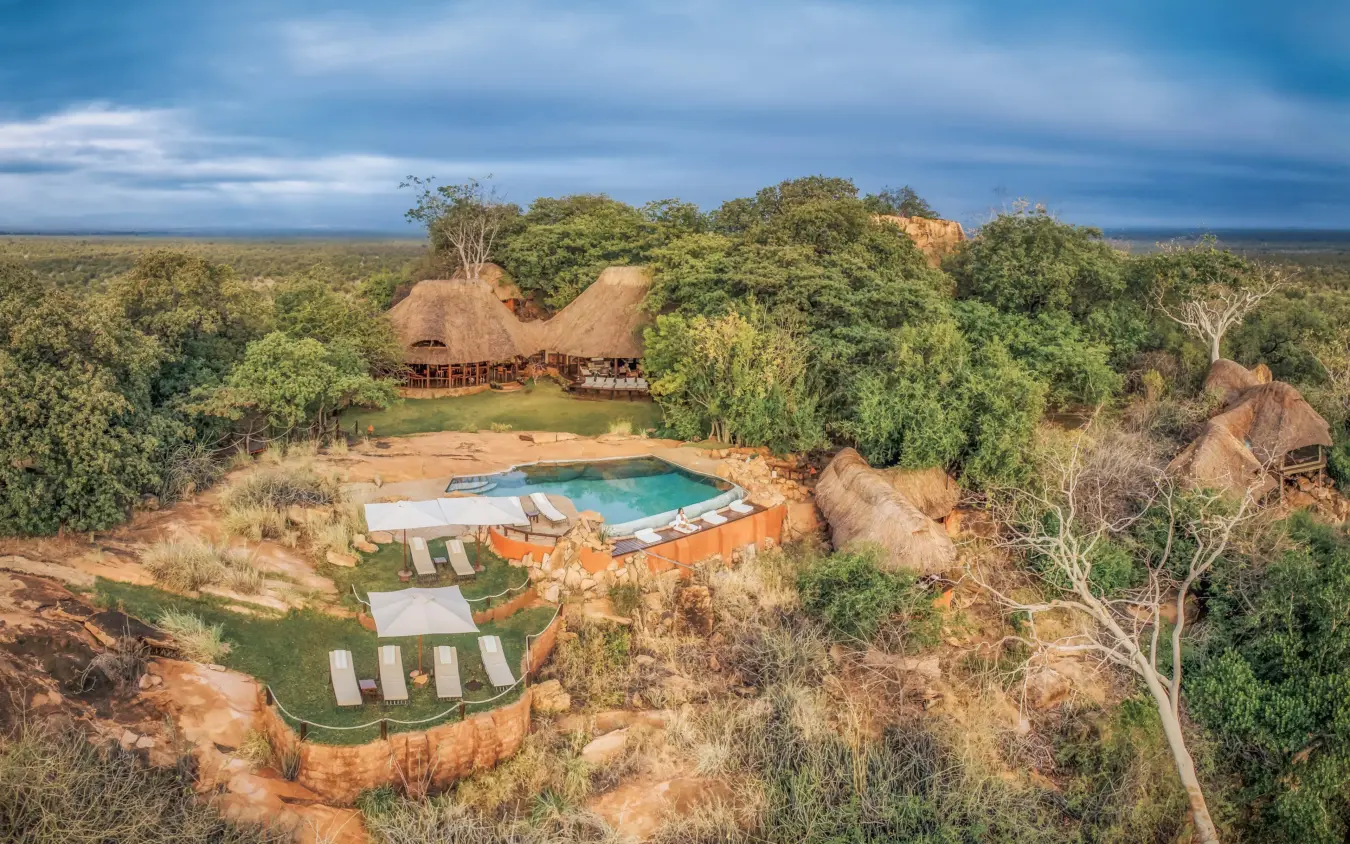
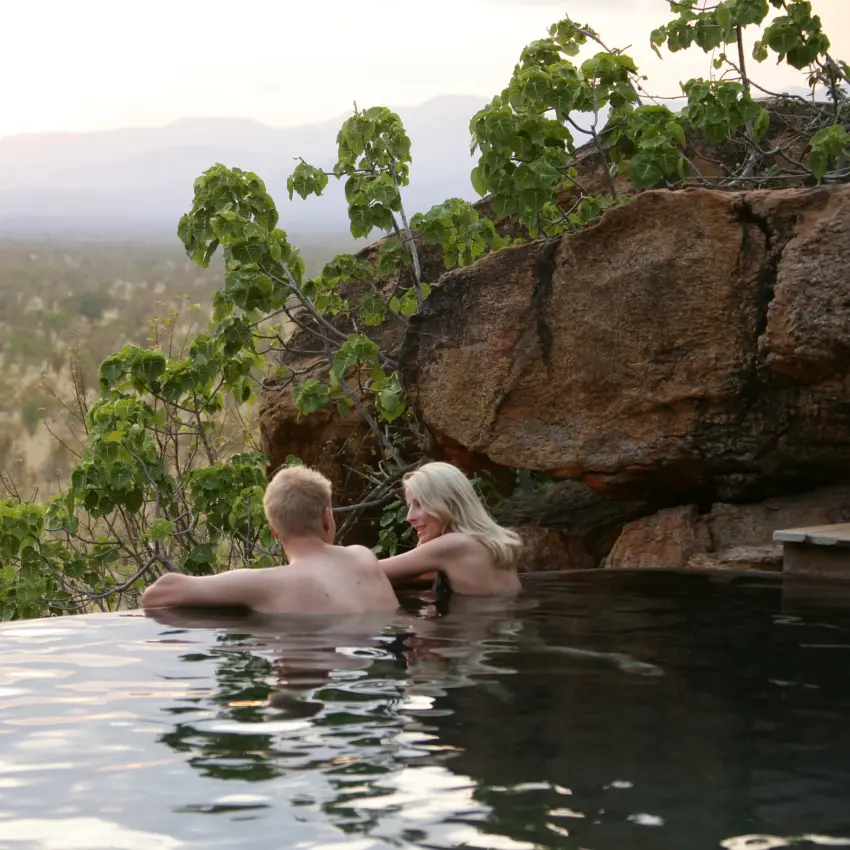
Meru National Park has a handful of small lodges and tented camps. One is a stone-and-canvas lodge built into the granite of a kopje, with a pool above the treeline and a dining terrace looking out over the plains. The others are small tented camps on forested riverbanks just outside the boundary, with open-sided lounges and pools. Guides and vehicles come with the camps, so each stay is guided from the airstrip onward.


activities
Activities
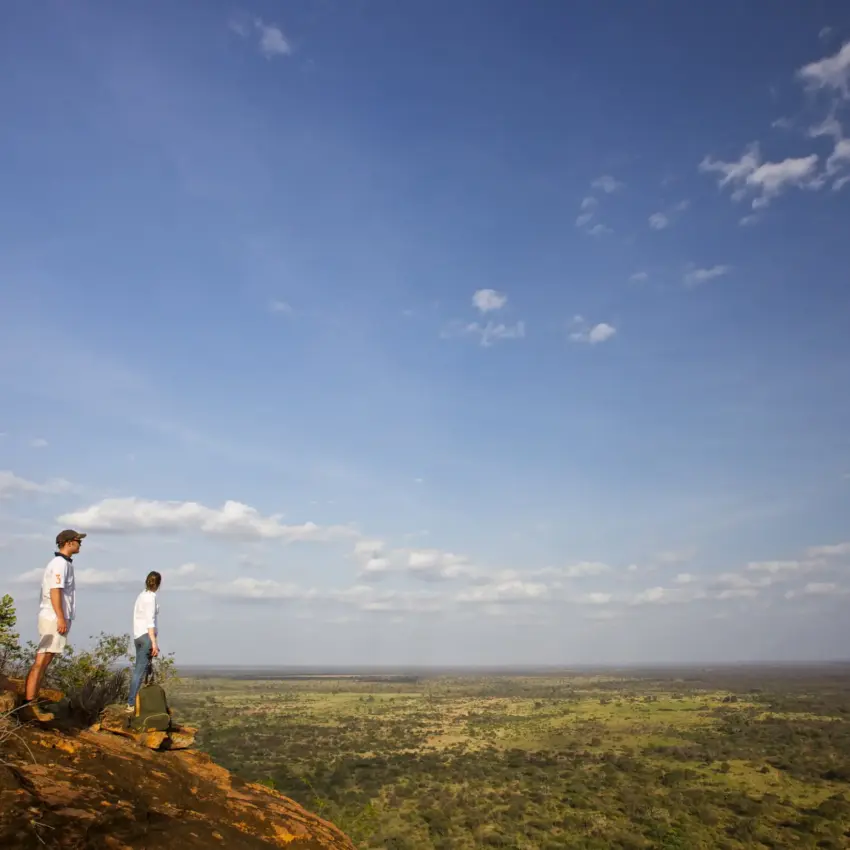
Daytime game drives follow designated tracks along the rivers and swamps, and dedicated drives search the rhino sanctuary for black and white rhinos. Guided walks run with an armed ranger. Birdwatching and sport fishing are also available, along with visits to Elsa's grave and the Adamsons' old campsite.

conservation
Conservation Projects
The Kenya Wildlife Service manages the park and its rhino sanctuary, rebuilt from the early 2000s with support from IFAW and the French Development Agency. The IUCN has designated a Lion Conservation Unit in the region. Rangers also work with neighbouring communities, teaching the value of conservation and encouraging young people toward guiding and curio trades.

getting around
Connectivity and Logistics
Light aircraft fly from Nairobi's Wilson Airport to Meru in about an hour, the most practical way in. Charter flights are the usual way to link with Samburu and the Laikipia Plateau. Guests are met at the airstrip by their guide and vehicle. Nairobi and Meru town can also be reached by road.
other areas in kenya
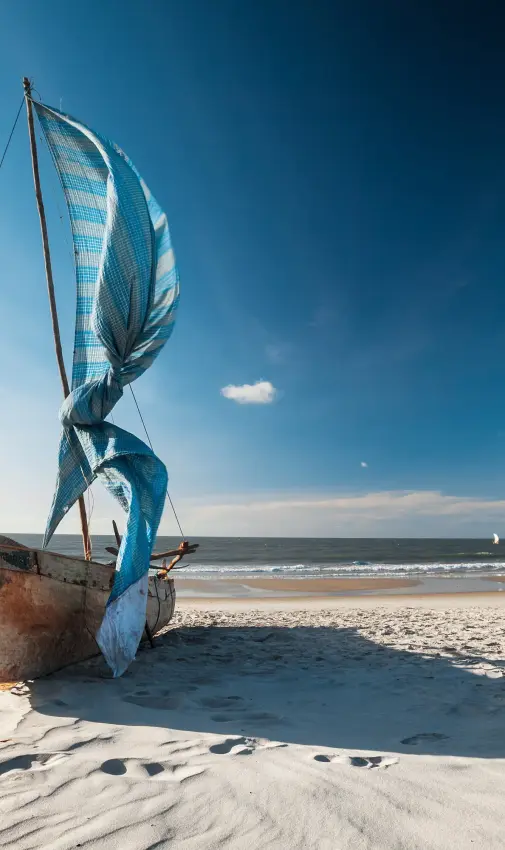
Samburu, a short flight north-west, shares Meru's northern species. The Laikipia Plateau adds private conservancies where night drives, guided walking and horseback riding are permitted. The Maasai Mara brings open savannah and dense predator populations. Amboseli frames its elephants against Kilimanjaro. Lamu, on the Kenyan coast, closes a trip at an entirely different pace.
 01
 02
 03
 04
 05
 06
 07
 08
 09
 10
 11
rated five stars by our clients


our approach
remote, exclusive
& personal
Every journey starts with a conversation. We take the time to understand your vision before we start planning.
Whether by phone or in person, we work with you directly to shape something that is considered, personal, and expertly delivered.
Every journey starts with a conversation. We favour a direct, personal approach: understanding your vision before anything else.
Whether by phone or in person, we work with you directly to shape a journey that is both thoughtfully considered and expertly delivered.
Get in touch to start planning yours.