
 01
01
A car-free corner of the Swahili coast
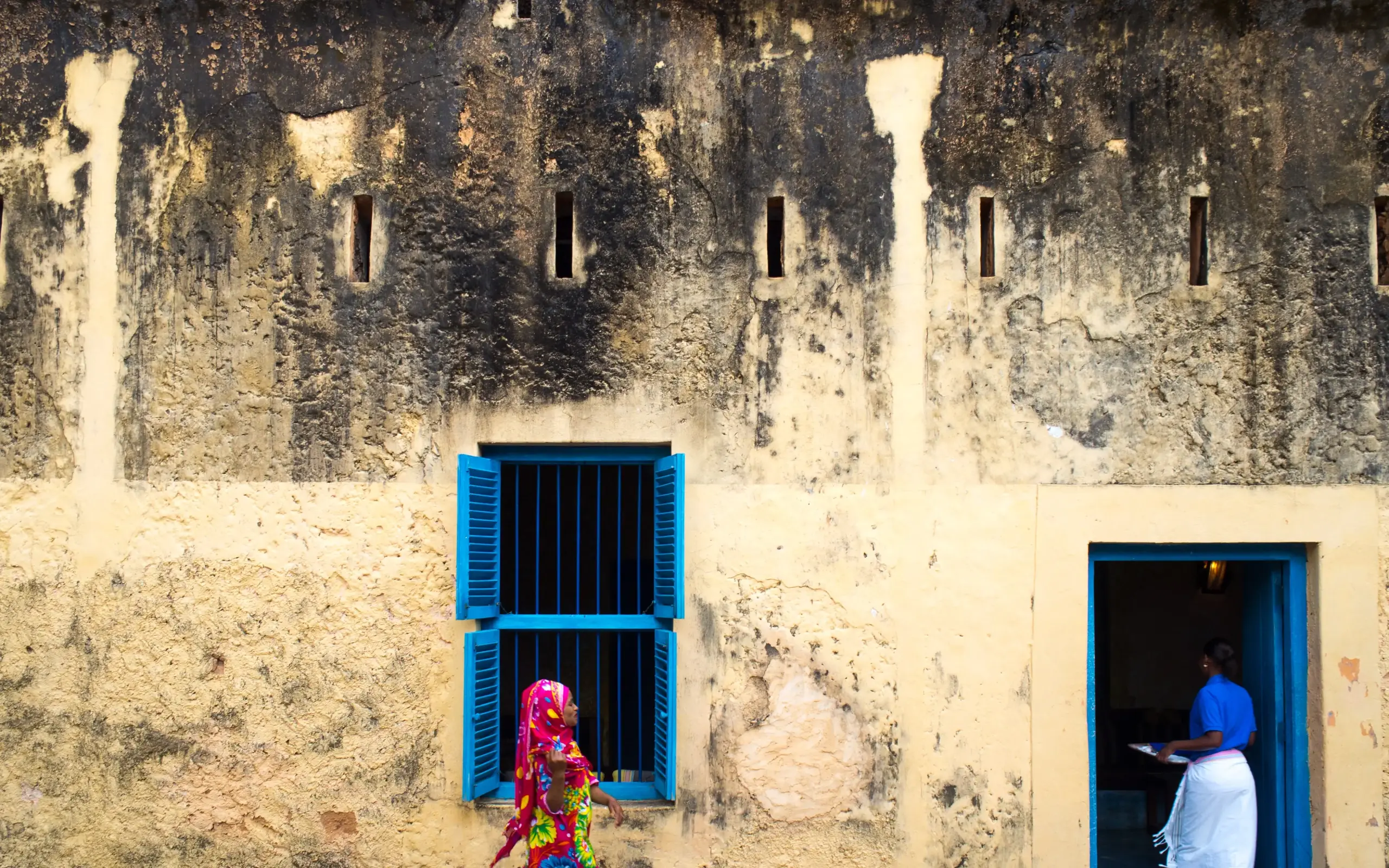
Lamu, Manda, Pate and Kiwayu form a string of islands off Kenya’s far north coast, a quieter alternative to the busy central and southern shore. Lamu Old Town, inscribed as a UNESCO World Heritage Site in 2001, is the oldest and best-preserved Swahili settlement in East Africa, continuously inhabited for more than 700 years.
No cars, no roads: only donkeys, dhows and feet.
Built in coral stone and mangrove timber, the town is a maze of narrow streets, inner courtyards and elaborately carved wooden doors. No roads connect Lamu to the mainland and no cars run on the island; people and goods move by foot, by donkey and by dhow.
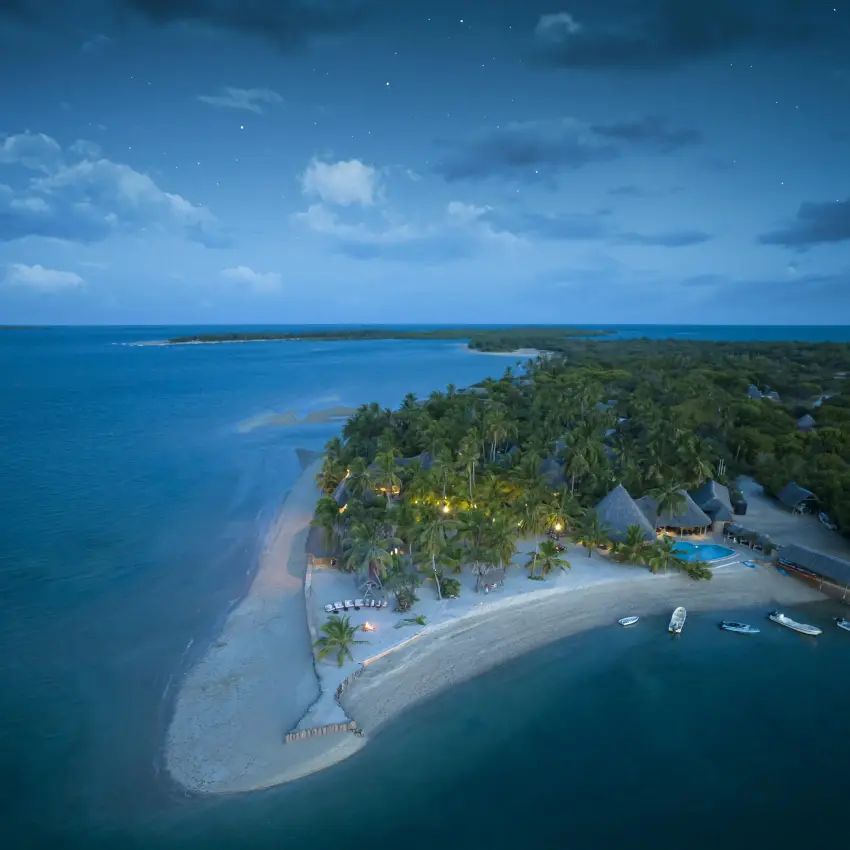
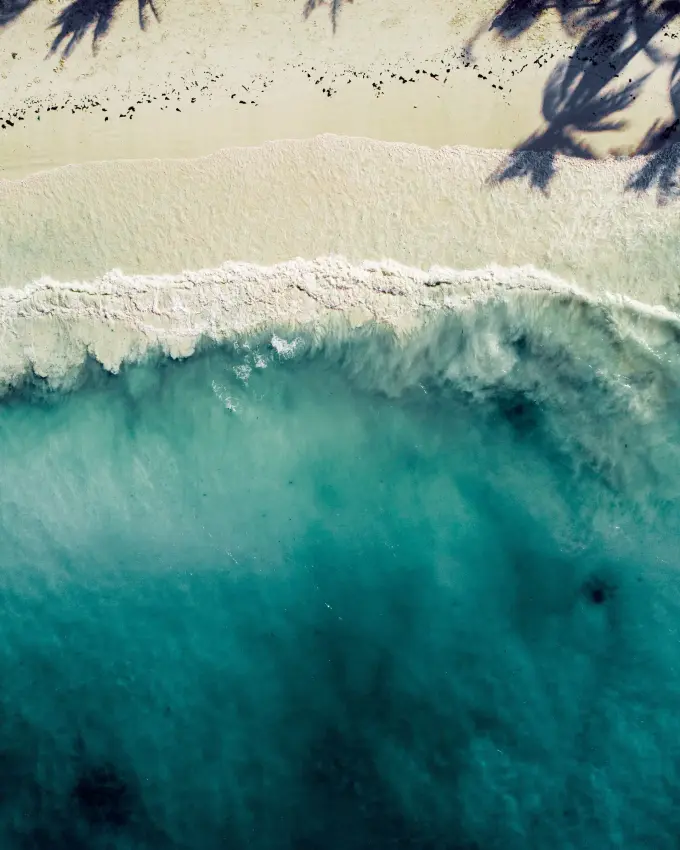
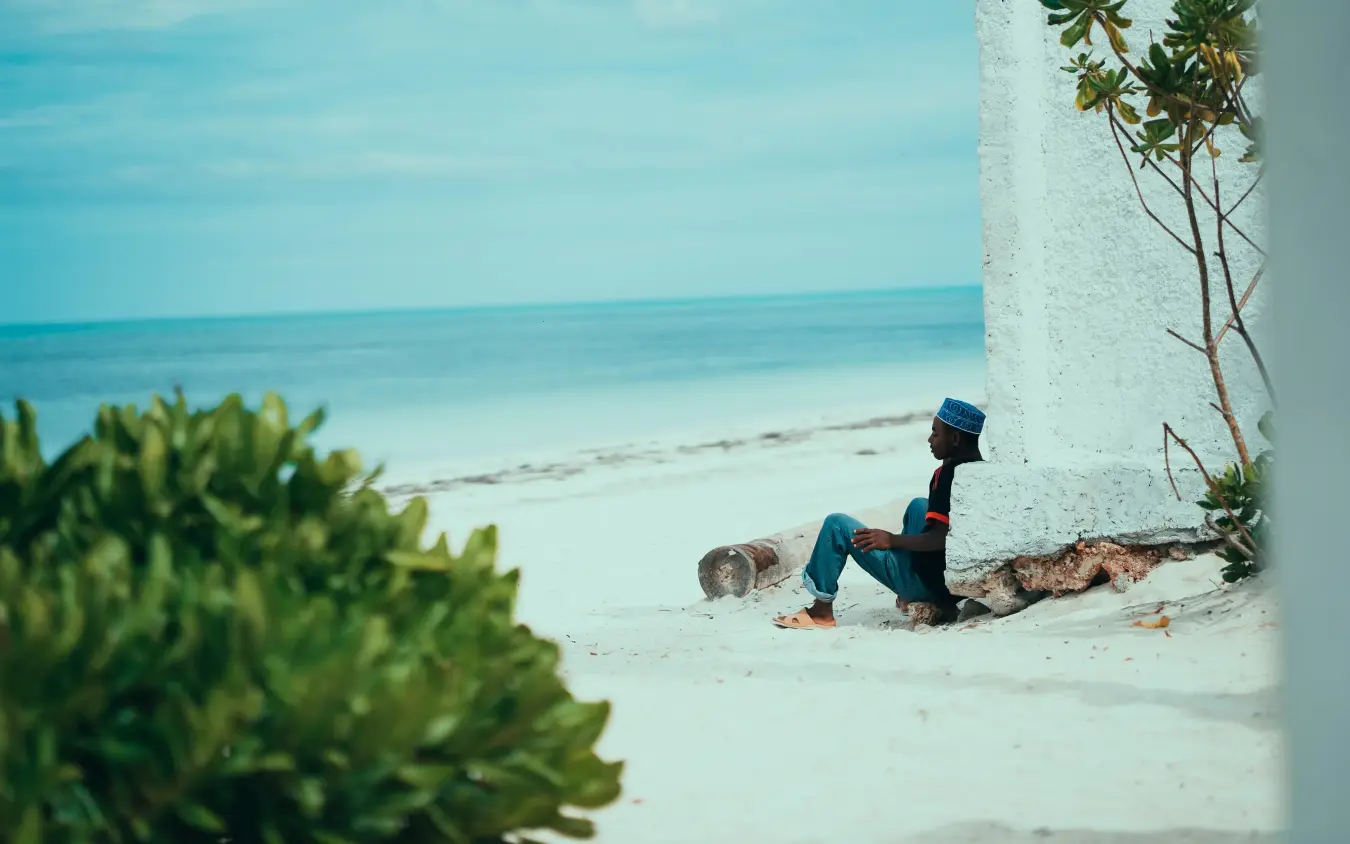
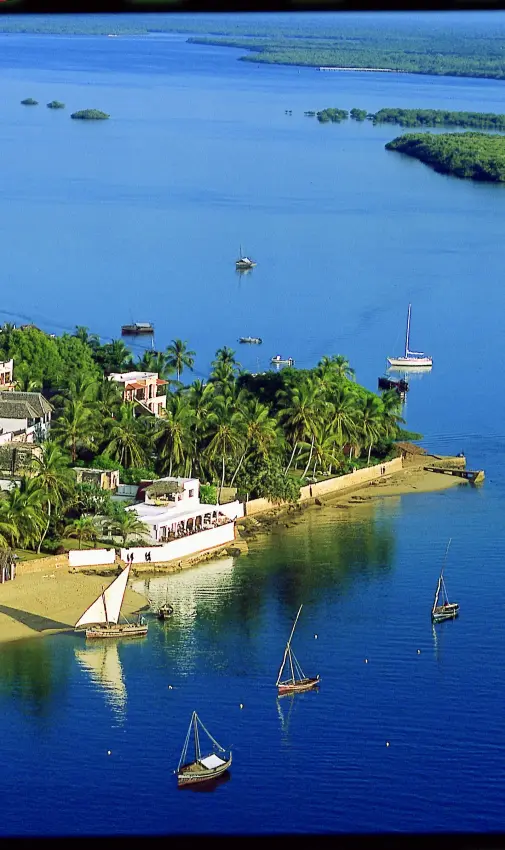
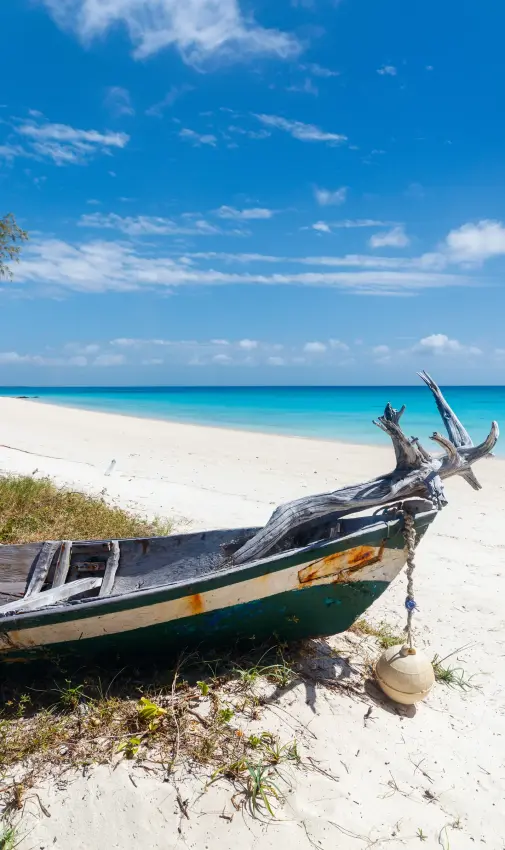
Days here run to the rhythm of the tide and the wind. From Shela village, twelve kilometres of white-sand beach stretch away from the family-run institutions and Swahili villas that line the shore. Across the channel, Manda Island offers more secluded stays, while the far north around Kiwayu feels genuinely remote.
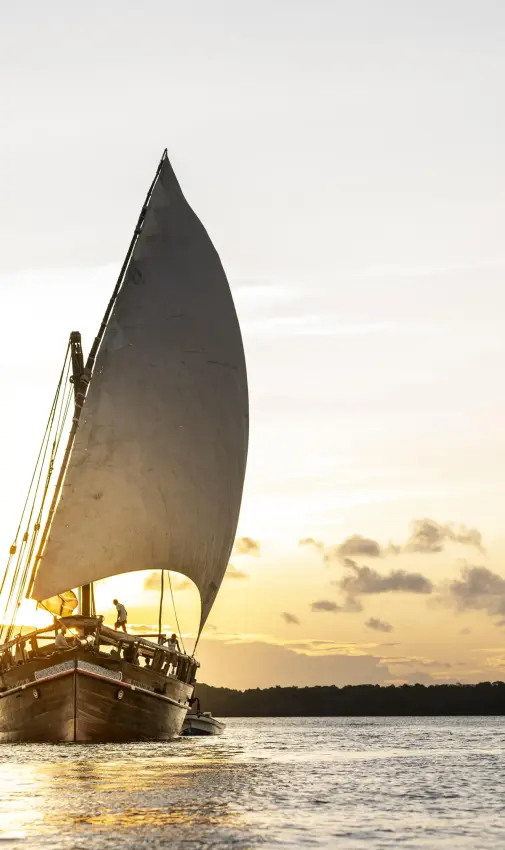
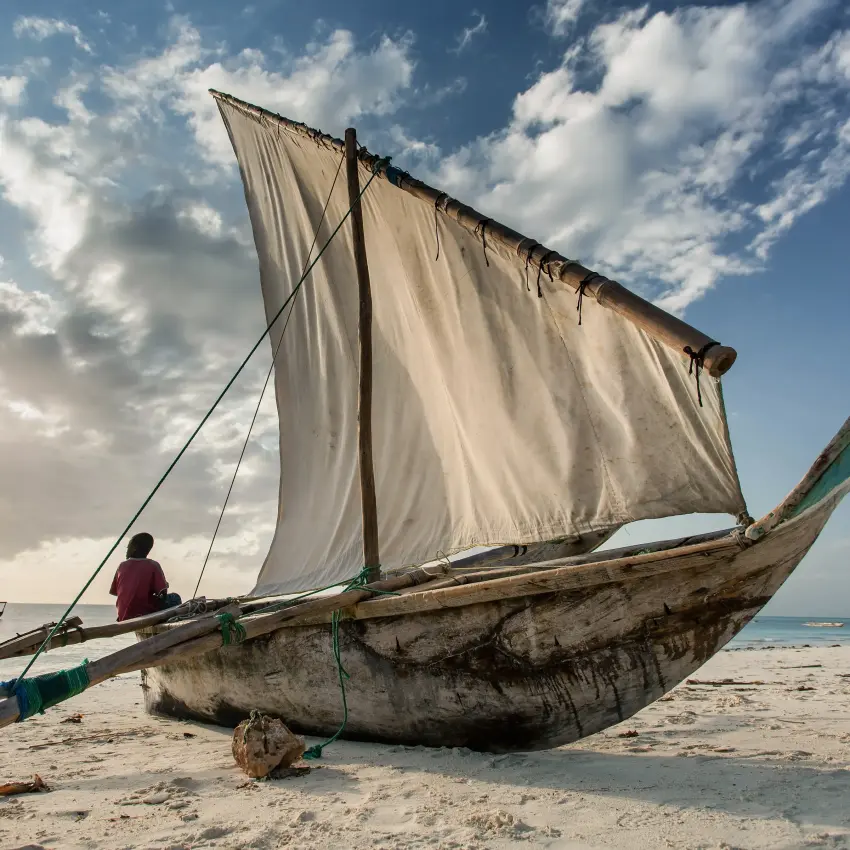
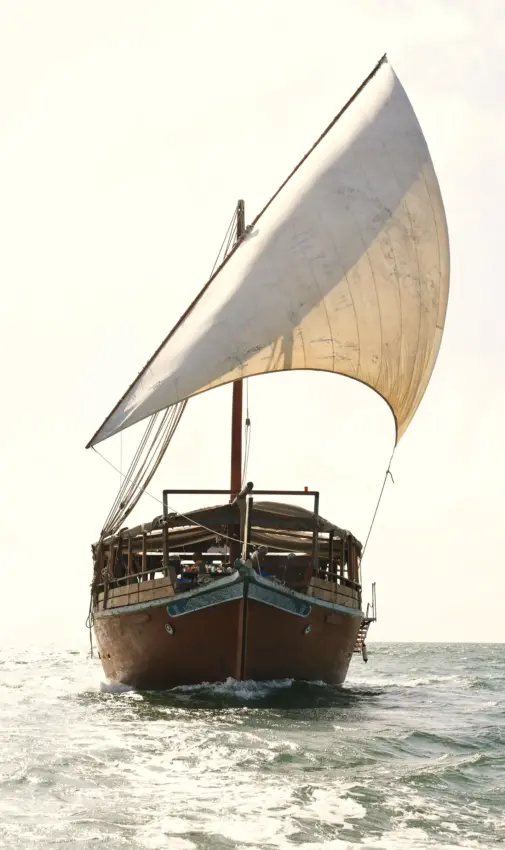
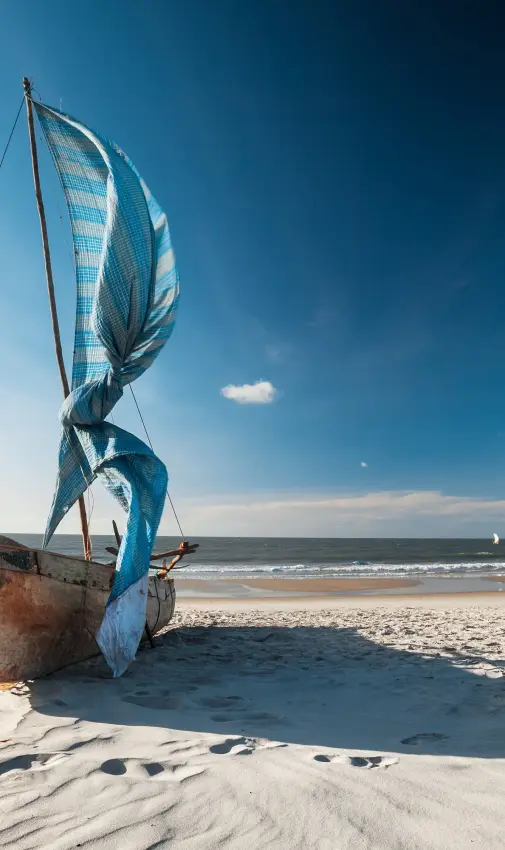
Wind-powered dhows are the traditional way to travel.
Thousands of donkeys carry people and cargo through Lamu’s lanes, and dhow workshops still build by hand, as they have for centuries. Out on the water there is snorkelling and diving over coral reefs, sea kayaking through mangrove channels, deep-sea fishing and slow dhow cruises down the coast. Marine life includes green, hawksbill, olive ridley and leatherback turtles, dugongs and dolphins, while the Maulid festival and its famous donkey race fill the town each year, drawing crowds to the Riyadha Mosque.
Reefs, Ruins and Conservation
The settlement at Lamu traded for the best part of 1,000 years, first under Arab merchants, then the Portuguese, and finally the Sultanate of Zanzibar. A former Persian and then Zanzibari colony, it rivalled Mombasa as an entrepôt for gold, spices and slaves until the late 19th century. Its architecture fuses Swahili, Arabic, Persian, Indian and European styles, and the town has long been a centre for the study of Islamic and Swahili culture.
The archipelago is rich in ruins. Manda holds the prosperous 9th-century ports of Takwa and Manda town, where excavations have turned up Chinese porcelain and Islamic pottery. On Pate Island stand the ruins of Shanga and Faza and the great Siyu Fort; the 8th-century Shanga site alone holds coral walls, palaces, mosques and hundreds of tombs.
Seventeen festivals a year keep Swahili tradition alive.
Marine life centres on Kiunga Marine National Reserve, established in 1979 and managed by the Kenya Wildlife Service. Covering around 50 islands, it sits where two ocean currents meet, nurturing mangroves, sea-grass beds and coral reefs. Snorkelling is most rewarding two hours either side of low tide, when turtles, dugongs and reef fish come into view. Inland, the Boni and Dodori reserves protect some of Kenya’s last coastal forest and the critically endangered hirola antelope.
Conservation is woven into the islands. The Lamu Marine Conservation Trust, set up in 1992, runs turtle tagging, nest protection and locally managed marine areas, paying fishermen to return live turtles to the sea. Mangrove restoration is extensive: with Eden Reforestation Projects and the Lamu Conservation Trust, partners have planted millions of trees since 2020, while the Lamu Blue Carbon Project works to restore mangroves. The town’s well-known Donkey Sanctuary cares for the animals that keep daily life moving.
Flying is the easiest way in. Flights from Nairobi, Mombasa and Malindi land on Manda Island, from where a short walk leads to the jetty and a boat to your hotel. The islands are car-free, so you travel on by donkey, dhow or on foot. The best times to visit are the dry seasons of July to September and January to February, while divers find the water clearest from November to March.
The best time to visit Lamu Archipelago
Jan
Feb
Mar
Apr
May
Jun
Jul
Aug
Sep
Oct
Nov
Dec
Recommended
Transitional
Challenging conditions
For calm seas and clear water, come during the northeast Kaskazi monsoon from December to February, when underwater visibility is at its best and the days are hot and dry. October is a quiet interlude with the clearest water of the year and fewer guests. Avoid April and May, when heavy rain and rough seas cloud the water. The Kusi months from June to September suit sailing more than snorkelling.
accommodation in lamu archipelago
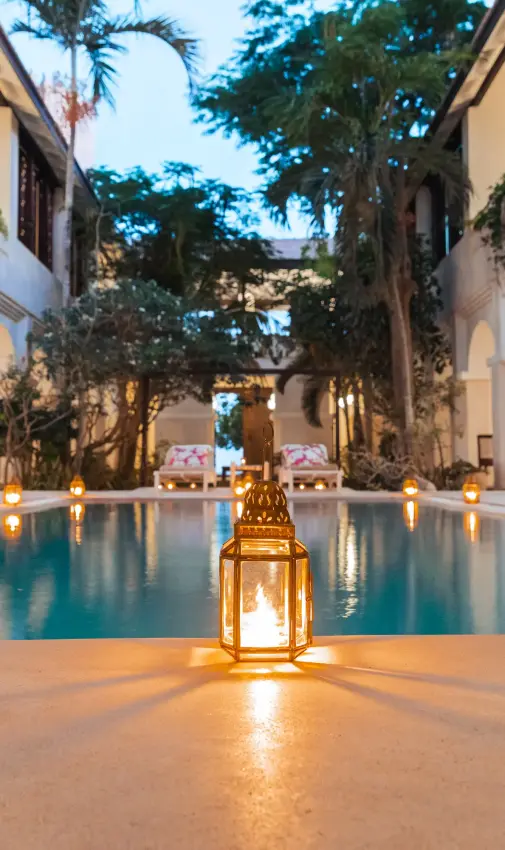
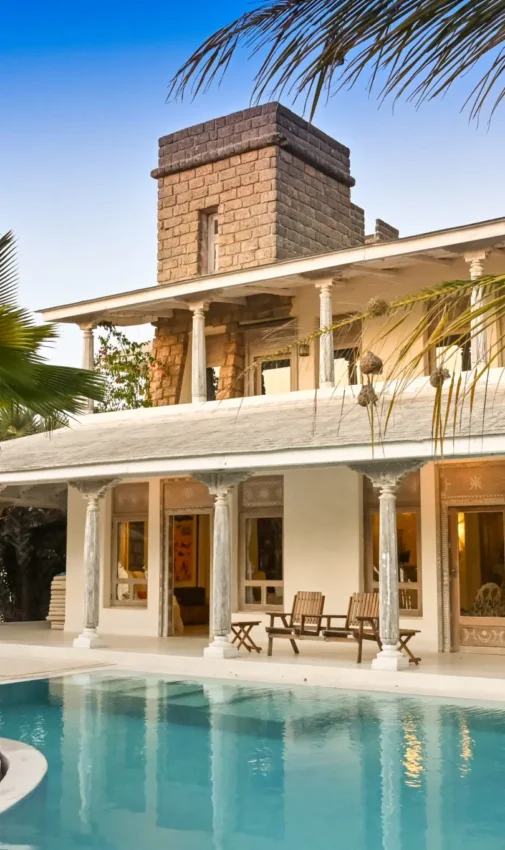
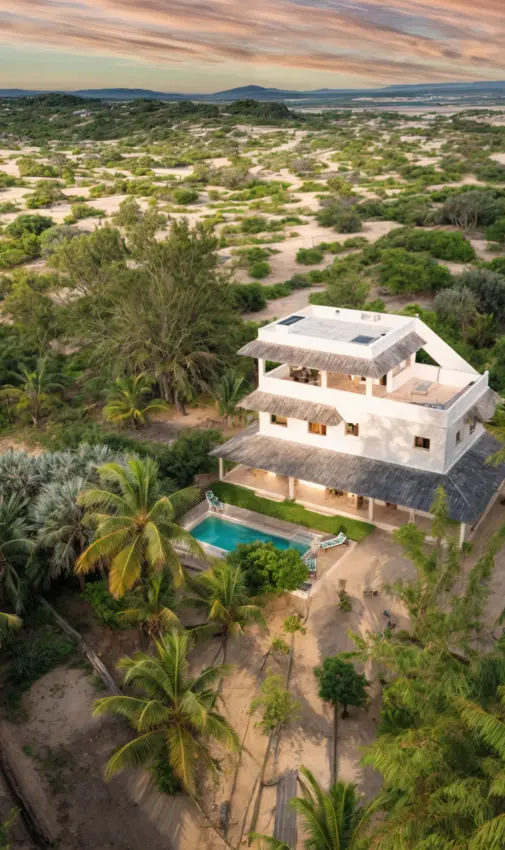
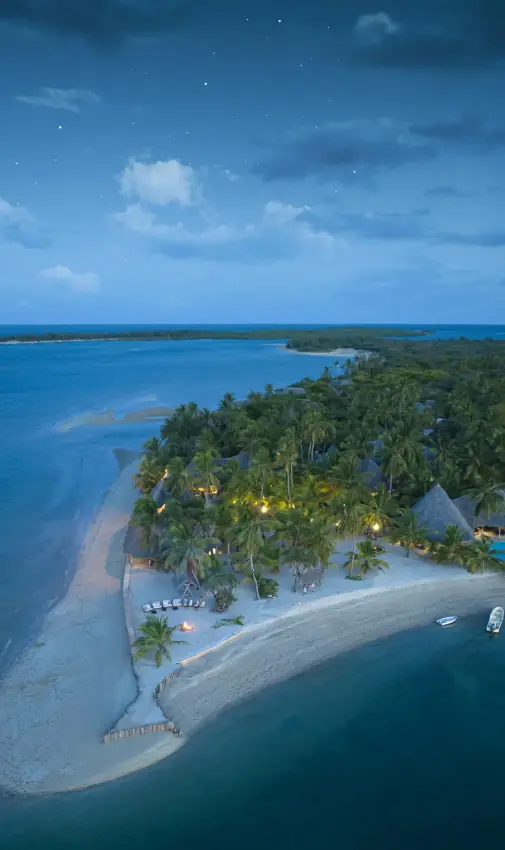
Where you stay sets the tone of the trip. Choose a beachside institution in Shela village, a secluded lodge across the channel on Manda Island, a traditional dhow under sail, or a historic stone house in Lamu Old Town. Each of the places we feature offers its own pace and outlook.



activities
On the water and in the ruins
From snorkelling and scuba diving over Kiunga's coral reefs to sea kayaking through mangrove channels, the water defines life here. Add deep-sea fishing, dolphin encounters and dhow cruises down the coast, then turn inland for walking tours of Lamu Old Town and the ancient ruins of Takwa, Manda and Shanga.

conservation
Turtles, mangroves and blue carbon
The Lamu Marine Conservation Trust, founded in 1992, tags and protects sea turtles and runs locally managed marine areas. Mangrove restoration with Eden Reforestation Projects and the Lamu Conservation Trust has planted millions of trees since 2020, while the Lamu Blue Carbon Project restores mangroves of coastal forest.

getting around
By air, by dhow and on foot
Flights from Nairobi, Mombasa and Malindi land on Manda Island, where a short walk to the jetty leads to a boat transfer to your hotel. The islands are car-free, so travel is by donkey, dhow or on foot. Thousands of donkeys carry people and goods through Lamu's narrow lanes each day.
other areas in kenya
The Lamu Archipelago is a natural finish to a Kenyan safari, trading dust and game drives for sand and sea. Pair it with the Maasai Mara, Laikipia or the Samburu plains for a journey that runs from open savannah to the Indian Ocean.
 01
01
 02
02
 03
03
 04
04
 05
05
 06
06
 07
07
 08
08
 09
09
 10
10
frequently asked questions
Fly to Manda, and step off the aircraft onto a boat.
Scheduled flights run from Nairobi's Wilson airport and from the Mara airstrips, so you can come straight off safari. From Manda airstrip everything is by water: a dhow or a speedboat to Shela, Lamu town or the house you are staying in.
Coastal flights usually allow a slightly more generous soft-bag limit than the bush routes, but a soft bag is essential on a boat, where a hard case has nowhere to go.
We arrange the boat transfer with the flight, because the two have to meet.
A private charter flies the same sector on your own timing, usually a Cessna Caravan, and we price it beside the scheduled seats so you can see the difference.
Everything happens on the water, and the day follows the tide rather than a timetable.
- A dhow out for the day, with a sandbank picnic when the tide allows
- Swimming in the creeks, and the reef when the water is clear
- Lamu town: the old stone streets, the fort and the museum
- Long walks on Shela's twelve kilometres of beach
Plans tend to get settled over breakfast, once the crew know what the water is doing.
This is not a place to arrive with an itinerary.
Yes. The coast sits at sea level and both TravelHealthPro, the UK's official travel health service, and the CDC treat it as a malaria area where antimalarial tablets are usually advised.
We do not make medical recommendations. Which tablets suit you, and what is right for a child, are questions for your own doctor or a travel clinic.
On the practical side, cover up at dusk and keep repellent to hand. Anything serious in Kenya is handled by air evacuation to Nairobi, and we can put flying doctor cover in place as part of the booking.
Light and modest, and it is a matter of respect rather than rules.
Lamu is a conservative Muslim community, so shoulders and knees covered in town and in the villages. On the beach and at the houses, normal beachwear is fine, and a sarong or a light cover-up does the job walking between the two.
Bring reef shoes for the coral, sun protection and something with sleeves for the boat, where the glare is strongest.
We will say what suits the particular house you are staying in when we book it.
Yes, with older children more easily than toddlers.
The houses are the draw: staffed, private, with roof terraces and space to spread out, and a dhow at your disposal. Children who can swim get the most from it, because the water is the point.
The things to know are practical. There are no cars on Lamu island, so donkeys and boats do the moving; the tides govern the swimming; and the sun on the water is fierce.
Tell us their ages and we will pick the house and the boat accordingly.
Four, and a week if you have taken a house.
Lamu resists being rushed. The first day goes on finding the rhythm, and it is on the third or fourth that the place makes sense. A staffed house also rewards the longer stay, because the cook learns what you like.
It pairs well after a northern Kenya or Maasai Mara safari, with the flights connecting through Wilson.
Tell us the shape of the trip and we will say how many nights the coast deserves.
rated five stars by our clients

our approach
remote, exclusive
& personal
Every journey starts with a conversation. We take the time to understand your vision before we start planning.
Whether by phone or in person, we work with you directly to shape something that is considered, personal, and expertly delivered.
Every journey starts with a conversation. We favour a direct, personal approach: understanding your vision before anything else.
Whether by phone or in person, we work with you directly to shape a journey that is both thoughtfully considered and expertly delivered.
Get in touch to start planning yours.