 01
01

Area
Northern Kenya
Northern Kenya’s arid frontier, from forested sky-islands and community conservancies to Lake Turkana’s volcanic shores.
Elevation: 360 m at Lake Turkana to 2,750 m at Mount Nyiru
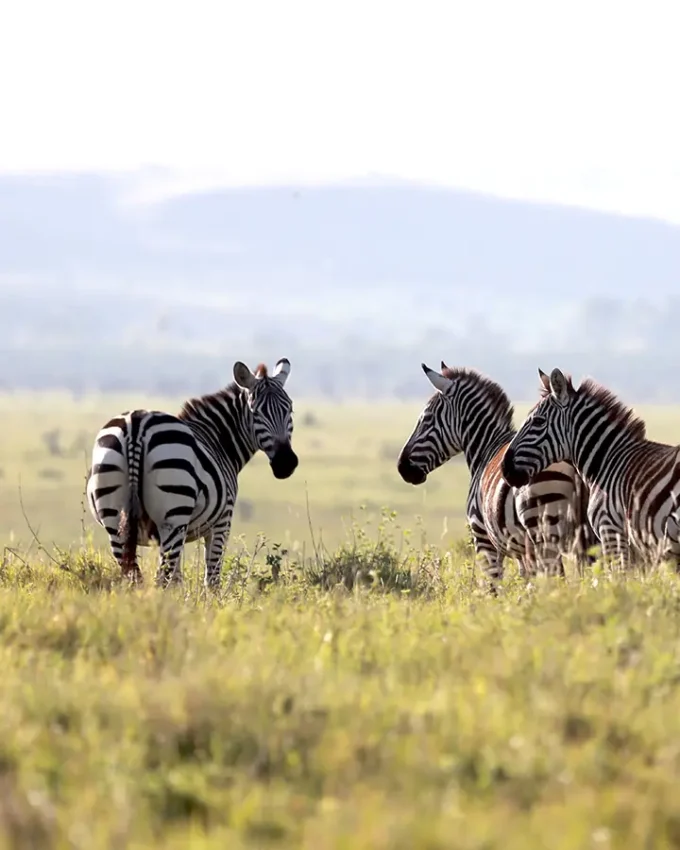
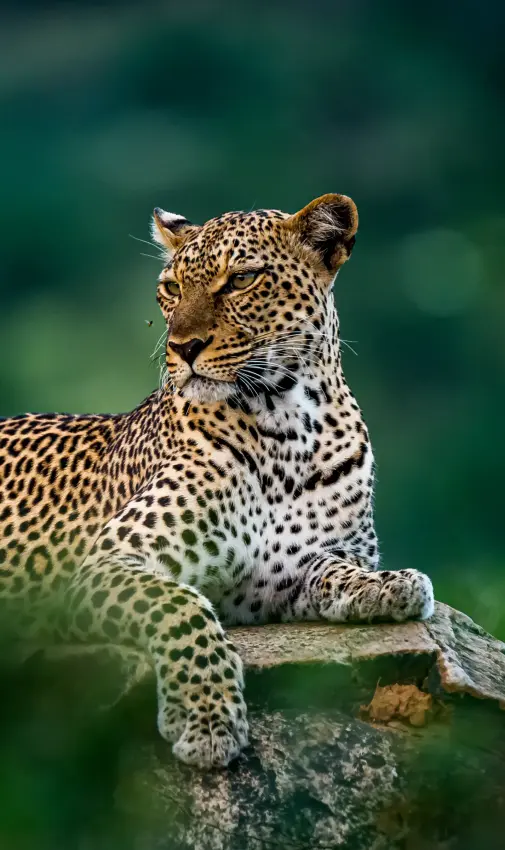
Key species: Grevy's zebra, reticulated giraffe, gerenuk, Beisa oryx, Somali ostrich
Habitat: Arid plains, cloud-forest massifs, desert lake basins
Terrain: Thorn scrub, lava rock, sand, crater lakes
Sky-islands, jade sea, camel country
Kenya’s last true frontier begins where the Mathews Range rises north of the Samburu reserves. From there it runs on across arid plains toward Lake Turkana, the Chalbi Desert and Mount Marsabit. Thorn scrub and lava rock give way to forested peaks and a wind-scoured desert lake. The Samburu reserves and the Laikipia plateau are simply the gateway, passed through on the way in.
The Samburu reserves and the Laikipia plateau are simply the gateway
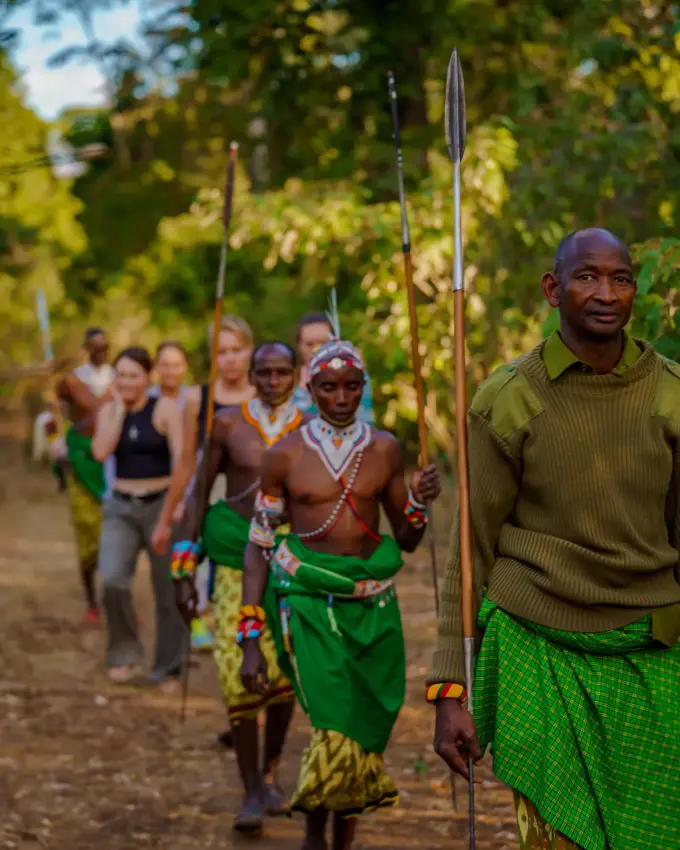
Travel here works by light aircraft, camel and fly-camp rather than road. The arid-country specialists range widely across the region: Grevy’s zebra, reticulated giraffe, Beisa oryx and Somali ostrich, and the gerenuk that browses upright on its hind legs. Much of this land sits within community-owned conservancies, where the people who live alongside the wildlife are the ones protecting it.
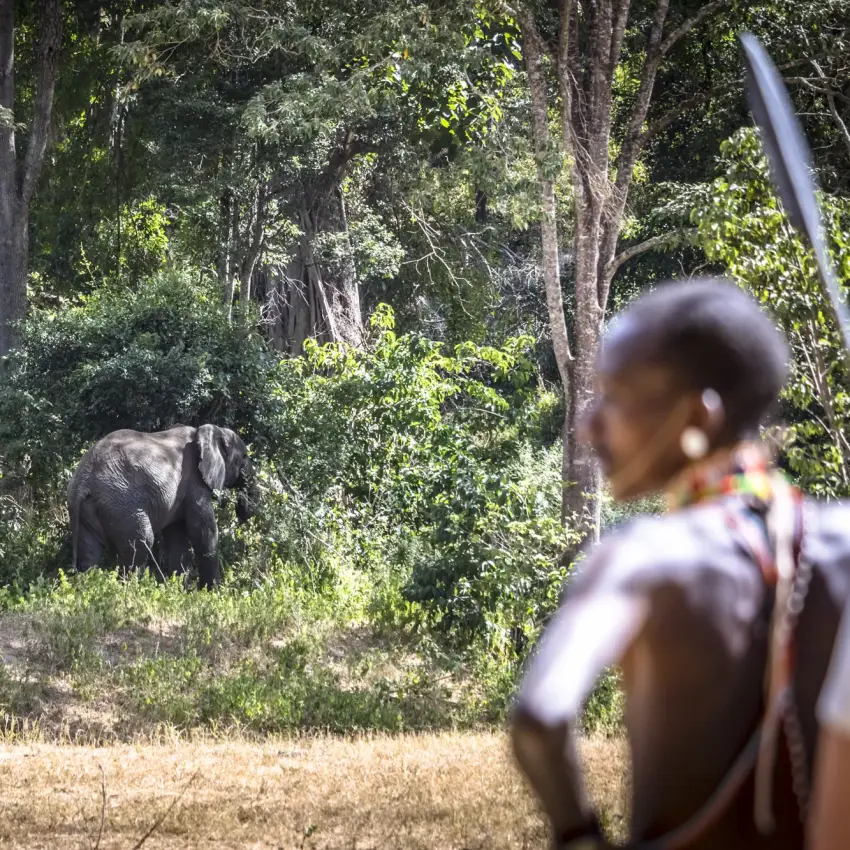
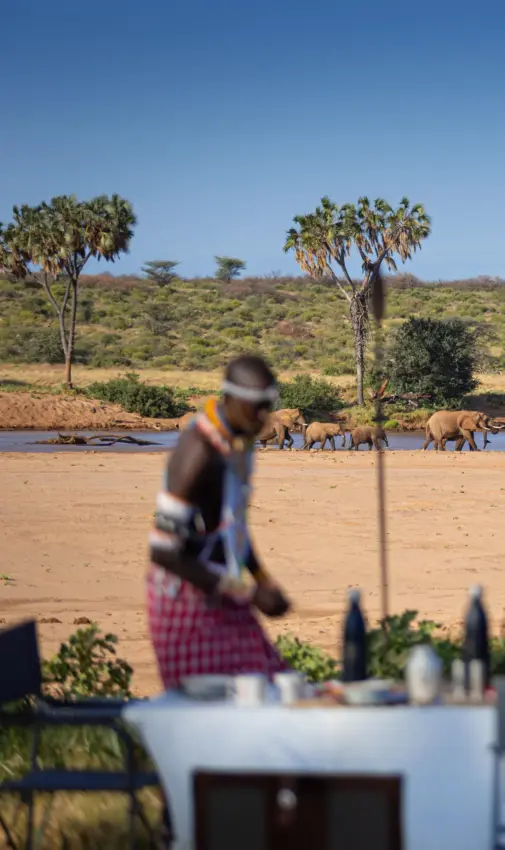
The Mathews Range and the Ndoto Mountains rise straight from the plains as forested sky-islands. Their upper slopes hold cloud forest, ancient cycads and clear streams while the country below stays parched. Elephant move through the valleys, wild dog hunt the margins, and butterflies gather at the water. Namunyak Conservancy wraps the Mathews Range.
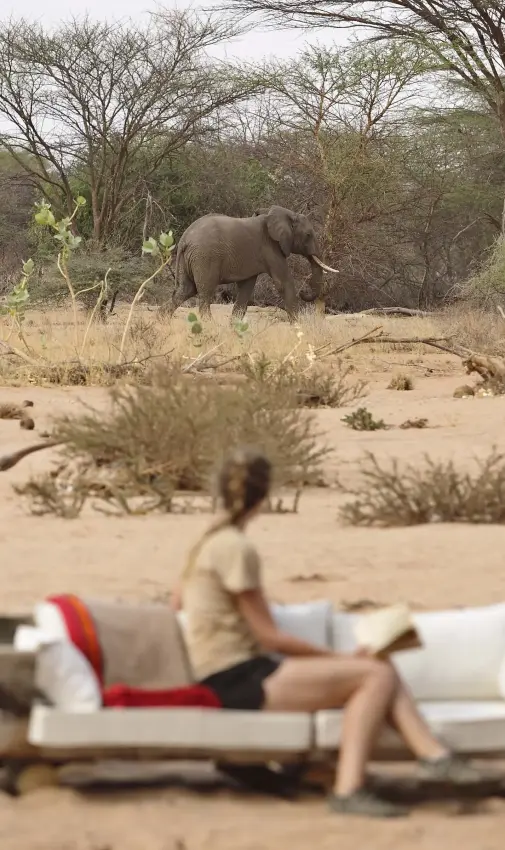
Elephant move through the valleys, wild dog hunt the margins
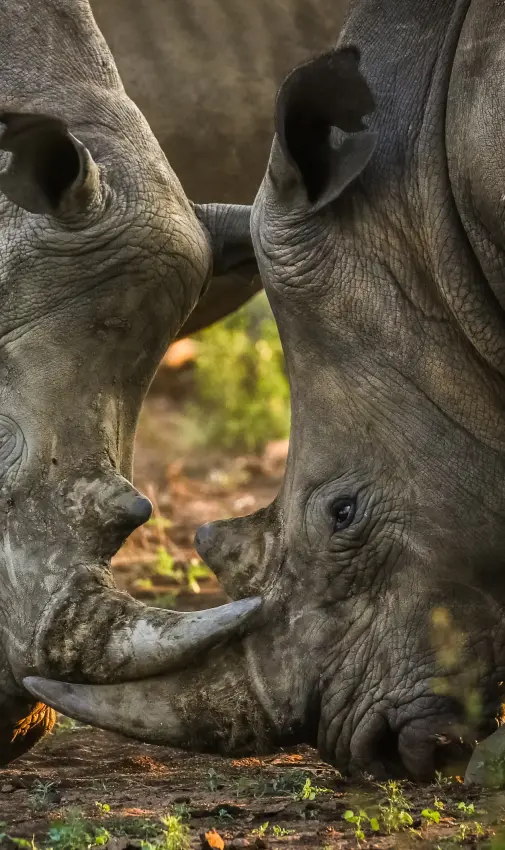
Sera, another community conservancy, runs the first community-owned black rhino sanctuary in East Africa, alongside neighbouring Melako. The pastoralist communities who graze cattle across these rangelands hold the land, earn the tourism revenue and staff the ranger teams. Conservation here depends on wildlife paying its way, and in Northern Kenya that logic has taken practical root over the years.
North of the mountains, the land opens toward Lake Turkana, the Jade Sea, the largest permanent desert lake on earth. Alkaline and green with algae, it lies between black volcanic shores, whipped by a near-constant wind. Sibiloi National Park guards its eastern flank, and the wider Turkana Basin holds one of the richest early-human fossil records found anywhere on the planet. The near-complete Homo erectus skeleton known as Turkana Boy came from these shores. It remains one of the most significant hominid finds ever recovered.
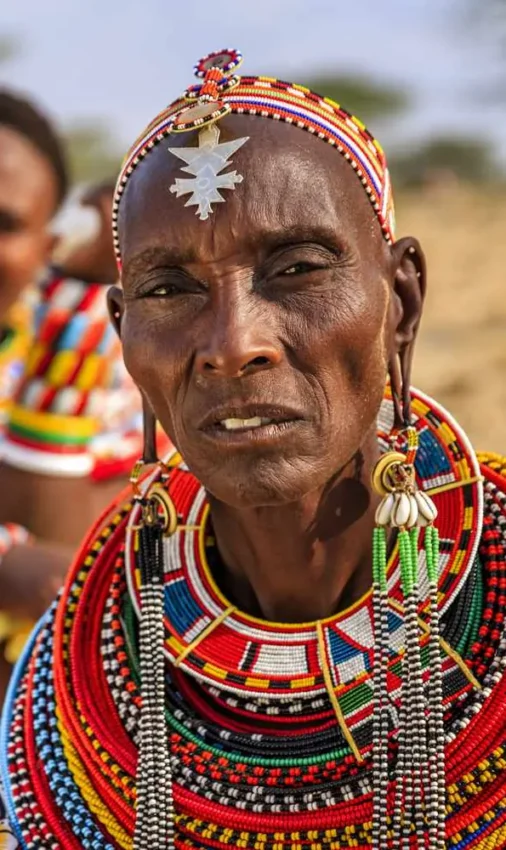
Around the lake and across the drylands live the El Molo, Turkana, Rendille, Gabbra and Samburu peoples, pastoralists and fishers whose lives are shaped by water and its scarcity. Loiyangalani sits on the south-eastern shore of Turkana, and South Horr lies in the same country. These are the settlement nodes that make travel through this country possible. Both lie close to Mount Kulal and Mount Nyiru, forested massifs that trap moisture and function as ecological refuges in an otherwise arid landscape.
The near-complete Homo erectus skeleton known as Turkana Boy came from these shores.
Further east, the Chalbi Desert is a genuine desert crossing, a bed of ancient lake sediment and shifting sand where camel caravans still move salt and livestock across the flats. Beyond it, Mount Marsabit rises as a forested volcanic massif, an island of green above the surrounding plains, holding the crater lake called Lake Paradise. Elephant with famously long tusks have long been drawn to the Marsabit forest, pulled toward its permanent water in a region where surface water is rare.
Northern Kenya rewards travellers who come for landscape and specialist wildlife rather than large herds. The distances are vast and the density low, and the appeal lies in the emptiness itself: days of walking with camels, nights under desert skies, forested mountains that hold species the plains never will. It is the country that begins where most safaris end, and it asks for time, curiosity and a willingness to move slowly across ground that few others reach.
The best time to visit Northern Kenya
Jan
Feb
Mar
Apr
May
Jun
Jul
Aug
Sep
Oct
Nov
Dec
Recommended
Transitional
Challenging conditions
The dry seasons suit Northern Kenya best, when remote tracks firm up, wildlife gathers around permanent water and the desert skies stay clear. June to October is the strongest window for access and game, with January to early March also excellent for desert travel and photography. Lake Turkana and the Chalbi are best crossed dry and firm. After the rains the Mathews Range and Marsabit green up.
accommodation in northern kenya
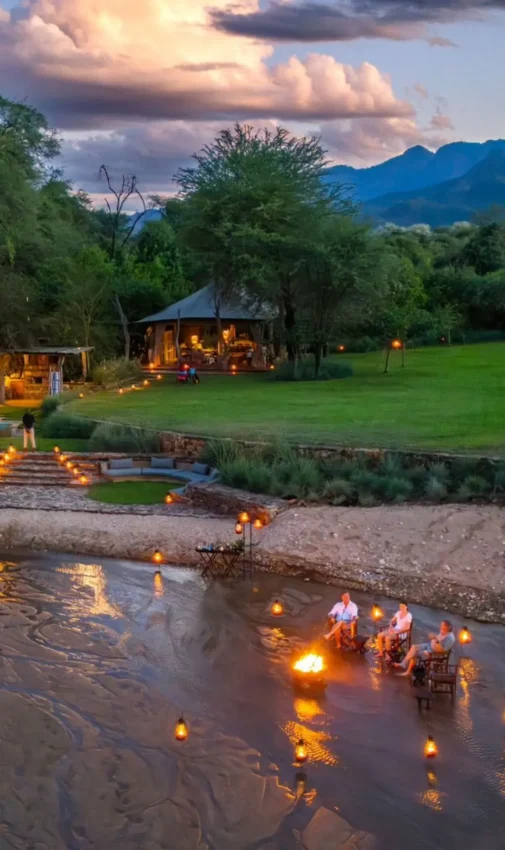
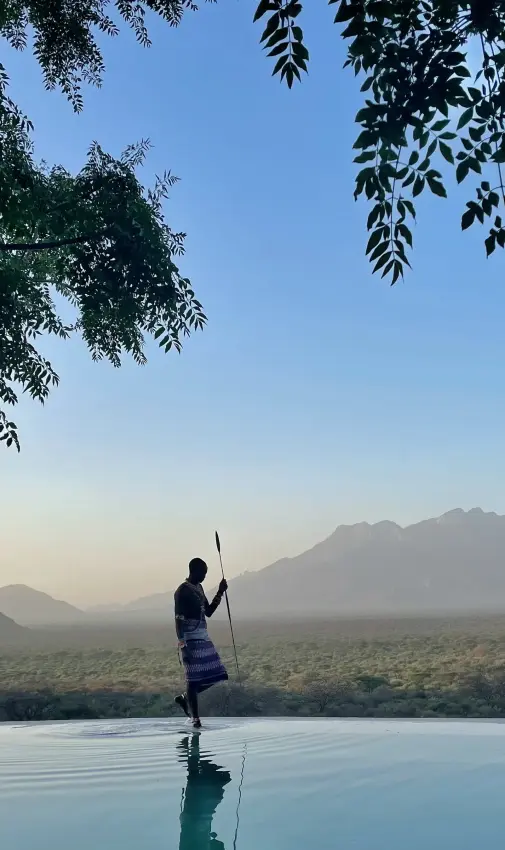
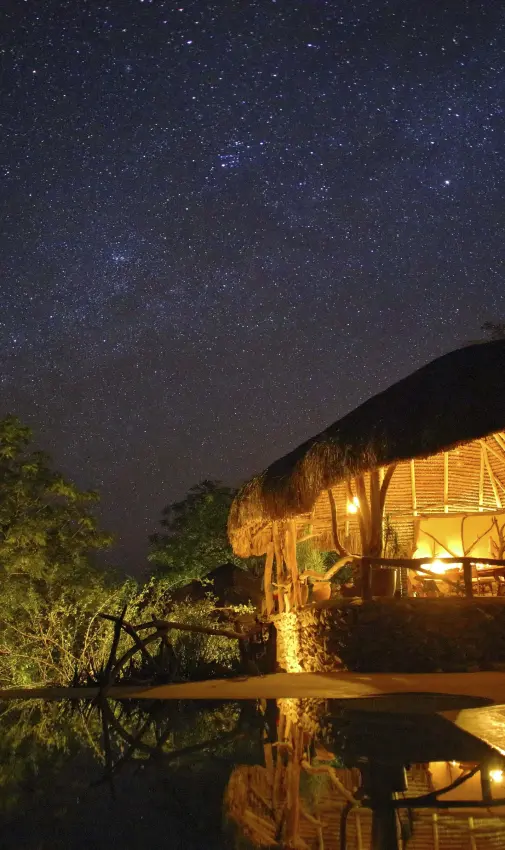
Across Northern Kenya, small tented camps dominate the conservancies around the Mathews Range and Ndoto Mountains, several of them available on an exclusive-use basis. Mobile and fly-camps come into their own for Chalbi Desert crossings, Turkana shores and camel-supported walking routes, pitched fresh each night in open country. A handful of lodges cluster around the better-established nodes near Mount Marsabit and Lake Turkana. Expect remote, landscape-driven camps built for exploration.





activities
Camel trekking and desert crossings
Camel-supported walking is the defining northern activity, especially across the Chalbi Desert and around Lake Turkana. Within community conservancies, walking safaris, night drives, off-road exploration, fly-camping and cultural visits with pastoralist communities are all possible. Forest walking suits the Mathews Range, Ndoto Mountains and Mount Kulal, with strong birding near water.
 02
02
conservation
Community-owned rhino and rangeland conservation
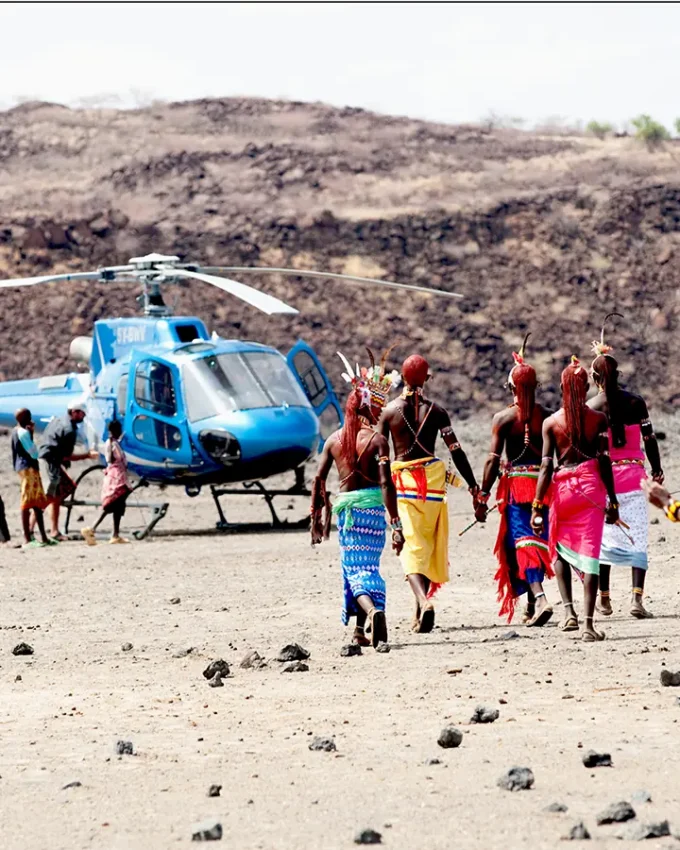
The Northern Rangelands Trust supports community conservancies across the region, among them Sera and neighbouring Melako. Sera operates the first community-owned black rhino sanctuary in East Africa. The model combines livestock management, ranger patrols, controlled tourism and local benefit-sharing across vast, low-density rangelands facing drought and water scarcity.
 03
03
getting around
Light aircraft and helicopter access
Light aircraft charter is the primary way in, serving airstrips for the Mathews Range, Sera, Marsabit, Lodwar and Loiyangalani for Lake Turkana access. Helicopter charters open point-to-point transfers and remote fly-camp itineraries, compressing long overland routes to short flights. Road access exists via Isiolo and Marsabit but is slow, seasonal and best handled by experienced local guides.
other areas in kenya
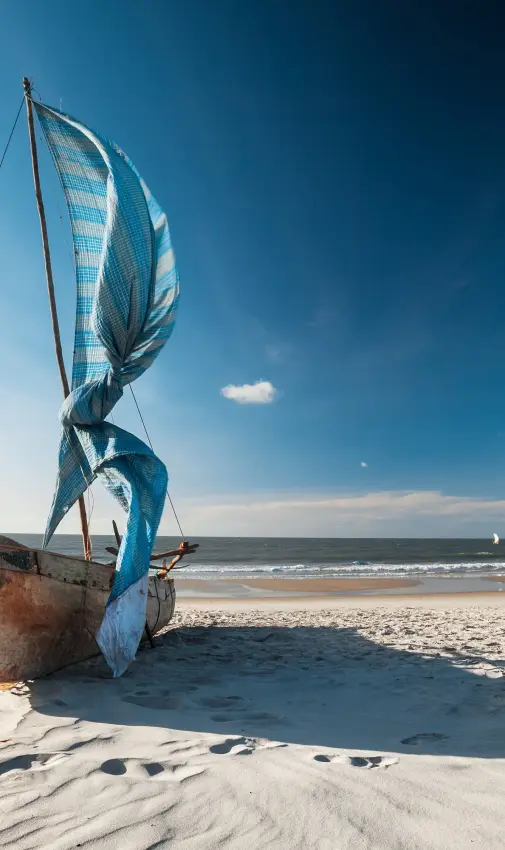
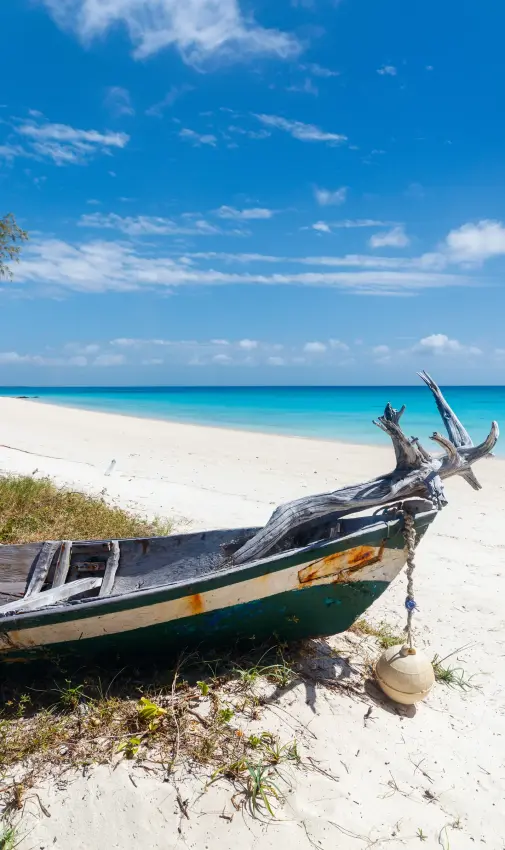
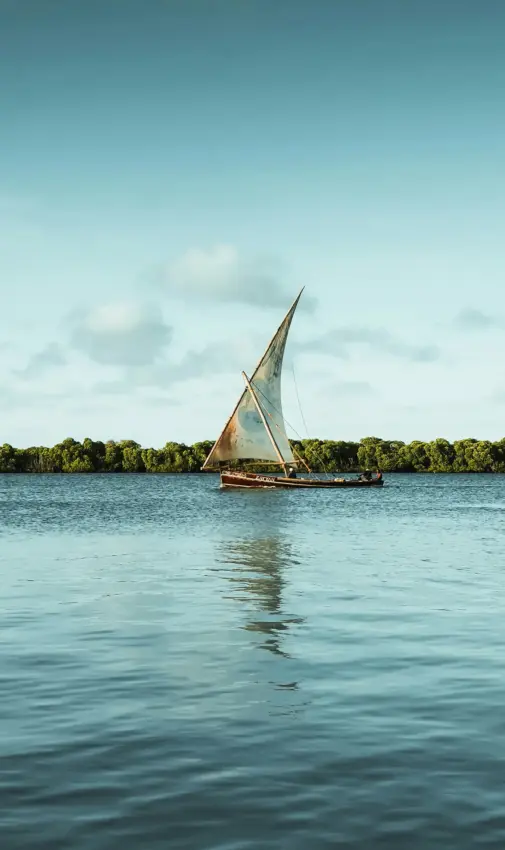
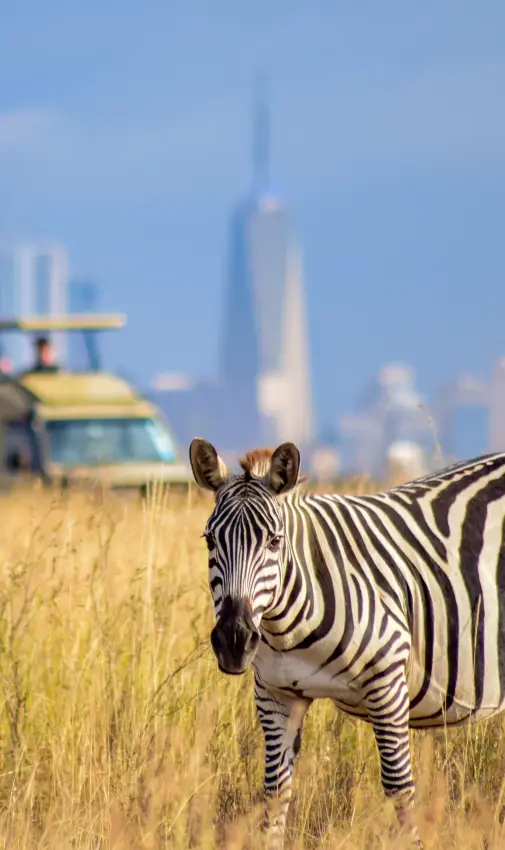
Northern Kenya pairs naturally with the regions to its south. Samburu shares the same dry-country species in a more accessible setting and works well as a staging point on the way north. Laikipia and the Lewa and Borana conservancies offer strong community conservation, walking and rhino viewing. The Maasai Mara adds classic plains game and the wildebeest migration in season, while the Kenya coast around Lamu provides a contrasting close to a trip, trading desert and mountain for Indian Ocean shores and Swahili stone towns.
 01
01
 02
02
 03
03
 04
04
 05
05
 06
06
 07
07
 08
08
 09
09
 10
10
frequently asked questions
By light aircraft from Nairobi's Wilson airport, usually in an hour to an hour and a quarter.
Scheduled services and charters serve the airstrips on the conservancies, and the camps meet the aircraft. The roads exist and are long, rough and not a good use of a holiday.
A private charter, typically a Cessna Caravan or a Pilatus PC-12, connects the north with Laikipia, the Maasai Mara and the coast without returning to Nairobi.
Soft bags only, and we book the whole chain of flights together.
Hot, arid and enormous, and it feels like a different country from the green south.
This is the land of the Samburu and the Rendille: thorn scrub, dry riverbeds, the Mathews Range rising out of it and Lake Turkana away to the north west. The wildlife is the dry-country cast, and the space is the point.
Most of it is community conservancy land rather than national park, which is what makes the freedoms possible.
It suits a second safari better than a first, and anyone who wants nobody else in the picture.
Almost everything a park forbids, because this is community land.
- Walk, with an armed guide and a Samburu tracker
- Ride camels, for a morning or for several days between fly camps
- Drive after dark, for the aardvark, genet and striped hyena
- Sleep out on a riverbed or a rock, with the beds carried up
Helicopter days to Lake Turkana and the singing wells are arranged from several camps.
It is the reason we send returning clients here rather than back to the Mara.
Yes. The north sits below the altitude at which the risk falls away, so both TravelHealthPro, the UK's official travel health service, and the CDC treat it as a malaria area and list antimalarial tablets among their recommendations.
It is dry country, which suppresses mosquitoes, but low risk is not the same as no risk.
We do not make medical recommendations. That is a conversation between you and your own doctor or a travel clinic.
On the practical part, cover up at dusk and carry repellent.
A great deal, and it is the most interesting thing about the region.
The community conservancies here are owned and run by the people who live on the land, and they have brought back wildlife that had been shot out. Sera runs the first community-managed black rhino sanctuary in Africa, and Reteti is a community-owned elephant orphanage.
Visiting either is straightforward and neither is a performance.
Tell us if this is what draws you and we will choose the conservancy on that basis.
Three at least, and four if you want to walk or ride properly.
The north rewards slow days: a walk at dawn, the heat of the day in camp, a drive or a sundowner on a rock in the evening. Two nights makes that a rush.
It pairs naturally with Laikipia, the Maasai Mara or a few nights on the coast, and the flights connect without a night in Nairobi.
Tell us the whole route and we will place the north where the contrast is greatest.
rated five stars by our clients

our approach
remote, exclusive
& personal
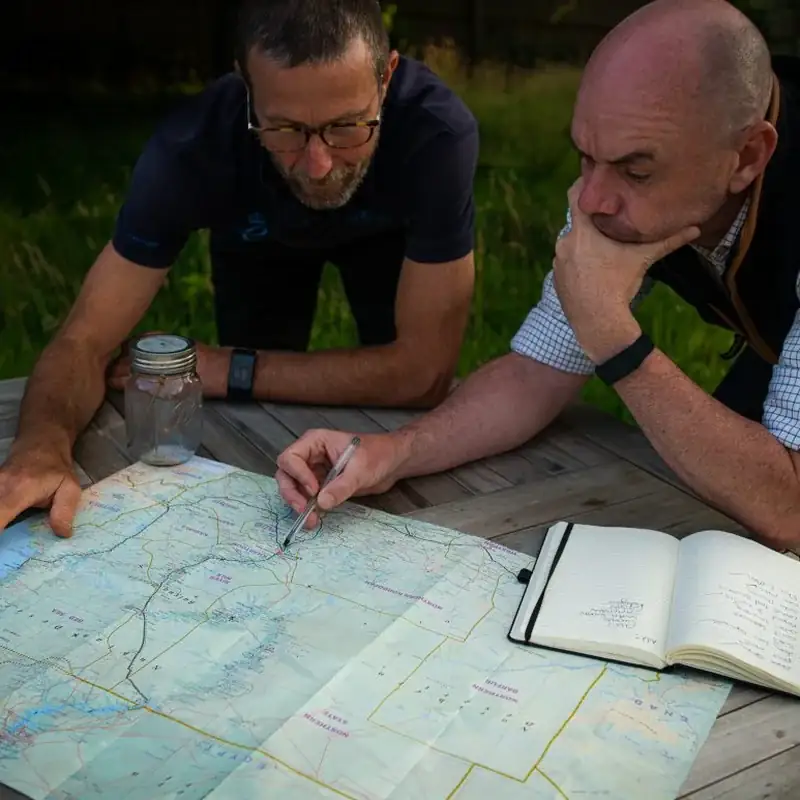
Every journey starts with a conversation. We take the time to understand your vision before we start planning.
Whether by phone or in person, we work with you directly to shape something that is considered, personal, and expertly delivered.
Every journey starts with a conversation. We favour a direct, personal approach: understanding your vision before anything else.
Whether by phone or in person, we work with you directly to shape a journey that is both thoughtfully considered and expertly delivered.
Get in touch to start planning yours.