

 01
01
Elephant herds below young lava hills
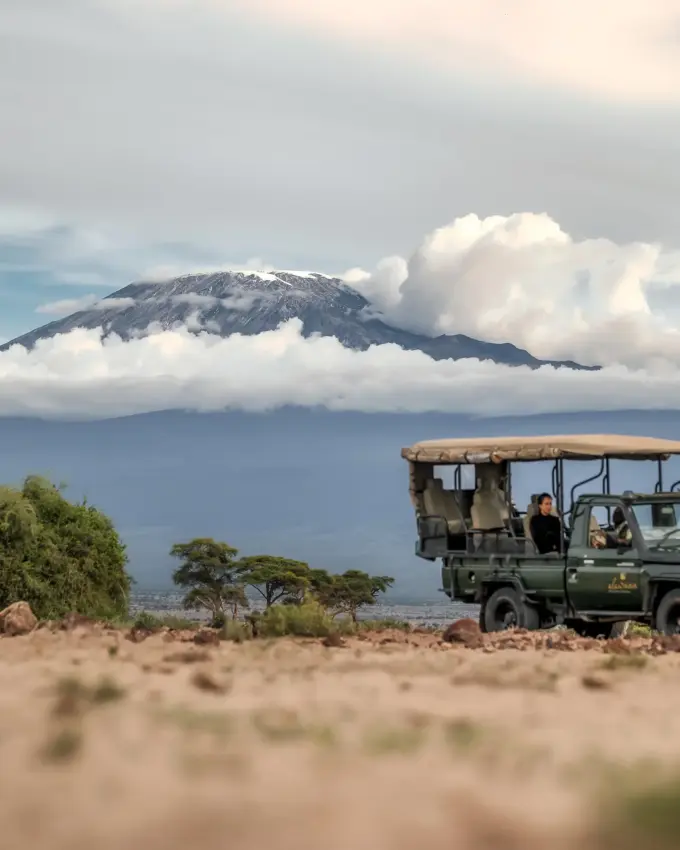
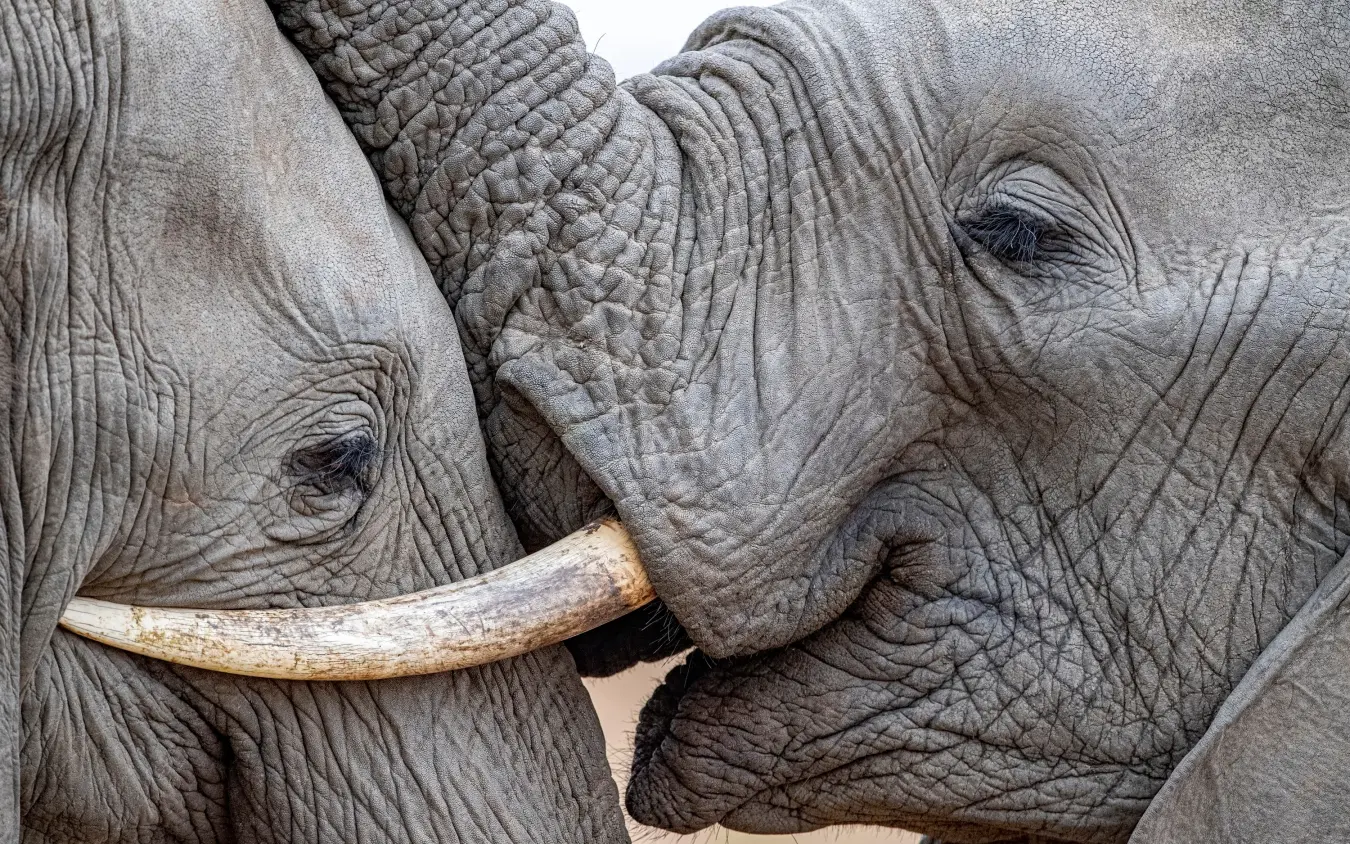
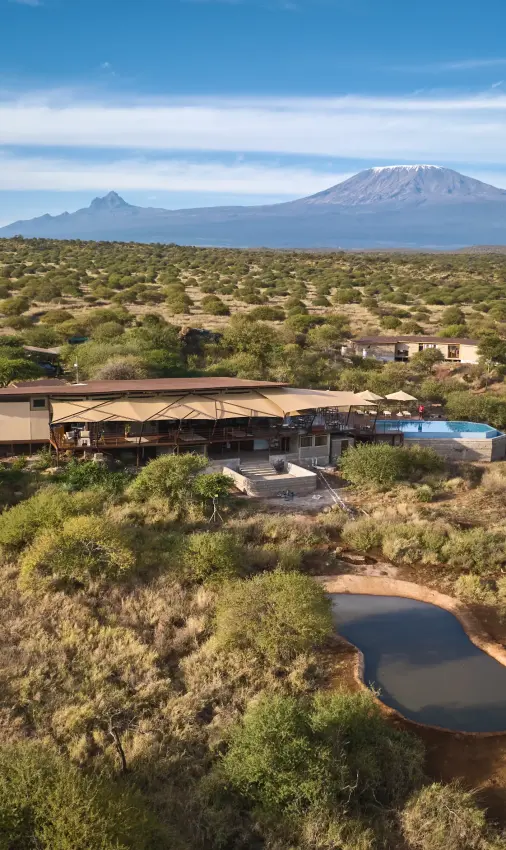
Amboseli and the Chyulu Hills sit along Kenya’s southern border, beneath the snows of Mount Kilimanjaro, where swamp-fed plains give way to young volcanic hills. Amboseli draws its character from elephants. Large herds move between papyrus swamps and dusty seasonal lakebed, often with the mountain rising behind them.
Large herds move between papyrus swamps and dusty seasonal lakebed
The Chyulu Hills tell a different story. A chain of grass-covered volcanic cones, craters and lava flows rises between the Amboseli and Tsavo plains, reaching 2,188 metres at its highest point. Mossy montane forest cloaks the crest, while bushland, grassland and exposed lava fields cover the flanks below it.
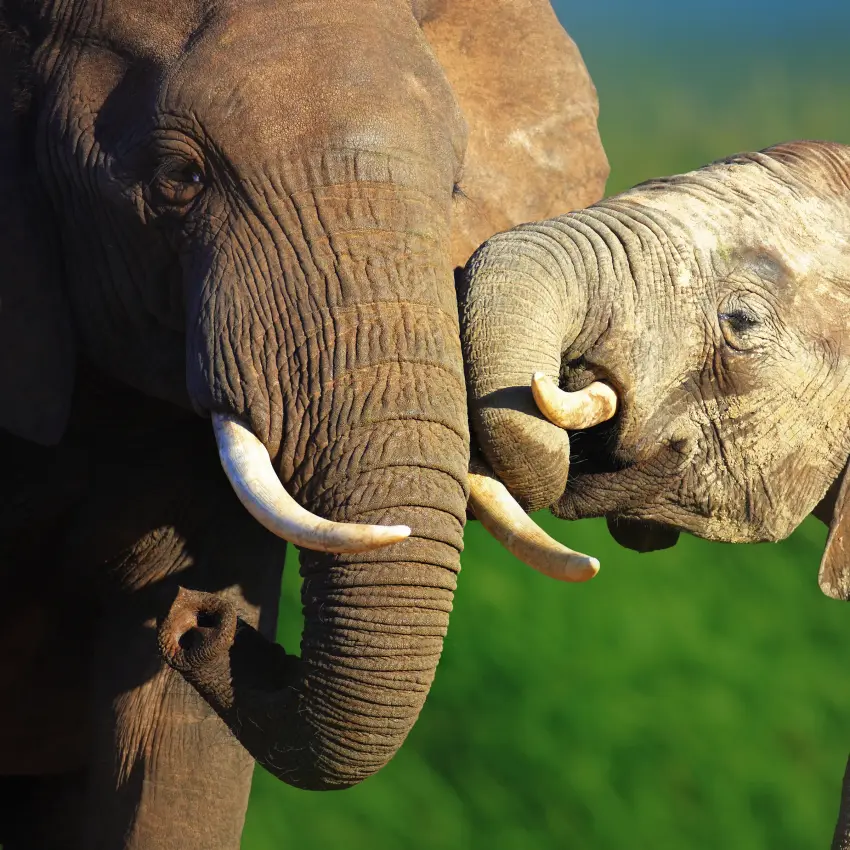
Glacial meltwater from Kilimanjaro percolates underground and surfaces as the Enkongo Narok and Longinye swamps. This is the dry-season magnet, the permanent water that concentrates elephants, buffalo and zebra, and the predators that follow them. As the plains dry, wildlife converges here; after rain, it disperses again into the surrounding conservancies.
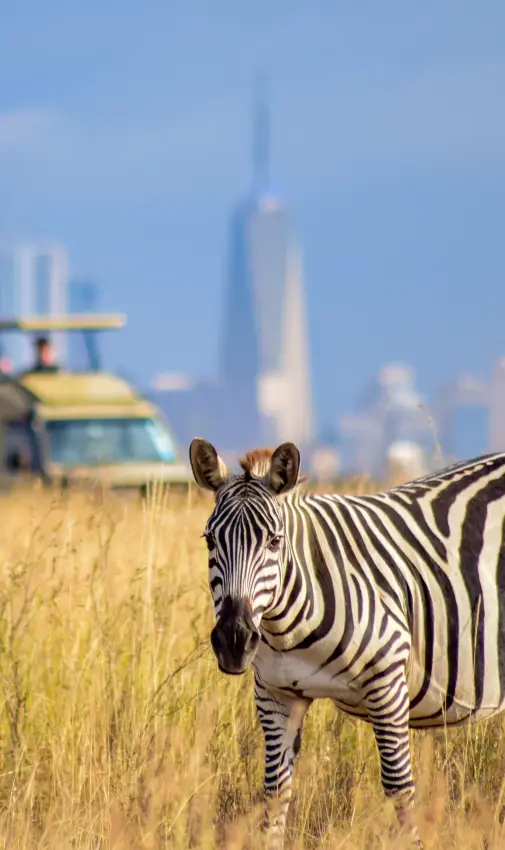
the permanent water that concentrates elephants, buffalo and zebra
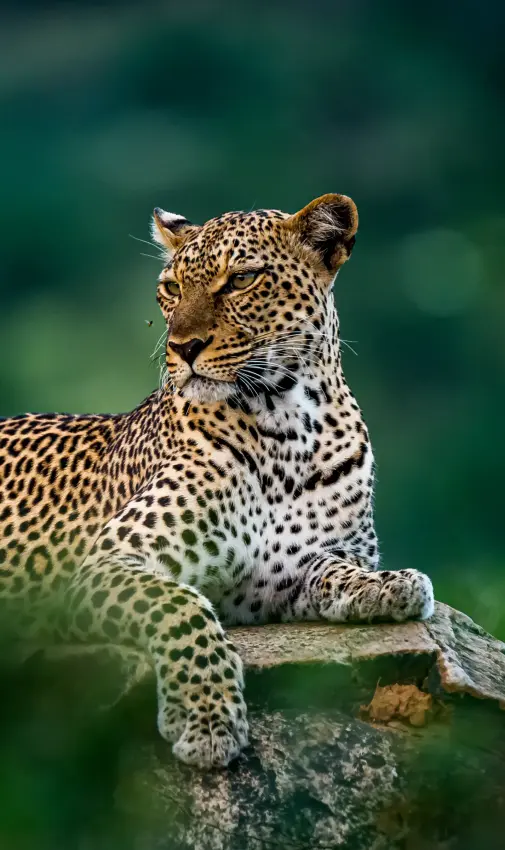
Open corridors hold the whole thing together, and the two areas function as one system. Elephants and plains game move between Amboseli National Park, the Maasai conservancies of Kimana and Kuku, the Chyulu Hills and Kilimanjaro’s forests across the border in Tanzania. The Chyulu Hills are the passage that links Amboseli to Tsavo, carrying elephant, buffalo, eland, zebra, wildebeest and the lion and leopard that hunt them.
Amboseli National Park covers 392 square kilometres of flat, semi-arid savanna at around 1,200 metres, broken by acacia woodland, thornbush and the permanent swamps fed from the mountain above. It is now co-managed by Kajiado County Government for day-to-day operations and the Kenya Wildlife Service for wildlife protection and national standards oversight, following a formal handover in November 2025, which means game viewing happens by vehicle on designated tracks. The surrounding Maasai-owned conservancies, among them Kitirua, Kimana and Kuku, follow different rules, and they allow the walking, night drives and off-road approaches that the park itself does not.
The Chyulu Hills are among the youngest volcanic ranges in the world, their lava flows less than five hundred years old, and their underground lava tubes run among the longest in Africa. Chyulu Hills National Park, gazetted in 1983, protects the eastern flank. The western and southern slopes lie on Maasai conservancies, where a handful of lodges work across private wilderness. After the December rains the slopes turn an improbable green.
The Chyulu Hills are among the youngest volcanic ranges in the world
The wider ecosystem is Maasai land, held in group ranches that now form the basis of the conservancies. Leasing land for wildlife gives pastoralist communities an income from conservation, and the arrangement keeps the corridors open. Amboseli became a game reserve in 1948 and a national park in 1974. Visits with the Maasai who live here, guided by their own people, explain a way of life built around cattle and shared rangeland, and the long understanding between the two.
Activity defines the difference between the two areas. Amboseli rewards patient game viewing and photography, with elephants framed against Kilimanjaro and over 400 bird species drawn to the swamps. The Chyulu conservancies run the other way, opening up horseback safaris alongside giraffe and plains game, walking, mountain biking and hikes into the lava landscape and montane forest. Helicopters extend the reach of both, dropping into remote Chyulu valleys or crossing the Kilimanjaro foothills at low altitude for an aerial read of the corridors below.
The best time to visit Amboseli and Chyulu Hills
Jan
Feb
Mar
Apr
May
Jun
Jul
Aug
Sep
Oct
Nov
Dec
Recommended
Transitional
Challenging conditions
The dry seasons, June to October and January to February, bring the most reliable game viewing, with wildlife on Amboseli's permanent swamps and Kilimanjaro clearest at dawn and dusk. These months also suit Chyulu's hiking, riding and scenic flights. The short and long rains green the landscape and lift the birdlife, though some roads soften.
accommodation in amboseli and chyulu hills
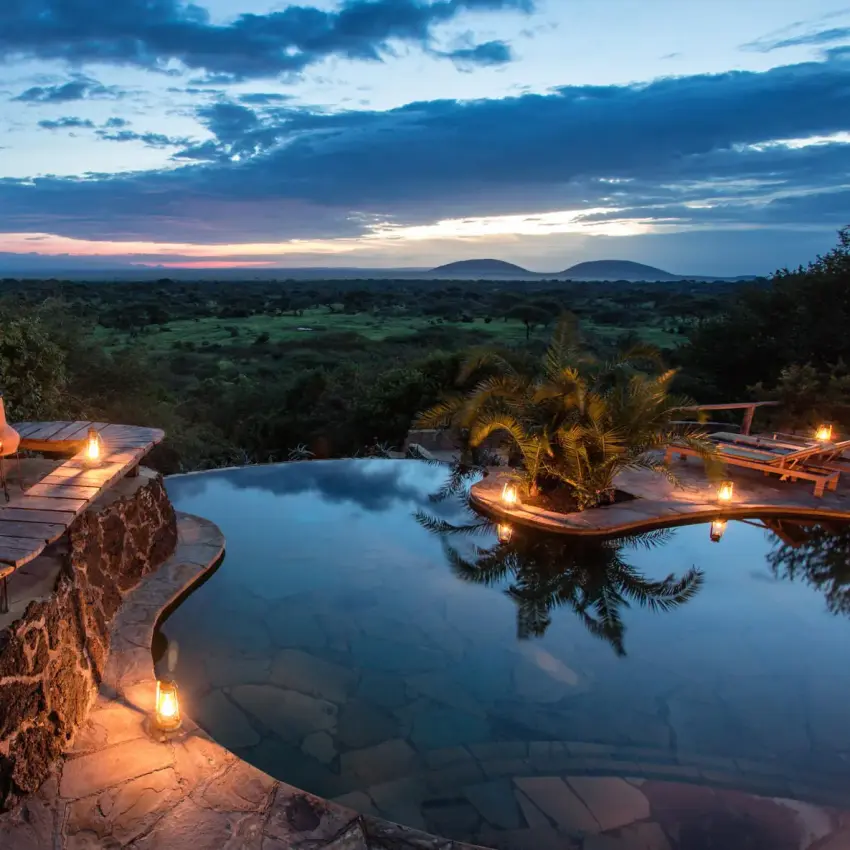
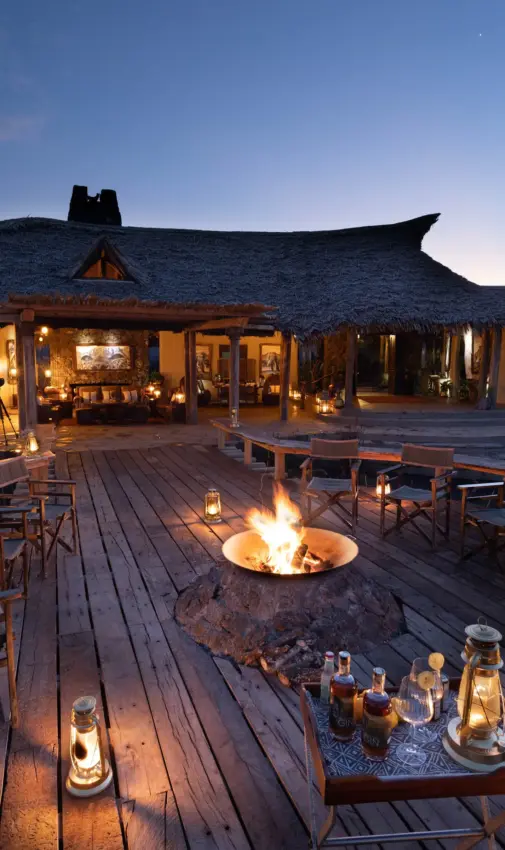
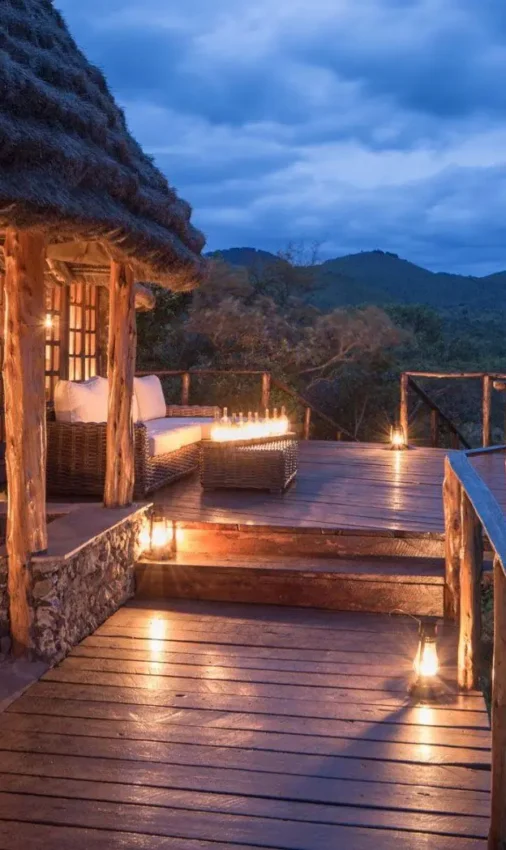
Amboseli holds a mix of tented camps and permanent lodges, several with pools and Kilimanjaro views, plus exclusive-use private houses staffed with their own guide and vehicle. Density is higher here, given the park's draw. The Chyulu conservancies run the other way: a small number of lodges and tented suites with private plunge pools, set across vast Maasai wilderness, alongside secluded fly-camps for overnight walking and riding.
01

 02
02
 03
03
 04
04
 05
05
 06
06
 07
07
 08
08
 09
09
 10
10
 11
11

activities
Elephants, hills, horseback and air
Inside Amboseli National Park, game drives on designated tracks focus on elephant herds, predators and Kilimanjaro photography, with rich swamp birding. The surrounding conservancies add night drives, walking safaris and off-road viewing. The Chyulu conservancies offer horseback safaris, mountain biking, hikes through lava fields and montane forest, and helicopter excursions over the foothills.

conservation
Corridors, elephants and Maasai land
The Amboseli Ecosystem Trust works to keep the corridors between Amboseli, Chyulu, Tsavo West and Kilimanjaro open. The Maasai Wilderness Conservation Trust runs wildlife protection, health and education programmes across the Chyulu and Kuku conservancies. The Amboseli Elephant Research Project, one of the longest-running wild elephant studies, has tracked these families for decades.

getting around
Light aircraft to private airstrips
Scheduled light aircraft fly daily from Nairobi's Wilson Airport to Amboseli airstrip in roughly 45 minutes, with services linking the wider safari regions. Private charters reach the lodge airstrips serving the Chyulu conservancies directly. Road access from Nairobi via Namanga or Emali exists, but flying saves the better part of a day.
other areas in kenya
Tsavo West adjoins the Chyulu Hills, extending the volcanic country into red-soil wilderness and a sense of real scale. The Maasai Mara contrasts Amboseli's elephants and mountain backdrop with open grassland, big cats and the wildebeest migration. Laikipia's private conservancies bring walking, riding, camel trekking and rhino conservation across varied highland terrain. The Mount Kenya and Aberdare highlands offer cool forest and trout streams, while the coast at Diani, Watamu or Lamu provides an Indian Ocean close to a safari.
 01
01
 02
02
 03
03
 04
04
 05
05
 06
06
 07
07
 08
08
 09
09
 10
10
frequently asked questions
By light aircraft from Nairobi's Wilson airport, in about forty-five minutes to an hour.
The scheduled flights serve the Amboseli airstrip inside the park, so the transfer to camp is a game drive rather than a road journey. For the Chyulu Hills, flights land on the Mbirikani land and the lodge meets you there.
A private charter, typically a Cessna Caravan or a Pilatus PC-12, can use a conservancy's own strip, sometimes fifteen minutes from camp, and lets you leave Nairobi when it suits you.
The road is possible, on tarmac as far as Namanga and then murram to the gate, and we arrange it as a private transfer when a trip calls for it.
Early, and that is the whole game.
The mountain builds its own cloud as the morning warms, so the dependable window runs from first light to about half past eight, with a thinner second chance late in the afternoon and almost nothing over lunch.
June to October gives the most reliable dawns, and January and February can be just as clear.
This is why we push for three nights rather than two: each dawn is another chance, and a single cloudy morning can otherwise cost you the view you came for.
Yes. Amboseli sits at around 1,150 metres, below the altitude at which malaria risk falls away, so both the CDC and TravelHealthPro, the UK's official travel health service, treat it as a malaria area and antimalarial tablets are usually advised.
We do not make medical recommendations. Which tablets suit you, and what is right for a child, are questions for your own doctor or a travel clinic.
On the practical part, dusk is the hour that matters, so long sleeves, long trousers and repellent are worth the packing space.
Both, if the nights allow, because they do different things.
Amboseli National Park has the elephants against the mountain and the swamps that hold them, under park rules: gate hours, no off-road driving and no night drives.
The conservancies on the park's edge, Mbirikani and the Chyulu Hills among them, are Maasai land. Their camps walk, ride, run camel treks, drive after dark and leave the track, and see a fraction of the vehicles.
The pattern we book most often is nights in a conservancy for the freedom, with a morning run into the park for the classic view.
Yes, and it is one of the easier corners of Kenya for a family.
Several camps take children of all ages, family tents sleep four, and elephants come to waterholes in sight of the main areas, so there is something to watch without a drive. The flight from Nairobi is short, which matters more with small children than anything else.
Camel rides and walks are the conservancy extras that children remember, though a four-year-old on a camel until lunch is a memory for the parents and an ordeal for the child.
Tell us their ages and we will shape the days and the camps around them.
Two at a minimum, three if the mountain matters.
The mountain shows itself for a couple of hours a day, so a third dawn is a third chance at the photograph everyone comes for. Three nights also lets you take a morning into the park and keep the afternoons for the conservancy.
Amboseli pairs naturally with the Maasai Mara, with Tsavo, or with a few nights on the coast, and the flights connect through Wilson without a night in Nairobi.
Tell us the whole route and we will place it where the flying is shortest.
rated five stars by our clients

our approach
remote, exclusive
& personal
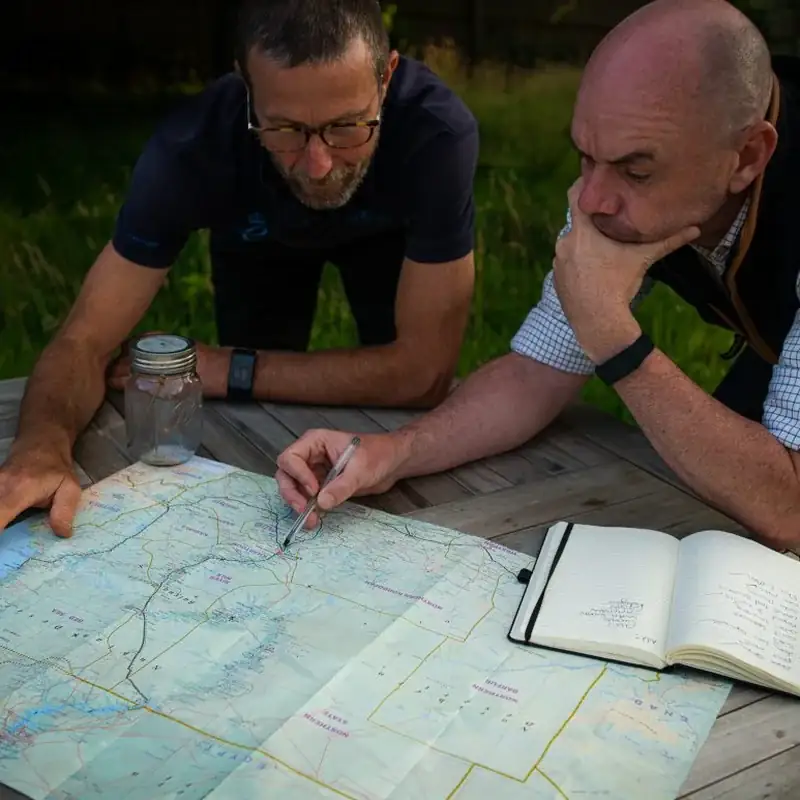
Every journey starts with a conversation. We take the time to understand your vision before we start planning.
Whether by phone or in person, we work with you directly to shape something that is considered, personal, and expertly delivered.
Every journey starts with a conversation. We favour a direct, personal approach: understanding your vision before anything else.
Whether by phone or in person, we work with you directly to shape a journey that is both thoughtfully considered and expertly delivered.
Get in touch to start planning yours.