

Area
Rift Valley Lakes
Freshwater Naivasha and the soda lakes of Nakuru and Elmenteita, strung along the Rift Valley floor two hours from Nairobi.
Size: Naivasha 139 km²; Nakuru National Park 188 km²
Key species: Lesser flamingo, great white pelican, black rhino
Habitat: Soda and freshwater lakes, acacia woodland
Pelicans nest here, fish next door
Naivasha, Nakuru and Elmenteita lie strung along the floor of Kenya’s Great Rift Valley, close enough to Nairobi to open or close a safari without a long flight. Naivasha is fresh, fringed with papyrus and loud with hippos. Its two neighbours are alkaline, and when blooms of Spirulina algae rise in them the lesser flamingos and pelicans arrive in numbers that shift with the water chemistry.
Crescent Island has no predators, so visitors walk it on foot.
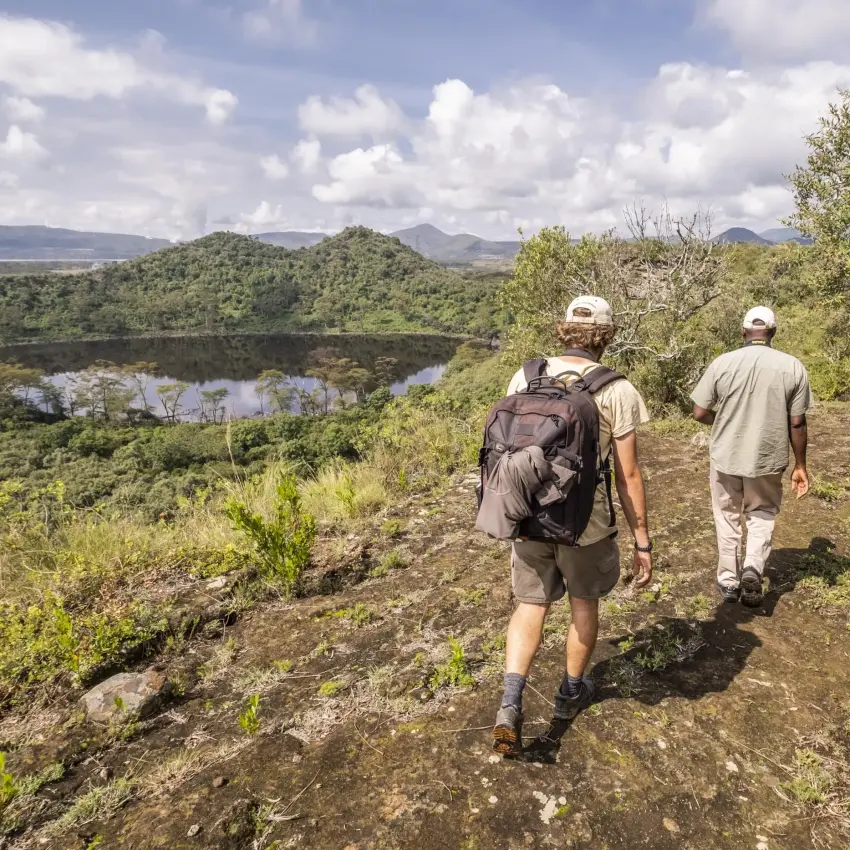
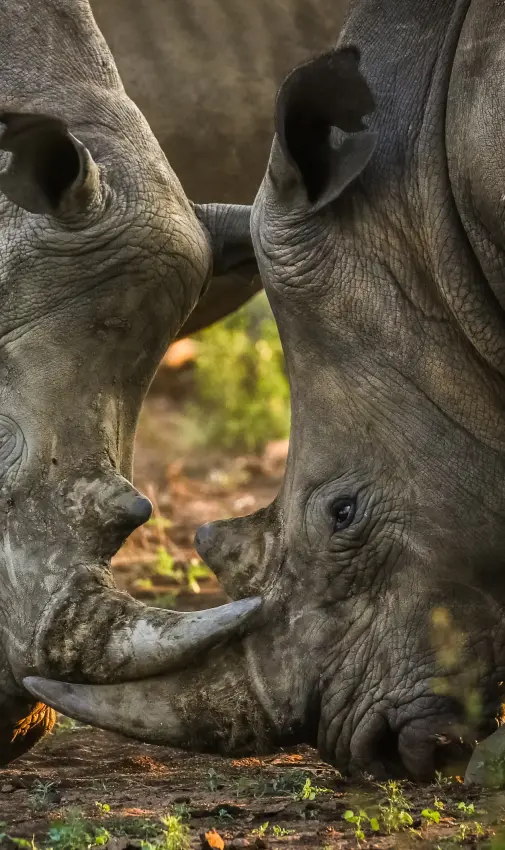
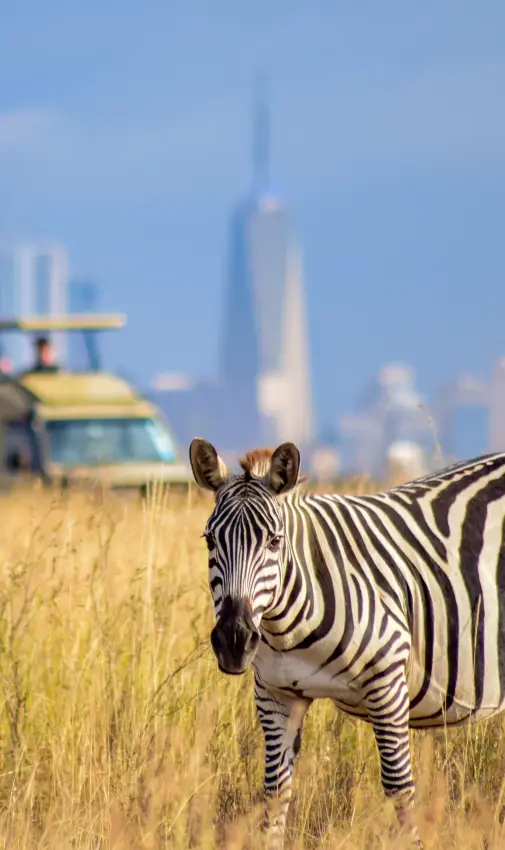
Naivasha is worked from the water, boat safaris easing alongside hippo pods while fish eagles hunt overhead. Crescent Island has no predators, so visitors walk it on foot. Giraffes, zebras and waterbuck graze alongside. Nakuru is drier work, its game drives kept to the park roads, past white and black rhinos and Rothschild’s giraffes moving through yellow-fever tree woodland.

Elmenteita is ringed by volcanic islets, and on them sits a breeding colony of great white pelicans, thousands of pairs strong, raising chicks on rock that no predator can reach. The lake’s own water is too alkaline to feed them, so the adults commute to Lake Nakuru to fish instead. They return with full throat pouches to feed the chicks. Elmenteita and Nakuru cannot be read separately.
They return with full throat pouches to feed the chicks.
Soysambu Conservancy wraps around much of Elmenteita beneath the volcanic cone the settlers called the Sleeping Warrior, the old Delamere estate, established in 2007. Being private land, it can offer what Lake Nakuru National Park cannot: night drives, walking safaris and riding out on horseback. It also shelters a significant population of Rothschild’s giraffes.
The lakes lie along the floor of the Gregory Rift, and the volcanoes that made the basin still frame the view. Mount Longonot rises above Naivasha, its crater rim walkable in a morning, and the gorges of Hell’s Gate cut into the same volcanic rock nearby. Menengai Crater stands above Nakuru, and the Mau Escarpment closes the western horizon. Naivasha is kept fresh by the Malewa and Gilgil rivers. Elmenteita and Nakuru have no outlet, so evaporation concentrates their salts.
Lesser flamingos filter Spirulina algae from the alkaline water, and they follow it, shifting between Nakuru, Elmenteita, Bogoria and Tanzania’s Lake Natron as the blooms rise and fade. Counts at any one lake swing from tens of thousands to well over a million. Rising water levels through the 2010s diluted the soda lakes, thinned the algae and moved the birds on to other sites in the chain. Nakuru’s rhinos are steadier residents, part of a sanctuary WWF Kenya helped establish, sharing the woodland above the shore with buffalo and waterbuck.
Counts at any one lake swing from tens of thousands to well over a million.
Louis Leakey identified obsidian handaxes roughly a million years old at Kariandusi, near Elmenteita, in 1928. Maasai pastoralists hold the escarpments and grazing land around the lakes today, and around Naivasha the flower farms and a geothermal station draw on the same water as the lodges. The Lake Naivasha Riparian Association, formed in 1929, has worked on that balance ever since. It produced the lake’s first gazetted management plan and won a Ramsar conservation award in 1999, and Imarisha Naivasha now coordinates restoration work across the basin.
Nakuru, Elmenteita and Bogoria are listed together as the Kenya Lake System in the Great Rift Valley, a UNESCO World Heritage Site managed by the Kenya Wildlife Service. Bogoria, at the northern end of that group, is a national reserve of hot springs and geysers; the Endorois community won a 2009 ruling from the African Commission on Human and Peoples’ Rights over their eviction from its shores in the 1970s. The three southern lakes sit close enough together to be covered in three or four nights, an easy opening or closing chapter on a longer Kenyan trip.

The best time to visit Rift Valley Lakes
Jan
Feb
Mar
Apr
May
Jun
Jul
Aug
Sep
Oct
Nov
Dec
Recommended
Transitional
Challenging conditions
Come in the dry season for the most reliable luxury wildlife and birding, when roads are easier and animals gather around limited water. The drier months are the dependable peak. The wet season lifts the scenery and bird activity but can complicate some roads and disperse wildlife.
accommodation in rift valley lakes
Naivasha carries the widest choice, from settler-era stone farmhouses run as private houses to small lodges inside private wildlife sanctuaries and lakeside camps close to the boat jetties, with houses on Crescent Island available on an exclusive-use basis. Around Elmenteita, tented camps raised on wooden platforms face the soda flats from inside private conservancy land. The Nakuru side favours volcanic-stone cottages on conservancies bordering the park, while Bogoria keeps a small footprint oriented to the reserve itself.


activities
Activities
Boat safaris on Naivasha run to the hippo pods and papyrus edges, with Crescent Island walked on foot afterwards. Game drives in Lake Nakuru National Park keep to the roads and to daylight hours. Soysambu and its neighbouring conservancies add night drives, walking safaris, horseback riding and off-road driving, and Bogoria adds hot springs and geysers.

conservation
Conservation Projects
The Lake Naivasha Riparian Association, formed in 1929, produced the lake's first gazetted management plan and won a Ramsar conservation award in 1999. Imarisha Naivasha coordinates restoration work across the basin. WWF Kenya has supported the Nakuru rhino sanctuary, and Soysambu Conservancy shelters a significant population of Rothschild's giraffes.

getting around
Connectivity and Logistics
Safarilink flies daily from Nairobi's Wilson Airport to Loldia airstrip on Lake Naivasha, with the leg to Lanet, near Nakuru, taking 30 to 40 minutes. A scheduled flight links Loldia to the Maasai Mara in roughly 40 minutes. Private charters use the Soysambu airstrip, and helicopters can land directly at lodges for itineraries that favour speed over road time.
other areas in kenya
The Maasai Mara sits some 40 minutes by air from Loldia and delivers predator viewing and, from July to October, the wildebeest migration. Laikipia's private conservancies extend the walking and horseback riding on offer here, with black rhino conservation and open country to the north. Samburu adds arid-country species including Grevy's zebra, reticulated giraffe and gerenuk, while Amboseli sets large elephant herds against Mount Kilimanjaro.
 01
01
 02
02
 03
03
 04
04
 05
05
 06
06
 07
07
 08
08
 09
09
 10
10
frequently asked questions
By road from Nairobi, and that is part of why they work so well.
Naivasha is about an hour and a half to two hours from the city, Nakuru around three, and the drive over the escarpment with the Rift opening below is a genuine sight. Flying is possible to the airstrips and rarely necessary.
The lakes further north, Bogoria and Baringo, are longer drives.
We arrange the vehicle and the guide for the whole route rather than lake by lake.
If the scheduled days do not suit, a private charter from Nairobi goes when you want, usually a Cessna Caravan, and we can arrange either.
Things you cannot do on a normal game drive, which is the appeal.
- Boat trips on Naivasha and Baringo, for hippo, pelicans and fish eagles
- Walking on Crescent Island at Naivasha, among giraffe and zebra
- Cycling or walking in Hell's Gate gorge
- Rhino, both black and white, at Lake Nakuru
The hot springs at Bogoria and the birding at Baringo are worth the longer drive.
It is a good first stop for anyone who wants to be out of the vehicle.
It depends which lake, and the altitude is why.
Naivasha and Nakuru sit high, around 1,800 metres, where both TravelHealthPro, the UK's official travel health service, and the CDC place the risk as low. Baringo and Bogoria are far lower and warmer, and the risk there is real. Low risk is not the same as no risk.
We do not make medical recommendations. That is a conversation between you and your own doctor or a travel clinic.
On the practical part, cover up at dusk and carry repellent.
Sometimes, and far less reliably than the old photographs suggest.
The lakes have risen substantially over the past decade, which changed the water chemistry and moved the flamingos around. Nakuru, once famous for them, now often holds very few, while Bogoria and Elementaita can hold great numbers.
The birds follow the algae, and the algae follow the water.
We will tell you what the lakes are actually doing for your dates rather than sell you a picture from twenty years ago.
As an opening or a change of pace, yes. As the main event, no.
They are close to Nairobi, easy to reach by road, and they offer walking, cycling and boats rather than another drive. For families and for first-timers they work very well.
What they do not offer is the big-cat game viewing of the Maasai Mara.
Tell us how long the trip is and we will say whether the lakes earn nights or a single day.
Two, and three if you want to reach Bogoria or Baringo.
Two nights at Naivasha gives you a boat morning, Crescent Island and Hell's Gate, and a day at Nakuru on the way through. Going further north needs another night for the driving.
They sit naturally at the start of a Kenyan route, before flying on to the Mara or the north.
Tell us the whole route and we will say how many nights it earns.
rated five stars by our clients

our approach
remote, exclusive
& personal
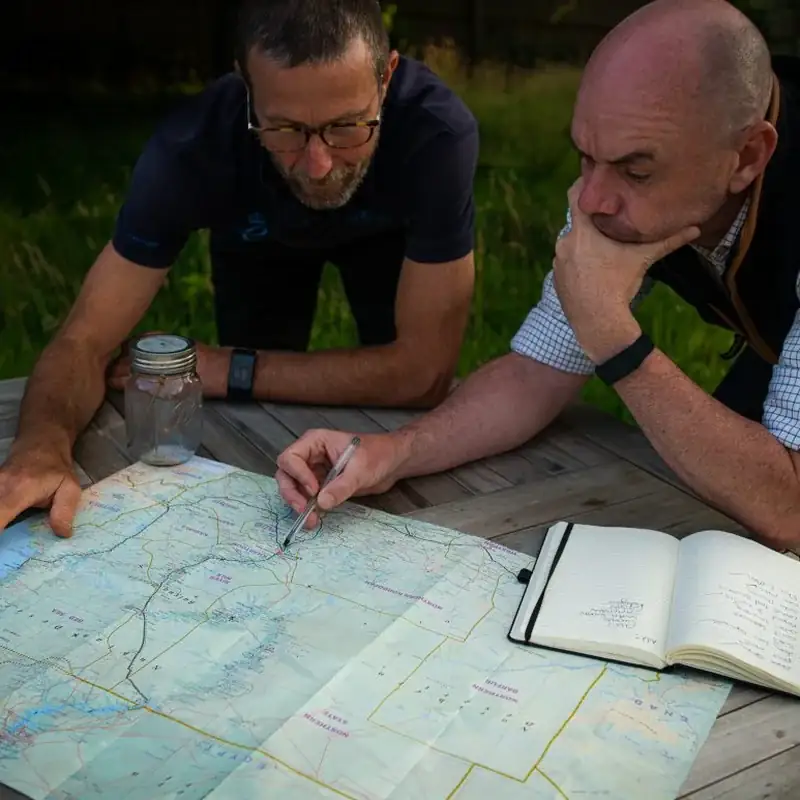
Every journey starts with a conversation. We take the time to understand your vision before we start planning.
Whether by phone or in person, we work with you directly to shape something that is considered, personal, and expertly delivered.
Every journey starts with a conversation. We favour a direct, personal approach: understanding your vision before anything else.
Whether by phone or in person, we work with you directly to shape a journey that is both thoughtfully considered and expertly delivered.
Get in touch to start planning yours.