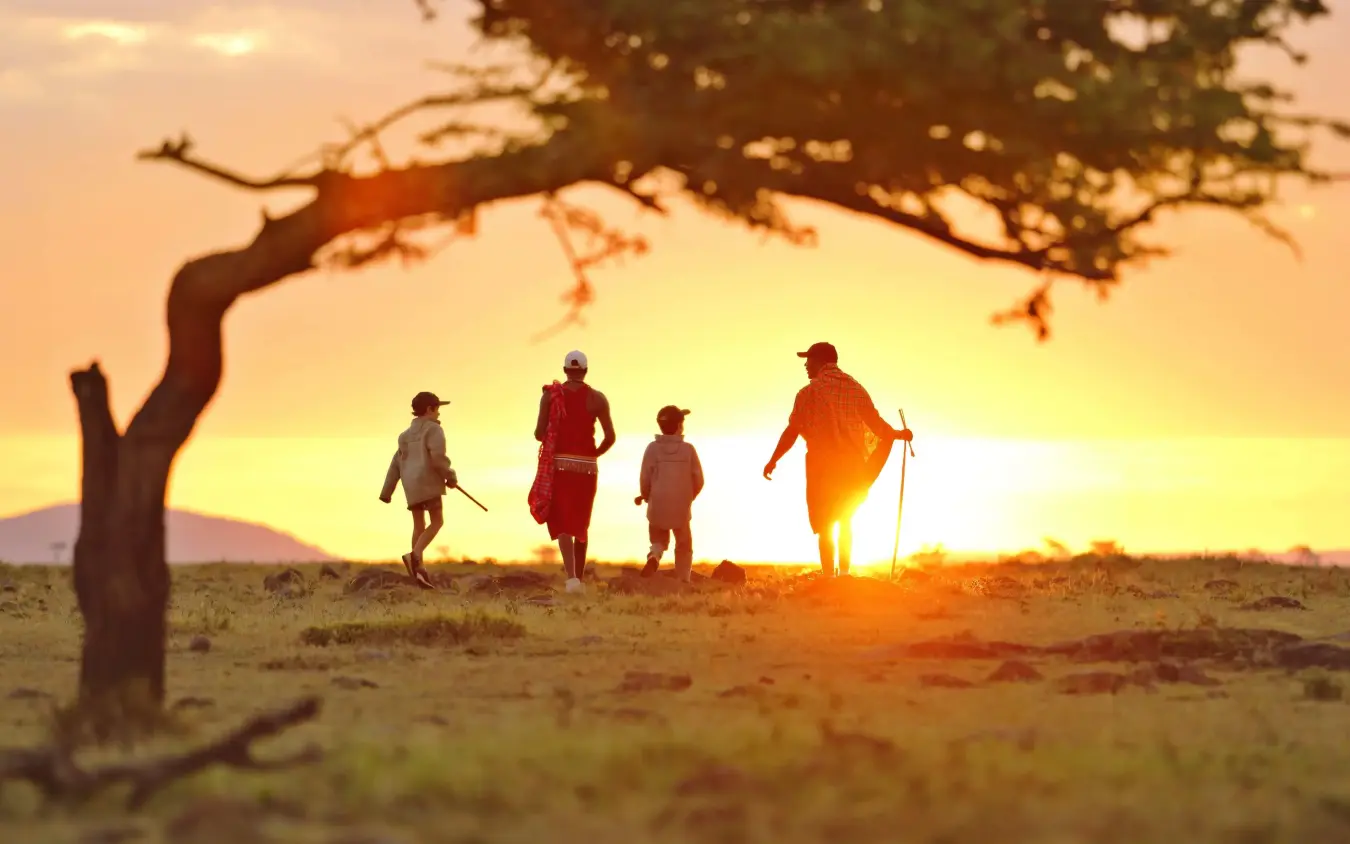
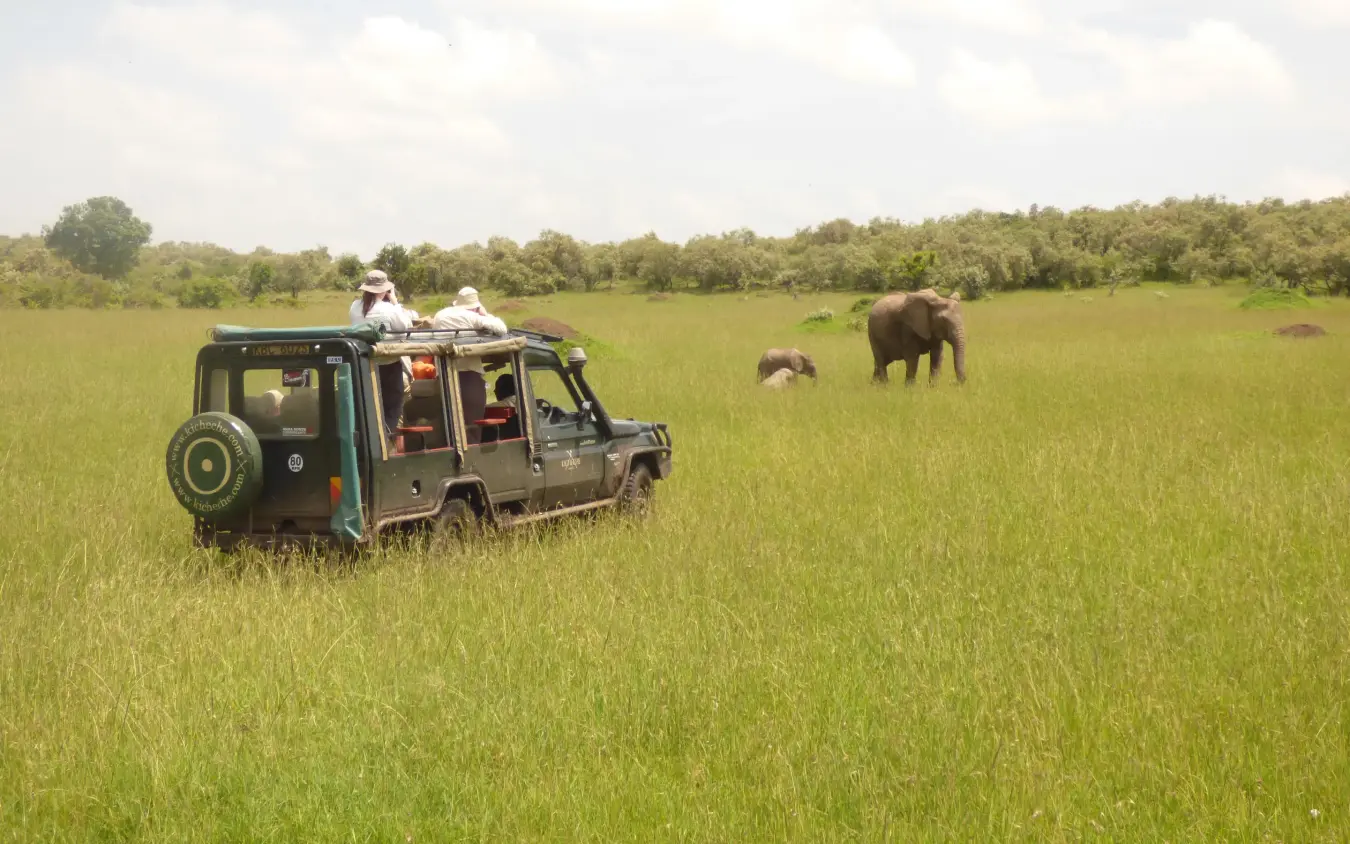
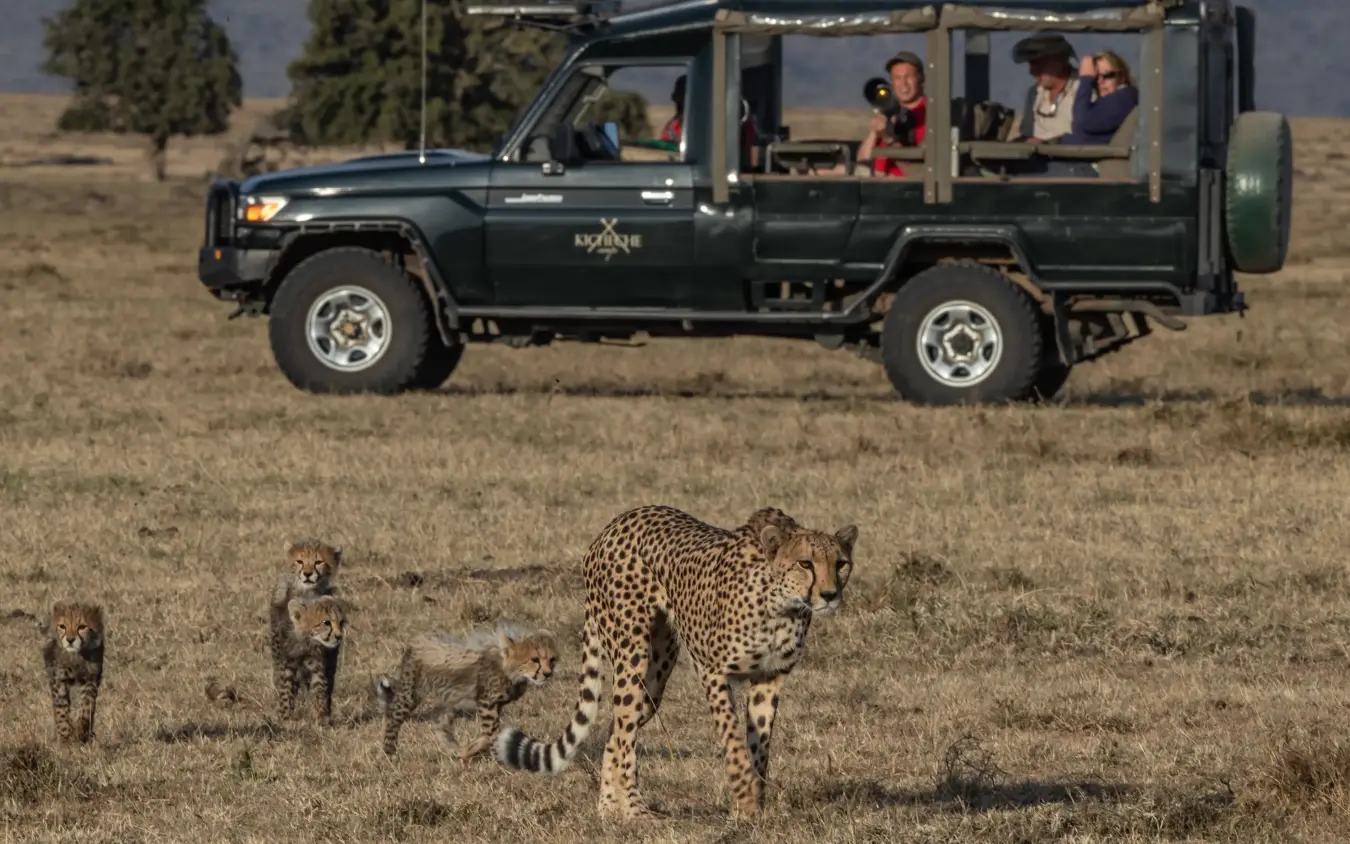
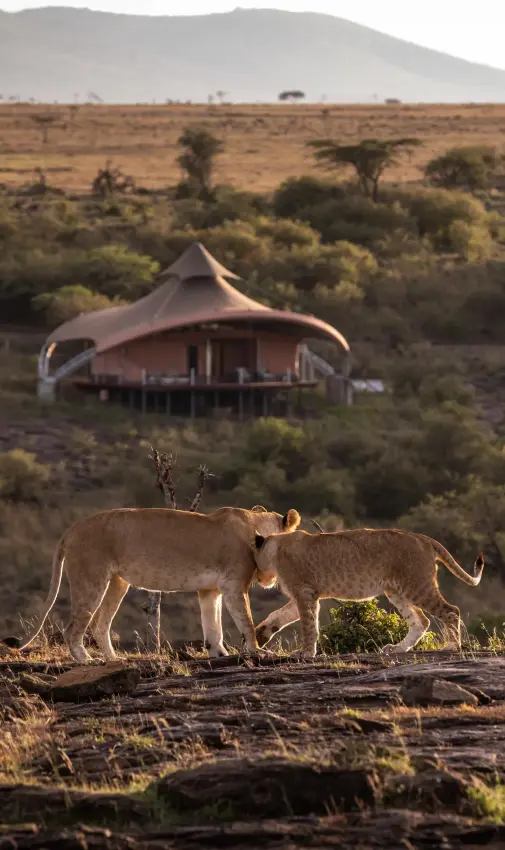
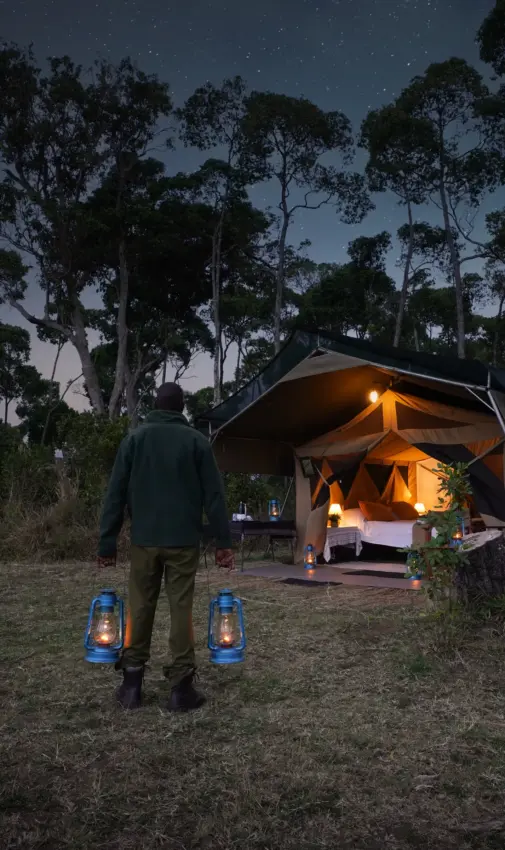
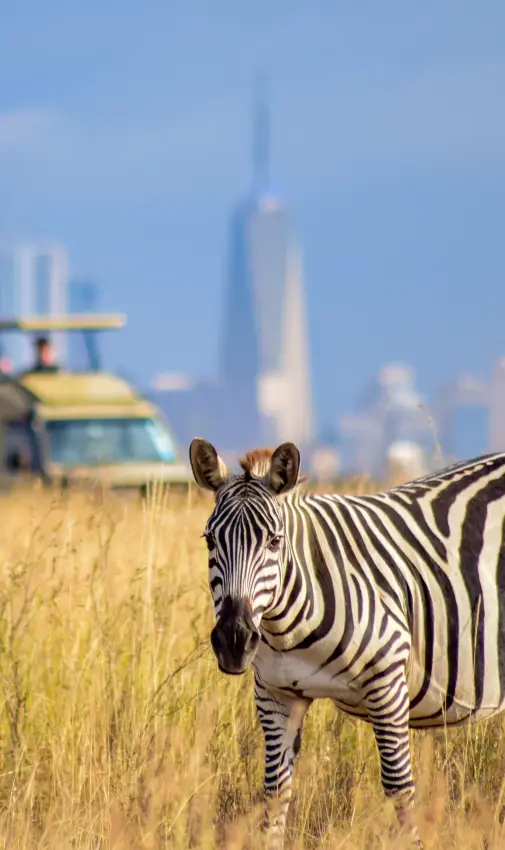
The conservancy setting opens up what the national reserve does not allow. Game drives run in customised 4x4s morning and afternoon, and off-road driving is permitted to reach a sighting others cannot. On foot, guided bush walks led by an armed ranger and a Kicheche guide turn to the smaller workings of the savanna, the tracks and the insects and the birdsong the vehicles pass by. For those who want to go further out, fly-camping adds a night under canvas in the bush, with dinner beneath the stars and a walk back to camp the following morning.
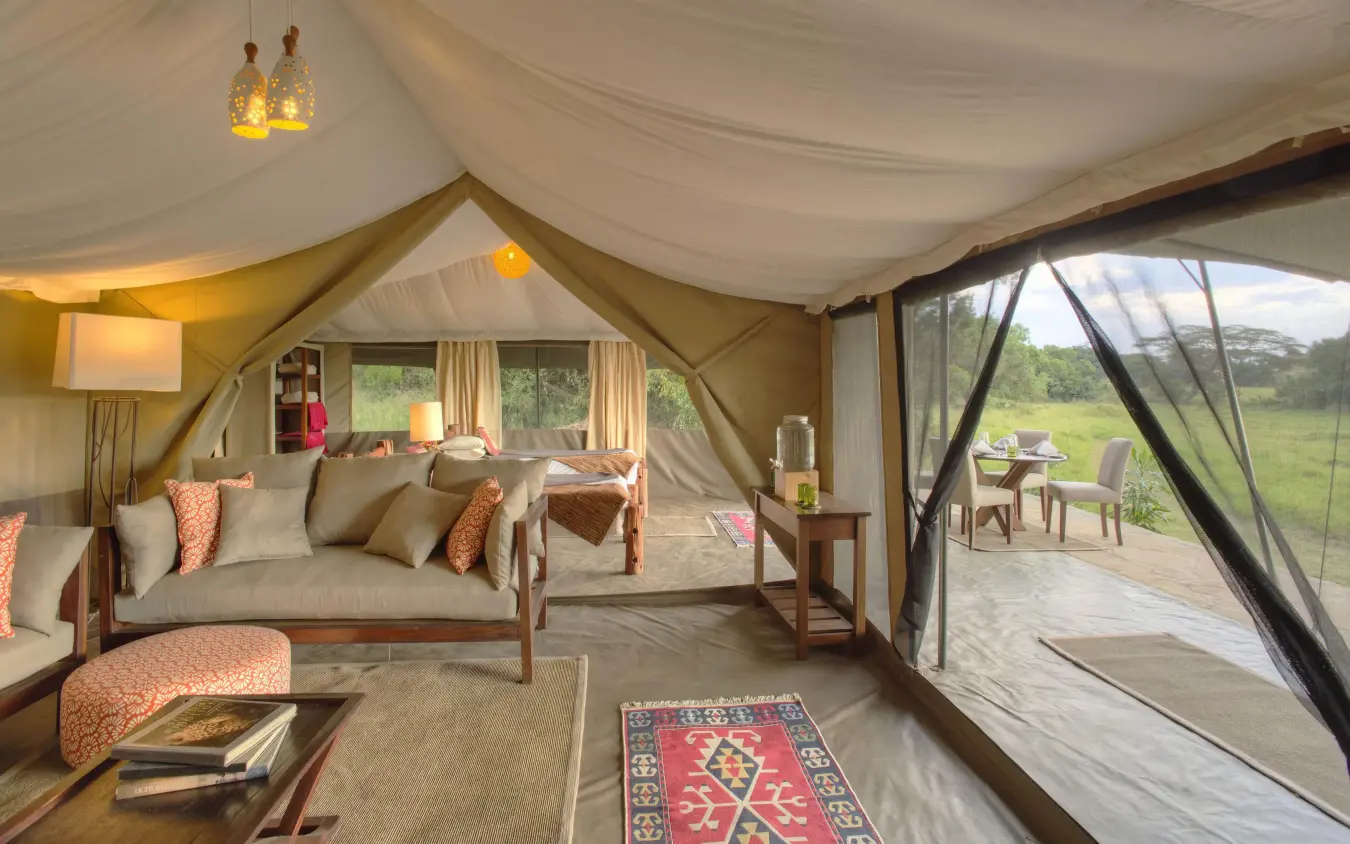
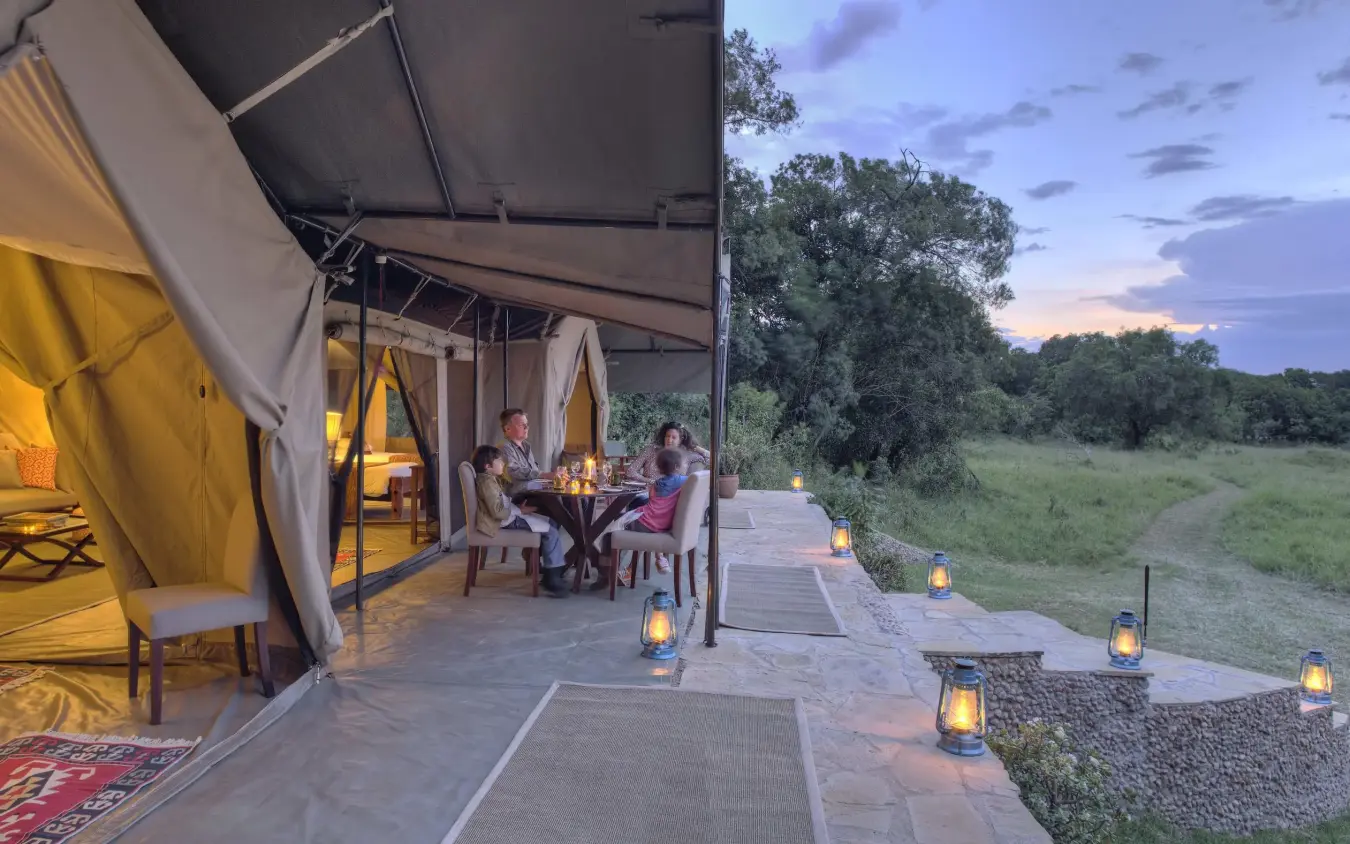
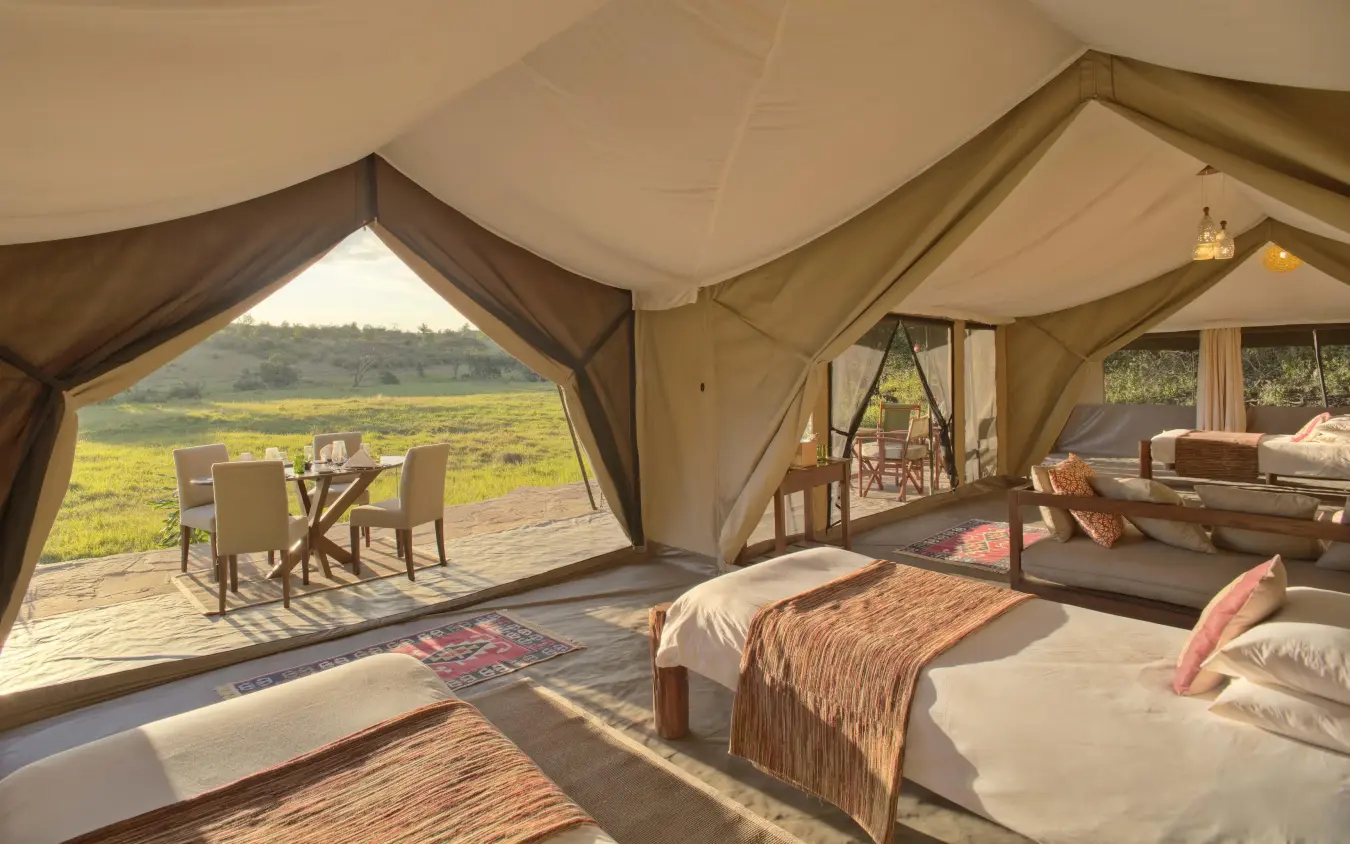
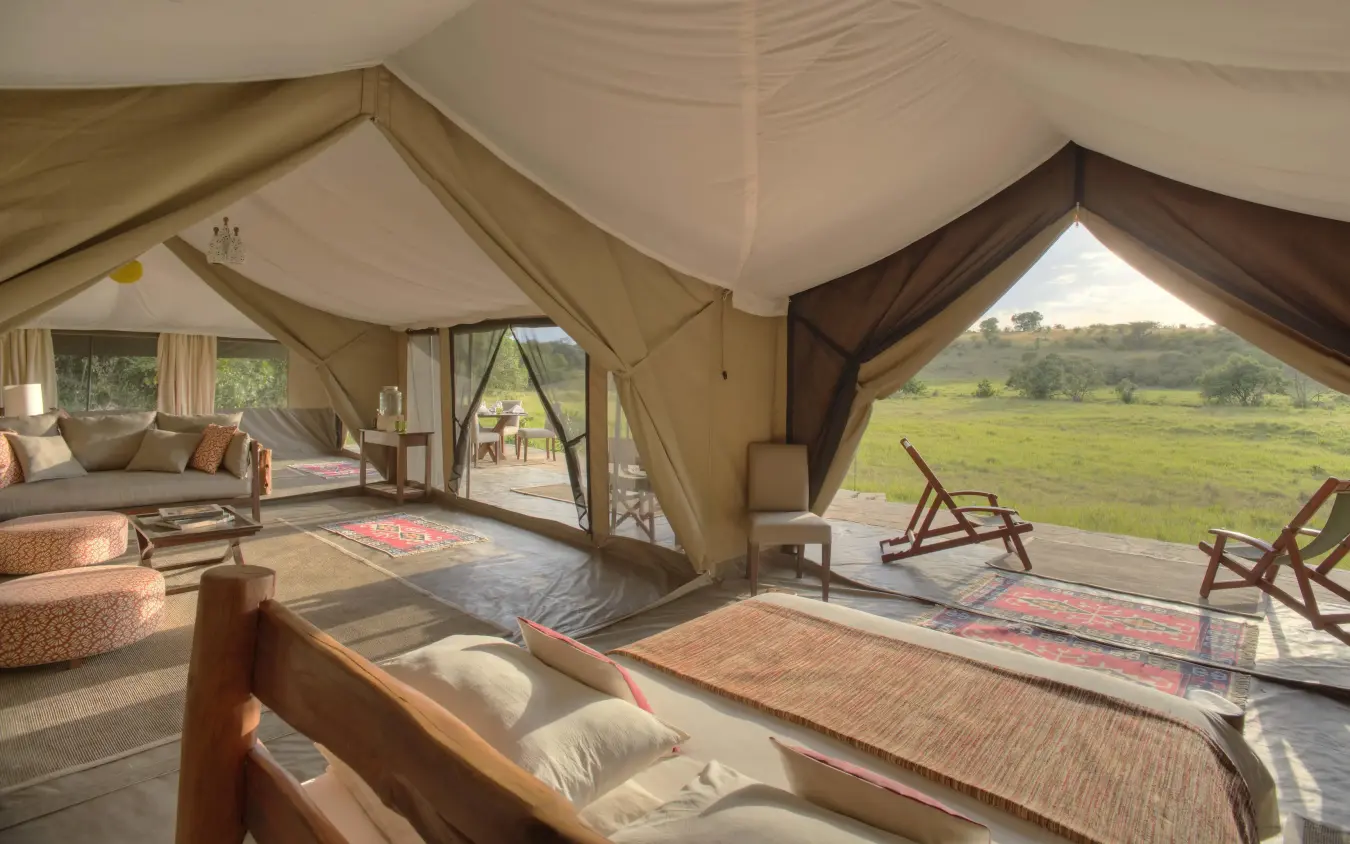
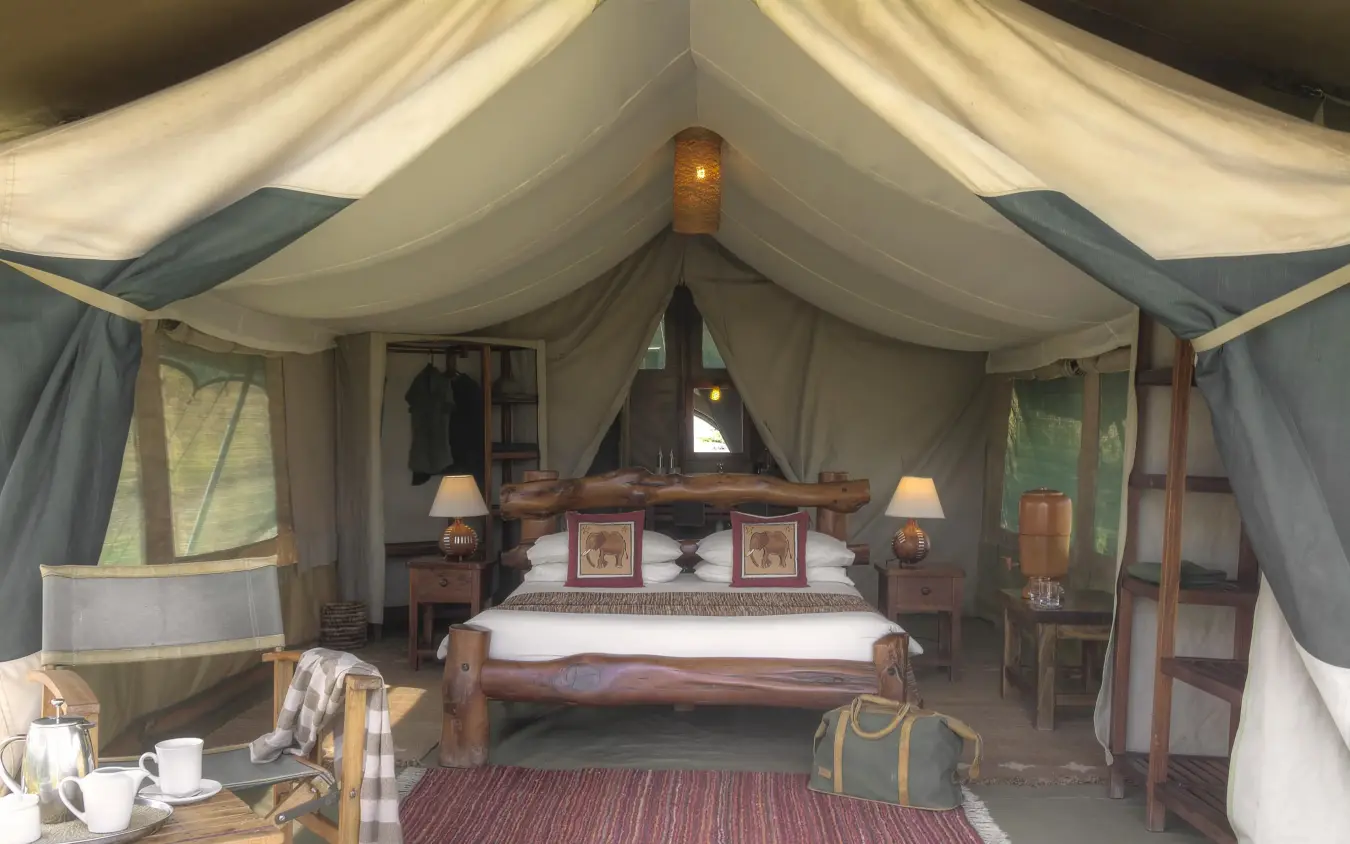
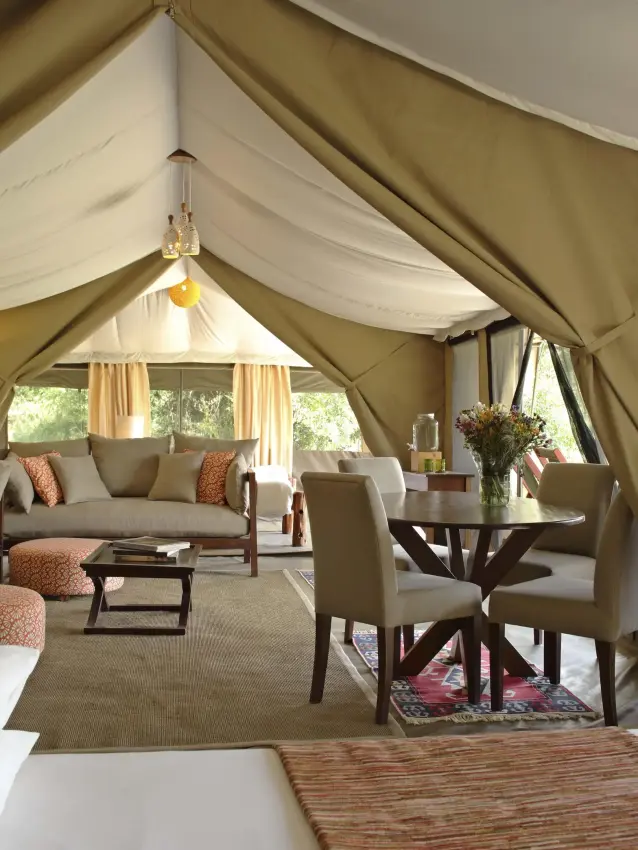
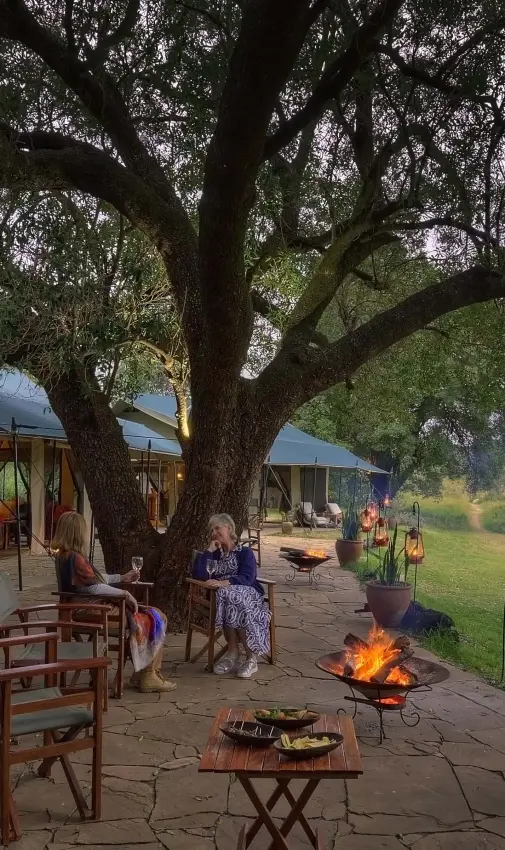
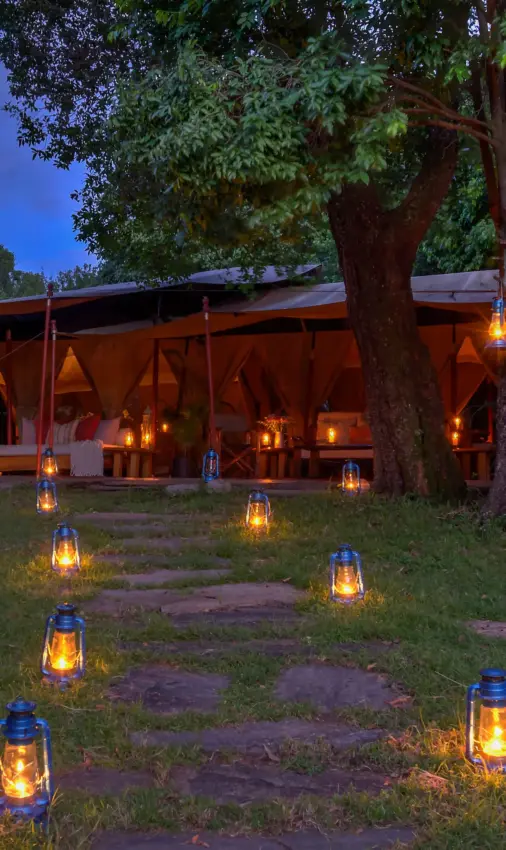
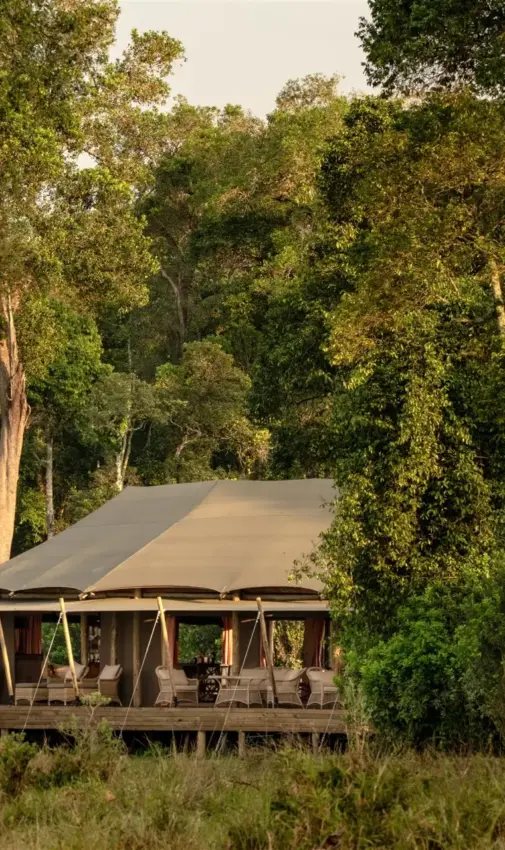
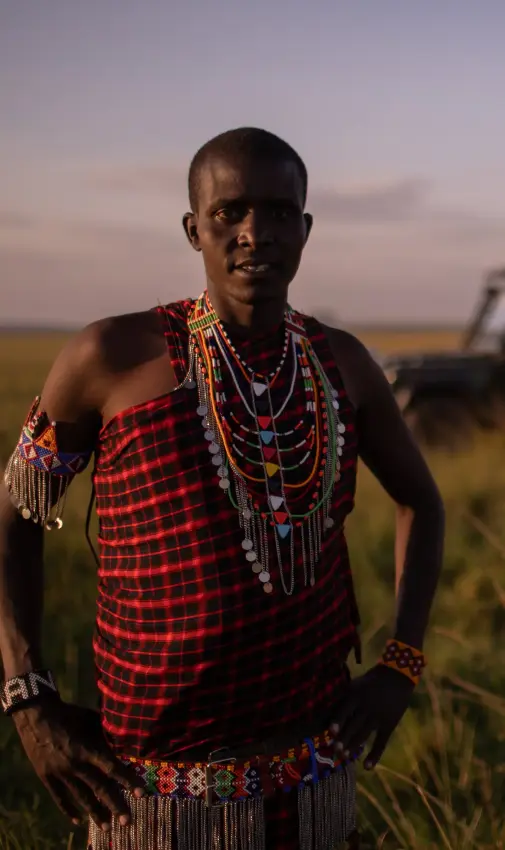
Some of the best hours come early. Hot-air balloon flights launch at sunrise, followed by breakfast out on the plains. Children are genuinely welcomed here, and younger guests can learn to track prints, try their hand at Maasai beading, or make fire without matches. The tents run from doubles and twins to triples, quads and a two-bedroom family suite, leaving families and small groups room to spread out. Meals lean on fresh ingredients, some grown in the camp’s own garden, and are served by candlelight in the open-sided dining tent or outside beneath the stars.
Hot-air balloon flights launch at sunrise, followed by breakfast out on the plains
None of this stands apart from the land it sits on. Kicheche was a founding member of Mara North, one of three Mara conservancies the company helped establish, and the conservancy leases its ground directly from more than 800 Maasai landowners. They are paid in return, with a share of the camp’s turnover going back to fund the conservancies and the communities within them. Set up in 2004, the Kicheche Community Trust works across education, healthcare and community empowerment, building classrooms, providing bursaries and supporting the Aitong Health Clinic.
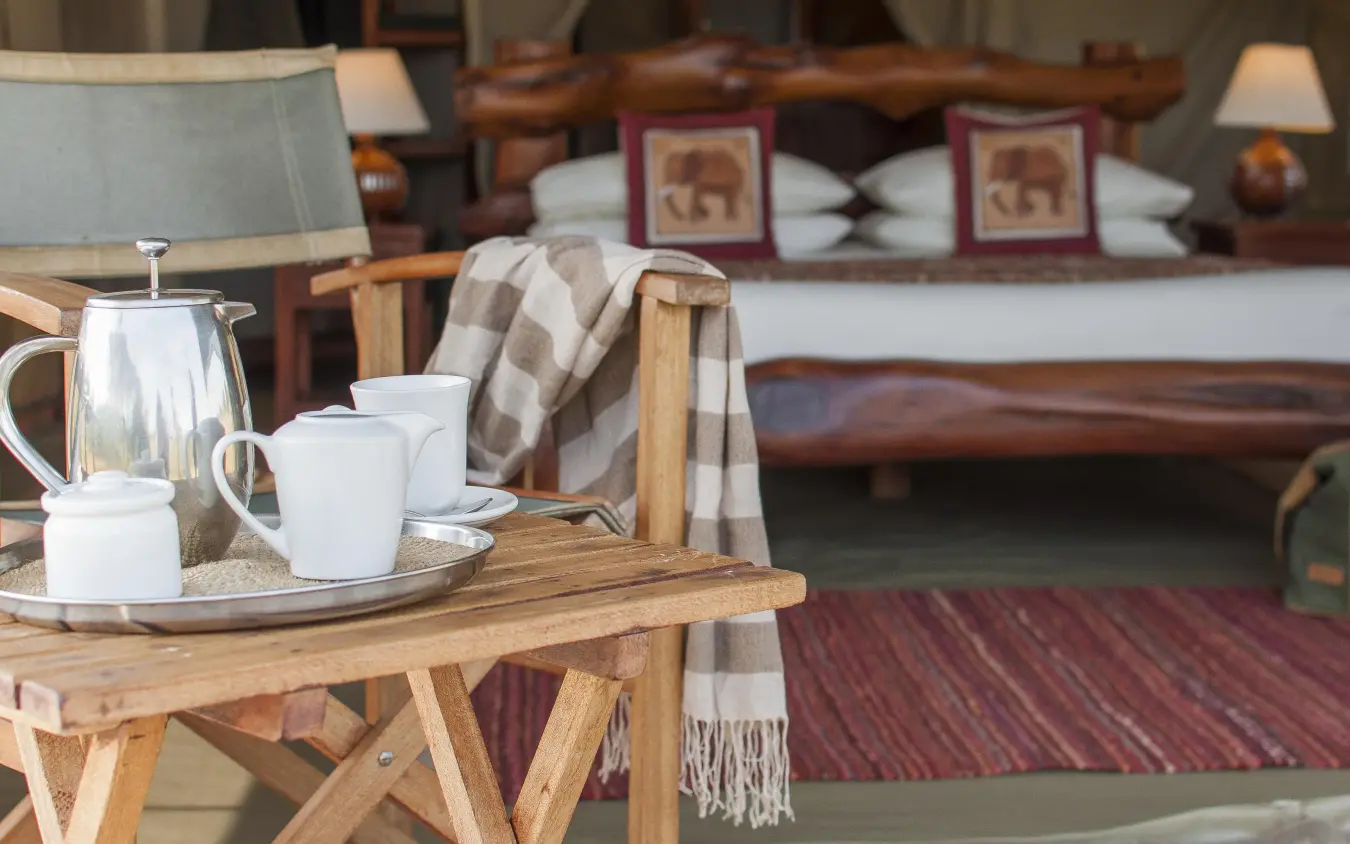
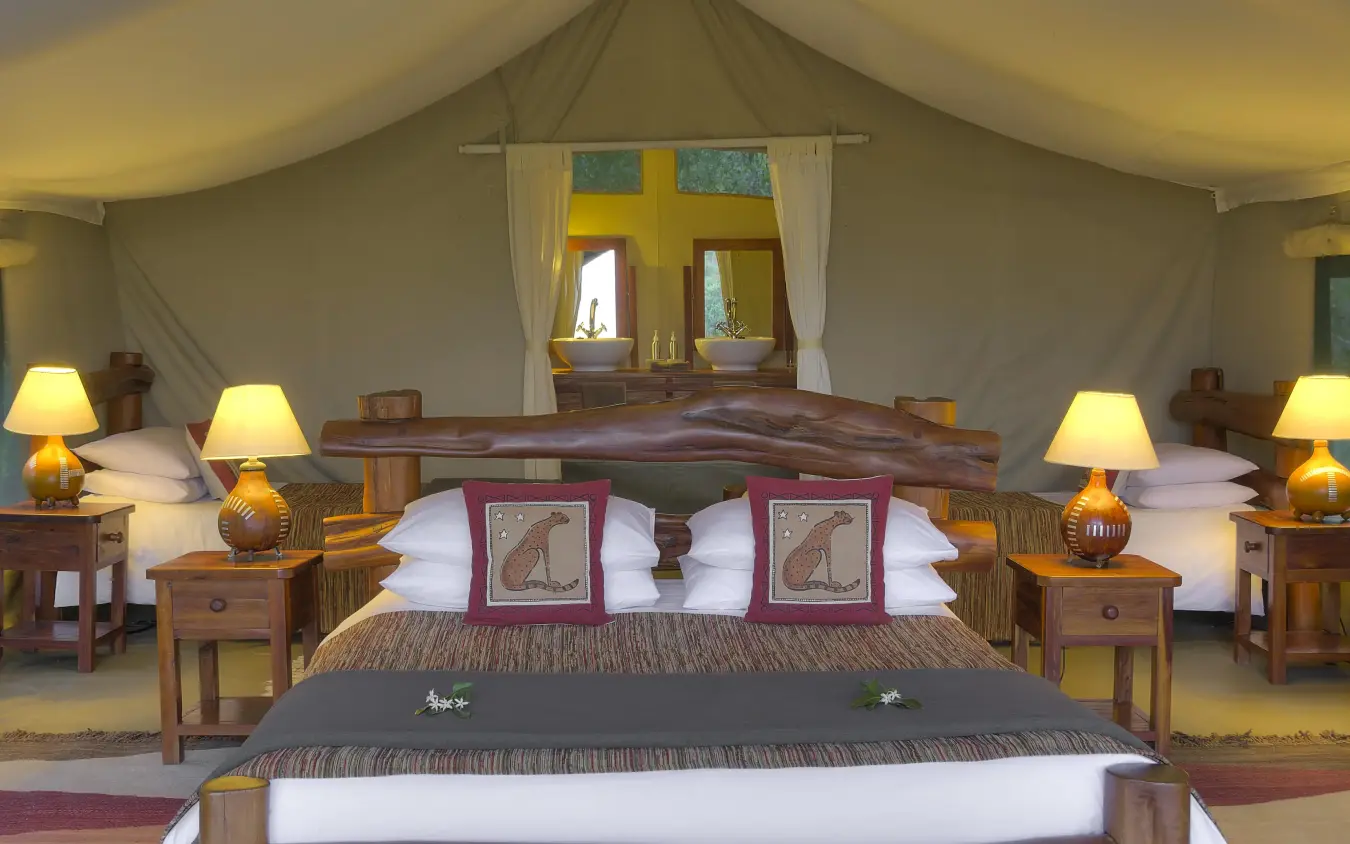
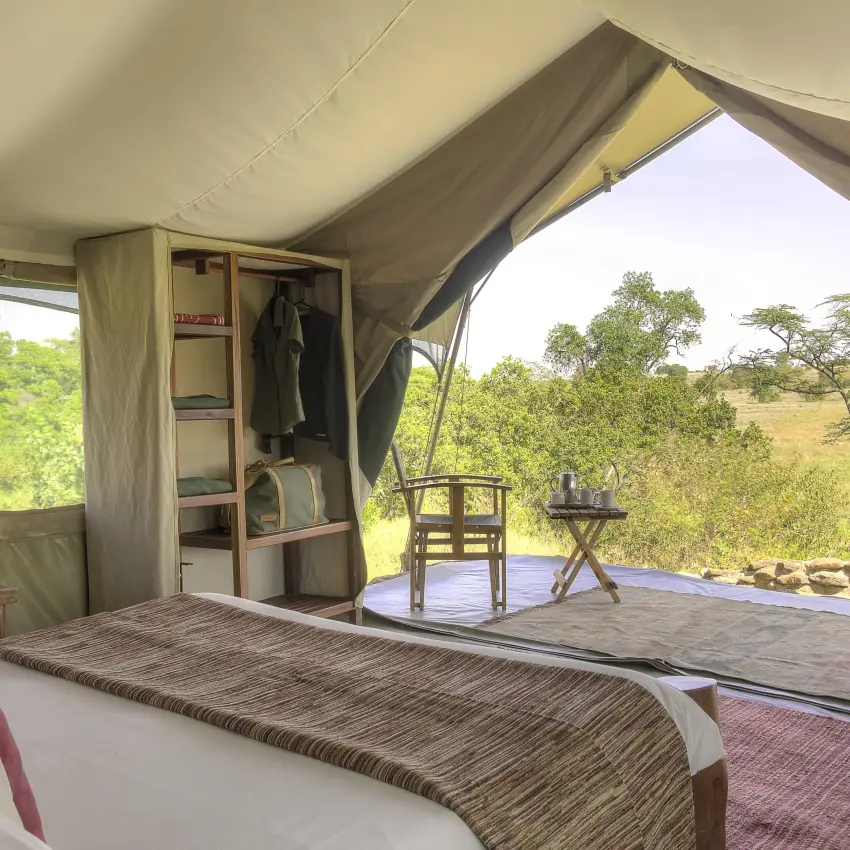
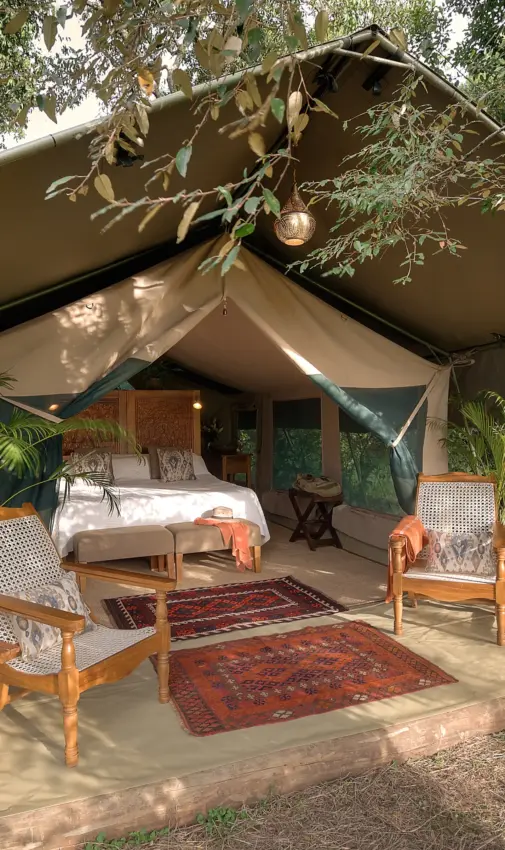
The work extends well beyond the camp gates. In partnership with the Mara Elephant Project, Kicheche takes on human-elephant conflict and anti-poaching, and guests can visit its headquarters to see how collared elephants are tracked by GPS. Cheetah research with the Kenya Wildlife Trust and the Mara Predator Conservation Project rounds out the effort. A Gold-level Eco-rating from Ecotourism Kenya, audited every two years, and membership of The Long Run reflect the standards the camp holds to. The canvas tents themselves sit on wooden decking, lit by solar power and warmed within by wooden furniture, patterned rugs and cushions.