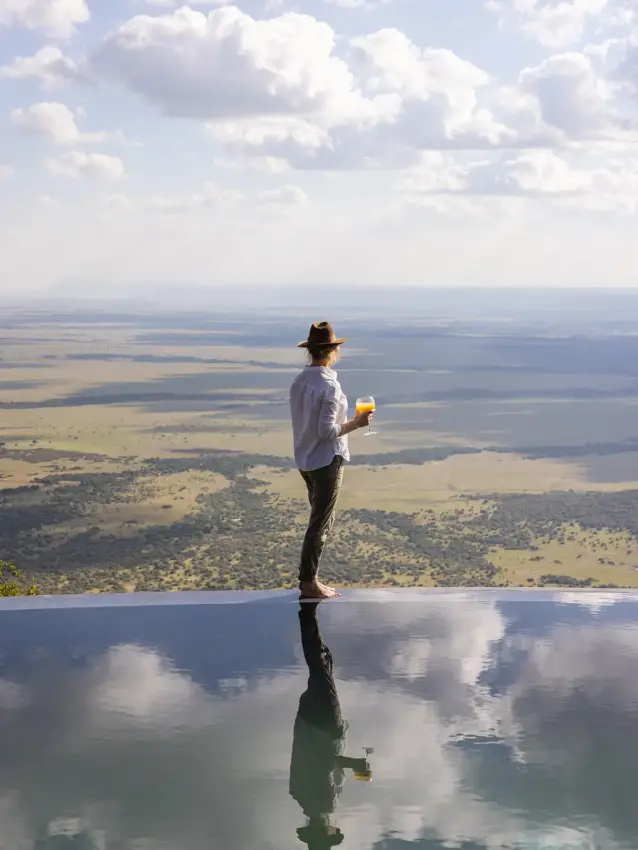
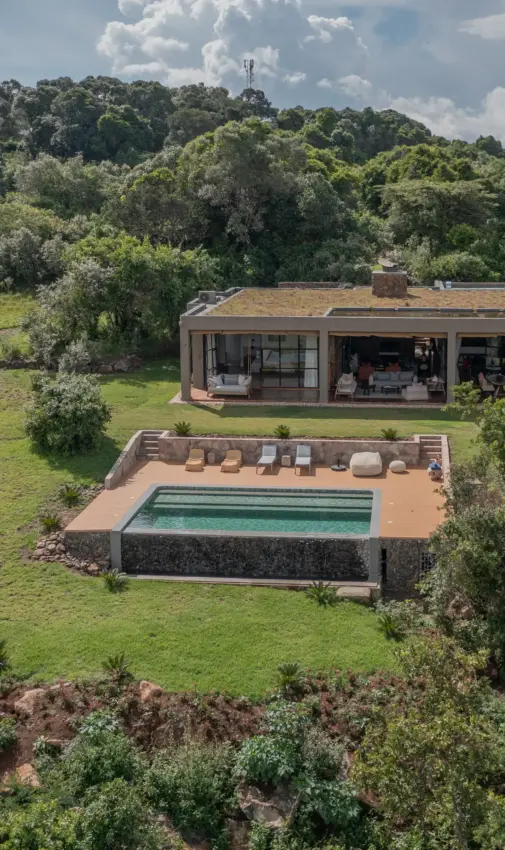
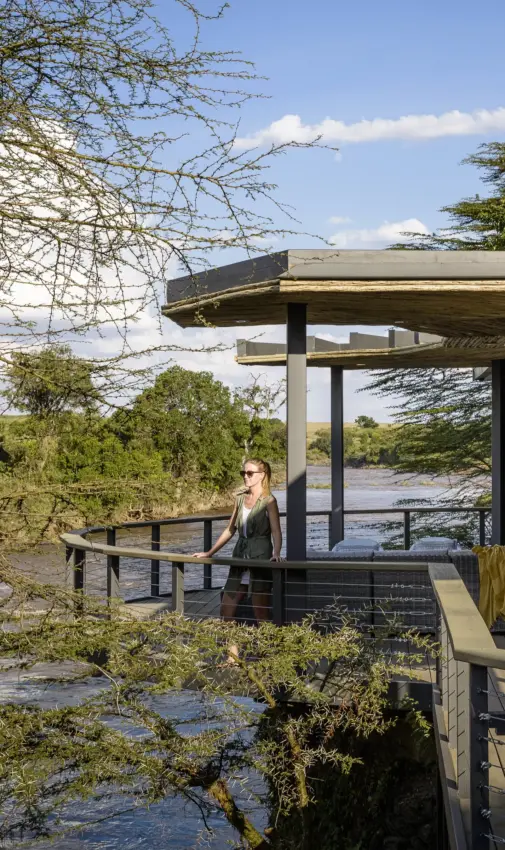
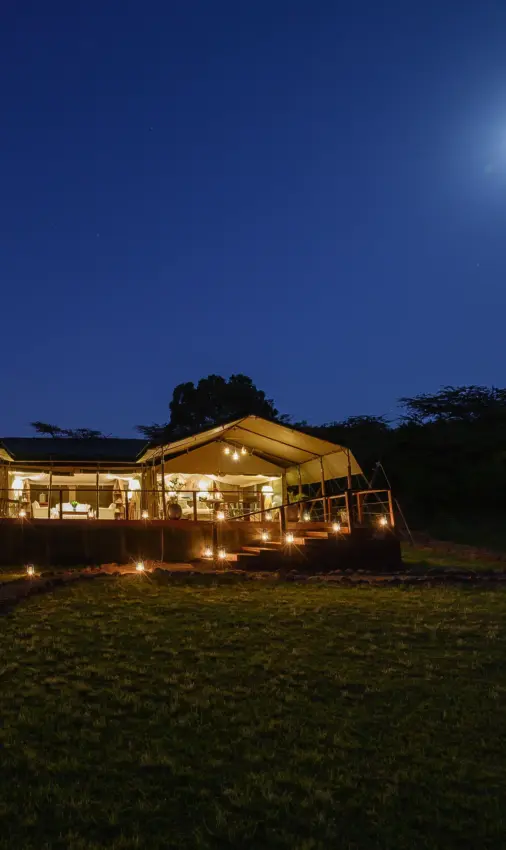
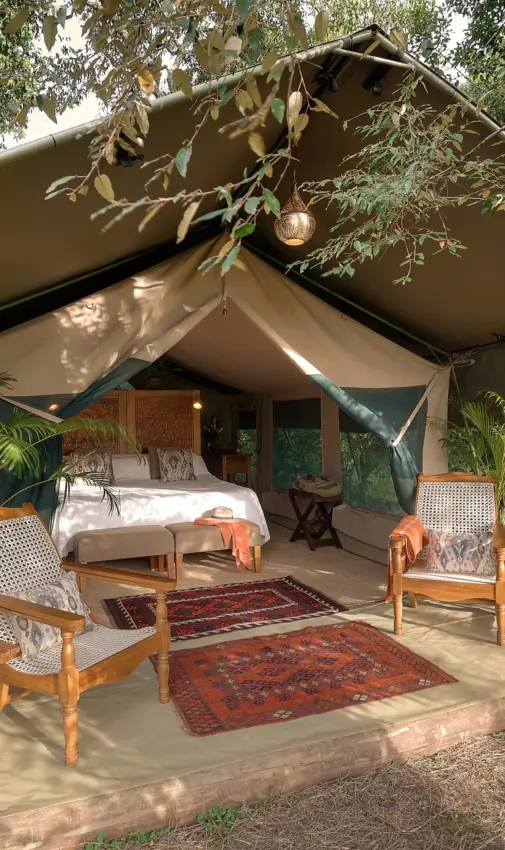
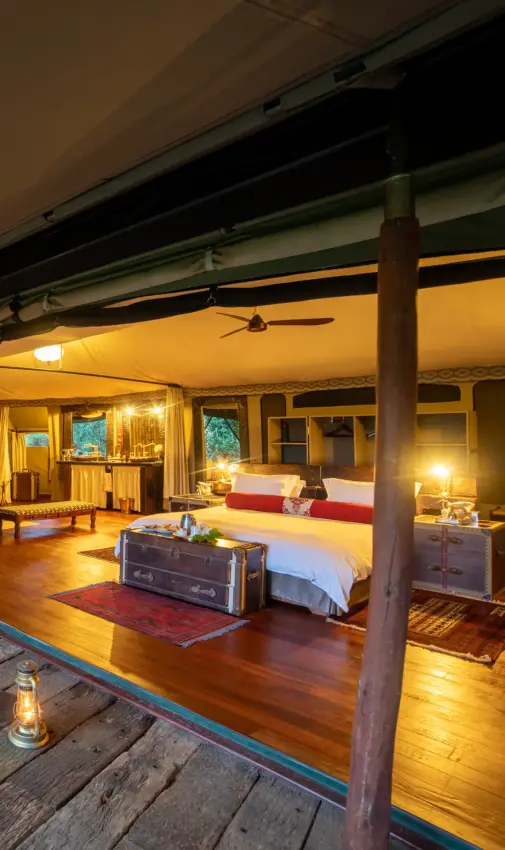
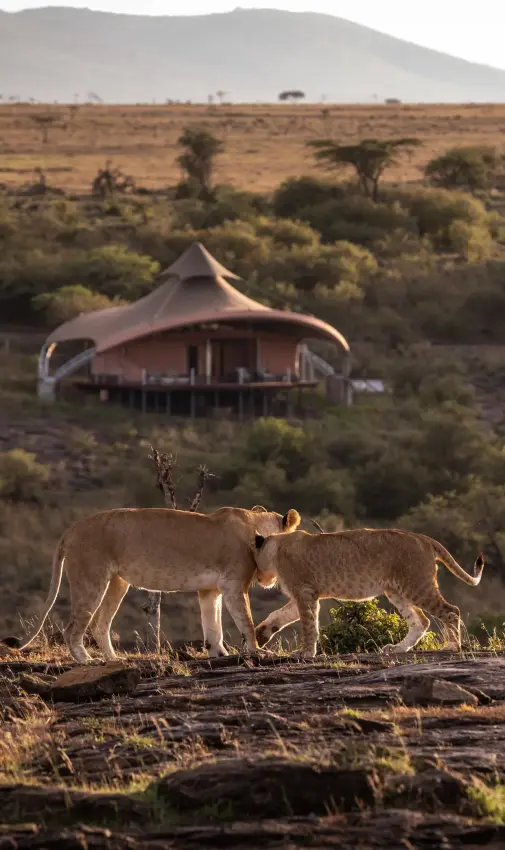
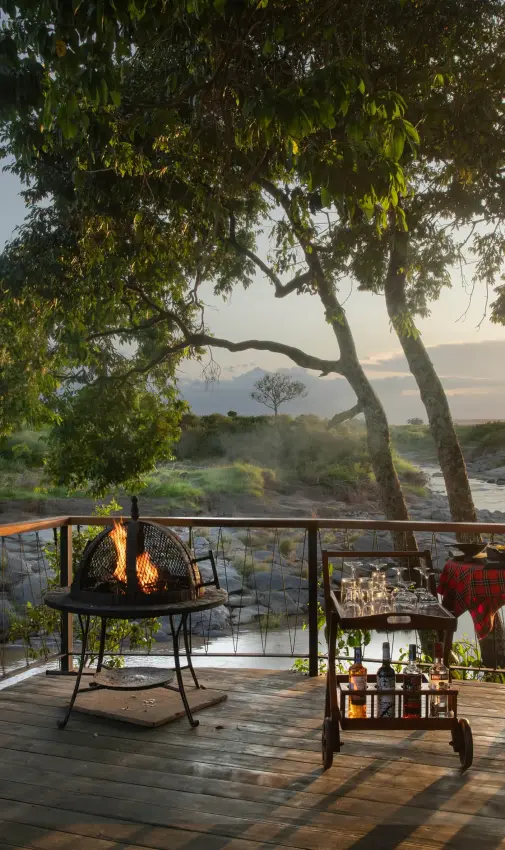
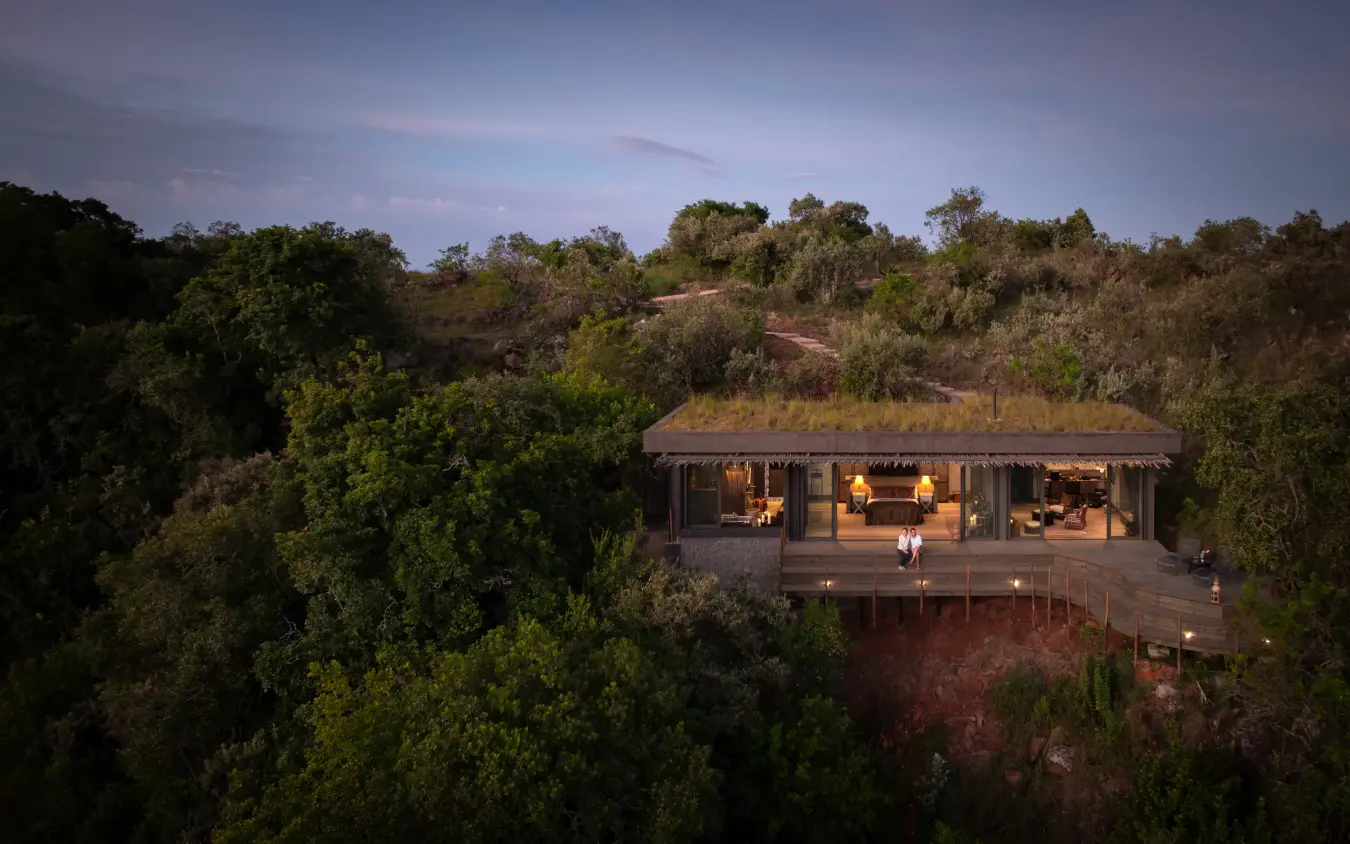
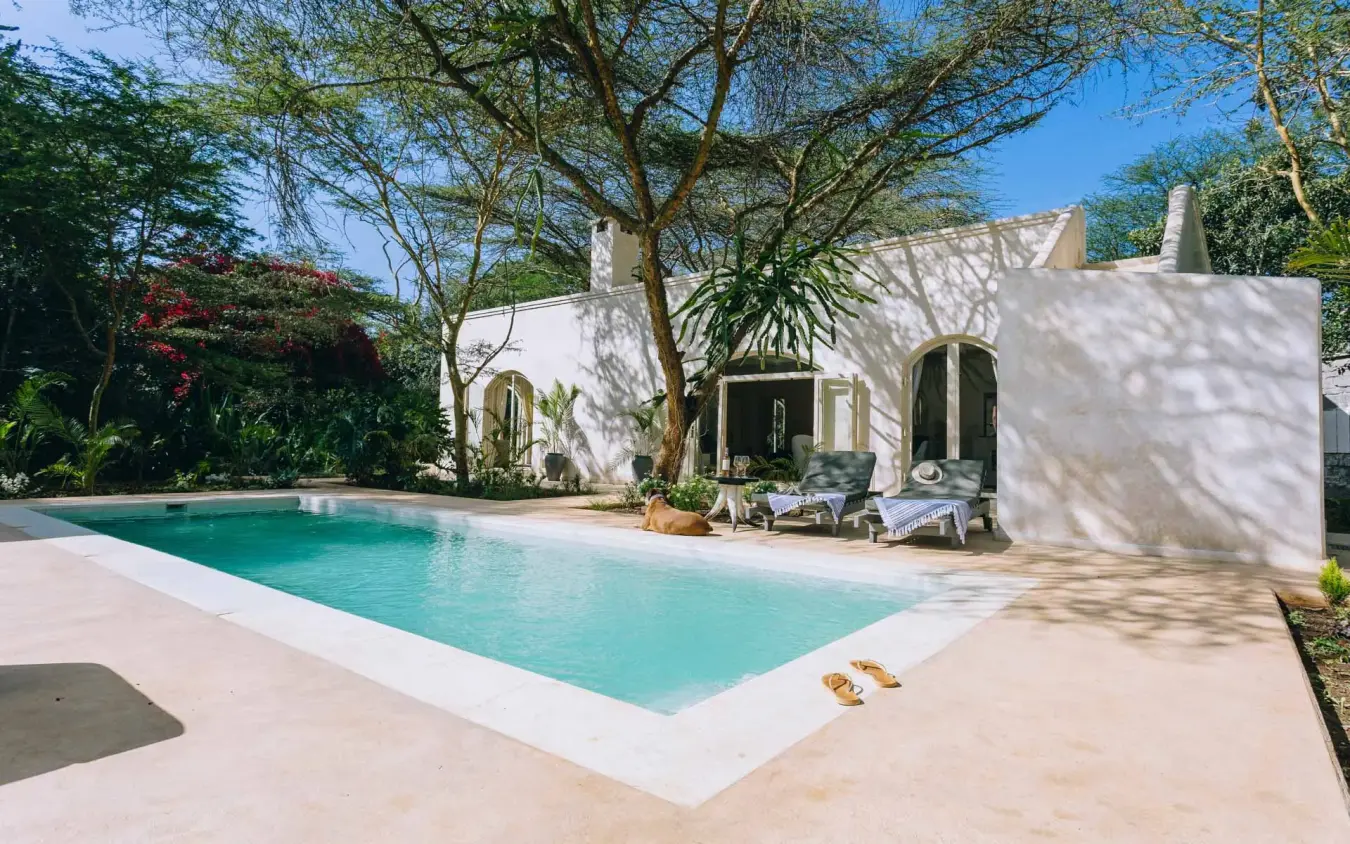
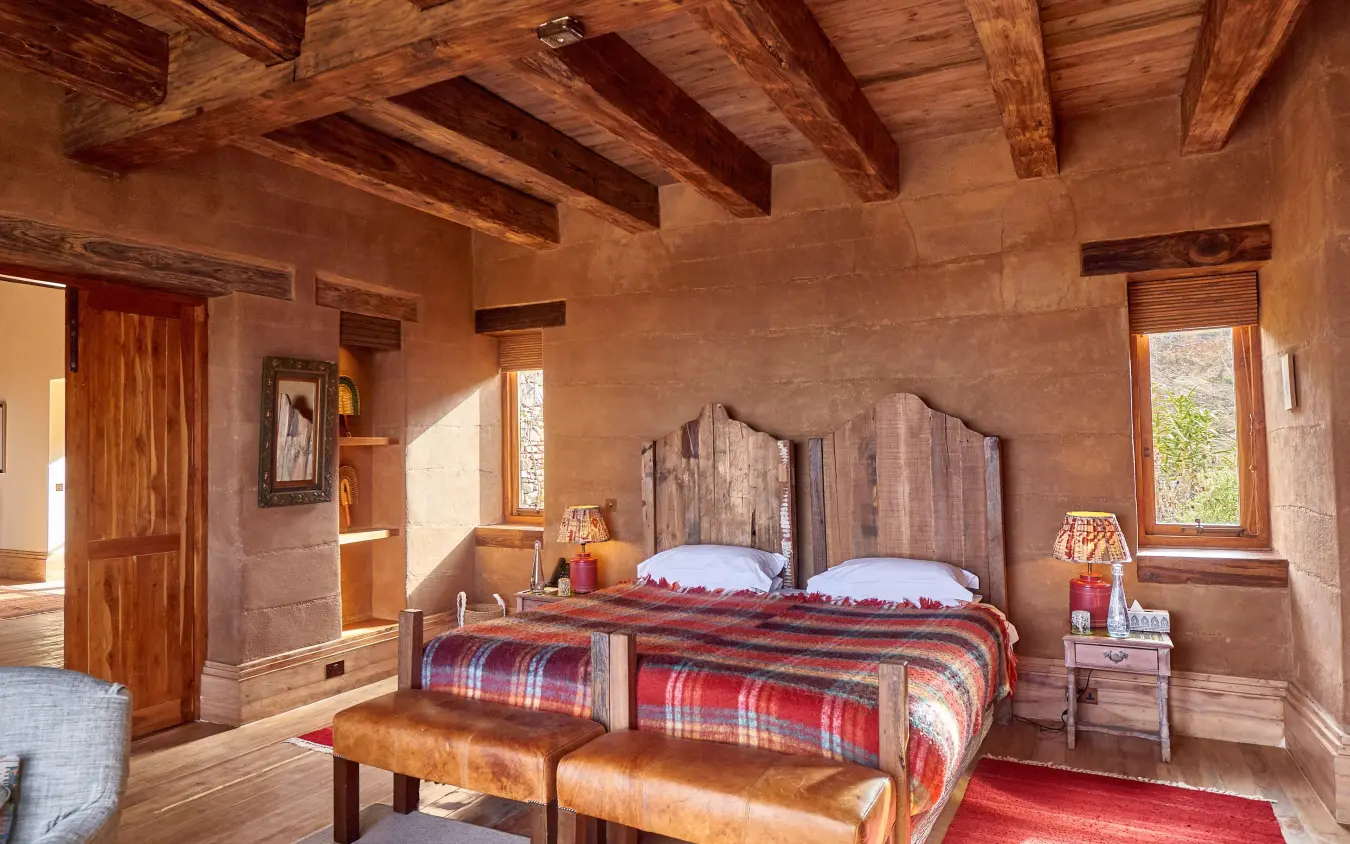
Four of the five suites are set into the hillside like cottages, each made up as a double or a twin. The fifth is a two-bedroom master suite for a family travelling together. Floor-to-ceiling glass frames the plains from every room, and each suite has its own lounge with a fireplace and a private deck. The interiors run to charcoal and copper tones against exposed wood and stone. Zanzibari doors and Omani mirrors were brought in from the coast. For families there are cots and extra beds, and a guide’s room nearby can take a travelling nanny.
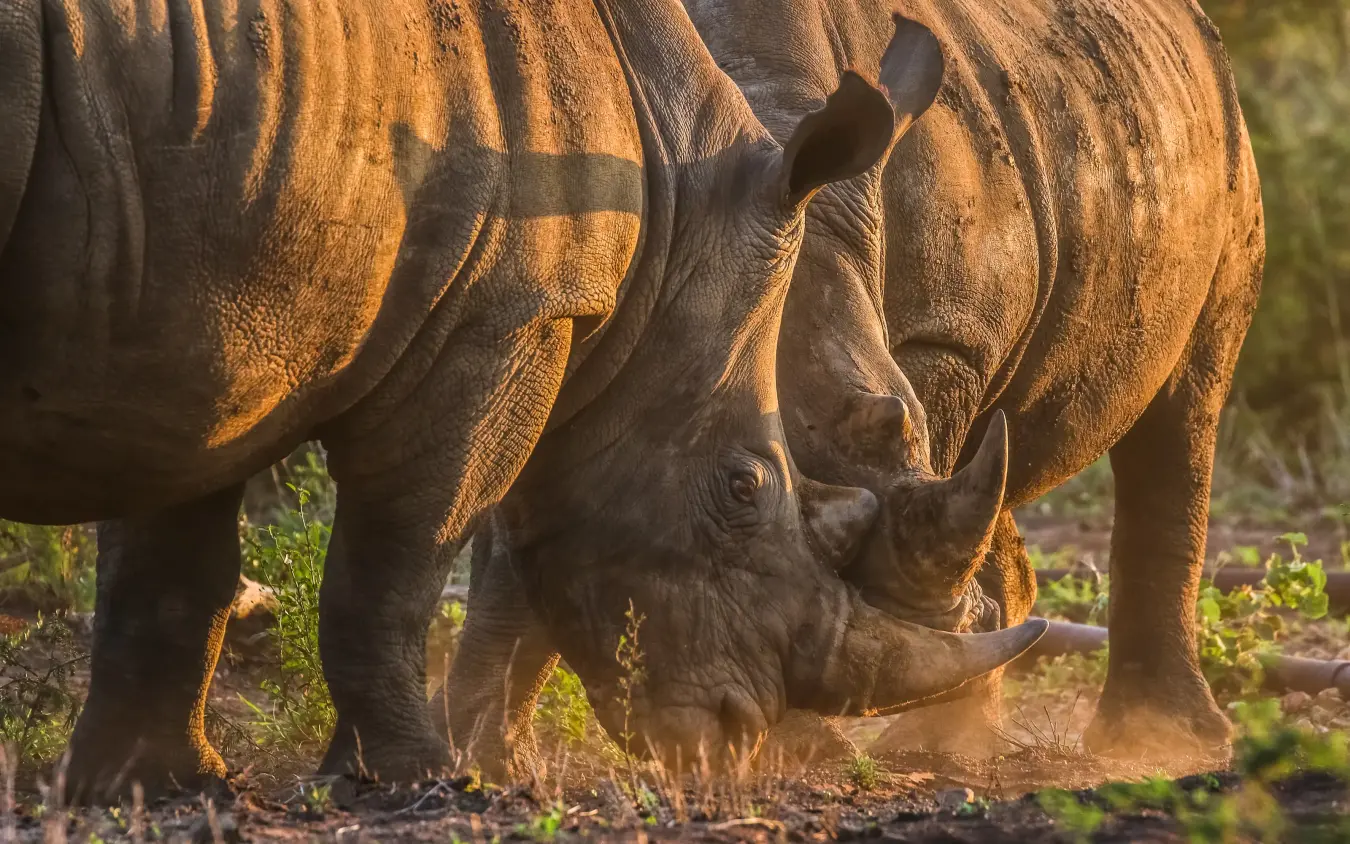
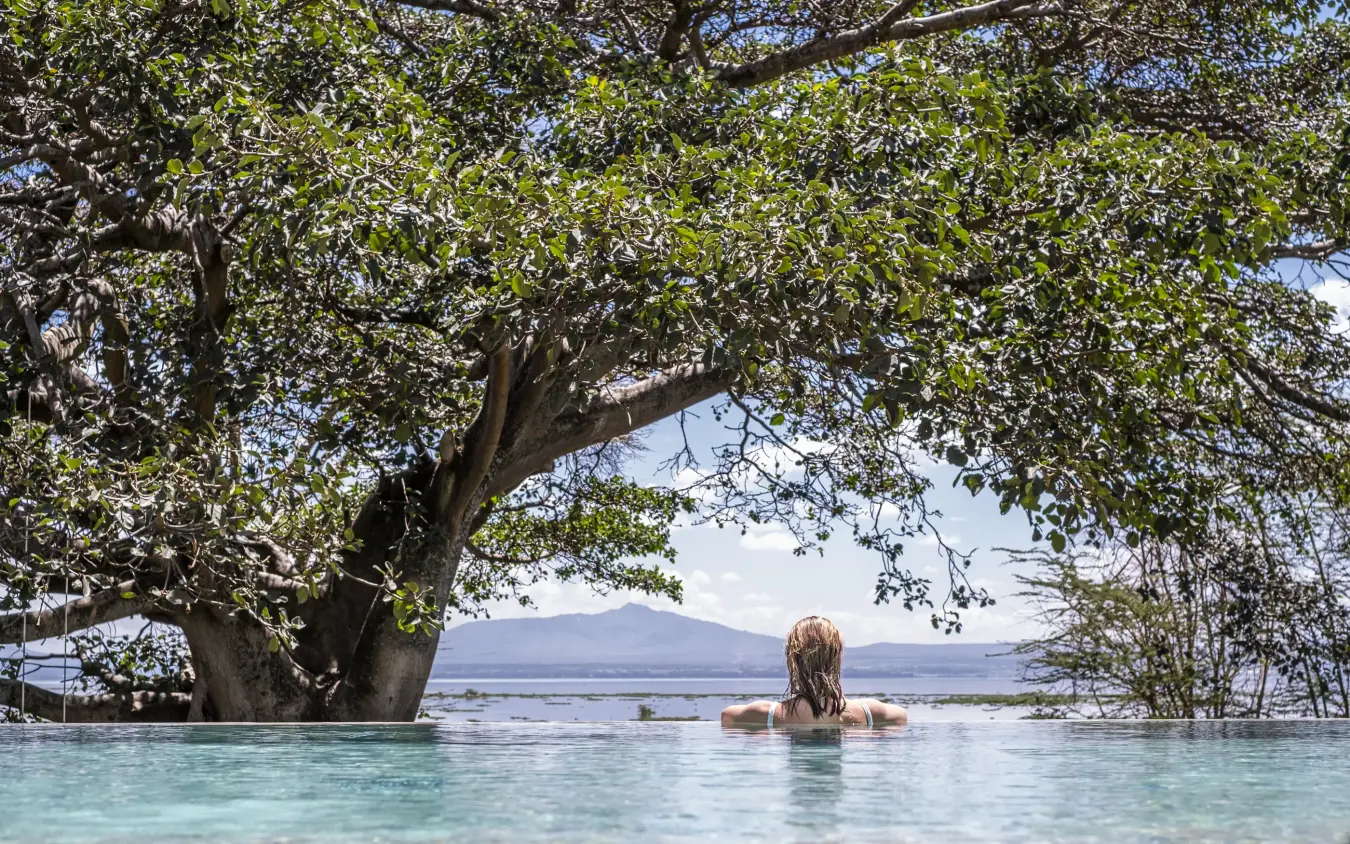
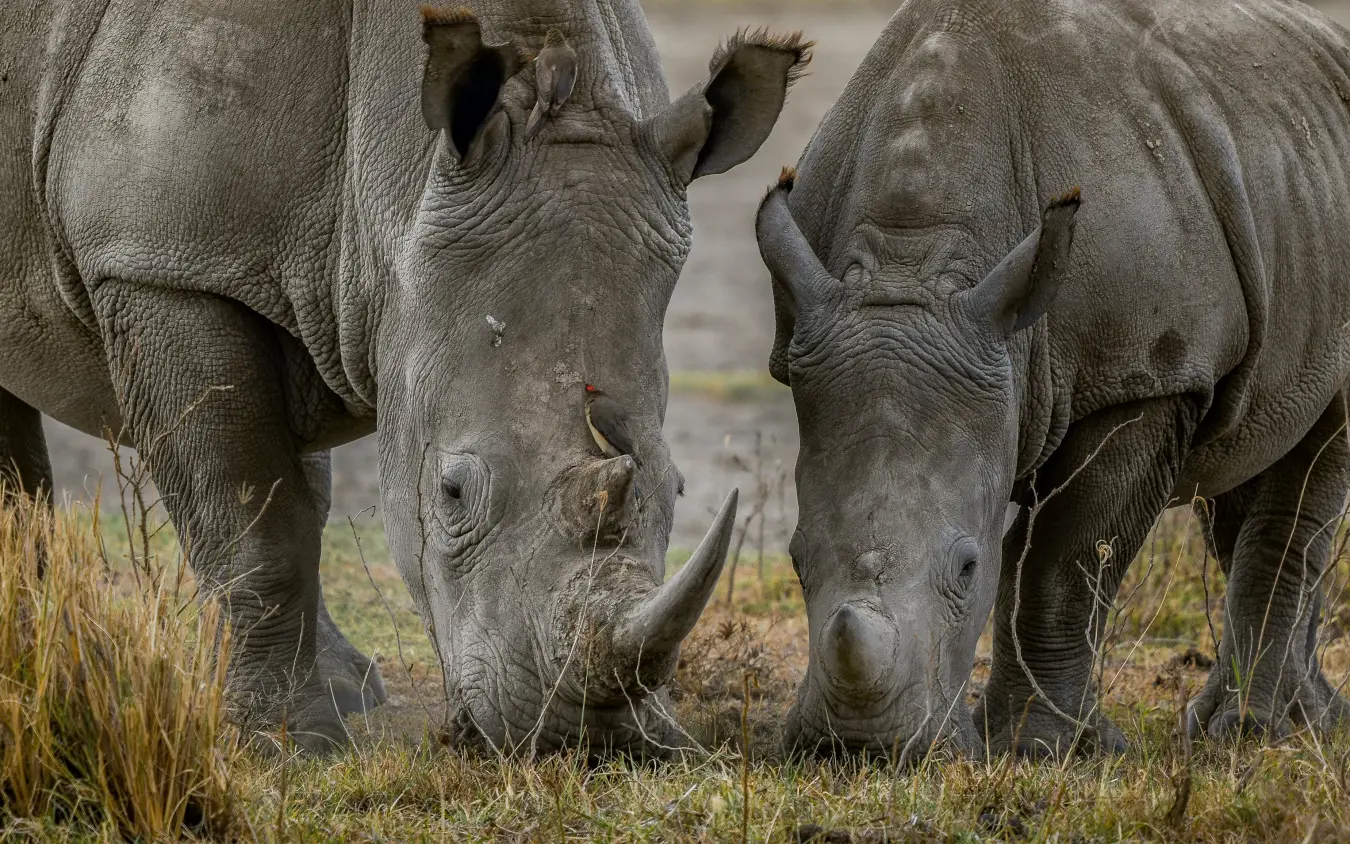
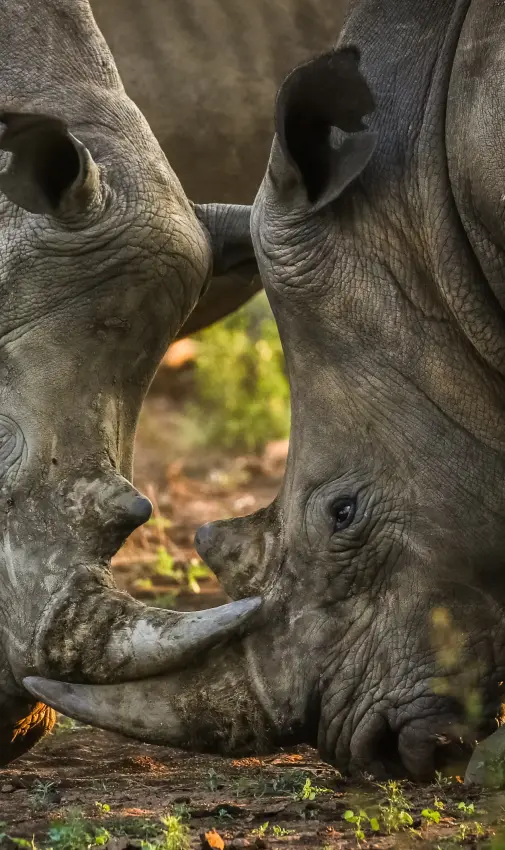
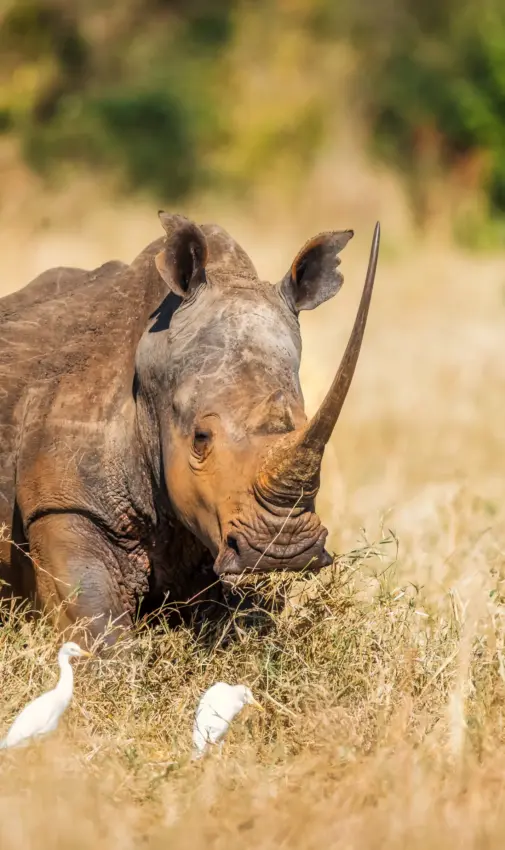
Between drives there is a forest spa with a sauna, a cold plunge and a hot tub, and a rooftop yoga platform for sunrise sessions. A sanctuary for orphaned rhinos lies at the foot of the hill, close enough to walk to. E-bikes and a pickleball court are on hand at the house for anyone with energy to spare, and helicopter excursions can be arranged directly from the hill. Arriving by charter or helicopter is an option too, for those who prefer it to the light-aircraft flight into the nearest regional airstrip.
Between drives there is a forest spa with a sauna, a cold plunge and a hot tub
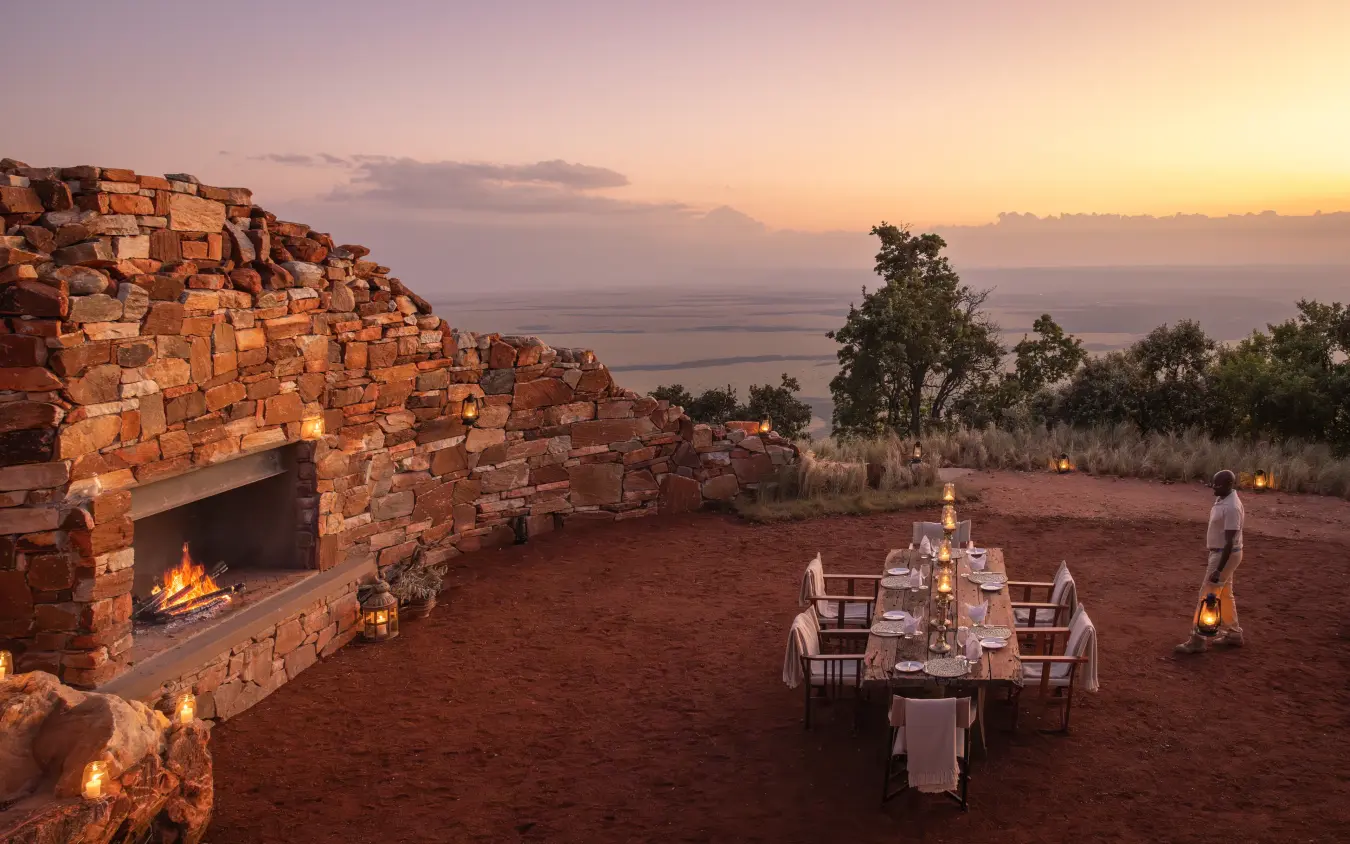
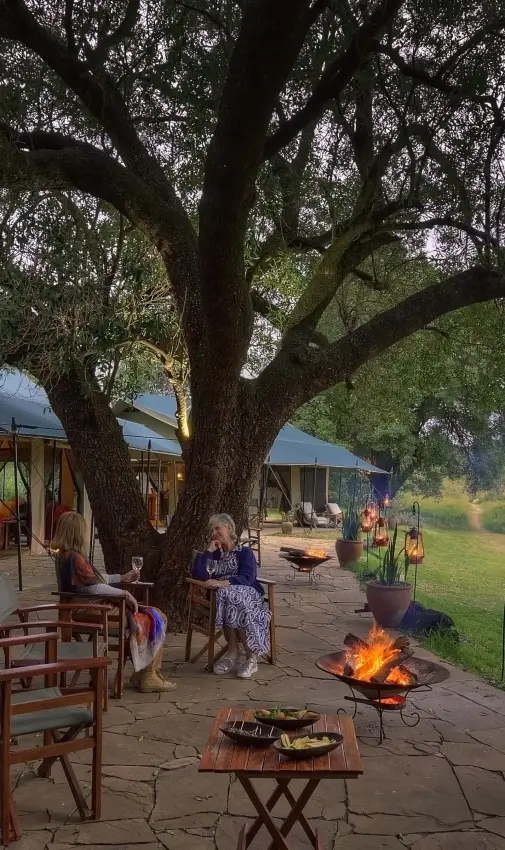
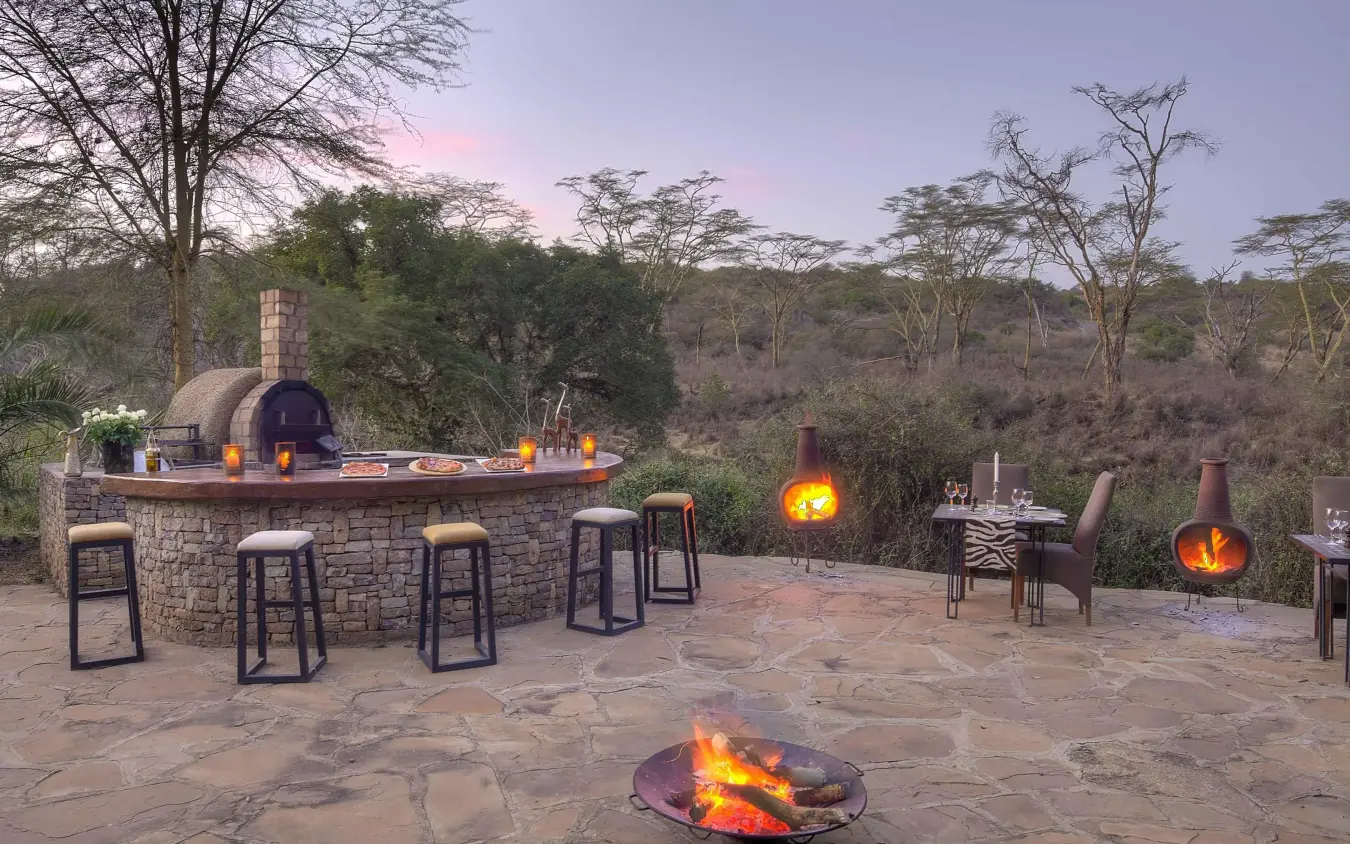
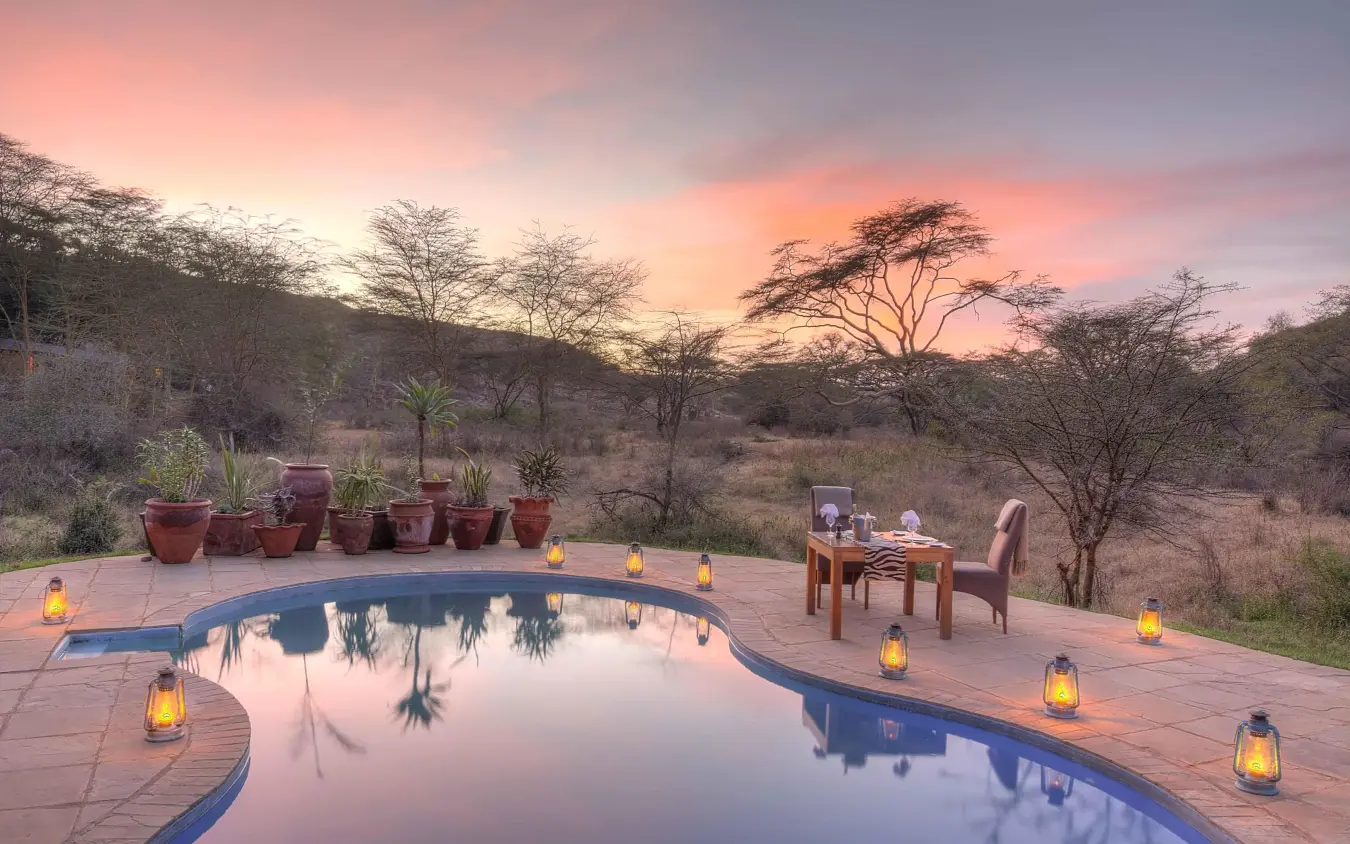
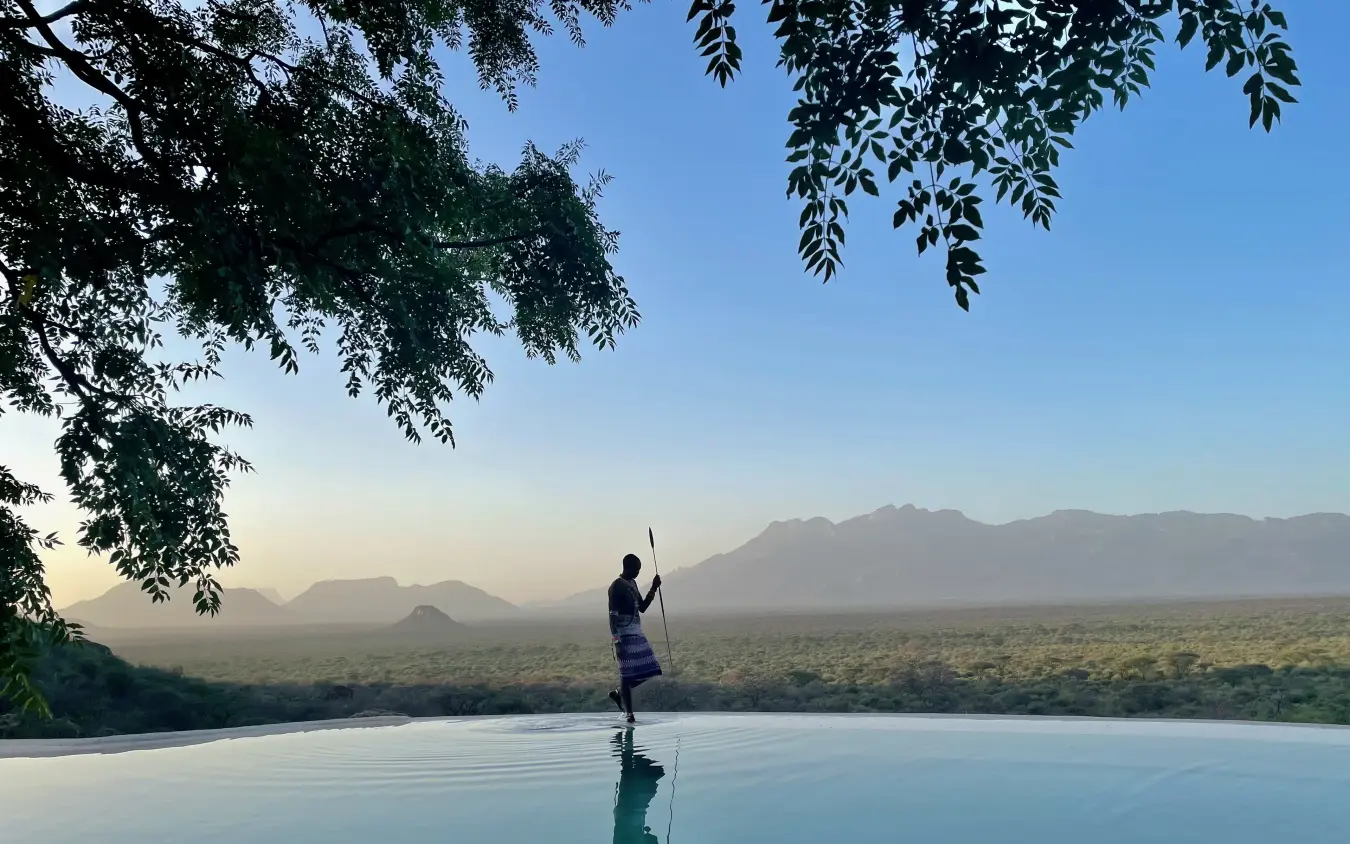
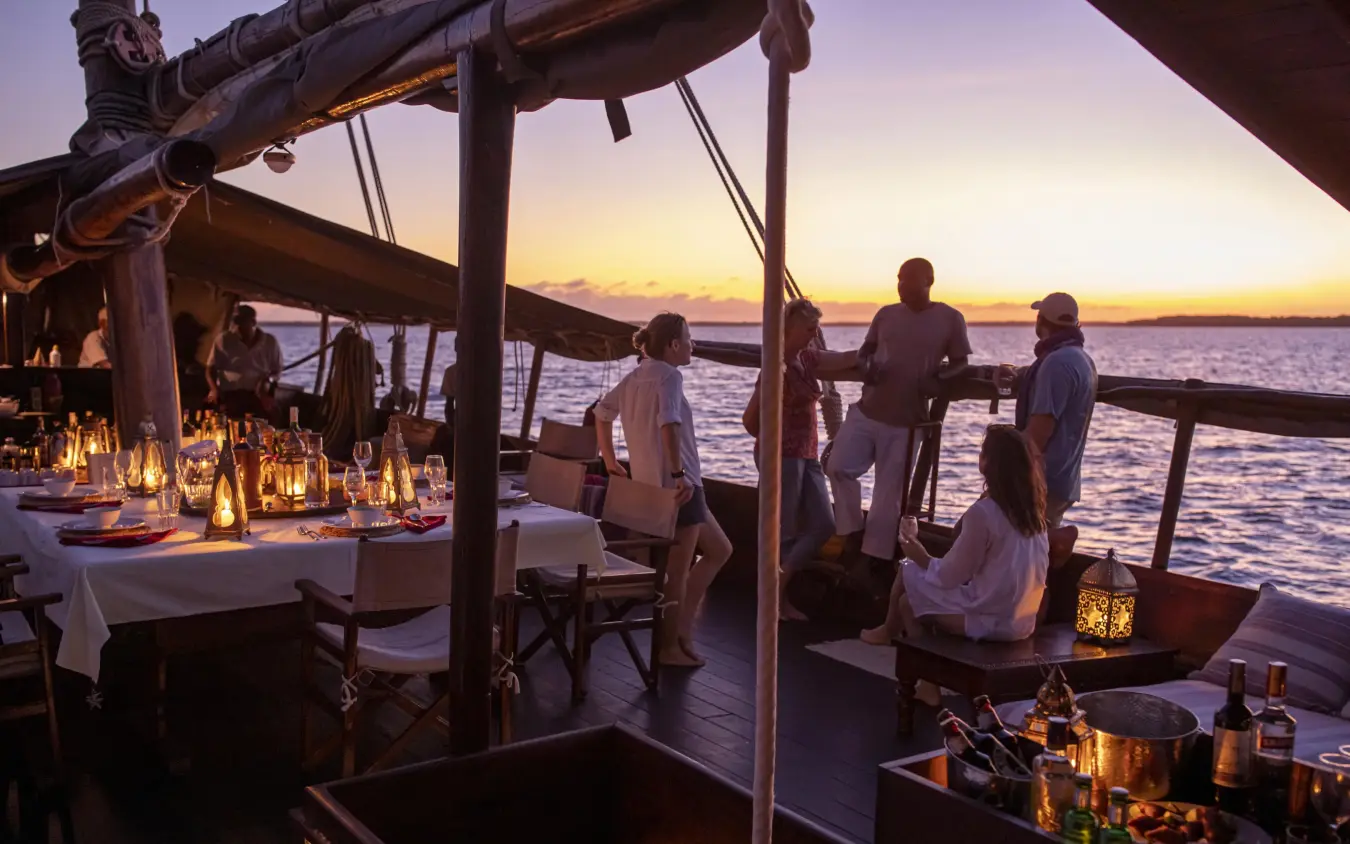
A private chef cooks to each group’s preferences, and the menus lean towards vegetables, running from miso-roasted eggplant to harissa yogurt-marinated chicken. Much of the fresh produce comes from the Wild Shamba, the estate’s own vegetable garden. Meals are served in the main dining area or out at the boma, beside the pool, or as picnics in the bush. A butler and a housekeeping team complete the household, and the days are built around the private guide and vehicle. The house suits families and small groups who want the Mara on their own terms.
The house occupies the boundary between the Ol Chorro and Enonkishu conservancies, and the second owes its existence in part to the rewilding of the Woods’ family farm. Holistic cattle grazing, a system of rotation, has helped regenerate its grassland. Futures in the Wild, Tarquin and Lippa’s own programme, supports biodiversity restoration and local women in the country around the hill. The Wild Shamba employs people from the surrounding community as well as feeding the house, and solar panels supply the power.