Villa

Loirien Mara

Three private villas on Kenya’s Oloololo Escarpment above the Mara Triangle, each with its own chef, guide and pool.

Country: Kenya
Location: Oloololo Escarpment, above the Mara Triangle
Number of rooms: 7

Three villas above the Mara Triangle

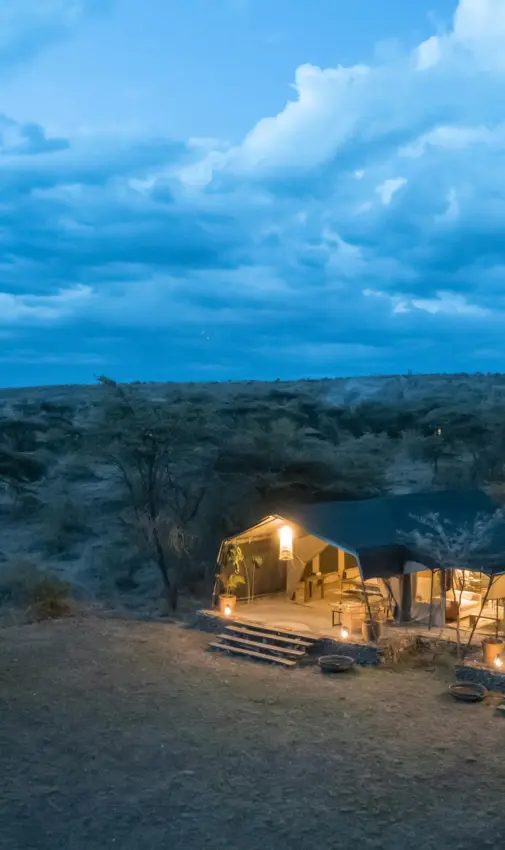
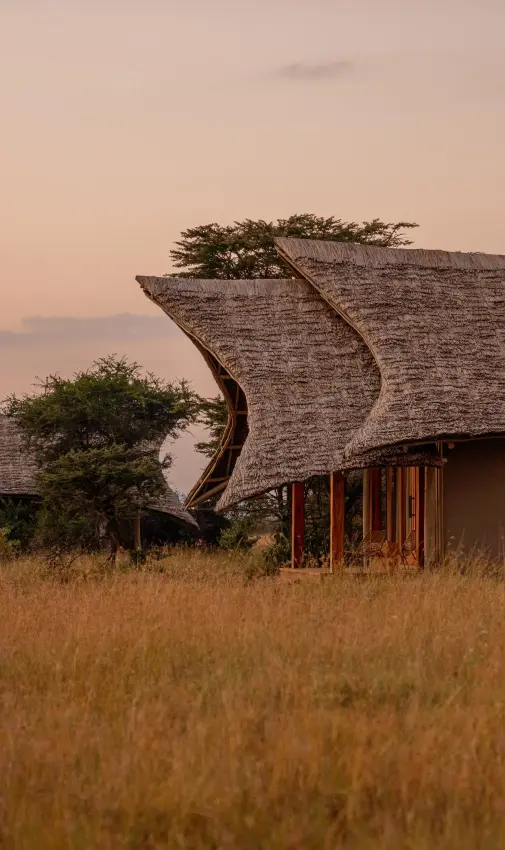
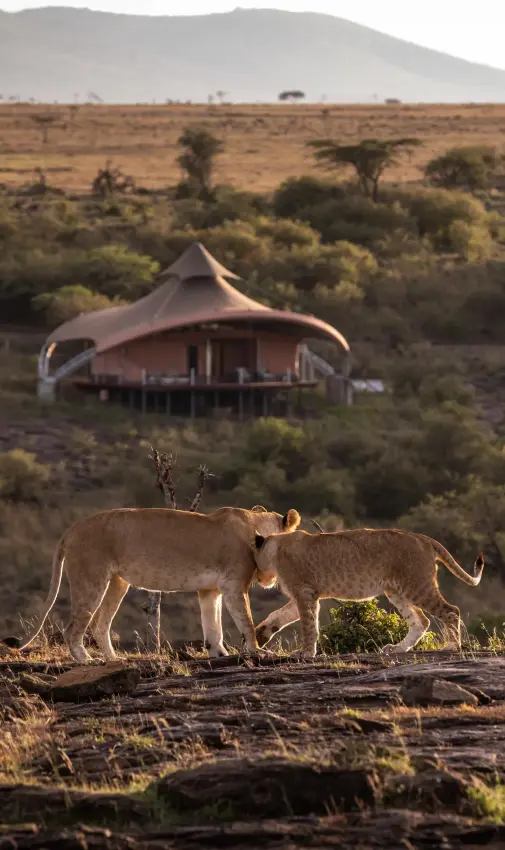
Three standalone villas stand along the Oloololo Escarpment in Kenya’s Maasai Mara, set inside the private Partakilat Conservancy with the plains of the Mara Triangle spread out below. Each villa has its own staff, resident chef, 4×4 and guide, so the game drives leave on its guests’ hours and not on a lodge timetable. Take one, or take all three and the estate is yours alone.

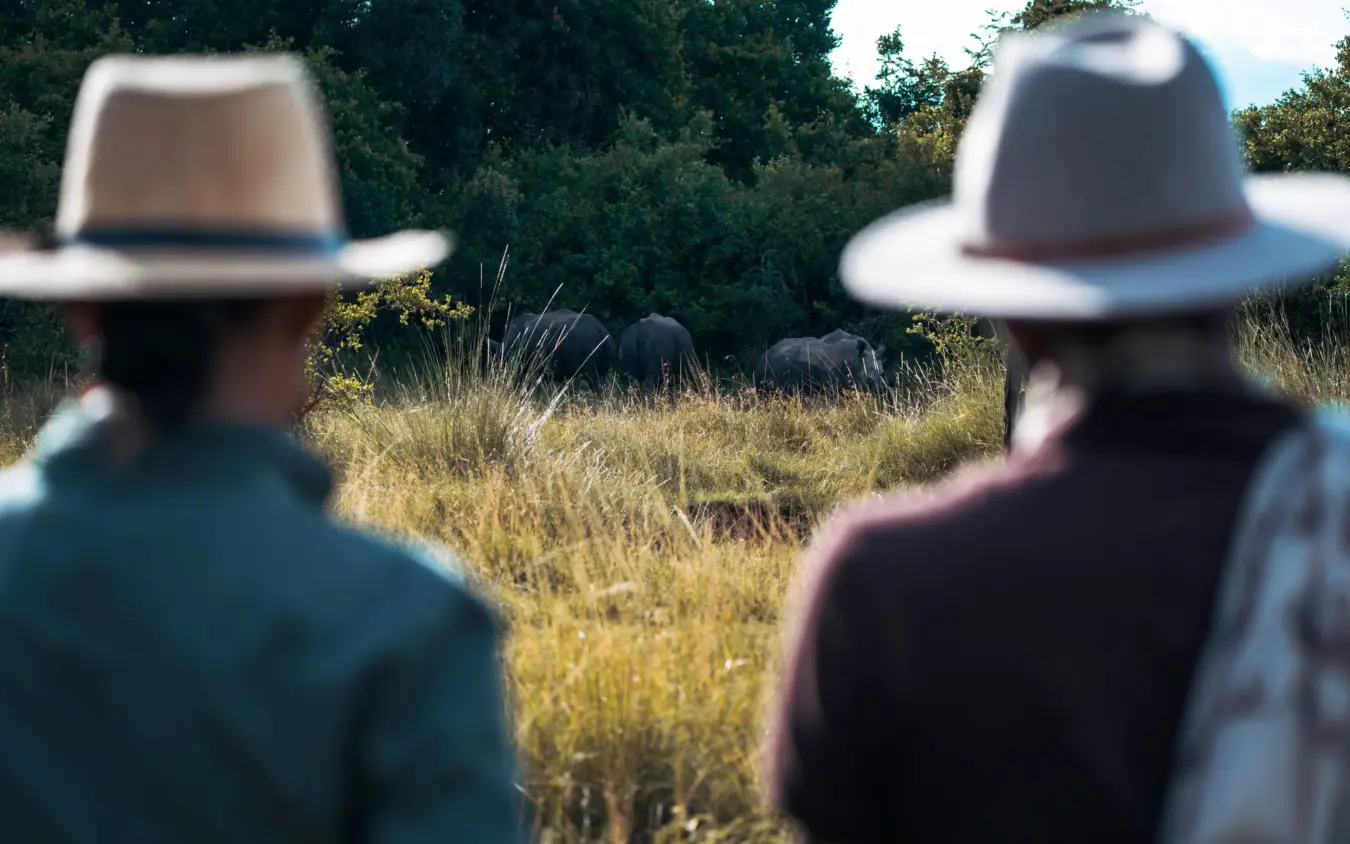
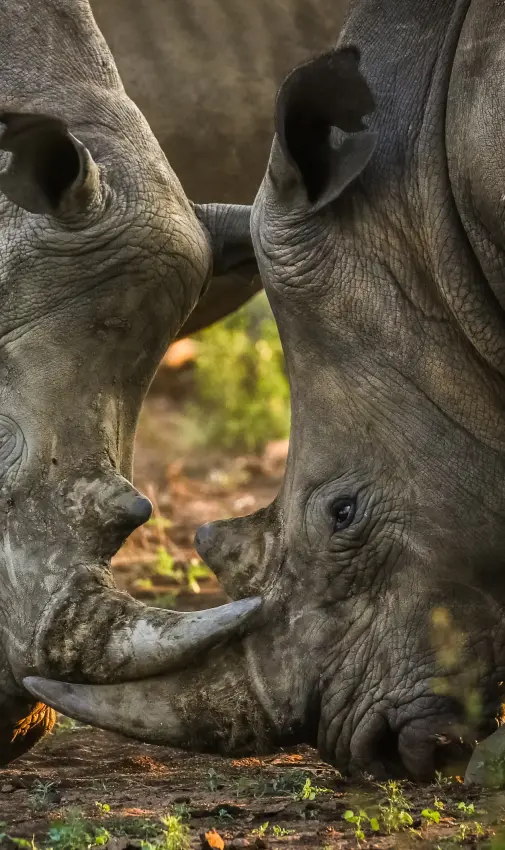
White rhinos are tracked on foot inside the conservancy.

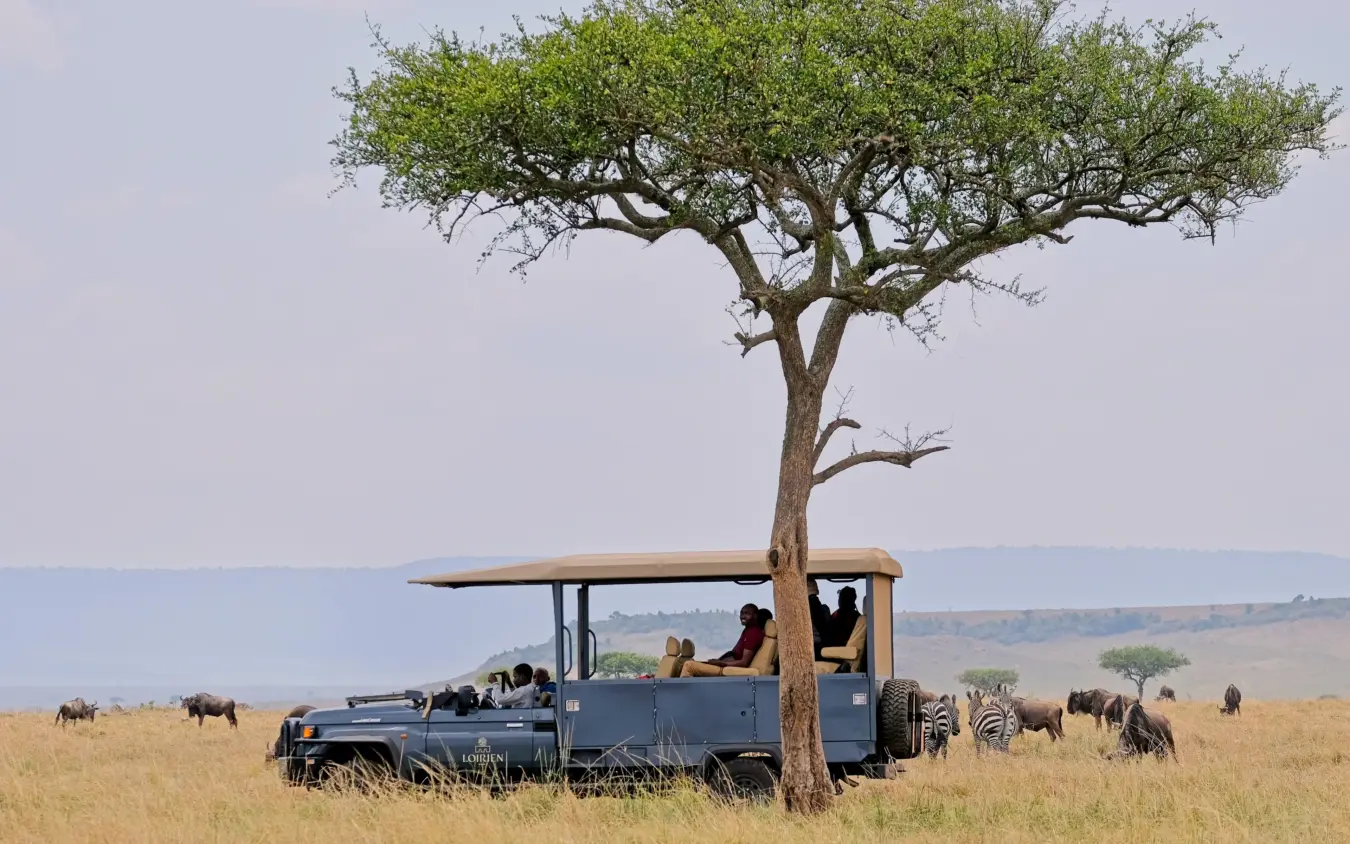
The conservancy keeps a white rhino sanctuary, and its private status permits what the neighbouring reserve cannot. White rhinos are tracked on foot inside the conservancy, and drives go off-road and carry on after dark under a spotlight. Lions and elephants are a short descent away, and from July the migration herds pour across the plains of the Mara Triangle below.

Loirien, the largest of the three, holds three bedrooms across close to 900 square metres, with a private spa. Kulaal and Naika are smaller, two bedrooms each in around 225 square metres, the first built around indoor and outdoor fires, the second among acacia trees to the south of the main villa. Each of the three has a private pool, Naika’s heated for cooler months.

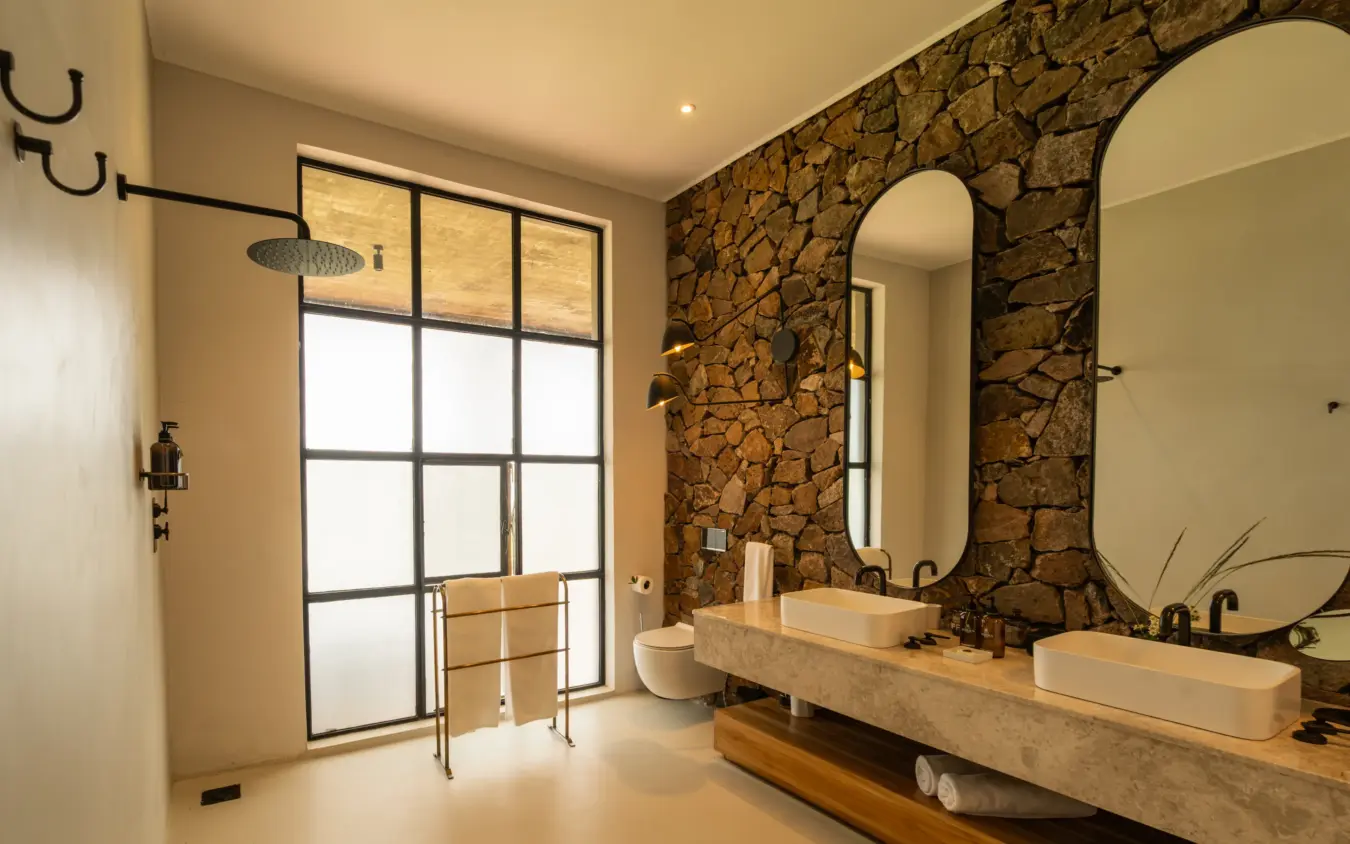
Showers are taken outdoors, in bathrooms finished in natural stone

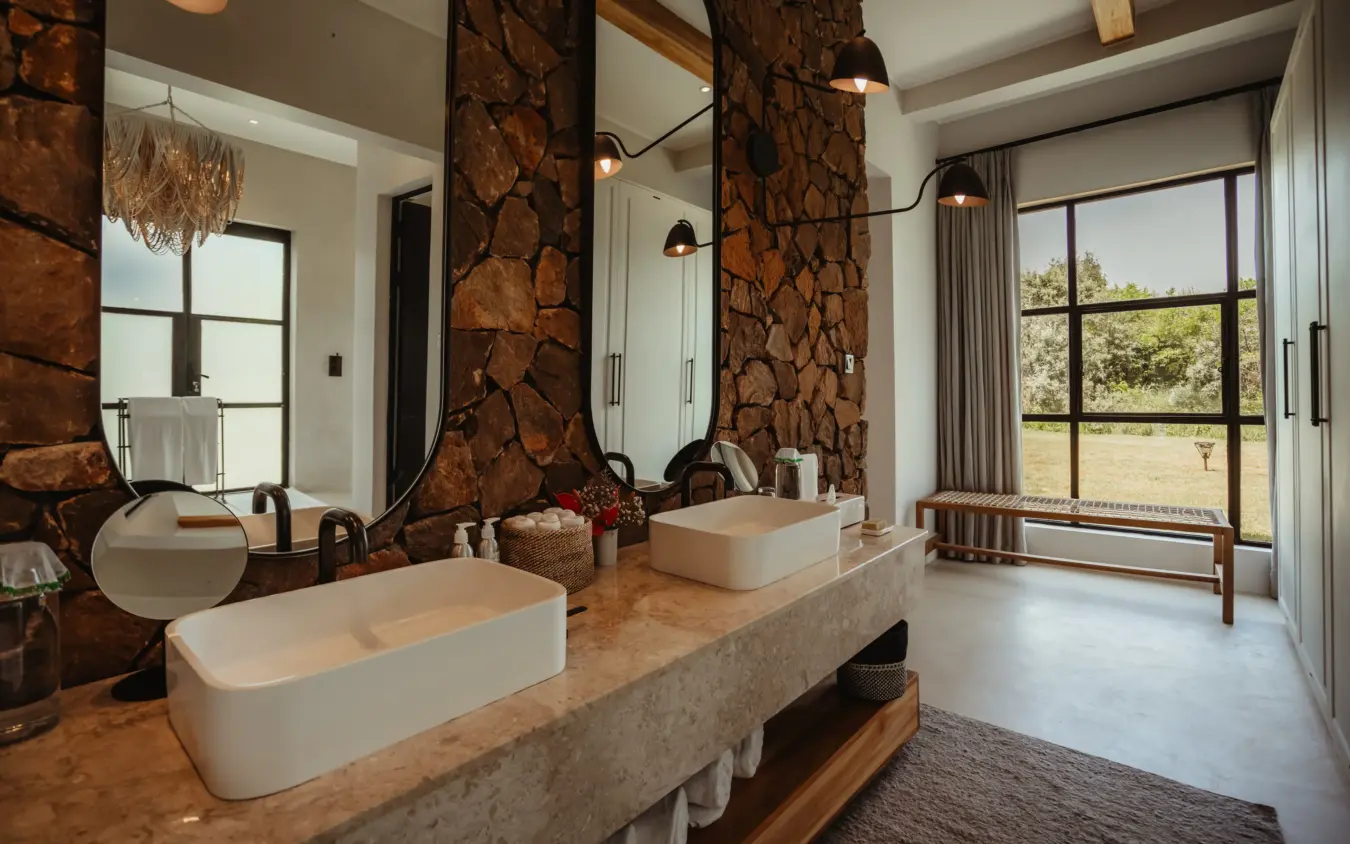
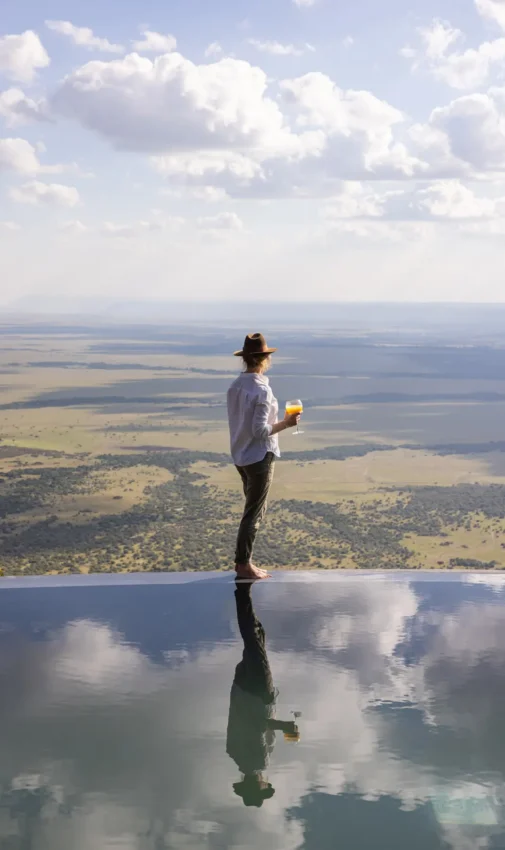
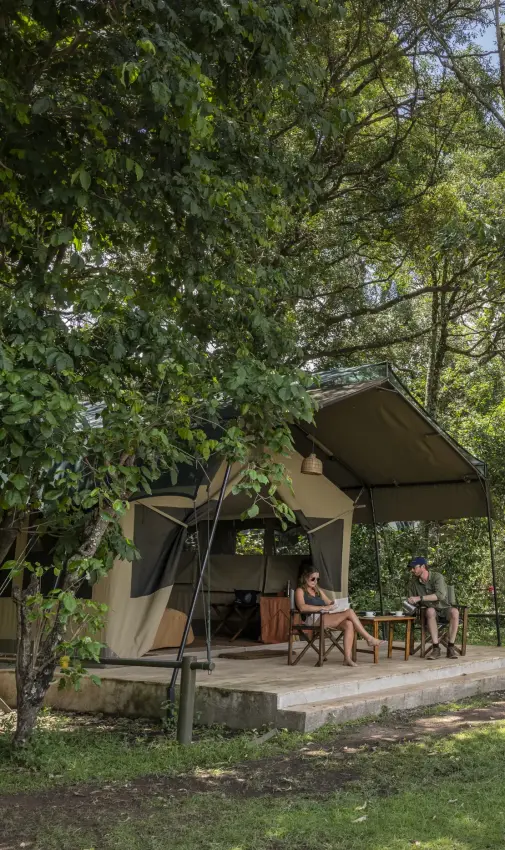
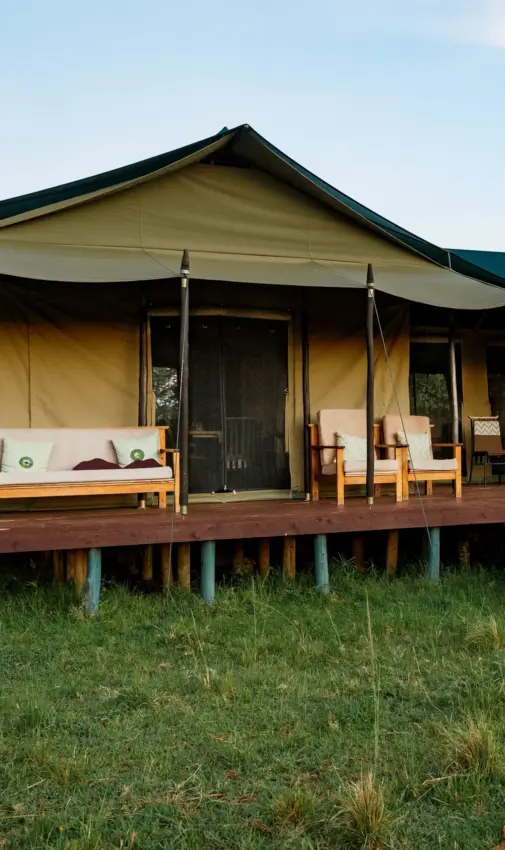
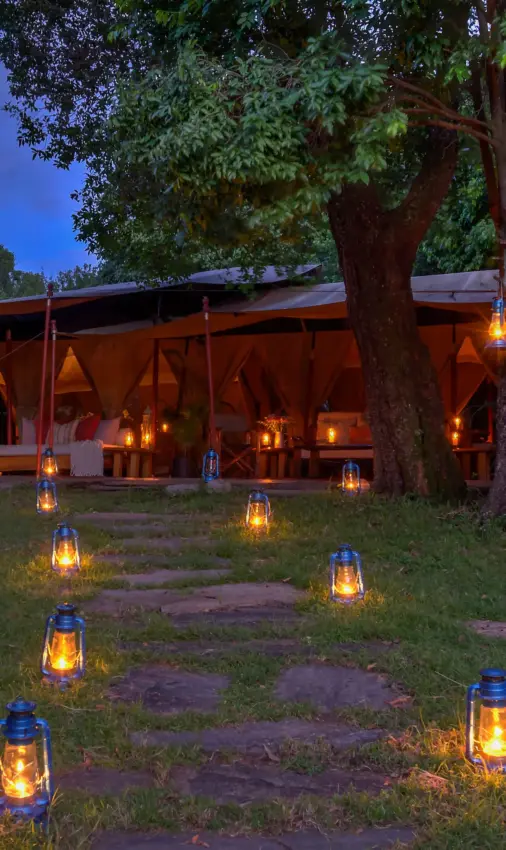
Timber, stone and local textiles run through all three, and the floor-to-ceiling glass slides back to draw the sitting rooms out onto terraces and pool decks at the escarpment edge. The Mara Triangle lies open beneath the pool decks. Showers are taken outdoors, in bathrooms finished in natural stone, and electric buggies run between the villas when all three are taken together.

01

accommodation

Three Villas at the Escarpment Edge

Three standalone villas. Loirien holds three bedrooms across close to 900 square metres, with a private spa; Kulaal and Naika hold two bedrooms each in around 225 square metres. All have floor-to-ceiling glass, a fireplace, a private pool and outdoor showers. Each has its own kitchen; all three can be booked together.

02

activities

Game Drives in Partakilat Conservancy

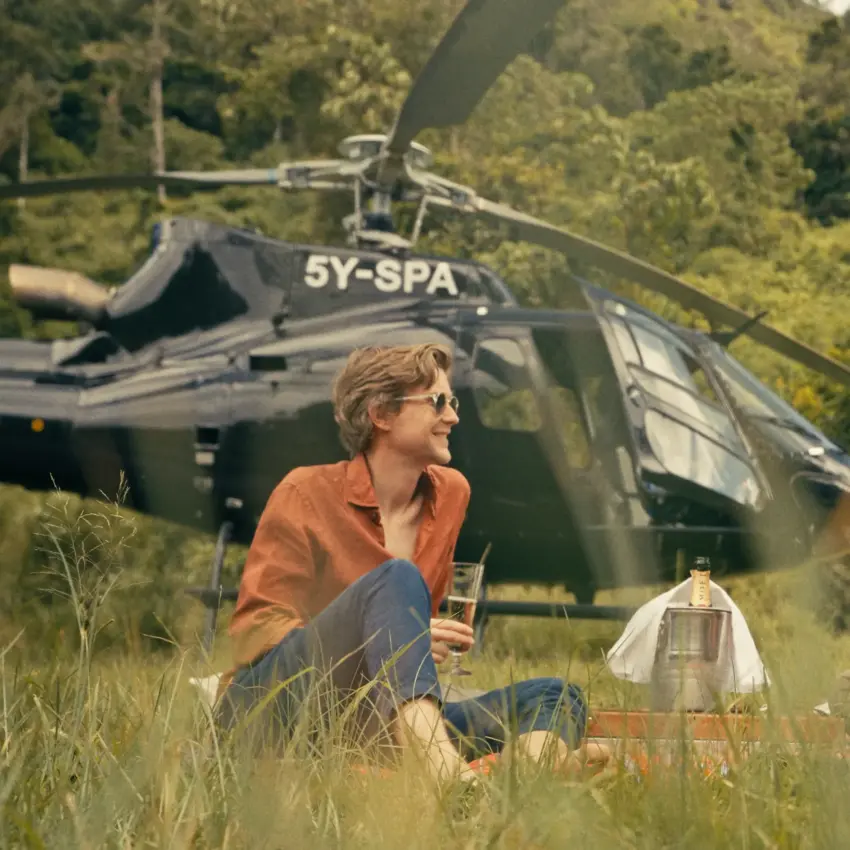
Game drives run in the private Partakilat Conservancy and down in the Mara Triangle, each villa with its own 4x4 and guide. The conservancy permits walking safaris, night drives and rhino tracking on foot, none of them possible in the adjacent reserve. Also on offer: hot air balloon flights, helicopter trips over the Rift Valley, farm visits, mountain biking, kayaking, archery and stargazing.

03

conservation

White Rhino Sanctuary and Maasai Education

A white rhino sanctuary operates inside the Partakilat Conservancy, with rhinos monitored on foot, alongside reintroduction work for roan antelope. A regenerative farm and greenhouse supply the villa kitchens. Loirien Mara funds education initiatives in the surrounding Maasai communities.

ready to get started?

Get in touch and let’s start the conversation. An initial consultation helps us understand what you’re looking for, whether that’s specific experiences, luxury touches, or marking a special occasion, and from there we’ll guide you through what’s possible so you can decide if we’re the right fit.

Alternative accommodation in maasai mara

Illuminated safari lodge at dusk under acacia trees, Kimya Kimya Camp, Maasai Mara, Kenya 01

Kimya Kimya Camp

Maasai Mara

Canvas safari tent at sunset with acacia tree overhead, Mara Nyika Camp, Maasai Mara, Kenya 02

Mara Nyika Camp

Maasai Mara

Illuminated safari tent at dusk with tall trees nearby, Kicheche Mara North, Maasai Mara, Kenya 03

Kicheche Mara North

Maasai Mara

Man standing at infinity pool overlooking vast savanna landscape, Wild Hill, Maasai Mara, Kenya 04

Wild Hill

Maasai Mara

Open-air dining area with fire pit under large tree, Kicheche Bush Olare, Maasai Mara, Kenya 05

Kicheche Bush Olare

Maasai Mara

Two people silhouetted crossing suspension bridge at sunset, Ngare Serian, Maasai Mara, Kenya 06

Ngare Serian

Maasai Mara

Two children watching elephant grazing in natural habitat, House In The Wild, Maasai Mara, Kenya 07

House In The Wild

Maasai Mara

08

Sambuk Suite at Mara Nyika

Maasai Mara

Safari tent accommodation with draped canvas and wooden platform deck, Emboo Camp, Maasai Mara, Kenya 09

Emboo Camp

Maasai Mara

10

Mara Toto Tree Camp

Maasai Mara

11

Tangulia Ndogo

Maasai Mara

Maasai man in traditional red clothing on savanna, Speke’s Camp, Maasai Mara, Kenya 12

Speke’s Camp

Maasai Mara

13

Manzili Mara

Maasai Mara

14

Jahazi Suite at Mara Plains

Maasai Mara

Wooden deck overlooking river at sunset with trees, Rekero Camp, Maasai Mara, Kenya 15

Rekero Camp

Maasai Mara

Illuminated safari camp tents at dusk near waterhole, Richard’s River Camp, Maasai Mara, Kenya 16

Richard’s River Camp

Maasai Mara

Safari tent bedroom with open views of grassland landscape, Encounter Mara Camp, Maasai Mara, Kenya 17

Encounter Mara Camp

Maasai Mara

18

Serian Nkorombo

Maasai Mara

Elevated safari lodge with canvas roof pavilions in natural grassland setting, Kichwa Tembo Tented Camp, Maasai Mara, Kenya 19

Kichwa Tembo Tented Camp

Maasai Mara

Luxury safari tent elevated above bushland at golden hour, Hemingways Ol Seki Mara, Maasai Mara, Kenya 20

Hemingways Ol Seki Mara

Maasai Mara

frequently asked questions

Fly to Kichwa Tembo, the airstrip at the foot of the Oloololo escarpment on the western side of the Mara, which is the strip the villas use. Safarilink and AirKenya Express both fly there from Nairobi's Wilson airport, and the flight is around fifty minutes to an hour when the aircraft comes straight in, longer when the circuit touches down at other Mara strips first, which most of these flights do. A vehicle from the villas meets the aircraft, and the climb from the strip to the rim takes thirty to forty minutes, the first game drive of the stay in all but name. We can also put you on a private charter, typically a Cessna Caravan or a Pilatus PC-12, which flies to your international arrival time rather than the timetable and takes the party on to the next camp when you are ready.

Soft bags only on the light aircraft, fifteen kilograms a person with hand luggage counted in. This western corner is the far end of the Mara by road from Nairobi, a long day on poor surfaces, and we do not suggest it when the flight takes under an hour.

Yes. The villas stand on the rim of the Oloololo escarpment, which the published figures put at a little under 2,000 metres, and both TravelHealthPro, the UK's official travel health service, and the CDC treat everywhere in Kenya below 2,500 metres as malaria country. TravelHealthPro keeps its very low risk label for Nairobi and the highlands above that height and classes the rest of the country as high risk, with antimalarial tablets among its recommendations, and the CDC names all areas under 2,500 metres, game parks included, as places where it recommends them too. The rim is cooler at night than the river below, which helps, but the classification is the same, and your days in the Mara Triangle are spent on the reserve floor several hundred metres lower.

We are travel planners rather than medical people, so that decision belongs to you and your doctor or a travel clinic, and it is worth a fresh check close to departure because the guidance moves. Whatever you decide, long sleeves and trousers once the sun goes and repellent on any skin left showing are ordinary sense on a terrace at dusk.

Cooler than the reserve floor, and greener. The western Mara is the wet side of the ecosystem: rainfall runs from around 800 millimetres a year in the east of the reserve to 1,200 in the west, and the escarpment catches more again, which is why the slopes below the villas hold streams and thick vegetation when the plains are brown. The long rains fall in April and May, the short rains in November and December, and outside those months the days are warm and clear with the odd afternoon storm. On the rim the dawn descent into the Triangle wants a proper layer even in August, and an evening on the terrace does too.

Pack in layers: a fleece or light down jacket for the mornings and the evenings, neutral colours for the walking, a hat and strong sun protection for the middle of the day, and a light waterproof outside the dry months. Closed shoes with grip matter more here than at most Mara camps, because the rhino tracking and the escarpment walks are on foot over rock. Binoculars for each person rather than one pair to share, and everything in soft bags for the flight.

By the villa, never by the room. Each of the three is taken as a whole with its staff, resident chef, 4x4 and guide attached, so a couple in Kulaal or Naika has the same private set-up as a larger party in Loirien. The packages we have seen carry the airstrip transfers, the meals from the villa kitchen and the conservancy's own activities, the walking, the rhino tracking, the night drives and the farm, as part of the stay, with the balloon flight and the helicopter trips charged on top. Drinks are in those packages as well, but the villas' own site does not publish the position, so we confirm it with them for your dates rather than state it as fact.

Three nights is our floor and four is better, because a day in the Mara Triangle starts with the descent and ends with the climb back, and the conservancy deserves a day of its own on foot. The reserve's entry fee sits outside the villa rate and applies on every day you go down into the Triangle: it is charged per person, each ticket lasts twelve hours, the Triangle's gates take card or mobile payment and no cash, children of eight and under go free and nine to seventeen pay a reduced rate, and the non-resident adult figure is higher from July to December than in the first half of the year. We put it on the quote from the start so it never appears as an extra.

It is the western third of the Maasai Mara National Reserve, about 510 square kilometres between the Mara River and the Oloololo escarpment, and since the early 2000s it has been run by the Mara Conservancy, a not-for-profit body working on behalf of Narok County, rather than by the county directly. That separate management is why the Triangle feels different from the eastern reserve: the gates open at six in the morning and close at seven in the evening with no entry after half past six, off-road driving is not allowed, no more than five vehicles may sit at a sighting, and when others are waiting each gets ten minutes with the queue held a hundred metres back. The rangers fine operators who break the rules and can ban a vehicle from the Triangle, and they do.

For you it means quieter sightings on the side of the river where the villas' own vehicle starts its day, with the Oloololo gate at the bottom of the escarpment road. The balloons fly over the Triangle too, from a launch point near Mara Serena and another across the river by Little Governors': lift-off is at first light, the flight runs about an hour with the river and the plains beneath you, and breakfast is laid out where the basket lands. The operators set a minimum age for children, which we check when we book.

For the migration, July to October, when the herds are on the plains of the Triangle below the villas and the Mara River crossings are within a morning's drive. The river is the Triangle's eastern boundary, so the crossing points are reached from the quieter western bank where the five-vehicle rule holds, which is a real advantage over the camps that approach from the east. It is also the dearest window: the reserve's entry fee steps up on the first of July and stays there to the end of December.

Outside it the case is strong. The conservancy's white rhinos, and the walking, night drives and farm that come with private land, are there in every month and do not depend on the herds, and the wetter western side stays green long after the eastern plains have browned. The long rains in April and May are the quietest weeks of the year and the short rains in November bring newborn animals and big skies, while January and February are dry and clear. We would steer most people to February, or to June, before the herds and the crowds arrive.

rated five stars by our clients

other areas in kenya

Local guides with poles crossing shallow forest river, Northern Kenya, Kenya 01

Northern Kenya

Two rhinos touching horns in natural habitat 02

Laikipia Highlands

Traditional fishing boat with blue sail on sandy beach 03

Kilifi

Flock of flamingos wading in shallow pink-tinted water, Rift Valley Lakes, Kenya 04

Rift Valley Lakes

Snow-capped Mount Kilimanjaro rising above acacia trees and Tanzania savanna 05

Amboseli and Chyulu Hills

Wooden fishing boat beached on white sand tropical shore 06

Diani Beach

Man in traditional red garment driving open safari vehicle, Samburu Reserve, Kenya 07

Samburu Reserve

08

Lamu Archipelago

Zebras in savanna grassland with safari vehicle and city skyline 09

Nairobi

African elephants with calf walking through grassland at sunset 10

Tsavo

Planning a journey together

our approach

remote, exclusive
& personal

Every journey starts with a conversation. We take the time to understand your vision before we start planning.

Whether by phone or in person, we work with you directly to shape something that is considered, personal, and expertly delivered.

get in touch
destinations ideas & inspiration our process about us contact us