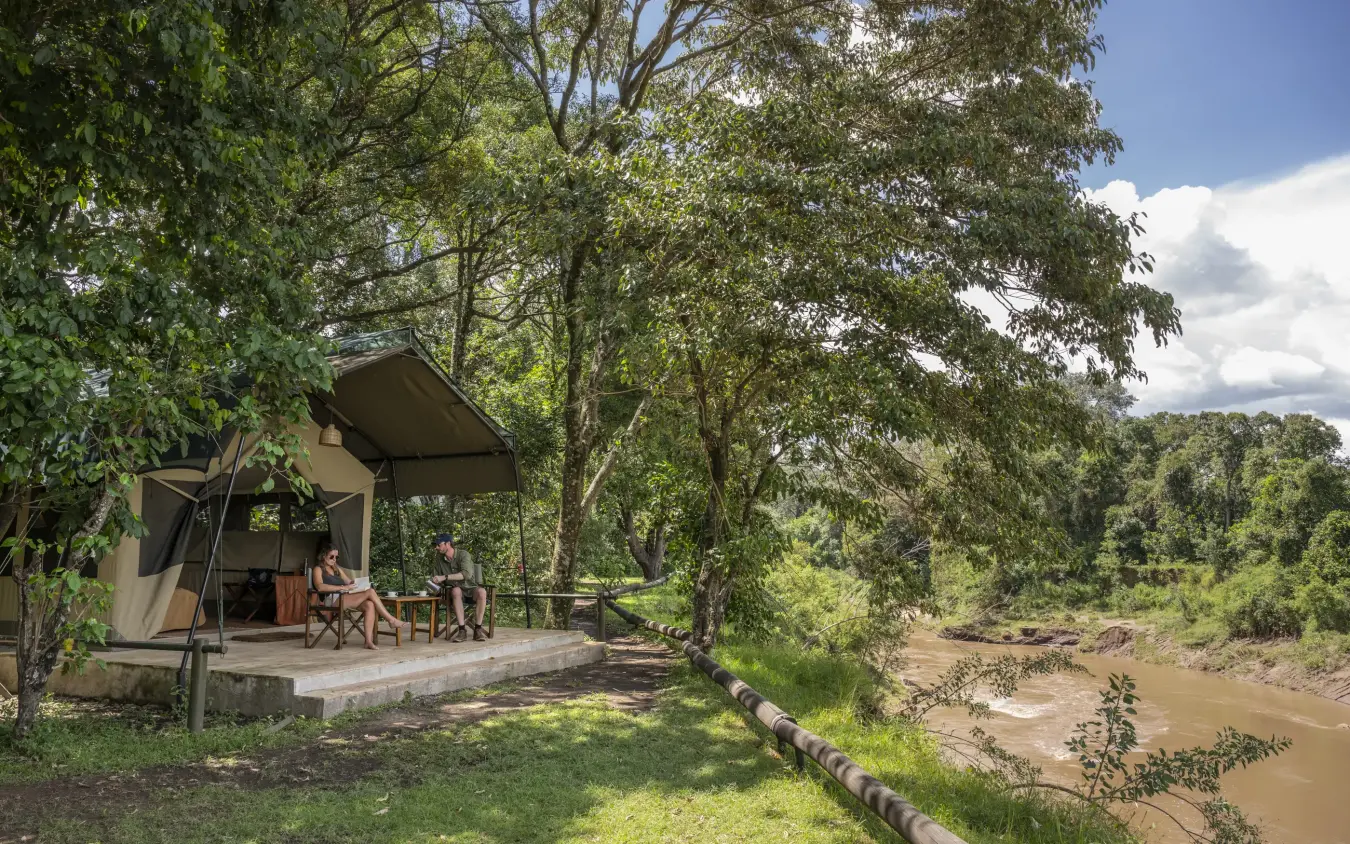
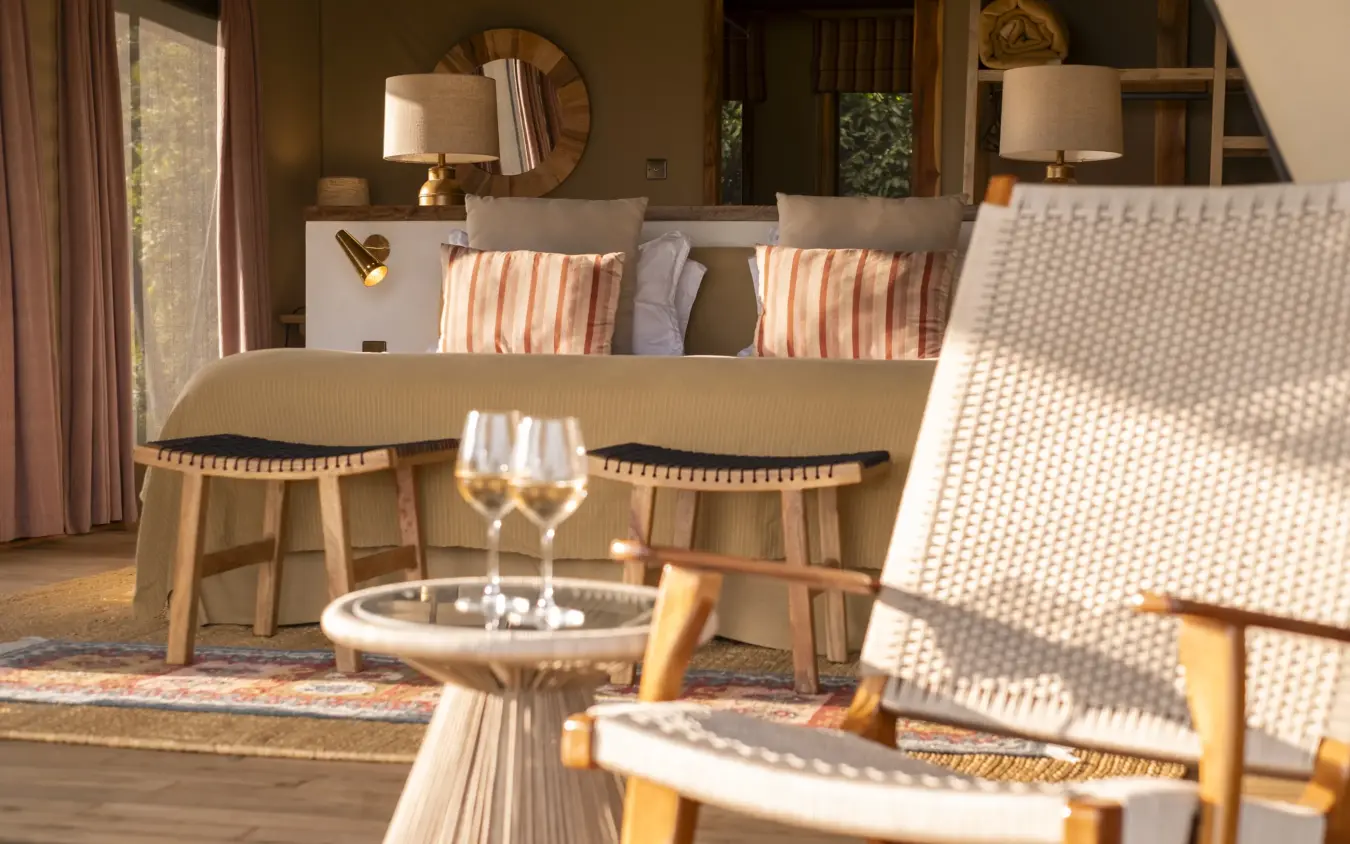
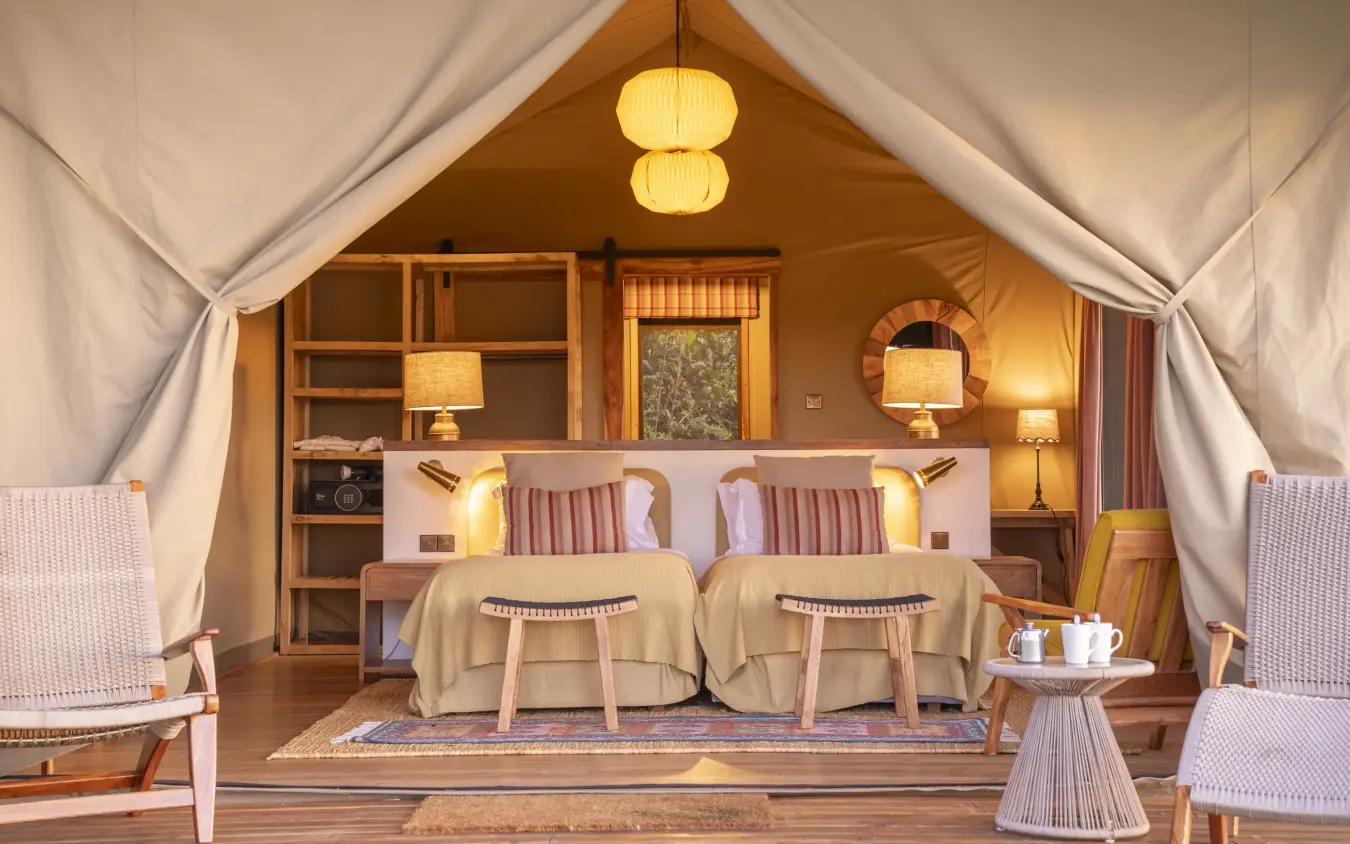
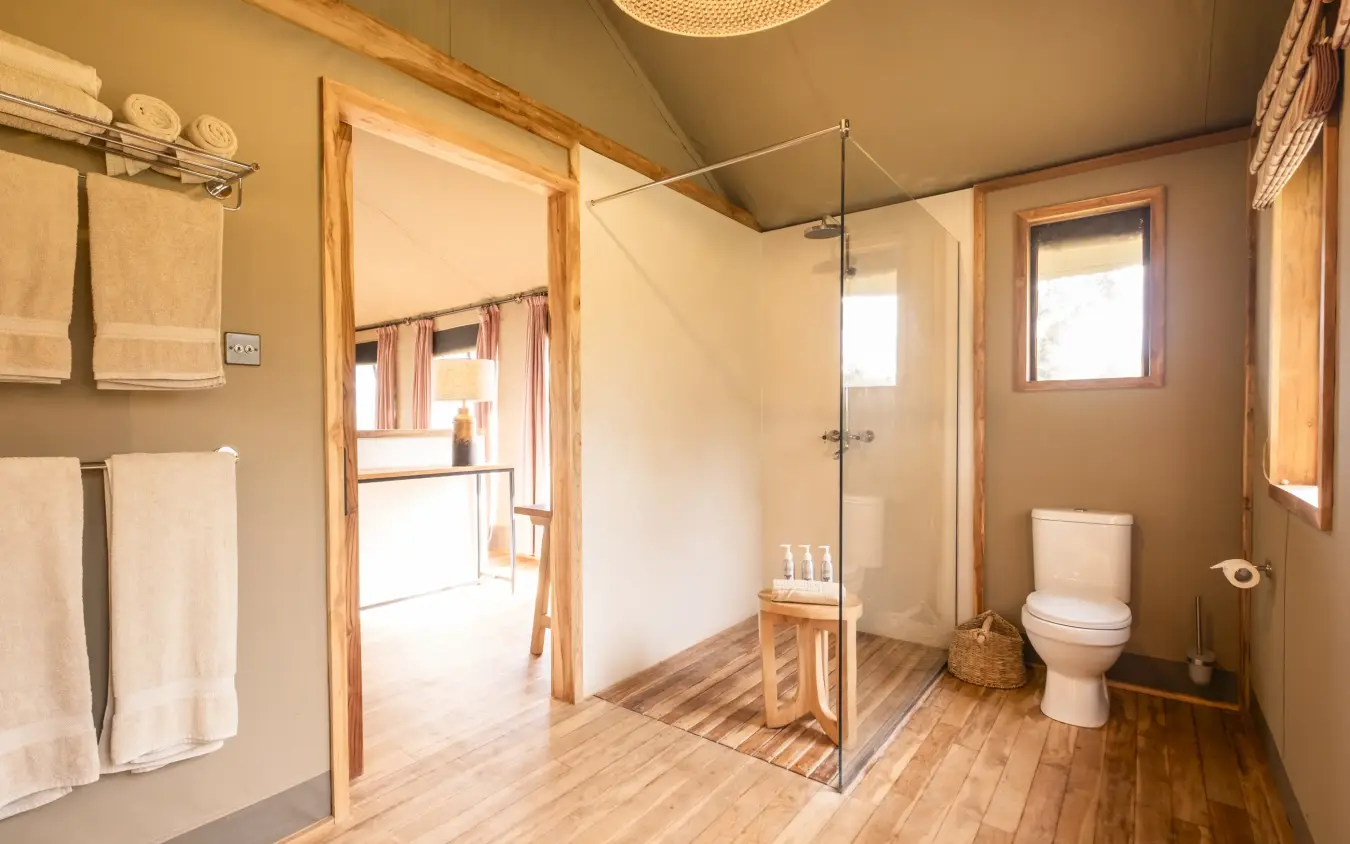
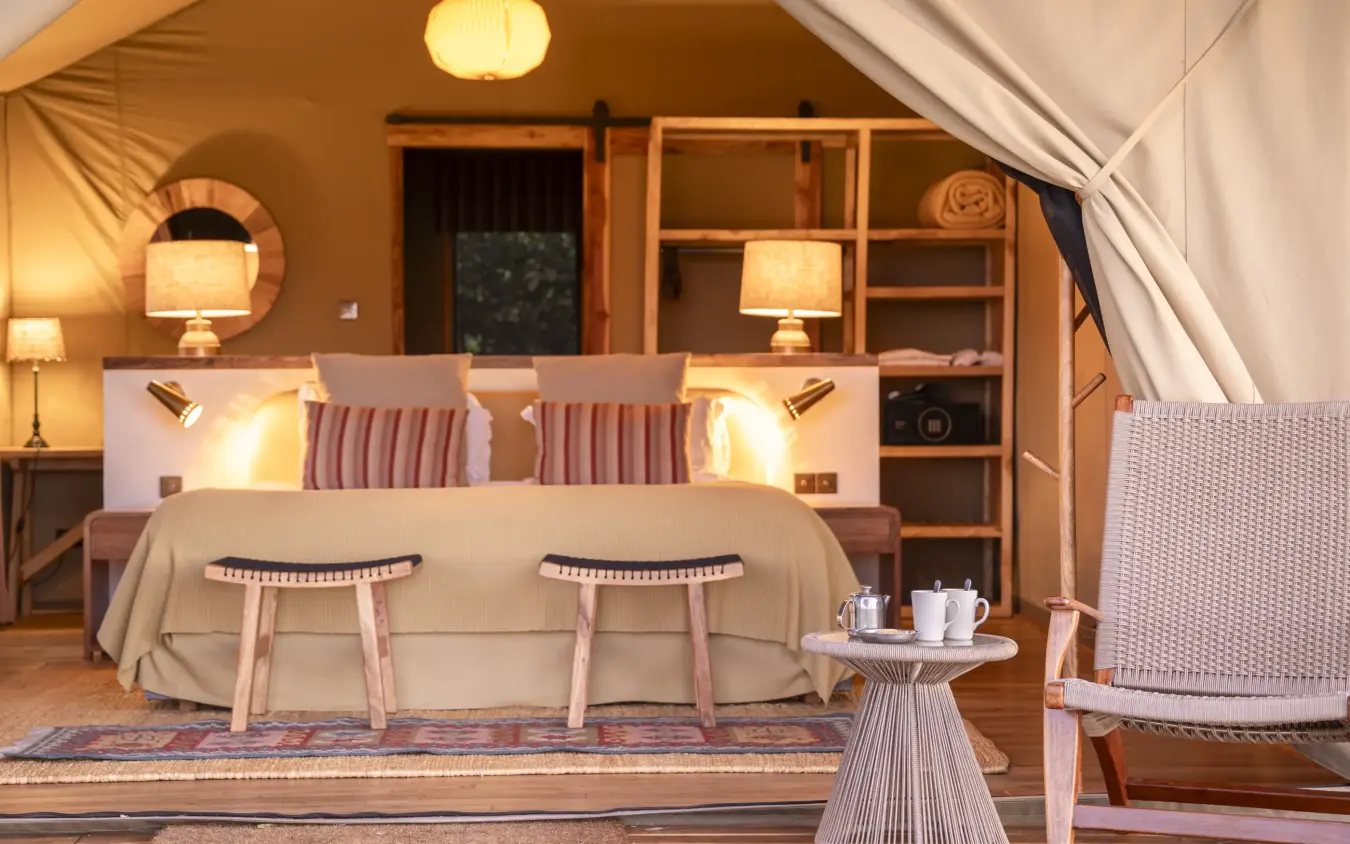
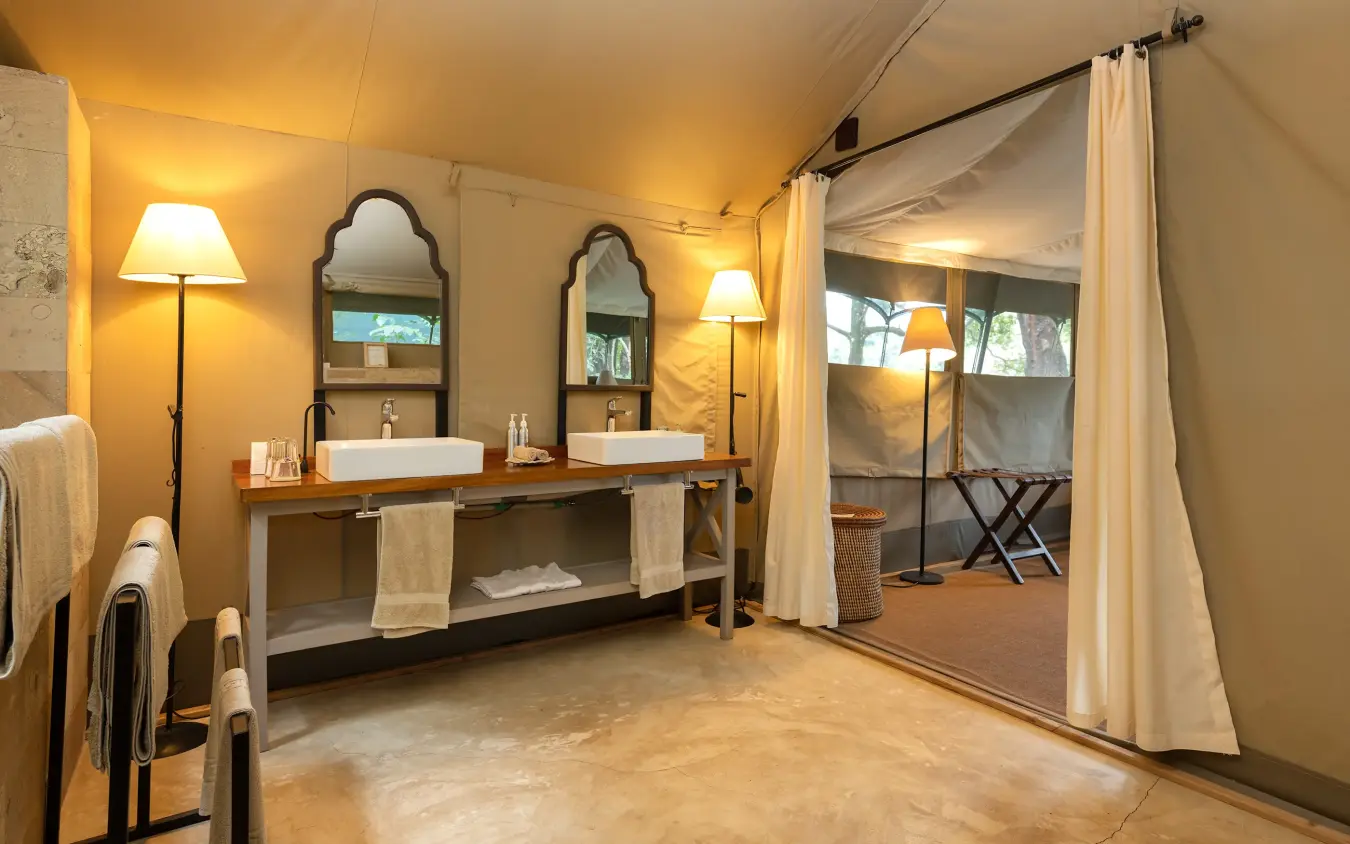
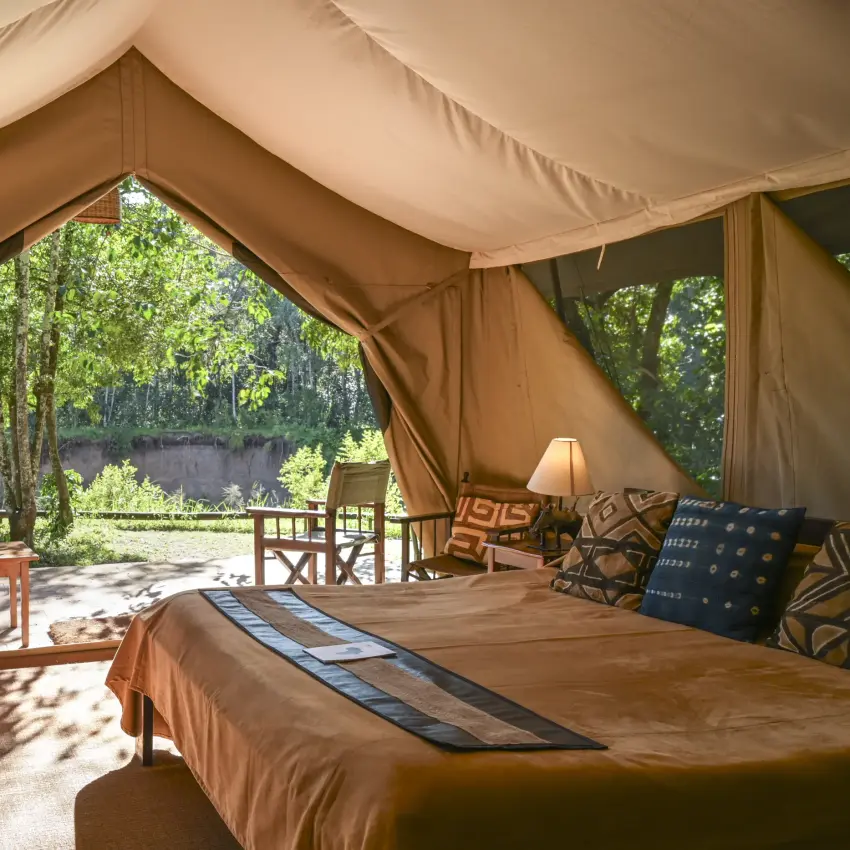
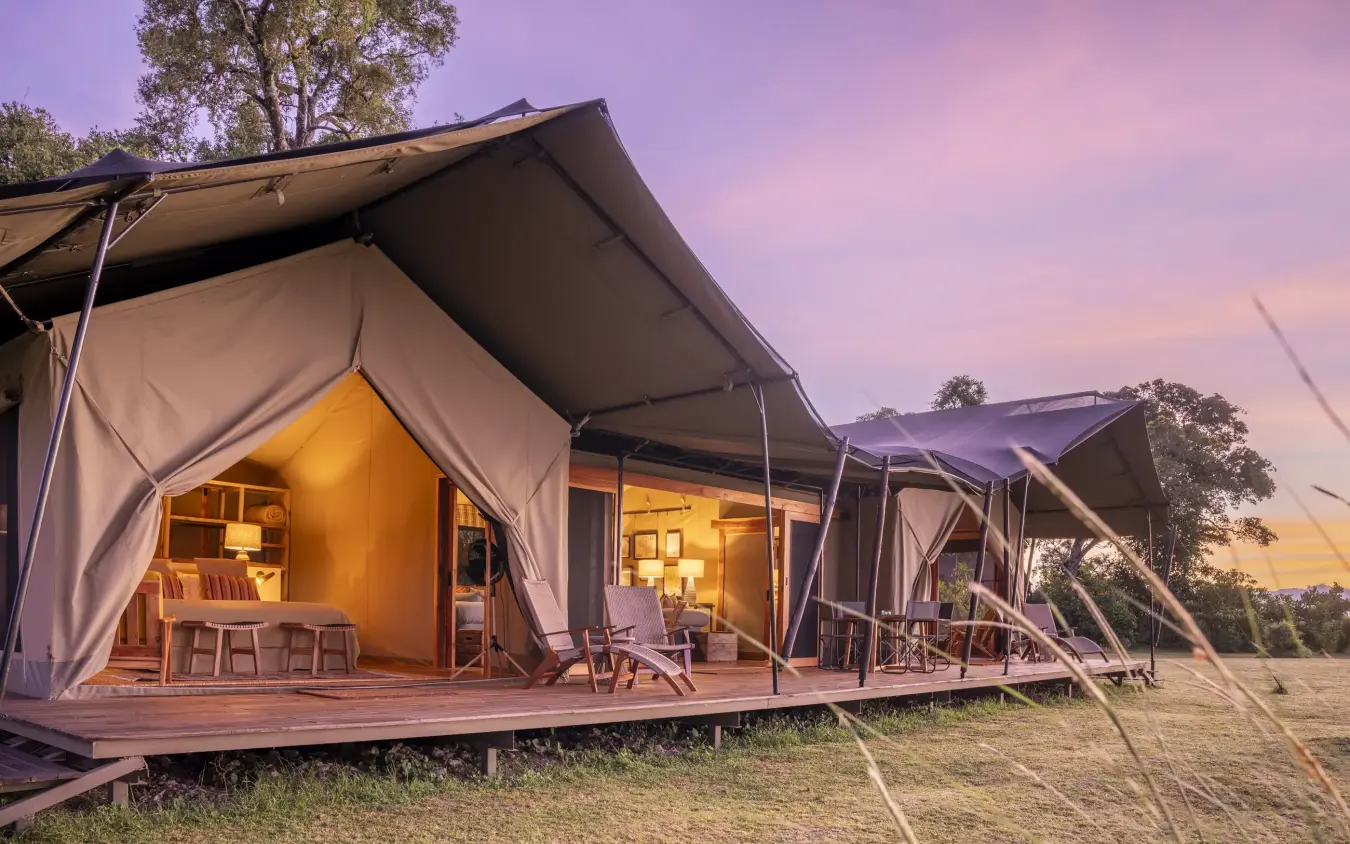
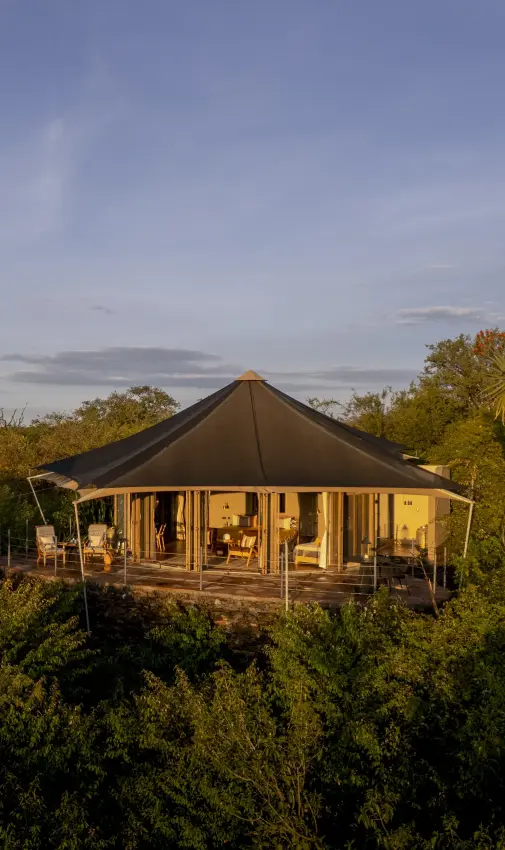
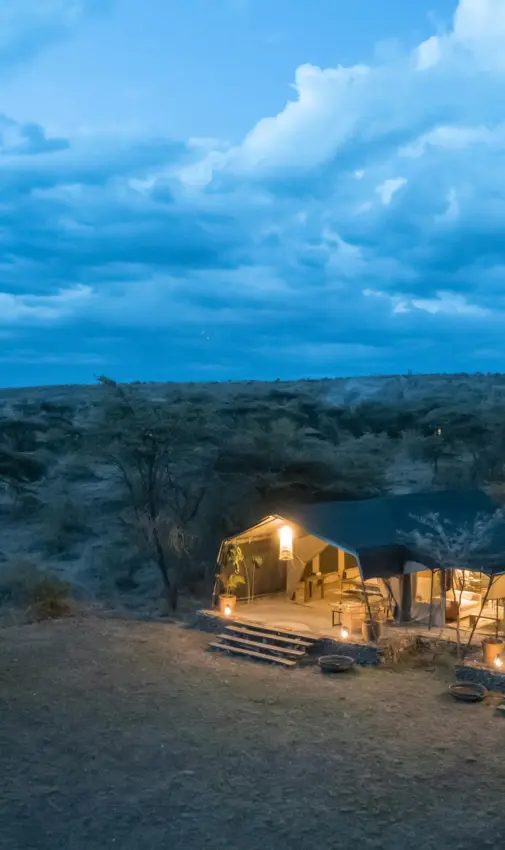
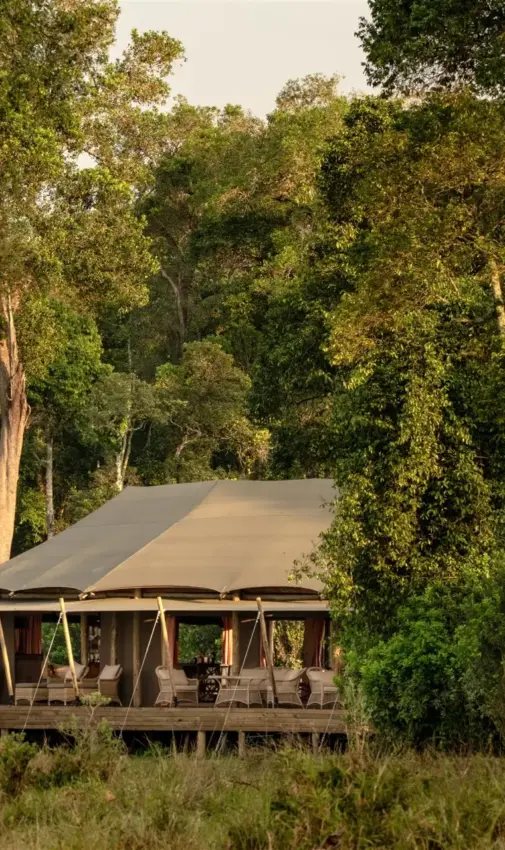
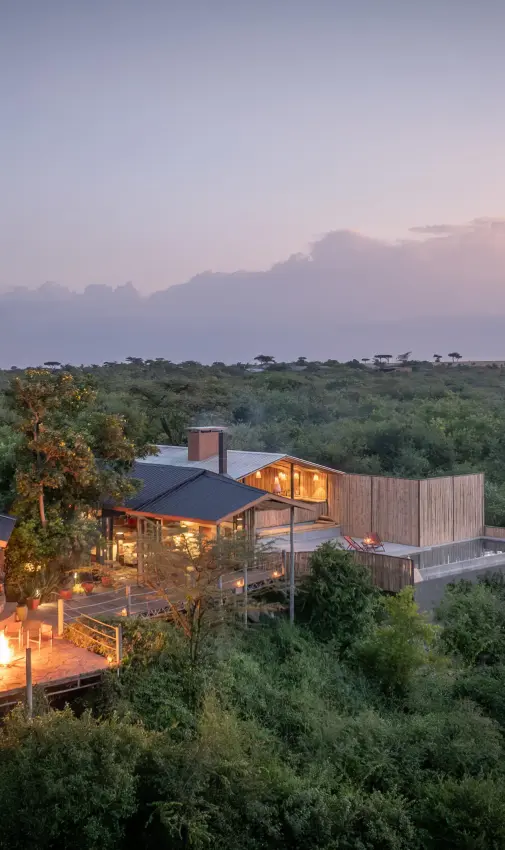
The tents stand along the high bank in a line under the trees, canvas on raised wooden platforms with polished dark wood underfoot, woven rugs, brass fittings and printed cotton. Mesh windows keep the air moving and let the river in: hippos surfacing below, fish eagles overhead, baboons crossing the lawn at midday. The family tents turn the other way to face the plains, a double room at one end, a twin at the other and a lounge between the two. Some are fitted with ramps and grab rails for wheelchair access.
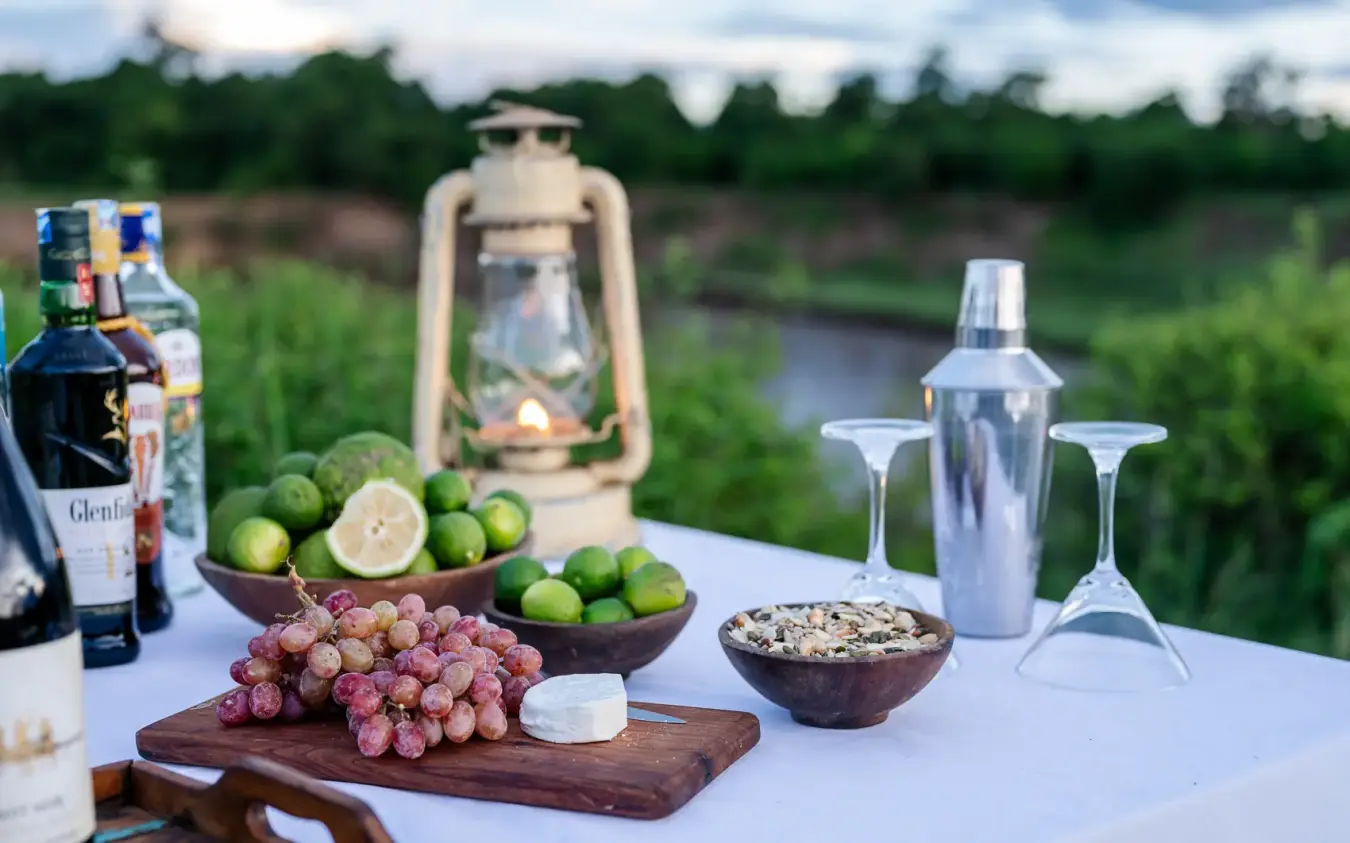
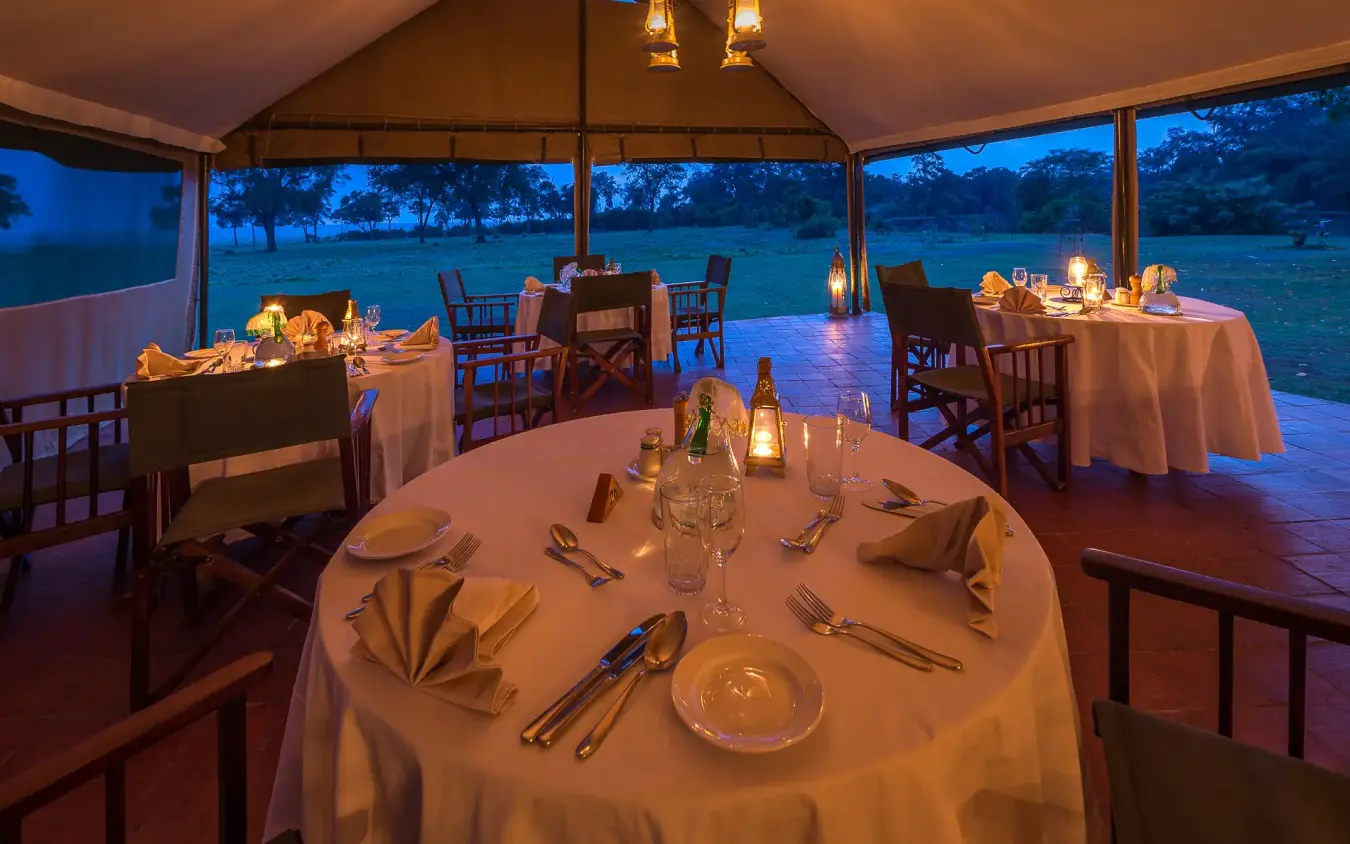
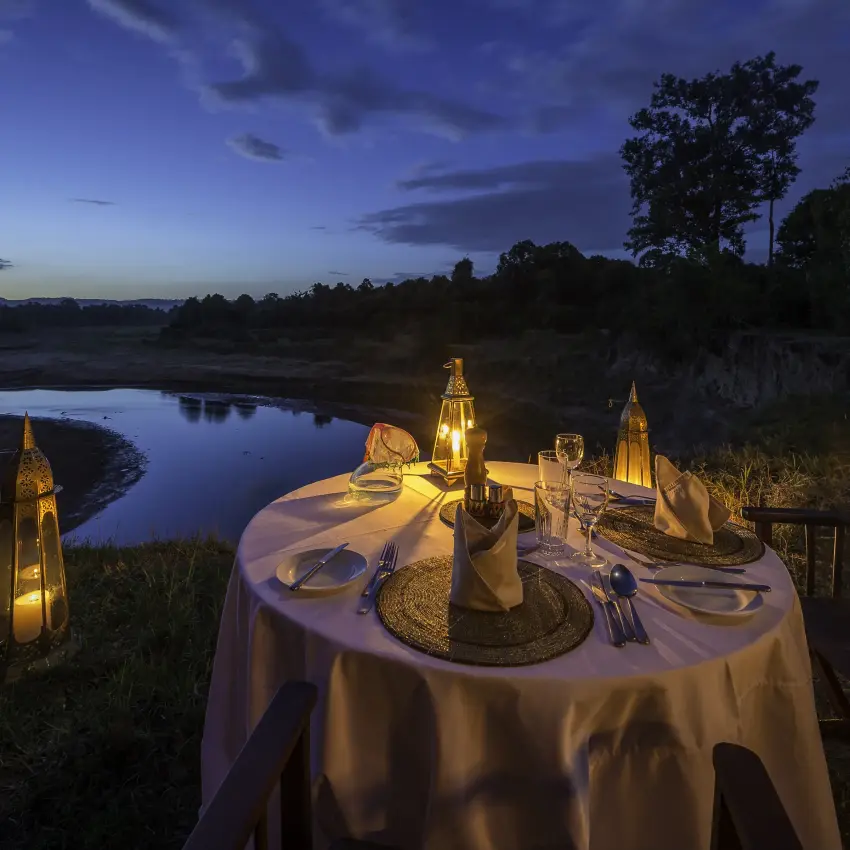
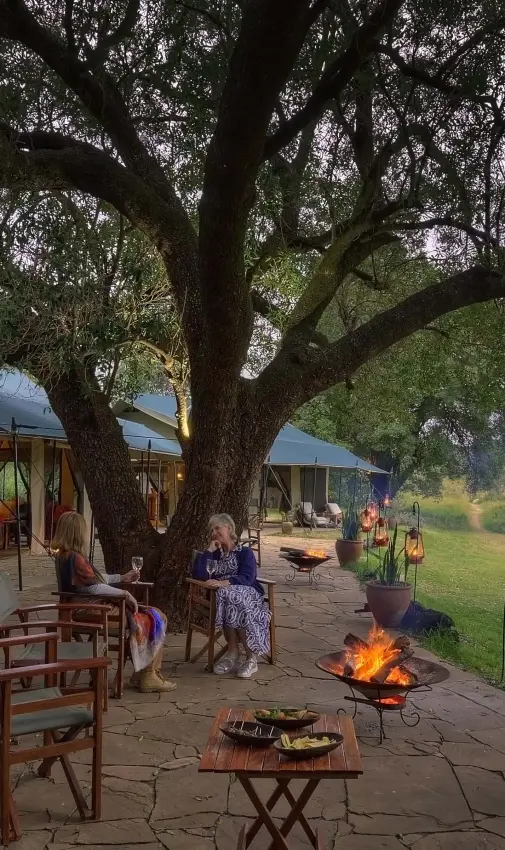
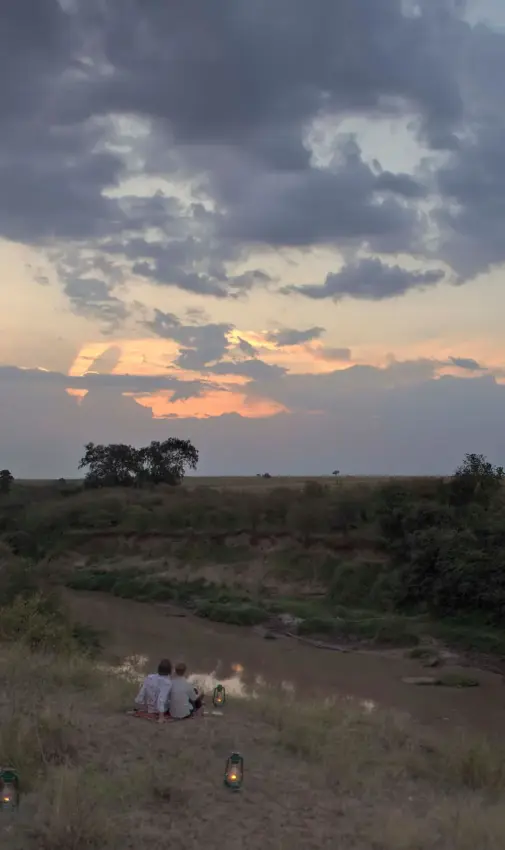
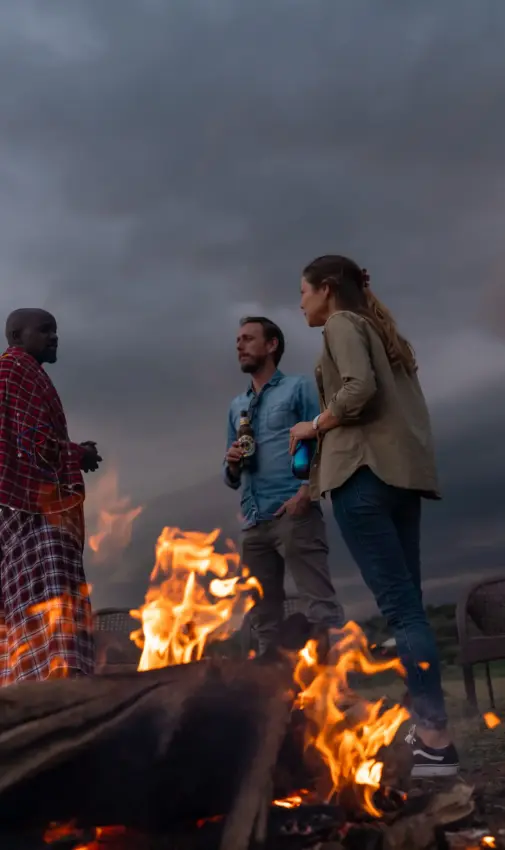
Breakfast is cooked over coals on the riverbank, croissants and eggs to order with Kenyan coffee while elephants work the far side of the water. Lunch is laid out under the forest trees, roasted meats and grain salads. Before dinner a fire is lit on the river’s edge. At night the sound is hippos below the bank, and lion out on the grass. Dinner itself is plated and multi-course, taken by candlelight under the mess tent. Private breakfasts and dinners are set up out on the plains, and coffee comes to the tent at dawn, delivered by hand.
At night the sound is hippos below the bank, and lion out on the grass.
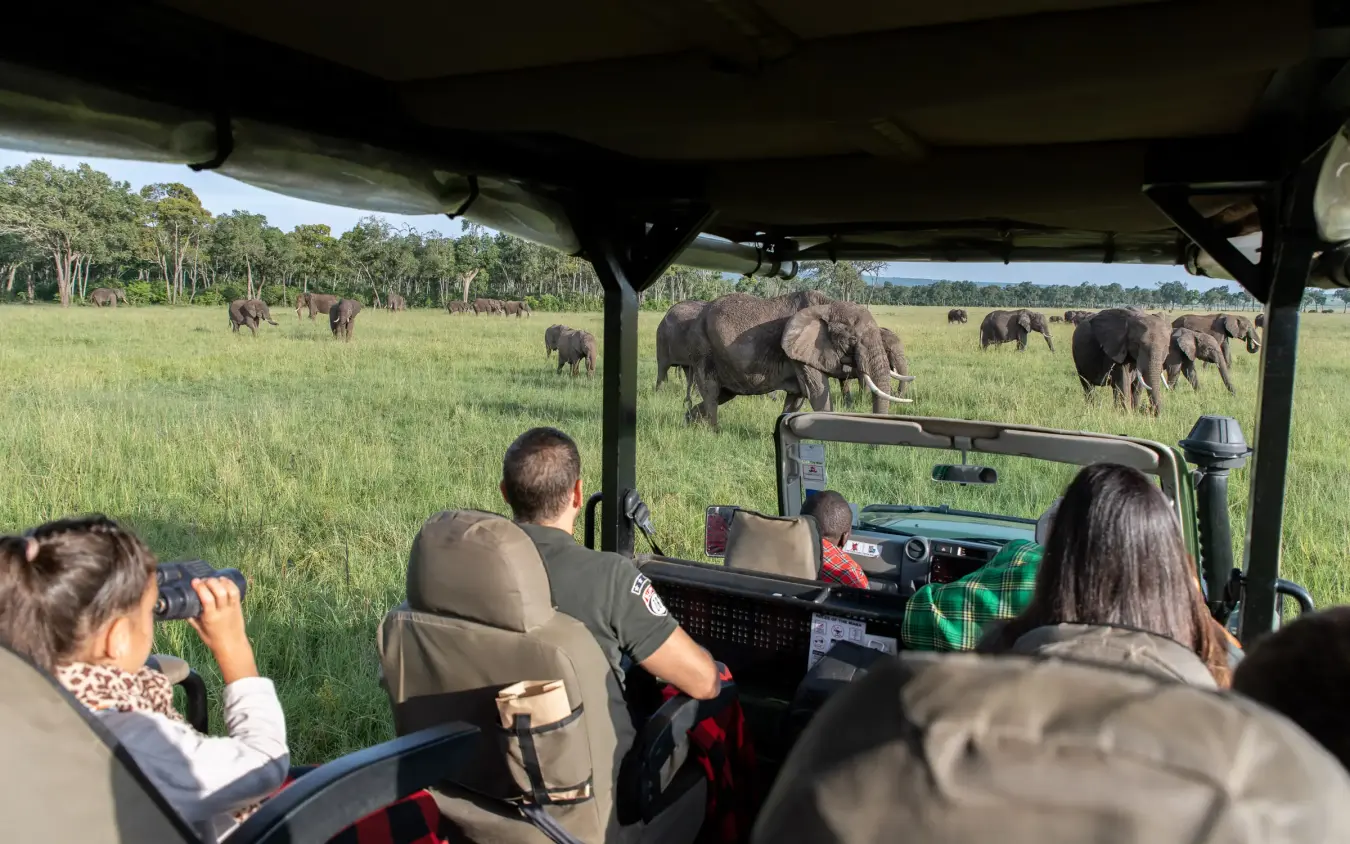
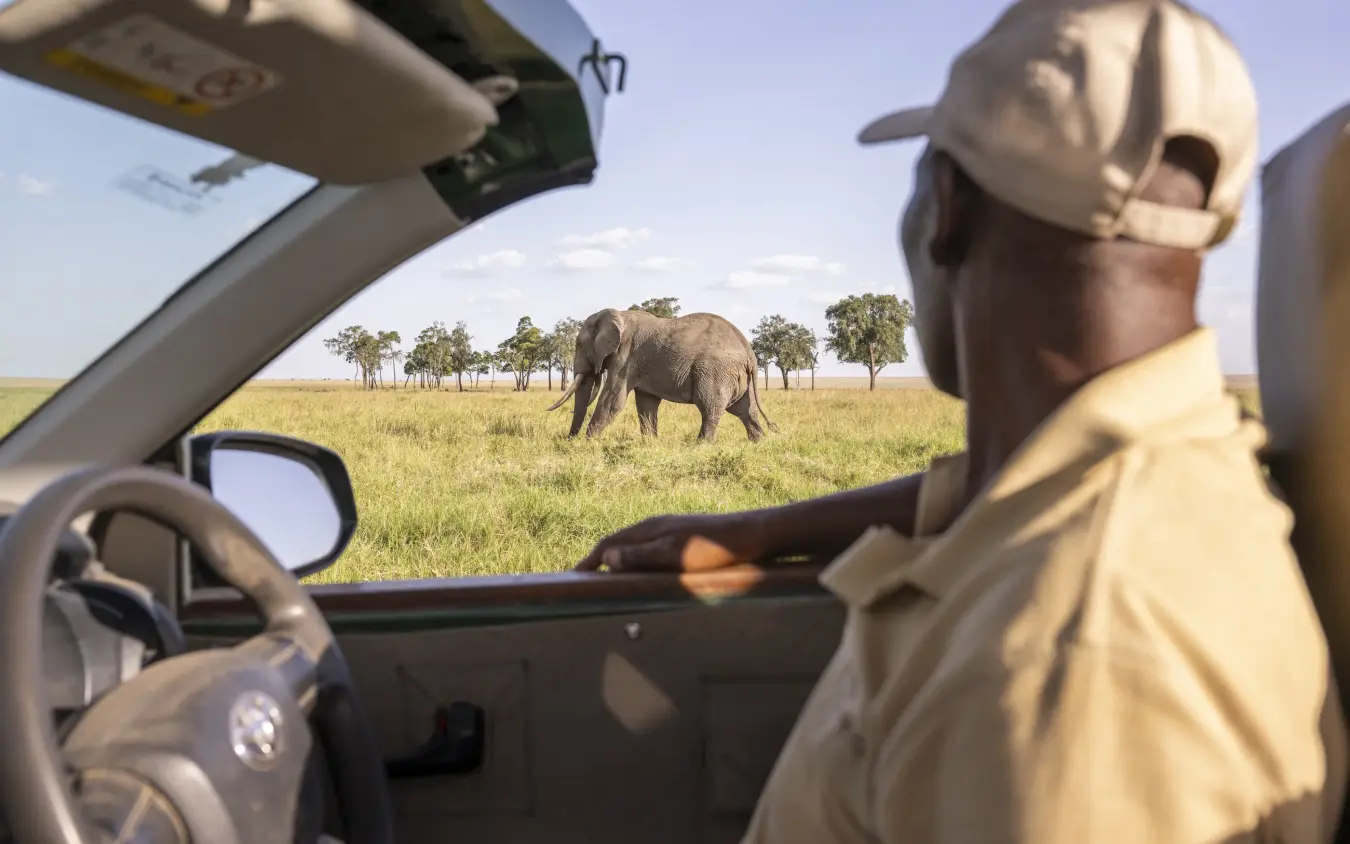
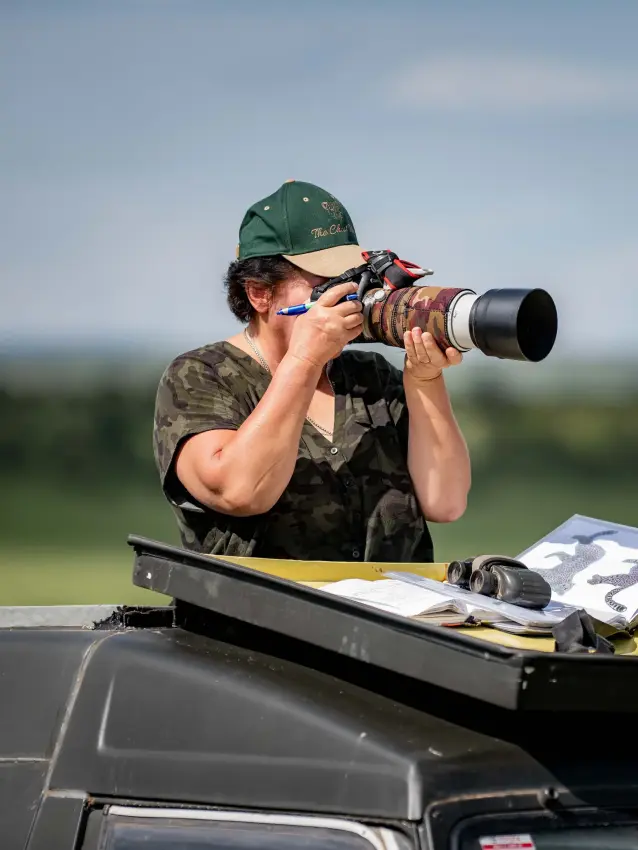
Drives out of Governors’ Camp are not fixed to a timetable. Inside the reserve the guides follow what the wildlife is doing, which is why the sightings hold up well outside the migration months. Walking happens beyond the reserve boundary rather than within it, and naturalists lead guests out into the ranchland and conservancies, usually ending at a bush breakfast. A spa tent handles massages and facials. Children of any age are welcome, and the camp’s club for younger guests runs footprint tracking, bird identification, tree planting and beadwork.
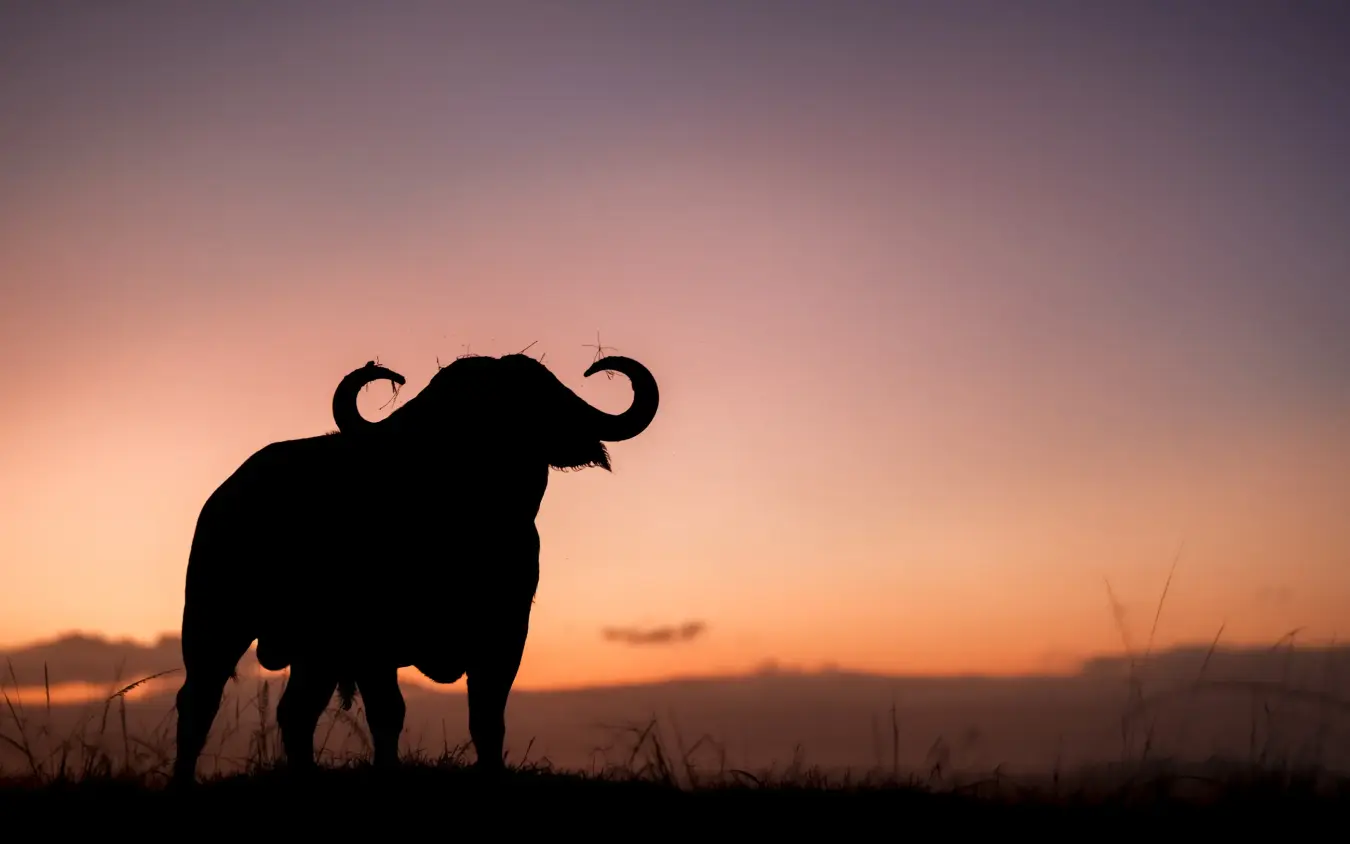
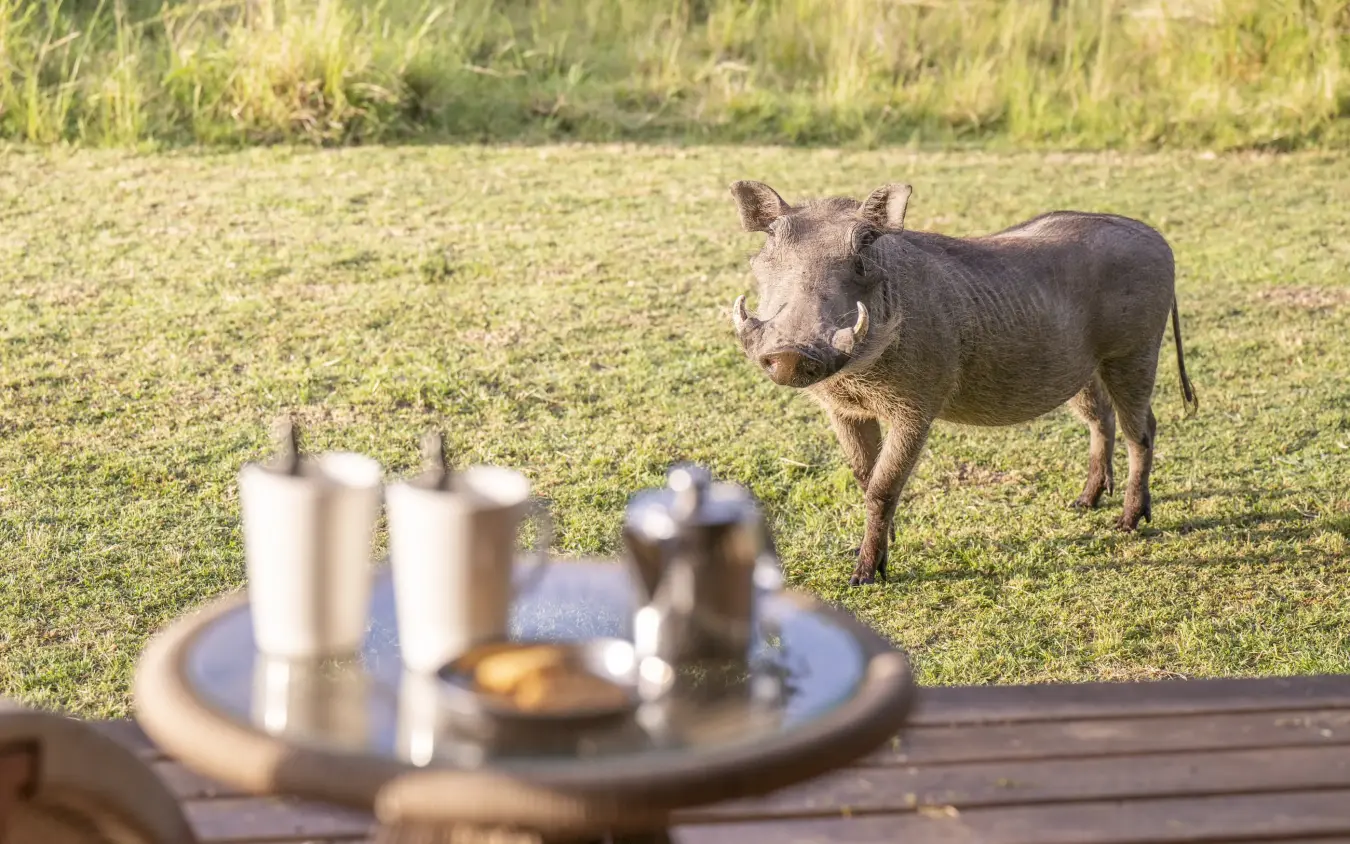
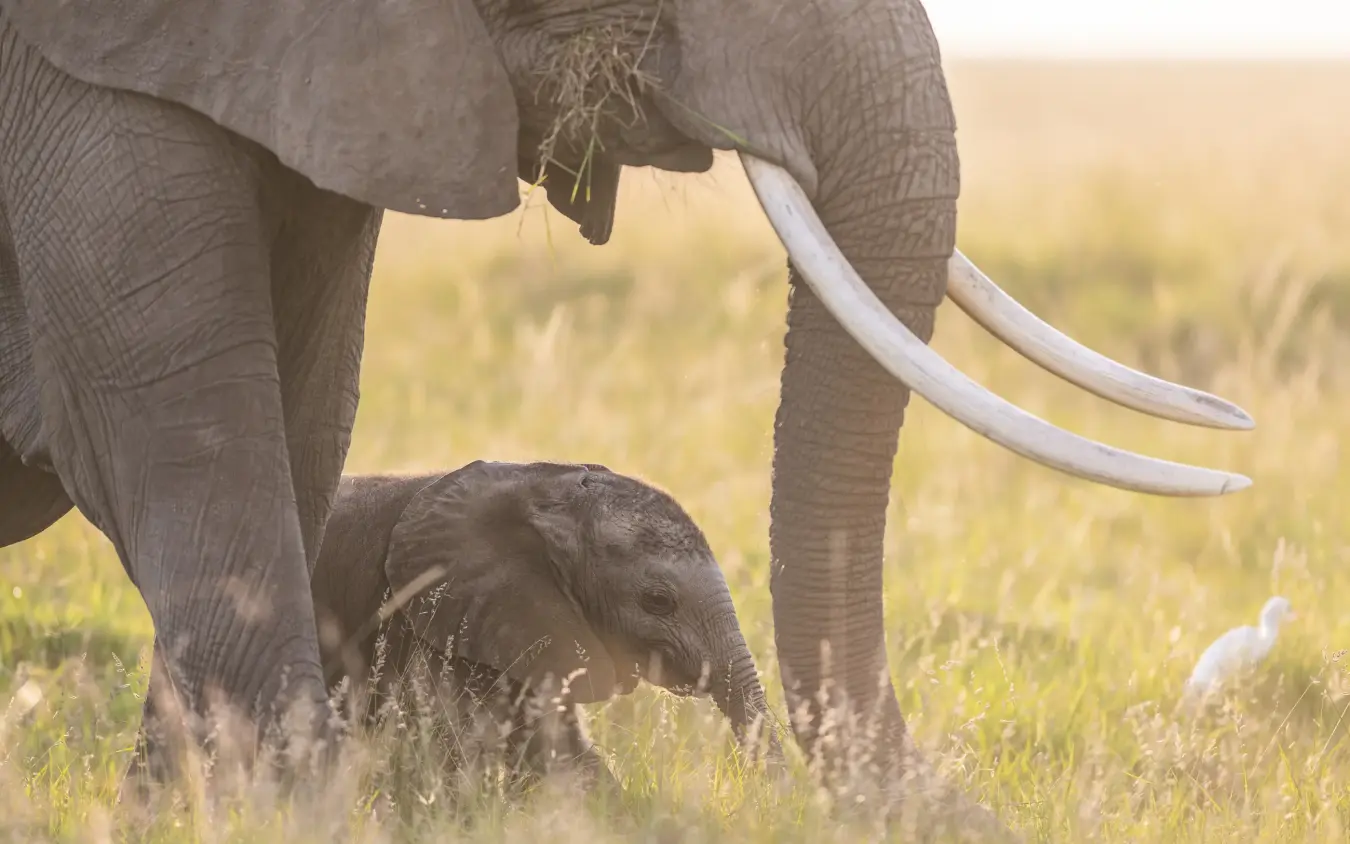
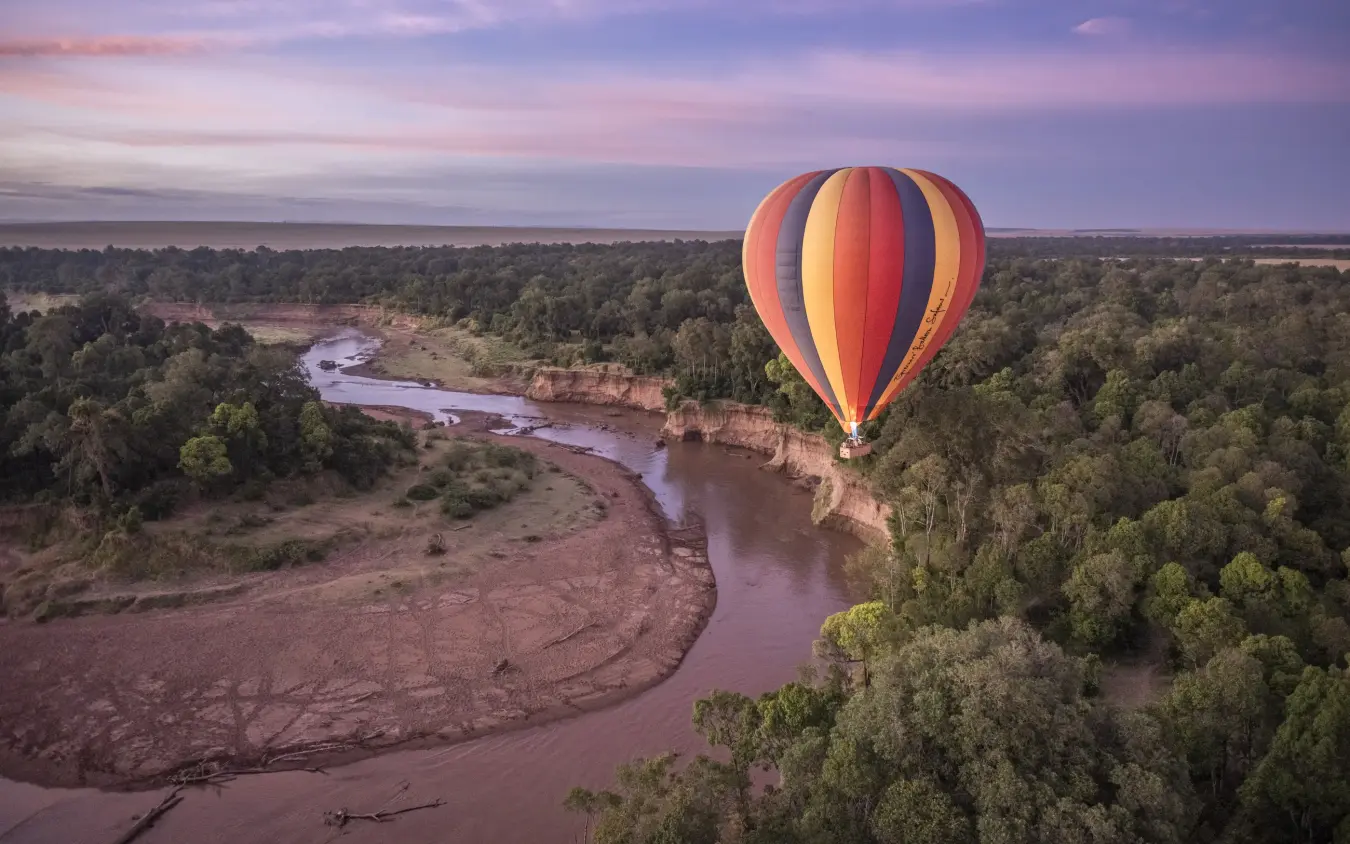
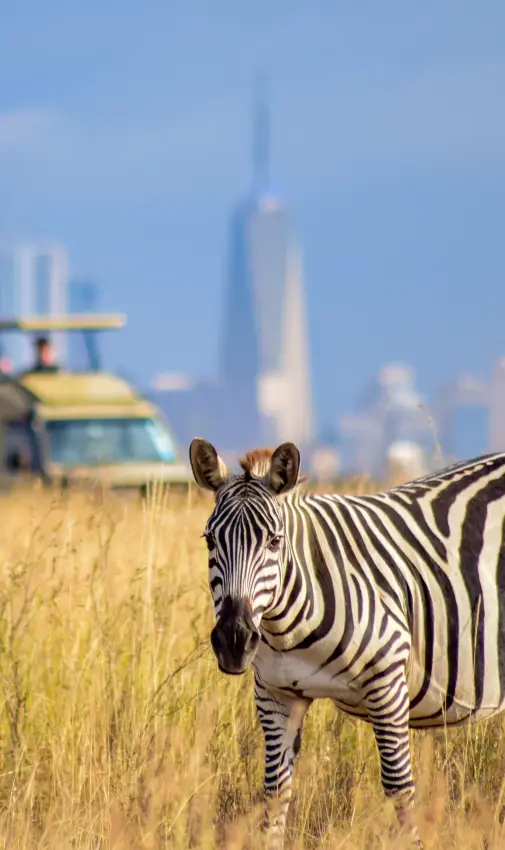
The river bend in front of the tents carries pods of hippos and large crocodiles all year. Beyond them the plains around Musiara hold topi, impala, waterbuck, warthog, Masai giraffe, buffalo and zebra, with spotted hyena working the margins and elephants moving through the forest. July to October brings the wildebeest and the crossings that come with them, though the marsh keeps the predators close in every other month of the year. Maasai homesteads at Mara Rianda, outside the reserve, can be visited by arrangement.