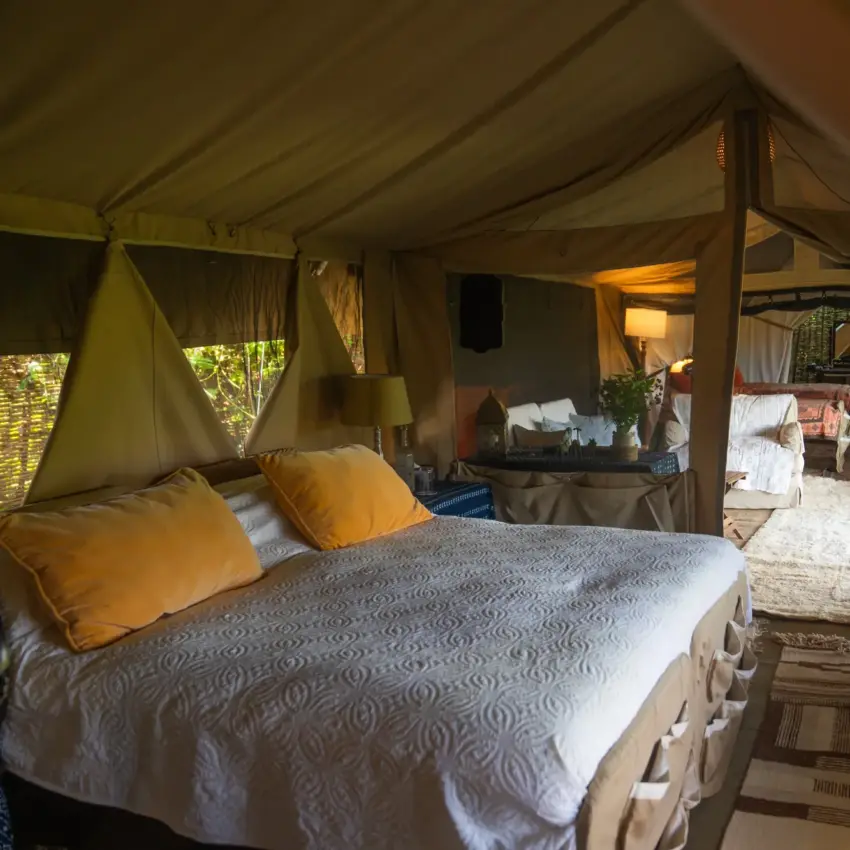
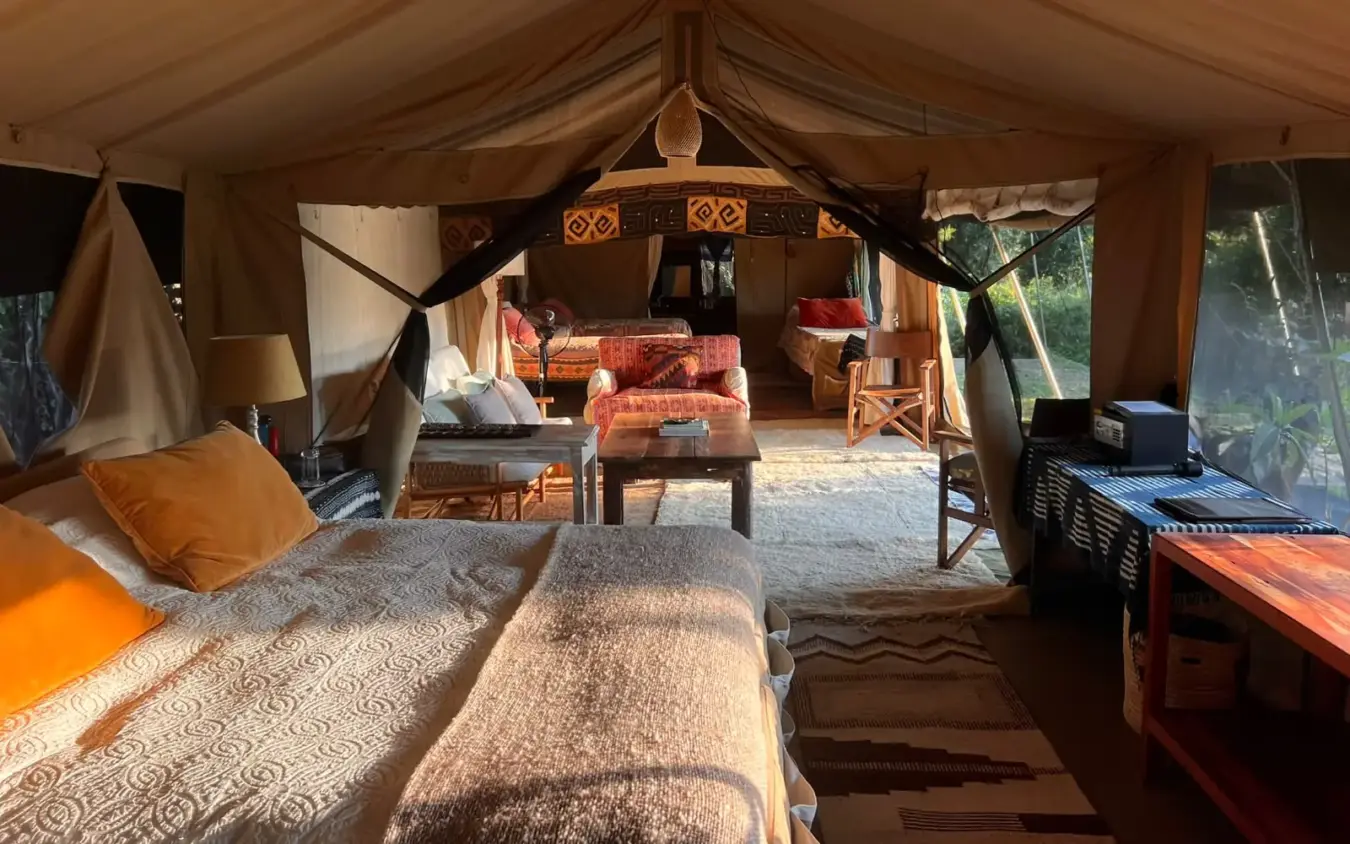
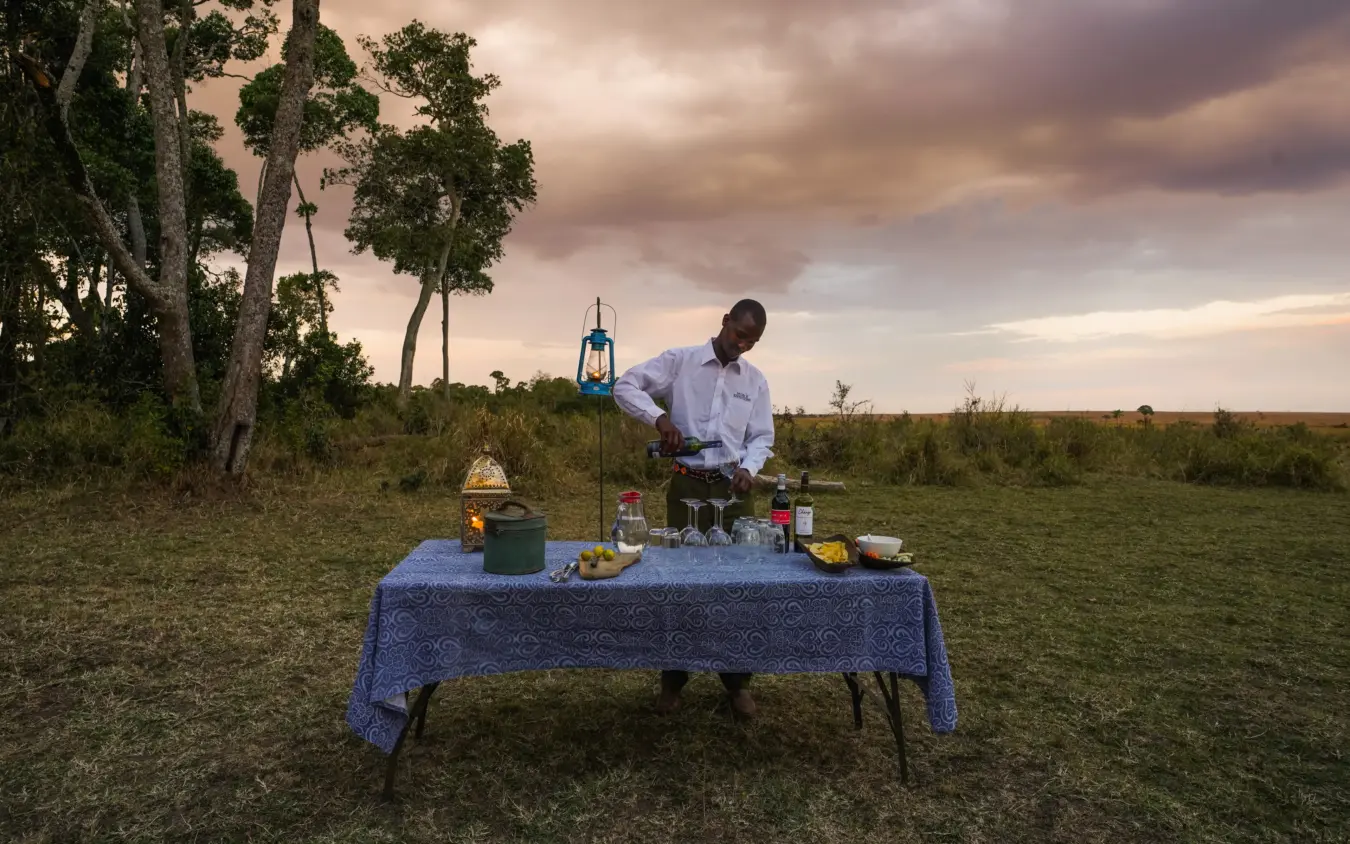
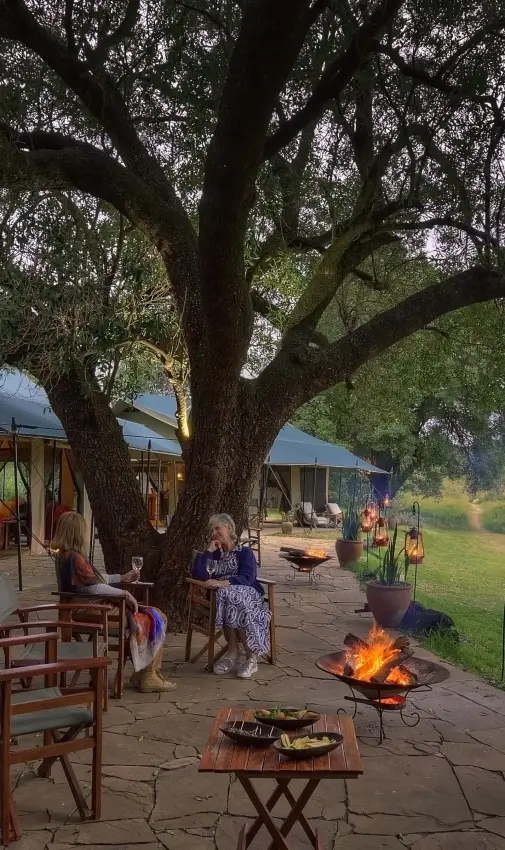
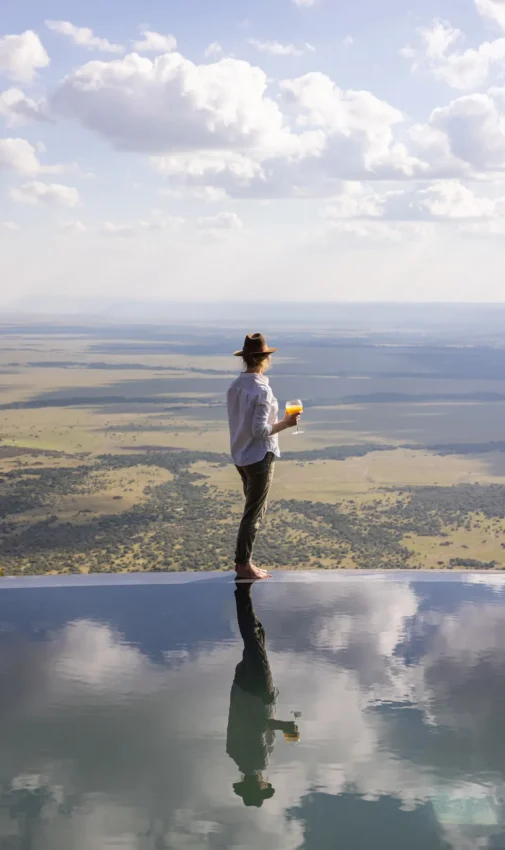
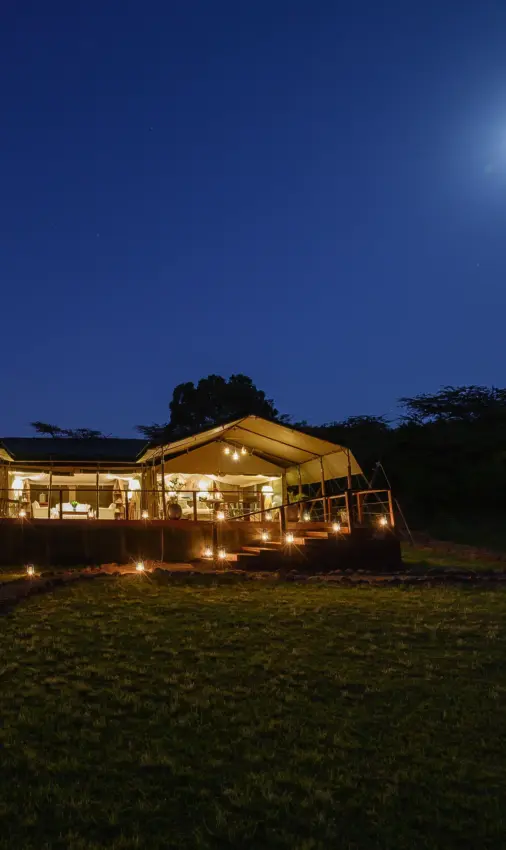
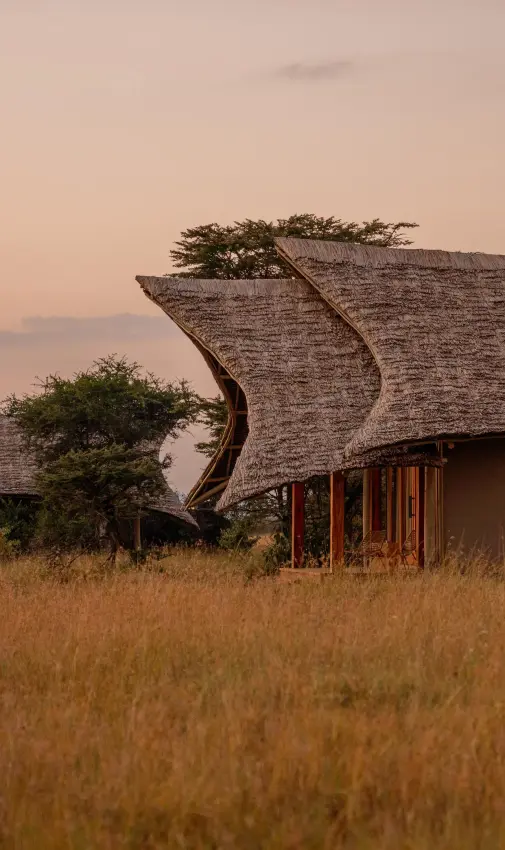
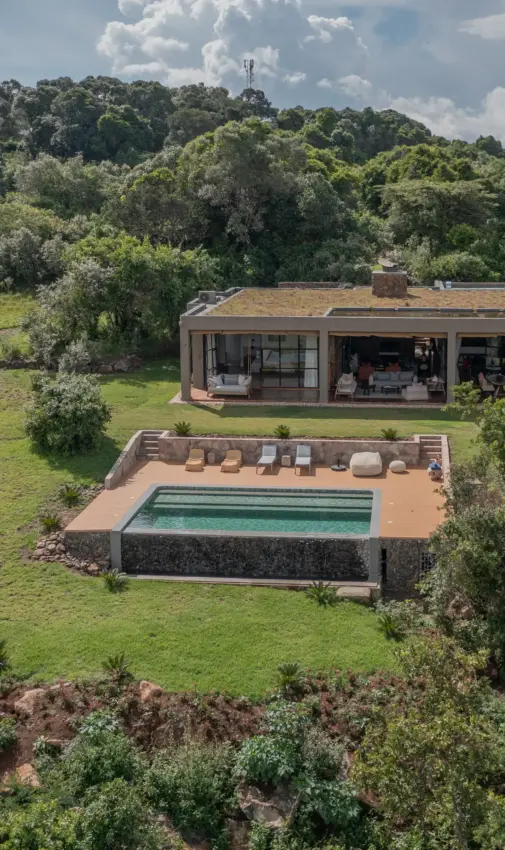
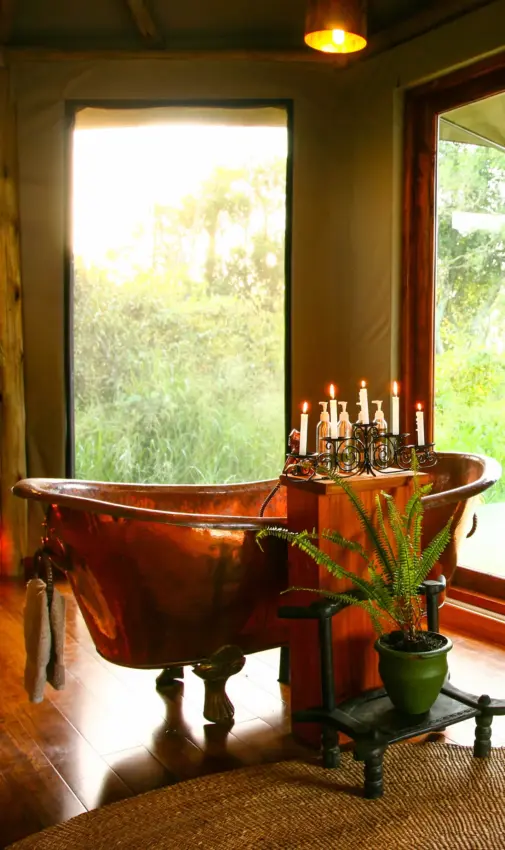
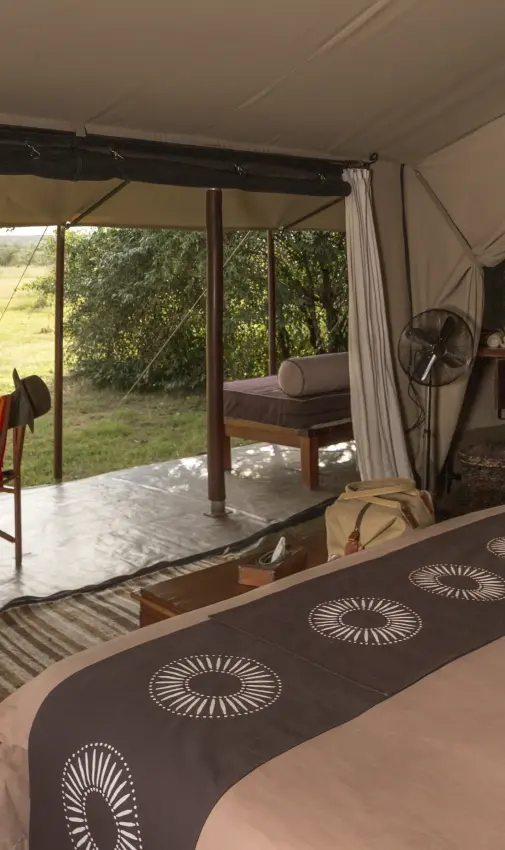
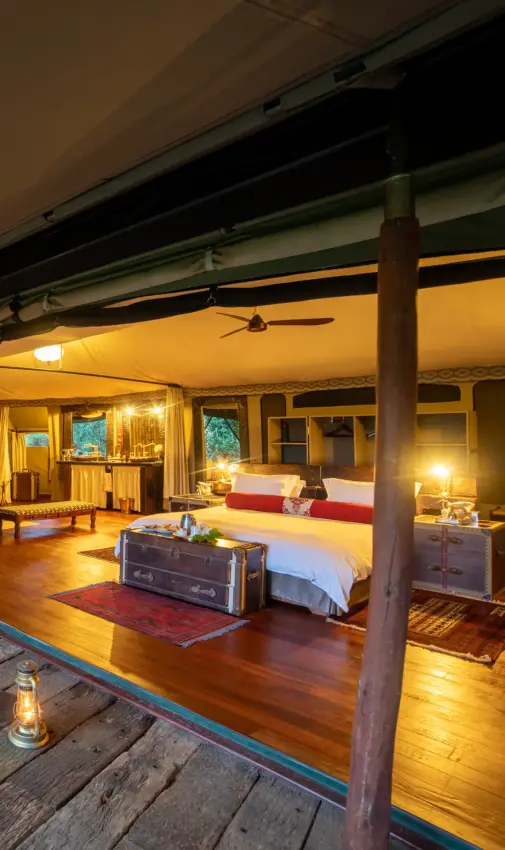
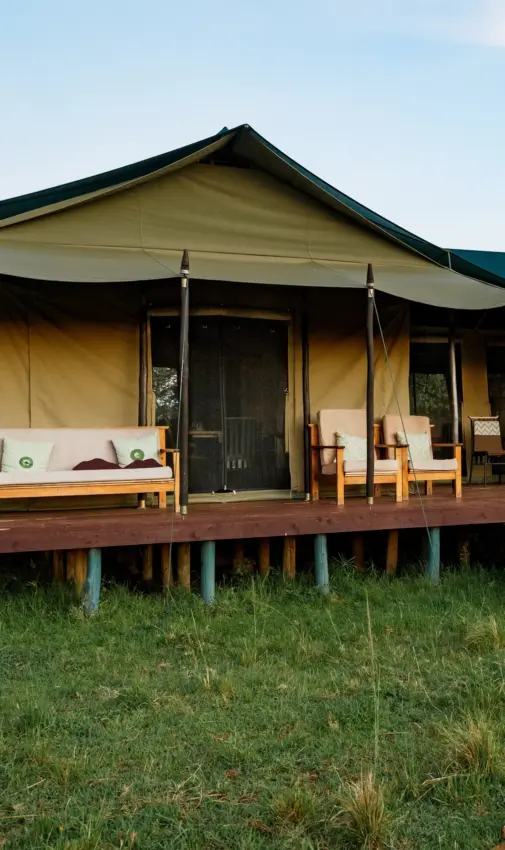
Six of the nine tents are standard, set up as doubles, twins or triples. The other three are family tents, two en-suite rooms sharing a lounge under one canvas roof. Some look over the Mara River, others out across the plains. Tea or coffee arrives at the tent at six, as birdsong builds in the riverine forest, and breakfast is cooked outdoors, with omelettes to order and pancakes. Dinner is three courses by lantern light, with wines from France and further afield. Afterwards an askari walks guests to their tents by torchlight, where hot water bottles are in the beds.
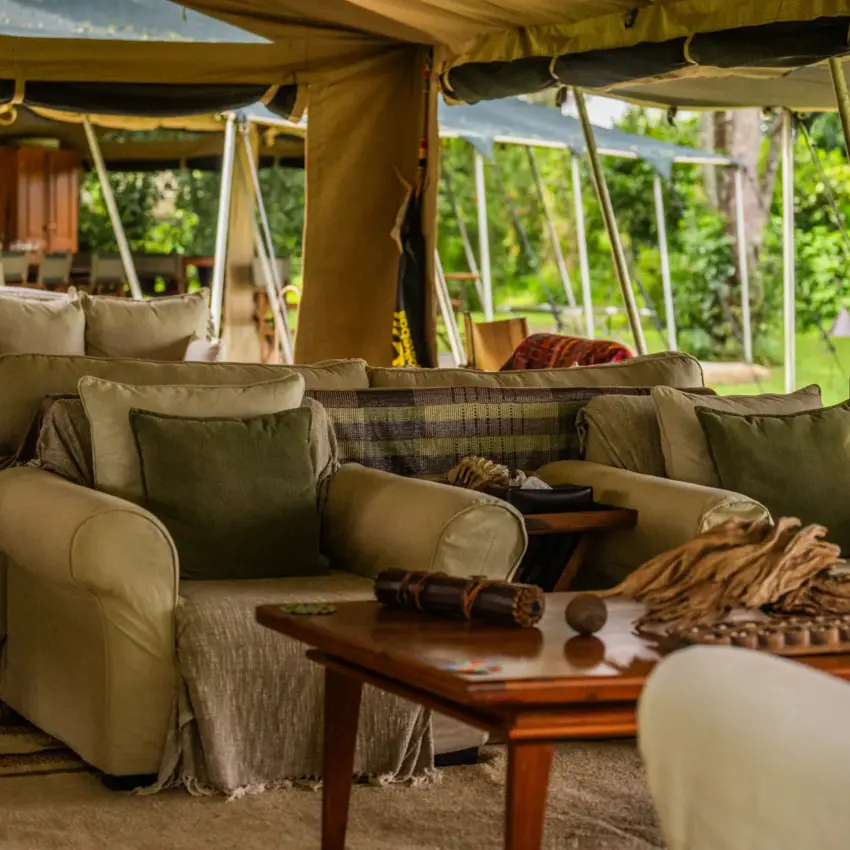
Willie’s original tent was furnished with Afghan carpets and decorated with stones, seedpods and driftwood. Today a silver crocodile sculpture presides over the mess tent bar, among field guides, memoirs, wood carvings and crystal glassware. A young male hippo called Eminem, exiled from his pod, keeps to a watering hole nearby. Now and then he wanders towards the campfire. A warthog has piglets nicknamed Piggly and Wiggly, and beachcombing along the riverbank turns up hippo bones and crocodile teeth.
A young male hippo called Eminem, exiled from his pod, keeps to a watering hole nearby.
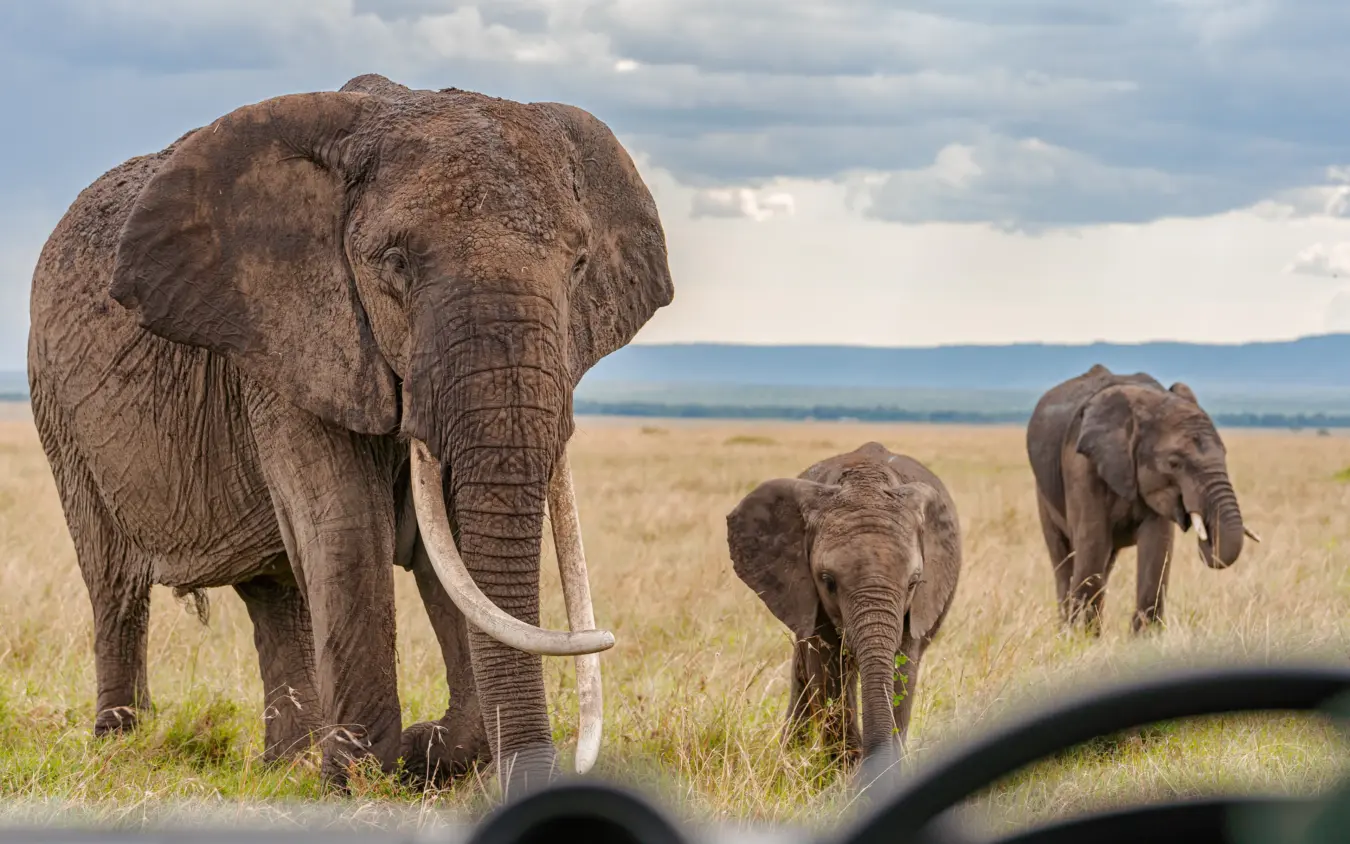
Beadworkers from the surrounding communities bring their handmade crafts into camp as a small market, and visits to a manyatta or the local market can be arranged. Children are planned for properly, with spear-throwing, archery, fire-lighting and cultural activities pitched at all ages, and the three family tents keep everyone together. The camp still supports the Mara Elephant Project, which collars elephants and runs anti-poaching patrols, and guests can meet its conservation partners during a stay.
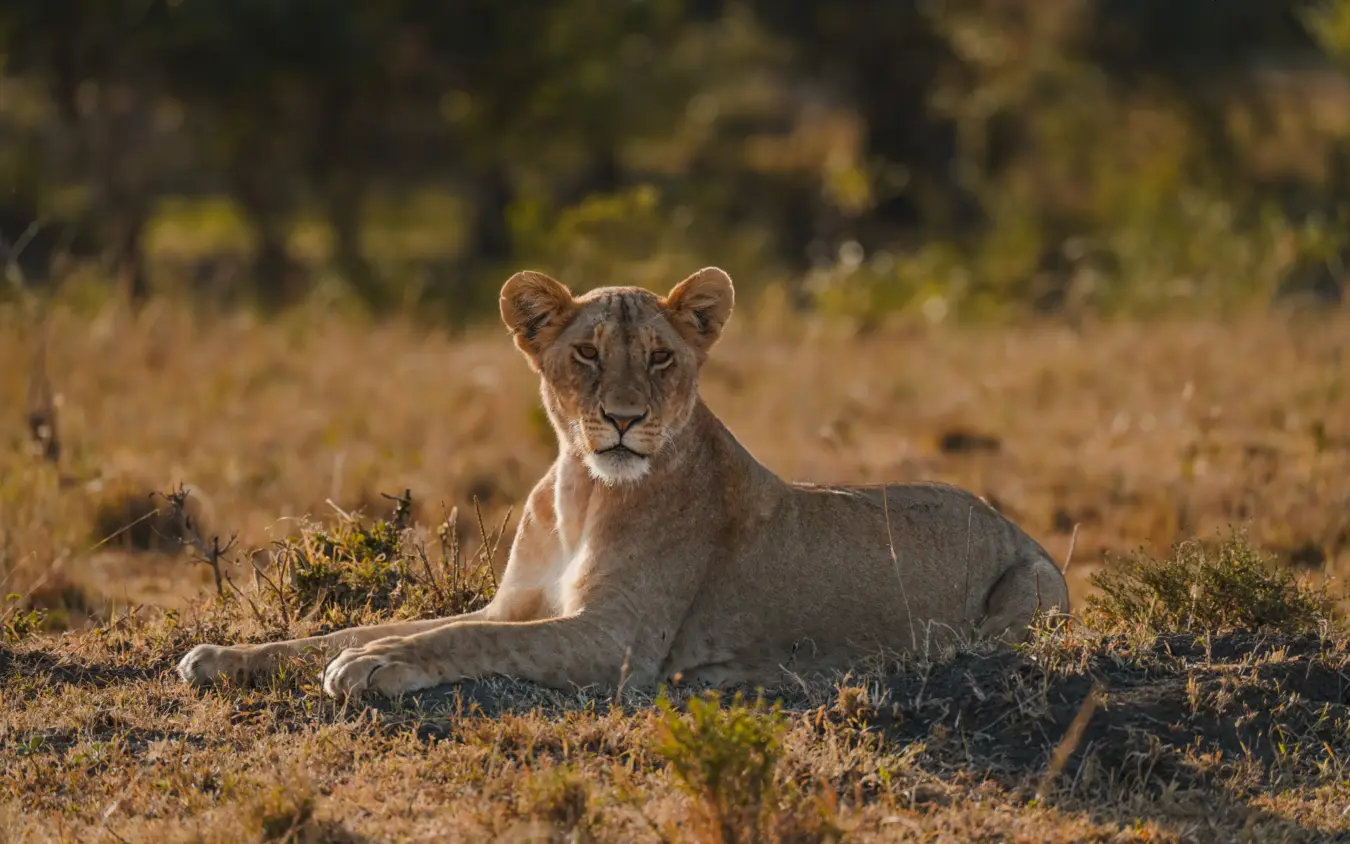
The Mara Predator Conservation Programme, run by the Kenya Wildlife Trust to monitor lions, cheetahs and wild dogs, has the camp’s backing too. Guests can meet its community outreach officer, Dominic Sakat, who works with Mara communities on human-wildlife conflict. Support also goes to the Mara Raptor Project and to the Anne Kent Taylor Fund, through which a Maasai women’s cooperative makes washable sanitary pads. Power is solar and single-use plastics are avoided, while food and toiletries are sourced locally. The camp closes for part of the long rains, around May.