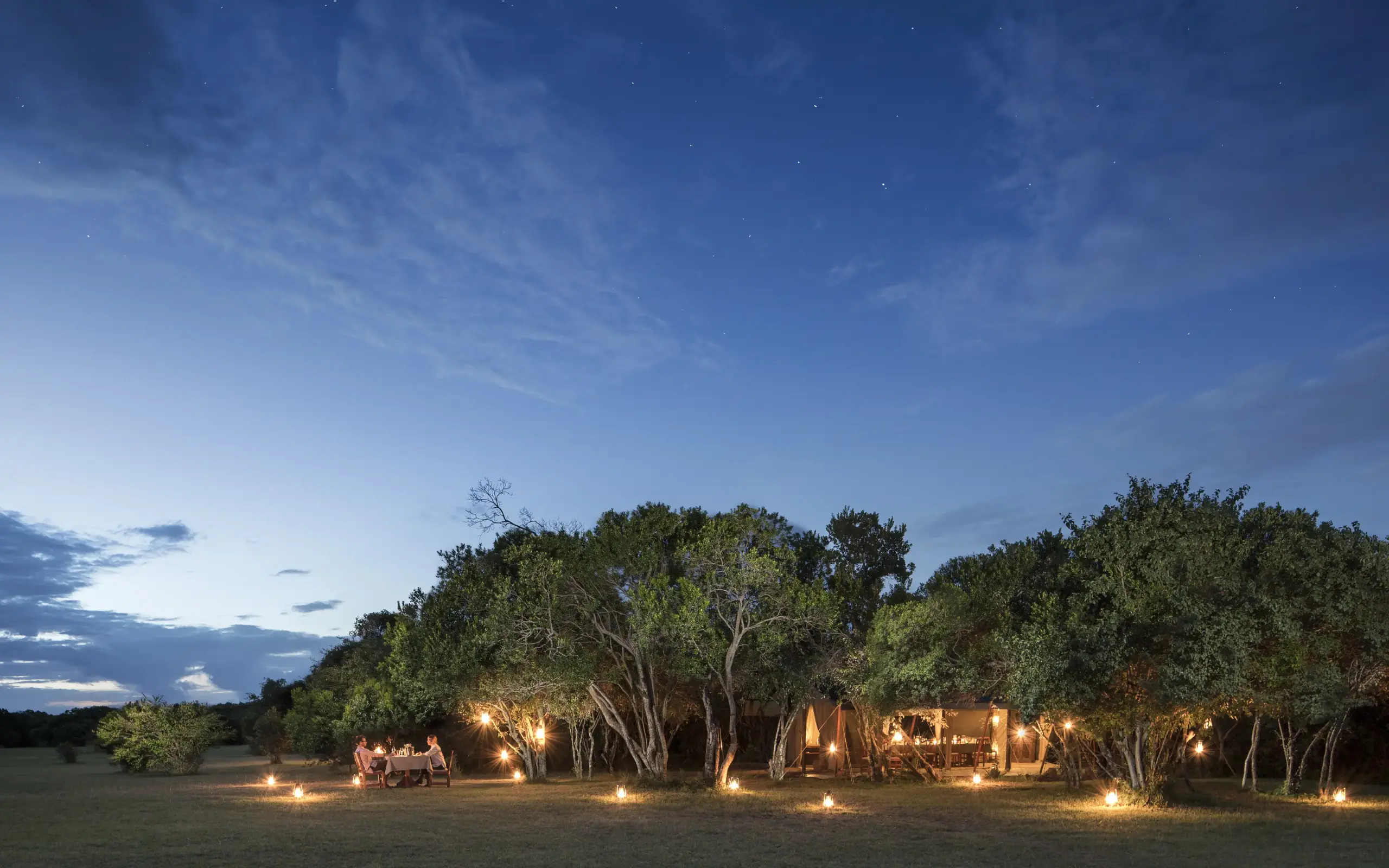
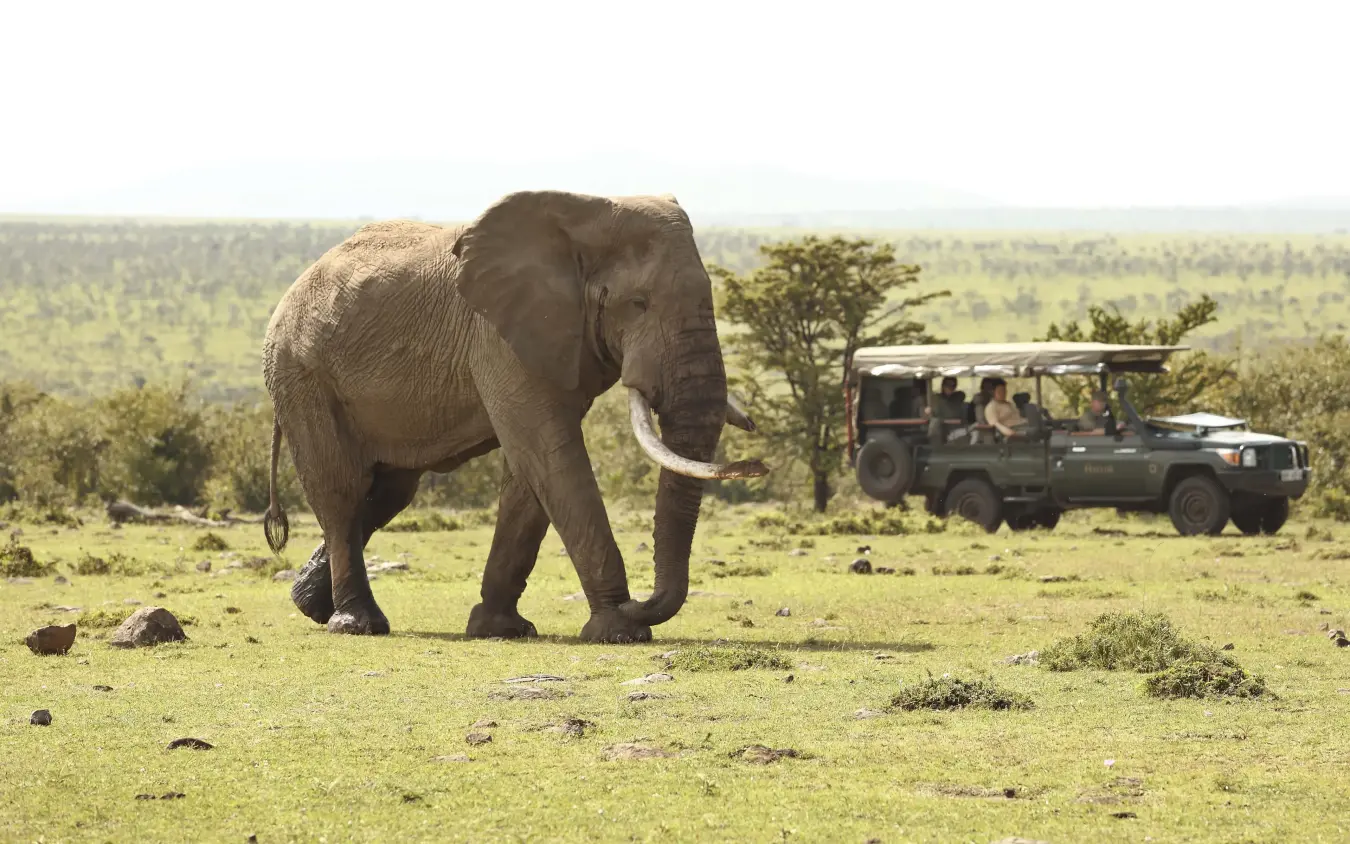
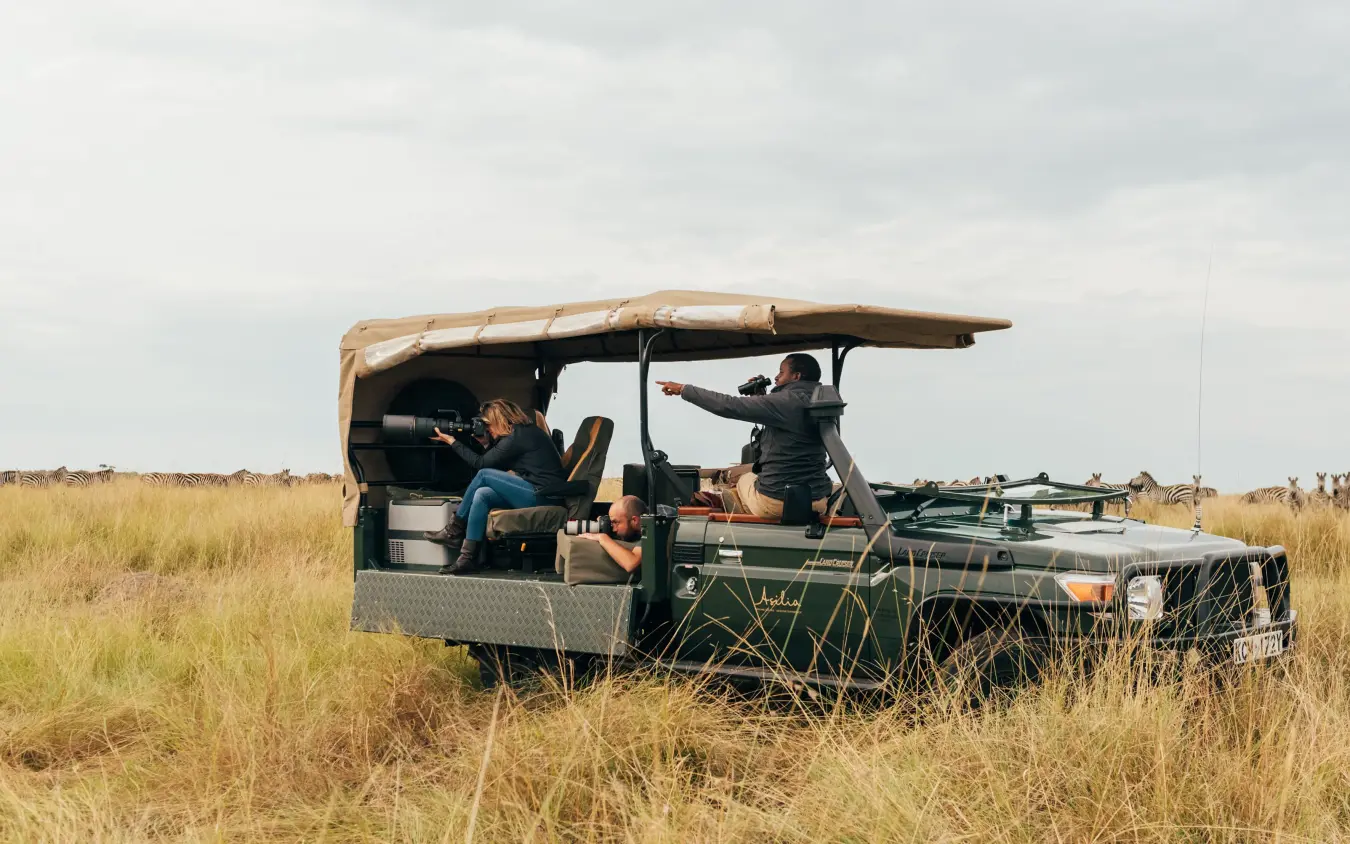
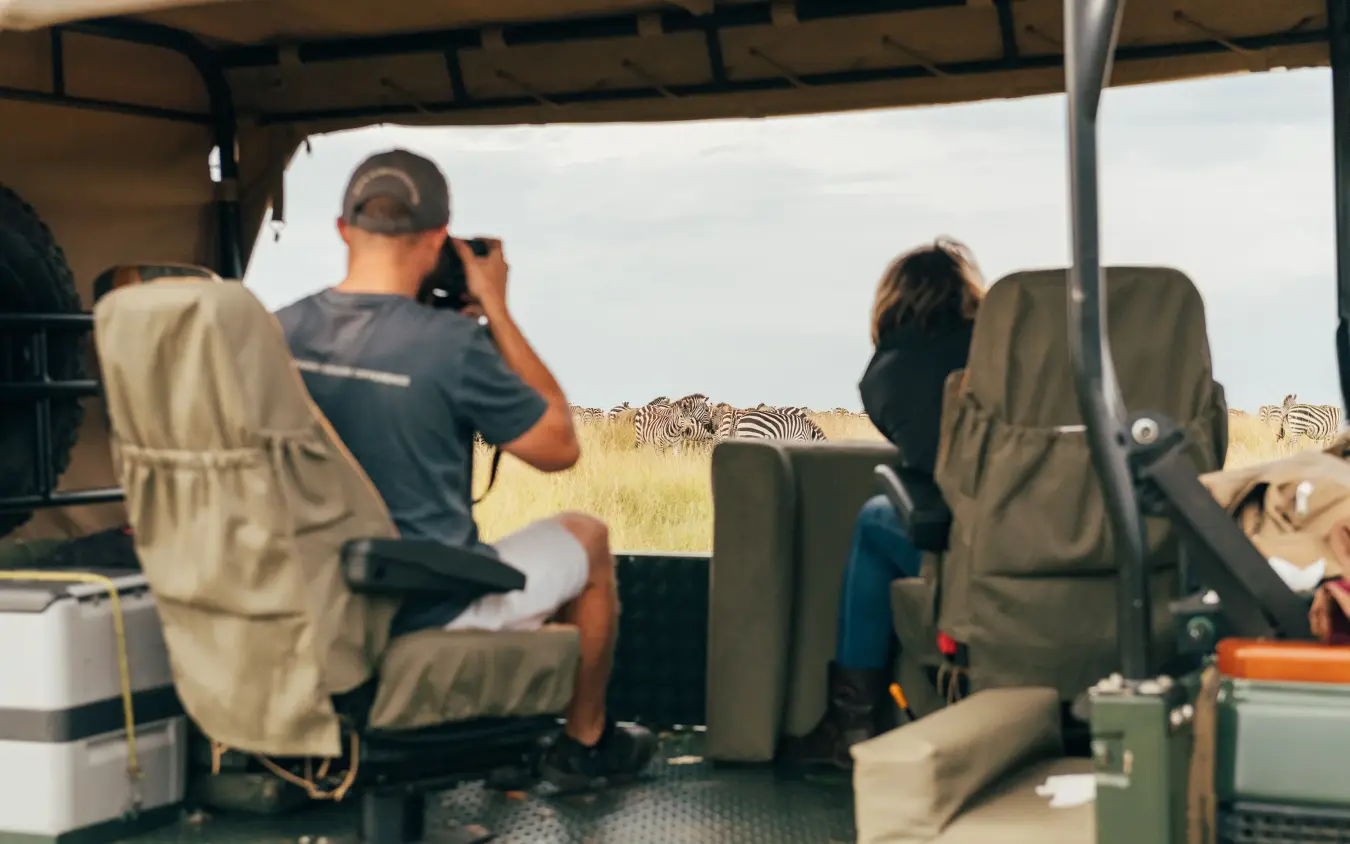
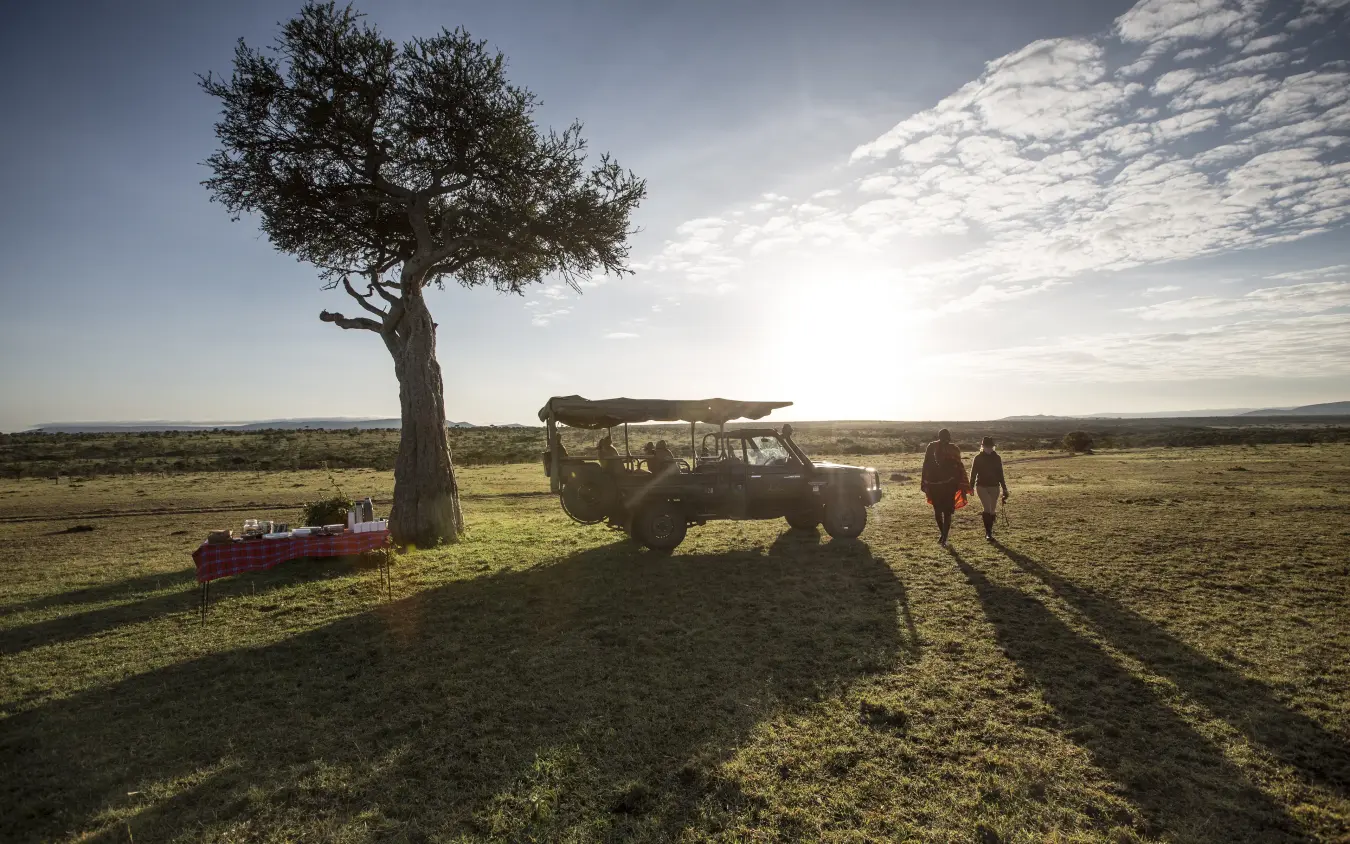
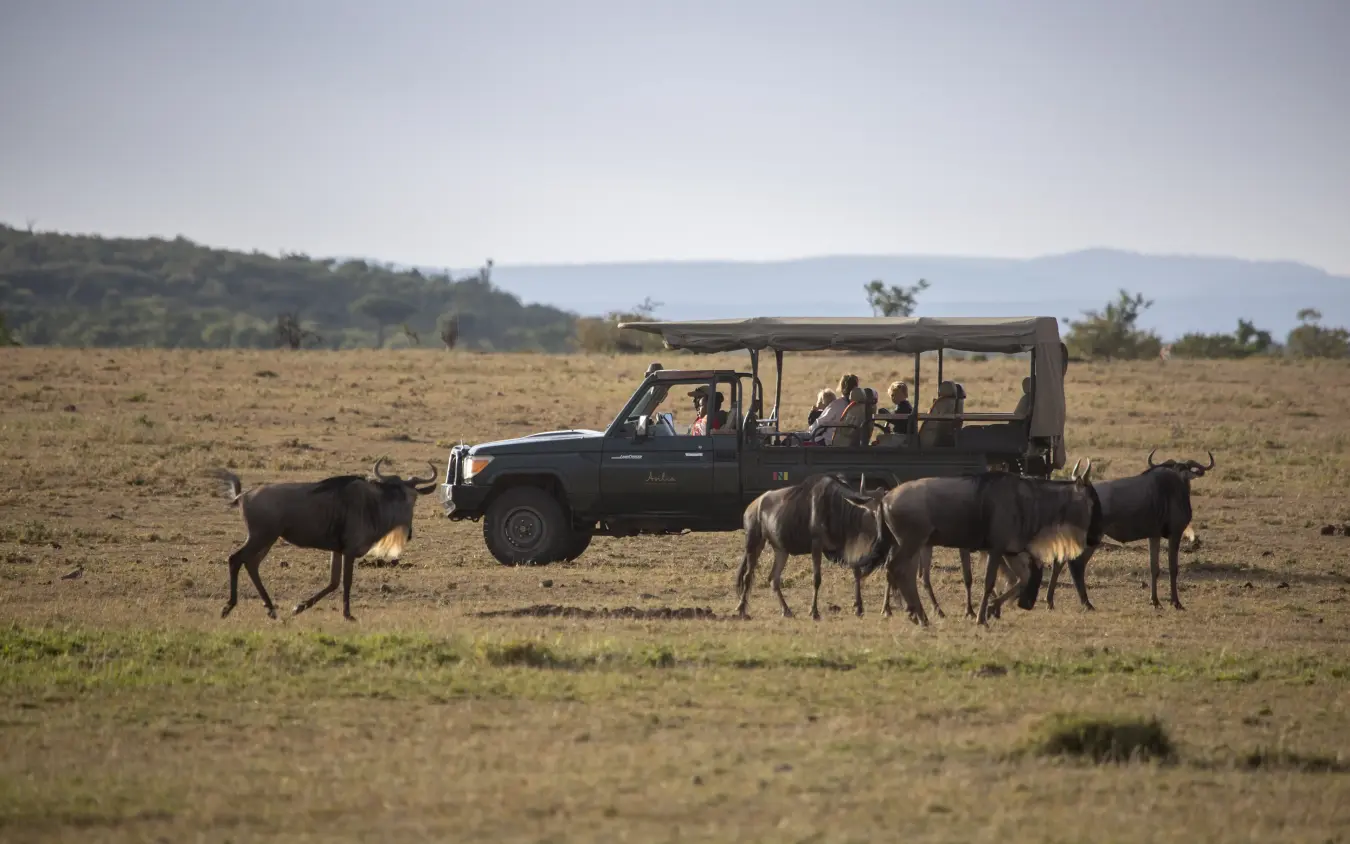
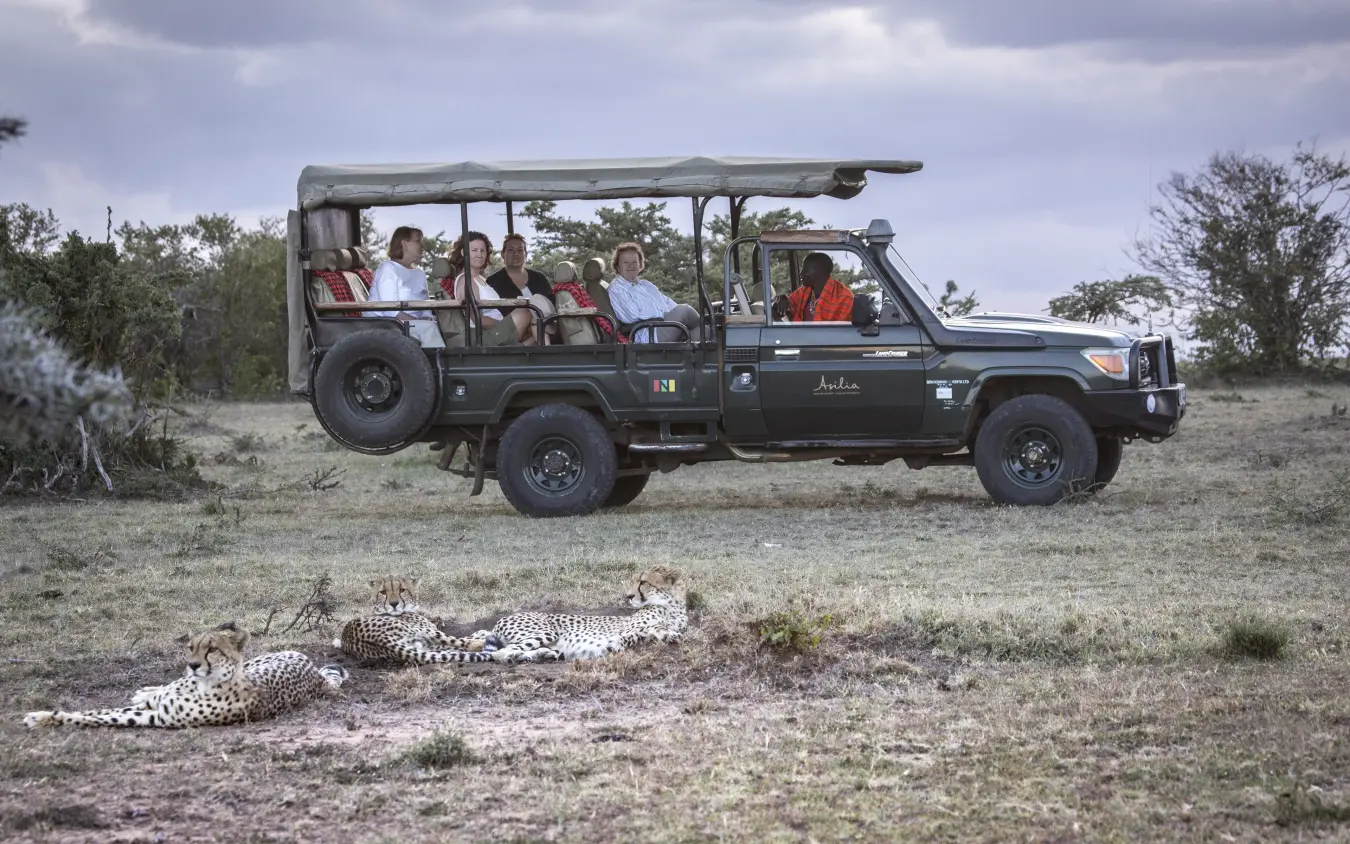
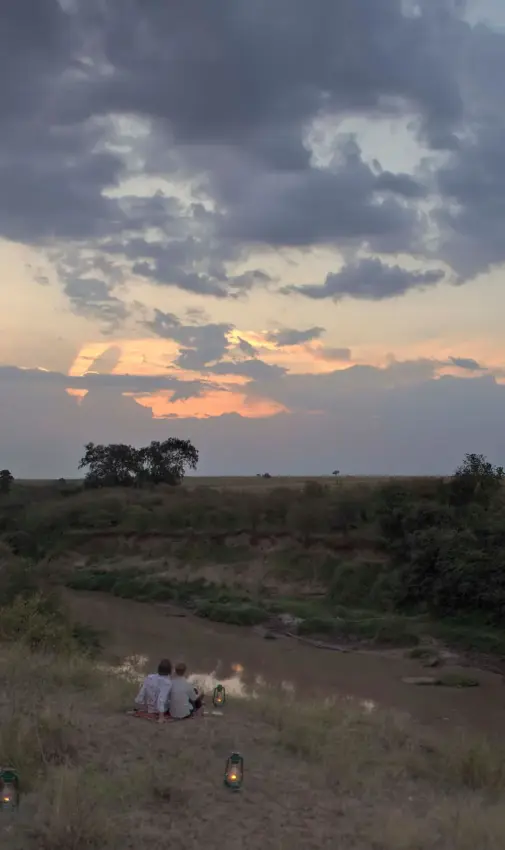
Naboisho operates under different rules than the neighbouring Maasai Mara National Reserve, and that difference decides what a stay here can include. As a private conservancy, it permits walking safaris on foot with armed Maasai guides, and spotlit night drives that can pick out genets, civets and hunting lions. Meals are taken out in the bush. None of this is possible inside the Reserve, where activity is confined to daytime driving on set roads. Naboisho also caps the number of vehicles at any single sighting, so a pride of lions or a cheetah on a kill is typically watched by one or two vehicles rather than a queue.
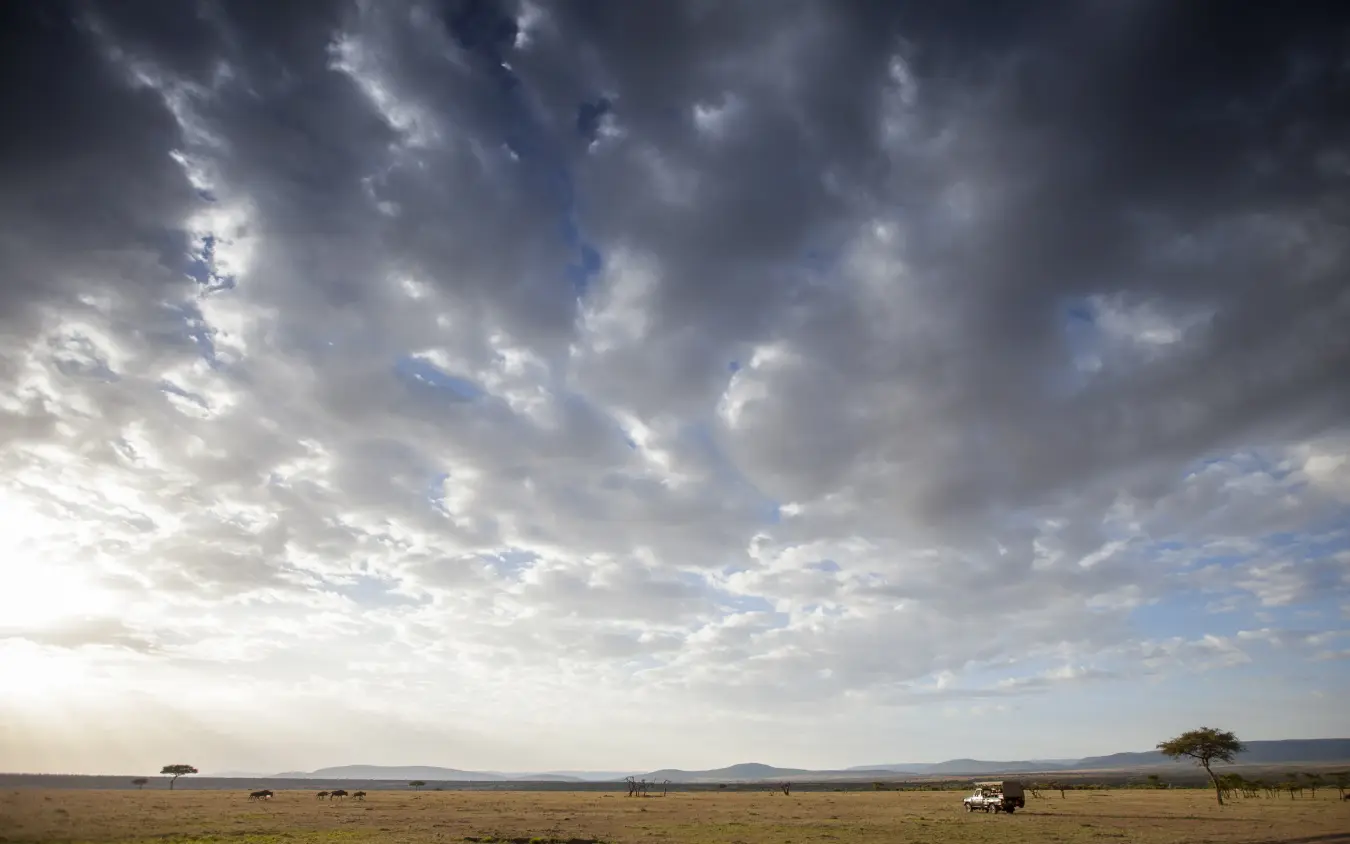
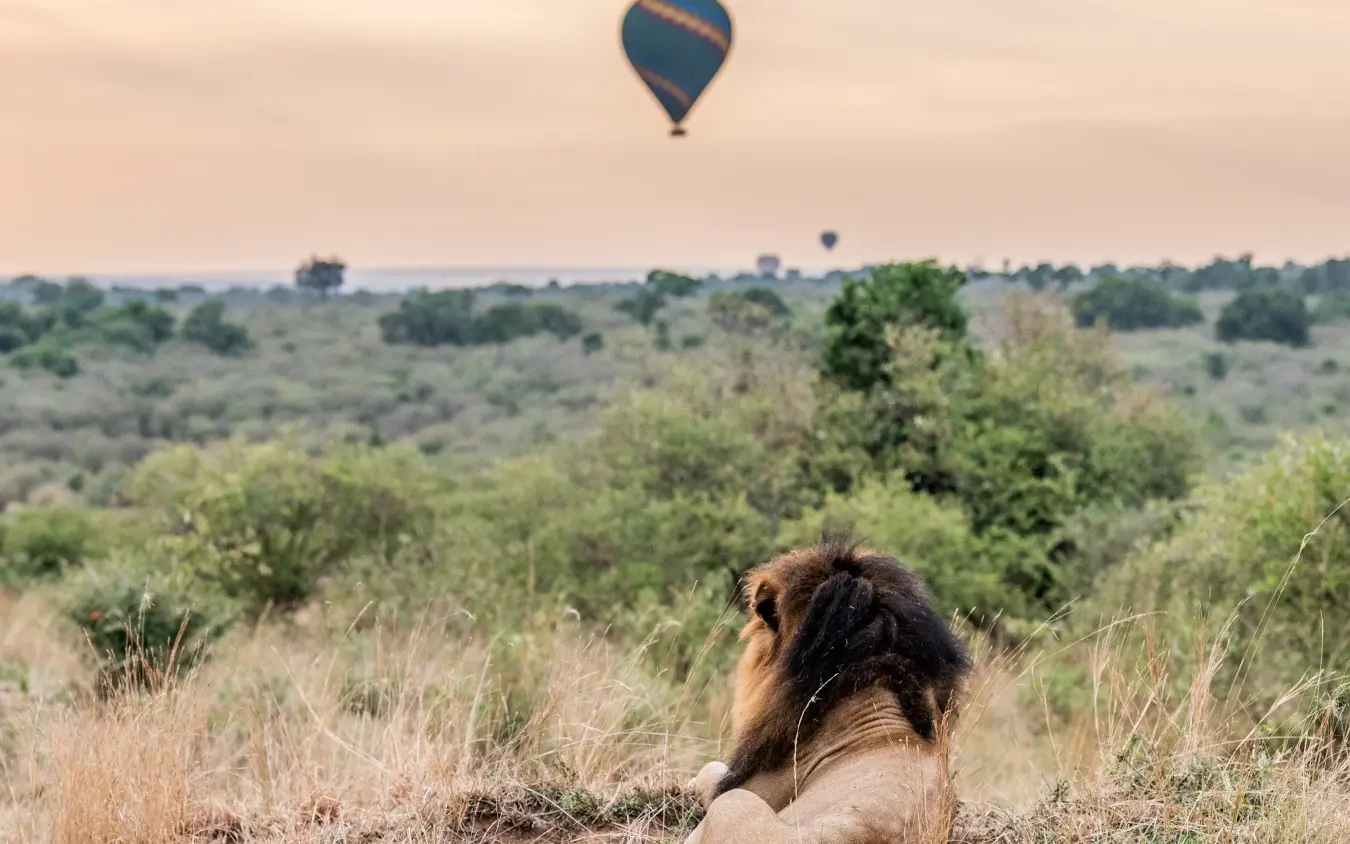
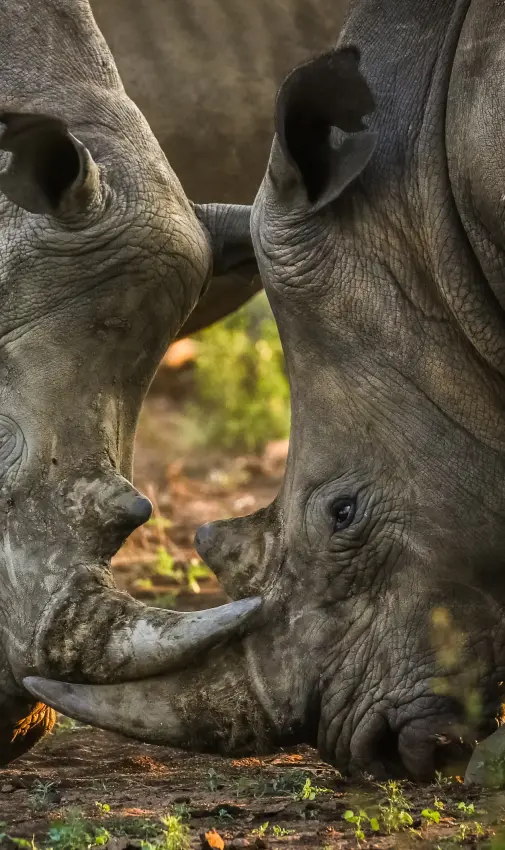
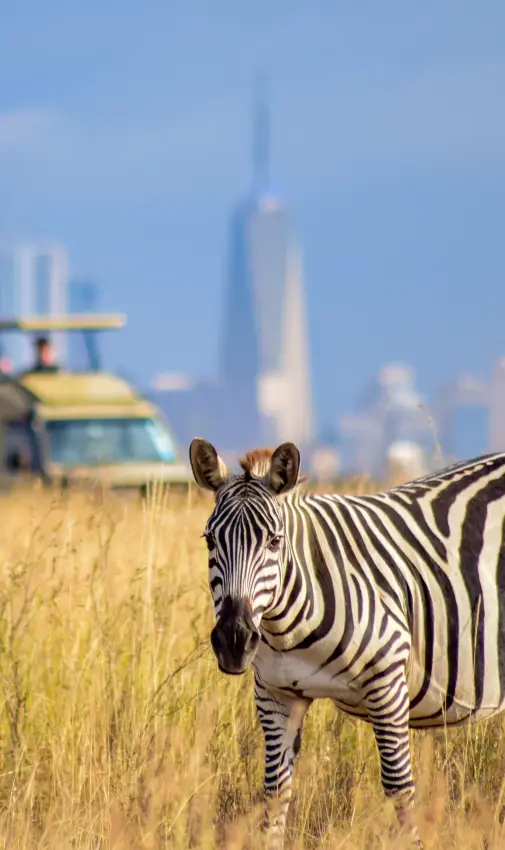
That low-density model sits alongside real wildlife numbers. Naboisho holds resident lion prides and large herds of zebra, giraffe, buffalo and elephant, and its place within the wider Maasai Mara ecosystem means the guides can also drive into the Reserve itself when the migration is moving. A stay at Encounter Mara Camp therefore has two registers: the quiet, uncrowded conservancy on the doorstep, and the Reserve within reach for anyone wanting to see the great herds on the move.
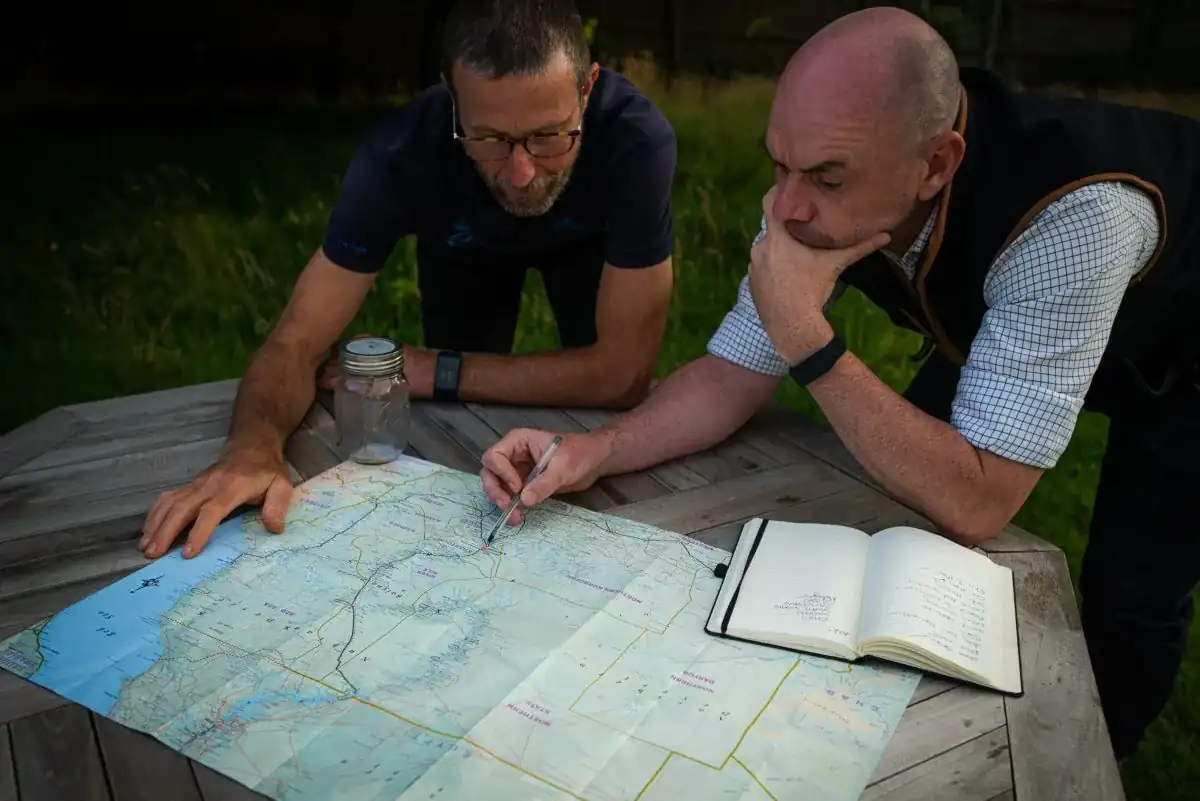
As a private conservancy, it permits walking safaris on foot with armed Maasai guides
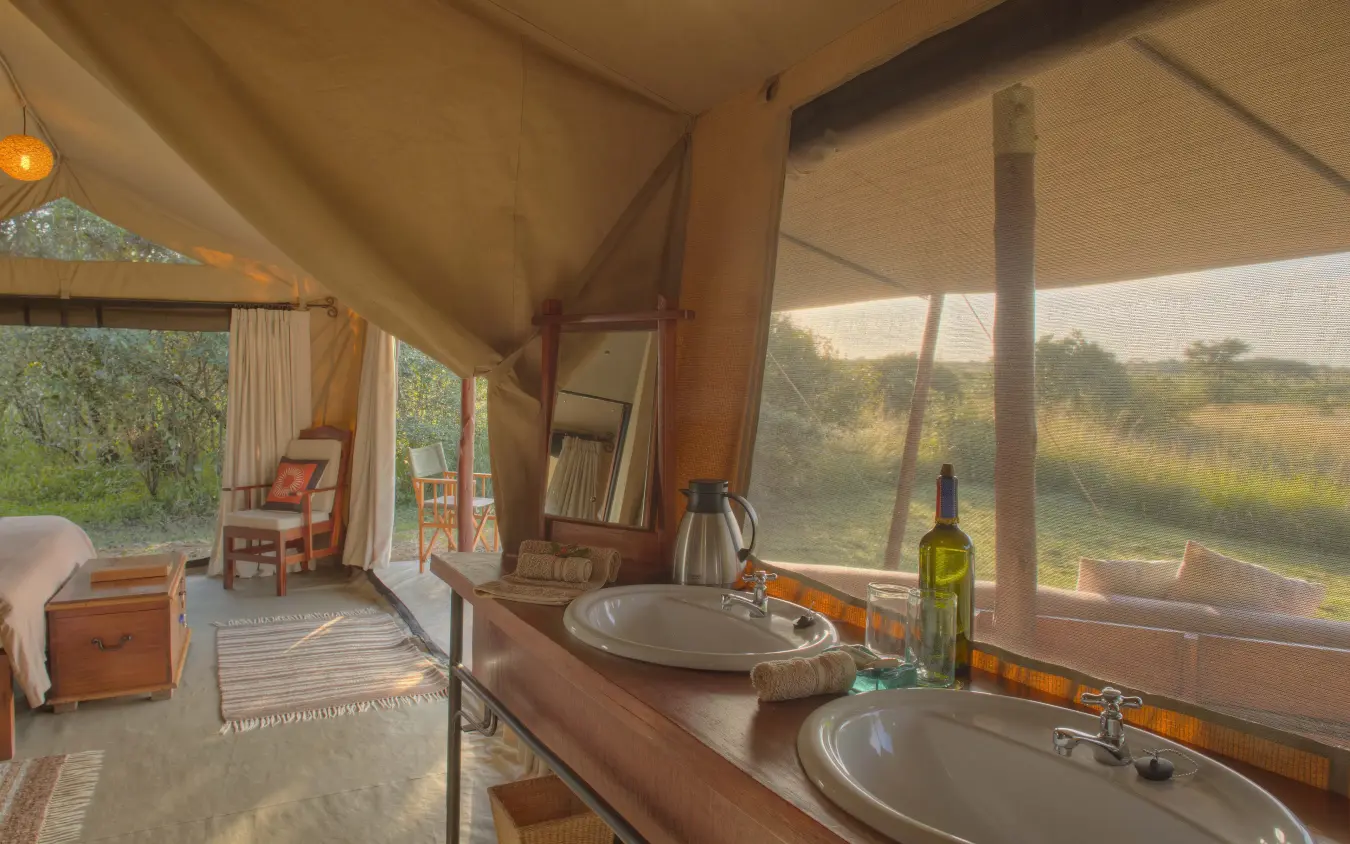
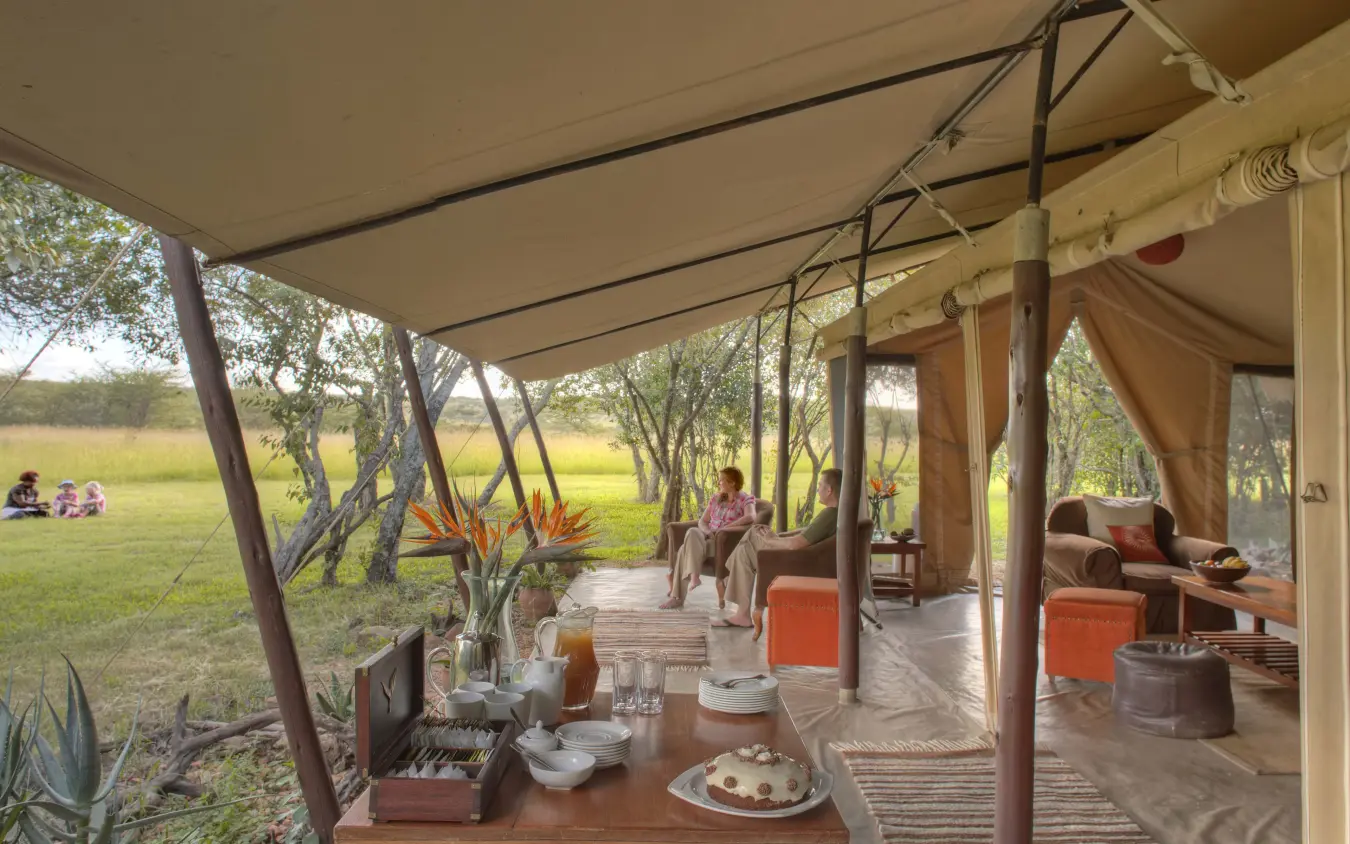
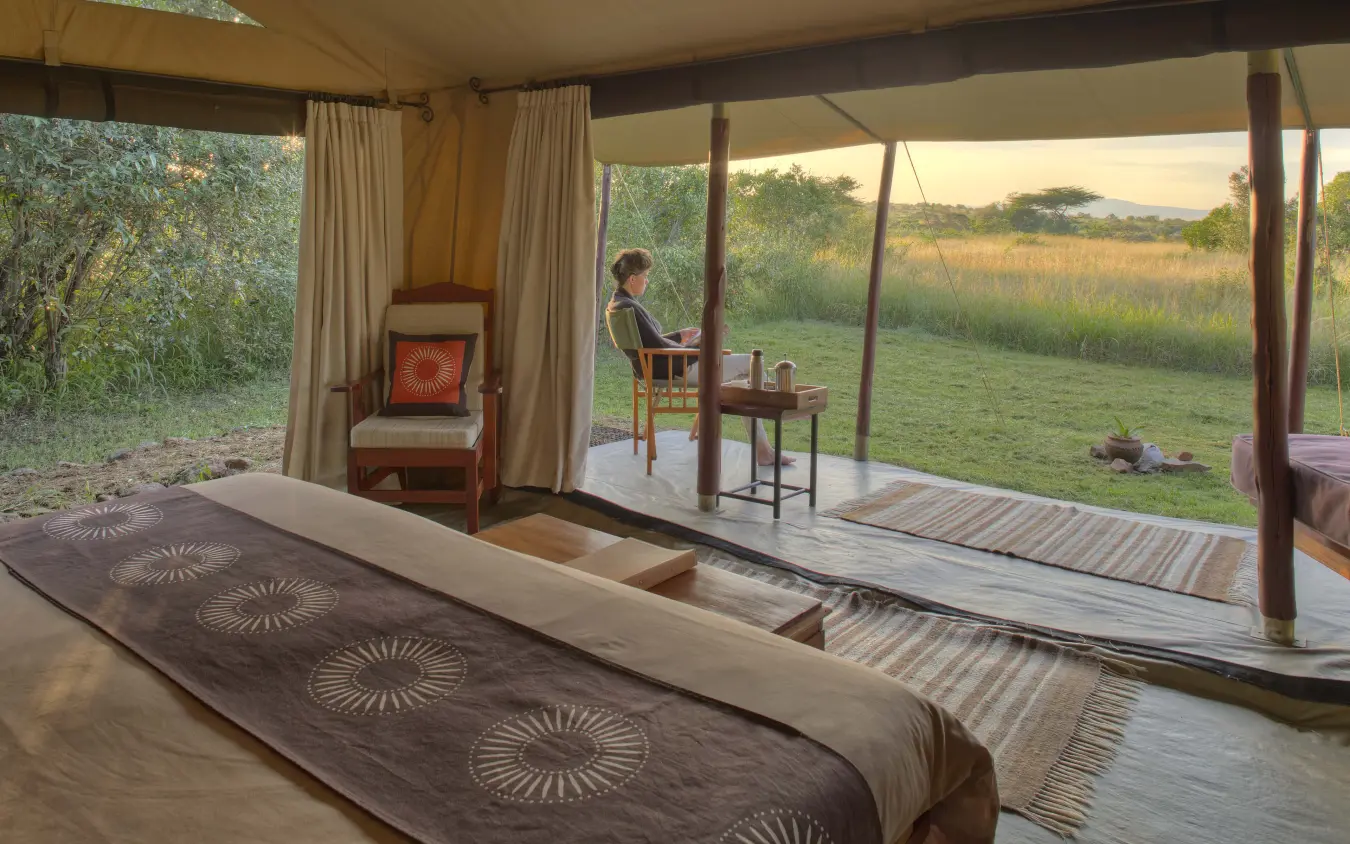
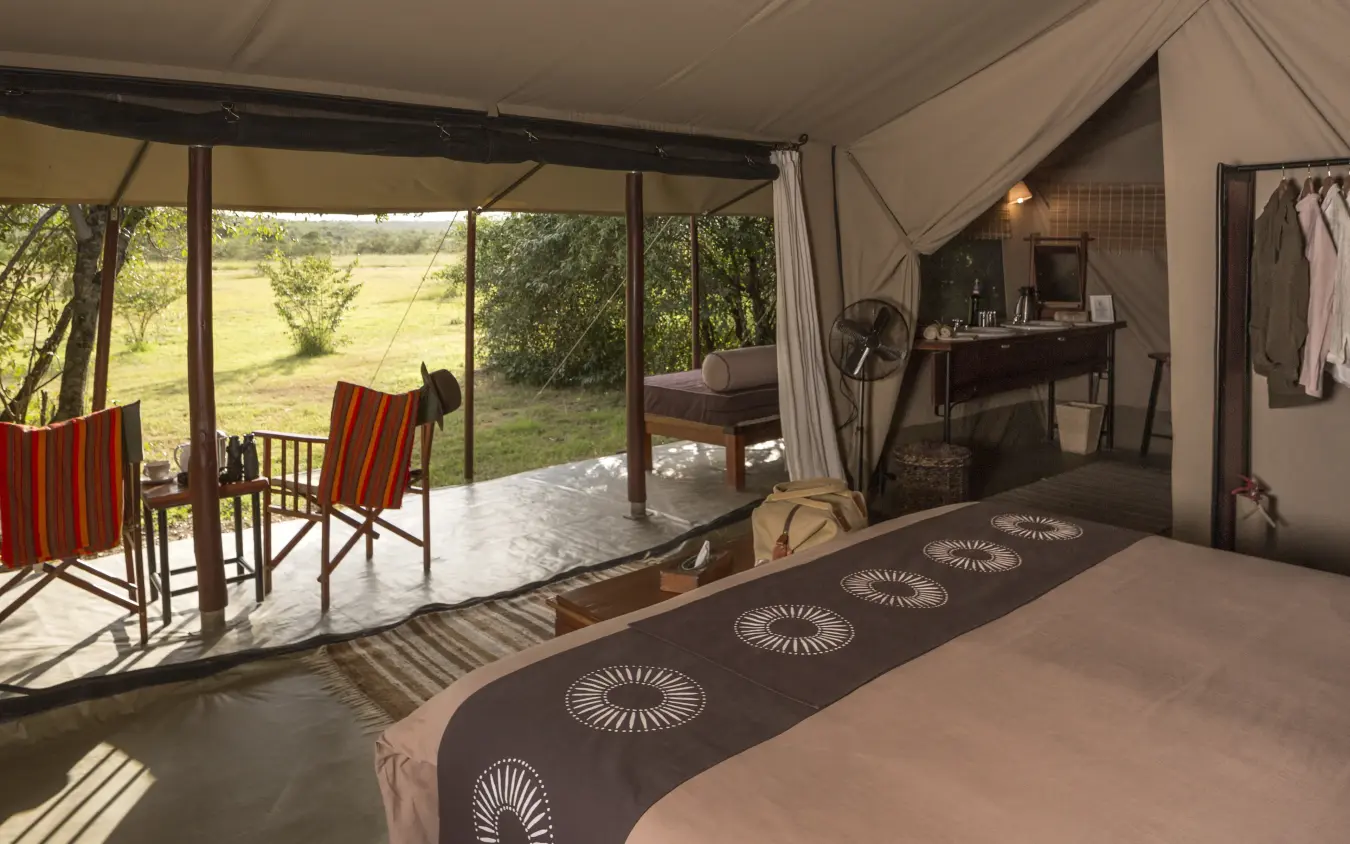
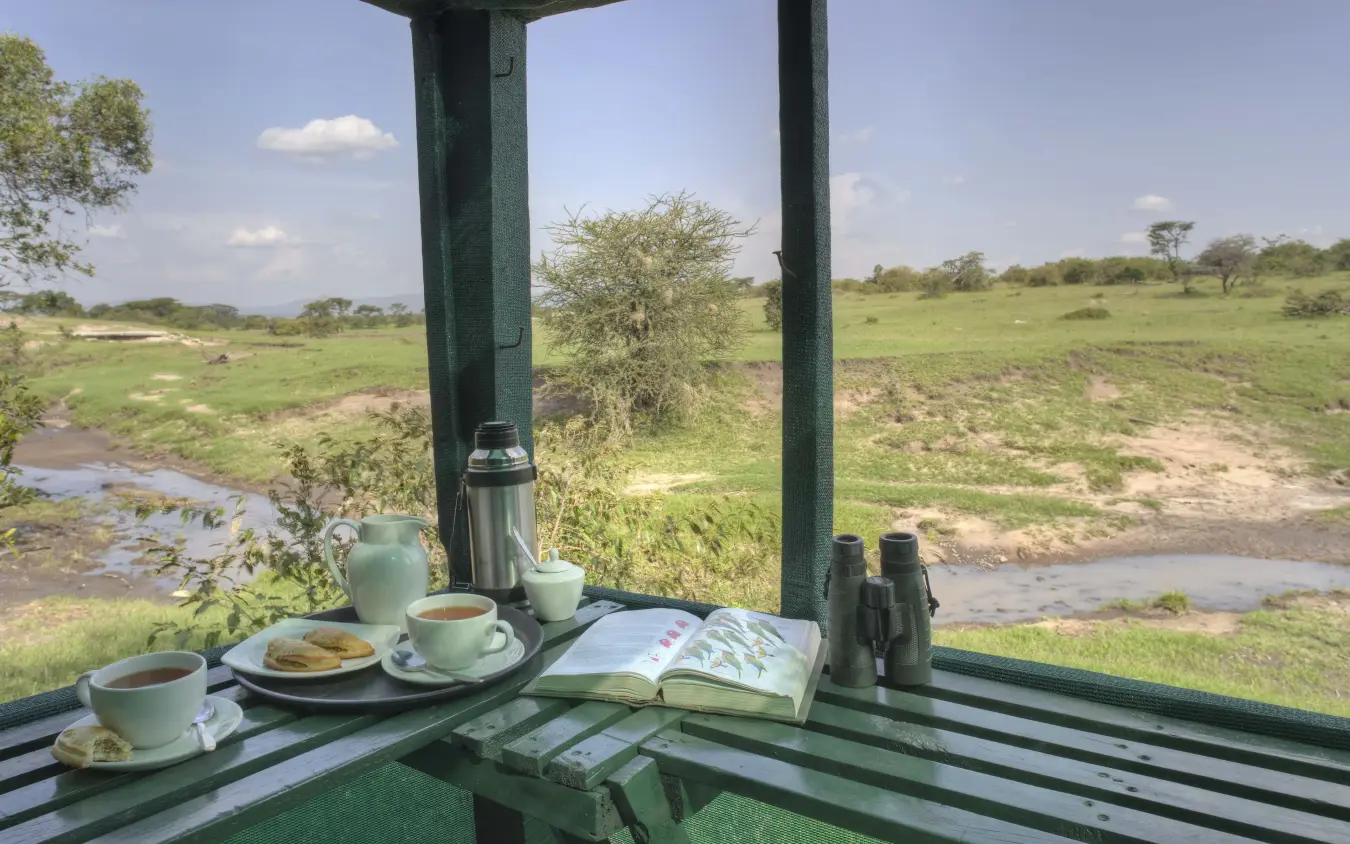
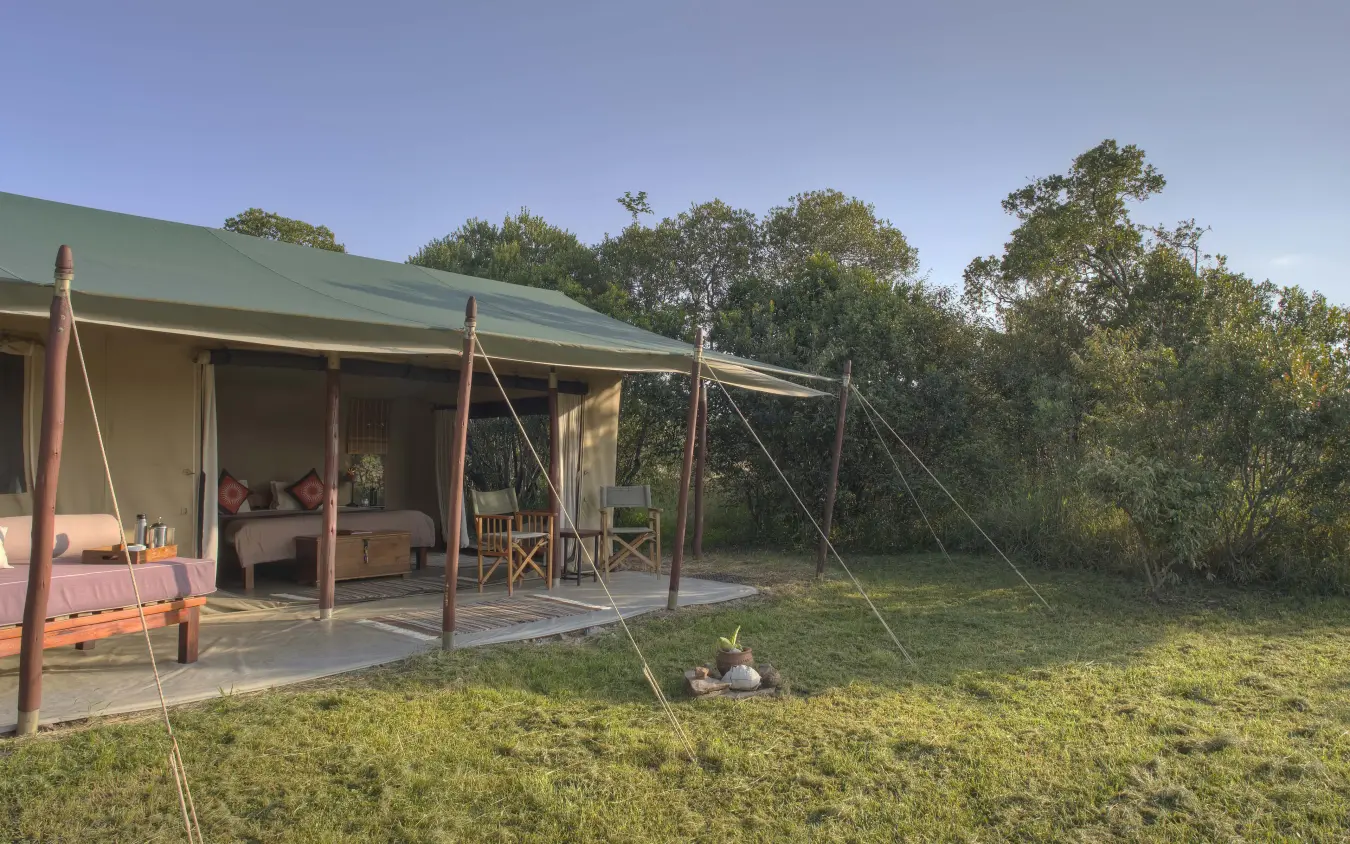
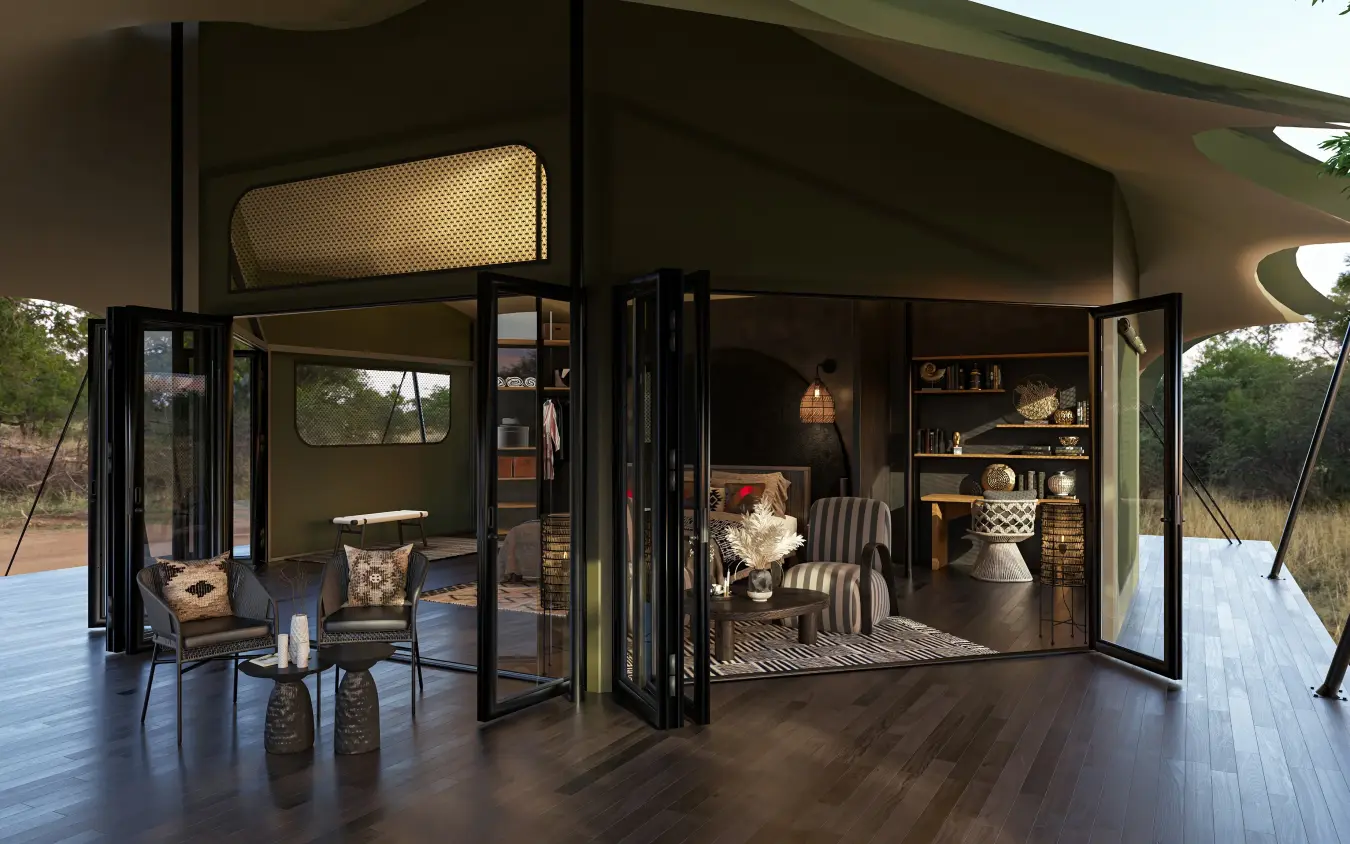
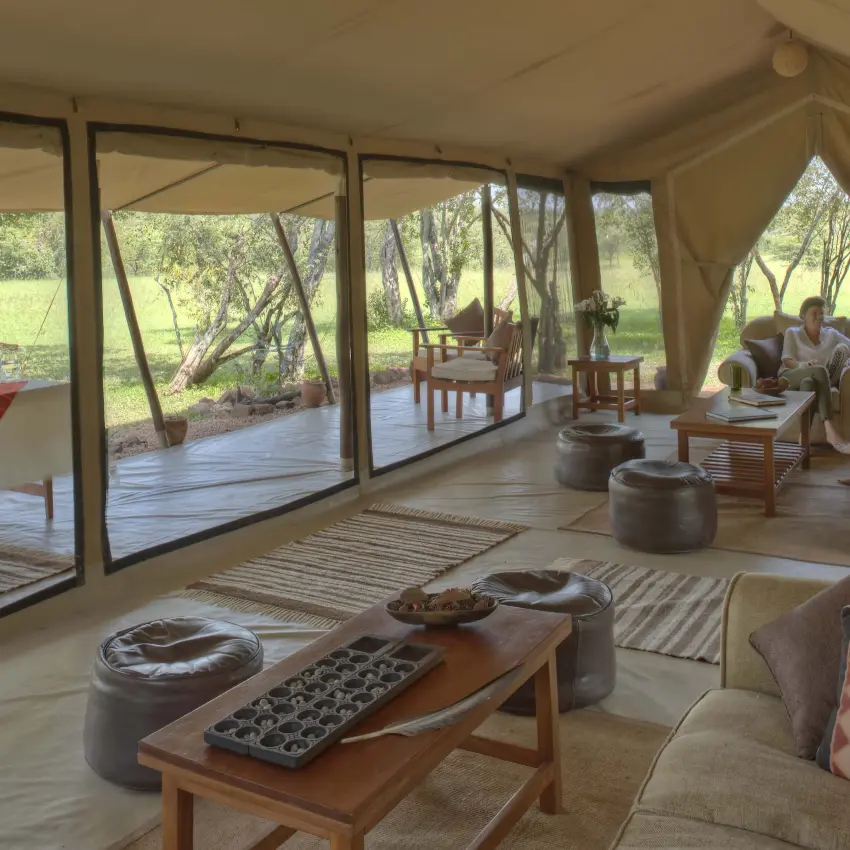
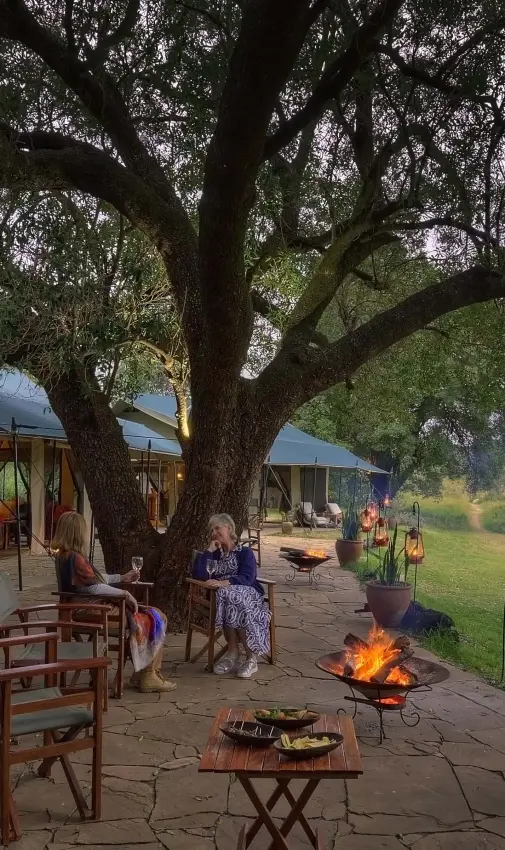
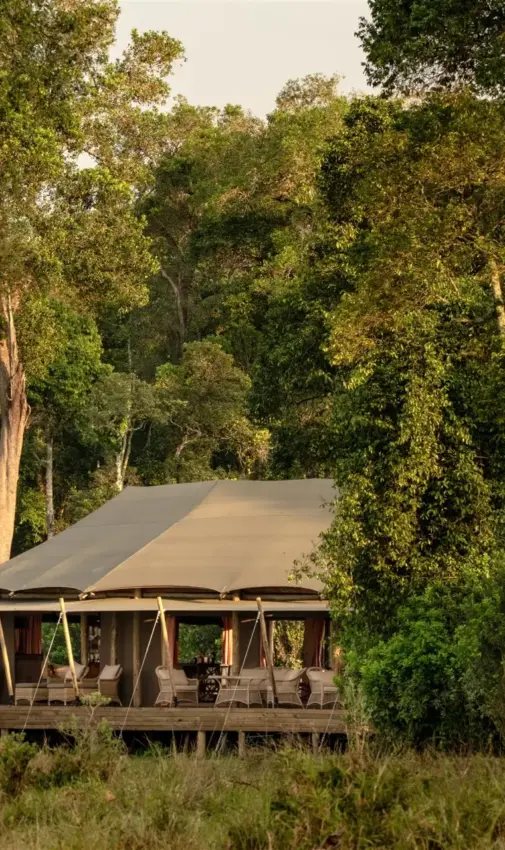
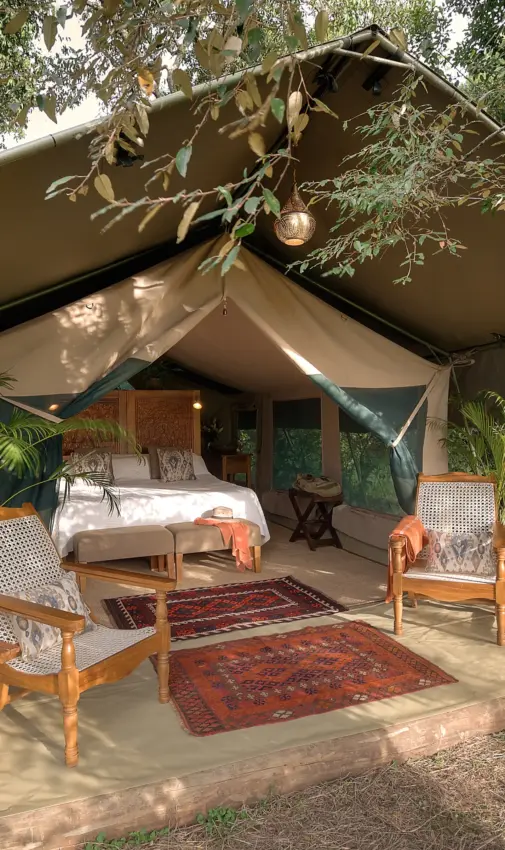
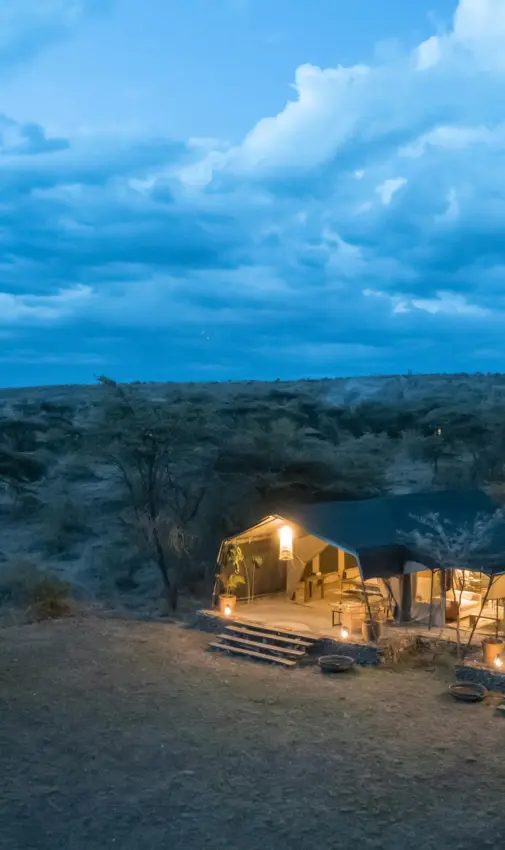
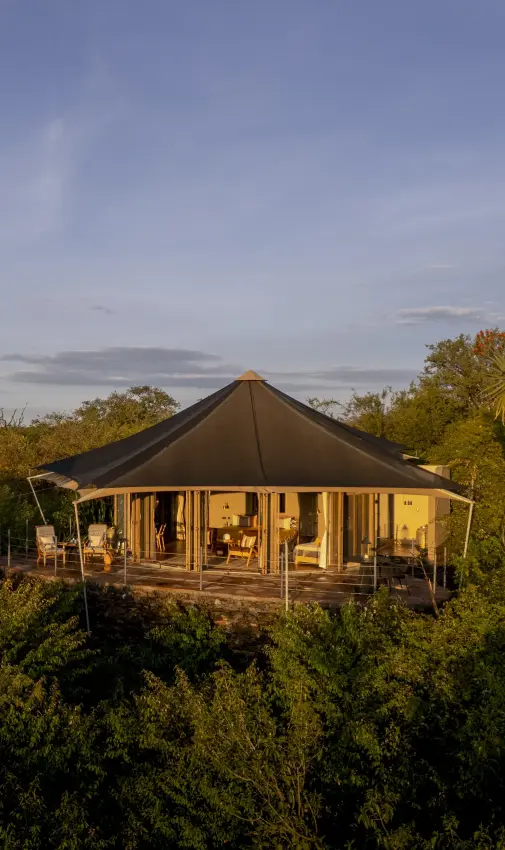
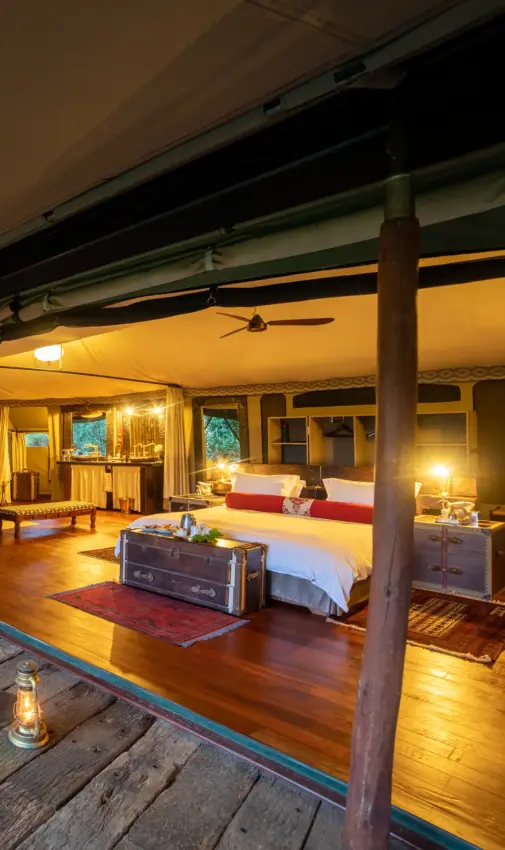
The forest belt around camp opens onto a lawn and decking above the salt lick, sheltered under the trees yet wide open to the plain beyond. Night carries the sound of it, lion roars near and distant, the calls of hyena and jackal, movement in the undergrowth just beyond the canvas. Meals are taken family-style in the open mess tent, and evenings begin with drinks around the firepit before dinner arrives by lantern light.
None of this would stand without the Maasai landowners beneath it. They lease their land for conservation, and the tourism income supports both the running of the conservancy and the families who hold the ground. Visits to nearby communities are arranged as exchanges rather than staged events, and the guiding team’s own roots here mean the conservation story is told by the people living it, not read from a script.