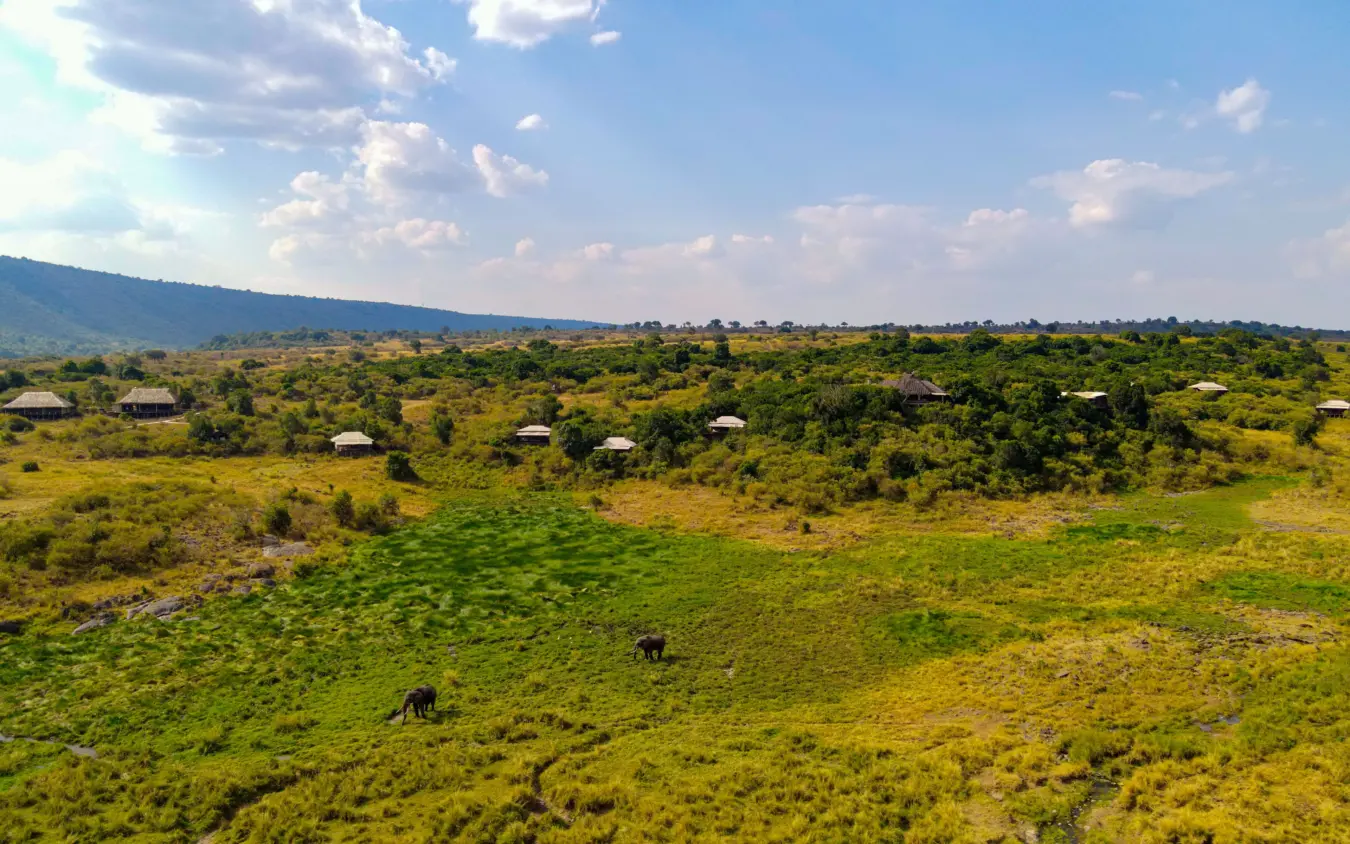
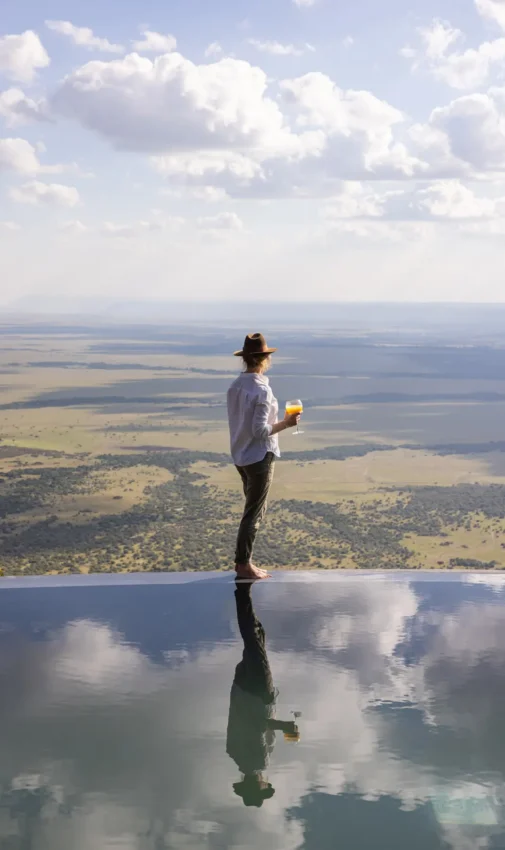
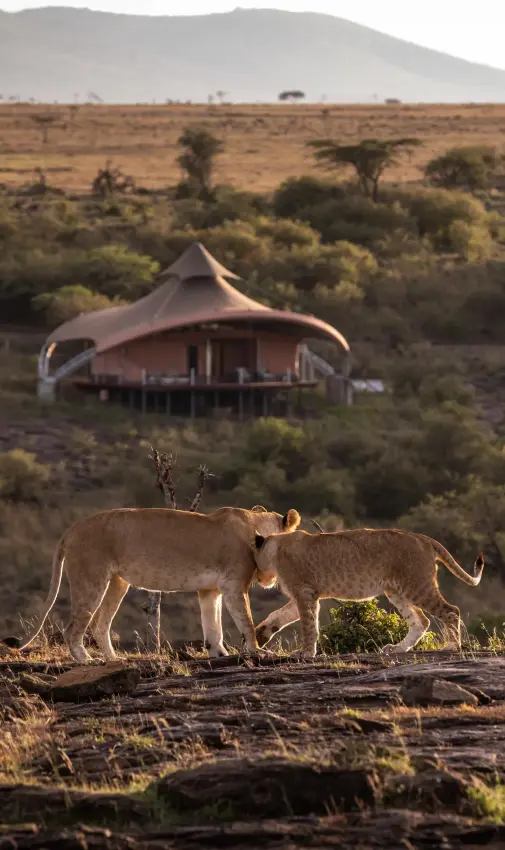
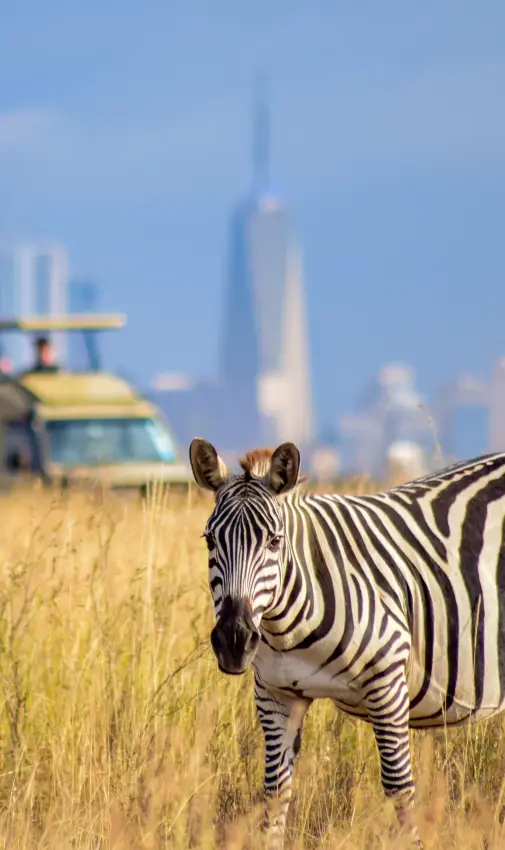
Game drives out of camp go two ways. East and south lies the reserve itself, beginning at Musiara Marsh, home to a resident pride the guides have followed closely enough to know by name, and running on to Rhino Ridge and the short-grass plains beyond. Vehicles carry no more than six guests, with charging points, bean bags to steady a camera and reference books for birds and trees. Buffalo, elephant, giraffe, hippo, lion, spotted hyena and zebra turn up on close to every drive; cheetah come less predictably, and leopard rarer still.
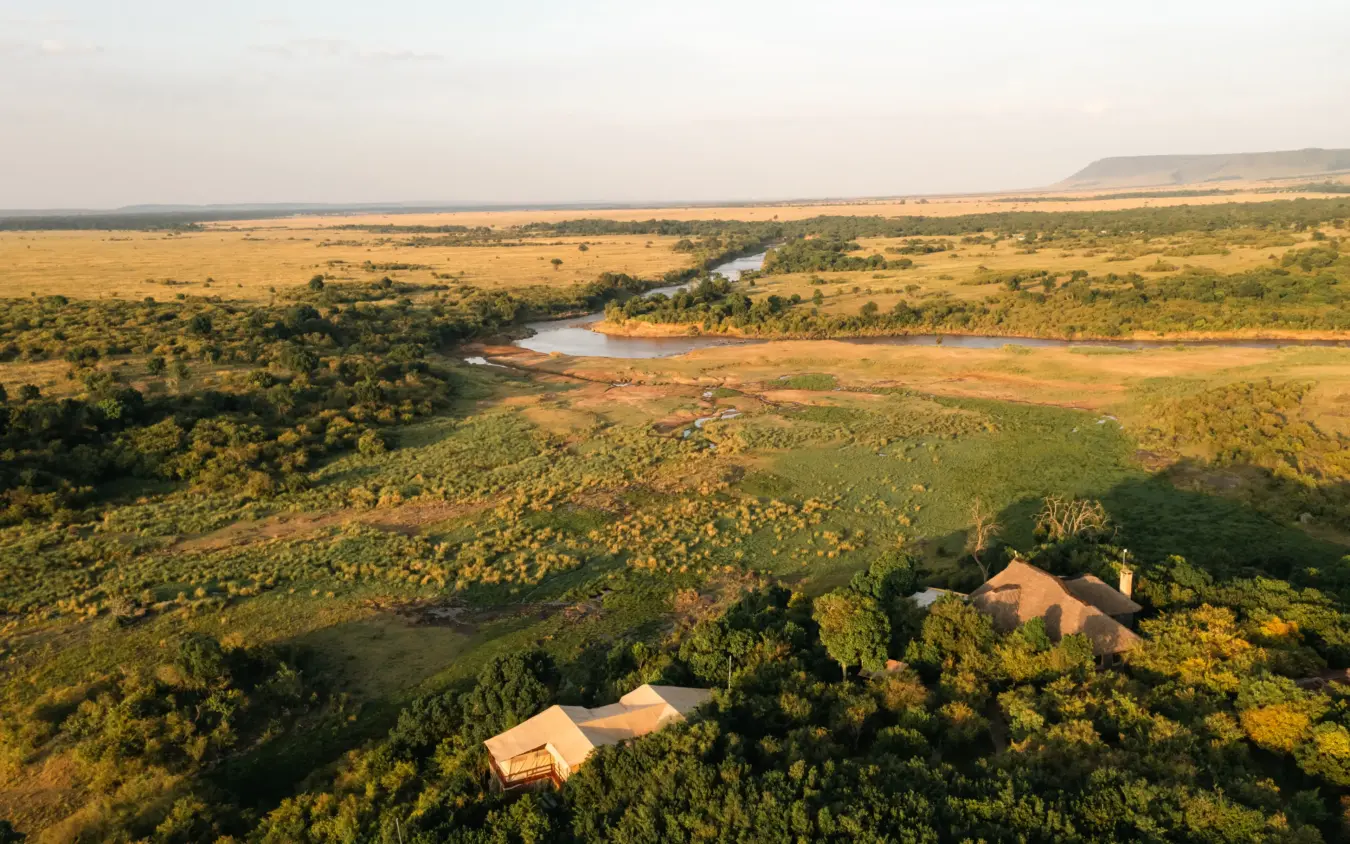
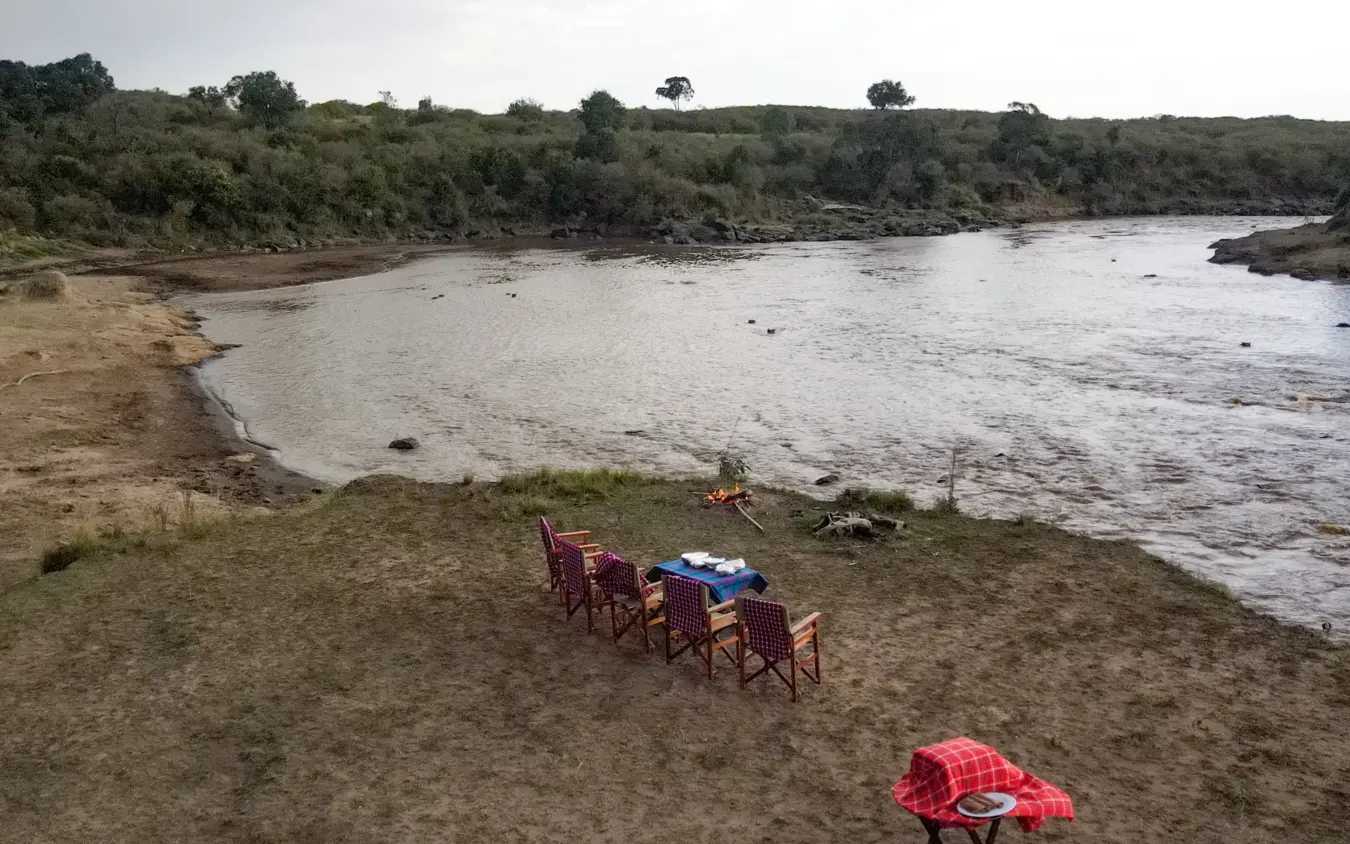
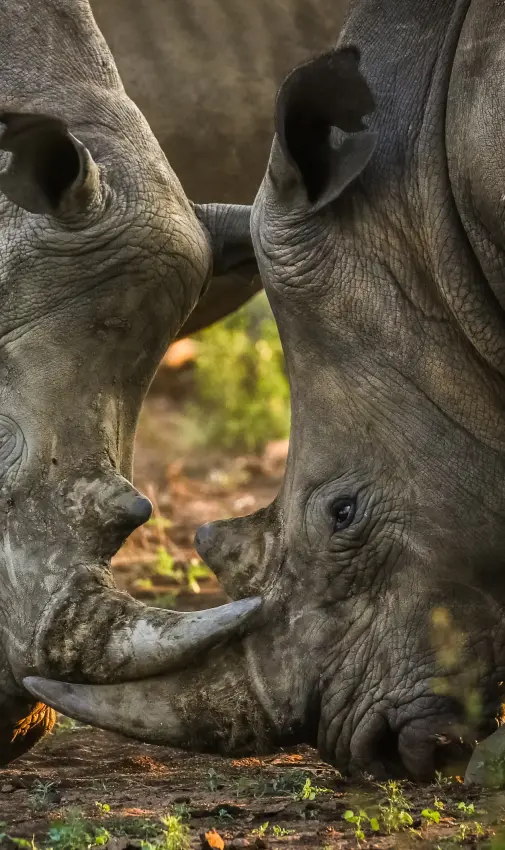
Across the Mara River bridge, a short drive west, the Mara Triangle holds the number of vehicles at any sighting to five, which slows the pace and improves the odds of black rhino on the open ground beneath the escarpment. From July into October, the wildebeest and zebra herds work the river crossings, reachable from either bank. The bridge is why the camp is where it is, at the meeting point of two distinct pieces of the same ecosystem. Balloon flights lift off at dawn from the Musiara sector and land to a bush breakfast on the plains.
Night drives run with a spotlight for genets, bushbabies and hunting hyenas.
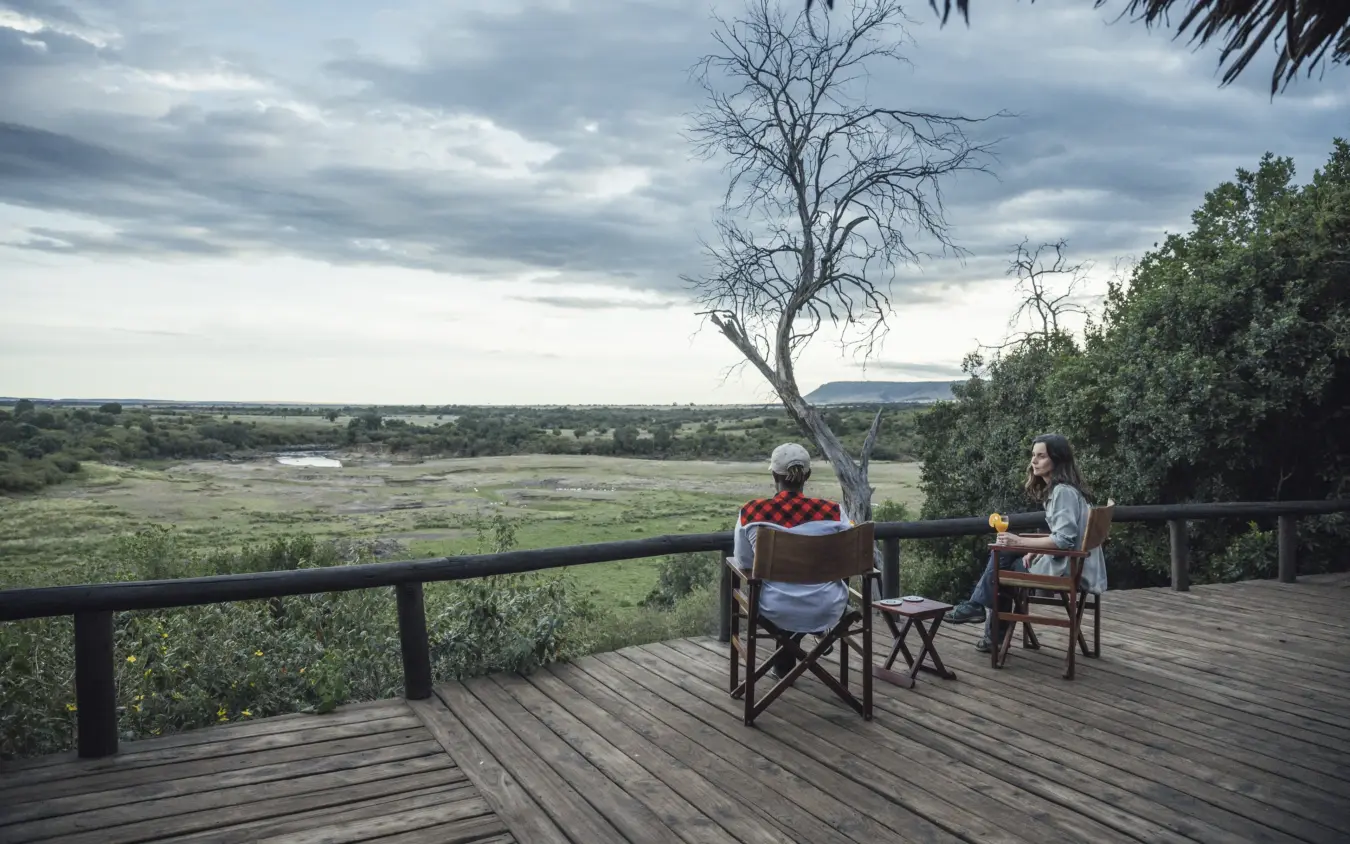
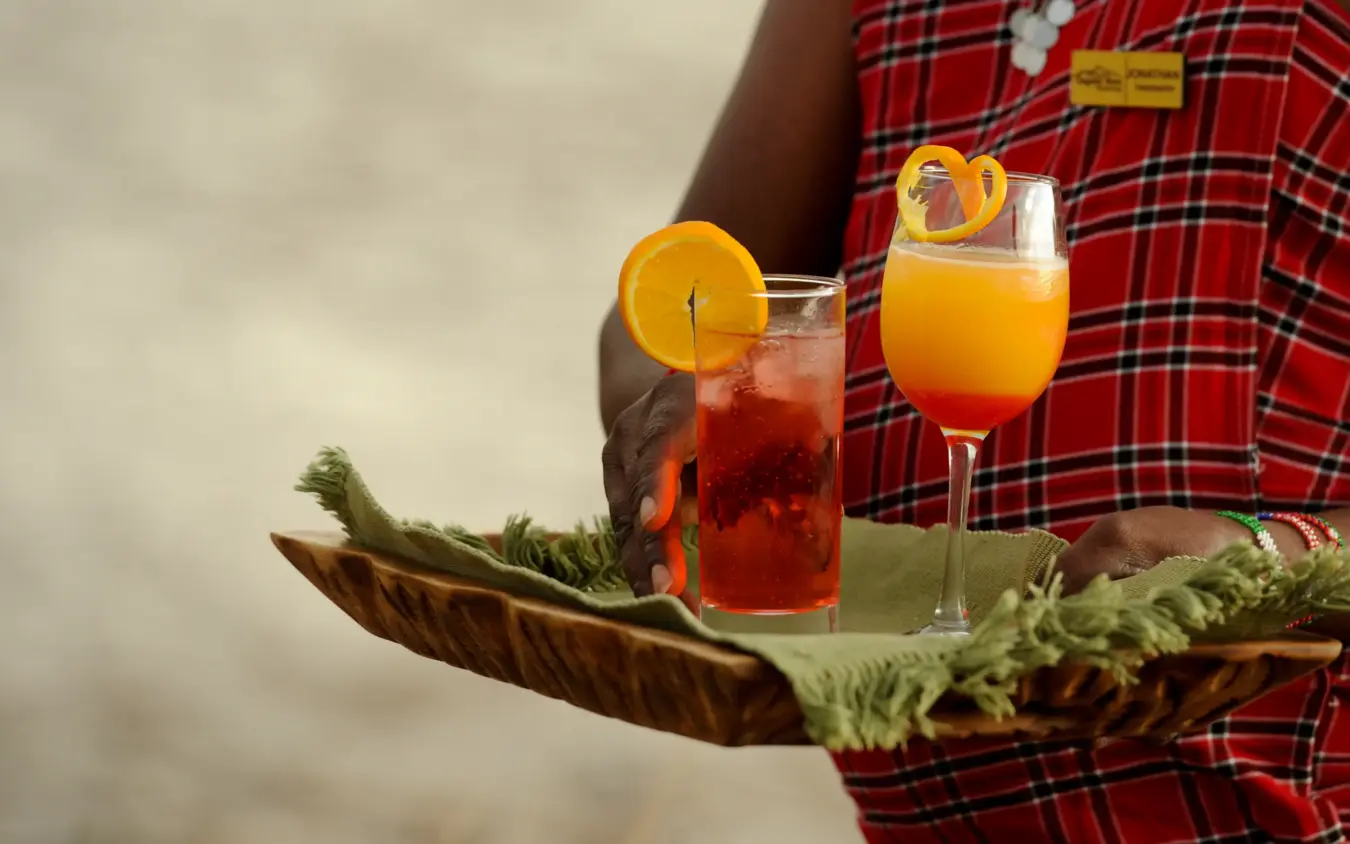
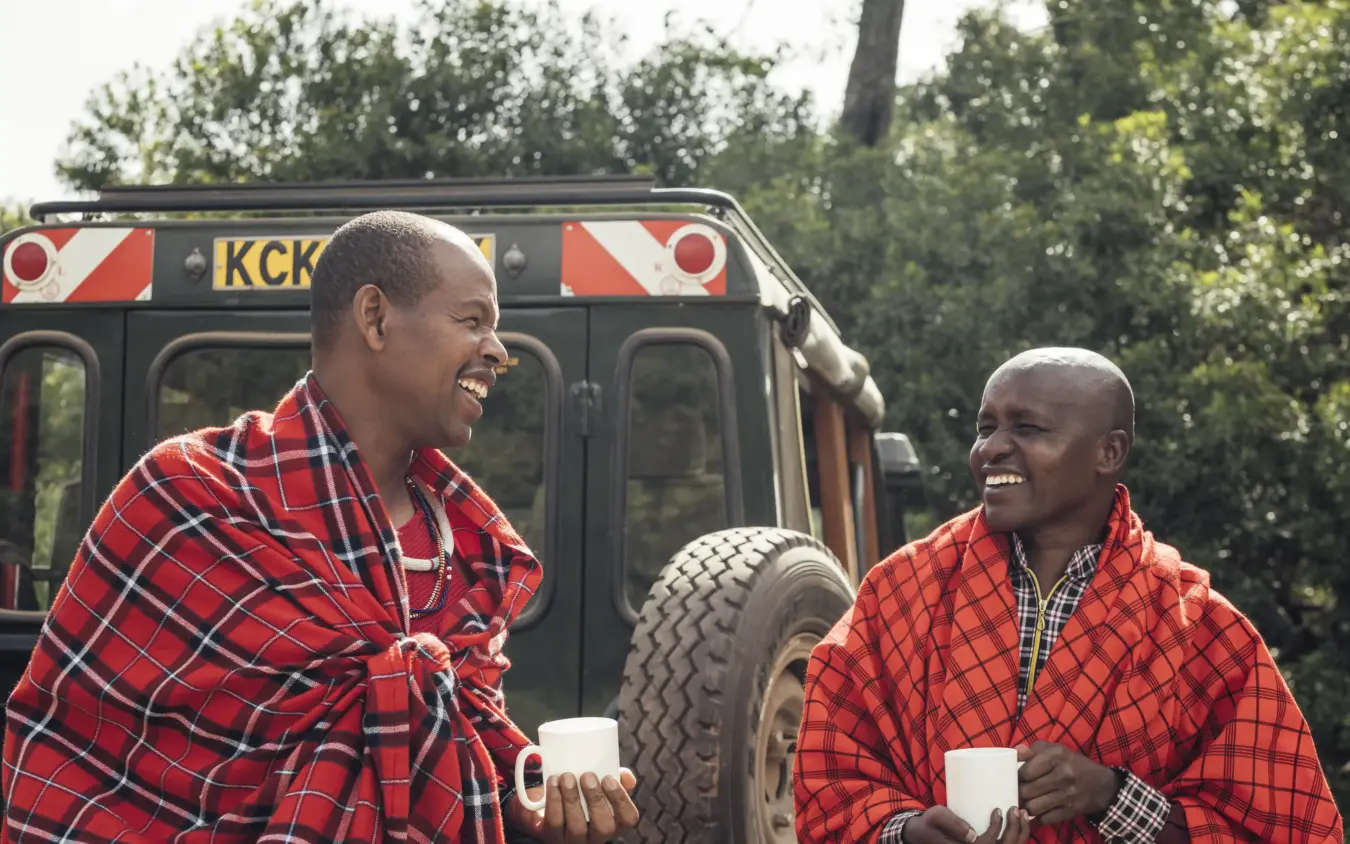
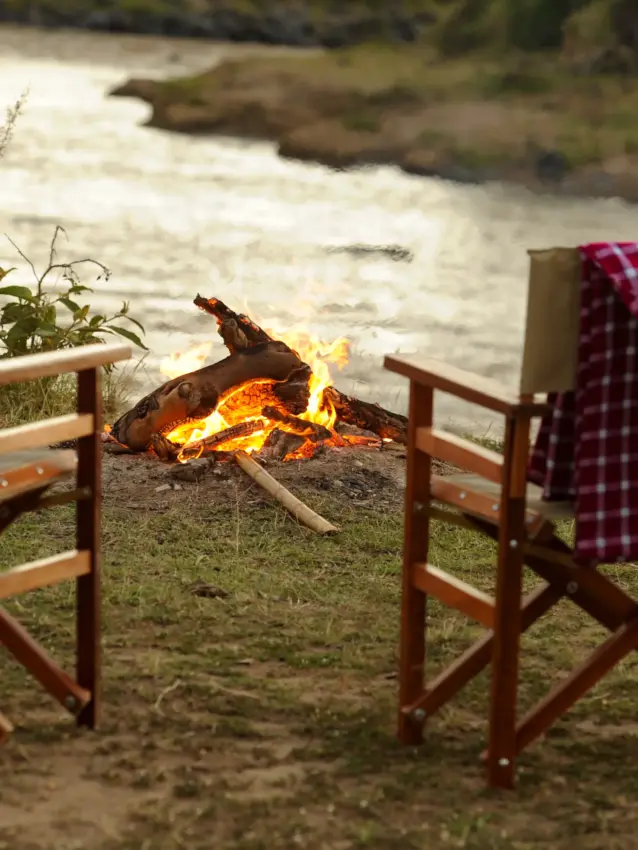
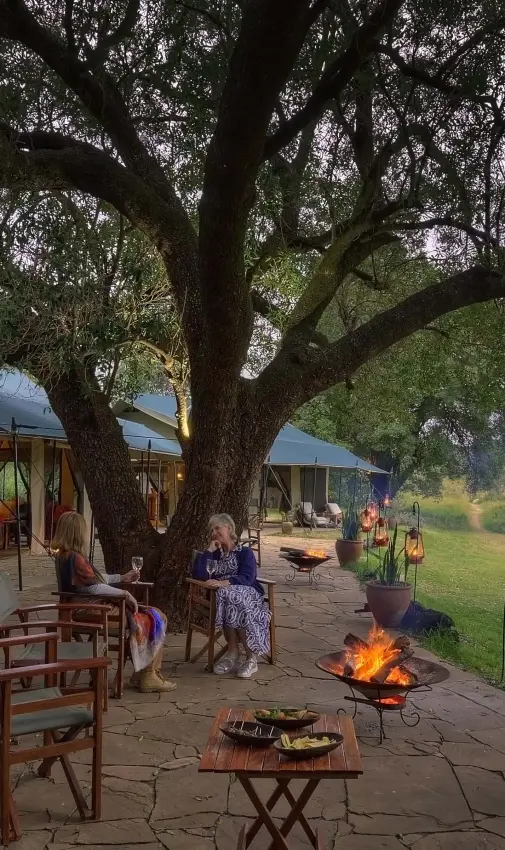
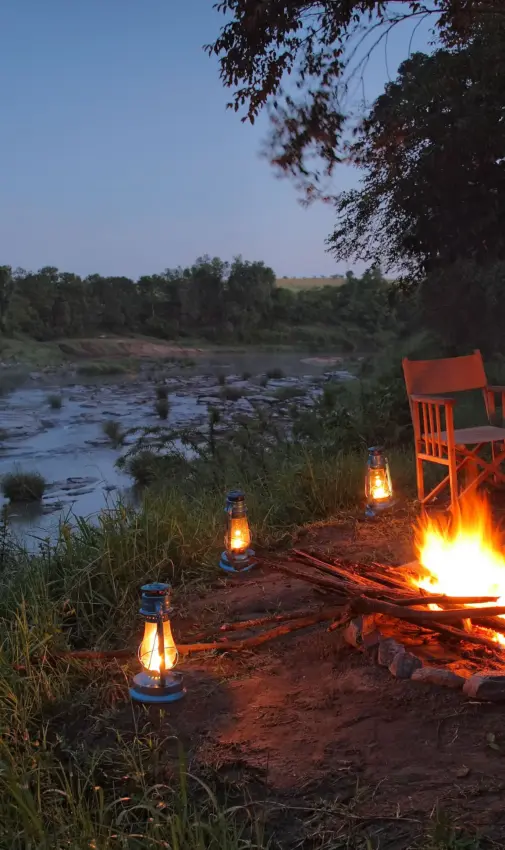
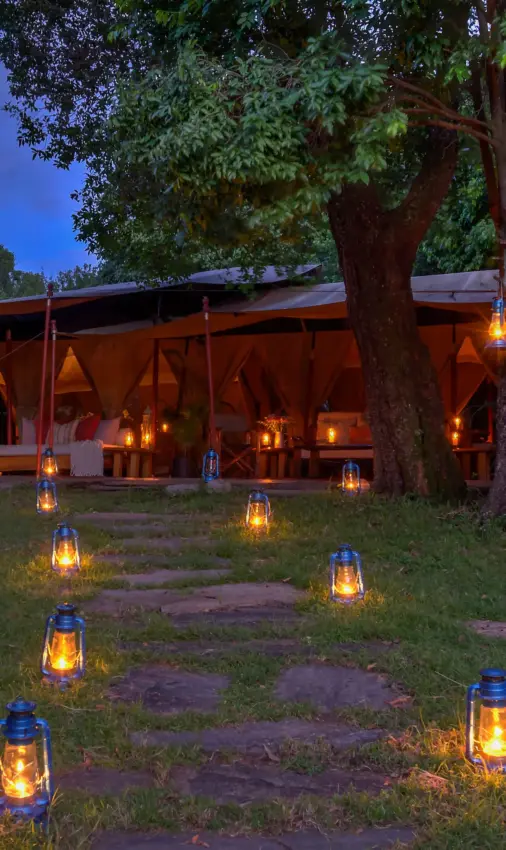
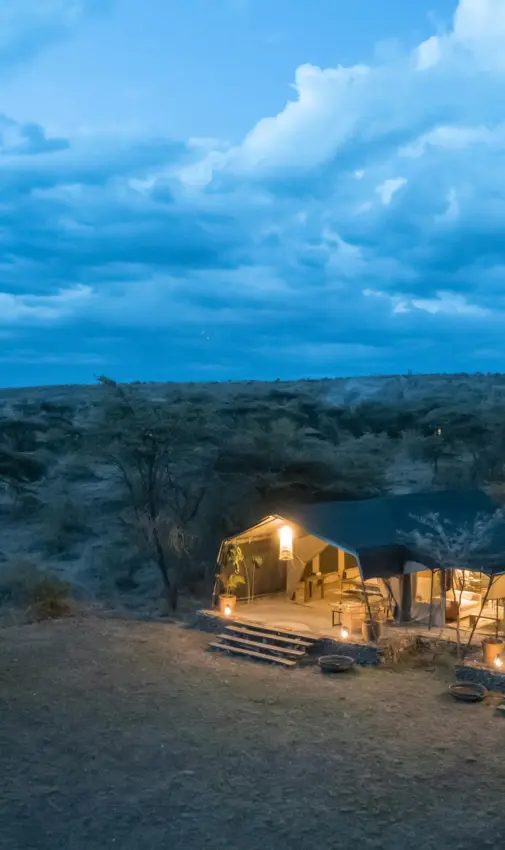
The camp’s ground is private land, so the activities continue after the gates close elsewhere. Night drives run with a spotlight for genets, bushbabies and hunting hyenas. Bat-eared foxes come out as the light fades and the sundowners carry no closing time. Walks go out on the plains in front of camp with a Maasai guide reading tracks along the way. A short walk from the main camp, the smaller Tangulia Ndogo takes a single group at a time, with its own mess, vehicle, chef and guide.
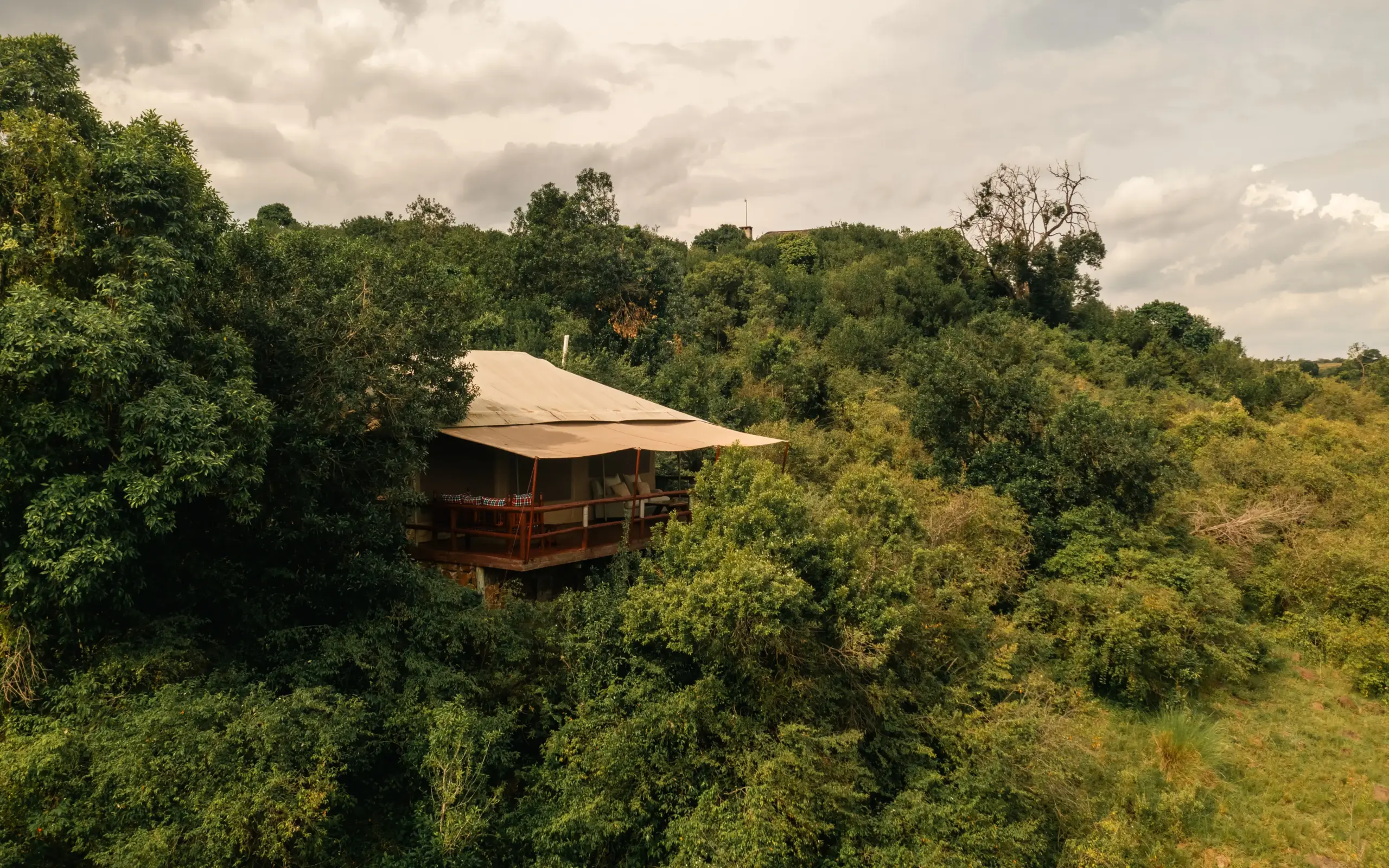
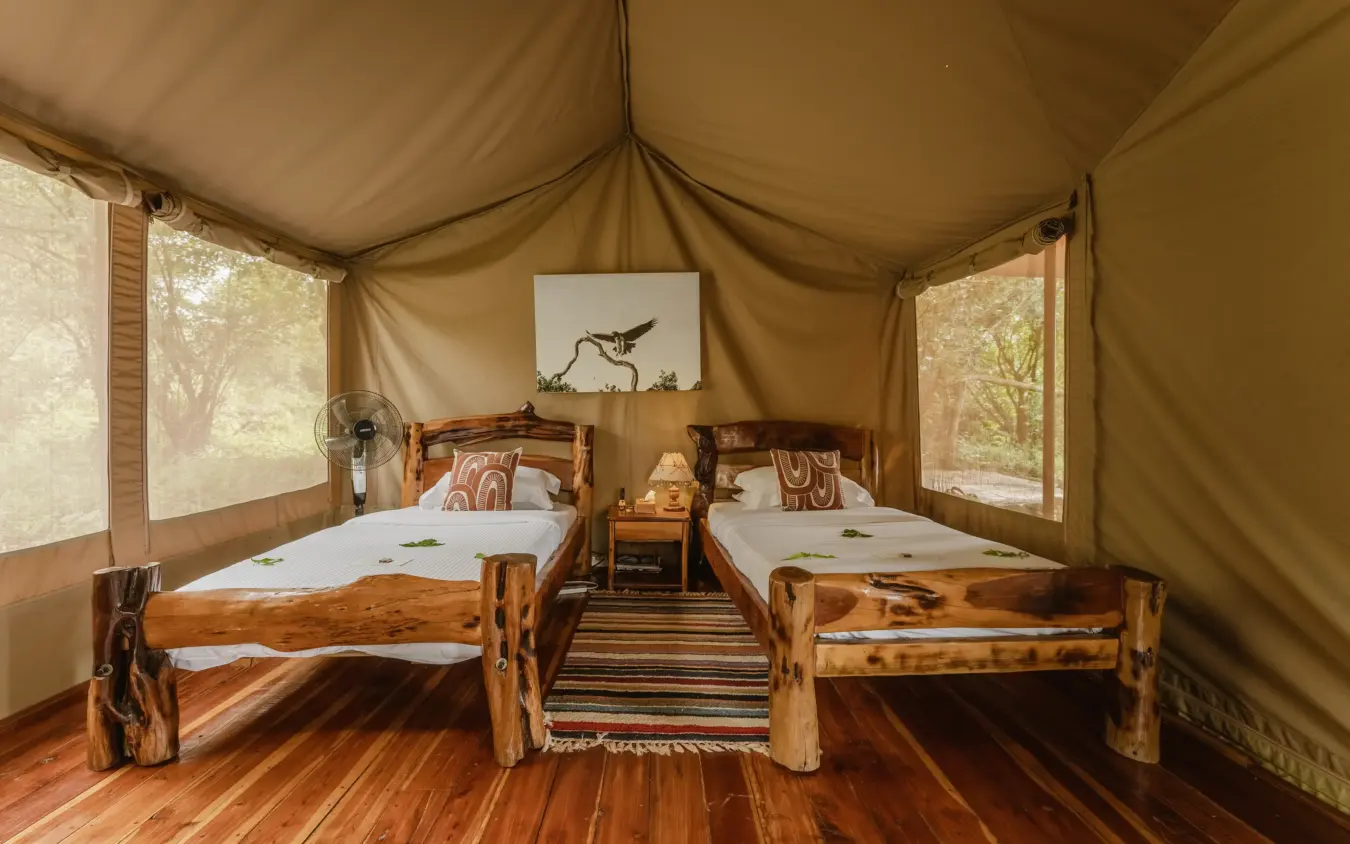
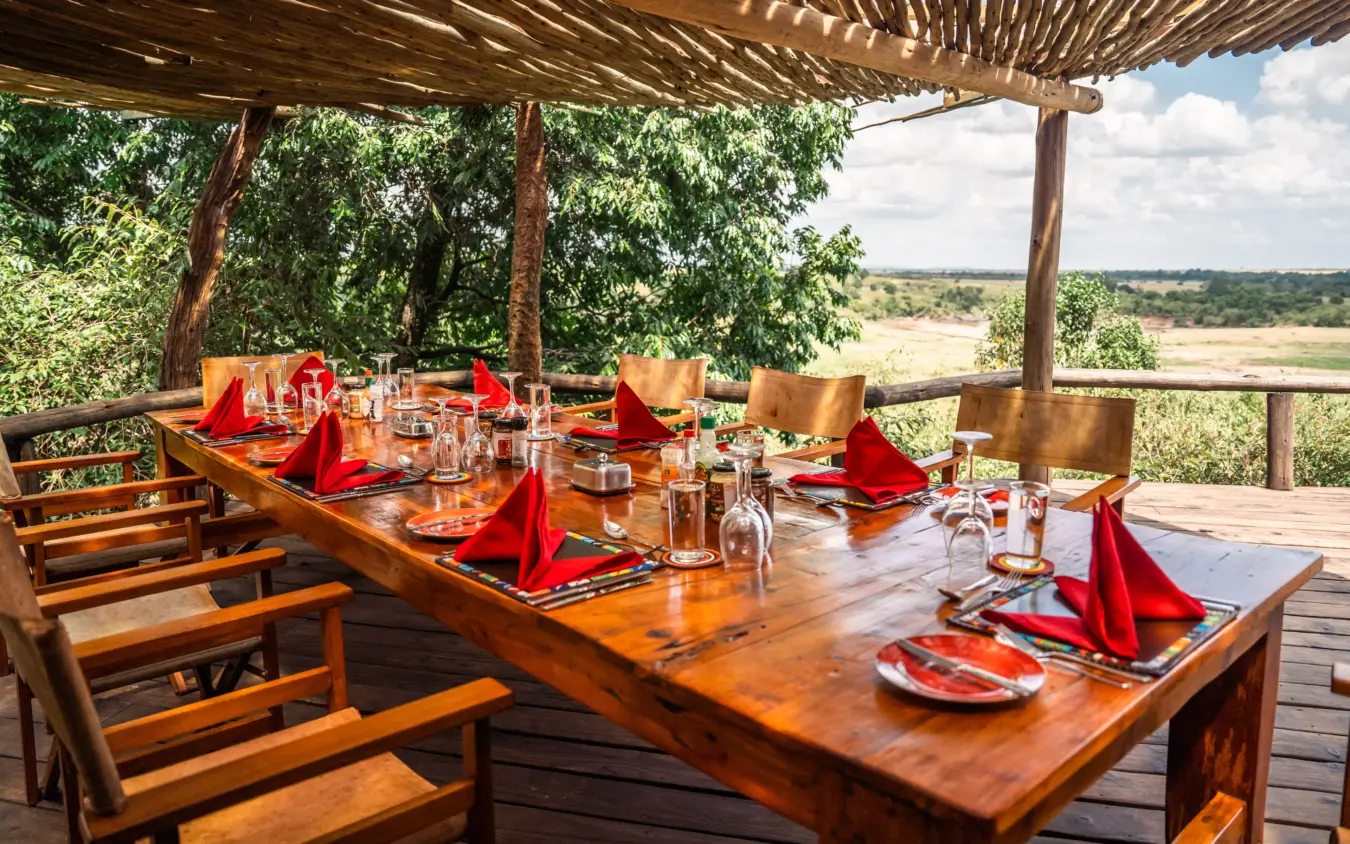
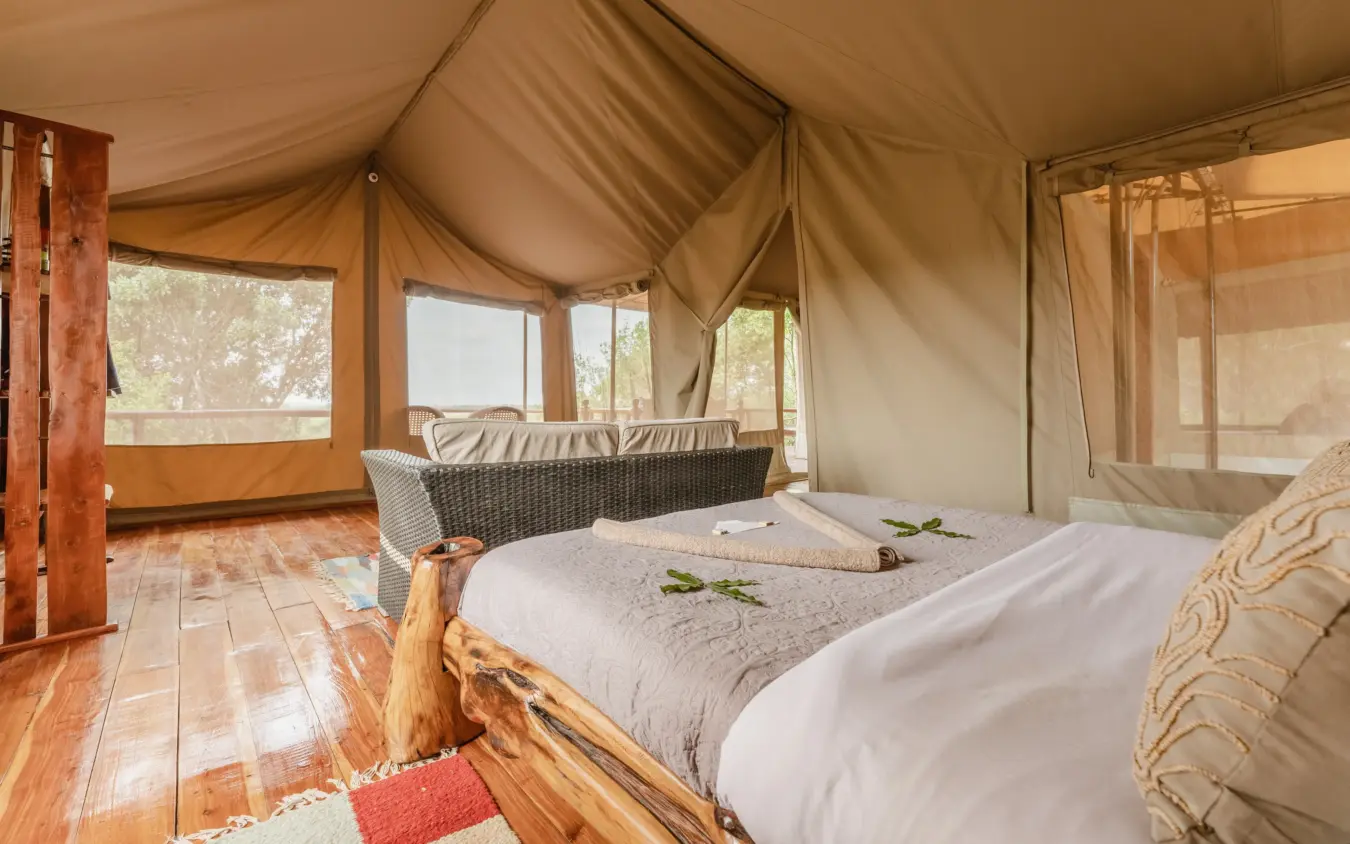
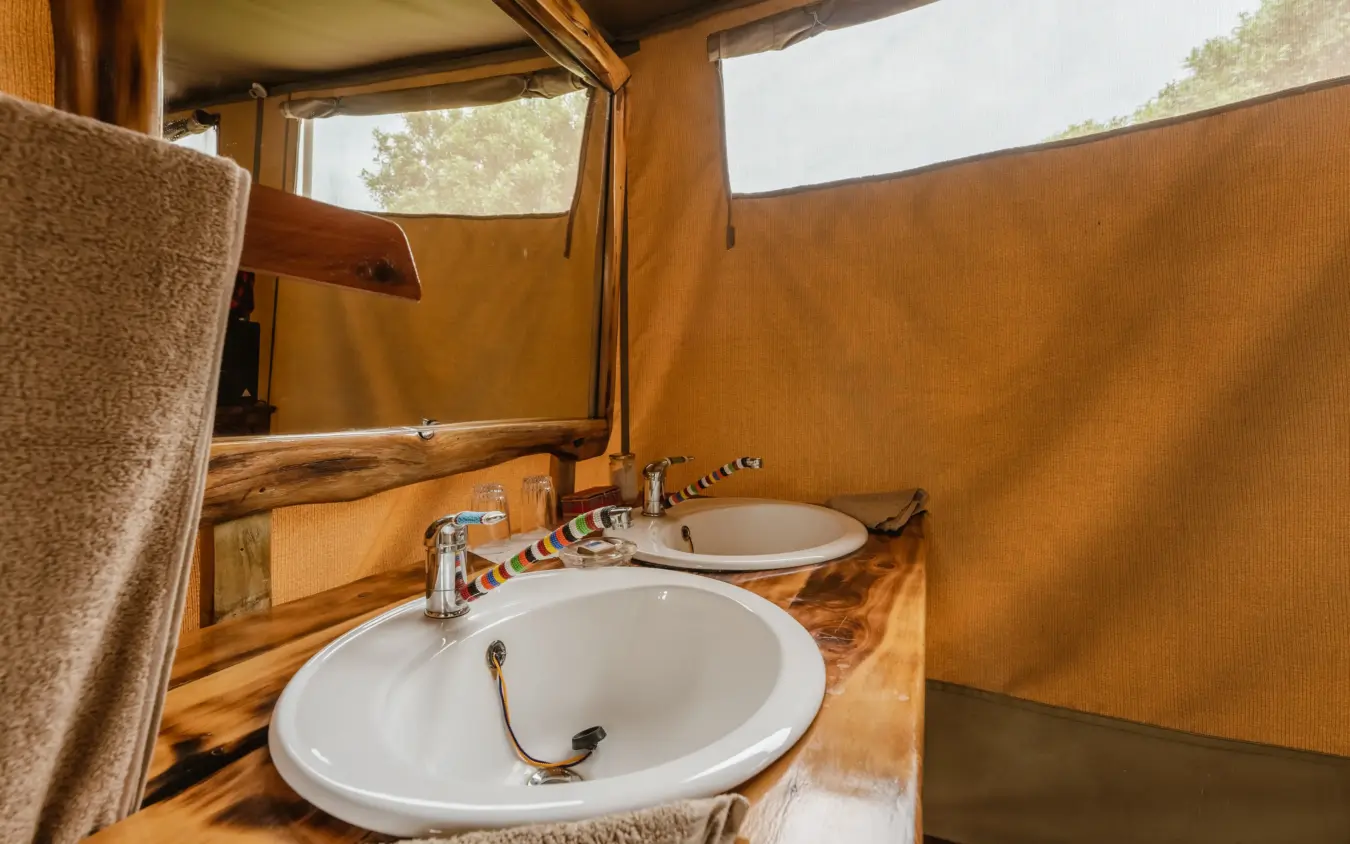
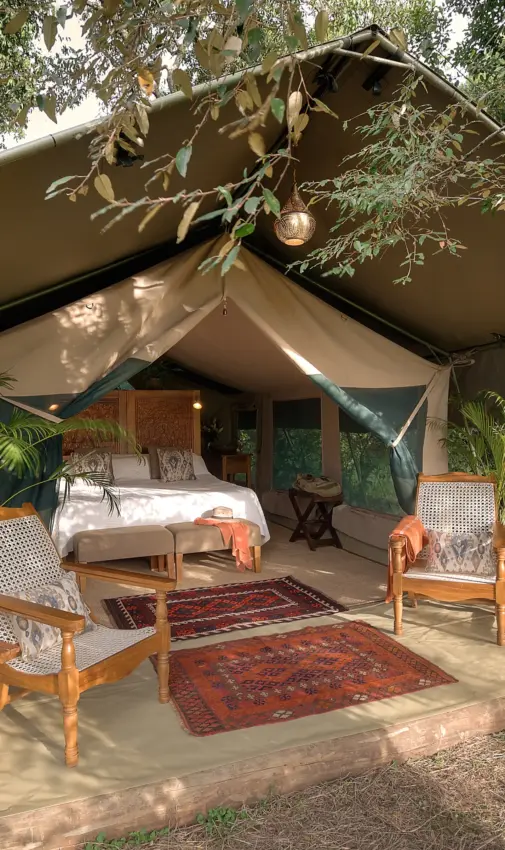
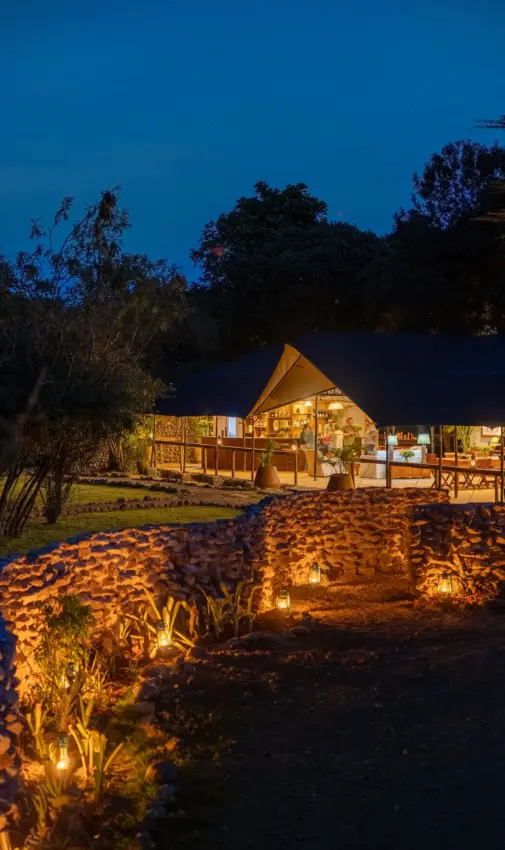
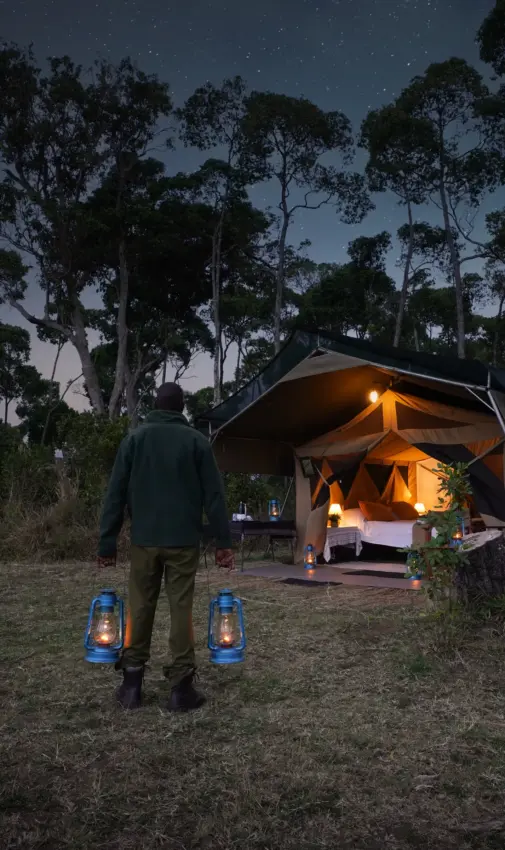
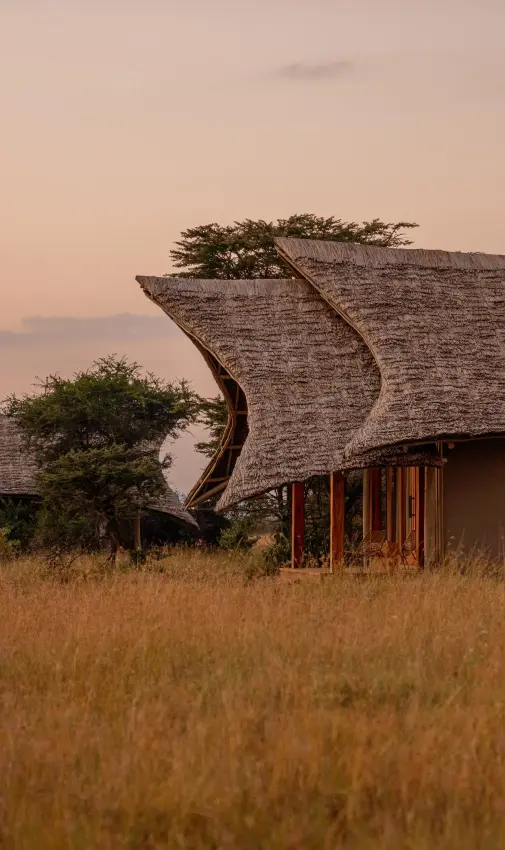
Tents stand under thatch among olive trees and croton bush, furnished with pieces made on site from fallen indigenous timber, the clothes hangers and trim beaded by a local women’s group. The décor keeps to a Maasai idiom rather than the colonial safari look, red-and-white kikoi on the sofas, a stone bar, and Jackson’s own photographs of river crossings on the walls. Food is home-style Kenyan cooking, taken at one long wooden table or set up in the bush after an early start. Arrival is by light aircraft into Musiara, roughly 20 minutes from camp, and helicopter transfers are also possible.