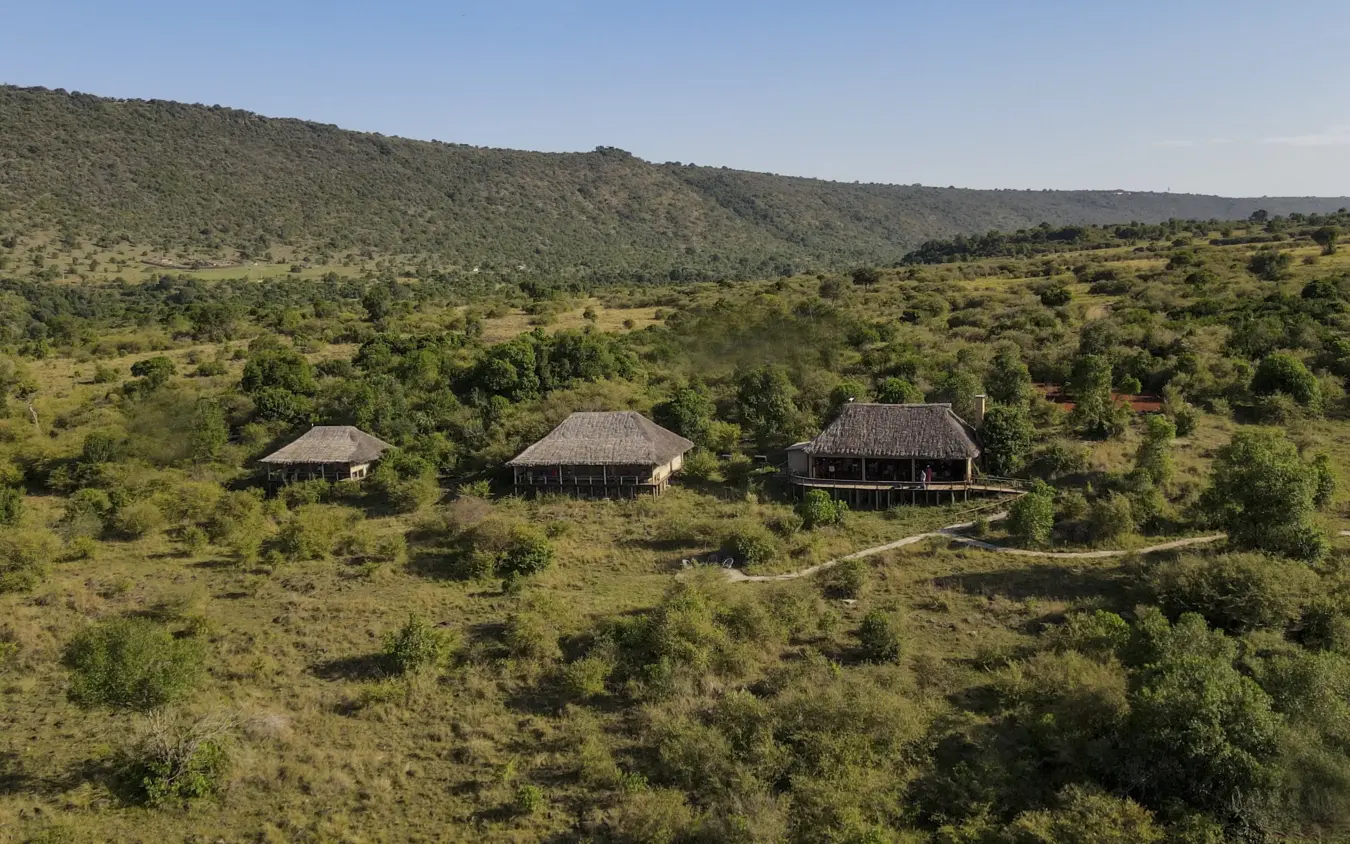
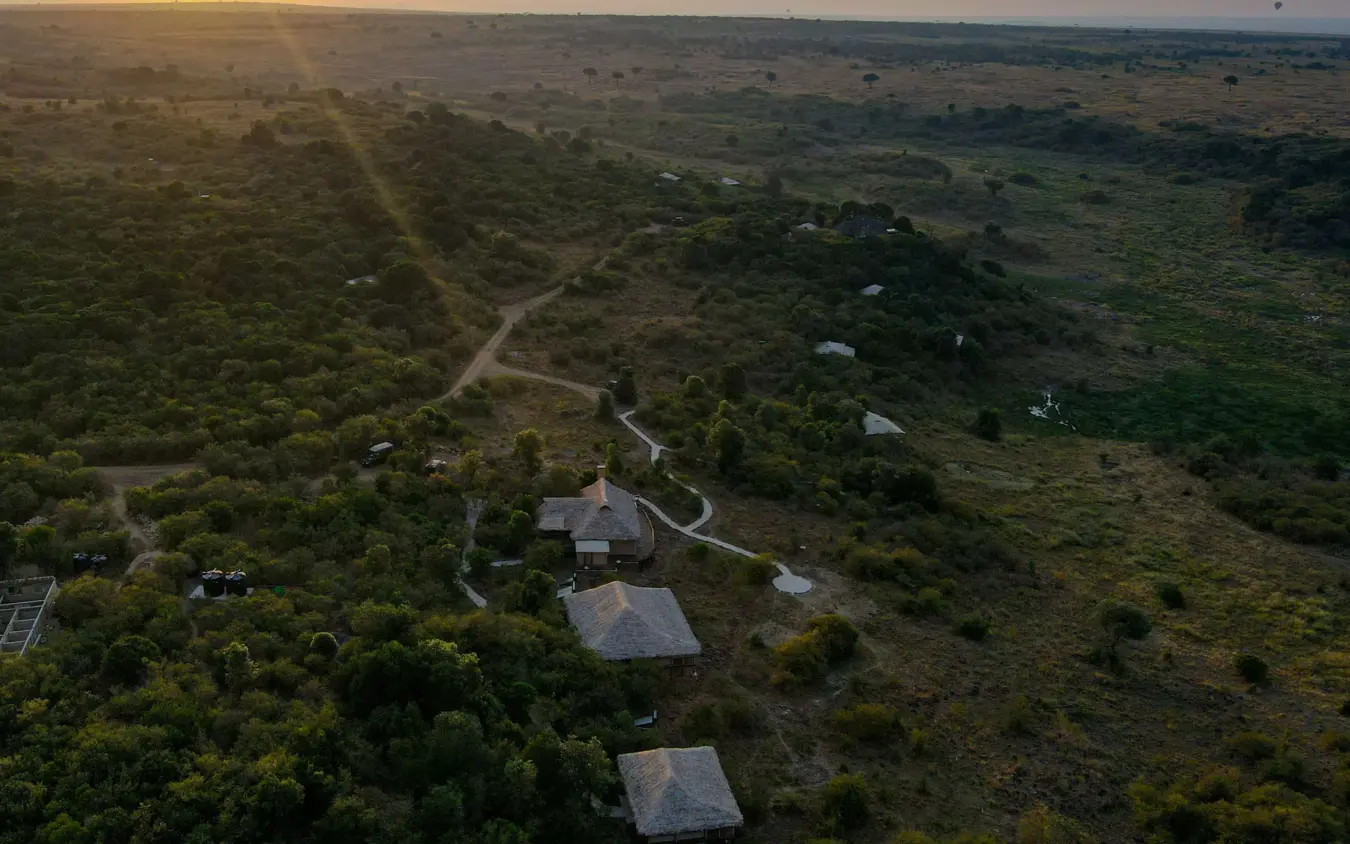
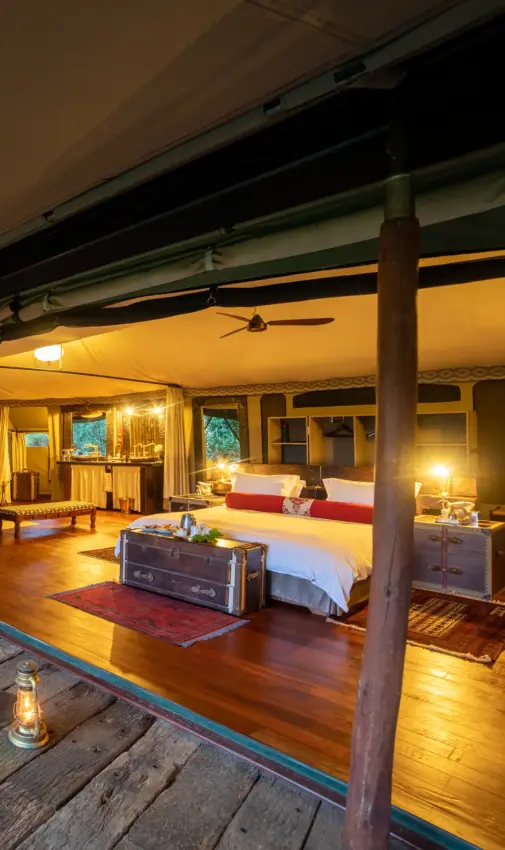
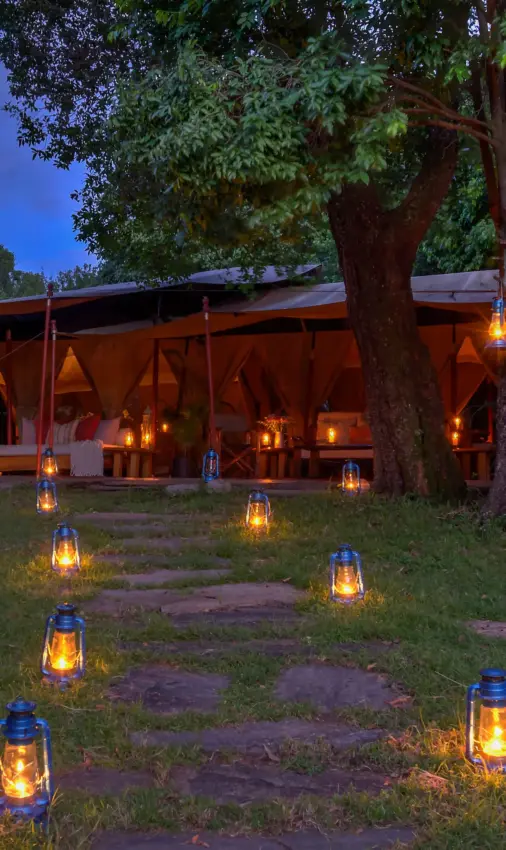
Tangulia Ndogo was built for a family travelling across three generations. Stone paths run level and step-free between the tents, the mess and the deck, which matters as much for grandparents as for small children. The family tent puts two en-suite rooms either side of a small sitting room, so parents and children, or grandparents and grandchildren, can share a space without sharing a bedroom. Wifi reaches every tent, useful on a longer stay when someone cannot switch off entirely.
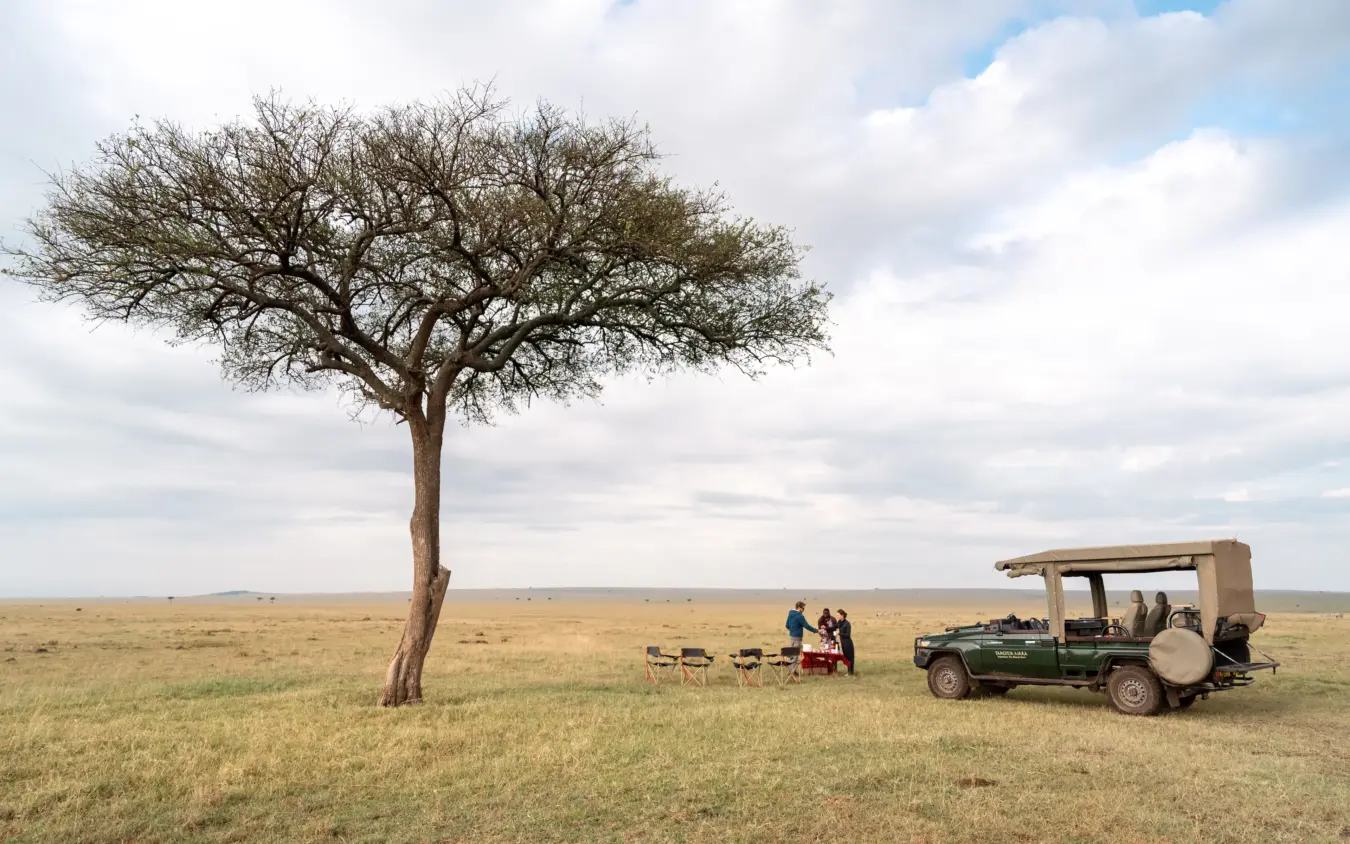
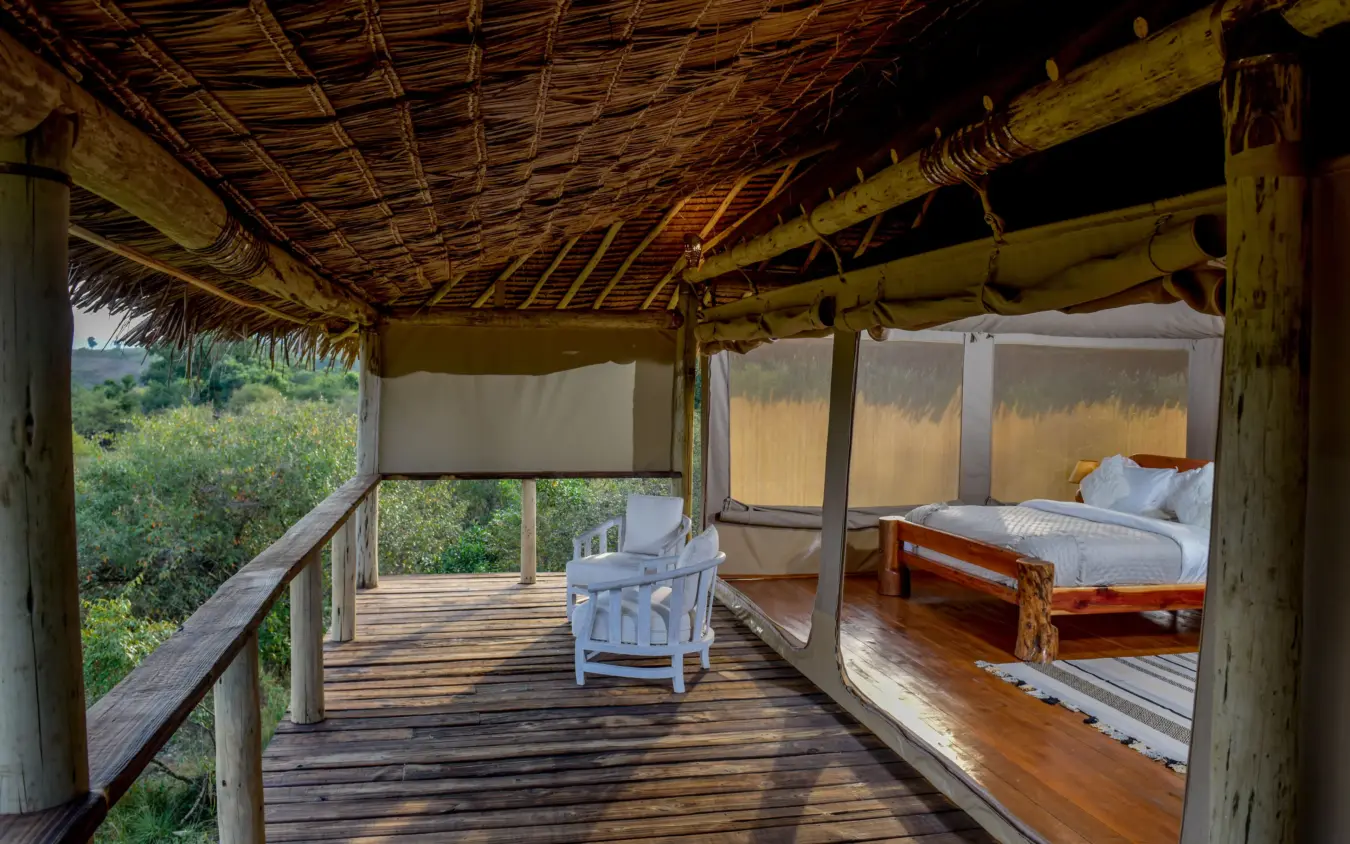
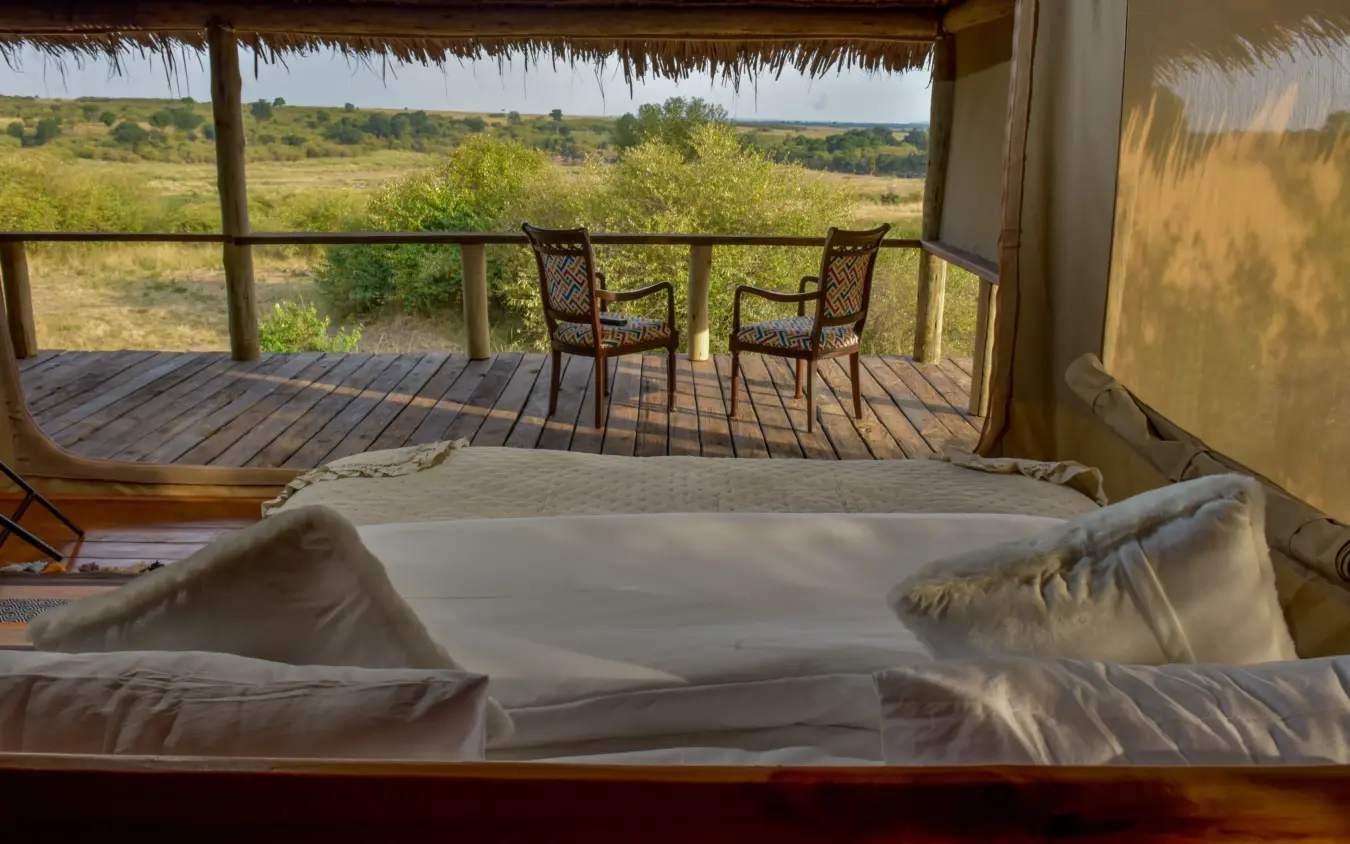
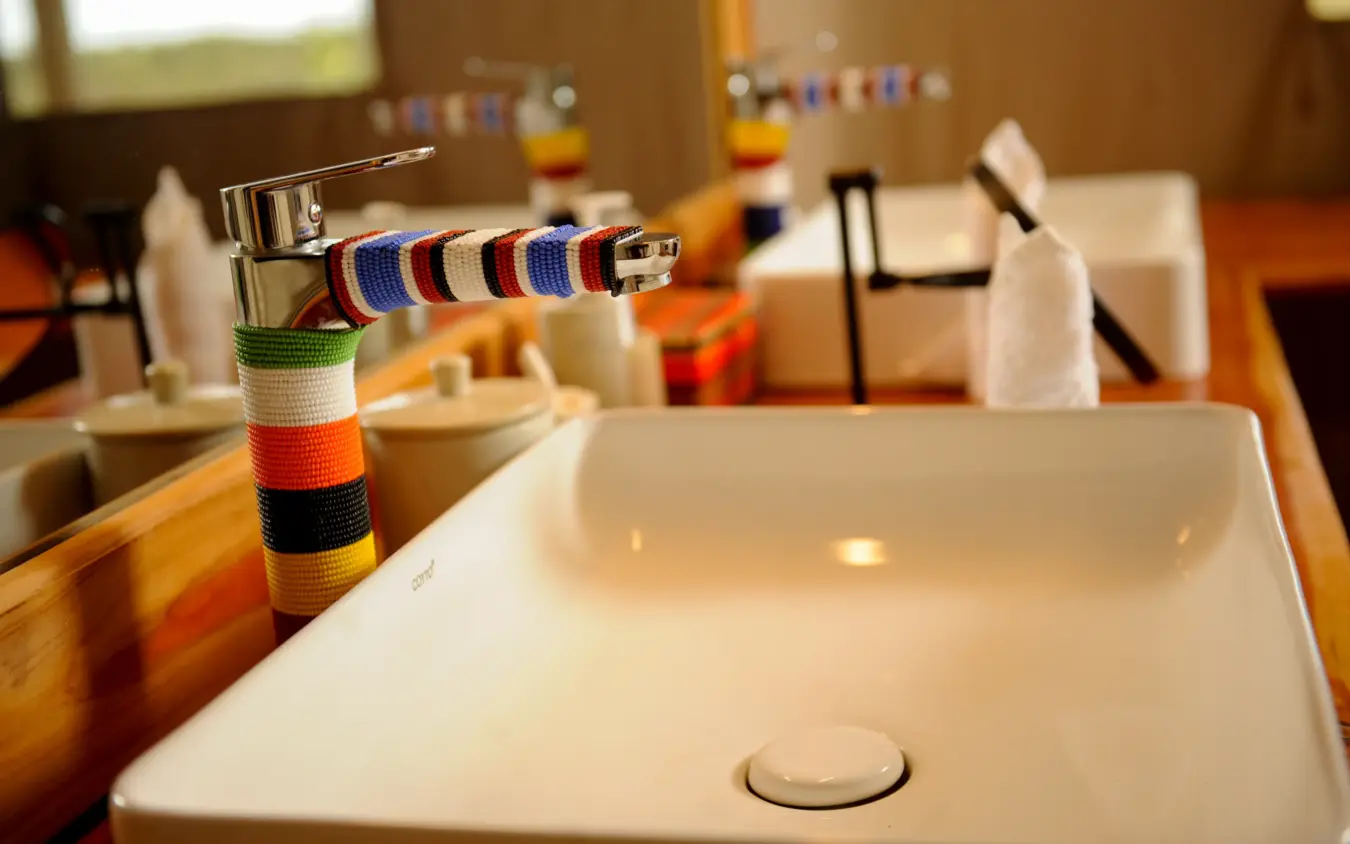
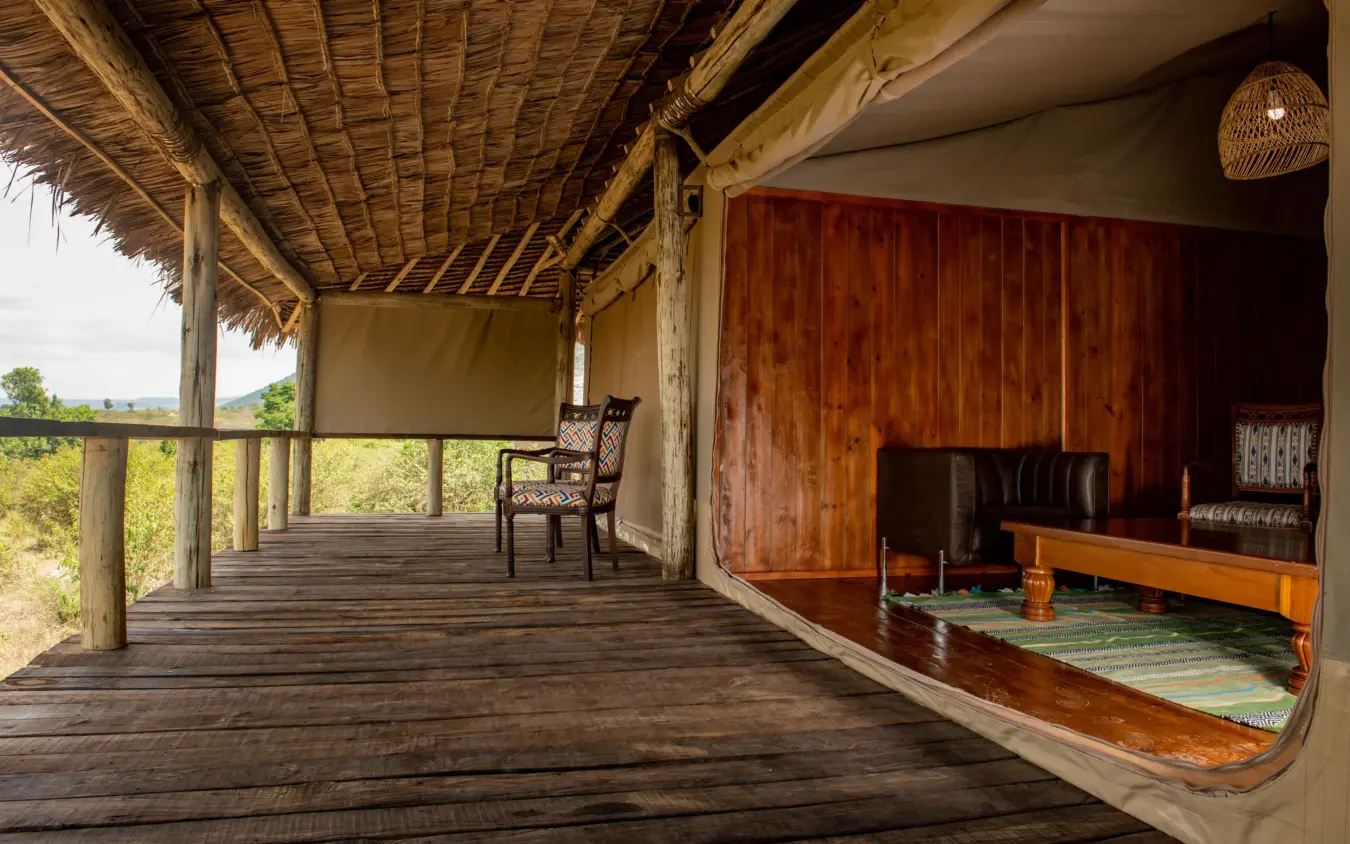
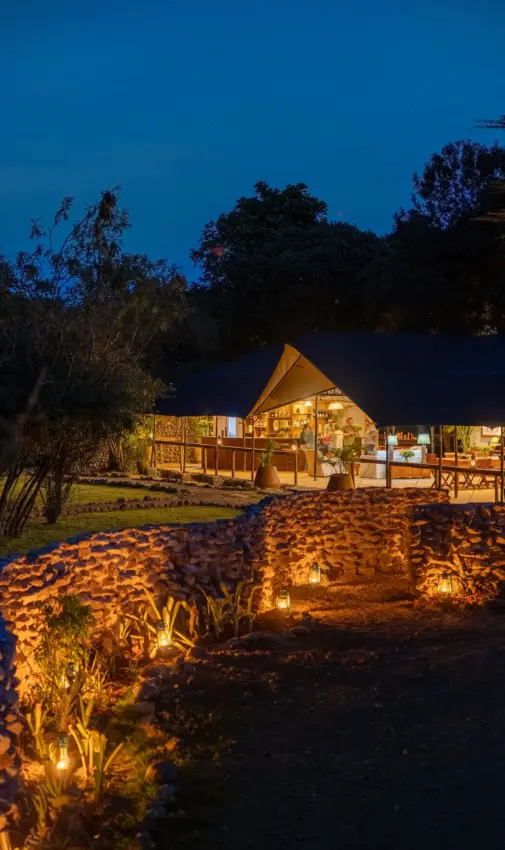
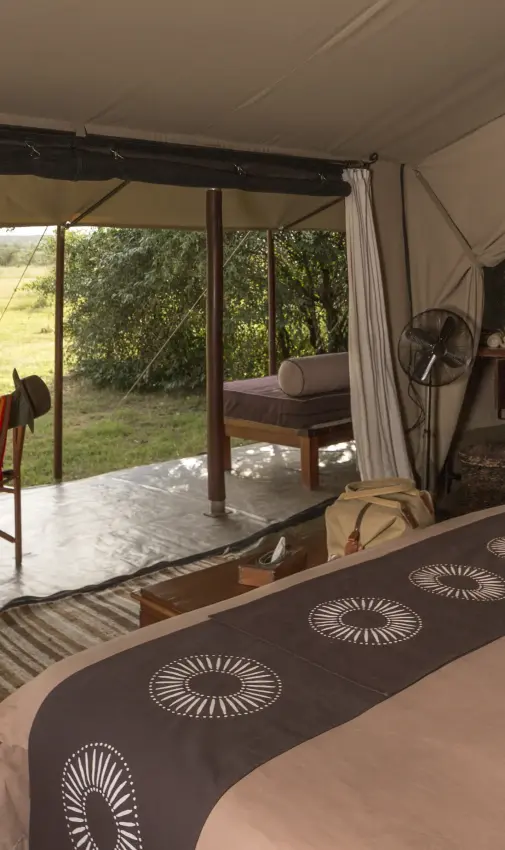
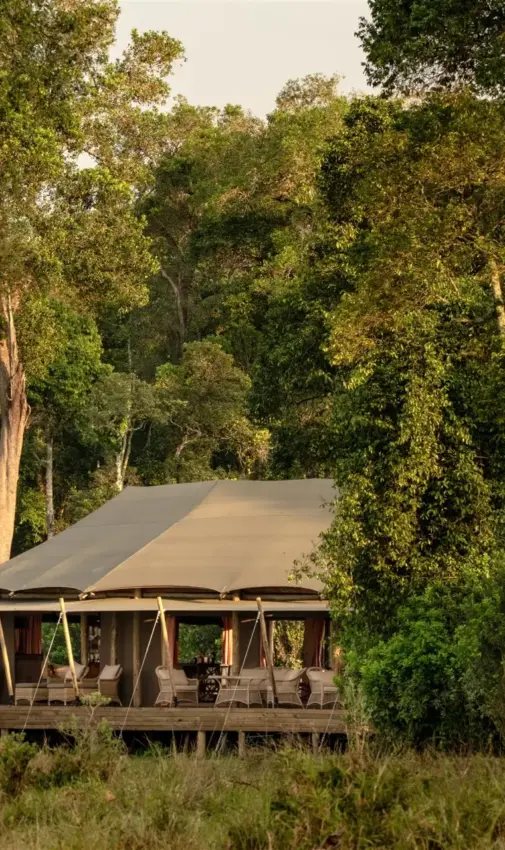
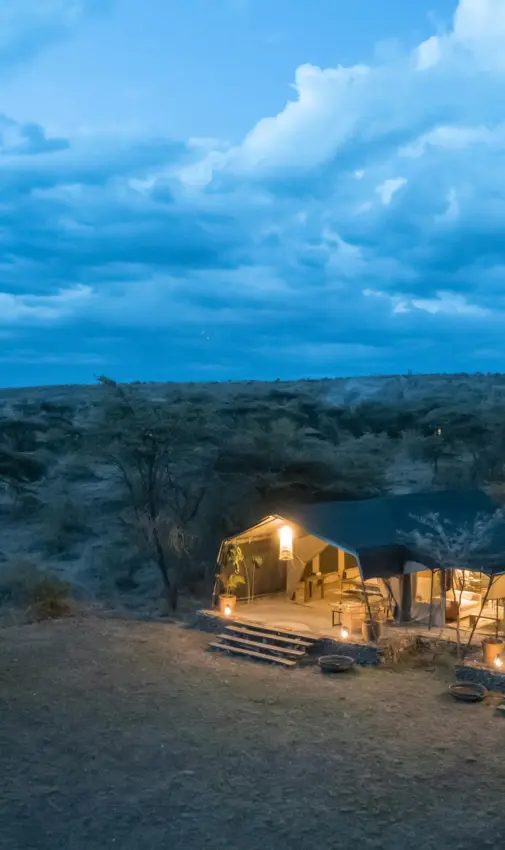
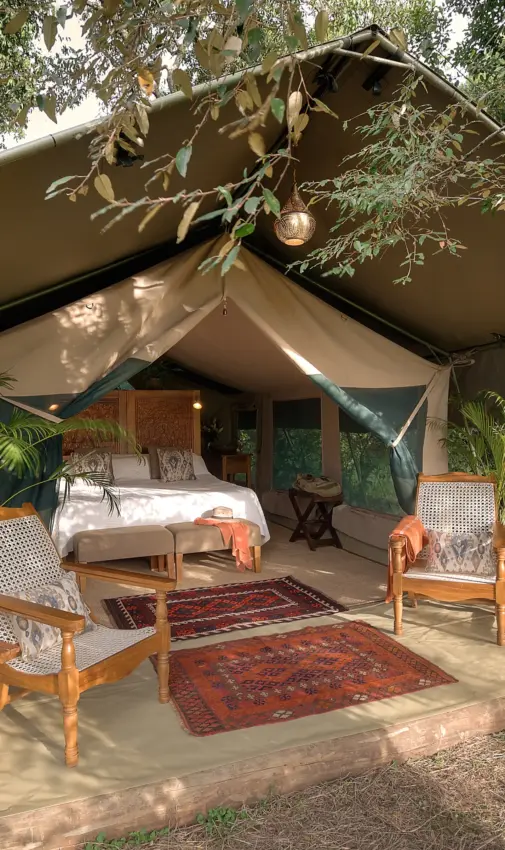
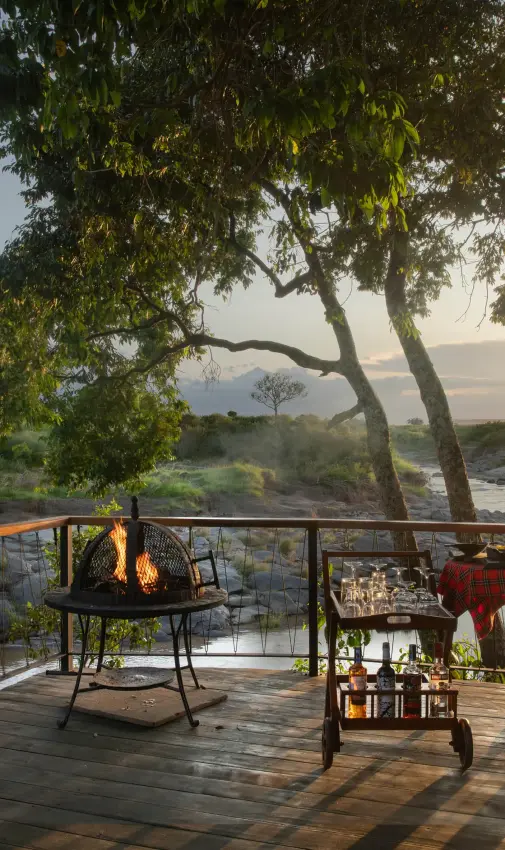
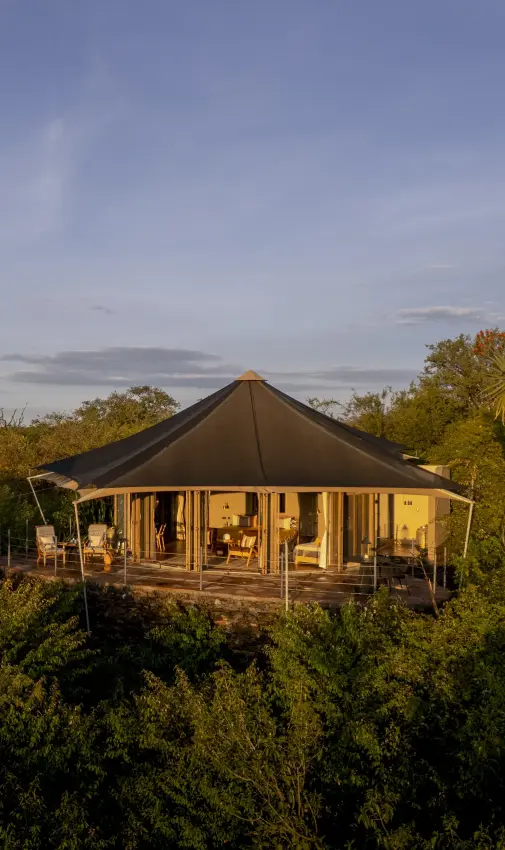
Furniture is made on site from indigenous trees that have fallen on the land, and the beaded details on cushions and hangers come from a women’s group. The tents stand on raised wooden decks under thatch, each with a shaded verandah facing the mineral springs, and the mess tent is open at the front to the salt lick and the river. Meals are cooked to the party’s own preferences and taken wherever the day suggests, on the deck, out in the field at a bush breakfast, or by the fire.
Scops owls call through the stories, and hyenas sound somewhere out in the dark.
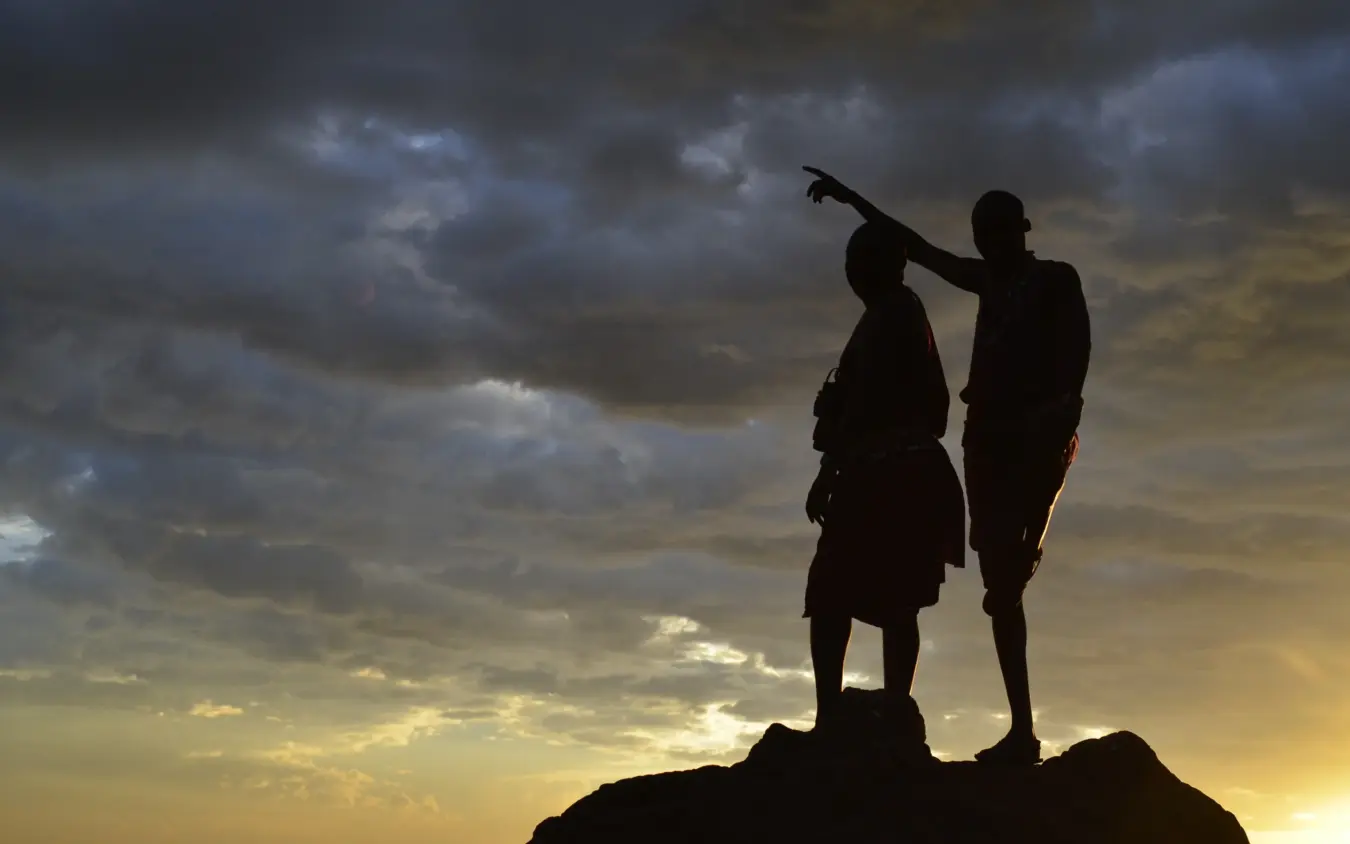
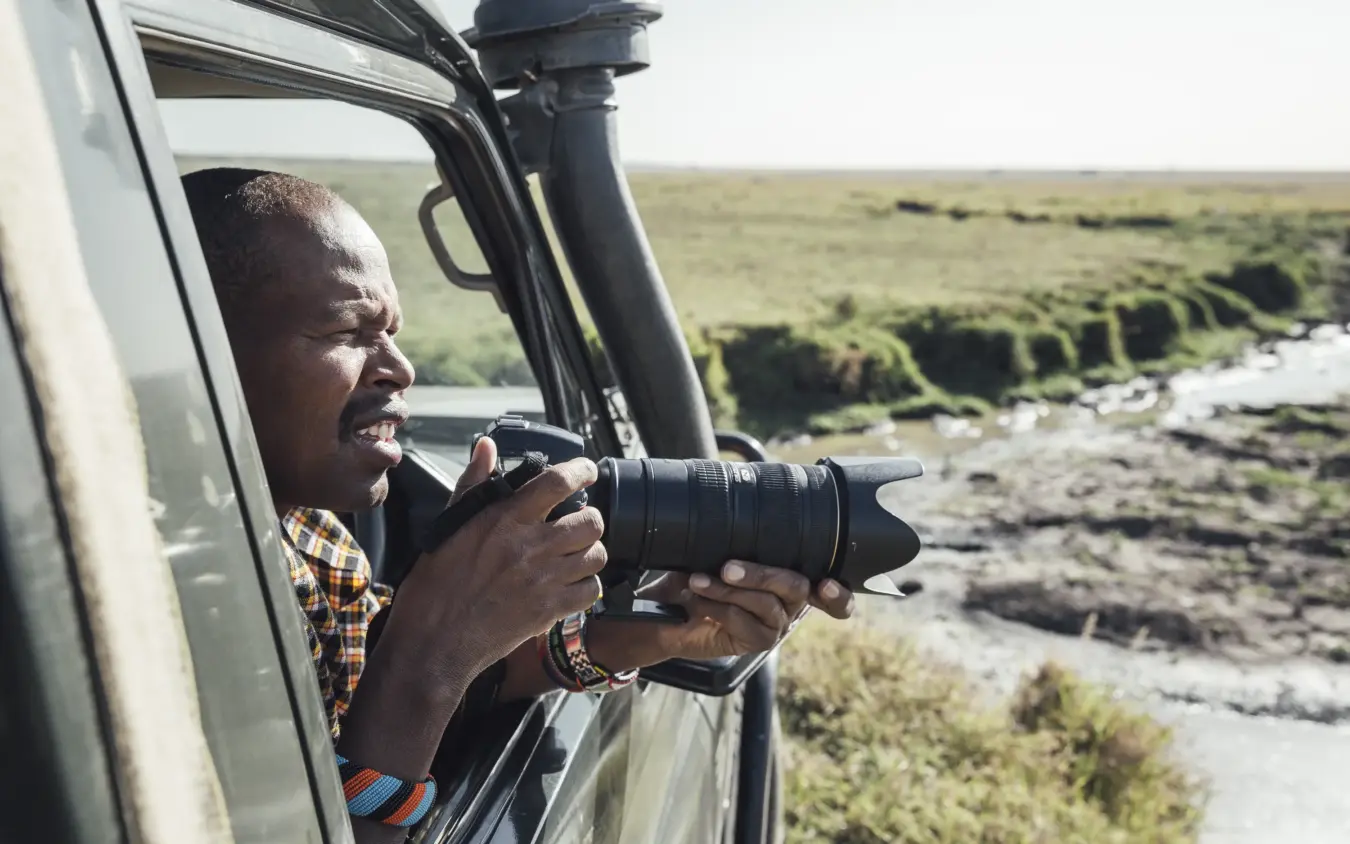
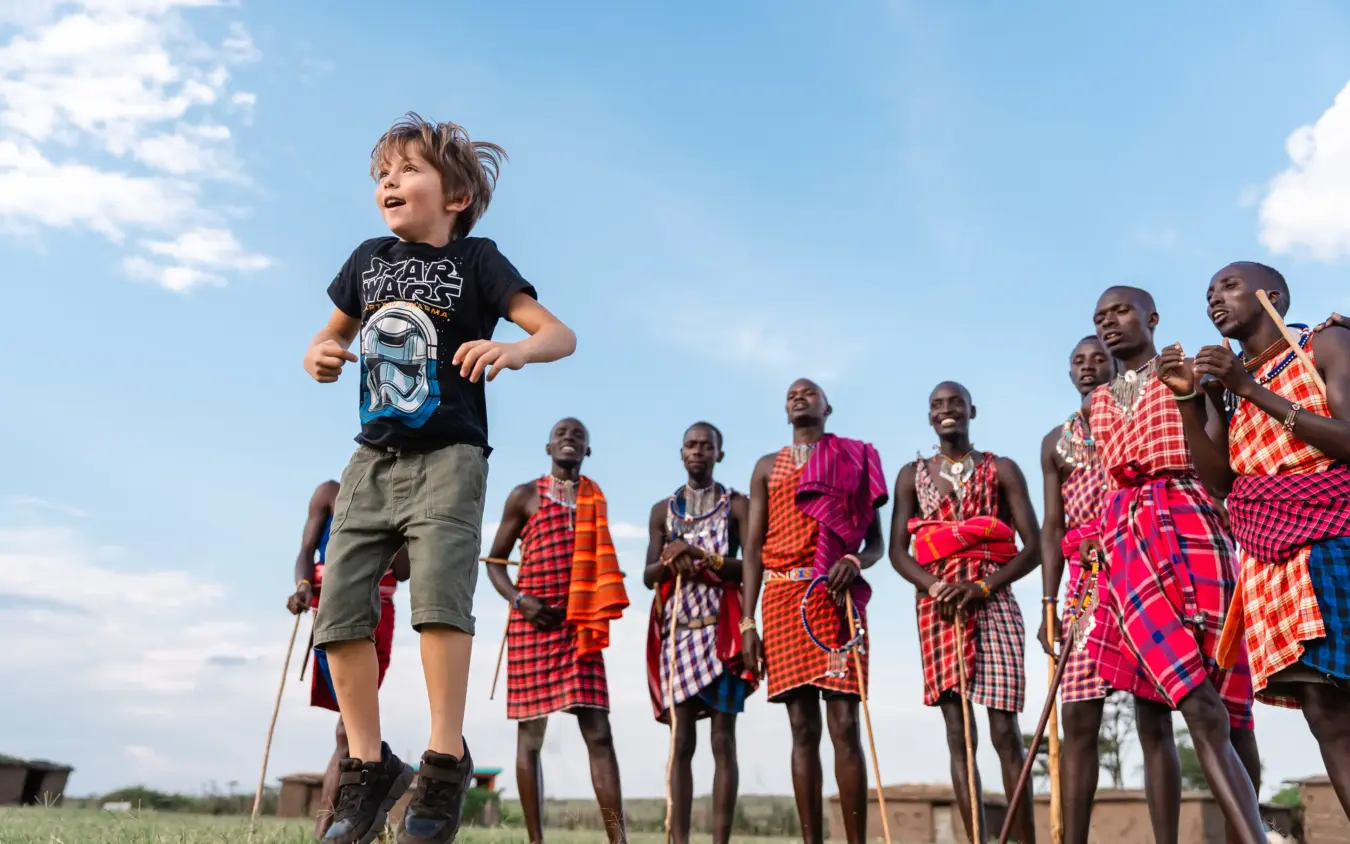
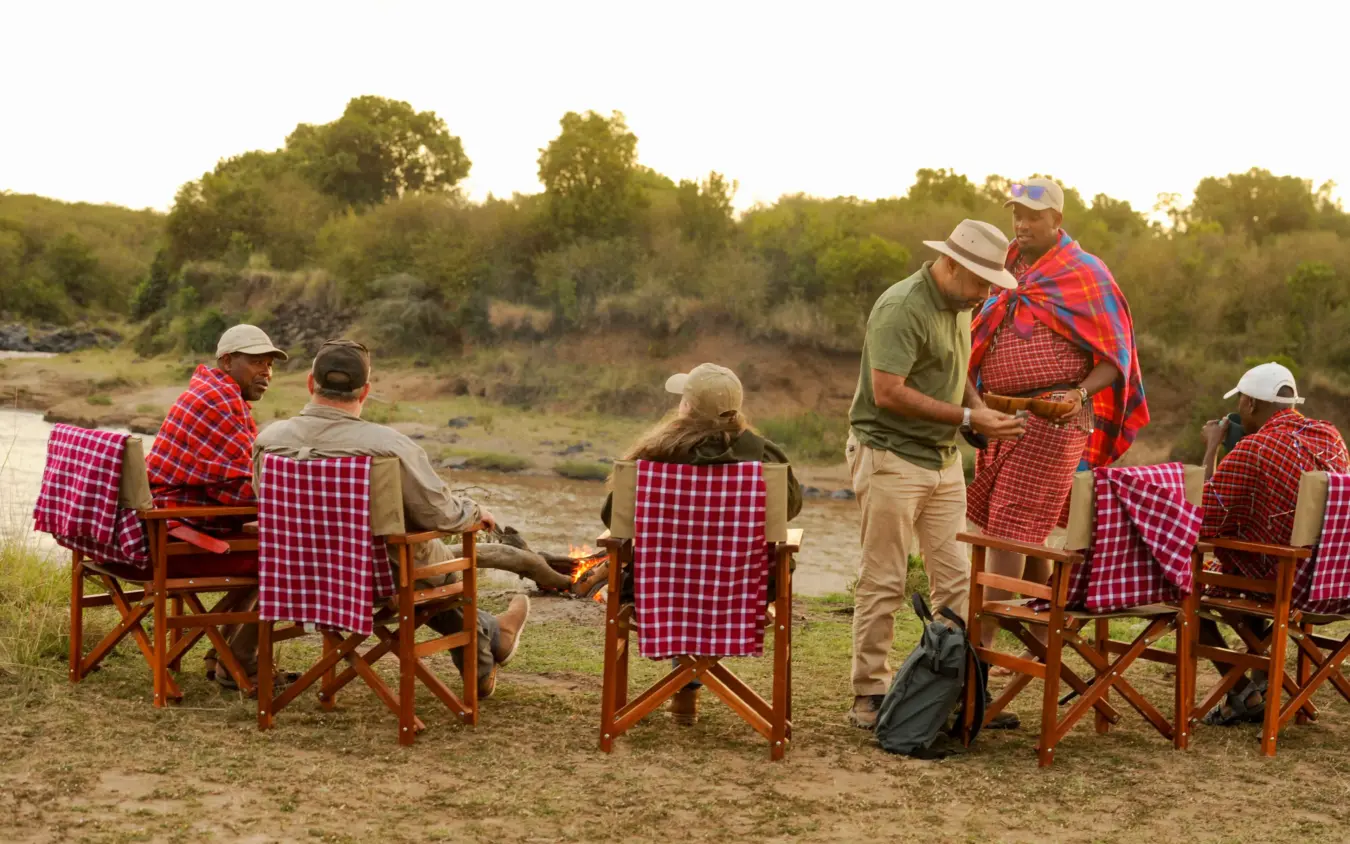
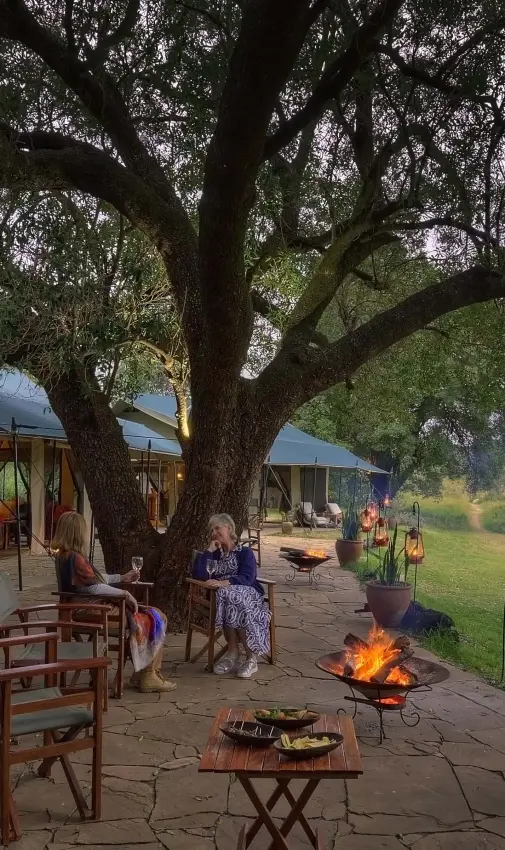
Jackson’s son Morris has joined the guiding team. Around eighty percent of the staff come from the surrounding Maasai community, so a visit to a nearby homestead is a call on neighbours, not a scheduled stop. Evenings gather at the fire pit, given over to stories from hosts who grew up on this land. Scops owls call through the stories, and hyenas sound somewhere out in the dark. Maasai askaris walk guests back to their tents by lamplight, and children of five and up settle in easily.
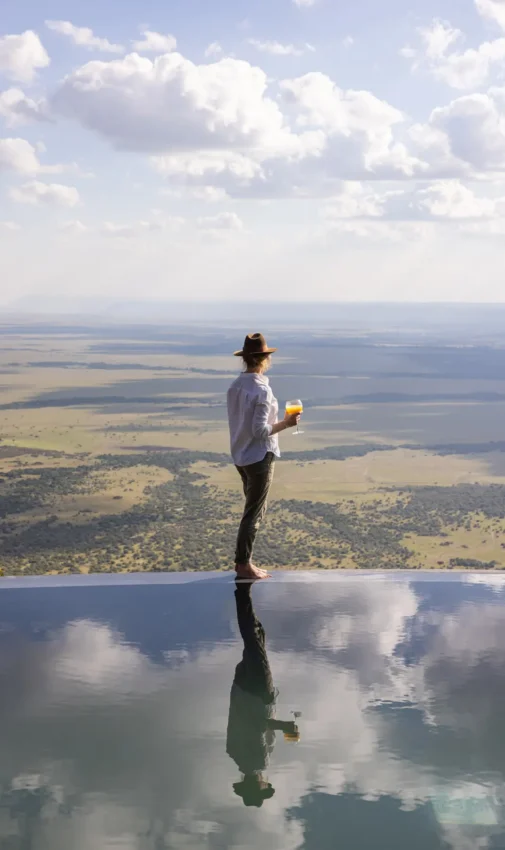
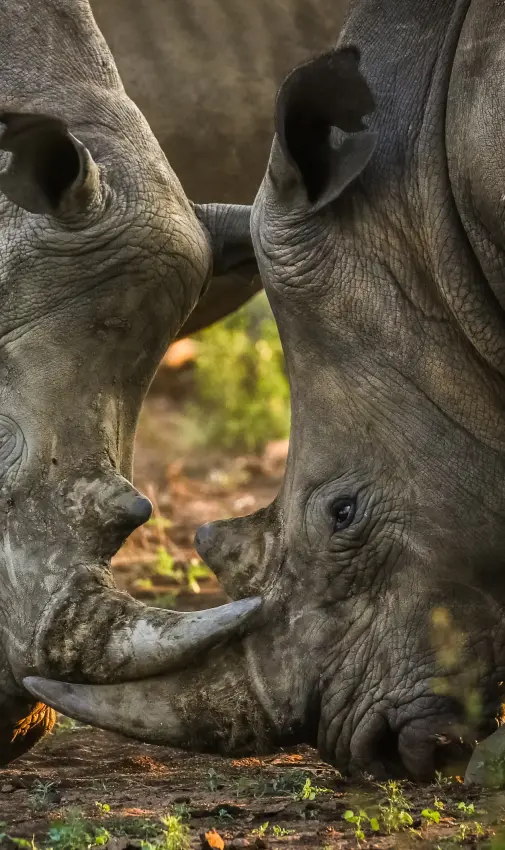
The lions the guides know as the Tangulia pride hold ground nearby, and Musiara Marsh, long-established lion country in this corner of Kenya, lies a short drive to the south. Two male giraffes have sparred over territory on the open ground directly below the mess veranda. Musiara airstrip is around twenty minutes away by road, and the drive from Nairobi through Narok takes five to six hours. Power comes from the sun, with a generator for backup.