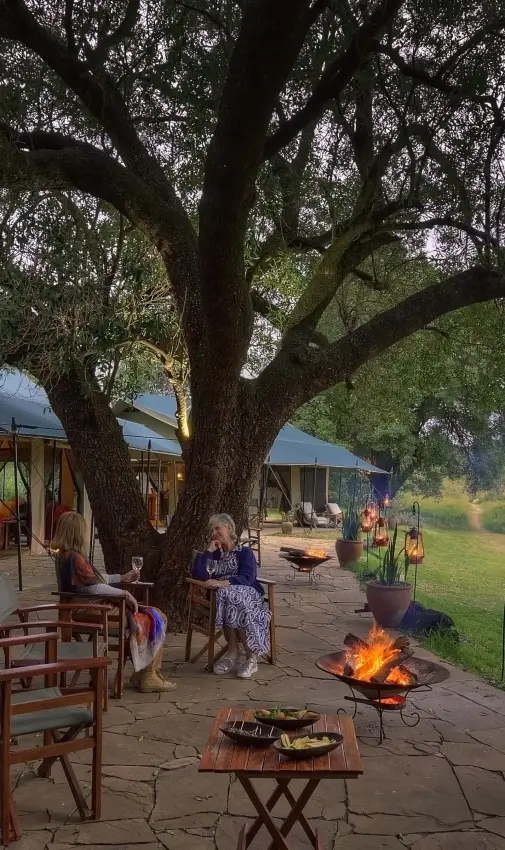
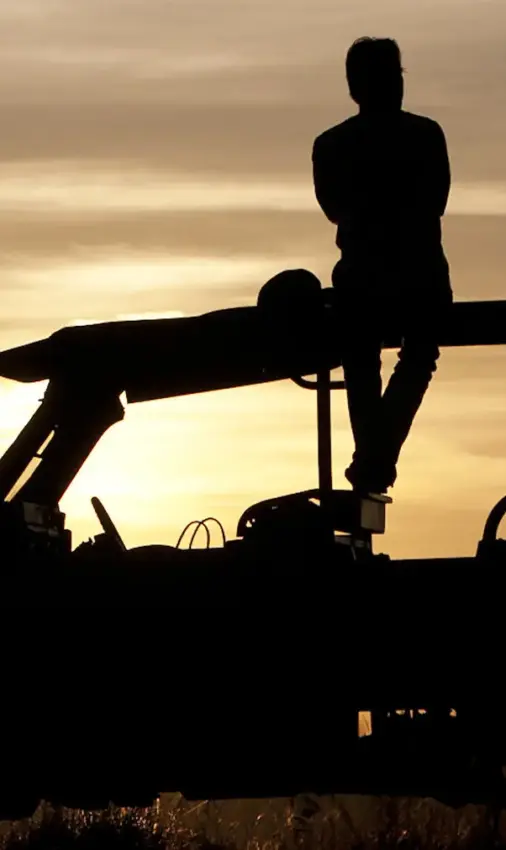
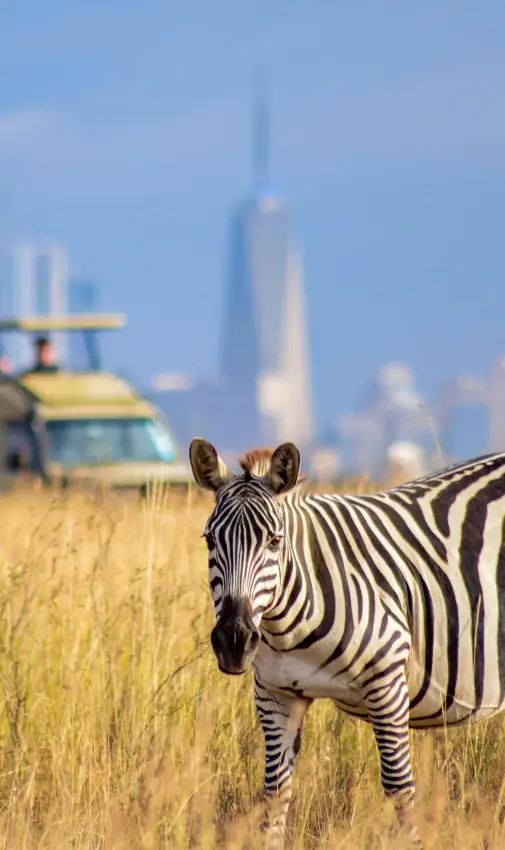
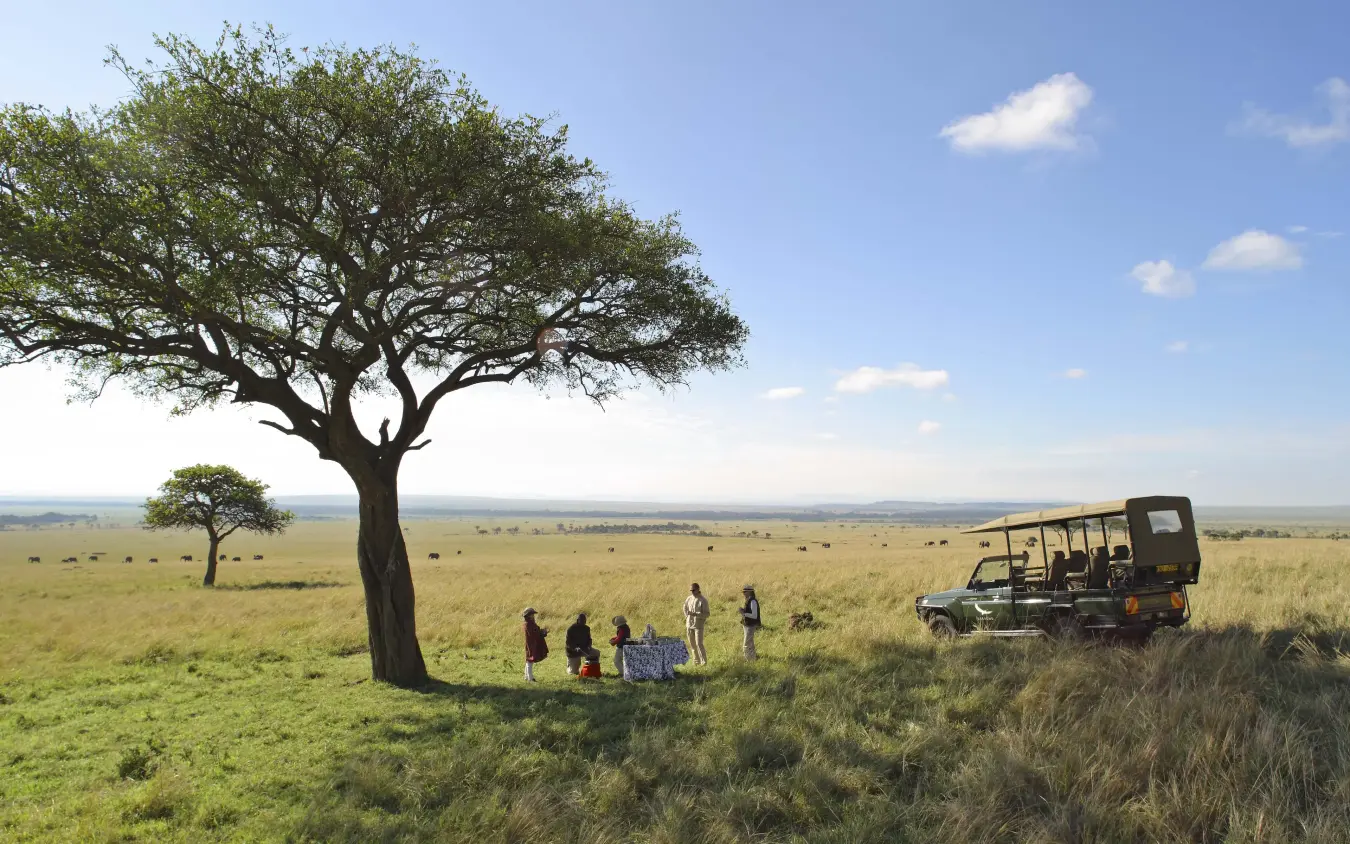
Coffee arrives through a hatch in the tent wall most mornings, ahead of a drive down onto the plains in open-sided vehicles. Among the guides are Maasai women trained and employed at the camp, still uncommon in a profession long dominated by men. They lead walks along the escarpment or into the riverine forest on the Saparingo River, reading spoor and birdsong at a pace that covers little ground. The second drive of the day goes out each afternoon, and sundowners are poured wherever the light is best that evening.
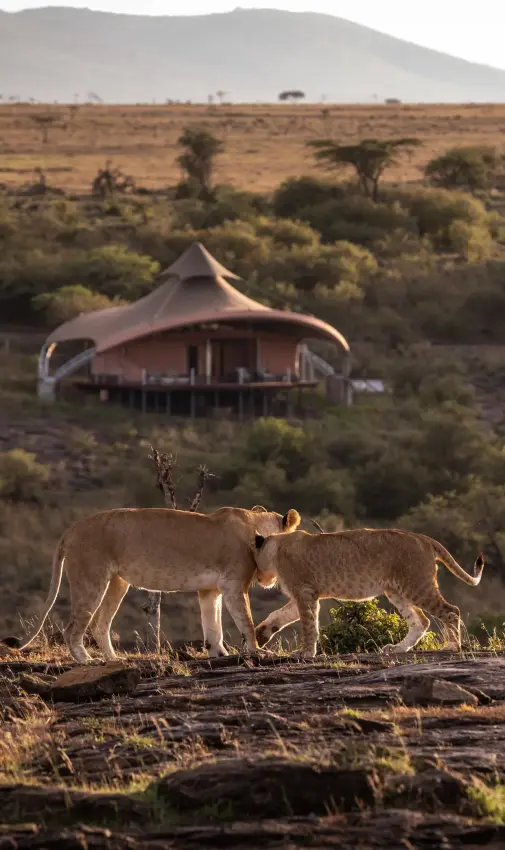
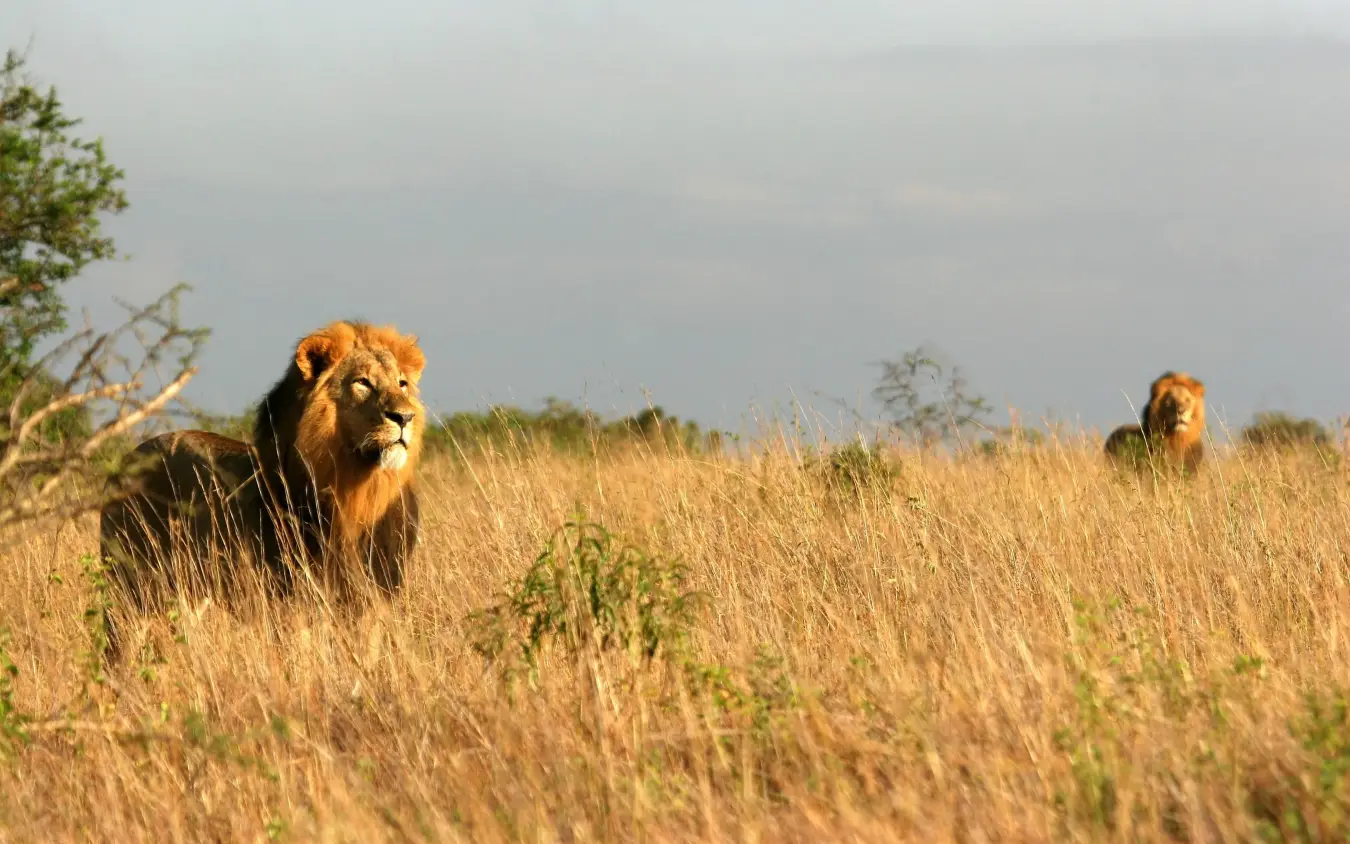
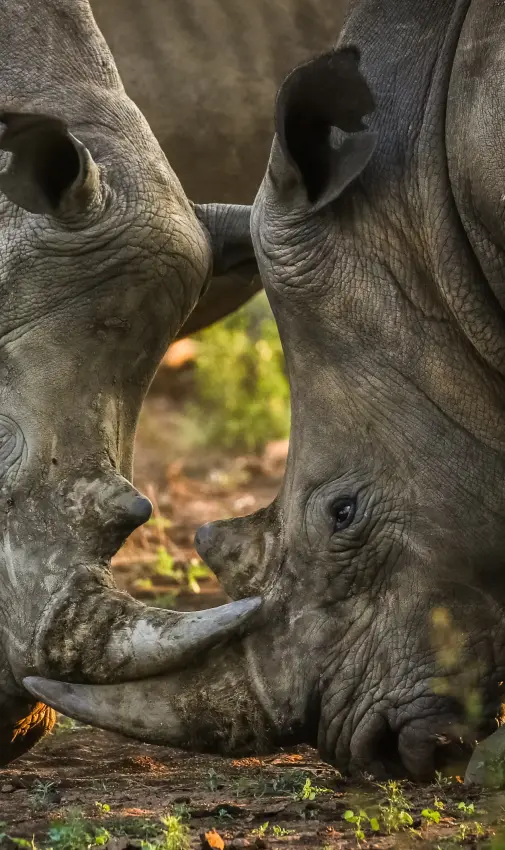
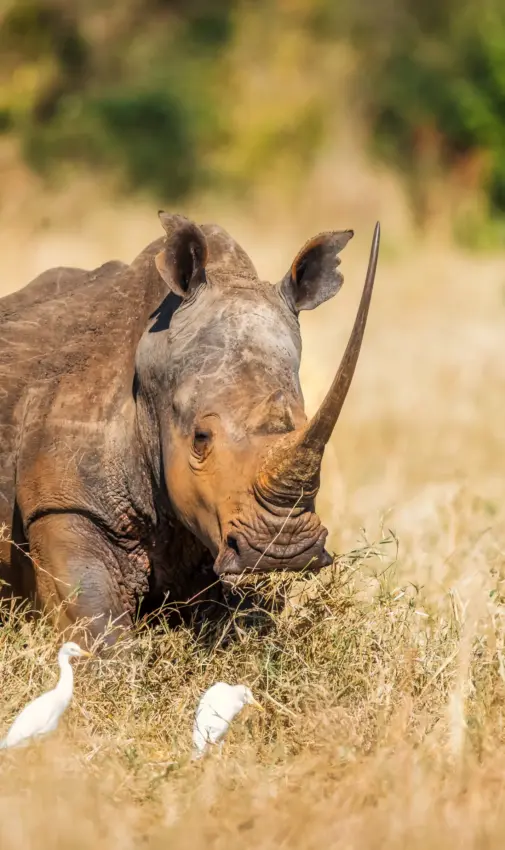
Black rhinos shelter in the thickets and leopards hunt the wooded margins, while cheetahs and topi keep to the open grass. The Mara River holds hippos and crocodiles in every month, whatever the plains are doing. At night, hippos can be heard grunting from the river, somewhere below in the dark. Around 450 bird species have been recorded across the Mara, and much of that range can be found here, where forest, grassland and escarpment slope are packed into this one concession.
At night, hippos can be heard grunting from the river, somewhere below in the dark.
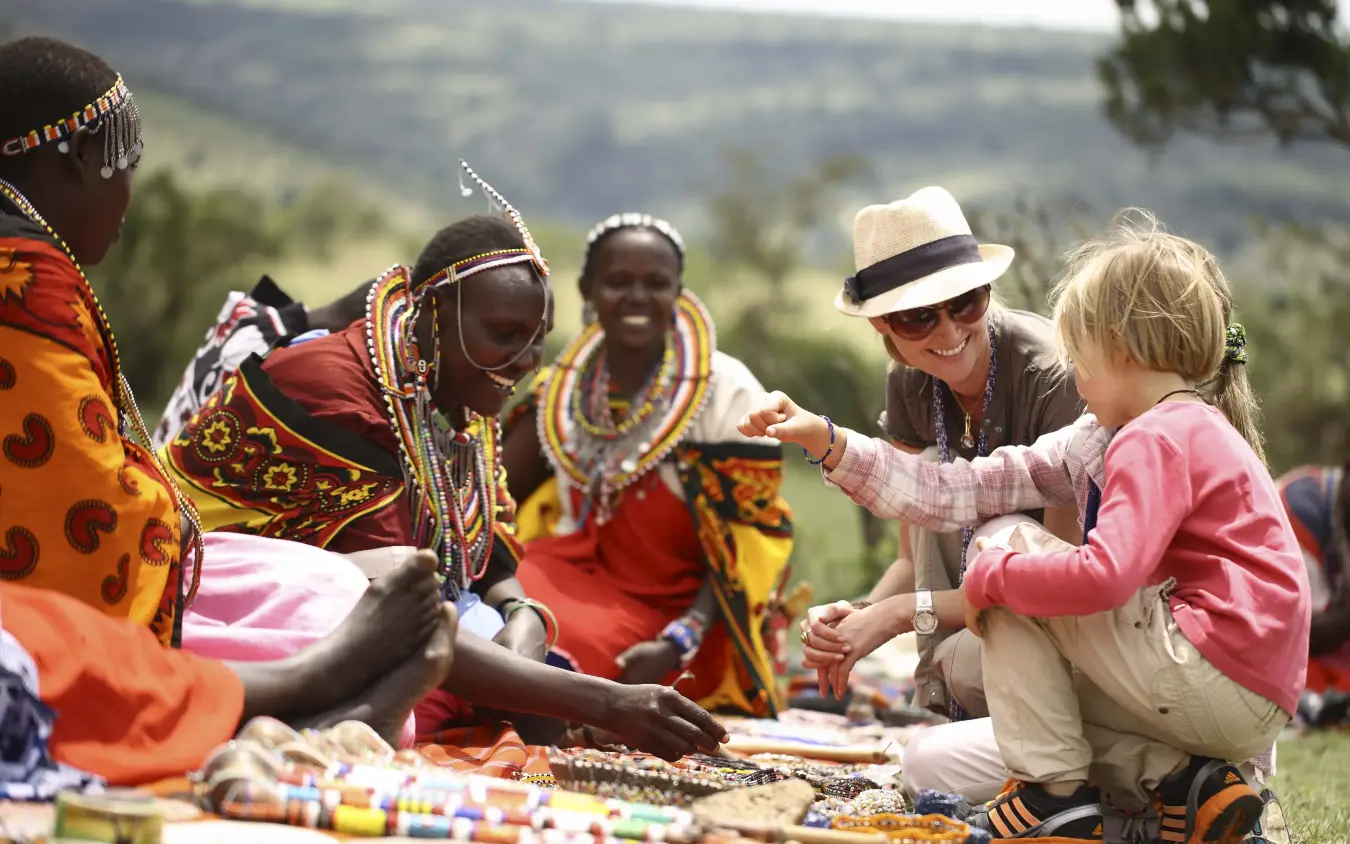
The same ground can be crossed by air. Balloons lift off before sunrise and land beside a breakfast laid out in the grass. Guests fly in to the Kichwa Tembo airstrip in the Mara Triangle, a short drive from the tents. Community visits are led by someone from the village itself, and the craft centre there returns its proceeds to the households that made the work. Other tours run to the schools and clinics the camp has helped fund, where the arrangement is plain to see: leased land, local wages, finished classrooms.
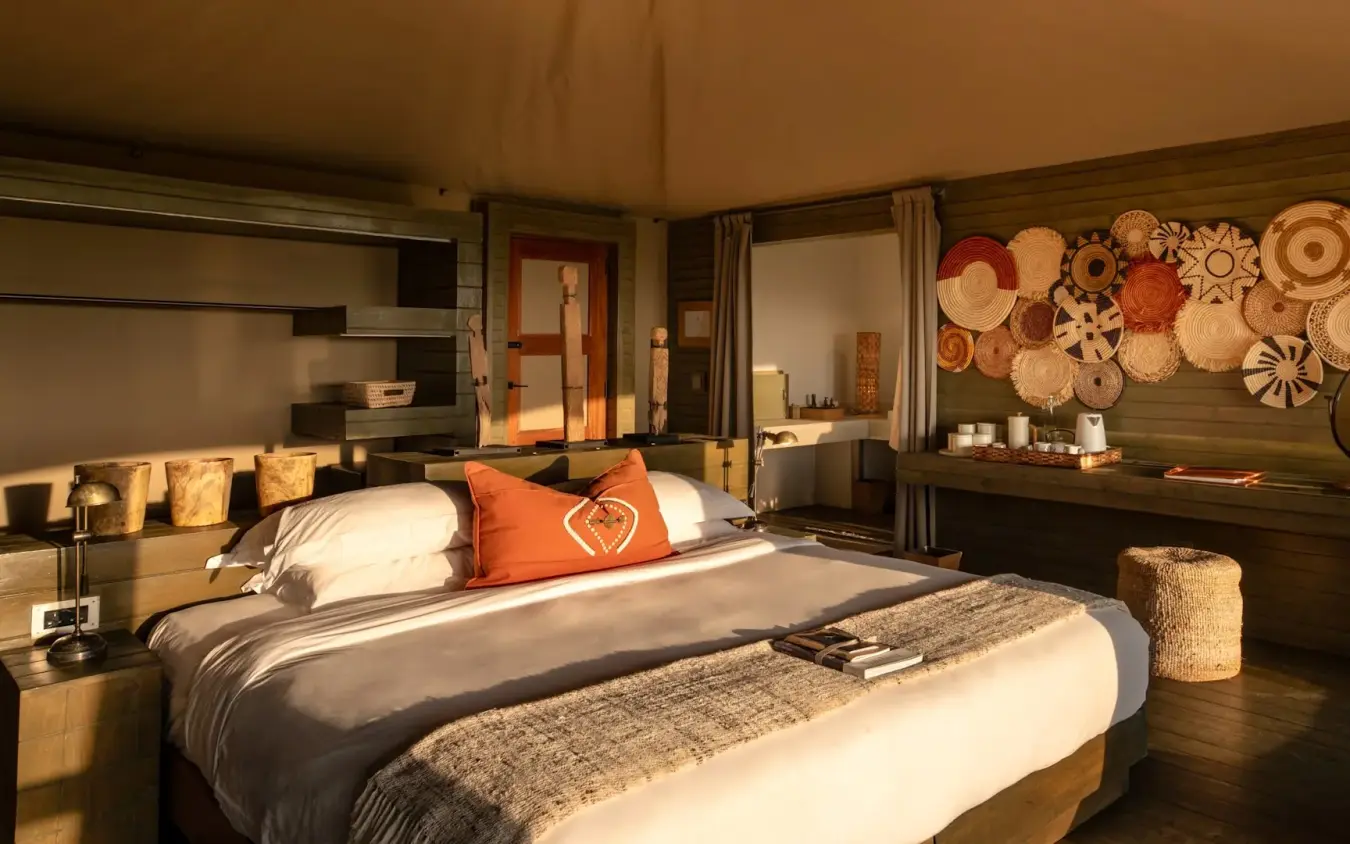
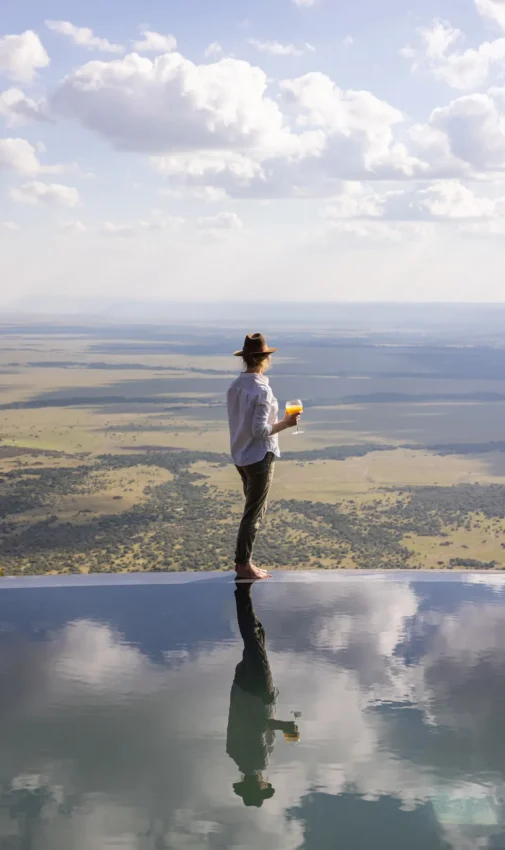
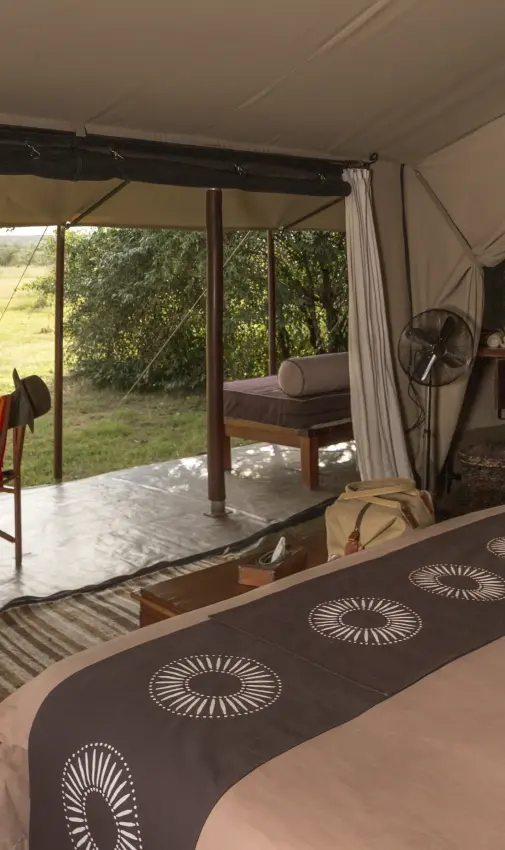
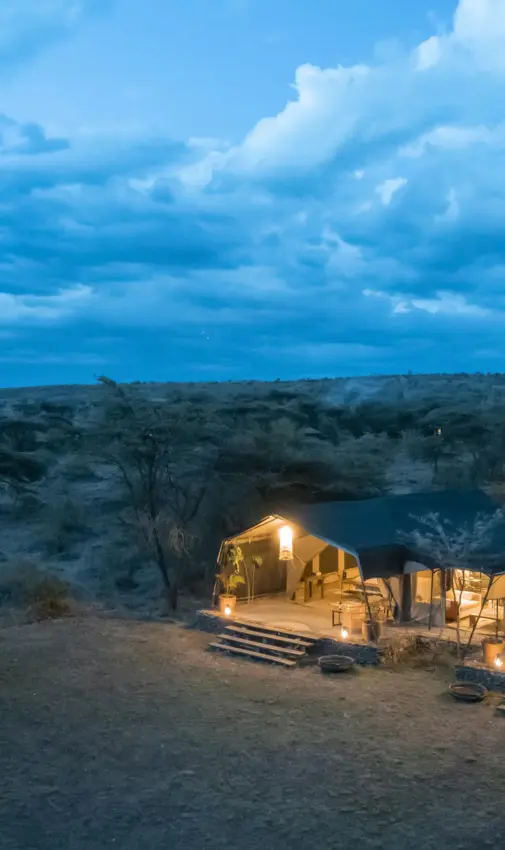
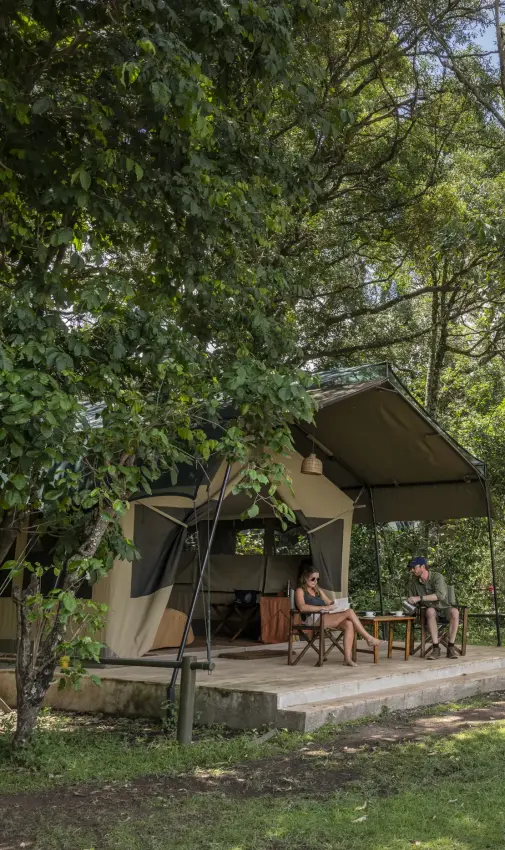
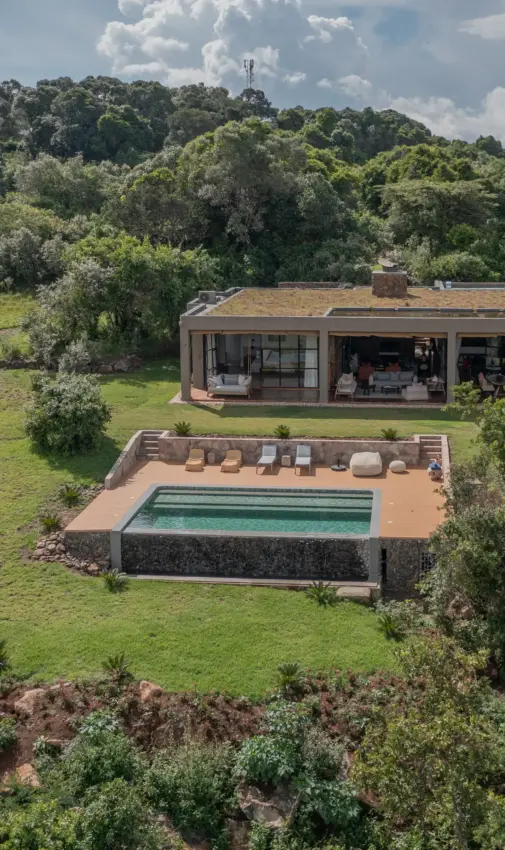
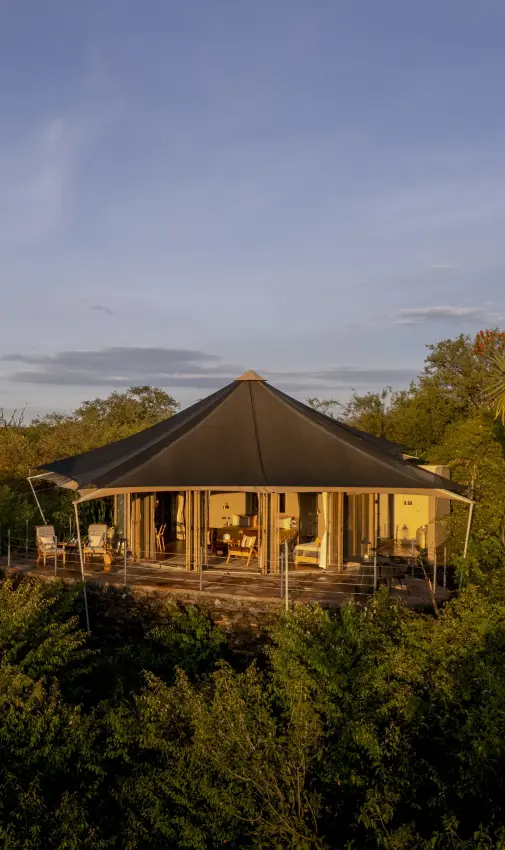
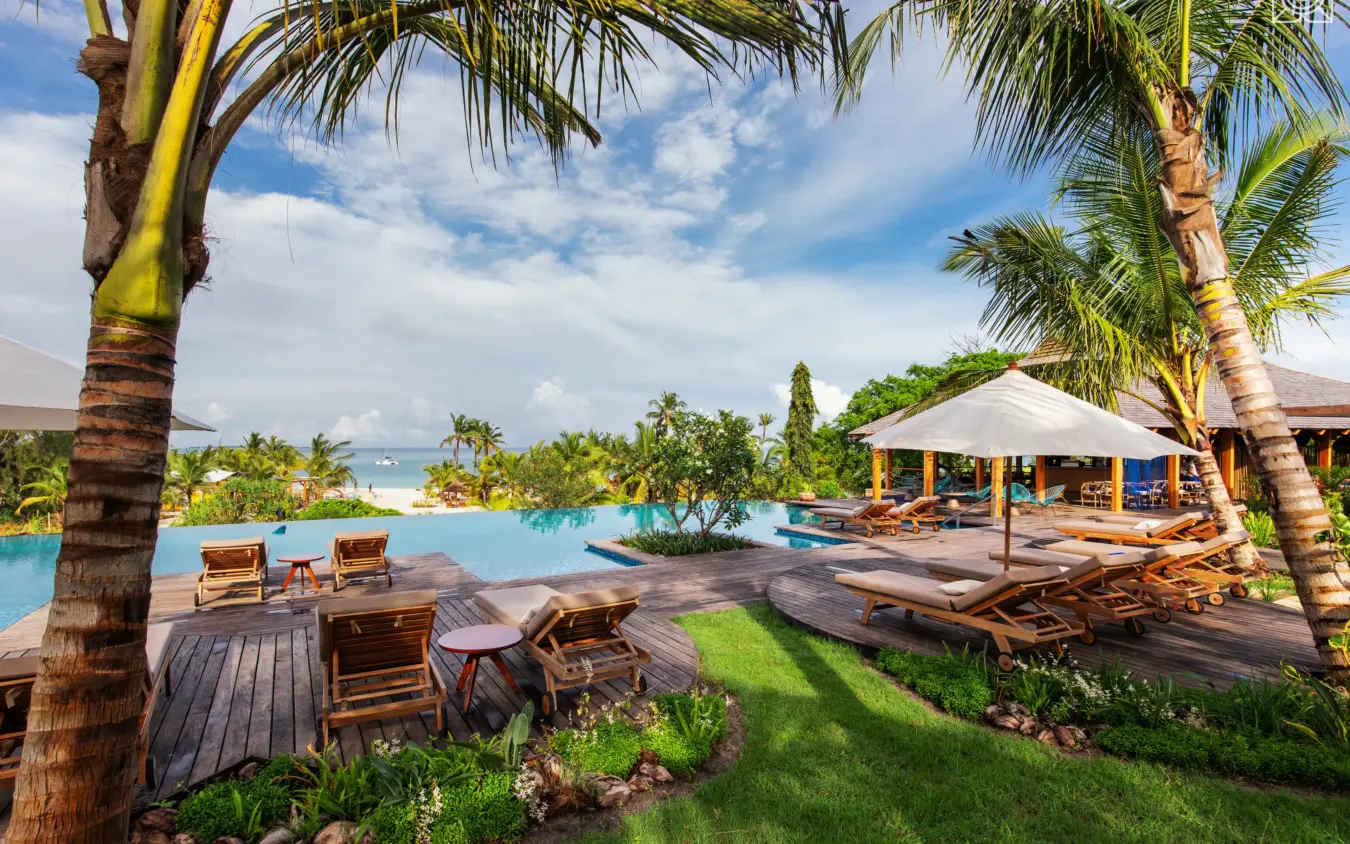
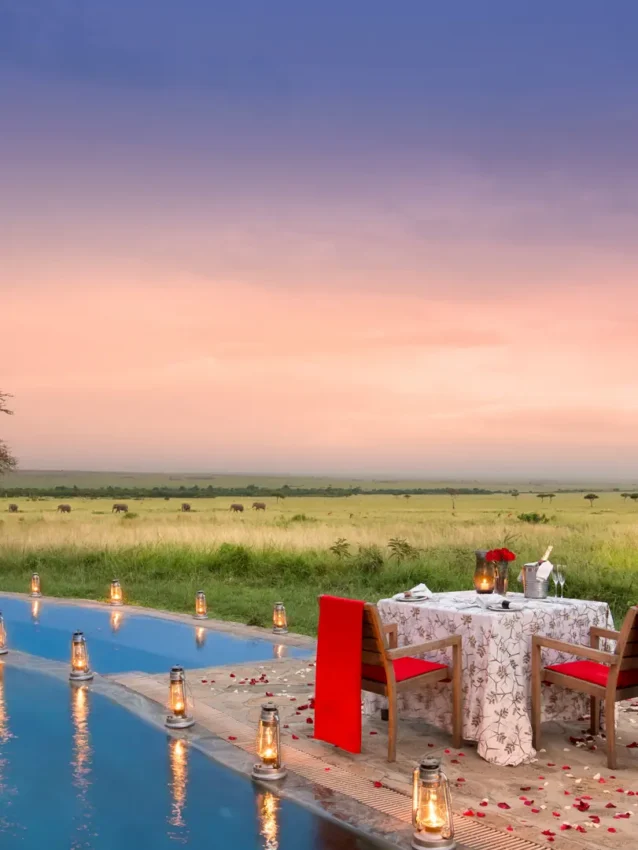
The tents face one of two ways, out over the open plains or into the forest canopy along the river. Each has a screened deck with a built-in daybed, and from the plains-facing tents nothing interrupts the view to the horizon. The rim-flow pool occupies the same edge, level with animals grazing a short distance out. Children are welcome, and although guided walks beyond camp are kept for guests aged sixteen and over, the WILDchild programme covers tracking and fire-making, beadwork with Maasai women and football with the camp staff.



 01