


accommodation
Twelve Tented Suites on Wooden Platforms
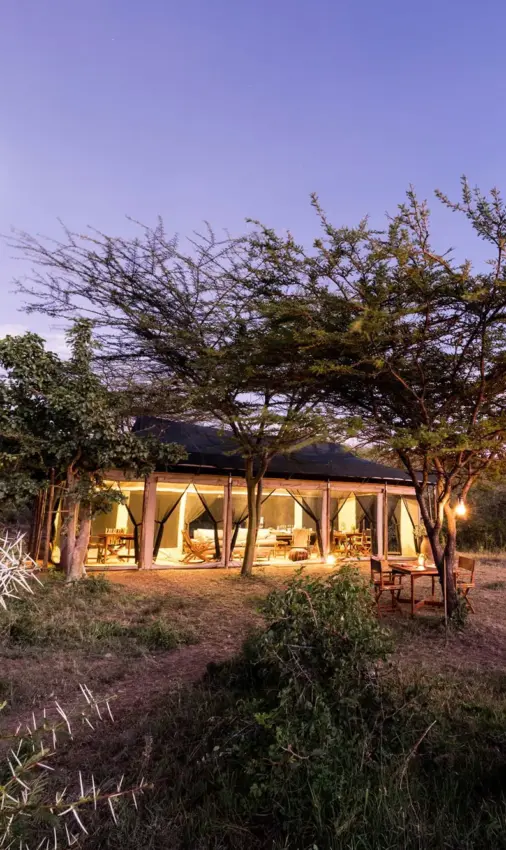
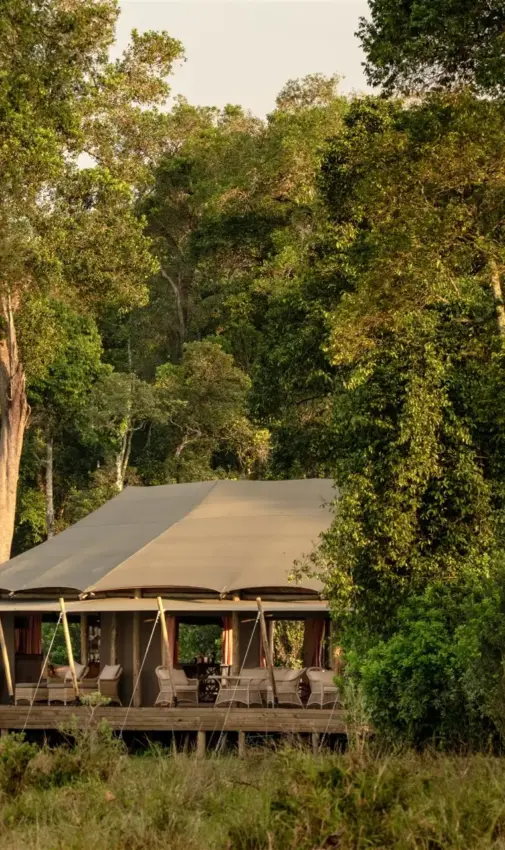
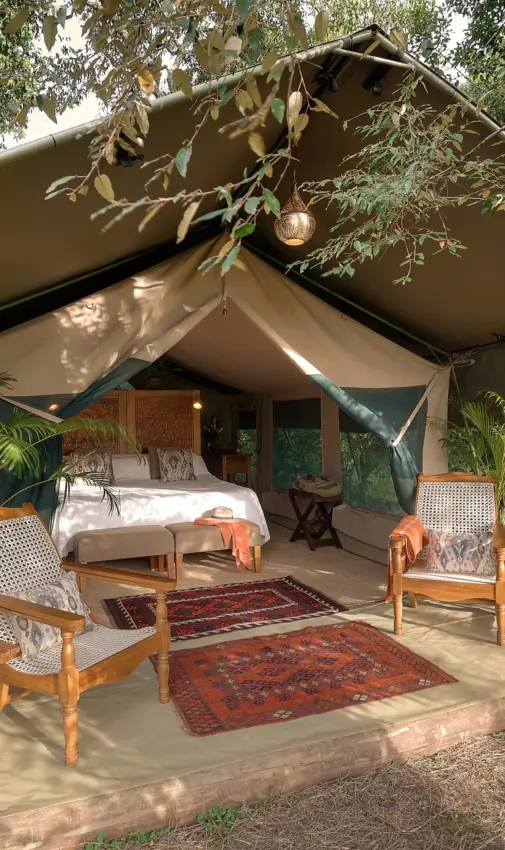
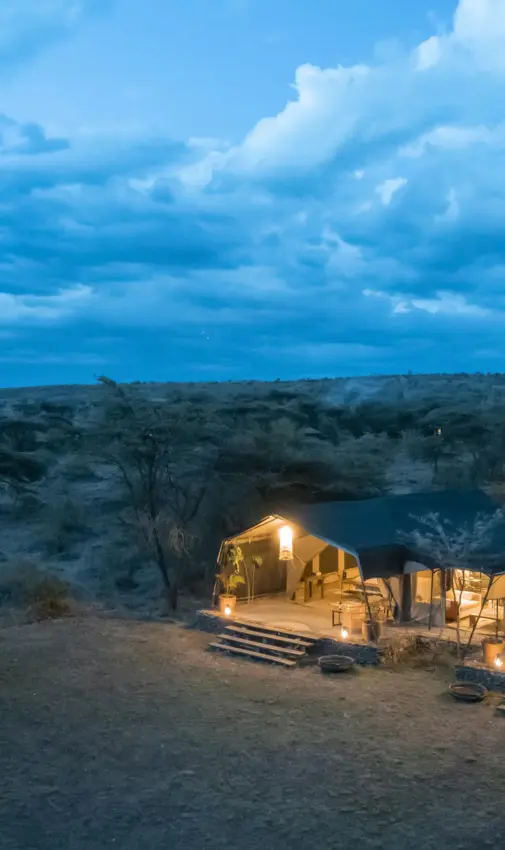
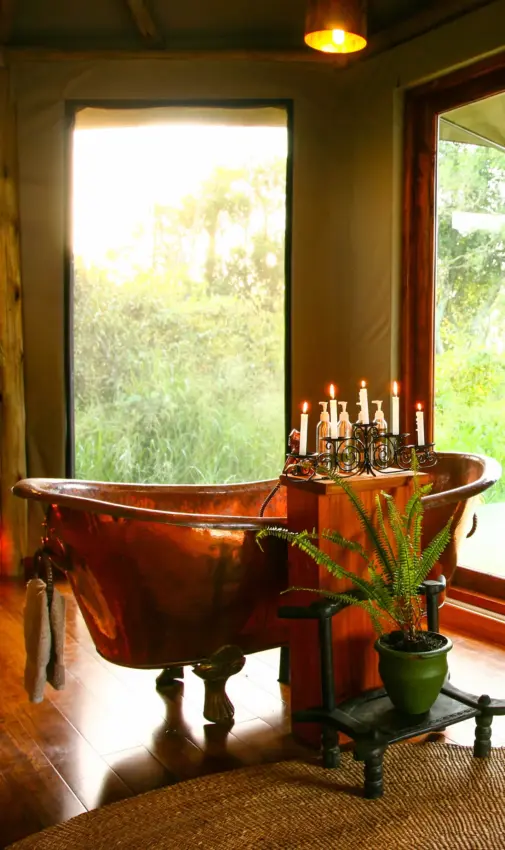
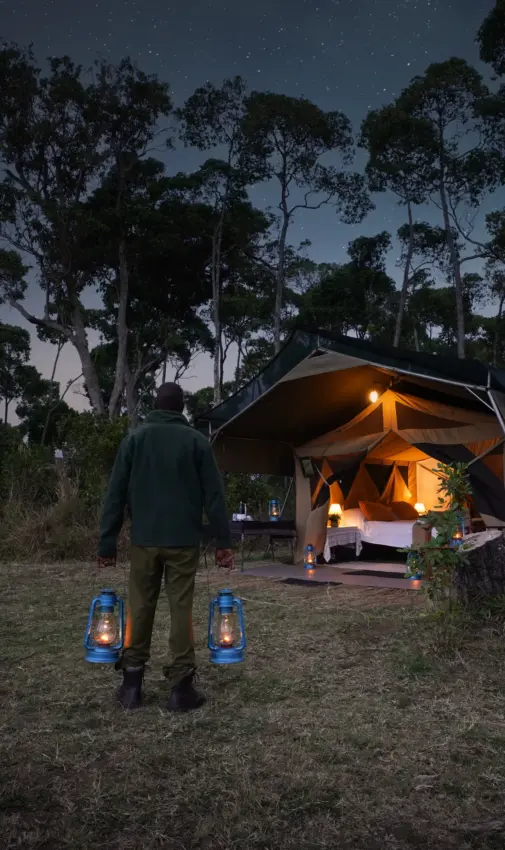
Twelve tented suites are raised on wooden platforms, among them one family unit. Each has a shower indoors and a second one outdoors. Out front, a private deck faces the marsh.
Little Governors’ Camp occupied this spot for decades, at the edge of a seasonal marsh in the Mara Triangle, the western section of the Maasai Mara. The old camp was taken down entirely and rebuilt from the ground up, and in 2026 it reopened as Wilderness Mara: twelve tented suites, one of them for families, strung along the edge of the marsh.
Elephants, buffalo and hippos come to drink in front of the tents.
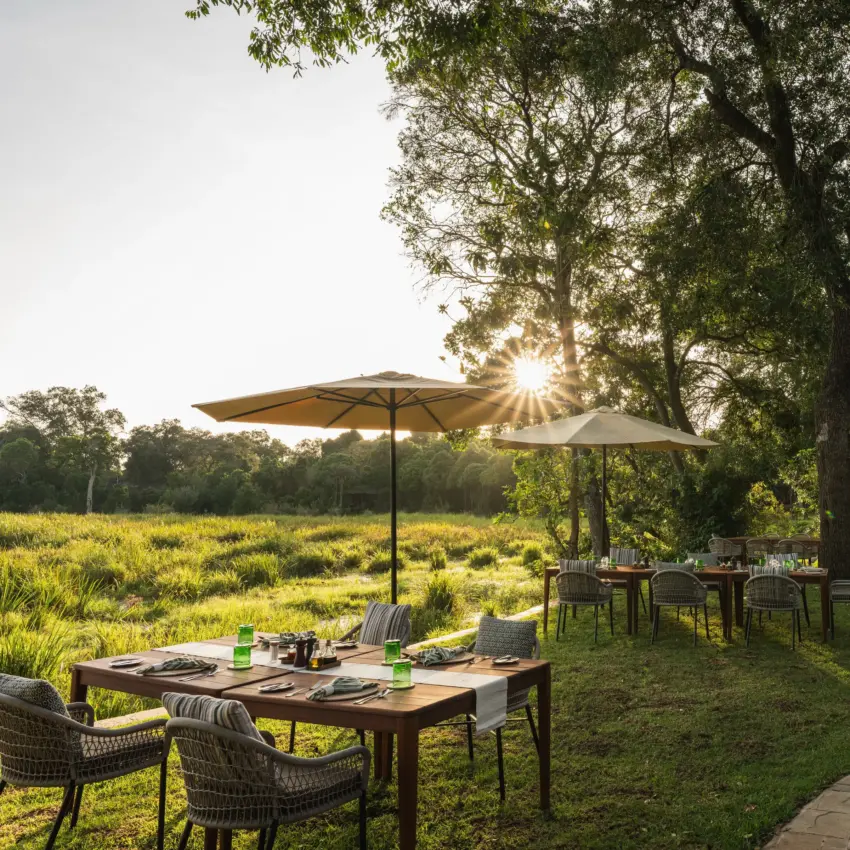
Every deck looks across the marsh, with the Oloololo Escarpment filling the skyline to the west. Elephants, buffalo and hippos come to drink in front of the tents. Behind the camp, riverine woodland runs back to the Mara River. A private footbridge crosses the river there, putting game drives on both banks within easy reach of a single camp.

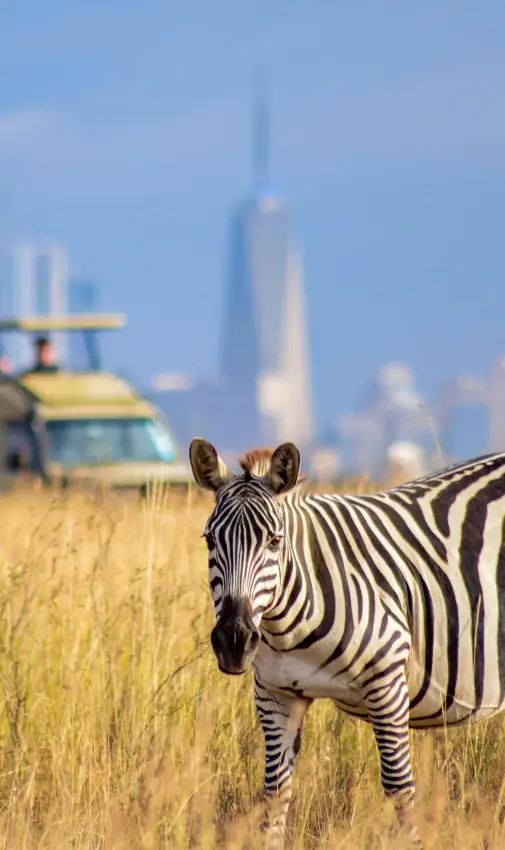
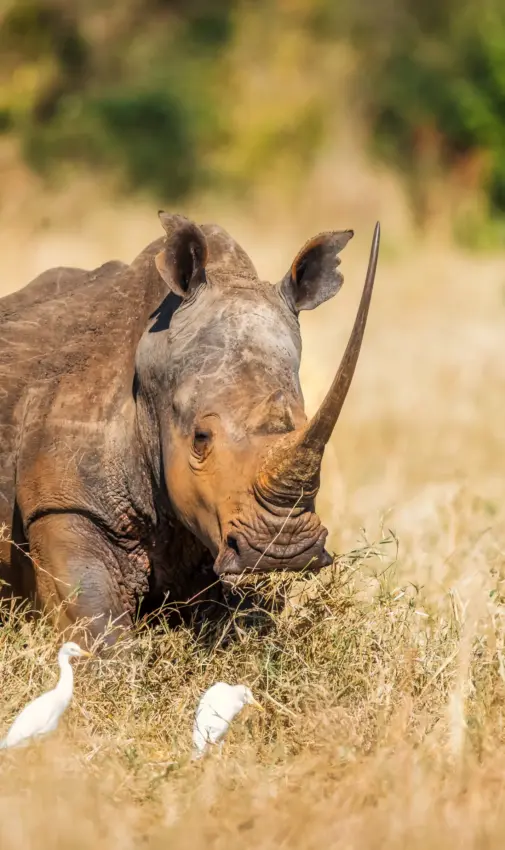
On the west bank of the Mara River, the Triangle holds its game through the year. The lion prides are resident and the elephant herds big, while leopard and cheetah share the ground with the critically endangered eastern black rhino. Around July the migration arrives, wildebeest and zebra that stay into October, and the river crossings peak in August and September.
Then comes the wait for the herds to commit to a crossing.
Balloons lift off at first light from a launch site right beside camp, a short walk away, so there is no dark drive to the basket. In migration season, guides take guests down to the river. Then comes the wait for the herds to commit to a crossing. Breakfast waits back in camp or out on the plains, wherever the morning drive has led.
Inside the suites, the palette comes straight off the reserve. There is the gold of dry grass and the blue-grey of dawn, with the greens of marsh and forest set against the browns of the plains. Siafu, a Nairobi textile studio, hand-loomed the curtains, and their chevron repeats on the headboards and cushions. The cabinetry is white oak inset with woven rattan, finished in brass that borrows from Maasai jewellery. Furniture and joinery were made in Kenya, with timber from certified sustainable suppliers, and pieces of the old camp were restored and brought back wherever possible.
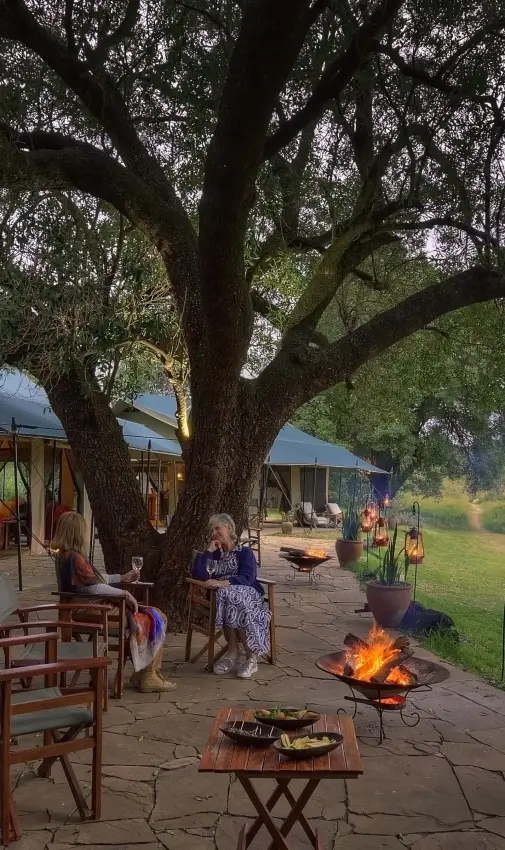
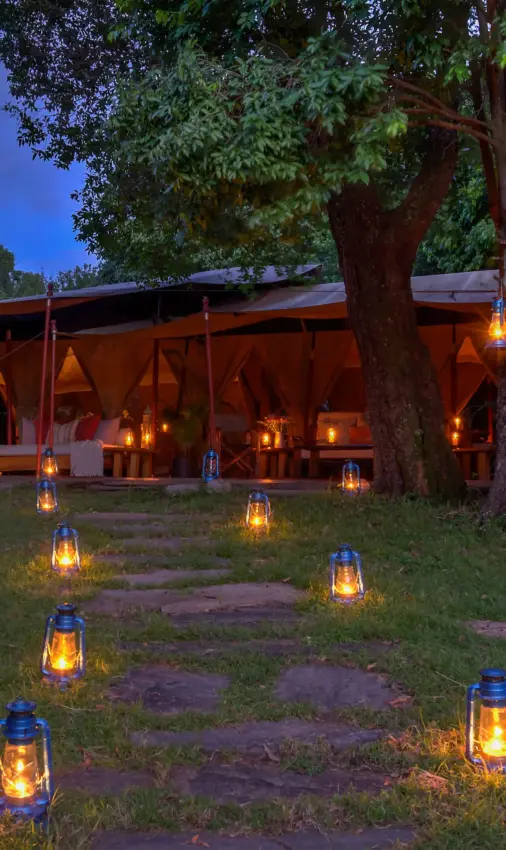
Kenyan produce runs through the kitchen. Maasai honey and coastal spices turn up across the menu, and every dinner includes a Taste of Africa dish built on a regional staple. Afternoon tea is laid out before the evening drive. Dinner runs to three courses with a choice at each, though some nights it moves out to the Manyatta Dinner, cooked in cast-iron pots over a boma fire, with charcoal jiko stoves alongside as the evening turns to storytelling and song. Menus can be vegetarian or vegan, and other dietary needs are catered for.
Elephants and buffalo move through camp, and the marsh beyond the decks is very much theirs.
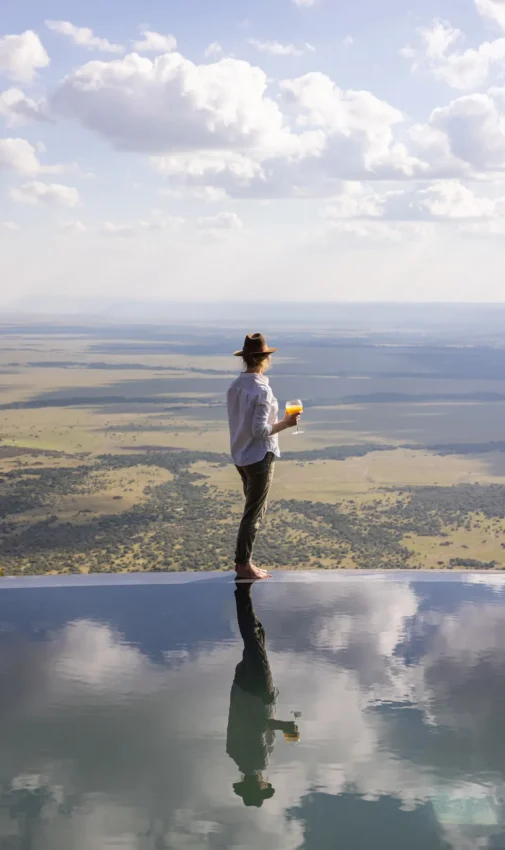
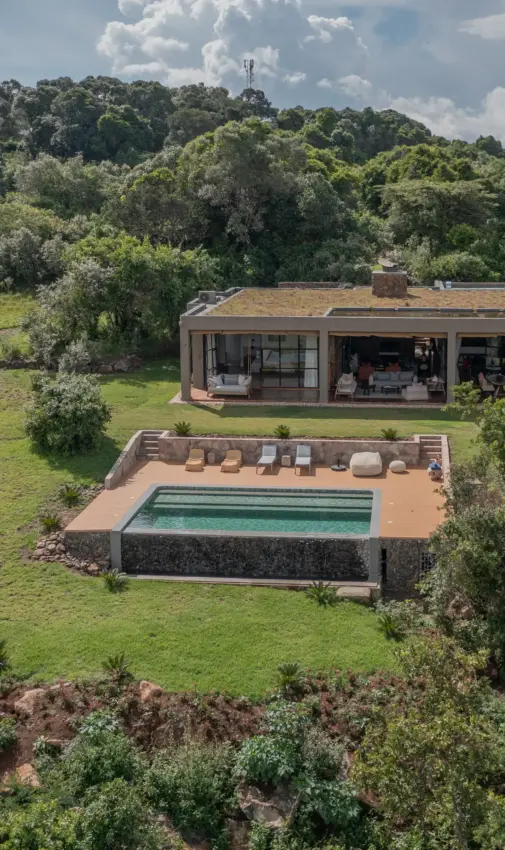
The middle of the day belongs to the pool and its lounge, or to the spa, set in a stand of indigenous forest. Its Maasai Wood & Earth Journey uses hand-carved tools. For anyone restless, there is a fully equipped gym. Photographers take the morning’s frames to the studio’s editing desks. The Study, a quiet room around a live-edge mango wood table, holds books and the stories behind the camp’s conservation work.
Children of all ages are welcome, and one suite is set up for families. Elephants and buffalo move through camp, and the marsh beyond the decks is very much theirs. Small children need to stay within reach of a parent at all times. Longer stays get the most from the footbridge. A few days on the Triangle side, among open grassland and riverine forest below the Oloololo Escarpment, can give way to drives into the reserve sector across the river, so that one camp covers both banks of the Maasai Mara.


accommodation
Twelve tented suites are raised on wooden platforms, among them one family unit. Each has a shower indoors and a second one outdoors. Out front, a private deck faces the marsh.

activities
Game drives head out morning and afternoon, keeping to designated reserve tracks across the Mara Triangle and, over the footbridge, the far bank. Balloon flights launch at dawn near camp. In season, guides lead birding and river outings, while Maasai manyatta visits and a solar farm tour fill the quieter hours.

conservation
Each stay supports the Pangolin Project in Nyekweri Forest, one of the last strongholds of Kenya's giant pangolins, and the Mara Raptor Project of the Kenya Bird of Prey Trust. Children in the Wilderness runs a school Eco-Club, and the Maa Trust works alongside Maasai communities.
Get in touch and let’s start the conversation. An initial consultation helps us understand what you’re looking for, whether that’s specific experiences, luxury touches, or marking a special occasion, and from there we’ll guide you through what’s possible so you can decide if we’re the right fit.
 01
Maasai Mara
 02
Maasai Mara
 03
Maasai Mara
 04
Maasai Mara
 05
Maasai Mara
 06
Maasai Mara
 07
Maasai Mara
 08
Maasai Mara
 09
Maasai Mara
 10
Maasai Mara
 11
Maasai Mara
 12
Maasai Mara
 13
Maasai Mara
 14
Maasai Mara
 15
Maasai Mara
 16
Maasai Mara
 17
Maasai Mara
 18
Maasai Mara
 19
Maasai Mara
 20
Maasai Mara
By light aircraft from Nairobi's Wilson airport to the Kichwa Tembo airstrip in the Mara Triangle, about an hour in the air. Safarilink and AirKenya Express each fly the route twice a day, often touching down at other Mara strips on the way. The camp lies about two kilometres from the strip, so the transfer is short and usually turns into the first game drive of the stay.
The aircraft take soft bags only, fifteen kilograms a person with hand luggage counted in. After very heavy rain Kichwa Tembo is sometimes closed for a few days and flights use a neighbouring Mara strip instead, which we watch for you. For your own timings we can arrange a private charter, typically a Cessna Caravan or a Pilatus PC-12, flying straight to Kichwa Tembo.
It stands on the same site and replaces it. Little Governors' Camp ran for decades on the west bank of the Mara River; it was taken down, rebuilt from the ground up and reopened as Wilderness Mara in 2026, with twelve tented suites, one of them for families, a pool, a gym, a spa and a photographic studio.
It is not Governors' Camp, a separate camp across the river on the Musiara side that still keeps its old name, and it is not Wilderness Mara Villas, a sole-use house on its own stretch of the river that was once Governors' Private Camp. Anyone who knew Little Governors' will recognise the setting: the tents still look over a seasonal marsh where elephant, buffalo and hippo come down to drink.
The west bank, in the Mara Triangle, the part of the Masai Mara National Reserve between the river and the Oloololo Escarpment. The camp has its own footbridge over the river, so the guides can work either bank rather than being held to one side, which counts for most from July to October, when the herds may gather to cross at points reached from both banks.
The Triangle is run by the Mara Conservancy, a not-for-profit body, and its rangers keep sightings orderly: when more than five vehicles are waiting at an animal, each gets ten minutes with the rest held a hundred metres back. Days are built around morning and afternoon drives, with a hot-air balloon flight at first light as an extra.
Yes. The camp takes children of all ages and sets no minimum age, and one of its twelve tented suites is a family unit, so parents and children stay under one roof rather than in separate tents. The pool is a useful break in the middle of the day between the morning and afternoon drives.
With young children we would add a private vehicle to the stay, because it lets the drives run at their pace and end when they have had enough. Tell us their ages at enquiry and we will plan the days around them, including whether a balloon flight suits the family.
Yes. TravelHealthPro, the UK's official travel health service, rates Kenya as high risk for malaria and recommends antimalarial tablets, with only the city of Nairobi and the highlands above 2,500 metres rated very low. The American CDC uses the same 2,500-metre line and includes the game parks. The whole Mara lies well below it, the Triangle and the river included, and the advice does not change with the seasons.
We are travel planners, not doctors, so whether to take tablets, and which suit you or a child, is a decision for you and your own doctor or a travel clinic. On the practical side, the camp sits beside a marsh and a river, so long sleeves and trousers from late afternoon and repellent on bare skin make sense.
January and February for big cats, when the grass is short after the short rains and lion and cheetah are easy to follow on open plains. The camp is open all year and the resident lion prides, elephant herds and black rhino of the Triangle stay put in every month.
The migration herds are usually in the Mara from July to October, the busiest months on the reserve. November and December are underrated: green plains, fewer vehicles, clear light after the storms and lower rates. The long rains from late March into May, April the wettest, are the months we would steer most people away from, because the game spreads out and the driving gets heavy.
rated five stars by our clients

 01
 02
 03
 04
 05
 06
 07
 08
 09
 10
 11

our approach
Every journey starts with a conversation. We take the time to understand your vision before we start planning.
Whether by phone or in person, we work with you directly to shape something that is considered, personal, and expertly delivered.


