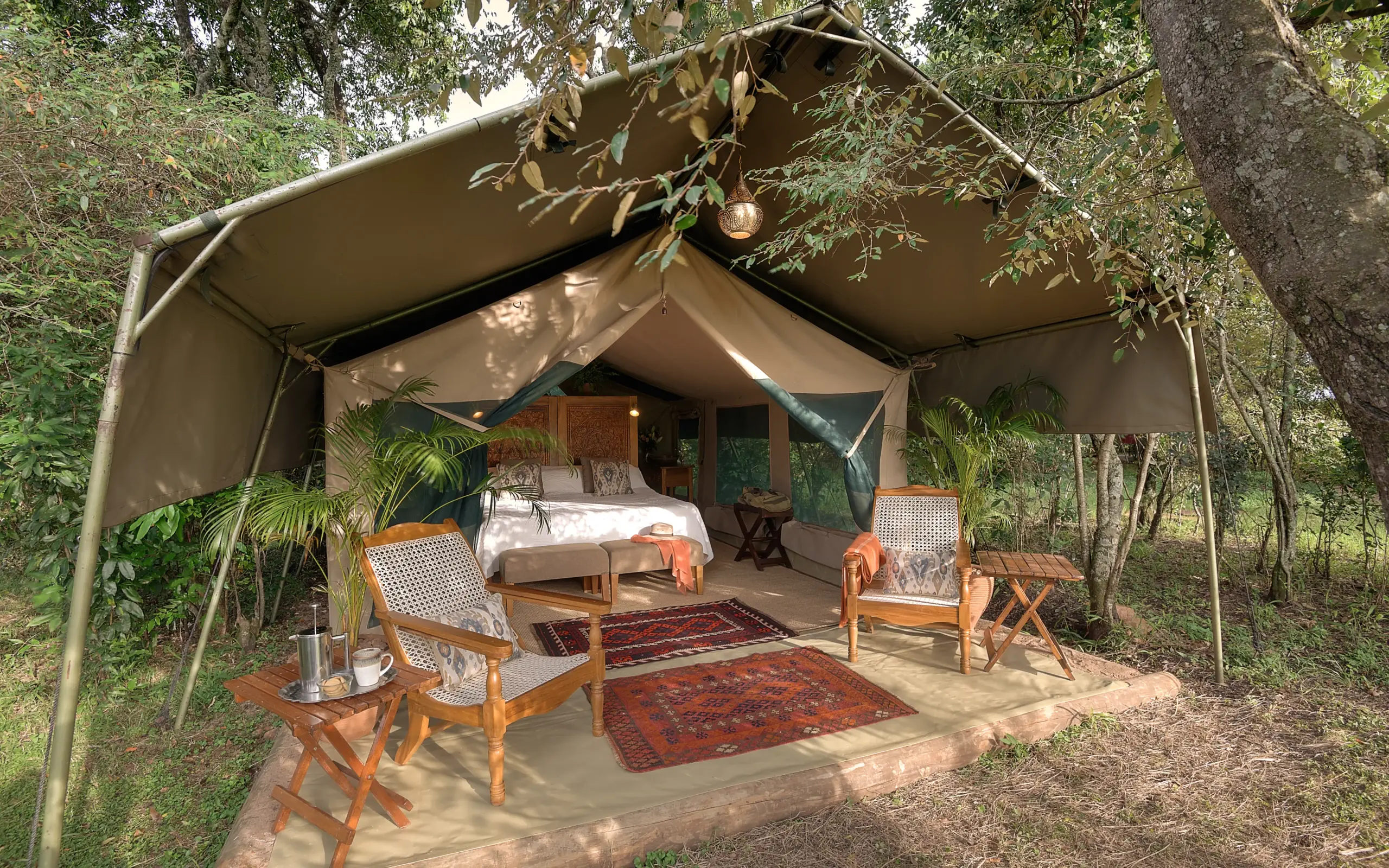
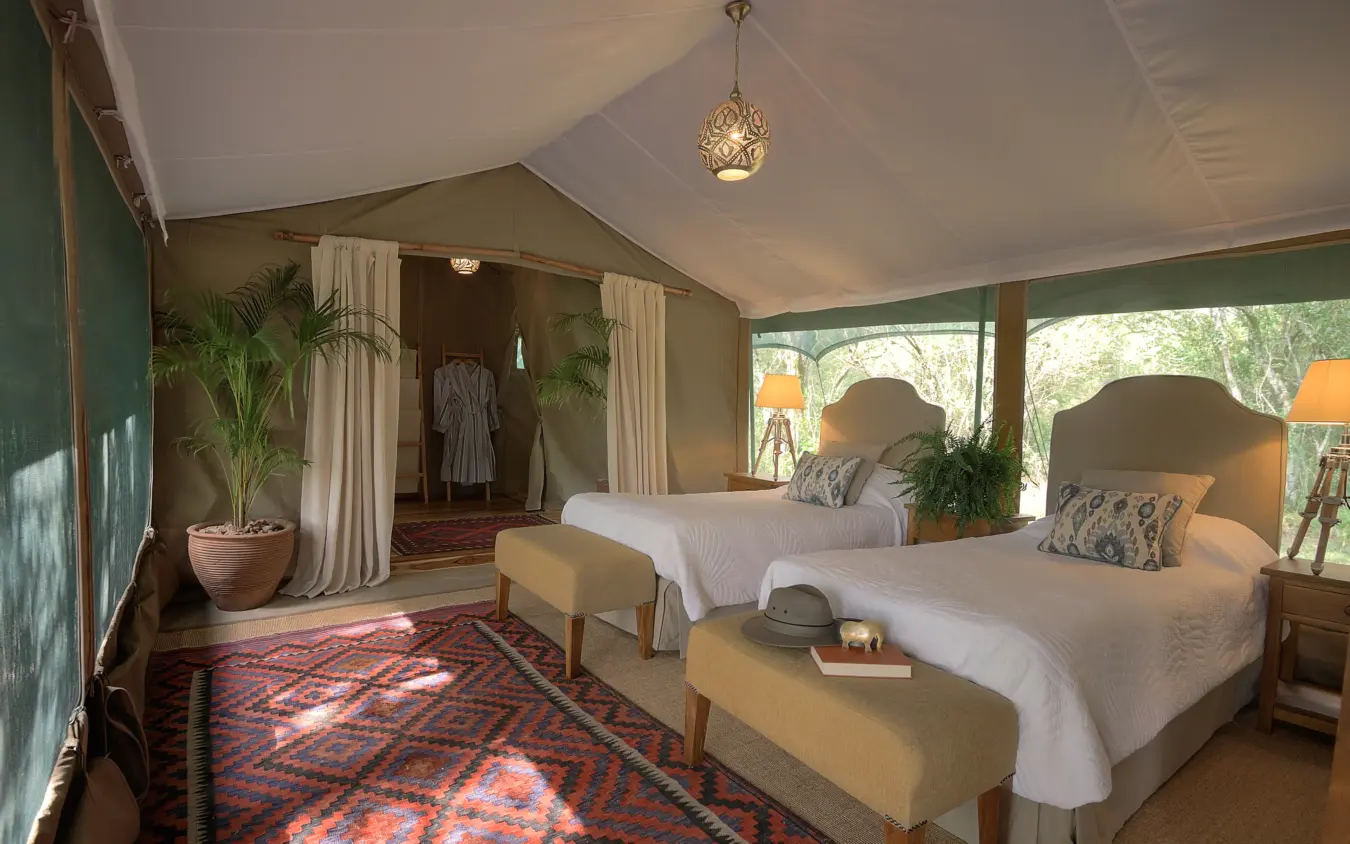
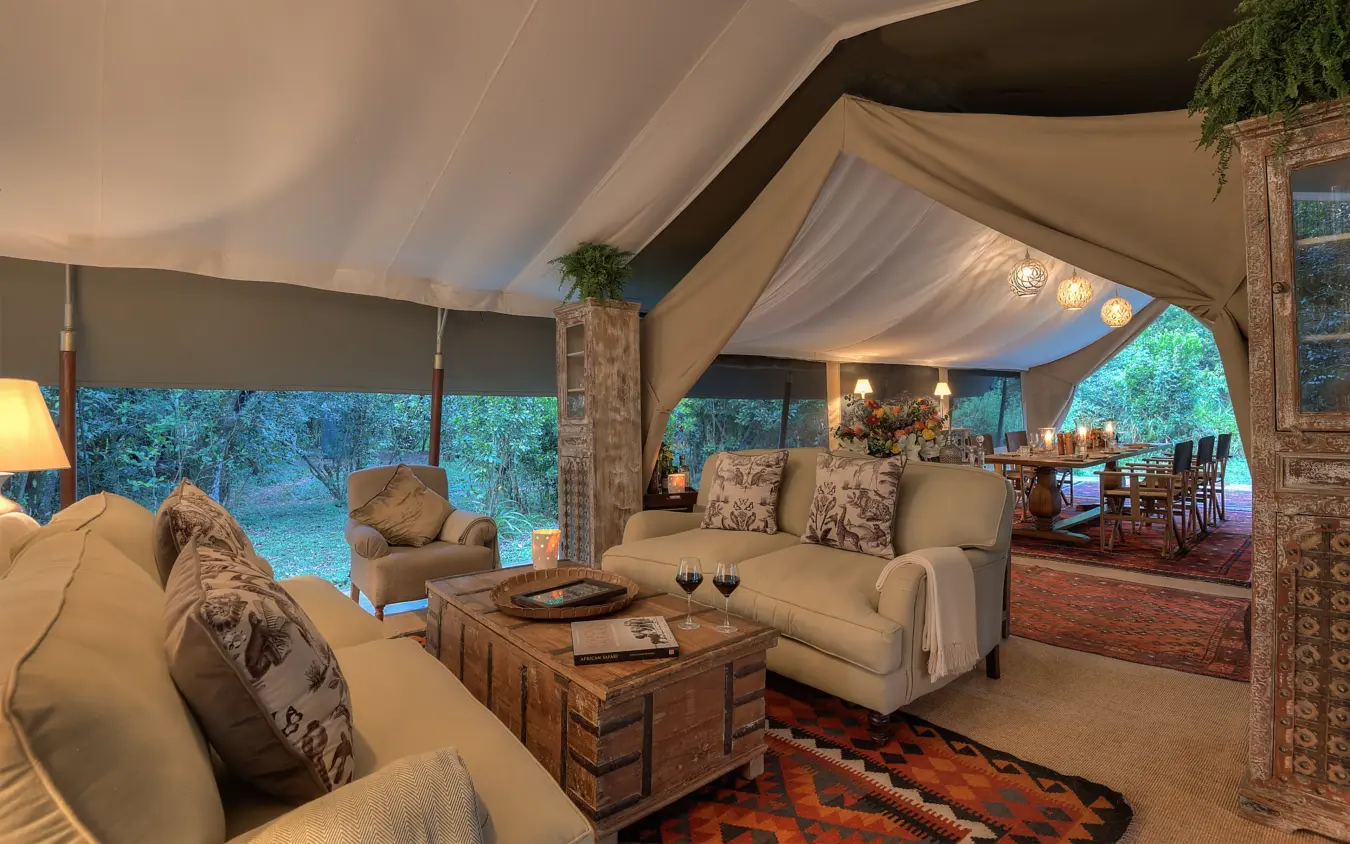
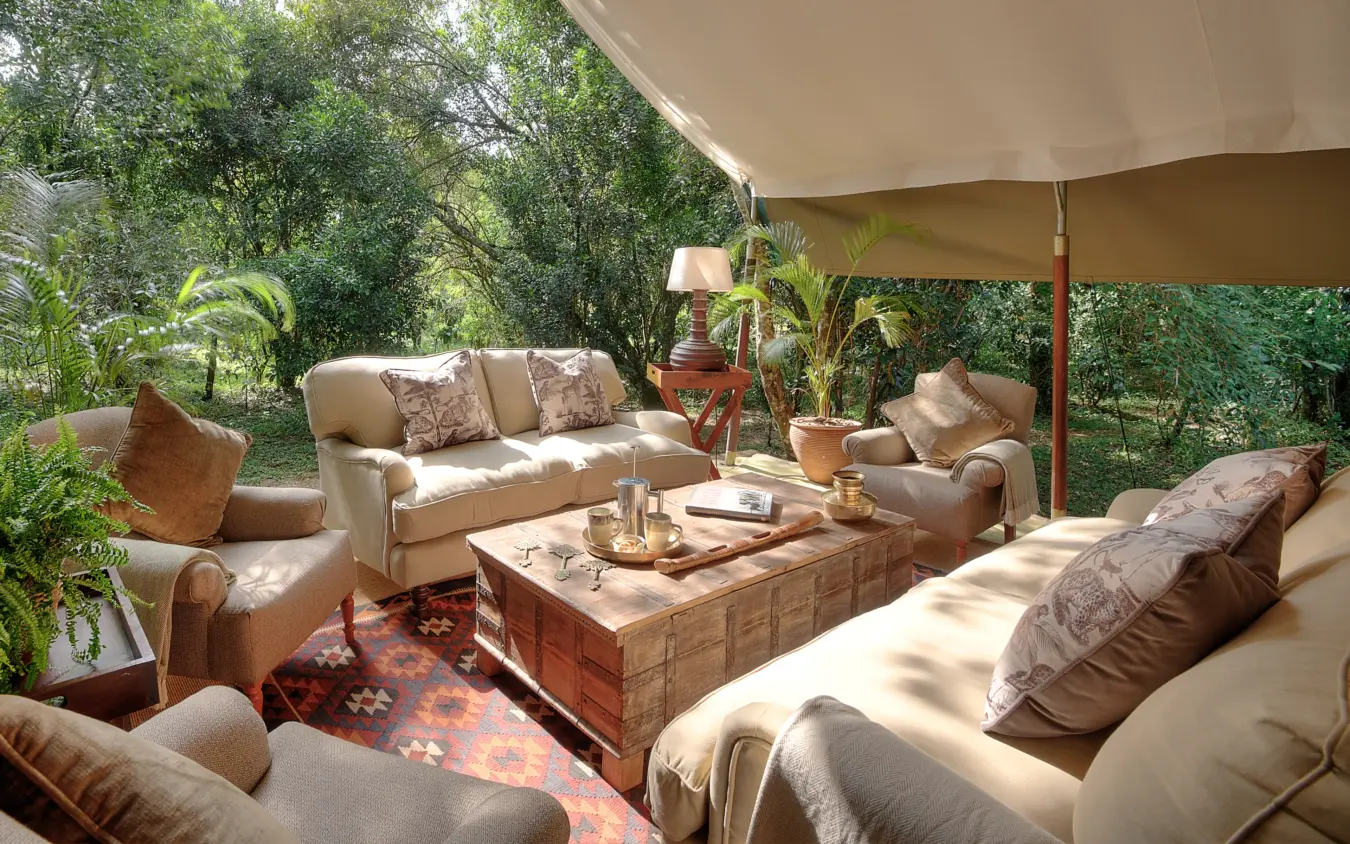
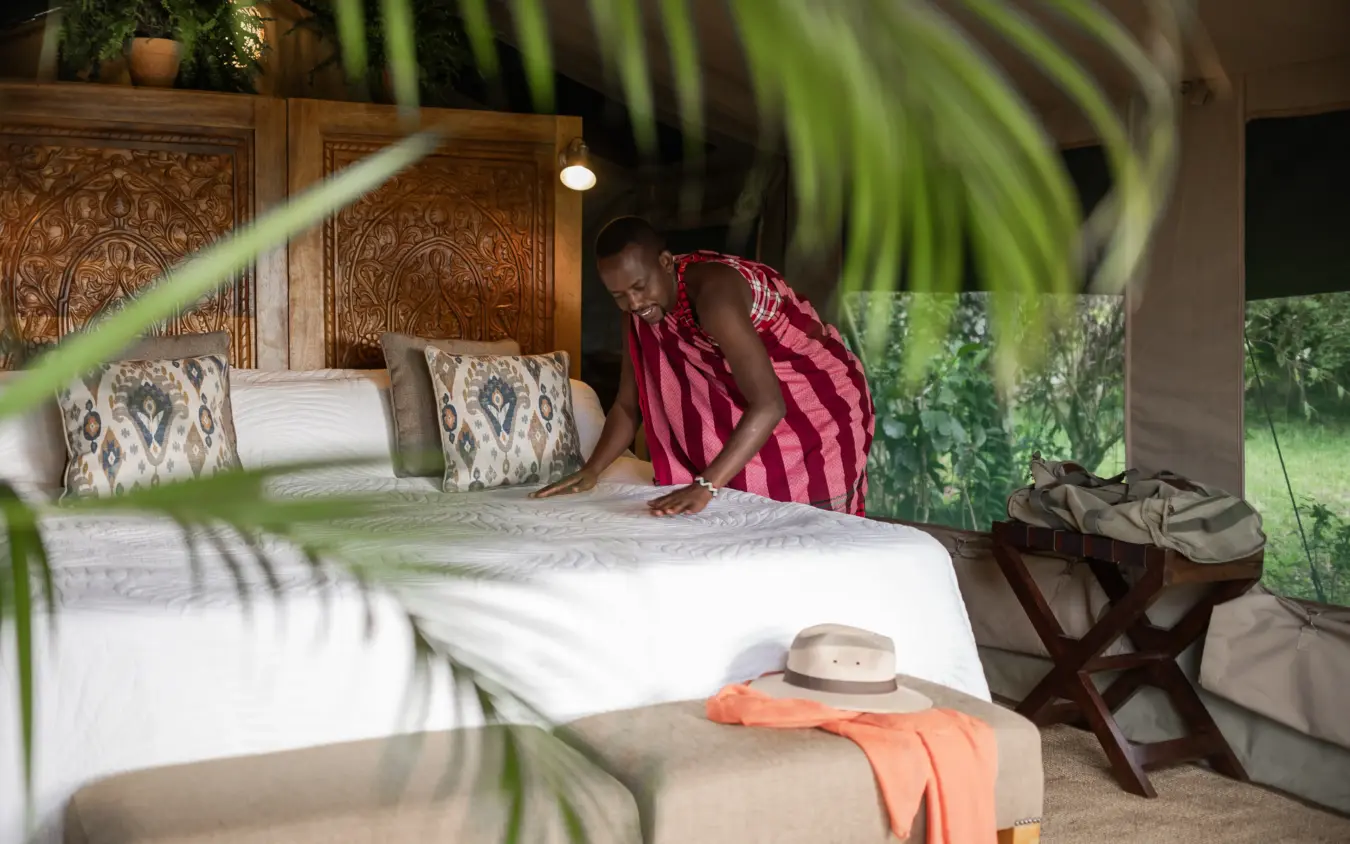
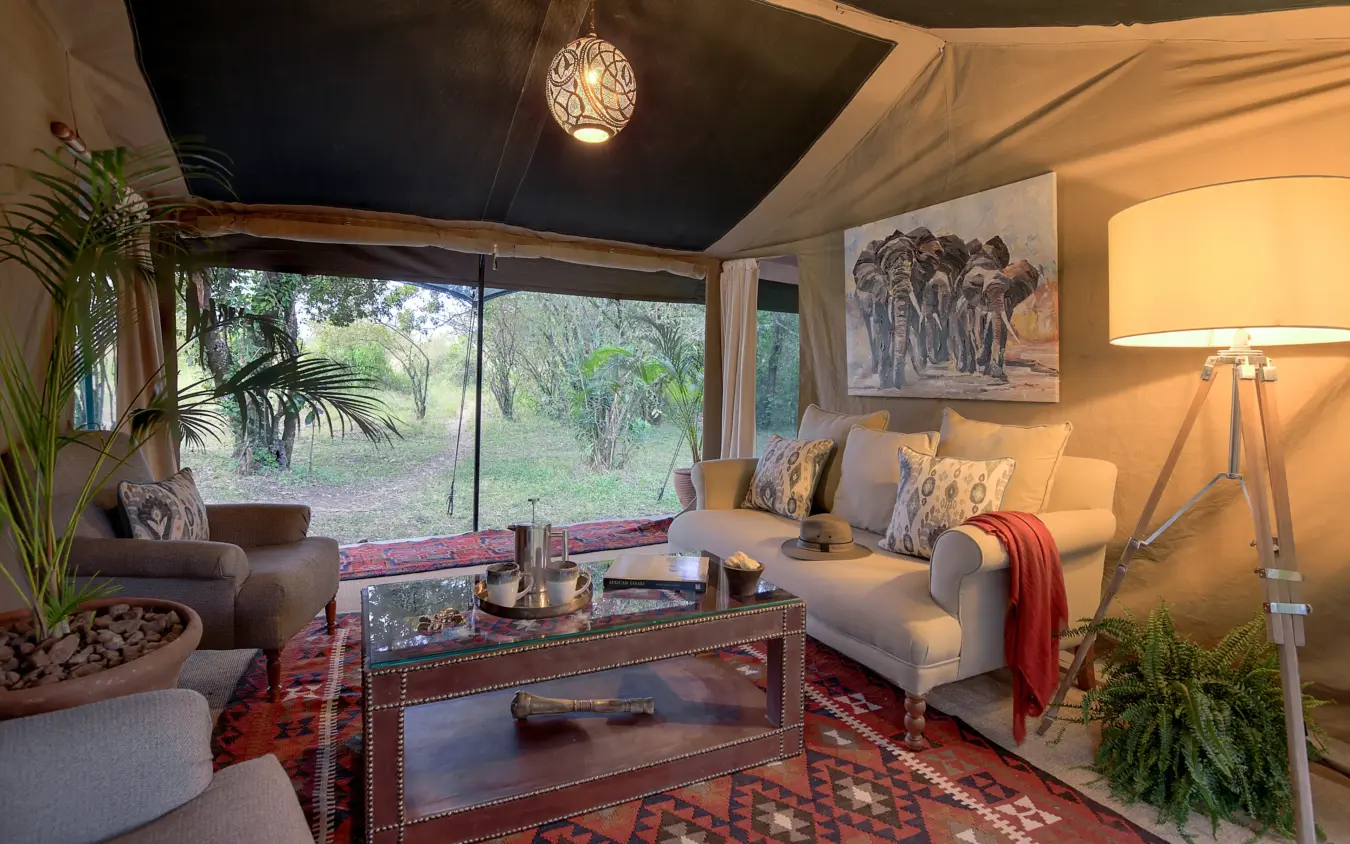
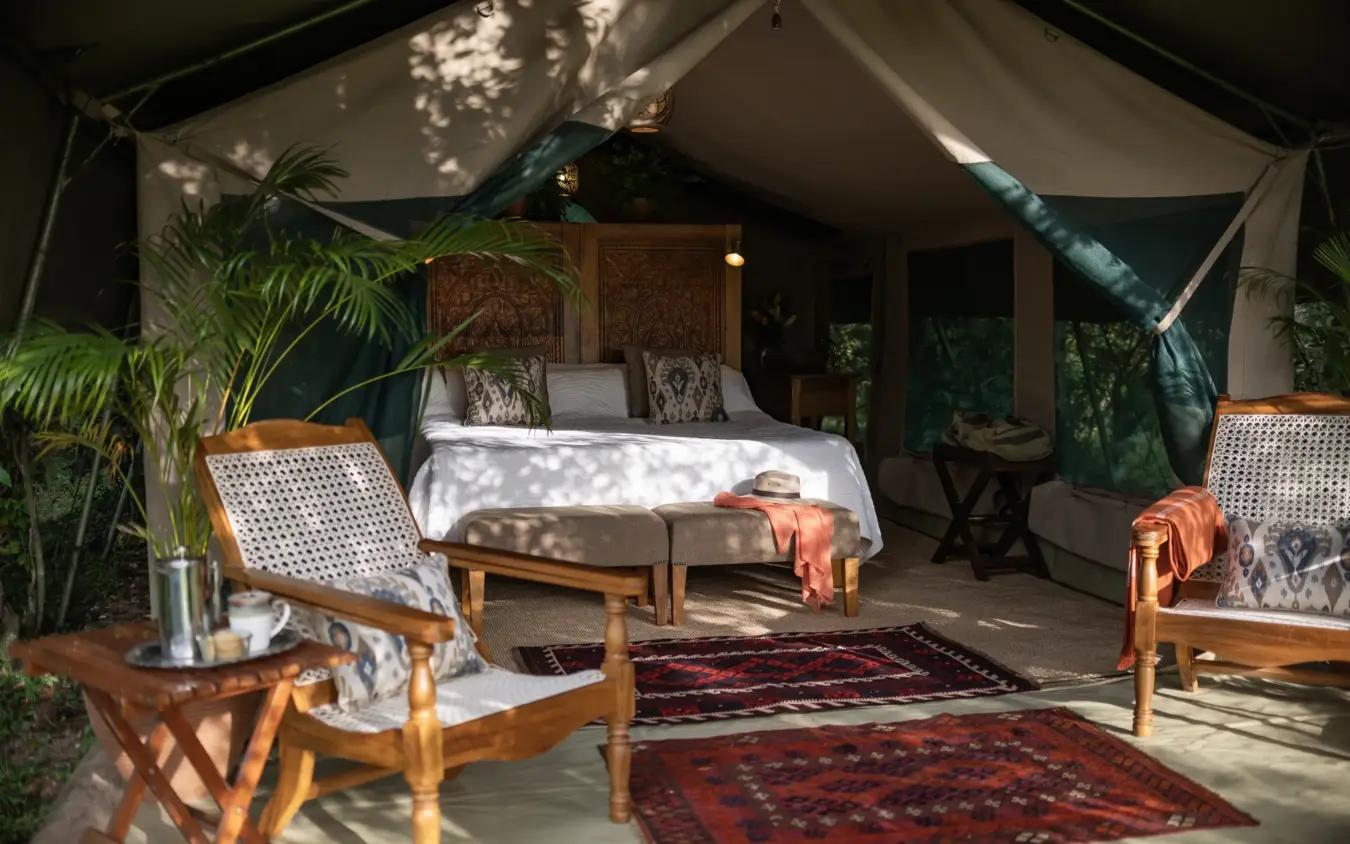
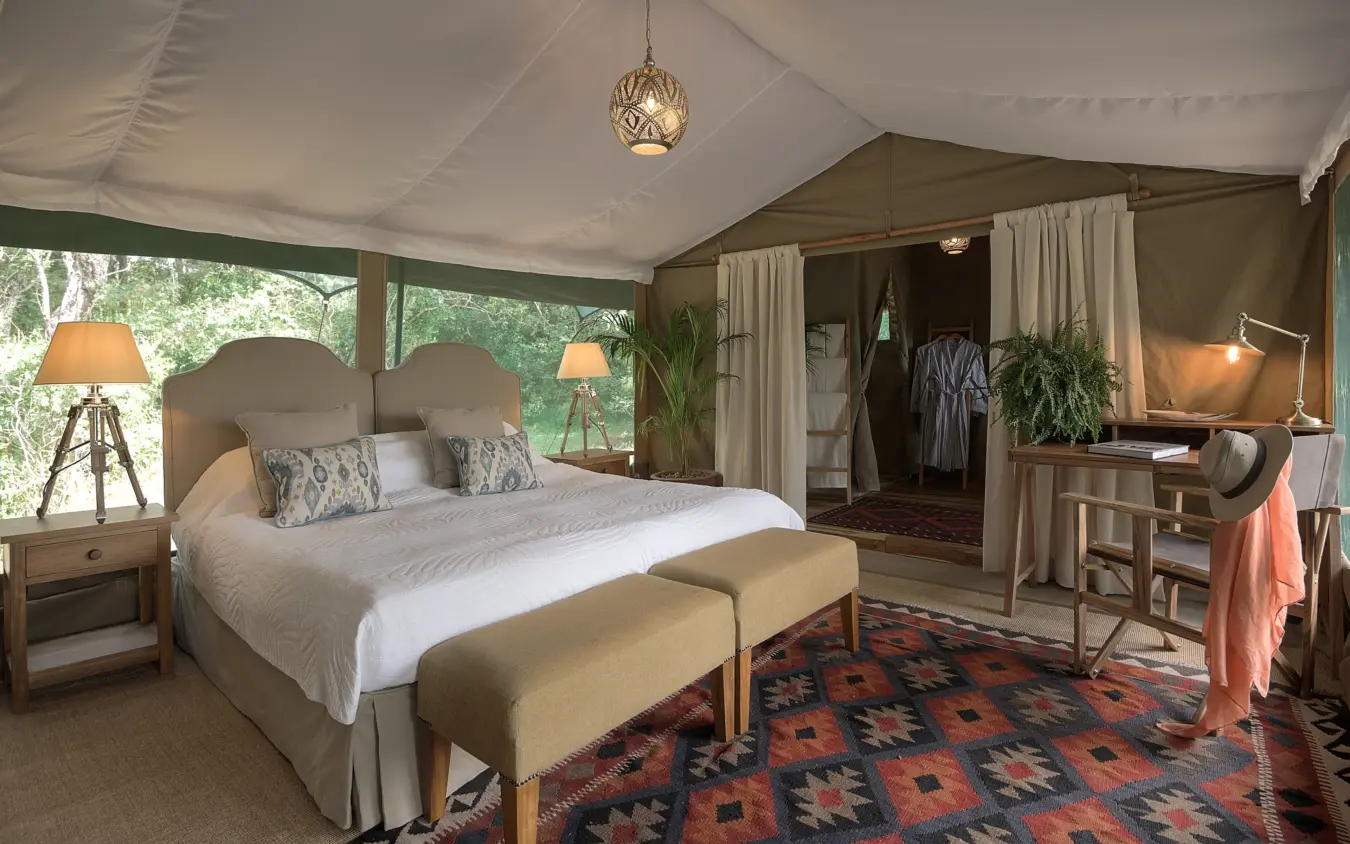
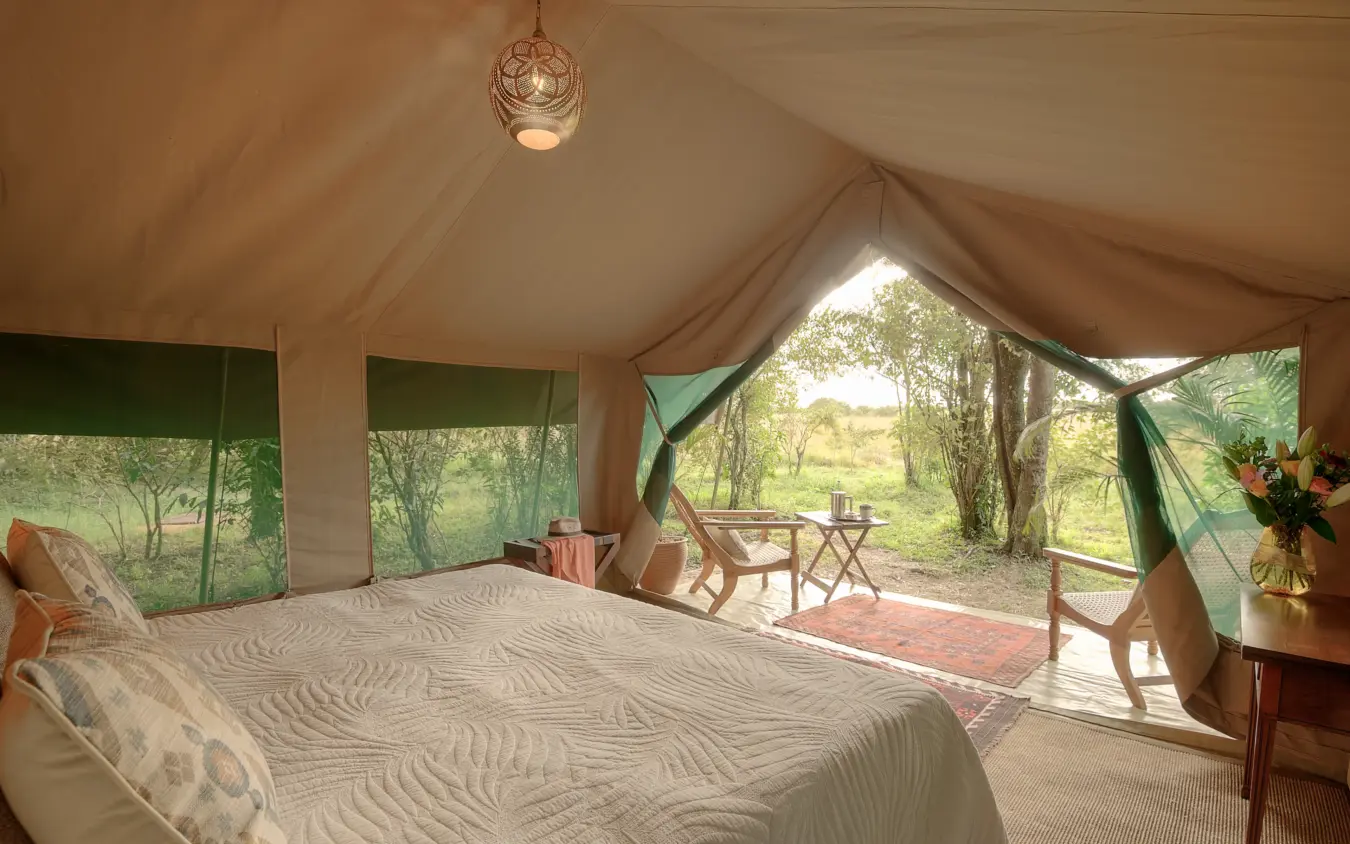
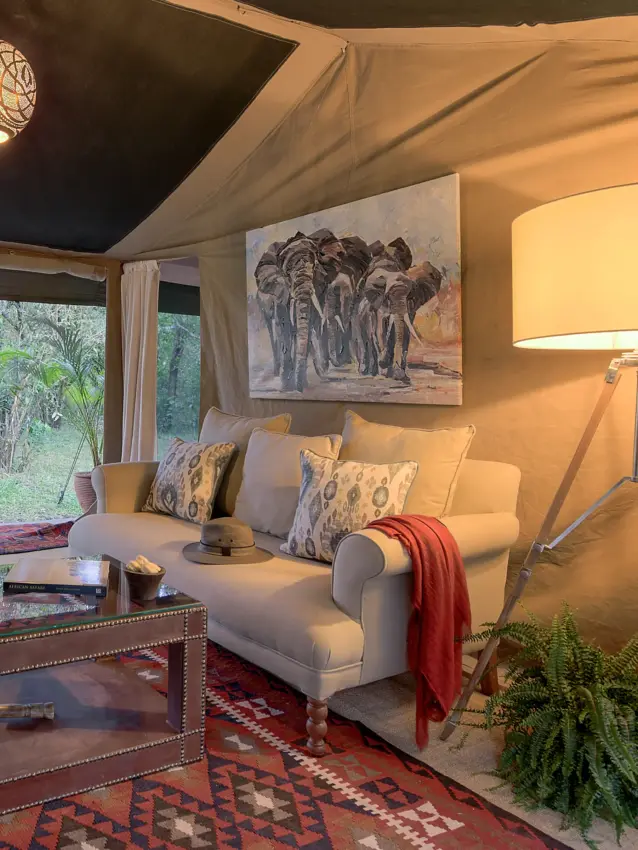
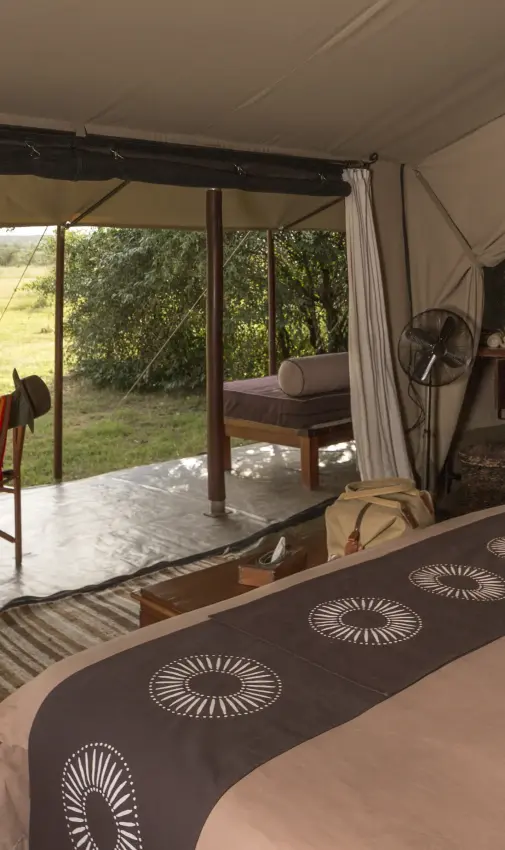
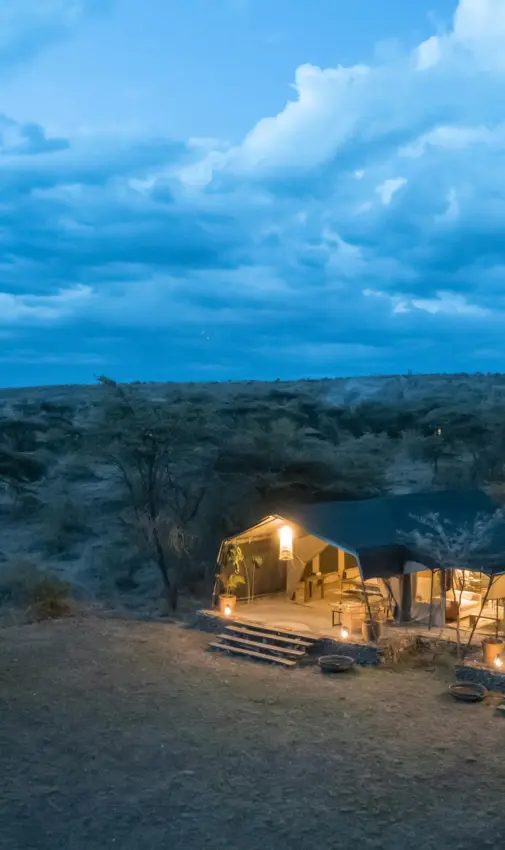
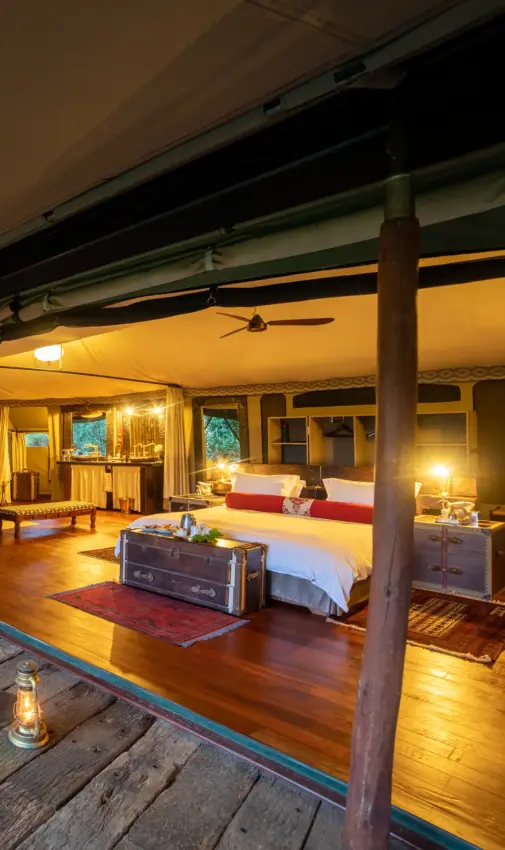
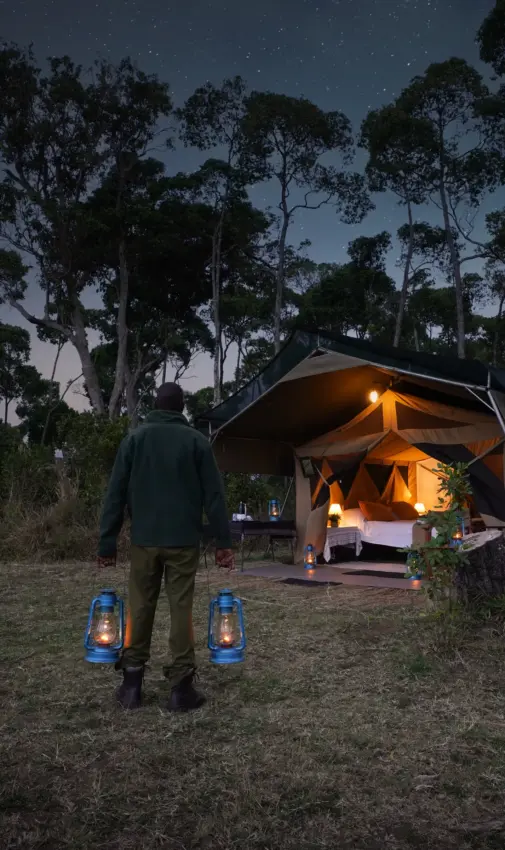
Canvas and brass set the register inside the tents. Campaign furniture and wooden trunks do duty as tables, sisal runs underfoot, and kilims in strong colours lift the floor beside a writing desk and a luggage rack. The zip walls open right back for air and for the view into the trees. Bathrooms are en suite, with hot showers and flush loos. Solar runs the lighting and the charging, and there is wifi. Hot water bottles appear in the bed on cold Mara nights, and laundry comes back the same day.
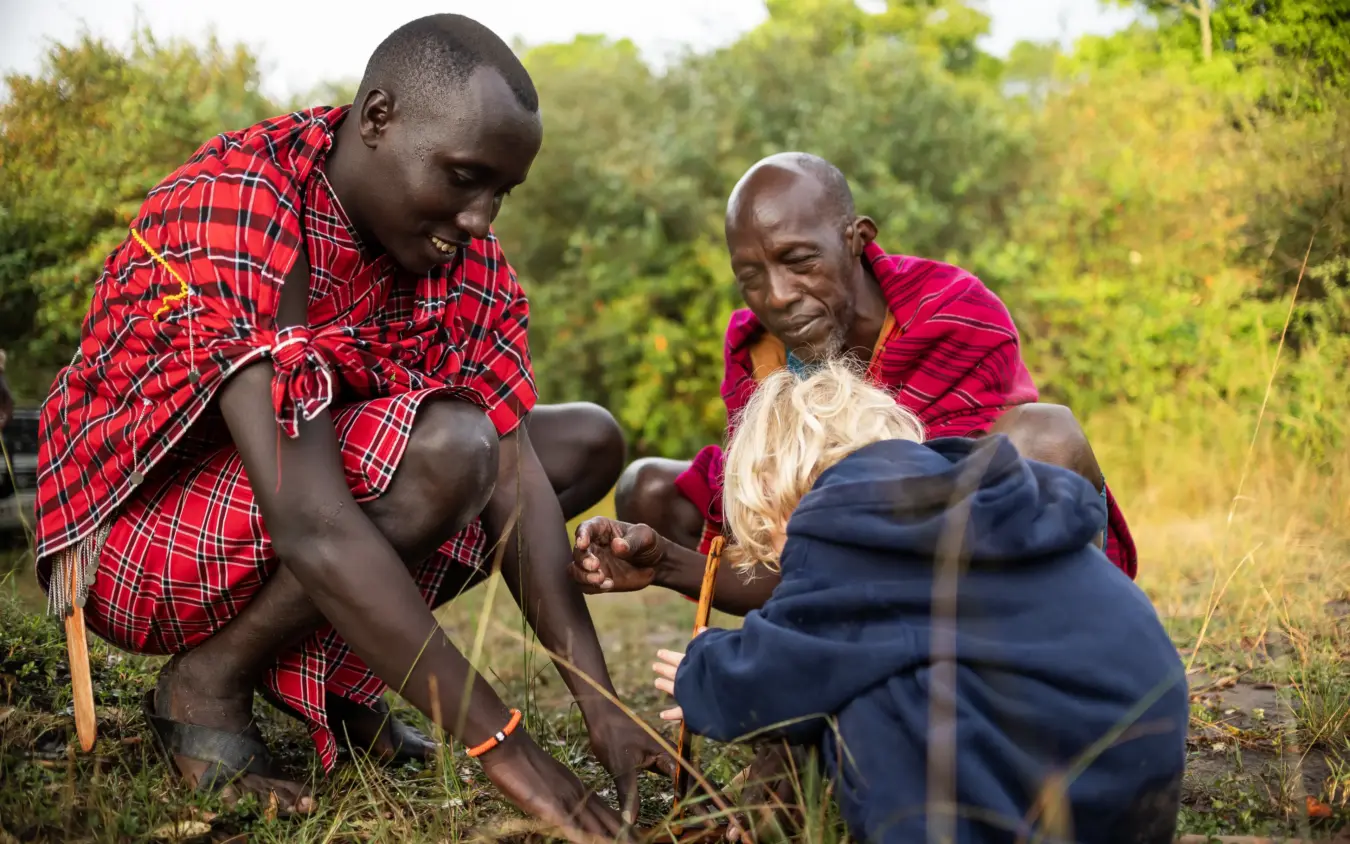
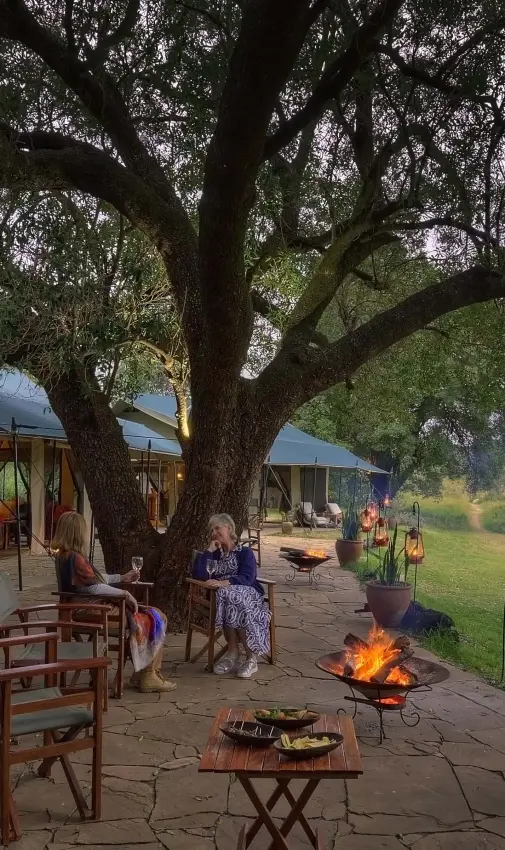
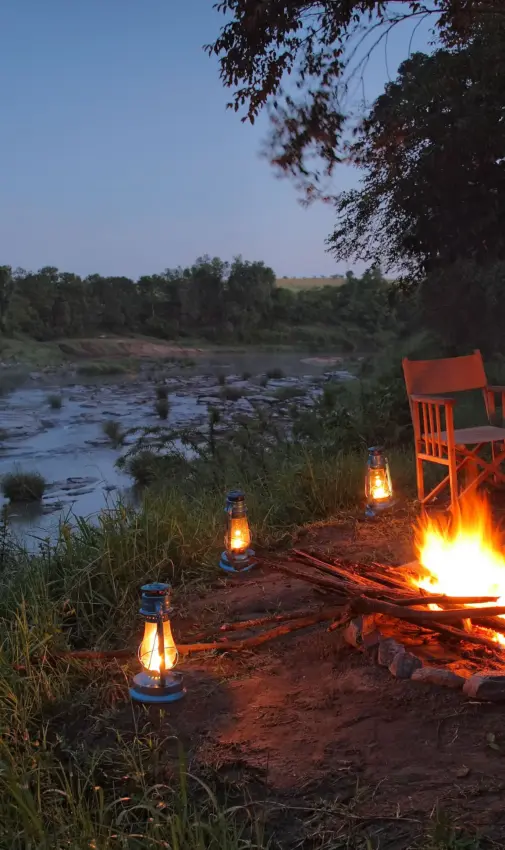
Two of the nine tents are built for families, each with two bedrooms and a bathroom to each bedroom. Children are welcome, the youngest by arrangement, and the camp stays open all year. Maasai staff teach rungu throwing and beadwork, and take the children out on bird walks. It is they who hand over the marshmallows at the fire. There are a few words of Maa to learn, and cookies get made in the kitchen, enough to fill the middle of the day while the adults rest in the shade.
Balloon flights lift off at dawn over the plains and come down to a champagne breakfast.
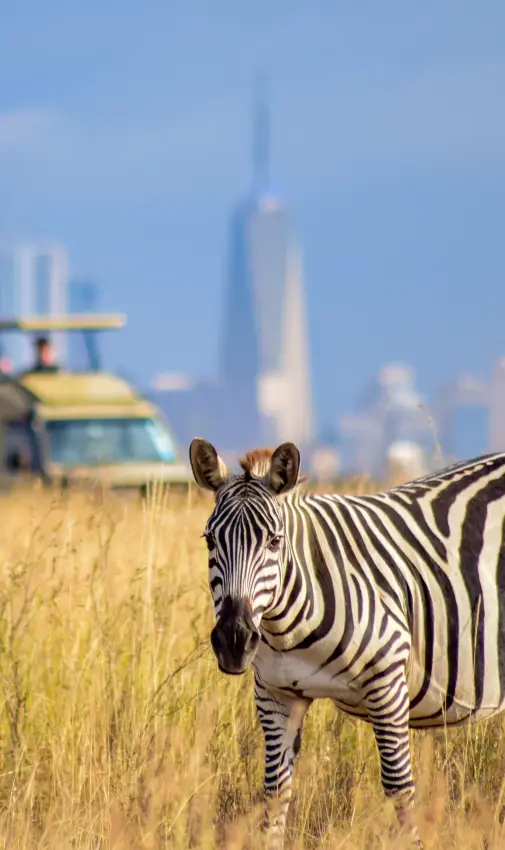
Morning and afternoon drives cover the central Reserve. Walking inside the Maasai Mara National Reserve is restricted, so foot time close to camp is short and led by a Maasai guide. Longer walks are arranged in the neighbouring conservancies, where the rules allow it. Balloon flights lift off at dawn over the plains and come down to a champagne breakfast. Visits to Maasai homesteads nearby are arranged with the families who host them, and full days out run with a picnic and no fixed return time.
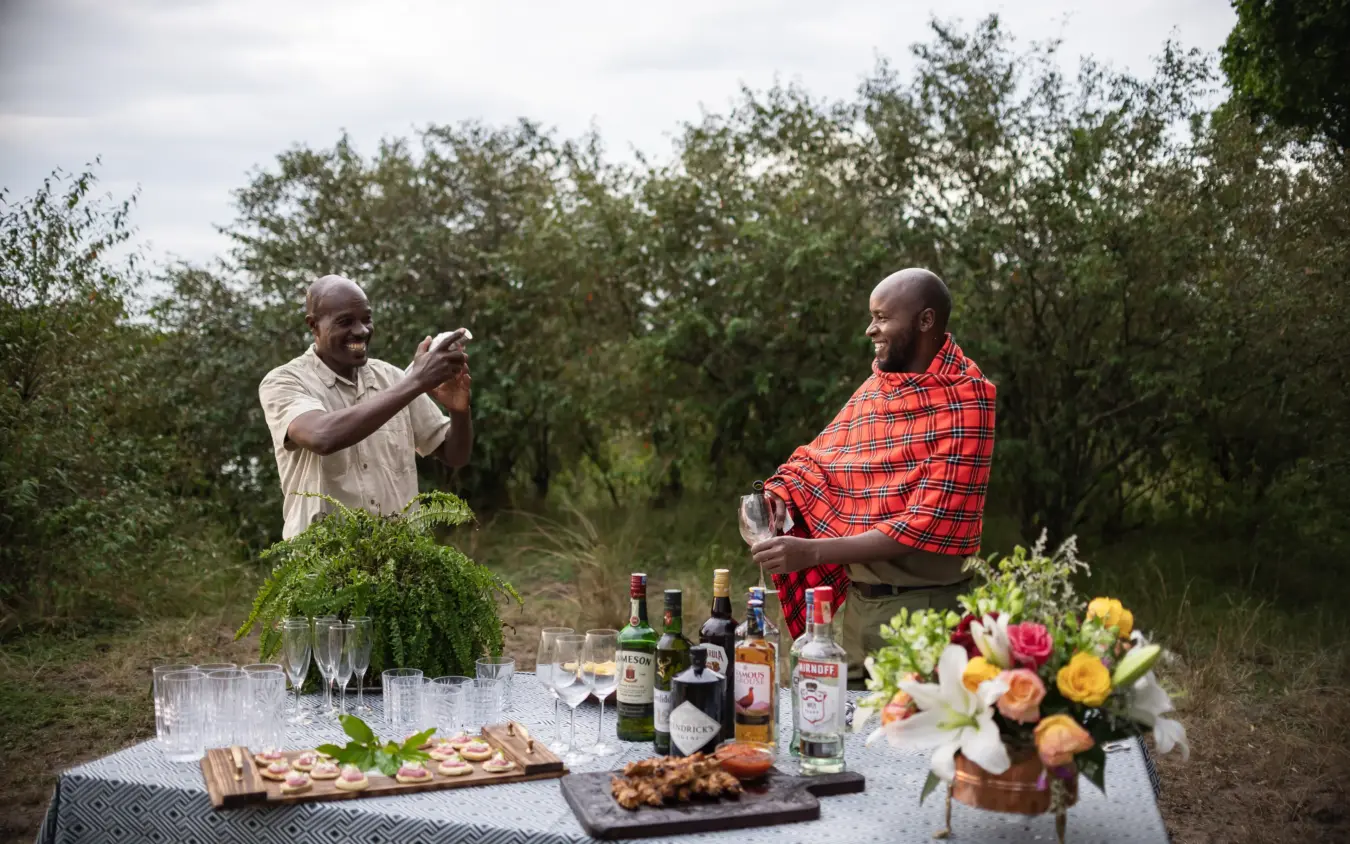
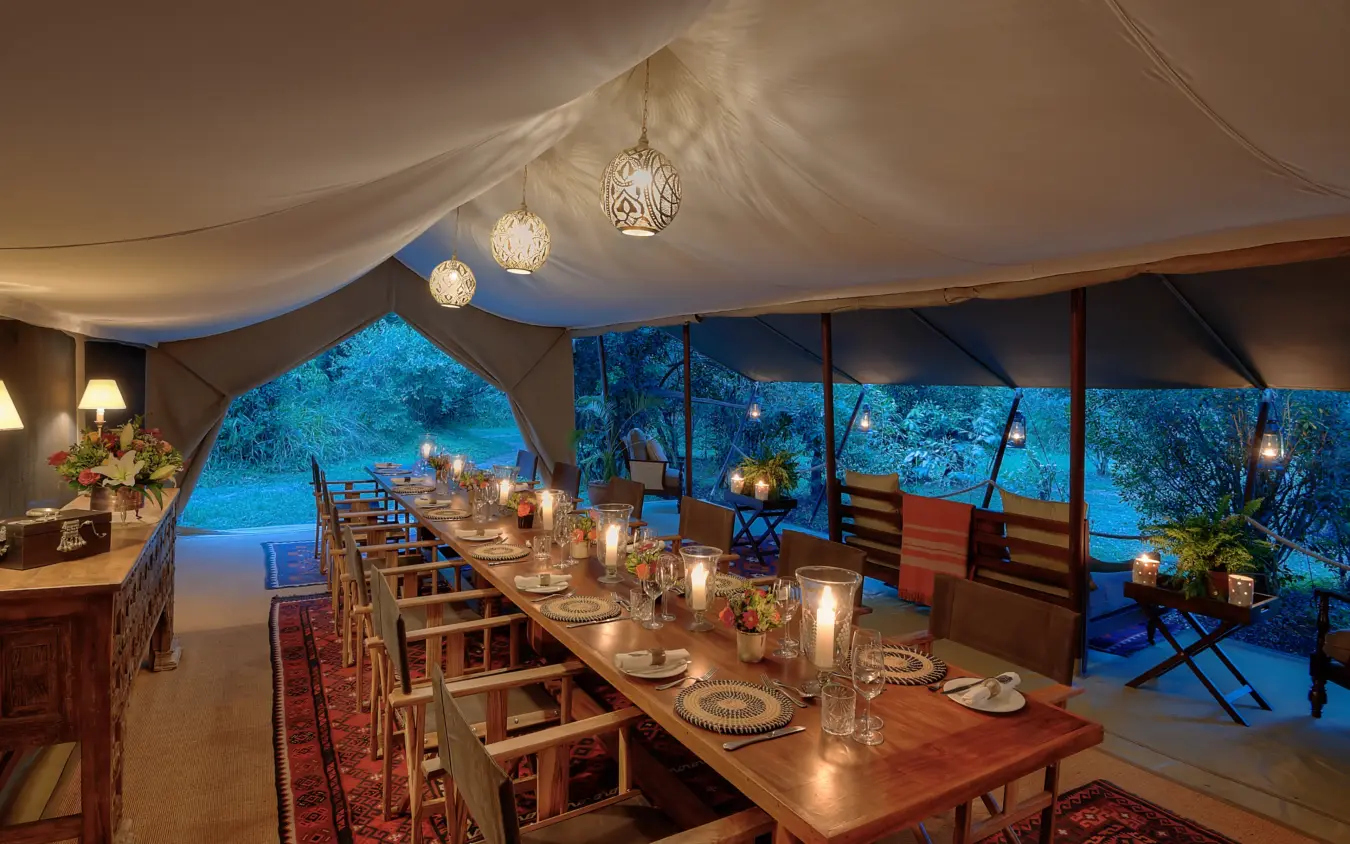
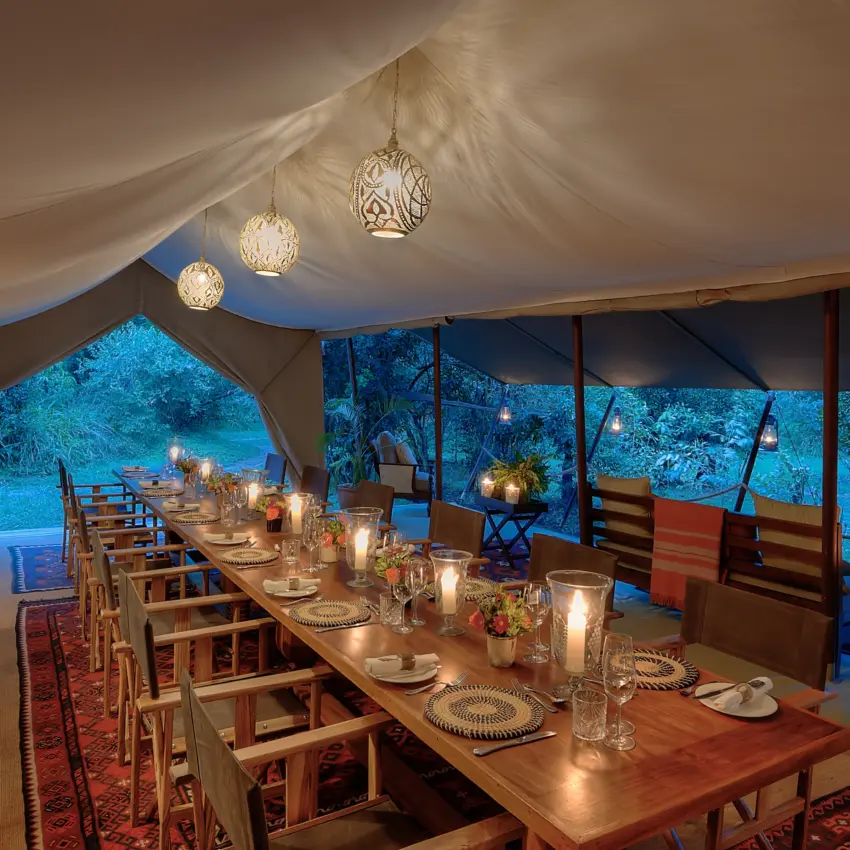
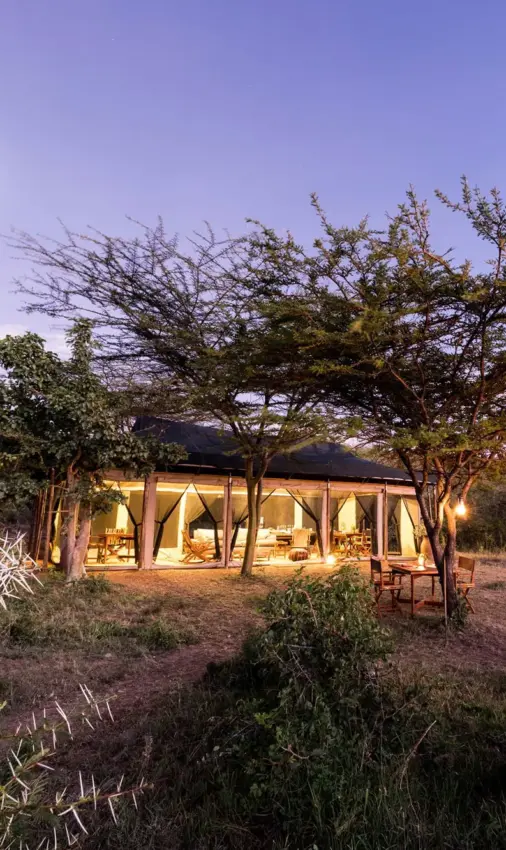
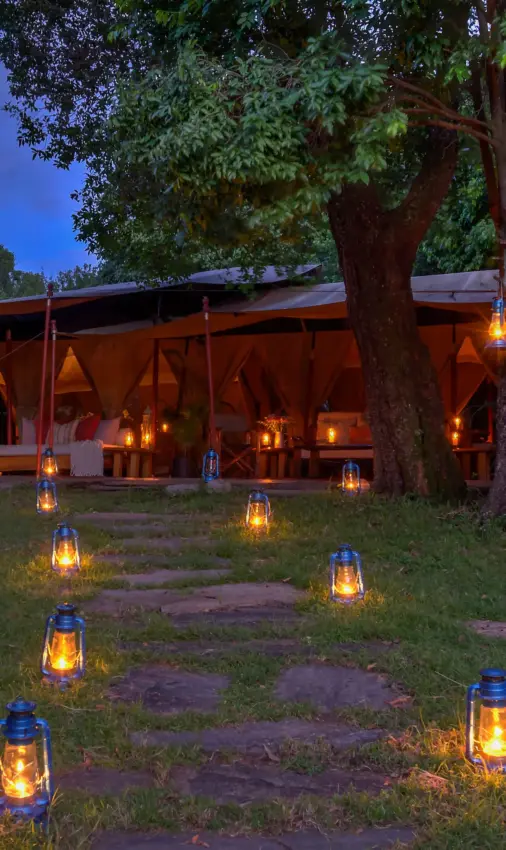
Dinner is one table, open on three sides, and everyone sits at it. Conversation runs on past the plates and into the fire. The kitchen turns out East African safari cooking one night and Mediterranean plates the next. Lunch is served outside under the trees, and breakfast is more often unpacked in the field, sometimes with elephants at a distance. Guests fly into Ol Kiombo and drive the short way to Seringet Mara Camp.