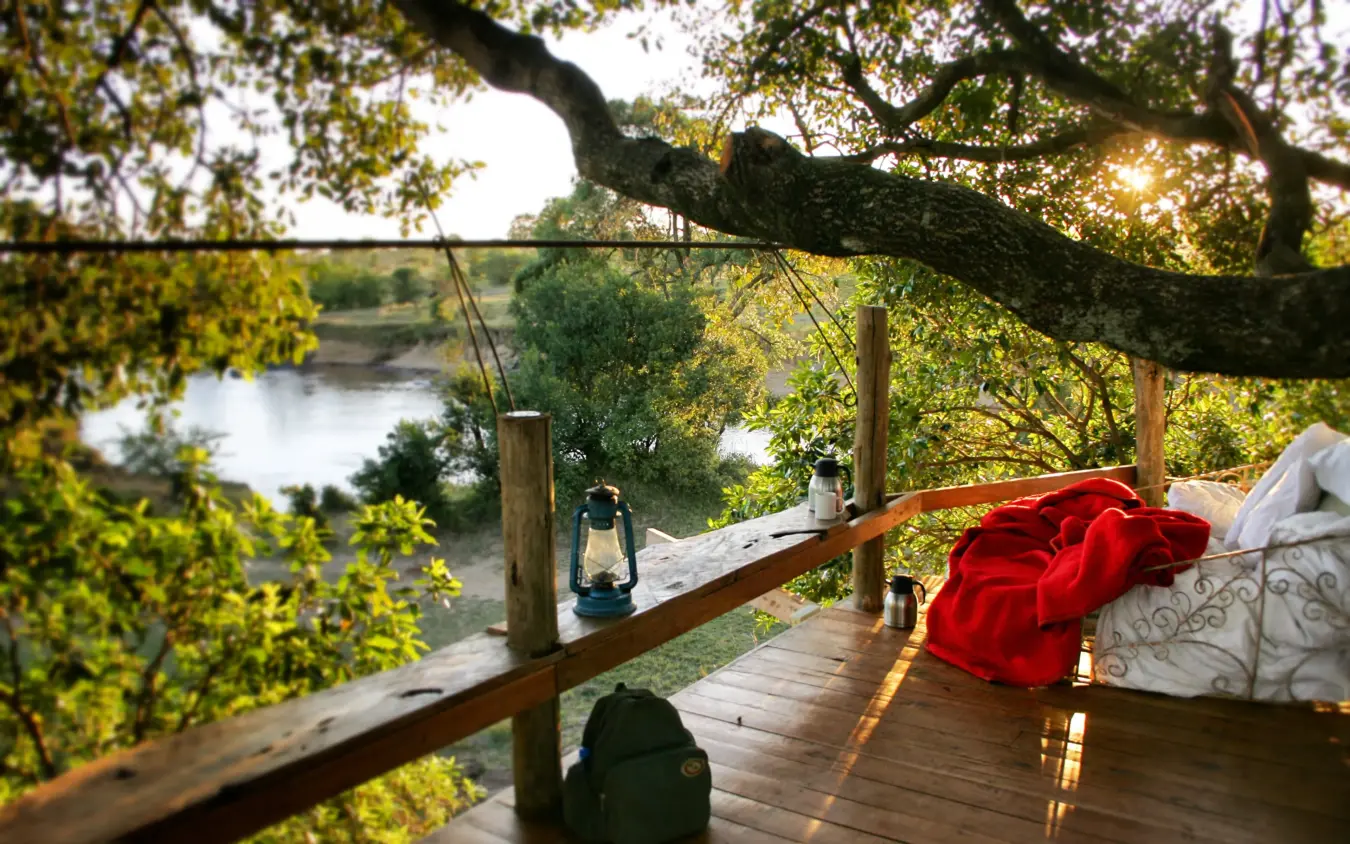
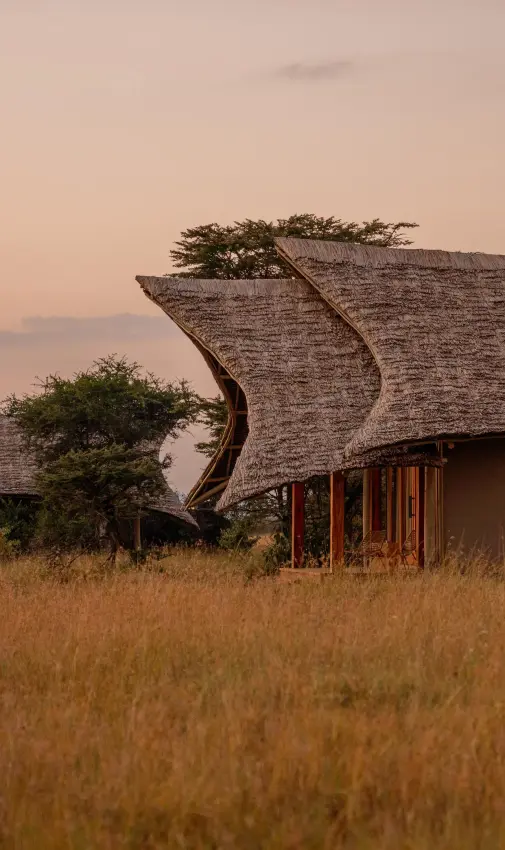
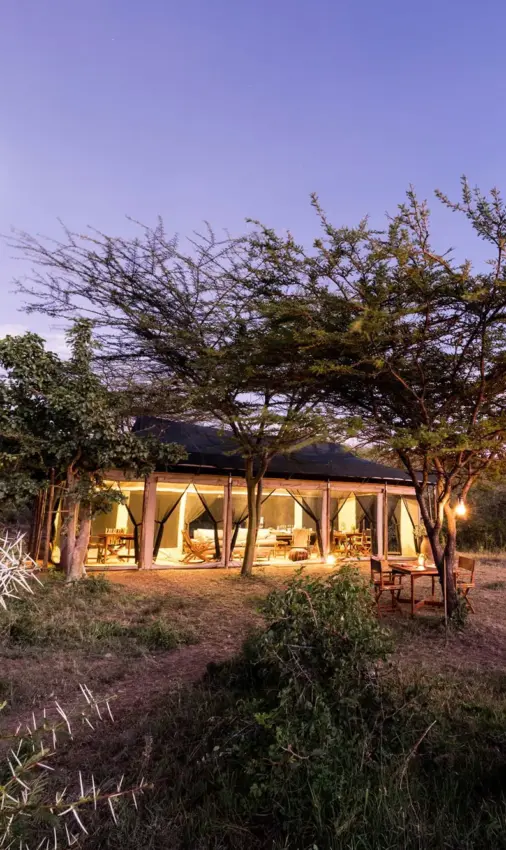
Alex Walker built his safari life around guiding, and in 2015 he was voted Best Guide in Africa. He was also closely involved in forming Mara North Conservancy, which came into being on the first day of 2009, when 750 Maasai landowners leased their land into it. The treehouse occupies the ground next door, Serian’s own private conservation area, which borders the conservancy and can be entered only on foot. That country has recovered from past poaching and overgrazing, and the treehouse went up only after a long search through it for the right tree.
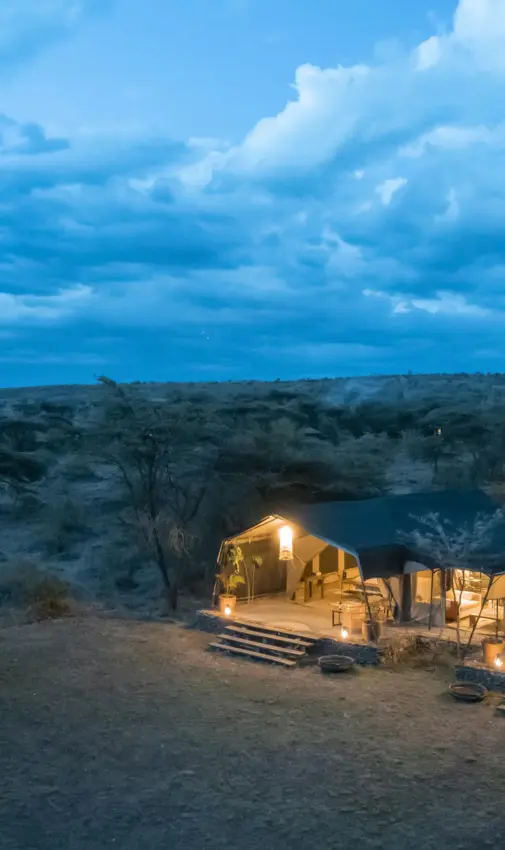
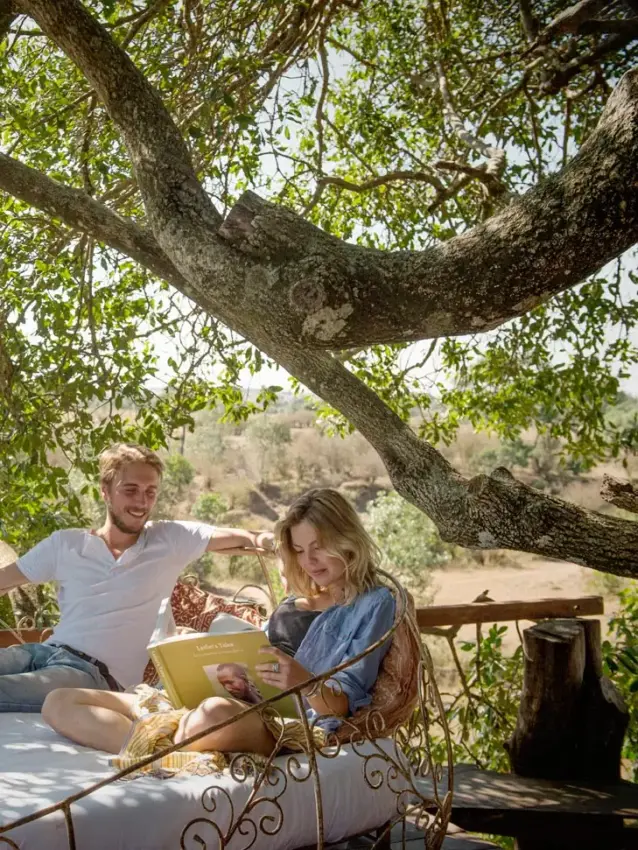
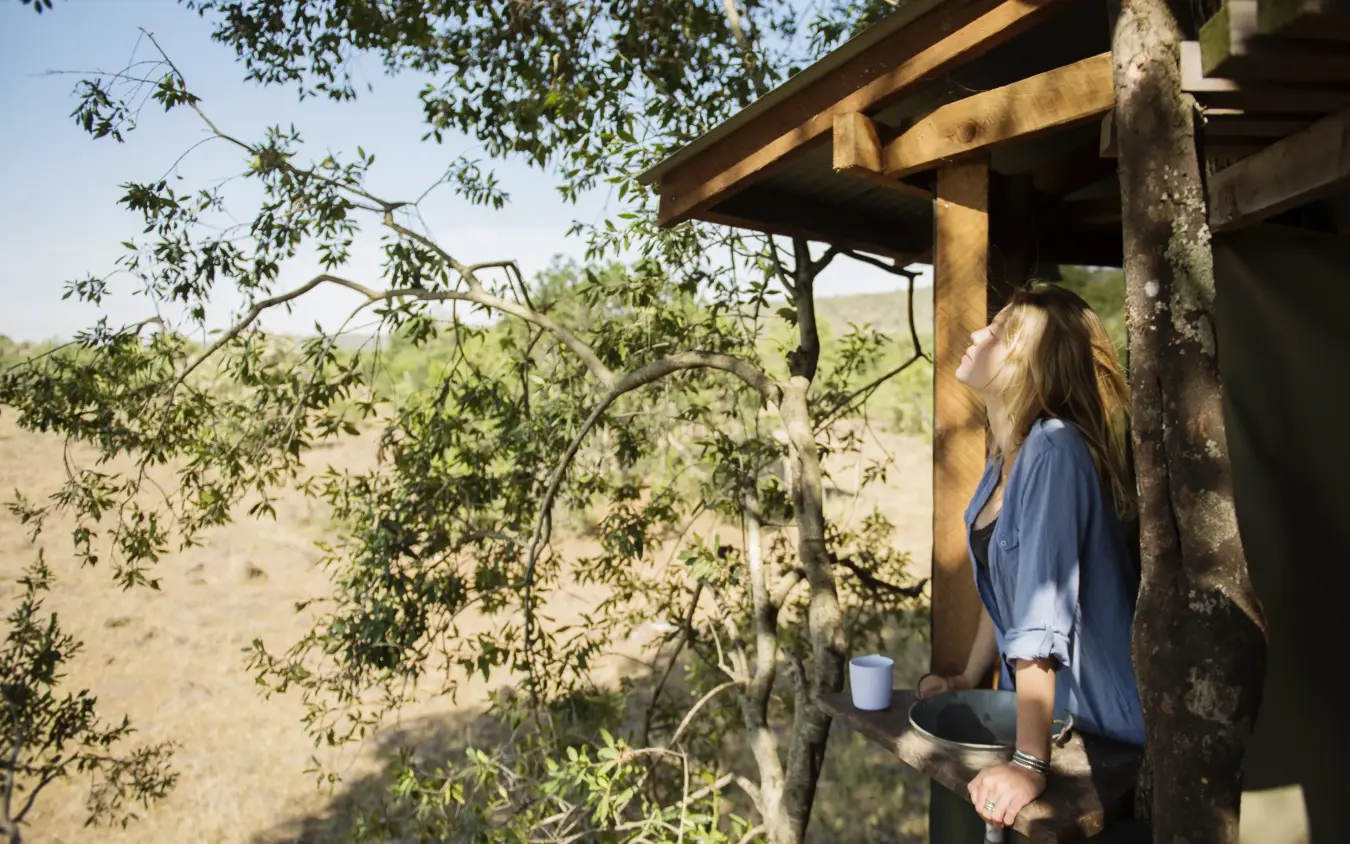
The Nest is open through the year, and a night in it is taken midway through a stay at Serian ‘The Original’ or Ngare Serian. Guests leave their luggage in their tent and walk out with a guide, carrying no more than a small overnight bag. The treehouse works for two, and for families as well. Floor space beside the beds takes a couple of extra bedrolls, though the open sides make it better suited to older children than to small ones. Those who would sooner see it by day can stop here for a picnic on a longer walking safari.
Hippos climb a worn path up the bank to graze, and impalas work a salt lick behind the tree.
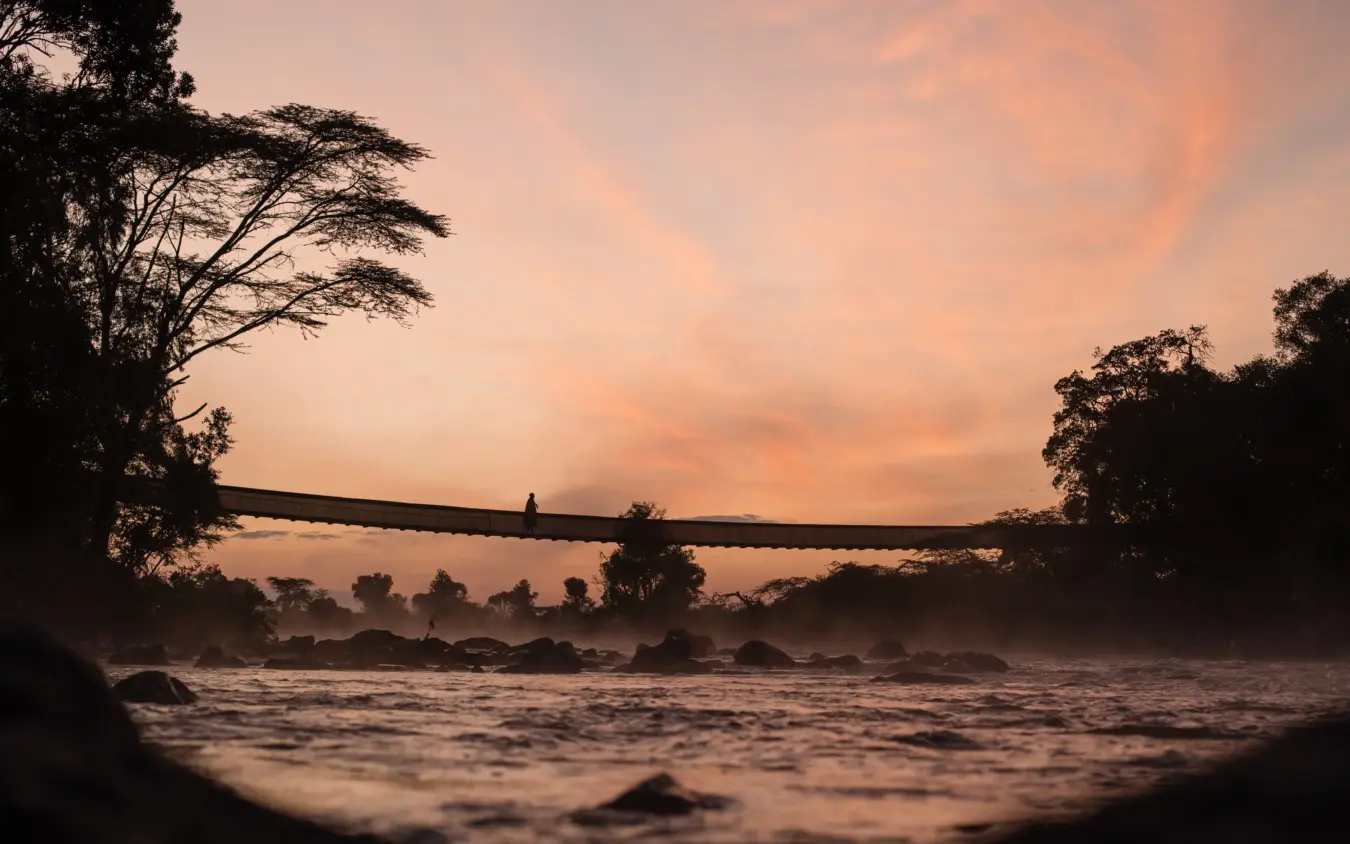
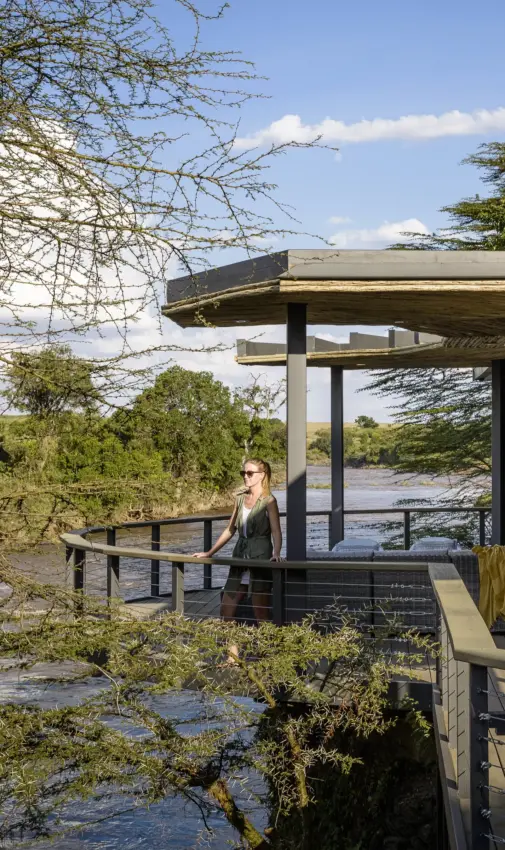
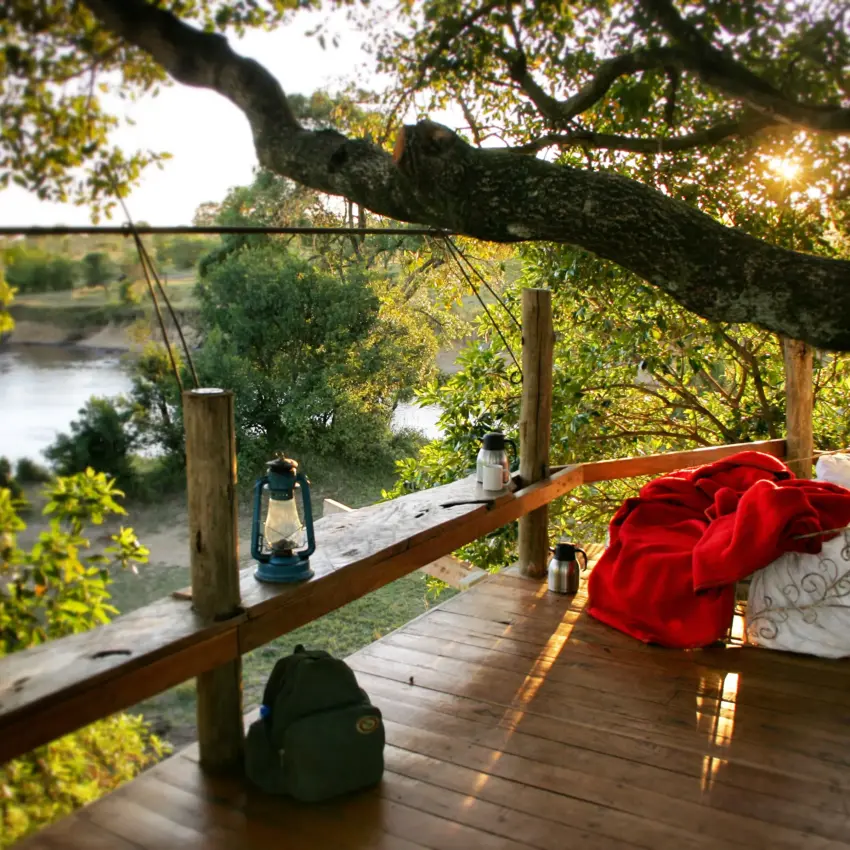
A pride of twenty lions lives across the wider conservation area, along with three leopards and fifty buffalo. Its four kilometres of river frontage act as dispersal ground for around 400 hippos, and a resident pod holds the pool below the deck. Hippos climb a worn path up the bank to graze, and impalas work a salt lick behind the tree. A small sandy beach at the water’s edge stays in use through the dark hours, when hyenas and jackals are out on the bank. At first light the birdsong comes from every side at once.
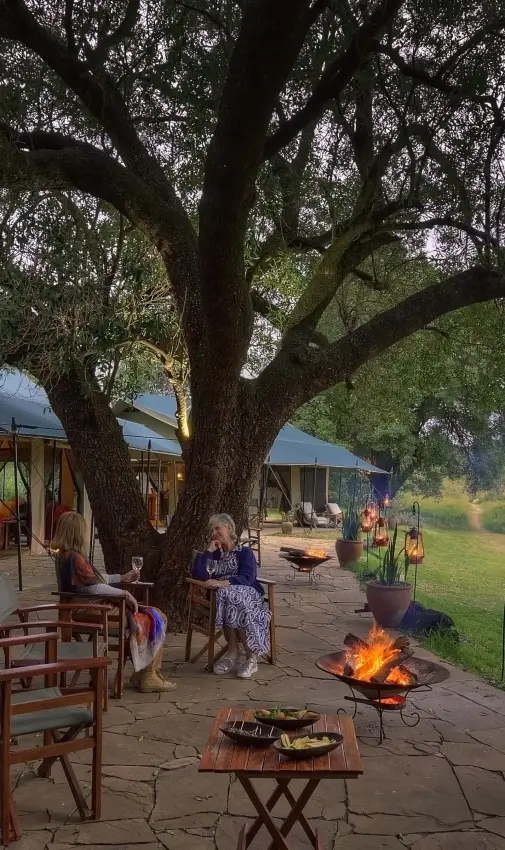
July to October brings the migration herds onto the river corridors, and the dry-season concentration of game with them. January to March is warm and clear, and with no town glow anywhere near, the stars are sharp from the deck. Because the treehouse lies outside the national reserve, in a private conservation area, walking safaris and night drives are permitted, and so is dinner in the bush. The guides and staff are drawn from the surrounding Maasai communities. Once they have gone, stars, hippos and a kerosene lamp make up the entire evening programme.



 01