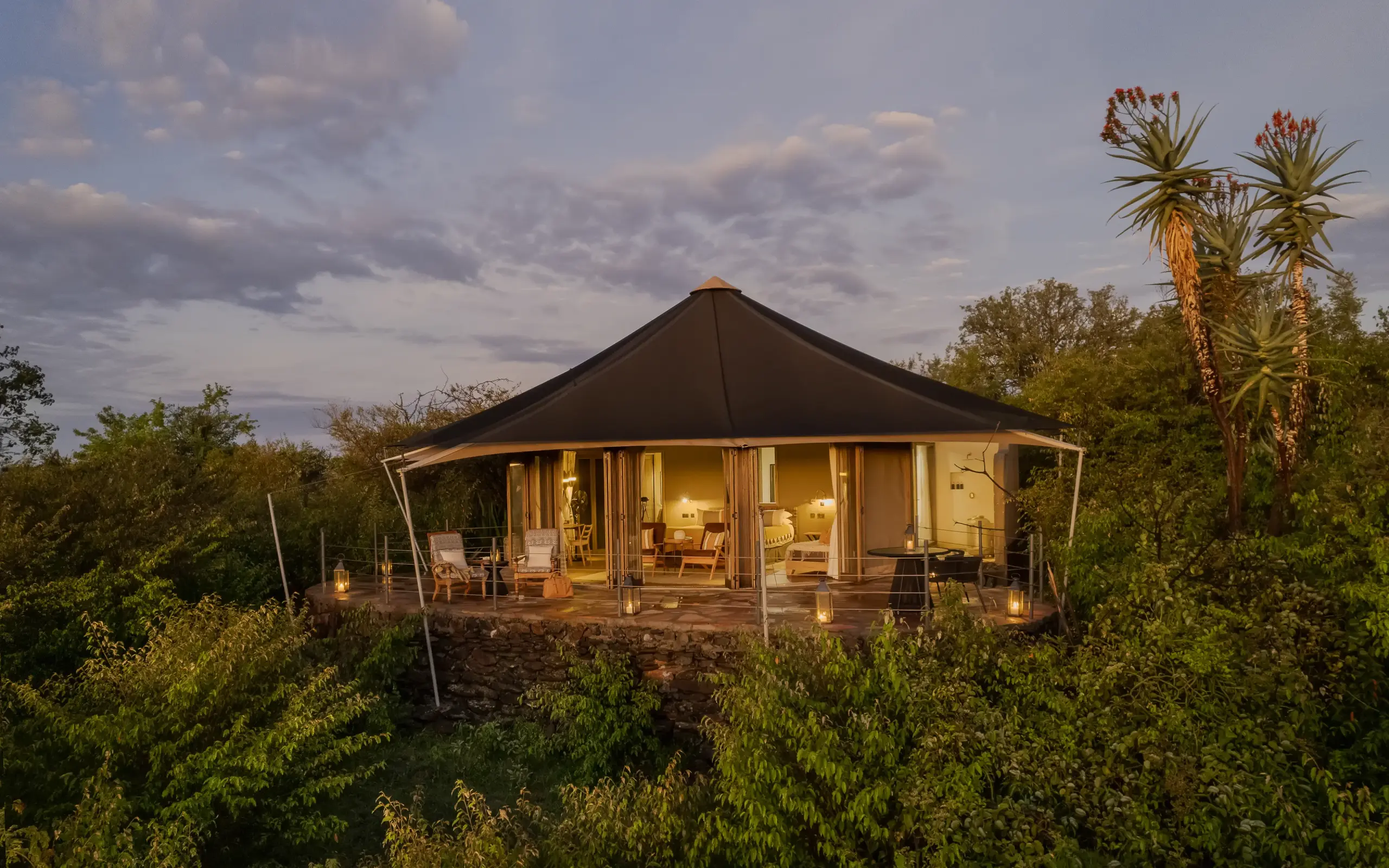
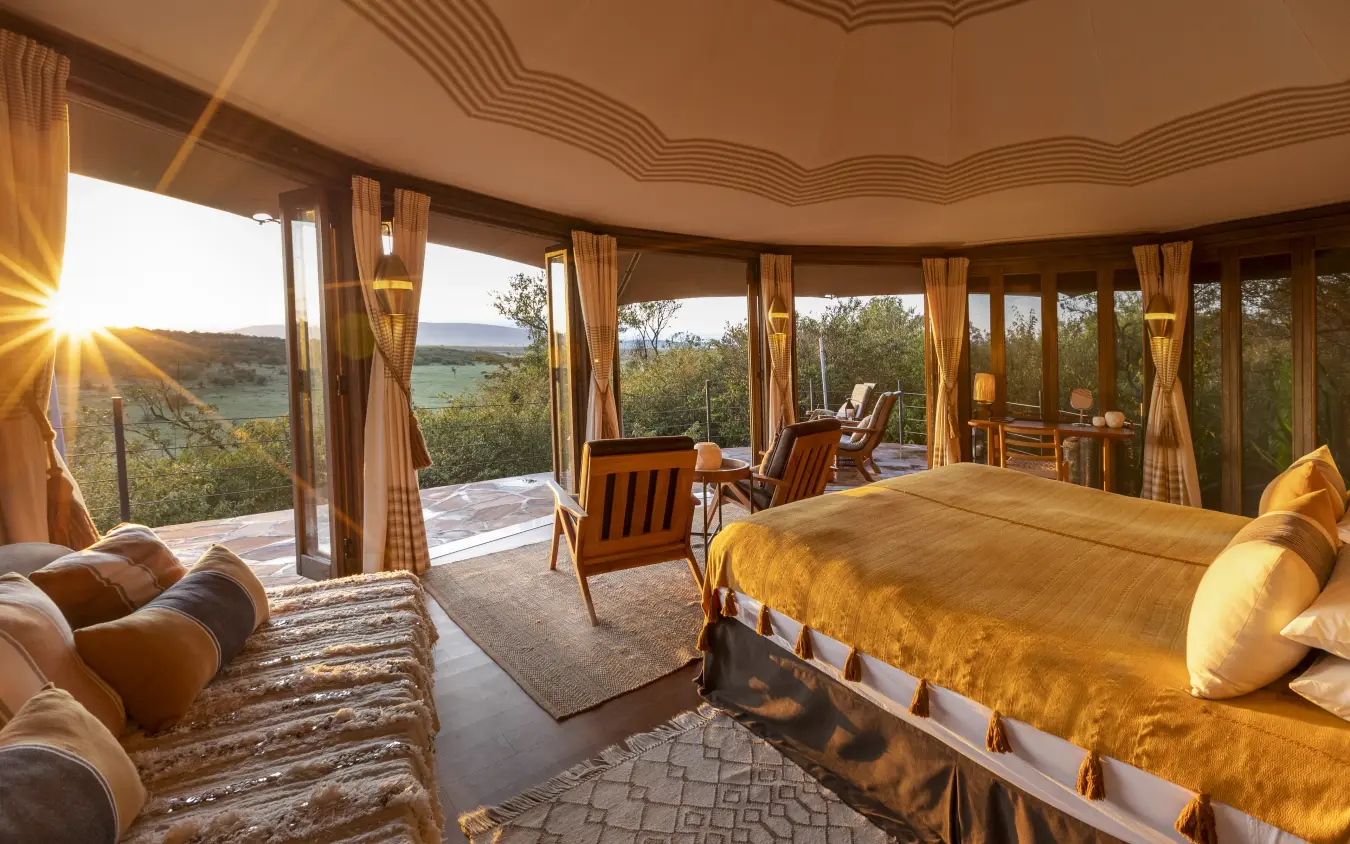
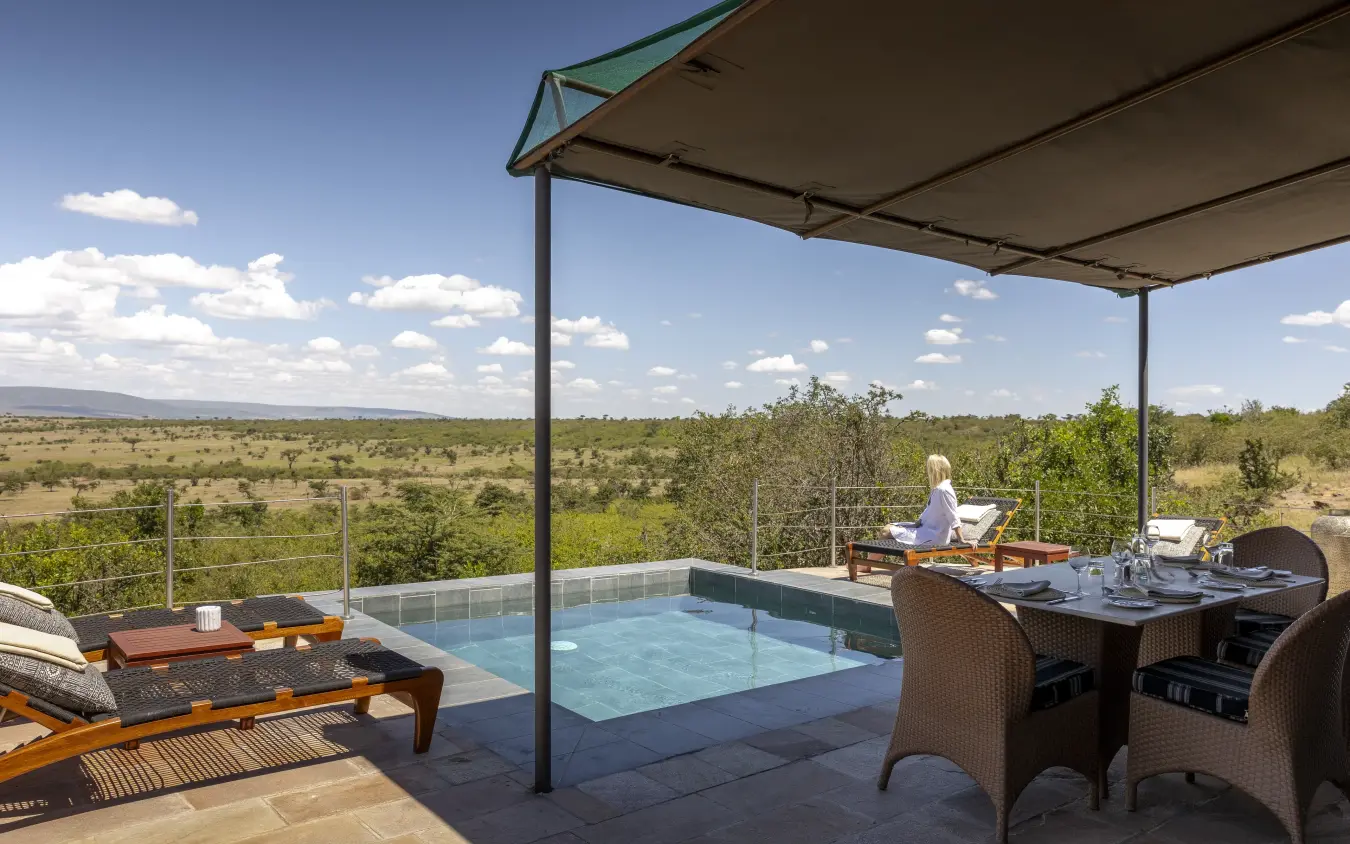
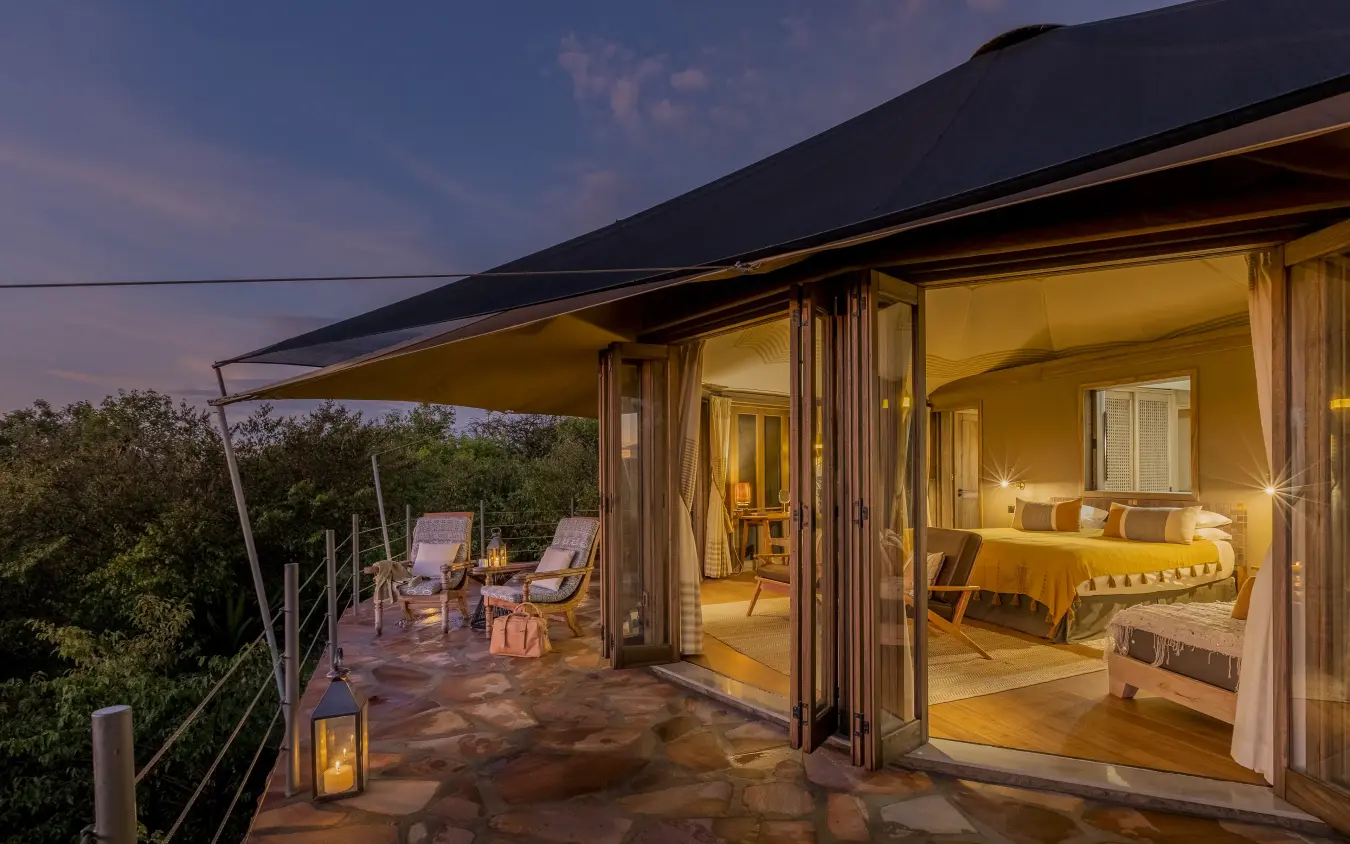
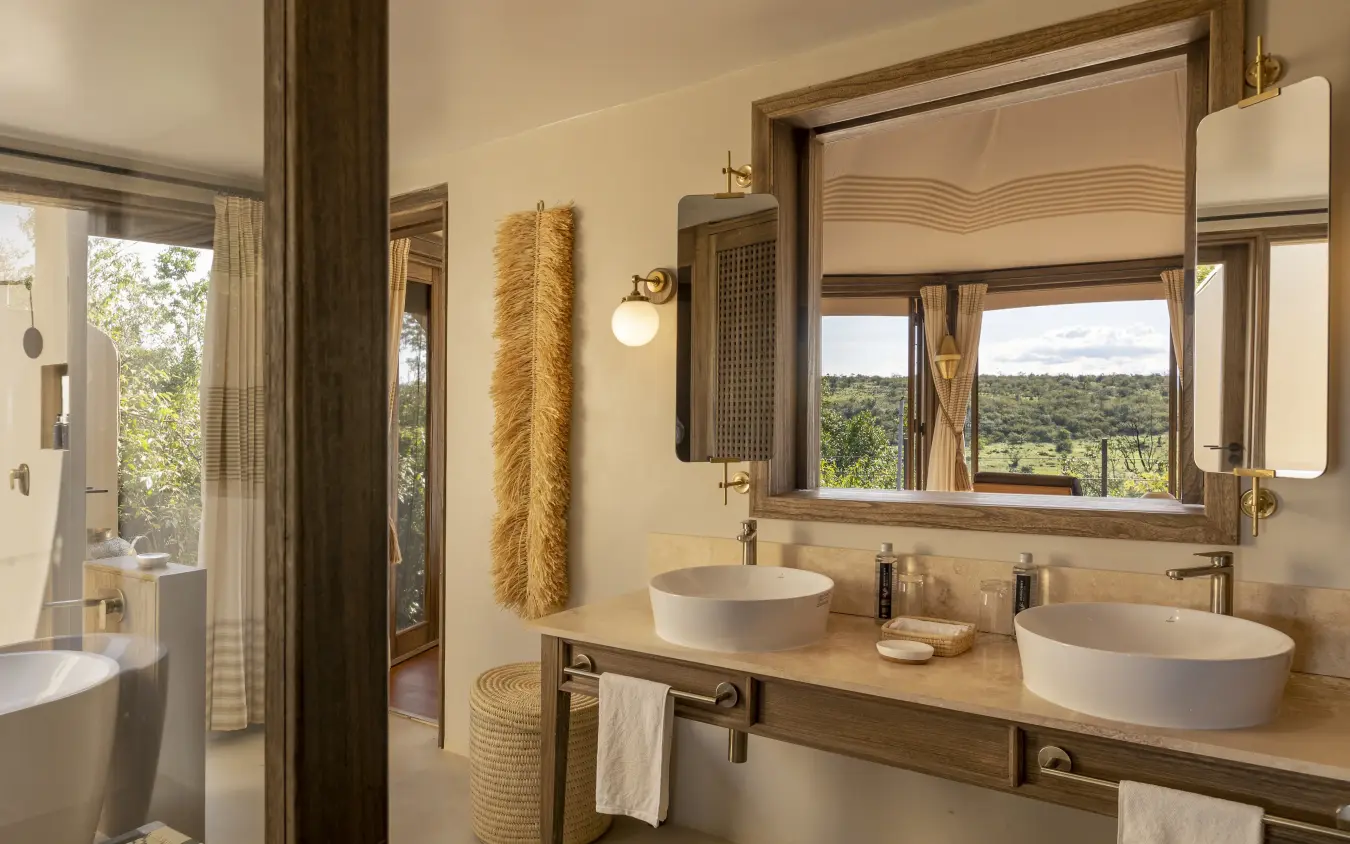
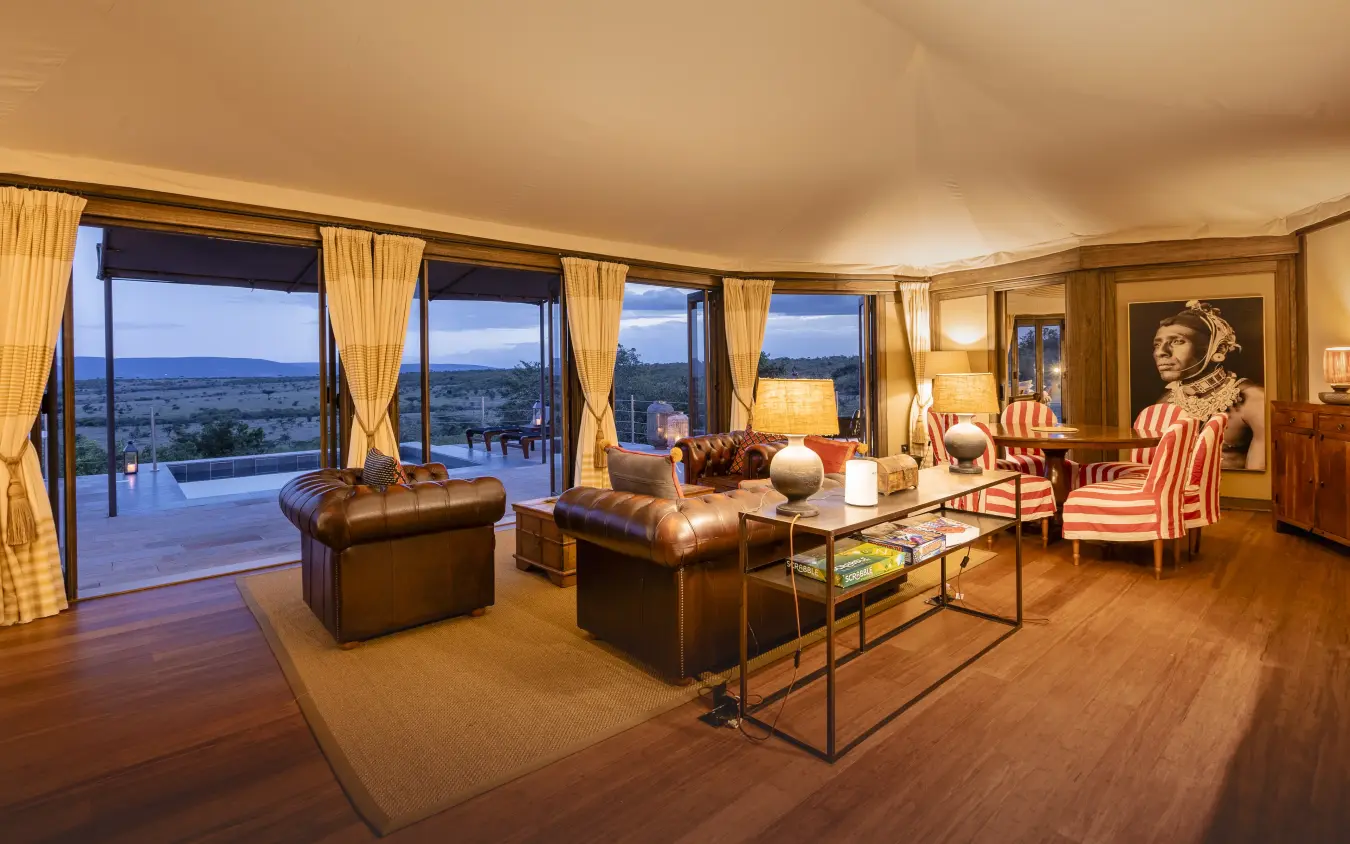
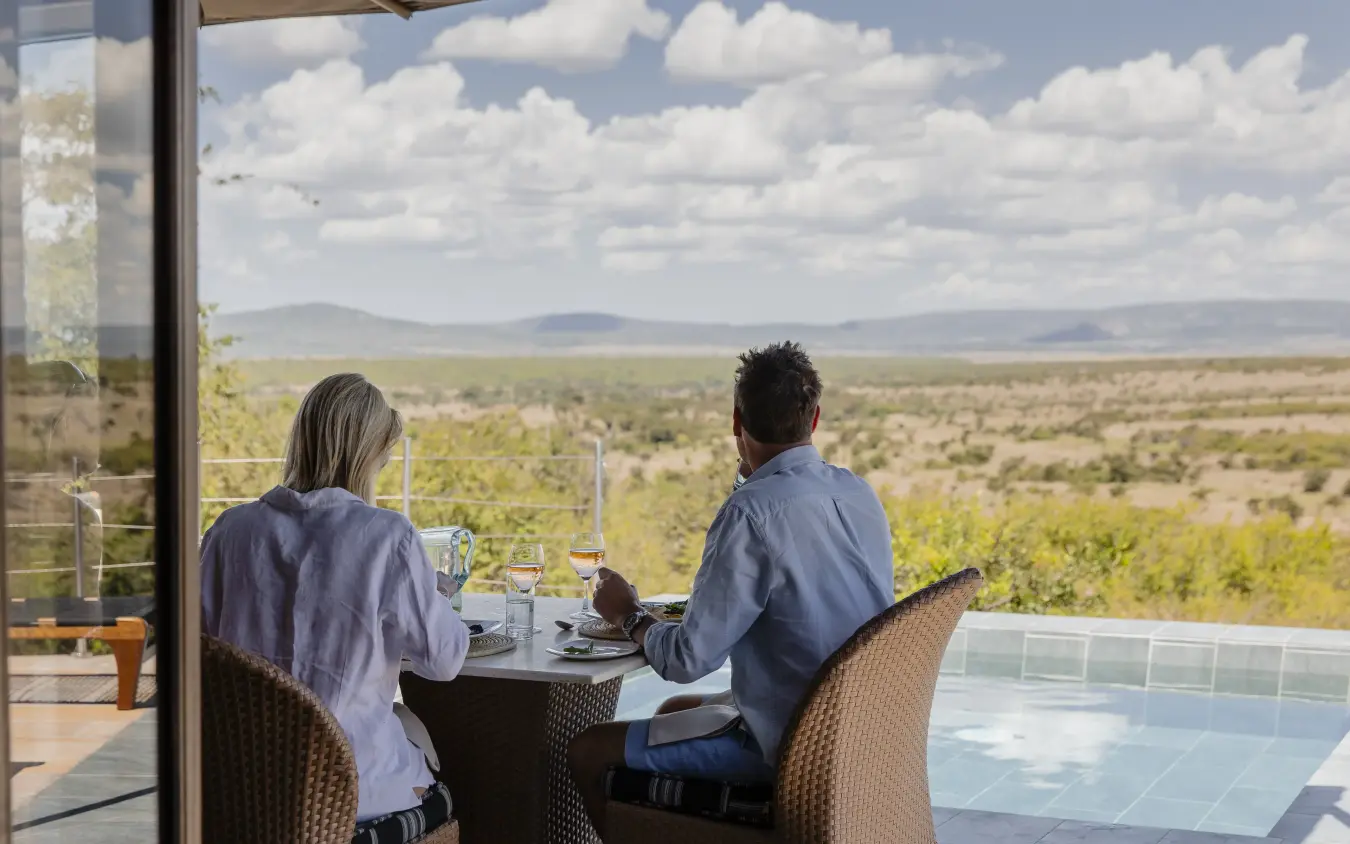
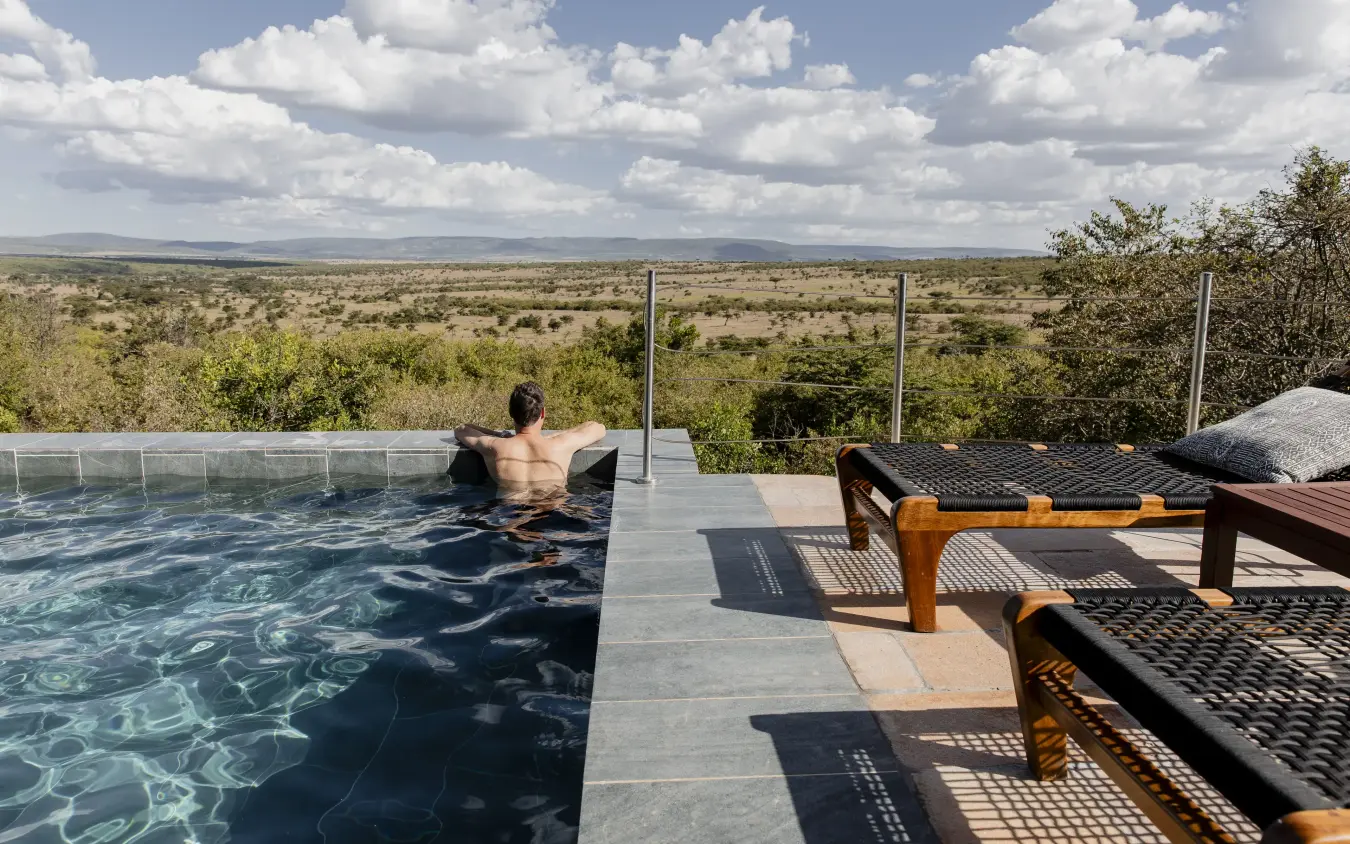
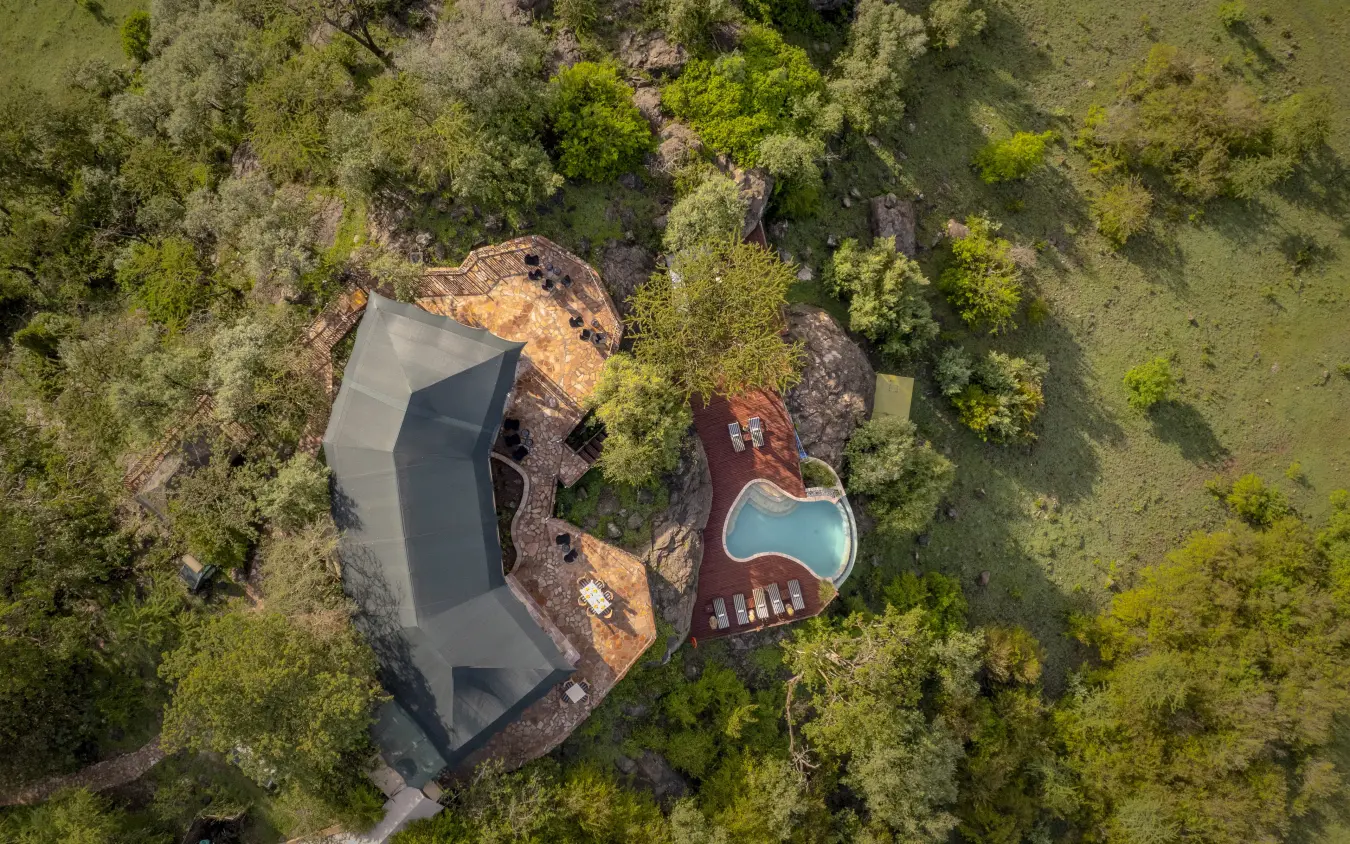
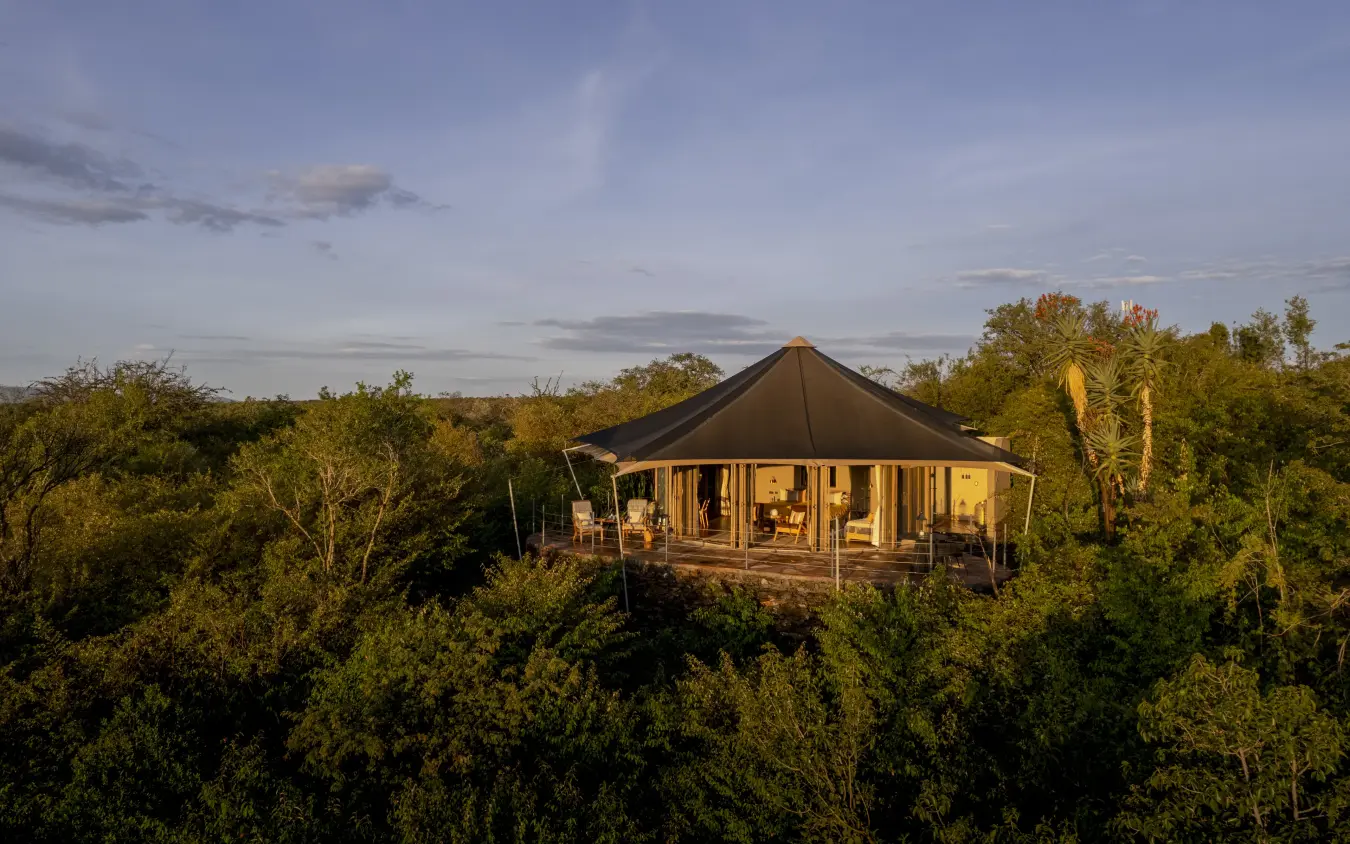
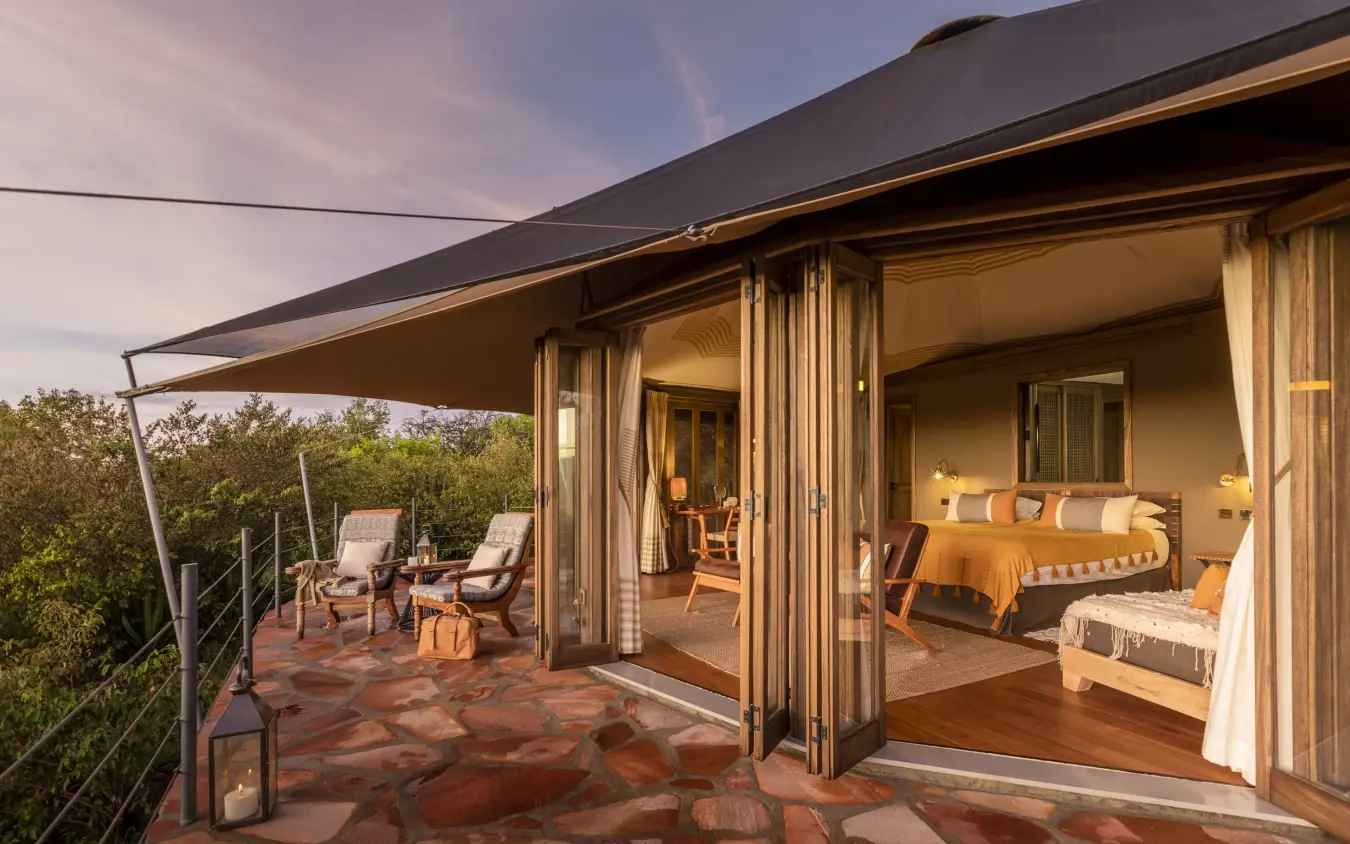
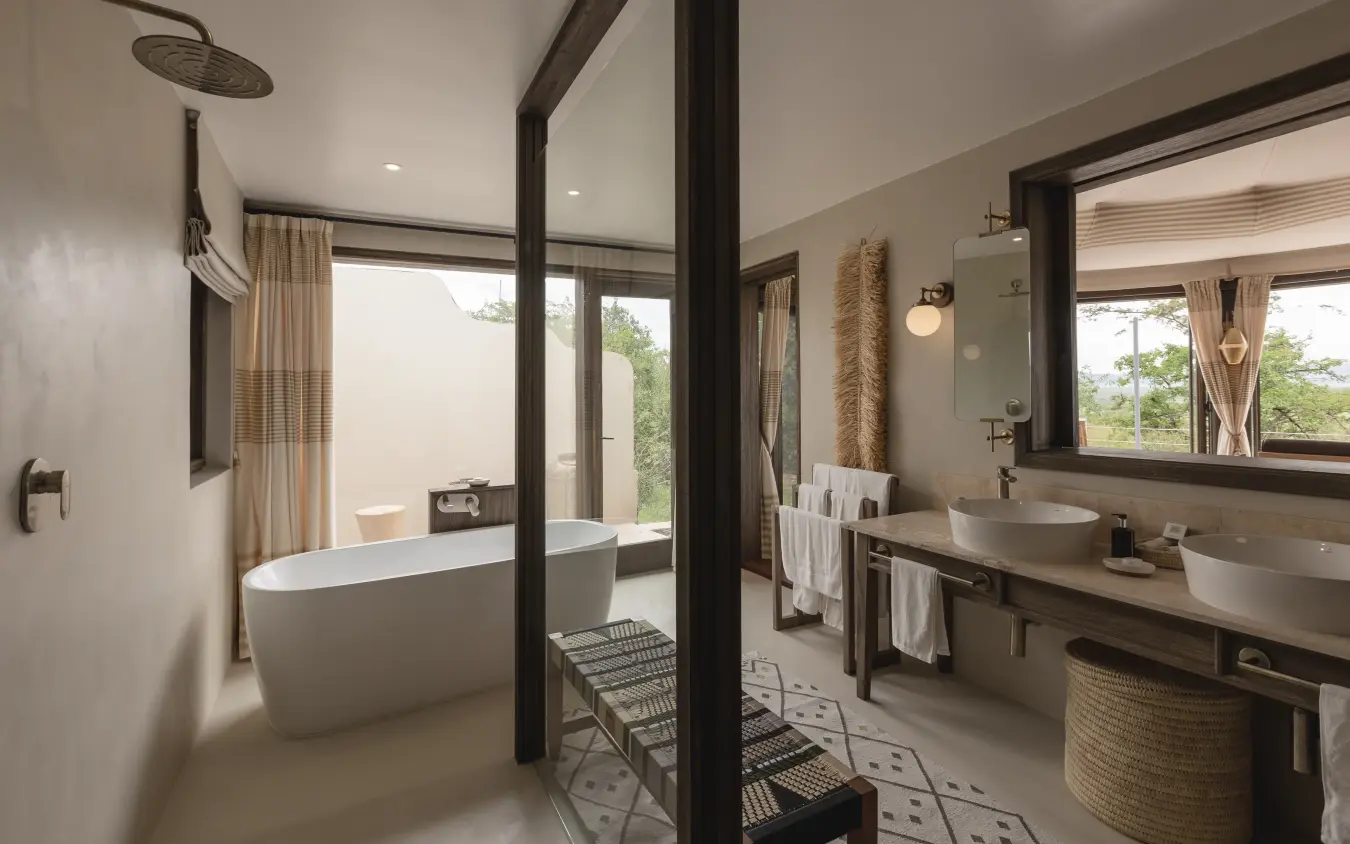
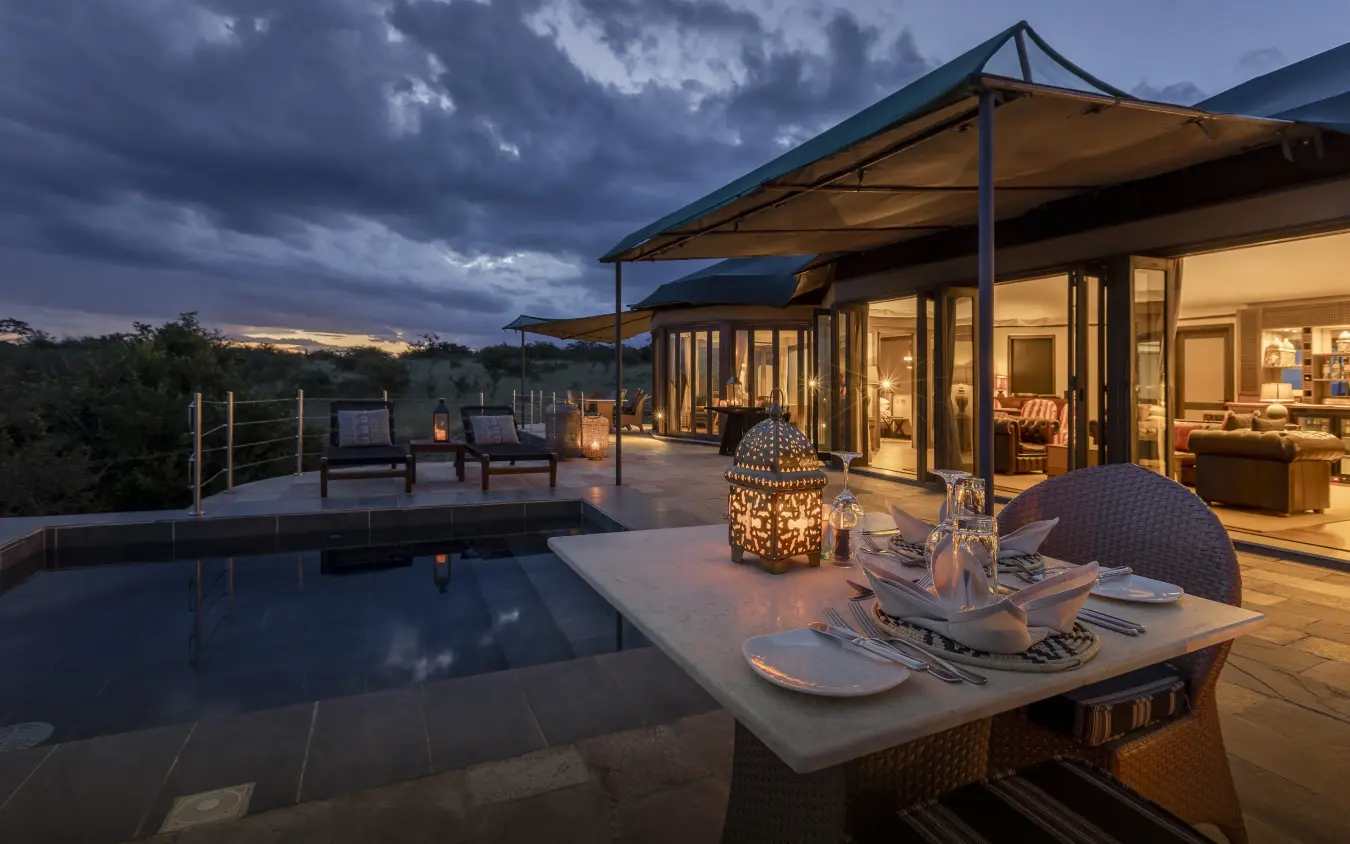
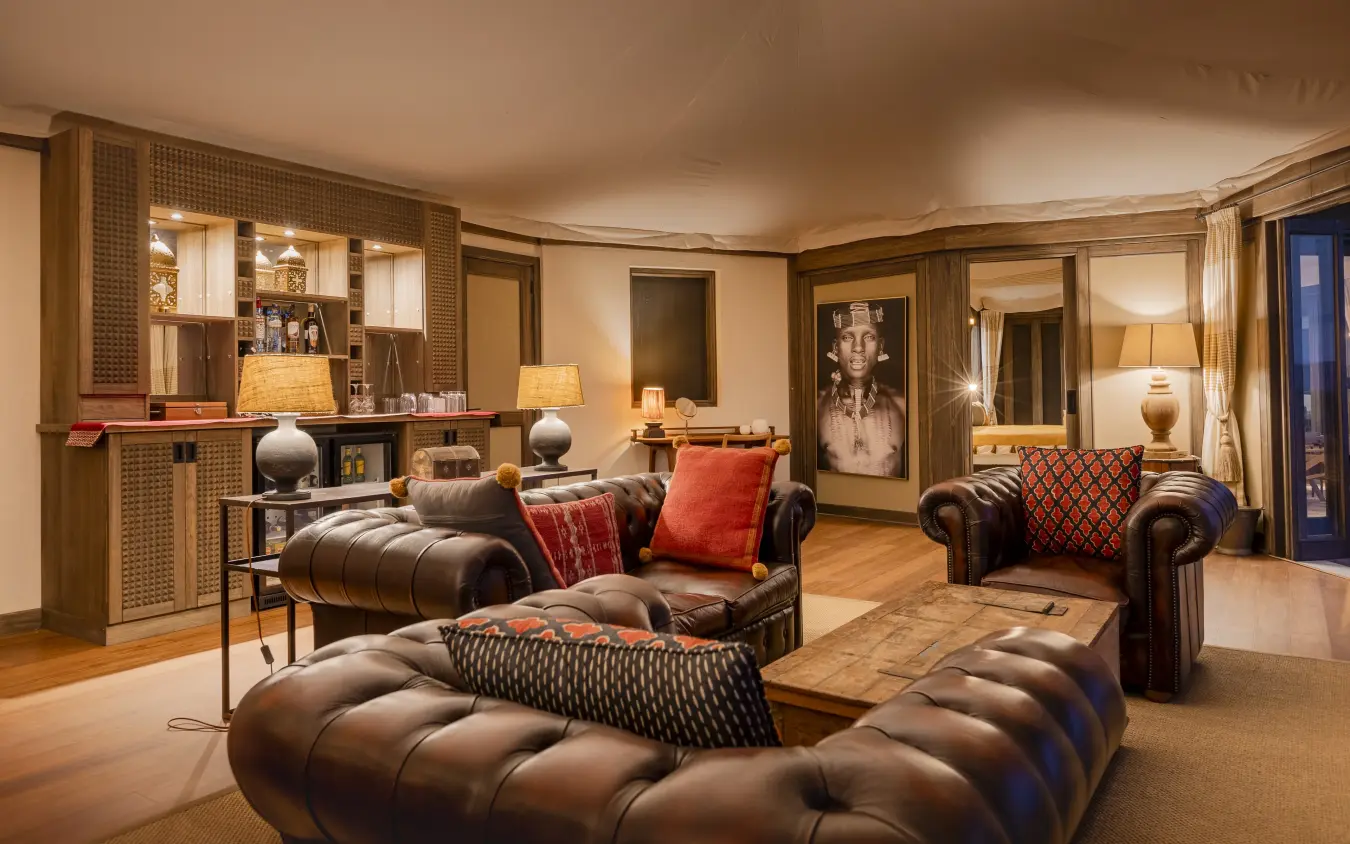
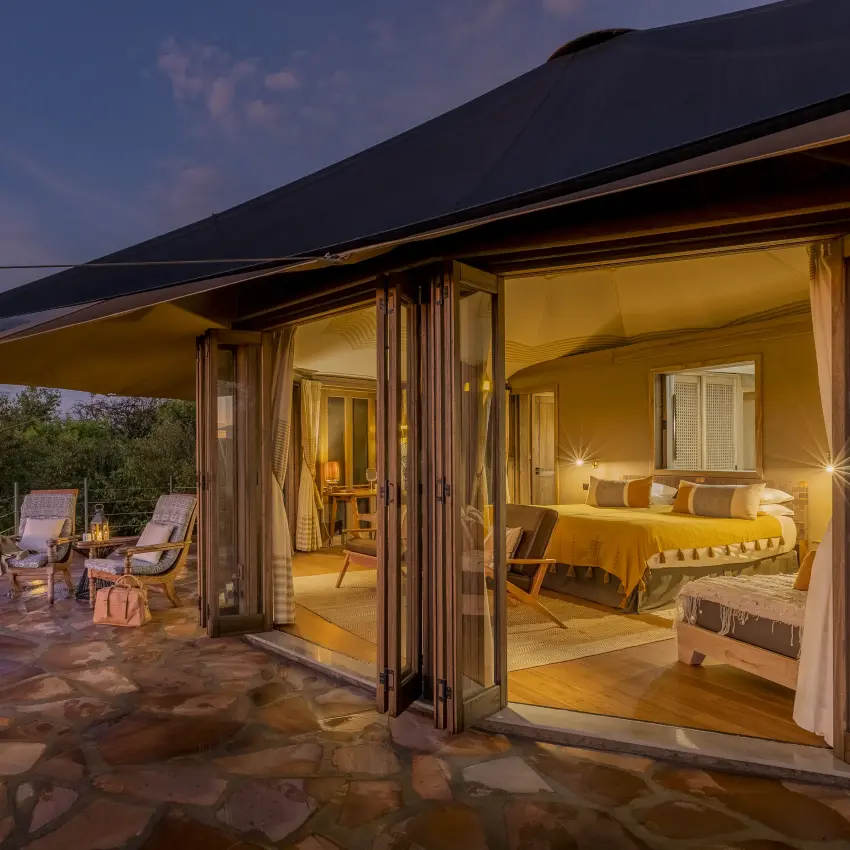
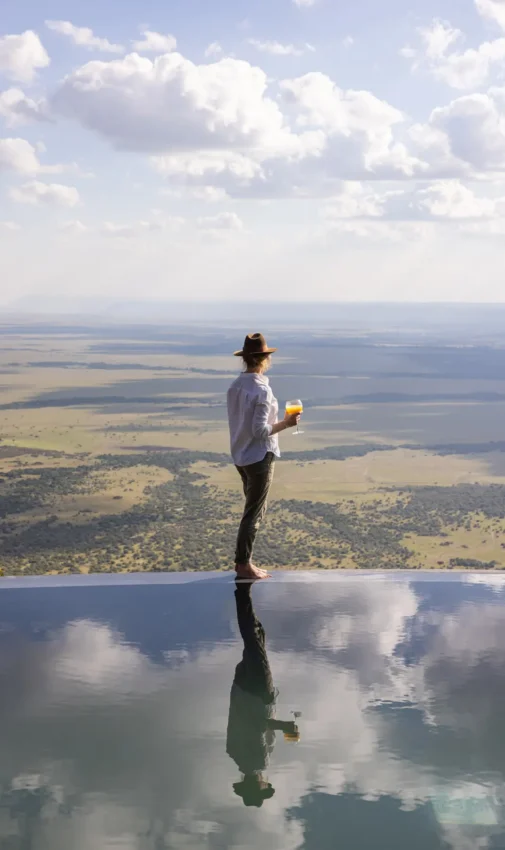
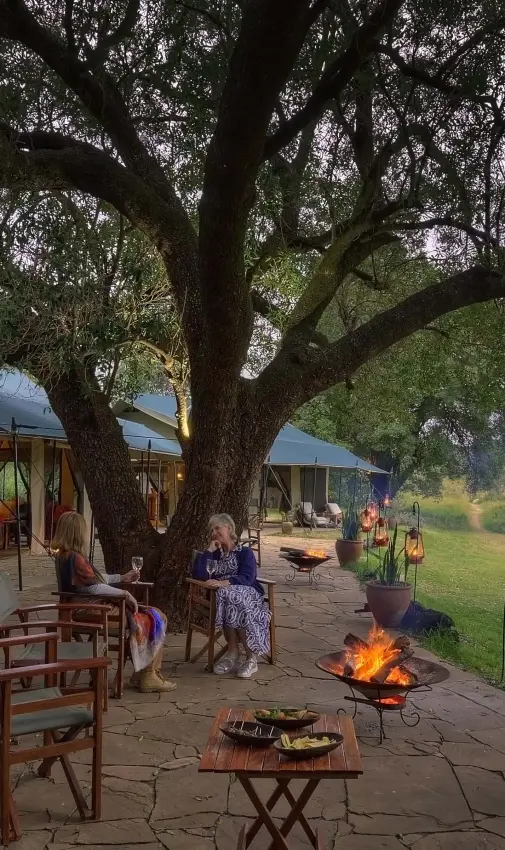
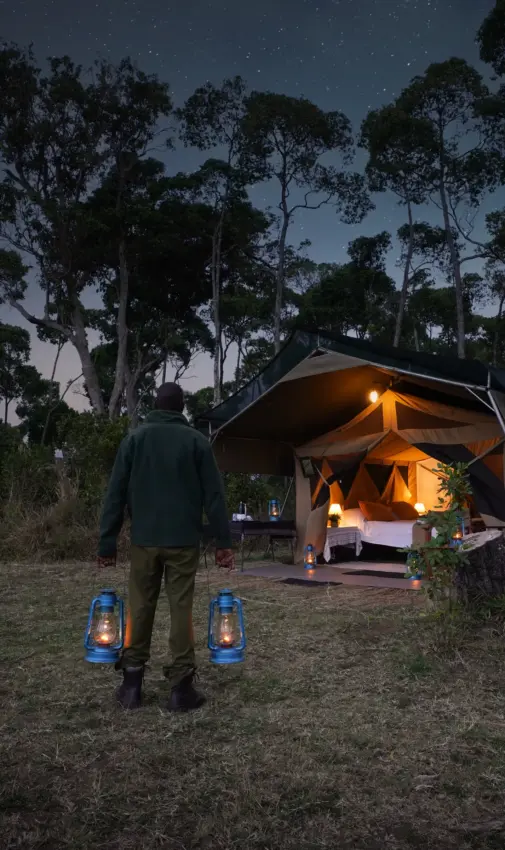
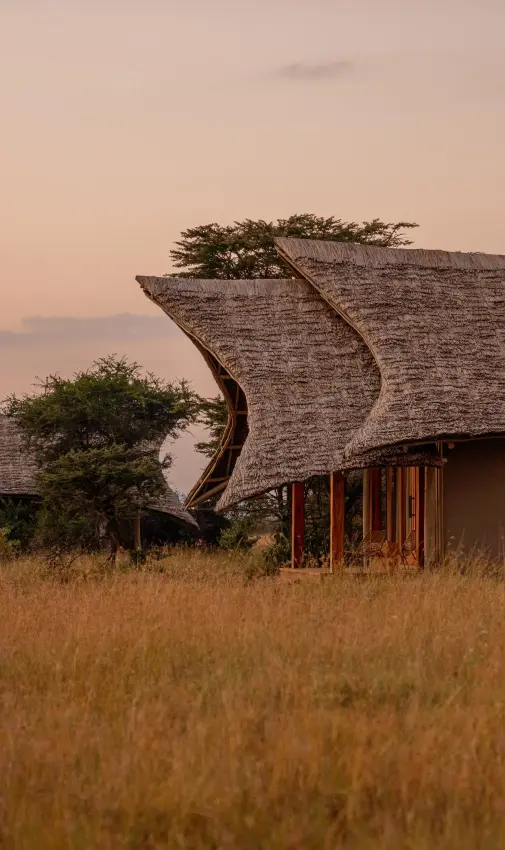
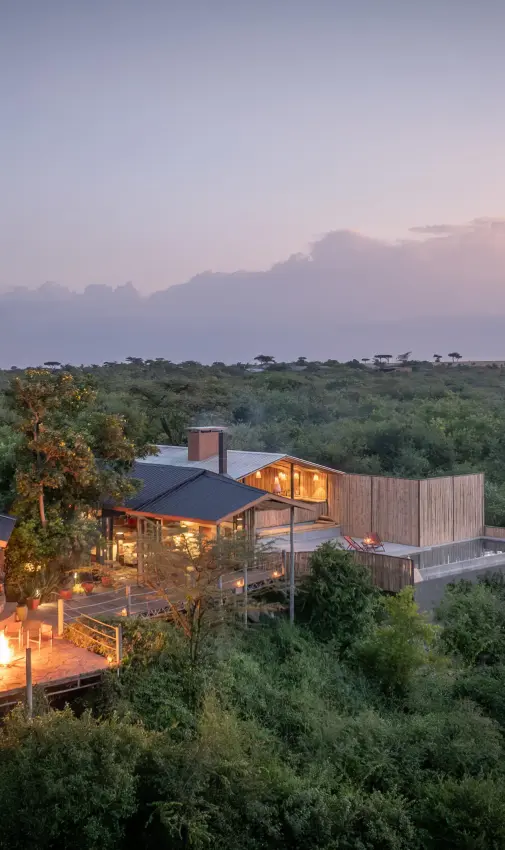
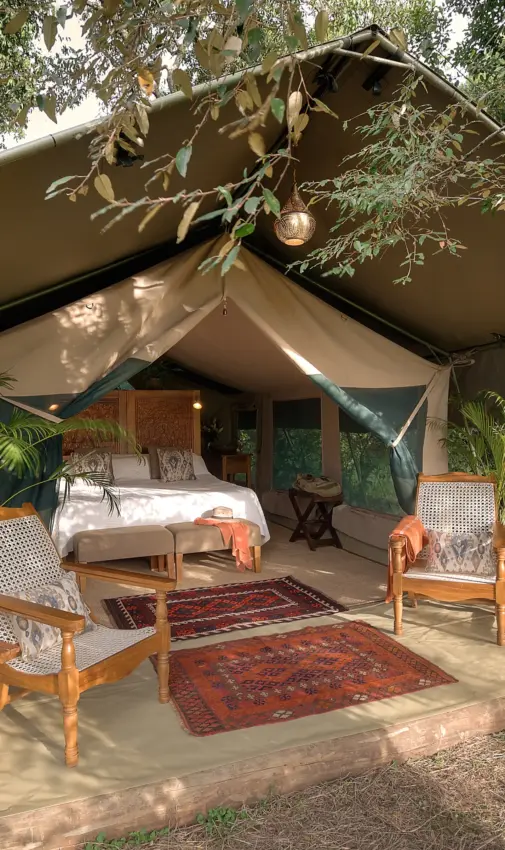
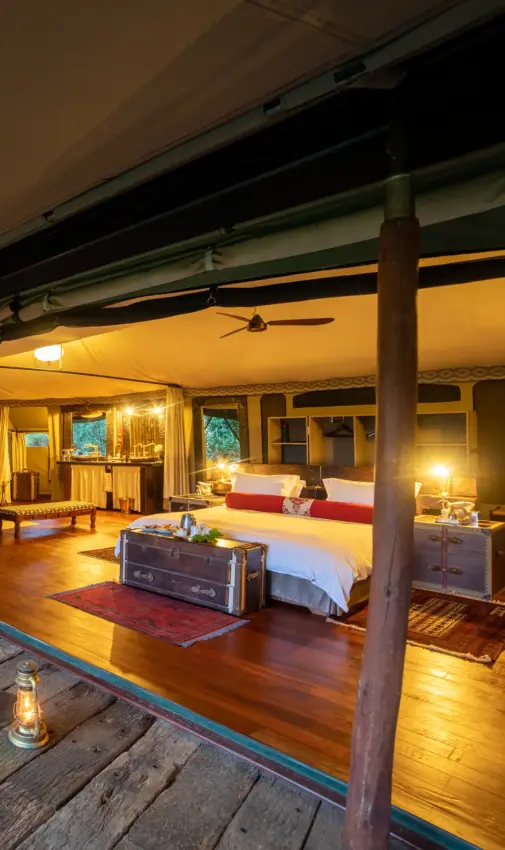
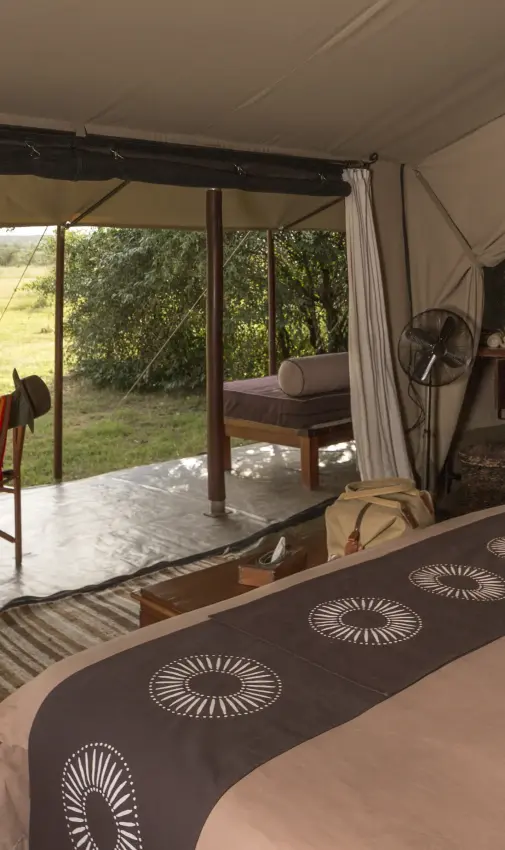
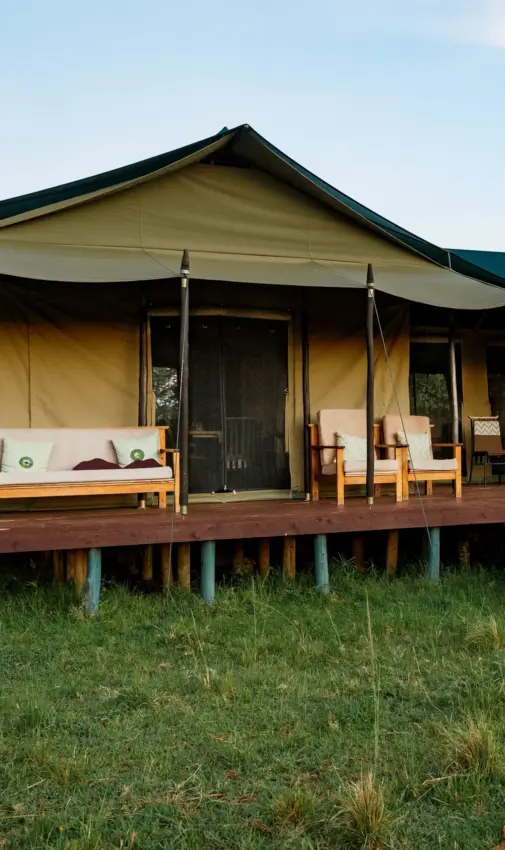
The tents have been rebuilt and considerably smartened under Hemingways Collection, who took the camp on from Sue Allan in 2011, and the hilltop footprint of ten tents is no longer hers. Twenty-six guests at most share the ridge and its 270-degree views, which is part of why nothing here runs to a timetable. Dinner can be taken at the communal table, privately on a veranda, or by lantern in the Ndorobo Cave in the rock below camp, and the kitchen rearranges itself without fuss.
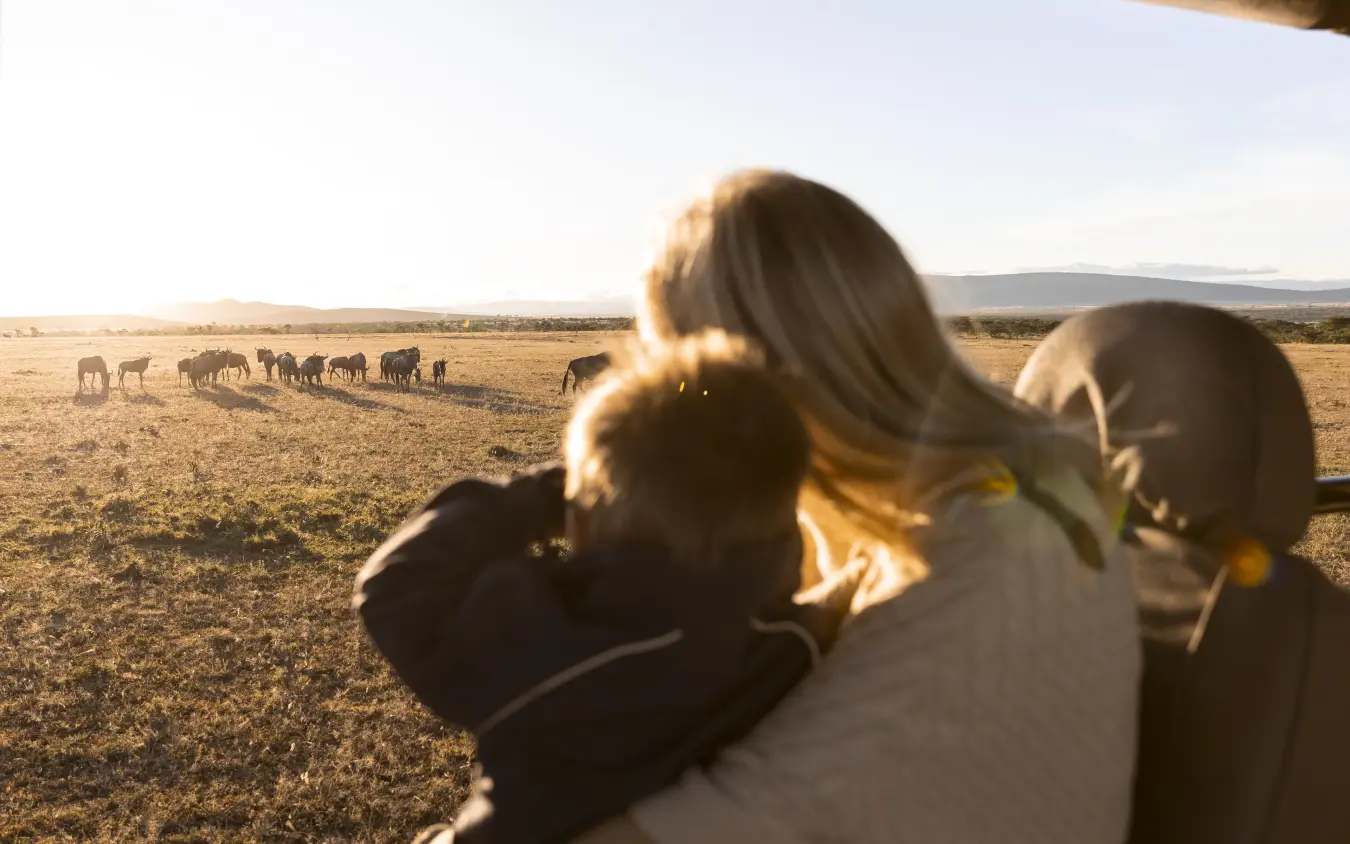
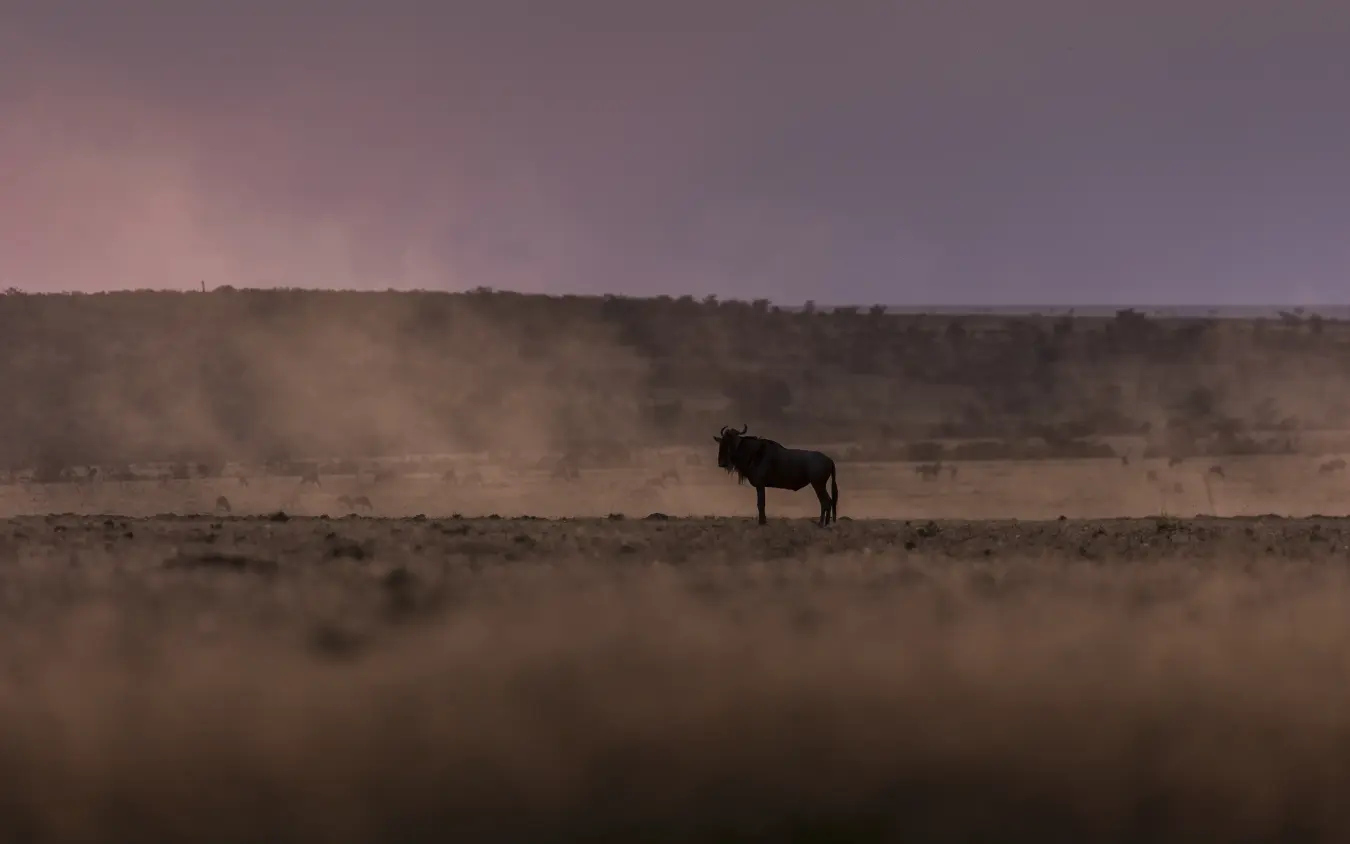
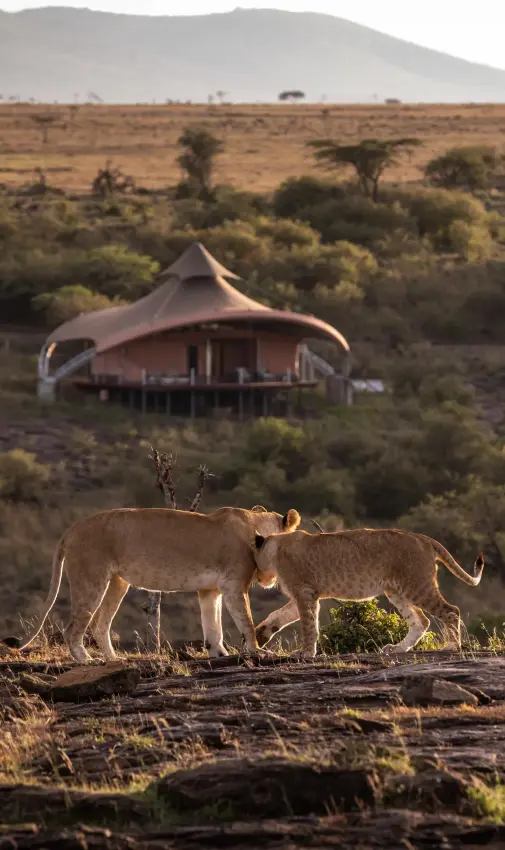
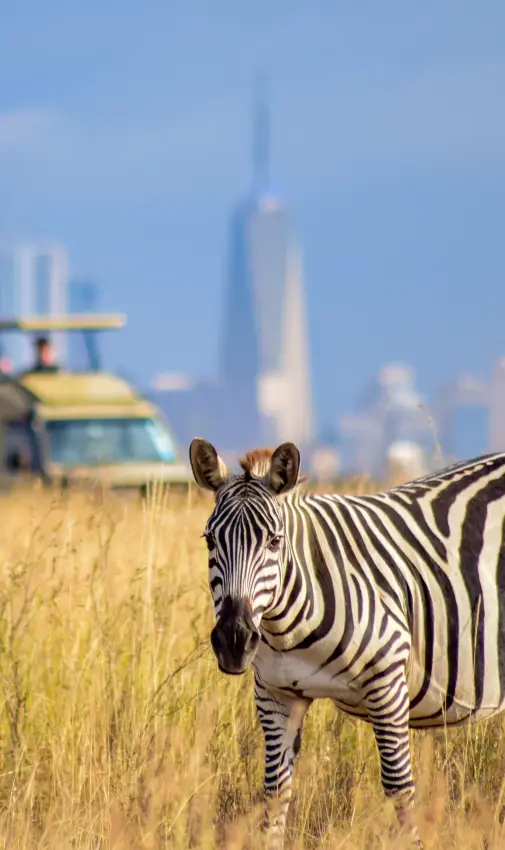
Lion densities across Naboisho are high, with resident prides and territorial leopards and cheetahs, so predator sightings hold through the year rather than clustering into one season. Giraffes, zebras and elephants use the waterhole in view of the deck and the pool. Rock hyraxes take the warm boards of the verandas in the middle of the day. Wildebeest and zebras from the Serengeti reach the Mara between July and October, while the smaller Loita herds move through from January to March; the river crossings lie inside the National Reserve.
Hyena calls carry up from the valley and bush babies start in the cordia trees.
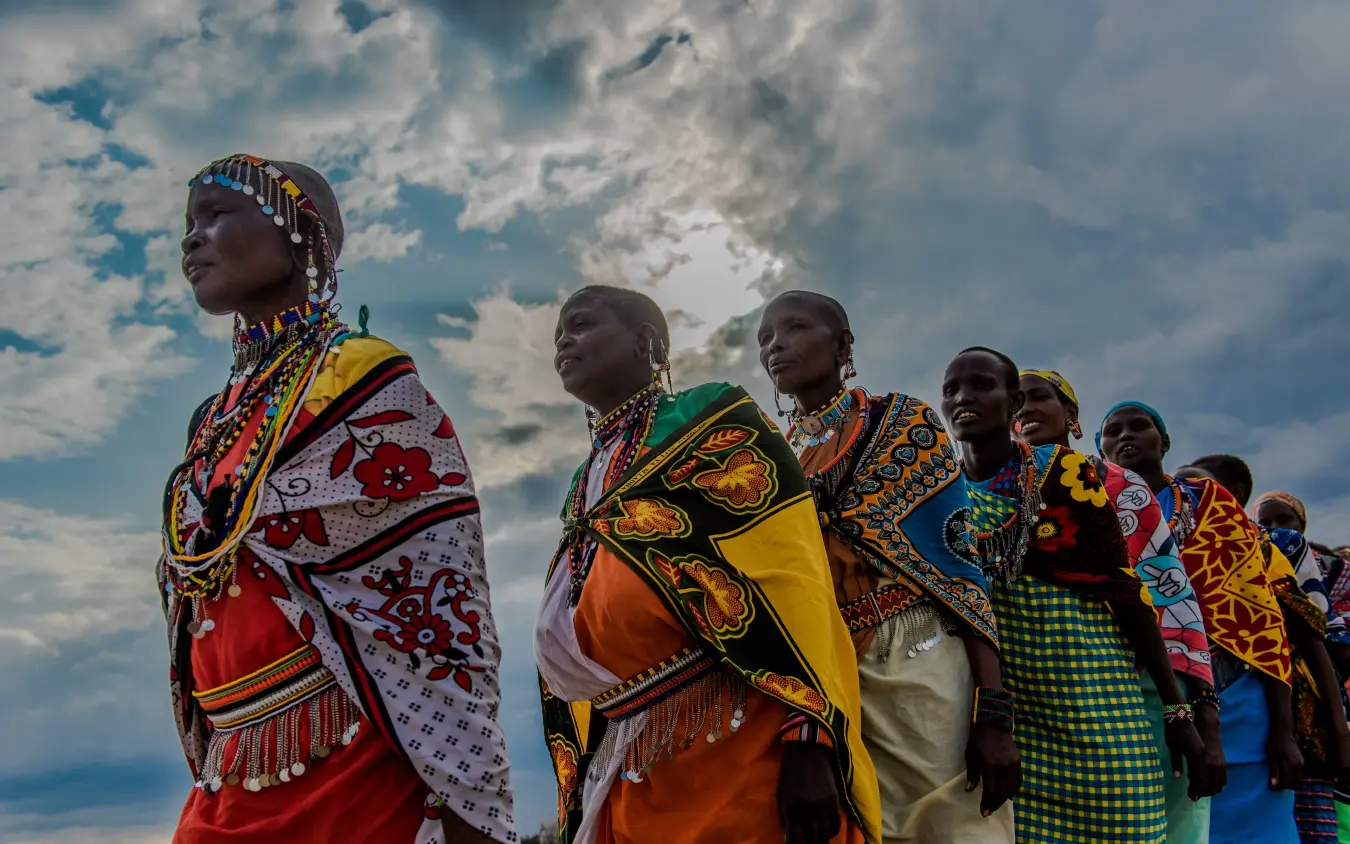
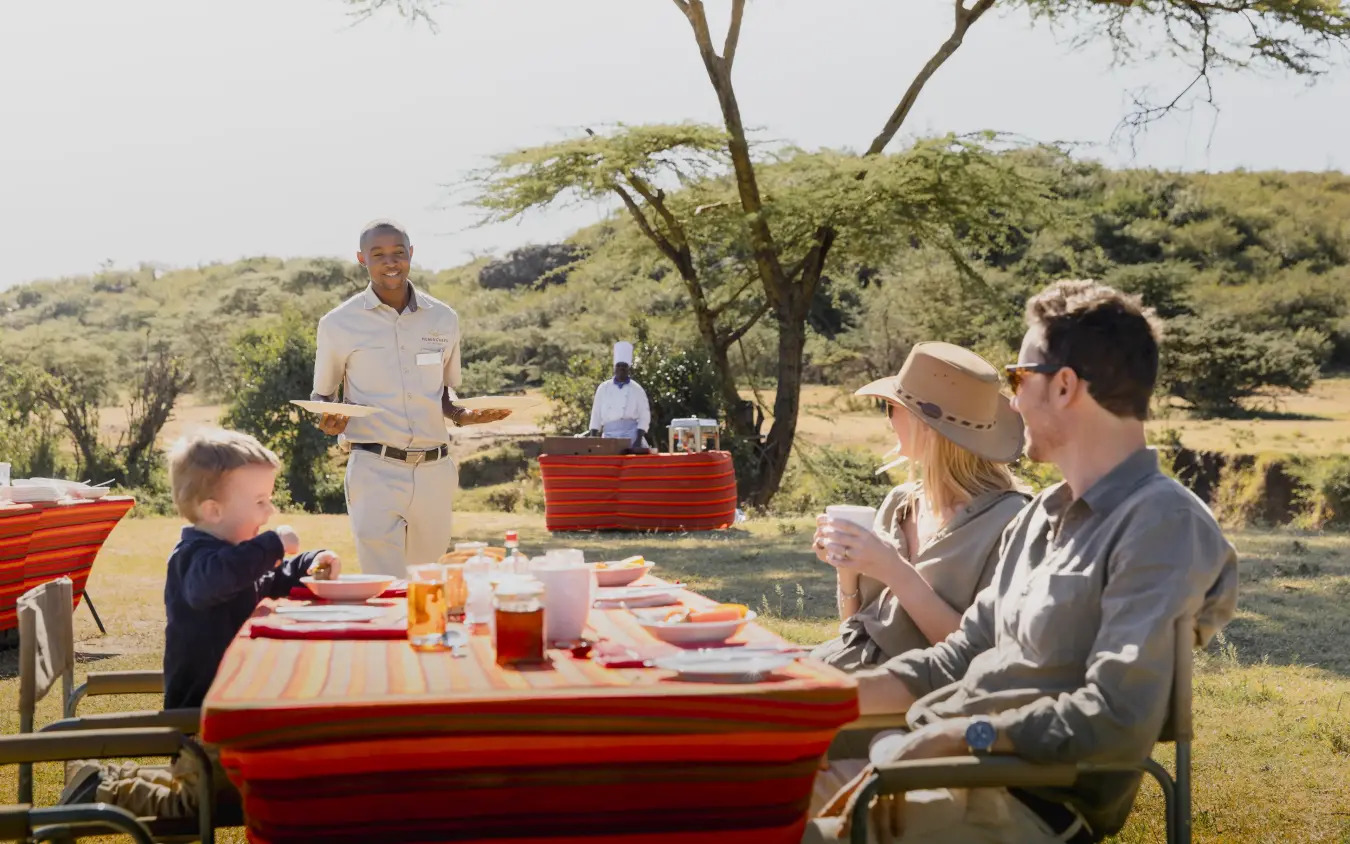
Guiding falls to Maasai from the surrounding communities, many of them graduates of the Koiyaki Guiding School nearby. Because Naboisho is conservancy land, guides can drive after dark for aardvarks, bat-eared foxes and hunting cats, walk out on foot to read tracks and plants, and set a mobile kitchen down on the plains for breakfast. None of that is permitted inside the Maasai Mara National Reserve, where daytime drives on the road network are the rule, though balloons launch over the Reserve at first light and come down to a bush breakfast.
Children’s activities are led by Maasai guides, with spear throwing, bow and arrow making, tracking walks and face painting, while the two villas let a family keep its own timetable without waking anybody else. Other days go to horseback riding, or to a village or school nearby. Evenings gather at the fire on the sunset deck, with kerosene lanterns marking the paths back to the tents. Hyena calls carry up from the valley and bush babies start in the cordia trees. With no light pollution, the stars do the rest.