





kenya
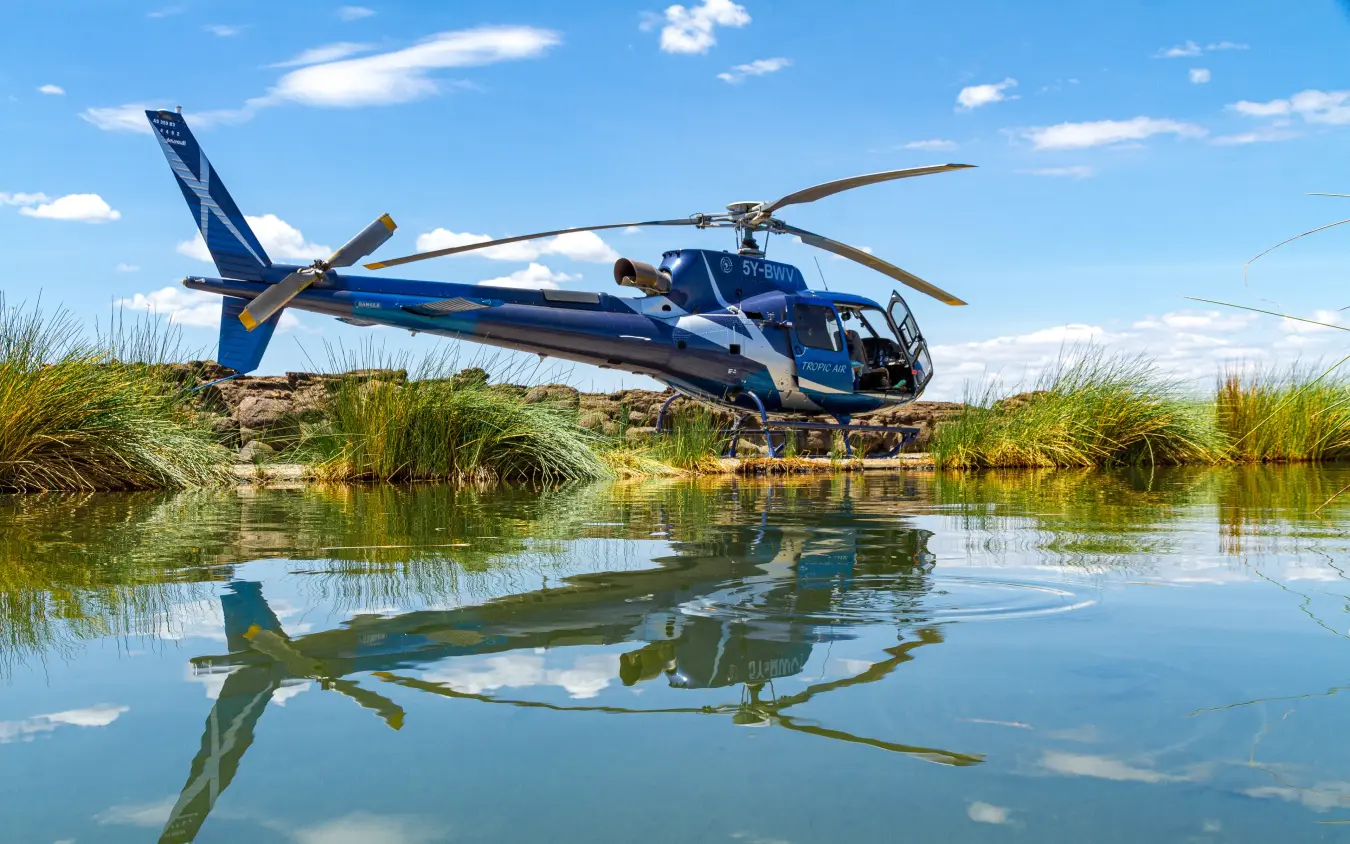
samburu and laikipia by helicopter
Fourteen nights across Kenya, from Nairobi's park to the Mara, then by helicopter into Samburu and the Laikipia Highlands.
- Private Safari
- From $26,580 pp
- 4 guests
- 14 nights
Thirteen nights link Nairobi with four wildlife regions. You begin on the city’s edge, then travel north to the Namunyak Conservancy on the slopes of the Mathews Range, Samburu-owned land where the waterhole sets the day. Next comes the Laikipia Highlands and Borana’s rhino country, then the low-density Mara North Conservancy on the northern Maasai Mara, and finally the far north of the Serengeti above the Mara River.
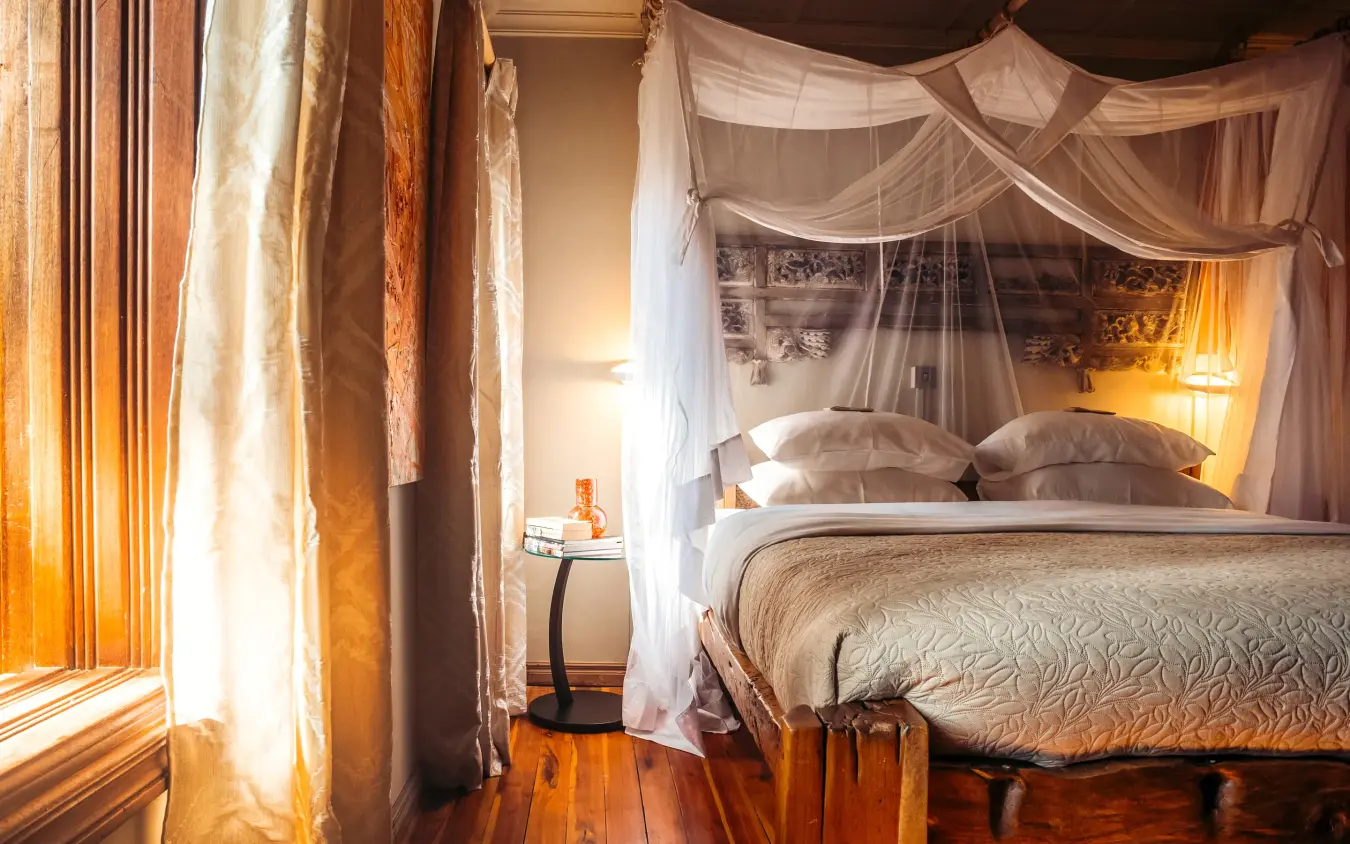
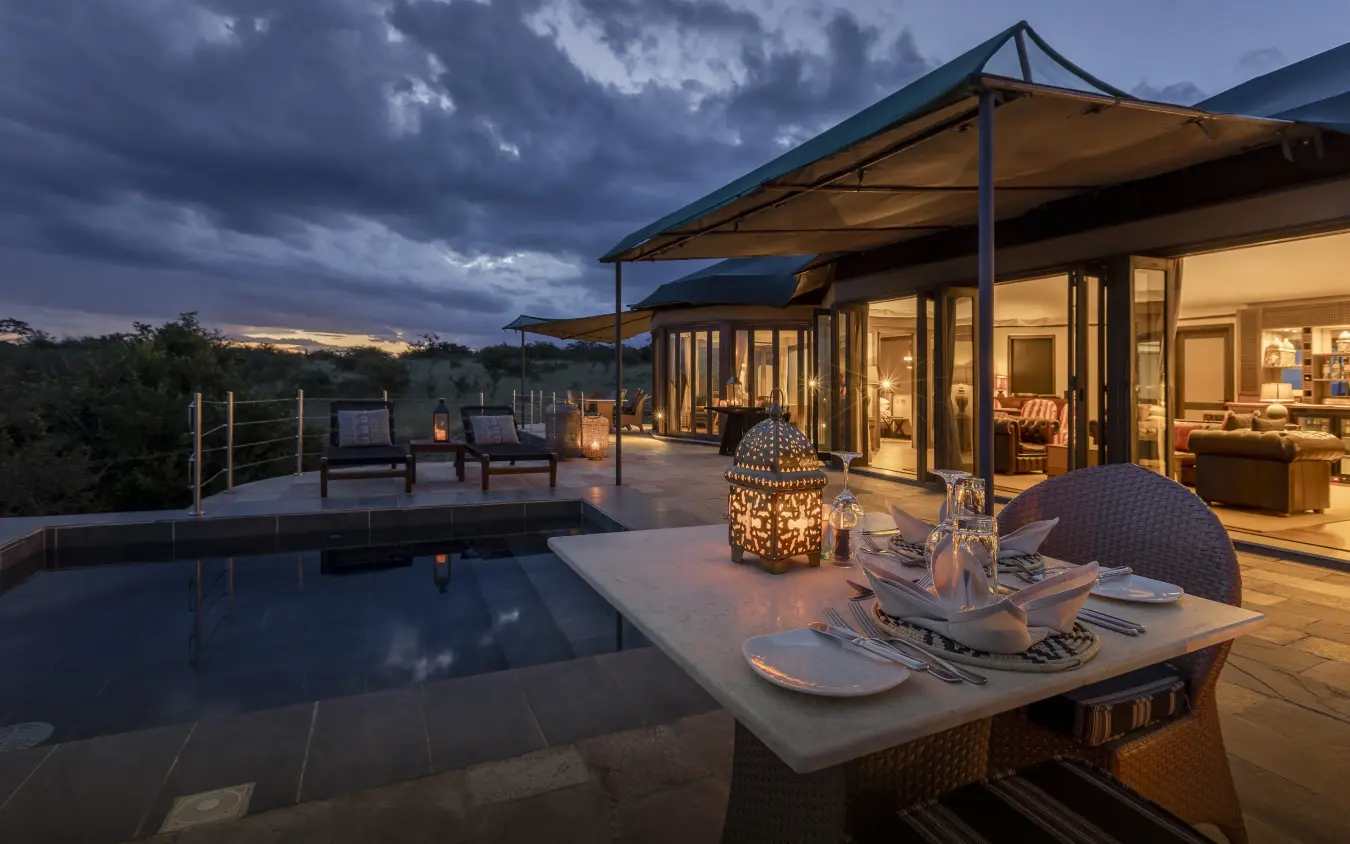
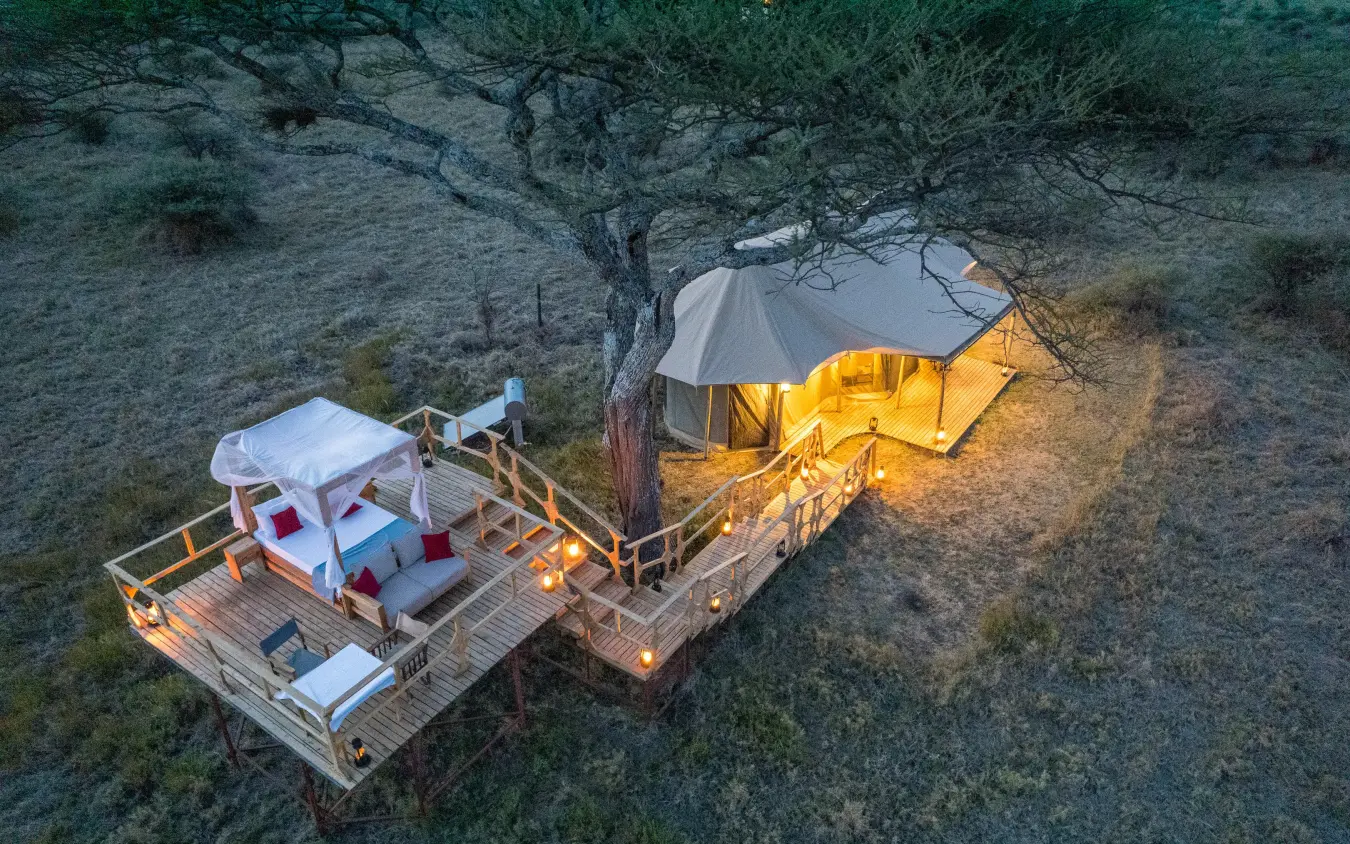
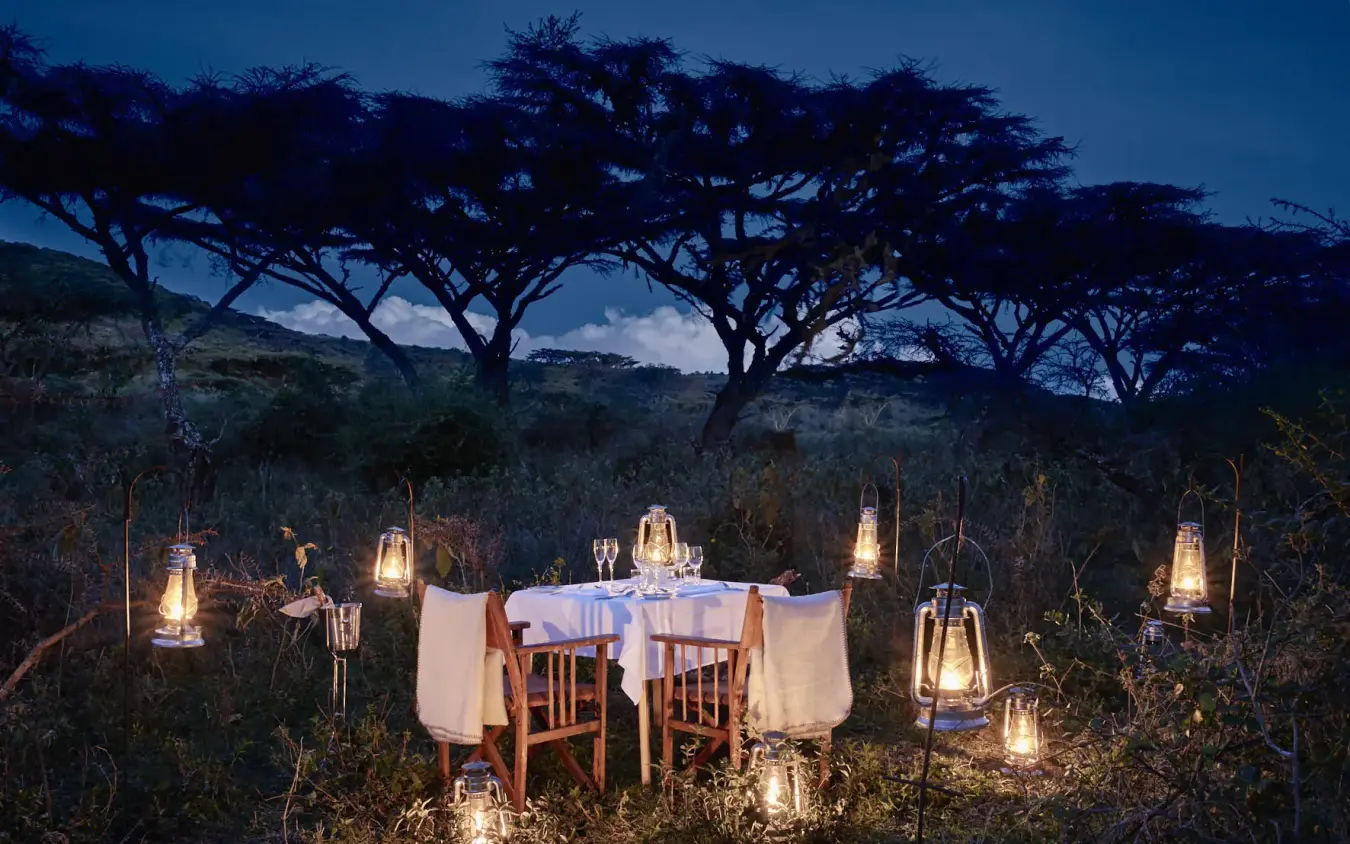
Days run beyond the standard game drive, into night drives, guided walks, horse riding and balloon flights, led in the conservancies by local teams. The five stays range from a 1930s manor house to hillside tents, stone cottages, a Mara camp in an olive grove and a lodge built into a Serengeti kopje, each with its own page and standard.
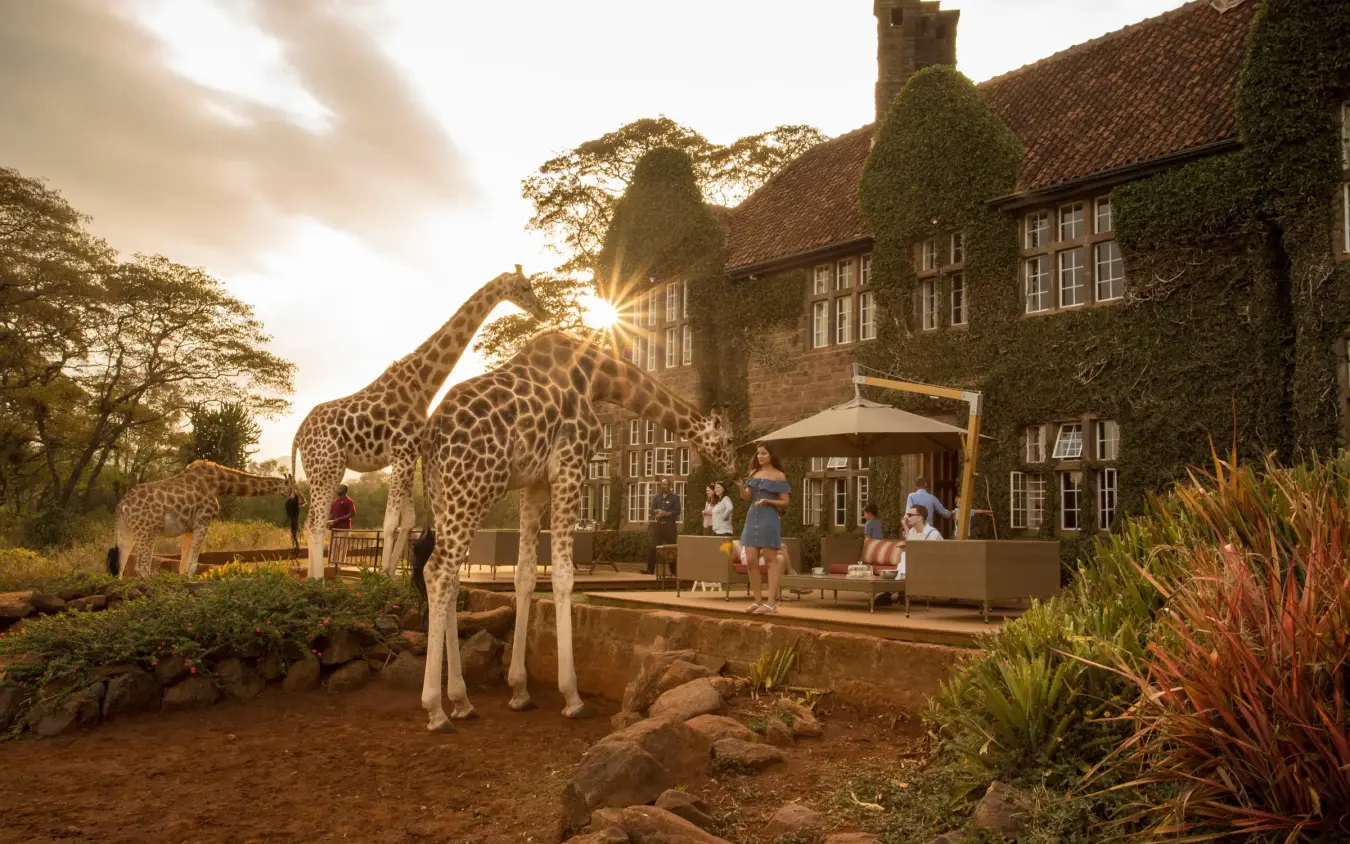
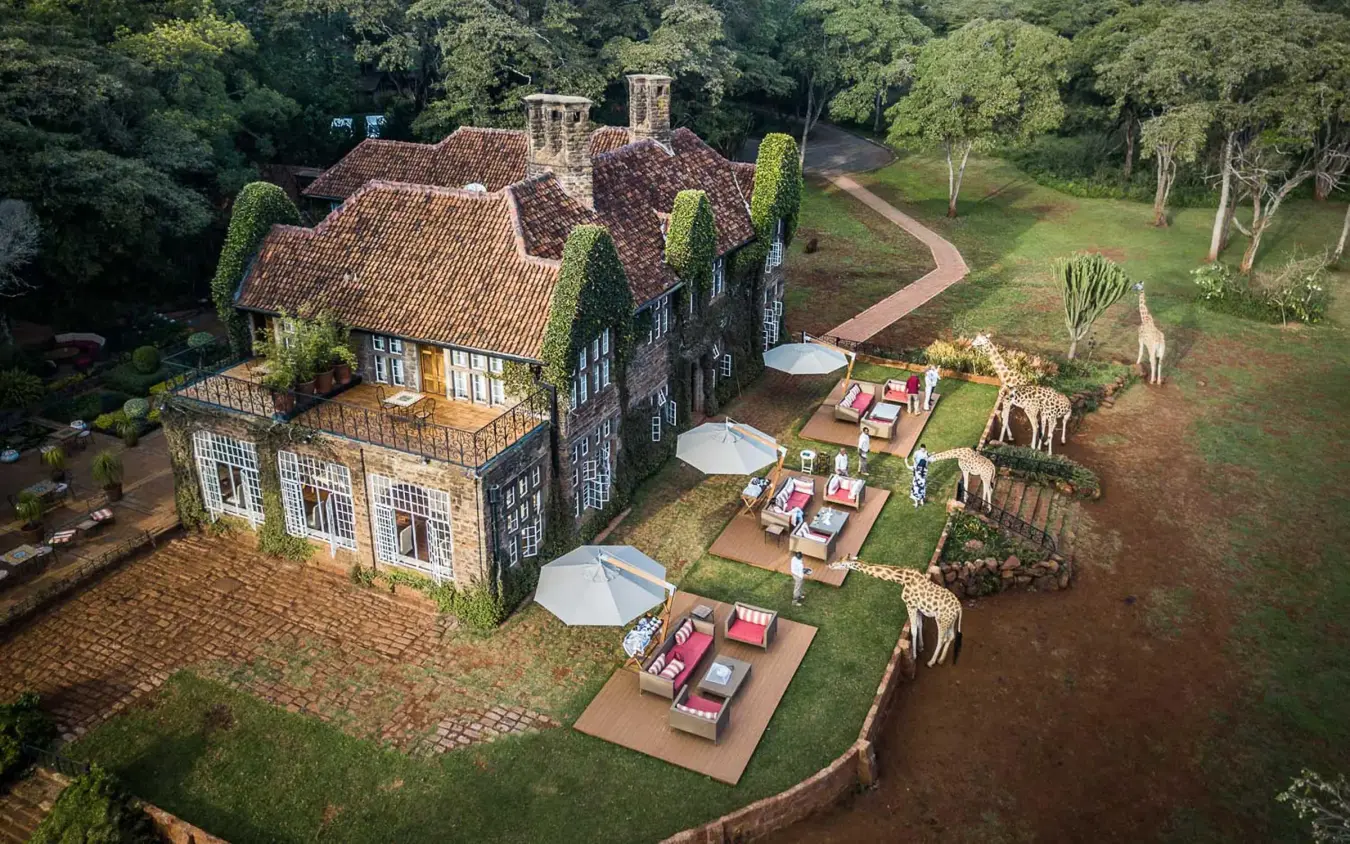
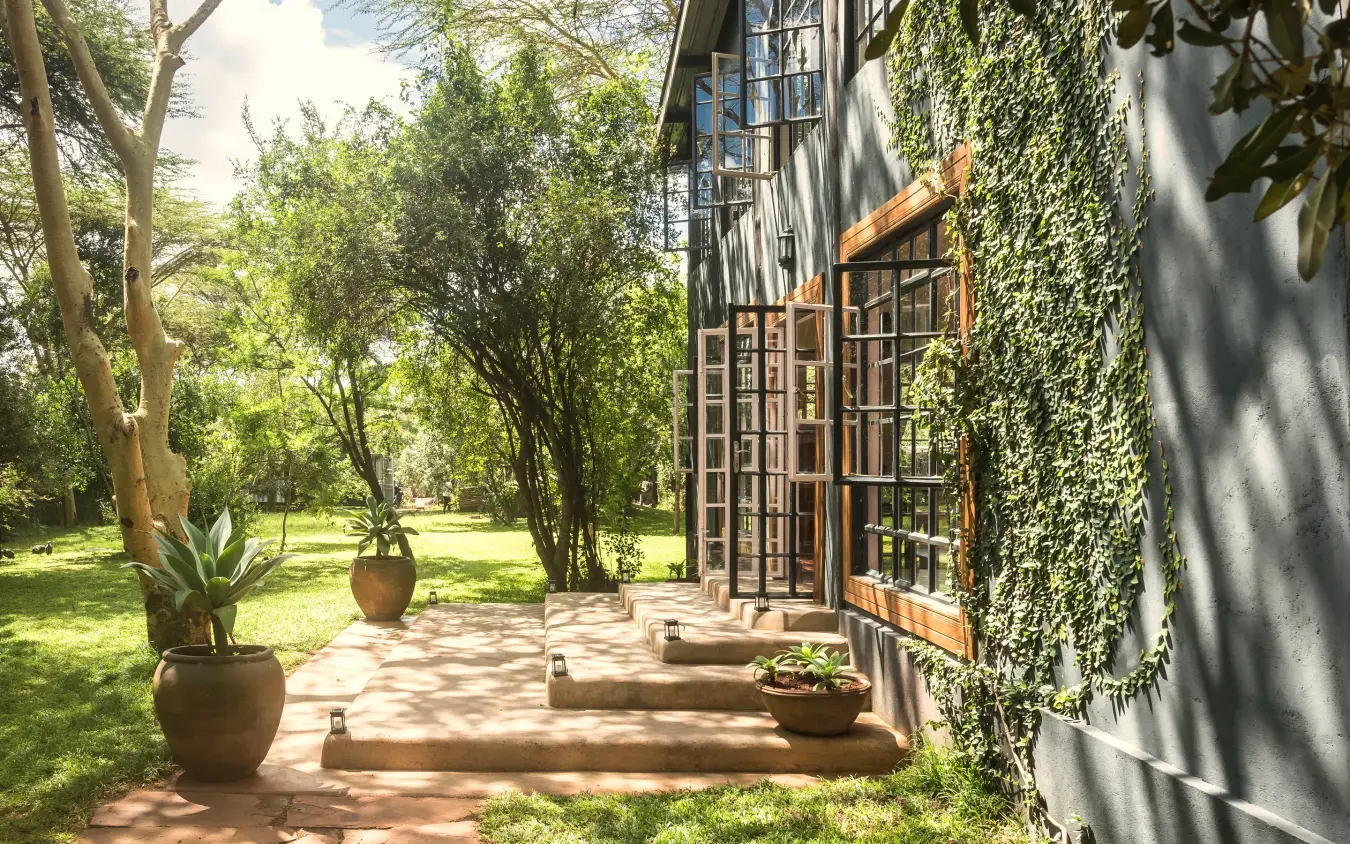
Land in Nairobi and settle into the leafy suburbs of Karen and Langata, forty-five to sixty minutes from Jomo Kenyatta International Airport and less from Wilson. The estate's resident herd of endangered Rothschild's giraffes moves freely between forest and lawn, drifting up to the house at the morning and late-afternoon feeding times to take pellets from your hand. Giraffe Manor is a 1930s house on twelve acres within a larger stretch of indigenous forest, where the giraffes push their long necks through the dining-room windows at breakfast.
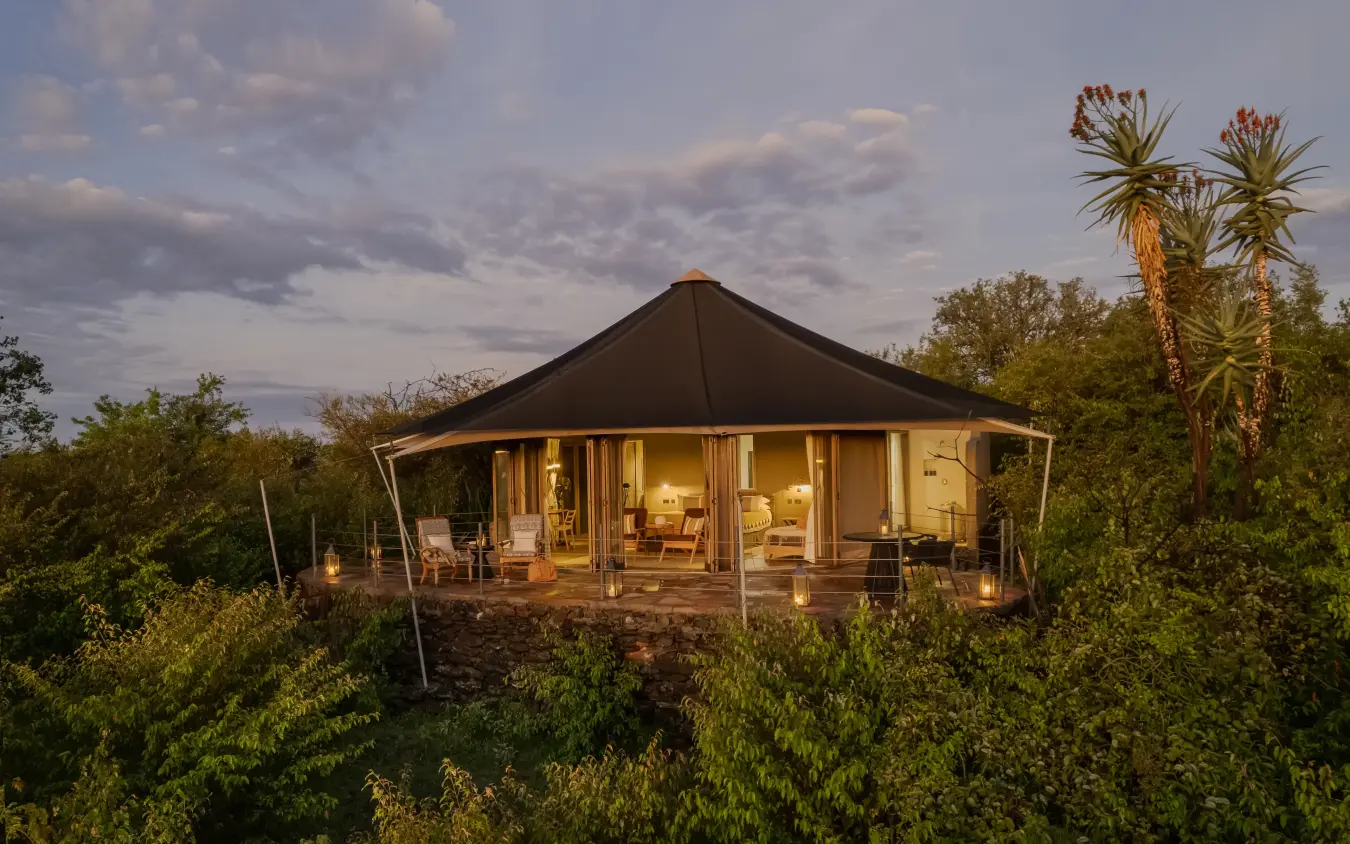
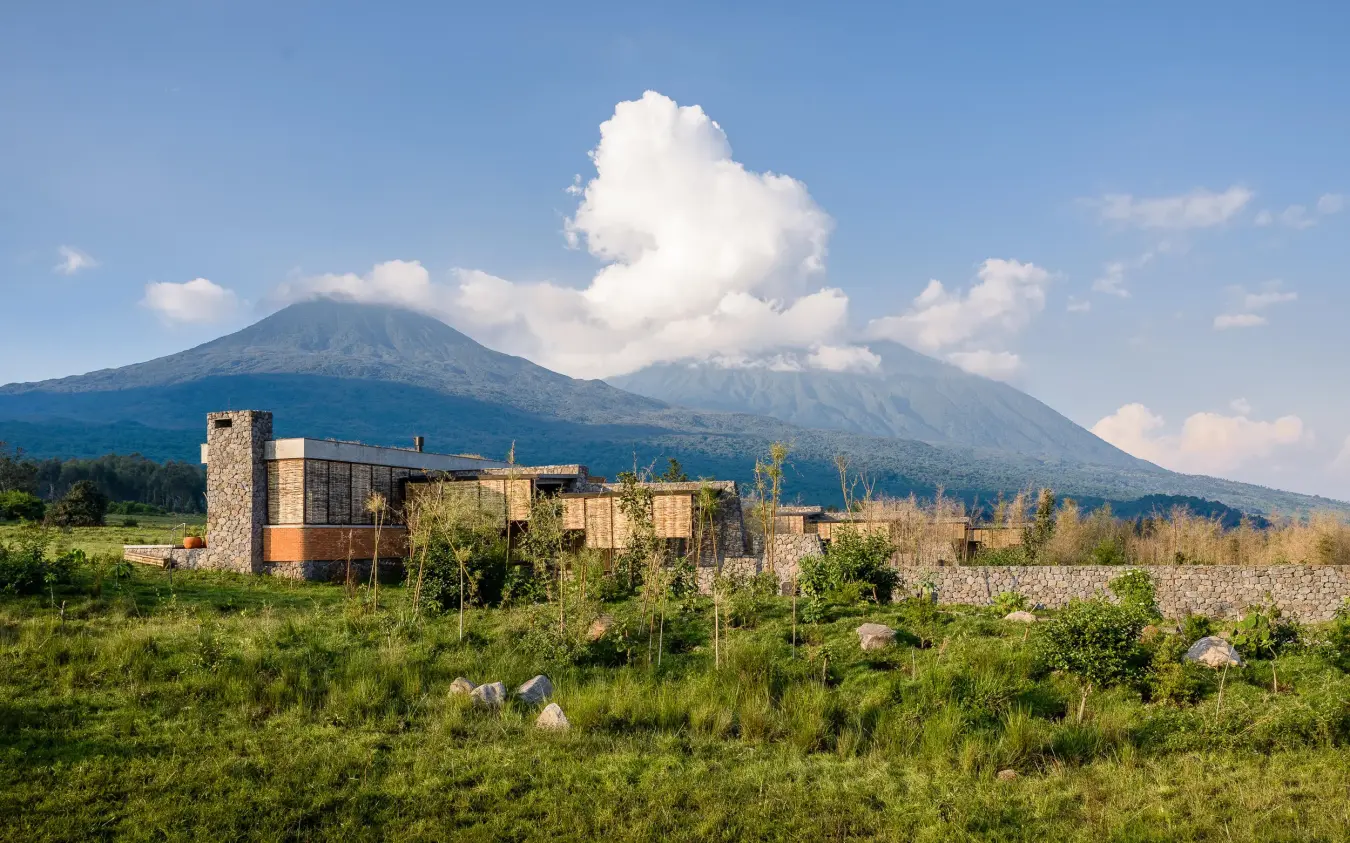
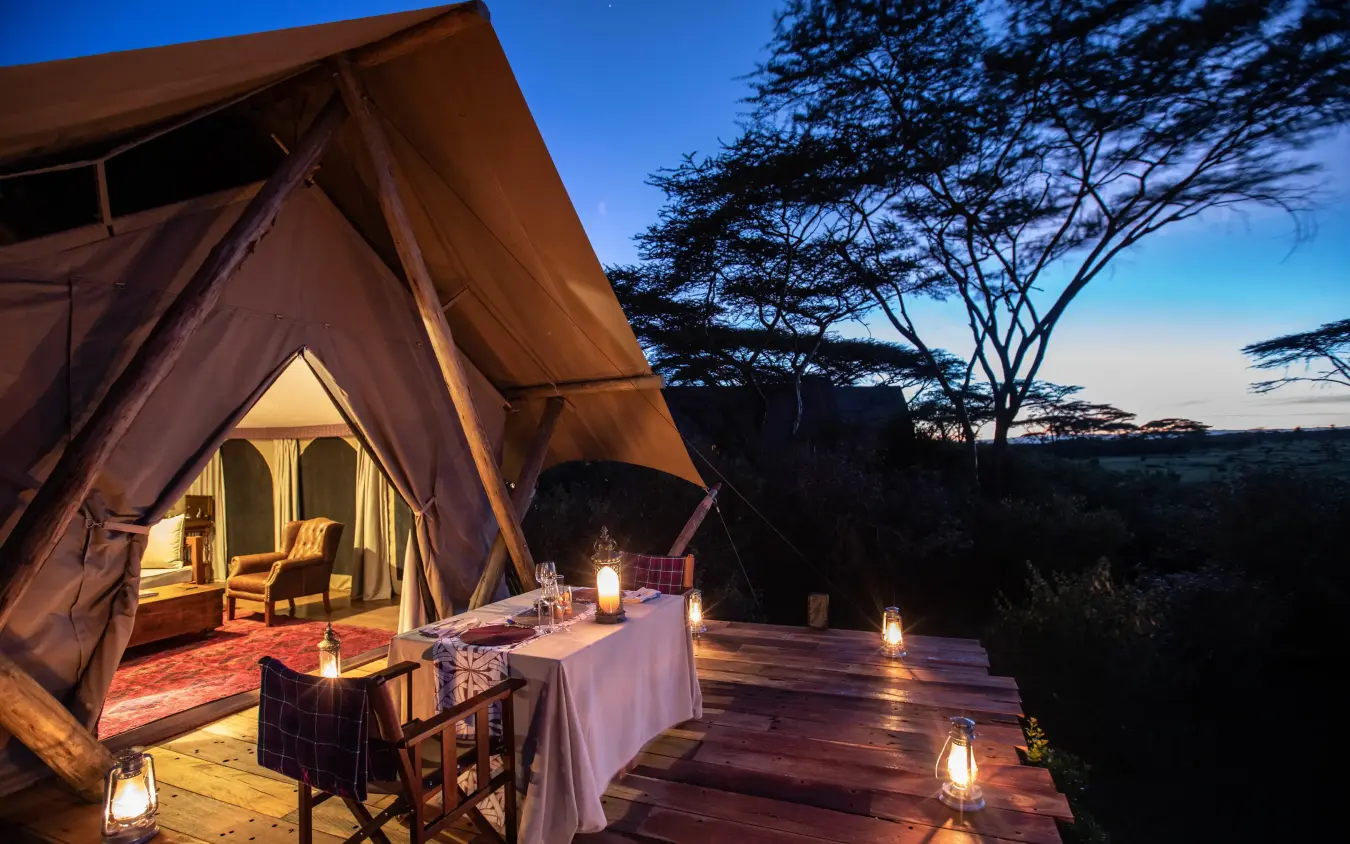
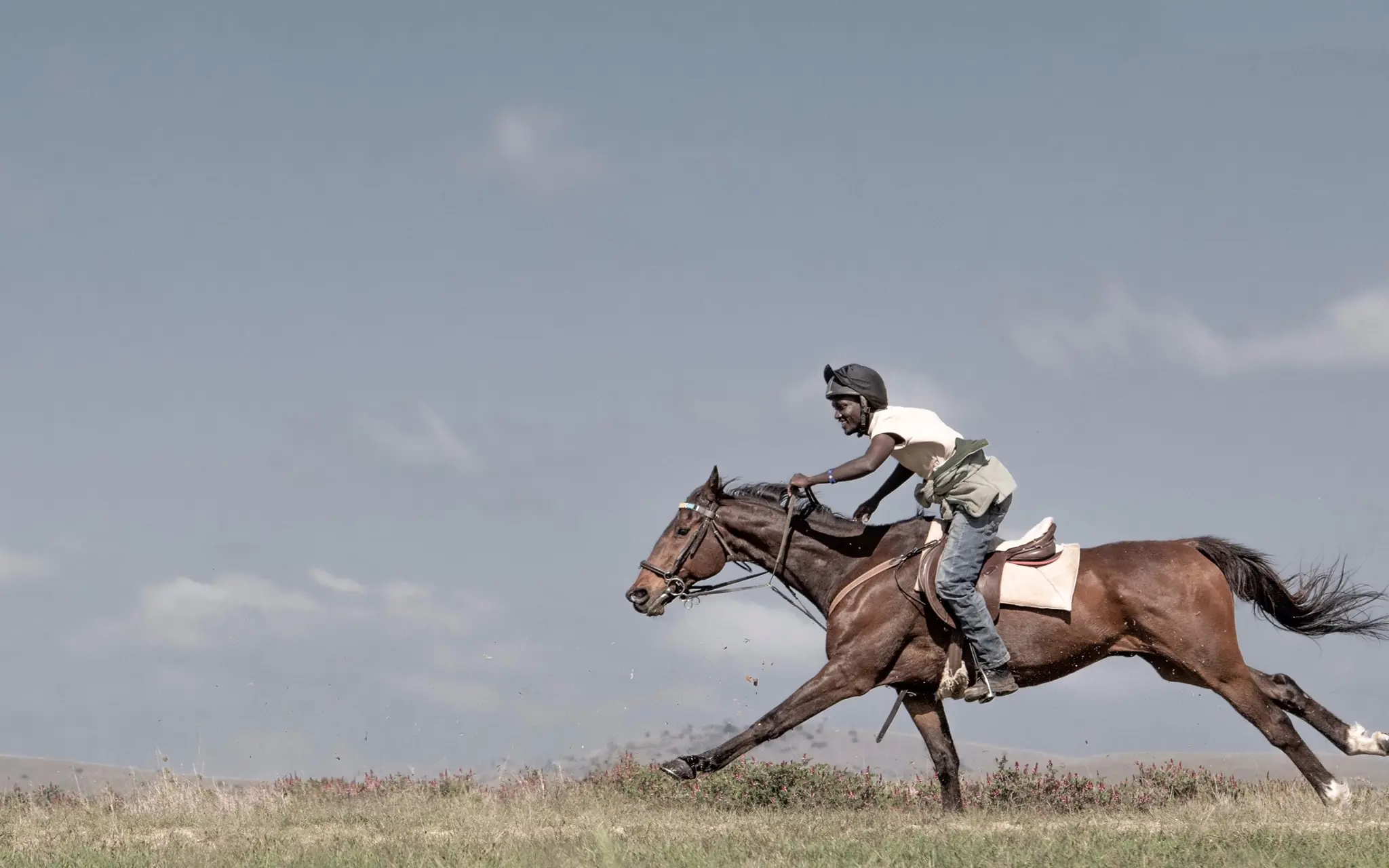
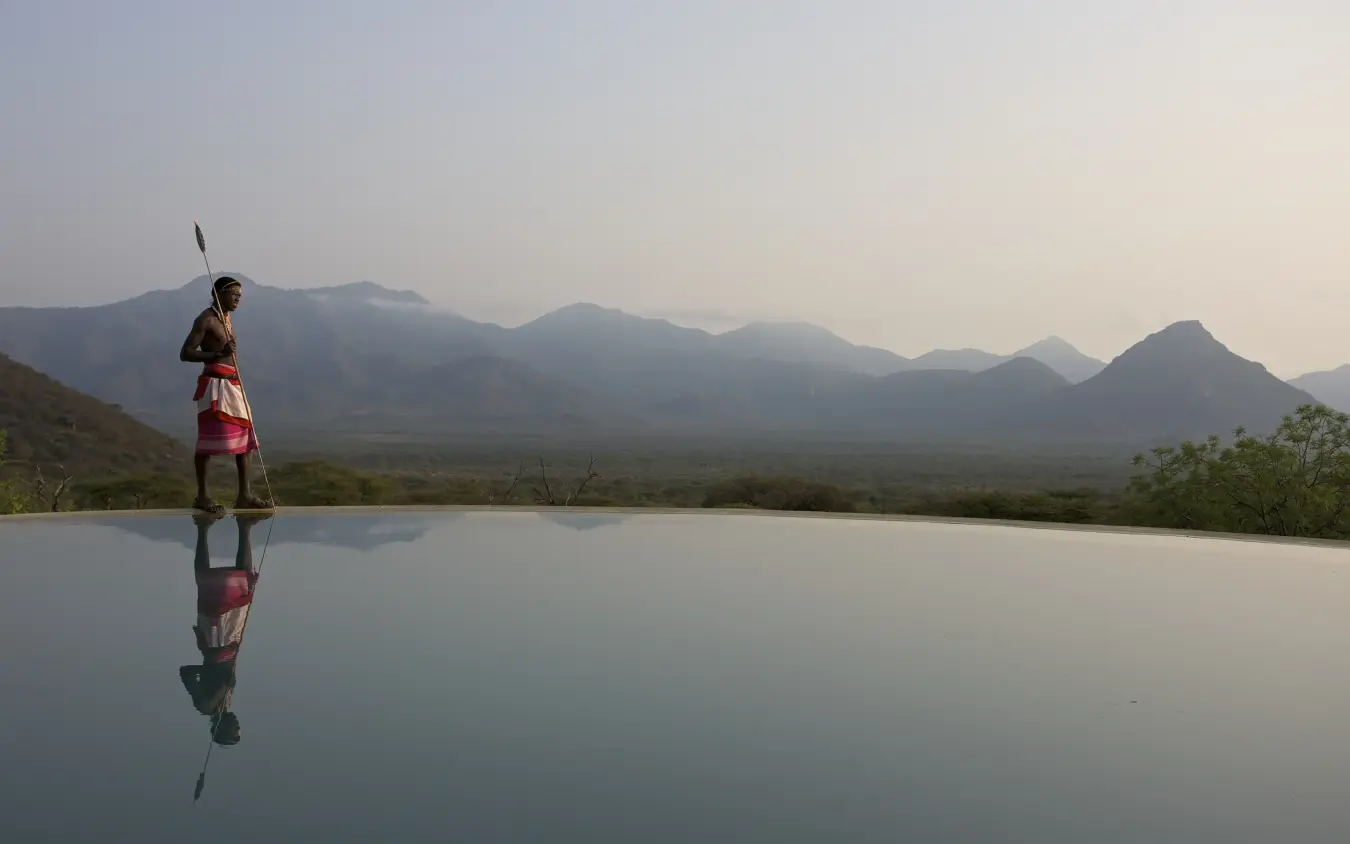
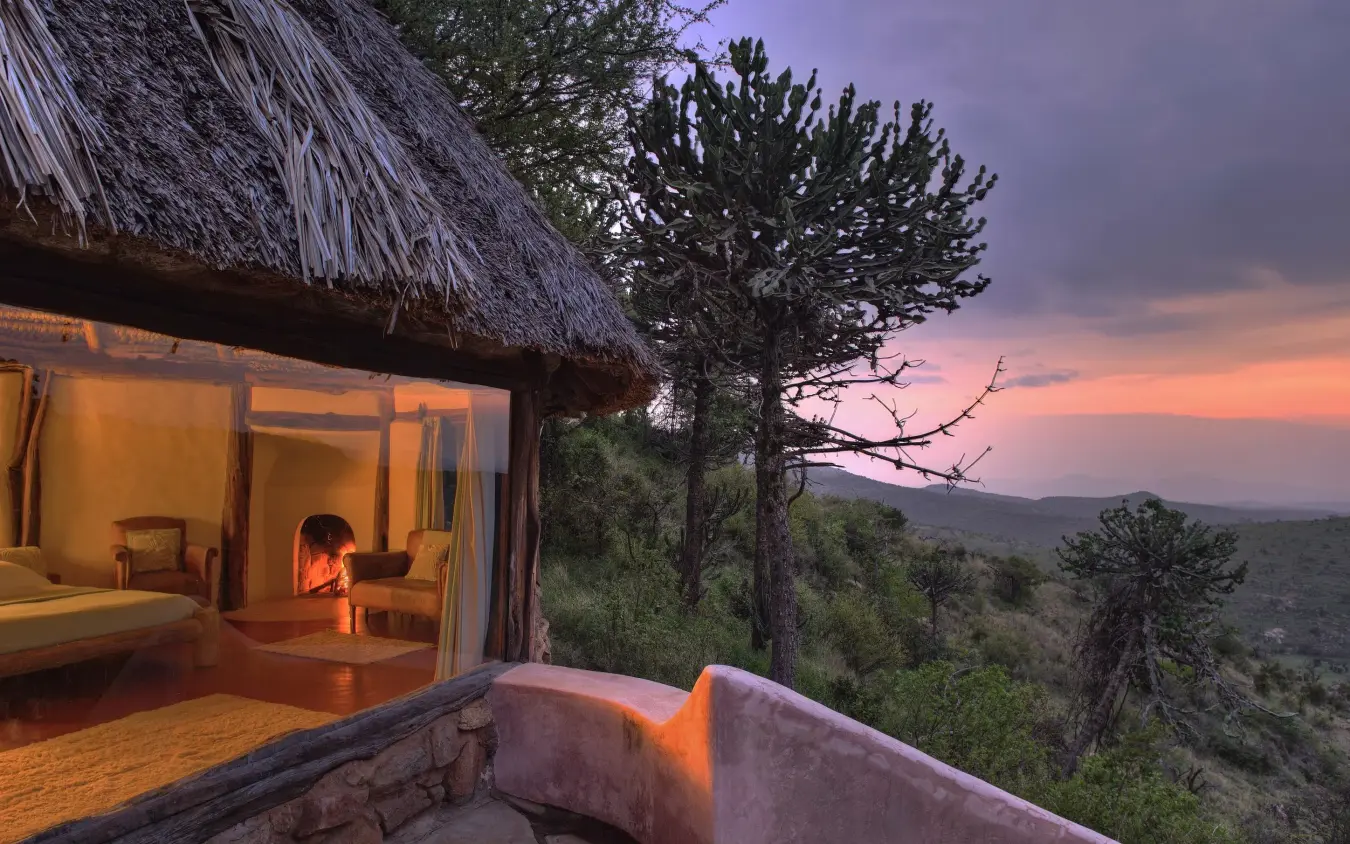
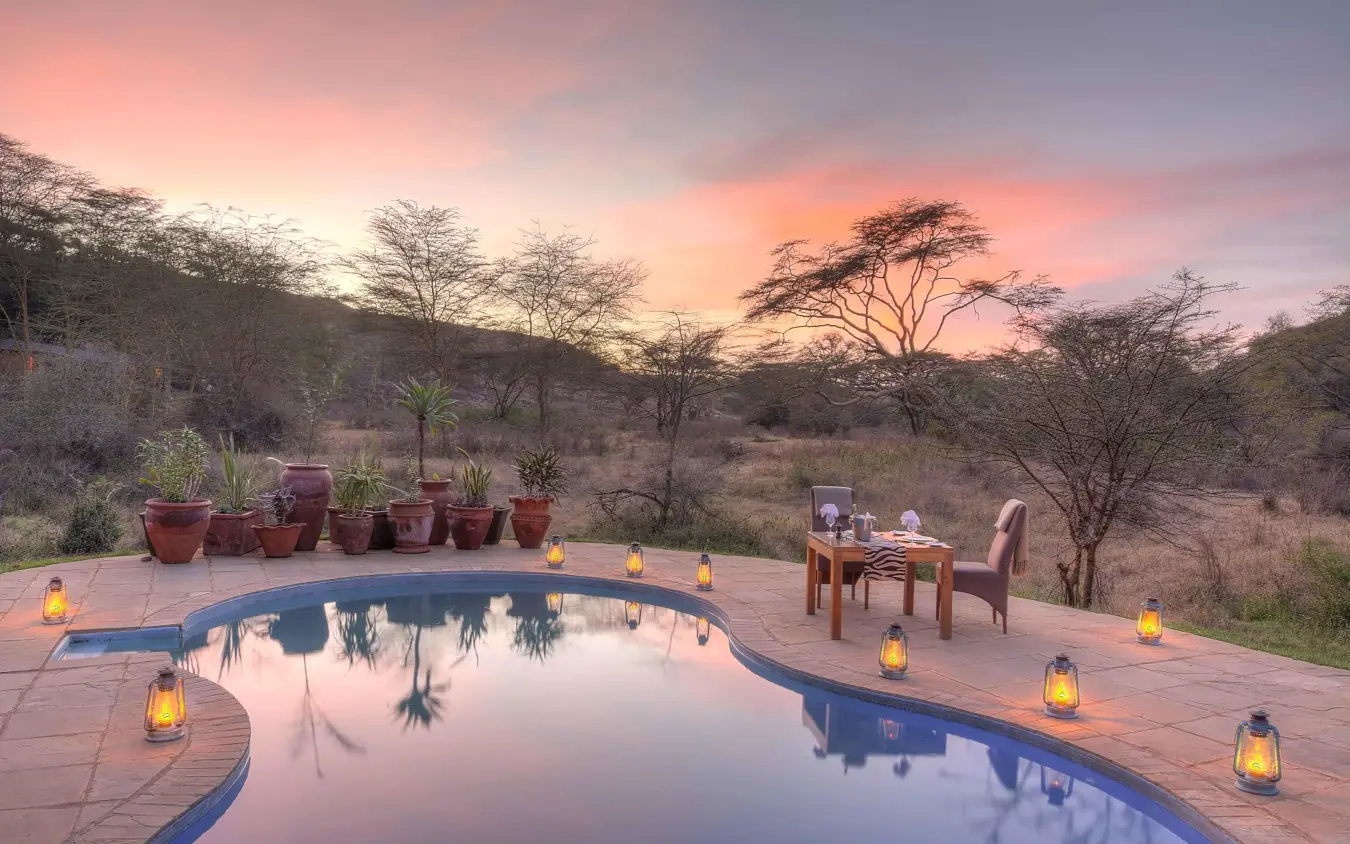
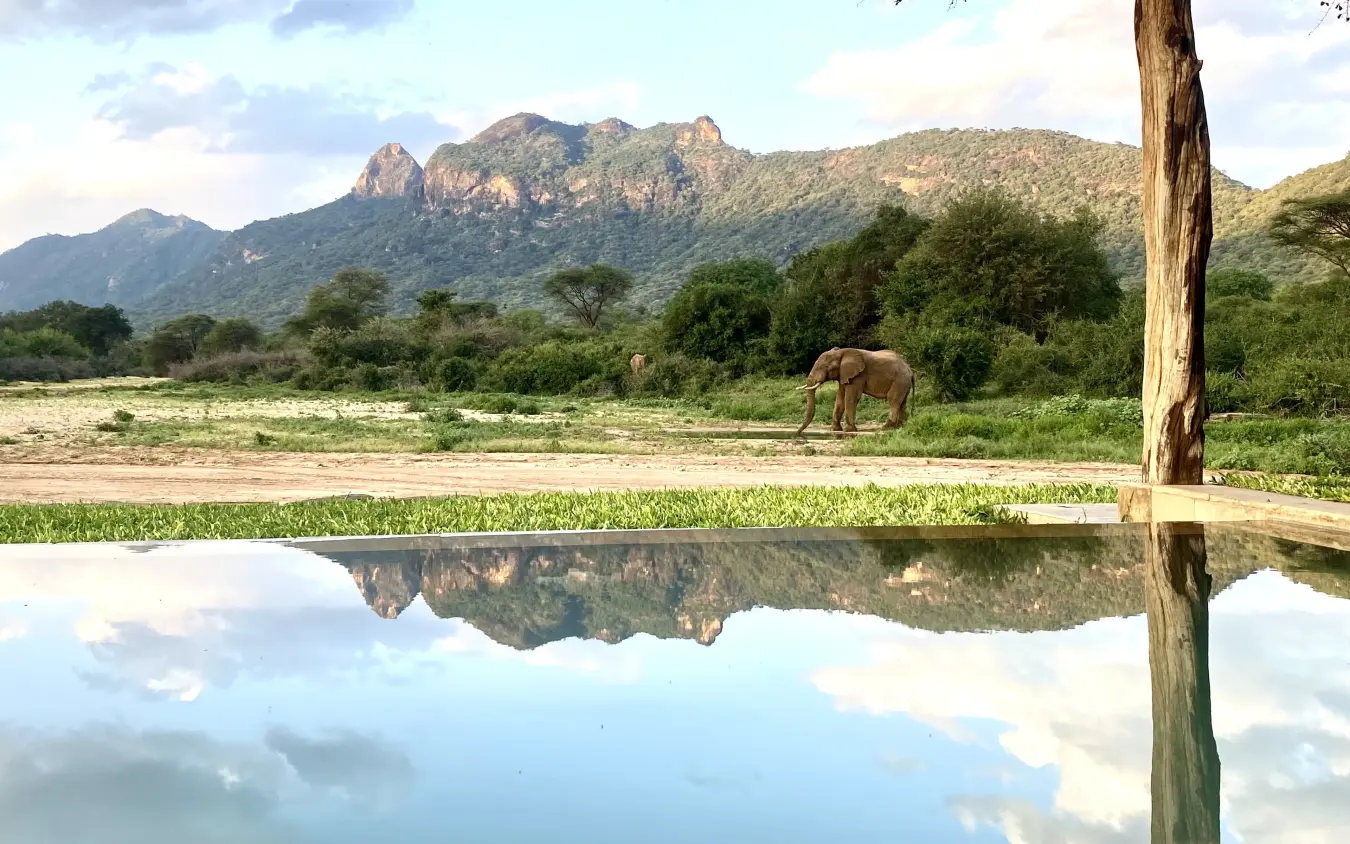
In the Namunyak Conservancy, 850,000 acres owned outright by the Samburu community, the waterhole sets the rhythm of the day as elephants, kudu and warthog file down to drink. A day might run from a game drive into a night drive, lead off-road on foot into montane forest for colobus monkeys and cycads, or turn to horseback rides across the plains, guided by Samburu who have known the terrain since childhood. Nearby, warriors dig wells deep into dry riverbeds and pass water hand to hand up a human chain. Sarara Camp holds six tents spaced along a rocky hillside above the water, each with a private veranda and a solar-heated open-air shower facing the Mathews Range.
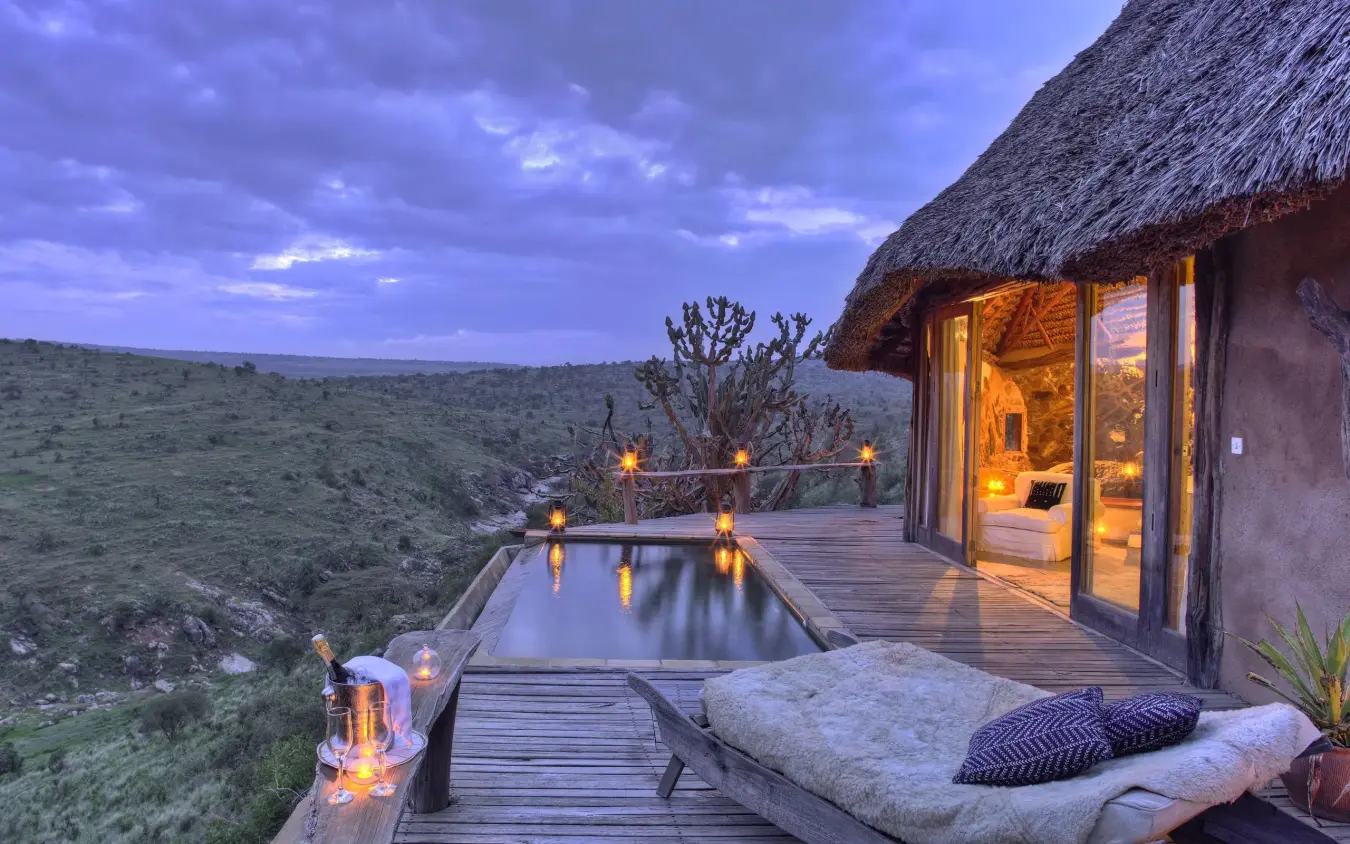
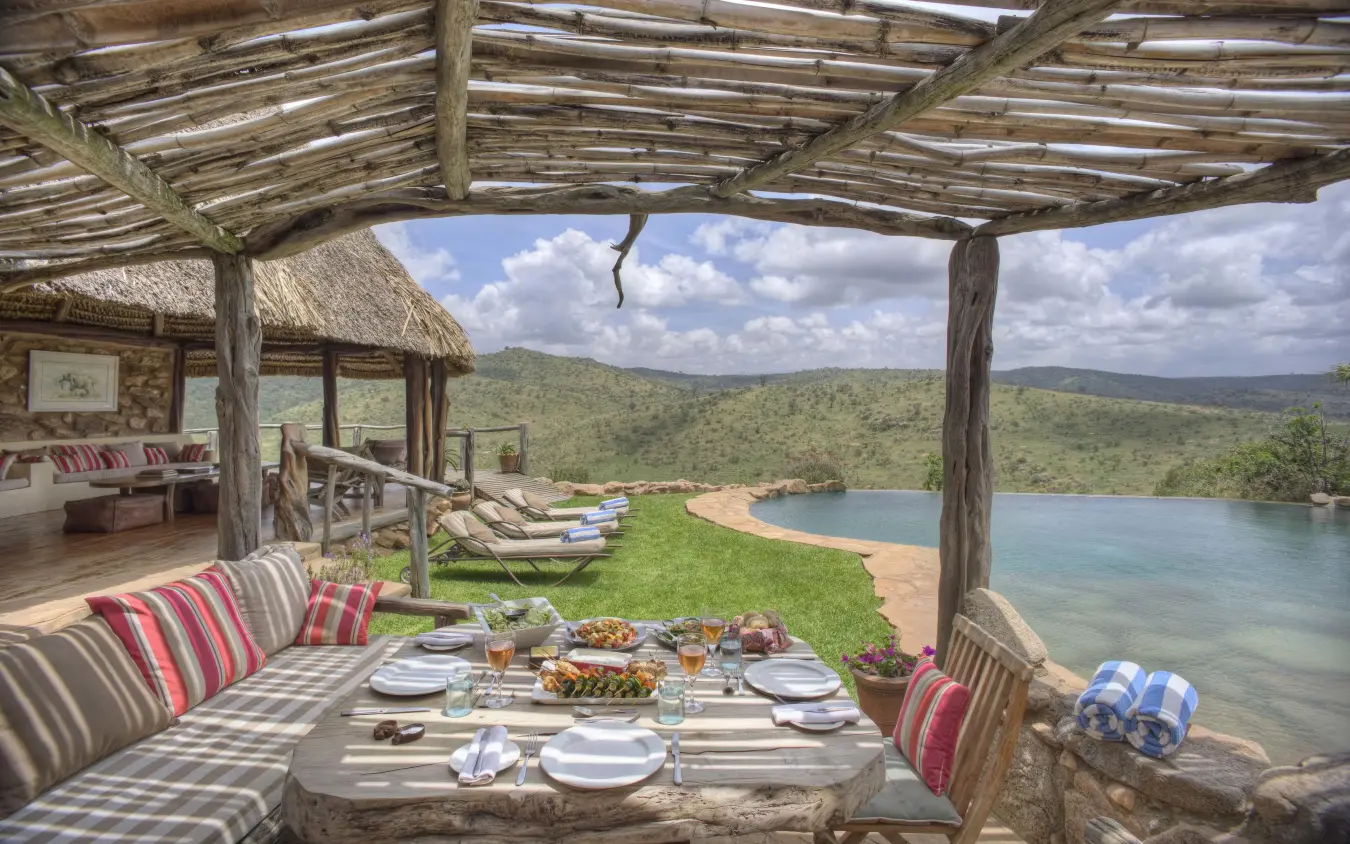
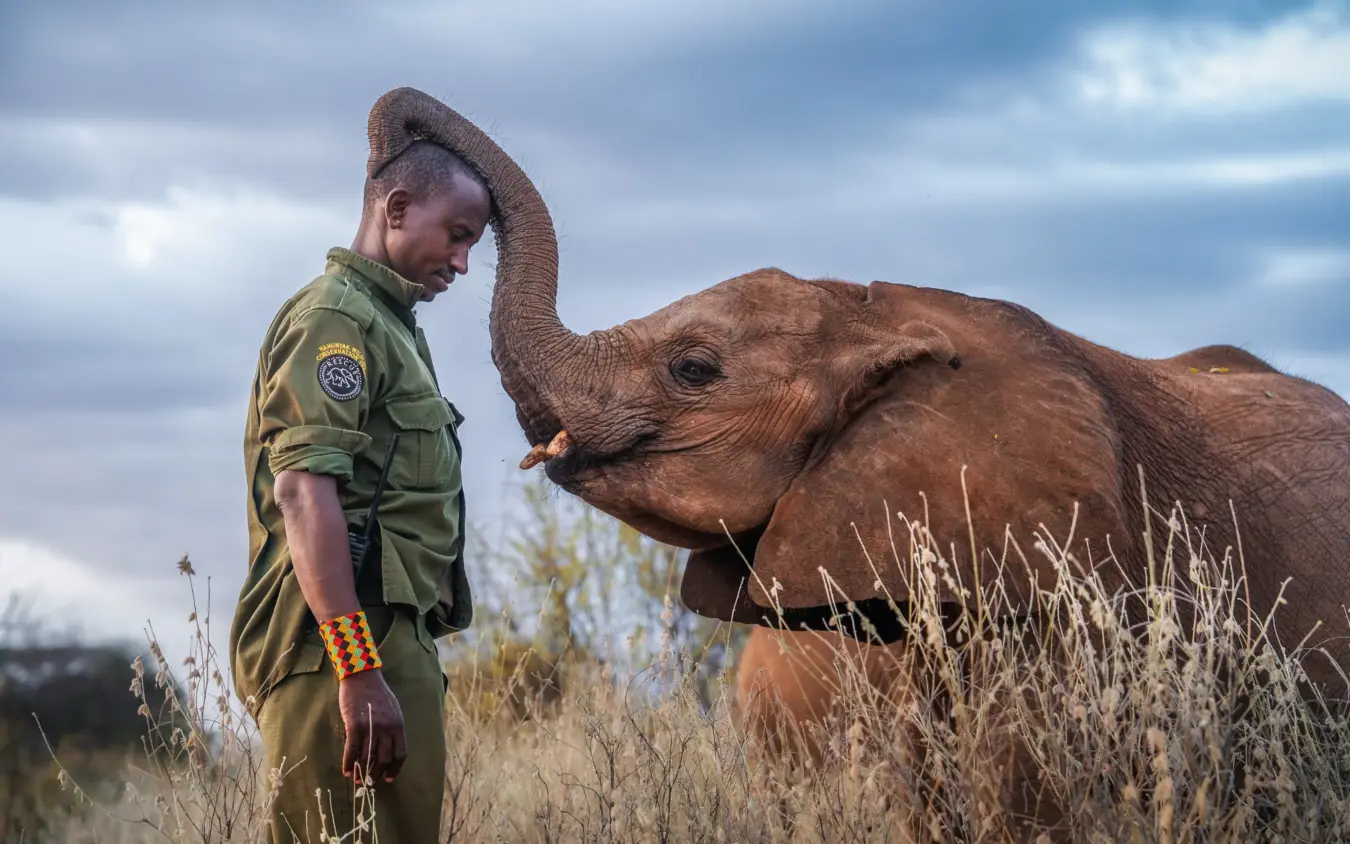
In the Laikipia Highlands, Borana joins the neighbouring Lewa Wildlife Conservancy across a single continuous landscape of 93,000 acres, home to more than 270 black and white rhino. Rangers monitor the animals daily, and you can join them on foot, tracking individuals and seeing how the anti-poaching patrols work. Days also hold horse-riding safaris among zebra and giraffe, guided walks, e-biking and night drives, with Mount Kenya rising to the south. Borana Lodge terraces eight cottages of local stone and cedar into a hillside above the Samangua Valley, over a dam that draws elephant, giraffe and baboon through the day.
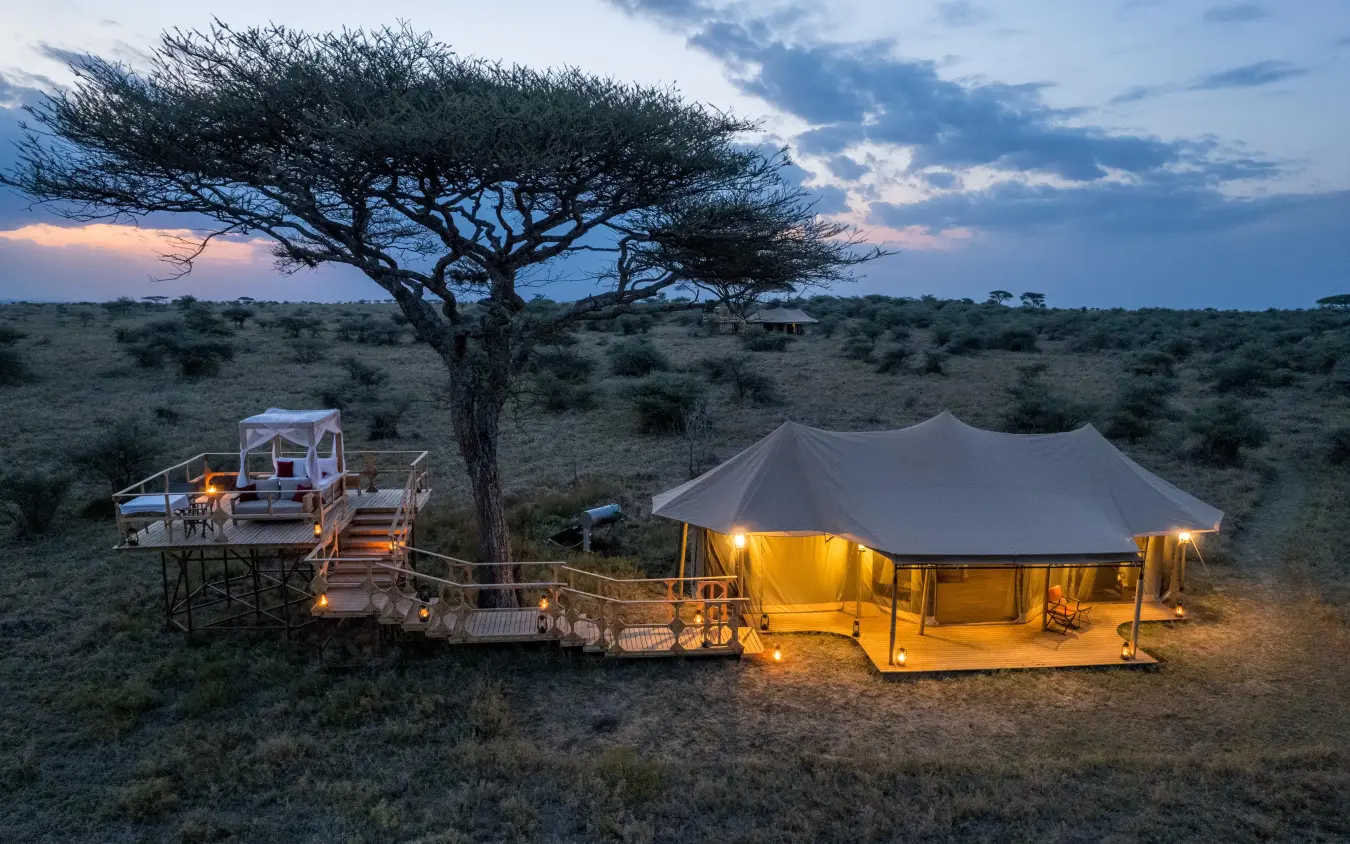
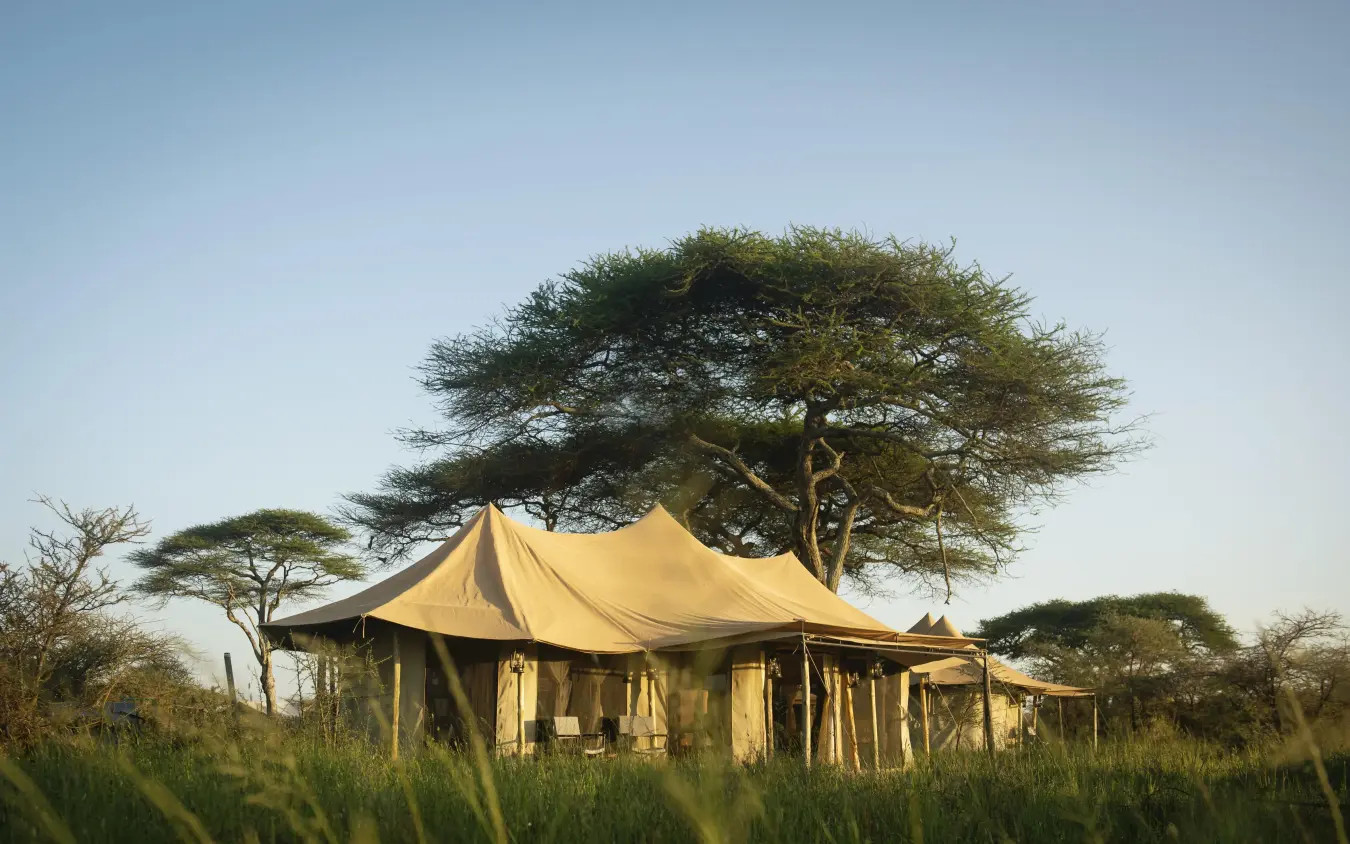
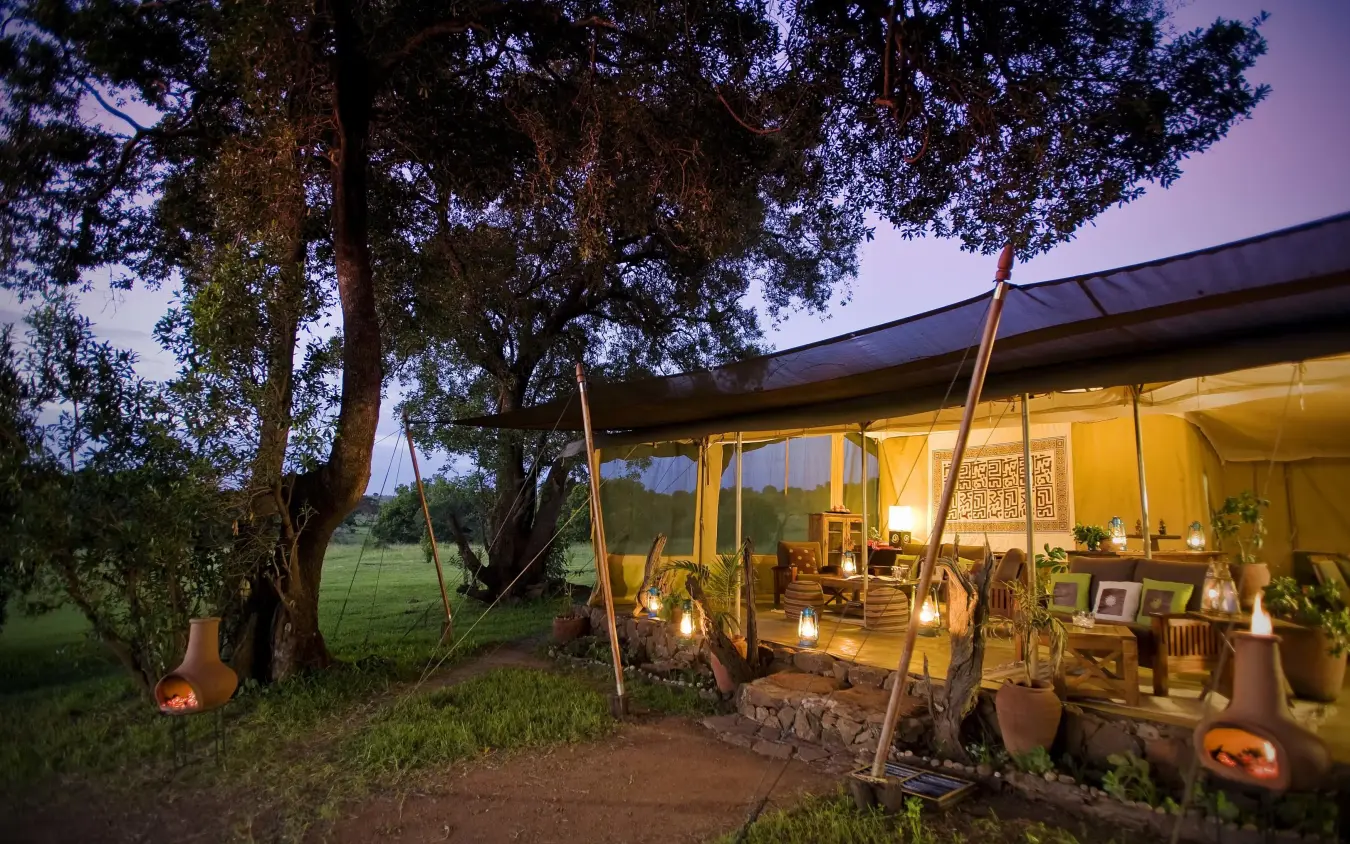
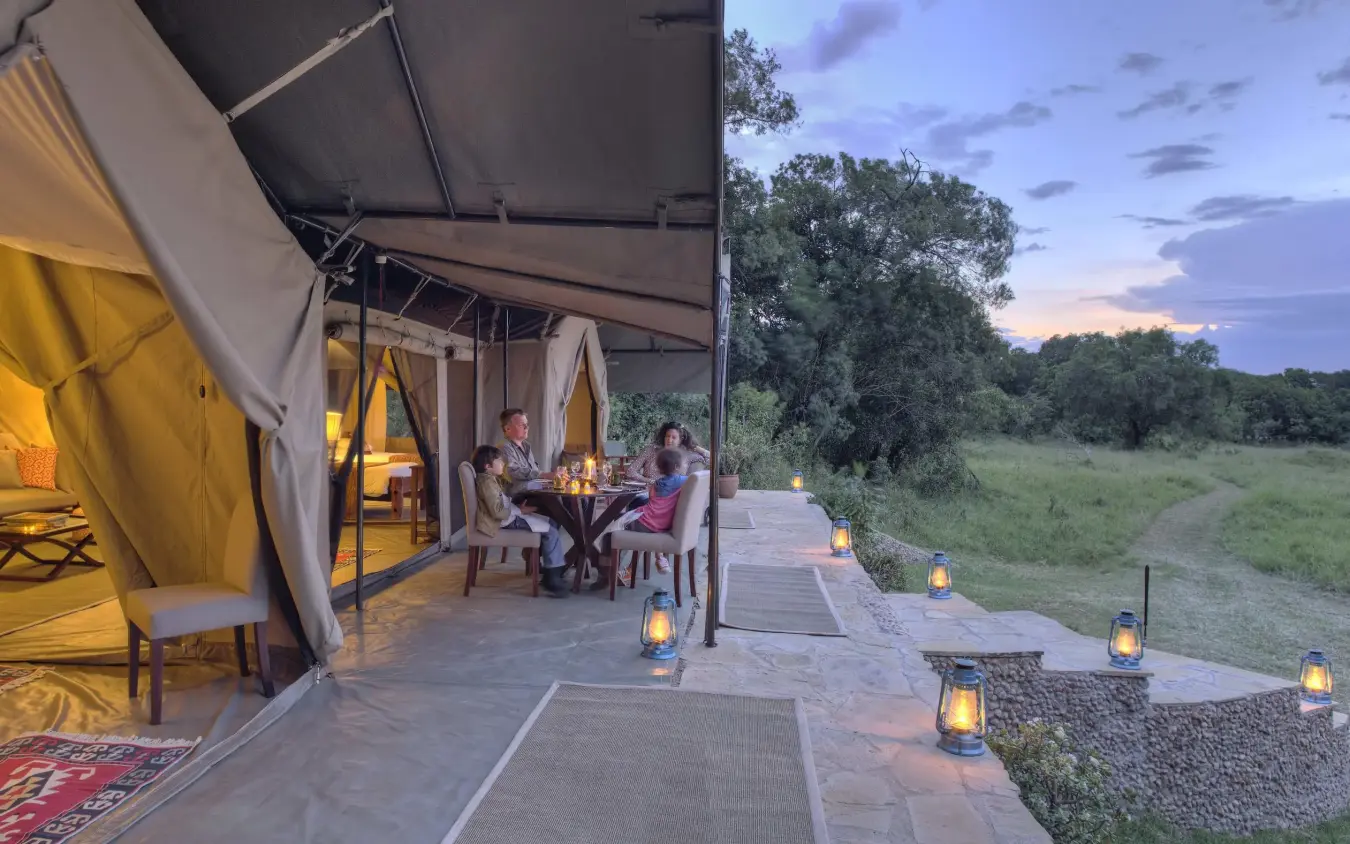
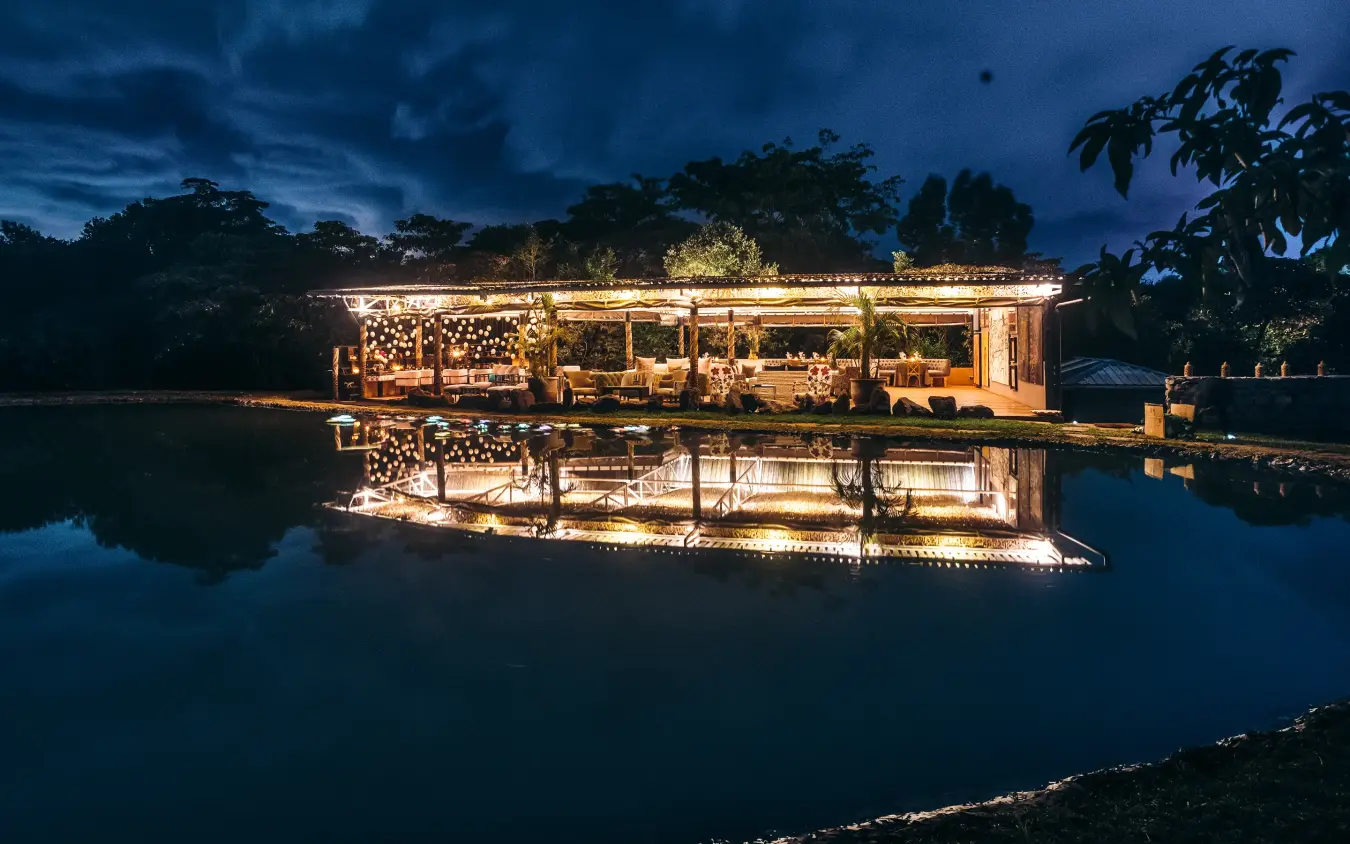
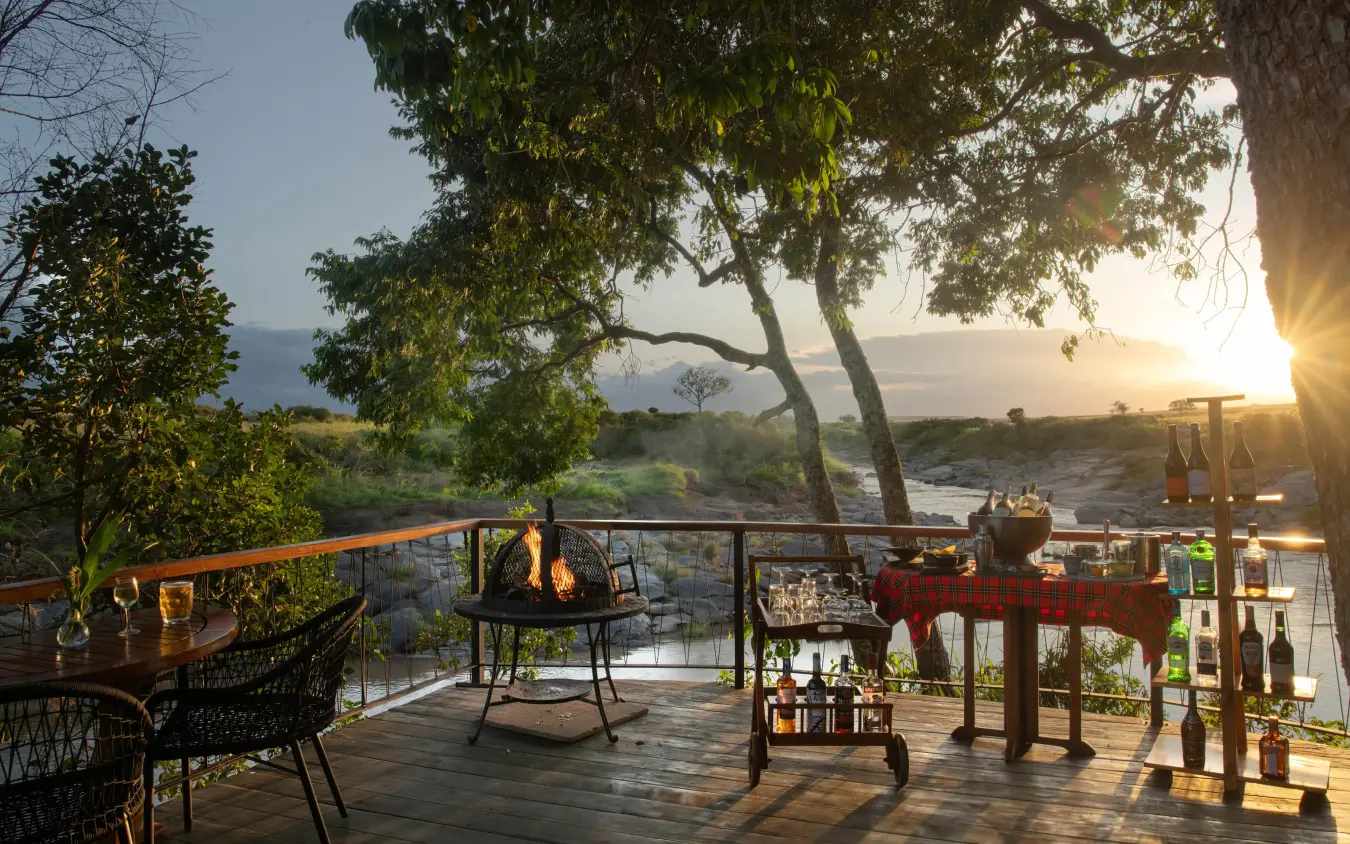
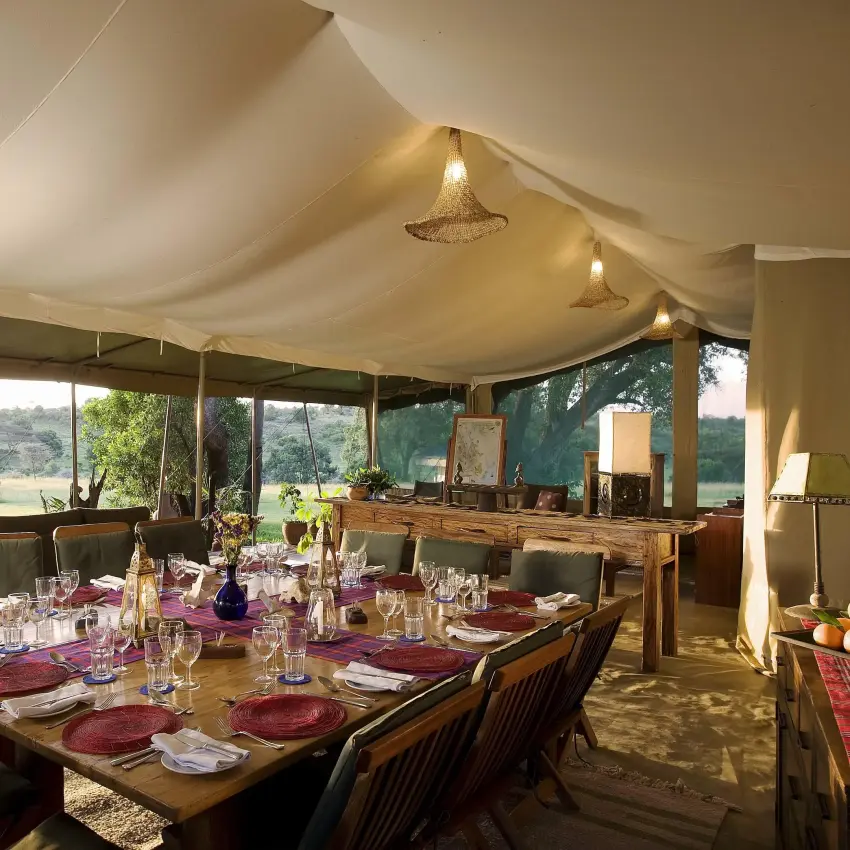
On the northern plains of the Maasai Mara, in Mara North Conservancy, game drives run morning and afternoon in customised 4x4s, with off-road driving allowed to reach a sighting and no more than five vehicles at any single one. The conservancy carries strong predator numbers the year round, and between roughly July and October wildebeest and zebra pour across the plains. Guided walks with an armed ranger and sunrise balloon flights fill out the days. Kicheche Mara Camp sits in Acacia Valley, tucked into a grove of wild olive and croton above the seasonal Olare Orok stream, where zebra and antelope graze within sight of the tents.
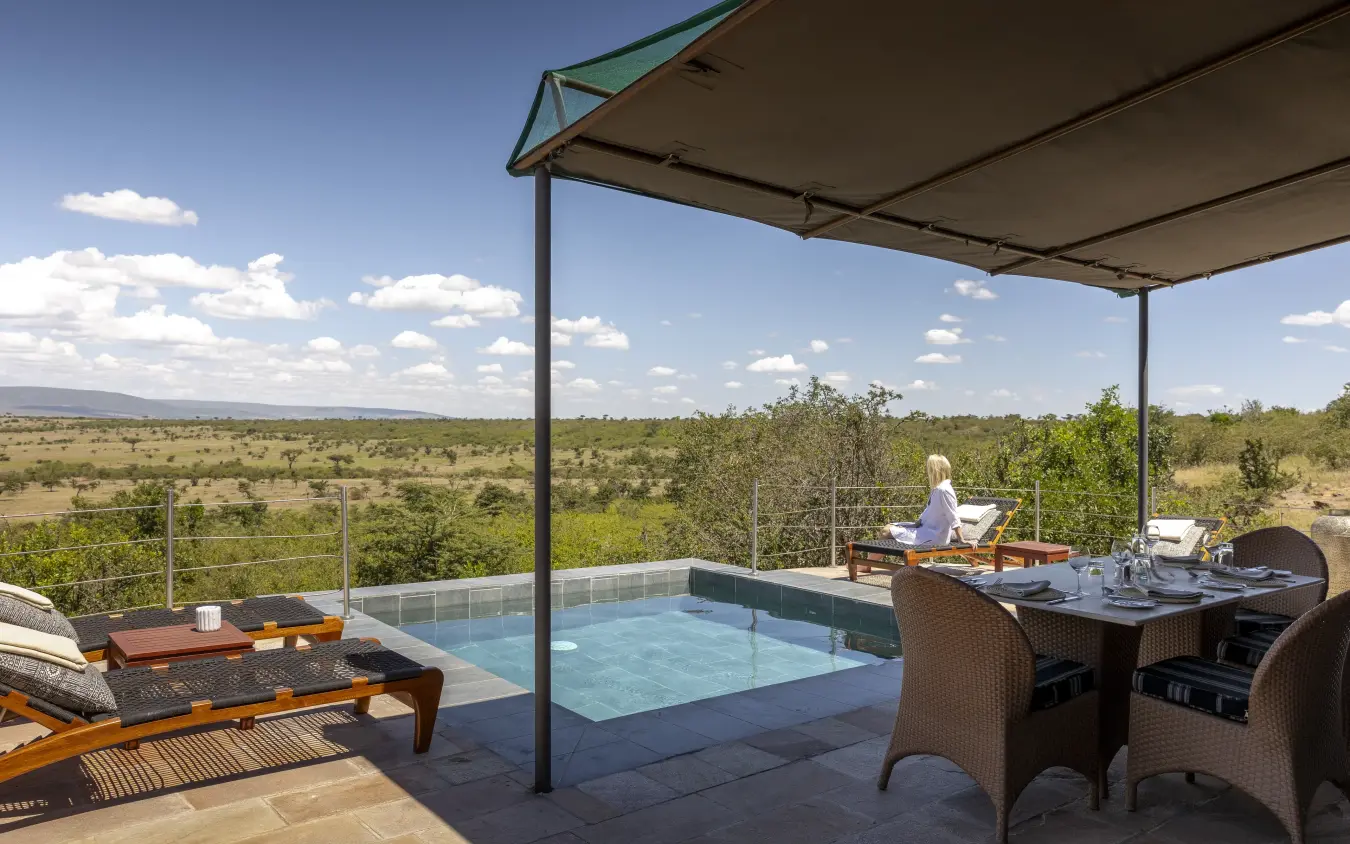
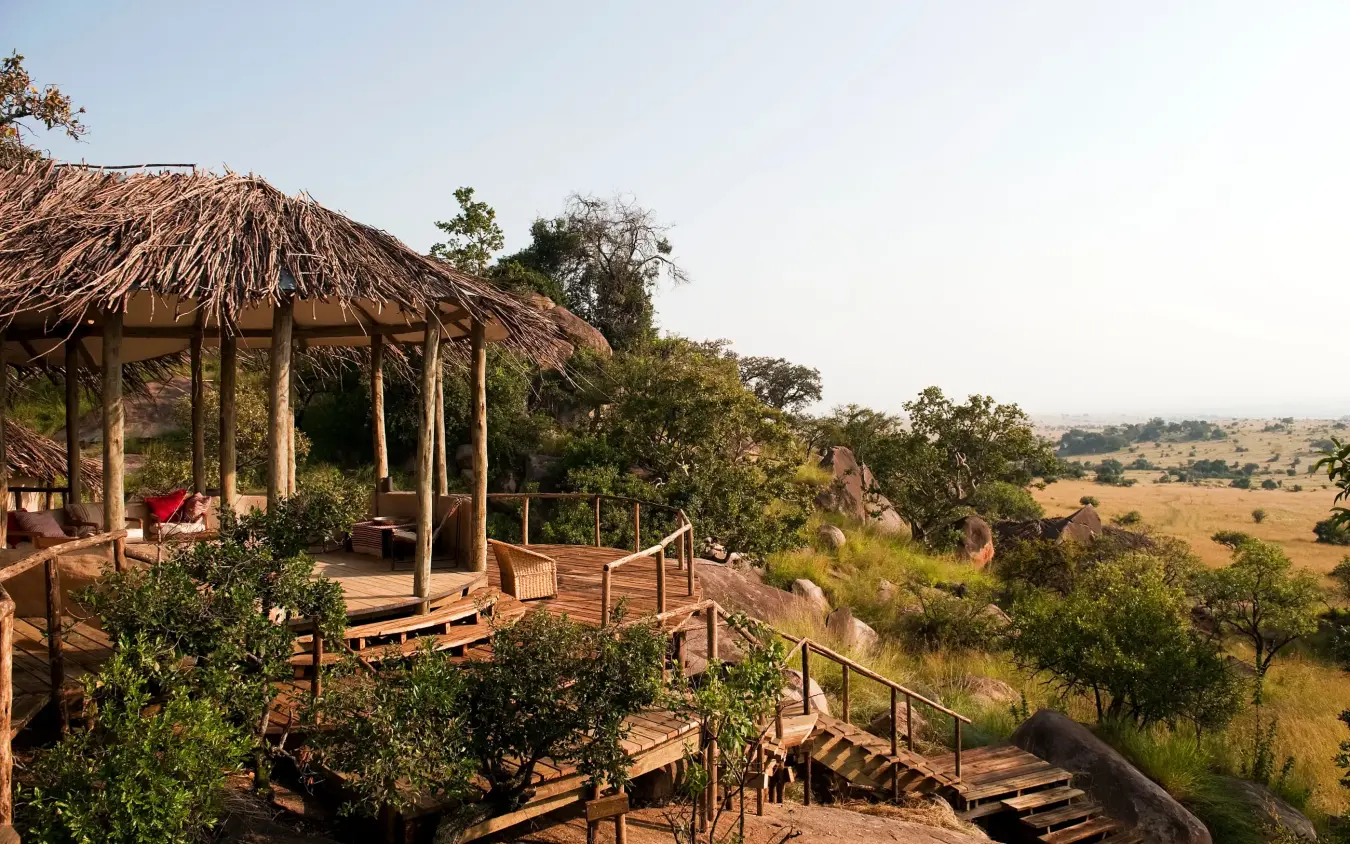
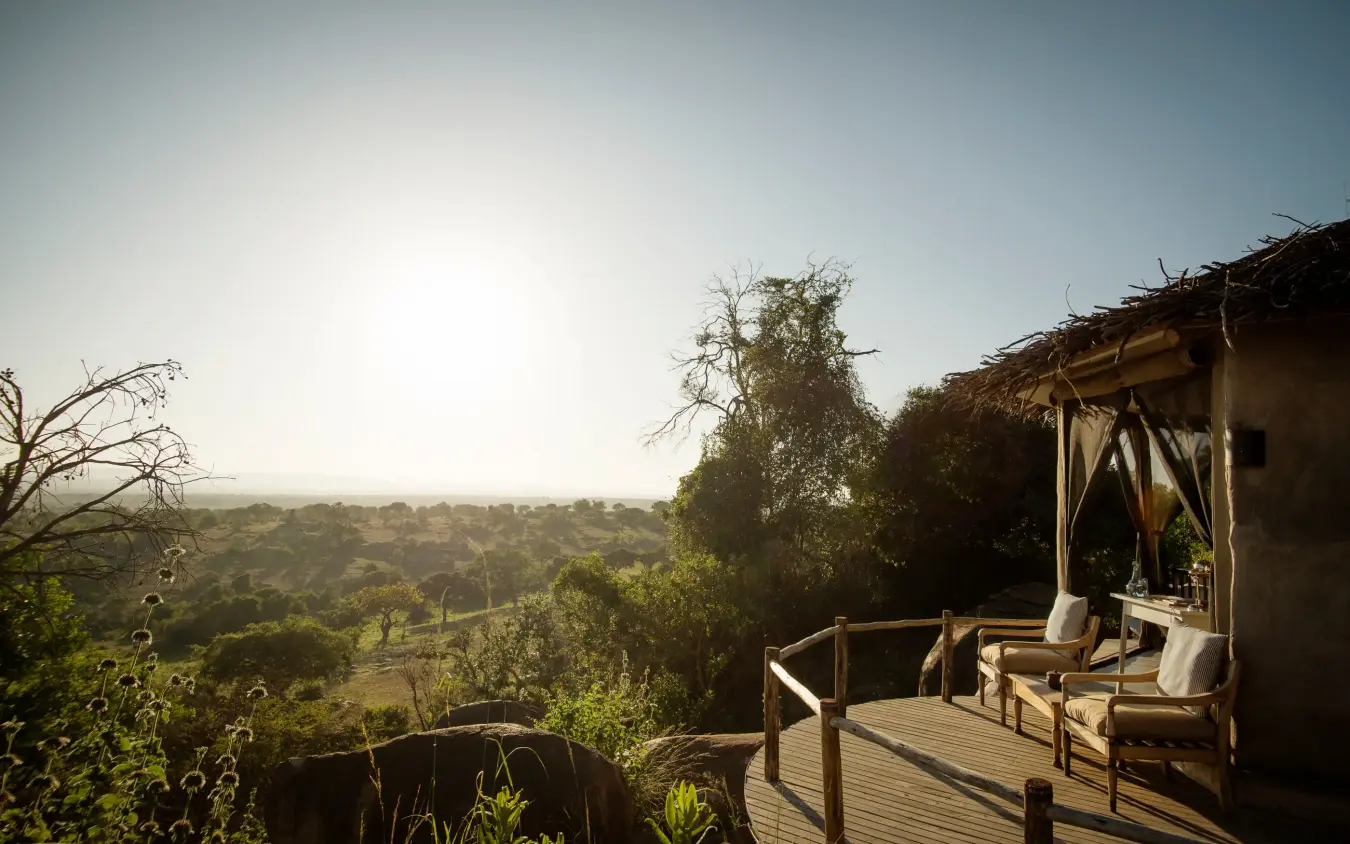
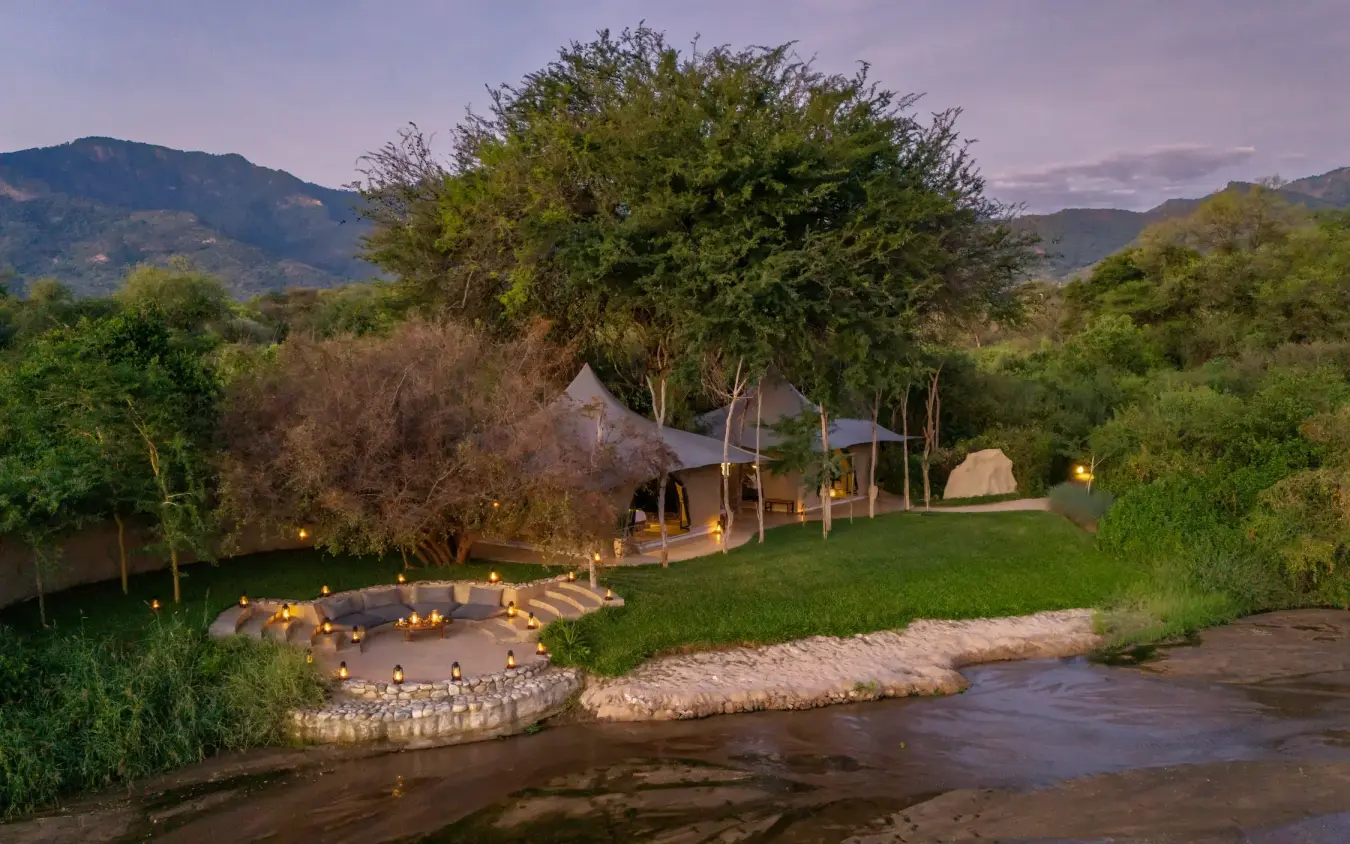
In the far north of the Serengeti, only a few kilometres from the Mara River crossing points, the game drives track the wildebeest migration as the columns build toward the water between July and October. Resident lion, elephant and plains game work the Lamai Wedge long after the herds move south, so the viewing holds up outside the crossing months, and vehicle numbers stay lower than on the busier southern plains. Lamai Serengeti stands high on Kogakuria Kopje, twelve open-fronted rooms of canvas, natural poles and stone stepping up through granite boulders, with a pool carved into the rock and long sightlines north toward the Kenyan border.
You do not need to ride well at either stop, but the weight limits are firm and they are not the same.
Sarara's horses are right for complete beginners. It keeps twelve in the stable and four ponies for children, and rides out for about an hour over five to ten kilometres, with a limit of 80 kilograms for a beginner and 90 for an experienced rider.
Borana takes non-riders and beginners at any level, will not mount a child under five, and sets a strict 95 kilograms. Its half-day and full-day rides are for people comfortable at walk, trot and canter in an English saddle.
Send us heights, weights and an honest account of experience, and we will have the right horses picked out in advance. Anyone who would rather not ride can cover Borana on a bicycle instead.
You fly, and you land twice on the way.
The parks themselves hold no border post for visitors, the road crossing being Isebania and Sirari out on the main road, so the safari airlines run a service between the two ecosystems that touches down at Migori on the Kenyan side or Tarime on the Tanzanian side for passports and customs.
The published times give the shape of the day: one airline leaves the Mara at 08:15 and reaches the Serengeti strips at 11:20, and northbound the same journey runs from the Serengeti at 08:20 to the Mara at 12:15.
Allow a morning, and note that the service is published only for part of the year, roughly July to October and mid-December to March. The bag limit on these aircraft is 15 kilograms a head, that figure includes whatever you carry on board, and the bags have to be soft ones.
In the same months, yes, and on both banks of the same river.
Between roughly July and October the herds are in the north of the Serengeti and spread into the Mara, so the three nights at Mara North and the three above the Mara River both sit inside that window.
A crossing is a different thing again. They run from about late July into October, peak in August and September, and nobody publishes a success rate because none exists. Herds have been known to mass on a bank for days, turn back, or cross where no track goes.
What raises the odds is nights spent within a few kilometres of the crossing points, which is what the Lamai stay gives you. In other months both camps fall back on resident game, which here is no hardship.
Three months carry our top rating at all five places on this route: July, August and September.
They are also the months the herds are in the north, so for this itinerary they are the obvious choice.
October is nearly as good in the north and in the Mara, and a little more mixed in Laikipia.
January and February are the other strong pairing, dry in the highlands and the northern conservancies and kind to a camera, though the wildebeest are then far to the south and we would spend the Serengeti nights elsewhere.
April and May, the long rains, are the low point everywhere on this route, and March is poor in the Mara. November brings the short rains, and Laikipia takes them hardest of all.
Very few in the conservancy, and potentially a great many at the river.
In Mara North the rule is five cars at a sighting and not one more, which is why a leopard in a tree there is a quiet business and why the conservancy model costs what it does.
The Serengeti side works differently at the crossings: the Mara River has sixteen signed crossing points, with between thirty and seventy vehicles allowed at each, so a morning when the herds commit can draw a crowd. It is better to know that in advance than to find it out on the bank.
Early starts are the practical answer, and a good guide will often work a quieter point rather than the busiest one.
Yes, though two things hold its shape.
The first is the month. The three nights above the Mara River earn their place between July and October, and the flight that links the two countries is itself published for only part of the year, so a trip outside that window is a different route rather than the same one moved.
The second is the riding, which is the reason for Namunyak and Borana in the first place. Drop either and it becomes an ordinary conservancy circuit.
Everything else will move. Five places in thirteen nights means packing every two or three days, so if that sounds like a lot the usual fix is to lose the single night at the start, or give Laikipia and the Mara four nights each and cut a stop altogether.
Ed Charles, BBC Producer
Fitzroy are true specialists in accessing the wilderness. They know where to go and importantly, when to go there. Highly recommended.
kenya
Fourteen nights across Kenya, from Nairobi's park to the Mara, then by helicopter into Samburu and the Laikipia Highlands.
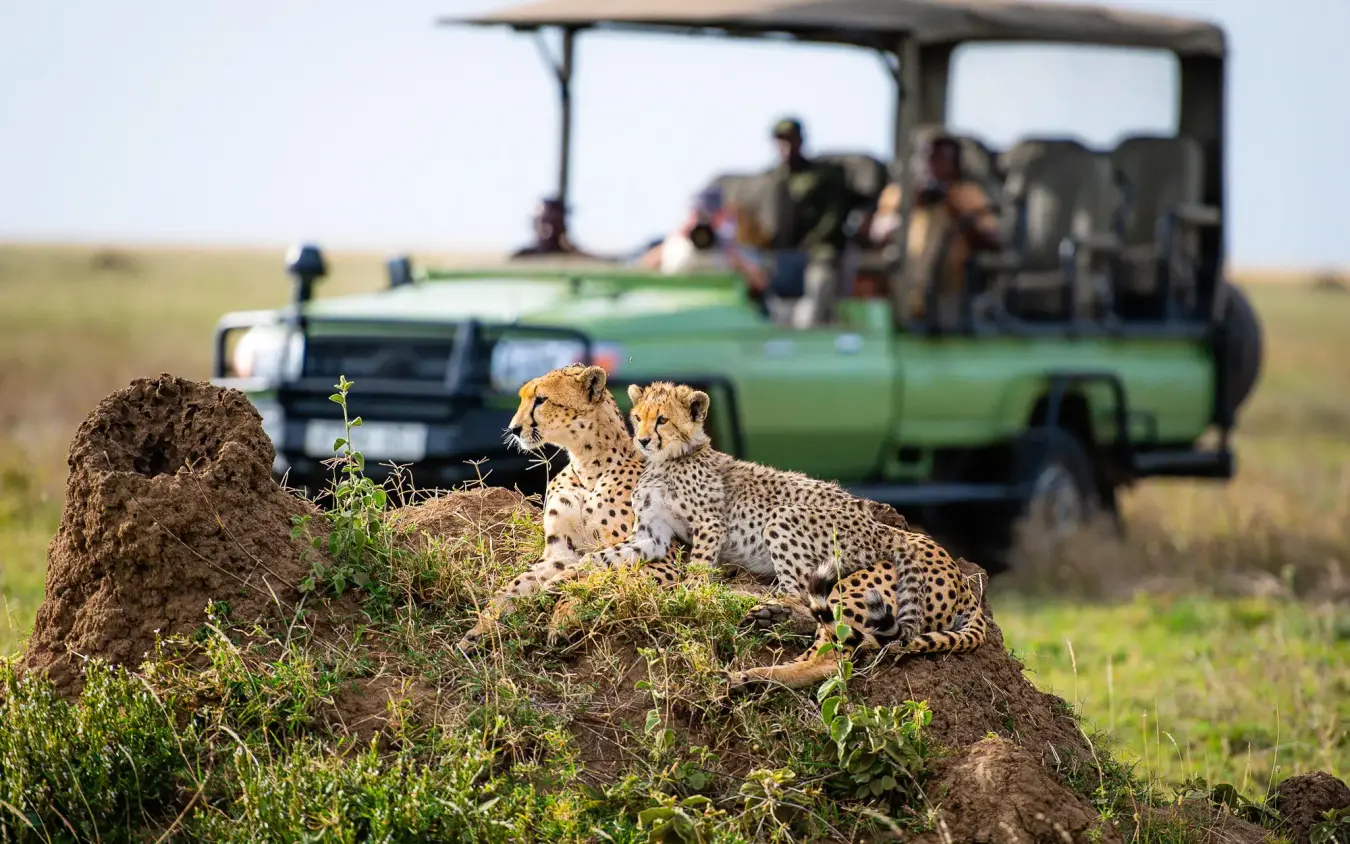
kenya & tanzania
Ten nights from Nairobi through the Mara's Naboisho Conservancy and the eastern Serengeti to the rim of the Ngorongoro Crater.
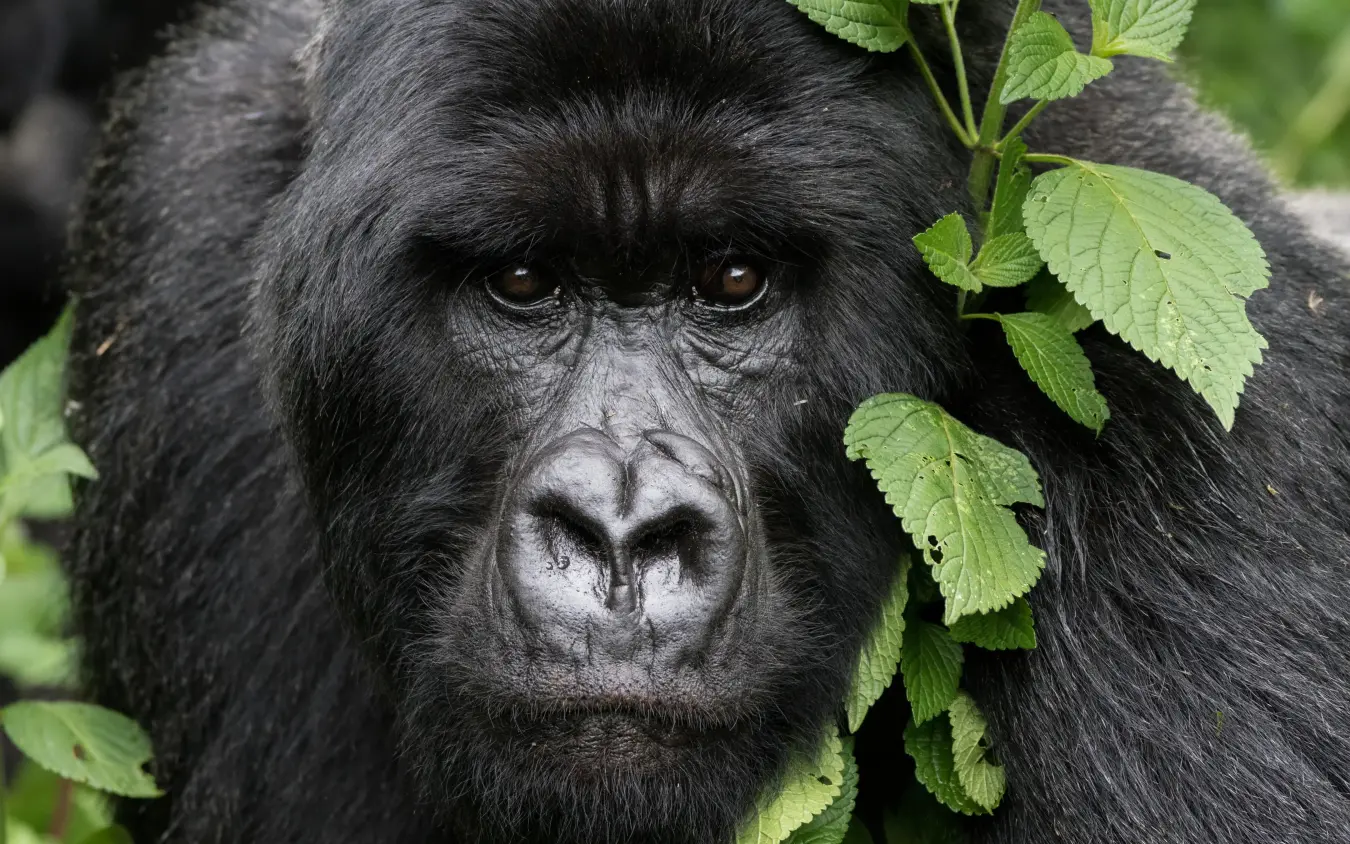
kenya & rwanda
Twenty nights from Nairobi through Kenya's northern conservancies to Rwanda's mountain gorillas.
rated five stars by our clients

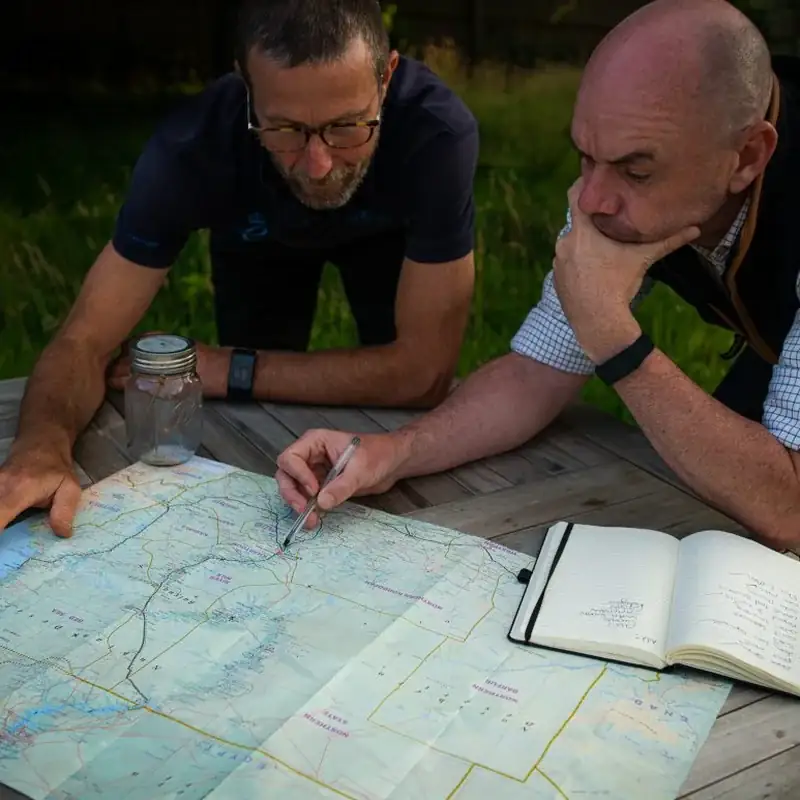
our approach
Every journey starts with a conversation. We take the time to understand your vision before we start planning.
Whether by phone or in person, we work with you directly to shape something that is considered, personal, and expertly delivered.
Every journey starts with a conversation. We favour a direct, personal approach: understanding your vision before anything else.
Whether by phone or in person, we work with you directly to shape a journey that is both thoughtfully considered and expertly delivered.
Get in touch to start planning yours.