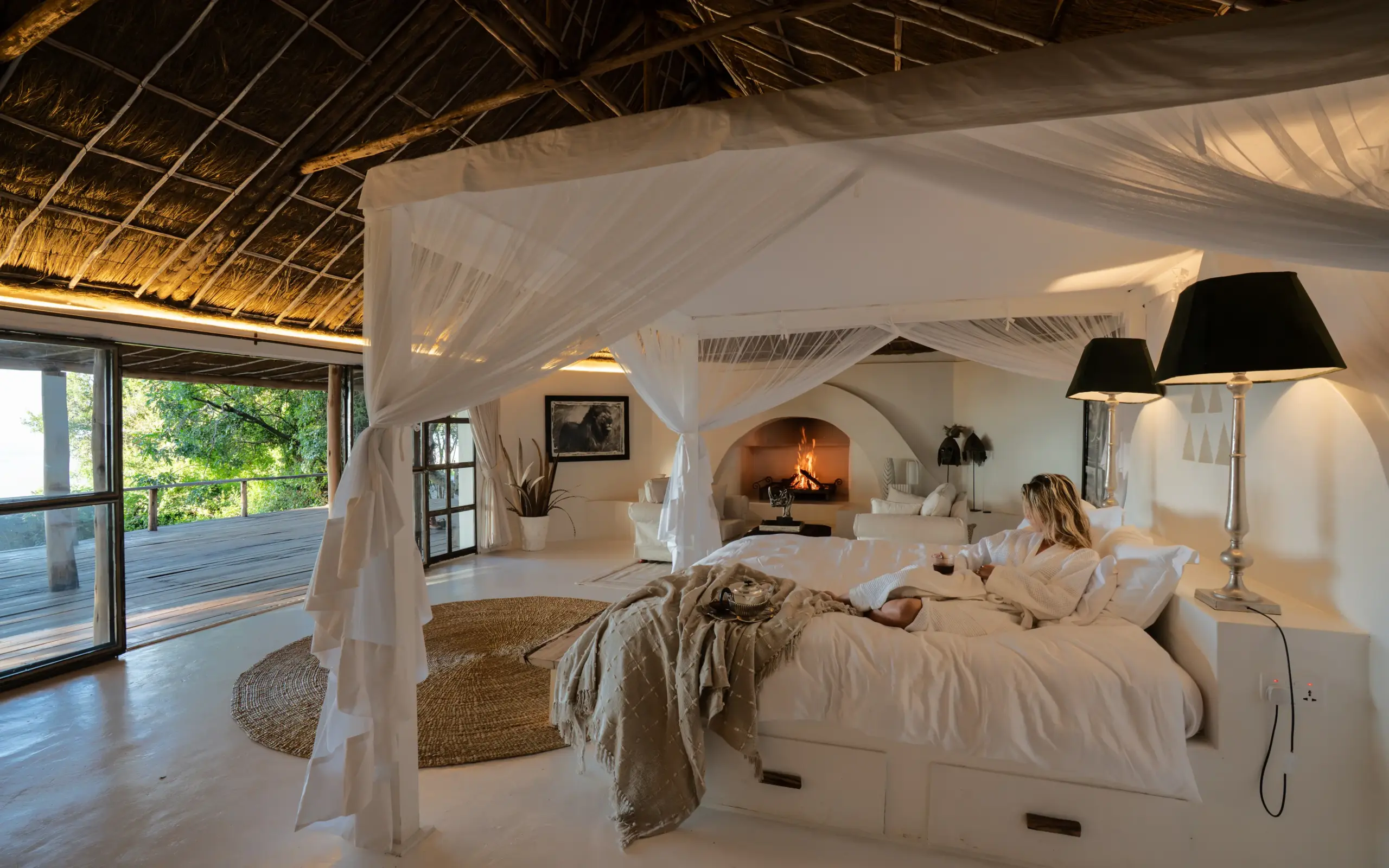
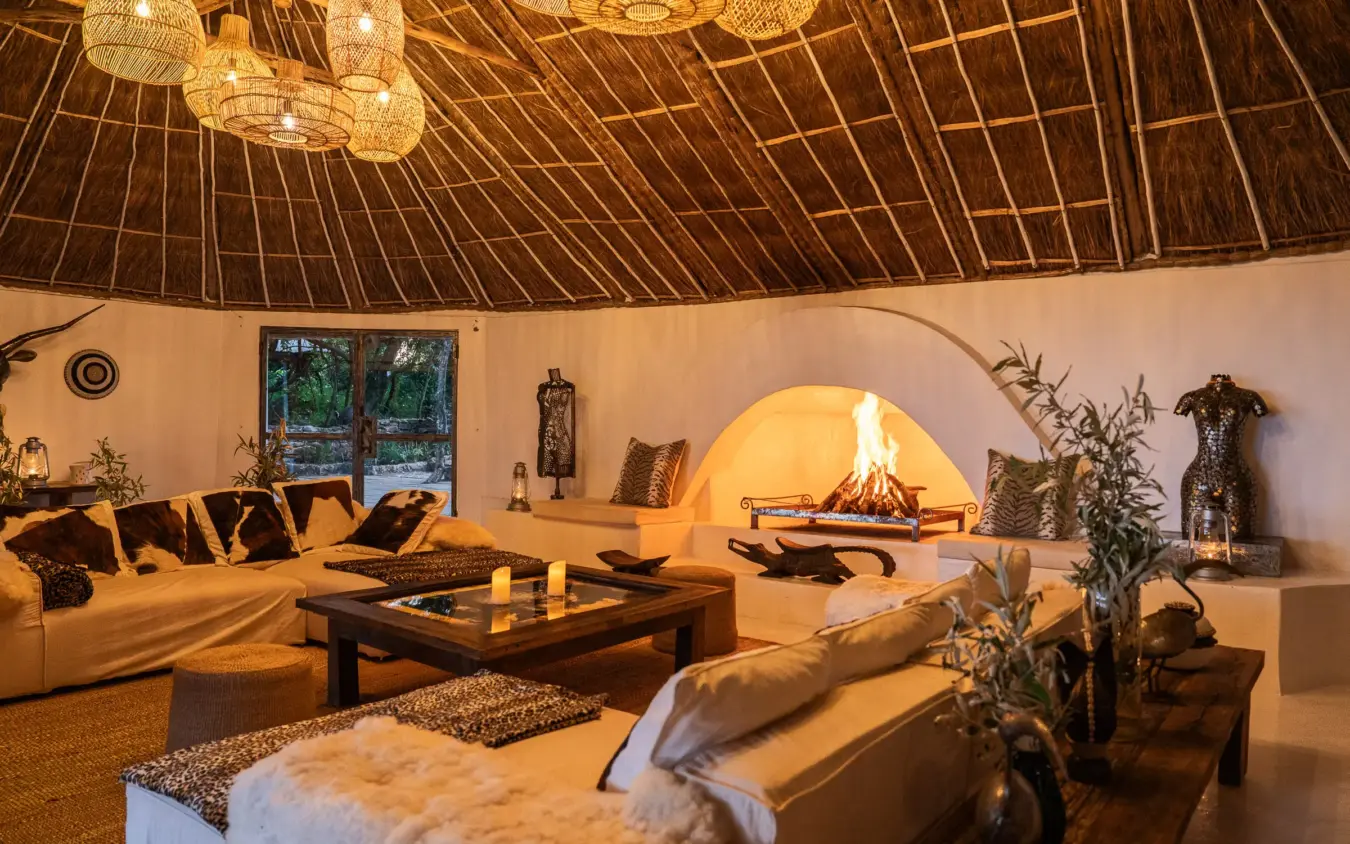
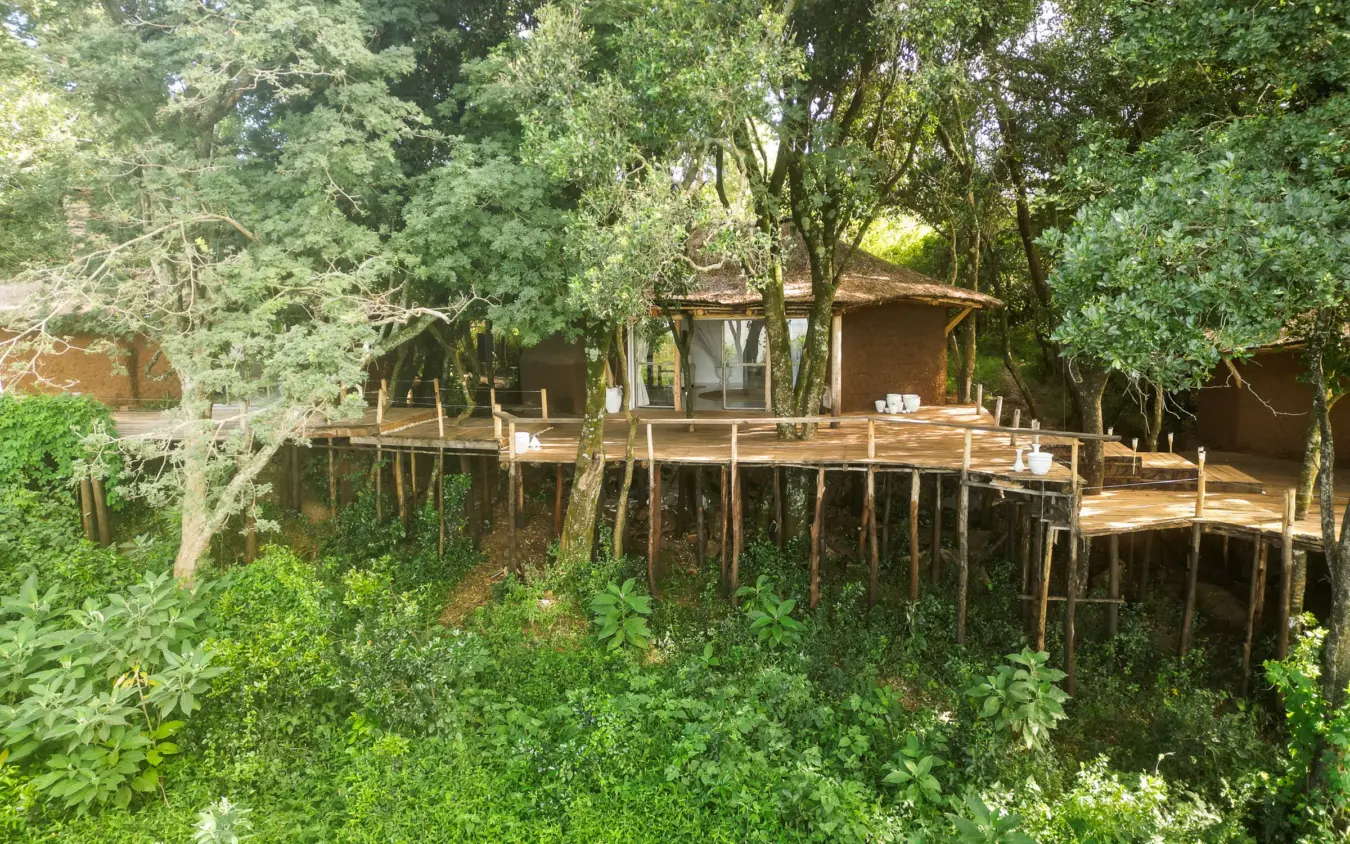
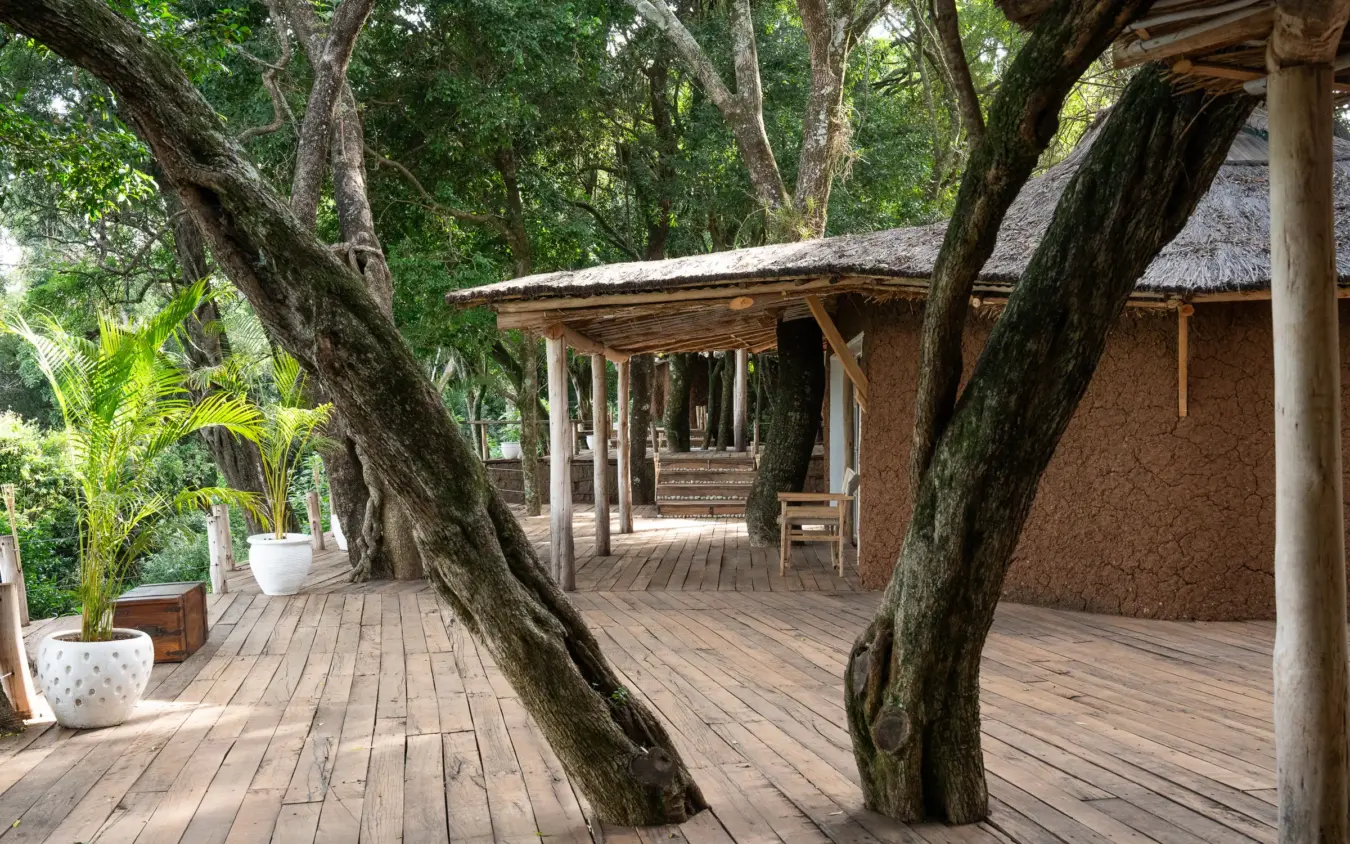
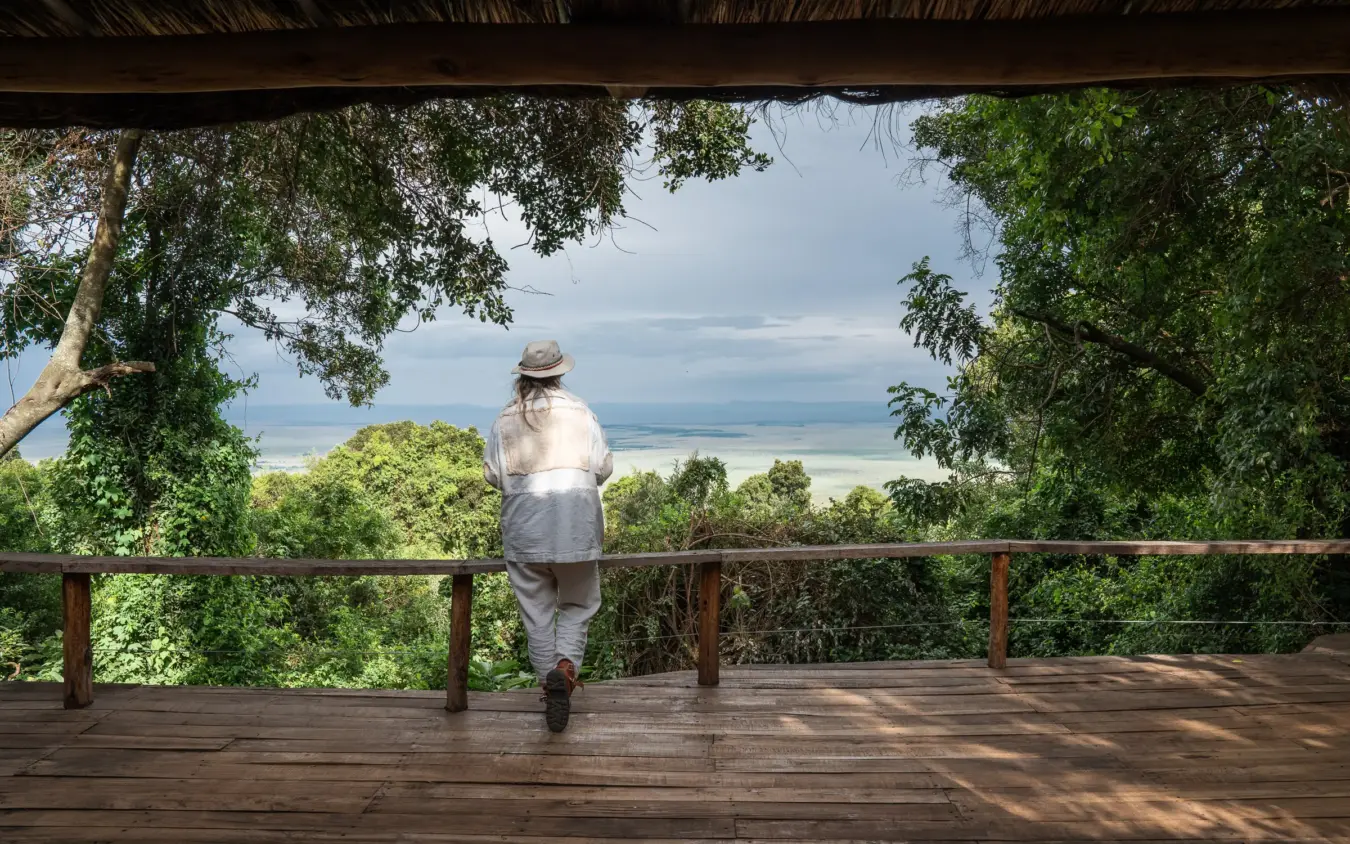
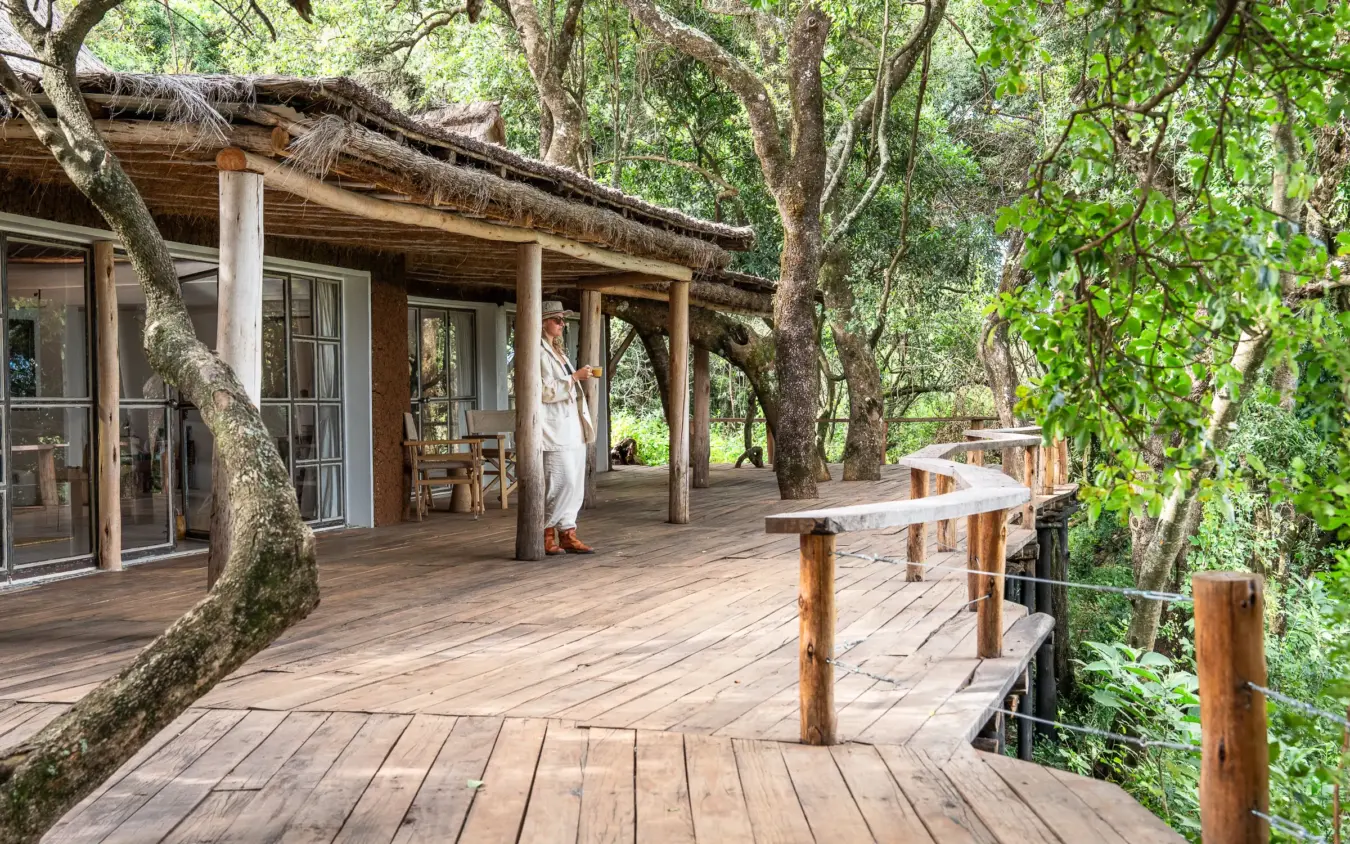
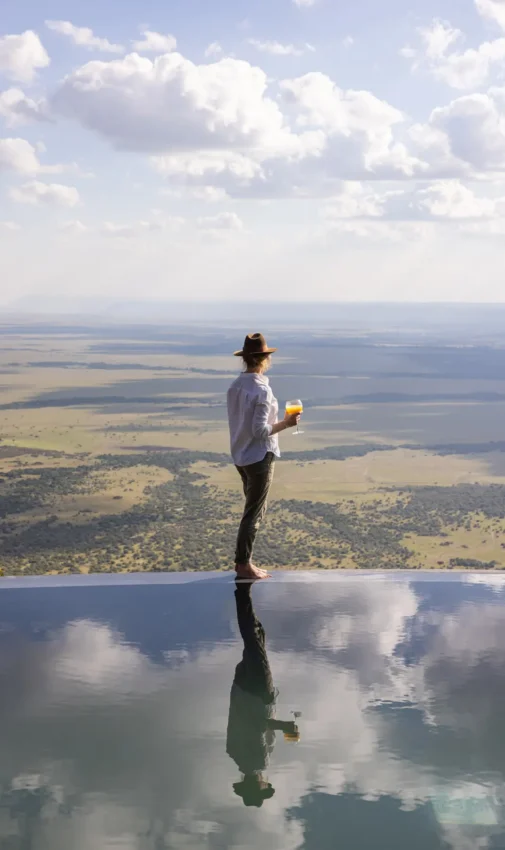
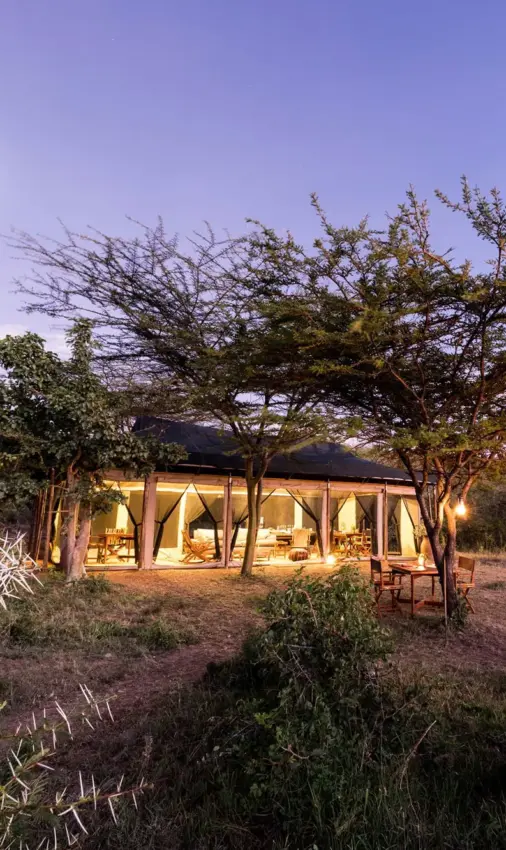
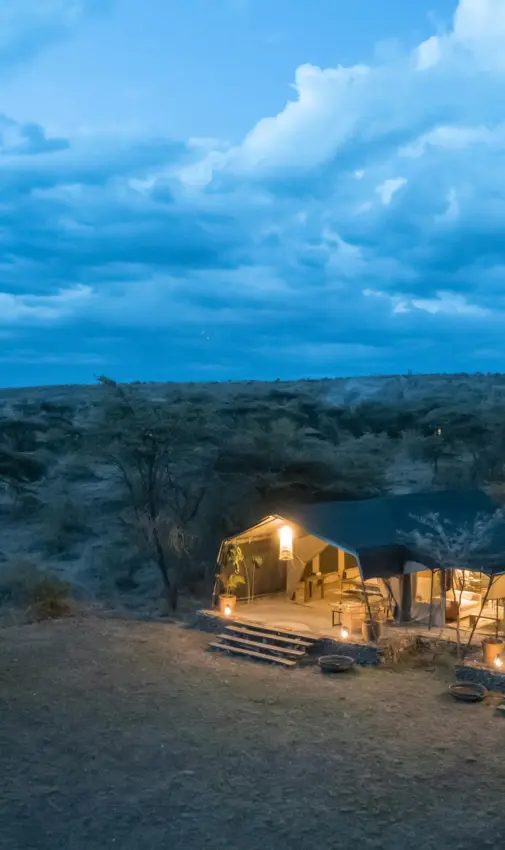
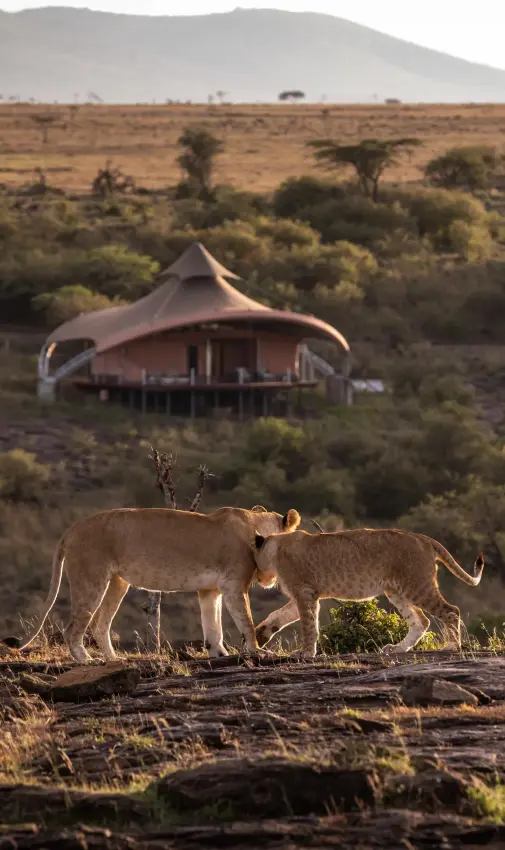
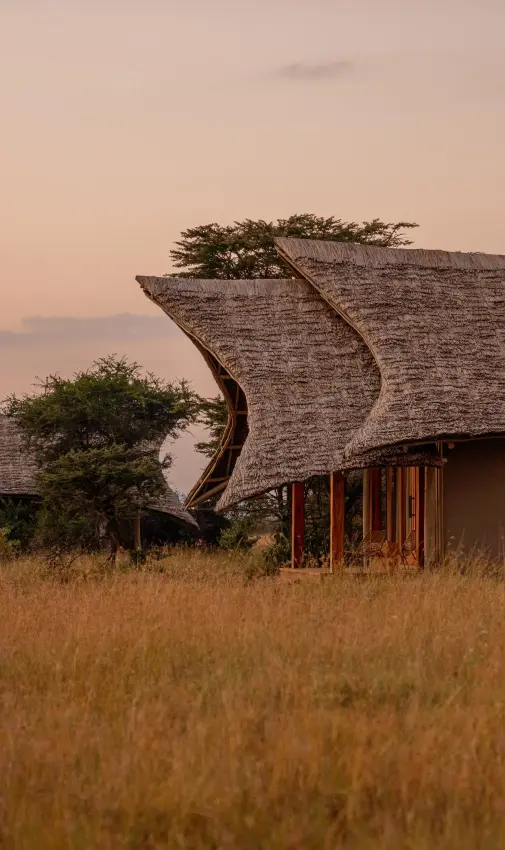
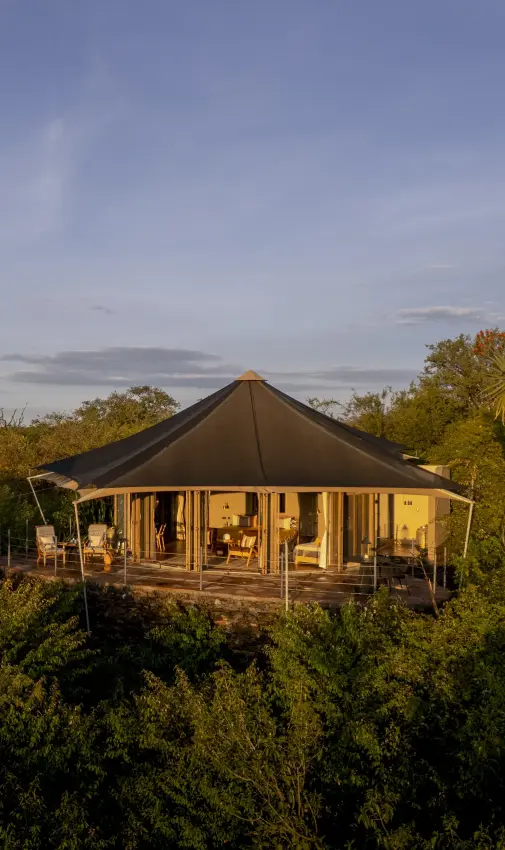
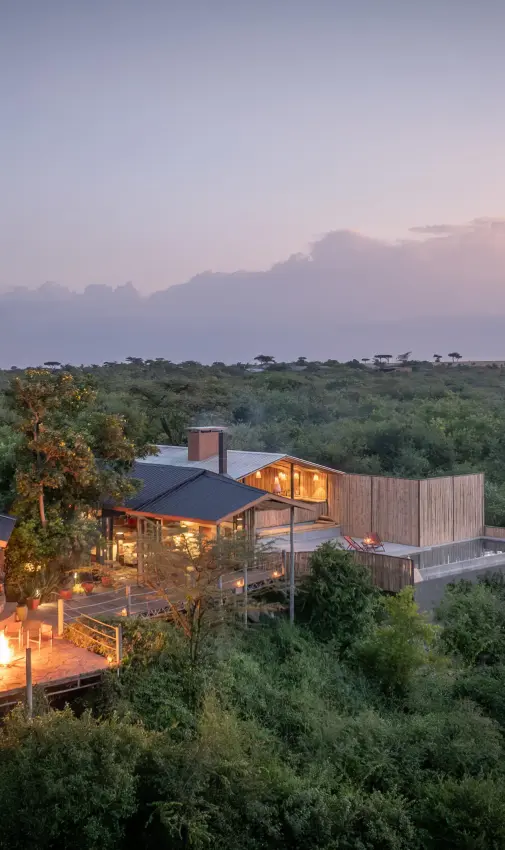
Timber stilts carry the house out from the cliff edge. The walls are mud-plastered and the roofs thatched, all of it built by Maasai craftsmen from the surrounding community using methods they already knew. The five bedrooms are angled outward, away from each other, so what fills every window is weather crossing the Mara Triangle, shadows moving through grass, birds gliding below eye level. Power comes entirely from solar, with charging points in the rooms and Wi-Fi through the house. Cell signal is thin.
The house began as Siriatom House, the private bush retreat of the late Anthony Russell. Kenyan-born, he was a photographer, artist and designer whose hand is behind the look of camps across East Africa. It was later reimagined, and it reopened as Manzili Mara. Their sister house in Nairobi, Manzili House, stands at the other end of a Kenya itinerary, city at one end and escarpment at the other.
The forest wakes noisily at first light, monkeys crossing the branches above the roof.
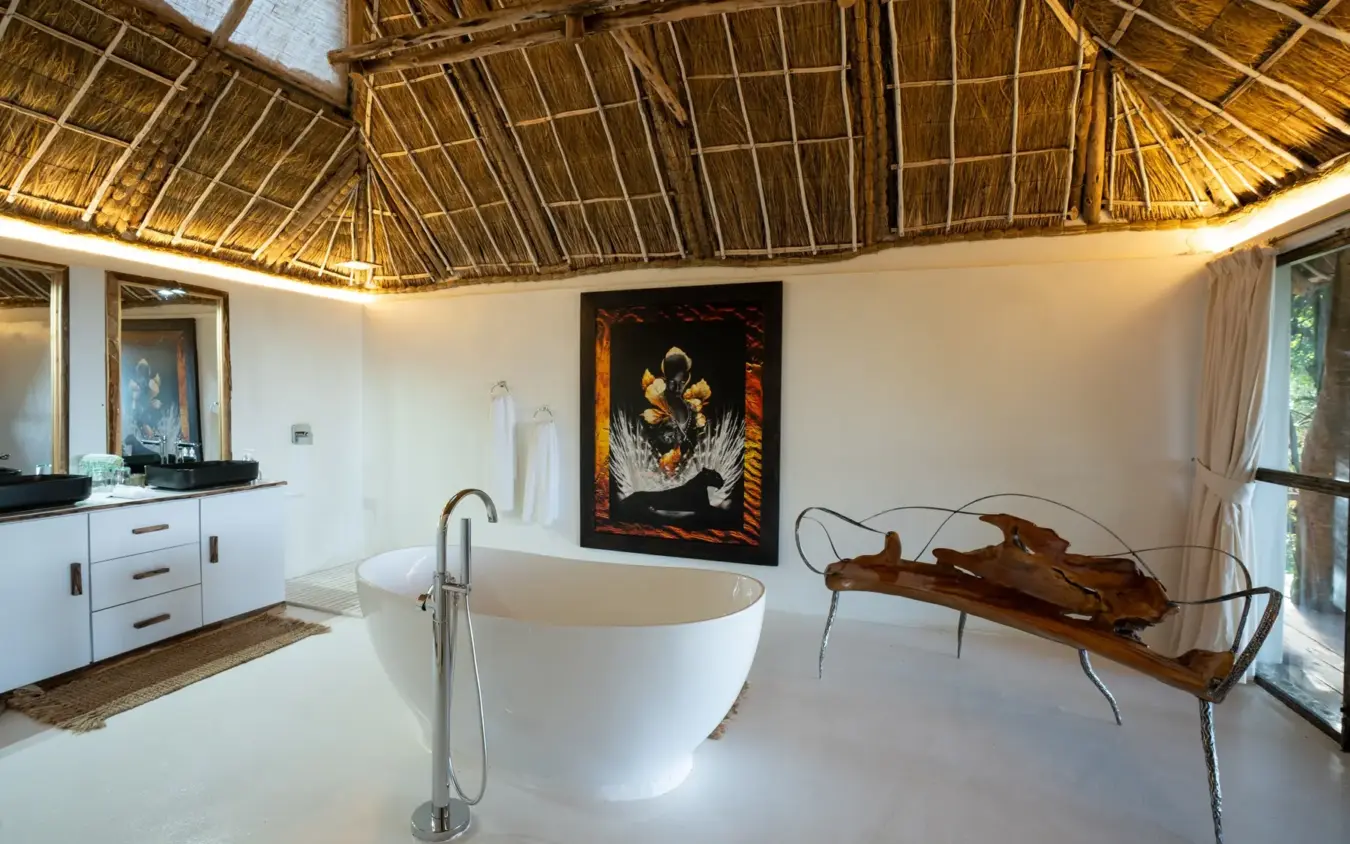
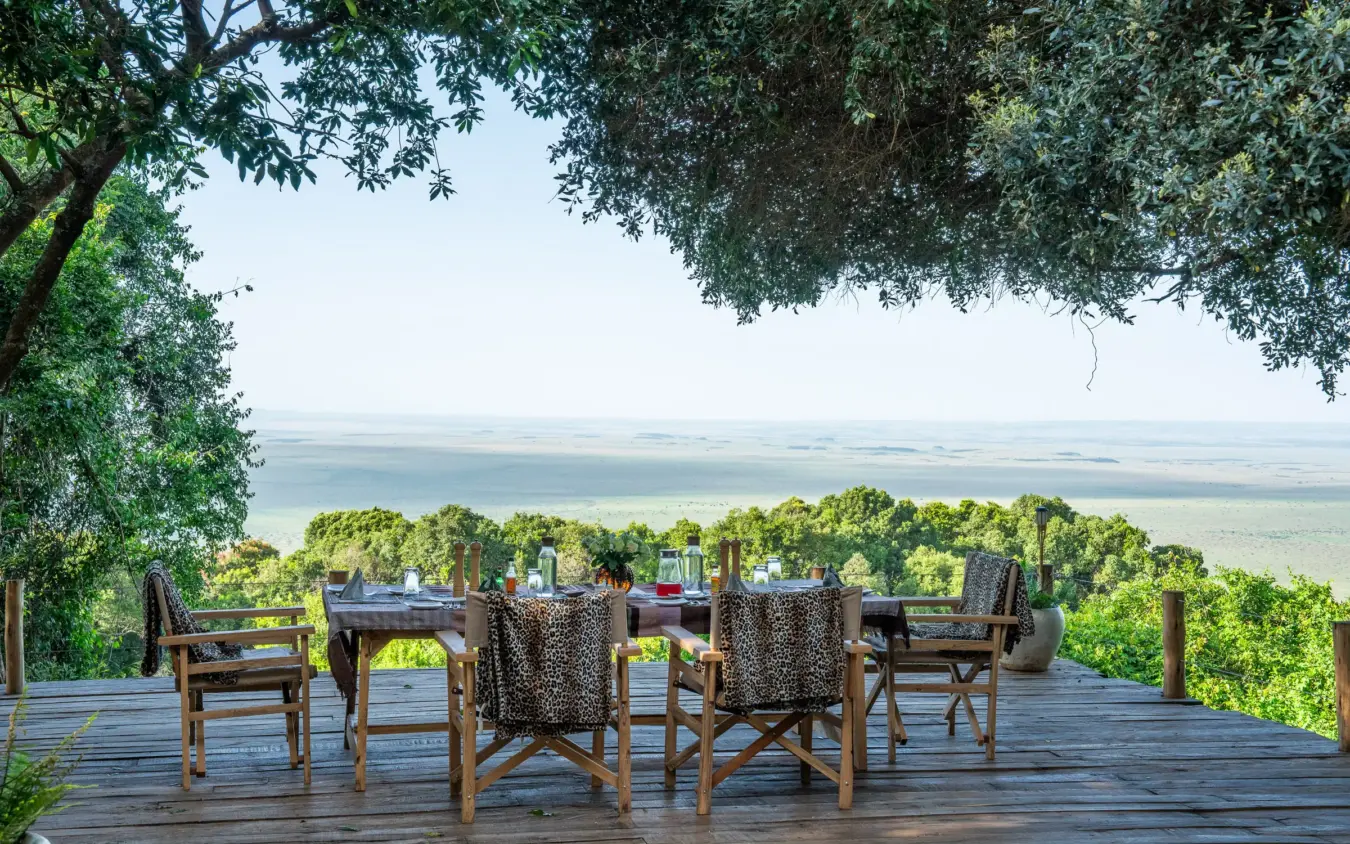
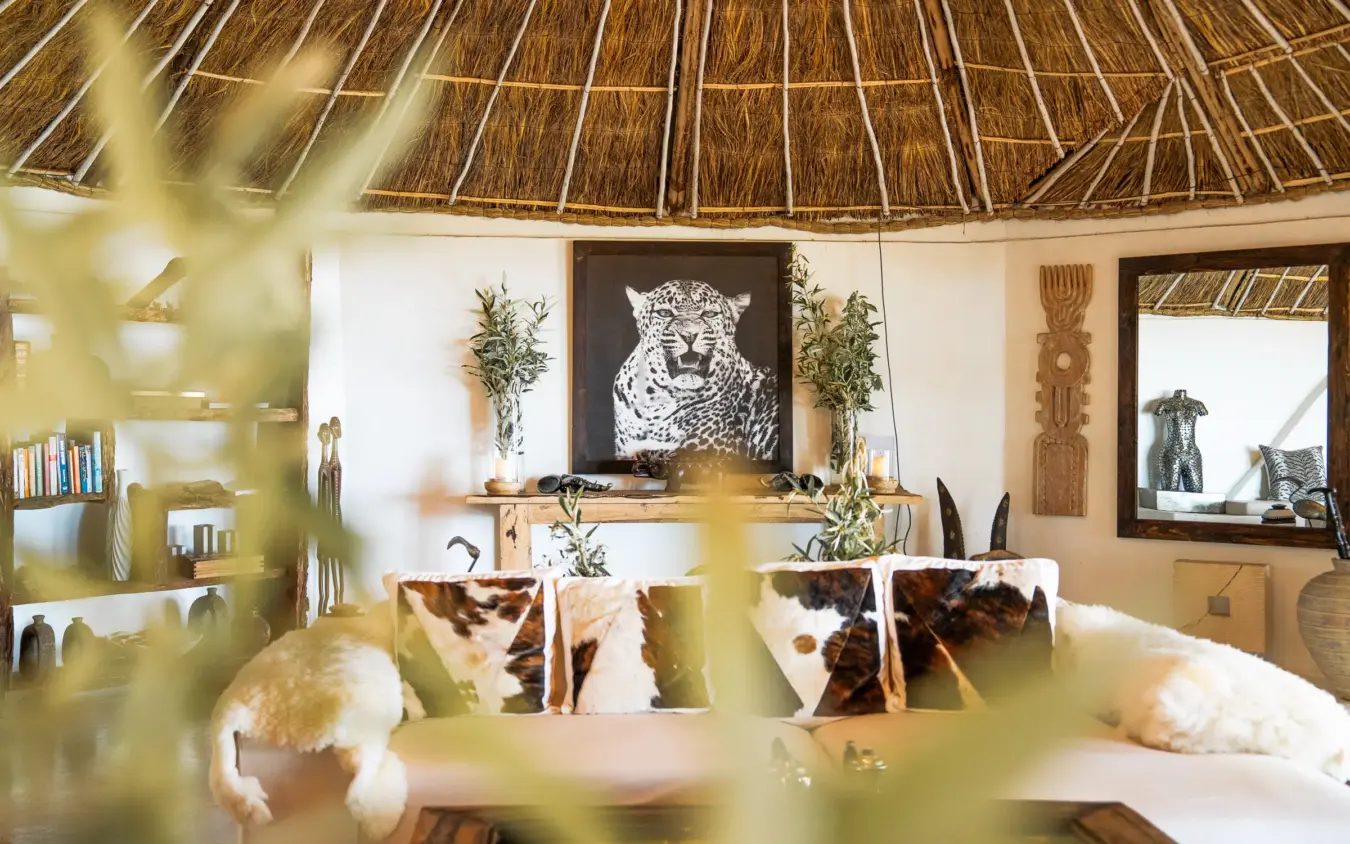
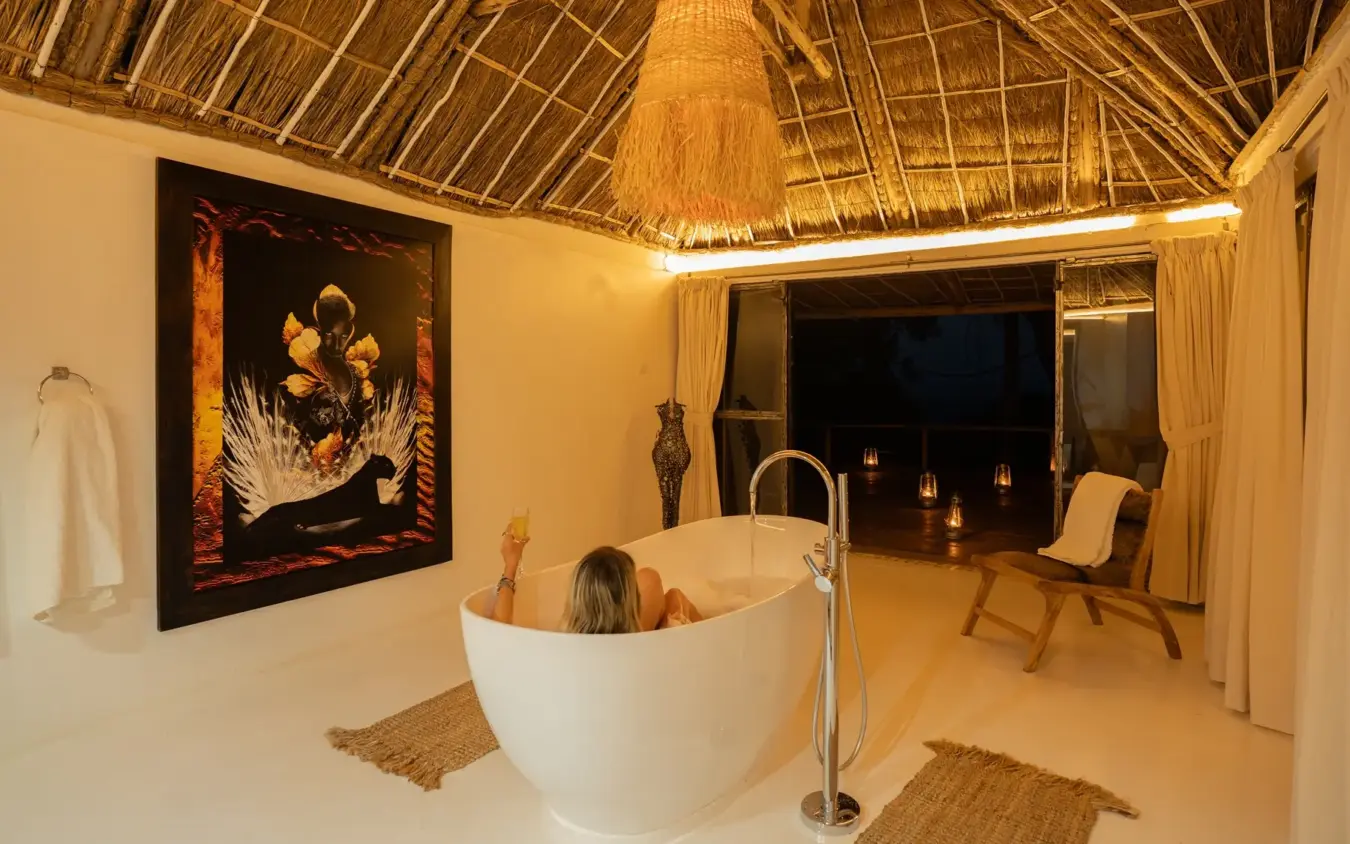
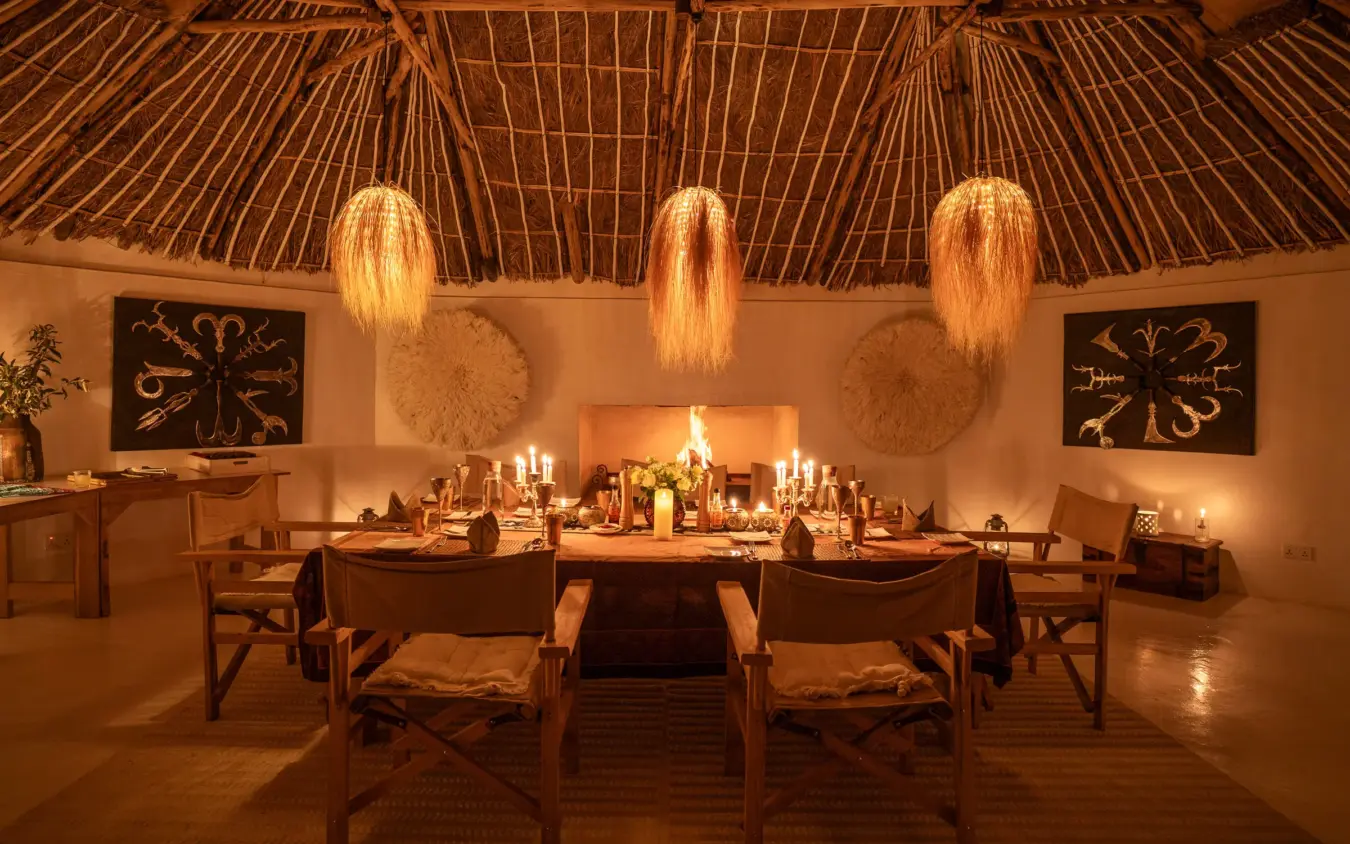
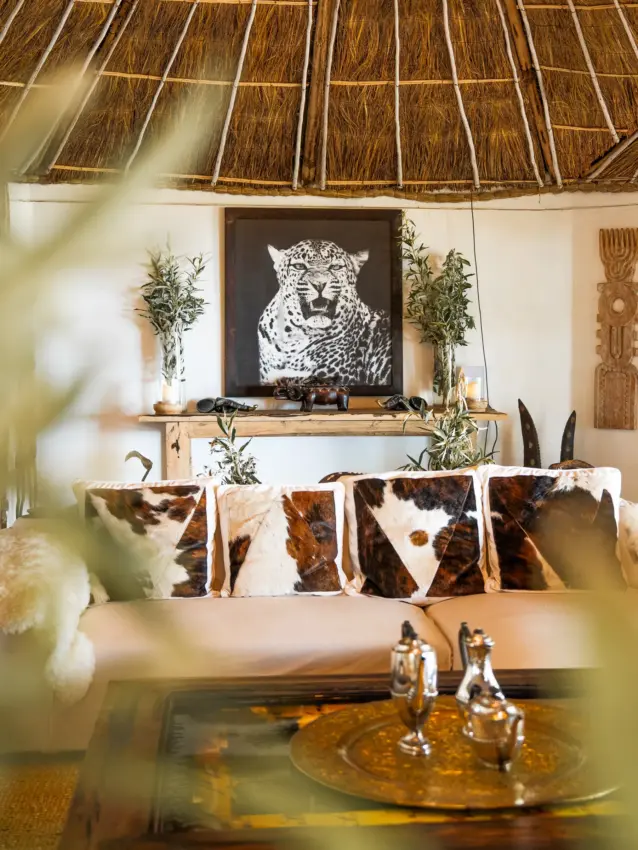
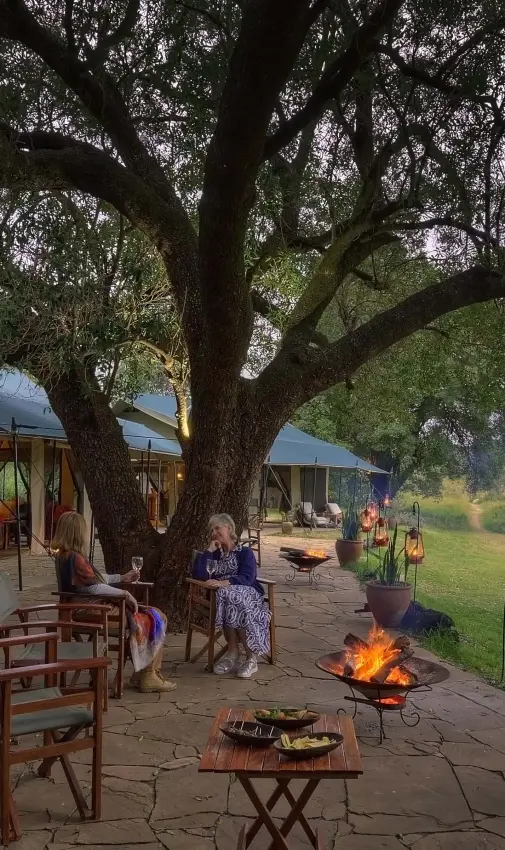
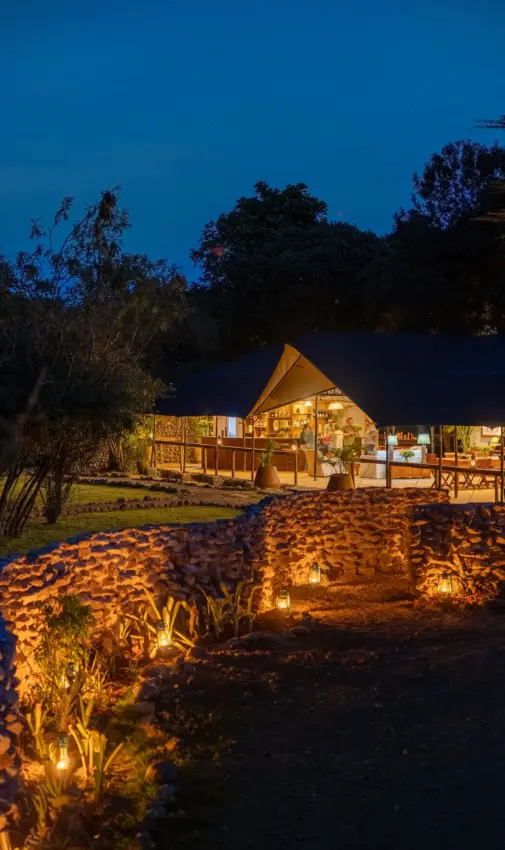
Two of the bedrooms are suites, with bathtubs as well as showers and their own terraces up in the treetops. The other three are smaller doubles, each with a shower, a seating area and a fireplace of its own. The drawing room and the dining room have fires too, and dinner is served indoors beside one of them, while breakfast and long lunches move out to the decks under the canopy. The forest wakes noisily at first light, monkeys crossing the branches above the roof. Lions can be heard roaring up from the valley after dark.
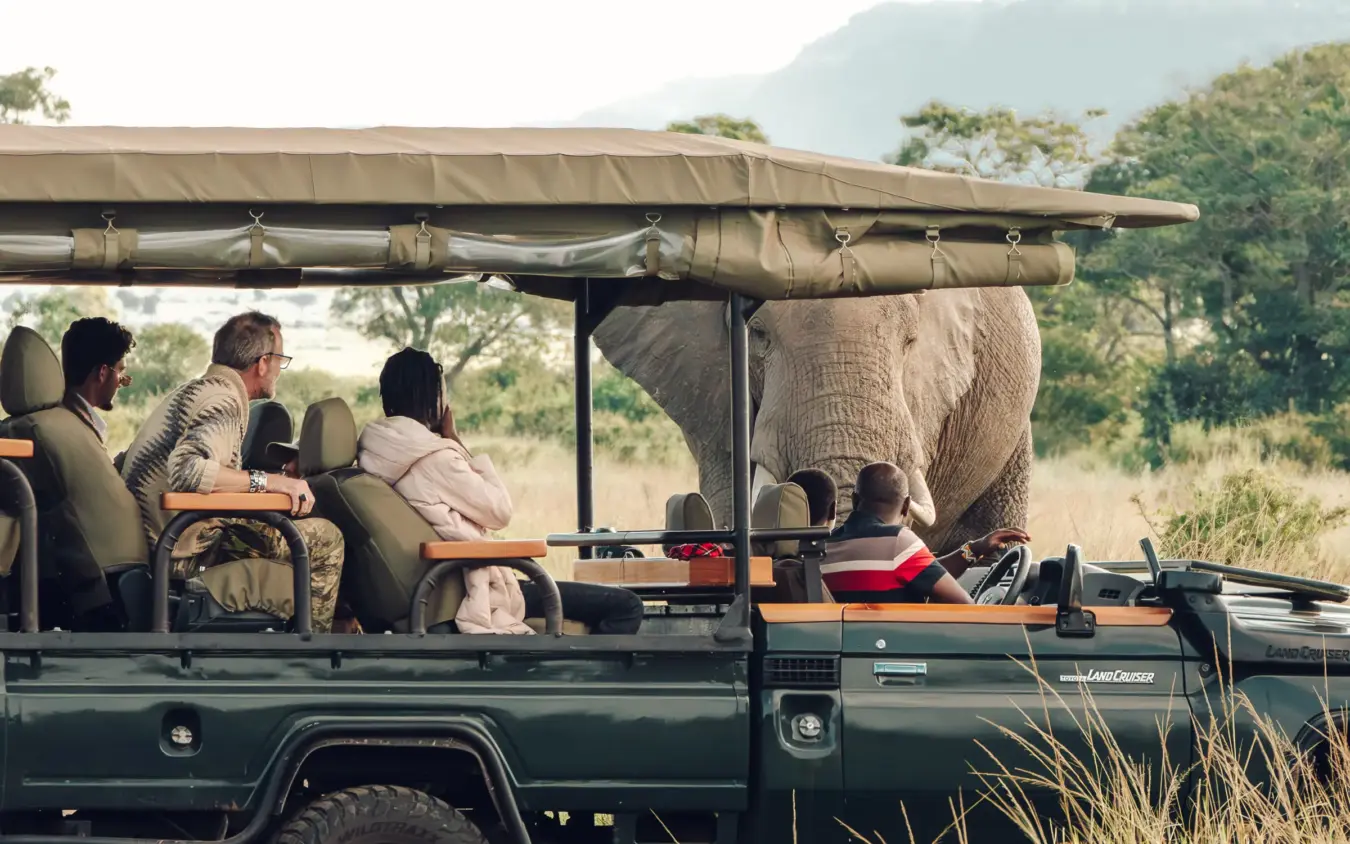
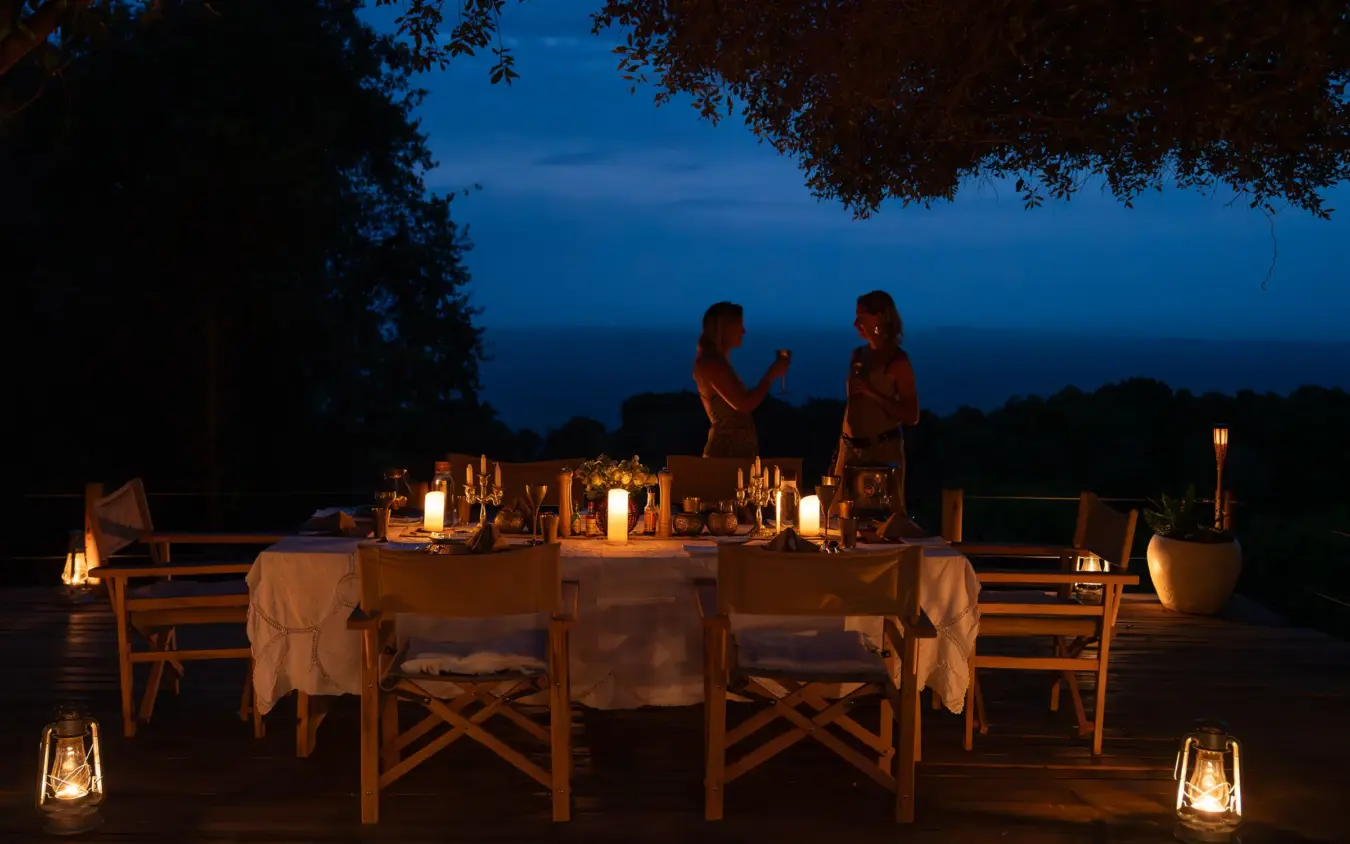
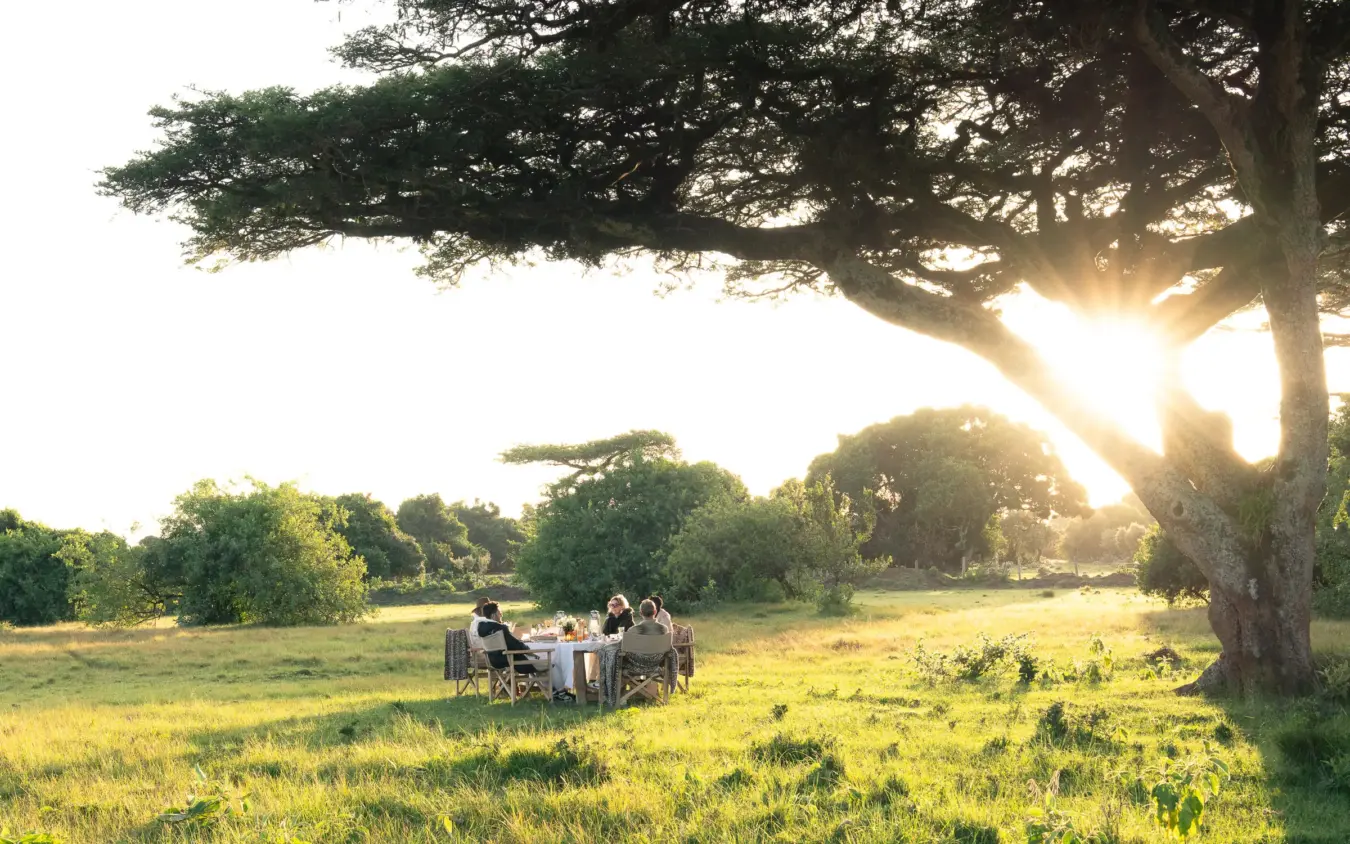
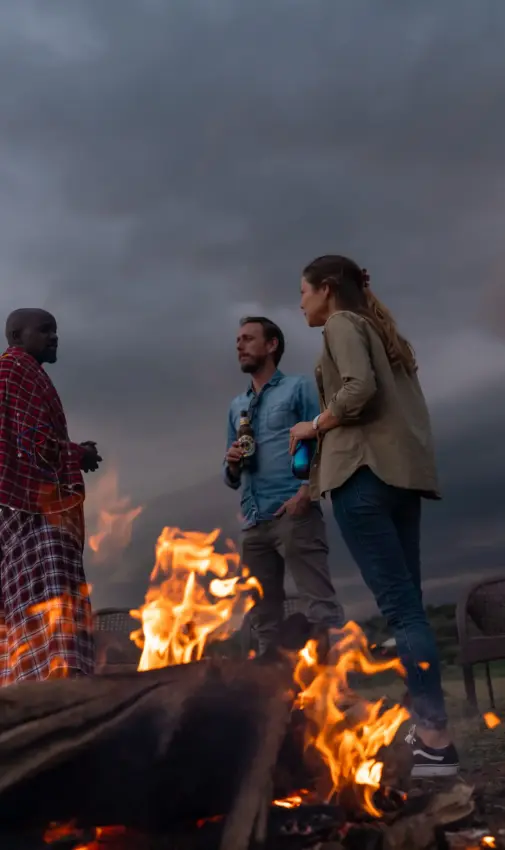
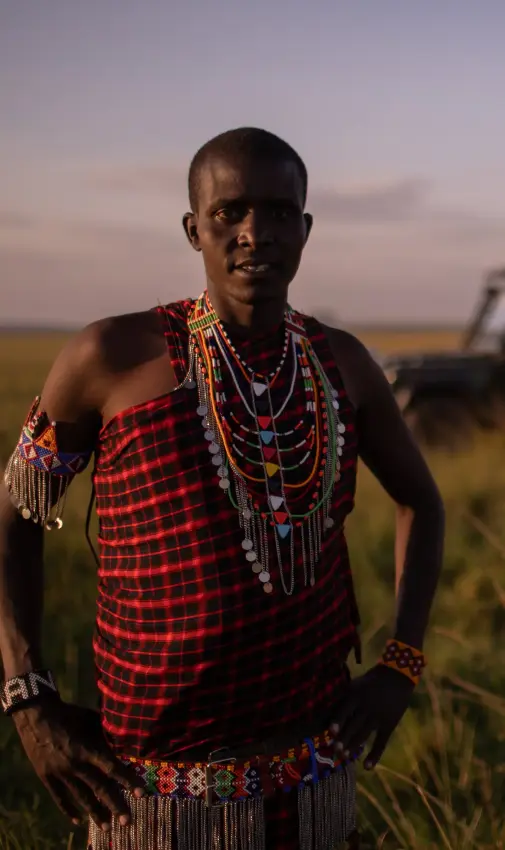
A private chef cooks to the group, not to a set menu, working with seasonal ingredients sourced close by, and meals move to wherever the day ends up: the fire, the deck, an acacia tree out on the plains. Ten guests is the ceiling, which suits one family or a group travelling together. Sundowners, a visit to a local Maasai village and beading sessions with the women of the community are arranged as wanted. Access is by flight from Nairobi’s Wilson Airport to Kichwa Tembo airstrip, then a short drive up the escarpment.