Camp

Pembazoni Camp

A walking camp on the edge of the Serengeti’s restricted Wilderness Zone, where the day is built around going on foot.

Country: Tanzania
Location: Serengeti National Park
Number of rooms: 10

Where the Serengeti closes to cars

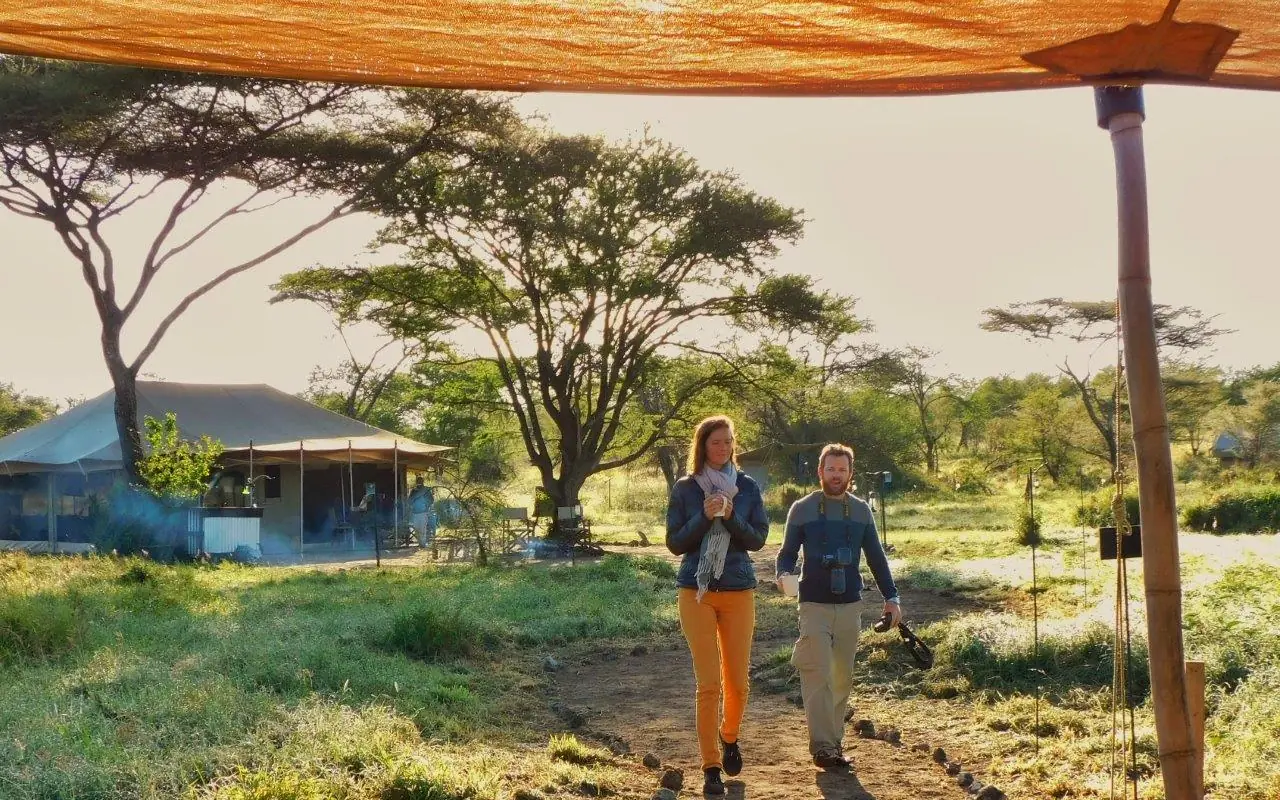
Pembazoni stands in the central Serengeti near Seronera, on the edge of a Wilderness Zone that runs between Nyabogati and Kilimafedha and stays closed to general game-viewing vehicles. That restriction is the whole point. The ground goes undisturbed by tourist traffic, which is what makes it worth covering slowly, on foot. Canvas tents look out over open plains and a small river gorge.

Walkers cover long stretches without meeting another vehicle.

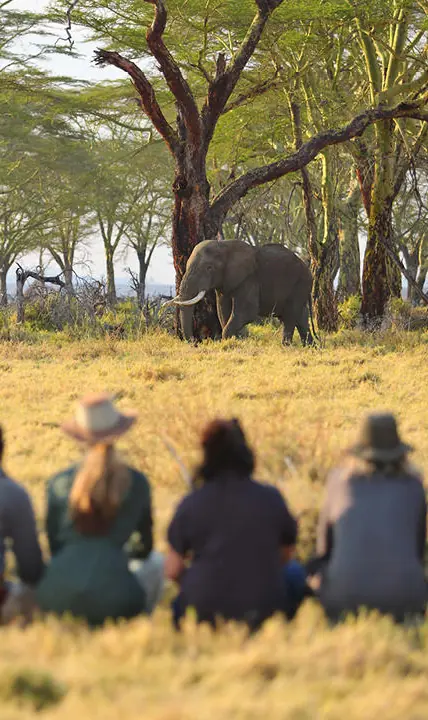
Armed, trained guides lead half-day and full-day walks straight from camp, reading tracks and following animal movement at ground level. Few operators reach this part of the park. Walkers cover long stretches without meeting another vehicle. Walking here is no novelty activity but the main occupation of a stay, and the reason to come rather than a diversion between drives.

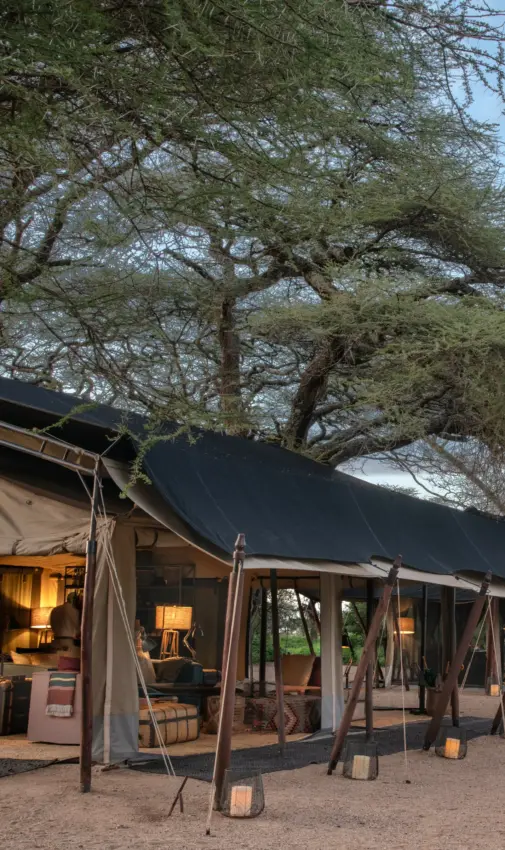
Silhouetted acacia tree at golden hour sunset, Pembazoni Camp, Serengeti National Park, Tanzania
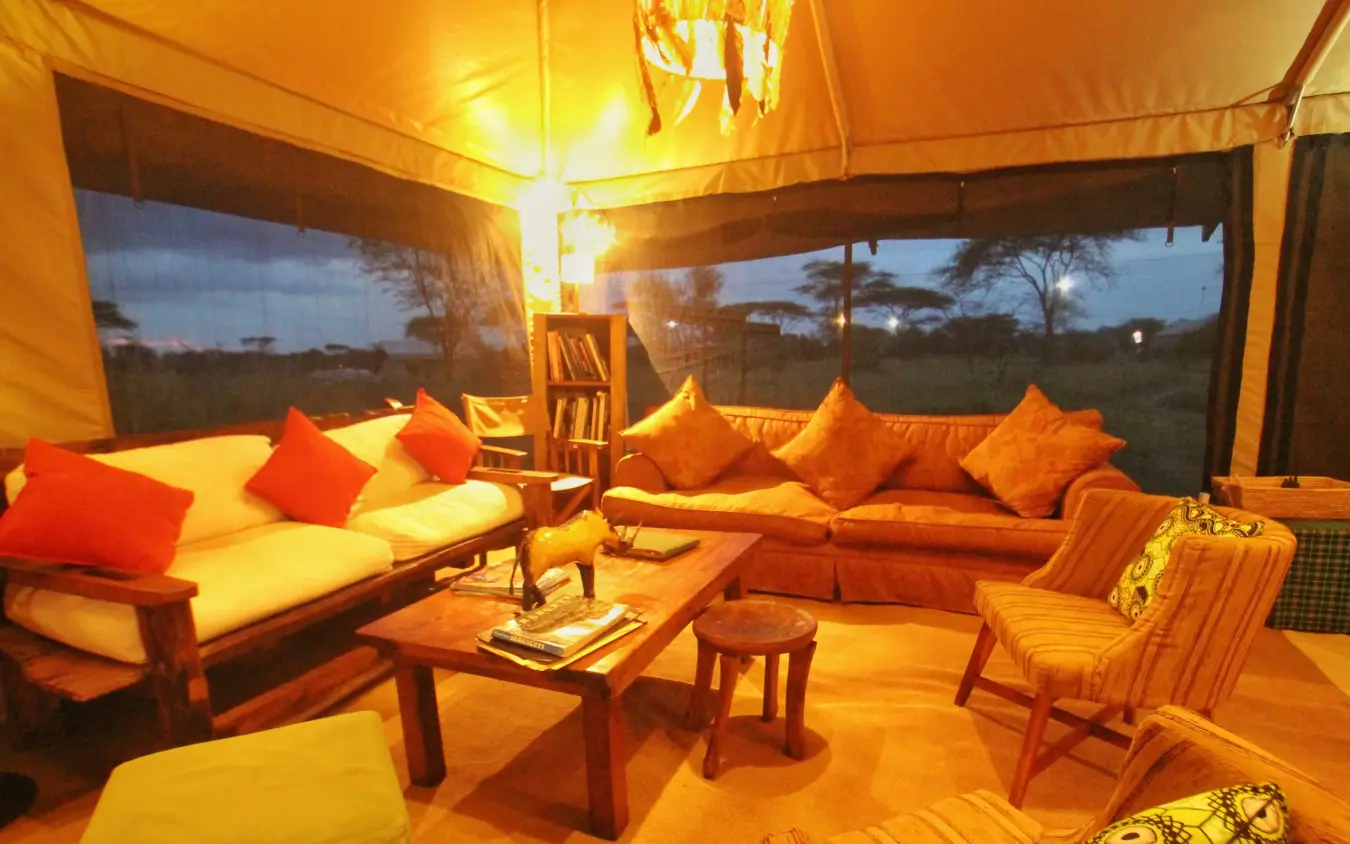
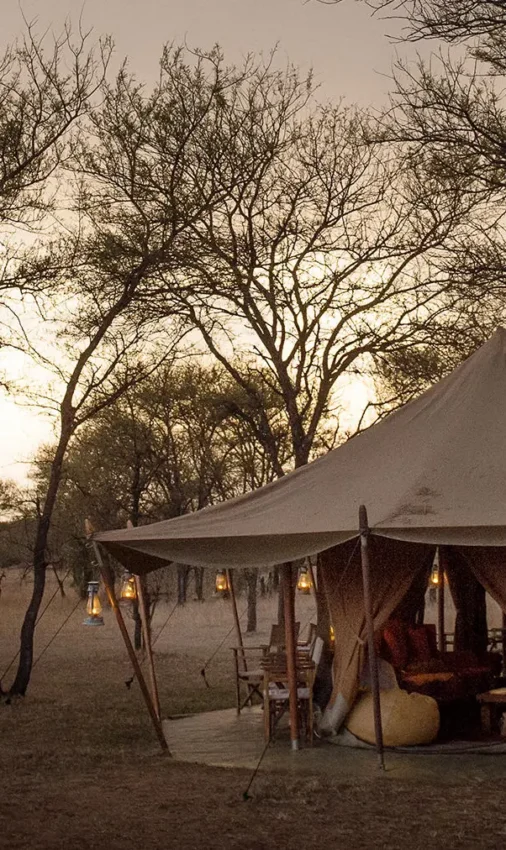
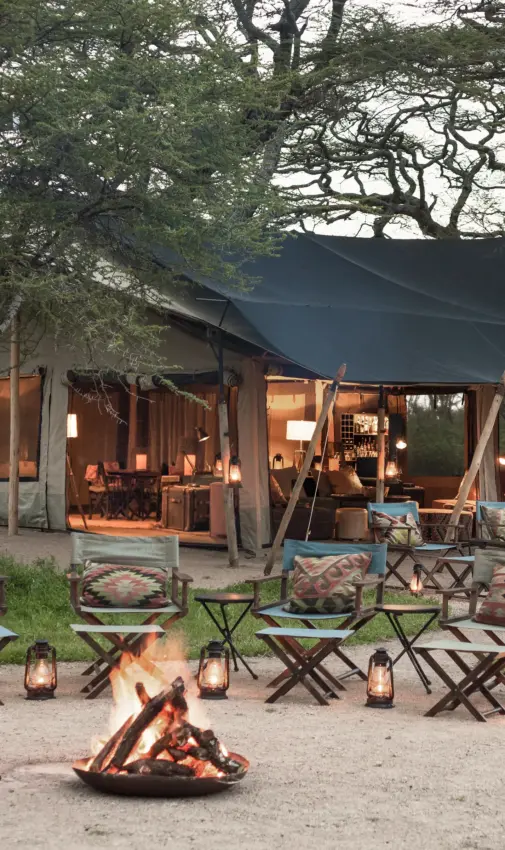
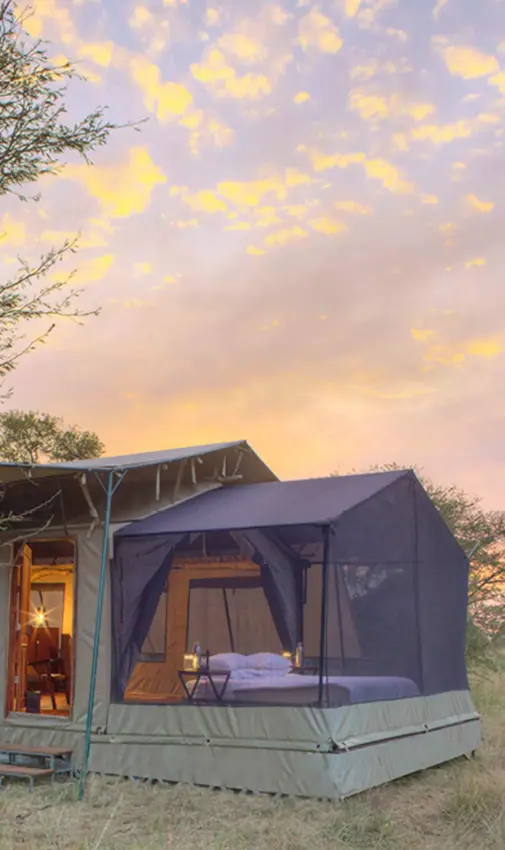
Safari tent lounge with canvas walls and savanna views, Pembazoni Camp, Serengeti National Park, Tanzania

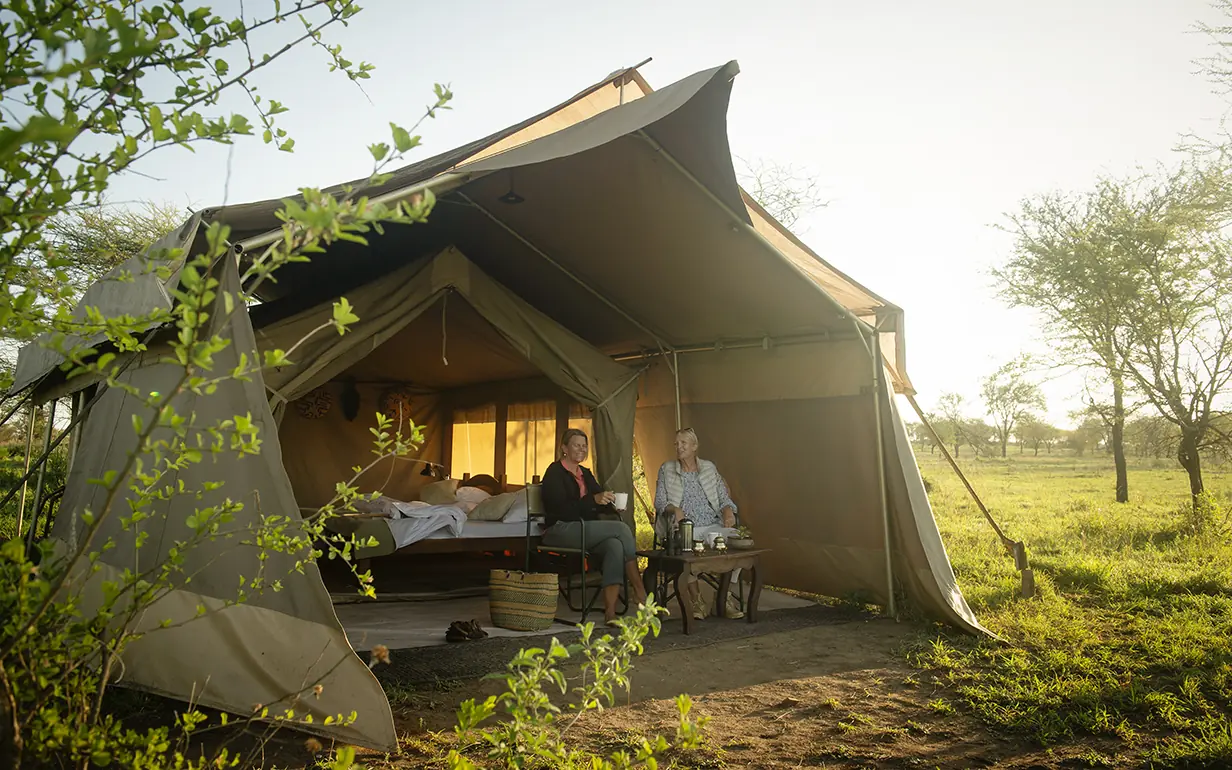
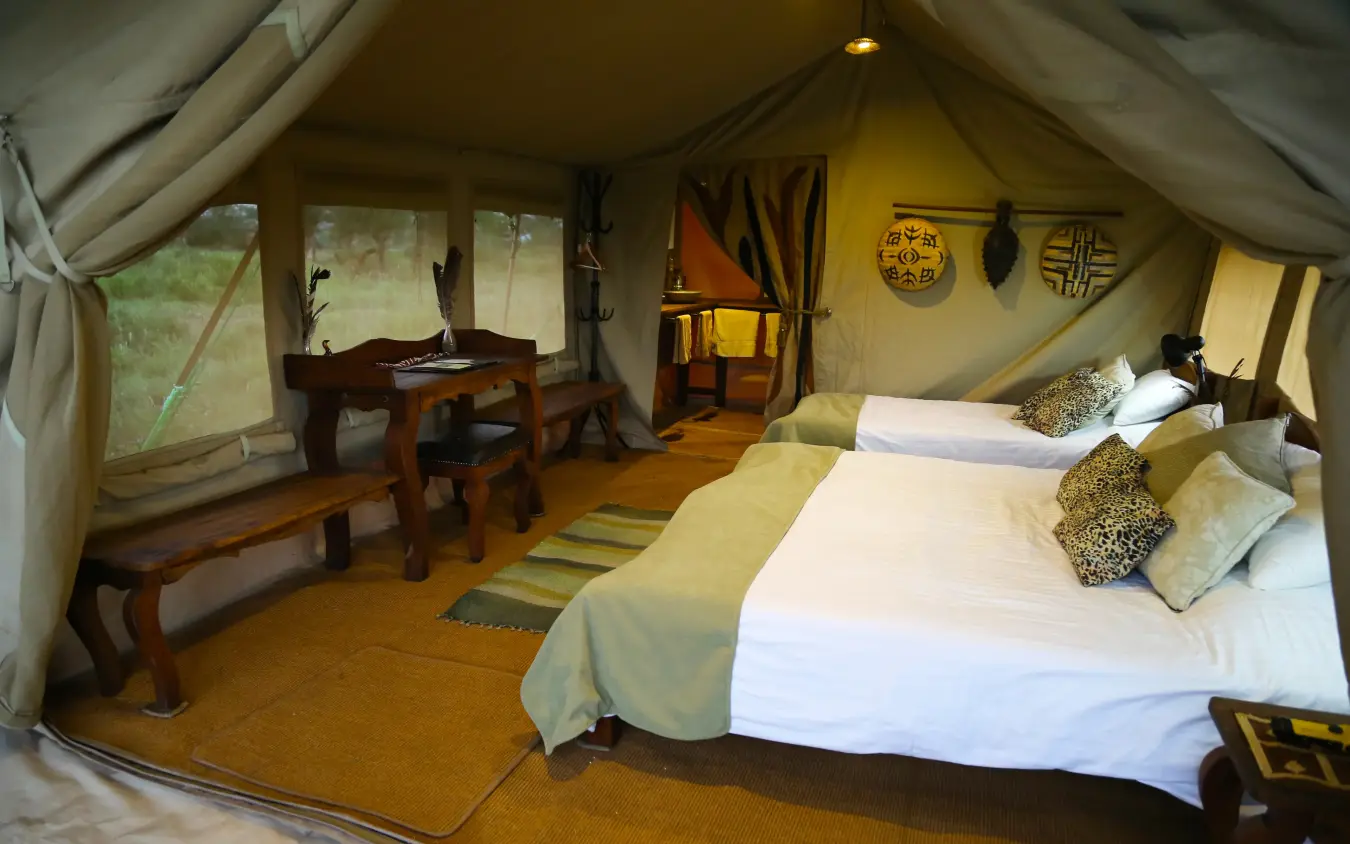
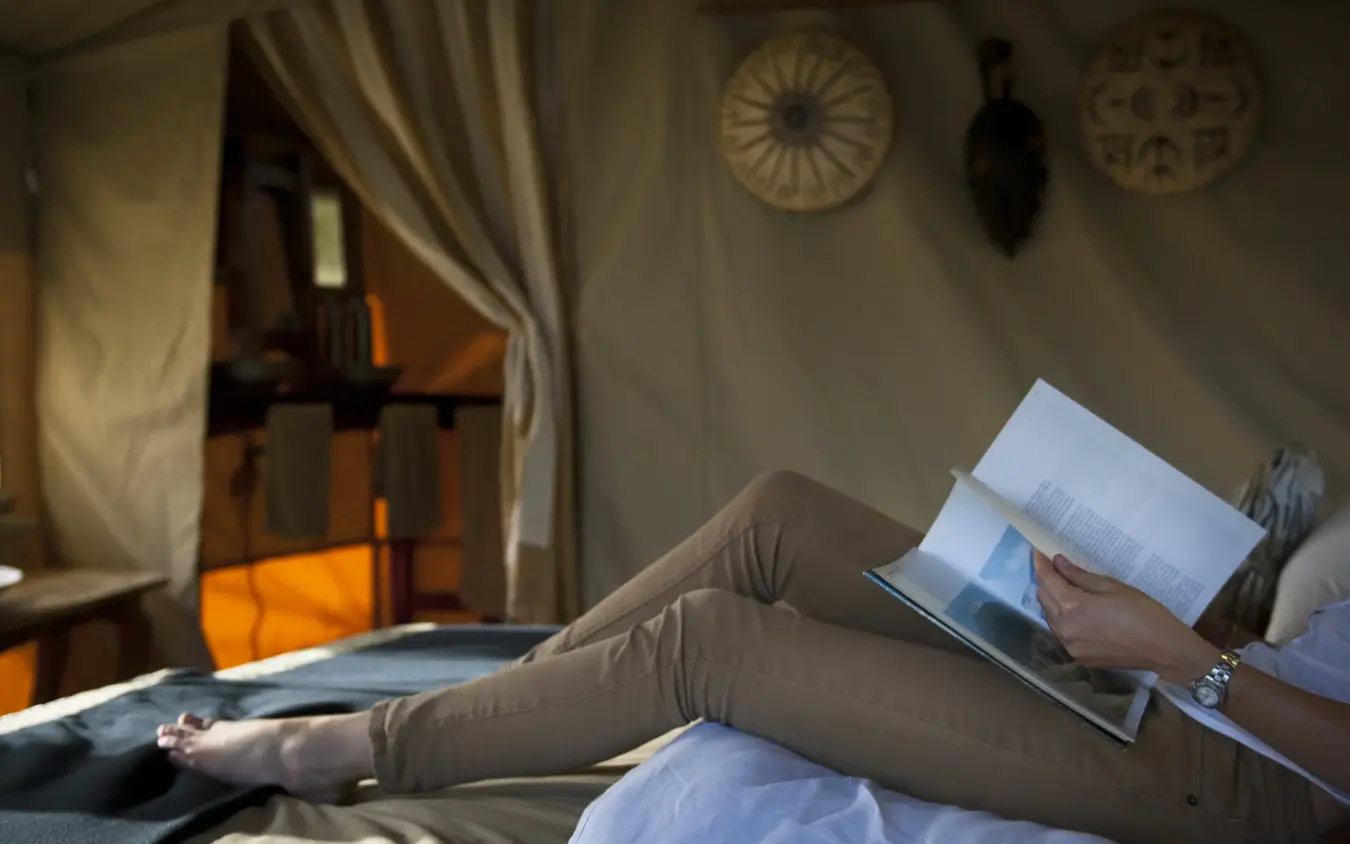
The camp is comfortable and capably run, without reaching for the trappings of a high-end lodge. The tents hold proper wooden beds under duvets and good linen, each with a private veranda facing the plains. En-suite bathrooms come with double basins, a hot bucket shower and a separate compost toilet, comfortable without being opulent. Solar power runs the whole camp.

Canvas does little to hold back the Serengeti after dark.

The central Serengeti holds a dense population of predators, and the gorge beside camp draws resident wildlife close enough to watch, on occasion, from your own veranda. Lions rest on the nearby kopjes, elephants move through the surrounding country, and herds of plains game cover the open ground beyond the gorge. Canvas does little to hold back the Serengeti after dark. The lion calls come with it.

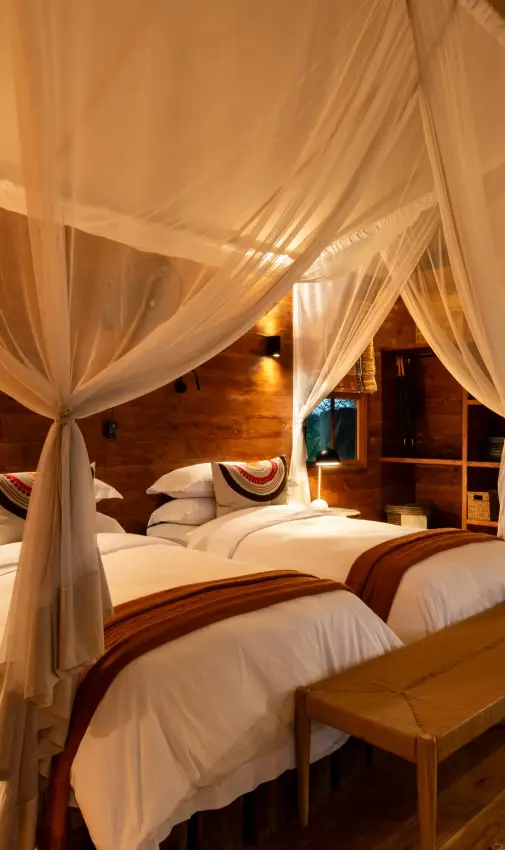
Safari tent bedroom with wooden furniture and canvas walls, Pembazoni Camp, Serengeti National Park, Tanzania 01

accommodation

Ten Canvas Tents Over the Gorge

Canvas tents, each a standalone walk-in unit looking out over open plains and a small river gorge. Wooden beds carry duvets and good linen, and every tent has a private veranda facing the plains. En-suite bathrooms hold double basins, a hot bucket shower and a separate compost toilet. Solar power runs throughout the camp.

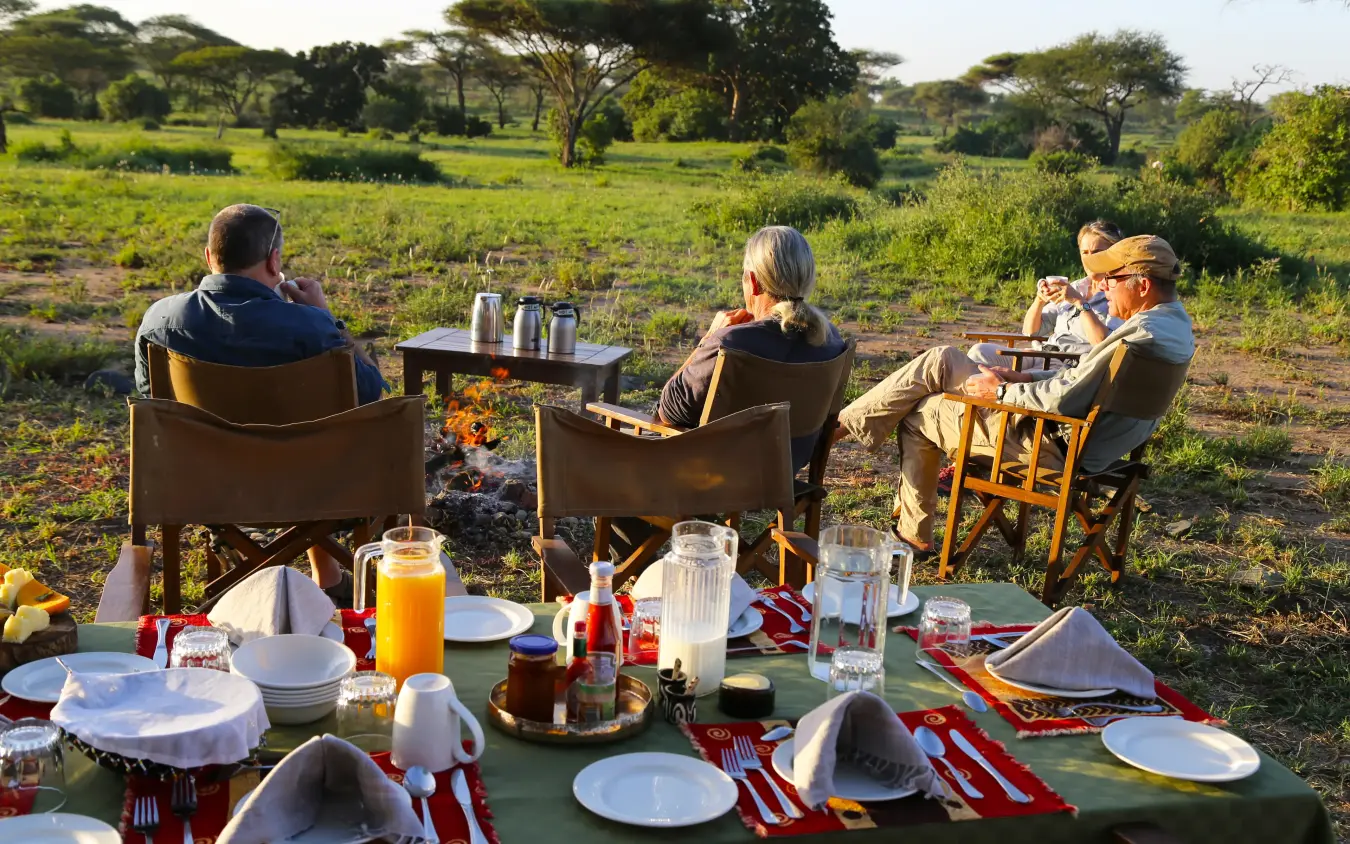
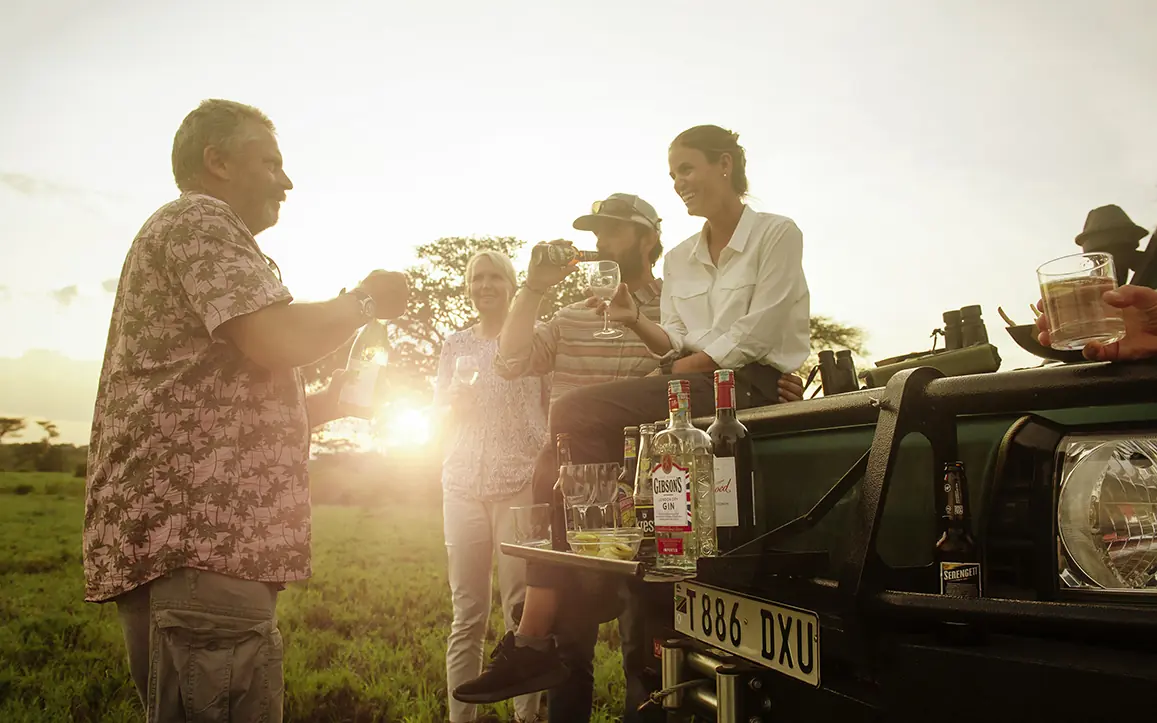
Guests dining outdoors at table in savanna landscape, Pembazoni Camp, Serengeti National Park, Tanzania 02

activities

Walking Safaris in the Wilderness Zone

Walking safaris are the camp's focus, with armed guides leading half- and full-day walks straight from camp into the restricted Wilderness Zone, and multi-day fly-camping available for those wanting to go further. Game drives run in the surrounding Serengeti. Sunrise balloon flights and foraging walks with the Hadzabe can also be arranged, and the Great Migration passes through the wider region in season.

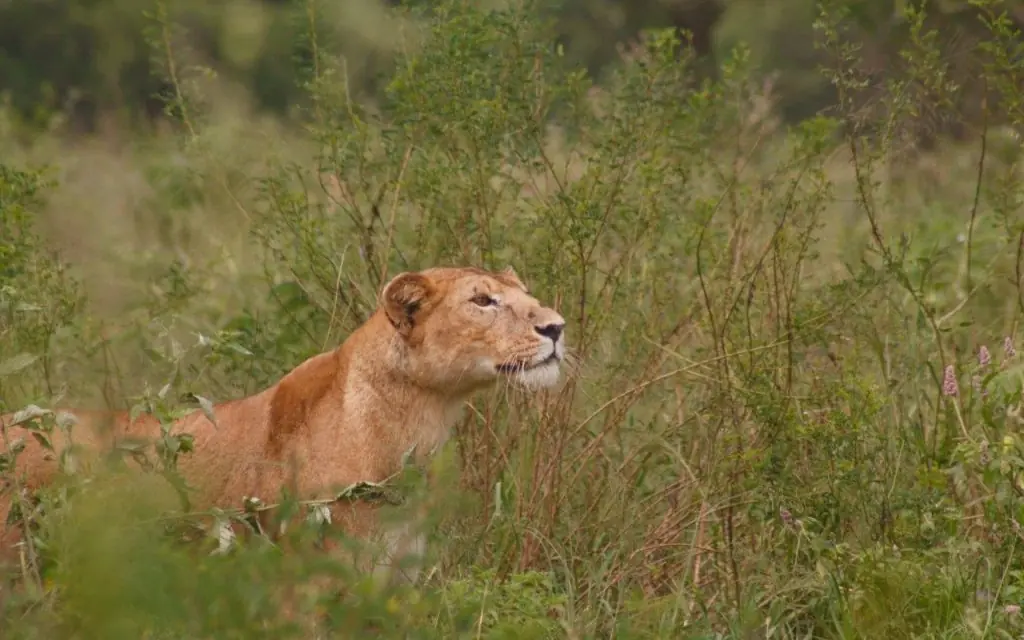
Lioness walking through dense green bush vegetation, Pembazoni Camp, Serengeti National Park, Tanzania 03

conservation

Serengeti De-Snaring Project Partnership

Every stay at Pembazoni Camp triggers a donation to the Serengeti de-snaring project, an anti-poaching partnership between African Environments, TANAPA and the Frankfurt Zoological Society. African Environments also supports a Hadzabe community near Lake Eyasi in securing land rights, works with KPAP on fair treatment of mountain porters, and sources goods through Shanga and Mkaa Bora.

ready to get started?

Get in touch and let’s start the conversation. An initial consultation helps us understand what you’re looking for, whether that’s specific experiences, luxury touches, or marking a special occasion, and from there we’ll guide you through what’s possible so you can decide if we’re the right fit.

Alternative accommodation in serengeti national park

Canvas safari camp with dining area under acacia trees in grassland, Laba Migration Camp, Serengeti National Park, Tanzania 01

Laba Migration Camp

Serengeti National Park

Luxury canvas safari tent with open-air lounge and bedroom interior, Ndutu Wilderness Camp, Serengeti National Park, Tanzania 02

Ndutu Wilderness Camp

Serengeti National Park

Thatched safari lodge deck overlooking vast savanna landscape, Lamai Serengeti, Serengeti National Park, Tanzania 03

Lamai Serengeti

Serengeti National Park

Couple dining under ancient tree with hanging lanterns at dusk, Nyasi Tented Camp, Serengeti National Park, Tanzania 04

Nyasi Tented Camp

Serengeti National Park

Guests gathered on rock outcrop in savanna landscape, Serengeti Plains Camp, Serengeti National Park, Tanzania 05

Serengeti Plains Camp

Serengeti National Park

Canvas safari tent with acacia tree at golden hour, Ubuntu Migration Camp, Serengeti National Park, Tanzania 06

Ubuntu Migration Camp

Serengeti National Park

Stone bungalow with thatched roof at sunrise, Ndutu Safari Lodge, Serengeti National Park, Tanzania 07

Ndutu Safari Lodge

Serengeti National Park

Person holding lanterns standing in savanna grassland at dusk, Serengeti North Wilderness Camp, Serengeti National Park, Tanzania 08

Serengeti North Wilderness Camp

Serengeti National Park

Safari lodge buildings with thatched roofs nestled among trees, Mwiba Lodge, Serengeti National Park, Tanzania 09

Mwiba Lodge

Serengeti National Park

Canvas tent dining area under acacia trees at dusk, Esirai Camp, Serengeti National Park, Tanzania 10

Esirai Camp

Serengeti National Park

Safari camp with canvas tent beneath acacia trees, Serengeti Green Camp, Serengeti National Park, Tanzania 11

Serengeti Green Camp

Serengeti National Park

Safari tent lodge with wooden deck and acacia tree, Sayari Camp, Serengeti National Park, Tanzania 12

Sayari Camp

Serengeti National Park

Safari lodge tents beneath acacia trees at golden hour, The Retreats at Namiri Plains, Serengeti National Park, Tanzania 13

The Retreats at Namiri Plains

Serengeti National Park

Canvas tent accommodation at sunset in savanna landscape, Olakira Migration Camp, Serengeti National Park, Tanzania 14

Olakira Migration Camp

Serengeti National Park

Illuminated safari camp tents on wooden deck at dusk, Olmara Serengeti, Serengeti National Park, Tanzania 15

Olmara Serengeti

Serengeti National Park

Luxury bedroom with four-poster canopy beds and wooden architecture, The Retreats at Sayari Camp, Serengeti National Park, Tanzania 16

The Retreats at Sayari Camp

Serengeti National Park

Canvas safari tent illuminated at dusk among acacia trees, Serian Serengeti Lamai, Serengeti National Park, Tanzania 17

Serian Serengeti Lamai

Serengeti National Park

Outdoor seating area with cushions overlooking vast savanna landscape at dusk, Laba Grumeti Art Lodge, Serengeti National Park, Tanzania 18

Laba Grumeti Art Lodge

Serengeti National Park

Luxury safari tent interior with bed and savanna views through windows, Serengeti Wilderness Camp, Serengeti National Park, Tanzania 19

Serengeti Wilderness Camp

Serengeti National Park

Canvas safari tent with wooden deck in grassland, Dunia Camp, Serengeti National Park, Tanzania 20

Dunia Camp

Serengeti National Park

frequently asked questions

Fly from Arusha to Seronera, the central Serengeti's main airstrip, a little over an hour in the air on the scheduled light aircraft. From the strip it is around an hour's drive out to the camp on the edge of the Wilderness Zone, run as a game drive rather than a transfer, so the safari starts before you arrive.

We can also arrange a private charter into Seronera, usually a Cessna Caravan or a Pilatus PC-12, if you would rather set your own timings. Either way, luggage rides in soft bags, fifteen kilograms per person including hand baggage on the scheduled flights.

Almost certainly, yes. The central Serengeti lies at roughly 1,500 metres, under the 1,800 metre line below which both the UK's official travel health service and the American CDC place the whole of mainland Tanzania at high malaria risk. The cool nights thin the mosquitoes out but do not remove them.

A travel clinic or your doctor will confirm the right tablets for you close to departure, since advice is reviewed regularly. In camp, use the nets provided and keep arms and ankles covered after dark.

Reasonably steady on your feet rather than athletic. The walks move at tracking pace, stopping constantly to read prints, dung, grasses and birds, so the distances are modest even on a full day out, and the guides set the route and pace to the group in front of them. Heat is the real factor, which is why walks leave early and carry plenty of water.

If you want more, the fly-camping nights push deeper into the closed zone on foot, and if you want less, a half-day walk with an afternoon game drive is a perfectly good rhythm. Tell us honestly how much walking you enjoy and we will shape the days to match.

The dry months from June to October are the pick for a camp built around walking, with firm ground, short grass and animals held close to the remaining water. The migration also passes through the wider central and western Serengeti around May to July on its way north, which can fill the horizon on drive days.

The short rains of November and the green months that follow bring long grass and softer ground, better for birds and skies than for covering distance on foot. The resident predators of the central Serengeti are there whatever the month.

Plan on very little. The camp runs on solar power and keeps devices charged, but this corner of the park was chosen precisely because almost nobody else reaches it, and connectivity matches the remoteness. Mobile signal is patchy across the Serengeti at the best of times and disappears on foot.

Most guests find three unreachable days are the point rather than the problem. If you do need a line home, tell us and we will confirm with the camp exactly what is available before you commit.

Dress for walking, not for the lodge. Sturdy, worn-in boots or trail shoes, long light trousers, and shirts in greens, browns and khaki, because muted colours are a courtesy to the wildlife when you are on foot among it. A fleece or warm jacket earns its place on the cold early starts, and a brimmed hat and high-factor sunscreen carry you through the middle of the day.

Everything travels in a soft duffel for the light aircraft, around fifteen kilograms each with hand luggage counted in. Laundry in camp keeps the packing list short.

rated five stars by our clients

other areas in tanzania

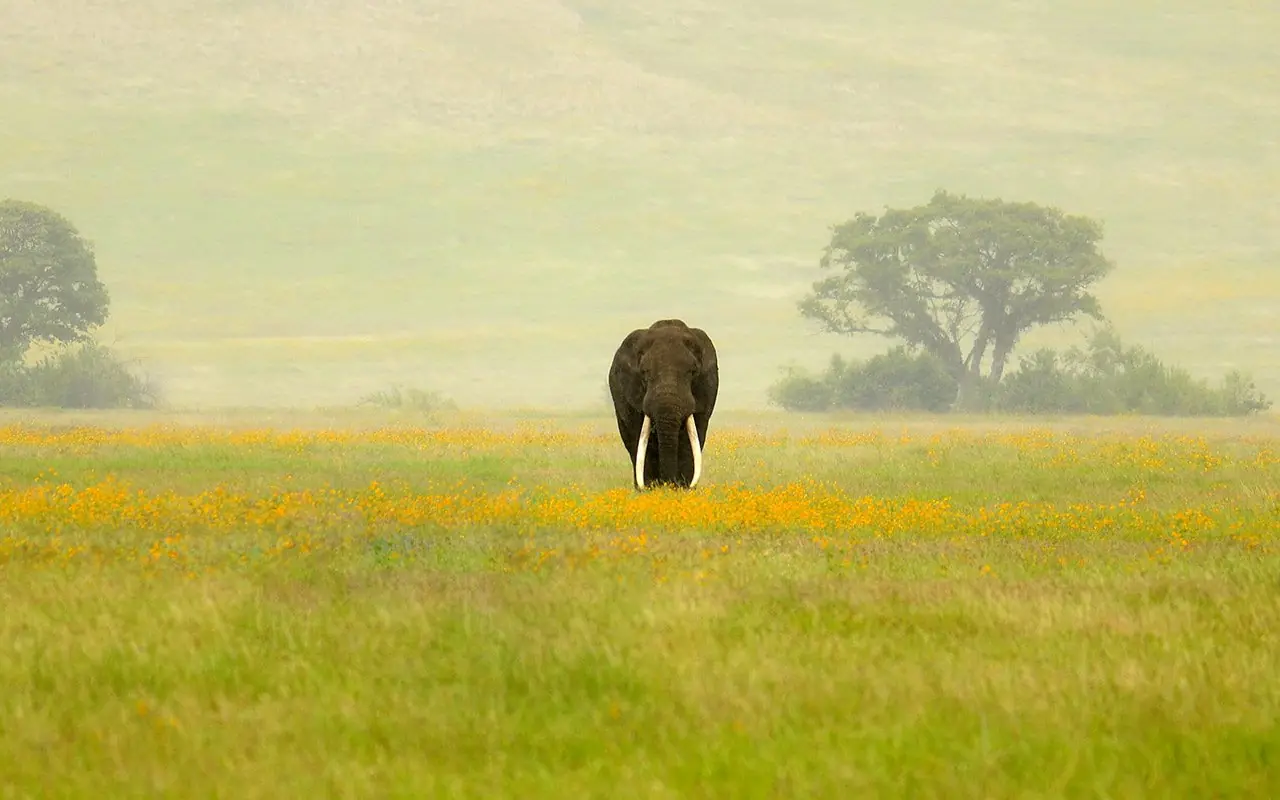
Elephant walking alone across golden savanna grassland 01

Ngorongoro Crater

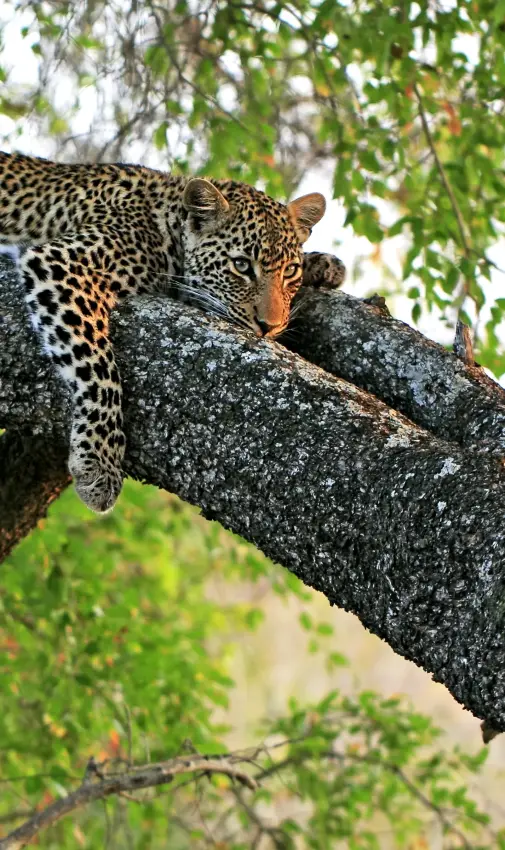
Leopard resting on tree branch surrounded by green foliage 02

Tarangire National Park

Guests relax in chairs by river with child wading, Lake Manyara, Tanzania 03

Lake Manyara

African wild dog standing alert in grassland 04

Ruaha National Park

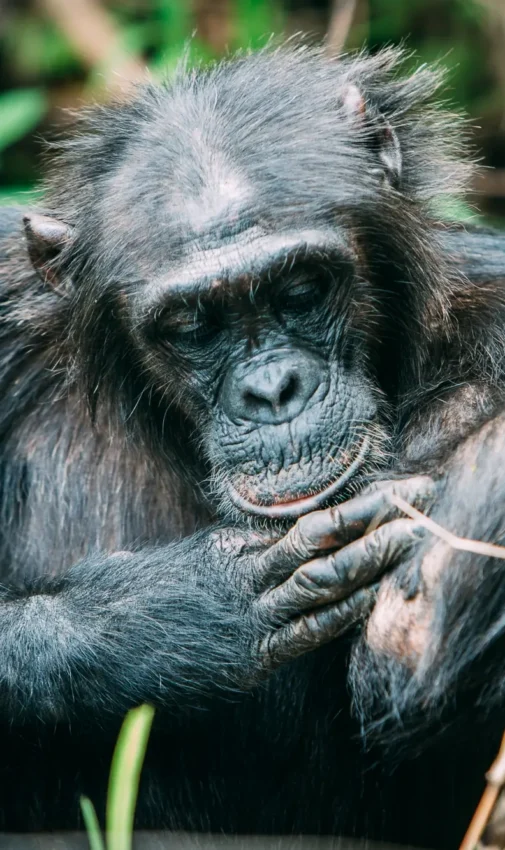
Chimpanzee holding branch while foraging in forest, Mahale Mountains, Tanzania 05

Mahale Mountains

Hippopotamuses in water with heads above surface 06

Katavi National Park

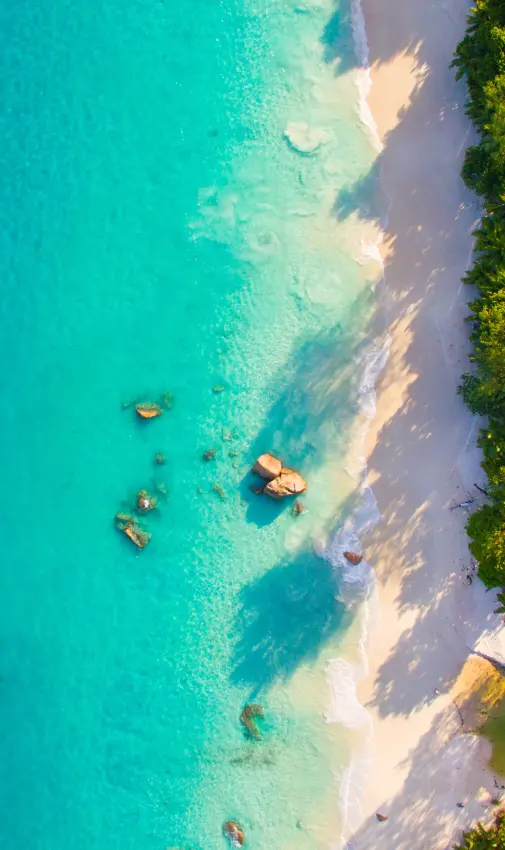
Turquoise water beach with boats and tropical vegetation 07

Zanzibar & Pemba

Family group of African elephants walking on sandy path 08

Arusha

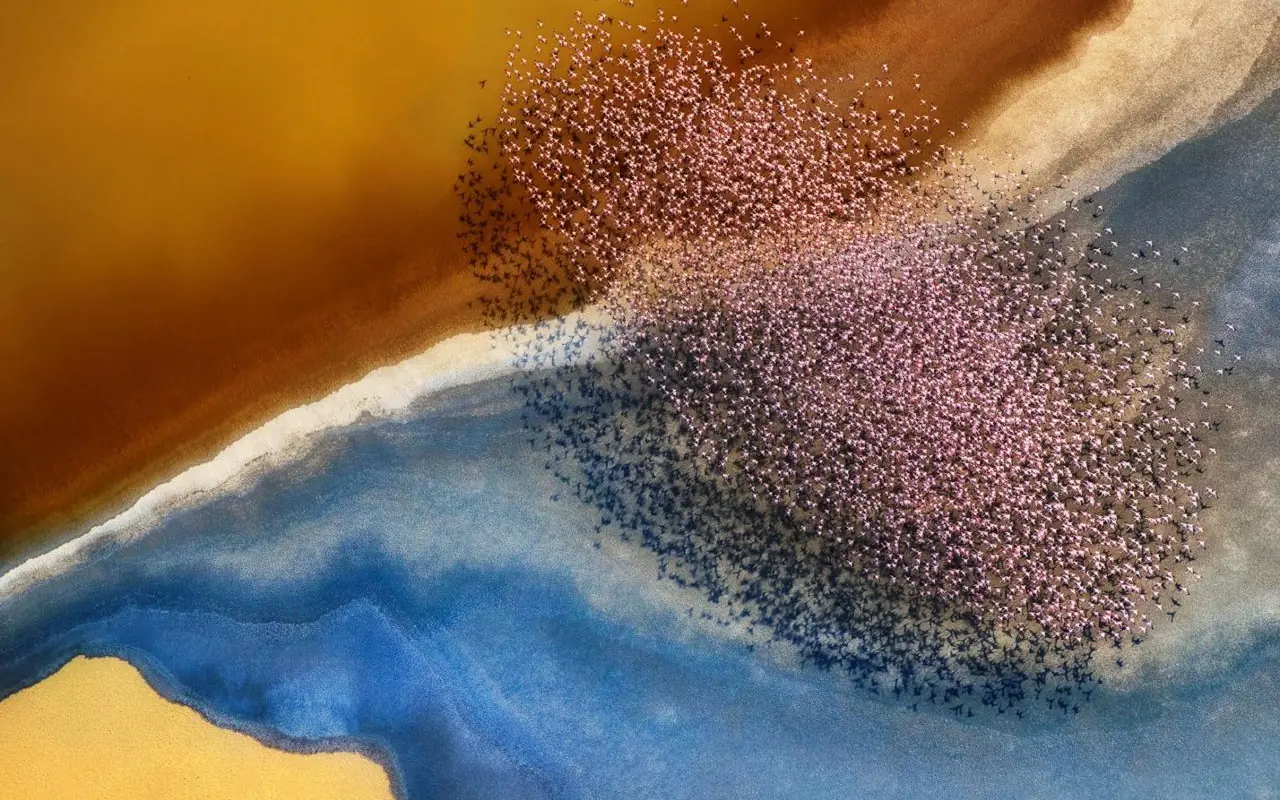
Aerial view of colorful salt lakes and mineral deposits 09

Lake Natron

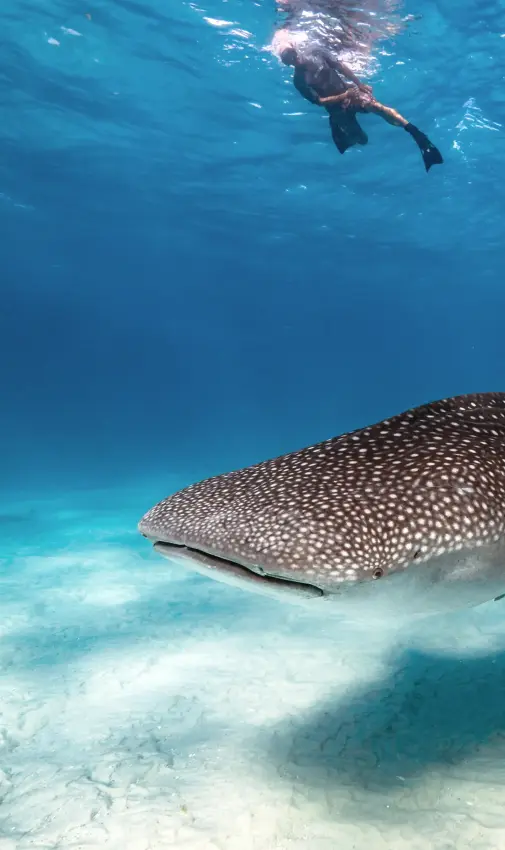
Snorkeler swimming alongside whale shark in shallow turquoise water, Mafia Archipelago, Tanzania 10

Mafia Archipelago

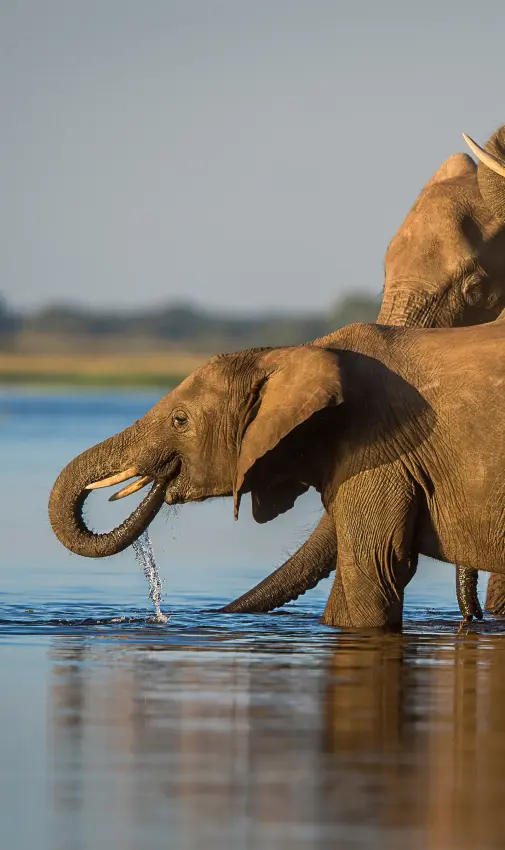
elephants drinking water at riverbank during daytime 11

Nyerere National Park

Chimpanzee among vegetation looking toward camera, Rubondo Island, Tanzania 12

Rubondo Island

Planning a journey together

our approach

remote, exclusive
& personal

Every journey starts with a conversation. We take the time to understand your vision before we start planning.

Whether by phone or in person, we work with you directly to shape something that is considered, personal, and expertly delivered.

get in touch
destinations ideas & inspiration our process about us contact us