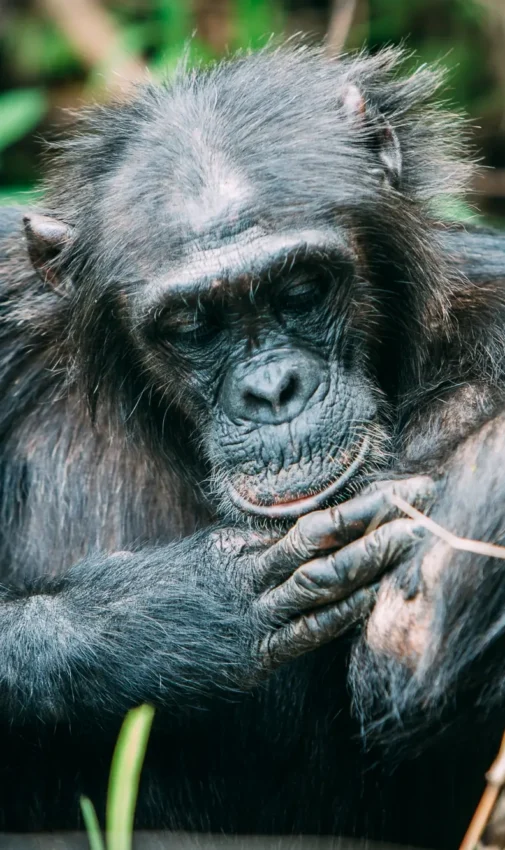
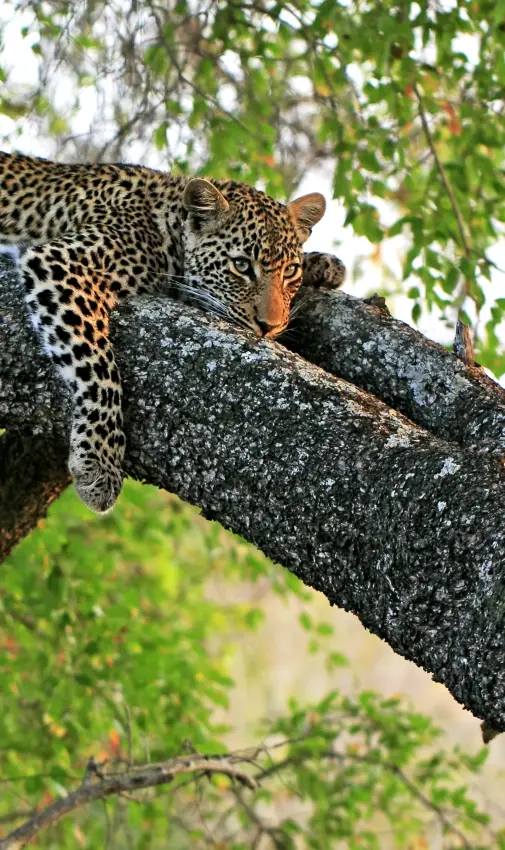
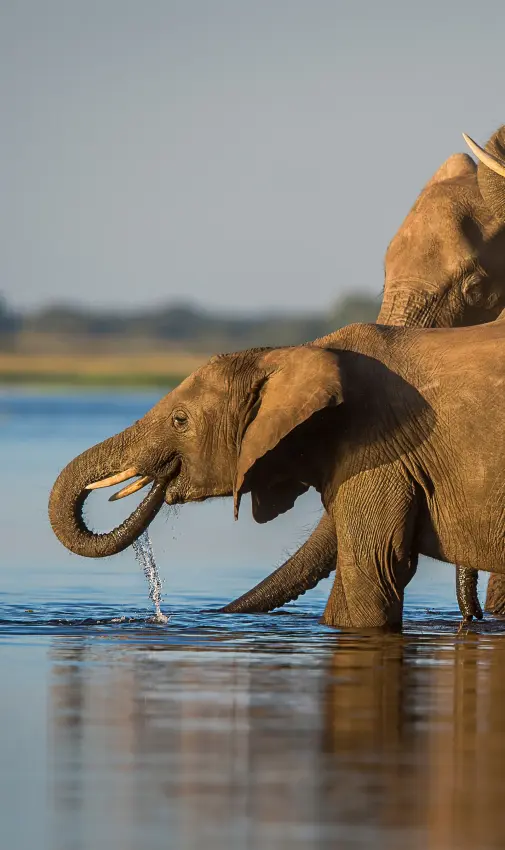
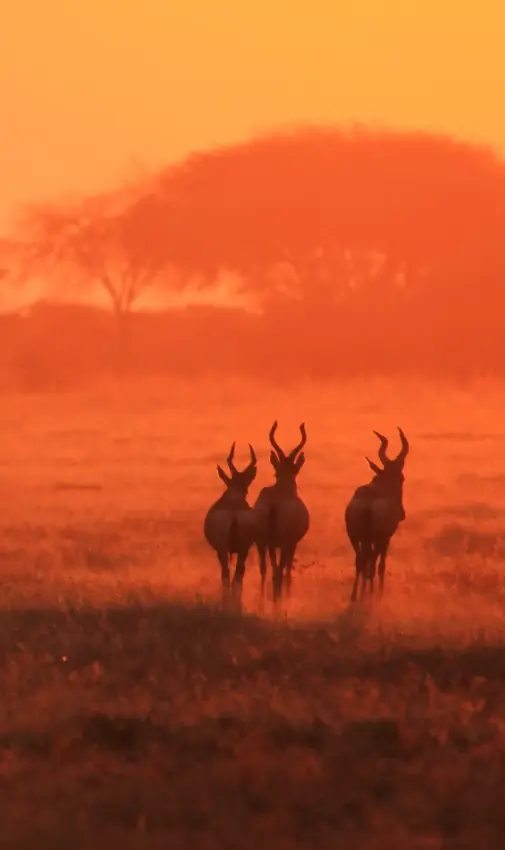
Most crater days run from the morning descent until late afternoon, with lunch carried in the vehicle so nobody has to climb back out. The floor lies within a UNESCO World Heritage Site that holds the Big Five and more than 400 bird species, and the sightings come thick. Lions and buffalo are regular sightings, as are elephants and hippos, eland and spotted hyenas, wildebeest and zebras. Black rhinos are sometimes seen. Leopards are the hard find, and plenty of trips leave without one.
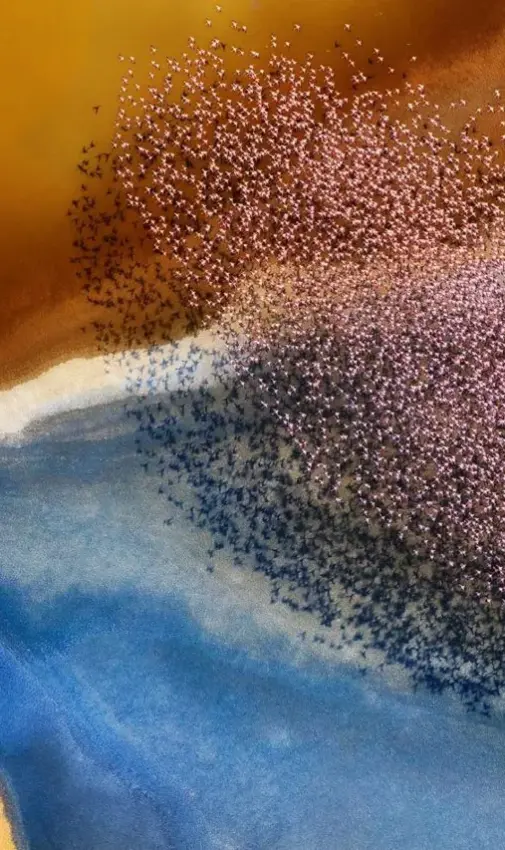
Flamingos feed in the shallows of Lake Magadi, and the Lerai Forest, a stand of fever trees on the crater floor, breaks up the open grassland with shade and cover. Back at camp, the birdwatching begins earlier still, outside the tents at first light, before the vehicles leave camp for the descent. Two nights is the sensible minimum. It allows one full crater day without rushing, and a second morning either for a return descent or for quieter hours with binoculars in the lounge. A longer stay leaves room for Olduvai Gorge or Lake Manyara, arranged in advance.
By dusk, the elephants that filled the vehicle window at noon are specks again.
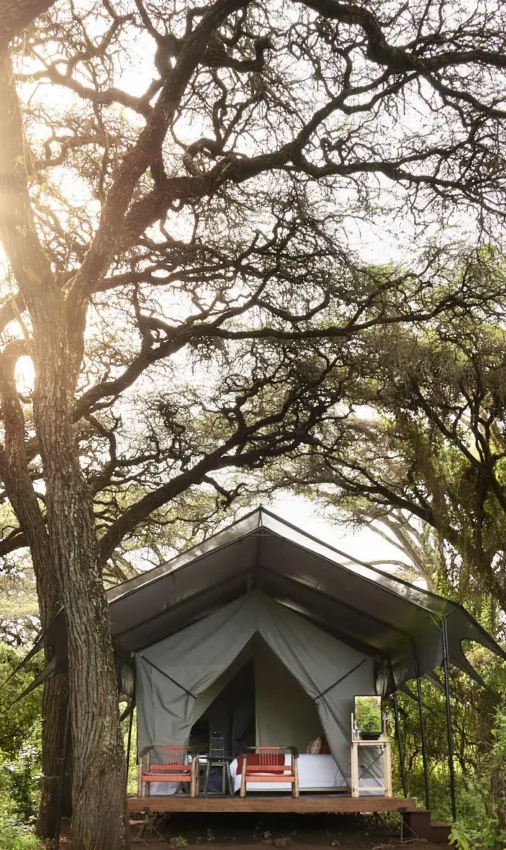
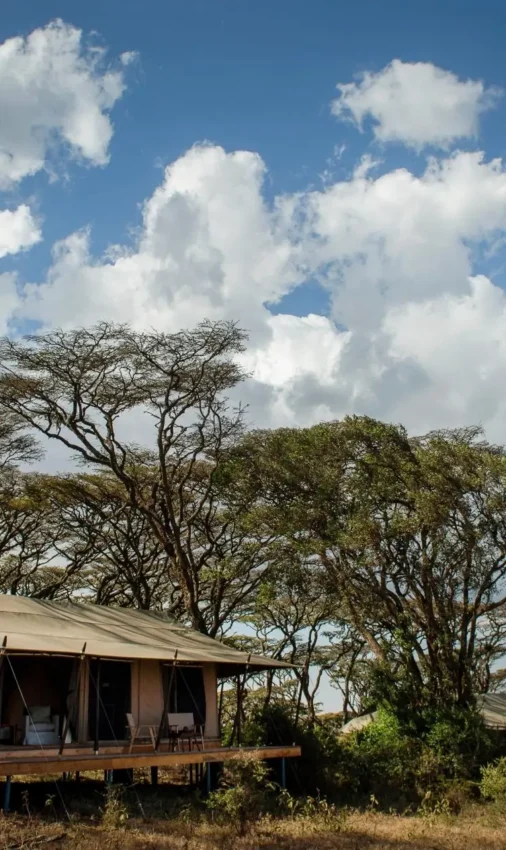
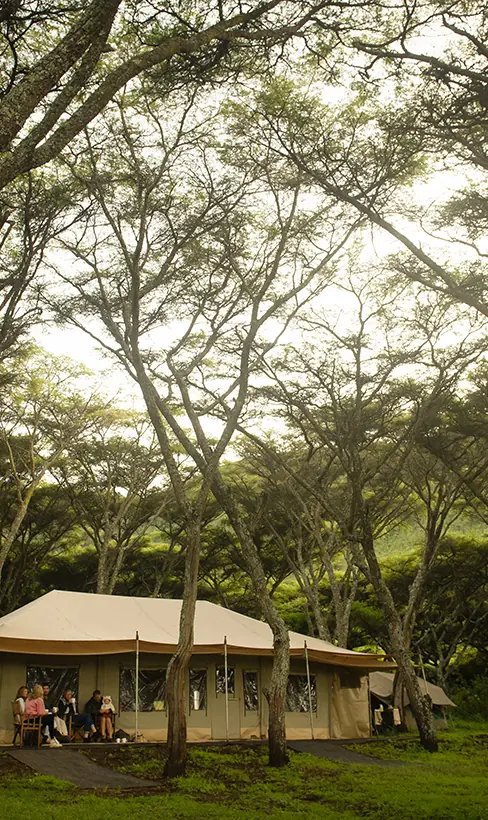
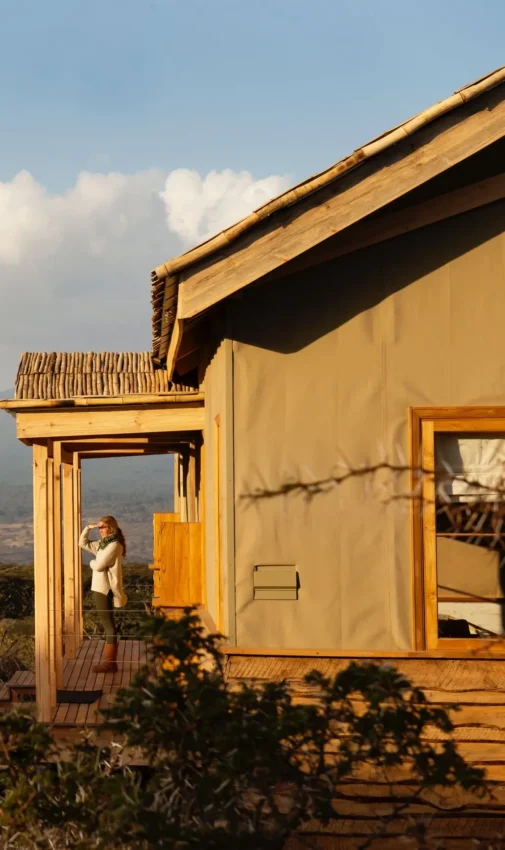
Wildlife moves regularly through the forest and acacias around the tents, and for families with young children that closeness is the first thing to weigh. Children are welcome, and the interconnecting family suites, two suites joined by a shared lounge, keep a family together. Larger families gain most from the early descent. The first hour on the crater floor is often quiet enough to stop and linger, without other vehicles crowding the sighting.
Crater drives run in daylight only, so the climb back up the wall comes in late afternoon, and the short road home leaves the last of the light for the rim. From the deck, the floor of Ngorongoro Crater slips into shadow as the sun drops behind the far wall, and the binoculars come out for a final scan of the grassland. By dusk, the elephants that filled the vehicle window at noon are specks again. Around the tents, the calls of animals moving through the trees begin as the light goes. Then the fire, then dinner.