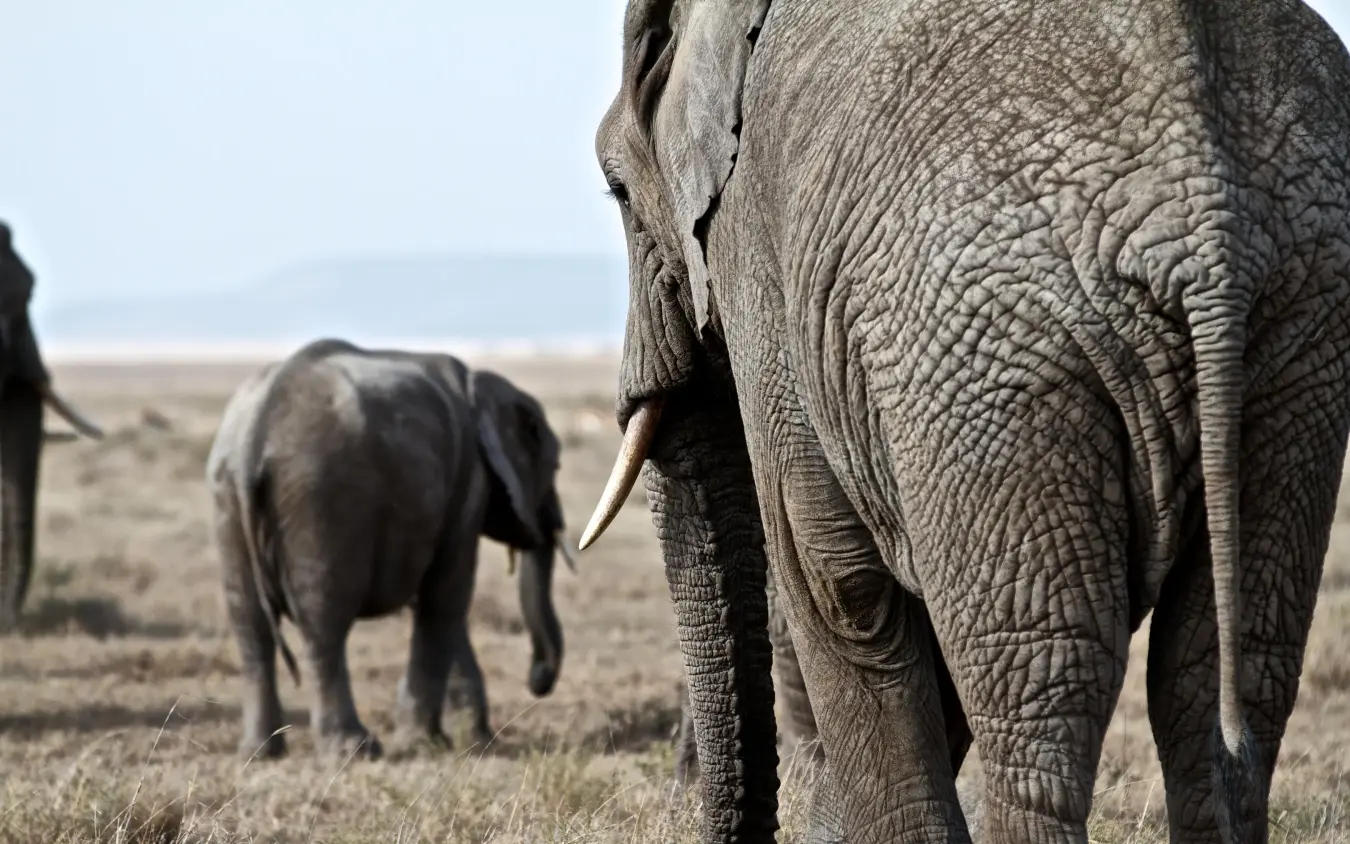
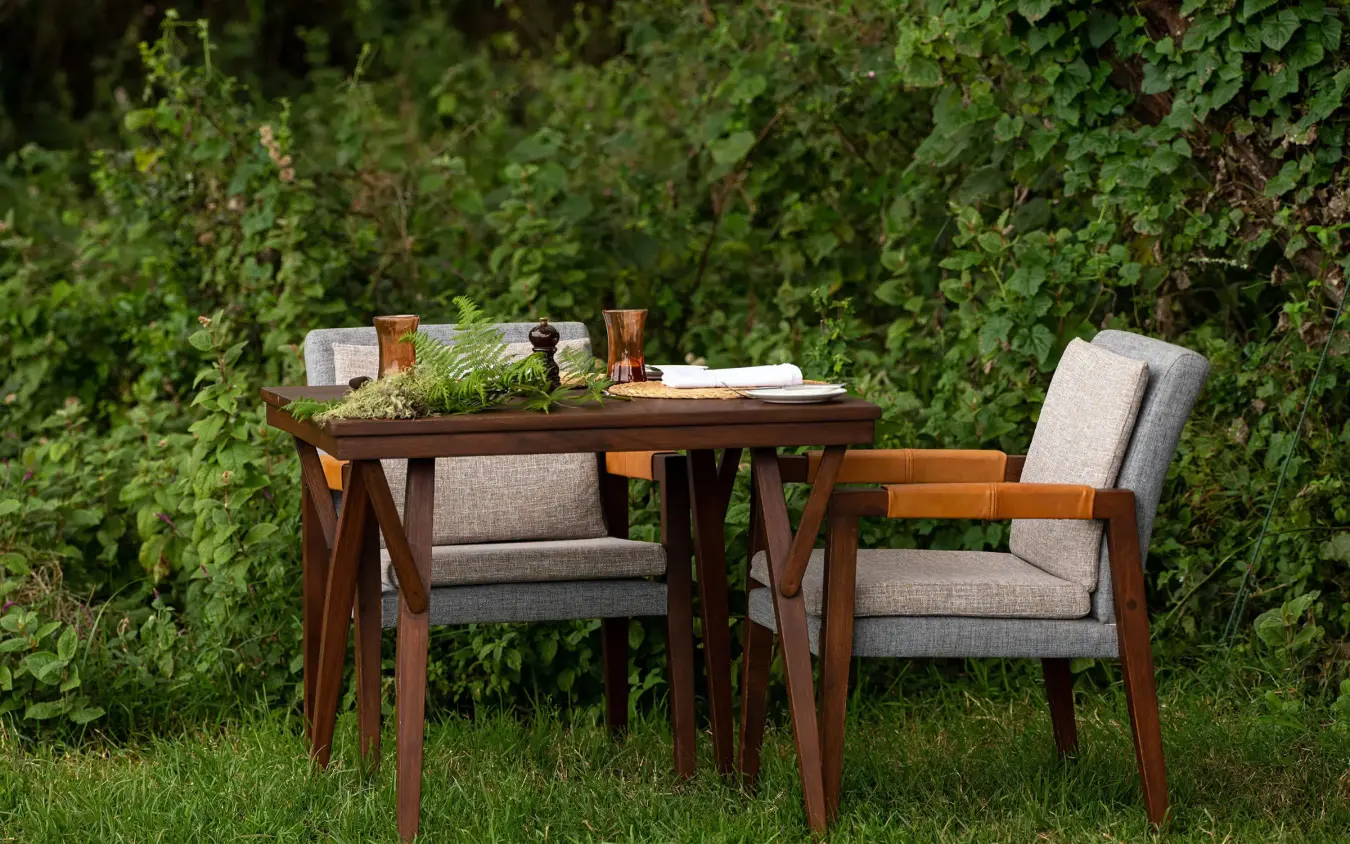
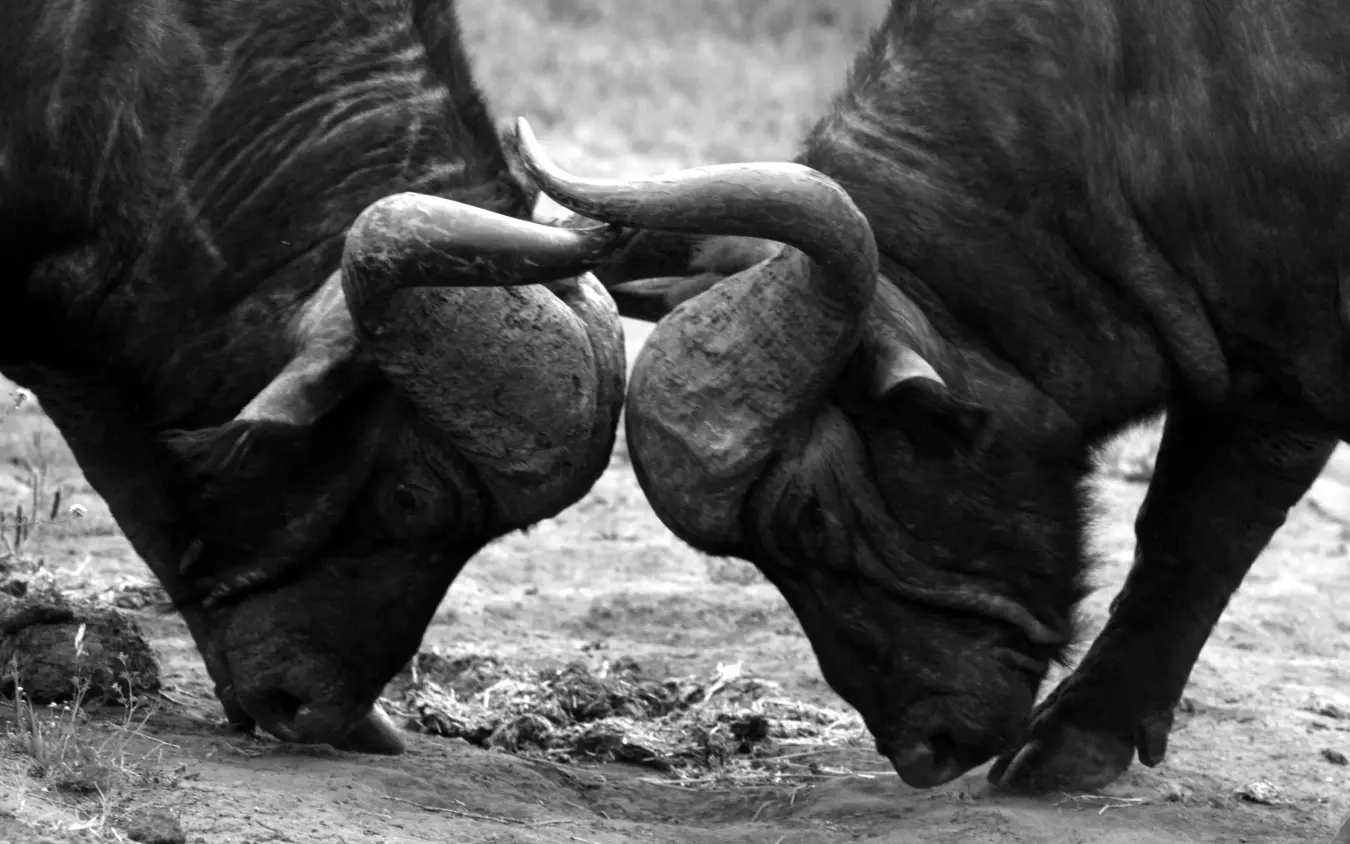
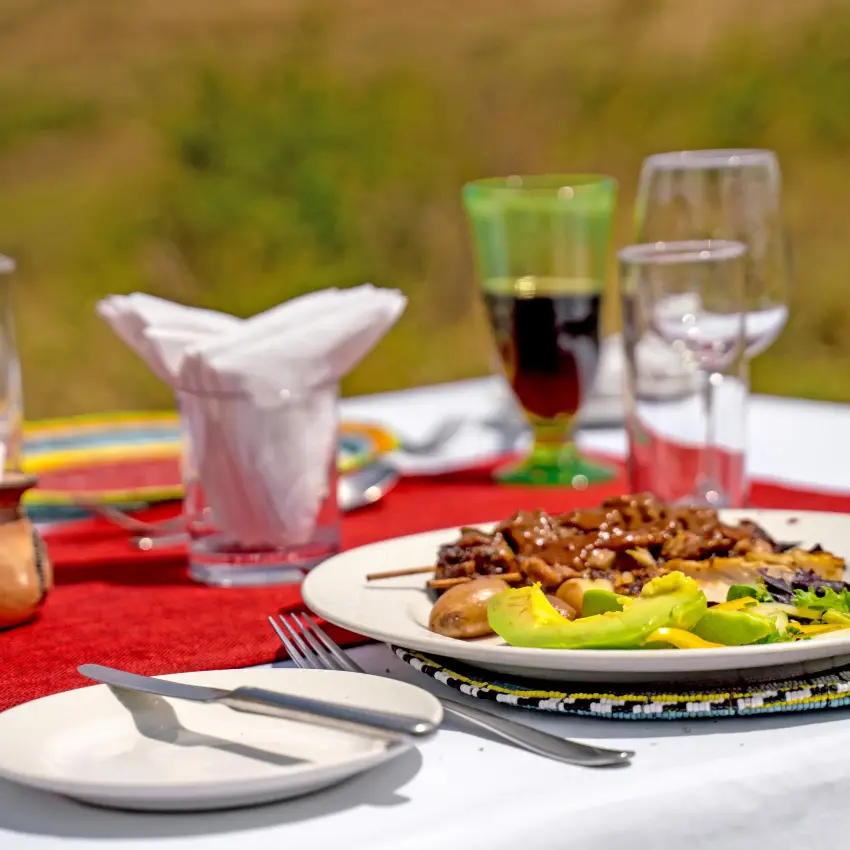
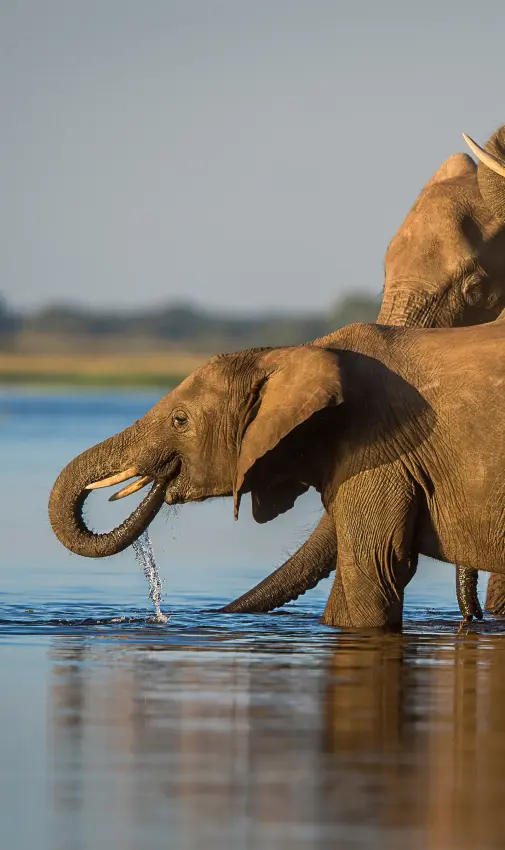
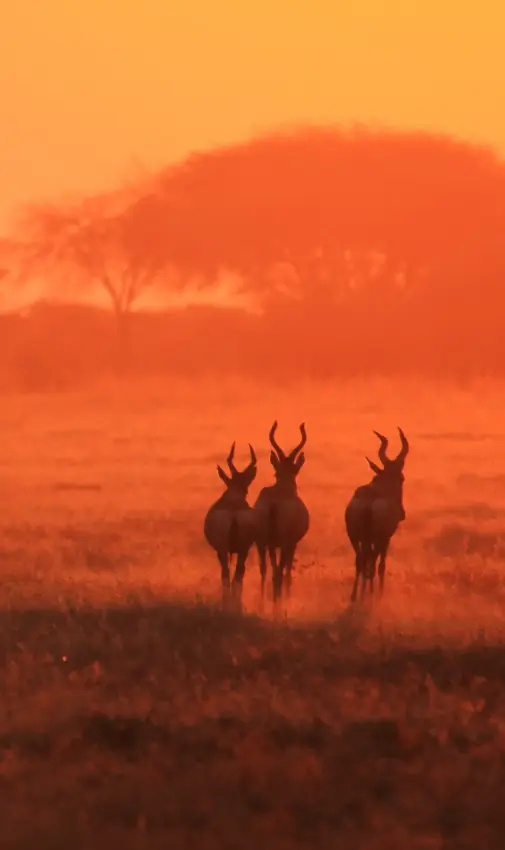
Some 25,000 animals live within the caldera, lion and spotted hyena among them, elephant and hippo, and great herds of wildebeest, zebra and buffalo sharing the grass with a resident population of black rhino. The crater rewards an early start more than almost anywhere else in Tanzania. Ngorongoro is a conservation area, so game drives keep to daylight hours on designated roads, with no night driving and nothing off-road. Lunch, when you want it, comes hot on the floor itself, laid with proper table settings while the game viewing carries on around you.
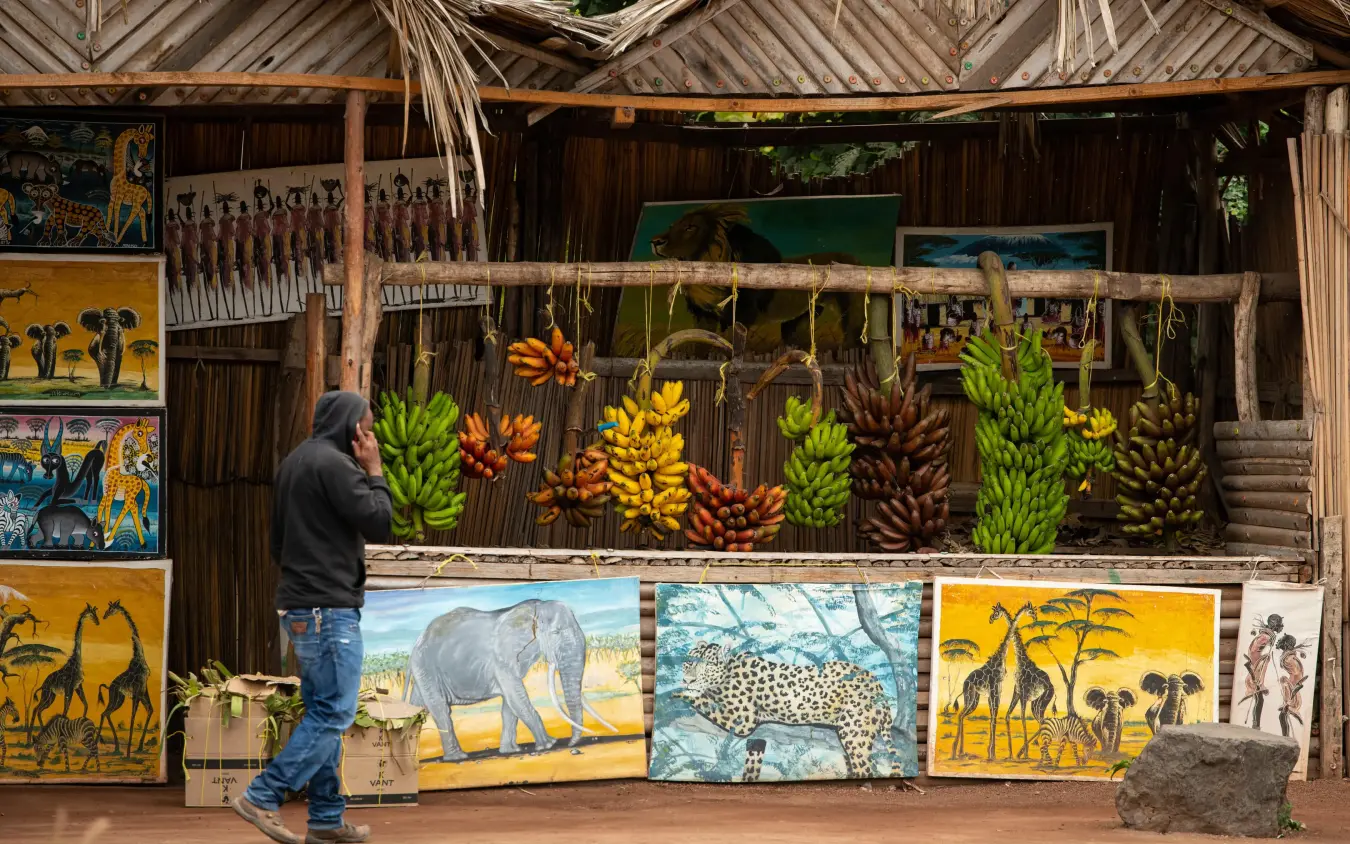
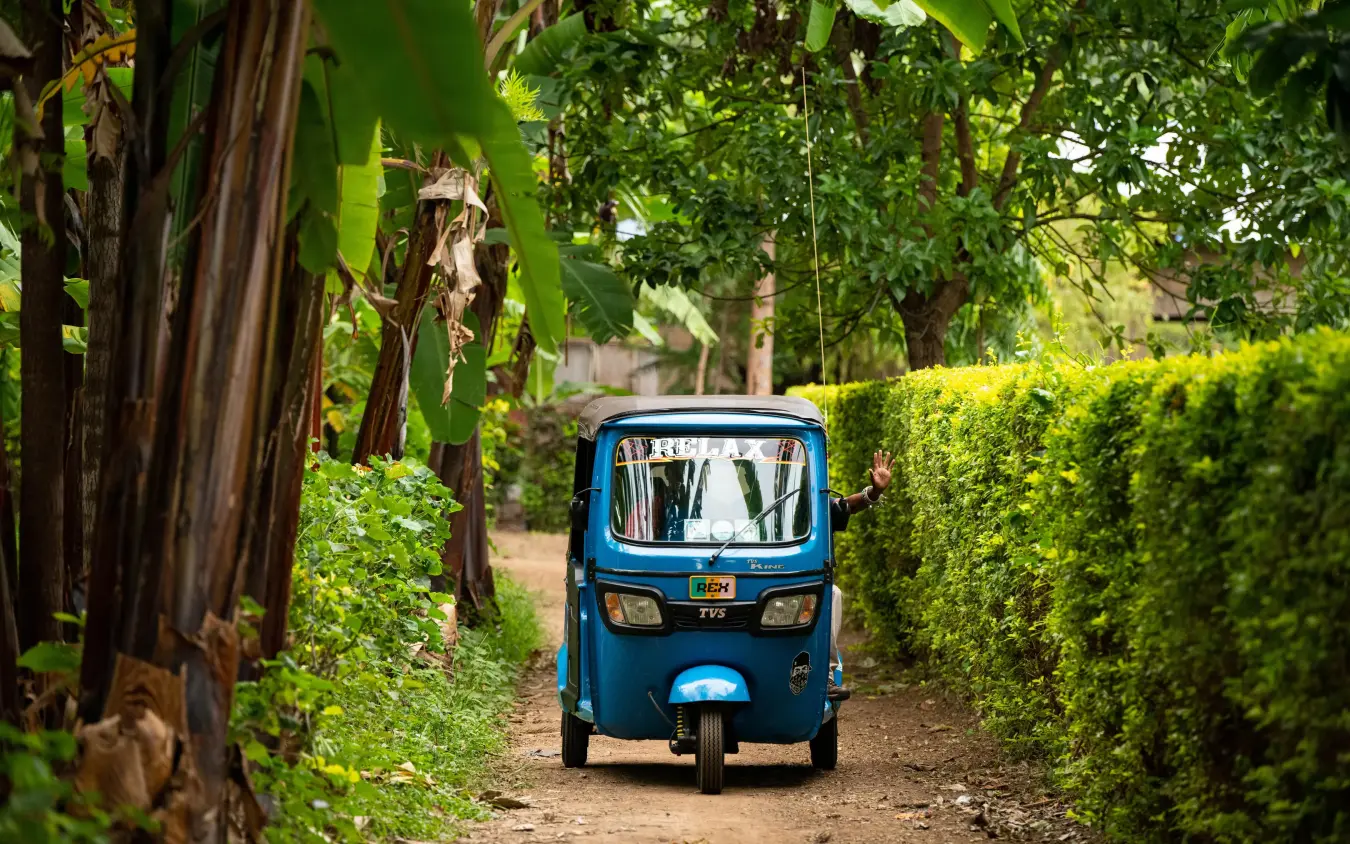
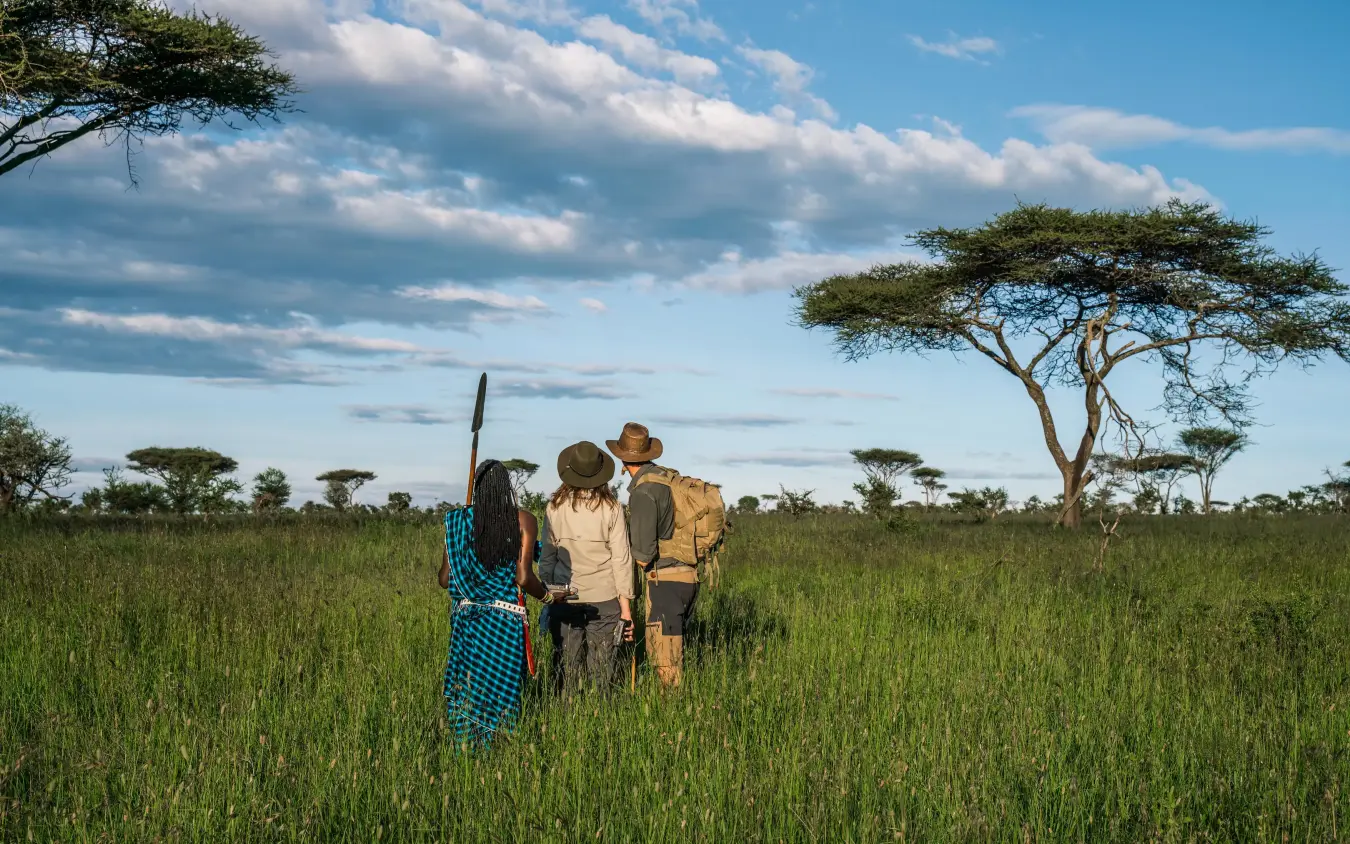
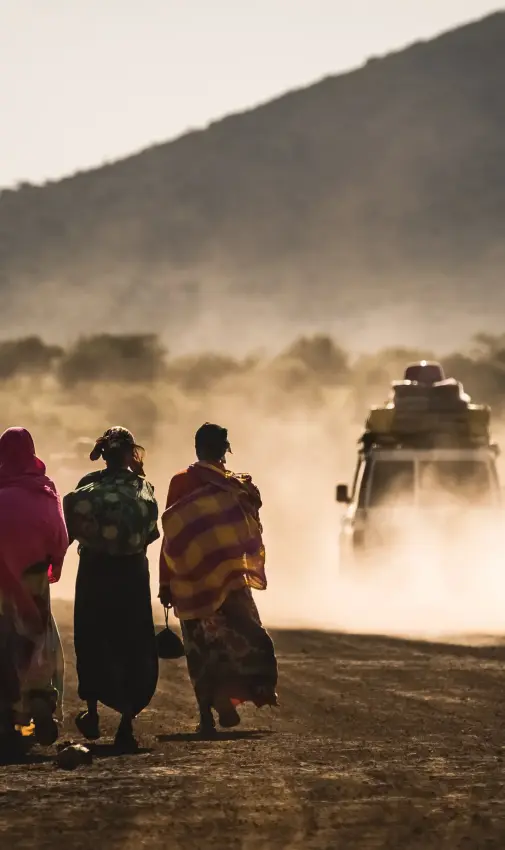
Longer excursions climb from the camp to the Olmoti and Empakaai craters, highland country of forest, birdlife and Maasai pastoral life instead of open plains. Escorted walks take in the forest and rim with an armed ranger and a Maasai guide. Closer to home, cultural visits go to a nearby Maasai boma, and a tuk-tuk winds through the village of Mto wa Mbu to its market, its artisans and a primary school the camp supports. Families are well served too, with a two-bedroom family tent and the Lemala Cubs children’s programme.
Escorted walks take in the forest and rim with an armed ranger and a Maasai guide.
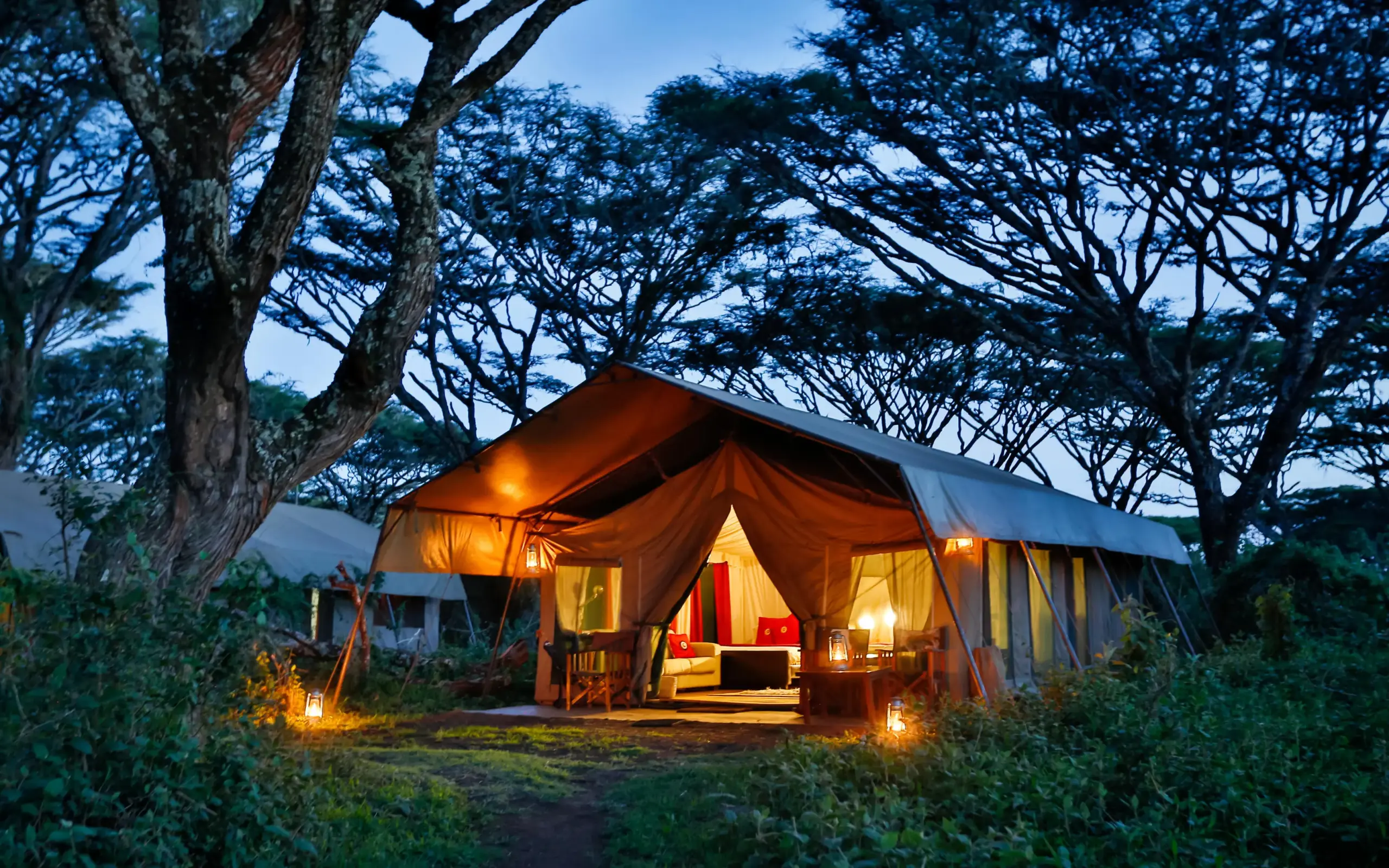
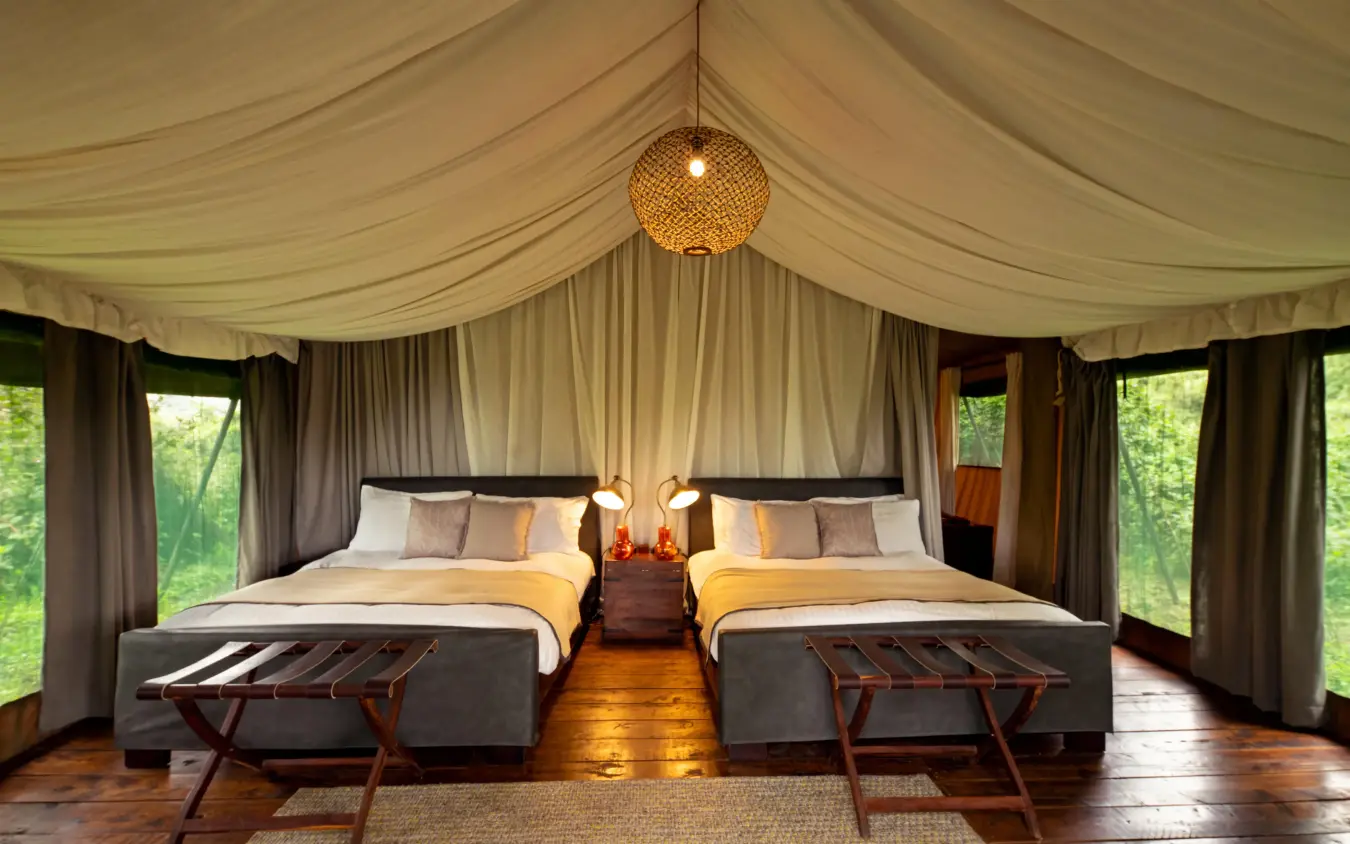
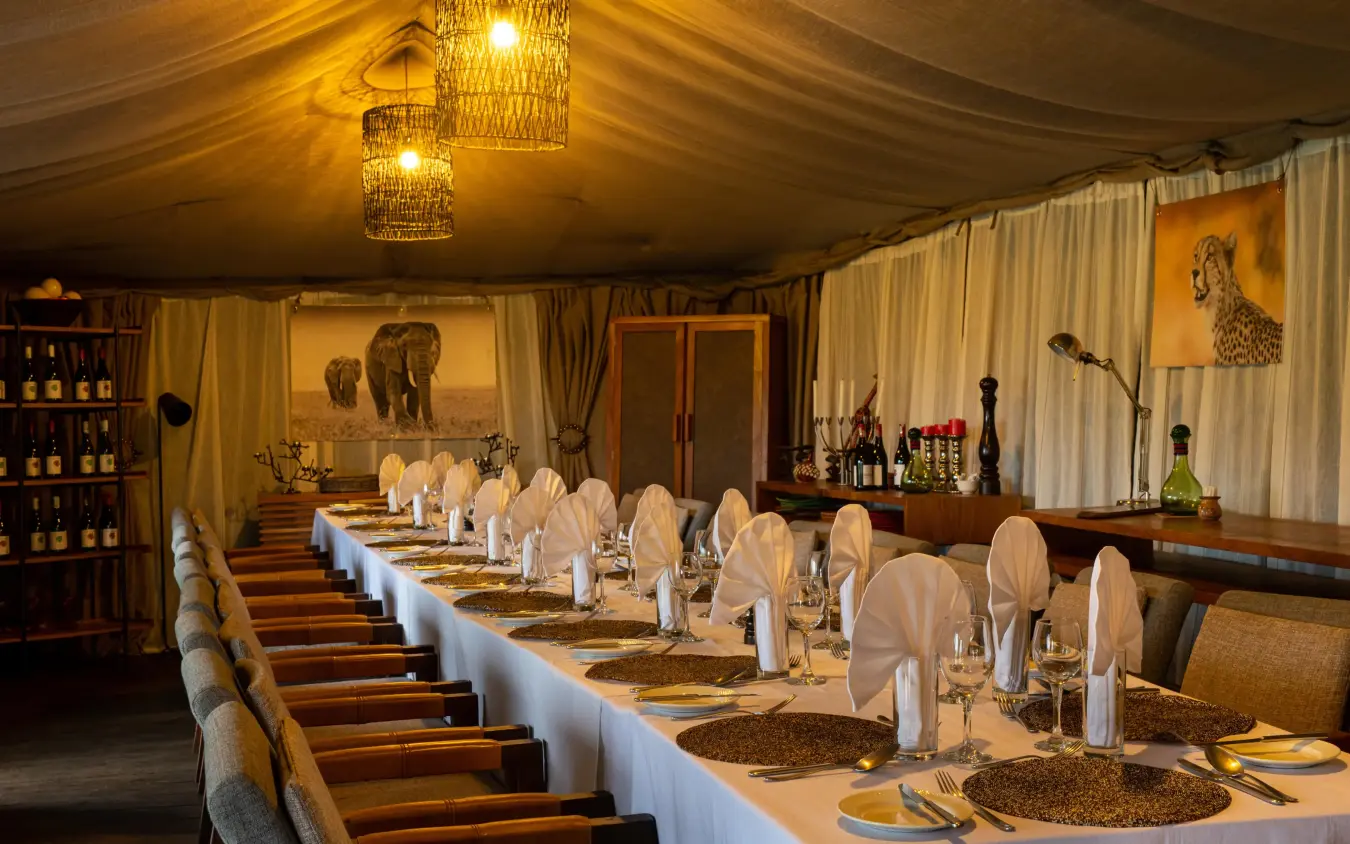
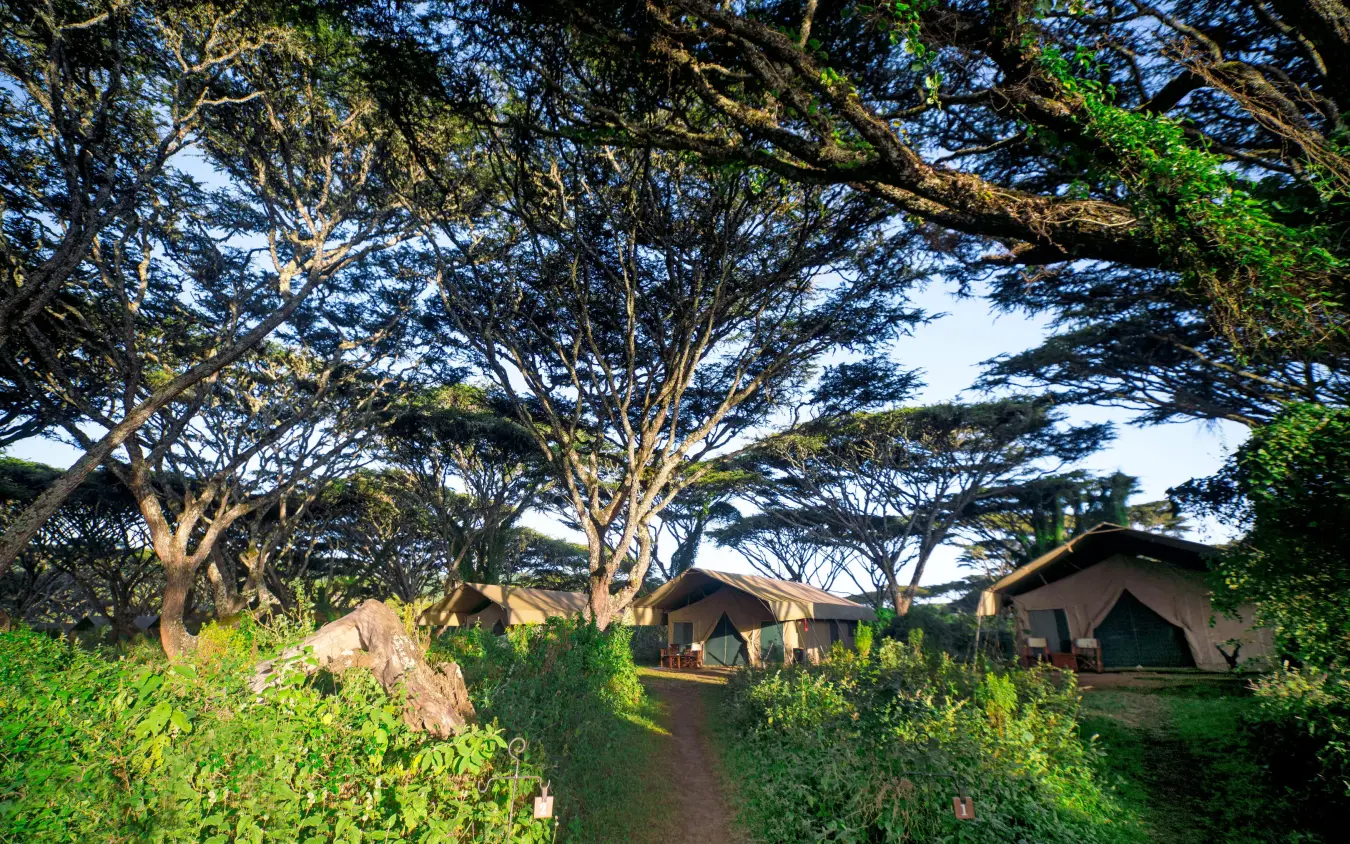
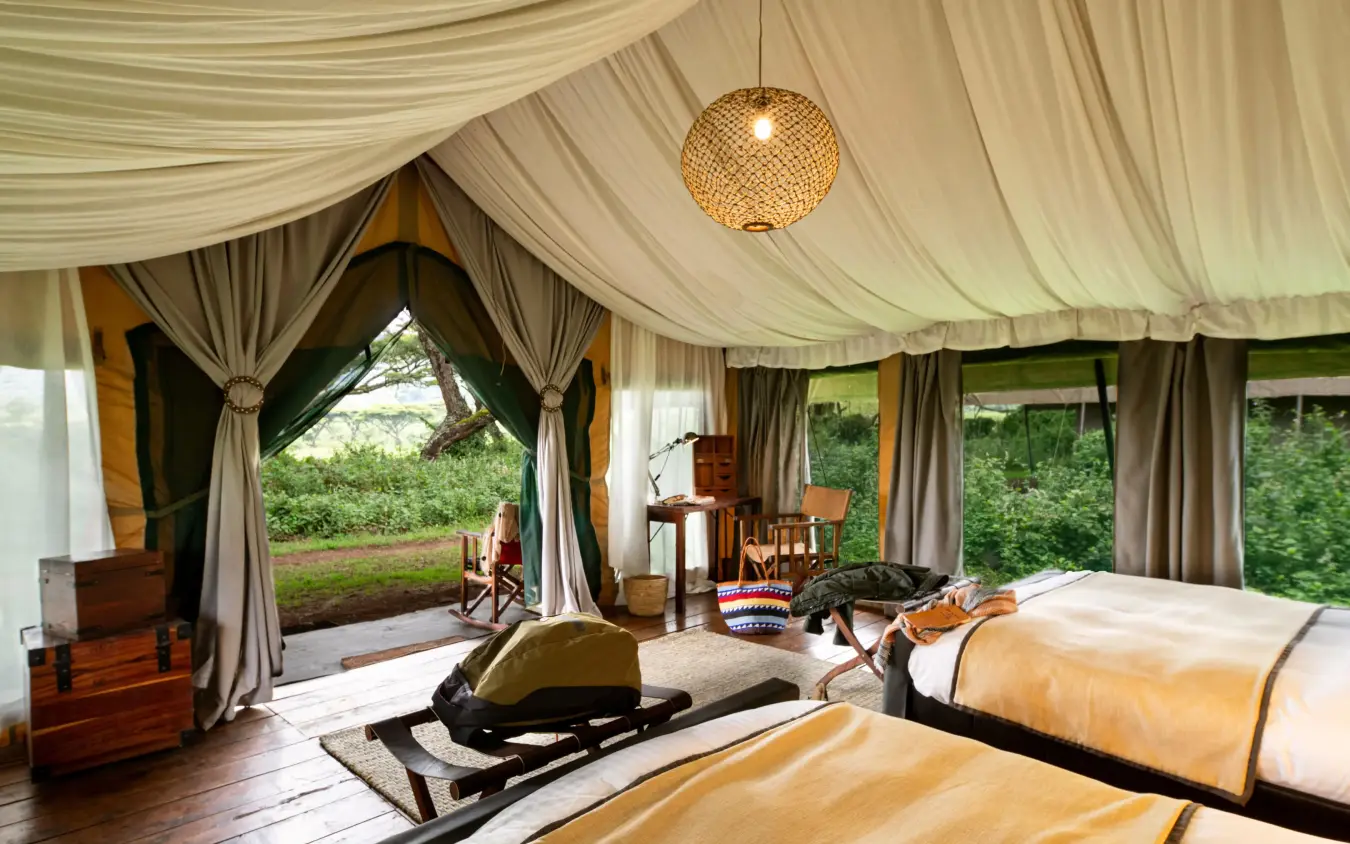
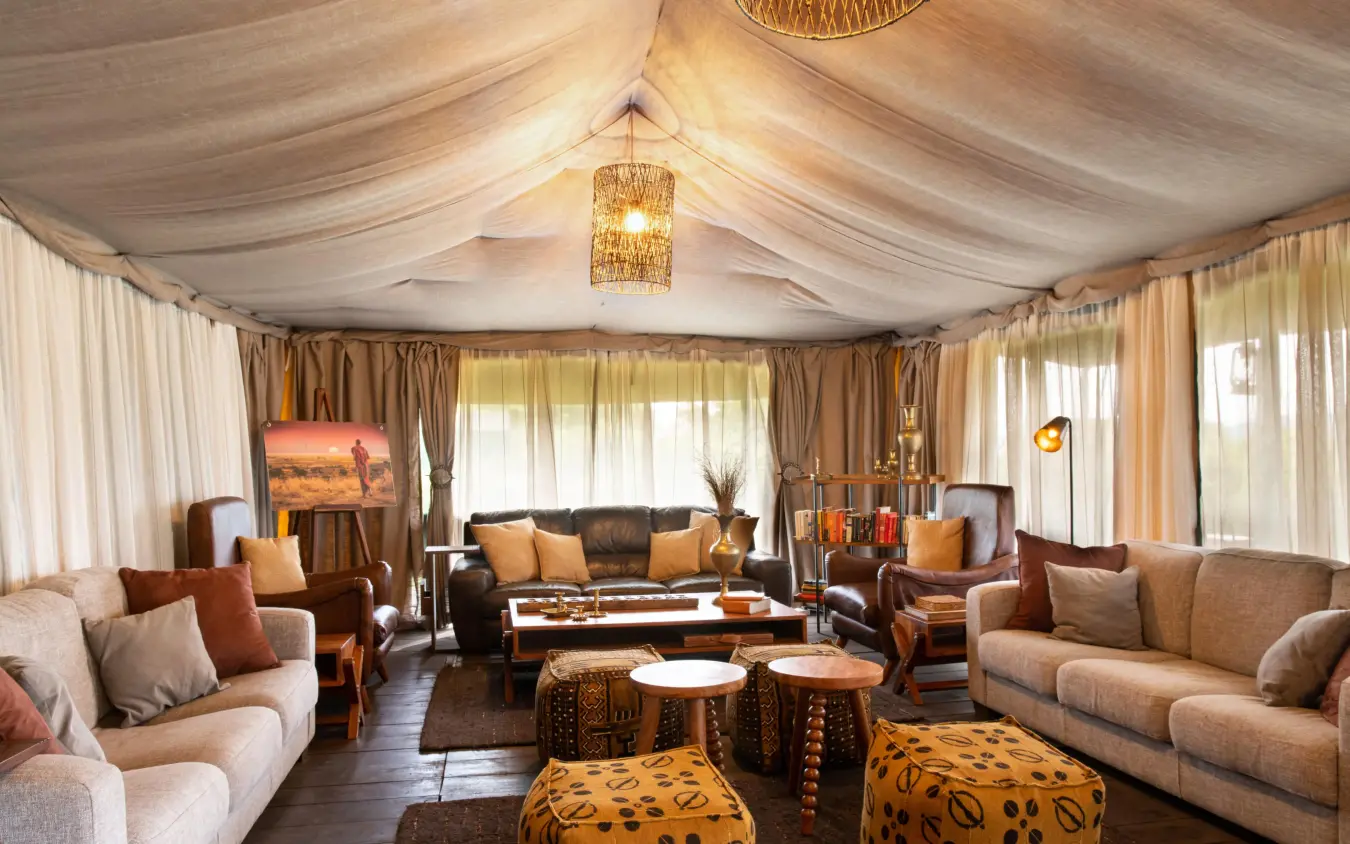
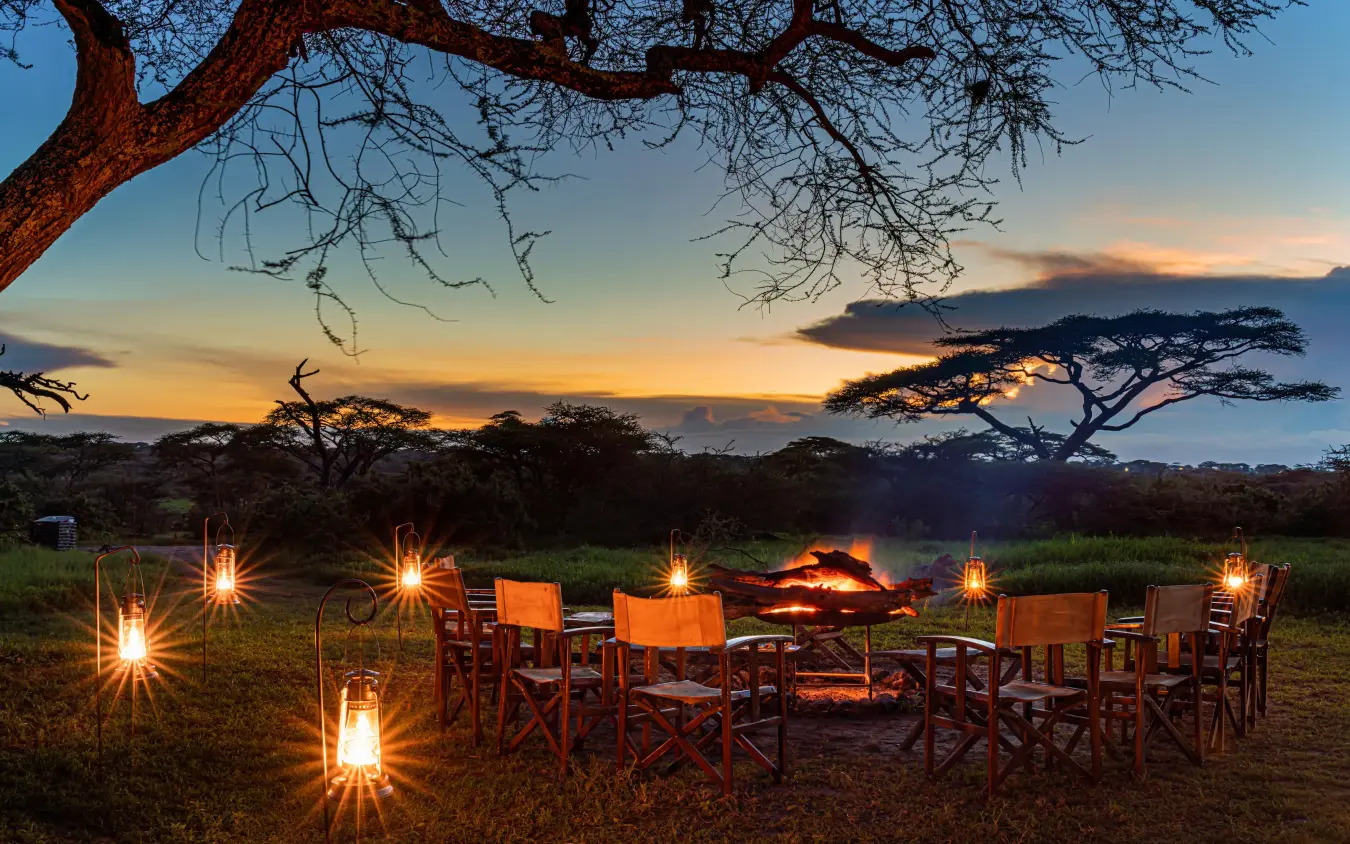
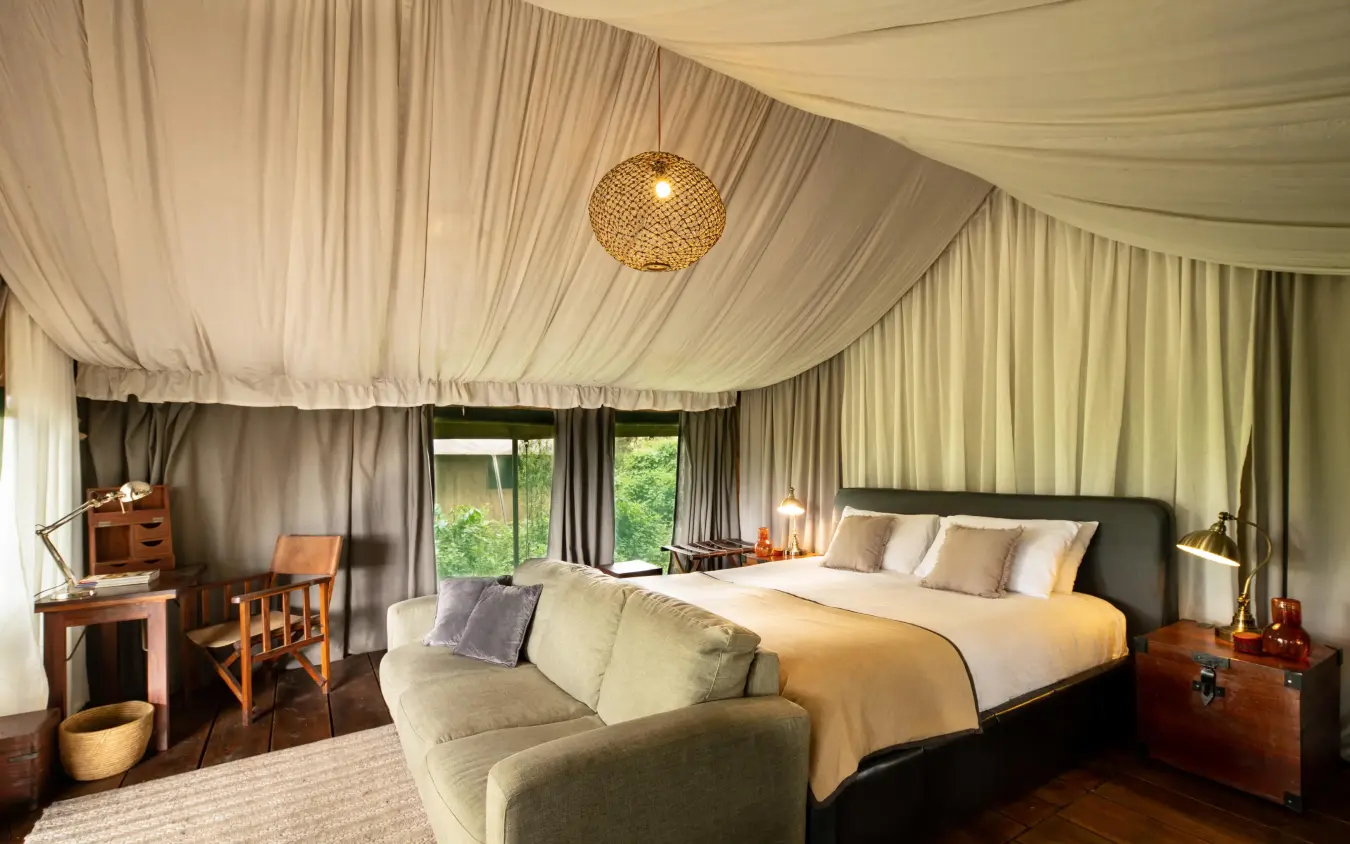
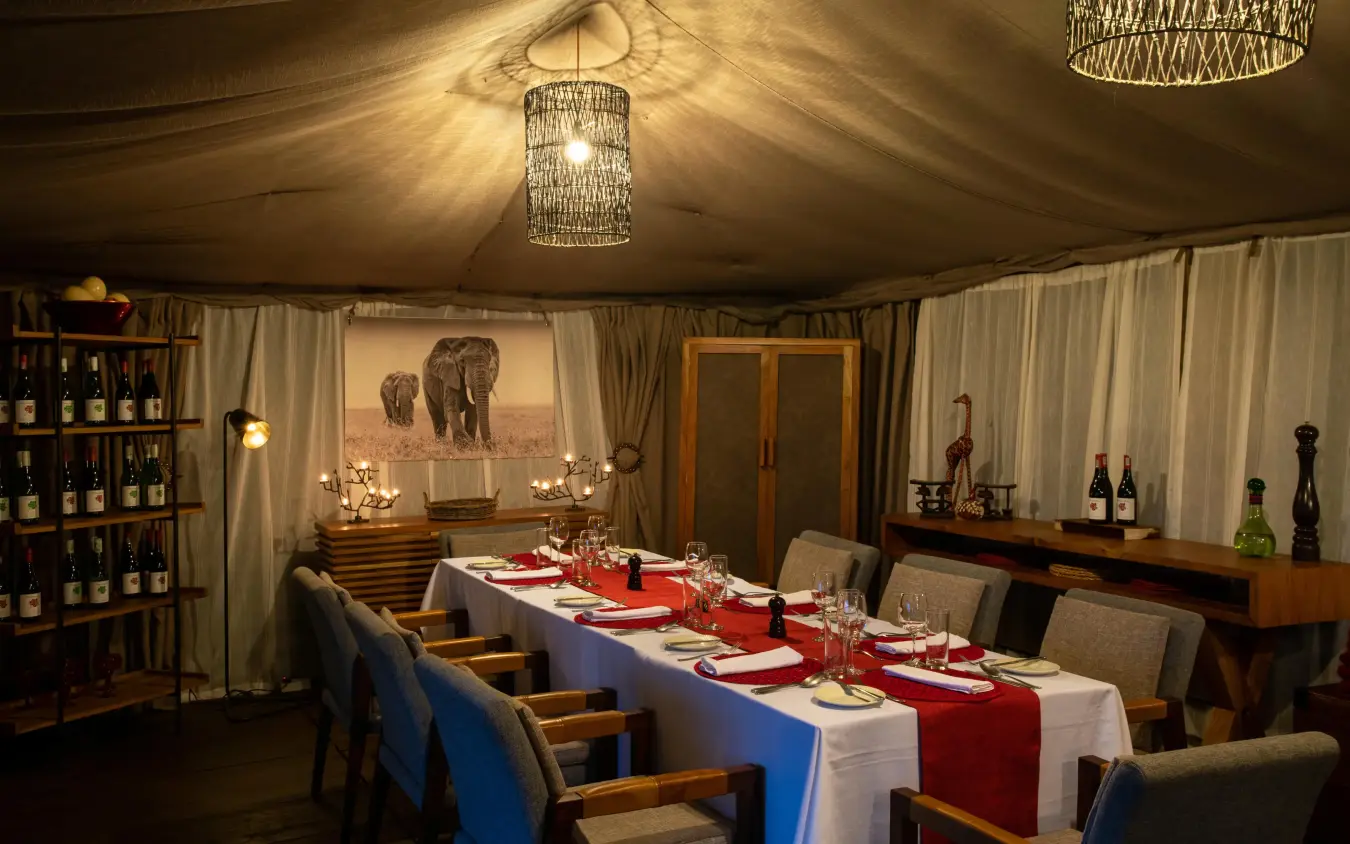
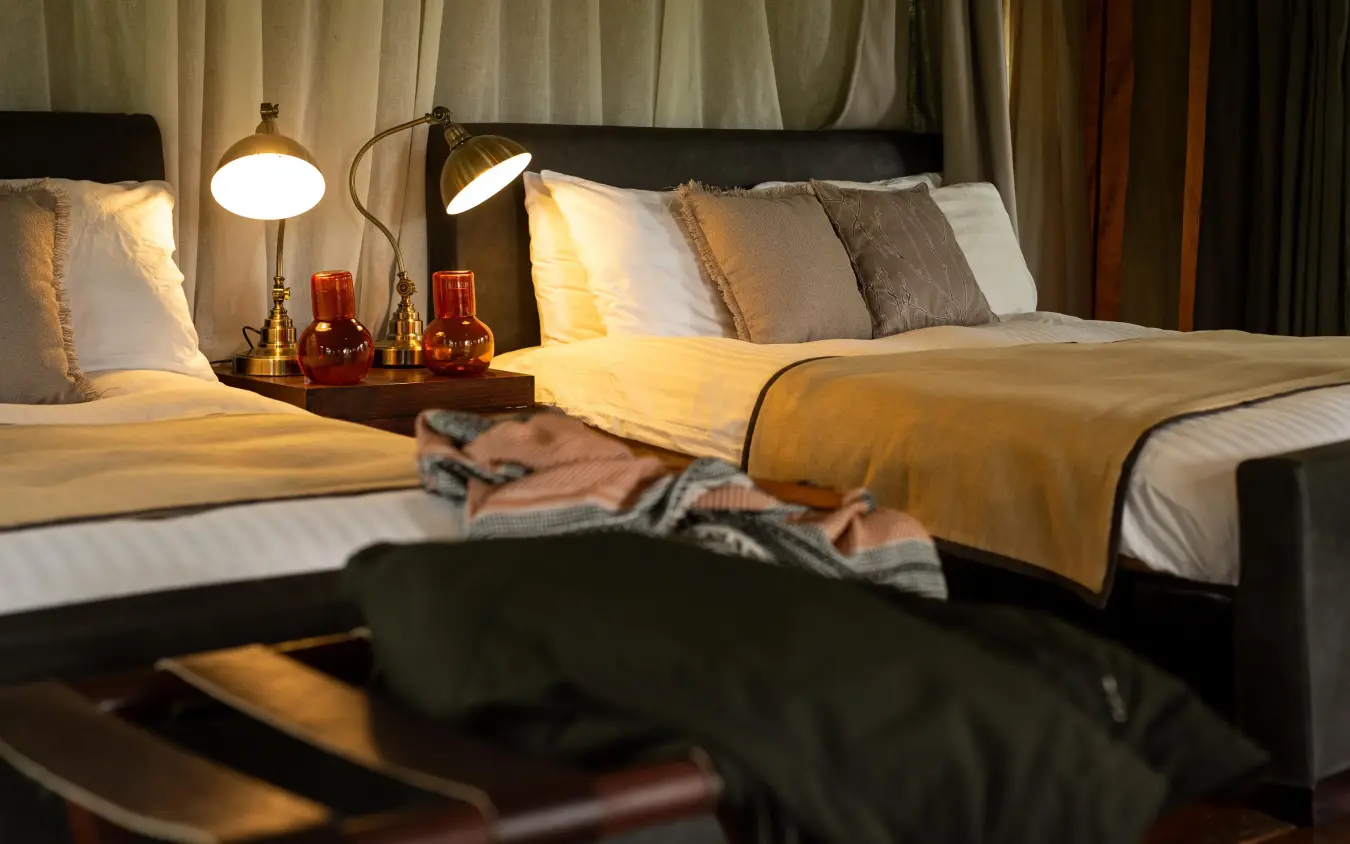
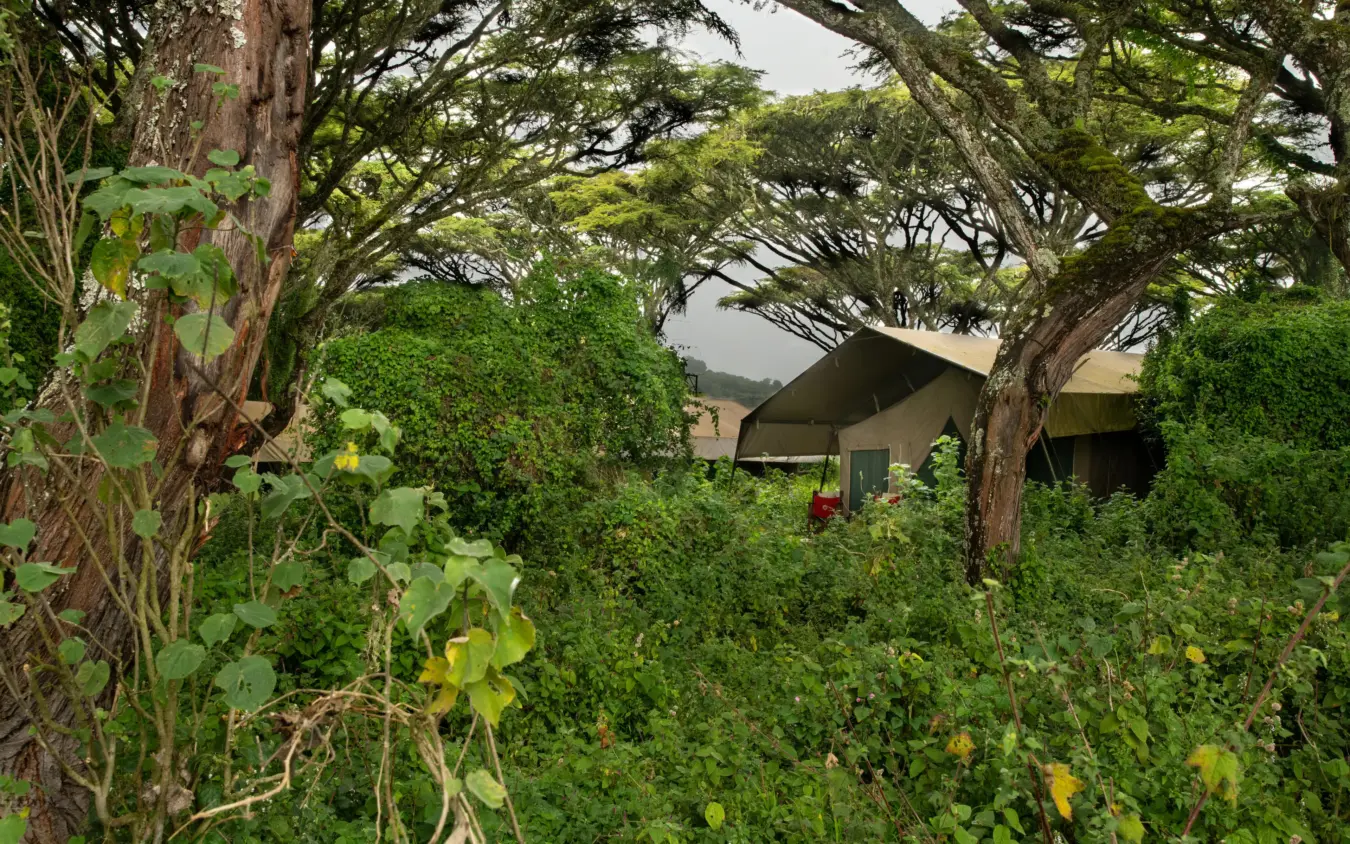
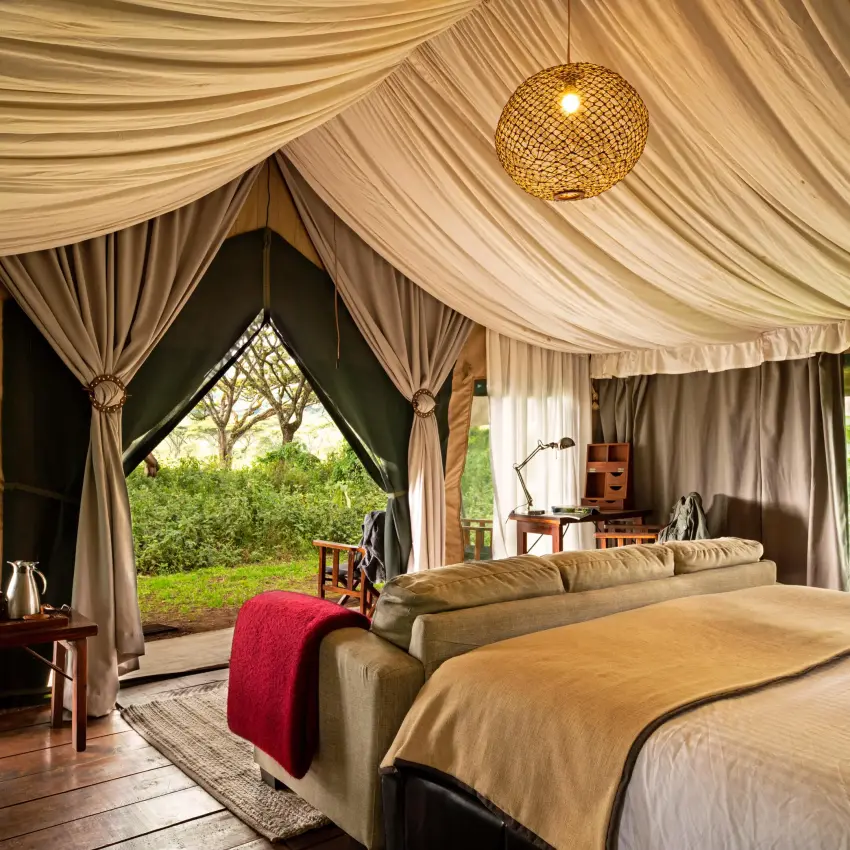
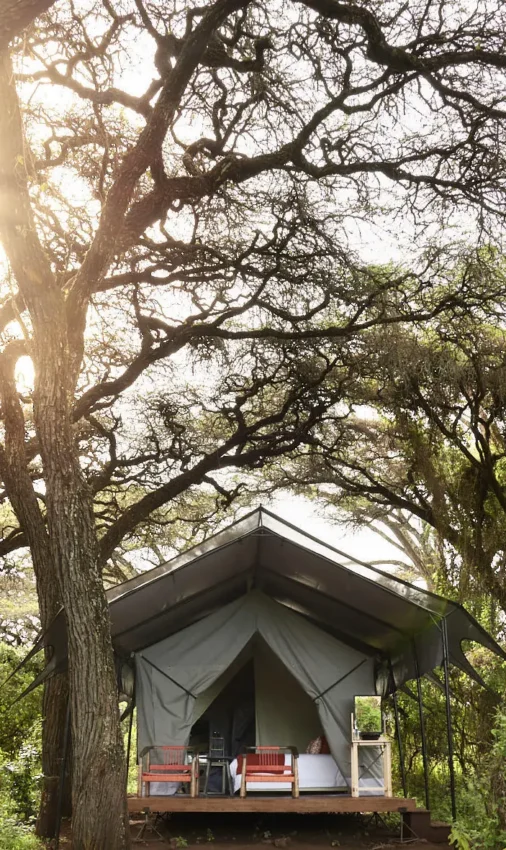
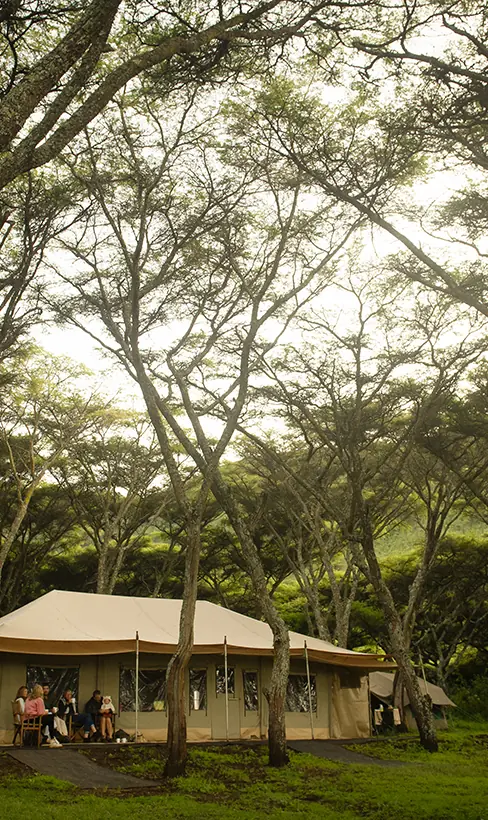
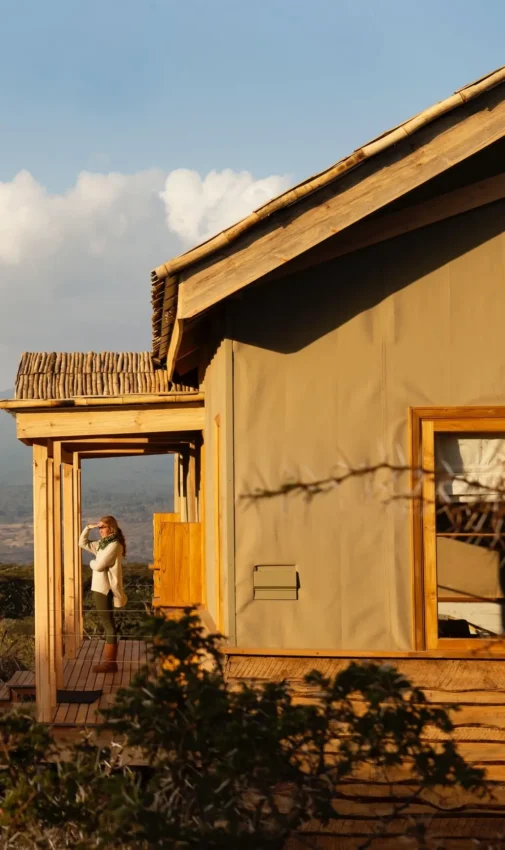
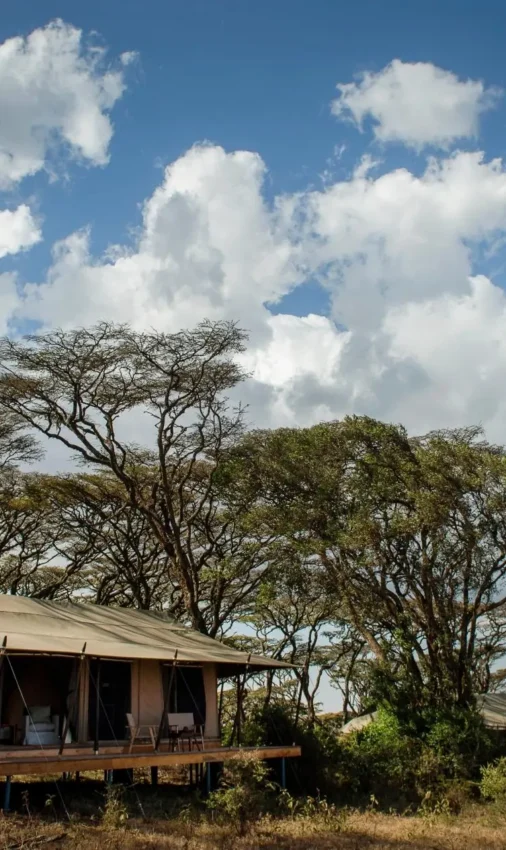
The tents favour warmth and practicality over ornament. Canvas walls rise from wooden floors, dressed with explorer-style chests and neutral safari fabrics, and each tent opens to a private veranda where campaign chairs face into the forest. The en-suite bathrooms hold a dressing area, a flush toilet and a large safari shower with hot running water. The main areas run to worn sofas and bookshelves, with corner cabinets, rooms built to settle into after the day’s drive, and solar power runs it all around the clock, with a generator held in reserve.
The floor of the main mess tent is built entirely from recycled plastic bottles. It is part of a partnership with Dunia Design that has turned more than 100 tonnes of plastic collected from Tanzanian parks into 195 school desks, donated to Nainokanoka Primary School and Chief Lebolo’s School. Plastic straws and bottles are banned camp-wide, and drinking water comes through reverse osmosis. Even the picnic boxes carried down for the crater-floor lunches are woven from banana leaf.