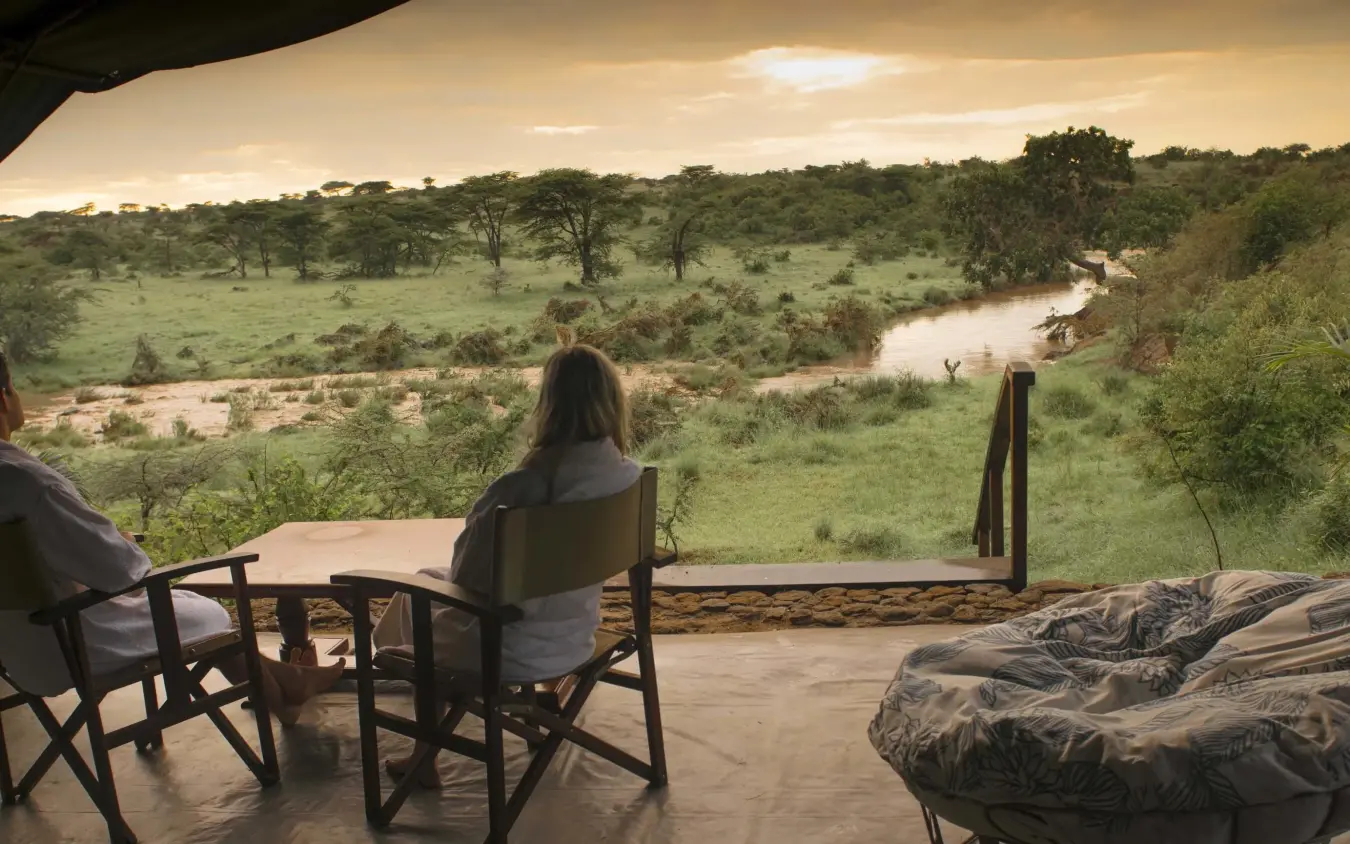
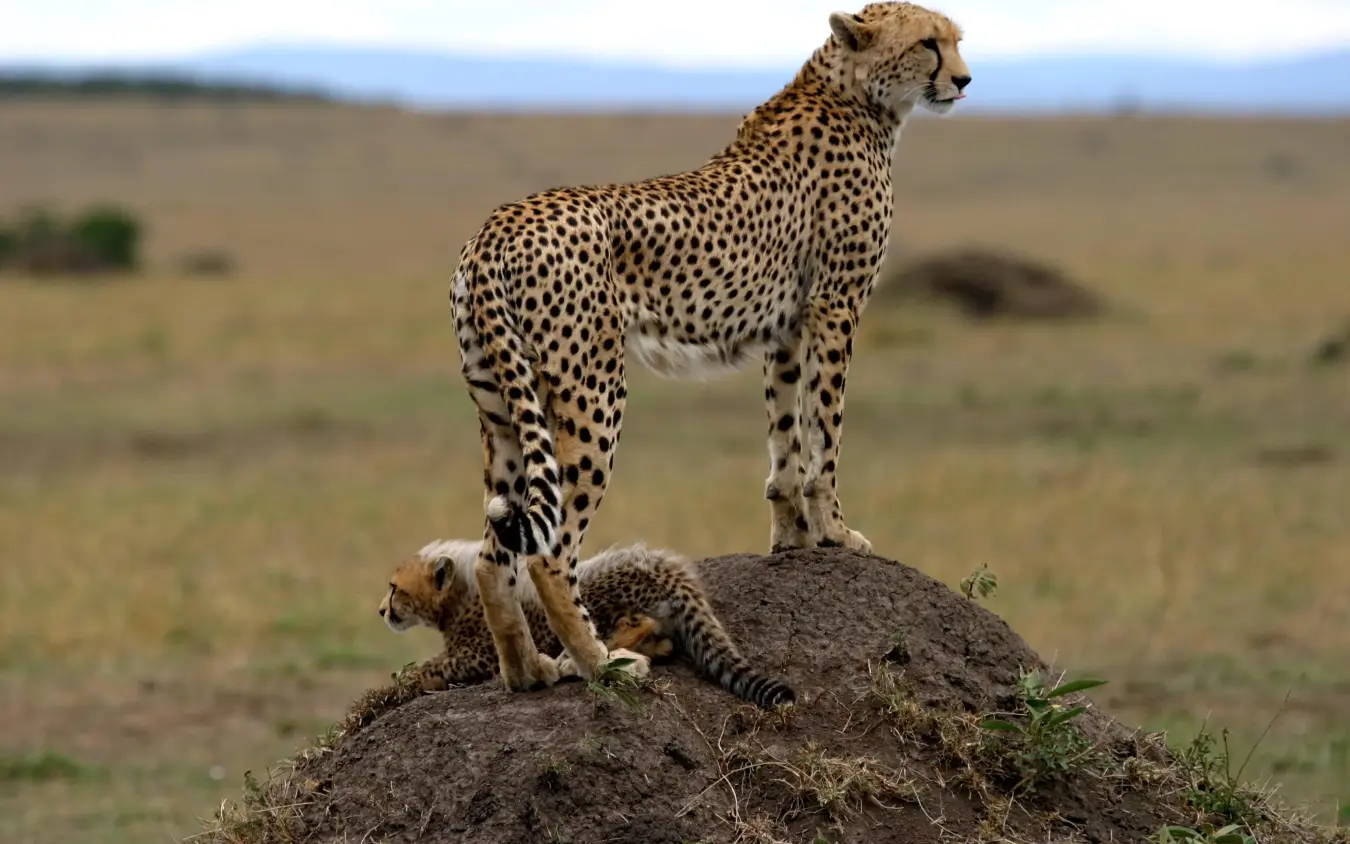
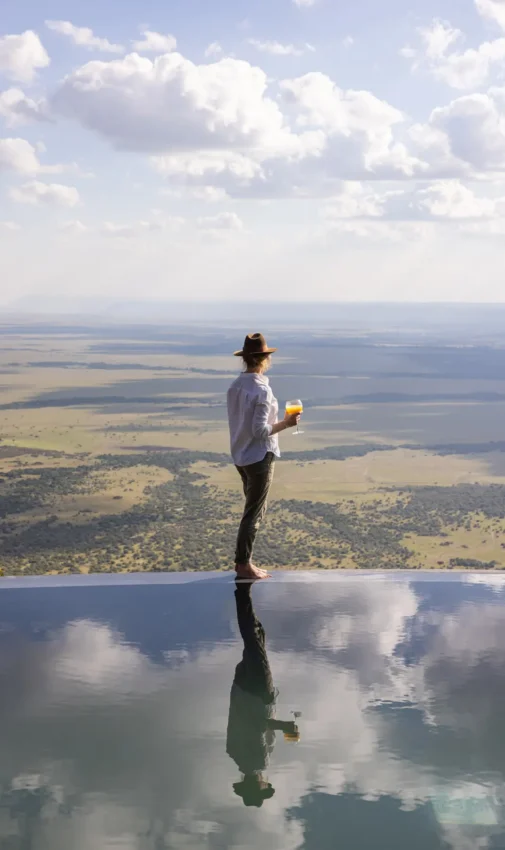
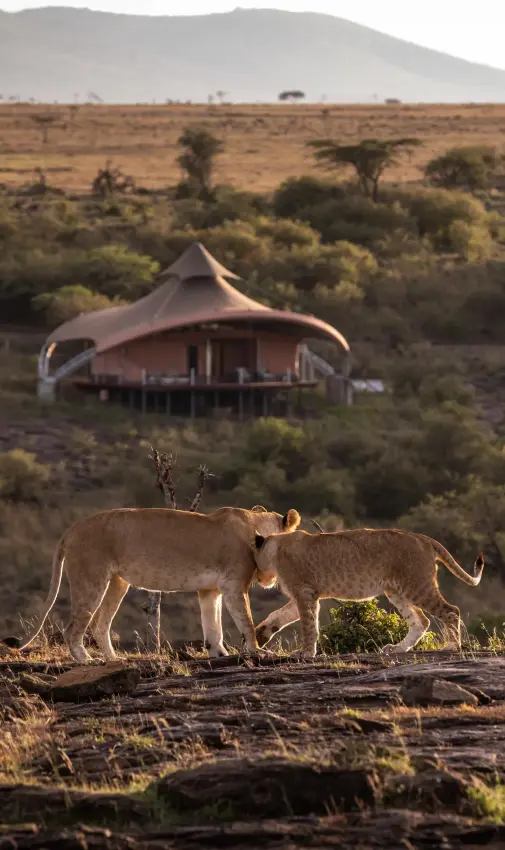
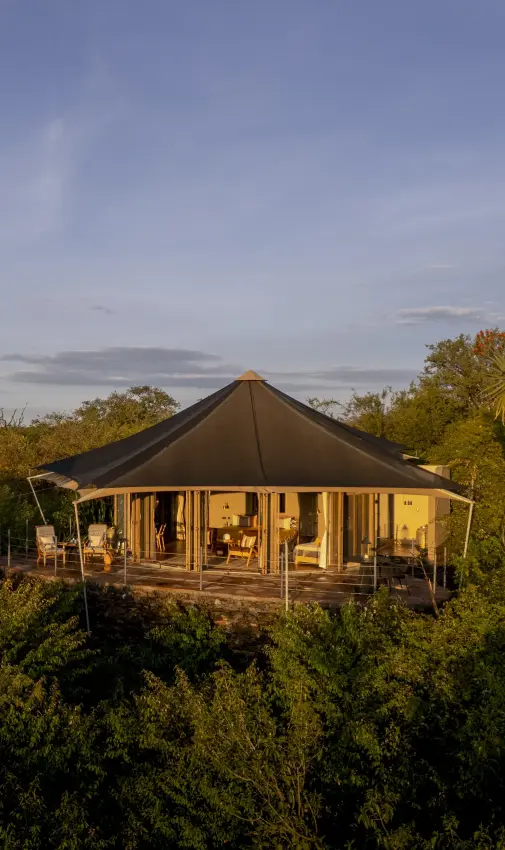
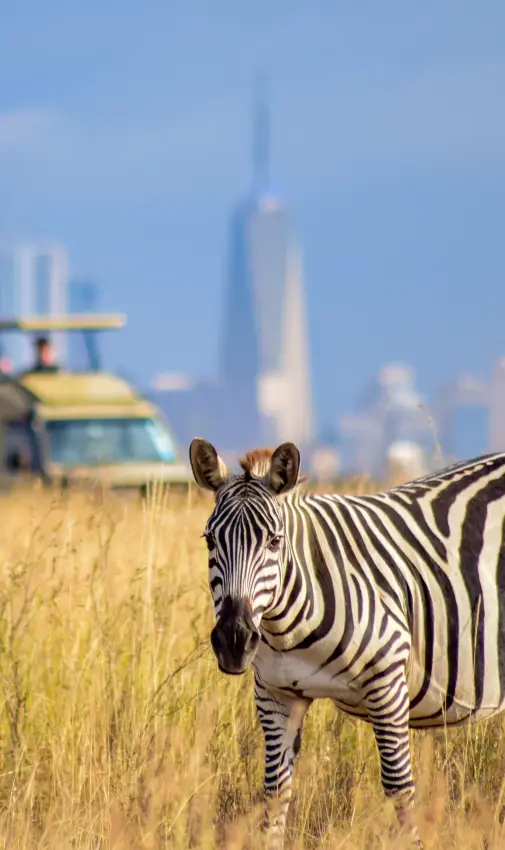
Mara North Conservancy is held under a lease between its member camps and Maasai landowners, an arrangement that keeps vehicle numbers low and gives the land over to grazing and wildlife instead of dense tourism. It borders the Maasai Mara National Reserve and carries a high density of resident big cats. The camp occupies a quiet stretch of this river valley, with few neighbouring camps, reached by a short game drive from Mara North Airstrip after a scheduled flight from Nairobi. The setting is private, and it feels it.
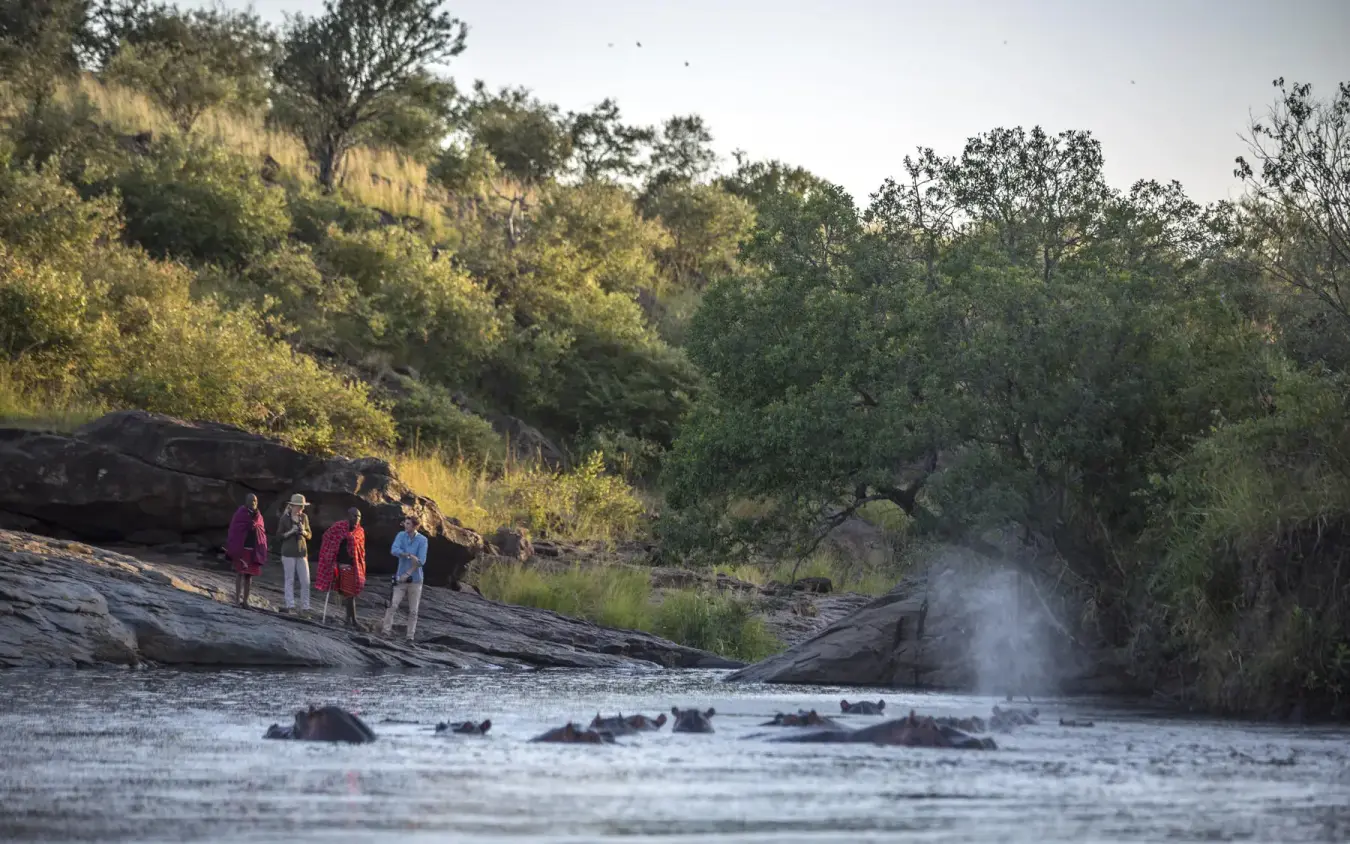
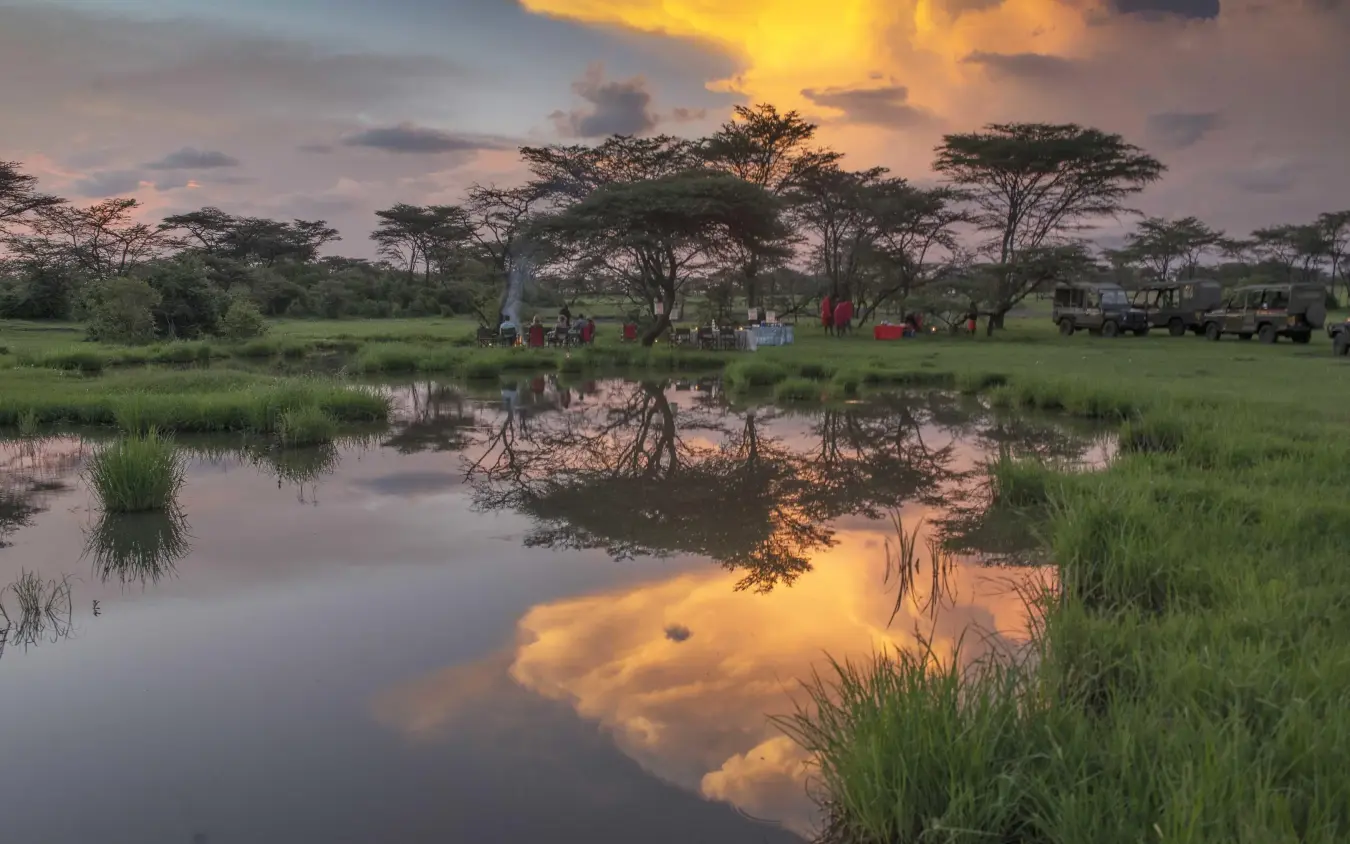
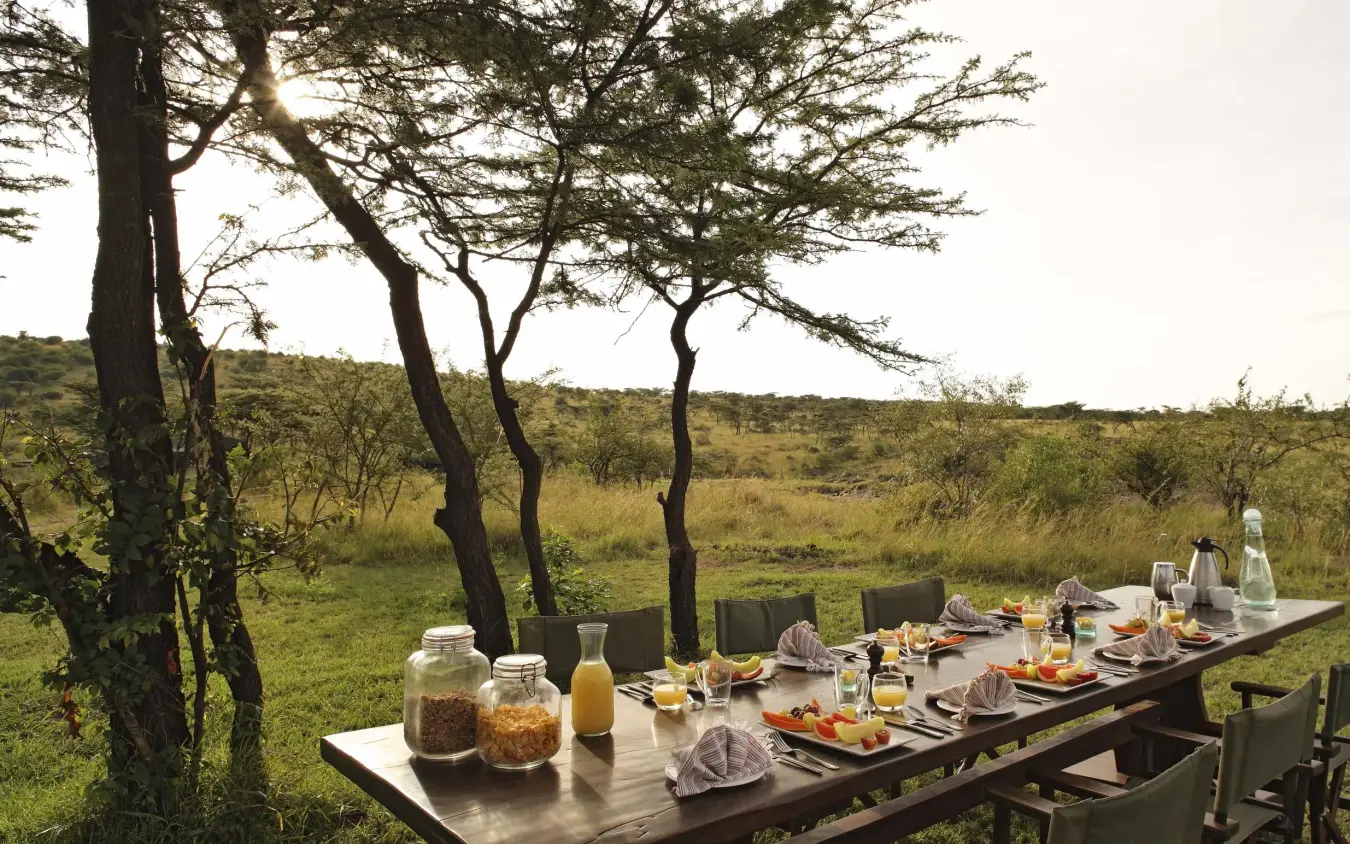
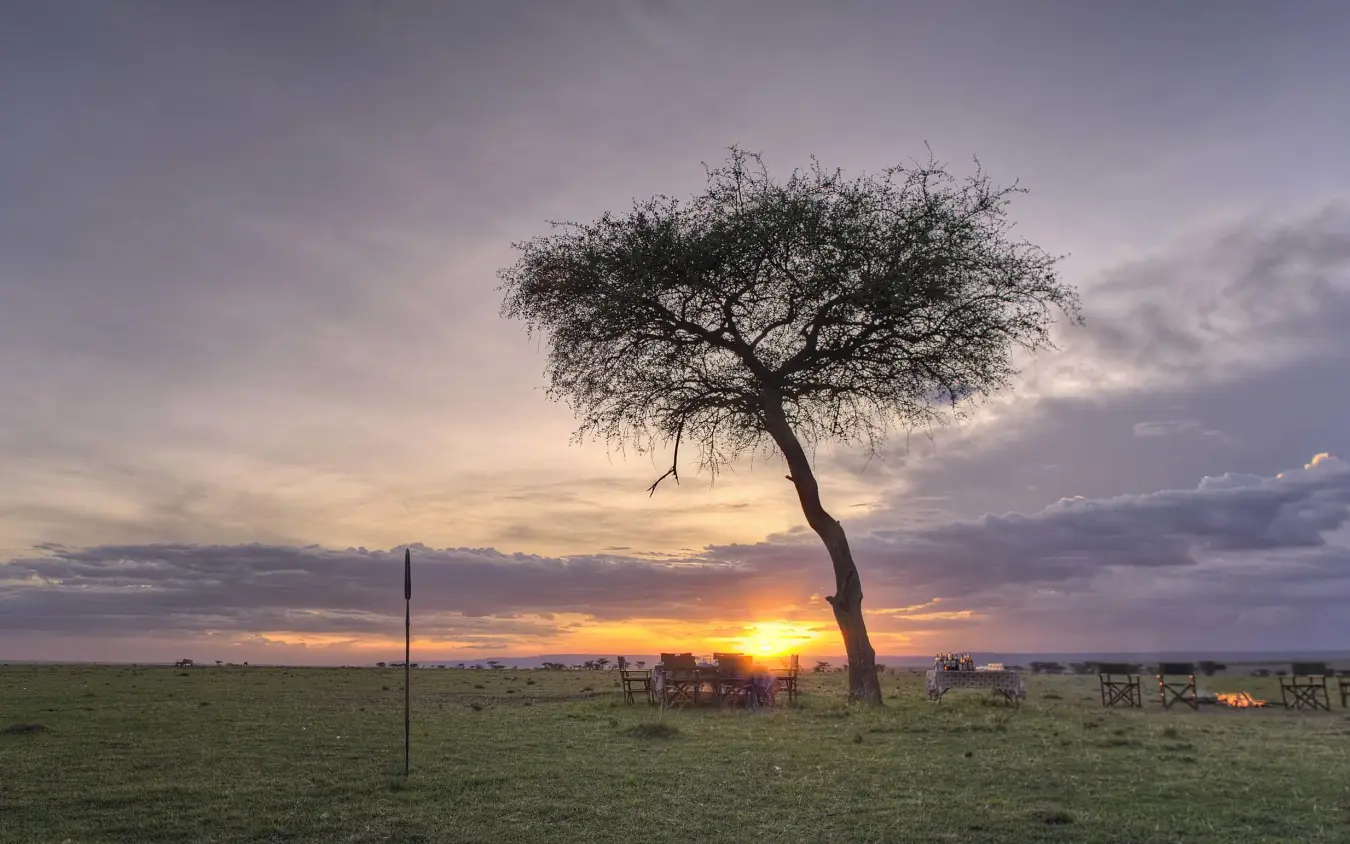
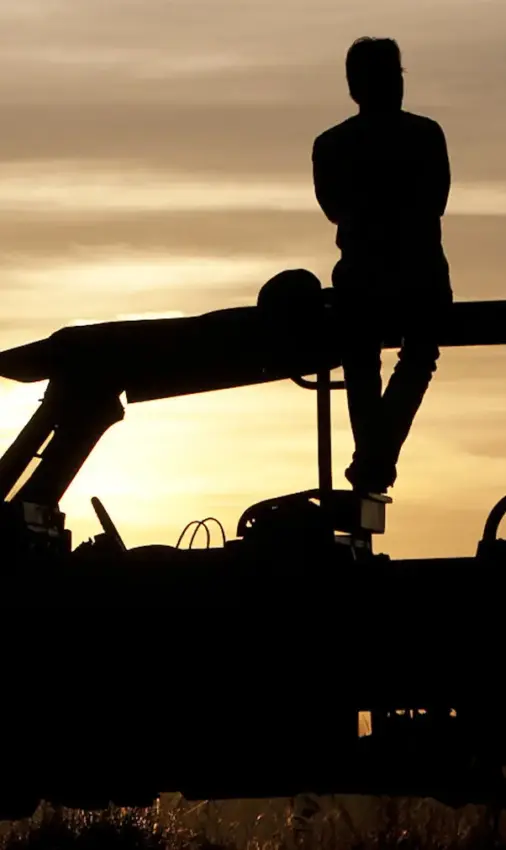
Because the camp works within a conservancy, the guiding is not confined to daytime drives on fixed roads. Night drives pick up leopard, hyena and the nocturnal hunters the Reserve’s day visitors rarely see. Walks go out on foot with Maasai guides, tracking prints and signs a vehicle would pass over. Breakfasts, lunches and dinners are laid out at chosen spots in the bush, and sundowners are taken on the plains at the close of the day. Day drives can still reach the Reserve, useful when the Great Migration moves through the dispersal areas nearby.
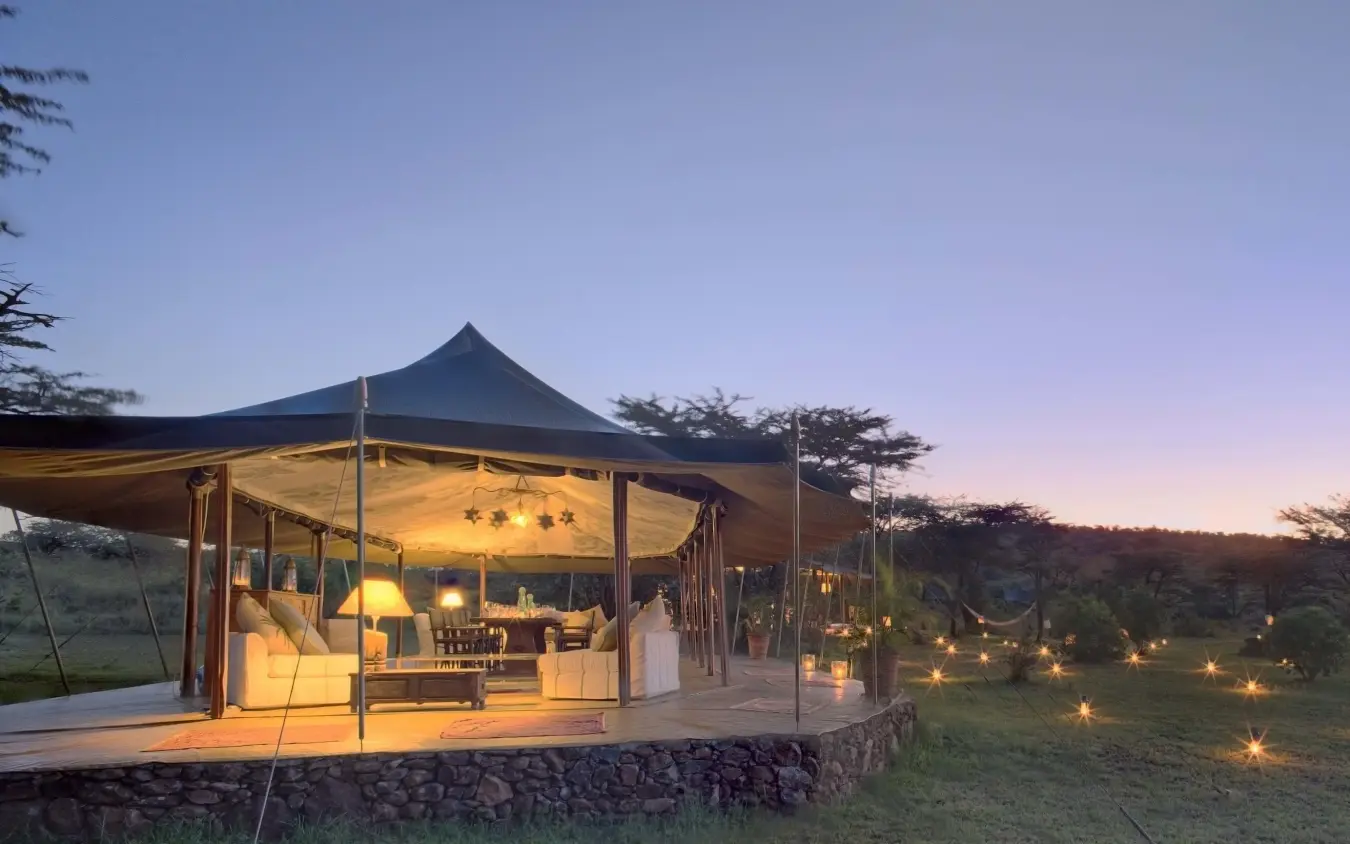
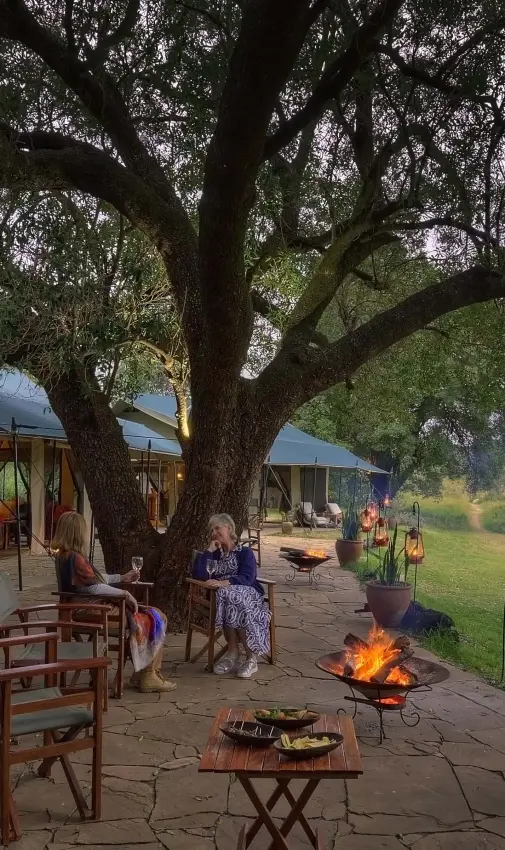
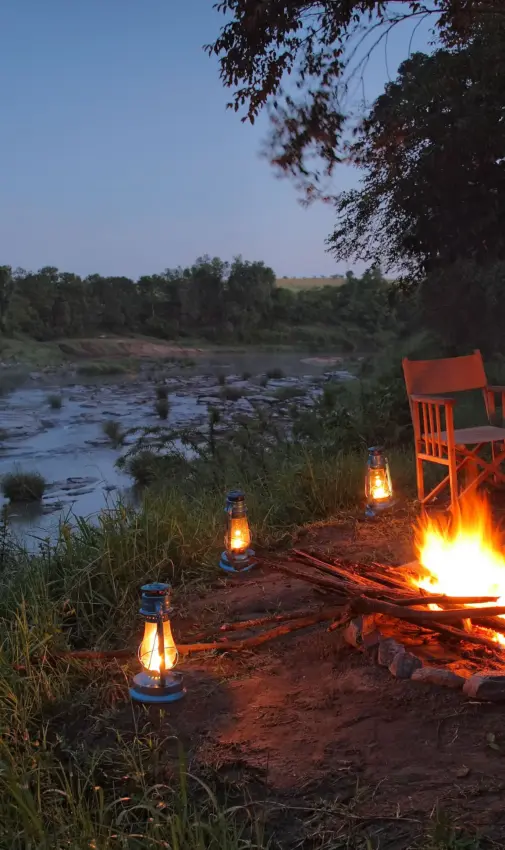
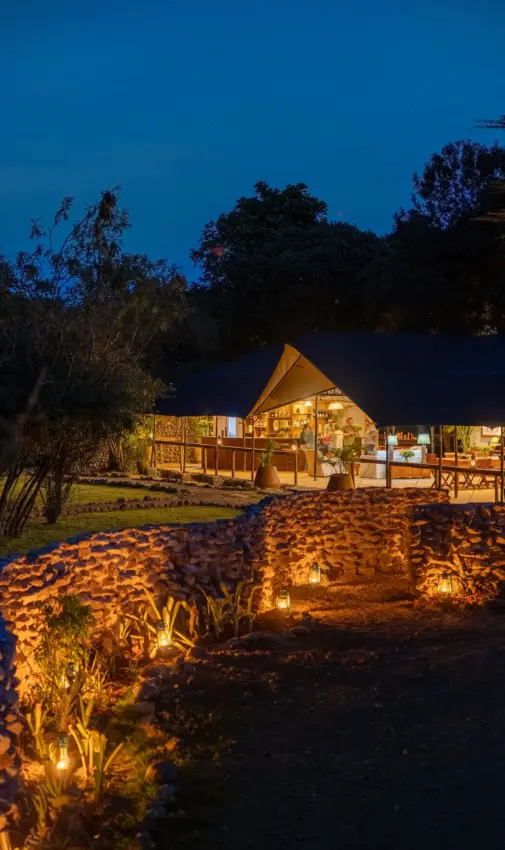
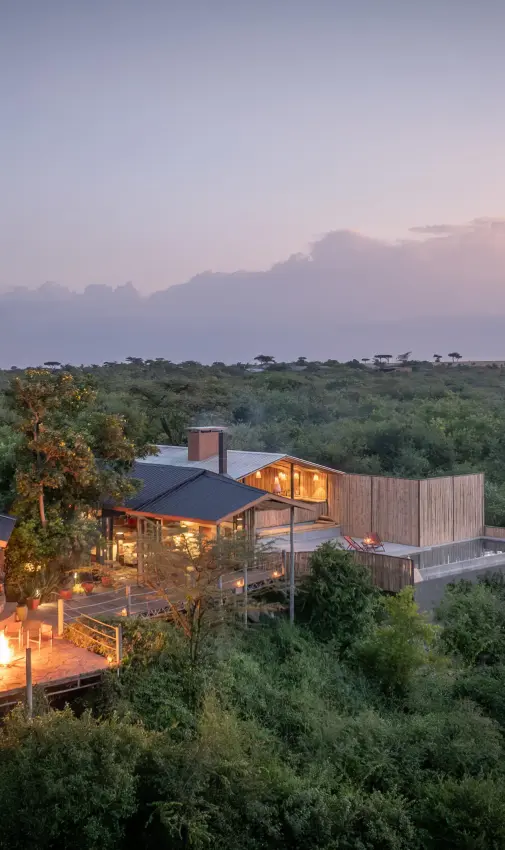
Evenings settle around the fire as lanterns and candles light the paths between the tents
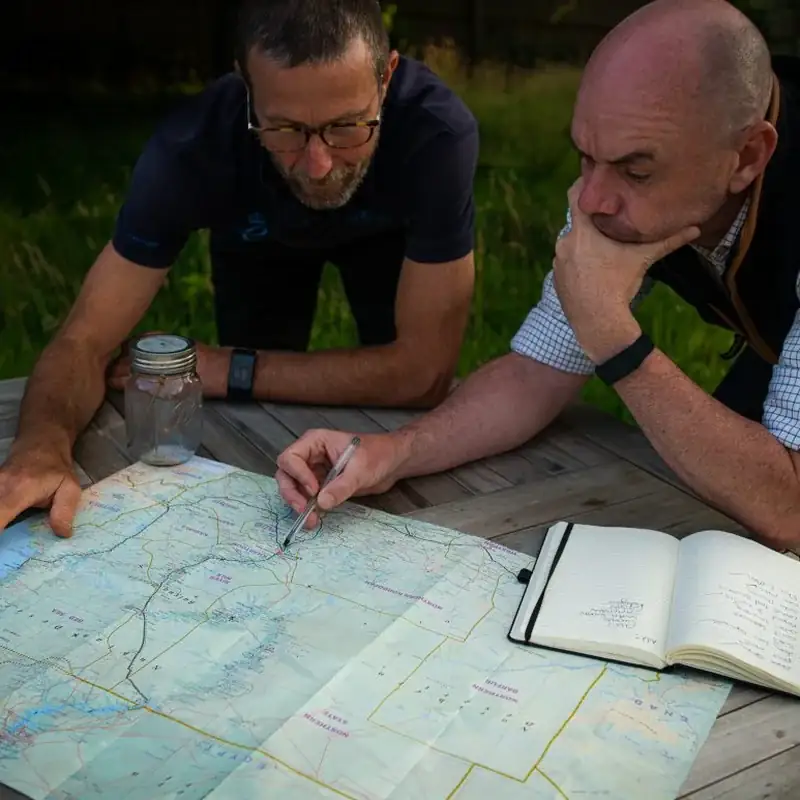
Richard Roberts co-founded the Mara Elephant Project in 2011, working to ease the conflict between elephants and local communities through collaring, monitoring and rapid-response tracking teams, and guests can visit its headquarters. The conservancy model directs tourism income to the Maasai families who lease their land for wildlife rather than livestock, and funds anti-poaching patrols and habitat protection across the wider area. Most of the camp’s staff come from these same communities, so the work and the welcome come from one place.
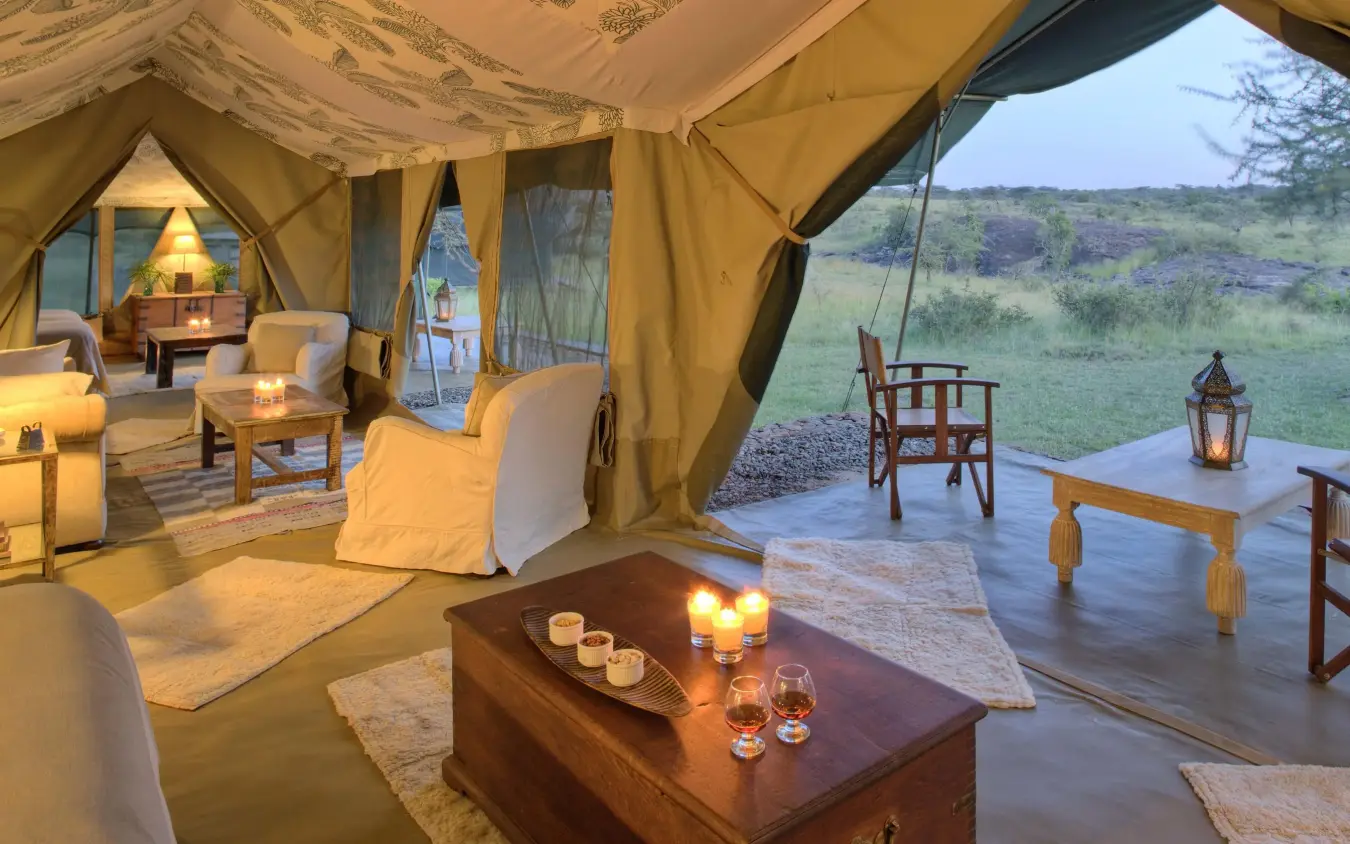
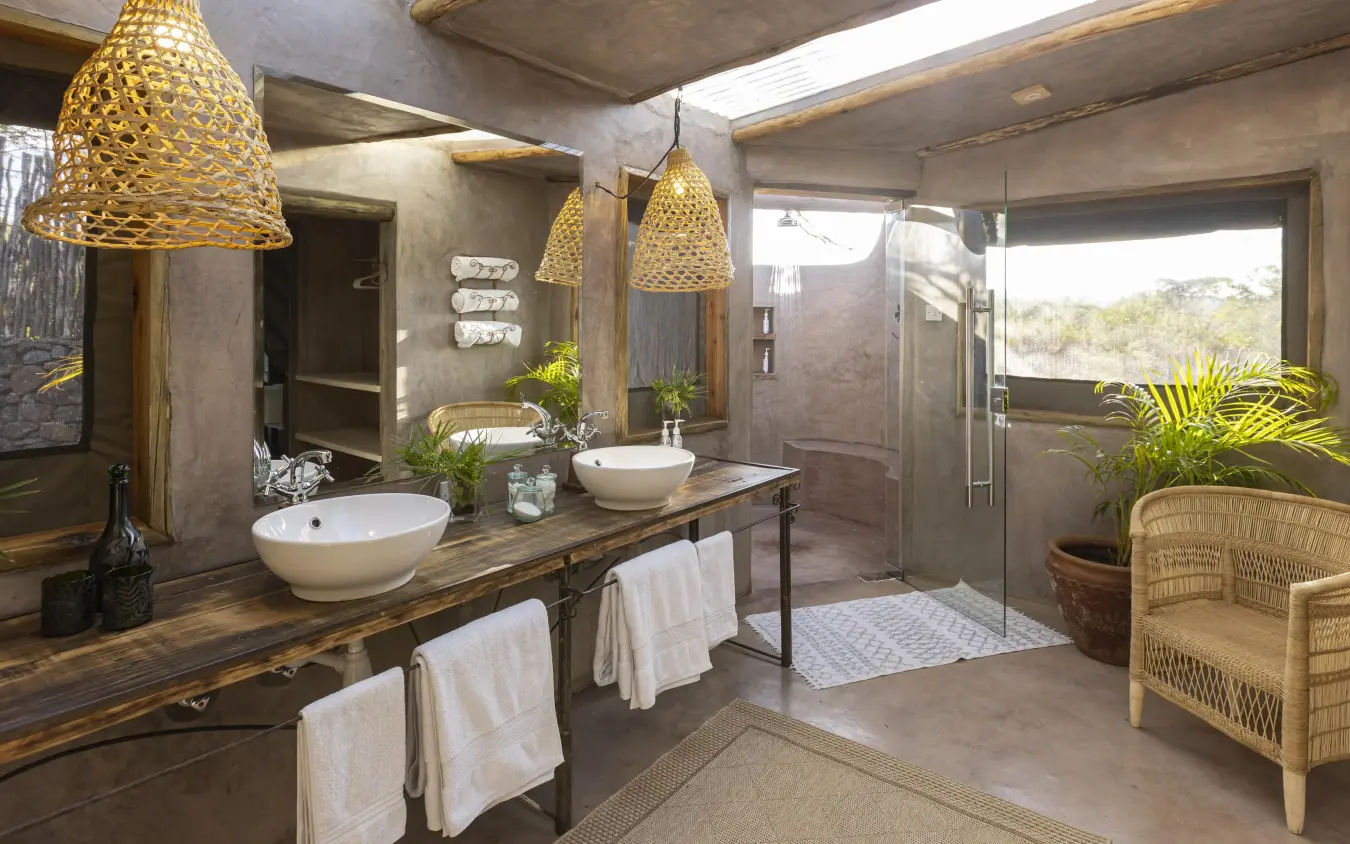
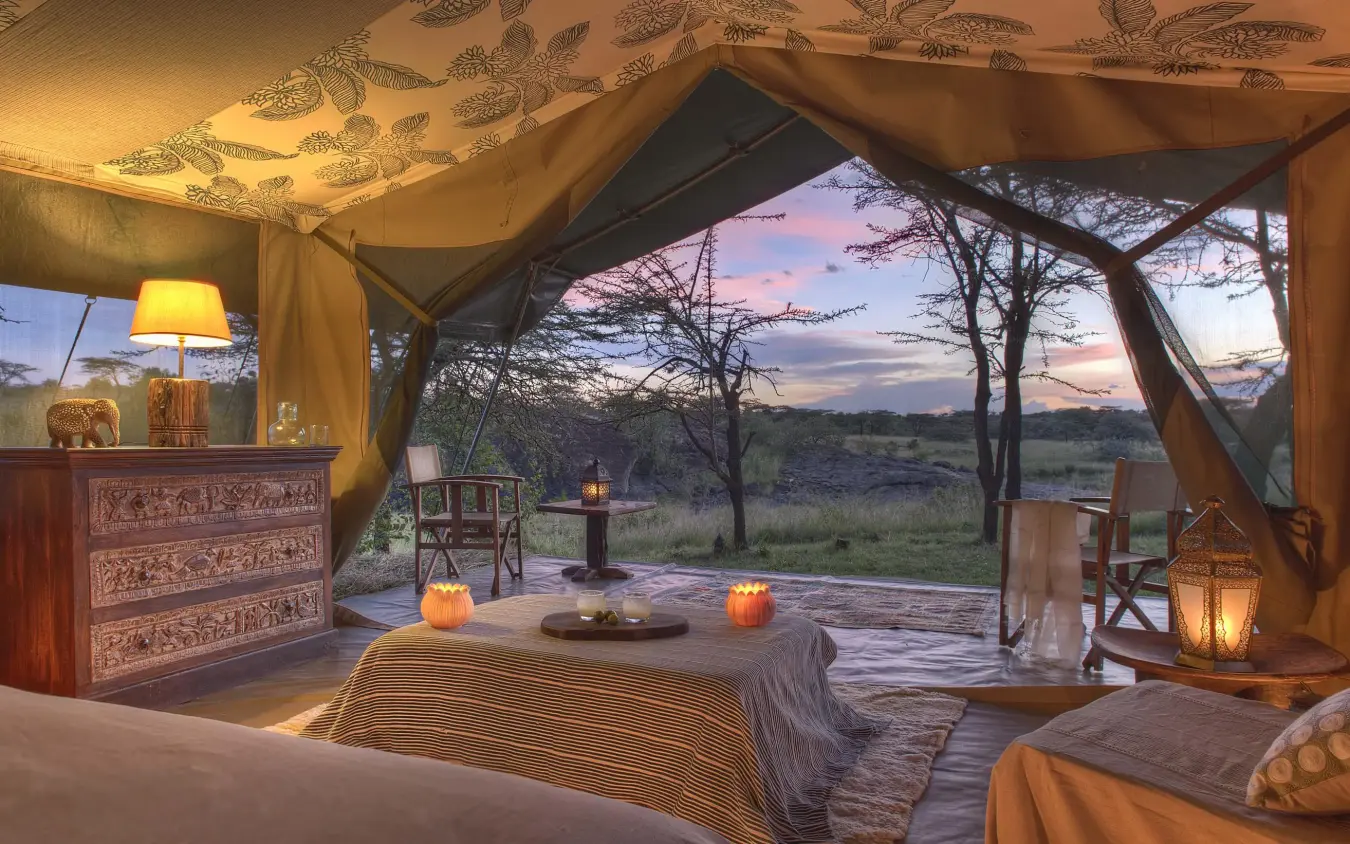
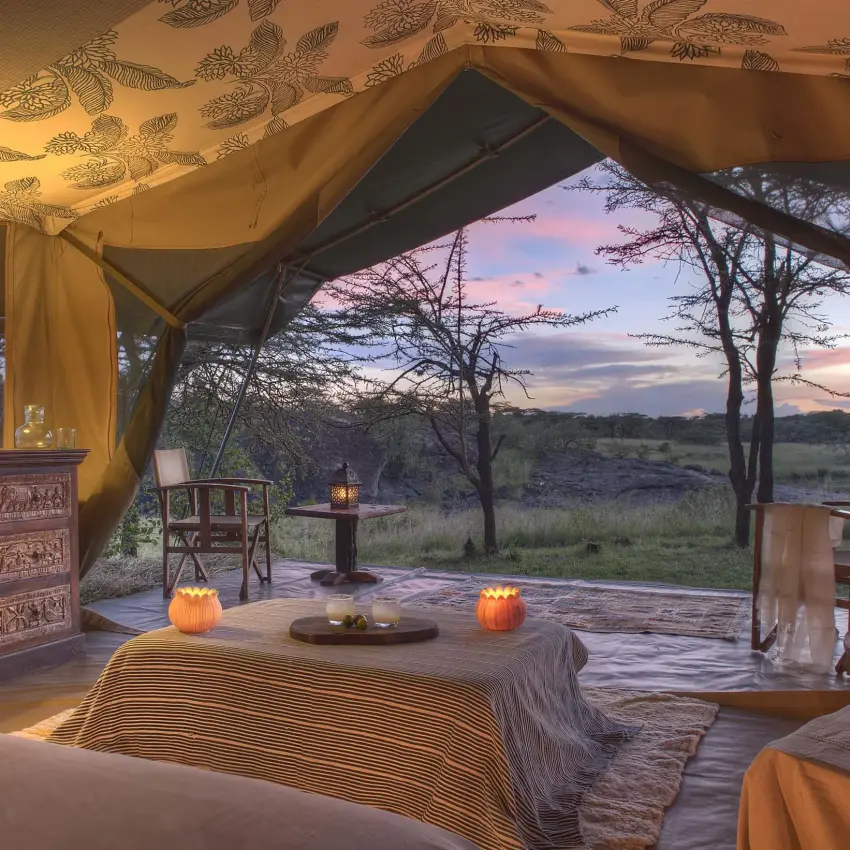
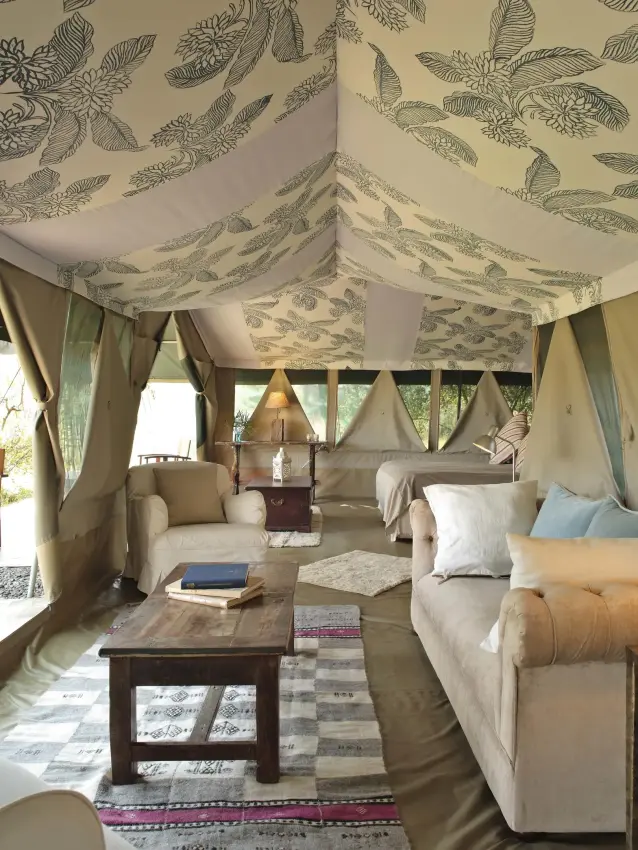
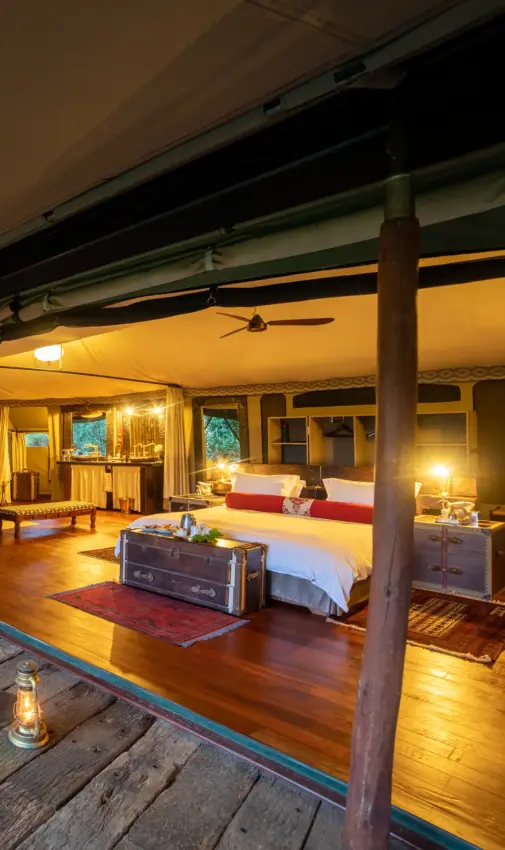
Meals mix international cooking with local ingredients, some grown in a small garden on site, and are usually taken at a communal table. Private dining can be arranged. Evenings settle around the fire as lanterns and candles light the paths between the tents. Hot water bottles are still slipped into beds at turndown, and the showers are open to the sky, a detail guests notice under an early morning or a scatter of stars. A two-bedroom family tent makes the camp workable for children of any age, though the free movement of wildlife through camp means supervision is expected.