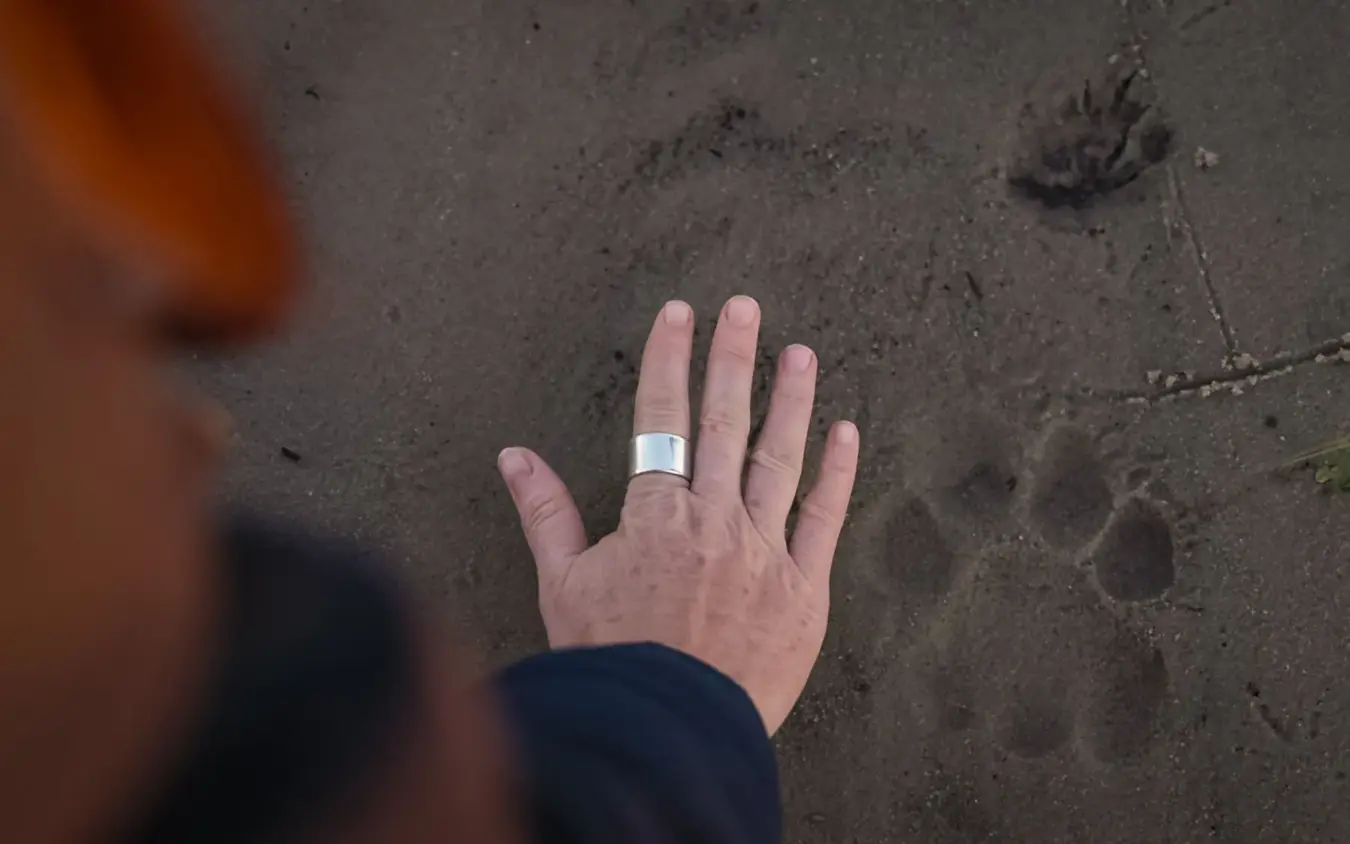
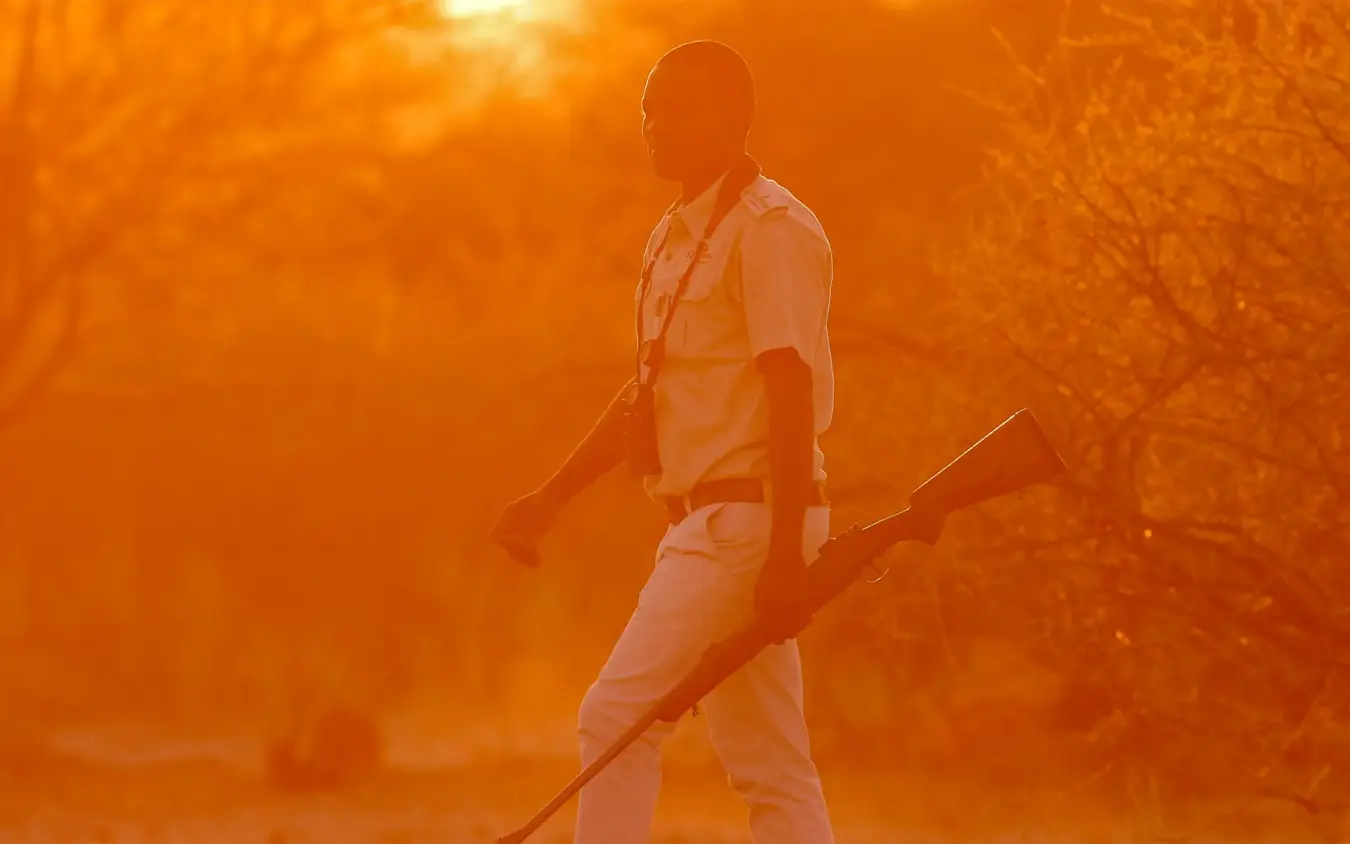
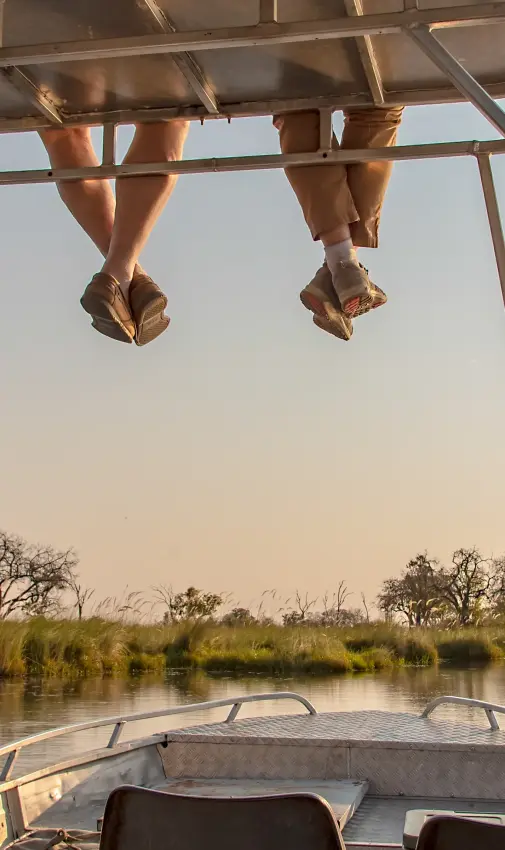
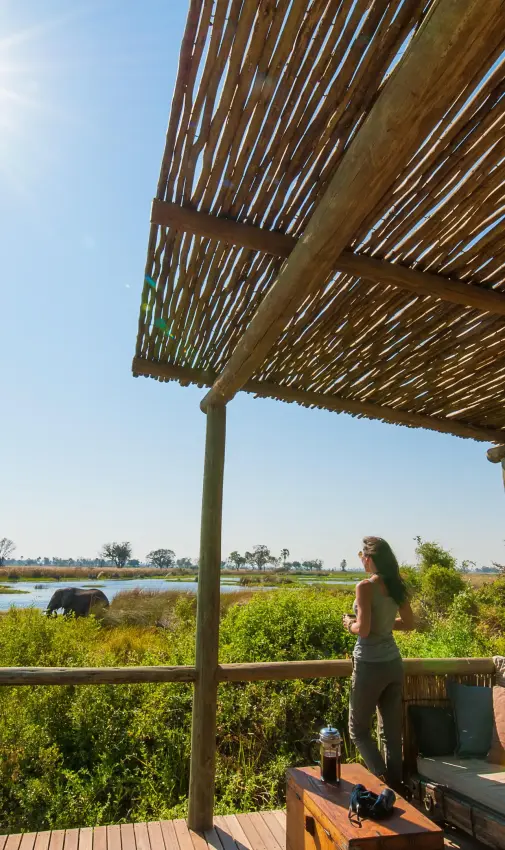
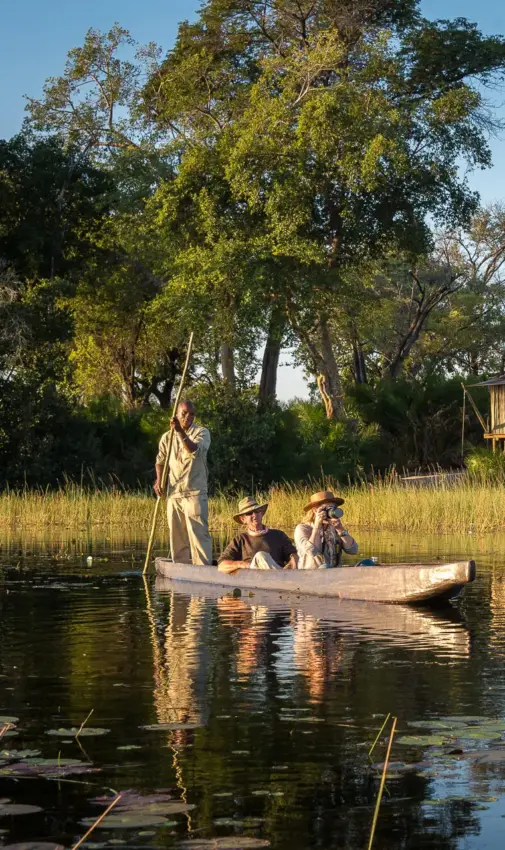
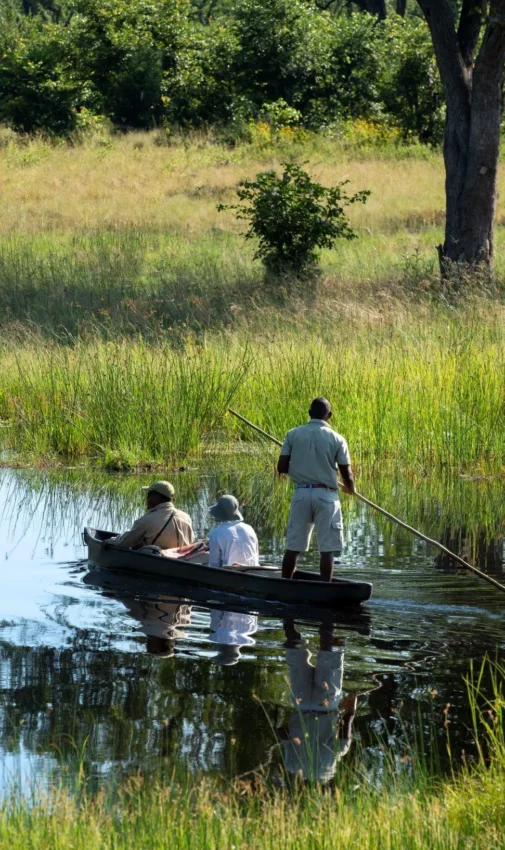
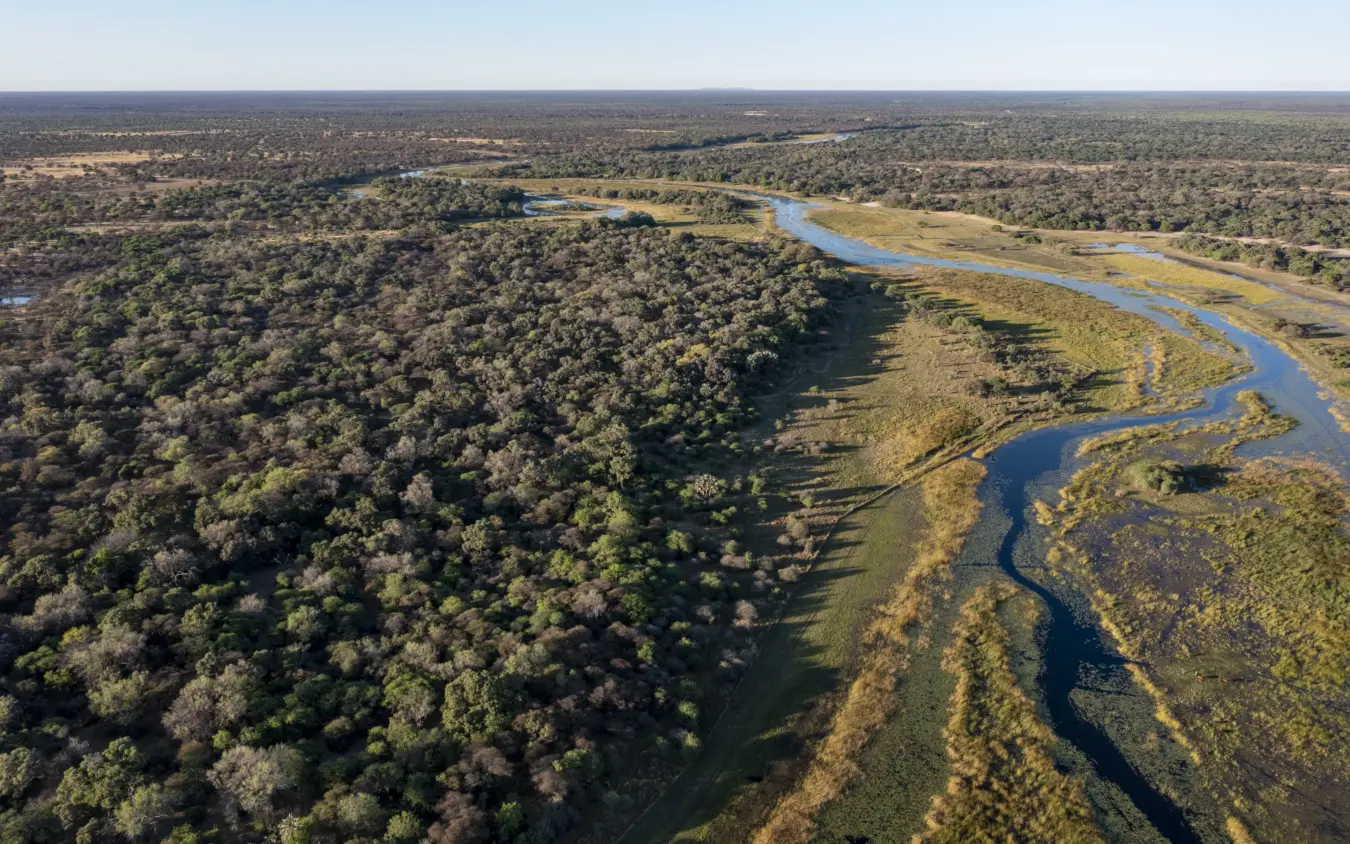
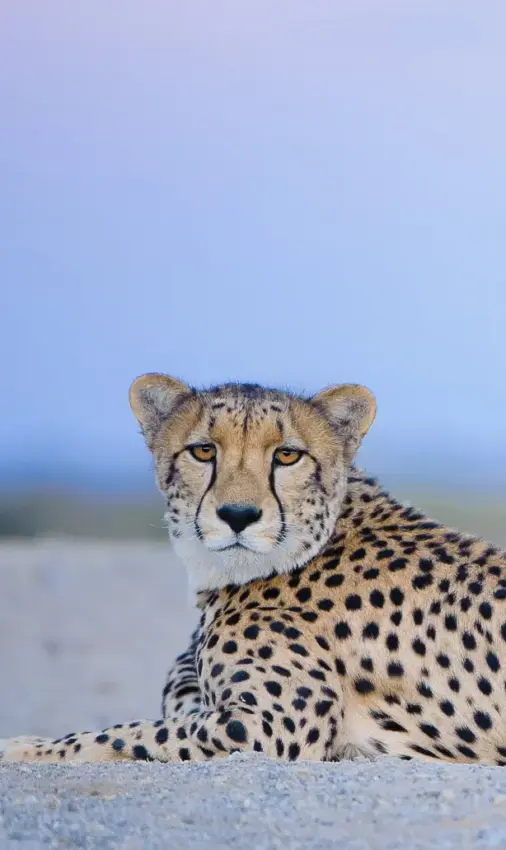
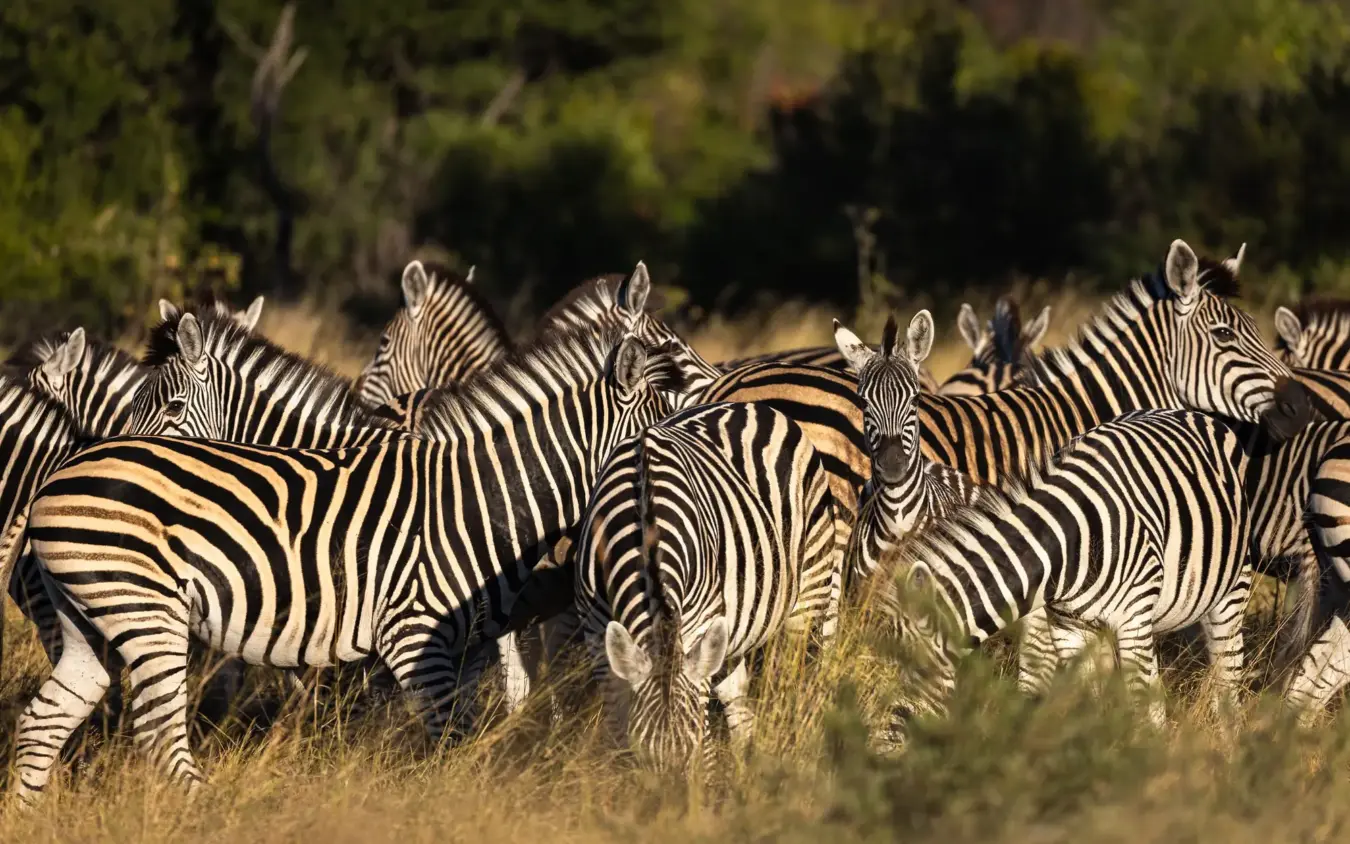
Maxa lies within the Kavango-Zambezi Transfrontier Conservation Area, on the private NG12 concession, where the drives continue after dark and the vehicles leave the track when a sighting calls for it. Armed guides take guests out on foot, and the hours go to following spoor across island floodplains and into mopane woodland. The mokoro move by pole through the lily beds, quiet enough to hear drops fall from the blade. Boating on the deeper channels depends on water levels through the season, and fishing can be arranged.
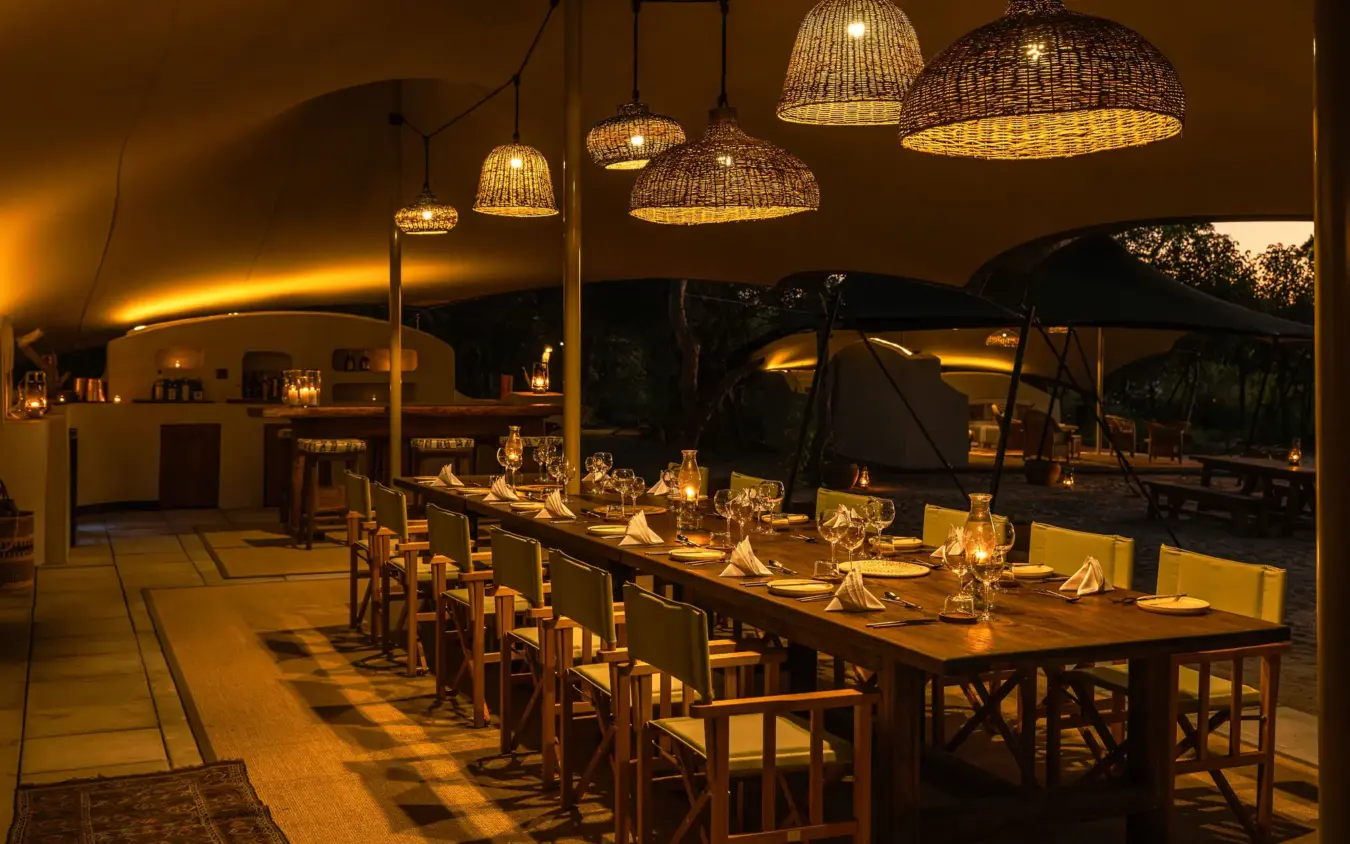
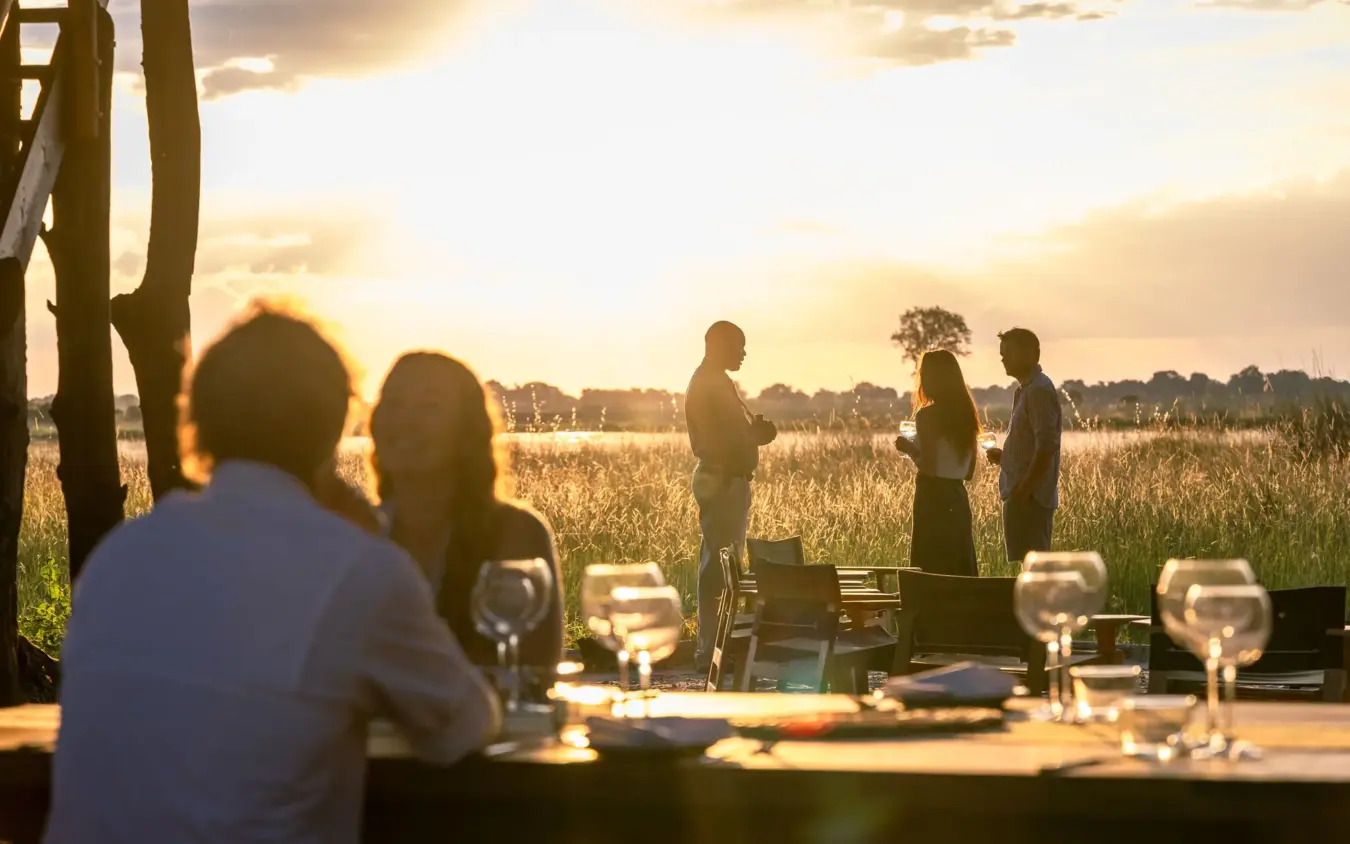
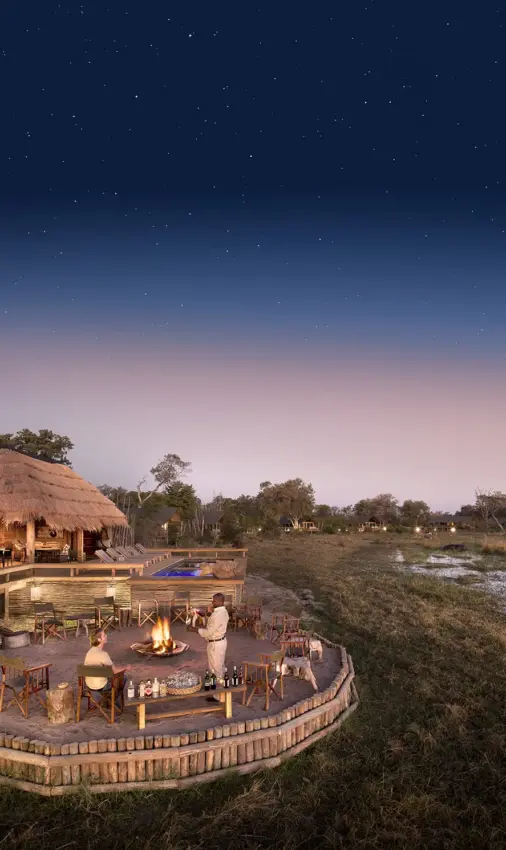
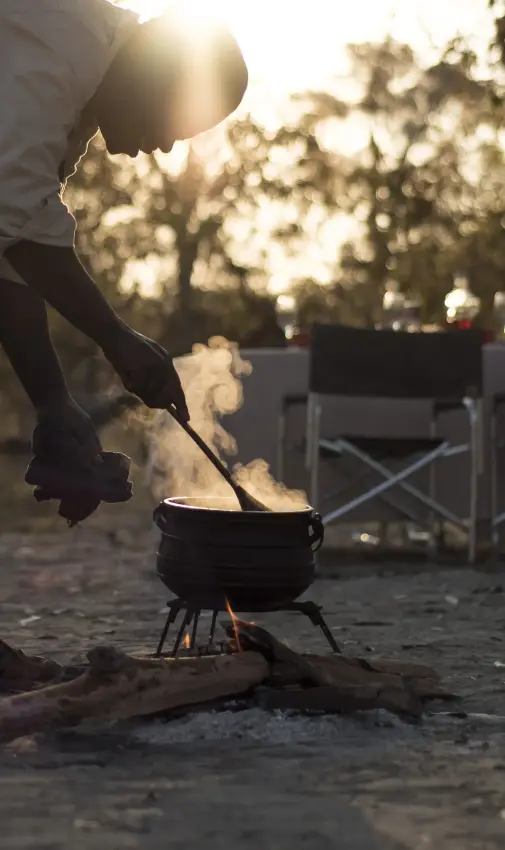
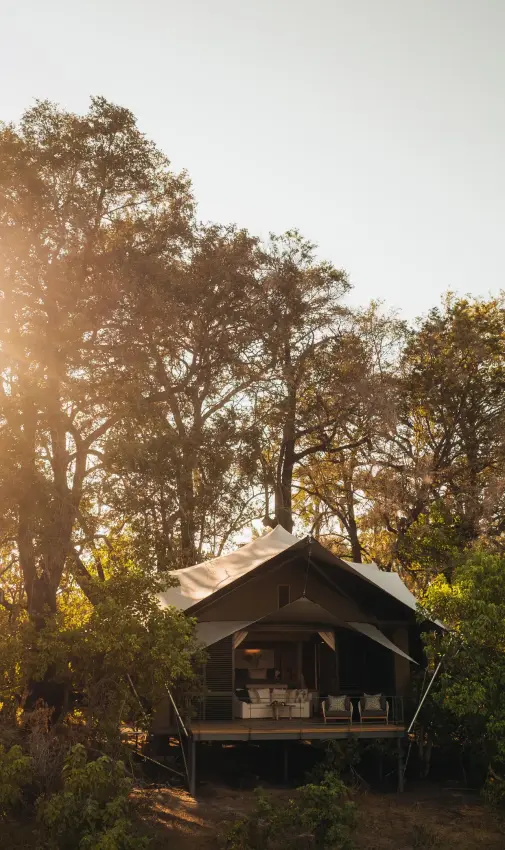
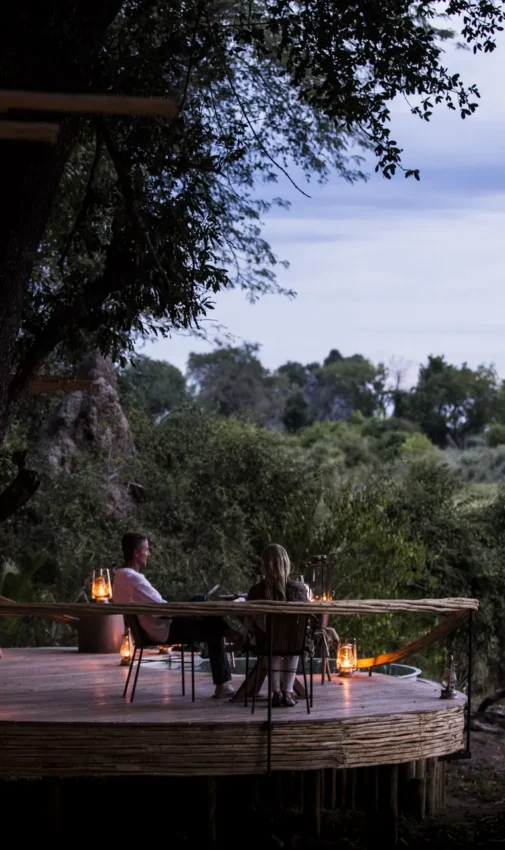
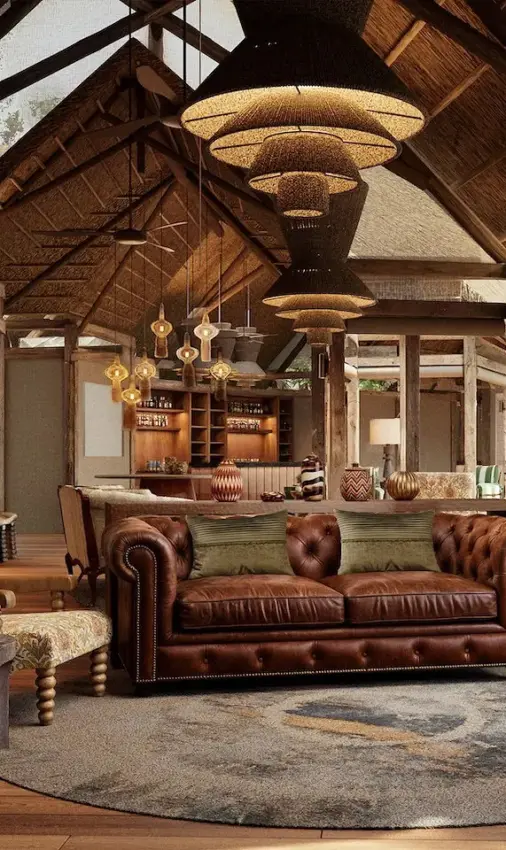
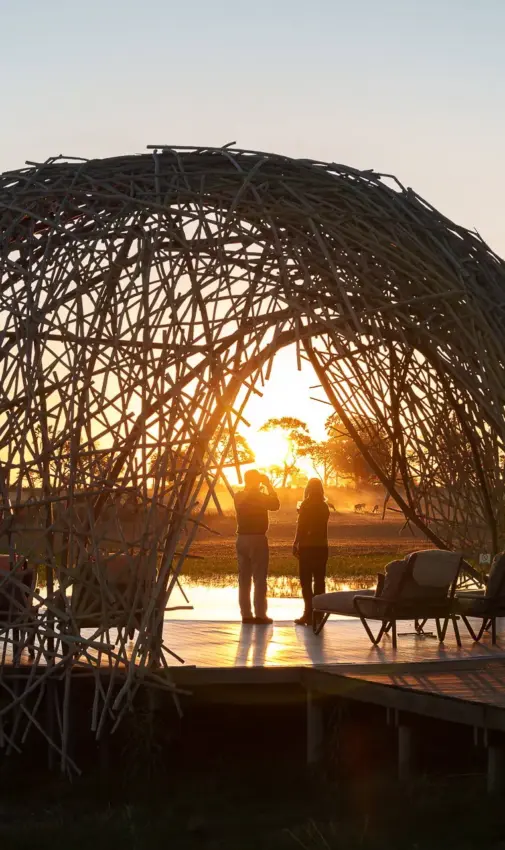
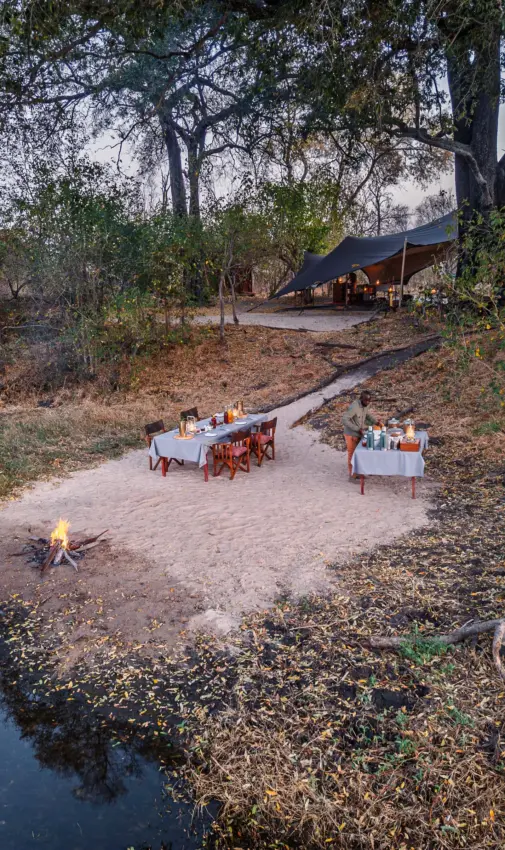
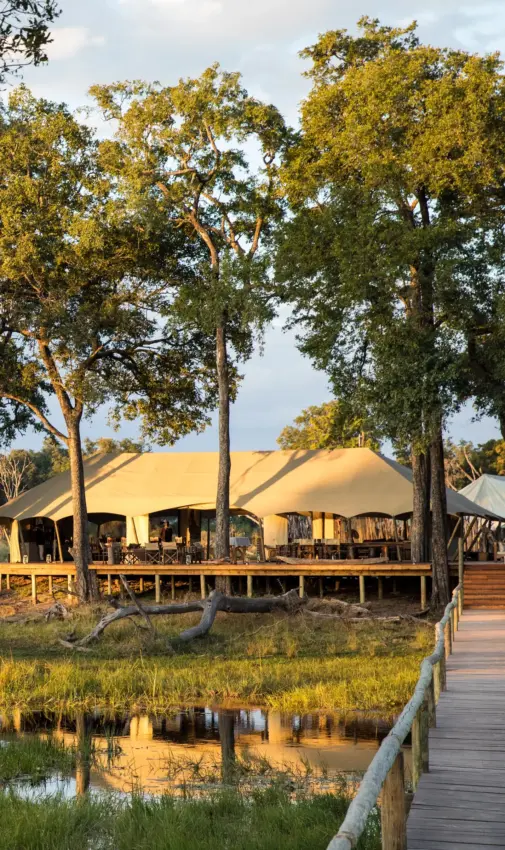
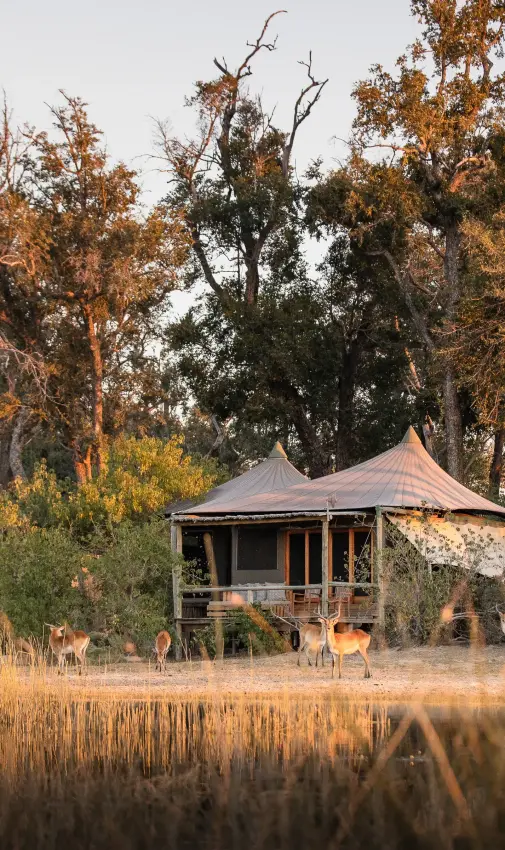
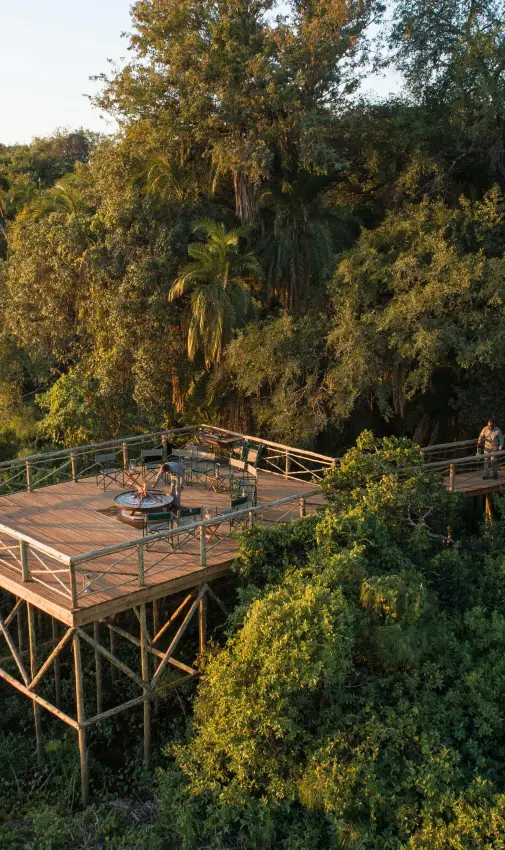
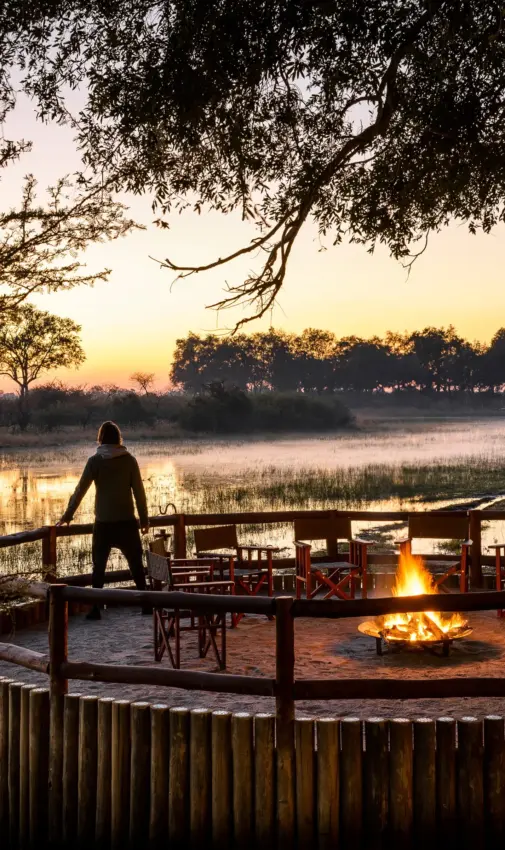
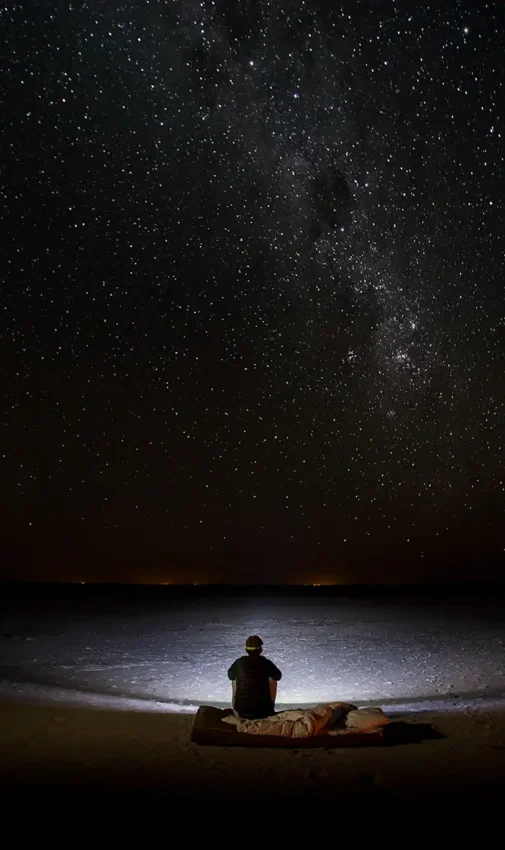
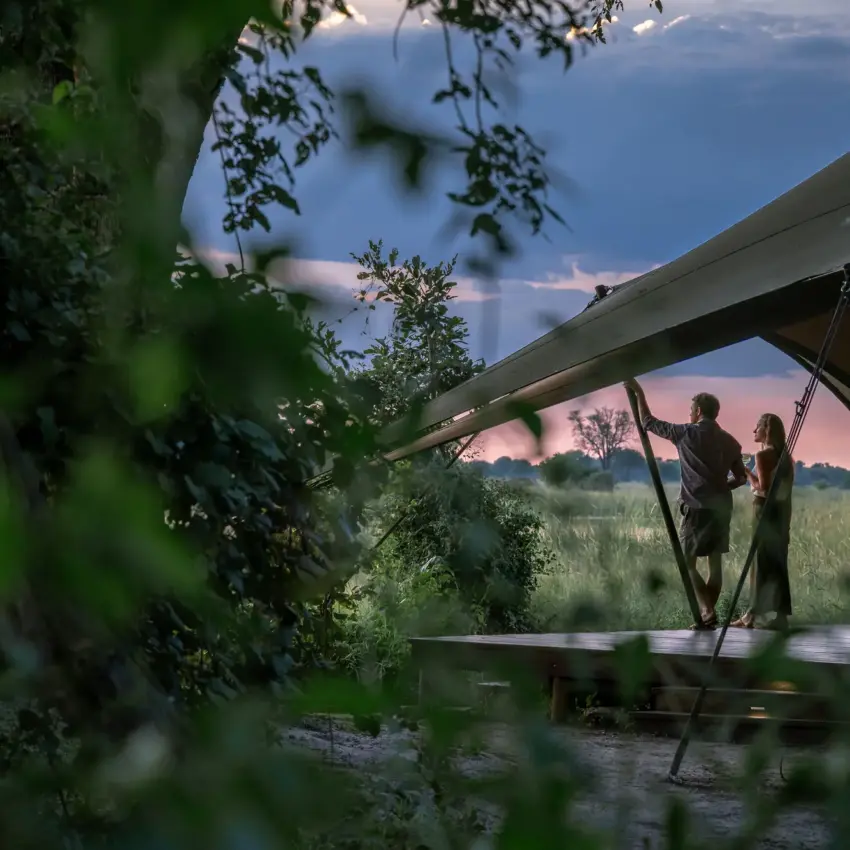
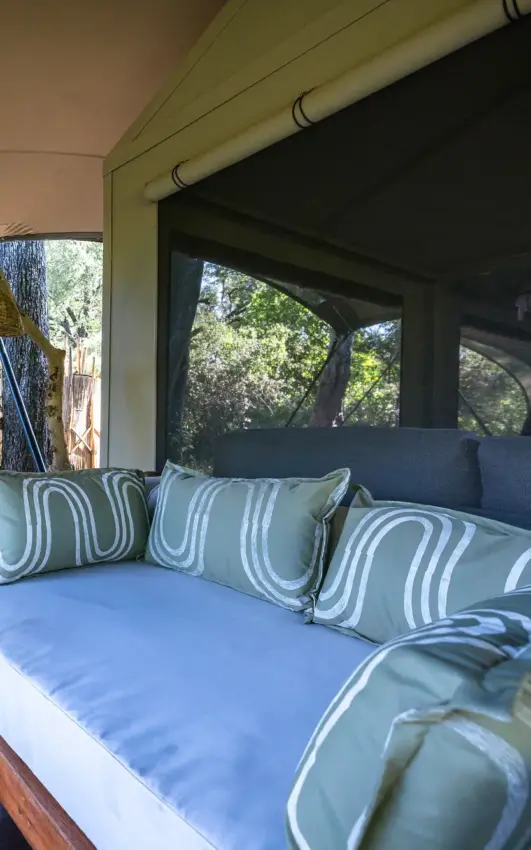
The structures are built from local materials, their clay walls painted in earth tones. Meals are taken at locally carved picnic tables in the courtyard, in dappled shade or under the stars, and breakfast is eaten from directors’ chairs around the fire. Guests drift towards the sala beneath the ebonies, or to the sunset deck behind the old termite mound, to watch the lagoon settle for the evening. The library doubles as a workspace for photographers editing the day’s pictures. Sand paths lead back to the tents, lit by lanterns after dark.
The mokoro move by pole through the lily beds, quiet enough to hear drops fall from the blade.
Maxa was built in partnership with the Mmagamka Trust and the Bukakhwe community of nearby Gudigwa village. Concession fees and employment flow to the village, and guests can spend time with Bukakhwe members learning how plants are used, how tracks are read, and how this corner of the Delta was lived in long before it carried a concession number. Saplings displaced during construction were potted on site, to be replanted as the camp develops. Power is solar, and water is purified in camp and served in refillable glass bottles.
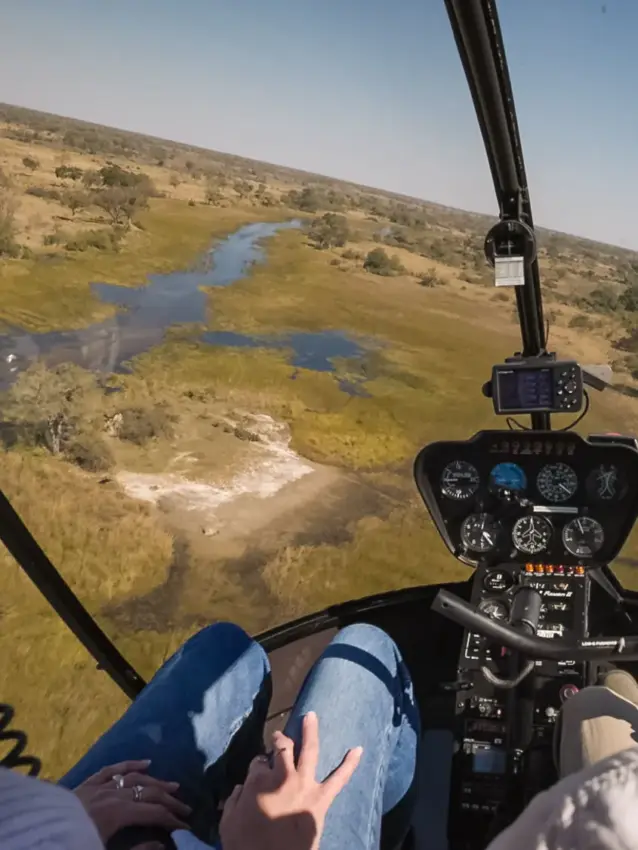
Children are accepted from the age of six, and the fifth tent is built for them. It has two sleeping areas divided by curtains, a shared bathroom, an extra outdoor shower and a small lounge area, with room for up to four. Arranged in advance, the Young Explorers programme pairs the children with a specialist family guide, and their mornings are spent casting tracks and learning birds before a first lesson at the pole of a mokoro. The journey in is by light aircraft from Maun, then a short helicopter hop from Shinde airstrip over the Delta’s channels and islands.



 01